A current or previous bisphosphonate prescription changes the questions that should be asked before dental implant surgery. It does not allow an enquiry page, coordinator, blood test or scan to declare an implant suitable. It also does not mean that every form of dental treatment is prohibited. The safe starting point is an individual assessment of why the medicine was prescribed, how it has been given, the person's current medical and oral health, the operation being considered, the alternatives and the ability to provide continuing care.
The concern most often discussed is medication-related osteonecrosis of the jaw, abbreviated to MRONJ. It is an uncommon but potentially serious condition associated with several medicine groups and clinical contexts. Published guidance emphasises prevention, accurate history-taking, oral health, consent and coordination. The evidence does not support a simple internet calculator, a blood-test pass mark or an instruction for patients to interrupt prescribed treatment themselves.
This guide is educational information for adults researching dental implants bisphosphonates questions, including people considering care away from home. It is not personalised medical advice, a diagnosis or an instruction to have or avoid surgery. It cannot interpret an individual prescription, cancer history, fracture risk, scan or symptom. The named professionals who know those facts must make and document the clinical decisions.
WeCare is not the treating dental provider. Its role is limited to enquiry and referral coordination and, if separately agreed in writing, non-clinical travel logistics. The named clinic and named clinician must own dental examination, diagnosis, imaging justification, options, consent, surgery, prescriptions, records, complaints and clinical aftercare. The clinician who prescribed or currently manages the bone medicine owns decisions about that medicine and the condition it treats. A coordinator must not substitute for either professional.
Start with the exact medicine history
The phrase “I take a bone medicine” is not enough for planning. The dental clinician needs the exact medicine, route, indication, dose history, duration and last administration. They also need to know whether the medicine is current, paused, completed or replaced, who prescribed it and how the underlying condition is being monitored. Past exposure remains relevant; it should not disappear from the dental record merely because the prescription ended.
Ask the prescriber, pharmacist or usual-care record for a verified list rather than relying only on memory. Generic medicine names are more useful than packaging colour or an informal label. Record tablets, liquids, infusions and injections accurately. A person may have received different formulations at different stages, or changed from one bone-modifying medicine to another. Include every known change and uncertainty. If a date or dose is unknown, mark it unknown and seek the source record instead of estimating.
A useful medicine history contains:
- the generic name of every current and previous bisphosphonate or other bone-modifying medicine;
- the route by which each medicine was given;
- the clinical indication, such as osteoporosis, another non-malignant bone disorder or an oncology-related reason;
- the prescribed dose history and schedule as shown in the medical or pharmacy record;
- the duration of exposure and the date of the most recent administration;
- any documented interruption, completion or change, including who made that decision and why;
- the name and contact details of the responsible prescriber or current medical team;
- other current and previous antiresorptive, antiangiogenic, immune-modifying or cancer medicines;
- glucocorticoids and other co-medications that may be relevant to oral surgery, infection, bleeding or healing;
- allergies, adverse medicine reactions, kidney or liver disease and other conditions the clinical teams consider relevant;
- any previous delayed oral healing, exposed bone, jaw symptoms, MRONJ assessment or specialist treatment.
Do not omit a medicine because it was given in hospital rather than collected from a pharmacy. Do not describe an infusion as merely “chemotherapy” if the actual record can identify it. Conversely, do not assume every medicine received during cancer care belongs to the same class. The prescriber or oncology team can clarify the indication and exposure. The dental clinician can then consider that verified information alongside the planned dental procedure.
A panoramic image or dental photograph cannot reveal this history. A bone-density report may explain part of an osteoporosis assessment, but it does not list every exposure or decide a dental operation. A laboratory result cannot repair an incomplete medicine record. When the exact details are unavailable, the appropriate response is to acknowledge uncertainty and obtain them before an elective irreversible decision.
Osteoporosis and oncology are different prescribing contexts
Osteoporosis and oncology are different prescribing contexts. The same broad medicine class may be used for different aims, in people with different underlying disease, schedules, cumulative exposure, co-medications and competing health priorities. SDCEP identifies the underlying medical condition as an important part of MRONJ risk classification, and the joint MASCC/ISOO/ASCO guideline addresses cancer patients receiving bone-modifying agents as a distinct clinical group. That is why a route label alone cannot provide a complete answer.
For osteoporosis, a responsible discussion must remember why treatment exists: reducing fragility-fracture risk and protecting health. NICE recommends that bisphosphonate treatment decisions take fracture risk, adverse effects, clinical circumstances and patient preferences into account. A dental booking does not cancel those considerations. The clinician responsible for osteoporosis must assess any proposed medicine change against the reason the medicine was prescribed.
For malignant disease or another oncology indication, the medical context may include active cancer, skeletal complications, systemic therapy, altered immunity, blood abnormalities, antiangiogenic exposure or urgent treatment priorities. The MASCC/ISOO/ASCO guideline advises coordination between the dentist and oncologist and takes a cautious position on elective dentoalveolar surgery during active therapy at an oncologic dose. An implant enquiry must therefore reach the oncology team and a dental specialist with appropriate experience when those circumstances apply.
This distinction is not a rule that every osteoporosis patient may proceed or every person with cancer must be refused. It means that the responsible team must identify the actual context rather than borrow a conclusion from a different population. Previous MRONJ, active oral disease, denture trauma, smoking, diabetes, immune-modifying medicines, the surgical site and the proposed extent of surgery may all affect the discussion. None should be converted into a standalone internet score.
Ask the dentist to state which guidance and which patient group they are applying. Guidance developed in Scotland, the United Kingdom, the United States or an international oncology setting may use different terminology and healthcare pathways. A clinician practising elsewhere must also follow local law, professional standards and referral arrangements. Using a guideline responsibly means applying its principles to the person and jurisdiction, not copying a pathway without clinical judgement.
What MRONJ means without a website risk threshold
MRONJ is a clinical diagnosis made by an appropriately qualified clinician after considering medicine exposure, oral findings, symptoms, imaging when indicated and other possible causes. Jaw pain, swelling or exposed bone does not automatically prove MRONJ, and the absence of exposed bone in a photograph does not rule out a problem. Conditions such as periodontal or endodontic infection, trauma, ulceration, sinus disease and other jaw pathology may produce overlapping complaints. Differential diagnosis belongs to the clinician.
This page deliberately provides no website risk threshold. Published estimates vary with the population, medicine indication, exposure, procedure and way outcomes are identified. A group estimate cannot calculate what will happen to one individual. Quoting a precise figure without confirming the clinical context may create false reassurance or disproportionate fear. The useful consent question is how the named clinician characterises uncertainty for the specific operation and what alternatives reduce or avoid bone-impacting surgery.
MRONJ may occur without a recent dental operation, while bone-impacting procedures and oral disease are recognised considerations. This matters for balanced decision-making. Avoiding all dental care can allow infection, periodontal disease, decay or denture trauma to continue. At the same time, choosing elective implant surgery introduces a different set of benefits and risks. The objective is not to ignore oral disease or to promise that prevention removes every risk. It is to establish a defensible plan with continuing review.
The dental clinician should ask about previous episodes of non-healing, exposed bone, altered sensation, swelling, discharge, loose teeth, jaw pain, denture sores and prior oral surgery. They should examine the mucosa, teeth, periodontium, edentulous ridges, prostheses and proposed site. Where MRONJ is suspected, SDCEP advises referral according to appropriate specialist pathways. Implant marketing should stop while a possible active condition is investigated.
Risk communication should be understandable and symmetrical. The discussion should cover the possible benefit of restoring function, the possibility that an implant cannot be placed or maintained, the consequences of a healing complication, and the limitations of available evidence. It should also cover the risks and burdens of alternatives, including continued tooth preservation, a removable prosthesis, a tooth-supported option, leaving the space or doing nothing for the moment.
Do not accept statements such as “your route is safe,” “your scan clears you,” or “the risk has gone because you stopped the medicine.” Ask what evidence and individual findings support the recommendation. Past exposure may remain relevant, and the decision should not rest on one characteristic. A careful clinician can explain uncertainty without turning it into a sales obstacle or an automatic prohibition.
Prescriber and dental-clinician ownership
Two responsibilities must remain distinct. The dental clinician owns the dental diagnosis and the decision about whether the proposed extraction, graft, implant or prosthetic plan is clinically justified. The prescriber owns the medicine and the disease it treats. When one decision affects the other, they communicate with the patient's permission. Neither professional should issue a vague “clearance” that shifts responsibility without answering a defined question.
A focused dental-to-medical request might identify the proposed procedure and ask the prescriber to confirm the medicine history, indication, current disease context and relevant co-medications. It may ask whether there is a medical reason that affects timing or setting. It should not demand that the prescriber certify an implant as dentally suitable. The prescriber has not examined the mouth or designed the restoration.
Likewise, a dental provider should not tell a patient how to alter osteoporosis or oncology treatment. The possible medical harm from an interruption belongs in the prescriber's assessment. The patient should never stop, delay, skip or change a bisphosphonate, antiresorptive or other prescribed medicine because of this guide, an advertisement, a travel date or an instruction from a non-prescribing coordinator.
The exchange should be documented. Ask who sent the request, what information was shared, what answer arrived and who interpreted it. Consent for information sharing should be specific enough for the patient to understand. If the medical team cannot be reached before an elective plan, that communication gap should be resolved rather than replaced by an assumption.
Cross-border planning makes ownership especially important. Confirm the clinic's legal identity, the clinician's name and current registration, the prescriber's contact route and the local dentist who may provide continuing care. A referral coordinator may schedule communication but cannot diagnose, prescribe, obtain clinical consent or promise that a medical team will accept responsibility.
If opinions differ, ask for the reasons in writing and consider an appropriately qualified second opinion. The aim is not to make every professional agree with a predetermined purchase. It is to clarify the evidence, uncertainties, alternatives and responsibilities before an irreversible step.
Drug holidays and evidence limits
Drug holidays remain controversial. The term can sound simple, but the evidence and medical consequences are not simple. SDCEP states that temporarily or permanently stopping a bisphosphonate before an invasive dental procedure has not been shown to reduce MRONJ risk and assigns any decision to the prescribing physician. The AAOMS position paper describes continuing uncertainty and professional disagreement. The MASCC/ISOO/ASCO guideline reports insufficient evidence to support or refute discontinuation for cancer patients receiving a bone-modifying agent and leaves any deferral to the treating physician after discussion with the patient and oral-health provider.
Bisphosphonates can remain associated with skeletal tissue after administration, which is one reason a short interruption cannot be assumed to erase dental risk. Meanwhile, the medicine may have been prescribed to reduce fracture or skeletal complications. Those competing considerations cannot be balanced by a generic timetable. Evidence relating to another drug class should not be copied onto bisphosphonates merely because both appear in discussions of MRONJ.
Never turn a marketing itinerary into a medicine plan. The date of a flight, deposit or surgical slot does not justify changing treatment. Never stop, delay, skip or change a bisphosphonate or other bone medicine without the responsible prescriber's individual instruction. Even when the prescriber considers a change, the rationale, risks, responsibilities and plan for continuing management should be recorded.
Questions for the joint discussion include:
- What condition is the medicine treating, and what harm could follow an interruption?
- What is the exact current and previous exposure?
- Is the proposed dental procedure urgent, necessary, elective or replaceable by a less invasive option?
- Is there active infection or disease that changes the balance?
- Has the dentist described the surgical site and extent accurately to the prescriber?
- What evidence supports any proposed medicine decision, and what uncertainty remains?
- Who will give the patient the final instruction and record it?
- What happens if the dental plan changes after examination?
A patient should not be placed between contradictory informal messages. If a clinic says “ask your doctor to stop it” without a clinical request, ask the clinic to communicate directly with the prescriber. If a coordinator supplies a universal interruption calendar, do not act on it. The correct outcome may be no change, a prescriber-led change, a different dental option, postponement or no implant treatment. Only the clinical teams can decide.
Why CTX cannot decide implant eligibility
CTX is a bone-turnover marker. It has historically appeared in dental discussions as though one result could place a person into a safe or unsafe category. That use is not supported as a universal decision tool. AAOMS states that no biomarkers are validated for clinical decision-making about MRONJ risk. In practical terms, CTX is not validated to clear implant surgery and cannot decide implant eligibility.
A result may have been ordered for another medical reason and may still matter to the professional who ordered it. That does not transform it into a dental pass mark. Values can be influenced by biological and testing conditions, and a bone-turnover measurement does not describe active periodontal disease, denture trauma, the surgical site, medicine indication, co-medications, planned prosthesis or ability to attend aftercare.
Do not pay for a test solely because a sales pathway promises that a particular result guarantees treatment. Ask the named clinician why any investigation is proposed, which clinical question it answers, what evidence supports its use and how the answer could change management. If the answer is simply “our threshold,” ask whether that threshold appears in current guidance and whether alternatives were considered.
The same principle applies to bone-density scans and dental imaging. Each can provide information within its purpose, but none independently predicts MRONJ or biological healing. A sensible assessment combines verified history, examination, justified imaging and professional judgement. Uncertainty should be explained, not hidden behind a number.
Oral disease control before elective surgery
Prevention begins with ordinary oral health. SDCEP emphasises personalised preventive advice, routine care and management of dental disease. The oncology guideline likewise supports dental assessment and coordination before certain bone-modifying treatment when the medical situation permits. For someone already receiving treatment, regular dental care remains important. Deferring all dentistry out of fear can be harmful.
Before elective implant surgery, the dentist should assess plaque control, gingival inflammation, periodontitis, caries, endodontic disease, abscesses, mobile teeth, mucosal lesions and sources of mechanical trauma. Existing dentures should be checked for pressure areas. A proposed implant site cannot be assessed in isolation from the rest of the mouth. Active disease elsewhere may affect the sequence, maintenance burden or value of the proposed restoration.
Disease control is not a single cleaning appointment or a promise based on appearance. Ask what diagnosis has been made, how it is recorded, what treatment is needed, what signs show stability and who will maintain it. If periodontal care is recommended, the plan should identify its objectives and how the response will be reviewed. The patient should be able to clean the proposed restoration and access professional maintenance after returning home.
Routine antibiotics or antiseptics should not be advertised as a universal MRONJ-prevention solution. SDCEP advises against prescribing them specifically as prophylaxis after bone-impacting treatment unless another clinical reason exists. Any medicine used around a procedure requires an individual indication, allergy and interaction review, responsible prescriber and written instructions. Antimicrobial stewardship still applies.
Smoking, diabetes, immune conditions, nutrition, oral hygiene and co-medications may form part of the assessment, but this page gives no self-treatment rules. The relevant clinicians should address modifiable factors respectfully and supportively. A person should not be promised that changing one factor removes all uncertainty, nor blamed if a complication occurs.
If urgent infection is present, treating the disease may take priority over an elective replacement plan. Urgent care should not wait for a tourism itinerary. Ask whether a tooth is restorable, whether drainage or another intervention is needed, and whether specialist input is required. Implant placement can be reconsidered only after the immediate problem and broader context are understood.
Tooth preservation and non-implant alternatives
An implant is one way to replace a missing tooth; it is not the default solution to every compromised tooth. For a person with relevant medicine exposure, tooth preservation deserves explicit attention because it may avoid or reduce bone-impacting surgery. The clinical question is whether the tooth has a reasonable prognosis and can be maintained, not whether replacing it is commercially simpler.
Depending on the diagnosis, options may include restorative care, periodontal treatment, endodontic treatment, repair or modification of an existing restoration, or retaining a root when clinically appropriate. Each option has limitations and maintenance requirements. A dentist must examine the tooth and supporting tissues before recommending it. This guide does not say that every tooth can or should be retained.
If a tooth is missing or cannot be retained, non-implant options may include:
- accepting the space when function, comfort and stability allow;
- a removable partial or complete prosthesis designed to minimise trauma;
- an adhesive bridge where anatomy and bite make it suitable;
- a conventional tooth-supported bridge after considering the effect on supporting teeth;
- modification or renewal of an existing prosthesis;
- postponing replacement while disease, medical context or aftercare is clarified;
- local specialist care rather than travel;
- no treatment, with agreed monitoring, when that is a reasonable informed choice.
These are not second-class choices. Some avoid surgery but introduce other burdens, such as preparation of supporting teeth, removable-appliance adaptation or continuing maintenance. Ill-fitting dentures can traumatise mucosa, so a removable option still needs careful design and review. The written plan should compare benefits, risks, longevity uncertainty, maintenance, cost and what happens if circumstances change.
The number of implants is not a simple measure of risk or quality. Reducing the count does not necessarily reduce every relevant surgical factor, and adding implants does not automatically improve a restoration. Ask how the proposed design distributes function, permits cleaning and can be repaired. A prosthodontic plan should exist before surgery is booked.
Where extraction appears necessary, ask why the tooth cannot be retained, what happens if it is left for now, and whether specialist review would change the options. A second opinion is especially reasonable when the proposal removes several teeth, changes the bite extensively or ties the decision to a short travel window.
Clinical assessment and imaging limits
Remote photographs and uploaded scans may help triage an enquiry, but they cannot establish implant eligibility. The named clinician should take a full medical and dental history, examine the mouth and assess the patient's goals. Relevant examination may include teeth, periodontal tissues, mucosa, edentulous ridges, existing prostheses, bite, hygiene access and the proposed surgical site. Symptoms and prior healing experiences need context.
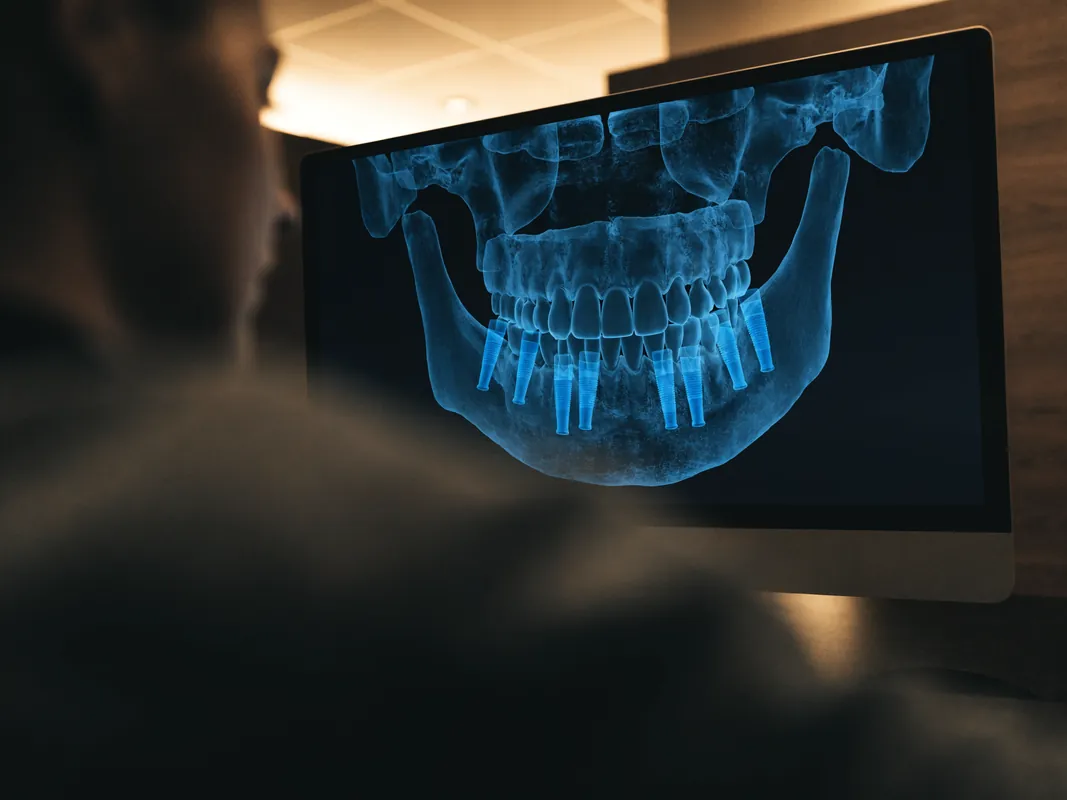
Imaging should answer a defined clinical question. A panoramic image can provide an overview but may not show every site-specific detail. Three-dimensional imaging may be considered when justified for anatomy or planning, but it is not automatic and does not predict MRONJ. Ask who prescribed the image, who interpreted it, why it is necessary, how radiation exposure is justified and whether the images and report will be supplied to you.
The clinician should integrate imaging with examination. Apparent bone volume alone does not establish that an implant is appropriate. Soft-tissue condition, infection, periodontal stability, prosthetic space, bite, medicine context and maintenance matter. Likewise, a radiographic abnormality may require further investigation rather than immediate treatment.
If symptoms or examination raise concern about MRONJ or another jaw condition, the pathway changes from elective implant planning to diagnosis and specialist care. Do not let a scheduled operation pressure the clinician into proceeding before that assessment is complete. Ask which specialist pathway is available locally and who will communicate findings to the prescriber.
Clinical records should distinguish facts from provisional impressions. A remote plan should state that it may change after examination. If the examination produces a different diagnosis or proposal, the patient needs a revised written plan, risks, alternatives and costs before new consent. A consent form signed before the findings are known does not replace that process.

Extraction, implant and prosthetic decisions
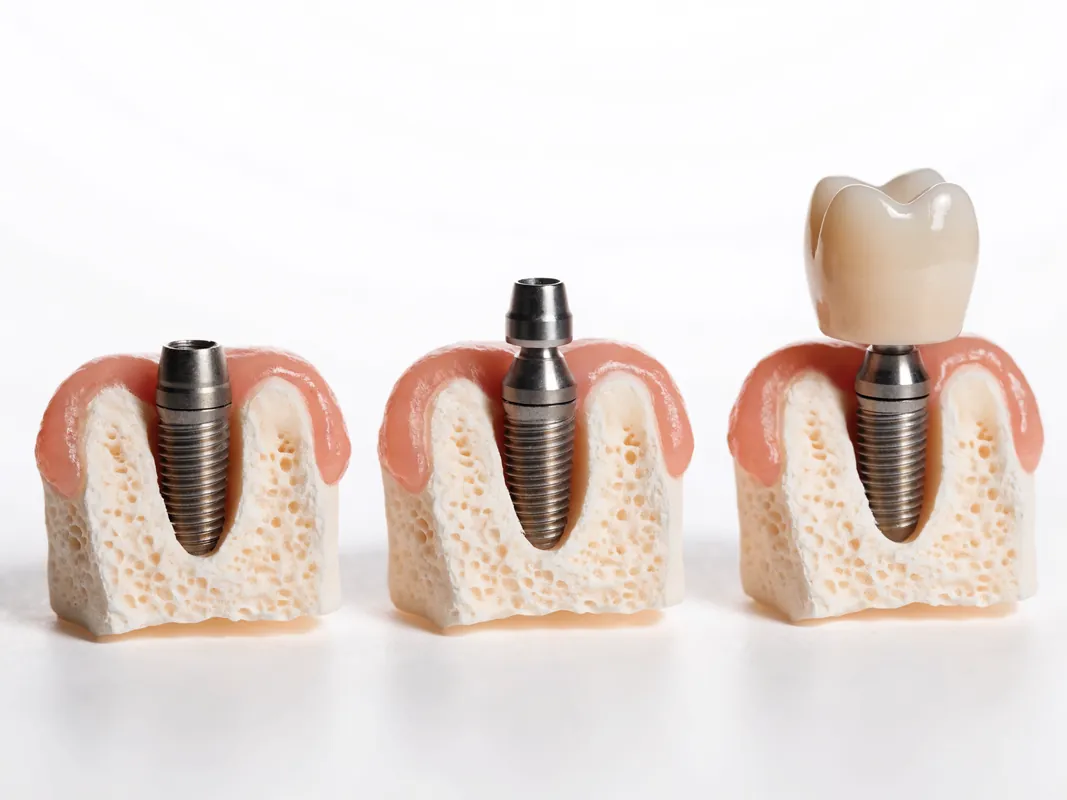
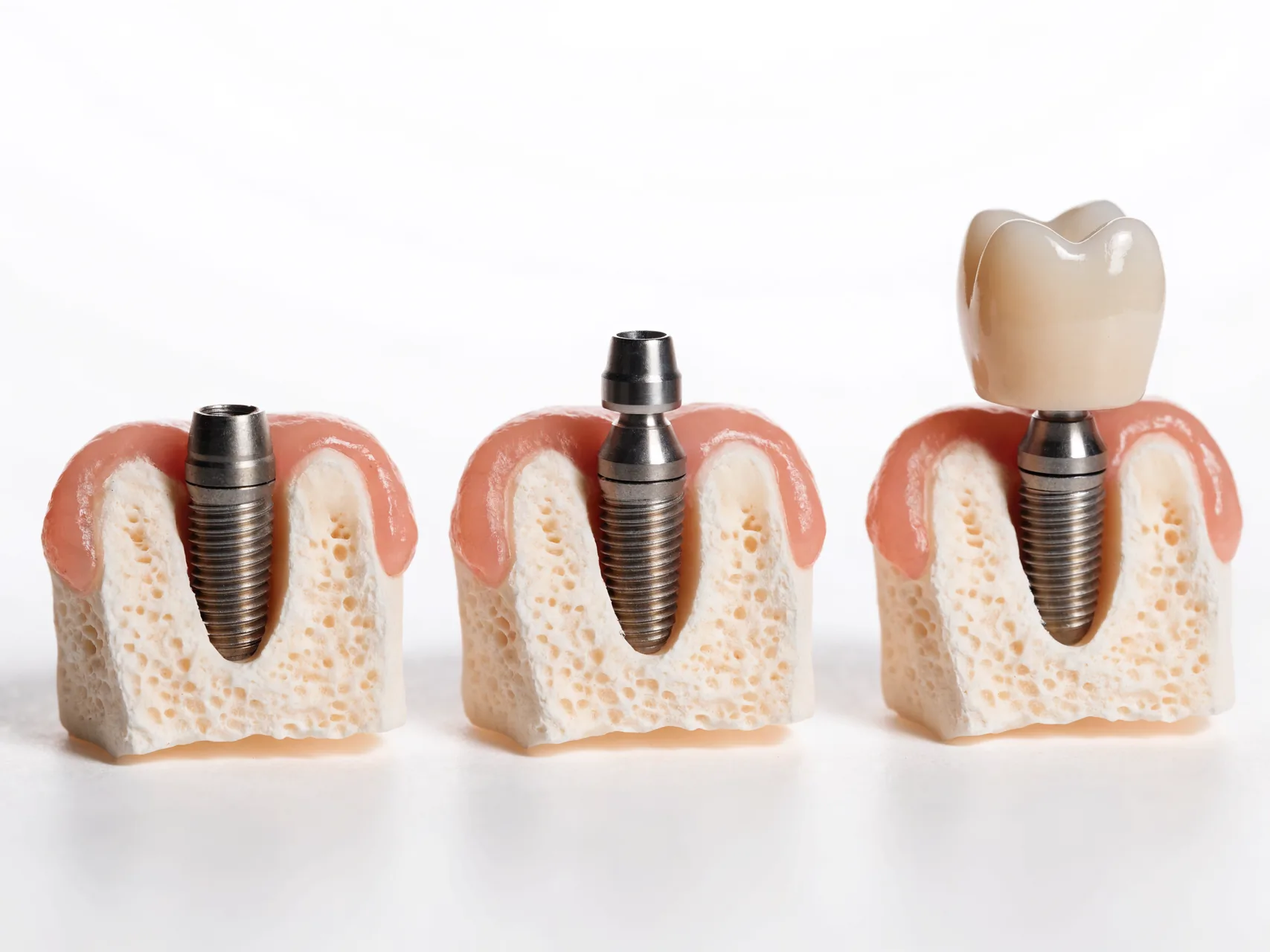
Extraction, implant and prosthetic decisions should be separated rather than bundled into a single sales package. A tooth may require urgent treatment while replacement remains elective. An extraction may be clinically justified even when an implant is not. An implant may be considered only after the site and systemic context are reviewed. The final prosthesis needs its own functional and maintenance plan.
For each proposed extraction, ask for the diagnosis, alternatives, expected consequence of leaving the tooth and plan for review. For each implant, ask why that site, size and position support the intended restoration; whether grafting or another bone-impacting procedure is proposed; and what findings could cause the clinician to stop or change the plan. For the prosthesis, ask how it will be cleaned, maintained, repaired and reviewed locally.
People receiving bone-modifying treatment in an oncology context require particular caution. The MASCC/ISOO/ASCO guideline advises against elective dentoalveolar surgery during active therapy at an oncologic dose, while allowing that exceptional clinical circumstances may require specialist discussion. This is a specialist decision involving the oncology team, not a route for a coordinator to approve surgery. Local or non-surgical alternatives should remain visible.
For osteoporosis and other non-malignant contexts, guidance does not justify automatic rejection or automatic acceptance. The dentist should discuss medicine history, oral findings, the procedure and continuing MRONJ uncertainty. Reports of MRONJ around implant sites mean long-term monitoring matters, including when implants were placed before or during exposure. The absence of an early problem is not a reason to abandon maintenance.
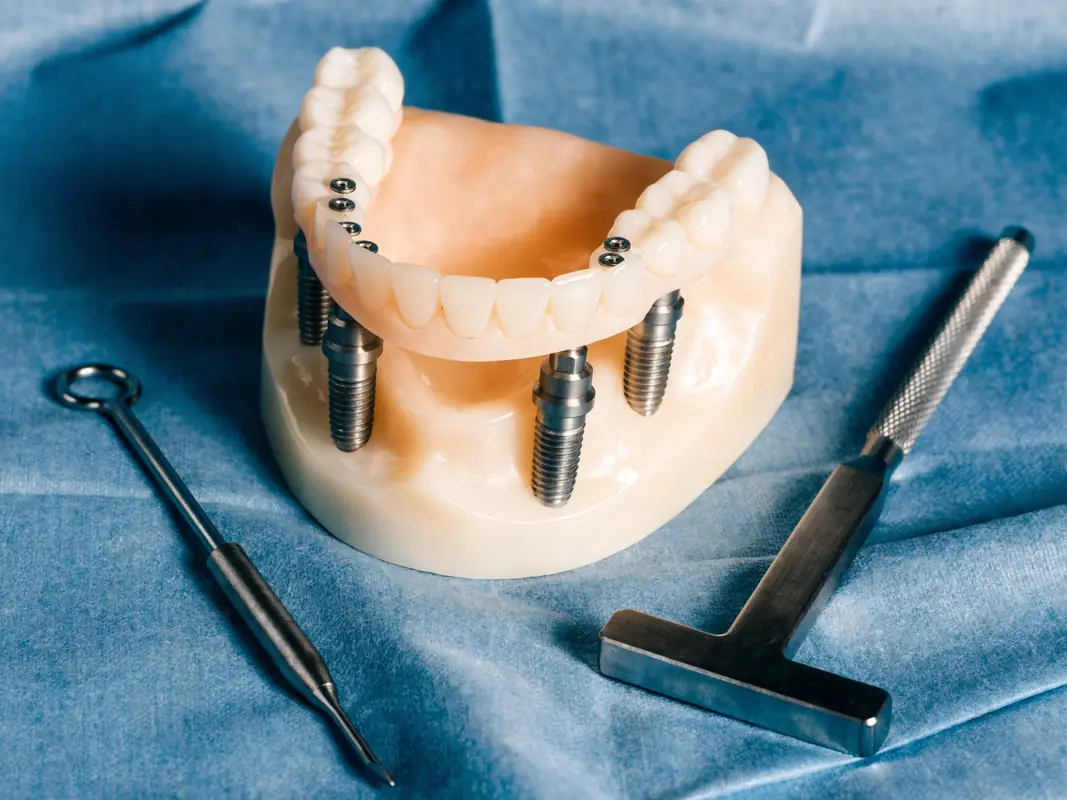
Grafting, immediate placement, loading and extensive full-arch surgery add distinct decisions. This guide does not assign a timetable or state that one technique is safer. Ask for the evidence and case-specific rationale. A less invasive plan may reduce one burden while changing function, maintenance or future options. The appropriate comparison is the complete patient-specific plan, not a slogan about speed.
A reversible diagnostic phase may sometimes be useful. This could include disease control, adjustment of a traumatic prosthesis, diagnostic design work or a period of observation defined by the clinician. It should not be sold as a guaranteed route to surgery. The review needs stated objectives and documented findings.
Consent without a promised outcome
Consent is an ongoing conversation about the individual plan, not a signature attached to a deposit. GDC Principle 3 requires UK registrants to explain relevant options, risks, potential benefits and costs, check understanding and keep consent valid at each stage. A provider outside the UK follows its own jurisdiction, but these are useful questions for any patient comparing care.
The consent discussion should include:
- the dental diagnosis and evidence supporting it;
- the verified medicine and medical context;
- why the proposed option is considered and what remains uncertain;
- MRONJ and other procedure-specific risks in language the patient understands;
- reasonable tooth-preserving, non-implant, postponement and no-treatment alternatives;
- the proposed stages and what findings may change them;
- who performs each part and where;
- the role of the prescriber or oncology team;
- the limits of remote assessment;
- maintenance, local review and urgent-care needs;
- itemised clinical costs and separate non-clinical costs;
- cancellation, complaint and remedial terms;
- how records and personal data will be handled.
There can be no promised biological outcome. Good planning can reduce avoidable uncertainty and clarify responsibilities, but it cannot guarantee healing or long-term implant function. The clinician should describe both the likely benefit sought and the consequences if the plan cannot proceed or a complication develops.
Allow time for questions and a second opinion. Pressure based on a disappearing discount, pre-booked room or same-day transformation is inconsistent with careful decision-making. If the patient needs an interpreter, identify who provides it and ensure the interpretation is independent enough for questions and consent. A family member may support communication but should not automatically replace a competent professional interpreter for complex clinical information.
Consent must be renewed when the plan changes. If surgery reveals different anatomy, if a tooth is more restorable than expected, if additional grafting is proposed or if the medical context has changed, pause and explain. The patient should know what decisions might arise and what would happen if they decline an additional procedure.
Records and clinical handover
GDC Principle 4 describes complete and accurate records as a core professional responsibility for UK registrants. Cross-border patients should ask for records that allow another clinician to understand what was assessed, decided and done. A polished summary brochure is not a clinical handover.
Before treatment, retain:
- the verified medicine and medical history supplied to the clinic;
- relevant correspondence with the prescriber or oncology team;
- the clinical examination and diagnosis;
- imaging and reports;
- the written options discussion and consent record;
- the final staged treatment plan and itemised quotation;
- provider identities, registrations, clinical indemnity information and complaint route;
- privacy information and permissions for sharing records.
After a procedure, request:
- the date, site and description of what was performed;
- the name and role of each clinician;
- anaesthetic and prescribed medicine details relevant to ongoing care;
- implant, abutment, component and material identifiers;
- graft or other material traceability where applicable;
- laboratory and prosthesis information;
- post-operative images or reports used in care;
- written patient-specific aftercare;
- findings at review and healing status;
- the direct clinical escalation route;
- the maintenance and local-handover plan;
- invoices and the agreed complaint and remedial process.
Give the local dentist records before asking them to assess a new problem. Confirm that they are willing and able to participate; an overseas provider should not assume a local dentist will supervise treatment they did not plan. If specialist follow-up is likely, identify that pathway before travel.
Health information should be shared through a secure route with a clear purpose. Ask who controls the data, who receives it, how long it is kept and how to obtain a copy. Do not send a complete oncology or osteoporosis record to an unidentified messaging account. A coordinator should receive only what is necessary for the defined coordination task.
Maintenance and local follow-up
Implant planning is incomplete without local follow-up and long-term maintenance. MRONJ discussion does not end when the gum appears to close. Existing implants, teeth, gums, mucosa and prostheses need continuing review according to individual need. SDCEP notes that MRONJ has been reported around implants after different intervals, which supports ongoing awareness rather than a one-off clearance.
Before treatment, agree who will:
- review initial healing and document it;
- assess persistent pain, swelling, exposed bone, discharge or altered sensation;
- maintain periodontal and peri-implant tissues;
- check denture or prosthesis trauma;
- inspect and service the restoration;
- communicate with the prescriber when clinical findings matter;
- provide urgent assessment near home;
- keep the long-term clinical record.
Remote review can support communication but cannot palpate tissues, measure pockets, test mobility, evaluate the bite fully or obtain justified new imaging. A photograph may be useful to show change, not to exclude disease. When an examination is needed, the plan must direct the patient to a local clinician rather than repeatedly asking for messages.
Maintenance frequency should be based on findings and risk, not a universal calendar. A periodontal history, plaque control, denture fit, systemic context, prosthesis design and previous complications may influence the plan. Ask how the local and destination clinicians divide responsibilities and how they exchange reports.
Cleaning instructions should be specific to the actual restoration and the patient's dexterity. A design that cannot be cleaned predictably may not be a sensible choice. If a removable appliance is used, its fit and mucosal effects require review. Do not accept a prosthetic plan that treats maintenance access as an afterthought.
The written commercial terms should not be confused with clinical aftercare. Coverage for a component does not guarantee biological healing, and a complaint process does not replace urgent assessment. Clarify who pays for examination, imaging, treatment or travel if a problem appears, but seek care based on clinical need rather than waiting for a payment decision.

Urgent signs and emergency boundary
This page cannot diagnose symptoms. New or worsening pain, swelling, exposed bone, discharge, a non-healing area, altered sensation, loose teeth or implants, persistent ulceration, fever or difficulty using the jaw should prompt professional assessment. These signs have multiple possible causes; they do not prove MRONJ. The clinician needs the medicine history, examination and relevant records.
Use local urgent dental care rather than waiting for a distant coordinator when symptoms worsen. In England, NHS urgent dental guidance explains how to seek urgent dental help and when NHS 111 may direct care. Severe facial or neck swelling, difficulty breathing or swallowing, uncontrolled bleeding, serious eye symptoms, collapse or rapidly deteriorating illness may require emergency services. Outside the UK, use the destination's emergency number and local emergency system.
If a person is receiving active cancer treatment, follow the oncology team's emergency instructions as well as seeking dental or medical care. Do not assume an oral symptom is isolated from systemic treatment. Do not interrupt prescribed medicine while waiting for a reply.
Keep the implant or procedure record, medicine list, prescriber details and destination-clinic contact accessible. An urgent local clinician should not have to reconstruct the treatment from a social-media message. Inform the original clinic once immediate care is underway, but do not postpone emergency assessment for administrative permission.
Travel and the no-travel option
Travel creates extra dependencies: examination may change the plan, healing may need review, symptoms may occur after departure, and the local dentist may not have agreed to provide care. The no-travel option must remain a genuine comparator. It may offer easier communication with the prescriber, simpler access to urgent assessment and continuity with local maintenance. Its costs and waiting times may differ, but those are not reasons to hide it.
Before booking, ask whether the destination clinician has reviewed enough information to justify travel for assessment, while acknowledging that final suitability cannot be confirmed remotely. Keep flights and accommodation separate from clinical consent. Build financial and time contingency for postponement, a changed plan or no procedure. Travel insurance terms should be checked directly with the insurer; do not assume planned treatment or complications are covered.
If non-clinical logistics are offered, the written quotation should identify the supplier, route, dates, inclusions, exclusions and cancellation terms. These services do not prove treatment suitability. A driver, hotel employee or coordinator does not provide post-operative clinical monitoring.
Before returning home, obtain the required clinical review, records and handover. Ask the treating clinician whether current findings create a medical or dental reason to alter travel, but recognise that travel fitness may require another medical professional. This guide gives no flight timetable or universal recovery interval.
If a companion is important for mobility, communication or support, plan that explicitly. Ensure the patient can access medicines and usual care as advised by their prescriber. Identify urgent dental and medical services at the destination before the procedure. A no-travel decision is a valid clinical and personal outcome, not a failed sale.
Itemised quote and commercial terms
GDC Principle 2 requires UK dental professionals to give clear information about treatment and costs. A useful cross-border quotation should be similarly transparent even where a different regulator applies. It should identify the clinic and clinician, separate clinical and non-clinical items, state what is provisional, and explain how changes are authorised.
For the dental plan, ask for separate lines for assessment, imaging, periodontal or disease-control treatment, extraction, grafting if proposed, implant components, temporary and final prostheses, laboratory work, review and maintenance. Ask which items depend on examination and how a changed plan affects the price. Do not accept a single headline amount that prevents comparison.
Commercial terms should explain deposits, cancellation, refunds, currency, payment recipient, invoices, complaints and what remedial support is actually offered. They should distinguish component problems, prosthetic maintenance and biological complications. No commercial document can guarantee healing or eliminate the need for urgent local care.
Non-clinical travel services should appear separately with their own supplier and terms. Confirm dates and inclusions in writing; do not infer them from a condition guide. Compare the total likely cost, including local records, local maintenance, contingency, companion travel and possible extra assessment. A low initial figure may not represent the complete care pathway.
Do not let payment create clinical momentum. If the named clinician concludes that an implant is not appropriate, the patient should understand the financial consequences before paying. If the plan changes, renewed consent and an updated quote should precede the additional treatment.
Questions to ask before implant treatment
Use these questions with the named dental clinician and, where relevant, the prescriber or oncology team:
- What are your full name, professional registration, role and direct clinical contact details?
- What is the clinic's legal identity, address, indemnity arrangement and complaint route?
- What dental diagnosis supports replacing this tooth or these teeth?
- Which teeth could reasonably be preserved, and what non-implant alternatives should I compare?
- Have you recorded every current and previous bone-modifying medicine, its route, indication, dose history, duration and last administration?
- Which details have been verified from the prescriber or pharmacy record, and which remain uncertain?
- Does the underlying indication involve osteoporosis, another non-malignant condition or an oncology context?
- What question needs to be discussed directly with the prescriber or oncology team?
- Who owns any medicine decision, and how will the instruction be documented?
- What oral disease or denture trauma needs treatment before an elective procedure?
- Why is each extraction necessary, and what happens if it is postponed or avoided?
- What material risks and evidence uncertainties apply to the proposed operation?
- Are you using a blood marker as a pass mark? If so, what current guidance validates that use?
- What examination and imaging are required, and what question does each investigation answer?
- What site, graft, implant and prosthetic stages are proposed, and what findings could change them?
- How can I clean and maintain the final restoration?
- Who reviews healing, who provides local maintenance and who handles urgent symptoms?
- What records and component identifiers will I receive?
- Which parts of the quote are provisional, and how are changed costs authorised?
- What are the cancellation, complaint and remedial terms?
- How is my health information protected and shared?
- What local-care and no-travel options have been compared?
An answer such as “we have done this many times” does not replace the case-specific explanation. Ask for written reasons and keep copies. A clinician who recognises uncertainty should be able to explain what is known, what is not known and how the plan responds.
Bisphosphonate and MRONJ planning checklist
Identity and clinical ownership
- Confirm the named clinic and named clinician.
- Verify professional registration through the relevant official register.
- Confirm the prescriber or medical team responsible for the bone medicine.
- Separate coordinator, travel supplier and clinical-provider roles.
- Obtain direct clinical and complaint contacts.
Medicine and medical record
- Obtain the current and previous generic medicine list.
- Record route, indication, dose history, duration and last administration.
- Record changes, interruptions and the professional who authorised them.
- Include antiresorptive, antiangiogenic, immune-modifying and cancer treatments.
- Include co-medications, allergies and relevant conditions.
- Record previous jaw symptoms, exposed bone, delayed healing or MRONJ care.
- Mark unknown facts and obtain source records rather than guessing.
Dental assessment
- Record the dental diagnosis and goals.
- Assess periodontal, endodontic, restorative and mucosal health.
- Check prostheses for trauma and maintainability.
- Justify imaging and obtain copies and reports.
- Investigate suspected MRONJ or other jaw disease before elective planning.
- Identify disease-control needs and how response will be reviewed.
Options and consent
- Compare tooth preservation, removable and tooth-supported options.
- Include postponement, local treatment and no treatment where relevant.
- Explain MRONJ and other risks without an invented personal percentage.
- Do not use CTX as a universal eligibility threshold.
- Keep every medicine decision with the responsible prescriber.
- Explain what findings could change the staged plan.
- Allow time for questions, interpretation and a second opinion.
Procedure and prosthesis
- Give a reason for each extraction and bone-impacting step.
- Plan the restoration before surgery.
- Explain cleaning, maintenance and repair access.
- Identify components and material traceability.
- State who performs every stage and where.
- Avoid an elective oncology-context decision without specialist coordination.
Handover and continuing care
- Identify a willing local dentist before travel.
- Agree how initial healing and long-term maintenance will be reviewed.
- Obtain procedure, medicine, material and component records.
- Keep direct clinical escalation and local urgent-care routes.
- Understand the limits of photographs and remote messages.
- Do not delay urgent or emergency care for administrative approval.
Travel and commercial terms
- Keep clinical consent separate from flights and accommodation.
- Compare the no-travel option.
- Allow contingency for a changed plan or no procedure.
- Obtain an itemised clinical quote and separate travel quote.
- Read cancellation, complaint, privacy and remedial terms.
- Check insurance directly with the insurer.
Sources and review dates
Guidance evolves as evidence and medicine use change. A clinician should check the current version and the rules of the jurisdiction where care is delivered. Sources used for this guide were:
- SDCEP MRONJ guidance, Oral Health Management of Patients at Risk of Medication-related Osteonecrosis of the Jaw: published March 2017, reviewed as extant March 2024 and accessed 29 August 2026. It informs risk-context assessment, preventive care, implant caution, drug-holiday responsibility and referral principles. https://www.sdcep.org.uk/media/xtlp2uqx/sdcep-mronj-guidance-extant-2024.pdf
- AAOMS 2022 position paper, Medication-Related Osteonecrosis of the Jaw — 2022 Update, accessed 29 August 2026: evolving evidence, the controversy around medicine interruption, prevention strategies and the lack of validated biomarkers for clinical MRONJ decisions. https://aaoms.org/wp-content/uploads/2024/03/mronj_position_paper.pdf
- MASCC/ISOO/ASCO Clinical Practice Guideline, Medication-Related Osteonecrosis of the Jaw: published 2019 and accessed 29 August 2026. It informs oncology-context coordination, elective-surgery caution, oral assessment and the evidence limits around discontinuing bone-modifying agents. https://ascopubs.org/doi/10.1200/JCO.19.01186
- NICE TA464, Bisphosphonates for treating osteoporosis: published 9 August 2017, updated 8 July 2019 and accessed 29 August 2026. It supports individual prescriber-patient decisions that consider fracture risk, adverse effects, clinical circumstances and preferences. https://www.nice.org.uk/guidance/ta464/chapter/1-Recommendations
- NHS osteoporosis treatment guidance, accessed 29 August 2026: the osteoporosis role of bisphosphonates, jaw osteonecrosis information and discussion with the responsible doctor. https://www.nhs.uk/conditions/osteoporosis/treatment/
- GDC Principle 2, Communicate effectively with patients, accessed 29 August 2026: written treatment plans, costs, referrals, complaints and emergency arrangements. https://standards.gdc-uk.org/pages/principle2/principle2
- GDC Principle 3, Obtain valid consent, accessed 29 August 2026: options, material risks, potential benefits, costs, understanding and continuing consent. https://standards.gdc-uk.org/pages/principle3/principle3
- GDC Principle 4, Maintain and protect patients' information, accessed 29 August 2026: accurate records, confidentiality and information handover. https://standards.gdc-uk.org/pages/principle4/principle4
- GDC, Going abroad for dental treatment, accessed 29 August 2026: provider verification, questions, records, aftercare and complaint planning. https://www.gdc-uk.org/standards-guidance/information-for-patients-public/going-abroad-for-dental-treatment
- NHS urgent dental guidance, accessed 29 August 2026: urgent dental access and emergency boundaries in England. https://www.nhs.uk/nhs-services/dentists/how-to-find-an-nhs-dentist-in-an-emergency/
The sources come from different jurisdictions and patient groups. SDCEP is Scottish dental guidance; NICE and NHS material describes United Kingdom care; AAOMS is a United States professional position paper; and MASCC/ISOO/ASCO focuses on oncology. They support careful assessment and coordination, not a universal eligibility rule. The final decision belongs to the informed patient, named dental clinician and responsible medical prescriber using current, case-specific information.