How to evaluate long-term dental implant evidence: study design, follow-up, peri-implant disease, replacement definitions, maintenance and patient-specific longevity factors.
# Dental Implant Longevity Evidence: How to Read Long-Term Studies
The question "How long does a dental implant last?" sounds simple, but a single number is rarely an honest answer. An implant can remain in the mouth while the crown above it needs repair. A study may call that survival, while a patient may call it an unsuccessful result. Another paper may count only implants that return for review, even though the people who do not return could have different outcomes. A clinic may quote research about one population, component generation or maintenance programme and apply it to a very different patient.
This guide explains how to read long-term implant evidence without turning a research estimate into a personal promise. It does not rank brands, clinics or countries. It does not predict an individual result. Its purpose is to help you identify the cohort, outcome, follow-up method and clinical context behind a longevity claim, then ask whether that evidence is relevant to your own diagnosis and written plan.
Begin by Defining What Is Being Measured
Dental implant research can measure several different things. If a headline does not say which one it means, the headline is incomplete.
Implant survival usually means that the implant remains in place at the review point. Survival does not necessarily mean that every tissue, component and restoration is healthy or unchanged.
Implant success normally uses additional clinical or radiographic criteria. Those criteria vary between studies. One paper may focus on symptoms, mobility and bone changes. Another may include soft-tissue health, probing findings, patient comfort or prosthetic function. Two studies can use the word success while measuring different events.
Restoration survival concerns the crown, bridge or removable prosthesis attached to implants. A restoration may be repaired or replaced while the underlying implant remains in place. Conversely, an implant can remain integrated while the restoration creates functional or maintenance problems.
Complication-free survival is stricter. It may count biological events, mechanical repairs, component loosening, fractures, infection, tissue changes or additional procedures. The included events must be listed.
Patient-reported outcomes describe matters such as comfort, chewing, appearance, confidence and maintenance burden. These outcomes can be important even when a device remains present. They require validated questions and clear timing to be comparable.
Before accepting any long-term claim, ask: survival of what, success by which definition, and assessed at which level?
Separate the Implant, Restoration and Patient
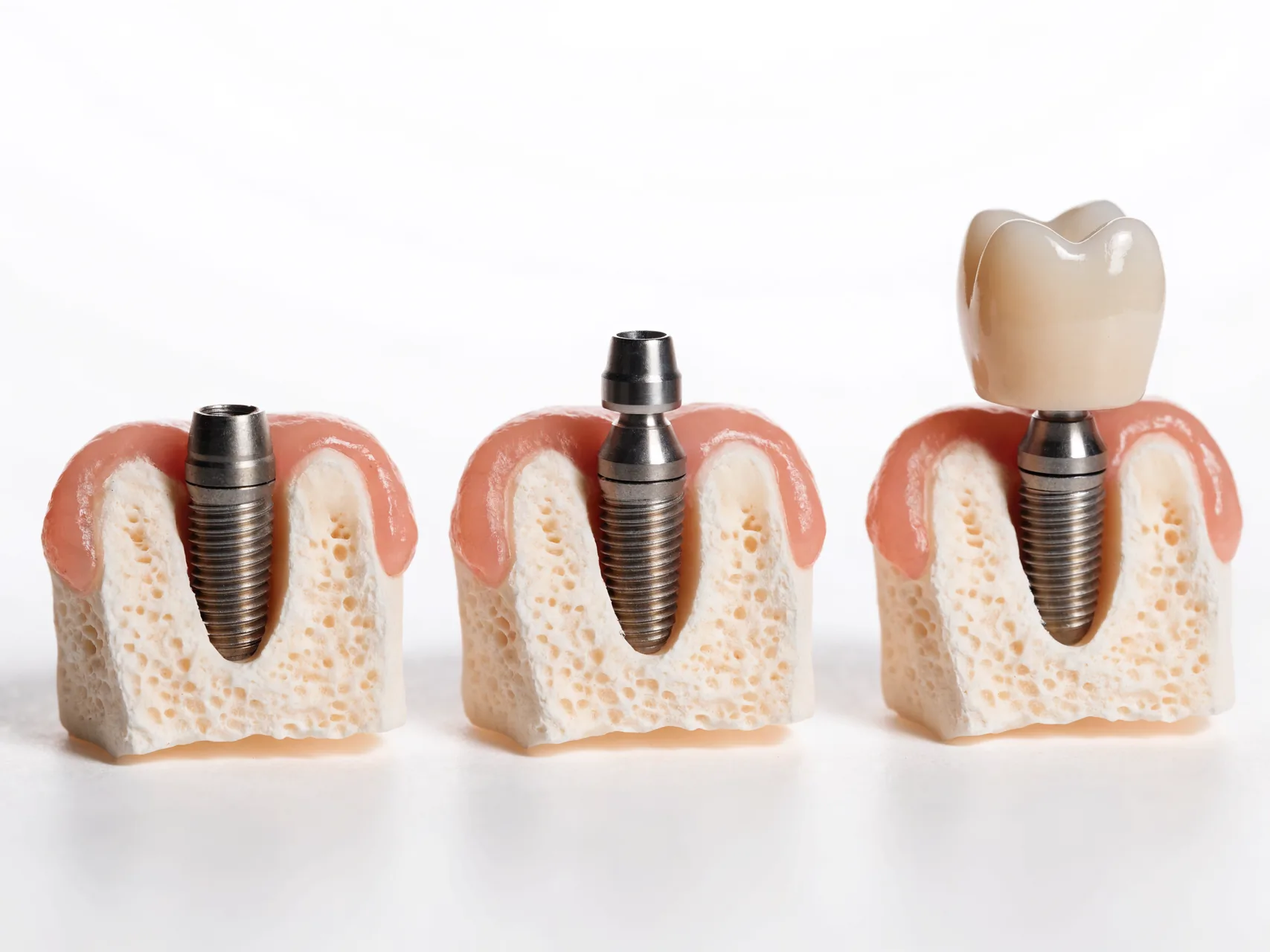
An implant case contains several linked but distinct units: the implant fixture in bone, the connecting components, the restoration, the surrounding tissues and the patient who uses and maintains them. Research that reports only fixture retention cannot answer every question about the complete treatment.
A full-arch restoration supported by several implants is not analysed in the same way as a single crown on one implant. If one component needs intervention but the overall restoration continues to function, the study needs a rule for counting that event. If a patient has several implants and one develops a problem, an implant-level analysis and a patient-level analysis will produce different impressions.
Ask whether results are reported per implant, per restoration, per jaw or per patient. Patient-level reporting often matters more when you are trying to understand the chance that a person will need any additional care. Implant-level reporting can make a large multi-implant cohort look more stable because each person contributes several units.
Read the Cohort Before Reading the Conclusion
The cohort is the group that entered the study. Its definition controls how far the findings can travel.
Look for the inclusion and exclusion criteria. Did the study include people with a history of gum disease? Were smokers included, excluded or analysed separately? How were medical conditions, medication, previous radiotherapy, bruxism, bone grafting and maintenance attendance handled? Were the implants placed in healed sites, extraction sites or both? Did the study include single crowns, bridges, full-arch restorations or a mixture?
Also check where the cohort came from. A university trial with strict selection and specialist follow-up may not represent routine commercial practice. A private-provider series may reflect ordinary workflows but can be vulnerable to incomplete records, selective reporting and conflicts of interest. A registry can include broader practice but may contain less clinical detail. No design is automatically useless; each answers a different question.
The setting, referral pattern and operator experience matter. A result from carefully selected patients treated under a tightly controlled protocol should not be described as a universal expectation.
Check Whether the Starting Denominator Is Visible
Long-term percentages are impossible to interpret if the original denominator is unclear. A trustworthy report states how many patients, implants or restorations entered the cohort, how many were eligible at each review point and how many were actually examined.
Watch for a denominator that quietly changes. A report may begin with all treated patients but later describe only those who completed review. If the paper does not show how many people moved away, declined review, died, changed provider or could not be contacted, the apparent long-term result may be too optimistic or simply uncertain.
Ask whether early events were included. Sometimes a study begins its clock only after integration or after the final restoration is fitted. That design excludes problems that occurred before the starting point. It may be suitable for a specific research question, but it is not the same as following every patient from the initial procedure.
Follow-Up Attrition Is Not a Footnote
Attrition means that some participants are no longer observed. It is one of the most important limitations in long-term clinical research.
People who return for maintenance may differ from people who disappear from follow-up. Regular attenders may be more engaged with hygiene and monitoring. On the other hand, some people who feel well may see no reason to return. Others may seek care elsewhere after a problem. Without information, missing participants cannot simply be assumed healthy or assumed to have failed.
Look for a flow diagram or table explaining losses to follow-up. The report should distinguish known events from unknown status. It should describe attempts to contact participants and whether outside clinical records were sought. Sensitivity analysis can test how conclusions change under different assumptions about missing data.
The longer the observation period, the more attrition deserves attention. A very long label with weak retention may provide less useful evidence than a shorter study with careful and transparent follow-up.

Understand Time-to-Event Analysis
Long-term implant studies often use time-to-event methods. These methods account for participants who enter at different times or are observed for different lengths of time. A survival curve is not the same as a simple percentage of devices remaining at the last appointment.
Censoring means that observation ended without the event being recorded. A participant might reach the study end, move away or stop attending. Censoring is a statistical mechanism, not proof that the implant remained healthy afterwards. The analysis generally assumes that censored participants are not systematically different in ways that distort the result. That assumption should be considered, not hidden.
Confidence intervals show uncertainty around an estimate. As fewer participants remain under observation, uncertainty usually grows. A smooth curve can therefore look more precise than the available data justify. Read the number still at risk beneath the curve, not only the line itself.
Competing risks also matter. A person may become unavailable for implant review because of unrelated health events or death before the outcome of interest occurs. Different analytical approaches handle those circumstances differently. The method should match the question being asked.
Do Not Treat Survival and Success as Synonyms
An implant can survive while requiring treatment for inflammation, bone change, component wear, bite problems or restoration repair. If a study reports survival alone, look for separate complication and maintenance data.
Success criteria should be defined before results are analysed. Ask whether the study used clinical examination, calibrated radiographs, symptoms, mobility, tissue measurements and patient-reported function. Check whether examiners were trained and whether their measurements were tested for consistency.
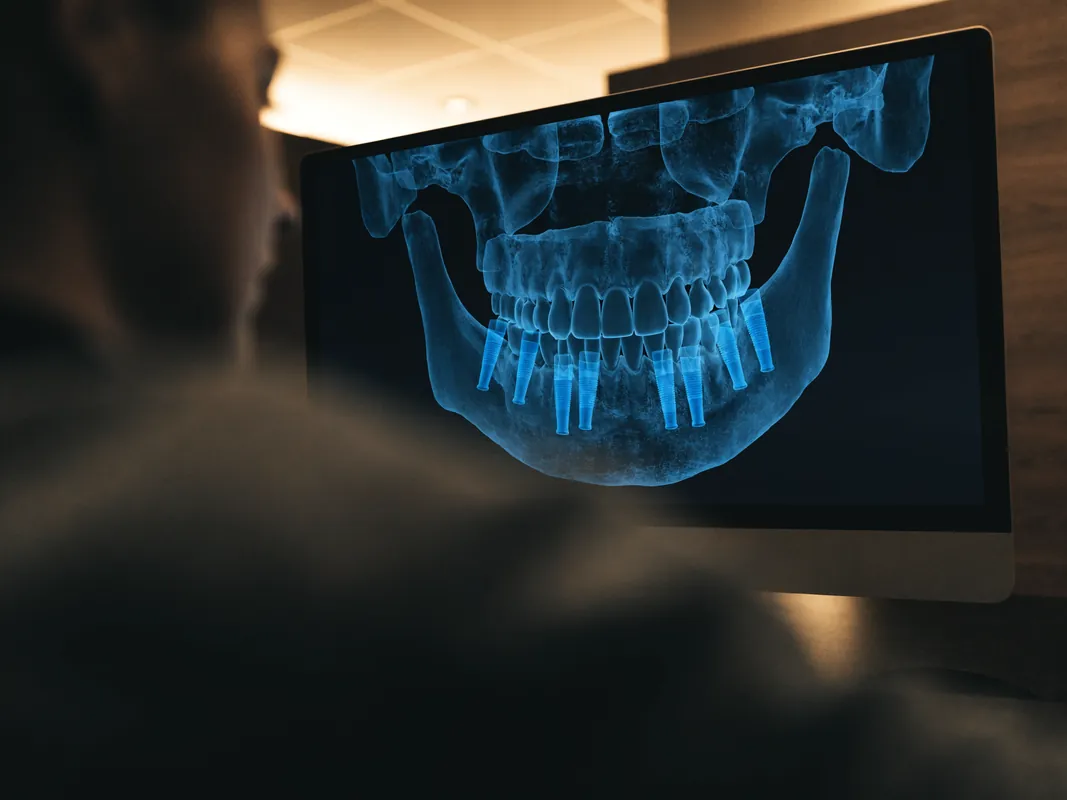
Radiographic bone changes can be measured from different reference points with different imaging methods. Small differences in technique, angulation and calibration can affect the apparent result. A paper should explain how images were standardised and who read them.
The most useful evidence describes not just whether an implant remained present, but what care was needed to keep the complete treatment functional.
Look for Biological and Mechanical Outcomes Separately
Biological outcomes concern the tissues and healing around the implant. Mechanical and prosthetic outcomes concern components and restorations. Combining them into one broad category can hide the practical burden of care.
For biological reporting, look for clear diagnostic criteria rather than vague labels. The report should state which clinical signs, radiographic findings or progression rules were required. It should explain whether disease was assessed at implant level or patient level and whether baseline records existed for comparison.
For mechanical reporting, ask whether the study recorded loosening, wear, fracture, chipping, loss of retention, replacement of components, repair of the restoration and bite adjustment. Minor maintenance and major reconstruction are different events and should not be counted as equivalent.
When reading a paper, make a simple table with three columns: implant events, tissue events and restoration events. If the article provides only one of those categories, note the gap rather than assuming the others were uneventful.
Account for Clustering and Multiple Implants
Several implants in one person are not independent observations. They share the same health conditions, behaviours, oral environment and maintenance pattern. Treating every implant as unrelated can make a result appear more precise than it is.
Check whether the analysis adjusted for clustering by patient. In full-arch cases, implants also work together as part of one restoration. A problem affecting one component can change load or maintenance for the entire reconstruction. Patient-level and restoration-level analyses help reveal that context.
This matters when comparing a study of single implants with a study in which each participant contributes several implants. The total number of implants may look large while the number of independent patients is much smaller.
Patient Factors Change Applicability, Not Destiny
Research often examines smoking, previous gum disease, diabetes control, oral hygiene, bruxism, medication, age and maintenance attendance. These factors should support a case-specific discussion, not a deterministic prediction.
Ask how each factor was defined. "Smoker" can represent different exposure histories. "Diabetes" can group people with different control, duration and complications. "Periodontal history" can mean treated stable disease or active untreated inflammation. If definitions are vague, the apparent association is difficult to apply.
Age alone is a poor shortcut for biological suitability. Overall health, anatomy, medication, dexterity, ability to clean and ability to attend review may be more relevant. The responsible clinician should connect the evidence to your history and examination rather than treating a demographic label as a decision.
Some factors can change over time. A participant may stop smoking, develop a new medical condition, change medication or stop attending maintenance. Long-term studies are stronger when they update these exposures rather than recording them only at baseline.
Maintenance Is Part of the Intervention
Implant longevity evidence often comes from cohorts with structured maintenance. That support may include professional cleaning, tissue assessment, bite review, reinforcement of home care and timely management of problems. If the maintenance programme is not described, it is difficult to reproduce the context in which the result was achieved.
Ask how often participants were expected to attend, what happened during review, who provided it and how attendance was recorded. More importantly, ask how your own maintenance will work after treatment. The schedule should reflect your tissue health, restoration design, cleaning ability, risk factors and local access to care.
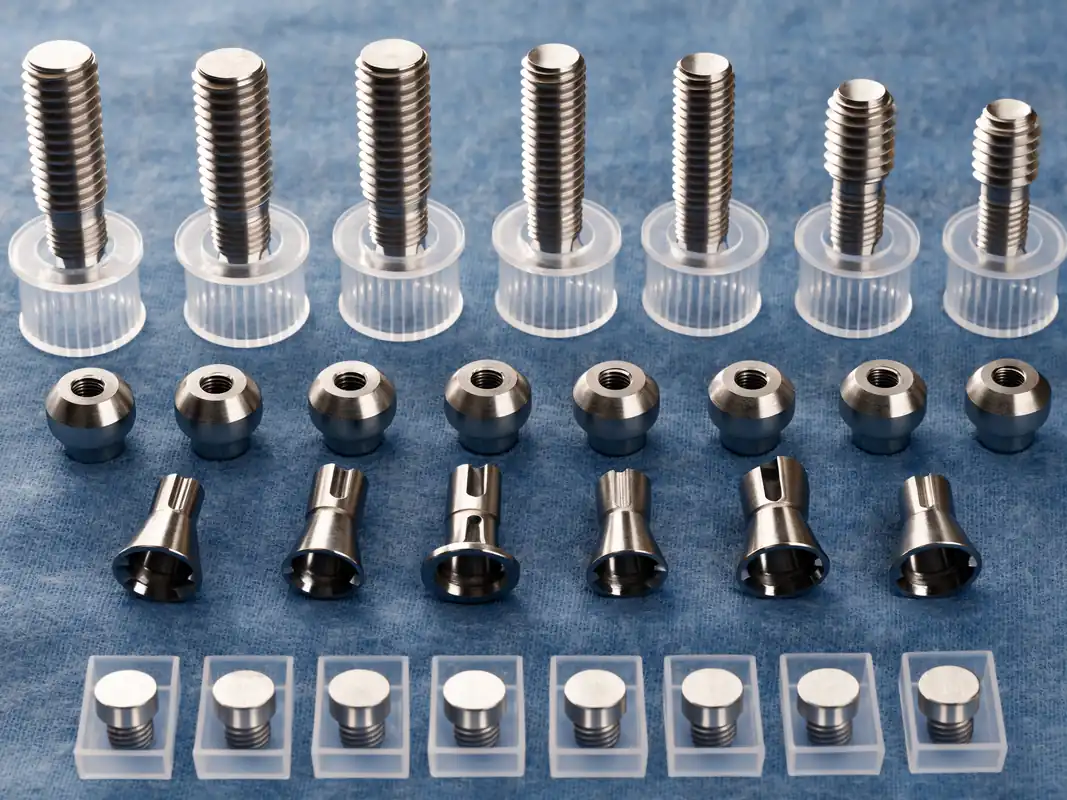
Home care instructions should be specific to the restoration. A single implant crown, an implant bridge and a full-arch restoration may require different tools and techniques. Confirm who will demonstrate cleaning and how a local clinician can access or remove components if necessary.
Maintenance is not evidence that a device will never need intervention. It is part of the continuing care required to monitor tissues, function and components.
The Restoration Design Can Drive Long-Term Work
Patients often focus on the fixture while living day to day with the restoration. Design influences speech, cleaning access, bite, repairability and the way forces reach the implants.
Ask how the restoration will be retained, how it can be accessed for maintenance, which components are replaceable and whether the design allows local repair. Clarify the material, framework, connector design and laboratory responsibility. A material name alone does not describe the quality of fit, contour, occlusion or hygiene access.
The study you read should match the restoration type being proposed. Evidence about a single crown cannot automatically describe a full-arch reconstruction, and evidence about a removable design cannot automatically describe a fixed one. Make the provider state which evidence is relevant to the actual plan.
Brand Names Do Not Replace Product-Level Evidence
A brand can contain several implant lines, surface generations, connections and component families. Research about an older product should not be transferred automatically to a newer or materially different system. Likewise, results for one indication or placement protocol may not apply to another.
Ask for the exact product family and component reference in the written plan. Then check whether the cited study used that product or a genuinely comparable predecessor. Review the study population, restoration and protocol rather than treating the logo as the evidence.
Avoid rankings that compare a named system with a vague category such as generic. Such comparisons often combine unlike products, patient groups and study designs. A fair comparison needs the same outcome definition, similar cohorts, similar follow-up and a transparent source.
Traceability still matters. Request the product and component identifiers that a future clinician would need. Traceability documents what was used; it does not by itself predict the result.
Operator and Facility Claims Need Their Own Evidence
Published research about implants does not prove that a particular clinic reproduces the same results. If a provider presents its own long-term dataset, evaluate it as a separate cohort.
Ask for the provider's exact legal name, treatment sites, start and end dates, inclusion criteria and original denominator. Request the definitions of survival, success, complication and loss to follow-up. Ask whether every treated patient was eligible or whether only selected cases entered the report. Confirm who collected the data, who analysed it and whether the results were externally reviewed.
The dataset should distinguish clinicians, procedures, products, restoration types and maintenance pathways where those differences matter. It should also disclose conflicts of interest and changes in technique over time. A marketing sentence without a methods document is not a clinical audit.
Do not transfer a clinician's experience claim to a facility, or a facility's dataset to every clinician working there. Match the evidence to the person, entity, procedure and date range actually claimed.
Source Date and Product Generation Matter
A publication date is not the same as the treatment date. Long-term evidence published today may describe procedures performed many years earlier. That history is valuable, but the components, imaging, planning, restoration materials and maintenance protocols may differ from current practice.
Read the recruitment period and treatment period. Identify any changes in product generation, surgical technique, diagnostic criteria or restoration design during follow-up. A long cohort can become heterogeneous if the method evolves while participants are being treated.
Conversely, a new product may have limited direct long-term observation even when related systems have broader evidence. The honest conclusion is about the maturity and relevance of the evidence, not that old is automatically better or new is automatically worse.
Every public summary should show the source and the date it was last checked. Travel websites and clinic pages should not present an undated number as if it were a live personal forecast.
Compare Systematic Reviews, Trials, Cohorts and Audits Carefully
Different study designs serve different purposes.
A systematic review can assemble many studies, but its conclusion depends on the quality and compatibility of the included evidence. Check whether the authors combined unlike designs, definitions or follow-up periods. Look for an assessment of bias and heterogeneity.
A controlled trial can compare protocols under defined conditions, but strict eligibility may limit relevance to routine care. A prospective cohort can collect consistent data over time but may still lose participants. A retrospective cohort can cover long periods using existing records, yet missing documentation and selection can be substantial. A registry can provide broad real-world coverage while offering less detail about each clinical decision.
A provider audit may help you understand local practice if the methods and denominator are transparent. It should not be treated as equivalent to independent research merely because it uses a chart or scientific language.
Use the study design to decide what question the evidence can answer. Do not ask one source to answer more than it was built to measure.
Watch for Selective Reporting and Conflicts
Selective reporting occurs when favourable outcomes receive attention while repairs, exclusions or missing participants remain obscure. Compare the methods section with the results. Every outcome declared in the protocol should be accounted for, including adverse events and additional procedures.
Funding and author relationships do not automatically invalidate research, but they should be disclosed. Ask whether the manufacturer supplied products, funded analysis or employed any authors. Independent replication by other groups can strengthen confidence that a finding is not unique to one setting.
Be cautious with conference slides, sales brochures and unsourced tables. They may omit the details needed to judge bias. Trace a claim back to a full report whenever possible.
Translate Evidence Into a Personal Decision
Research informs a clinical conversation; it does not replace diagnosis. Ask the responsible clinician to explain how your anatomy, tissue health, medical history, medication, habits, bite and ability to maintain the restoration affect the available options.
The discussion should include alternatives to implant treatment. Depending on the condition, those may include retaining and restoring a tooth, a bridge, a removable option, orthodontic space management, monitoring or no immediate treatment. Each option has different biological costs, maintenance needs and uncertainties.
Request a written plan that identifies the proposed implant and restoration, responsible clinicians, facility, provisional assumptions, examinations still required, alternatives, major risks, component traceability, maintenance pathway and process if additional care becomes necessary. If the evidence cited does not match the proposed treatment, ask for a more relevant source or a clearer statement of uncertainty.
Provider Audit Questions
Use these questions when a clinic or coordinator presents a long-term claim:
- What legal entity owns the dataset?
- Which treatment sites and clinicians contributed cases?
- What period did recruitment cover?
- Who was included and excluded?
- Is the denominator patients, implants, restorations or jaws?
- When does observation begin?
- How are survival, success and complications defined?
- How many participants were eligible and examined at each stage?
- How are missing participants handled?
- Are biological and mechanical events reported separately?
- Is clustering by patient considered?
- Which products, component generations and restoration types were used?
- What maintenance programme accompanied treatment?
- Who collected, analysed and reviewed the data?
- Is there a protocol, full report or independent publication?
- When was the source last checked?
If those questions cannot be answered, treat the claim as unverified marketing rather than a personal forecast.
Long-Term Evidence Decision Checklist
Before relying on a longevity statement, confirm that you can identify:
- The exact outcome and unit being measured
- The starting cohort and denominator
- Inclusion and exclusion criteria
- Treatment setting and operator context
- Product family and restoration type
- Follow-up duration distribution, not only a maximum label
- Attrition and reasons for missing follow-up
- Statistical method and uncertainty
- Biological, mechanical and patient-reported outcomes
- Maintenance conditions
- Source, funding and conflicts
- Treatment and publication dates
- Similarities and differences between the evidence and your case
- The clinician responsible for applying the evidence to your plan
A claim that passes this checklist may still contain uncertainty. The value of the checklist is that the uncertainty becomes visible and discussable.
Frequently Asked Questions
Does implant survival mean the treatment had no problems?
No. Survival generally means the implant remained in place under the study's definition. The restoration may have needed repair, tissues may have required treatment or the patient may have reported limitations. Read complication and patient-reported outcomes alongside survival.
Why do different studies report different results?
They may study different patients, products, restoration types, clinicians, maintenance programmes and outcomes. They may also handle missing follow-up and early events differently. Compare methods before comparing conclusions.
Is the longest study automatically the strongest evidence?
No. A long observation label is useful only when the starting cohort, attrition, outcome definitions and remaining sample are transparent. A shorter, well-retained and carefully measured cohort can answer some questions more reliably.
Can research predict how long my implant will function?
Research can inform a range of possibilities and identify relevant risk factors. It cannot state the future of one patient. Your clinician must combine evidence with examination, imaging, medical history, restoration design and maintenance access.
Does a well-known brand prove better longevity?
No. The evidence must match the exact product family, indication, component system, cohort and protocol. A logo is not a substitute for a source, and a broad brand comparison may combine unlike evidence.
What should a provider's own dataset include?
It should identify the legal entity, cohort, denominator, treatment period, outcome definitions, attrition, products, restoration types, maintenance pathway, analysis and review process. A headline without methods is not enough.
Why does maintenance affect study results?
Maintenance can detect tissue, hygiene, bite and component issues before they become more difficult to manage. If a study included structured care, its outcomes should not be applied without considering whether a similar pathway is available to you.
What records will help future care?
Ask for a treatment summary, imaging, product and component identifiers, restoration and laboratory information, relevant clinical measurements and maintenance instructions. A future clinician needs case-specific records, not just a brand name.
How should I use an impressive statistic in an advertisement?
Trace it to the original source. Check the outcome, denominator, cohort, attrition, product, restoration, maintenance and dates. Then ask the responsible clinician to explain why it is relevant to your proposed treatment. Until that chain is clear, treat it as unverified.
Final Principle
Long-term evidence is most useful when it makes uncertainty clearer rather than hiding it behind one number. A responsible decision separates implant survival from complete treatment success, keeps lost follow-up visible, matches the cohort and product to the proposed case, and treats maintenance as part of care. Ask for the source, methods, dates and written plan before allowing a research estimate to become a personal expectation.