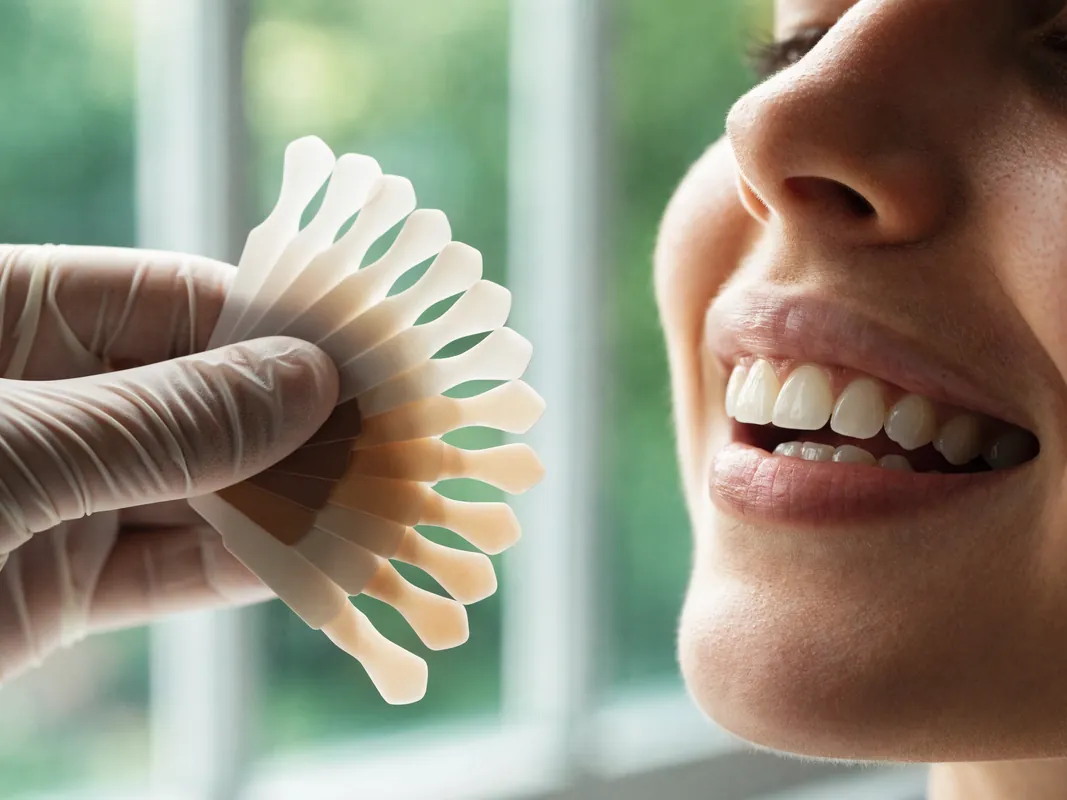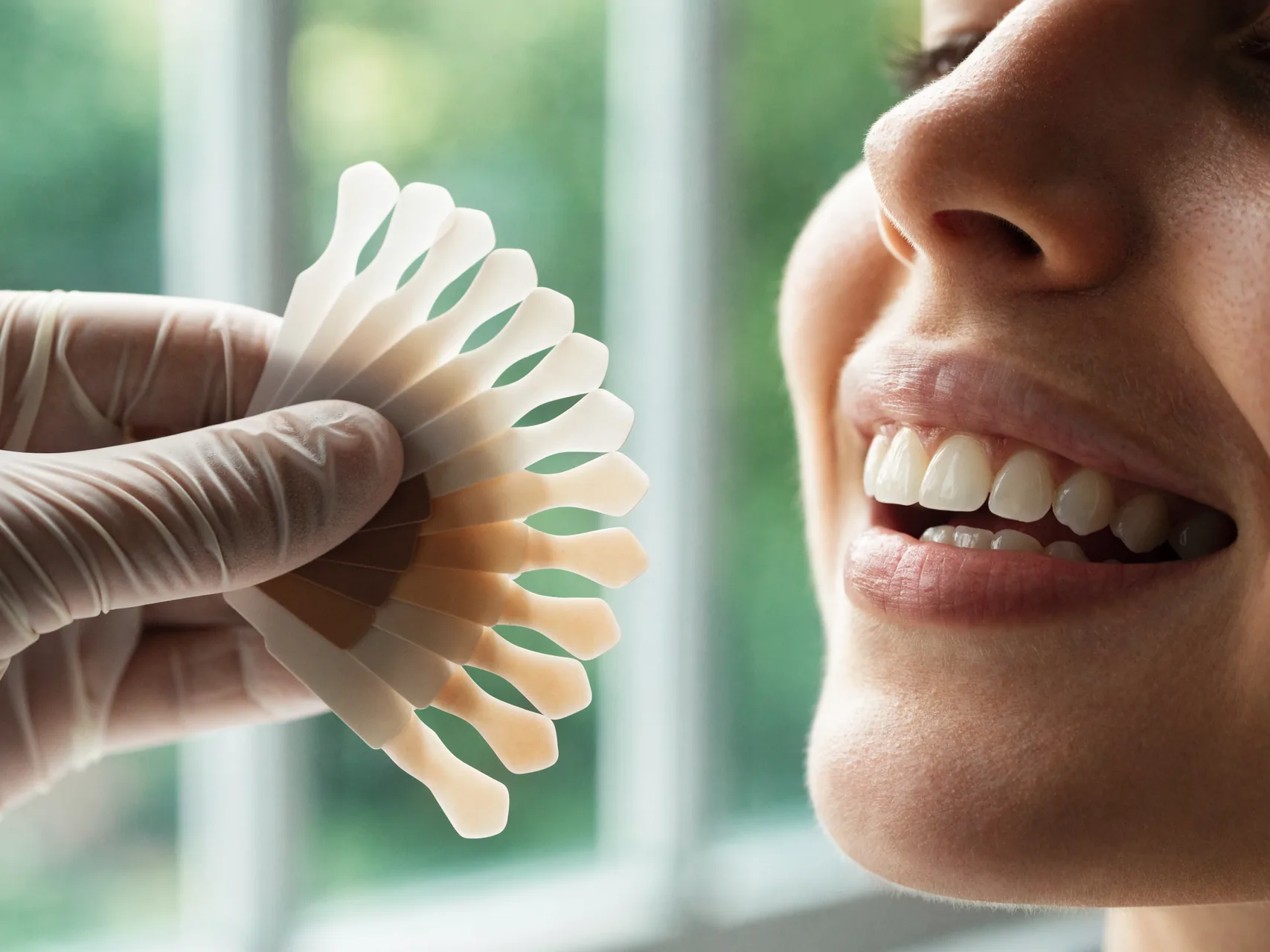
BriteSmile is a brand clue, not a complete treatment specification
BriteSmile has been used for professional light-assisted tooth-whitening systems, gels, lights and tissue-protection accessories. The name does not identify one current product, one peroxide formulation, one light model, one legal manufacturer, one market authorisation or one clinical protocol. A proposal saying BriteSmile whitening therefore needs documentary clarification before a patient can compare it with another supervised whitening option.
Current official Philips global pages exist for [Philips Zoom BriteSmile DIS384/01](https://www.philips.com/c-p/DIS384_01/britesmile) and [Philips Zoom BriteSmile DIS385/01](https://www.philips.com/c-p/DIS385_01/britesmile). Both describe BriteSmile in-office whitening and a proprietary hydrogen-peroxide gel used with a BriteSmile light system. Their presence on a global site confirms that these product codes have official Philips pages; it does not establish that either code is currently placed on the Turkish market, supplied to a named clinic, supported with a particular lamp or used in one patient.
The downloadable [DIS384/01 product sheet](https://www.documents.philips.com/assets/20201025/1796e1beb49a4bc6adaeac5f00e86528.pdf) and [DIS385/01 product sheet](https://www.documents.philips.com/assets/20201025/e4b3fdd928e44c089ce1ac5f00ee2c59.pdf) carry an issue date in 2019 and say that specifications can change. That date matters. A sheet can remain online after distribution, labelling, legal manufacturer, formulation, instructions or servicing arrangements have changed. Treat it as dated product evidence, not a live inventory statement.
This page is a neutral verification and whitening-decision guide. It does not state that WeCare, a particular clinic, dentist, hygienist, therapist, intermediary or salon stocks, uses, sells, prescribes or is authorised for a BriteSmile product. It does not identify the gel concentration in a proposed case, promise a shade change, publish an outcome percentage, promise absence of sensitivity, set a treatment calendar or establish a commercial remedy. Those facts require the physical product, current local documents and a named legal dental provider.
The defensible sequence is:
- identify the cause and distribution of discolouration;
- confirm oral health and whether whitening is appropriate;
- compare non-whitening and whitening alternatives;
- identify the exact BriteSmile-labelled product, gel, light and accessories;
- verify manufacturer or responsible-person identity and market status;
- check current product instructions, batch, expiry and storage;
- document professional responsibility, consent and actual procedure;
- plan sensitivity, restoration mismatch, aftercare and local review.
Brand verification is only one part. A genuine product can still be unsuitable, expired, incorrectly stored or used without adequate screening. A sound whitening plan can also use a different documented product.
Distinguish mark, legal manufacturer, distributor and provider
Four identities are often compressed into the word BriteSmile:
- trade mark or brand: the sign used to identify goods or services;
- legal manufacturer or responsible person: the entity legally identified for the exact product and market;
- distributor or importer: the business supplying it in a jurisdiction;
- dental provider: the legal person or organisation responsible for examination, consent and care.
These roles can change independently. The Philips pages use the title Philips Zoom BriteSmile and sit on a Royal Philips website. Their product sheets are copyrighted by Koninklijke Philips N.V. Historical United States FDA records, however, name BriteSmile, Inc. as the applicant for specific tissue-protection devices. That history does not prove that BriteSmile, Inc. is the current manufacturer of DIS384/01 or DIS385/01, nor that Royal Philips is the legal manufacturer printed on every BriteSmile-labelled consumable in every country.
Ask to see the physical box, syringe, vial, barrier material and any device label. Copy the legal manufacturer, responsible person, importer, product code and market markings exactly. If a distributor appears, retain its invoice and contact. If the mark owner differs from the product manufacturer, record both rather than treating trademark ownership as device or cosmetic-product responsibility.
The current [USPTO trademark search service](https://www.uspto.gov/trademarks/search/search) can help research United States marks, assignments and status. A trade-mark database result does not prove product composition, market notification or use in a case. Conversely, a product label should not be used to make an unsupported statement about worldwide trademark ownership. State the question each record answers.
Separate current product evidence from historical brand records
Historical primary sources are useful for identifying old systems. They are not proof of current supply. The FDA database entry for [BriteSmile Barrier Material K010935](https://www.accessdata.fda.gov/scripts/cdrh/cfdocs/cfpmn/pmn.cfm?ID=k010935) names BriteSmile, Inc. and a 2001 decision. The entry for [BriteSmile Masking Cream K040797](https://www.accessdata.fda.gov/scripts/cdrh/cfdocs/cfpmn/pmn.cfm?ID=K040797) names the same applicant and a 2004 decision. The associated [K040797 summary](https://www.accessdata.fda.gov/cdrh_docs/pdf4/K040797.pdf) describes the masking cream as an accessory to barrier material for soft-tissue protection in whitening.
Those records establish what the identified United States submissions concerned at that time. They do not establish:
- that the same products remain manufactured;
- that an old clearance applies to a later gel or lamp;
- that a current item uses the same formulation;
- that the product is notified or lawful in Turkey, the EU or Great Britain;
- that a box offered today came through a legitimate supply chain;
- that an FDA record approves a clinic or treatment plan;
- that a historical lamp is serviced or compatible with a current consumable.
When an offer relies on a historical name, request current label evidence. If current documents cannot be produced, describe the product status as unresolved. Do not transform an archived record into a current-market claim.
Identify DIS384/01 and DIS385/01 without assuming they are interchangeable
The two official Philips global pages use distinct product codes but display closely similar public copy. The public pages do not explain every difference between the codes. That is a reason to request product-specific labelling and instructions, not to assume that one code is a duplicate or replacement for the other.
For the proposed product, record:
| Product field | Case evidence required |
|---|---|
| Brand presentation | Exact wording on the physical product |
| Product code | DIS384/01, DIS385/01 or another exact labelled code |
| Legal identity | Manufacturer or responsible person printed for the market |
| Consumable | Gel trade name, form and intended-use wording |
| Active system | Hydrogen peroxide present or released, as labelled |
| Concentration | Exact ready-for-use or released concentration stated on label |
| Production | Lot or batch and expiry |
| Instruction | Current product-specific IFU or authorised directions |
| Light | Exact device model, serial and compatible-use document |
| Protection | Barrier, masking material and eye-protection identity |
| Market | Country-specific notification, listing or responsible-person record |
| Provider | Named dentist and legal dental facility responsible for care |
Do not call a session DIS385/01 because a web page was printed. Do not call a gel BriteSmile because it is placed beside a BriteSmile lamp. The records must converge.
Do not merge BriteSmile, Philips Zoom and WhiteSpeed by implication
The Philips BriteSmile pages also link or refer visitors to Philips Zoom WhiteSpeed copy. A related corporate portfolio does not make BriteSmile, Zoom WhiteSpeed and every Philips professional whitening product the same system. Product codes, gels, activation methods, barriers, instructions and market status can differ.
The quote should state whether the actual system is BriteSmile, Philips Zoom WhiteSpeed, another Philips product or a mixed setup. A mixed setup requires written compatibility and legal justification for every gel, device and accessory. A device bearing one mark should not be used to authenticate a consumable bearing another.
If a provider says BriteSmile/Zoom, ask which exact product is meant. If the answer changes between the website, consent form and physical label, pause until the identity is reconciled. Brand familiarity is not a compatibility document.
The physical gel label controls the peroxide claim
The current Philips pages say the product uses a proprietary hydrogen-peroxide gel but do not publish a concentration in the visible specification. An older Philips-hosted study used named concentrations with a BS4000 lamp in a particular research protocol. That research does not prove the concentration, formulation or instructions of DIS384/01, DIS385/01 or a product currently offered in Turkey.
Ask for the actual unopened consumable before treatment. The label or authorised directions should identify active substance, concentration present or released where required, ingredients or warnings, intended user, product code, lot, expiry, storage, legal manufacturer or responsible person and market-specific language. If carbamide peroxide or another peroxide-releasing compound is named, record the labelled hydrogen-peroxide equivalent where the law requires it rather than performing an informal conversion.
Never infer concentration from syringe colour, light model, treatment name, historical brochure or the phrase professional strength. Do not accept a handwritten sticker over an unreadable original. If the concentration is absent where it should be declared, the product identity and lawful-use basis remain unresolved.
A lamp does not authenticate the gel
A BriteSmile-branded light can outlast the consumables and business arrangements originally associated with it. Record model, serial number, manufacturer label, electrical or device status, servicing history, compatible-use instructions and the exact gel it is intended to accompany. Check whether protective eyewear, barriers, positioning and maintenance requirements remain supported.
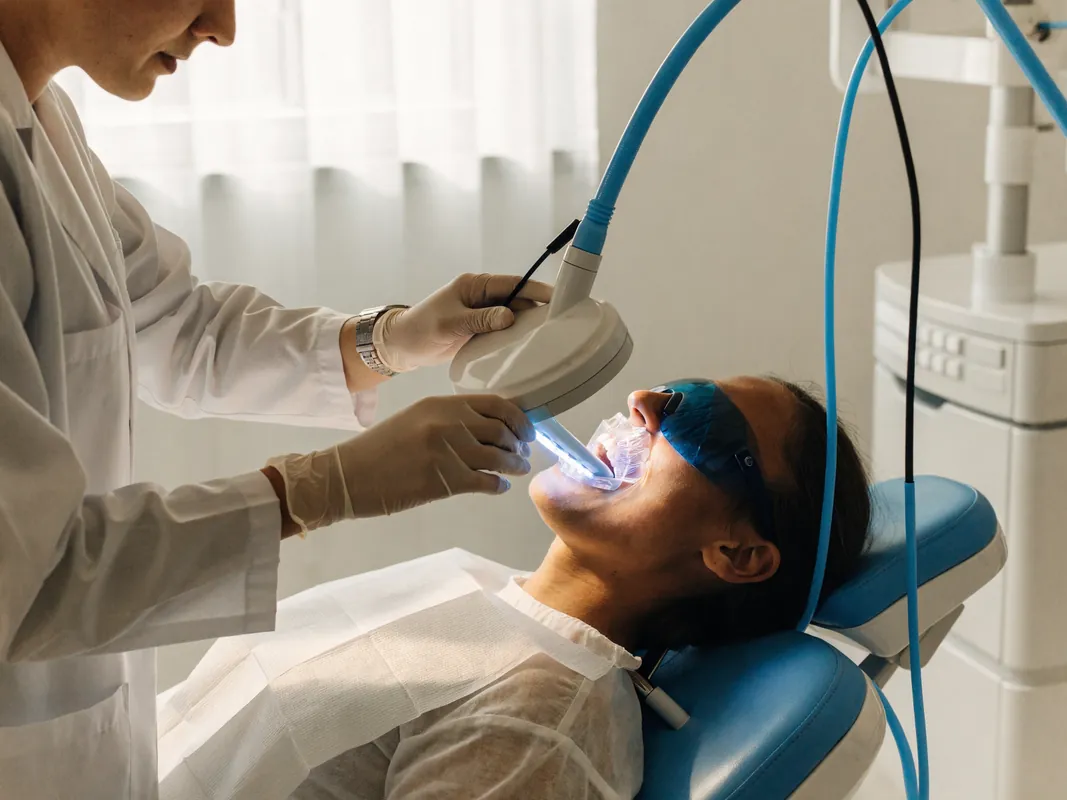
Do not assume that a blue light activates any peroxide gel safely or improves the final clinical effect. Wavelength, energy, heat, exposure, distance, gel chemistry and tissue protection are system-specific questions. A lamp used as a clinic prop or photographed in advertising is not evidence that it was used, serviced or paired with the labelled consumable.
An independent [systematic review of light sources in in-office bleaching](https://pubmed.ncbi.nlm.nih.gov/29893625/) found that light was not essential for the aesthetic result across the included comparisons. A newer [umbrella review of light and laser activation](https://pubmed.ncbi.nlm.nih.gov/42076873/) reported no consistent improvement in final whitening from activation and identified parameter-dependent safety questions. Neither source evaluates every BriteSmile product or prescribes a protocol. They show why the light should be justified rather than treated as proof of value.
Professional-use and legal-provider boundaries depend on jurisdiction
Whitening is not simply a retail beauty service in every country. The person who examines, prescribes, supplies or applies a peroxide product may need a particular professional status, and permitted concentrations or routes can differ. Verify the law where the patient is treated, not where the website is hosted.
For Great Britain, the [General Dental Council tooth-whitening position statement](https://www.gdc-uk.org/docs/default-source/what-is-the-legal-position/tooth-whitening-position-statement.pdf?sfvrsn=16f71e9_4) says whitening is the practice of dentistry and addresses who may provide it. It also describes restrictions for cosmetic products containing or releasing hydrogen peroxide. The separate GDC [working-within-the-law explanation](https://www.gdc-uk.org/standards-guidance/standards-and-guidance/working-within-the-law/what-is-the-legal-position/lists/what-is-the-legal-position/8a12098a-5d86-4734-9cf8-711538d59a1a) reinforces the registered-professional boundary. Check the individual on the live GDC register and ask which dentist is responsible; a salon certificate or product training badge is not dental registration.
For the European Union, [Council Directive 2011/84/EU](https://eur-lex.europa.eu/eli/dir/2011/84/oj/eng) sets concentration, labelling, age and dental-practitioner conditions for the specified peroxide range. Those rules are jurisdictional and should be read in their current national implementation. They are not a declaration that a historical BriteSmile gel complies today.
For Turkey, the current [Cosmetics Regulation](https://resmigazete.gov.tr/eskiler/2023/05/20230508M1-1.htm) provides the national cosmetic-product framework, while dental practice and health-facility rules apply separately. Ask the Turkish legal provider to identify the product category, responsible person, notification or tracking basis, permitted professional use and the licensed facility. This page does not infer a Turkish peroxide limit or product notification from EU or UK law.
Verify the dental provider and the facility separately
A genuine product does not authorise the person applying it. Record the dentist’s full name, professional registration or licence route, legal facility name and address, consent owner, record custodian and complaint contact. If a hygienist, therapist or another dental professional participates, identify the prescribing or supervising dentist and the limits of that role under local law.
Ask who will:
- diagnose the discolouration and oral-health status;
- decide eligibility and alternatives;
- prescribe or select the gel and concentration;
- verify the lamp and accessories;
- place soft-tissue protection;
- supervise exposure and stop the procedure if needed;
- manage immediate adverse effects;
- provide records and aftercare;
- respond after the patient returns home.
Do not let an intermediary, hotel, coordinator or beauty business become the unnamed treatment provider. A booking platform can arrange an appointment but should not make the clinical decision. A dentist’s photograph on a website does not establish who will attend or take responsibility in the actual visit.
For a UK patient treated in Turkey, UK registration is not required for the Turkish dentist merely because the patient lives in Britain. Turkish professional and facility law controls treatment in Turkey. A later UK professional independently decides whether to accept follow-up.
Current market status needs product-level evidence
An official global product page, a historical FDA submission and a trademark record answer different questions. None is a Turkish product notification. The provider should produce current market evidence for the exact gel and any regulated device or accessory used in the treatment country. Match legal manufacturer, responsible person, product name, code and label.
The record should include:
- current physical label in the market language;
- legal manufacturer or responsible-person identity;
- importer or distributor where relevant;
- exact product code and formulation identity;
- current product directions or IFU;
- local notification, listing or device status appropriate to the product category;
- supply invoice linking the product to a legitimate professional source;
- lot, expiry and storage history;
- device service and compatibility record;
- final case-use record.
If the provider cannot show current documentation, the safe description is not legacy BriteSmile is fine. It is current product status not demonstrated. The patient can then compare a different, fully documented option or defer treatment.
Authenticity requires a chain, not one branded object
A BriteSmile logo can appear on a lamp, leaflet, wall sign, syringe or screenshot. None alone establishes authenticity. Build a chain in which the current manufacturer page or catalogue, physical label, product code, lot, distributor invoice, current directions and clinical record agree.
Before opening a consumable, photograph the label in focus while preserving privacy and infection control. Record box and syringe identity if both exist. Check tamper evidence or seal condition where applicable. If an outer box and inner syringe carry different lots, codes or expiry, stop and reconcile the difference. If a clinic decants gel into an unlabelled container, case identity and storage can no longer be demonstrated reliably.
For device authenticity, record the permanent model and serial label, not a removable logo. Ask for service history and the manufacturer’s current support route. An old lamp can be genuine but unsupported, incompatible or poorly maintained. A new gel can be genuine but unsuitable for that lamp.
Where uncertainty remains, contact the legal manufacturer or responsible person using an official website, not the telephone number supplied only by the seller. Describe exactly what the manufacturer confirmed: that a code belongs to its portfolio is not proof that the pictured unit entered the case.
Lot, expiry and storage are clinical records
Peroxide formulations and protective materials have storage and shelf-life conditions. The physical label and current authorised directions control them. Record lot, expiry, required temperature or light protection, date opened, single-use or multi-use status and any post-opening period. A refrigerated product should have an auditable storage route; a room-temperature product should not be assumed stable after prolonged heat exposure during transport.
Do not use a product with an unreadable expiry, broken seal, leakage, separation, unexpected colour, damaged syringe or unexplained relabelling. Do not transfer remaining gel between patients or save a single-use item because the package contains more than was needed. If the directions allow multi-use professional storage, record opening and handling according to those directions.
A distributor invoice can support supply date but does not prove correct storage. A refrigerator photograph does not prove continuous conditions. The provider should maintain proportionate stock and storage records and identify any excursion. Travel urgency is not a reason to use a questionable consumable.
Read the exact IFU or authorised directions before treatment
A current product-specific document should identify intended use, users, contraindications or precautions, preparation, protective measures, application, stopping criteria, storage, disposal and adverse-event route as applicable. Search by exact code rather than brand. If DIS384/01 and DIS385/01 have different directions, keep them separate. If no current directions can be obtained, do not reconstruct a protocol from a 2019 marketing sheet.
Save the document title, product code, version, issue date, language and retrieval date. Confirm that it applies in the treatment country. Translate clinically important points accurately for the patient without changing concentration, warnings or units. The dentist should explain how the directions interact with the patient’s examination.
Instructions are not self-executing. They do not diagnose decay, a crack, pulp disease, periodontal inflammation or the cause of one dark tooth. They also do not prove that the provider applied the documented product correctly. The clinical record must connect the instruction to the actual lot and procedure.
Protect soft tissue, lips and eyes with compatible materials
In-office peroxide can contact gingiva, mucosa, lips or eyes if isolation fails or gel moves. The exact protocol should specify barriers, retractors, masking materials, suction, protective eyewear and checks. The historical FDA BriteSmile barrier and masking records show that tissue-protection accessories existed within older systems, but they do not prove that those same products remain current or compatible with DIS384/01 or DIS385/01.
Record the current barrier or masking product by manufacturer, code, lot and expiry. Check its intended use and curing method where relevant. The clinician should inspect the seal before gel placement and monitor during use. If gel contacts soft tissue, stop and manage according to the current product directions and clinical judgement. Do not cover an evolving injury merely to finish the session.
Eye protection should match the device and procedure. A generic pair of coloured glasses is not automatically suitable. Record what was used for patient and staff and check device instructions. The lamp should be positioned and operated by a trained professional under its current supported conditions.
Infection prevention applies to the complete setup
Whitening is non-surgical, but reusable retractors, lamp heads, controls, shade guides, cameras and protective equipment can move between patients. The provider should have validated cleaning, disinfection and barrier procedures appropriate to each item. Disposable tips, syringes, applicators and protective sleeves should follow their labelled single-use status.
Ask how the lamp and touch surfaces are protected and processed, how reusable items are tracked, how gel cross-contamination is prevented and how unused material is handled. A clean-looking lamp is not an infection-control record. Do not allow a syringe tip to contact tissue and return to shared stock unless the product directions and infection protocol explicitly support the system.
The treatment note should record relevant consumables and deviations. If a component falls, is contaminated or loses its protective barrier, replace or reprocess it according to policy rather than improvising because the product is expensive.
Diagnose why the teeth look darker before choosing whitening
Discolouration can be mainly external, internal, developmental, age related, trauma related, medication related, associated with decay or a failing restoration, or limited to one non-vital tooth. A single dark tooth and a general yellow appearance do not automatically need the same treatment. Surface stain may respond to cleaning or behaviour change; intrinsic change may respond differently; a diseased tooth needs diagnosis rather than cosmetic masking.
Record colour distribution, symmetry, history, duration, previous whitening, trauma, sensitivity, pain, restorations, habits, medicines and relevant medical factors. Examine teeth, gums and soft tissues and use imaging or vitality tests only when clinically indicated. Identify white spots, cracks, erosion, recession, exposed dentine, cervical lesions, decay, leakage and periodontal inflammation before peroxide is selected.
If the cause is unclear, explain uncertainty and alternatives. A BriteSmile label cannot diagnose or determine that an office light is the correct route.
Oral health and eligibility screening must be case specific
The current [NHS teeth-whitening guidance](https://www.nhs.uk/tests-and-treatments/teeth-whitening/) says a dentist should check teeth and gums and discusses age, pregnancy or breastfeeding, restorations and possible side effects. NHS guidance is written for the UK public and does not replace Turkish law or individual assessment. It provides a practical screening framework.
Before whitening, review:
- untreated decay or leaking restorations;
- gum inflammation, periodontal disease or ulceration;
- cracks, fractures, erosion and exposed dentine;
- current sensitivity and its triggers;
- pulp or endodontic status, especially for a single dark tooth;
- crowns, veneers, fillings, bonding, implants and dentures in the visible area;
- enamel development or mineralisation differences;
- pregnancy, breastfeeding, age and medical history;
- allergies or prior reactions to gels, resins or protective materials;
- expectations, maintenance and willingness to stop if symptoms occur.
Eligibility is not a permanent badge. New symptoms or findings can change the plan. Treat disease first where indicated and renew consent if the product or protocol changes.
Map natural teeth and restorations before discussing colour
Peroxide changes natural dental tissues differently from crowns, veneers, composite fillings, bonding, dentures and implant restorations. A restoration may stay the same while surrounding enamel changes, creating a new mismatch. It may also conceal the true colour of the underlying tooth or limit what can be assessed visually.
Create a tooth-by-tooth map showing natural surfaces, restorative material, age and condition. Mark visible cervical fillings, veneers, crowns, implant crowns and bonded edges. Photograph and shade-record them separately. Explain which items may require polishing, repair, replacement or no action after colour stabilises, and make clear that any restorative procedure is a separate decision with its own risks and cost.
The NHS guidance cited above says whitening affects natural teeth and discusses crowns, dentures and implants. The [Leeds Teaching Hospitals whitening information](https://www.leedsth.nhs.uk/patients/resources/tooth-whitening-information-for-adult-patients/) likewise explains that existing fillings or veneers do not change colour through whitening. These are general patient sources, not BriteSmile product instructions. They support truthful planning for visible mismatch.
Do not promise that old restorations will blend after whitening. Do not replace sound tooth structure simply to chase a uniform colour without discussing conservative alternatives.
Existing sensitivity needs diagnosis, not a sales reassurance
Sensitivity can arise from exposed dentine, recession, erosion, cracks, caries, leaking restorations, recent procedures, pulp inflammation or other causes. Whitening-related sensitivity may be transient in many cases, but intensity, timing and individual tolerance vary. The provider should record baseline symptoms and investigate warning features before treatment.
The consent discussion should cover:
- chance of tooth sensitivity and soft-tissue irritation;
- uncertainty in severity and duration;
- areas already sensitive or exposed;
- product-specific stopping criteria;
- whom to contact and how quickly;
- what local assessment is needed if symptoms persist or worsen;
- which desensitising products are proposed and their own labels;
- whether the plan can be modified or stopped.
Do not describe BriteSmile as free from discomfort or suitable for sensitive teeth without case evidence. Do not give preventive medicines or desensitising agents by template. The clinician should assess contraindications, interactions and product directions.
Independent evidence can inform the discussion without becoming a prediction. The 2026 [umbrella review of in-office bleaching protocols](https://pubmed.ncbi.nlm.nih.gov/41896506/) describes uncertainty and comparative findings across concentrations, activation and sensitivity strategies. It does not validate one BriteSmile protocol, and the concentrations studied should not be copied onto an unlabelled product.
Record shade honestly and reproducibly
A shade guide number is not a universal measure of whiteness. Visual guides have ordered tabs and brand-specific systems; photographs depend on camera, lighting, exposure, white balance, dehydration and screen. Instrumental measurements require device calibration and a defined colour space. Record the method rather than advertising a count of shades.
Before treatment, record:
- shade system or instrument and calibration status;
- teeth and surfaces measured;
- lighting and hydration conditions;
- photographs with a reference tab where appropriate;
- white spots, bands, translucency, restorations and asymmetry;
- patient priorities and acceptable variation;
- the planned reassessment method.
Use the same method at review when practicable. Immediate colour can be affected by dehydration, so a post-procedure photograph is not the sole basis for a lasting claim. Do not selectively photograph only the best-lit tooth or edit brightness, contrast or colour without disclosure. Consent for clinical photography and marketing use are separate.
No provider can know an exact final shade from the brand alone. Record the goal as a preference and a clinical range of uncertainty, not a promised result.
White spots, bands and uneven colour need advance discussion
Whitening can make pre-existing white spots, developmental bands, fluorosis patterns or differences between teeth more noticeable, especially during early reassessment. Some areas may respond differently because of tissue structure, prior trauma or restoration. The patient should see these features in baseline photographs and understand that uniformity is not assured.
Alternatives depend on diagnosis and can include no treatment, monitoring, stain control, cleaning, carefully planned whitening, microabrasion, resin infiltration, bonding or other restorative approaches. Some alternatives remove or add tooth material and should not be presented as simple upgrades. A specialist opinion may be appropriate when diagnosis is uncertain.
If one tooth is markedly darker, assess vitality, trauma and endodontic history. External whole-mouth whitening may not address the cause. Internal bleaching is a separate procedure for selected non-vital teeth and requires its own diagnosis, product, isolation, risks and restoration plan.
Compare conservative alternatives before in-office light use
The treatment decision should not be BriteSmile or nothing. Depending on the cause and patient preference, alternatives may include:
- no treatment and acceptance of natural colour variation;
- professional cleaning or stain removal;
- reducing tobacco or staining exposures;
- dentist-supervised take-home whitening with an exact labelled product;
- another documented in-office peroxide protocol without light;
- a combined professional pathway where lawful and indicated;
- tooth-specific internal bleaching after endodontic assessment;
- conservative management of white spots or surface defects;
- restorative camouflage only after discussing tooth removal, maintenance and mismatch.
Compare active ingredient, concentration, supervision, tissue protection, time at home, sensitivity plan, restoration implications, records, follow-up and total itemised cost. A faster appointment is not automatically a better biological or aesthetic choice. A lamp is not automatically an added benefit.
The independent light-activation reviews cited earlier found no consistent final advantage across their included comparisons. They do not prohibit a documented light system; they require the dentist to explain why it is used with the exact gel and how risks are controlled.
In-office and take-home whitening are different workflows
An in-office protocol places responsibility on the dental team for isolation, product preparation, exposure and monitoring during the visit. A dentist-supervised home protocol adds tray design, patient handling, storage, dose, adherence and home stopping rules. A product intended for one workflow should not be repurposed for the other because both contain peroxide.
For a home option, record tray design and fit, gel product, concentration, amount, application directions, storage, expected review, what to do after missed or excessive use and how to prevent access by children or others. For in-office care, record gel, lot, barriers, lamp or no-lamp protocol, actual exposure, tissue checks and immediate review.
A clinic may propose both, but each product needs its own label and consent. Do not send an in-office syringe home or place a home-use product under a lamp without explicit authorised directions. Do not use a historic BriteSmile name to imply that every whitening mode is part of one system.
Consent should name the exact product and uncertainty
Valid consent is more than a whitening consent signature. The conversation should cover diagnosis, relevant alternatives, exact active product and concentration, light or no light, foreseeable sensitivity and soft-tissue effects, restoration mismatch, limits of shade prediction, photography, costs, aftercare, local care and the right to pause.
The [GDC consent standard](https://standards.gdc-uk.org/pages/principle3/principle3) requires UK registrants to discuss options and costs and treats consent as an ongoing process. It does not govern a Turkish dentist, but it is a useful expectation for a UK patient’s records. Turkish consent must meet Turkish law and facility rules.
The form should identify the legal provider and product rather than authorise any whitening gel. If the product code, concentration, lamp, protective material or procedure changes, explain the reason and renew consent before continuing where practicable. The final record must match what was used.
Keep treatment consent separate from permission to use photographs in advertising. A patient may agree to care and refuse marketing.
Make the procedure record auditable
The clinical note should connect product evidence to actual use. Record:
- diagnosis and eligibility findings;
- baseline shade method and photographs;
- natural teeth and restoration map;
- legal provider and assisting professionals;
- exact gel trade name and code;
- active substance and labelled concentration;
- lot, expiry, storage and opening check;
- barrier, masking and protective products;
- lamp model, serial, settings source and service status, or no lamp;
- actual application and exposure steps as performed;
- tissue checks, symptoms and any pause or modification;
- post-procedure shade method without an outcome promise;
- aftercare, contact route and planned review;
- adverse-event or product-complaint escalation where needed.
The patient does not need proprietary device engineering data, but should receive a portable summary adequate for local care. The provider should retain original labels and full notes. Do not create the record retrospectively from a standard brochure.
Keep marketing evidence separate from clinical evidence
Manufacturer product pages explain intended positioning. Historical FDA files describe specific submissions. A provider’s before-and-after photographs describe selected cases under unknown or particular conditions. A randomised trial or systematic review answers a defined research question. These evidence types are not interchangeable.
The Philips-hosted [clinical evaluation using the BriteSmile BS4000 lamp](https://www.philips.com/c-dam/b2c/category-pages/personal-care/POHC/resource-library-docs/Clinical-Evaluation-Comparing-Two-H202-Concentrations-Used-with-a-Light-Assisted-Chairside-Tooth-Whitening-System.pdf) reports a small split-mouth study using defined gels and a historical device. It should be read with its sample, protocol, sponsor context and date. It does not identify the gel offered to a patient today and should not support a universal shade or sensitivity statement.
An independent review is broader but can still combine heterogeneous products. Ask whether the exact active product, concentration, lamp and population match. If they do not, describe the evidence as indirect. Avoid turning average colour changes into a personal forecast.
An itemised quote should reveal the actual protocol
The quote should separate:
- examination and diagnostic records;
- cleaning, decay or gum treatment if needed;
- baseline shade and photography;
- exact whitening product and professional application;
- lamp use where planned;
- barriers, protective materials and desensitising products;
- dentist-supervised home trays and gel where separate;
- review and shade reassessment;
- repair or replacement of restorations as a separate optional plan;
- management of unexpected symptoms;
- record release and local handover;
- non-clinical travel services as separate items.
State currency, taxes where applicable, exclusions, cancellation terms and how a product or clinical change affects the quote. Do not accept a headline price that hides product identity. Do not infer quality from cost. The proposed fee should not require the patient to proceed when screening reveals an unsuitable or unresolved condition.
Commercial remedy terms should be written separately from clinical obligations. They cannot promise a biological or colour result.
Aftercare must follow the product and actual findings
Aftercare should come from the exact product directions and the treating dentist’s findings. It may address expected sensitivity, oral hygiene, food or drink advice, tobacco, gel storage for a home pathway, tray cleaning, when to stop and how to contact the provider. Avoid universal white diet rules or a fixed symptom timetable unless supported by the product and individual plan.
The patient should know which symptoms can be monitored and which need assessment. Persistent or increasing tooth pain, spontaneous pain, swelling, ulceration, significant gum injury, altered bite or a cracked tooth should not be dismissed as normal whitening. A local dentist may need to check decay, pulp, crack or tissue injury rather than simply provide a sensitivity product.
Keep the product summary, lot and exposure record accessible. If the patient sees another clinician, that information can distinguish a product question from an unrelated dental problem.
Travel should not compress screening or follow-up
Cosmetic whitening may look easy to add to the end of a dental trip, but recent restorations, tissue healing, sensitivity, dehydration, shade matching and upcoming definitive work can change the decision. The responsible dentist should coordinate whitening with restorative treatment rather than scheduling it around a flight.
Before travel, decide whether the plan needs examination, cleaning, treatment of disease, whitening, shade stabilisation and later restoration matching. Do not fabricate visible crowns or fillings to a pre-whitening shade when the agreed plan is to whiten first unless the consequences are understood. Do not whiten immediately around fresh tissue or recent procedures by calendar assumption.
Before leaving, obtain the product and procedure record, aftercare, local contact, photography and any restorative plan. A clinic message service can support communication but cannot examine a painful tooth or injured mucosa after the patient returns home.
Local handover should be arranged before treatment abroad
Ask a named local dentist whether they are willing to assess whitening-related symptoms or coordinate restoration matching and what records they need. No automatic handover exists. A local clinician may require examination and will make an independent diagnosis.
The handover bundle should include:
- diagnosis and teeth treated;
- baseline health, shade and restoration map;
- exact gel, code, concentration, lot and expiry;
- lamp model and actual protocol;
- barriers and adjunctive products;
- symptoms or deviations during care;
- post-procedure findings and photographs;
- restorations that may mismatch;
- contact and record-release route;
- consent for secure information sharing.
Do not email sensitive photographs or medical history to an unverified address. The patient should control lawful sharing and retain original copies.
Know when urgent assessment is needed
Whitening-related sensitivity is not the only possible cause of pain. Severe or worsening pain, spontaneous night pain, swelling, fever, pus, facial swelling, difficulty opening the mouth, significant soft-tissue injury, persistent eye symptoms after exposure or signs of an allergic reaction need prompt professional assessment. Difficulty breathing, speaking or swallowing or major mouth or facial swelling requires emergency action through local services.
The [NHS dental abscess guidance](https://www.nhs.uk/conditions/dental-abscess/) explains urgent and emergency signs for dental infection. It is not a BriteSmile adverse-event instruction, but it helps prevent serious dental symptoms being mislabelled as expected whitening sensitivity.
If gel enters the eye, stop and follow the exact product first-aid directions and seek appropriate advice. Bring the product label. Do not wait for a return flight or remote reply when symptoms are serious.
Product complaints and adverse events need exact identifiers
If a consumable appears defective, retain the box, label, lot, expiry and photographs without exposing patient data. Record storage, opening, appearance, use and symptoms. Contact the legal manufacturer or responsible person, distributor and relevant regulator through official routes. The provider should also document clinical assessment and care.
A complaint about one lot or accessory should not be generalised to every BriteSmile product. Conversely, a brand-level reassurance should not close a case-specific investigation. Match notices and recalls to exact product code, lot, country and date.
Historical FDA clearance does not mean the FDA has reviewed a later product complaint or current Turkish supply. Each authority has its own jurisdiction and reporting process.
Red flags that justify a pause
Pause when:
- the offer says BriteSmile but no product code is shown;
- DIS384/01 and DIS385/01 are treated as interchangeable without documents;
- BriteSmile, Zoom and WhiteSpeed names change across the quote and consent;
- a historical FDA record is presented as current Turkish approval;
- the gel is unlabelled, decanted or has an unreadable lot or expiry;
- concentration is inferred from syringe colour or an old study;
- a lamp logo is used to authenticate a different gel;
- device model, service and compatible instructions are missing;
- professional registration or legal facility identity is withheld;
- the treatment is offered in a salon without a lawful dental pathway;
- oral-health screening and restoration mapping are skipped;
- exact shade change or absence of sensitivity is promised;
- tissue and eye protection are generic or undocumented;
- consent authorises any equivalent whitening product;
- the quote hides the product and aftercare;
- travel timing overrides a clinical stop or review;
- urgent symptoms are routed only to messaging.
A pause is not a conclusion that the product is counterfeit or treatment is wrong. It creates time to obtain evidence, treat disease or choose another documented path.
BriteSmile verification worksheet
Brand and product identity
- What exact mark appears on the physical product?
- Is the code DIS384/01, DIS385/01 or something else?
- Who is the legal manufacturer or responsible person on the label?
- Which importer or distributor supplied it?
- What do the current country-specific documents say?
- Is the source current or historical, and what question does it answer?
Gel and device
- What active peroxide is present or released?
- What exact concentration is labelled?
- What are lot, expiry, storage and opening status?
- Which current IFU or authorised directions apply?
- What is the lamp model and serial?
- Where is gel-to-device compatibility documented?
- Which barrier, masking and eye-protection products are used?
Clinical decision
- What causes the discolouration?
- Are teeth and gums healthy enough for the proposed route?
- Which teeth are natural and which surfaces are restored?
- What is the baseline sensitivity and risk discussion?
- Which non-whitening and alternative whitening routes were compared?
- How will uneven colour and restoration mismatch be managed?
Provider, consent and records
- Who is the responsible dentist and legal facility?
- What roles do other professionals have under local law?
- Does consent name product, concentration, light, risks and alternatives?
- Will labels, procedure notes, shade records and photographs be released?
- Is marketing consent separate?
- Who handles complaints and adverse events?
Aftercare and travel
- What exact aftercare follows the product directions?
- Who assesses persistent symptoms locally?
- How is future restoration matching coordinated?
- Which records travel home?
- What signs need urgent or emergency care?
- Are travel services kept separate from clinical fees?
Primary and independent sources used here
Current official product identity comes from the Philips global DIS384/01 and DIS385/01 pages and their dated product sheets. Historical primary evidence comes from FDA K010935 and K040797 records. Trademark research should use the live USPTO service. Jurisdictional boundaries use the GDC position, EU Directive 2011/84/EU and the Turkish Cosmetics Regulation, with local professional and facility verification still required.
Clinical context comes from NHS and Leeds Teaching Hospitals patient guidance, GDC consent standards and independent systematic or umbrella reviews of light activation and in-office bleaching. These sources have different dates, products and jurisdictions. None proves current clinic stock, product use in one case, personal eligibility or a future shade.
Final rule: verify product, provider and patient separately
A defensible BriteSmile proposal has three aligned records. The product record identifies exact code, legal manufacturer, gel, concentration, lot, expiry, directions, lamp and market. The provider record identifies lawful dental responsibility, facility, consent, procedure and complaint route. The patient record identifies diagnosis, oral health, natural teeth, restorations, sensitivity, alternatives, actual care and follow-up.
If one record is missing, the brand cannot fill the gap. Ask for evidence before treatment, choose a clearer alternative or defer. The name BriteSmile can support research; it cannot authenticate an unlabelled gel, authorise a provider or predict colour.
What the product name does — and does not — tell you
BriteSmile® is a professional light-assisted tooth-whitening name with current and historical product references. The name can help a patient identify a product family, but it does not establish the diagnosis, the exact model selected, the competence of a treating professional or the quality of the finished treatment. Product ranges, indications and local availability can change. A current manufacturer instruction for use and the legal market status in the country of treatment take priority over a marketing page.
This page is a research guide. It is not a statement that WeCare, a particular clinic or an event clinician stocks or uses BriteSmile®. Availability must come from the named treating provider. If a quotation uses only a broad phrase such as “premium material”, ask for the manufacturer, product family and reference before accepting the plan.
Manufacturer information worth checking
- Official Philips global pages identify DIS384/01 and DIS385/01 as BriteSmile product codes, but a global page is not case inventory or Turkish-market evidence.
- Historical FDA records identify BriteSmile, Inc. for specific barrier and masking products; those records do not identify every later gel, lamp or current legal manufacturer.
- The physical consumable label, lot, expiry, concentration, market document and product-specific directions are stronger evidence than a logo or historical brochure.
- Professional examination, legal provider status and restoration planning remain necessary even when product identity is fully documented.
These points describe the product family at a general level. They are not a recommendation for a particular mouth and they should not be extended to a different line carrying a similar brand name. Begin with diagnosis, oral-health screening, natural-tooth and restoration mapping, then compare documented in-office, dentist-supervised home and non-whitening options. Product selection follows that decision; a historical brand name or illuminated lamp is not evidence of personal suitability.
Questions for the named provider
Ask the professional responsible for treatment to answer these points in writing:
- What is the exact manufacturer, product family, model or material grade proposed?
- What clinical finding makes that selection appropriate for this case, and what alternatives were considered?
- Who is the legal treating provider and who will perform each clinical or laboratory stage?
- Which current instruction for use, contraindications and local regulatory status apply?
- What reference, lot, batch or other traceability record will be retained and shared where the device permits it?
- Which components, cements, abutments, membranes, gels or accessories are included, and are they compatible?
- What follow-up is required, who is responsible after travel, and which costs are excluded from the quotation?
Product verification, evidence and traceability boundaries
Official Philips pages and historical FDA files answer limited identity questions. They cannot prove current Turkish supply, exact gel concentration, lawful provider status, case use or a clinical result. Case evidence requires current physical labels, local market records, provider documents, consent and an actual procedure record.
Useful evidence may include a photograph of unopened labelled packaging before use, the product label, an implant or device record, a laboratory prescription, an invoice identifying the exact material, and the treating provider's signed notes. The appropriate record depends on the product. A logo on a website, a stock photograph, an unlabelled box or a verbal statement is not equivalent to case-specific traceability.
How to compare alternatives fairly
Compare whitening pathways by diagnosis, active substance, exact concentration, supervision, product and device compatibility, sensitivity and soft-tissue plan, restoration mismatch, records, aftercare and total itemised scope. Compare complete documented protocols rather than brand fame.
Compare like with like: indication, exact product, compatible components, laboratory design, operator responsibility, maintenance, staged visits and written exclusions. Do not compare a named product in one quotation with an unspecified category in another. Brand recognition cannot remove biological uncertainty, and no material choice can promise a clinical outcome.
Assessment comes before the brand
A responsible plan starts with medical and dental history, examination and appropriate imaging. Implant decisions can depend on bone, soft tissue, bite, hygiene, smoking, medication and restorative space. Ceramic decisions can depend on remaining tooth tissue, preparation design, opposing teeth and laboratory workflow. Whitening decisions require screening for decay, gum disease, sensitivity and existing restorations. Endodontic and imaging tools are parts of a broader diagnostic or treatment process, not substitutes for professional judgement.
Before paying, request a dated, itemised written plan naming the treating provider, the proposed product, alternatives, material records, visit stages, aftercare responsibilities and financial terms. If the final assessment changes the product or procedure, ask for the reason and revised quotation before treatment proceeds.