A wedding, civil ceremony, engagement or other photographed event can make a person look at their smile more closely. It does not create a dental diagnosis and it does not make a “Hollywood smile” package medically necessary. The event date is useful planning information, but it must not force extraction, tooth preparation, bleaching, gum surgery or bonding before the mouth has been examined and the patient has had time to consider alternatives.
The phrase “wedding smile makeover” can describe very different concerns. One person may want surface stain removed. Another may dislike tooth colour, a chipped edge, a gap, crowding, gum inflammation, an uneven gum line, missing teeth or an old crown that photographs differently. These problems do not share one treatment. Cleaning, whitening, orthodontics, direct composite, veneers, crowns, periodontal care, replacement dentistry, no treatment and postponement each have different indications, risks and maintenance.
This is an educational decision guide for adults planning dental care around an important event, including people considering treatment abroad. It cannot diagnose an individual, decide suitability from photographs, prescribe a material or promise a deadline or appearance. A named dentist must examine the patient, establish oral health, identify the cause of the concern, compare reasonable options, explain uncertainty and obtain continuing consent. An event date cannot override a clinical reason to stabilise disease, wait, revise the plan or stop.
WeCare is not the treating dental provider. Its role is limited to enquiry and referral coordination and, where separately agreed in writing, non-clinical travel logistics. Before sharing health information or paying, identify the named legal provider, clinic address, treating dentist, professional registration route, direct clinical contact, complaint process and indemnity or insurance arrangements. Verify them independently.
The event date is a constraint, not an indication
Start by writing the exact event date, travel dates and any related photographs or social commitments. Then separate that calendar from the clinical question. The fact that a ceremony is approaching does not make veneers safer, whitening suitable, orthodontics faster or inflamed gums ready for elective treatment. It changes how much contingency is available if assessment, healing, laboratory work or an adjustment does not follow the hoped-for course.
Avoid a backward calendar that assigns the same procedure and recovery interval to everyone. Healing and adaptation vary. Cleaning may reveal colour that changes the whitening decision. Whitening can create sensitivity or alter the shade target. Orthodontic movement needs diagnosis, monitoring and retention. Composite may need contour or polish review. Veneers and crowns can require preparation, impressions or scans, laboratory stages, provisionals, try-in, bonding or cementation and functional reassessment. Periodontal treatment may change tissue position. None of those gates can be responsibly replaced with a sales countdown.
Use the date to ask four practical questions:
- What concern does the patient actually want to change?
- What is the least destructive reasonable option after diagnosis?
- What clinical and laboratory gates must be passed before the next irreversible step?
- What is the contingency if treatment cannot be completed, accepted or maintained before travel or the event?
Sometimes the safest event plan is a modest reversible improvement or no elective intervention until afterwards. Postponement is not failure. It preserves choices when the diagnostic picture, consent, tissue health, available time or aftercare is inadequate.
Define the concern without prescribing the solution
“I want a Hollywood smile” is a preference statement, not a treatment prescription. Ask the patient to describe what they notice in ordinary words and to rank concerns. Useful categories include surface stain, intrinsic colour, patchiness, shape, length, edge wear, fracture, spacing, crowding, rotation, gum display, gum asymmetry, missing teeth, old restorations, bite, speech or pain. Ask what must remain unchanged as well as what may change.
The clinician should establish whether the concern is visible at rest, in a natural smile, in a broad posed smile, in speech or only in a close-up photograph. A macro image of the front teeth can exaggerate small texture, alignment and colour differences that are not apparent at conversational distance. Conversely, a standard selfie can hide inflammation, caries, cracks, wear, open contacts and functional problems. Both views are useful when their limits are understood.
Inspiration photographs can help explain preference for overall brightness, tooth character, edge shape or symmetry, but another person's teeth cannot be copied safely. Face shape, lip movement, gingival display, existing tooth proportions, enamel, bite and material substrate differ. The record should distinguish the patient's words from the clinician's diagnosis and from any digital proposal.
Ask the patient to rank outcomes such as:
- preserving sound enamel and avoiding unnecessary preparation;
- changing only colour;
- closing a gap or changing shape;
- correcting tooth position;
- improving gum health or reducing inflammation;
- changing an old restoration;
- having a repairable or reversible first step;
- minimising treatment before the event;
- achieving a particular photographic impression;
- controlling cost, maintenance and future replacement burden.
Priorities can conflict. A very bright, uniform and rapid visual change may require more intervention than a patient who prioritises enamel preservation would accept. Valid consent requires the trade-off to be explicit rather than hidden inside a makeover label.
Diagnosis and oral health come before cosmetic planning
An appropriate examination includes current medical and dental history, medicines and allergies, symptoms, caries and restorations, pulp and apical status where relevant, periodontal tissues, oral hygiene, tooth wear, cracks, mobility, occlusion, jaw function and any suspicious mucosal lesion. The clinician decides whether radiographs or other tests are justified by findings. A photograph or panoramic screenshot sent to a coordinator cannot replace this examination.
Colour change can arise from surface deposits, diet or tobacco exposure, enamel and dentine characteristics, ageing, trauma, developmental conditions, medicines, caries, a non-vital tooth or restorative material. Shape concerns can reflect wear, fracture, tooth position, proportions or an old filling. Gum asymmetry can reflect inflammation, recession, altered eruption, tooth position or underlying bone. The diagnosis changes both treatment and urgency.
Pain, swelling, pus, fever, uncontrolled bleeding, spreading redness, trauma, a broken tooth, new altered sensation or difficulty opening the mouth requires prompt clinical assessment. These are not wedding-aesthetic problems. Active caries, periodontal inflammation or unresolved pulpal disease should not be concealed under elective restorations. If disease stabilisation changes the event plan, the health decision takes priority.
The record should identify:
- the diagnosis for every tooth proposed for bleaching, bonding, veneer or crown treatment;
- whether each tooth is vital, restored, cracked, worn, root treated or structurally compromised;
- periodontal diagnosis and the stability of gingival tissues;
- baseline photographs and appropriate radiographs or scans;
- occlusal contacts, guidance and any parafunctional history;
- existing restoration materials and their shade relationship;
- the patient's stated priorities and deadline;
- reasonable options, including no immediate treatment;
- clinical uncertainties and referrals;
- the named provider for each clinical stage.
Preserve healthy and restorable teeth
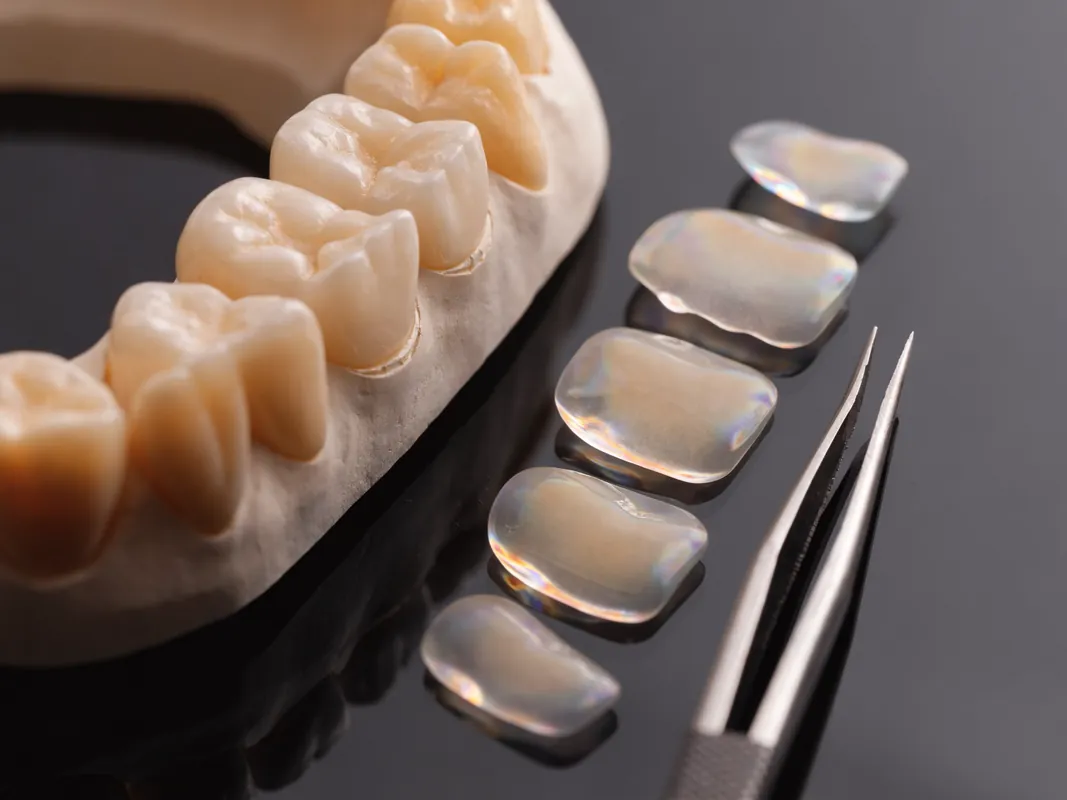
Cosmetic dentistry does not suspend the duty to preserve tissue. Cleaning and whitening may change appearance without removing enamel. Orthodontics can reposition teeth but needs monitoring and retention. Direct composite is often additive and repairable, although some preparation may still be indicated. Veneers usually involve an adhesive restoration over the facial surface and can require enamel removal. Crowns encircle more of the tooth and generally remove more tissue. These are not interchangeable levels of the same package.
If a tooth has disease or structural damage, the clinician should first decide whether it is restorable and what restoration the tooth actually needs. A crown may be appropriate for a severely compromised tooth but is not justified merely because the adjacent healthy tooth is receiving a veneer. A veneer should not be described as reversible when preparation or bonding makes future restoration likely. “Minimal-prep” and “no-prep” are case descriptions that must be demonstrated in the plan, not universal product promises.
Request a tooth-by-tooth chart showing the proposed intervention. For every preparation, ask:
- what problem is being treated;
- whether the tooth is healthy or already restored;
- how much sound tissue is expected to be removed and why;
- whether an additive alternative is feasible;
- whether orthodontics or whitening could reduce the restorative extent;
- what happens if the patient declines that unit;
- what future repair or replacement may involve.
The number of visible teeth in a posed smile is not an instruction to restore all of them. Treatment boundaries should follow diagnosis, aesthetic transition, function and informed preference, not a fixed veneer count.
Build a reversible-first option ladder
A useful sequence begins with the least invasive option that can address the diagnosed concern. The ladder is not rigid and the lowest step is not always sufficient, but it prevents a deadline from skipping directly to irreversible work.
Observation, advice and postponement
If teeth and gums are healthy and the concern is minor, the patient may decide not to treat. A professional can explain normal variation, document a baseline and review later. The patient may also postpone a complex plan until after the event while choosing no change or a limited reversible step beforehand. The consequences of delay should be explained for any active disease, but an aesthetic deadline alone should not be used to frighten a patient into treatment.
Professional cleaning and stain management
Plaque, calculus and extrinsic stain can change colour, surface reflection and gum appearance. A periodontal and hygiene assessment should decide whether cleaning is indicated and what technique is appropriate. Cleaning does not bleach intrinsic tooth colour, change tooth position or repair fractures. It can, however, reveal the true baseline and reduce the temptation to select a restorative shade against deposits or inflamed tissues.
Do not promise that a polish will produce a particular shade. Discuss sensitivity, recession, exposed root surfaces and periodontal needs. If inflammation is present, reassess after appropriate care before deciding on gingival contour or definitive restorative margins. Tissue position and bleeding can affect scans, impressions, photographs and bonding conditions.
Tooth whitening
Whitening changes colour in natural teeth; it does not change tooth position, shape, cracks, missing tissue or the colour of composite, veneers, crowns or implant restorations. The American Dental Association advises that examination can help identify causes of discolouration and that existing tooth-coloured restorations do not whiten. This distinction is central when photographs show old fillings or crowns beside natural teeth.
In the UK, tooth whitening is the practice of dentistry. The General Dental Council explains the legal professional boundaries. A beauty-salon or unregistered-provider offer is not made safe by a wedding deadline. The responsible dentist must assess suitability and the dental team must operate within the applicable law and professional scope.
Potential adverse effects include sensitivity and gingival irritation. Caries, leaking restorations, exposed dentine, cracks, periodontal disease, previous sensitivity, allergies, pregnancy or lactation questions, age and the cause of colour may affect clinical advice. The clinician selects the product, concentration, delivery method and monitoring; a website should not prescribe one protocol for everyone.
Whitening can be a tissue-preserving alternative when colour is the main concern. It can also be a sequencing step before matching new composite, veneers or crowns, because restorations do not follow the natural tooth colour change. There is no universal waiting period imposed by this page. The restorative clinician should decide when the colour is stable enough for shade records and explain what happens if it changes later.
Orthodontic alignment
When the main issue is crowding, rotation, spacing, tooth position or an uneven gum margin caused partly by position, orthodontics may address the cause while preserving tooth structure. It is not a rapid cosmetic accessory. The orthodontic clinician must assess the teeth, roots, periodontal health, bite, movement objectives and retention. The NHS notes that orthodontic treatment requires good oral hygiene and can increase caries and gum risks when cleaning is poor.
Aligners and braces require appointments, cooperation and contingency for breakage or tracking problems. A short treatment can achieve only limited movement. Teeth may not reach a biologically safe or stable position by an event date, and retainers are part of the decision. The British Orthodontic Society explains that teeth can relapse and that long-term retention may be needed. A deadline promise cannot replace those responsibilities.
Orthodontics can be combined with minimal additive bonding or whitening after reassessment. It may reduce veneer preparation by improving position, but it can also lengthen the planning horizon. If the event is close, the patient can choose to postpone definitive alignment, accept the current position or discuss a limited plan that does not pretend to deliver comprehensive orthodontics.
Direct composite bonding
Direct composite can repair a chip, add contour, close selected small spaces or alter proportions with limited or no preparation in suitable teeth. It is shaped directly by the clinician and can often be repaired. Its colour, polish, margins, wear, staining, fracture and maintenance should be discussed. “Bonding” is not automatically reversible if enamel is prepared, contacts are changed or a large restoration is placed.
Evidence comparing direct composite and ceramic veneers uses different definitions of survival, success, repair and replacement. Practice-based and systematic evidence shows that both can function but have different maintenance patterns and study limitations. A repairable composite may suit a reversible-first preference; another patient may accept an indirect restoration after diagnosis. Neither material is universally superior.
Ask for a diagnostic wax-up, additive mock-up or small reversible demonstration where appropriate, but do not confuse it with the final result. Composite appearance depends on substrate, shade, opacity, layering, surface texture, polish, hydration, lighting and operator technique. The plan should state whether treatment is additive, whether enamel will be roughened or prepared, how contacts and bite will be checked and how future repair is charged.
Ceramic veneers
A veneer may be considered for a diagnosed combination of colour, form, surface, spacing or structural concerns that cannot be acceptably managed with less destructive options. It is an irreversible restorative commitment when tooth preparation occurs, and even a no-preparation restoration adds material, margins and maintenance. Suitability depends on enamel, existing restorations, tooth position, colour substrate, periodontal health, occlusion, parafunction and the proposed design.
The phrase “porcelain veneer” does not identify preparation depth, ceramic family, laboratory, cement, margin or repair pathway. Thin translucent ceramic may be influenced by the underlying tooth and luting material. More opacity or thickness may require a different design. A standard shade code cannot guarantee how the restoration will look in the mouth or in photographs.
Ask the clinician to show a tooth-by-tooth preparation plan and to explain why composite, orthodontics, whitening or observation would not meet the objective. Consent should cover sensitivity, fracture, debonding, chipping, caries, periodontal effects, shade mismatch, contour, repair, replacement and the possibility that the tooth may need more extensive restoration in the future.
Crowns
A crown covers more tooth structure than a veneer and is generally reserved for a tooth whose structural or restorative needs justify that coverage. It should not be sold as a faster veneer or used to align healthy teeth merely because a ceremony is close. A heavily restored, cracked, root-treated or otherwise compromised tooth may need crown assessment, but the diagnosis must be recorded for that tooth.
Crown treatment can involve preparation, provisionalisation, laboratory manufacture, cementation or bonding and functional review. Pulpal, periodontal and technical complications remain possible. If a proposal converts several healthy anterior teeth to crowns for appearance alone, seek an independent restorative opinion and compare additive and orthodontic alternatives before consenting.
Do not stack procedures merely because they can be combined
A “smile makeover” package often groups cleaning, bleaching, gum contouring and restorations. Clinical sequencing can be appropriate, but every element needs its own diagnosis, consent and responsible provider. Adding procedures to fill a travel itinerary is not a clinical reason. The plan should state which concern each stage addresses and whether later stages remain optional after reassessment.
For example, cleaning may change the visible baseline. Whitening may reduce the number or opacity of restorations needed. Orthodontics may improve position and reduce preparation. Periodontal treatment may change gingival contours. A composite mock-up may show that only limited addition is needed. Each discovery can make the original package smaller, different or unnecessary. Continuing consent means the patient can accept that reduction.
If several modalities are proposed, ask for a sequence map that shows:
- the diagnosis and provider for each stage;
- which stages are reversible, additive or subtractive;
- what must be reassessed before proceeding;
- how colour and tissue changes affect later work;
- which stage can be postponed without causing harm;
- the consequence if a provisional or laboratory item is not accepted;
- how fees change when the plan changes.
The right plan may be less dramatic than the advertisement. Good planning protects the patient from unnecessary biological cost and protects the event from an avoidable last-minute complication.

Gum health comes before gum aesthetics
Redness, swelling, bleeding, calculus, recession and altered tissue contours can affect both appearance and restorative accuracy. Periodontal health should be diagnosed and stabilised before elective margin design or irreversible gum reshaping. The European Federation of Periodontology publishes S3 clinical guidelines that emphasise diagnosis, staged treatment and supportive care rather than a one-step cosmetic promise.
An uneven or high gingival display can have several contributors: lip movement, tooth position, gingival inflammation, altered passive eruption, tooth wear, crown proportions, skeletal relationships or asymmetrical tissue and bone. A “laser gum lift” does not diagnose these causes. Soft-tissue removal alone may be inappropriate when bone position, biological dimensions, tooth proportions or stability need assessment.
If gum contouring or crown-lengthening is proposed, ask:
- what is causing the gingival display or asymmetry;
- whether inflammation is present and has been reassessed;
- what examination, probing, photographs and imaging support the diagnosis;
- whether bone modification is anticipated;
- which teeth are included and why;
- how the proposed gingival margin relates to the final restoration;
- what recession, sensitivity, black triangles, relapse or asymmetry risks apply;
- what clinical findings must stabilise before scanning, preparation or bonding;
- what happens if tissue position differs from the prediction.
Do not accept “no recovery” or a fixed healing promise. Tissue response varies with the procedure, baseline health, plaque control, smoking or nicotine use, systemic health, restorative margins and individual biology. If the event date does not leave a reasonable contingency for reassessment, postponing elective contouring can be safer than compressing it.
Function and bite belong in aesthetic consent
Front teeth are visible, but they also guide movement, cut food, support speech and contact in the bite. Changing length, width, position or palatal contour can alter function. A patient with wear, fractures, jaw-muscle symptoms, clenching, grinding or unstable contacts needs a documented functional assessment before a multi-tooth aesthetic plan.
The clinician should record baseline contacts, guidance, tooth wear, mobility, existing fractures and restorations. Jaw pain or clicking is not one diagnosis and veneers do not treat temporomandibular disorders. Bruxism cannot be diagnosed from one photograph or assumed from a stressful wedding period. If an appliance is proposed, clarify the diagnosis, purpose, design, maintenance and whether it is optional and separately costed. A night guard does not guarantee that restorations will not chip or debond.
A mock-up or provisional may help assess proposed length, speech and contacts, but the test has limits. Material thickness, surface, retention and occlusion may differ from the final restoration. The clinician must check function after definitive bonding or cementation and provide a route for review. A patient should not board a flight immediately merely because the itinerary says treatment is complete.
Photographs are records, not appearance guarantees
Clinical photographs can document the starting condition, communicate with a laboratory and support consent. They should include calibrated or standardised views where appropriate: face at rest and smiling, profile, retracted teeth, occlusal views, shade references and close-ups of texture or defects. A phone selfie can supplement these records but should not be the only basis for diagnosis or colour selection.
Lighting, camera exposure, white balance, lens, distance, screen, editing, makeup, surrounding colours and hydration can change how teeth appear. Professional wedding photographs may use flash, reflectors, colour grading and retouching. Venue lighting can be warm or cool. A restoration that looks acceptable under one light may look different under another; this is related to colour perception and metamerism, not proof of a defect by itself.
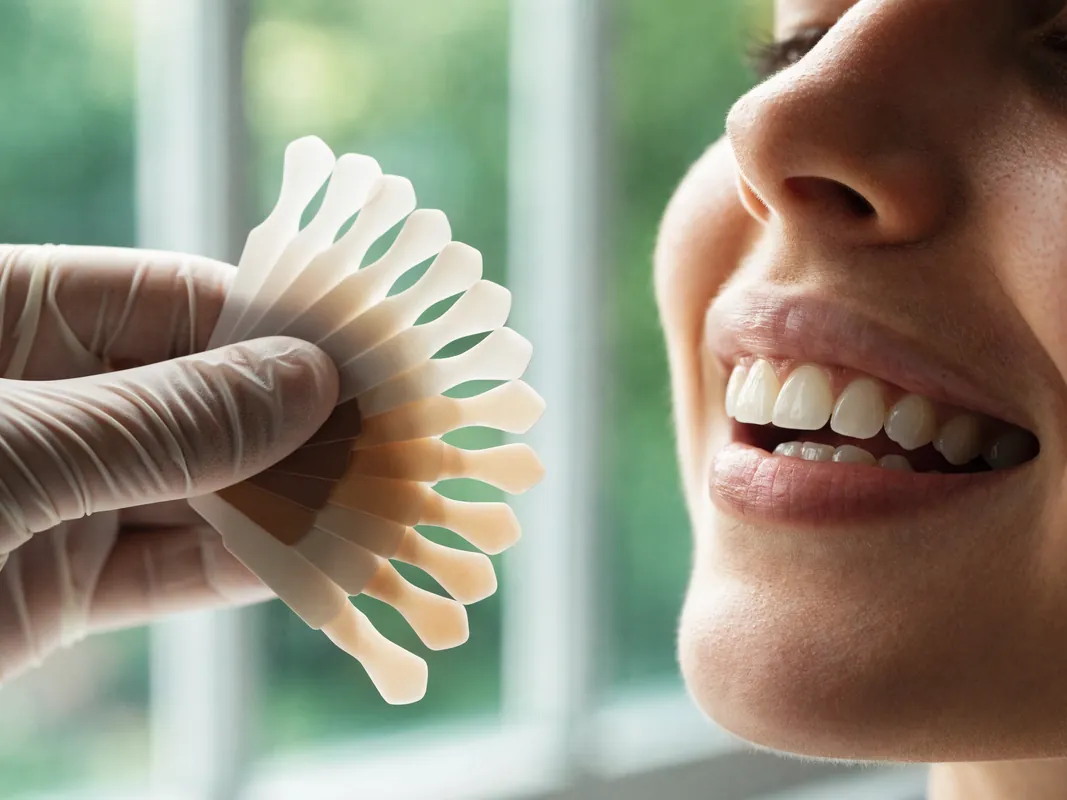
Systematic reviews of shade selection report variation between visual and instrumental methods and emphasise lighting, observer and object factors. Digital tools and spectrophotometers can support records, but no device converts a preference into a guaranteed photographic result. The laboratory needs useful information about value, chroma, hue, translucency, texture, surface lustre and the underlying tooth; a single shade-tab name is incomplete.
Before sharing wedding or inspiration photographs, ask how they will be stored and used. The General Dental Council's record and confidentiality standards explain that photographs form part of patient information and that consent is needed for their use. Consent for clinical records is not automatic permission for marketing, social media or a before-and-after gallery. The patient can refuse promotional use without affecting care.
Separate clinical photography from marketing imagery
Before-and-after images can be educational only if their origin, treatment, lighting and editing are clear. They do not predict another patient's result. Different camera settings, lip position, dehydration, cleaning, whitening or retouching can create an exaggerated comparison. Ask whether images are of the named provider's patients, whether publication consent exists and whether the same lighting protocol was used.
Do not choose an irreversible procedure to imitate a filtered image. A filter can make teeth brighter, smooth texture, alter proportions and change the gum line without biological consequence. Real treatment works within enamel, dentine, pulp, periodontal tissue, bite and maintenance. The consent discussion should translate an image into specific preferences, then decide which are feasible and which are unsafe or unrealistic.
Shade planning is a sequence, not a stock code
Tooth colour is three-dimensional and affected by value, chroma, hue, translucency, fluorescence, texture, thickness, substrate and surrounding tissues. Shade perception also changes with dehydration. Teeth can become temporarily lighter when isolated or dried during treatment, so a late shade choice after prolonged mouth opening may not represent the ordinary appearance.
When whitening is part of the plan, the clinician should decide its position before definitive restorative shade selection. Natural teeth may change while existing fillings, crowns and veneers do not. If a visible restoration must be replaced to match, that replacement is a separate treatment with its own biological cost and quotation. The patient should know whether unmatched posterior or lower teeth may remain visible in laughter or side views.
For veneers, the final colour is influenced by the tooth substrate, preparation, ceramic thickness and opacity, try-in medium and luting material. Systematic laboratory evidence shows that cement and ceramic factors can affect colour, especially with thin translucent restorations; it does not establish one universal material recipe. Request the planned material family, opacity or translucency concept and laboratory communication record.
Use several viewing conditions during a try-in when clinically appropriate, but avoid asking for a permanent decision while the patient is rushed, anaesthetised, dehydrated, distressed or seeing only an uncalibrated screen. A shade should be approved as part of informed consent with the acknowledged limits of lighting and photography.
A digital preview is a communication aid, not a result
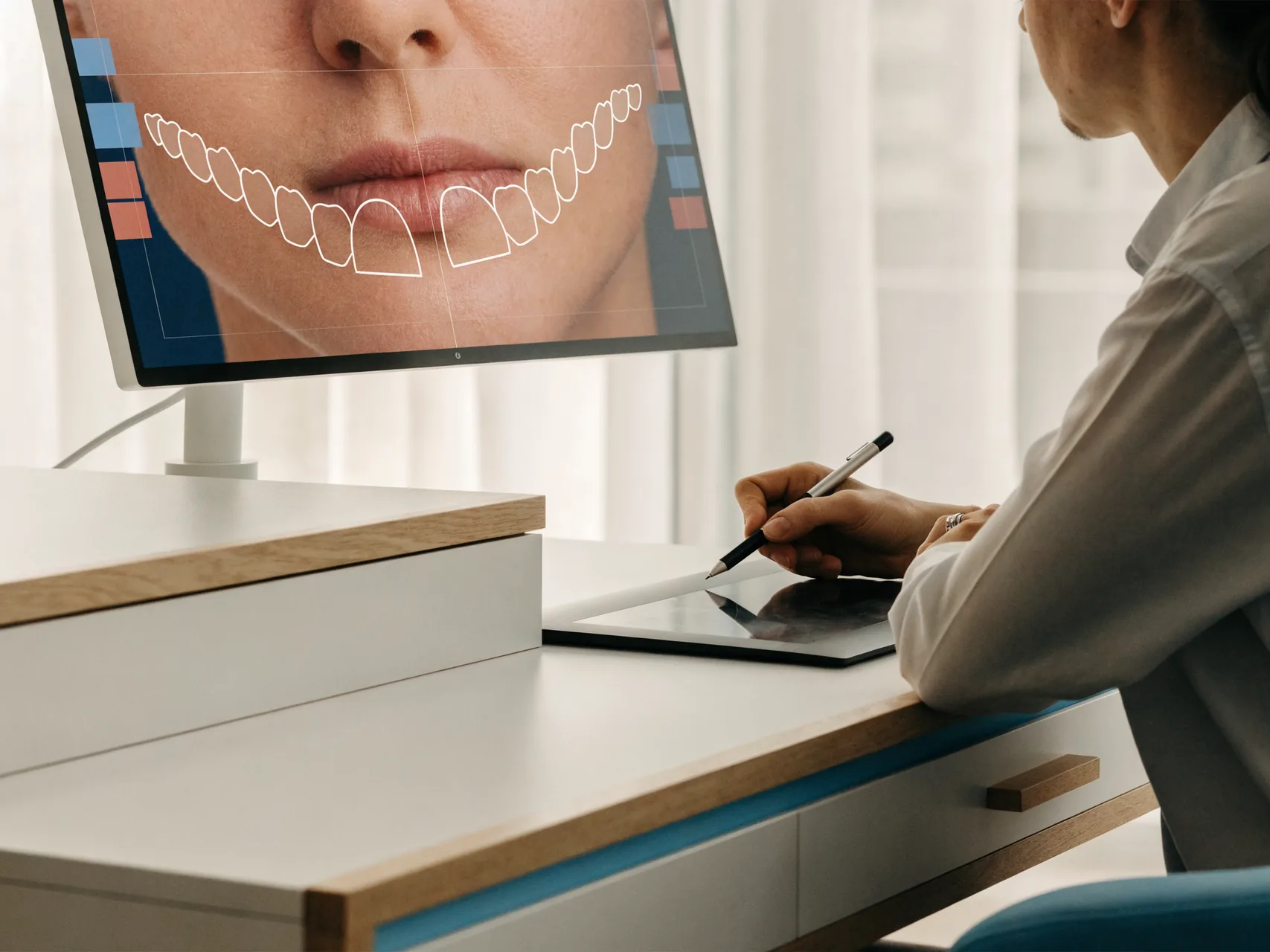
Digital smile simulation can help discuss tooth length, width, midline, display and overall direction. It is usually a two-dimensional or rendered proposal based on selected images or scans. It does not show exactly how enamel preparation, tissue healing, material optics, lip dynamics, speech or occlusion will behave. Software can make a design look precise while the biological assumptions remain untested.
The provider should label previews as simulations and preserve the version used for consent. Ask what was changed digitally, whether the design is linked to a three-dimensional wax-up, and what cannot be predicted. A patient should be able to reject a preview without losing the right to consider other options. Payment for a design should not be treated as consent to prepare teeth.
Mock-ups, trials, provisionals and definitive restorations are different
These terms are often blurred in sales copy. They have different purposes and limits:
- A digital simulation is an image or model of a proposed direction.
- A diagnostic wax-up is a physical or digital design of proposed tooth form.
- An additive mock-up places temporary material over teeth, often without preparation, to test general shape and display.
- A preparation guide helps compare planned and actual reduction.
- A provisional restoration protects prepared teeth and can test selected contours or function.
- A try-in places an indirect restoration before final bonding or cementation, using a medium and conditions that may differ from final.
- A definitive restoration is the final bonded or cemented device, but it still requires clinical delivery, records and maintenance.
An additive mock-up can feel bulky because it sits over unprepared teeth. A provisional may differ in material, texture, shade, translucency and strength. A try-in may allow some colour and contour evaluation but cannot make every alteration possible; a major change may require laboratory remanufacture. “You approve before drilling” is false if the preview itself does not show preparation or if irreversible steps start before final material information is known.
The consent record should state what each trial can and cannot test. Ask when the patient can pause, what change is feasible, what triggers a new fee and whether remanufacture would alter the event plan. Written approval is evidence of a discussion, not a waiver of professional responsibility.
Provisional care needs a real contingency
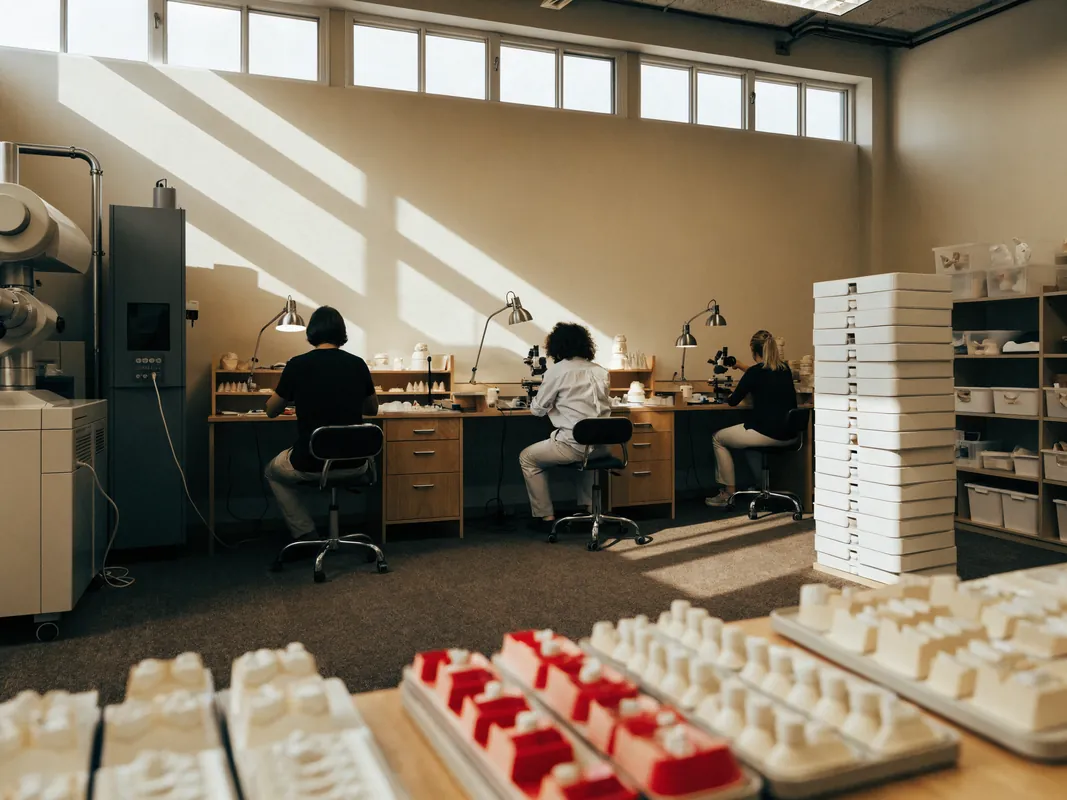
Prepared teeth may need provisional restorations while a laboratory makes indirect work. Provisionals can fracture, debond, stain, feel rough, alter speech or make cleaning difficult. They may be intentionally different from the planned definitive restoration. A patient travelling abroad needs direct instructions and a plan for repair that does not rely only on a coordinator.
Before preparation, ask:
- whether provisionals will be used and how they are retained;
- what the patient may eat and how to clean;
- whom to contact for loosening, fracture, pain or a bite problem;
- whether a local dentist has agreed to provide help;
- what records and material information will be available;
- what happens if the laboratory item is delayed or rejected;
- whether the patient can safely travel home in provisionals;
- who pays for extra appointments, accommodation or remanufacture.
The definitive stage should not proceed only because return travel is booked. The clinician should assess tooth and tissue health, fit, margins, contacts, shade, contour, speech and occlusion, and obtain renewed consent. If the restoration or the patient's condition does not support delivery, postponement must remain a genuine option.
Plan with clinical gates instead of a fixed wedding countdown
A responsible plan uses milestones whose timing depends on findings. A possible framework is:
- Define the concern and event constraints.
- Complete examination, records and necessary investigations.
- Treat urgent disease and stabilise periodontal health.
- Compare reversible and irreversible options.
- Complete cleaning, whitening or orthodontic stages where chosen.
- Reassess colour, tissue, function and consent.
- Approve diagnostic design within its stated limits.
- Perform any irreversible preparation only with specific consent.
- Review provisionals and laboratory information.
- Try in and deliver definitive work only when clinically acceptable.
- Reassess function, tissues and hygiene.
- Transfer complete records and activate local aftercare.
No universal number of days belongs beside these gates. A simple cleaning and a multi-tooth indirect restoration do not share a timetable. Even patients receiving the same procedure can differ because of disease, sensitivity, tissue response, laboratory changes, availability and acceptance. The written plan should state dependencies and contingency, not guarantee completion before the event.
Healing, adaptation and remanufacture cannot be promised on a calendar
After any procedure, the patient may need review for sensitivity, tissue inflammation, contact, occlusion, speech, contour or hygiene. Some symptoms are transient; others indicate a problem. The clinician should explain expected ranges for the individual procedure without turning an estimate into a guarantee.
Periodontal tissues can change after cleaning, restorative margin correction or surgery. Whitening sensitivity varies. Composite may need polish or repair. A provisional can reveal a functional issue. A ceramic restoration may need adjustment or remanufacture. These possibilities should be planned before irreversible work, especially when travel and an event reduce flexibility.
A contingency plan should specify:
- which findings would delay the next stage;
- which provisional condition is acceptable for travel;
- who makes the clinical decision to postpone;
- where the patient can obtain local assessment;
- how records are transferred;
- how additional clinical, laboratory and travel costs are handled;
- how the patient's right to refuse or defer is protected.
“Guaranteed before your wedding” is not a safe substitute for this plan. The event remains important, but health, consent and an acceptable restoration take precedence.
Consent is a process and the patient may postpone
The General Dental Council's Principle 3 states that valid consent requires relevant options, risks, potential benefits and possible costs, that patients need reasonable time to decide, and that consent remains valid at each stage. It also recognises the patient's right to withdraw consent, refuse treatment or ask for it to stop. These principles are especially important when a wedding date, flight, deposit or group trip creates pressure.
Consent should cover the actual treatment tooth by tooth, not only the phrase “Hollywood smile.” The discussion should include:
- diagnosis and purpose of each procedure;
- no treatment and delayed treatment;
- cleaning, whitening, orthodontic, composite and restorative alternatives;
- loss of enamel or other tissue where preparation is planned;
- pulp, periodontal, functional and technical risks;
- sensitivity, pain and anaesthetic considerations without comfort guarantees;
- material, margin, contour, shade and photographic limitations;
- provisional and definitive differences;
- repair, maintenance and future replacement burden;
- cost changes and remanufacture;
- travel, local aftercare and complaints;
- the consequence of stopping at each stage.
Consent given for photographs, digital design, scanning or a deposit is not consent to tooth preparation. Consent to one tooth is not consent to expand to another. Approval of a provisional is not automatic approval of final shade or material. If the plan, cost, preparation, number of units or provider changes, the patient must receive updated information and the opportunity to decide again.
The right to postpone must be practical. A patient should not be told that a wedding, lab slot, travel booking or non-refundable payment removes their choice. If declining final bonding would leave prepared teeth, the provider must explain the clinical implications and safe interim options before preparation begins.
Demand an itemised written quotation
A package total prevents meaningful comparison. Request a quotation that separates:
- consultation, records and diagnostic imaging;
- periodontal or hygiene treatment;
- whitening product and supervision;
- orthodontic assessment, appliances, monitoring and retainers;
- direct composite by tooth and surface;
- veneer or crown by tooth, material and laboratory;
- mock-up, provisional and try-in stages;
- gum treatment, if clinically indicated;
- anaesthesia or sedation, if relevant;
- reviews, adjustments, repair and maintenance;
- remanufacture contingencies;
- medicines and aftercare items;
- non-clinical travel, accommodation or transfer services.
The quotation should name the legal provider receiving clinical payment and the provider responsible for each stage. It should state what is included, optional or conditional, what can change after examination and who authorises extra cost. Ask for cancellation, refund, complaint and remedial terms in writing. Do not infer a warranty from a marketing phrase; request the exact scope, duration, exclusions, responsible legal entity and whether travel or local care is excluded.
No fixed saving can be established by comparing a package headline with a different treatment in another country. Compare equivalent diagnoses, tooth counts, preparation designs, materials, laboratory records, follow-up, local care and contingency costs. Add travel changes, time away and possible return visits. The lowest initial quote may create a higher biological or maintenance burden.
Material, laboratory and shade traceability
For direct composite, request the material manufacturer, product family, shades or opacities used, batch or lot where recorded, bonding system and tooth surfaces. For indirect restorations, request the ceramic or restorative material family and manufacturer, laboratory name, prescription, restoration identity, shade and translucency information, luting or cement system, and custom-made device documentation where applicable.
The UK Medicines and Healthcare products Regulatory Agency publishes guidance for custom-made devices in Great Britain. A patient treated abroad should ask what equivalent device documentation applies in the country of manufacture and receive the available laboratory and conformity records. A logo, material nickname or verbal “premium” claim is not traceability.
The General Dental Council's Principle 4 identifies radiographs, consent forms, photographs, models, laboratory prescriptions, statements of conformity and referral letters as parts of the clinical record where available. Before leaving, request copies of:
- medical and dental history and diagnoses;
- tooth chart and procedures completed;
- baseline and final photographs;
- radiographs, scans and reports;
- consent discussions and approved design versions;
- preparation, shade and material records;
- provisional and definitive restoration information;
- laboratory prescription and custom-device statement where applicable;
- anaesthetic and medicine records;
- occlusal, contact and functional checks;
- hygiene and maintenance instructions;
- direct clinical contact and complaint route.
These records allow a dentist who did not provide the treatment to understand it. They do not guarantee that another provider can repair every system or accept clinical responsibility without examination.
Travel planning must remain separate from clinical care
The General Dental Council's guide to treatment abroad and the NHS treatment-abroad checklist advise patients to investigate qualifications, regulation, costs, follow-up, complications, records and insurance. A coordinator can help with non-clinical communication, but cannot diagnose, consent, prescribe, alter a treatment plan or decide fitness to fly.
Before booking travel, establish:
- the named clinic and treating clinicians;
- how their registration can be checked;
- which stages require which provider;
- the number of clinical decision gates, not a promised completion date;
- whether laboratory manufacture occurs on site or elsewhere;
- what happens if health, healing or acceptance delays treatment;
- whether the patient may remain in a provisional;
- direct emergency contact during and after the visit;
- the agreed local dentist or realistic local care route;
- insurance exclusions for planned treatment or complications;
- financial responsibility for changed flights, lodging and return care.
Clinical fees and non-clinical travel services should be separately identified. Accommodation or transport does not validate a dentist, material or treatment. A hotel stay cannot be presented as a clinical benefit or a reason to add restorations. Do not let a departure transfer determine when definitive work is bonded.
Local aftercare is part of the treatment decision
Remote messages and photographs have strict limits. A local dentist may need to examine sensitivity, a high contact, inflamed tissue, a chipped composite, a loose provisional, a fractured restoration or new decay. Before treatment, ask a local provider whether they are willing and able to assess unfamiliar restorations and what records they would need. Do not promise that any dentist will perform warranty work.
Maintenance depends on the treatment. Natural teeth still need caries and periodontal review. Composite may need polish, repair or replacement. Veneer and crown margins require cleaning and monitoring. Retainers need inspection. A protective appliance, if clinically indicated, needs fit and wear review. Whitening maintenance must remain clinically appropriate and must not be used indiscriminately around restorations.
The written plan should identify:
- daily cleaning method around every restoration and retainer;
- toothpaste or interdental advice based on the actual mouth;
- risk-based professional review;
- how periodontal health will be monitored;
- how occlusion, fractures, debonding and wear will be assessed;
- who handles routine maintenance in the home country;
- how clinical records will be shared securely;
- what the overseas provider will and will not fund.
If there is no credible local aftercare route, that is a reason to reconsider the extent, timing or location of elective treatment.
Red flags before treatment
Pause and investigate when an offer includes:
- a diagnosis and definitive plan based only on selfies;
- one fixed veneer or crown count for every smile;
- routine crowns on healthy teeth without a tooth-by-tooth reason;
- guaranteed completion, healing, comfort, shade or photographic result;
- pressure to prepare teeth before material and provider information is known;
- no discussion of cleaning, whitening, orthodontics, composite, observation or postponement;
- “no-prep” promised before examining position and enamel;
- gum reshaping without periodontal diagnosis;
- an unregistered person offering tooth whitening;
- a package price without an itemised clinical quotation;
- no laboratory, material or custom-device records;
- no plan for provisionals, remanufacture, local care or emergencies;
- consent framed as a waiver rather than an ongoing decision;
- marketing photographs without clear provenance or with inconsistent lighting;
- a refund or warranty promise whose legal provider and exclusions are not written.
Red flags after treatment
Contact the responsible clinician and an appropriate local provider promptly for uncontrolled bleeding, rapidly increasing swelling, fever or systemic illness, spreading redness, severe or escalating pain, breathing or swallowing difficulty, trauma, a mobile restoration, a bite that prevents normal closure, new altered sensation, pus, or a provisional or definitive restoration that has fractured or detached. Use emergency services for breathing, swallowing or other life-threatening symptoms.
Persistent sensitivity, bleeding gums, food trapping, rough or overhanging margins, recurrent debonding, speech change or an uncomfortable bite also deserve clinical assessment. Do not repeatedly glue a restoration at home, grind it yourself or rely on a coordinator to interpret symptoms. NHS urgent dental information can help people in England find an appropriate route; elsewhere use local urgent pathways.
Questions to ask the named dentist
- What is the diagnosis behind each concern I described?
- Are my teeth and gums healthy enough for elective treatment?
- Which teeth are restorable without veneers or crowns?
- What happens if I choose no treatment until after the event?
- Could cleaning alone address surface stain or inflammation?
- Could whitening address colour without restoring healthy teeth?
- Which existing restorations will not whiten?
- Could orthodontics reduce restorative preparation?
- Could direct composite provide an additive or repairable first step?
- Why is a veneer indicated for each proposed tooth?
- Why is a crown, rather than a less extensive restoration, indicated for any proposed tooth?
- How much sound tissue is expected to be removed and how is that recorded?
- What periodontal findings affect the plan?
- What bite, wear or bruxism findings affect the design?
- Which clinician is responsible for every stage?
- What can a digital preview, mock-up, provisional and try-in actually test?
- When can I pause, refuse or postpone?
- What findings would delay definitive treatment?
- What provisional condition would be safe if the plan changes?
- How are shade records standardised across lighting conditions?
- What material, cement and laboratory are proposed, and why?
- What custom-made device and batch records will I receive?
- How will contacts, speech and occlusion be checked?
- What complications and maintenance are relevant to each option?
- What is included in the itemised clinical quotation?
- What is separate travel or accommodation cost?
- Who pays if laboratory work is delayed or needs remanufacture?
- Who provides local review after I return home?
- What is the direct clinical emergency contact?
- How do complaints, refunds and any written remedial terms work?
A patient planning checklist
Before paying
- Record the event date without treating it as a clinical deadline.
- Verify the legal provider, clinicians, address and registration route.
- Obtain a diagnosis and tooth-by-tooth options.
- Compare observation, cleaning, whitening, orthodontics, composite, veneers and crowns.
- Confirm gum health and functional assessment.
- Obtain an itemised clinical quotation separate from travel.
- Read cancellation, complaint and remedial terms.
- Arrange local dental review and appropriate insurance.
Before irreversible treatment
- Reconfirm that disease is stable.
- Review current photographs, imaging and design records.
- Understand exactly which teeth will be prepared and why.
- Confirm material, laboratory, shade strategy and provisional plan.
- Confirm the contingency if the result cannot be delivered or accepted before travel.
- Reconfirm consent without pressure from the event or booking.
Before leaving the provider
- Obtain all procedure, material, laboratory and custom-device records.
- Receive written cleaning, maintenance and medicine instructions.
- Confirm contacts, bite, speech and tissue review.
- Know the red flags and direct clinical contact.
- Confirm the local aftercare handover.
- Do not describe the event date as proof that clinical review is complete.
Related evidence-led guides
For the colour-versus-structure decision, read /en/conditions/whitening-vs-veneers. The core restorative pathways are explained at /en/services/teeth-whitening, /en/services/dental-veneers, /en/services/dental-crowns and /en/services/smile-design. Gum and veneer sequencing is discussed at /en/combinations/veneers-and-gum-contouring. These pages support questions for named clinicians and do not establish individual suitability.
Sources and evidence limits
This guide prioritises regulator, public-health, professional-body and peer-reviewed sources. Evidence uses different patients, techniques, materials and outcome definitions; it cannot promise an individual appearance or event deadline. The main sources reviewed were:
- NHS, Dental treatments, reviewed 8 July 2026: the nature of whitening and veneers and the fact that some veneers involve tooth preparation. https://www.nhs.uk/live-well/healthy-teeth-and-gums/dental-treatments/
- American Dental Association, Whitening: examination, causes of discolouration, natural teeth versus existing restorations, sensitivity and gingival irritation. https://www.ada.org/resources/ada-library/oral-health-topics/whitening
- General Dental Council, Tooth whitening and illegal practice: professional and legal boundaries for whitening in the UK. https://www.gdc-uk.org/standards-guidance/information-for-patients-public/tooth-whitening-and-illegal-practice
- NHS, Orthodontics: diagnosis, oral-hygiene requirements, alternatives and treatment risks. https://www.nhs.uk/tests-and-treatments/orthodontics/
- British Orthodontic Society, Retainers: relapse, retainer types, hygiene and long-term retention. https://bos.org.uk/patients/retainers/
- European Federation of Periodontology, Clinical guidelines: diagnosis-led periodontal treatment and supportive care. https://www.efp.org/education/continuing-education/clinical-guidelines/
- Practice-based evaluation comparing ceramic and direct composite veneers, published 2022: different repair, success and survival patterns and the limits of one-material claims. https://pubmed.ncbi.nlm.nih.gov/35379471/
- Systematic review of long-term direct anterior composite restorations, published 2022: heterogeneous performance and reasons for repair or failure. https://pubmed.ncbi.nlm.nih.gov/35399771/
- Systematic review of conventional and minimally invasive veneers, published 2023: preparation, margin, colour and evidence-quality considerations. https://pubmed.ncbi.nlm.nih.gov/37799216/
- Systematic review and meta-analysis of visual and instrumental shade determination, published 2023: lighting, observer and object variation. https://pubmed.ncbi.nlm.nih.gov/37291652/
- Systematic review of digital shade matching, published 2023: controlled photography and measurement possibilities with methodological limits. https://pubmed.ncbi.nlm.nih.gov/37999014/
- Systematic review of luting agents and ceramic veneer colour, published 2018: substrate, ceramic and cement interactions, based largely on laboratory evidence. https://pubmed.ncbi.nlm.nih.gov/30213524/
- General Dental Council Principle 3, Obtain valid consent: options, risks, costs, reasonable decision time, continuing consent and the right to withdraw. https://standards.gdc-uk.org/pages/principle3/principle3
- General Dental Council Principle 4, Maintain and protect patients' information: complete records, photographs, laboratory prescriptions, statements of conformity and confidentiality. https://standards.gdc-uk.org/pages/principle4/principle4
- MHRA, Custom-made medical devices in Great Britain, updated 20 July 2026: device identity, manufacturer and documentation requirements. https://www.gov.uk/government/publications/custom-made-medical-devices/custom-made-devices-in-great-britain
- General Dental Council, Going abroad for dental treatment: provider checks, costs, aftercare and complaints. https://www.gdc-uk.org/standards-guidance/information-for-patients-public/going-abroad-for-dental-treatment
- NHS, Treatment abroad checklist: provider questions, planning, complications and follow-up. https://www.nhs.uk/using-the-nhs/healthcare-abroad/going-abroad-for-treatment/treatment-abroad-checklist/
- NHS, urgent and emergency dental access. https://www.nhs.uk/nhs-services/dentists/how-to-find-an-nhs-dentist-in-an-emergency/
An important event can help focus a conversation, but it cannot make irreversible treatment predictable or necessary. Diagnose the concern, stabilise health, preserve tooth tissue, compare reversible options first, separate simulations and provisionals from definitive work, maintain continuing consent, document materials and records, and keep enough contingency to postpone when the clinical gates are not met.