Rheumatoid arthritis does not create one implant answer. Two people with the same diagnosis can have different disease activity, medicines, comorbidities, oral health, hand function, restorative needs and access to follow-up. Even one person’s circumstances can change between the first enquiry and a procedure. That is why an online label such as “RA patient” cannot establish whether an implant is appropriate, which medicine plan applies or how healing will progress.
The useful starting point is a documented clinical question: what oral problem needs solving, what function does the patient want to improve, which teeth can be retained, which non-implant routes exist, what is the current rheumatoid arthritis context, and who will maintain the result near home? The answer requires an in-person dental assessment and, where medicines or disease activity affect the decision, communication with the prescribing rheumatology team. A scan, medicine name or sales form alone is insufficient.
This guide is educational. It is not personalised medical advice, a prescription, a diagnosis or permission for surgery. It gives no fixed drug-stop interval, no universal laboratory threshold, no promised healing time and no result guarantee. It does not tell a reader to take preventive medicine or alter treatment for rheumatoid arthritis. Do not stop, delay, skip or change a DMARD, biologic, JAK inhibitor, steroid or other medicine because of a website, travel date or dental quotation. The medicine decision belongs to the relevant prescriber working with the clinician who understands the planned dental procedure.
WeCare is not the treating dental provider. Its role is limited to receiving an enquiry, supporting referral administration to a named clinic and named clinician, helping identify which records have not yet been supplied, and discussing non-clinical logistics after clinical ownership is established. The treating provider must examine the patient, diagnose dental conditions, review options, obtain consent, prescribe or perform care, provide records and accept responsibility for clinical follow-up.
Start with the RA diagnosis and current disease activity
Rheumatoid arthritis is a systemic inflammatory disease managed over time, not a checkbox that becomes permanently “stable.” Begin with who made the diagnosis, when it was made, which joints and organs have been affected, the current treatment strategy, the name of the rheumatology service, and the date and outcome of the latest review. Record any recent flare, infection, hospital admission, medicine change, new symptom or investigation that could alter elective planning.
Disease activity belongs to rheumatology. A dental provider should not infer it from whether the patient appears comfortable on the day, a single blood result or the absence of swollen hands. Ask the rheumatology team for a current summary when the information is relevant to an invasive procedure. The summary should answer a defined question rather than supply a vague word such as “cleared.” Useful context can include the clinician’s view of current activity, recent course, important systemic involvement, monitoring status, medicine plan and any reason elective care should pause.
RA is not a single perioperative risk category. Some people have limited current symptoms and a straightforward medicine list. Others have active inflammation, frequent flares, substantial functional limitation, lung or cardiovascular disease, anaemia, osteoporosis, previous serious infection, multiple medicines or another autoimmune diagnosis. These differences may affect anaesthesia, positioning, oral hygiene, healing, infection assessment, travel or the ability to maintain a prosthesis. They require case-specific review rather than deterministic claims about failure or irrelevance.
The reason for seeking implants also matters. A missing tooth may be mainly an appearance concern, a functional problem, a denture-retention problem or part of extensive disease. The burden of a multi-stage rehabilitation may be acceptable for one goal and disproportionate for another. Write down what improvement is sought and how it will be measured in daily life. A procedure should not be justified only because an image shows space for an implant.
If the patient reports a new severe flare, fever, unexplained weight change, chest symptoms, marked fatigue, a new medicine reaction or another systemic concern, the next step may be their usual medical pathway rather than an elective dental booking. Dental pain or infection still needs prompt local assessment. The rheumatology diagnosis should not cause a dental emergency to be ignored, and dental marketing should not delay medical review.
Reconcile every medicine before planning
A medicine reconciliation is more than copying names from a form. Record the generic name where known, indication, route, strength, schedule, date of the most recent dose, expected next dose, prescribing service, monitoring arrangement, recent changes, adherence questions, allergies and adverse reactions. Include prescribed, over-the-counter, injected, infused, topical and complementary products. Ask about medicines taken intermittently during flares because these are easily omitted.
The list should cover conventional synthetic disease-modifying antirheumatic drugs, biological disease-modifying drugs, targeted synthetic drugs such as JAK inhibitors, glucocorticoids, pain medicines, anti-inflammatory medicines, anticoagulants or antiplatelets, osteoporosis medicines, gastric protection, supplements and medicines for other conditions. It should also record recent courses given for infection. The dental clinician and prescriber need the actual current list, not a list from an old discharge letter.
Medicine names do not answer the perioperative question by themselves. The same drug can be used for different indications, routes and clinical contexts. The consequences of interruption may include a disease flare or loss of control, while use through a procedure may have different considerations. Those competing issues belong to the prescriber and treating dental clinician. A travel coordinator must not create a medicine schedule.
Ask the patient to bring a current prescription record, monitoring information available to them and contact details for the prescribing rheumatology team or shared-care prescriber. If a medicine is supplied by a hospital homecare service, identify the responsible clinical team rather than relying on the delivery company. If the list cannot be reconciled, defer elective decisions that depend on it.
The dental record should show who verified the list, when, and what question was sent to the prescriber. It should also show the response and any later change. A screenshot in a message thread is not enough if it cannot be linked to the patient record, date and responsible professional.
Conventional synthetic DMARDs
Conventional synthetic DMARDs include medicines such as methotrexate, leflunomide, hydroxychloroquine and sulfasalazine. They are not interchangeable. Their indications, routes, monitoring needs, interactions and adverse-effect profiles differ. The 2025 British Society for Rheumatology guidance places prescribing and monitoring within expert-led and shared-care systems and emphasises individual risk assessment, communication and monitoring rather than decisions made from one isolated result.
A dental history should establish which medicine is used, who supervises it, whether monitoring is up to date, whether there have been recent abnormalities or toxicity concerns, and whether another medicine or intercurrent illness has changed the context. The dental clinician can describe the proposed procedure, expected tissue trauma, anaesthesia and infection concerns. The prescriber can then assess the rheumatology medicine question in the context of disease control and the individual’s wider health.
This guide does not classify a conventional DMARD as automatically compatible or incompatible with implant surgery. It also does not convert guidance from another surgical specialty into a dental rule. Evidence, procedure size, infection status, disease activity and patient factors vary. The treating team should document why its decision applies to this person and this procedure.
Methotrexate deserves accurate reconciliation because dosing errors and medicine interactions can be important. That does not mean a dental website should supply an interruption rule. The patient should use it exactly as prescribed until the responsible prescriber provides different instructions. Any question about an interacting medicine, new mouth ulceration, fever, unusual bruising or another possible adverse effect should go through the appropriate clinician or urgent pathway, not a booking agent.
Hydroxychloroquine, sulfasalazine, leflunomide and other conventional medicines also require their own context. A statement about one should not be applied to the others. The current medicine summary and prescriber response should be available before consent if they materially affect the proposed treatment.
Biological DMARDs and JAK inhibitors
Biological DMARDs and JAK inhibitors act through different immune pathways and carry different warnings, monitoring needs and patient-specific considerations. “Biologic” is a category, not a perioperative plan. The exact generic medicine, route, schedule, indication, duration, previous infections, vaccination context, other immunomodulating medicines and current disease activity may all matter.
NHS rheumatoid arthritis information notes infection considerations for biological treatment and describes JAK inhibitors as a separate treatment class. EULAR’s management recommendations also stress shared decision-making, disease activity, safety factors and comorbidities. Neither source authorises a dental sales page to tell an individual when to omit or restart a dose.
The dentist should send the prescribing team a concrete description: whether the proposal is non-invasive or invasive, the site, extent, staged nature, presence of infection, expected wound and planned anaesthesia. The rheumatology team can respond using the actual medicine and patient context. If another specialist manages a relevant condition, include them. “Please clear for dentistry” is too vague to support a defensible decision.
There is no fixed drug-stop interval in this guide. Timing copied from a table for a different operation, drug or population may be misleading. A date chosen to fit flights is not a clinical rationale. If the prescriber recommends a change, the written plan should identify who made the decision, what is being changed, the reason, what the patient should do if a flare or infection occurs, and when the plan will be reviewed.
If the dental procedure changes after examination, revisit the medicine question. A limited diagnostic appointment and a larger surgical intervention do not present the same question. Consent is not valid if a medicine plan created for one procedure is silently reused for another.
Glucocorticoids and systemic context
Glucocorticoid exposure may be current, intermittent, injected or part of past treatment. Record the medicine, route, schedule, duration, recent changes, indication and prescriber. Ask about use during flares because patients may not list it as a regular medicine. Do not infer risk from the word “steroid” alone, and do not invent a dose boundary on a public page.
Longer or repeated exposure can be relevant to infection, blood glucose, blood pressure, bruising, bone health, muscle function and adrenal physiology. The individual context and procedure determine which issues matter. The dental clinician should identify the planned intervention; the medical prescriber decides whether any medicine or perioperative medical action is needed. A coordinator must not recommend extra steroid, omission or replacement.
People with RA may also have osteoporosis or fracture history, whether related to inflammation, age, mobility, menopause, glucocorticoid exposure or other causes. Bone density elsewhere in the body is not identical to local jaw assessment, but the diagnosis and its medicines matter. Record fractures, osteoporosis treatment, antiresorptive exposure and the relevant prescriber. Do not promise that a particular implant design overcomes systemic or local uncertainty.
Other comorbidities may shape planning more than the RA label. Cardiovascular, respiratory, renal, liver, gastrointestinal, endocrine and blood disorders; prior joint replacement; allergies; smoking; nutrition; frailty; anxiety; and previous anaesthesia experience can all be relevant. The treating clinician should take a complete medical history and seek appropriate input rather than assigning every concern to rheumatoid arthritis.
Antiresorptive and antiangiogenic medicine boundary
Some people with RA receive antiresorptive medicines for osteoporosis or another bone condition. Others may have past exposure that is not visible on a current medication list. Antiangiogenic medicines can also be relevant in other medical contexts. These medicines require a separate medication-related osteonecrosis of the jaw, or MRONJ, assessment; they should not be treated as ordinary RA drugs.
Record the exact generic medicine, route, indication, start and stop history if known, prescriber, underlying condition, previous exposure, and any history of delayed healing or exposed bone. The SDCEP MRONJ guidance provides a structured framework for dental practitioners and was reviewed as extant in 2024. It also makes clear that risk assessment involves the underlying indication, medicine and dental procedure rather than one label.
Do not advise a “drug holiday” from an enquiry form. Stopping an antiresorptive or antiangiogenic medicine may have consequences for the condition it treats, and the evidence and relevance vary. Any proposed change belongs to the prescriber and treating dental clinician. Their written discussion should state the clinical question and the reasoning, without suggesting that interruption eliminates MRONJ.
Suspected MRONJ, non-healing tissue, exposed bone, swelling, pain, altered sensation or discharge requires local assessment through an appropriate dental or maxillofacial pathway. It should not be diagnosed through photographs or folded into an implant quotation. Elective implant planning should wait until the condition and responsibilities are clear.
Infection, bleeding, healing and bone without deterministic claims
Rheumatoid arthritis, its activity, medicines and comorbidities can influence how clinicians think about infection, bleeding and healing, but they do not allow a deterministic prediction for one patient. The 2024 systematic review of implants in people with autoimmune diseases found that the evidence was mainly low quality and heterogeneous, with medicine reporting too inconsistent for firm conclusions. That evidence does not justify either blanket reassurance or blanket exclusion.
An infection assessment starts with current symptoms, oral findings, dental and periodontal diagnoses, recent infections elsewhere, hospital admissions, medicine changes and relevant clinician input. Fever, swelling, discharge or an acutely painful tooth needs diagnosis and treatment; it is not solved by adding an implant plan. If an immune-modifying medicine is relevant, the prescriber should know the nature of the infection and proposed dental care.
Bleeding assessment requires a complete medicine and medical history. NSAIDs, antiplatelets, anticoagulants, liver or blood disorders, easy bruising and prior procedural bleeding may matter. The dentist should plan local measures and coordinate where necessary. This page provides no instruction to stop any medicine and no numerical cut-off.
Healing depends on local disease, tissue quality, surgical factors, smoking, nutrition, diabetes or other systemic context, oral hygiene and maintenance as well as medicines. Avoid language that says RA determines healing in everyone. The treating clinician should explain which factors are present, which are uncertain and which can be addressed.
Bone assessment is local and restorative as well as systemic. A scan may show anatomy, but it cannot promise biological healing. Osteoporosis, antiresorptive exposure, periodontal history, tooth loss cause, bone defects and prosthetic forces all need context. If grafting is proposed, it requires its own evidence, risks, alternatives and consent; it should not appear automatically because a bundled quotation lists it.
Periodontal assessment before replacement
Periodontitis is a separate diagnosis. Research describes an association between rheumatoid arthritis and periodontal disease, but study designs, populations and confounding factors vary. Some reviews of periodontal treatment and RA activity report possible group-level changes, while also identifying low certainty, bias and heterogeneity. That is not evidence that periodontal treatment will control an individual’s RA or that RA automatically produces periodontitis.
The dental clinician should assess periodontal history, current inflammation, plaque control, probing findings, attachment and bone support where appropriate, tooth mobility, previous treatment, smoking, diabetes context and ability to attend maintenance. Record the diagnosis, extent, severity and prognosis of individual teeth. A panoramic image alone is not a periodontal examination.
Active periodontal disease should be addressed before deciding which teeth to replace and whether an implant-supported route is maintainable. Re-evaluation should examine the patient’s response and their ability to sustain care in daily life. There is no universal laboratory threshold or one mouth measurement that turns an implant plan on. The clinician should explain the case-specific indicators used.
Tooth preservation deserves explicit consideration. Extracting multiple teeth can remove treatable or maintainable teeth and create a larger restorative burden. Compare retention, periodontal and restorative care, endodontic options, tooth-supported restorations, removable prostheses and no treatment. The patient should understand why each proposed extraction is necessary.
Periodontal maintenance continues after any implant treatment. A person who cannot access or perform local maintenance may be better served by a lower-burden design or non-implant route. Travel to a clinic cannot replace regular care near home.
Manual dexterity, oral hygiene, dry mouth and TMJ
RA can affect hands, wrists, shoulders, neck and other joints involved in daily oral care. Pain, stiffness, reduced grip, fatigue or limited reach may make brushing, interdental cleaning, removing a prosthesis or handling small components difficult. Ask what the patient can do on an ordinary day and during a flare, not only during a clinic demonstration.
An occupational therapist and dental professional can help assess practical barriers and trial adaptations. Options may include changes to handles, powered devices, simpler cleaning routes, caregiver support or a prosthesis designed for easier access. This page does not endorse a product. The key test is whether the patient can maintain the proposed restoration safely and with dignity in their real environment.
Dry mouth can arise from medicines, another autoimmune condition, dehydration or other causes. Ask about thirst, swallowing, speech, sleep, burning, altered taste, mouth soreness, denture tolerance and caries. The dental or oral medicine clinician can investigate and provide personalised preventive or symptom advice. Do not assume every person with RA has dry mouth, and do not self-start saliva or prescription products from a web article.
The temporomandibular joints, or TMJs, and cervical spine may also be relevant. Jaw pain, limited opening, locking, deviation, fatigue when chewing or difficulty lying back can affect examination, imaging, anaesthesia, surgical access and prosthetic design. Neck limitation can affect positioning. New neurological symptoms or severe cervical concerns require the appropriate medical assessment; a dental chair test is not enough.
Restorative design should account for mouth opening, grip, fatigue, cleaning access and the ability to attend reviews. A fixed design is not automatically easier than a removable one. A removable design is not automatically manageable if clasps or attachments are difficult to handle. Trial designs or lower-complexity options may reveal what works before irreversible surgery.
Clinical assessment and imaging limits
An accountable in-person assessment should cover the patient’s goals, medical and medicine history, RA context, oral symptoms, function, remaining teeth, caries, periodontal condition, mucosa, saliva, occlusion, TMJ, existing restorations and prostheses, hygiene ability and local follow-up. The examination should identify which findings are confirmed and which need another professional.
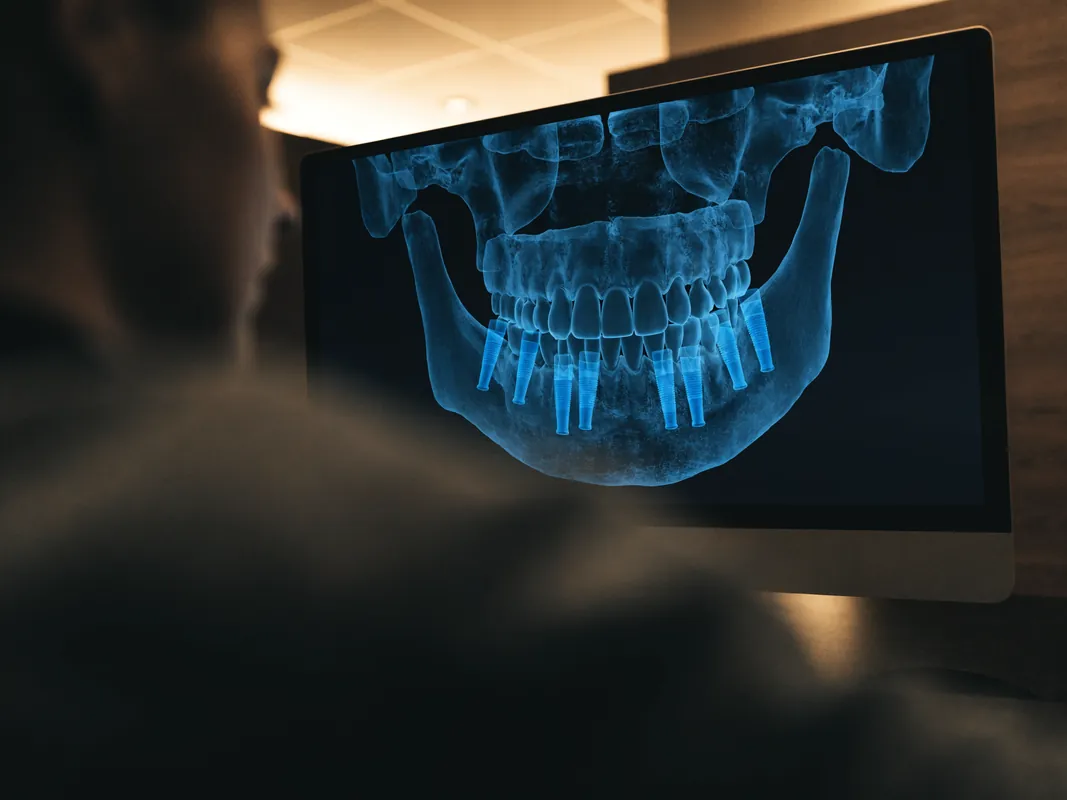
Imaging is selected to answer a clinical question. Intraoral radiographs, panoramic imaging or cross-sectional imaging may be appropriate in different situations. The clinician must justify the exposure and interpret it with the examination. A cross-sectional scan can show anatomy and dimensions but cannot establish disease activity, medicine safety, consent or healing.
Remote photographs or uploaded images can support referral triage, but they are provisional. They may be outdated, incomplete, compressed or wrongly oriented. They cannot show probing findings, soft-tissue texture, mobility, occlusion, sensation, dexterity or the patient’s ability to clean. A definitive implant and restorative plan should not be issued solely from a message exchange.
If suspicious oral lesions, unexplained bone changes, severe TMJ symptoms or another condition is identified, the relevant diagnostic pathway comes first. The clinician should explain why elective rehabilitation is paused and who owns the next assessment. The absence of pain does not prove that a site is appropriate.
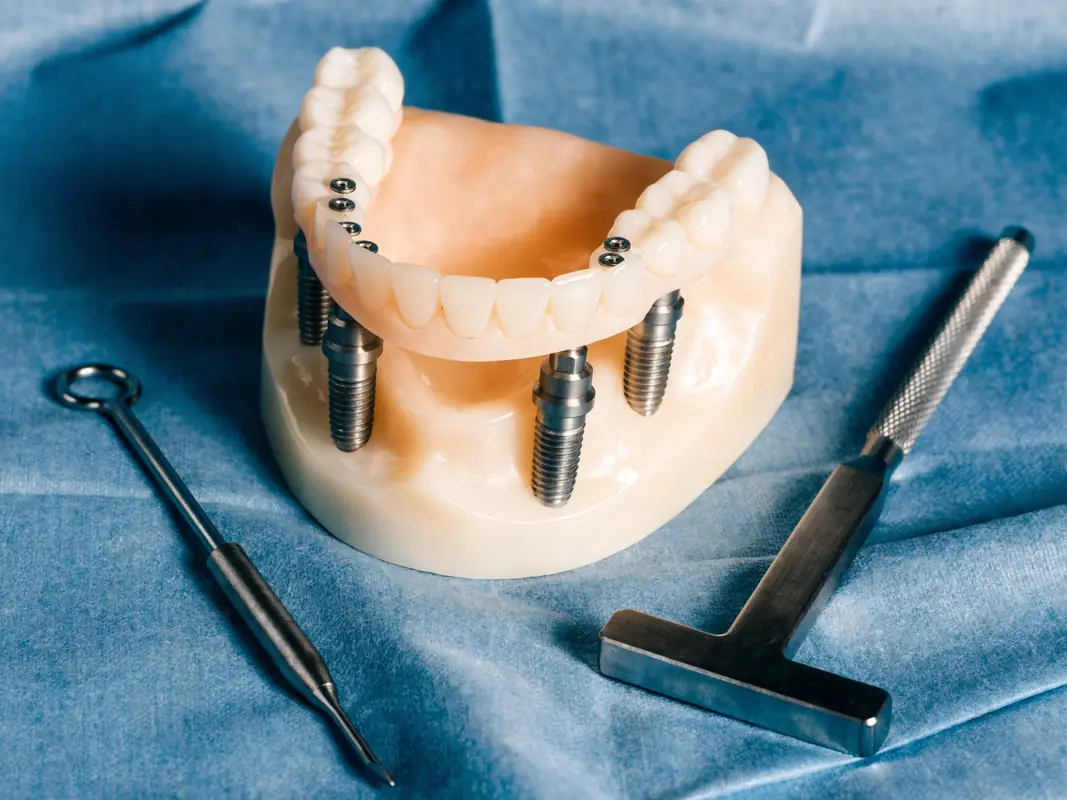
The record should link every proposed implant position to the intended prosthesis. Surgical feasibility without a maintainable restorative design is incomplete planning. The patient should know how the prosthesis will be cleaned, reviewed, repaired and modified if disease or hand function changes.

Tooth preservation and non-implant alternatives
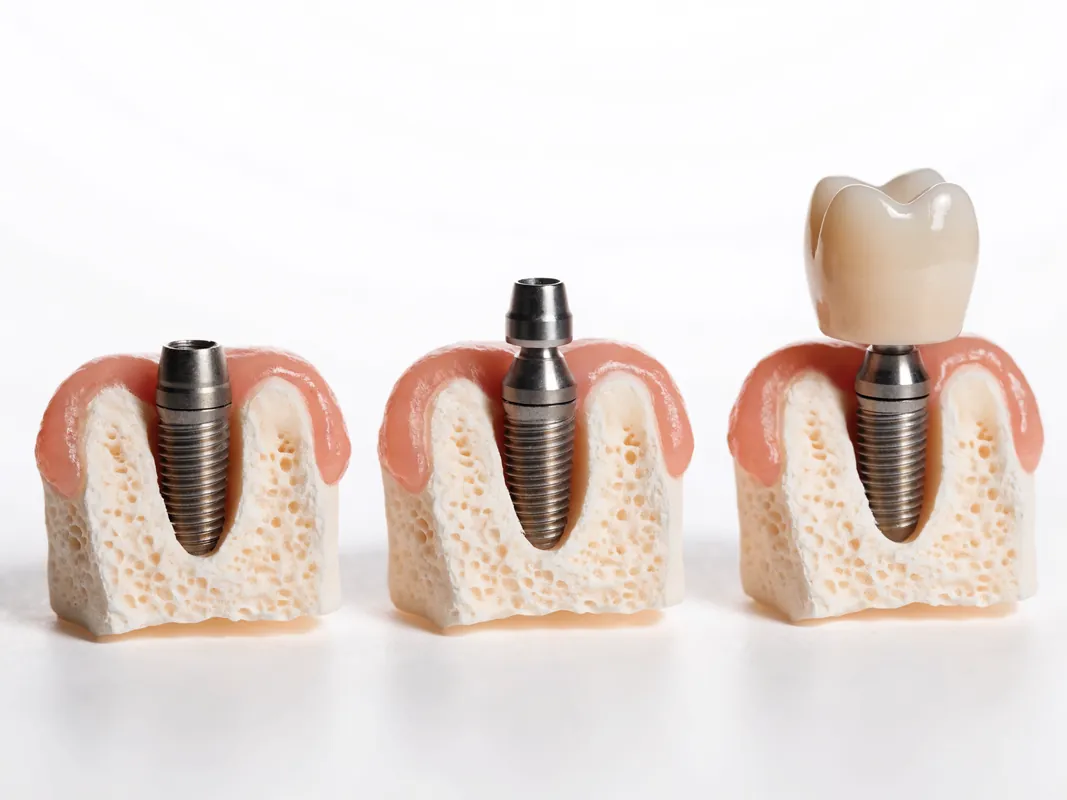
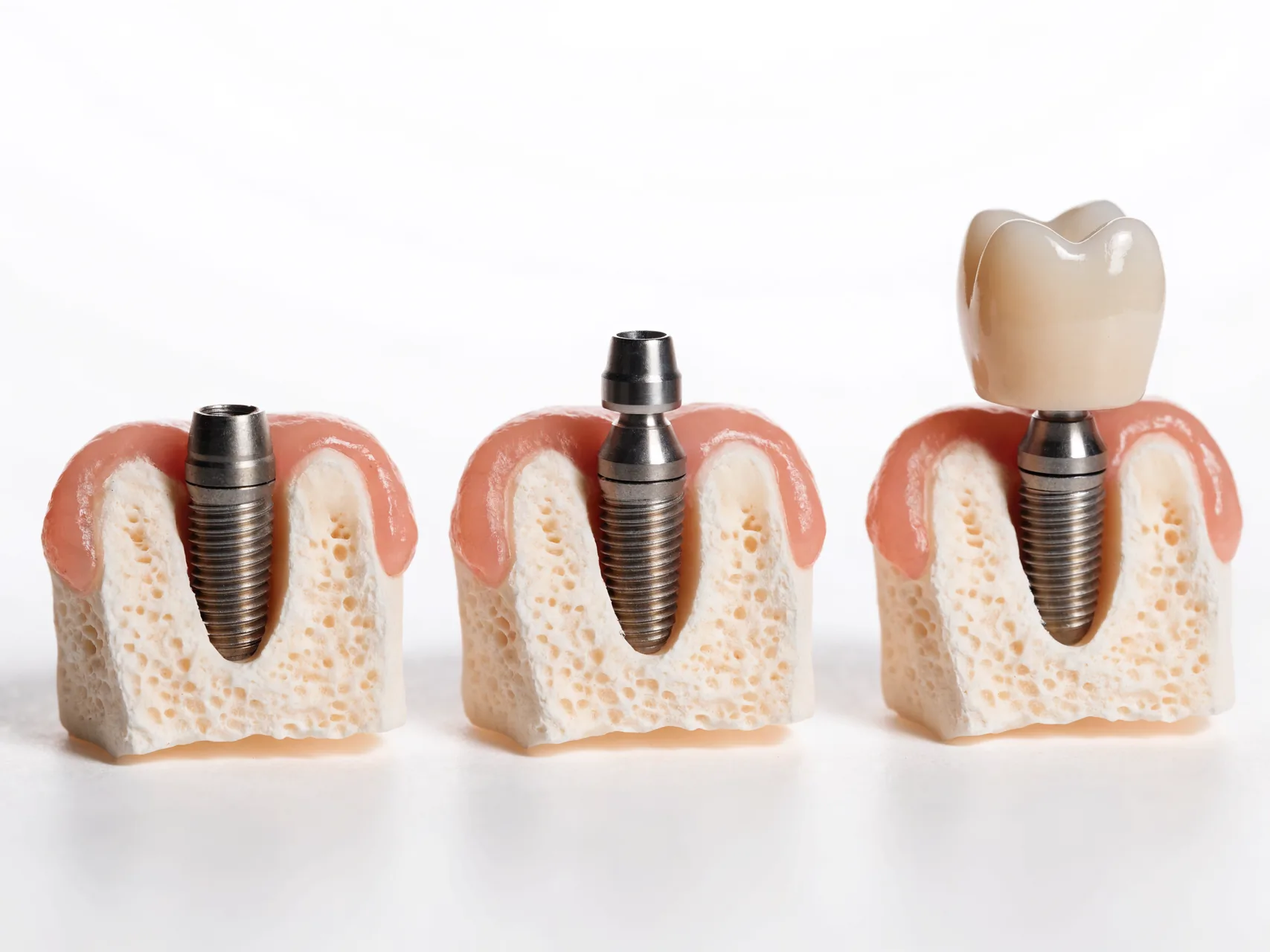
An implant replaces a missing tooth or supports a prosthesis; it does not treat rheumatoid arthritis or remove the need for oral disease control. Begin by asking whether the tooth is restorable and maintainable. Consider prevention, periodontal care, restoration, endodontic treatment, a crown where appropriate, an adhesive or conventional bridge, a removable partial or complete prosthesis, repair or adjustment of an existing prosthesis, acceptance of a space, or no elective treatment.
Every route has trade-offs. Tooth-supported care depends on the condition of the supporting teeth. A removable prosthesis requires tolerance, fit, cleaning and manual handling. A fixed implant restoration requires surgery, component maintenance and cleaning access. No treatment may be reasonable where intervention offers little functional benefit or adds disproportionate burden.
The options discussion should be linked to the patient’s priorities. If the main problem is denture movement, explore whether adjustment, relining or redesign can help before surgery. If the main concern is one visible space, compare conservative alternatives. If extensive tooth loss affects nutrition or speech, involve restorative expertise and consider whether the patient can sustain a complex pathway.
Ask for a written options table stating the purpose, invasive steps, foreseeable risks, uncertainties, maintenance, local support and costs of each route. The patient should be able to decline implants without being told they are refusing all care. A second opinion should review the same source records rather than simply endorse a quotation.
Prescribing rheumatology coordination
Coordination works best when each professional receives a defined question. The dentist should identify the proposed procedure, site, invasiveness, current infection, expected wound, anaesthesia and whether treatment may be staged. The prescribing rheumatology team should identify the current diagnosis, disease activity context, medicine ownership, relevant monitoring or comorbidities, and any medicine decision it accepts responsibility for.
A generic “medical clearance” letter can hide uncertainty. Ask instead: Is there current disease or treatment change that makes elective care inappropriate? Who owns each medicine? Are monitoring concerns unresolved? What should the patient do if a flare or infection occurs? Does the procedure description need modification before the prescriber can answer?
The response should be documented in both records and shared with patient consent. If the dentist changes the procedure, the original response may no longer apply. If the rheumatology medicine changes before treatment, reconcile again. A time gap or travel booking should not freeze an outdated plan.
The patient should not be used as the only messenger for a complex decision. They should receive copies and understand the plan, but clinicians need a reliable communication route. Secure health-data transfer, correct identifiers and clear contact information are essential. Record unanswered questions and do not present silence as approval.
Where prescribing is shared between hospital and primary care, identify which party owns the decision being requested. A dispensing pharmacy or medicine-delivery service does not automatically own it. The 2025 BSR guidance emphasises explicit shared-care responsibilities and communication, which is directly relevant to avoiding ambiguous ownership.
Perioperative medicine boundaries
Perioperative medicine planning starts only after the dental procedure is defined. A consultation, periodontal treatment, extraction, graft, implant placement and prosthetic appointment present different questions. Advice from one should not be copied to another. The prescriber needs enough detail to weigh disease control, medicine effects and procedure-related concerns.
There is no universal instruction here to continue, pause, omit or restart methotrexate, another conventional DMARD, a biological medicine, a JAK inhibitor, steroid, NSAID, antiplatelet, anticoagulant or antiresorptive medicine. There is also no website formula for preventive antimicrobial medicine or supplemental steroid. Those are patient- and procedure-specific clinical decisions.
If a change is advised, the written plan should state the medicine, responsible prescriber, reason, exact patient instruction, contingency for flare or infection, monitoring and review point. The treating dentist should confirm that the instruction is current on the day. The patient should not improvise when dates change.
Medicine planning must account for interactions with any dental prescription. The dentist or pharmacist should check the complete list, allergies, renal and liver context and other relevant factors. A medicine that is familiar in general dentistry may still require caution in a specific patient. This page gives no dose or regimen.
If current infection, abnormal monitoring, medicine toxicity, uncontrolled disease or another unresolved concern is present, elective treatment may pause while necessary urgent care continues through the appropriate pathway. The reason and clinical owner should be recorded. A deferred implant does not mean the patient should live with untreated pain or infection.
Consent and named clinical ownership
Valid consent requires a named clinician to explain the diagnosis, purpose of treatment, alternatives, no-treatment option, material risks, uncertainties, costs, maintenance and what happens if the plan changes. A signature collected by a coordinator is not a substitute for that conversation. The patient needs time and information in a form they can understand.
RA-related consent should avoid exaggeration. It should not state that immune treatment guarantees infection, that RA inevitably prevents healing, or that a stable review removes all uncertainty. It should explain which individual factors are known, which evidence is limited and which professional owns each unresolved question.
Discuss local dental risks, anaesthesia, infection, bleeding, delayed healing, implant or prosthetic complications, periodontal and peri-implant disease, maintenance burden and the possibility that surgery may be changed or abandoned after assessment. Discuss how disease flares, hand function or medicine changes could affect hygiene and follow-up. Explain remote-care limitations.
Consent remains active throughout a staged course. If the plan, medicine situation, health, costs or responsible clinician changes, update the discussion and written plan before proceeding. The patient can pause, refuse or seek a second opinion without being pressured by travel arrangements.
Clinical and commercial ownership must be separated. The named provider owns diagnosis, treatment and follow-up. A logistics service owns only the practical service it supplies. If the provider cannot explain its registration, complaint route, emergency arrangements and aftercare, do not proceed.
Maintenance and local handover
Long-term implant care is local care. Before travelling, identify a dentist or suitable specialist near home who is willing to provide examinations, periodontal and peri-implant review, prevention, prosthesis maintenance and urgent assessment. Share the proposed plan early enough for them to comment. Do not assume a local dentist will service unfamiliar components after the event.
The maintenance plan should be individualised to periodontal history, dry mouth, caries, prosthesis design, dexterity, RA activity, medicines and observed findings. It may need adaptation during a flare or hand-function change. This page provides no universal visit interval or product recommendation.
The patient and local clinician should receive baseline clinical and imaging records, procedure notes, site details, implant and component identifiers, prosthesis design, materials, occlusal information, medicine prescriptions, observed healing and escalation contacts. Files should be usable originals rather than screenshots. The record must name the clinicians involved.
Remote messages can support communication but cannot replace examination, palpation, mobility testing, imaging or urgent care. The written handover should say when the patient must seek local assessment and who can answer professional questions. A coordinator’s availability is not clinical cover.
If local maintenance cannot be established, reconsider the design, use a lower-burden alternative or choose the no-travel option. An implant plan that depends on inaccessible overseas reviews is incomplete.

Urgent signs and emergency boundary
New or worsening facial or oral swelling, fever with dental symptoms, discharge, a persistent sore area, severe pain, unusual bleeding, exposed bone, altered sensation, a loose implant or prosthesis, or sudden difficulty using the restoration needs prompt local assessment. These signs have several possible causes; a message service should not diagnose infection, MRONJ or implant loss from a photograph.
Heavy bleeding that does not stop, severe swelling affecting breathing, swallowing or the eye, collapse, chest pain or another life-threatening symptom requires emergency help through the local emergency system. Do not wait for an overseas reply or travel to an airport.
A possible RA flare or medicine adverse effect also belongs to the established medical pathway. New shortness of breath, severe systemic illness, unusual bruising or another concerning symptom should be triaged by the appropriate service. A dental provider should not attribute every symptom to dental treatment.
The patient should leave treatment with written urgent and emergency instructions for both countries. These should identify the treating clinic, local services, prescriber contacts and the limits of remote review. Clinical urgency should not depend on prior financial authorisation.
Travel and the no-travel option
Travel suitability is separate from implant suitability. Fatigue, pain, mobility, cervical or TMJ limitation, infection, systemic disease, medicine storage, accessibility, support needs, insurance and local follow-up can all make a distant treatment pathway impractical. The patient may reasonably choose local care even if a procedure is technically possible.
Ask the relevant clinicians whether current disease, planned review or treatment affects travel. Plan secure carriage of medicines and records, accessible transport, seating and accommodation, dietary needs and a companion where helpful. Do not assume ordinary insurance covers planned dental care or complications; obtain policy answers in writing.
There is no universal flight or recovery timetable on this page. Procedure extent, anaesthesia, bleeding, swelling, healing and general health vary. The treating clinician should give written advice after assessment. Flexible bookings reduce pressure to proceed or fly when the plan changes.
The no-travel option should remain available at every decision point. It may involve local assessment, staged disease control, a removable or tooth-supported restoration, modification of existing care or no elective intervention. Choosing it is a valid clinical and practical outcome, not a failure.
Itemised quote and commercial terms
A quote should follow assessment and state which parts remain provisional. Separate consultations, specialist opinions, imaging, disease-control care, surgery, anaesthesia, laboratory work, components, temporary and definitive prostheses, maintenance and external services. Journey logistics should be listed separately from clinical charges so supplier responsibility is visible.
The document should state currency, payment stages, cancellation and refund rules, who approves changes and what happens if no implant is placed. It should identify the named provider and clinician. A bundled label must not replace itemisation or clinical reasoning.
Remedial and component coverage terms should be explicit without promising biology. Ask who investigates a problem, what records are required, what professional fees or travel costs are excluded, how disputes are handled and which complaint route applies. Clinical records and urgent-care information should not be withheld during a payment dispute.
WeCare’s role must remain clear: enquiry, referral administration and practical logistics only. It does not diagnose RA or dental disease, reconcile medicines clinically, advise drug changes, select implant sites, prescribe, perform surgery or promise a result. Those responsibilities belong to the named treating provider and prescribers.
Questions to ask before implant treatment
- Who is the named clinician responsible for the dental diagnosis and overall plan?
- Which registered entity is the treating clinic, and how can its status be verified?
- What specific functional problem is the proposed restoration meant to solve?
- Which teeth can be retained, and why is each proposed extraction necessary?
- What is the current RA disease-activity context, and who confirmed it?
- Has every prescribed, injected, infused, intermittent and non-prescription medicine been reconciled?
- Who is the prescribing rheumatology contact for each relevant medicine?
- What exact procedure description was sent to the prescriber?
- Which medicine questions remain unanswered?
- Is there current infection, abnormal monitoring, a flare or another reason elective care should pause?
- Has antiresorptive or antiangiogenic exposure been assessed separately for MRONJ?
- What is the periodontal diagnosis and maintenance history?
- Can the patient clean and handle the proposed prosthesis during an ordinary day and a flare?
- Do dry mouth, TMJ, neck movement or positioning affect assessment or design?
- Which imaging is justified, and what can it not determine?
- What non-implant and no-treatment options meet the same goal?
- Who will provide maintenance and urgent care near home?
- Which records and component identifiers will be supplied?
- What happens clinically and financially if the plan changes?
- Does the travel plan allow delay, staging or cancellation without clinical pressure?
The answers belong in the clinical record and written plan. An early response may honestly say that a decision is provisional, but it should state which evidence and examination are still needed. The patient should not be asked to consent to an irreversible procedure before those points are explained.
RA implant-planning checklist
Rheumatology and medicines
- RA diagnosis, current activity context and prescribing team documented.
- Recent flare, infection, admission, medicine change and important comorbidities recorded.
- Complete medicine reconciliation includes generic name, route, schedule, indication and prescriber.
- Conventional DMARD, biologic, JAK inhibitor, steroid and intermittent medicine questions assigned to the appropriate prescriber.
- No medicine instruction copied from a website or travel itinerary.
Dental and functional assessment
- In-person whole-mouth examination completed.
- Caries, periodontal condition, mucosa, saliva, TMJ, neck position and occlusion assessed.
- Hand function, fatigue, hygiene access and ability to manage a prosthesis discussed.
- Imaging justified for defined questions and its limits explained.
- Tooth preservation and non-implant routes compared.
Clinical ownership and consent
- Named clinic and named clinician accept responsibility for the diagnosis and plan.
- Prescriber communication identifies the actual procedure and unresolved questions.
- Infection, bleeding, healing, bone and MRONJ considerations described without deterministic promises.
- Consent covers alternatives, no treatment, uncertainty, maintenance and remote-care limits.
- Changes in health, medicine, procedure or cost trigger renewed review.
Continuity and travel
- Local maintenance provider identified before invasive treatment.
- Written handover includes clinical records, images, materials and component identifiers.
- Urgent and emergency routes are clear in both locations.
- Flexible arrangements preserve staging, delay and the no-travel option.
- Itemised clinical costs are separate from non-clinical logistics.
This checklist reveals missing ownership or evidence; it does not make an implant decision. The final recommendation belongs to the accountable clinicians after examination and case-specific review.
Sources and review dates
Guidance changes. The named clinicians should check current versions and apply them to the actual patient, medicine list and procedure. This guide was reviewed against:
- [NICE NG100 rheumatoid arthritis in adults: management](https://www.nice.org.uk/guidance/ng100), published 11 July 2018, updated 12 October 2020, last reviewed 19 November 2024 and accessed 29 August 2026. It supports specialist access, treat-to-target management, monitoring and review of complications and function.
- [EULAR recommendations for RA management, 2022 update](https://ard.bmj.com/content/82/1/3), published 2023 after first online publication in 2022 and accessed 29 August 2026. They place RA care with rheumatology and base decisions on disease activity, safety, comorbidities and shared decision-making.
- [2025 British Society for Rheumatology guideline for conventional synthetic DMARD prescription and monitoring](https://academic.oup.com/rheumatology/article/65/2/keaf522/8322743), published 14 November 2025 and accessed 29 August 2026. It supports expert supervision, medicine monitoring, individual risk assessment and clear shared-care responsibilities.
- [SDCEP MRONJ guidance](https://www.sdcep.org.uk/published-guidance/medication-related-osteonecrosis-of-the-jaw/), published March 2017, reviewed and extant March 2024 and accessed 29 August 2026. It supports structured dental assessment for people exposed to antiresorptive or antiangiogenic medicines.
- [NHS rheumatoid arthritis treatment guidance](https://www.nhs.uk/conditions/rheumatoid-arthritis/treatment/), accessed 29 August 2026. It describes conventional DMARDs, biological treatment, JAK inhibitors, steroids, monitoring and supportive therapy without supplying a dental perioperative rule.
- [Dental implants in people with autoimmune diseases: systematic review](https://pubmed.ncbi.nlm.nih.gov/38812949/), published 31 March 2024 and accessed 29 August 2026. It found mainly low-quality, heterogeneous evidence and insufficiently consistent medicine reporting for firm conclusions.
- [Systematic review of periodontal treatment and RA disease activity](https://pubmed.ncbi.nlm.nih.gov/35993013/), published 2022 and accessed 29 August 2026. It identified substantial limitations and risk of bias, supporting cautious interpretation rather than an individual treatment promise.
- [GDC Principle 2: communicate effectively](https://standards.gdc-uk.org/pages/principle2/principle2), accessed 29 August 2026. It supports written treatment plans, cost clarity, referral information and emergency arrangements.
- [GDC Principle 3: obtain valid consent](https://standards.gdc-uk.org/pages/principle3/principle3), accessed 29 August 2026. It supports patient-specific discussion of options, risks, costs and ongoing consent.
- [GDC Principle 4: maintain and protect patient information](https://standards.gdc-uk.org/pages/principle4/principle4), accessed 29 August 2026. It supports accurate records that identify the treating clinician and document discussions.
- [GDC information for people considering dental treatment abroad](https://www.gdc-uk.org/standards-guidance/information-for-patients-public/going-abroad-for-dental-treatment), accessed 29 August 2026. It supports provider verification, qualified assessment, medical history, local-dentist discussion and aftercare planning.
- [NHS urgent dental guidance](https://www.nhs.uk/nhs-services/dentists/how-to-find-an-nhs-dentist-in-an-emergency/), accessed 29 August 2026. It distinguishes urgent dental symptoms from emergencies such as uncontrolled bleeding or swelling affecting breathing.
The sources support a record-led and clinician-owned process. They do not provide a universal implant answer for every person with rheumatoid arthritis.