
A neutral evidence checklist for verifying an Antalya dental provider, responsible clinicians, treatment scope, laboratory, materials, costs and continuity of care.
# How to Verify and Choose a Dental Provider in Antalya
Choosing dental care in another country is not a contest of star ratings, dramatic photographs or sales promises. It is an evidence problem: who is legally responsible, who will diagnose and treat you, what facility will be used, what the proposed treatment actually includes, which alternatives exist, and how records, aftercare, payment and complaints will work across borders.
This guide does not rank, endorse or recommend any Antalya provider. It does not diagnose a reader, estimate a personal price or predict a result. It provides a neutral method for comparing evidence before making an irreversible, expensive or travel-dependent decision.
Official directories, regulations and travel guidance can change. Open each source at the time you check a provider, preserve dated copies of relevant entries and ask the provider to resolve any mismatch in writing.
Verification, Not Ranking
Search results often arrange providers by advertising visibility, review activity or the wording of a directory page. None of those signals establishes that a particular clinician has assessed a particular patient or that a proposed procedure is appropriate. A list position is not a licence, a clinical opinion or a substitute for informed consent.
Use the same comparison method for every candidate. Ask each organisation for the same documents and answer set. Record who supplied each statement, when it was supplied and whether an independent source supports it. A provider that answers with specific names, documents and limitations is easier to evaluate than one that replies with slogans.
Do not start by asking which organisation has the most attractive reception area, social feed or holiday offer. Start by asking whether the proposed care is necessary, whether less invasive options have been considered, who is accountable for each stage and what happens if the initial remote proposal changes after examination.
Define the Care Question Before Comparing Providers
Write a one-page description of the problem in your own words. Include symptoms, previous diagnoses, previous treatment, important medical history, medicines, allergies, smoking or vaping information, relevant imaging and what outcome you hope to discuss. Do not choose a procedure merely because an advertisement supplied its name.
Separate needs from preferences. Pain, infection, broken work, chewing difficulty and active disease may require a different sequence from a purely elective appearance request. A patient seeking a second opinion on existing work needs a provider willing to assess records and current findings rather than assume that everything must be replaced.
List personal constraints without turning them into clinical instructions. These may include available leave, mobility, communication needs, caring responsibilities, ability to return for review and access to a dentist at home. A clinician can then explain whether those constraints are compatible with safe staging. Travel convenience should not determine which teeth are treated or how much healthy tissue is removed.
Build a Shortlist From Current Official Sources
Begin with sources that identify regulated facilities or the current rules, then use commercial websites only to gather questions. The Turkish Ministry of Health's [current international health-tourism authorisation list](https://shgmturizmdb.saglik.gov.tr/TR-119821/yetki-belgesi-listeleri-guncellenmistir.html) is one starting point. The official [HealthTürkiye facility directory](https://www.healthturkiye.com/hospitals-list?filters=branch%3A18%3Bcity%3A&pageIndex=0) can provide another route to facility information.
The live lists may be revised, and names can be similar. Search the exact legal name and address, not only a marketing brand. Save the relevant result with its access date. Ask the organisation to identify the precise entry that applies to the premises where care will occur.
The [2025 international health-tourism regulation](https://www.resmigazete.gov.tr/eskiler/2025/04/20250426-2.htm) describes authorisation and service requirements in force when this guide was reviewed. It distinguishes a health facility from an intermediary organisation and requires authorisation for international health-tourism activity. Read the current text and any later amendments rather than relying on a screenshot or a certificate image supplied in a chat.
A directory entry is a starting check, not proof that a provider is suitable for a particular person or procedure. It does not replace diagnosis, clinician verification, informed consent, an itemised plan or continuity arrangements.
Verify the Legal Provider and Trading Name
Ask: “Which legal person or organisation will provide and invoice the dental treatment?” Request the registered name, facility type, full treatment address, licence or authorisation identifiers and the name that will appear on the contract, consent form, invoice and clinical records.
Compare those details across the website footer, quotation, bank recipient, invoice, privacy notice and official directory. A trading name can be legitimate, but the relationship between that name and the accountable legal entity should be explicit. If the payment recipient differs, ask what service that recipient provides and why it receives the money.
Do not assume that a coordinator's brand is the health facility. Do not assume that a consultation room, imaging site, laboratory and surgical site are the same legal premises. Record each location and the organisation responsible there. If treatment moves between sites, ask how records, consent, infection controls and emergency responsibility move with it.
Verify the Facility Licence and International Health-Tourism Authorisation
The Antalya Provincial Health Directorate publishes the [regulation for private oral and dental health facilities](https://antalyaism.saglik.gov.tr/TR-257993/agiz-ve-dis-sagligi-hizmeti-sunulan-ozel-saglik-kuruluslari-hakkinda-yonetmelik.html). It describes categories such as a dental practice, polyclinic, centre and hospital and sets a regulatory framework for opening, licensing and inspection. Use it to understand why the exact facility category and address matter.
Ask the provider for its current facility licence and international health-tourism authorisation details. Match the legal name, address, document type and current status to live official sources. A logo, framed document or cropped photograph does not complete that check.
Do not treat a facility authorisation as a personal credential for every clinician or as approval of every proposed procedure. Facility verification and clinician verification answer different questions. Both are necessary.
Separate the Provider From a Facilitator
A facilitator may organise enquiries, translation, scheduling or travel services while a health facility provides clinical care. Ask both parties to state their legal role. The contract and invoice should make clear which entity charges for dentistry and which, if any, charges for non-clinical services.
Ask where clinical questions are sent and who answers them. A coordinator can collect information, but should not be presented as the clinician who diagnoses, chooses treatment or obtains clinical consent. Request direct access to the responsible dentist for material questions before committing.
If a facilitator recommends only one facility, do not treat the recommendation as an independent clinical second opinion. Ask about commercial relationships, referral payments and how complaints concerning one party are passed to the other. Keep separate copies of each agreement.
Identify the Responsible Clinician
Obtain the full name of the dentist who will assess you in person, the dentist responsible for the overall plan and each clinician expected to perform a material stage. For multi-stage care, this may include different people for surgery, restorative work, gum treatment, root treatment or orthodontics.
Ask whether the named clinician is confirmed or merely an example profile. A staff gallery does not establish assignment. If assignment may change, require notification and a new opportunity to verify the replacement before treatment.
Ask the clinician to explain their role in plain language. Titles used in marketing can be ambiguous across jurisdictions. The relevant questions are what the person is registered to do, what procedure they will perform, what relevant training they claim, and where that claim can be checked.
Verify Registration and Claimed Scope
Request the clinician's full professional name, registration details, degree, any claimed specialist title and the issuing authority. The Turkish Ministry of Health's [Registration and Equivalency Department](https://shgmtescildb.saglik.gov.tr/) describes the national registration and equivalency function, but a patient should not assume that every personal record is searchable publicly.
Ask the provider which current official or professional source can confirm the individual's right to practise and any claimed specialist status. If an online search is unavailable, ask the relevant authority or professional body how a patient can verify the information. Preserve the response.
Do not infer scope from social media, a conference attendance badge or a generic training image. Do not assume that the owner, clinical director or person featured in a video will perform the treatment. A claim should match the exact person, credential, status and clinical role.
For a UK-registered professional giving advice or treatment in the UK, the UK register is relevant. It does not verify a dentist practising only in Turkey. Use the regulator appropriate to where the professional is acting.
Confirm That the Facility Fits the Proposed Care
A valid facility may still be an unsuitable setting for a particular intervention. Ask the responsible clinician which parts of the proposed care will occur at which licensed premises and why that setting is appropriate.
For any surgical, sedation or medically complex stage, ask who assesses fitness, who administers and monitors any medicine, what emergency equipment and protocols apply, where escalation occurs and how transfer to a higher level of care is organised. Do not use this guide to decide whether a procedure or anaesthetic approach is personally safe.
Ask whether imaging, laboratory work or other services are performed at another site. Record the legal provider, address and responsibility for each. If the provider says an outside service is authorised, request enough information to verify that statement.
A Remote Review Remains Provisional
Photographs, scans and radiographs can help a clinician decide what further information may be needed. They do not reproduce a full clinical examination, current symptoms, gum measurements, tooth vitality, bite, movement, palpation or every relevant medical factor.
Ask who reviewed the submitted records, on what date and whether the response is an estimate, a differential view or a proposed plan. The response should identify missing information and state that material changes may follow in-person assessment.
Do not accept a remote sales message as consent for irreversible treatment. Do not purchase non-refundable travel around a plan that has not been confirmed clinically. If the provider refuses to explain what could change on arrival, treat that as a major uncertainty.
Require Diagnosis Before Commitment
The [General Dental Council's guidance on dental treatment abroad](https://www.gdc-uk.org/standards-guidance/information-for-patients-public/going-abroad-for-dental-treatment) says a patient should be assessed by a qualified dentist before receiving a treatment plan and cost estimate. The GDC regulates UK dentistry, not Turkish practice, but its patient questions are a useful planning benchmark.
Ask the Antalya clinician for the findings that support each proposed intervention. A label such as smile makeover, implant treatment or full-mouth restoration is not a diagnosis. The record should distinguish active disease, structural findings, functional concerns, prognosis and elective preferences.
If pain or urgent disease is present, ask how that is prioritised. If the proposal is cosmetic, ask whether oral health is stable enough to consider it. If extensive removal or replacement is suggested, obtain an independent second opinion before travel or before irreversible work begins.
Request the Diagnostic Record Set
Ask which records are needed for the decision and why. Depending on the question, records may include a medical and dental history, symptom history, clinical charting, periodontal findings, vitality information, photographs, scans, radiographs, bite records and existing component information. More data is not automatically better; the clinician should justify relevant exposure and collection.
Request copies in usable form. A screenshot inside a messaging app may be inadequate for an independent review. Ask for original-quality images where appropriate, reports, dates, tooth numbering and the name of the clinician who interpreted them.
Record quality matters. Ask whether an image is current enough for the decision and what still requires examination. Never assume that one panoramic image can answer every implant, root, gum, bite or restorative question.
Compare Alternatives, Including No Treatment
A valid consent discussion should not start and end with the advertised procedure. Ask what happens if the condition is monitored, repaired, treated more conservatively, staged or managed at home. Ask what clinical findings make each alternative more or less suitable.
For elective appearance changes, discuss cleaning, whitening, orthodontic movement, additive bonding, repair of defective work and acceptance of natural variation where relevant. For missing teeth, discuss removable, tooth-supported and implant-supported approaches where clinically reasonable. This list is not personal advice; it illustrates why diagnosis should precede a product choice.
Ask about disadvantages as well as benefits. A provider should explain loss of healthy tissue, maintenance burden, repairability, future replacement, uncertainty and the consequences of delaying or declining care.
Demand a Tooth-by-Tooth Written Plan
The written plan should identify each tooth or area, the diagnosis or finding, proposed procedure, responsible clinician, material or component category, laboratory stage, alternatives, major uncertainties and follow-up need. Generic bundles hide clinical scope.
Ask which teeth are being monitored, repaired, prepared, removed or replaced. If a bridge, implant restoration or full-arch design is proposed, request a diagram and component-level explanation that an independent dentist can understand.
The plan should distinguish confirmed items from conditional items. Bone procedures, root treatment, extractions, temporary work and additional imaging should not appear as surprise add-ons without a clinical explanation and revised consent.
Version the document. When findings change, ask for a dated replacement showing what changed, why, who authorised it and how it affects clinical scope, time and payment. Do not consent by relying on several conflicting chat messages.
Use Consent as an Ongoing Clinical Process
Consent is more than a signature at reception. The consolidated Turkish [Patient Rights Regulation](https://buharkentidh.saglik.gov.tr/TR-1540024/hasta-haklari-yonetmeligi.html) published on an official Ministry of Health site describes information about diagnosis, proposed intervention, alternatives, possible benefits and risks, and consent documentation. Check the current regulation and ask the provider how it applies to your care.
Information should be understandable, provided before the decision and connected to the actual procedure. Ask who will explain it, in which language and how questions are recorded. An interpreter should translate the clinical discussion without replacing the clinician's judgement or pressuring the patient.
Consent continues throughout care. A patient should be able to ask questions, request clarification, pause before an irreversible step and understand the consequences of accepting or declining. A generic form does not correct a missing diagnosis, unknown clinician or unexplained change.
Control Changes After Arrival
In-person findings may legitimately change a provisional proposal. The safe response is not to forbid change; it is to make change transparent. Ask the clinician to show the new finding, explain why it matters and compare revised options, including delaying or obtaining another opinion.
Require a revised tooth-level plan, risks, alternatives, sequence and itemised financial effect before proceeding. Ask whether travel needs to change and who bears each non-clinical cost under the written agreement. Keep the earlier version so the difference is visible.
Do not accept “you are already here” as clinical reasoning. Arrival does not remove the need for consent. If a much larger intervention is proposed under immediate time pressure, pause unless a genuine urgent condition requires prompt care and the responsible clinician explains the situation.
Make Materials and Component Traceability Specific
Generic words such as ceramic, zirconia, implant or high quality do not identify a product. Ask for the exact manufacturer, product or system, reference where applicable, lot or batch information where available, and the component used at each relevant tooth or site.
The clinician should explain why the material or component is proposed for this case, what alternatives exist, how it can be maintained or repaired and what records a future dentist will need. A brand name alone does not establish diagnosis, fit, technique or suitability.
Request traceability documents after treatment and compare them with the final clinical record and invoice. For multi-component work, ask for a component map. If a substitute is proposed, require a revised explanation and consent before placement.
Do not treat a stock image, packaging display or generic manufacturer brochure as evidence of what was used in your mouth. Case-level documentation is the relevant evidence.
Verify the Laboratory Identity
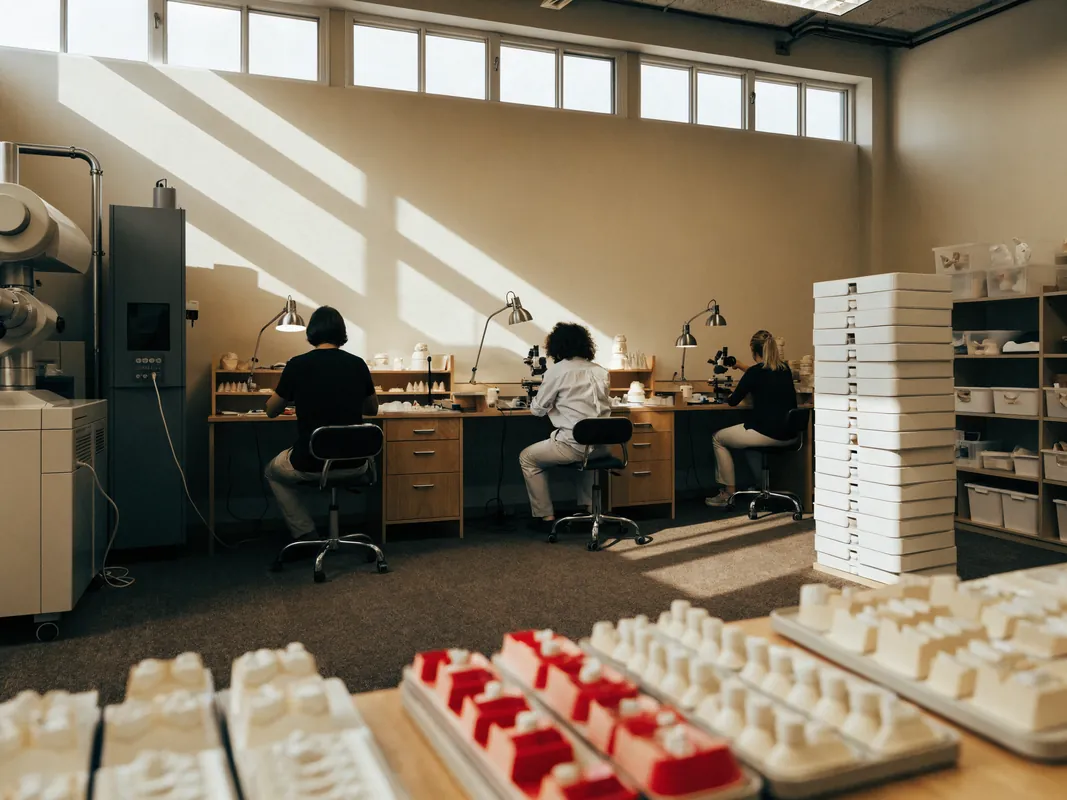
Ask which laboratory will design or manufacture each restoration, where it is located and who holds clinical responsibility for the prescription and final acceptance. “In-house” and “external” are business arrangements, not quality conclusions.
Request the laboratory prescription or equivalent case record, material declaration, shade or design information where relevant, and identification that links the finished work to the patient. Ask how design changes are communicated and who decides whether a restoration is acceptable for placement.
A technician may contribute important manufacturing expertise, but the responsible dentist should diagnose, prescribe, obtain consent, assess fit and decide whether to place the work. Marketing language should not obscure that division.
If the laboratory changes, ask why, whether the material or method changes and how the revision is documented. Confirm that records needed for repair or remanufacture will be supplied at discharge.
Ask for Infection Prevention Evidence
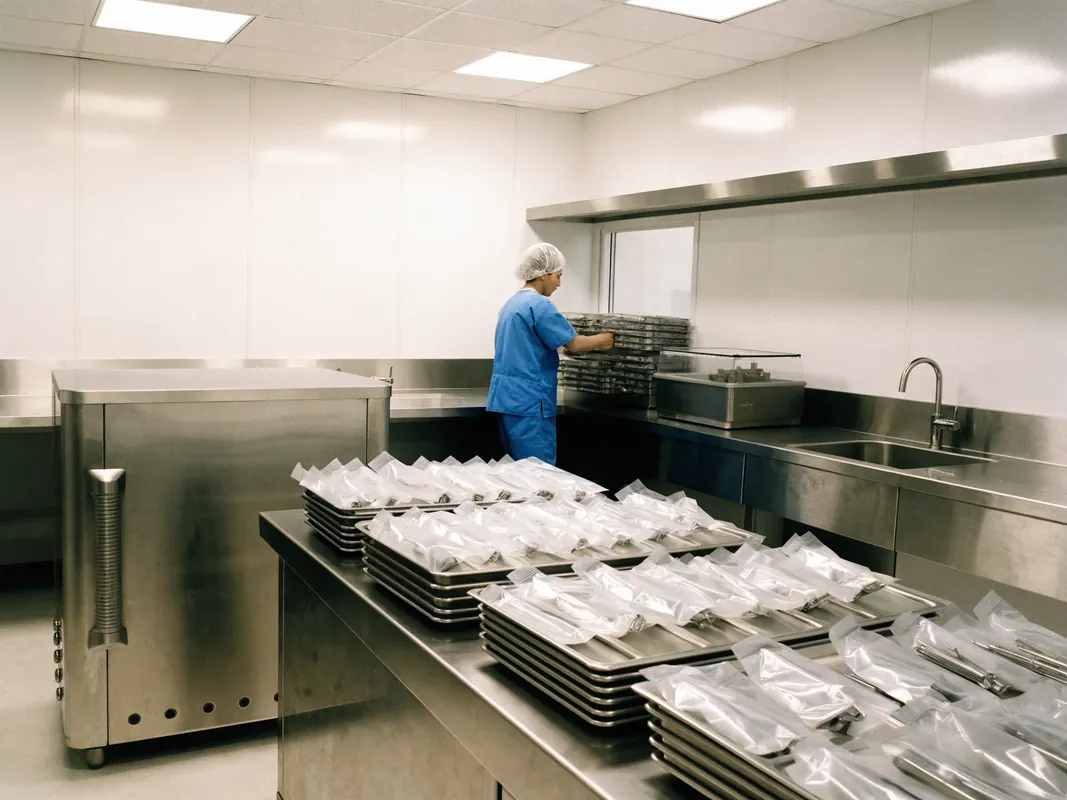
Do not attempt to certify a facility through a brief tour. Ask for the written infection prevention process relevant to your visit: instrument reprocessing, single-use items, environmental cleaning, waterline management, waste handling, staff responsibilities and how incidents are recorded and addressed.
Ask which current regulatory or inspection framework applies to the licensed facility and how a patient can confirm its status. A tidy room or sealed pouch can be reassuring but does not by itself prove the whole system.
For an implantable product or surgical stage, ask how sterile items are traced to the case and what records are retained. For laboratory work, ask how impressions, appliances and returned items are handled between sites.
Do not demand confidential staff or patient records. The aim is a credible description, current authorisation and case-specific traceability, not access to information that should remain private.
Understand Imaging and Radiation Decisions
Ask the responsible clinician which image is proposed, what clinical question it is intended to answer, who will take and interpret it, and whether an existing suitable image can be used. The presence of expensive equipment is not evidence that every patient needs it.
Request the image and report in a transferable format. Record the date, facility and interpreter. If images are taken at a separate radiology provider, identify that organisation and how results return to the treating clinician.
Do not use an online guide to decide whether a particular scan is indicated. That decision requires clinical judgement and current records. A provider should be able to explain the reason without promising that imaging removes all uncertainty.
Clarify Sedation, Anaesthesia and Emergency Arrangements
If the proposal includes sedation, anaesthesia or a medically complex procedure, ask for the full name and professional role of each person involved, the licensed setting, pre-assessment process, monitoring, recovery criteria and emergency escalation route.
Ask how your medical history and medicines are reviewed and which clinician decides whether care should proceed. Do not stop, change or omit prescribed medicine on the basis of a coordinator's message or this guide. Seek advice from the appropriate treating professionals.
Ask what happens if the procedure is postponed for safety, if recovery takes longer than expected or if transfer to another facility is needed. Written arrangements should distinguish clinical responsibility, transport responsibility and financial responsibility.
Compare an Itemised Quote on Equivalent Scope
Price comparison is meaningful only when scope is equivalent. Ask each provider to convert its proposal into the same categories: assessment, imaging, tooth-level procedures, temporary work, laboratory stages, materials and components, medicines supplied, planned reviews, records, and separately priced non-clinical services.
The quote should state what is included, excluded, conditional and not yet diagnosable. It should identify taxes or fees where applicable, currency, payment schedule, expiry date and the consequence of a clinical change.
Do not compare a provisional headline figure with a fully itemised confirmed plan. Do not assume a higher figure proves better care or a lower figure proves poor care. Evidence, scope, accountability and continuity are the comparison variables.
Ask how unused items are handled if the plan becomes smaller and how additional items are authorised if it becomes larger. Get the answer before paying.

Check Payment, Currency and Refund Terms
Confirm the legal recipient for each payment and whether it matches the contracting entity. Request an invoice or receipt for every transaction. Avoid transferring clinical fees to an unexplained personal account.
The agreement should state the currency used for the quote, when conversion occurs, which charges may vary and which party bears bank or card fees. Do not rely on an old screenshot of an exchange calculation.
Ask what happens if the provider cancels, the clinician decides treatment should not proceed, the patient becomes unfit to travel, the plan changes after examination or only part of the service is delivered. Separate cancellation terms for dentistry from terms for travel services.
Do not assume a deposit is refundable or non-refundable based on a chat message. Read the signed terms, ask questions and preserve proof of payment. For a large or irreversible commitment, consider independent legal or financial advice appropriate to your circumstances.
Read the Contract Before Travel
Identify the governing law, legal entity, service address, procedure scope, clinician assignment, change process, payment terms, record access, aftercare responsibilities and complaint route. If several documents form the agreement, list them in order of precedence.
Ask for a version you can understand before departure. Translation should preserve legal and clinical meaning. If the provider supplies translated terms, ask which language controls in a dispute and consider independent translation for material commitments.
Marketing pages and conversations may not be contractual. If a statement matters, ask for it in the signed document or itemised plan. Do not rely on disappearing messages.
Watch for broad exclusions that conflict with specific promises, clauses allowing unilateral substitution, or terms that shift every consequence of provider error to the patient. Clarify ambiguity before payment.
Verify Insurance Wording, Not Assumptions
Travel cover, medical complication cover, professional indemnity and provider liability are different concepts. Ask what policy or legal arrangement applies to the facility and clinicians, what event it covers, where it applies, who can claim, exclusions and the claims process. A logo or statement that a provider is insured is not enough to understand patient protection.
Tell your own insurer accurately that the purpose of travel includes planned dental care and ask for written confirmation of covered and excluded events. The [NHS treatment abroad checklist](https://www.nhs.uk/using-the-nhs/healthcare-abroad/going-abroad-for-treatment/treatment-abroad-checklist/) advises patients to consider appropriate insurance, aftercare, complications, exchange-rate changes and possible extended or return travel.
Policies and public healthcare entitlements can change. Do not assume that routine holiday insurance, a health card or public care at home will pay for planned treatment or corrections. Read current wording and ask the issuer.
Separate Travel Services From Clinical Care
Flights, accommodation and ground transport can make a trip easier, but they do not demonstrate clinical suitability. Ask which legal entity supplies each travel service, its cancellation terms and whether purchasing it is optional.
Keep travel amounts separate from dental fees in the quote and invoice. Ask what happens if clinical dates move, recovery is delayed or the responsible clinician postpones treatment. Flexible arrangements may reduce pressure to proceed when plans change.
The current [FCDO Turkey travel advice](https://www.gov.uk/foreign-travel-advice/turkey) and its [health guidance](https://www.gov.uk/foreign-travel-advice/turkey/health) should be checked close to departure. Advice, regional warnings and insurance consequences can change. This guide does not provide entry, security, visa or travel-fitness advice.
Do not choose more invasive dentistry because a room or ride has already been booked. Non-clinical convenience should remain reversible where possible.
Replace Fixed Timelines With Clinical Gates
A schedule should name decision points rather than promise that every patient completes the same sequence. Useful gates include adequate records, medical review, in-person examination, diagnosis, disease control, consent, laboratory approval, healing assessment, final fit, discharge and maintenance planning.
Ask which stages depend on biology, laboratory work or review and what range of delay is possible. Ask what would require an extra visit, a longer stay or treatment at home. Do not book a departure so tightly that it pressures final placement without adequate review.
For staged treatment, request a written plan for the interval at home: temporary work, diet or hygiene instructions, warning signs, contact route, local care and the evidence required before the next stage. The responsible clinician should personalise those instructions.
Arrange Aftercare Before Booking
Ask the overseas clinician to describe expected reviews, maintenance, warning signs and the difference between routine support, urgent assessment and corrective treatment. The plan should name who provides each stage, where it occurs and how quickly the patient should seek appropriate help when a concerning symptom appears.
Contact a dentist near home before travelling. Ask whether that practice can provide an independent pre-travel opinion, emergency assessment, routine maintenance or review of overseas records. A local dentist is entitled to decide what care they can provide and may need specific images, component information or a fresh examination.
Do not assume that remote photographs can replace clinical assessment. Ask how the Antalya provider decides when in-person care is required and who pays for each element under the signed terms. If no realistic local or return-care pathway exists, the treatment burden may be unacceptable.
Define Remedial Responsibilities Without Slogans
Ask for written terms covering assessment of a concern, exclusions, evidence required, time limits, labour, materials, replacement components, travel, accommodation and care by another provider. The document should also explain what happens when responsibility is disputed or when delay could harm the patient.
Separate a manufacturer's limited product coverage from the dentist's clinical responsibility and from travel expenses. A component document does not automatically cover diagnosis, surgery, fitting, laboratory work or the cost of returning abroad.
Do not accept a promise that every future problem will be corrected at no cost. Oral health, accidents, maintenance, biological response and new disease complicate responsibility. What matters is a fair, understandable process that does not prevent urgent independent care.
Obtain a Complete Discharge and Handover Pack
Before leaving, request a dated treatment summary, final tooth chart, diagnoses, procedures, clinician names, facility details, original imaging and reports, prescriptions, relevant laboratory records, material and component traceability, temporary-work status, maintenance instructions and the agreed review plan.
Include unresolved findings and deviations from the original proposal. If a later stage is planned, record exactly what is provisional, what must be reassessed and what evidence will be reviewed before proceeding.
Store the pack securely in an accessible format and share it with a local clinician when appropriate. Ask how to obtain later corrections or missing records. A photo of a smiling patient is not a clinical handover.
Plan Complaints and Jurisdiction
Request the provider's complaint procedure before payment. It should identify the legal recipient, submission method, expected acknowledgement, review process, response pathway and escalation options. Ask how a complaint involving both a facilitator and facility is allocated.
Confirm the governing law and competent forum stated in the contract. Ask which Turkish health authority or professional route can receive a regulatory concern and which issues are contractual, clinical or criminal. Do not assume that a UK regulator or the NHS can investigate treatment performed by a non-UK professional abroad.
Keep a contemporaneous file: contracts, plans, consent forms, invoices, images, messages, travel changes, symptoms, independent opinions and provider responses. If urgent care is needed, seek it rather than waiting for a complaint outcome.
For a serious dispute, obtain advice from an appropriately qualified lawyer or patient-support body with relevant jurisdictional knowledge. This guide is not legal advice.
Read Reviews, Awards and Rankings Critically
Reviews can reveal communication themes and recurring practical issues, but they cannot verify diagnosis or let you estimate your personal outcome. Platforms differ in identity checks, moderation, solicitation and removal processes.
Read across time and sources. Look for specific descriptions of clinician identity, plan changes, records, aftercare and complaint handling rather than only emotional reactions. Consider whether many reviews use identical wording, arrive in clusters or focus on hospitality while omitting clinical detail.
An award may be commercial, editorial, membership-based or independently assessed. Ask who issued it, the criteria, assessment date and whether the named legal facility or an individual received it. Do not convert an award into evidence that a procedure is suitable.
Search placement can be purchased, and “clinic comparison” pages may receive referral fees. Ask how a list was funded before treating it as independent.
Treat Photographs and Outcome Stories as Marketing Evidence
Before-and-after images may help a patient describe preferences, but they do not reveal diagnosis, preparation, bite, maintenance, complications, follow-up duration or whether the images were edited. Ask whether the named clinician performed the work and whether the example is genuinely comparable.
Patient consent for publication should be separate from consent for care. Declining marketing use should not affect treatment. Ask how images are stored, whether faces can be identified and how consent can be withdrawn where applicable.
Do not accept a photograph as a promise. Individual outcomes vary, and selected cases do not establish what will happen to another person. Request explanation of limitations and case-specific prognosis from the responsible clinician.
Verify Communication and Interpreter Independence
Confirm which language will be used for diagnosis, consent, treatment instructions, contracts and complaints. Conversational fluency is not the same as precise clinical interpretation.
If an interpreter is needed, ask who employs and pays them, whether they have appropriate competence, how confidentiality is handled and whether the patient can ask for repetition or a pause. A salesperson should not selectively summarise a clinician's explanation.
Ask for written copies of material information in a language you understand. Use teach-back: explain the plan, alternatives and major uncertainties in your own words and ask the clinician to correct misunderstandings.
Record how urgent communication works outside scheduled appointments. A continuously advertised chat channel is not a substitute for emergency services or local clinical assessment.
Check Accessibility and Support Needs
Tell the provider about mobility, sensory, cognitive, communication or other access needs before booking. Ask about step-free access, toilet access, transfer within the premises, seating, appointment length, quiet space and the ability to bring an appropriate support person.
Confirm access at every actual site, not only the building shown in marketing. Imaging, surgery, laboratory review and accommodation may occur elsewhere. Ask for factual measurements or photographs when relevant rather than a broad assurance.
Support should preserve autonomy. A companion can assist, but clinical information and consent should still be directed to the patient unless lawful representation applies. Ask how privacy is maintained.
If fatigue, frailty or a health condition affects the plan, discuss it with appropriate clinicians. Do not assume age alone decides suitability.
Provide Medical and Medicine Information Safely
Give the responsible clinician an accurate medical history, current medicine list, allergies, previous reactions, relevant diagnoses and contact details for treating professionals where appropriate. Include non-prescription products if asked.
Ask who reviews this information and whether additional medical advice or records are needed. A coordinator should not tell a patient to stop or change prescribed medicine. Do not make medication changes because of generic internet content.
If the provider gives pre-treatment instructions, verify that they come from the responsible clinician and are compatible with advice from relevant medical professionals. Record any disagreement and resolve it before travel.
An undeclared condition can affect care, but fear of being refused should not lead to concealment. A safe provider should explain when postponement, a different setting or local care is more appropriate.
Protect Health Data and Identity Documents
Before sending photographs, scans, passport details or medical records, read the privacy notice. Identify the controller, purpose, access recipients, storage location, retention period, international transfers and method for obtaining or correcting a copy.
Send only what is necessary through a channel the provider identifies as secure. Confirm whether an intermediary, software vendor, laboratory or translator receives the information. Do not post clinical records publicly to obtain informal opinions.
Consent for treatment data, travel administration and marketing are different purposes. Ask for separate choices. If the privacy notice names a different legal entity from the contract, request an explanation.
Preserve your submitted records and the provider's response. Knowing which data informed the provisional plan helps later review.
Procedure-Specific Verification Questions
The core verification method applies across dentistry, but different plans create different questions. These prompts are not a substitute for diagnosis.
Implant-related care
Ask who decides whether an implant-supported option is suitable, what records inform that decision, which clinician performs surgery and restoration, and how the exact system and components are documented. Ask about alternatives, staging, temporary teeth, maintenance, component availability at home and what would cause the plan to change.
Veneers, crowns and appearance-led care
Ask why each tooth needs the proposed restoration, how much healthy tissue may be altered, what additive or orthodontic alternatives exist, how the bite and gum health are assessed, who designs and manufactures the work, and what happens if the patient does not accept the shape or colour before final placement.
Full-arch reconstruction
Ask which teeth can reasonably be retained, whether an independent opinion is appropriate before extractions, how the provisional stage is decided, what criteria govern later stages, how hygiene will be performed and what records local clinicians will need. Avoid any proposal that treats a departure date as evidence that a biological or mechanical gate has been met.
Orthodontic care
Ask who remains responsible throughout movement, how examinations and radiographs are obtained, how progress is reviewed, what happens if travel prevents an appointment, how retention is planned and who manages urgent appliance problems at home. Remote monitoring should not obscure the need for appropriate in-person assessment.
Root treatment and complex restorative care
Ask how the diagnosis was made, which clinician performs each stage, what alternatives and uncertainties exist, how restorability is assessed and how final restoration timing is decided. Request records that allow later review.
Red Flags That Justify a Pause
Pause when:
- the legal provider, facility or treatment address is unclear;
- official directory details do not match the contract or payment recipient;
- the treating clinician is unnamed or changes without notice;
- a coordinator answers clinical questions while clinician access is refused;
- a complete plan is issued from photographs without stated limitations;
- healthy teeth are proposed for irreversible work without tooth-level reasons;
- alternatives and no-treatment consequences are not discussed;
- a large change is presented only after non-refundable travel has begun;
- the quote is a single total with hidden conditional items;
- materials, components or laboratory identity cannot be documented;
- consent forms appear only immediately before the procedure;
- records will not be released in a usable format;
- aftercare depends entirely on messaging and has no in-person pathway;
- complaint, payment or remedial terms are missing;
- hospitality is used to answer questions about clinical evidence;
- pressure, countdowns or threats of losing a deal replace deliberation.
One concern may have an innocent explanation. Several unresolved concerns show that accountability is weak. Ask for clarification in writing and verify it independently.
Antalya Dental Provider Comparison Worksheet
Use one row per candidate and do not score an item as complete until supporting evidence is available.
| Area | Evidence to collect | Questions if incomplete |
|---|---|---|
| Legal identity | Registered provider name, address, contract and invoice entity | Why do names or recipients differ? |
| Facility | Current licence category and treatment site | Which procedures occur at each site? |
| International authorisation | Matching entry in the current official list | Is the status current for this facility? |
| Clinicians | Full names, registration, role and claimed scope | Who performs each stage? |
| Diagnosis | Findings linked to each proposed procedure | What remains unknown until examination? |
| Alternatives | Conservative, staged and no-treatment options | Why was each alternative rejected? |
| Plan | Tooth-level versioned document | What is confirmed, conditional or excluded? |
| Consent | Language, timing, risks, alternatives and change process | Can questions be asked before commitment? |
| Laboratory | Name, location, prescription and case record | Who makes and accepts the restoration? |
| Traceability | Exact materials, components and case identifiers | What will appear in the discharge pack? |
| Quote | Equivalent itemised clinical scope | Which additions may follow assessment? |
| Payment | Legal recipient, currency, schedule and cancellation terms | What happens if care is postponed? |
| Travel | Separate supplier and flexible change terms | Does a clinical change create sunk-cost pressure? |
| Aftercare | Local and overseas roles, reviews and urgent pathway | Who examines a concern in person? |
| Complaints | Written process, governing law and escalation | Which body handles which kind of concern? |
| Records | Complete transferable handover list | When and how are copies supplied? |
Do not reduce the worksheet to a single numerical score. Some gaps are critical even when many minor boxes are filled. An unnamed treating clinician or unclear legal provider cannot be offset by numerous favourable amenities.
Use Evidence Gates Before Paying
Gate one is identity: legal provider, facility and clinician assignment. Gate two is clinical basis: adequate records, provisional limitations and independent second opinion where appropriate. Gate three is written scope: tooth-level plan, alternatives, materials, laboratory and itemised quote.
Gate four is consent and continuity: understandable documents, change process, aftercare, records and complaint route. Gate five is travel readiness: current official advice, insurance response, flexible arrangements and personal fitness advice from appropriate professionals.
Move forward only when the evidence at the current gate is coherent. A deposit should not be used to skip a gate. If the in-person examination changes the plan materially, return to the relevant gate rather than continuing automatically.
When Not to Book Yet
Do not book yet if acute symptoms or a medical condition need local assessment; diagnostic records are missing; a major extraction or irreversible restoration proposal has no independent second opinion; the responsible clinician cannot be identified; the official facility status is unresolved; or realistic aftercare is unavailable.
Delay also makes sense when the trip depends on an inflexible schedule, the patient cannot understand the documents, the payment recipient is unexplained, or a provider will not release records. More research is not indecision when the evidence needed for consent is absent.
For urgent symptoms, seek appropriate care promptly rather than waiting for travel. For elective care, time to reflect is a safety feature.
First-Contact Evidence Request
Send the same concise request to every candidate:
- State the legal name and full address of the health facility that will provide treatment.
- Link the matching current official international health-tourism authorisation entry.
- Name the dentist responsible for assessment and planning and every clinician expected to perform a major stage.
- Provide registration details and the official or professional route for checking each claimed status.
- Explain what the remote review can and cannot establish.
- List the records needed before a provisional clinical view can be discussed.
- Provide a tooth-level plan with findings, alternatives and conditional items after appropriate assessment.
- Identify the laboratory and how material or component traceability will be supplied.
- Supply an itemised quote separating clinical and non-clinical services.
- Provide consent, payment, cancellation, aftercare, record-release and complaint documents for review before travel.
The quality of the response lies in specificity and accountability, not speed. A quick automated quotation is not more clinically reliable than a slower answer from the named dentist.
Evidence Pack to Preserve
Create a folder with:
- screenshots or downloads from current official facility sources, each with an access date;
- the provider's legal identity and treatment addresses;
- clinician assignment and registration evidence;
- the records you submitted and the named reviewer;
- every version of the plan and quote;
- alternative and consent discussions;
- laboratory and traceability commitments;
- contracts, invoices and payment receipts;
- privacy information and interpreter arrangements;
- travel and insurer correspondence;
- aftercare, remedial and complaint terms;
- final clinical and laboratory handover records.
Use clear filenames and keep copies outside a messaging platform. This record helps an independent clinician understand the case and helps all parties distinguish the agreed plan from later assumptions.
Frequently Asked Questions
Does an official directory entry prove that a clinic is right for me?
No. It can help verify an organisation's current status, but it does not diagnose you, identify the assigned dentist, validate a specific proposal or predict an outcome. Continue with clinician, plan, consent and continuity checks.
Can I choose from online reviews alone?
No. Reviews can raise questions about communication and logistics, but selected patient stories do not verify your diagnosis or the proposed care. Compare reviews with official status, named clinicians and written clinical evidence.
Is a remote quotation a treatment plan?
Treat it as provisional unless an appropriately qualified dentist has reviewed adequate records and clearly explained limitations. Material decisions may change after a clinical examination. Ask who reviewed the case and what remains unknown.
Should I send an X-ray before contacting a provider?
Send records only after identifying the recipient and reading the privacy information. Ask a clinician which image is relevant and whether an existing image is suitable. One image cannot answer every dental question.
How can I verify the dentist?
Request the full professional name, registration details, any claimed specialist title, issuing authority and exact role. Ask which current official or professional source can confirm the claim. Do not rely on a profile page alone.
What if the dentist shown online is not assigned to me?
Ask for the confirmed treating clinician before commitment. If assignment changes, request the replacement's details and a new chance to ask clinical questions and decide whether to proceed.
Is a facility certificate enough?
It answers only part of the identity and authorisation check. You still need the correct legal entity, current status, treatment address, named clinicians, suitable setting and case-specific clinical plan.
How should I compare quotations?
Convert them into equivalent categories: assessment, imaging, tooth-level procedures, temporary work, laboratory stages, exact materials or components, reviews, records and separate travel services. Compare uncertainty and accountability as well as totals.
What if the price changes after examination?
Ask for the new finding, alternatives, revised plan, itemised effect and time to decide. A clinically justified change can occur, but it should not be hidden or imposed because the patient has already travelled.
Should travel and dentistry appear on one invoice?
Ask each legal supplier to identify its service and charge. Keeping clinical and non-clinical items separate makes responsibility, cancellation and payment easier to understand.
What records should I receive after treatment?
Request the final chart, diagnoses, procedures, clinicians, imaging and reports, prescriptions, laboratory information, exact material or component identifiers, unresolved findings, maintenance instructions and review plan.
Can a dentist near home be expected to provide aftercare?
No. Ask before travelling what a local practice can offer and which records it needs. The local clinician must make an independent decision after appropriate assessment.
What if I develop a problem after returning home?
Follow the written warning-sign and contact instructions, but seek appropriate in-person care when needed. Do not delay urgent assessment while waiting for a remote message or a dispute about responsibility.
How do I assess a laboratory claim?
Request the laboratory's name and location, the prescription route, the material declaration, case identifier and change process. The dentist remains responsible for clinical prescription, fit assessment and final acceptance.
Does expensive equipment prove quality?
No. Ask why a test or device is relevant, who operates and interprets it, and how the result changes the plan. Equipment cannot replace diagnosis, judgement, consent or follow-up.
What if I need an interpreter?
Confirm competence, confidentiality, independence and availability for clinical discussions, written instructions and complaints. Ask the dentist to use teach-back so misunderstandings are identified before consent.
Can I rely on an award or media feature?
No. Identify the issuer, criteria, date, funding and recipient. Such recognition does not establish legal status, clinician assignment or personal suitability.
What should make me stop the booking process?
Pause for an unclear legal provider, unmatched official status, unnamed clinicians, a plan without diagnosis or alternatives, pressure around irreversible work, unexplained payments, inaccessible records or no realistic aftercare and complaint route.
Is this guide a substitute for a second opinion?
No. It is an organisational checklist. A personal diagnosis, prognosis and suitability assessment require appropriately qualified clinicians with adequate records. An independent opinion is particularly valuable before extensive extraction or irreversible treatment.
Final Decision Rule
Choose only after the legal provider, treating clinicians, facility, diagnosis, alternatives, itemised scope, consent process, laboratory and material records, payment terms, travel contingency, aftercare and complaint route form one coherent written record. Do not let a flight, deposit or sales deadline become a clinical deadline. If important evidence is missing or contradictory, pause and verify it before committing.