A family name is not a material specification
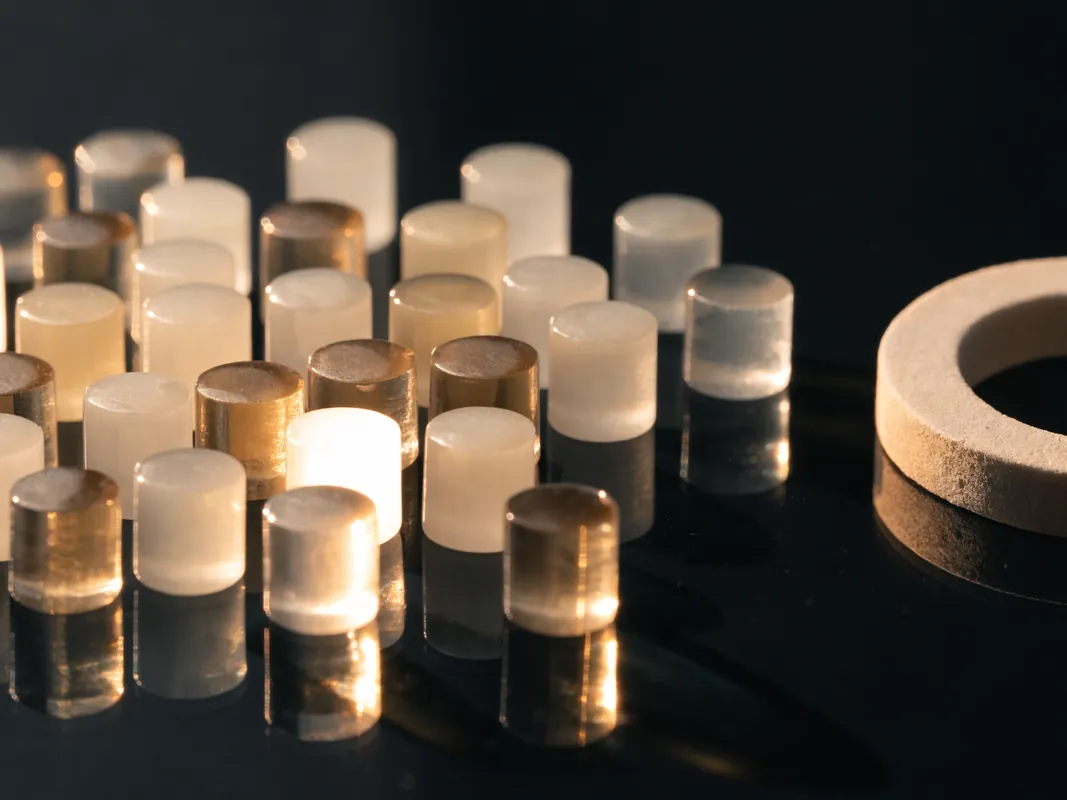
Prettau is a Zirkonzahn zirconia product family. It is not one universal ceramic with one composition, one optical behaviour, one strength profile or one permitted restoration range. The current [Zirkonzahn millable-materials overview](https://zirkonzahn.com/en/products/millable-materials) lists several named Prettau variants alongside other millable materials. A quotation that says only Prettau zirconia therefore leaves the central product question unanswered.
An exact description should identify the manufacturer, full product name, reference where applicable, blank or disc form, shade or pre-coloured designation, batch or lot information where supplied, and the current document that governs processing. It should also identify the restoration supported by that material: a tooth-supported crown is not the same device as a long implant-supported bridge, and a fully anatomical restoration is not the same design as a zirconia framework carrying veneering ceramic.
This page is a product-verification guide, not a recommendation. It does not state that a clinic, provider, intermediary or laboratory stocks, uses or is authorised by Zirkonzahn. It does not choose a material for any mouth, publish a performance percentage, predict a lifespan, or promise an aesthetic or mechanical result. A treating clinician must diagnose the case, prescribe the restoration and obtain valid consent. A responsible laboratory must work from that prescription and the current documentation for the exact product actually selected.
Use the family name as the beginning of an audit. The written plan should connect diagnosis, tooth or implant site, preparation or implant geometry, restoration design, material variant, laboratory process, finishing, fitting, maintenance and repair. If one link changes, the plan and quotation should be updated before irreversible care continues.
Identify the exact current Prettau variant
The official millable-materials page currently names Prettau Zirconia, Prettau 2, Prettau 2 Dispersive, Prettau 3 Dispersive, Prettau 4 Anterior, Prettau 4 Anterior Dispersive and Prettau 5. Product portfolios, naming, market access and documents can change, so this list is a dated orientation rather than a permanent catalogue.
The same overview gives different manufacturer descriptions. It presents Prettau 2 Dispersive and Prettau 3 Dispersive for restoration ranges extending from single units to full-arch bridges, while Prettau 4 Anterior and its Dispersive version are described for single crowns, inlays, onlays, veneers and short bridges. These are manufacturer-defined product statements, not a personal indication. They demonstrate why a laboratory cannot substitute one line for another merely because both carry the word Prettau.
A useful variant schedule includes:
| Verification field | What the record should show |
|---|---|
| Product identity | Full current product name rather than Prettau alone |
| Manufacturer | Legal manufacturer shown on the relevant label or document |
| Reference | Catalogue or reference identifier where provided |
| Batch or lot | Case-linked identifier retained from the actual blank where available |
| Blank details | Diameter, height, shade or colour configuration relevant to the case |
| Current document | Applicable instruction, catalogue or processing document and revision |
| Intended restoration | Tooth or implant site, unit count and support type |
| Design | Fully anatomical, cut-back, veneered framework or another documented design |
| Responsible laboratory | Legal laboratory identity and technician record where supplied |
| Prescriber | Treating clinician responsible for material and restoration prescription |
A disc photograph without a readable label is weak evidence. A laboratory social-media image is not case traceability. An invoice line saying full zirconia is not enough to identify the variant. The patient should receive a record that an independent clinician or laboratory could interpret later without guessing.
Use the product page and download section together
The [Prettau information portal](https://prettau.zirkonzahn.com/?l=en) is a manufacturer-controlled introduction to the family. The [millable-materials overview](https://zirkonzahn.com/en/products/millable-materials) shows the current range presented on the website. The [Zirkonzahn download section](https://zirkonzahn.com/en/download-section) contains catalogues, brochures, inserts and technical material published at different dates.
Those sources serve different purposes. A promotional portal can explain the manufacturer's concept but should not be treated as an instruction for use. A product overview can show how the manufacturer currently separates variants but may not include every contraindication or processing condition. A historic brochure may document an older workflow yet be unsuitable for a current variant. The applicable current instruction, label and market documentation take priority for a new restoration.
Ask the laboratory to identify the exact document used for the actual blank and retain the title, language, revision or publication information. If the download section contains several documents with similar names, match the product and reference rather than selecting the newest-looking marketing file. If the correct instruction cannot be identified, the product remains unverified for that case until the laboratory or manufacturer resolves the mismatch.
Document age should be visible in the record. The download page includes older processing and colouring publications as well as newer product inserts. Age does not automatically make a document useless; an older record may be necessary when servicing an older restoration. It does mean that a historic document should not silently govern a newly supplied material when a current product-specific instruction exists.
Manufacturer indication is not personal suitability
An indication describes the manufacturer's intended use for a product under its applicable documentation. It does not mean that every tooth, bridge or implant-supported restoration within that broad category is suitable. The clinician must still assess the person, the site and the restorative design.
The prescription can depend on remaining tooth structure, preparation form, available material thickness, finish-line location, retention and resistance, substrate colour, endodontic status, caries risk, periodontal health, soft tissue, smile line, parafunction, bite, opposing material, span, connector geometry and the ability to clean and repair the restoration. Implant-supported care adds implant position, connection, abutment or titanium-base selection, passive fit, screw access, tissue interface and retrievability.
A manufacturer description of a restoration range cannot settle these questions. It also cannot justify unnecessary tooth preparation or extraction. The clinical diagnosis and reasonable alternatives come first. A tooth may be suitable for a direct restoration, partial coverage, another ceramic, metal-ceramic restoration, a removable option, monitoring or no immediate treatment. An implant-supported bridge may have alternatives involving a different support concept or restorative material. The plan should explain those relevant options without presenting Prettau as a default upgrade.
If the final in-person findings change available space, substrate, preparation, implant position or restorative support, the material decision may also change. Consent should be renewed and the quotation revised before the substitute is fabricated or fitted.
Separate tooth-supported and implant-supported restorations
A tooth-supported crown receives support from prepared tooth tissue and a luting or bonding interface. Its preparation, margin, substrate, retention, ferrule where relevant, pulp status and cementation strategy belong in the prescription. A tooth-supported bridge also depends on abutment prognosis, span, connector design, pontic form and hygiene access.
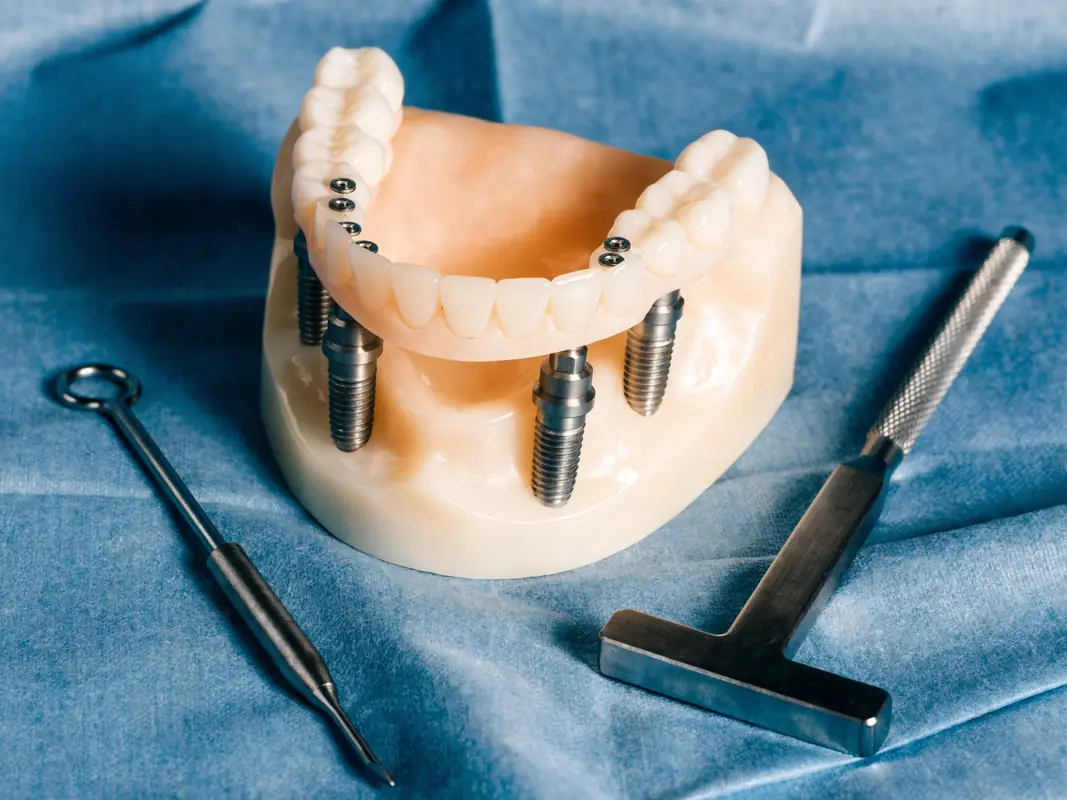
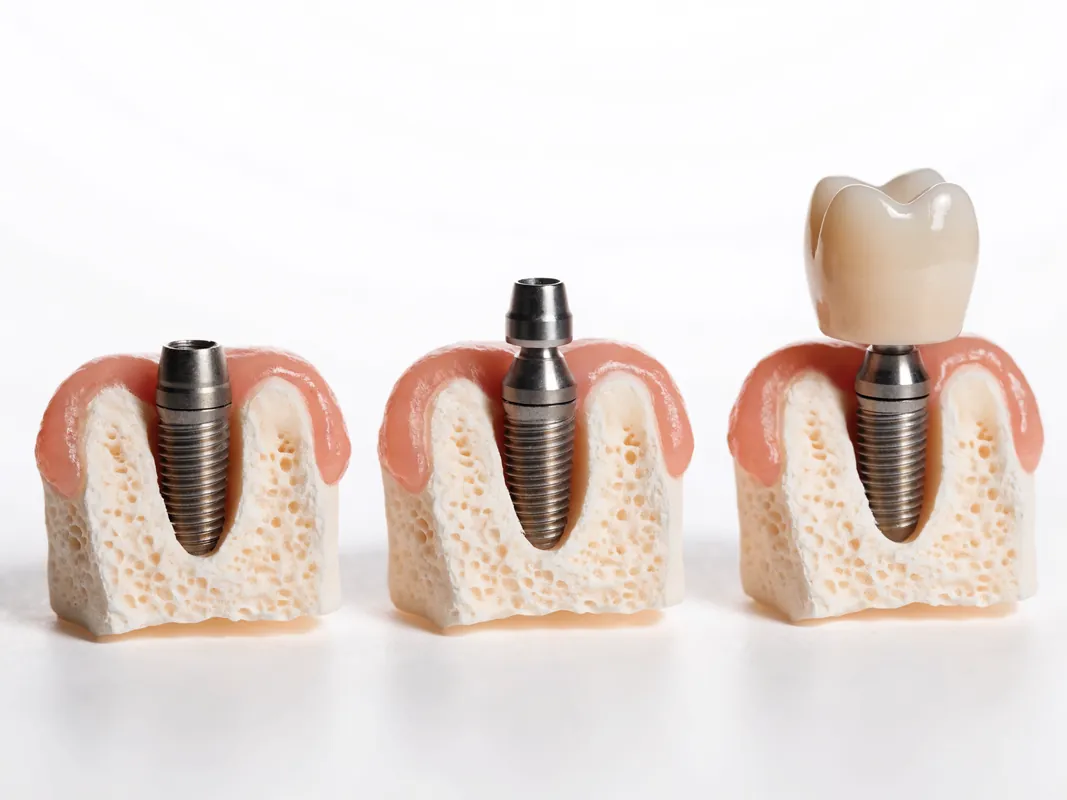
An implant-supported crown or bridge is a different restorative system. Zirconia may form part of a restoration that interfaces with an abutment, titanium base, framework or other component. The exact design, component manufacturer, connection, screw, cement interface and laboratory procedure must be stated. The word Prettau does not identify any of those parts.
For a complete-arch implant restoration, ask whether the zirconia is a fully anatomical structure, a framework combined with other materials, or part of a more complex assembly. Ask how implant positions, cantilever, restorative space, connector geometry, passive fit, tissue contour, screw channels, opposing arch and cleaning access were incorporated. The answer should be in the prescription and design record, not implied by a before-and-after photograph.
Do not transfer a single-crown claim to a full-arch restoration or the reverse. Different support, dimensions, processing and repair problems apply. A current product indication is necessary but not sufficient; the personal design must remain within it and be clinically justified.
Substrate and masking change the optical problem
The apparent colour of a ceramic restoration is influenced by more than the shade printed on a disc. Remaining tooth colour, a metal post, discoloured core, implant abutment, titanium base, cement, restoration thickness, preparation geometry, surrounding teeth, tissue colour, lighting and surface finish can all affect what is seen.
A highly translucent material may transmit an unwanted dark substrate. A more masking choice may appear different in depth or vitality. Neither quality is universally better. The team should define the optical problem first: matching one neighbouring tooth, harmonising several teeth, masking a dark foundation, reproducing a value gradient, or integrating a full-arch transition with the gingiva and lips.
Ask for a substrate map. For tooth-supported work, it can record stump shade, core or post material, remaining enamel and dentine, preparation depth and the planned cement category. For implant-supported work, it can identify abutment or base material, emergence location, tissue thickness and any grey or opaque influence. Photographs should use controlled references where possible, but images remain aids rather than complete colour measurements.
The laboratory should explain how the selected blank, nesting position, colour treatment, staining, glazing or layering responds to that substrate. A digital smile simulation cannot prove the final optical result because it does not reproduce every material, tissue and lighting interaction. Consent should describe the objective and limits without promising an invisible match.
Translucency and strength are not a ranking table
Zirconia variants can differ in phase composition, microstructure, translucency, flexural properties and manufacturer-defined indications. A headline value from one test method should not be used to rank an entire restoration. Laboratory test values depend on specimen preparation, test method, ageing conditions and reporting context, while a clinical restoration also depends on geometry, flaws, processing, adjustment, support and load.
Higher translucency is not automatically more aesthetic. The material may need to mask a substrate, maintain value, match neighbouring restorations or support a specific span. Higher reported strength is not automatically safer. An unsuitable design, insufficient connector, damaged surface, poor fit, inaccessible hygiene or uncontrolled occlusion can still create problems. Likewise, a lower headline value does not make a material inappropriate within its current manufacturer-defined indication and a suitable personal design.
Ask the laboratory to cite the current product-specific source for any numerical property and explain the test context. The clinician should then explain how the property relates to the actual restoration rather than translating it into a lifespan or success claim. A quote that says strongest zirconia or most natural without identifying the variant, indication and design is incomplete.
For a wider material comparison, the zirconia and lithium-disilicate decision guide separates material families, substrate, geometry and repair questions. It does not prescribe either material for the present case.
Choose monolithic, cut-back or layered design deliberately
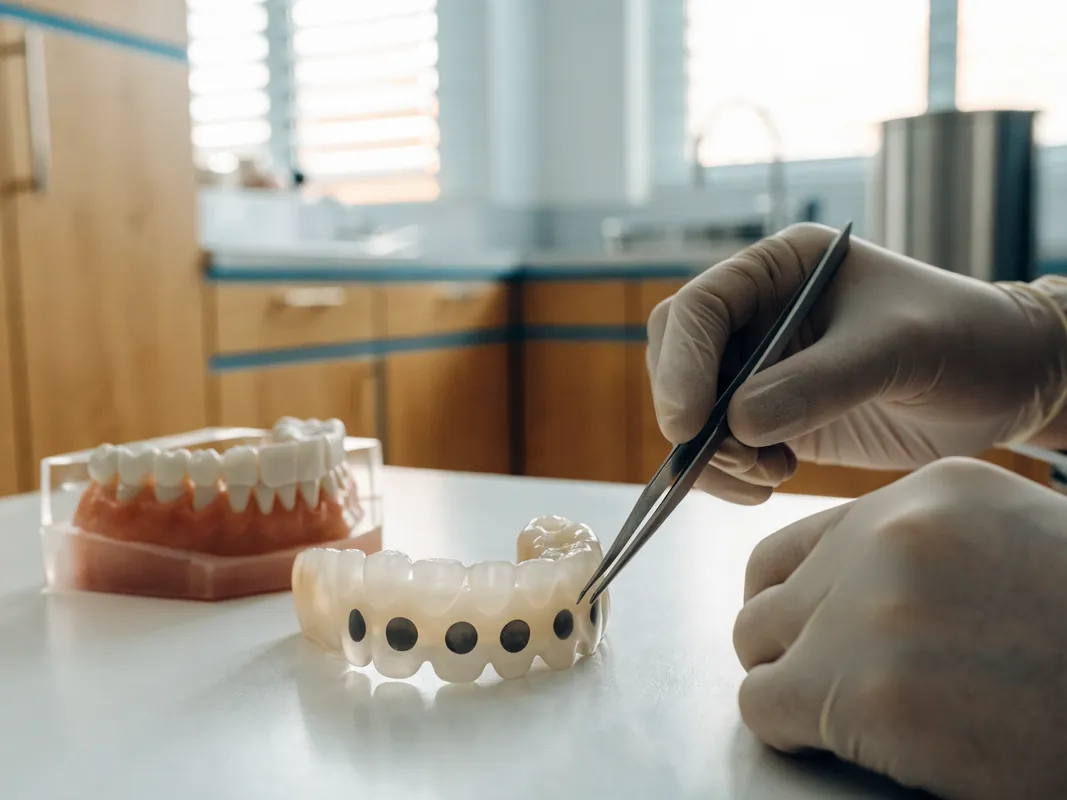
The word monolithic usually describes a restoration whose main anatomical form is milled from one ceramic structure, though external colour and glaze may still be applied. A cut-back design removes selected external volume so another ceramic can be added in chosen regions. A framework design provides support for a larger veneering layer. These descriptions should be made precise in the case record.
Each approach changes the risk and repair map. A fully anatomical design reduces or removes some veneering interfaces but still depends on material selection, thickness, connectors, surface condition, polishing, occlusion and support. A cut-back or layered design can provide additional optical characterisation but introduces an interface and a different chipping or repair question. A framework that is extensively veneered should not be described as monolithic simply because its core is zirconia.
Ask the prescription to show:
- which surfaces are fully anatomical zirconia;
- which areas are cut back;
- which veneering ceramic, composite or gingival material is added;
- the supported thickness and transition geometry;
- the firing or curing workflow for added materials;
- how contacts and occlusion are finished;
- what repair options apply to each material;
- whether a repair can be performed locally or requires laboratory return.
The design should follow the clinical objective rather than a slogan about no chipping. A monolithic restoration can still fracture, wear, lose glaze, require adjustment or create biological and mechanical problems. A layered restoration can perform acceptably when well designed and processed. No design is maintenance-free.
Geometry is part of the material prescription
A material name cannot compensate for inadequate geometry. The clinician and laboratory need agreed minimum dimensions, connector design, pontic and cantilever decisions, margin form, internal fit, screw-channel position and support. The exact current manufacturer documentation and responsible professional judgement govern these choices.
For tooth-supported work, the prescription should relate preparation reduction and finish-line design to the planned material without sacrificing sound tissue merely to fit a preselected product. If the available preparation cannot support the intended design, alternatives should be reconsidered. For a bridge, each abutment's prognosis and the span must be documented.
For implant-supported work, the design should show how the zirconia relates to titanium bases or other interfaces, where connectors lie, how screw channels affect structure and appearance, and how tissue contours remain cleanable. A complete arch also needs a documented cantilever and opposing-arch analysis. The patient should not accept a broad full zirconia label as a substitute for this geometry map.
The laboratory design file, screenshots and prescription can help another professional understand the intent. They do not replace verification of the final milled and fitted restoration. The clinical record should show that fit, contacts, occlusion, hygiene access and patient acceptance were assessed after fabrication.
Map the laboratory chain of custody
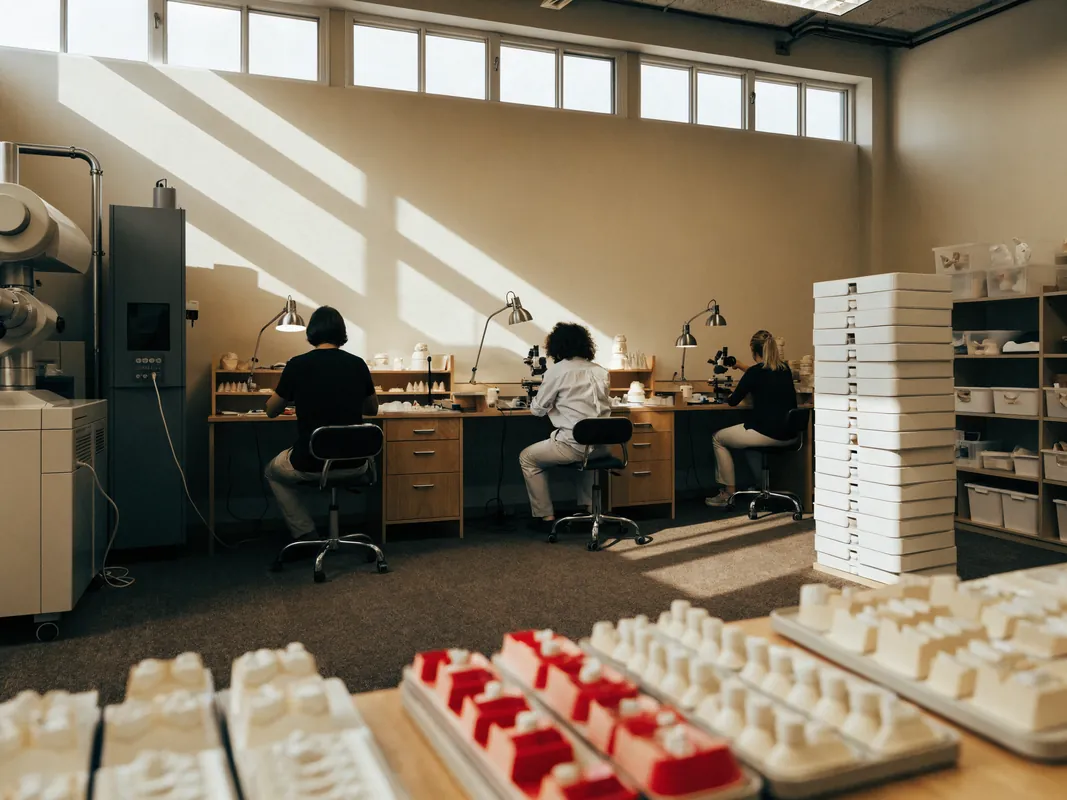
A restoration may pass through scanning, design, manufacturing, colouring, sintering, characterisation, finishing and quality-control stages. Some stages may be performed by different legal businesses. The patient should know the responsible treatment provider and the laboratory or manufacturing centre involved, including any subcontracted stage that affects material identity or traceability.
The chain should answer:
- Who receives the clinical prescription and records?
- Who creates or validates the scan or model?
- Who designs the restoration and who approves the design clinically?
- Who selects the exact blank and nesting position?
- Who mills the structure?
- Who applies colouring or infiltration where relevant?
- Who runs and records the sintering cycle?
- Who adjusts, polishes, stains, glazes or layers it?
- Who performs final laboratory quality control?
- Who supplies the statement, invoice or material record to the clinician?
A clinic owning a milling machine does not prove that every stage occurs on site. An external laboratory is not a quality defect. The relevant issue is whether responsibility, documents and handoffs are clear. If the laboratory changes after consent, the patient should be told when that change is material to the plan.
Make the laboratory prescription case specific
The prescription is the bridge between diagnosis and fabrication. It should identify the patient, provider, prescriber, laboratory, tooth or implant sites, restoration support, material variant, shade, design, margin or interface, contacts, occlusion, pontic and tissue form, connector or cantilever instructions, screw channels where relevant, added materials, surface finish and records required at delivery.
The prescription should distinguish confirmed details from provisional ones. A remote proposal may contain an estimated material choice, but the definitive prescription should follow examination, preparation or implant records, and a clinician's approval. If the laboratory proposes a substitute variant, the treating clinician must assess it and renew consent where the change is material.
Ask for a copy of the final prescription and any revision. The document should not be reduced to a laboratory ticket that says zirconia bridge. It should be understandable to another qualified professional and link to the actual batch or disc record.
Scan, design and nesting are traceable decisions
A digital scan is a measurement record, not proof of fit. The team should document whether the source was an intraoral scan, laboratory scan, conventional impression and model, or a combination. Implant-supported work also needs accurate component and scan-body identification. Errors in capture, stitching, model, implant position or articulation can move downstream into the restoration.
Design records can show margins, internal relief, contacts, occlusion, connector areas, pontics, screw channels, tissue contours and proposed nesting. The clinician should approve clinically important aspects; the laboratory should record technical responsibility. A screenshot may be useful, but the retained design file and prescription provide stronger continuity where lawfully available.
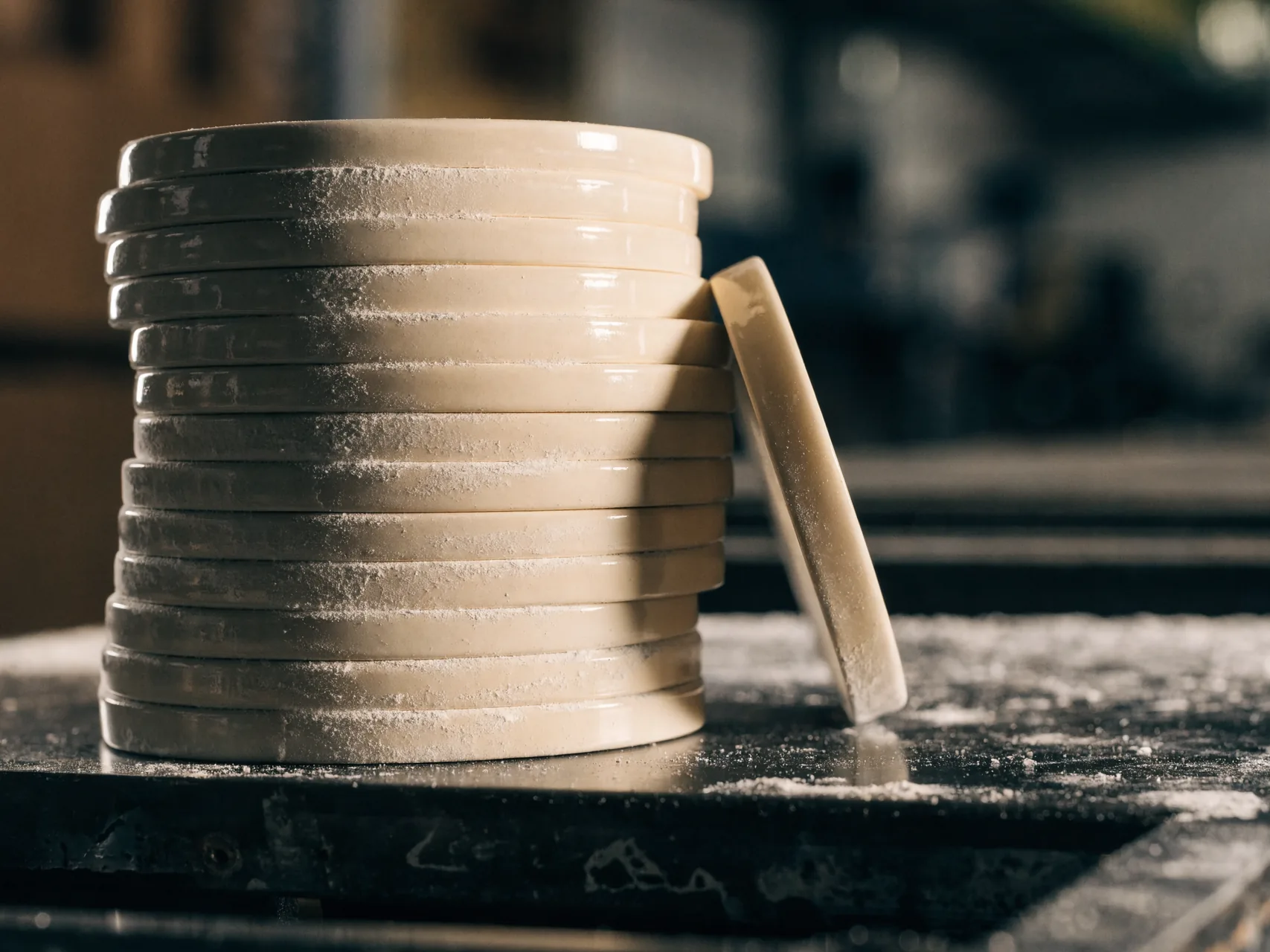
Multi-layer or gradient blanks make nesting relevant because the restoration's vertical position can influence the distribution of colour or other manufacturer-described zones. The laboratory should record how the restoration was positioned and why. This is particularly important when a product description relies on a colour, translucency or property gradient.
Nesting must also respect material dimensions, support, milling strategy and the applicable instruction. The patient does not need to operate CAD software, but can request the name of the exact variant and a record that the design was made within its current indicated workflow.
Milling must follow the exact material document
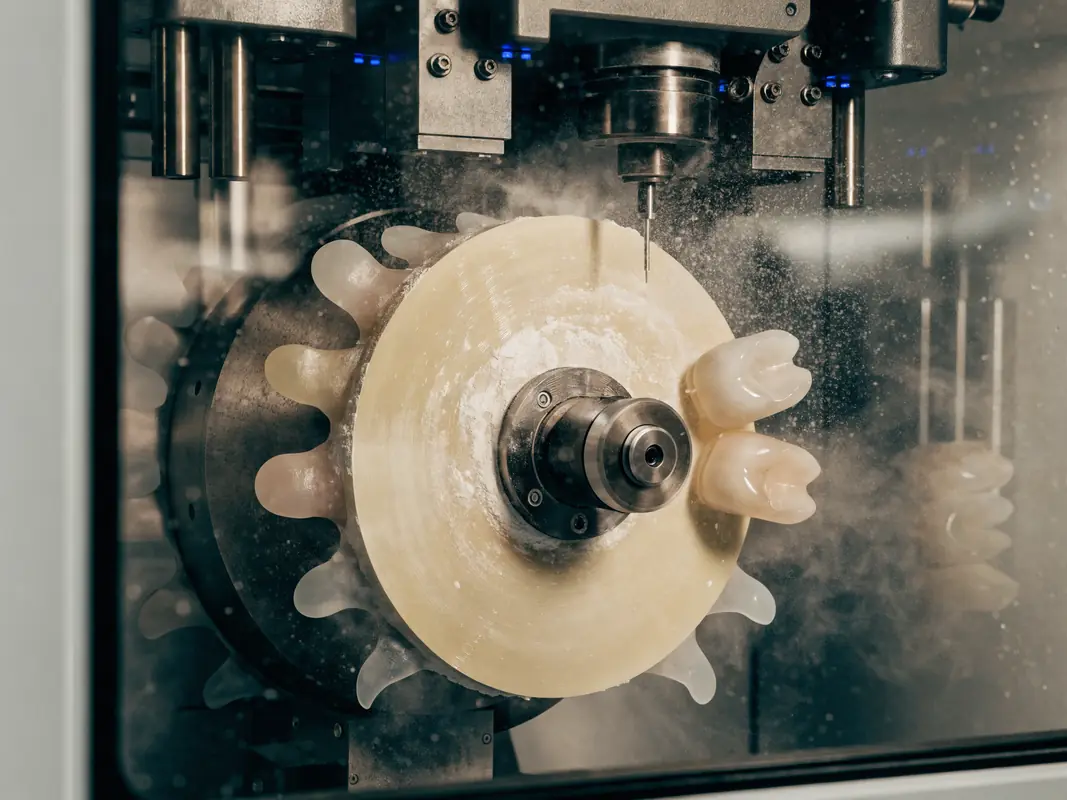
Milling is not a brand-neutral step. Tool condition, milling strategy, blank fixation, software parameters, restoration orientation, support structures and handling after milling can influence the surface and geometry delivered to the furnace. The responsible laboratory should use the workflow specified for the identified Prettau variant and the equipment involved, rather than importing settings from another zirconia because the discs look similar.
The case record should identify the milling centre or laboratory, the exact blank selected, the machine or validated workflow used, and any outsourced manufacturing stage. It does not need to expose proprietary software settings to the patient, but it should make responsibility traceable. A claim that a restoration is CAD/CAM made says only that computer-aided steps were involved; it does not verify material identity, design quality or correct processing.
Post-milling handling also matters. A pre-sintered structure is comparatively vulnerable during removal, support separation and refinement. Heavy or uncontrolled correction at this stage may introduce defects or alter critical geometry. The laboratory should inspect the milled structure before sintering, record remakes where a defect is detected, and avoid passing an uncertain component forward simply to meet a travel date.
Sintering is a controlled product-specific stage
Sintering transforms the milled pre-sintered structure into the final dense ceramic and changes its dimensions. The correct programme depends on the exact material and restoration configuration. Furnace identity, programme, loading, calibration or maintenance status, support method, heating and cooling conditions, and any manufacturer restrictions can therefore be relevant to a defensible laboratory record.
A generic note saying sintered is not the same as a case-linked processing record. Ask whether the laboratory can link the restoration to a dated furnace cycle and whether the programme corresponded to the current instruction for that specific Prettau variant. When several units or a complete arch are processed, the supporting strategy and cooling process should be part of the laboratory's quality control because distortion or damage cannot be excluded merely from the product name.
Fast processing should never be promised simply because a furnace offers a shorter cycle. The current product-specific documentation, restoration dimensions, furnace capability and laboratory validation govern whether a particular programme is permitted. If a restoration needs to be remade, the patient should be told rather than having an undocumented shortcut substituted for the planned process.
Colouring, staining, glazing and layering need records
Pre-coloured, gradient or dispersive material does not eliminate all colour decisions. The final appearance may also involve nesting, colouring liquids where applicable, internal or external stains, glaze, surface texture, fluorescence-related materials, veneering ceramic or gingival characterisation. Each added material creates another identity, compatibility and processing question.
The laboratory record should name significant added ceramics or characterisation systems and show that their firing or curing workflow is compatible with the zirconia and design. If a restoration is described as monolithic, the quotation should clarify whether that means fully anatomical zirconia with external stain and glaze, or genuinely no added ceramic. For a cut-back or layered restoration, the record should map where another material is used and how it is supported.
Shade approval should occur in clinically relevant lighting and should consider the prepared substrate, neighbouring teeth, tissue and planned luting material. A remote photograph is useful for communication but cannot reproduce every colour variable. When a patient declines or requests a shade change, that decision and any limitations should be documented before final firing or fitting.
Adjustment and polishing affect the delivered surface
The surface that contacts opposing teeth is the surface delivered after laboratory and clinical adjustment, not the idealised surface shown in a catalogue. Grinding can remove glaze, change contour and leave a rough area if the correct finishing sequence is not completed. A polished zirconia surface and a glazed surface are not interchangeable labels; the team should record how adjusted areas were finished.
Ask who performs final contact and occlusal adjustment, which material-specific instruments and polishing sequence are used, and whether the surface is reinspected after adjustment. This is especially important when the bite is altered at fitting or when screw access is completed after seating. The objective is not to forbid adjustment; it is to ensure that necessary adjustment is controlled and followed by an appropriate surface finish under the current instructions.
The handover record should identify any significant chairside adjustment. If another dentist later needs to modify the restoration, knowing the material variant, layered regions and prior finish helps avoid treating a veneering ceramic, zirconia and resin repair as if they were one material.

Cementation and screw retention are separate clinical decisions
Prettau identifies a zirconia family, not the method by which a restoration is retained. Tooth-supported restorations may be conventionally luted or adhesively bonded depending on preparation, restoration form, substrate, material documentation and the chosen cement system. The clinician should state the planned category, isolation requirements, surface treatment and product instructions without assuming that every zirconia crown uses one protocol.
Implant-supported restorations may be screw retained, cement retained, bonded to titanium bases or assembled through another documented interface. Each route changes retrievability, residual-cement risk, screw access, component compatibility and repair options. For a restoration bonded to a base outside the mouth, the record should identify the base or interface component and the bonding system. For an intraoral cement interface, the plan should address margin access and cement removal.
The patient should receive the names of clinically important retention materials and components, plus relevant lot records where routinely available. The correct decision is case specific. This guide does not endorse screw retention or cementation as universally preferable.
Try-in, verification and clinical acceptance
A completed laboratory restoration still needs clinical verification. Before definitive seating, the responsible clinician should assess identity, site, fit, margins or implant interface, proximal contacts, occlusion, shade, contour, tissue relationship, screw access where relevant, cleanability and whether the delivered design matches consent. Radiographic verification may be appropriate for some implant interfaces, but it is not a substitute for the full clinical assessment.
A try-in should not be treated as a ceremonial step. If fit, appearance or design is materially unacceptable, the options may include adjustment, laboratory correction, remake or reconsideration of the plan. The record should state what changed, who authorised it, and whether renewed consent was obtained. A patient travelling on a fixed return date should not be pressured to accept a deficient restoration because the itinerary is ending.
Clinical acceptance also includes understandable home-care instructions and a route for reporting problems. Signing a delivery form should not convert an unassessed material or design into evidence of correct care. The provider remains responsible for documenting the clinical basis for seating.
Batch traceability and authenticity
Authenticity is established through a chain of records, not by appearance. Useful evidence can include the exact product designation, reference, readable blank label, batch or lot number where supplied, shade or gradient, laboratory prescription, job number, processing record, invoice and final restoration statement. The case record should connect these items to the named patient and restoration without exposing another patient's data.
A photograph of a Zirkonzahn box in a clinic does not establish that material from that box was used in a particular case. A certificate created by a reseller or clinic should be checked against the original product and laboratory records. QR codes, security features or distributor details should be interpreted according to current manufacturer guidance; their mere presence does not prove correct design or processing.
If the label is missing, ask the laboratory to recover the job record before fitting. If the proposed product name changes between quotation and delivery, request a written explanation, current documentation and updated consent. When traceability cannot be reconstructed, the honest record is that the exact material is unverified, not that visual inspection confirms it.
An itemised quotation makes the material auditable
The quote should separate clinical and laboratory work instead of hiding everything under a smile package. For each restoration or linked group, it should identify the site, support type, exact proposed material variant, design category, significant added ceramic, abutment or titanium-base components where relevant, provisional or definitive status, laboratory responsibility, fitting stage and post-delivery services included.
It should also state what is excluded: diagnostic work not yet completed, treatment of active disease, temporary restorations, extraction or implant surgery, bone or soft-tissue procedures, replacement of unexpected components, sedation, extended accommodation, local follow-up, repair after trauma, and laboratory remake terms where applicable. These examples are prompts, not assumptions that any item is needed.
Prices should be expressed in a clear currency with payment stages, refund or cancellation terms, and the financial effect of a changed material or design. Travel, hotel and transfers should be separated from clinical fees so that the patient can compare like with like. A zero-price add-on can still carry conditions and should be documented. The quote must not transform an estimated remote proposal into a final diagnosis.
Repair and serviceability belong in the first decision
Every restoration can require maintenance, adjustment, repair or replacement. The practical question is what can be serviced, by whom, with which records and components, and at whose cost. A small external ceramic defect, a damaged access filling, a loose screw, a cement problem, a framework fracture and a biological complication are different events; one generic repair promise cannot cover them all.
For layered or cut-back designs, ask whether the added material can be identified and repaired locally. For an implant-supported structure, ask whether the restoration is retrievable, whether compatible screws and tools can be sourced, and whether removal risks damaging the restoration. For a complete arch, clarify what happens if one prosthetic tooth area or gingival characterisation needs work and whether the entire structure must return to the original laboratory.
A written service plan should distinguish initial fitting correction, laboratory remake, accidental damage, wear-related maintenance and treatment of the supporting teeth, implants or tissues. It should identify the records a local professional will receive. No fixed service life should be inferred from a warranty term, and no warranty should replace clinical review.
Travel and local handover
Treatment abroad adds logistical constraints that must not dictate biology or laboratory quality. Before travel, distinguish consultation from definitive diagnosis and identify which records should be obtained locally. During the visit, allow enough clinical and laboratory decision points for examination, treatment, try-in, correction and review without publishing a universal timetable. The appropriate sequence depends on the individual case.
Before departure, request the final treatment record, dated radiographs or scans where relevant, photographs, tooth and implant chart, exact material and component identities, laboratory statement, prescription, batch details, retention materials, torque record where applicable, adjustment notes, hygiene instructions, medication record if any, and contact route. The handover should also state which work is temporary or definitive and what remains outstanding.
Identify a local dentist before travelling if the restoration is extensive or implant supported. Ask whether that professional is willing and equipped to review the components and records; do not assume local acceptance. Travel insurance and ordinary holiday cover may exclude planned dental treatment or complications, so policy terms need independent checking. Urgent symptoms should be assessed locally rather than delayed for a return flight.
Consent must cover substitutions and evidence limits
Valid consent concerns the proposed treatment, material and design, their material risks, expected benefits, uncertainties, reasonable alternatives, no-treatment option where relevant, costs and follow-up. It is a continuing conversation. A signed generic form does not authorise an undisclosed change from one Prettau variant to another, from monolithic to layered construction, or from tooth-supported to a different restorative plan.
The consent record should explain what is known before treatment and what remains provisional pending direct examination, preparation, implant records or laboratory design. If findings change, the clinician should pause, explain the new options and document the patient's decision. Translation or interpretation should be arranged when needed; a companion should not automatically be used for sensitive clinical communication.
Evidence also has limits. Manufacturer documents define and describe products, but they do not prove that a product was used in one case. A laboratory record can establish material identity more strongly, but it does not prove clinical suitability or predict an outcome. A clinician's plan can justify a choice, but it cannot remove biological uncertainty.
Red flags that justify a pause
Pause before irreversible treatment if the proposal uses Prettau as the complete material description; refuses to name the variant or laboratory; relies on a stock photograph as authenticity proof; promises that the material cannot chip, break, stain or wear; converts a laboratory property into a guaranteed lifespan; or says one variant is suitable for every crown, veneer, bridge and full arch.
Other warning signs include a quote that mixes teeth and implants without identifying support; no explanation of monolithic, cut-back or layered design; no substrate or masking plan; no current product document; no batch or job traceability; no record of sintering or finishing responsibility; an undocumented product substitution; a full-arch plan without component, hygiene or repair details; pressure to accept fitting because a flight is booked; or refusal to provide transferable records.
A red flag does not by itself prove misconduct. It identifies an unanswered question with potential clinical, technical or financial importance. The proportionate response is to request clarification, documents or an independent opinion before continuing.
A Prettau verification worksheet
Use one worksheet for each restoration type rather than one family-level certificate:
| Decision area | Question to answer before fitting | Record to retain |
|---|---|---|
| Diagnosis | Why is an indirect restoration justified? | Examination, images and diagnosis |
| Alternatives | What reasonable options were discussed? | Consent and option record |
| Product | What is the exact Prettau variant and reference? | Current label and document |
| Support | Is it tooth or implant supported? | Site and component chart |
| Design | Monolithic, cut-back, layered or framework? | Prescription and design file |
| Substrate | What must be matched or masked? | Stump, abutment and shade record |
| Geometry | Are dimensions and connectors within the applicable rules? | Approved design record |
| Manufacture | Who milled, sintered and finished it? | Case-linked laboratory log |
| Traceability | Which blank and batch were used? | Label, job and lot record |
| Surface | How were adjusted areas polished or reglazed? | Finishing note |
| Retention | How is it cemented, bonded or screw retained? | Material and component record |
| Acceptance | Were fit, bite, shade and hygiene access checked? | Delivery note and images |
| Service | How can it be removed, adjusted or repaired? | Maintenance and repair plan |
| Handover | Can a local professional understand the case? | Portable record bundle |
Incomplete answers do not automatically mean the material is wrong. They show where the evidence trail is weak. Resolve gaps before definitive seating when doing so could change consent, design, processing or future serviceability.
Primary official sources used
This guide uses the current manufacturer-controlled [Zirkonzahn millable-materials overview](https://zirkonzahn.com/en/products/millable-materials) to identify that Prettau is presented as a multi-variant family, the [official Prettau portal](https://prettau.zirkonzahn.com/?l=en) for the manufacturer's family-level context, and the [Zirkonzahn download section](https://zirkonzahn.com/en/download-section) as the route to product catalogues, inserts and processing documents. Access dates, product names and document revisions should be recorded when a case is planned because online material can change.
These pages are primary product sources, not independent comparative clinical evidence. They cannot establish personal suitability, provider competence, lawful market availability, authenticity of a case-specific blank, correct processing or clinical performance. For those questions, combine current exact-product instructions with diagnosis, laboratory records, applicable regulatory information and independent clinical evidence.
When a current instruction or catalogue conflicts with an older brochure, the responsible laboratory and clinician should resolve which document governs the exact product and market before proceeding. Do not extract one favourable sentence from a general portal while ignoring product-specific restrictions or case geometry.
Final decision rule
Accept no proposal on the word Prettau alone. The defensible chain is: diagnosed need, reasonable alternatives, exact current variant, manufacturer-defined indication, case-specific tooth or implant support, explicit design, substrate and optical objective, documented geometry, traceable blank, controlled milling and sintering, recorded finishing, verified fitting, understandable consent, itemised cost, service route and portable handover.
If any link is provisional, label it provisional. If the material or design changes, update the prescription, quote and consent. If the evidence is unavailable, record the limitation rather than replacing it with a marketing assurance. This approach does not guarantee an outcome; it makes the decision more transparent and leaves a usable record for future care.
What the product name does — and does not — tell you
Prettau Zirconia is a zirconia restorative-material family from Zirkonzahn. The name can help a patient identify a product family, but it does not establish the diagnosis, the exact model selected, the competence of a treating professional or the quality of the finished treatment. Product ranges, indications and local availability can change. A current manufacturer instruction for use and the legal market status in the country of treatment take priority over a marketing page.
This page is a research guide. It is not a statement that WeCare, a particular clinic or an event clinician stocks or uses Prettau Zirconia. Availability must come from the named treating provider. If a quotation uses only a broad phrase such as “premium material”, ask for the manufacturer, product family and reference before accepting the plan.
Manufacturer information worth checking
- The current Zirkonzahn millable-materials overview lists multiple Prettau lines, including Prettau Zirconia, Prettau 2, Prettau 2 Dispersive, Prettau 3 Dispersive, Prettau 4 Anterior, Prettau 4 Anterior Dispersive and Prettau 5; a family name alone is incomplete.
- Manufacturer descriptions assign different restoration ranges and optical or mechanical profiles to different variants; those descriptions must be matched to the exact current product page and instruction for use.
- A fully anatomical, cut-back, veneered or framework design changes the laboratory workflow, failure modes, repair options and records needed for the individual restoration.
- Milling, nesting, colouring, sintering, adjustment, polishing, staining, glazing and any veneering must follow the exact material documentation rather than a generic zirconia protocol.
- A case-specific laboratory prescription, disc label or batch record, processing record and final restorative record are stronger evidence than a logo, stock photograph or broad invoice description.
These points describe the product family at a general level. They are not a recommendation for a particular mouth and they should not be extended to a different line carrying a similar brand name. The named treating clinician and laboratory should identify the exact Prettau variant, explain why its current manufacturer-defined indication fits each tooth or implant-supported unit, document the restoration design and substrate, and state what alternative applies if direct examination, preparation, implant position, available space, shade or occlusion changes the proposal.
Questions for the named provider
Ask the professional responsible for treatment to answer these points in writing:
- What is the exact manufacturer, product family, model or material grade proposed?
- What clinical finding makes that selection appropriate for this case, and what alternatives were considered?
- Who is the legal treating provider and who will perform each clinical or laboratory stage?
- Which current instruction for use, contraindications and local regulatory status apply?
- What reference, lot, batch or other traceability record will be retained and shared where the device permits it?
- Which components, cements, abutments, membranes, gels or accessories are included, and are they compatible?
- What follow-up is required, who is responsible after travel, and which costs are excluded from the quotation?
Product verification, evidence and traceability boundaries
Manufacturer webpages and downloads describe a product family and workflow; they do not diagnose a patient, select a variant, verify a laboratory, establish availability in Turkey or prove what was used in one restoration. Case evidence should link the exact product label and batch or lot where supplied to a dated prescription, processing record, restoration design, responsible laboratory and treating provider.
Useful evidence may include a photograph of unopened labelled packaging before use, the product label, an implant or device record, a laboratory prescription, an invoice identifying the exact material, and the treating provider's signed notes. The appropriate record depends on the product. A logo on a website, a stock photograph, an unlabelled box or a verbal statement is not equivalent to case-specific traceability.
How to compare alternatives fairly
Compare exact material variant, current indication, restoration support, span, geometry, thickness, connector design, substrate, optical objective, opposing dentition, finishing, cementation or screw-retention pathway, traceability, repair route and local serviceability. Do not rank materials by a single strength or translucency figure and do not treat a manufacturer family name as an outcome promise.
Compare like with like: indication, exact product, compatible components, laboratory design, operator responsibility, maintenance, staged visits and written exclusions. Do not compare a named product in one quotation with an unspecified category in another. Brand recognition cannot remove biological uncertainty, and no material choice can promise a clinical outcome.
Assessment comes before the brand
A responsible plan starts with medical and dental history, examination and appropriate imaging. Implant decisions can depend on bone, soft tissue, bite, hygiene, smoking, medication and restorative space. Ceramic decisions can depend on remaining tooth tissue, preparation design, opposing teeth and laboratory workflow. Whitening decisions require screening for decay, gum disease, sensitivity and existing restorations. Endodontic and imaging tools are parts of a broader diagnostic or treatment process, not substitutes for professional judgement.
Before paying, request a dated, itemised written plan naming the treating provider, the proposed product, alternatives, material records, visit stages, aftercare responsibilities and financial terms. If the final assessment changes the product or procedure, ask for the reason and revised quotation before treatment proceeds.