There is no honest expiry date for an implant, veneer or crown. This guide shows how to read longevity evidence, compare different parts and plan maintenance, repair and replacement without treating a study average as a promise.
“How long will a dental implant, veneer or crown last?” is a reasonable question, but it cannot be answered honestly with one expiry date. An implant restoration is not one object. A veneer is bonded to a particular tooth. A tooth-supported crown depends on the tooth, foundation, margin, bite and surrounding tissues. Each part can remain present while needing maintenance, repair or treatment of a complication.
Published research can describe what happened to selected groups over a stated observation period. It cannot predict an individual patient’s date of repair or replacement. The result changes with the outcome definition, treatment design, tooth or implant site, patient selection, maintenance, study era, losses to follow-up and whether the analysis counts restorations, implants or people. A marketing lifespan that omits those details is not evidence.
This guide provides a method for reading longevity research and planning a maintainable treatment. It separates implant-body survival, restoration survival, complication-free survival, repair, replacement and patient-level experience. It does not quote a provider result, rank a material or brand, guarantee a treatment duration, state a warranty, or advise a reader to choose a procedure. A named clinician must diagnose the individual case, explain reasonable alternatives and define an appropriate maintenance and review plan.
The dental implant guide, veneer guide and zirconia crown guide explain the treatment categories. The implant-crown replacement guide covers assessment of a changed implant crown. This page owns a different search intent: how to understand longevity evidence across implants, veneers and crowns without turning a cohort statistic into a personal promise.
The Short Answer Is a Reviewable Range, Not an Expiry Date
A responsible answer has four parts:
- Name the exact object. Is the question about an implant body, abutment, screw, single crown, full-arch prosthesis, veneer, tooth-supported crown, foundation or underlying tooth?
- Name the outcome. Does “last” mean still present, functioning without intervention, free of biological disease, free of technical complications, aesthetically acceptable, repairable, or never replaced?
- Name the evidence population. Which patients, sites, designs, materials, clinicians, maintenance conditions and follow-up methods were studied?
- Name the individual uncertainty. What findings, habits, medical factors, bite conditions, cleaning access and local-care arrangements may change the patient’s risk?
The answer may therefore be “the restoration has no predetermined expiry date; published evidence is generally favourable in selected groups, but the individual plan needs periodic assessment and may need maintenance, repair or replacement.” That is less dramatic than a fixed number and more useful.
Longevity is not a property printed on a material alone. It is an interaction between diagnosis, tooth or implant support, design, execution, patient behaviour, biological response, maintenance and the ability to detect a problem while it remains manageable.
Six Outcomes That Must Not Be Blended
Researchers and advertisers can use the same word for different endpoints. Before interpreting a paper or quotation, rewrite the outcome in plain language.
| Outcome | What it can mean | What it does not prove |
|---|---|---|
| Implant-body survival | The implant body remains in place at the observation point | Healthy surrounding tissues, a complication-free history or an intact crown |
| Restoration survival | The veneer, crown or prosthesis remains in service under the study definition | No polishing, recementation, screw adjustment, repair or biological care |
| Success | The study’s chosen clinical, radiographic, technical or patient criteria were met | The same definition was used by another study or applies to this patient |
| Complication-free survival | No listed complication occurred during the observation window | No unmeasured event, maintenance need or later event |
| Repair or intervention | A component was polished, adjusted, recemented, repaired or replaced | Failure of the entire treatment system |
| Patient-level outcome | The person reports function, comfort, appearance or quality of life | Implant- or restoration-level survival in every site |
An implant body can survive while its crown is remade. A veneer can remain bonded but develop a margin, colour or tissue concern. A crown can remain in service after adjustment or repair. A full-arch prosthesis can survive while screws, veneering material or hygiene access require intervention. Conversely, a restoration can look acceptable while disease develops around its supporting tooth or implant.
This distinction changes consent, records, maintenance and life-cycle budgeting. Ask every person quoting a longevity figure: “What exactly survived, what interventions were still allowed, and was the result measured per restoration, per implant or per patient?”
Read the Denominator Before the Headline
A percentage based on implants is not the same as a percentage based on patients. One patient may have several implants. If one implant is lost in a multi-implant case, an implant-level analysis and a patient-level analysis describe the event differently. A restoration-level study may count a bridge once even though it is supported by several implants. A tooth-supported crown study may exclude high-risk teeth before treatment.
The denominator should state:
- how many people entered the study;
- how many implants, veneers, crowns or prostheses were observed;
- whether one person contributed several units;
- whether results were analysed per patient, implant, restoration or site;
- how clustered observations were handled;
- how many participants were available at each follow-up point;
- why participants were lost to follow-up;
- whether replacements and repairs remained in the survival category.
Loss to follow-up matters. People who return for long-term review may differ from people who do not. A study can report a favourable estimate while having uncertainty about missing participants. The PubMed-indexed [systematic review of long-term implant survival](https://pubmed.ncbi.nlm.nih.gov/30904559/) used a sensitivity analysis to explore missing data and reported a wider prediction range than a traditional pooled estimate. Its lesson for patients is not a personal lifespan. It is that assumptions about missing observations materially affect the headline.
Confidence intervals and prediction intervals also matter. A pooled estimate describes uncertainty around an average. A prediction interval addresses how much a result may vary across settings. Neither forecasts an individual mouth.
Observation Time Is Not Product Life
A study described as “five-year” usually means it observed outcomes around that horizon under its protocol. It does not prove that a restoration expires then. A “ten-year” paper does not prove every included treatment was observed for exactly the same duration or that the result remains unchanged afterward.
Check:
- when the clock began: placement, loading, cementation, delivery or another date;
- whether follow-up time was mean, median, minimum or a range;
- whether the paper used actual observation or statistical estimation;
- whether early failures were included;
- whether repaired units continued to count as surviving;
- whether the technology and technique still match the proposal;
- whether participant age, disease history and maintenance resemble the patient;
- whether the study followed single units, short bridges or full arches.
Long follow-up can be valuable, but older studies may involve devices, surfaces, cements, ceramics, laboratory workflows and maintenance practices that differ from a current proposal. Newer designs can have shorter observation. “New” does not mean superior, and “long studied” does not make every current configuration equivalent.
The honest use of time-based evidence is to identify known event patterns and uncertainty, not to print an expiry date.
An Implant Restoration Is a Chain of Parts
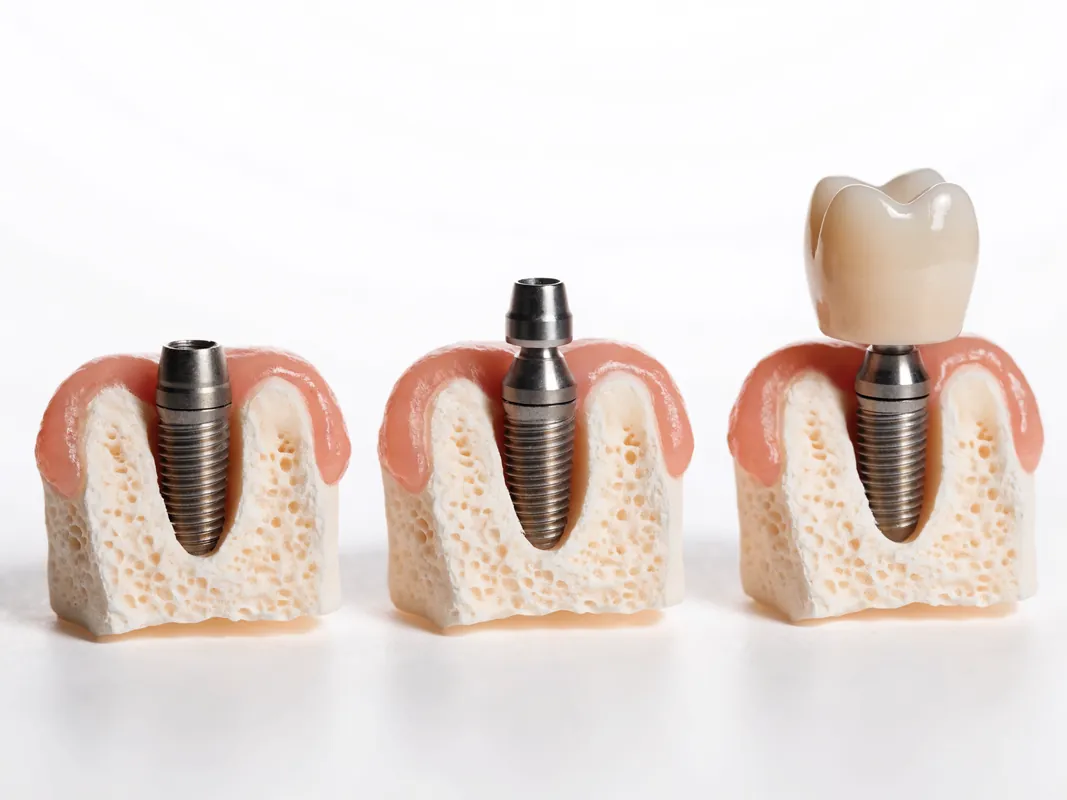
The United States Food and Drug Administration’s [dental implant information](https://www.fda.gov/medical-devices/dental-devices/dental-implants-what-you-should-know) distinguishes the implant body, abutment and fixation screw and lists potential biological, mechanical and surgical risks. That page is a patient-information source about device anatomy and risks, not a regulator of dentistry outside the United States and not a forecast for one patient.
A single implant restoration may include:
- the implant body in bone;
- surrounding bone and soft tissue;
- an abutment or interface;
- one or more screws;
- a cement or screw-retained connection;
- a crown;
- restorative material and any veneering layer;
- contacts with neighbouring teeth;
- an occlusal relationship with opposing teeth;
- cleaning access and maintenance tools.
Each layer can have a different event. The implant body may remain integrated while a screw loosens. The crown may chip while the implant and tissue remain stable. The restoration may remain intact while inflammation develops. A loose sensation can arise at different interfaces and needs localisation. “The implant lasted” does not tell the reader whether the crown, screw, tissue or maintenance pathway was complication-free.
Request a site-linked record that names the actual implant system and relevant components, dimensions, lot or batch information where available, abutment or interface, retention method, restorative construction, laboratory and date of delivery. Future clinicians need these details for compatibility, assessment and repair.
Implant Survival Is Not Peri-Implant Health
Implant-body survival research usually asks whether an implant remains present. Clinical success may add mobility, symptoms, tissue or radiographic criteria, but definitions vary. Biological complications can occur without implant loss, and an implant can require treatment while remaining in place.
The [FDA patient information](https://www.fda.gov/medical-devices/dental-devices/dental-implants-what-you-should-know) notes that overall health, smoking, oral hygiene and regular professional visits can matter and advises patients to report pain or looseness. It also lists local infection, difficulty cleaning, untreated periodontal disease, delayed healing and uncontrolled diabetes among relevant considerations. These are general risk prompts, not a formula that predicts a particular result.
The European Federation of Periodontology’s [S3 clinical practice guideline for prevention and treatment of peri-implant diseases](https://onlinelibrary.wiley.com/doi/full/10.1111/jcpe.13823) addresses risk assessment, diagnosis, prevention, supportive care and treatment. Guideline recommendations require professional interpretation and do not establish one recall interval or outcome for every patient.
Long-term planning should therefore record both presence and health:
- symptoms and patient observations;
- plaque control and cleaning access;
- soft-tissue appearance and bleeding findings;
- probing findings when clinically appropriate;
- suppuration or other signs of disease;
- comparison with baseline radiographs when imaging is justified;
- prosthesis contour and ability to clean;
- component stability and bite;
- history of periodontal disease and current control;
- smoking or vaping status and relevant medical changes;
- adherence to an individual supportive-care plan.
No single home test confirms integration or rules out peri-implant disease. A photograph or message cannot replace examination when symptoms or clinical changes require it.
Implant Crown Survival Is Separate From Implant-Body Survival
An implant-supported single crown has its own technical, biological and aesthetic outcomes. The PubMed-indexed [systematic review of single implant crowns](https://pubmed.ncbi.nlm.nih.gov/23062124/) reported implant and crown survival separately and also described soft-tissue, bone, screw, retention, veneering and aesthetic complications. The key lesson is that a surviving implant or crown can still have a complication history.
When reading implant-crown evidence, match:
- single crown versus bridge or full arch;
- anterior versus posterior site;
- screw-retained versus cement-retained design;
- monolithic versus veneered construction;
- implant and connection design;
- abutment material and geometry;
- opposing teeth or restorations;
- bite and parafunction;
- follow-up and maintenance;
- definition of repair, remake and failure.
A material category cannot compensate for an unsuitable design, unsupported occlusion, poor tissue access or an unidentified component. Nor does a complication automatically require replacement of the implant body. The implant-crown review and replacement guide explains why a symptom must be traced to the crown, retention, abutment, screw, implant, tissue, bite or another structure before treatment is chosen.
Full-Arch Longevity Has More Moving Parts
A fixed full-arch restoration is not simply a larger crown. It joins several implants and includes a framework or body, interfaces, screws, teeth or ceramic, contours, cantilevers, hygiene spaces and a bite shared across the arch. The patient-level burden of a complication can be different from a single-tooth event.
Full-arch studies may report:
- implant survival;
- prosthesis survival;
- technical complications;
- biological complications;
- repair frequency;
- maintenance intervention;
- patient-reported function or satisfaction;
- complete loss or replacement of the prosthesis.
These endpoints can diverge. A prosthesis may remain in function while receiving repairs. Several component interventions may occur without loss of an implant. A high survival headline can coexist with a meaningful maintenance burden.
The PubMed-indexed [systematic review of complete-arch prosthodontic complications](https://pubmed.ncbi.nlm.nih.gov/29665177/) found that complication reporting and long-term evidence differed by prosthesis design and material, with limitations in the available studies. Another [long-term complete-arch cohort](https://pubmed.ncbi.nlm.nih.gov/31562417/) illustrates why survival and freedom from complications should be reported separately. A single cohort cannot be treated as a universal forecast.
Ask for the proposed framework and tooth construction, implant and support pattern, retrievability, cleaning access, provisional pathway, component record, repair method, maintenance access and fallback if a component or implant changes. Do not infer those details from a commercial arch label.
Veneer Longevity Begins With Diagnosis and Tooth Substrate
A veneer is bonded to a tooth that has its own biology, structure, previous restorations, colour, cracks, pulp status, bite and periodontal environment. “Porcelain veneer” is not a complete longevity description.
The plan should identify:
- the diagnosis for colour, shape, wear, spacing or surface concern;
- whether disease, active caries, erosion or periodontal inflammation needs management first;
- how much sound enamel is available for the intended bonding design;
- existing fillings and exposed dentine;
- tooth alignment and whether orthodontic movement is a reasonable alternative;
- the proposed preparation and margin location;
- incisal design and functional contacts;
- clenching, grinding or other parafunction;
- material category and laboratory prescription;
- shade, texture and try-in process;
- maintenance and repair options;
- what further treatment may be needed if the veneer is replaced.
The PubMed-indexed [systematic review of porcelain laminate veneers](https://pubmed.ncbi.nlm.nih.gov/33807504/) examined survival and specific events such as fracture, debonding, secondary caries and endodontic treatment. Another [review focused on heterogeneity in veneer studies](https://pubmed.ncbi.nlm.nih.gov/33003243/) found important differences in study design and limited evidence at very long horizons. Those reviews describe selected study populations. They do not establish a personal deadline or prove that one material, laboratory or provider will reproduce a pooled estimate.
Veneer outcomes should be separated into retention, fracture or chipping, marginal change, colour or aesthetic change, caries, pulpal or endodontic events, tissue health, repair and replacement. A veneer still attached can have a clinical concern; a debonded veneer may sometimes be assessed for rebonding, while another case may require a new restoration. The condition of the tooth and substrate controls the decision.
Tooth-Supported Crown Longevity Includes the Tooth
A crown can remain intact while the underlying tooth develops caries, pulpal disease, fracture, periodontal loss or foundation problems. The reverse is also possible: a crown may chip or lose retention while the tooth remains restorable. Reporting only crown survival hides this distinction.
A crown longevity file should describe:
- why full coverage is proposed;
- how much tooth structure remains;
- whether the tooth is vital or root-treated;
- any core, post or foundation;
- ferrule and fracture considerations;
- periodontal and margin position;
- caries risk and dry-mouth factors;
- restorative material and construction;
- cementation or bonding approach;
- occlusal load and opposing surface;
- cleanability and review;
- what event counts as repair, remake, tooth loss or treatment failure.
The PubMed-indexed [systematic review of tooth-supported single crowns](https://pubmed.ncbi.nlm.nih.gov/25842099/) separated survival from biological, technical and aesthetic complications and found performance varied across constructions and sites. A newer [systematic review and meta-analysis](https://pubmed.ncbi.nlm.nih.gov/41489982/) evaluated current metal-ceramic, veneered and monolithic ceramic categories over its stated evidence window. Neither source makes material choice independent of tooth condition, design, clinician assessment or patient factors.
Avoid the statement “this crown material lasts longest” unless the exact comparison, indication, construction, observation period and uncertainty are supplied. Even then, a statistical difference in a study does not select the correct material for an individual tooth.
Survival, Repair and Replacement Form a Pathway
An event should be diagnosed before it is labelled a failure. A clinically acceptable pathway may include:
- observation with a documented baseline;
- cleaning or hygiene modification;
- polishing a rough area;
- adjusting a contact or bite after diagnosis;
- treating surrounding tissue disease;
- recementing or rebonding when appropriate;
- replacing a screw or component;
- repairing a localised restoration defect;
- remaking the crown, veneer or prosthesis;
- treating the supporting tooth;
- removing an implant only when clinically indicated;
- changing to a different restorative strategy.
These are not interchangeable. A repair can preserve more tooth structure or avoid unnecessary surgery, but it is not automatically suitable. Replacement can address a structural or biological problem, but remaking the visible restoration without correcting the cause may repeat the event.
The written record should name the diagnosis, affected layer, evidence, alternatives, uncertainty and expected maintenance. Ask whether a study counted a repaired restoration as surviving. Ask whether replacement meant the veneer or crown, the supporting tooth, an implant component, the implant body, or the whole arch.
Complications Are Not All Equal
Technical events include chipping, fracture, loss of retention, screw loosening, component fracture, wear, contact change or framework issues. Biological events include caries, pulpal or endodontic problems, periodontal disease, peri-implant mucositis, peri-implantitis, tissue recession or loss of support. Aesthetic events include colour, contour, tissue or alignment concerns. Patient-reported events include comfort, speech, chewing, appearance and ability to clean.
Severity differs. Some events are monitored or managed locally. Others require a new restoration, treatment of disease, surgery or urgent care. Study definitions for “minor” and “major” are not universal.
Build an event matrix:
| Event question | What to record |
|---|---|
| What changed? | Symptom, finding, image, date and progression |
| Which layer is affected? | Tooth, implant, tissue, cement, screw, abutment, crown, veneer or prosthesis |
| What caused it? | Working diagnosis, evidence and uncertainty |
| Is it urgent? | Local assessment route and red flags |
| Is it repairable? | Options, limitations and effect on future care |
| Is replacement indicated? | Why, what is replaced and what is preserved |
| How is recurrence reduced? | Disease control, design change, behaviour or maintenance |
This matrix is more meaningful than a headline lifespan.
Patient-Level Predictors Need Individual Interpretation
Research identifies associations and risk indicators across populations. It does not turn a person into a score without examination. Important domains can include:
- current and previous periodontal disease;
- plaque control and ability to clean the design;
- smoking or vaping;
- diabetes and current medical management;
- medicines that affect saliva, bone, bleeding, immunity or healing;
- history of radiotherapy or other relevant treatment;
- caries activity and dry mouth;
- clenching, grinding and other functional loading;
- diet and repeated acidic or hard-object exposure;
- trauma risk;
- attendance and access to maintenance;
- age-related changes in dexterity, health or support;
- willingness to report changes early.
The FDA notes smoking, uncontrolled diabetes, hygiene and untreated periodontal disease among implant considerations. A PubMed-indexed [systematic review on glycaemic control and implant outcomes](https://pubmed.ncbi.nlm.nih.gov/34391557/) found differences in evidence quality and outcome measures and cautioned against reducing the question to implant survival alone. A [systematic review and meta-analysis on probable bruxism](https://pubmed.ncbi.nlm.nih.gov/37589382/) reported an association with implant failure in the included observational evidence, while diagnosis and confounding remain important limitations.
Do not translate those associations into “this patient’s implant will last X years.” Instead, ask the named clinician which factors are relevant, what can be modified, what evidence supports the concern, how the design changes, and how monitoring will respond.
Design Can Create or Reduce Maintenance Burden
Cleanability is part of longevity. A contour that the patient cannot access can increase biological burden even if it looks attractive at delivery. A restoration designed without retrievability or component records may be harder to assess or repair. A margin placed without regard to tissue and isolation can affect maintenance. A bite that concentrates load can create technical problems.
Questions for a veneer or crown:
- Can the margins be examined and cleaned?
- How much tooth structure is preserved?
- Is the bonding or cementation substrate understood?
- Are contacts and occlusion verified?
- Can a local repair be considered if a small defect develops?
- What record will allow another clinician to identify the material?
Questions for an implant restoration:
- Can the tissues and prosthesis be cleaned?
- Is the restoration retrievable when clinically necessary?
- Are screw access, connection and component details documented?
- Are cantilever, framework, contact and occlusal choices explained?
- Can a home clinician obtain compatible parts and tools?
- What baseline clinical and radiographic records will be supplied?
“Maintenance-free” is not a responsible design objective. The objective is a clinically suitable, cleanable, reviewable and repairable treatment where possible.
Material Labels Do Not Carry a Universal Lifespan
Zirconia, lithium-disilicate, feldspathic ceramic, metal-ceramic, resin composite and hybrid materials describe broad categories, not one product, design or clinical outcome. Composition, translucency, thickness, connector size, surface treatment, finishing, bonding, support, laboratory process and site can differ.
A material can perform differently as:
- a thin veneer or full-coverage crown;
- a monolithic restoration or veneered framework;
- a tooth-supported or implant-supported restoration;
- a single unit or multi-unit prosthesis;
- an anterior or posterior restoration;
- an opposing surface in a particular bite;
- a restoration in a patient with or without parafunction;
- a repair compared with a newly fabricated unit.
Systematic reviews pool studies using inclusion criteria and statistical assumptions. Some comparisons are indirect. Study designs, materials and follow-up vary. A pooled result does not prove that a named commercial product or laboratory technique is superior.
Request the clinician’s patient-specific reason for the proposed construction, reasonable alternatives, trade-offs, repair pathway and evidence limitations. Do not choose a material solely because an advertisement assigns it the longest number.
Maintenance Is a Clinical Plan, Not a Calendar Slogan
The interval and content of maintenance should follow patient and treatment risk. A universal annual X-ray, cleaning schedule or fixed recall is not appropriate for every person. Imaging should be selected for a clinical question and compared with useful baselines. Professional review may include history, symptoms, hygiene, tissues, margins, contacts, bite, components and relevant images.
The EFP guideline and its underlying evidence support structured prevention, diagnosis and supportive care for peri-implant health. The PubMed-indexed [review of supportive care and implant loss](https://pubmed.ncbi.nlm.nih.gov/31231883/) examined associations between supportive treatment and peri-implant outcomes. A later [review of care after peri-implantitis treatment](https://pubmed.ncbi.nlm.nih.gov/37339881/) found marked heterogeneity and insufficient evidence to prescribe one universal protocol.
An individual maintenance plan should state:
- the responsible local provider;
- clinical findings that determine recall;
- home-care method demonstrated for the actual design;
- tools that fit beneath or around the restoration;
- periodontal and peri-implant risk review;
- caries and dry-mouth prevention where relevant;
- bite or parafunction review where relevant;
- when imaging is justified;
- what symptoms need earlier assessment;
- how records and component details are accessed;
- what happens if the patient moves or changes dentist.
Maintenance cannot guarantee survival. It creates opportunities to reduce modifiable risk, identify changes and intervene appropriately.
Home Care Must Match the Restoration
Generic advice to “brush and floss” may not explain how to clean a particular full-arch contour, implant bridge, contact, margin or interdental space. The patient should be shown a method and asked to demonstrate it before discharge. Dexterity, vision, gag reflex, access and willingness matter.
Home care may involve a toothbrush, interdental brush, floss or threader and another tool selected by the clinician. No device is universally suitable. A tool that is too large, forceful or incorrectly used can injure tissue or damage a surface. A tool that cannot reach the design does not solve the access problem.
Ask:
- Which surfaces need cleaning?
- Which size and tool fit each area?
- How is the tool used without trauma?
- How will the patient know plaque is being removed?
- What change in bleeding, swelling, taste, movement or comfort requires review?
- Who will reassess the method after tissue or dexterity changes?
For veneers and crowns, home care also protects the supporting tooth and gingival margin. Caries or periodontal disease can affect a restoration that has not fractured. For implant restorations, cleaning supports peri-implant tissue health but does not replace professional diagnosis.
Parafunction Is More Than “Wear a Night Guard”
Clenching and grinding can interact with tooth wear, ceramic chipping, veneer fracture, crown fracture, screw or component events, muscle symptoms and temporomandibular disorders. A self-report alone may not establish frequency or force, and absence of reported grinding does not eliminate functional loading.
The clinician should assess history, signs, symptoms, restoration design, opposing surfaces and relevant risk. An occlusal appliance may be considered for some patients, but it is not an automatic guarantee and needs its own fit, use, hygiene and review. The plan should explain its purpose and limitations.
Do not claim that every complication is caused by bruxism. Investigate design, fit, support, trauma, habits, material, component and biological factors. If a restoration fractures, repairing or remaking it without reviewing the loading environment may miss the cause.
Smoking, Diabetes and Periodontal History Are Not Binary Labels
Risk is not captured by “smoker: yes/no” or “diabetes: yes/no” alone. Current behaviour, dose, duration, cessation, glycaemic management, medical complications, periodontal condition, plaque control and maintenance can differ. Evidence may use inconsistent definitions and observation windows.
The appropriate response is not automatic exclusion or a promise of equivalence. It is:
- obtain an accurate history;
- coordinate with relevant health professionals where appropriate;
- assess current oral and periodontal condition;
- explain known evidence and uncertainty;
- address modifiable factors;
- adapt treatment, timing and maintenance if indicated;
- document consent and decision ownership.
Avoid extrapolating a population estimate to an individual. Ask how the proposed plan changes if health status, smoking, medicines or ability to maintain the restoration changes.
A Baseline Makes Future Change Interpretable
Longevity review is difficult without a clear delivery and health baseline. Records should be sufficient for another appropriately qualified clinician to understand what was done and compare later findings.
A baseline may include:
- diagnosis and tooth- or site-specific prognosis;
- treatment plan, alternatives and revisions;
- relevant pre-treatment clinical and imaging records;
- procedure notes;
- implant and component identifiers where applicable;
- restorative material and construction;
- laboratory prescription and custom-device information where applicable;
- retention method and screw information where relevant;
- photographs or scans where clinically useful;
- margin, contact, occlusal and tissue findings at delivery;
- hygiene method and demonstrated access;
- medicines and discharge instructions;
- named contacts and maintenance plan;
- consent, invoices and contractual documents.
Later records should distinguish new findings from baseline conditions. A radiograph without a comparable baseline can be harder to interpret. A repair without the original material or component record may require extra investigation.
Cross-Border Treatment Requires a Two-Country Maintenance Plan
Travel can separate the treating provider from the patient’s routine dentist. That makes continuity a planning issue, not an afterthought. The [GDC guidance for patients considering dental treatment abroad](https://www.gdc-uk.org/standards-guidance/information-for-patients-public/going-abroad-for-dental-treatment) recommends asking about assessment, qualifications, facilities, costs, records, aftercare and complaints. The [NHS treatment-abroad checklist](https://www.nhs.uk/using-the-nhs/healthcare-abroad/going-abroad-for-treatment/treatment-abroad-checklist/) prompts patients to research risks, follow-up and what happens if care goes wrong.
Before travel, ask a suitable home dentist:
- whether the practice is willing to assess and maintain the proposed design;
- which records and images it needs;
- whether it can obtain compatible implant components and tools;
- what it will and will not undertake;
- how urgent care is accessed;
- how routine local fees are handled.
Ask the overseas treating provider:
- who owns each clinical decision;
- what records are supplied and when;
- how a home clinician can obtain them;
- how a concern is triaged;
- what requires local assessment;
- who pays for assessment, repair, replacement or travel under each circumstance;
- which contract and jurisdiction apply;
- how complaints are handled.
A remote message can help coordination but cannot always diagnose pain, tissue change, mobility, bite, fracture or infection. The returning-home after dental tourism guide explains the handover in more detail.
A Warranty Is Not Longevity Evidence
A commercial warranty is a contract with definitions, exclusions, duties, remedies, territory and a responsible legal entity. It does not change biology, prevent complications or prove a restoration will remain intervention-free. Open-ended duration language can refer to a product component, a limited commercial term or a particular remedy rather than the patient’s clinical outcome.
Before relying on any term, request:
- the legal entity giving it;
- the covered object or service;
- start and end conditions;
- exclusions and maintenance requirements;
- evidence and review required for a claim;
- whether repair, replacement or refund is the remedy;
- professional, laboratory and component fees;
- local assessment and emergency-care costs;
- travel, accommodation and time-away costs;
- effect of another dentist providing urgent care;
- transferability and jurisdiction;
- what happens if the business, product or supplier changes.
This page makes no warranty representation. Contract interpretation may need independent legal advice. Clinical assessment must not be delayed while a commercial claim is reviewed.
Compare Proposals With a Longevity File
Two quotations are not equivalent merely because both name an implant, veneer or crown. Build a side-by-side file:
| Longevity domain | Proposal A | Proposal B |
|---|---|---|
| Diagnosis and alternatives | Written or missing | Written or missing |
| Exact object and design | Defined or vague | Defined or vague |
| Supporting tooth, implant and tissue findings | Documented or provisional | Documented or provisional |
| Material and construction | Specific or generic | Specific or generic |
| Laboratory and components | Named or unknown | Named or unknown |
| Cleanability and maintenance | Demonstrated or absent | Demonstrated or absent |
| Repair and retrievability | Explained or unknown | Explained or unknown |
| Baseline records | Listed or missing | Listed or missing |
| Local aftercare | Named route or assumption | Named route or assumption |
| Urgent care | Practical route or message only | Practical route or message only |
| Contract and commercial terms | Itemised or unclear | Itemised or unclear |
| Evidence | Matched source or marketing number | Matched source or marketing number |
Ask each clinician to explain why the design suits the individual case and what findings could change it. If a row is unknown, mark it unknown. Do not fill it with a material reputation, country label or social-media review.
Life-Cycle Cost Is Not Purchase Price Divided by Years
A simple “cost per year” calculation assumes an exact lifespan and ignores maintenance, repairs, replacement, local care, travel and uncertainty. A more honest life-cycle budget uses scenarios without pretending to predict them.
Separate:
- initial clinical assessment and records;
- disease control and alternatives;
- treatment and laboratory;
- provisional treatment if relevant;
- routine professional maintenance;
- home-care tools;
- local assessment;
- possible repair categories;
- possible component or restoration replacement;
- urgent care;
- repeat travel and time away;
- insurance exclusions;
- future treatment if the supporting tooth or implant changes.
Use “possible” rather than adding every event as certain. Compare the same scope and time horizon. Keep clinical and travel costs separate. A lower initial quote can have broader exclusions; a higher quote can still lack evidence or continuity.
When a Longevity Claim Is a Red Flag
Pause when:
- every patient is given the same expiry or guarantee;
- the implant body and crown are treated as one outcome;
- survival is presented as complication-free success;
- a material or country is declared universally longest-lasting;
- a percentage has no named source, population, follow-up or definition;
- a provider result is presented without an independently reviewable method;
- early failures or losses to follow-up are not explained;
- repairs are hidden inside “survival” without disclosure;
- full-arch evidence is borrowed from single crowns;
- a study of selected patients is applied to a medically different patient;
- maintenance is described as optional or maintenance-free;
- commercial cover is presented as a biological guarantee;
- records, components, local aftercare or urgent care are missing;
- travel dates pressure an irreversible decision.
Ask for the original source and written explanation. If the source cannot be matched to the proposed treatment and patient, do not use the number for consent or budgeting.
A Practical Annual Conversation Without a Fixed Annual Protocol
“Annual” is convenient language, but the clinician should set review frequency from risk and findings. The useful concept is a recurring structured conversation:
- Has health, medicine, smoking, diet or dexterity changed?
- Are there new symptoms, movement, bleeding, food trapping, roughness or bite changes?
- Can every margin and implant contour still be cleaned?
- Are tissues stable relative to baseline?
- Are contacts, screws, cement, ceramic and opposing surfaces clinically acceptable?
- Is imaging justified by the current question?
- Does the maintenance interval need to change?
- Are component and laboratory records still accessible?
- Is the local urgent-care route still workable?
Some patients need more frequent review; another may follow a different schedule. The plan should be recorded, explained and revised rather than copied from a package calendar.
Common Questions
1. How long does a dental implant last?
There is no defensible personal expiry date. Ask whether the evidence refers to the implant body, crown, bridge, tissue health or freedom from complications. A named clinician should explain how diagnosis, health, site, design, maintenance and current evidence affect the individual plan.
2. Does implant survival mean the whole treatment is problem-free?
No. An implant body may remain present while the crown, screw, abutment, prosthesis or surrounding tissues need assessment or treatment. Research should report implant survival, restoration survival and complications separately.
3. Can an implant crown need replacement while the implant stays?
Yes, depending on the diagnosis. A crown or component can chip, loosen, lose retention, change aesthetically or become unsuitable while the implant body remains. The cause must be localised before repair or replacement is selected.
4. Does a repaired crown still count as surviving in research?
Sometimes. Study definitions differ. A paper may allow polishing, recementation, screw adjustment or local repair while counting the restoration as surviving. Read the methods and complication tables rather than relying on the headline.
5. How long do porcelain veneers last?
A veneer has no universal deadline. Evidence describes selected groups and definitions. Tooth substrate, preparation, bonding, margin, bite, parafunction, disease, maintenance and the event being measured all affect interpretation.
6. How long does a tooth-supported crown last?
The crown and supporting tooth need separate assessment. The restoration may remain intact while the tooth develops caries, pulpal, fracture or periodontal problems, or the crown may need repair while the tooth remains restorable.
7. Is zirconia automatically longer-lasting than every other material?
No. Zirconia covers different compositions and constructions. Design, thickness, support, connector, surface finishing, site, opposing teeth, laboratory process, bite and patient factors matter. A material name alone cannot select treatment.
8. Is a monolithic restoration always better than a veneered one?
No universal choice follows from that label. Constructions have different aesthetic, technical, design and repair considerations. Evidence must match the indication, site and comparison, and the named clinician must explain the patient-specific trade-off.
9. Do full-arch implant teeth last as long as single implant crowns?
They should not be treated as equivalent evidence. Full arches have several implants, interfaces, screws, framework elements, teeth or ceramic, contours and hygiene demands. Compare full-arch studies and separate prosthesis survival from repairs and biological complications.
10. Is a five-year study enough to promise five years?
No. The study describes its population and observation method. It does not create a minimum duration for every patient. Check start time, loss to follow-up, outcome definition, repair rules and uncertainty.
11. Does a ten-year implant study predict my result?
No. It can inform discussion if the system, design, population and outcome are relevant. It cannot reproduce the patient’s health, site, clinician, maintenance or future events, and it may include technology from an earlier era.
12. What is the difference between survival and success?
Survival often means the unit remains present under the study definition. Success may require additional clinical or radiographic criteria, but definitions vary. Complication-free survival is another endpoint. Always read the paper’s exact definitions.
13. Why should results be reported per patient and per implant?
One person can have several implants or restorations. An implant-level percentage can make the patient burden less visible. Patient-level reporting helps show how many people experienced at least one event.
14. Does smoking determine an exact implant lifespan?
No. Smoking is a relevant clinical factor and is associated with healing and long-term risk in evidence, but it does not create an individual countdown. Record current behaviour and discuss cessation, design, consent and maintenance with qualified professionals.
15. Can a person with diabetes receive implants that last?
Suitability is individual. Diagnosis, current medical management, oral health, healing and maintenance matter. Evidence uses different diabetes and outcome definitions. A clinician should coordinate care where needed and explain uncertainty rather than promise equivalence or failure.
16. Does bruxism mean veneers, crowns or implants will fail?
Not automatically. Clenching or grinding may influence mechanical risk and treatment design, but diagnosis and confounding are complex. Assess loading, symptoms, wear, materials, support and alternatives. An appliance may be considered but is not a guarantee.
17. Will a night guard guarantee a longer lifespan?
No. An appliance may have a role in a clinician-led plan for some patients. It needs correct design, fit, use, hygiene and review. It cannot correct every biological, technical or behavioural risk.
18. How often should implant restorations be professionally cleaned?
There is no universal interval for every patient and design. The clinician should set and revise supportive care using periodontal history, current tissue findings, cleanability, disease risk, dexterity and treatment design.
19. Do I need an X-ray every year?
Not automatically. Imaging should answer a clinical question and follow applicable guidance. Useful baseline records and comparisons matter. The responsible clinician decides when the expected information justifies imaging.
20. Can I tell at home whether an implant is healthy?
Home observations are useful but cannot confirm health. Report movement, pain, swelling, bleeding, discharge, altered sensation, food trapping, bite change or difficulty cleaning. A clinician may need examination and selected imaging.
21. Does a small chip mean the whole restoration failed?
Not necessarily. Its size, depth, location, cause, support, bite and material matter. Options may include monitoring, polishing, repair or replacement after diagnosis. A chip can also signal a wider loading or design issue.
22. Can a veneer be rebonded instead of replaced?
Sometimes, after assessment of the veneer, tooth, bonding surfaces, fit, fracture, contamination and cause. Another case may require a new restoration or a different plan. Do not use household adhesive.
23. Can a loose implant crown be tightened at home?
No. The moving layer may be the crown, cement, screw, abutment, implant or another structure. Repeated testing or home tightening can add damage. Reduce load and arrange prompt professional assessment.
24. What records improve future repair?
Keep diagnosis, procedure notes, implant and component identifiers, restorative construction, laboratory information, retention method, baseline images, scans where relevant, maintenance instructions, invoices and responsible contacts.
25. Can any dentist maintain an implant placed elsewhere?
Do not assume so. The practice decides what it can accept and may need system records, parts, tools and relevant experience. Arrange a suitable local pathway before treatment, especially for cross-border care.
26. Does a warranty prove that treatment will last?
No. A warranty is a commercial contract, not biological evidence. Read the responsible entity, covered item, exclusions, maintenance duties, remedy, fees, travel implications and jurisdiction. Urgent care should not wait for a claim decision.
27. Is the most expensive restoration likely to last longest?
Price does not prove diagnosis, design, clinician responsibility, material quality, maintenance or outcome. Compare equivalent written scope and evidence. A higher price can still omit records or aftercare, and a low quote can omit stages.
28. When should a restoration be reviewed early?
Arrange assessment for new movement, pain, swelling, bleeding, discharge, roughness, fracture, food trapping, bite change, altered sensation, colour or tissue change, or inability to clean. Urgency depends on the full presentation.
29. Which symptoms require urgent local care?
Rapidly increasing swelling, breathing or swallowing difficulty, uncontrolled bleeding, marked illness, significant trauma or another emergency concern requires the current local emergency route. Do not wait for routine remote correspondence.
30. What is the best question to ask about longevity?
Ask: “For my diagnosis and proposed design, which component and outcome does the evidence describe, what maintenance and repair should I plan for, what remains uncertain, and what records will let another clinician help me?”
31. Should I replace a restoration just because it reaches a certain age?
Age alone is not a diagnosis. Review symptoms, clinical findings, tissue, margins, support, structure, function, aesthetics, cleanability and relevant images. Replacement should have an evidence-based reason and alternatives.
32. Can a restoration remain functional after a complication?
Yes, under some study and clinical definitions. A repair or treatment may return it to function. Record the event and cause. “Still in service” should not be confused with “never required intervention.”
Primary Evidence and Official Patient Sources
The sources below support the distinctions and questions in this guide. They do not endorse a provider, brand, material, country or individual treatment plan. The PubMed pages provide abstracts and bibliographic records; full methods and limitations should be read before applying a result.
- [FDA: Dental Implants — What You Should Know](https://www.fda.gov/medical-devices/dental-devices/dental-implants-what-you-should-know) — implant-system parts, general risks, records, hygiene and review prompts.
- [EFP S3 clinical practice guideline](https://onlinelibrary.wiley.com/doi/full/10.1111/jcpe.13823) — prevention, diagnosis and treatment of peri-implant diseases, with graded evidence and implementation context.
- [Howe and colleagues: long-term implant survival systematic review](https://pubmed.ncbi.nlm.nih.gov/30904559/) — implant-level survival, missing-data sensitivity analysis and uncertainty over a long observation horizon.
- [Jung and colleagues: implant-supported single crowns](https://pubmed.ncbi.nlm.nih.gov/23062124/) — separate implant, crown, biological, technical and aesthetic outcomes.
- [Papaspyridakos and colleagues: complete-arch fixed implant rehabilitation](https://pubmed.ncbi.nlm.nih.gov/31562417/) and [complete-arch complication systematic review](https://pubmed.ncbi.nlm.nih.gov/29665177/) — distinction between survival and complication burden in full-arch care.
- [Alghazzawi and colleagues: porcelain laminate veneer systematic review](https://pubmed.ncbi.nlm.nih.gov/33807504/), [AlJazairy: veneer evidence heterogeneity](https://pubmed.ncbi.nlm.nih.gov/33003243/) and [Morimoto and colleagues: veneer survival and complications](https://pubmed.ncbi.nlm.nih.gov/26757327/) — veneer study definitions, events, follow-up and heterogeneity.
- [Sailer and colleagues: tooth-supported single crowns](https://pubmed.ncbi.nlm.nih.gov/25842099/) and [Pjetursson and colleagues: updated crown meta-analysis](https://pubmed.ncbi.nlm.nih.gov/41489982/) — survival and biological, technical and aesthetic outcomes across crown constructions.
- [Monje and colleagues: supportive care and peri-implant outcomes](https://pubmed.ncbi.nlm.nih.gov/31231883/) and [Stiesch and colleagues: supportive care after peri-implantitis treatment](https://pubmed.ncbi.nlm.nih.gov/37339881/) — maintenance evidence and limits of prescribing one protocol.
- [Häggman-Henrikson and colleagues: bruxism and dental implants](https://pubmed.ncbi.nlm.nih.gov/37589382/) and [systematic review of glycaemic control and implant outcomes](https://pubmed.ncbi.nlm.nih.gov/34391557/) — population-level associations, outcome definitions and evidence limitations.
- [GDC: Going abroad for dental treatment](https://www.gdc-uk.org/standards-guidance/information-for-patients-public/going-abroad-for-dental-treatment) and [NHS treatment-abroad checklist](https://www.nhs.uk/using-the-nhs/healthcare-abroad/going-abroad-for-treatment/treatment-abroad-checklist/) — provider, records, cost, aftercare and complaint questions for cross-border patients.
Sources reviewed on 29 August 2026. Evidence, guidance and web addresses can change. Recheck the current source, exact treatment population, definitions, methods, funding, conflicts, limitations and date before relying on it.
Final Decision Rule
Do not buy a number of years. Choose only after a named clinician has documented the diagnosis, alternatives, supporting tooth or implant and tissue condition, proposed construction, cleanability, component and laboratory records, relevant individual risks, maintenance and local continuity. Ask the evidence to distinguish survival, success, complications, repair and replacement. Then keep a baseline that lets future clinicians identify change.
A restoration with an honest maintenance and repair pathway may be more understandable than one sold with the longest headline. If the provider cannot define what “lasts,” which events remain possible and who will help after treatment, the longevity discussion is not complete.