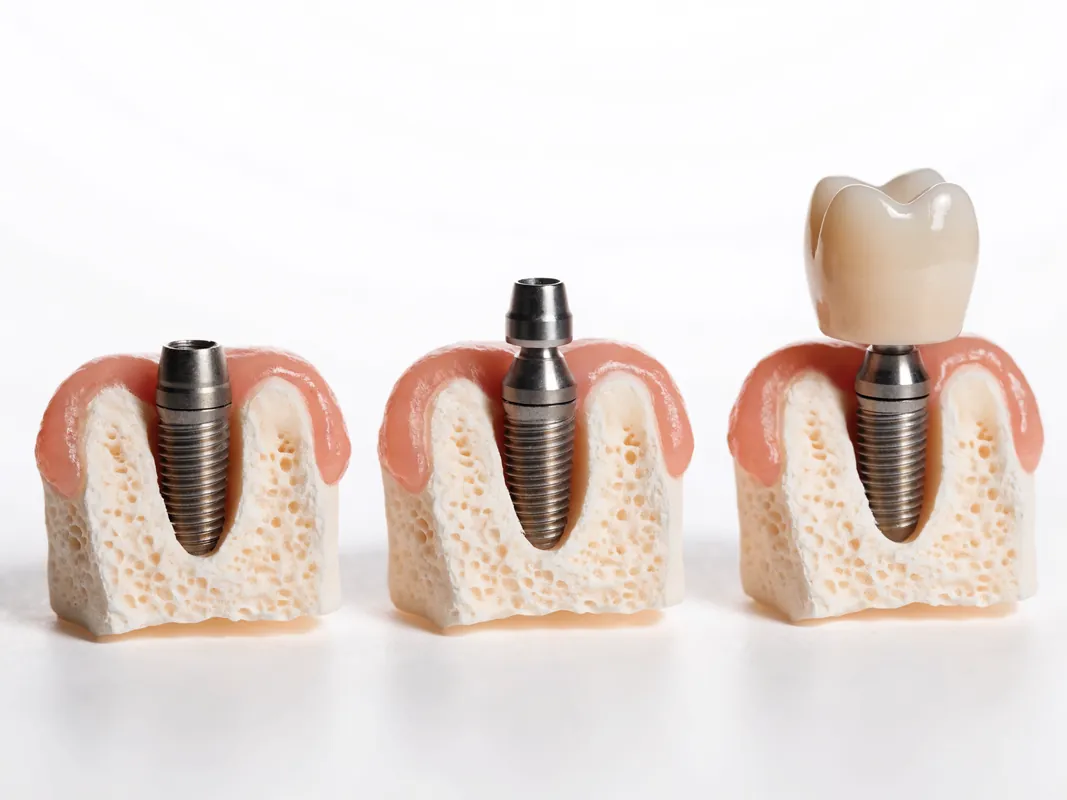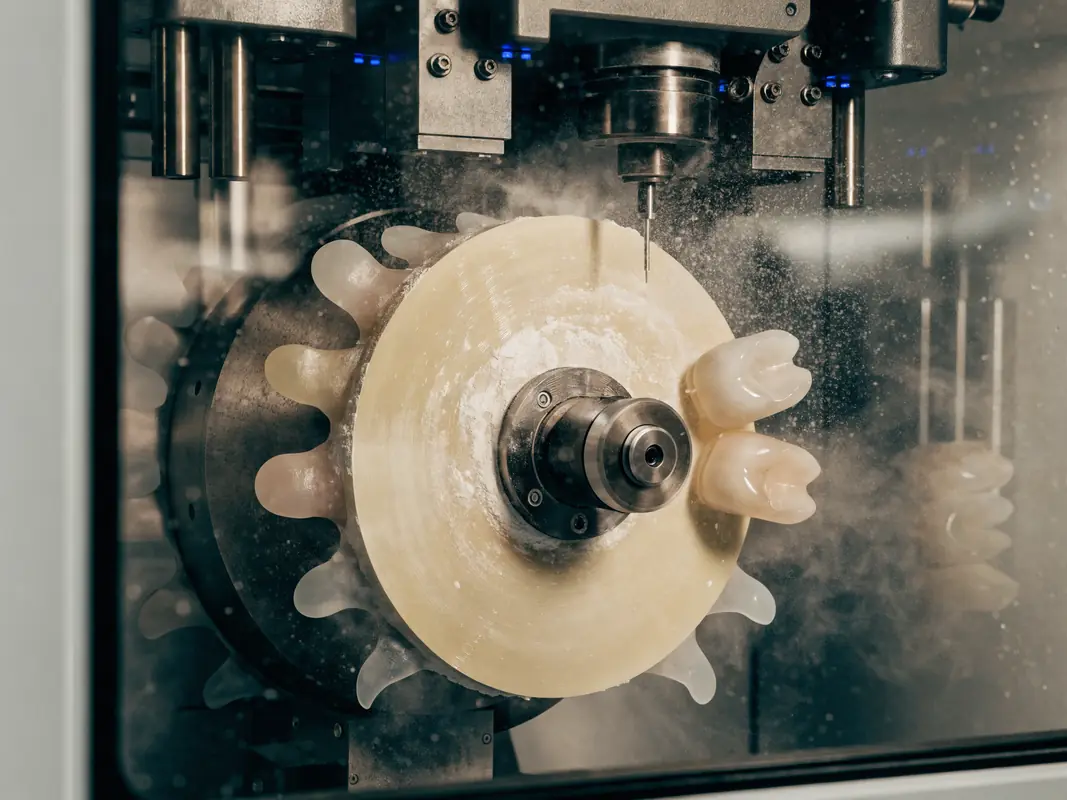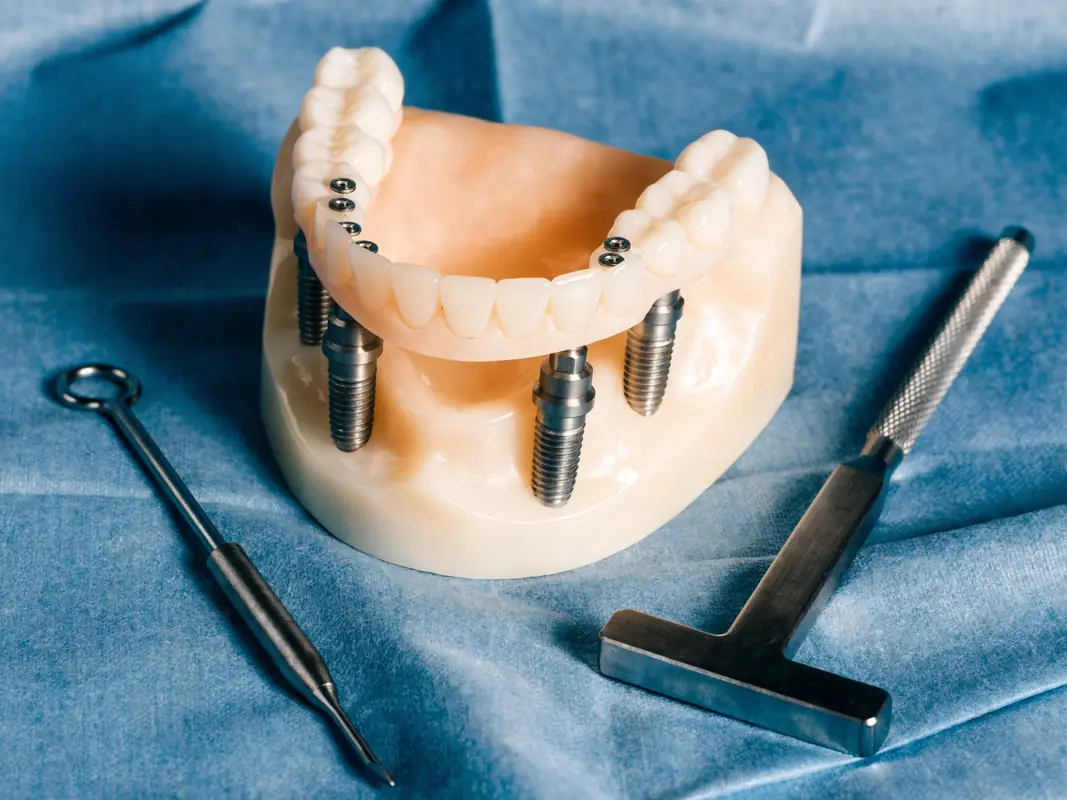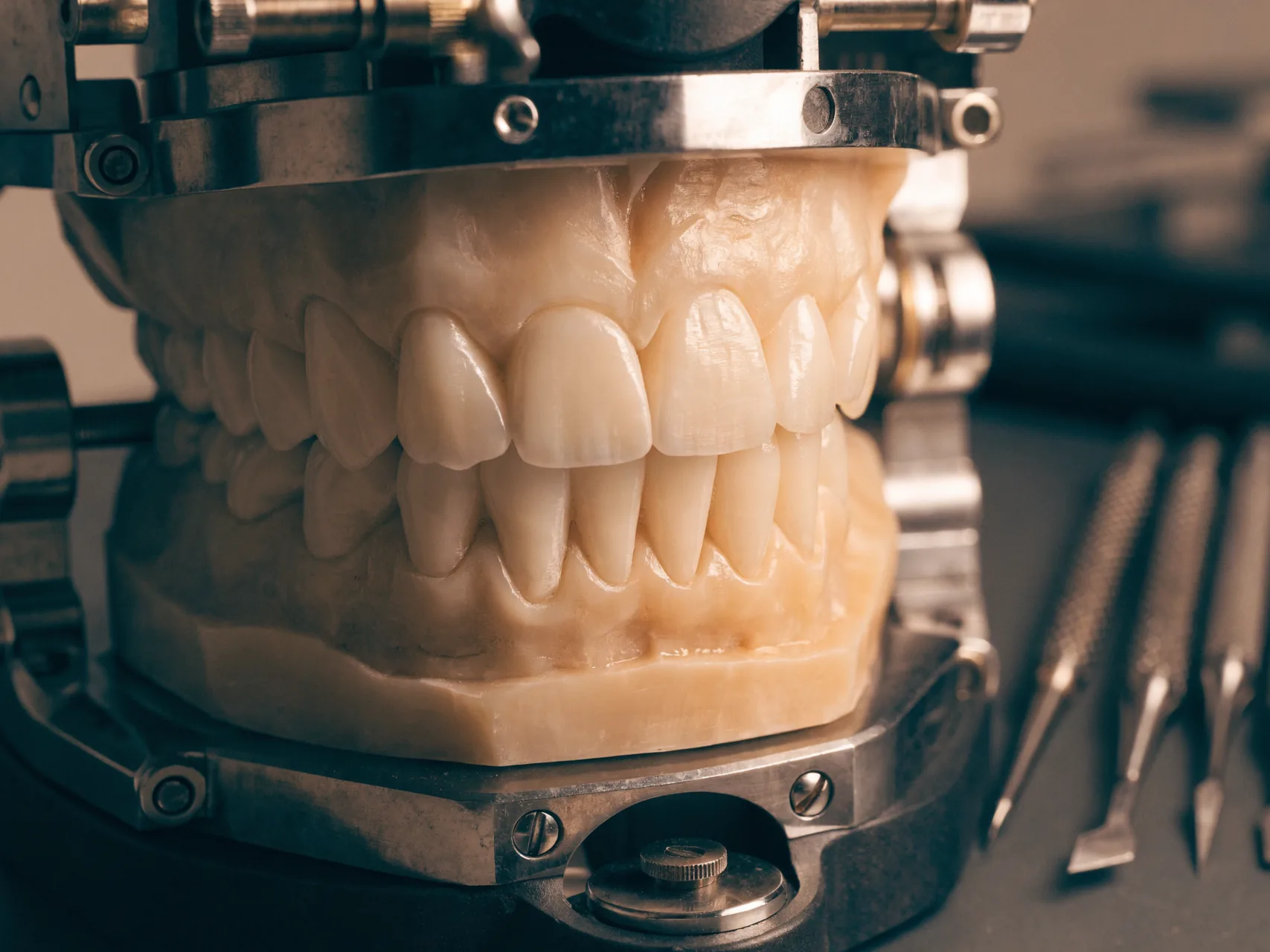
Full-mouth rehabilitation is a search phrase, not a diagnosis and not a standard combination of implants, crowns and veneers. It can describe very different problems: missing teeth, active disease, worn teeth, failing restorations, bite concerns, appearance priorities or several of these together. The correct scope cannot be inferred from the label.
The central planning problem is coordination. A decision about one tooth can change the load, space, appearance or maintenance needs of another area. Gum health may affect when restorative work should progress. A proposed implant position may depend on the intended final restoration. A provisional design may reveal that the original concept needs revision. These dependencies make ownership, sequencing and records more important than a list of procedures. A dated, itemised written plan should connect every proposed stage to that evidence.
This guide does not publish a fixed price, treatment duration, number of restorations, material formula, outcome rate or standard travel schedule. It does not diagnose whether a person needs an implant, crown, veneer, extraction, periodontal treatment or bite change. Those decisions belong to appropriately qualified clinicians after the assessment they judge necessary.
The unique purpose of this page is to explain the multidisciplinary control system: who owns the diagnosis, how each tooth and missing site is mapped, how alternatives preserve suitable tissue, how periodontal, implant and restorative stages are sequenced, when a plan remains provisional, how the laboratory prescription is traced, how consent and quotation versions change, and how records and aftercare survive a multi-stage international pathway.
For the separate financial search intent, use the full-mouth dental implant cost guide. For the narrower relationship between missing-tooth treatment and cosmetic smile planning, use the implants and Hollywood Smile sequencing guide. This page does not repeat either topic.
Start with a named diagnostic owner
A multidisciplinary plan needs one named clinician who owns the integrated diagnostic summary. That person does not have to perform every procedure, but the written record should show who brings the findings together, resolves contradictions and approves the overall sequence.
The diagnostic owner should be distinguished from:
- the legal treatment provider;
- a coordinator or sales contact;
- each clinician responsible for a clinical stage;
- the imaging provider;
- the laboratory or fabricating party;
- any external medical or dental adviser;
- the person responsible for aftercare.
Before records are shared or payment is requested, ask for the exact legal treatment-provider identity, the diagnostic owner's name and professional role, and the name and responsibility of each expected clinician. Verify current professional and facility status through the appropriate official sources.
A brand name does not establish clinical ownership. A group photograph does not prove who reviewed the case. A quotation signed by an administrator does not show who accepts diagnostic responsibility. The personal plan should.
Use a responsibility charter:
| Responsibility | Evidence in the personal record |
|---|---|
| Integrated diagnosis | Named clinician and dated summary |
| Periodontal assessment | Named clinician, findings and current status |
| Implant-site assessment | Named clinician, records reviewed and provisional limits |
| Restorative assessment | Tooth-by-tooth findings and responsible clinician |
| Bite and functional assessment | Finding, significance and responsible clinician |
| Laboratory prescription | Prescribing clinician and named laboratory when known |
| Provisional-stage decisions | Named approver and progression criteria |
| Definitive-stage decisions | Named approver, fit or function records and consent |
| Routine aftercare | Named provider and written pathway |
| Urgent concern | Triage route and boundary for local examination |
| Complaint | Provider procedure and applicable external route |
If two clinicians disagree, the plan should record the disagreement, missing evidence and route to resolution. Silence is not coordination.
Define the problem before listing procedures
A full-mouth plan should begin with a problem list, not a shopping list. Terms such as implant, crown and veneer describe possible interventions. They do not explain why a tooth or site needs attention.
The problem list may address:
- active or previous gum disease;
- decay or infection;
- missing teeth and spaces;
- damaged or heavily restored teeth;
- worn tooth surfaces;
- failed or ageing restorations;
- discomfort or functional concerns;
- tooth position or spacing;
- bite relationships;
- maintenance difficulty;
- appearance priorities;
- medical, medication or behavioural factors that affect care.
This is not a checklist that proves treatment is needed. The responsible clinicians decide which findings apply and which records are appropriate.
Each problem should connect to four things:
- the evidence supporting it;
- its effect on health, function or the stated priority;
- reasonable options, including monitoring or no treatment when relevant;
- the clinician responsible for the decision.
A problem without evidence should remain an open question. A procedure without a linked problem should be challenged.
Build an arch-and-tooth map
A multidisciplinary proposal becomes auditable when every tooth, implant site and missing area has a status. A phrase such as full upper and lower rehabilitation is too broad for informed comparison.
Create a map with one row for each tooth or site:
| Map field | What to record |
|---|---|
| Tooth or site | Recognisable notation and plain-language location |
| Current status | Present, missing, restored, provisional, implant or other relevant state |
| Finding | Dated clinical finding or clearly marked uncertainty |
| Records | Examination, image, photograph, model or other supporting record |
| Proposed action | Monitor, preserve, repair, replace, remove, restore or investigate further |
| Alternatives | Reasonable alternatives and no-treatment consequence where relevant |
| Stage | Stabilisation, provisional, surgical, restorative, definitive or maintenance |
| Responsible clinician | Name and role |
| Material or component | Only if selected for the personal case |
| Laboratory role | Named party when known |
| Quote line | Itemised inclusion or explicit exclusion |
| Handover record | What the patient will receive |
The map should also identify missing spaces that require no replacement and teeth that are intentionally left untreated. Absence from the plan can otherwise be mistaken for omission.
Use the same map in the clinical plan, laboratory prescription, quotation and handover. If notation changes between documents, require reconciliation before treatment.
Establish the diagnostic evidence set
The diagnostic owner determines what evidence is necessary. A complex case may involve examination, medical history, periodontal records, relevant radiographs or scans, photographs, models, bite records and input from other clinicians. The presence of technology does not prove that the right questions were asked.
The written diagnostic dossier should say:
- which records were reviewed;
- who created and interpreted them;
- when they were created;
- which findings they support;
- whether any image or record needs updating;
- which conclusions remain provisional;
- which additional assessment could change the plan;
- how the patient can obtain copies.
Ask why each record is needed and how it affects a decision. Repeat exposure or testing should not happen merely because a provider has a device. Conversely, an apparently complete remote proposal should not hide the absence of direct findings.
The [European Federation of Periodontology clinical-guideline hub](https://www.efp.org/education/continuing-education/clinical-guidelines/) illustrates why diagnosis-specific pathways matter for periodontal and peri-implant conditions. A landing page cannot turn those professional guidelines into an individual recommendation; the treating clinicians must apply current evidence to the personal case.
Separate diagnosis from design preference
Patients may arrive with a desired colour, shape, tooth length or photograph. Those preferences belong in the discussion, but they do not determine which teeth are maintainable, which need disease control, whether an implant is suitable or whether irreversible preparation is justified.
The plan should maintain two parallel records:
- a clinical record of health, function, risk and alternatives;
- a design brief covering the patient's priorities, acceptable compromises and decisions.
The clinical record should not be rewritten to justify the design. The design brief should not be treated as consent for extra procedures.
A responsible discussion may conclude that some desired changes are not appropriate, that a less invasive alternative deserves consideration, or that appearance decisions should wait until disease control and provisional assessment are complete. The reason should be documented.
Make tooth preservation an explicit workstream
Full-mouth language can make extensive intervention feel inevitable. It is not. Every extraction, extensive preparation or replacement proposal needs a tooth-specific reason and alternatives.
For each irreversible proposal, request:
- the diagnostic finding;
- the record supporting it;
- the expected purpose;
- options to retain or repair the tooth where reasonable;
- monitoring or no-treatment consequences;
- the effect on adjacent teeth and the arch;
- maintenance requirements;
- uncertainties;
- the responsible clinician;
- the point at which consent can still be withdrawn.
Do not assume an old restoration requires a crown, a discoloured tooth requires a veneer, a missing tooth requires an implant or a worn dentition requires restoration of every tooth. Those are clinical questions.
If multiple teeth receive the same proposed intervention, the plan should still show individual reasons. A repeated template line is not a tooth-by-tooth assessment.
Where the preservation decision is uncertain or materially different between providers, an independent assessment before travel can help distinguish incomplete evidence from a true difference in clinical judgment.
Compare alternatives at system level
A full-mouth decision is not simply one procedure versus another. Alternatives can change the entire system.
Examples of questions for the responsible team include:
- Could disease control and monitoring reduce the proposed scope?
- Could repair or replacement of selected restorations address the main concern?
- Could a removable option avoid or defer surgery?
- Could orthodontic movement reduce restorative preparation?
- Could a bridge, implant or accepted space each be considered for a missing site?
- Could a crown, partial restoration, veneer or no intervention be considered for a specific tooth?
- Could the plan be staged so that uncertainty is resolved before more work?
- What happens if the patient chooses function-only treatment and defers appearance changes?
The guide does not answer these questions for a person. It requires the personal plan to show that reasonable alternatives were discussed and why the selected sequence was proposed.
A lower procedure count is not automatically better, and a larger plan is not automatically comprehensive. The useful measure is whether every intervention has a supported purpose and whether the combined plan preserves future options where reasonable.

Create a multidisciplinary case conference record
When several clinicians are involved, ask how they communicate. A verbal assurance that the team works together is not enough.
A case conference record can state:
- attendees and professional roles;
- diagnostic summary;
- tooth-and-site map version reviewed;
- unresolved questions;
- proposed sequence;
- dependencies between stages;
- provisional design decisions;
- laboratory input;
- medical liaison needed;
- patient priorities;
- alternatives discussed;
- action owner for each open item;
- date and reason for the next review.
The patient should receive an understandable summary. Internal communication is important, but it cannot replace informed consent.
If the implant clinician, restorative clinician and laboratory are in different organisations, the record should identify how prescriptions and changes move between them. If they are in one organisation, individual responsibility still matters.
Sequence by clinical gates, not a sales calendar
A multidisciplinary sequence should advance when agreed clinical criteria are met, not because a travel date or laboratory slot has arrived.
Use gates rather than fixed dates:
| Gate | Question before progression |
|---|---|
| Diagnostic gate | Is the problem list supported and are important uncertainties visible? |
| Stabilisation gate | Have urgent disease and modifiable concerns been addressed as planned? |
| Periodontal gate | Is the periodontal condition appropriately assessed and managed for the proposed next stage? |
| Surgical gate | Is the site, alternative, risk discussion and restorative objective documented? |
| Provisional gate | Has the provisional stage tested the intended function or design sufficiently? |
| Definitive gate | Are findings, fit, function, patient understanding and consent documented? |
| Handover gate | Are records, maintenance and urgent pathways complete? |
The responsible clinicians define the criteria. The patient should know what happens if a gate is not met: pause, reassess, revise, choose an alternative or obtain another opinion.
A gate-based plan avoids false precision. It accepts that biology, symptoms, new findings and patient choices can change the sequence.
Stabilisation comes before elective expansion
A broad restorative plan should show how urgent concerns, active disease, pain, infection, hygiene barriers and medical coordination are handled before elective scope expands. The exact order depends on the case.
The stabilisation section should identify:
- current urgent findings;
- the clinician responsible;
- immediate and alternative options;
- records required;
- review criteria;
- effect on later stages;
- what remains provisional;
- cost and consent consequences if the scope changes.
Stabilisation does not guarantee that later work will proceed. It may reveal that the original concept should shrink, change or stop.
Do not treat temporary relief as proof that definitive reconstruction is appropriate. Do not treat the existence of a large quotation as a reason to rush through unresolved disease.
Periodontal sequencing must be visible
Gum and supporting-tissue assessment is not a decorative line in a full-mouth plan. It can affect tooth prognosis, implant decisions, restoration margins, maintenance and the order of care.
The periodontal workstream should document:
- the current assessment and responsible clinician;
- relevant measurements or findings;
- modifiable risk discussion;
- disease-control plan where indicated;
- review criteria;
- tooth-specific prognosis where appropriate;
- effect on extraction or preservation decisions;
- effect on implant-site planning;
- maintenance responsibility.
This guide does not declare a universal periodontal sequence. Current evidence-based pathways are diagnosis-specific. The written plan should state the pathway applied and why.
If definitive restorative work is scheduled without showing how active periodontal questions are managed, ask for clarification. If a tooth prognosis remains uncertain, the plan should explain whether restorative work is deferred, provisional or reversible.
Implant sequencing begins with the restorative question
An implant is not a stand-alone fixture in a multidisciplinary plan. The intended restoration, space, loading environment, maintenance access and relation to remaining teeth all influence planning.
Before an implant stage, the record should connect:
- the missing site and reason for replacement;
- alternatives, including accepted space or non-implant options where relevant;
- the diagnostic evidence reviewed;
- the responsible surgical and restorative clinicians;
- the intended restorative objective;
- site-specific limitations;
- components selected for the personal case;
- provisional strategy;
- progression criteria;
- maintenance and urgent-care pathway;
- records and traceability to be supplied.
A surgical quotation without the restorative stage is incomplete for whole-case comparison. A restorative design that assumes implant placement without named surgical ownership is also incomplete.
For implant-specific risks and alternatives, the clinician must provide personal advice. The [Guy's and St Thomas' NHS implant information](https://www.guysandstthomas.nhs.uk/health-information/dental-implants) is a useful public reminder that alternatives and long-term care need discussion, but it cannot replace a personal assessment.
Restorative sequencing is tooth-specific
Crowns and veneers should not appear as interchangeable cosmetic units. The plan should explain what each restoration is intended to address, how much tooth structure is involved, what alternatives exist and how the choice relates to the wider bite and maintenance plan.
For each proposed crown or veneer, record:
- tooth and surface;
- clinical finding;
- restorative objective;
- preparation expectation;
- preservation alternatives;
- material only when selected;
- provisional or trial stage where relevant;
- laboratory prescription;
- fit, contact and function checks;
- patient design approval boundary;
- maintenance needs;
- future replacement implications.
A veneer should not be proposed merely because adjacent implant or crown work exists. A crown should not be used to standardise appearance without a tooth-specific restorative reason.
The laboratory may advise on design feasibility, but the responsible clinician owns the prescription, preparation decision, fit assessment and consent.
Use provisional care as an information stage
Provisional restorations can support appearance, function, tissue management or testing, depending on the case. They are not automatically a preview of a guaranteed final result.
The provisional-stage document should specify:
- purpose;
- teeth or sites included;
- material or construction category;
- responsible clinician;
- intended questions being tested;
- adjustment process;
- patient feedback method;
- maintenance instructions;
- criteria for accepting or revising the concept;
- what cannot be inferred from the provisional;
- records created before progression.
Feedback should be separated into clinical and preference categories. A comfort concern, functional interference or tissue response is not the same as a request for a different shade or shape.
If the provisional reveals a problem, the plan should allow revision. A laboratory deadline should not turn an unresolved provisional into a definitive prescription.

Define the definitive-stage gate
Definitive work should proceed only after the responsible clinicians confirm that the necessary clinical criteria and consent requirements are met.
The definitive gate can include:
- updated findings;
- confirmation that relevant disease-control criteria are met;
- final tooth-and-site map;
- final material and component prescription;
- laboratory identity;
- design approval record;
- fit and contact assessment;
- functional checks appropriate to the case;
- consent to any changed scope;
- itemised quotation version;
- handover and aftercare readiness.
The guide does not prescribe a universal checklist of clinical tests. The team should document what is appropriate and who signs each decision.
Final does not mean permanent or maintenance-free. The patient should understand future review, repair and replacement possibilities without receiving a fixed lifespan promise.
Treat bite and function as documented questions
Terms such as bite correction, vertical dimension, guidance or full-mouth balance can sound authoritative while remaining undefined. Ask what was found, how it was assessed, why it matters and how the proposal will be tested.
The functional record should state:
- reported symptoms and history;
- examination findings;
- relevant records;
- diagnostic uncertainty;
- intended change;
- alternatives;
- provisional testing strategy where appropriate;
- responsible clinician;
- progression criteria;
- maintenance implications.
Do not accept a generic claim that a full-mouth plan will cure jaw symptoms, improve all chewing or prevent future wear. Those are individual clinical questions with uncertainty.
If symptoms are unexplained or outside the treating team's scope, referral or independent assessment may be appropriate. The responsibility map should show who decides.
Name the laboratory and preserve the prescription trail
A laboratory is a material clinical partner in a large restorative case, but it is not a substitute for the legal treatment provider or prescribing clinician.
Ask for:
- laboratory legal identity when known;
- location;
- prescribing clinician;
- prescription version;
- teeth or sites included;
- restoration type and material;
- component details where applicable;
- design files or records retained;
- shade and characterisation instructions;
- remake or adjustment process;
- statement of conformity or equivalent record where applicable;
- traceability supplied to the patient.
If work moves between laboratories, the record should show what changed and why. A named technician on a marketing page does not prove personal involvement. Do not publish or rely on an individual identity unless the personal case record confirms the role.
The patient should be able to take the relevant laboratory and material information to another provider later.
Specify materials without marketing shortcuts
Words such as premium, strongest, natural or biocompatible do not identify a material or prove suitability. The personal plan should use case-specific specifications and explain substitutions.
Depending on the restoration, record:
- material category;
- manufacturer and product line when selected;
- component compatibility;
- lot or batch information where available;
- implant or device passport where applicable;
- laboratory prescription;
- fitting notes;
- substitution process;
- patient consent to material changes;
- records supplied at handover.
Material choice depends on the location, design, available tooth structure, functional conditions, maintenance and other clinical factors. This guide makes no universal material recommendation.
A provider should not use a general website materials list as the personal specification. If the selection is not final, mark it provisional.
Version the plan, consent and quotation together
Full-mouth rehabilitation can change as new evidence appears. Changes are not automatically a failure, but undocumented changes are unsafe.
Every plan version should have:
- date;
- version identifier;
- author and responsible clinician;
- diagnostic evidence added;
- teeth or sites changed;
- reason for change;
- alternatives discussed;
- clinical consequences;
- quotation effect;
- travel or aftercare effect;
- consent status;
- superseded document reference.
The current [GDC consent standard](https://standards.gdc-uk.org/pages/principle3/principle3) describes consent as an ongoing process and requires documented consent when agreed treatment or estimated cost changes for professionals under its jurisdiction. That is a useful transparency benchmark for any written comparison, while local professional rules still govern the treating provider.
Consent should not be buried in a broad signature covering whatever is found. The patient should understand each material change before an irreversible step and retain the right to pause or decline.
Build an itemised quote from the map
The quotation should mirror the arch-and-tooth map and sequencing gates. It should not be a single full-mouth total detached from clinical responsibility.
Suggested rows include:
| Quote row | Required detail |
|---|---|
| Assessment | Records reviewed, examination status and remaining uncertainty |
| Disease control | Teeth or sites, responsible clinician and exclusions |
| Periodontal care | Scope, review boundary and maintenance |
| Extractions | Tooth-specific reason, alternatives and responsible clinician |
| Implant stage | Site, clinical owner, components and exclusions |
| Provisional work | Purpose, sites, adjustments and replacement boundary |
| Crown work | Tooth, material status, laboratory and fitting |
| Veneer work | Tooth, preparation boundary, laboratory and fitting |
| Other restorations | Tooth-specific purpose and material status |
| Definitive implant restoration | Site, component chain, laboratory and fitting |
| Records | Images, reports, prescriptions and handover files |
| Routine aftercare | Provider, services and fees |
| Urgent care | Triage, examination and payment responsibility |
| Conditional work | Trigger, alternative, price effect and consent |
| Travel contingency | Patient-owned cost exposure if stages change |
For the detailed financial anatomy of whole-arch or full-mouth implant work, use the full-mouth dental implant cost guide. This sequencing page intentionally does not publish a price table.
Make exclusions impossible to miss
An inclusion list is incomplete without exclusions. Ask whether the quotation excludes:
- additional diagnostics;
- disease control;
- periodontal treatment;
- extraction;
- site development;
- provisional replacement;
- laboratory redesign;
- medicine;
- management of an unrelated tooth;
- local review;
- urgent assessment;
- future maintenance;
- records or translations;
- later stages;
- travel changed by clinical findings.
The guide does not assume any excluded item is needed. The purpose is to force a written boundary.
For each conditional item, require:
- trigger finding;
- responsible decision-maker;
- alternative;
- itemised financial effect;
- stage impact;
- consent process;
- right to pause.
A contingency allowance with no trigger is not equivalent to an itemised clinical pathway.
Record what happens if a stage fails to progress
The plan needs a branch for uncertainty. Ask what happens if gum health is not ready, a tooth prognosis changes, an implant site is unsuitable, symptoms persist, a provisional design is not accepted, the patient becomes medically unfit, or travel becomes impossible.
For each branch, document:
- who identifies the issue;
- evidence required;
- immediate safety action;
- options;
- reversible holding strategy where appropriate;
- record update;
- quotation and payment effect;
- travel consequence;
- consent requirement;
- aftercare owner.
Avoid promises of an automatic remedy or return. The applicable response depends on cause, contract, clinical assessment, records and jurisdiction. It should be written without pretending every future event can be predetermined.

Maintain a complete record set
Cross-border multidisciplinary care depends on portable records. The [GDC record standard](https://standards.gdc-uk.org/pages/principle4/principle4) identifies complete, contemporaneous records, images, models, laboratory prescriptions and consent as parts of the patient record for professionals under its jurisdiction. A patient should ask any provider how equivalent records will be created, protected and released.
The handover set may include:
- medical and dental history;
- diagnostic summary;
- periodontal charting or relevant findings;
- images and reports;
- photographs and models;
- arch-and-tooth map;
- plan versions;
- consent discussions and signed documents;
- prescriptions;
- treatment notes;
- laboratory work authorisations;
- material and component traceability;
- implant or device information where applicable;
- provisional-stage findings;
- fitting and adjustment notes;
- invoices and payment evidence;
- discharge instructions;
- maintenance plan;
- urgent-care pathway;
- complaints procedure.
Ask for usable formats, naming conventions and release timing. Confirm who controls the data and who may receive it. Do not send sensitive records to an unidentified commercial contact.
Design aftercare as another clinical stage
Aftercare should be planned before treatment, not improvised after the patient returns home.
Separate:
- immediate postoperative or post-treatment review;
- provisional-stage monitoring;
- definitive-restoration review;
- periodontal maintenance;
- implant maintenance;
- hygiene support;
- management of wear or protective appliances where relevant;
- repair or adjustment;
- urgent symptoms;
- unrelated new disease.
For each category, identify the provider, location, contact route, records needed, likely examination boundary and fee responsibility. Remote communication can support triage but cannot replace a needed examination.
Ask a local dentist before travel whether they can provide routine review and which records or components they require. Do not imply that a local provider has agreed until they have.
The EFP guideline hub includes current professional pathways for periodontal and peri-implant health. The personal maintenance plan should identify which evidence-based pathway the responsible clinicians consider relevant, without making a generic interval promise.
Keep travel separate from clinical readiness
A multi-stage plan may be affected by findings, healing, symptoms, laboratory revision, patient availability and clinical review. Do not convert those uncertainties into a fixed travel promise.
The travel-contingency document should address:
- which stages may require physical attendance;
- what clinical criteria control booking;
- who confirms fitness for travel;
- flexible or changeable arrangements;
- accessibility and companion needs;
- medication and record transport;
- urgent local assessment;
- route disruption;
- extra accommodation if a clinical review changes;
- financial exposure from delay or cancellation;
- insurance exclusions;
- emergency return planning.
Travel services should remain distinct from healthcare-provider identity and clinical consent. A convenient itinerary does not prove that a stage is ready. A booked journey should not pressure a patient into accepting changed treatment.
Check official-current entry and travel advice for the traveller's nationality and route before each journey. This page does not publish fixed visa, flight or schedule information.
Define complaints and remedy without promises
Ask for the legal treatment provider's complaints procedure before payment. It should identify:
- complaint contact;
- accepted language and format;
- acknowledgement and response process;
- records required;
- clinical review route;
- external professional or facility route;
- contractual governing law and jurisdiction;
- payment-dispute process;
- available outcomes and exclusions.
A professional regulator, facility authority, mediator, insurer, card provider and court can have different roles. One route may consider conduct without awarding a financial remedy. Obtain independent legal advice when jurisdiction or rights matter.
Keep the signed plan, consent versions, invoices, payment evidence, laboratory traceability, clinical records and communication history. Seek urgent clinical care first when health is at risk; a complaint process is not emergency treatment.
Do not publish a lifetime promise, automatic replacement, free return or guaranteed remedy. The fair approach is a clear contract, evidence trail and case-specific review.
Red flags in a full-mouth proposal
- The plan starts with a restoration count rather than findings.
- The legal treatment provider is hidden behind a brand.
- The integrated diagnostic owner is unnamed.
- Clinician names appear only in marketing.
- The arch-and-tooth map is missing.
- Teeth with different findings receive identical unsupported reasons.
- Gum or peri-implant health is absent from the sequence.
- Implant placement is planned without a restorative objective.
- Crowns and veneers are used as interchangeable units.
- Tooth-preservation alternatives are missing.
- The laboratory prescription has no clinical owner.
- Material words are promotional rather than identifiable.
- Provisional work is sold as proof of a final result.
- Bite claims have no recorded finding or test.
- A definitive plan is issued despite missing assessment evidence.
- The quotation cannot be reconciled to individual teeth or sites.
- Exclusions and change triggers are missing.
- A changed plan has no new version or consent.
- Payment goes to an unrelated entity.
- Records are unavailable until a dispute.
- Aftercare is reduced to informal messaging.
- Travel bookings control the clinical sequence.
- A complaint route is replaced by a vague promise.
- Urgency comes from a promotion rather than a clinical reason.
A patient-led review workflow
Create the identity file
Record the legal provider, facility, diagnostic owner, stage clinicians, laboratory, payee, data controller, aftercare owner and complaints contact.
Create the evidence file
List every examination, image, model, photograph, report and medical input. Note who reviewed it and which conclusions remain provisional.
Create the arch-and-tooth map
Give every tooth and missing site a finding, proposed action, alternative, stage, responsible clinician and quote line.
Create the sequence map
Use clinical gates for stabilisation, periodontal care, surgery, provisional work, definitive work and handover. Add a branch for each unresolved question.
Create the consent log
Version the plan, discussion, quotation and consent together. Require updated documents after material change.
Create the quote worksheet
Align each clinical row, exclusion, conditional trigger, aftercare responsibility and patient-owned travel exposure.
Stress-test the plan
Ask what happens if disease control takes longer, a tooth is preserveable, a site is unsuitable, a provisional is not accepted, the patient cannot travel, a clinician changes or urgent care is needed at home.
Obtain an independent view when needed
A separate assessment can be useful when the scope is extensive, tooth-preservation opinions differ, diagnosis is unresolved or the patient feels pressured.
Decide in stages
Consent to assessment does not require consent to the entire reconstruction. Preserve the ability to pause at each gate.
Final checklist
- The legal treatment provider is named and verifiable.
- The integrated diagnostic owner is named.
- Every stage clinician and laboratory role is identified.
- The problem list is evidence-linked.
- Every tooth and missing site appears on the map.
- Untreated and monitored areas are explicit.
- Alternatives and no-treatment consequences are documented.
- Tooth preservation has been considered individually.
- Periodontal questions have a named pathway and owner.
- Implant sites connect to restorative objectives.
- Crown and veneer decisions are tooth-specific.
- Provisional and definitive work are separated.
- Progression uses clinical gates rather than fixed dates.
- Bite or functional claims have documented evidence.
- Materials and components are case-specific and traceable.
- The laboratory prescription has a version and clinical owner.
- Plan, consent and quotation versions match.
- The quotation maps to teeth, sites and stages.
- Exclusions and conditional work are explicit.
- Records will be released in usable formats.
- Routine and urgent aftercare have named owners.
- Local-provider participation is confirmed, not assumed.
- Travel contingency is affordable and flexible.
- Complaints, governing law and jurisdiction are understood.
- No decision depends on a fixed price, duration, outcome or remedy promise.
The responsible meaning of full-mouth rehabilitation
Full-mouth rehabilitation should mean coordinated, evidence-linked decisions across the whole mouth. It should not mean that every tooth receives treatment or that implants, crowns and veneers are automatically combined.
The strongest plan is the one that names responsibility, protects maintainable tissue, makes uncertainty visible, sequences stages by clinical evidence, uses provisional work to learn, versions every change, preserves traceable records and defines aftercare before irreversible treatment begins.