People searching for upper and lower All-on-4 in Turkey are usually comparing a major change: replacing teeth in both jaws with implant-supported full-arch prostheses. The phrase can make that change sound like one standard product. It is not. “Double All-on-4” is a search phrase, not a diagnosis. It does not prove that every remaining tooth should be removed, that four implants are appropriate in either jaw, that immediate fixed teeth are possible, or that one material and timetable fit every person.
This guide is a decision framework, not a remote treatment recommendation. It publishes no provider-specific outcome, price or schedule. Those elements require an individual clinical assessment by the named legal treatment provider and responsible clinicians. The useful question is not simply, “Can both arches be done?” It is: “What evidence supports each irreversible decision, how will the arches function together, what alternatives remain, and who is responsible if the plan changes?”
Use the guide before paying a non-recoverable amount or arranging travel around a proposed clinical timetable. Save dated copies of the assessment status, tooth and site maps, images, alternatives, quotation, consent documents, component information, laboratory prescription and aftercare plan. A polished simulation or package name cannot replace those records.
Answer first: what should a credible two-arch proposal show?
A credible proposal should show that both arches require separate diagnoses and that they have also been planned as one functioning system. It should identify:
- the legal entity responsible for clinical treatment;
- the named clinicians responsible for surgical, restorative and maintenance decisions;
- which records have actually been reviewed and which findings remain unknown;
- a tooth-by-tooth prognosis for every remaining tooth;
- a site-by-site assessment for proposed implant positions;
- fixed, removable and no-treatment options relevant to the findings;
- why the proposed support design and implant distribution suit each jaw;
- whether loading is immediate, early or conventional, and the conditions for that choice;
- the purpose and limitations of every provisional prosthesis;
- how bite, vertical dimension, jaw relationship, speech and appearance will be assessed;
- how a person will clean around the prostheses and receive professional maintenance;
- which biological and technical complications are discussed;
- how records and component traceability will support future care;
- an itemised quotation, exclusions and written change-control process;
- a record-transfer and aftercare route that still works after returning home.
The absence of one item does not automatically prove poor care. It identifies a question that should be resolved before consent. The more irreversible the proposal, the more important it is that broad marketing language is converted into patient-specific evidence.
Name the treatment and laboratory responsibilities
A two-arch pathway can involve an assessment provider, imaging provider, surgical clinician, restorative clinician, anaesthesia or sedation provider where relevant, dental laboratory, hygienist or maintenance clinician, coordinator and travel suppliers. A single trading name may not explain who carries each responsibility.
Ask for a written responsibility map:
| Responsibility | What the document should identify |
|---|---|
| Clinical contract | Legal treatment provider and the terms governing clinical care |
| Diagnosis | Named clinician who reviewed the examination and diagnostic records |
| Tooth prognosis | Clinician responsible for retain-or-remove recommendations |
| Implant planning | Clinician responsible for sites, number, distribution and surgical plan |
| Restorative planning | Clinician responsible for the two-arch prosthetic prescription |
| Loading decision | Clinician who determines whether a provisional can be connected and used |
| Laboratory work | Named laboratory or fabricating party when known and prescription owner |
| Maintenance | Provider responsible for hygiene instruction, monitoring and recalls |
| Urgent concern | Triage contact, hours, escalation route and local-assessment boundary |
| Non-clinical travel | Separate supplier, service terms and exclusions |
A coordinator can organise messages and appointments, but should not become the unnamed source of diagnosis. If a coordinator answers a clinical question, ask the responsible clinician to confirm the answer in the personal record. Marketing photos of clinicians do not prove who will assess or treat the case.
Both arches require separate diagnoses
The upper and lower jaws are not interchangeable. Their anatomy, bone pattern, available restorative space, relationship to lips and tongue, opposing forces, existing teeth and relevant anatomical structures can differ. A plan should not copy the same implant map from one arch to the other merely because the package name is symmetrical.
Each arch needs its own diagnostic statement. Depending on the person and proposed care, assessment may include medical and dental history, direct examination, periodontal findings, tooth prognosis, existing prostheses, photographs, appropriate radiographs or three-dimensional imaging, models or scans, jaw relationship, opening, function, speech, smile display and hygiene ability. The responsible professionals decide which records are justified; a travel website cannot prescribe a universal imaging set.
The written assessment should distinguish three states:
- Confirmed finding: supported by a direct examination or appropriate record interpreted by the responsible clinician.
- Provisional assumption: used for an estimate but requiring confirmation before an irreversible step.
- Unknown: information that is not yet available and could alter treatment, cost or travel.
If a remote proposal appears final, ask what cannot be assessed from photographs or a single image. A clear answer may make the plan safer because it establishes where consent must be revisited.
Require a tooth-by-tooth prognosis before accepting full extraction
A full-arch label should never substitute for a tooth-by-tooth prognosis. For every remaining tooth, request the finding, restorability assessment, periodontal status, symptoms where relevant, reasonable treatment options and reason for any proposed extraction. Ask which teeth may be maintained, monitored, repaired, treated or used in an alternative design.
This does not mean that retaining every tooth is always preferable. It means removal should follow a documented clinical decision rather than the convenience of turning a mixed condition into a standard package. Teeth with different findings may need different decisions. A second clinical opinion is especially valuable before removing teeth that are asymptomatic, before a broad clearance proposal, or where the explanation is only “they will cause trouble later”.
The comparison should include the no-treatment option and the consequences of delaying or staging care. No treatment may not meet the person's goals, but it remains part of valid consent where clinically relevant. Urgent disease control and elective full-arch reconstruction should be separated so that an immediate problem does not automatically decide the entire long-term design.
For a deeper provider-comparison process, use the pre-deposit dental clinic due-diligence worksheet. It focuses on legal identity, diagnosis, documents, quotation, consent and aftercare rather than rankings.
Compare fixed and removable alternatives
“Fixed” describes how a prosthesis is retained in normal use; it does not mean maintenance-free, complication-free or permanent. Depending on findings, alternatives may include maintaining selected teeth, conventional complete dentures, tooth-supported or implant-assisted removable options, implant overdentures, fixed full-arch implant-supported prostheses, staged treatment or different designs in the two jaws.
Fixed and removable alternatives involve trade-offs. A fixed design may feel stable and avoids daily patient removal, yet it can require demanding cleaning under the prosthesis, professional servicing and technical repair. A removable implant overdenture may be easier for some people to clean and can provide lip support differently, but it has its own attachments, wear, movement and maintenance requirements. A conventional denture avoids implant surgery but may not offer the retention or function the person seeks.
Ask for the relevant alternatives in writing, including:
- why each option is or is not suitable for the upper jaw;
- why each option is or is not suitable for the lower jaw;
- expected daily cleaning tasks and dexterity demands;
- maintenance and component replacement questions;
- speech, bulk, lip-support and sensory trade-offs;
- what happens if one implant or component cannot be used later;
- how each option affects future repair or conversion;
- which option requires the least irreversible change.
A person may reasonably choose different modalities for the two arches. Symmetry is not a clinical requirement.
Implant number is a clinical design decision
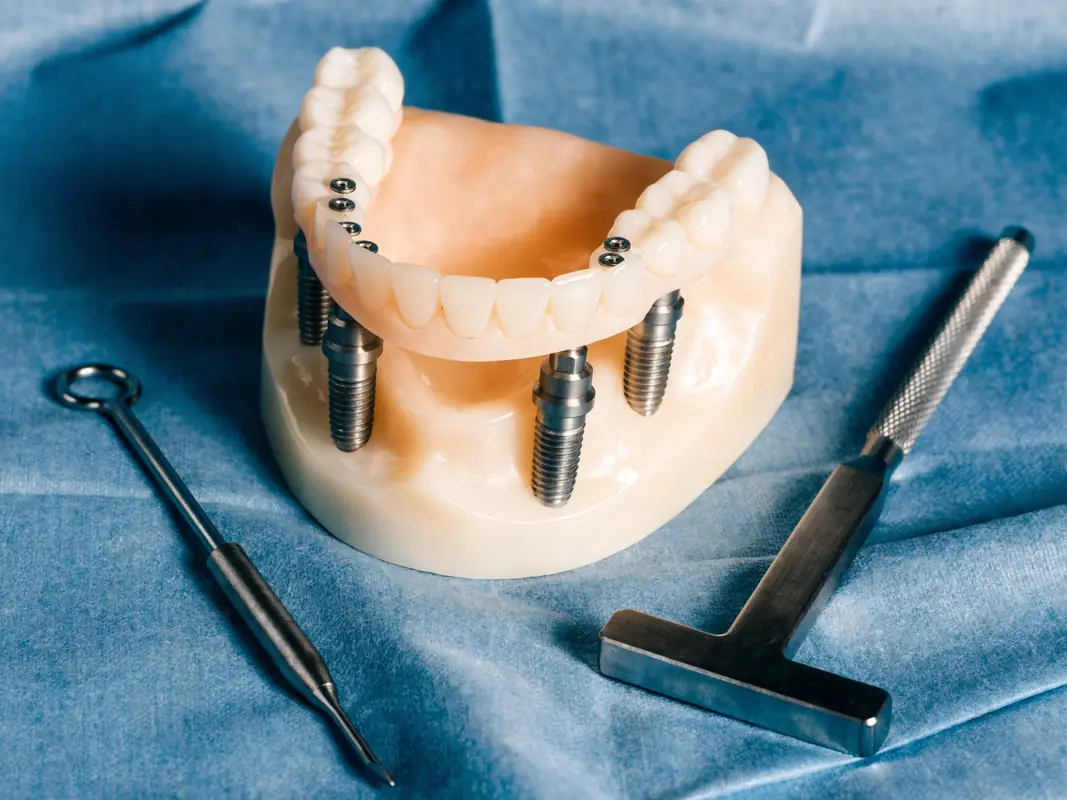
The phrase All-on-4 refers to a particular full-arch concept, but a page cannot determine the support design for an individual. There is no universal implant count for both jaws. Number and distribution interact with anatomy, bone availability, implant dimensions, prosthesis design, opposing forces, cantilever, loading protocol, tissue condition, maintenance access and the clinician's plan.
The [systematic review on implant number for complete-arch fixed prostheses](https://pubmed.ncbi.nlm.nih.gov/30328199/) compared studies using fewer than five implants per arch with studies using five or more. It did not establish a single count for every patient. The related [ITI consensus report on prosthodontics and implant dentistry](https://pubmed.ncbi.nlm.nih.gov/30328196/) supports the use of different implant numbers when appropriate and links placement and loading decisions. These sources help explain why “more” and “fewer” are not stand-alone quality scores.
Ask the responsible clinician to show:
- the proposed implant sites in each jaw;
- why those sites and that distribution are selected;
- relevant anatomical limits and uncertainty;
- the intended prosthesis span and cantilever, if any;
- how the plan changes if a proposed site is unsuitable;
- whether additional or alternative sites were considered;
- the consequences if one implant does not become available for the prosthesis;
- whether the definitive design can be repaired and serviced.
Do not infer suitability from the number printed in a package title. The clinical plan owns the number; the search phrase does not.
Imaging must answer defined questions
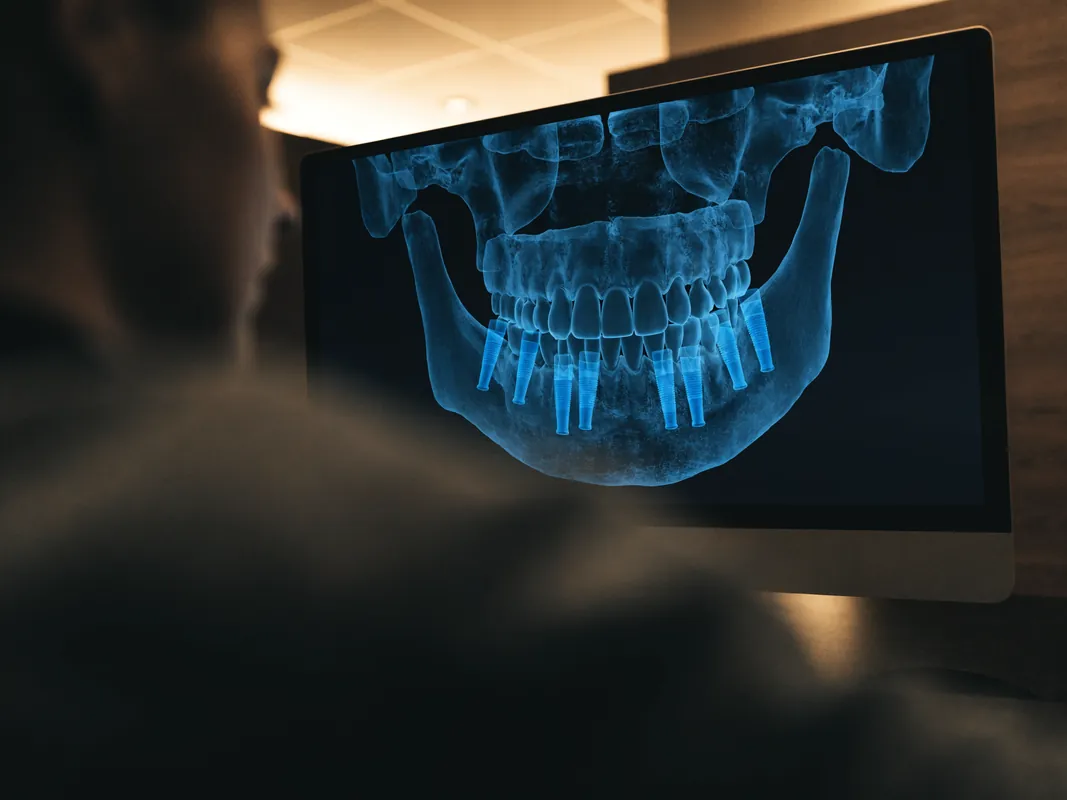
Images should be justified by the clinical questions they are intended to answer. A panoramic radiograph, intraoral radiograph and three-dimensional scan provide different information. A scan can support anatomical and implant-planning questions, but its presence alone does not establish tooth prognosis, tissue health, loading suitability or consent.
Ask who requested each image, who interprets it, what question it addresses, whether an existing diagnostic-quality image can be used, what remains outside the image, and how the finding changes the proposal. Request usable copies and the associated report or clinical interpretation where applicable. Images are part of the patient record, not a marketing prop.
If new imaging is proposed after arrival, the pre-travel estimate should state that the plan remains provisional and describe the possible categories of change. It should not use a scan appointment as a blank authorisation for extractions, grafting or additional fees.
Build the pathway around decision gates
A responsible sequence is easier to understand as decision gates than as a package calendar:
| Gate | Evidence needed before proceeding |
|---|---|
| Identity gate | Legal provider, responsible clinicians and laboratory roles |
| Diagnostic gate | Direct findings, records reviewed and unresolved information |
| Tooth-prognosis gate | Retain, treat, monitor or remove decision for each tooth |
| Alternatives gate | Fixed, removable, staged and no-treatment options discussed |
| Surgical-design gate | Sites, number, distribution, anatomy and contingency plan |
| Prosthetic-design gate | Space, support, hygiene access, speech, appearance and serviceability |
| Consent gate | Material risks, alternatives, irreversible steps and change process understood |
| Loading gate | Intraoperative and restorative conditions support the selected protocol |
| Provisional-review gate | Tissue, function, speech, cleaning and technical findings reviewed |
| Definitive gate | Updated records and prescription support manufacture and fitting |
| Handover gate | Records, component data, instructions, maintenance and urgent routes supplied |
The gates need not correspond to separate trips or fixed intervals. Several may occur together; others may need new information or healing. What matters is that travel must not set the clinical timetable. If a gate is not satisfied, the written plan should explain whether care pauses, changes, stages or does not proceed.
Immediate loading is conditional
Immediate loading is conditional, not a standard entitlement attached to an All-on-4 name. The responsible clinicians consider the complete clinical and prosthetic picture, including primary stability and the planned splinted prosthesis, before deciding whether a provisional restoration can be connected and how it may be used.
The [systematic review of complete-arch loading protocols](https://pubmed.ncbi.nlm.nih.gov/31433096/) found heterogeneous studies and cautioned clinicians when interpreting reported outcomes. It does not support a universal promise that every patient leaves with a fixed provisional. There is no universal loading timetable.
Before travel, ask for three written pathways:
- Planned pathway: what the clinicians intend if the required conditions are met.
- Modified pathway: what may change if conditions differ from the provisional assessment.
- Fallback pathway: how appearance, nutrition, protection and travel are managed if immediate fixed loading is not appropriate.
The fallback should be a practical care plan, not an improvised conversation after surgery. Consent should cover the possibility that the provisional form, retention or timing changes.
Provisional and definitive prostheses have different jobs
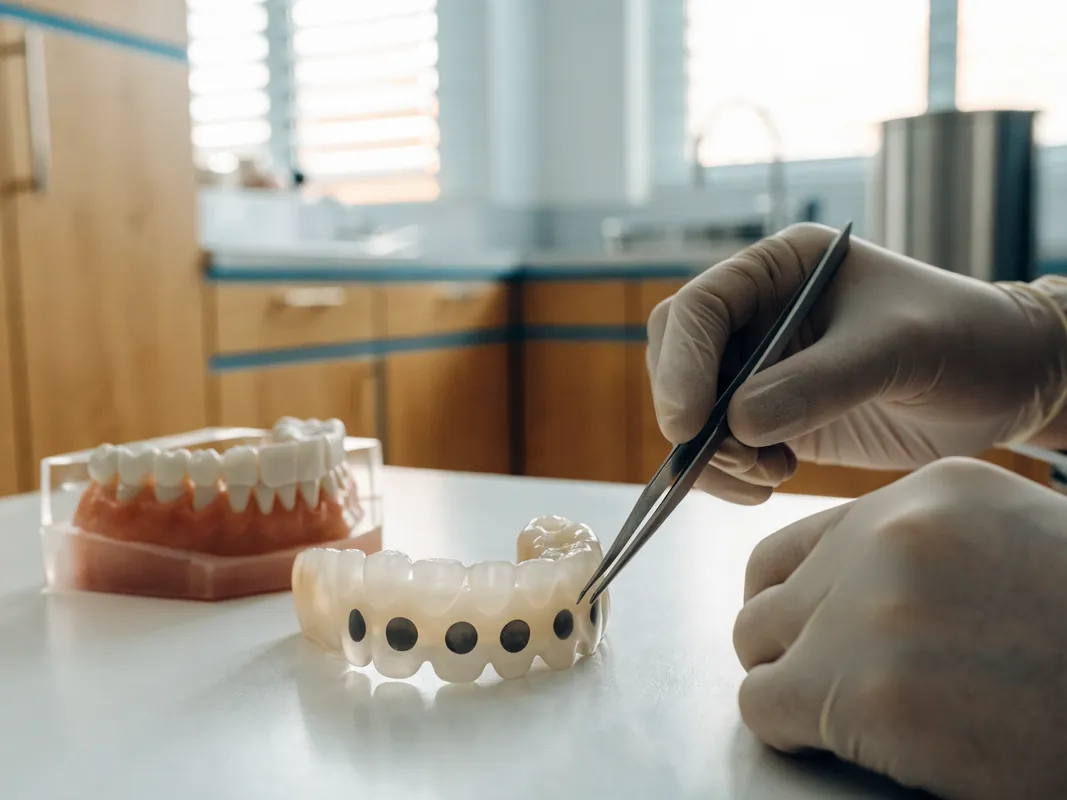
A provisional prosthesis can support a defined healing and evaluation stage. It may help assess appearance, speech, comfort, cleaning, jaw relationship and function within limits. It is not simply a cheaper version of the definitive prosthesis, and it cannot guarantee the later biological or technical result.
The plan should identify:
- who designs and approves the provisional;
- the material and intended service period without promising a fixed duration;
- loading and diet instructions determined for the case;
- how it is adjusted or repaired;
- which symptoms require assessment;
- what is learned before the definitive prescription;
- what would delay or change the definitive stage;
- whether provisional repairs or replacement are included, conditional or separately charged.
Definitive manufacture should use updated clinical information. Ask whether new impressions or scans, tissue review, bite records, photographs or try-ins are required. A definitive appointment should not occur merely because a return flight is booked.
Plan the two arches as one bite without pretending the answer is simple
When both arches are being reconstructed, the restorative team must decide how the upper and lower prostheses meet. That includes jaw relationship, occlusal contacts, available restorative space, vertical dimension, midline, tooth position and forces during function. Changing both arches can remove familiar reference points, so records and verification stages matter.
Vertical dimension is not a cosmetic slider. A proposed change can affect space, appearance, lip relationship, speech, comfort and function. Ask what records support it, how the proposal is tested, what remains uncertain and when the patient can review it. A digital image may illustrate one appearance but cannot prove neuromuscular comfort or long-term function.
The occlusal design should also consider parafunction, wear, opposing materials, prosthesis geometry and repair strategy. Avoid claims that a particular bite scheme or material eliminates complications. Ask how changes in one arch may affect the other and how the plan remains serviceable if a tooth, screw, component or prosthesis needs assessment.
Speech, appearance and lip support need a testing process
Replacing an entire arch changes more than tooth shade. Tooth position, prosthesis contour, palatal or lingual bulk, space for hygiene, lip support and air flow can affect speech and appearance. These effects are personal and should be reviewed rather than promised from a photograph.
Ask which records and trial stages support decisions about:
- incisal edge and tooth display;
- midline and visible asymmetry;
- lip support and facial profile;
- tooth width, length and arrangement;
- smile line and the prosthesis-tissue junction;
- phonetic sounds relevant to the person's language;
- tongue space and perceived bulk;
- cleaning access behind visible contours.
Where a try-in or provisional review is possible, ask how feedback is recorded and who approves changes. Approval of an image should not be treated as consent to any later change in tooth removal, implant sites, material, cost or clinical risk.
Cleaning access is designed, not added later
A fixed full-arch prosthesis is not cleaned exactly like natural individual teeth. The person may need to clean the visible surfaces, the transition under the prosthesis and around implant-supported areas using aids selected by the dental team. If contours prevent access, motivation alone cannot solve the design problem.
Ask to see how the proposed contour permits cleaning. Before definitive fitting, request individual instruction and demonstrate the technique back to the team. Consider dexterity, vision, mouth opening, gag response, carer support and access to replacement cleaning aids at home.
The [EFP prevention guidance for peri-implant disease](https://www.efp.org/fileadmin/uploads/efp/Documents/Other_publications/Clinical_guidelines/peri-implantitis-guideline-01-prevention.pdf) emphasises risk assessment, oral hygiene, prosthesis design that permits access and supportive peri-implant care. The [systematic review of supportive care for full-arch prostheses](https://pubmed.ncbi.nlm.nih.gov/38501398/) found limited evidence for a universal removal frequency and concluded that care should be tailored to risk and patient characteristics. Therefore, maintenance is part of the treatment design, not a generic six- or twelve-month promise copied into every plan.
Maintenance is not the same as a warranty
Maintenance includes patient home care, professional assessment, monitoring of tissues and bone where clinically justified, evaluation of the prosthesis and components, and management of wear or damage. A warranty is a commercial term with exclusions. Neither replaces the other.
Ask the treatment provider to separate:
- routine monitoring and who provides it;
- professional hygiene and whether prosthesis removal may be considered;
- consumable cleaning aids;
- screw, access-channel, tooth, surface or framework assessment;
- management of night-time parafunction where relevant;
- diagnostic records needed for comparison over time;
- planned local care after returning home;
- commercial warranty terms, exclusions and required attendance;
- clinical responsibility when an issue is outside warranty wording.
If local professionals are expected to maintain the prostheses, contact them before treatment where possible. Ask whether they can access the system, records, instruments and components and what they would need from the overseas provider.
Discuss biological and technical complications separately
Implant-supported prostheses can remain in function while still needing maintenance or repair. “Survival” in research does not mean complication-free, aesthetically unchanged or maintenance-free. A consent discussion should distinguish biological and technical complications.
Biological concerns may include inflammation around implants, tissue changes, bone changes, discomfort, infection, healing problems and implant loss. Technical concerns may include loosening, wear, chipping, fracture, loss of access filling, damage to a provisional, component problems or a need to remove and service a prosthesis. This list is not a personal risk prediction.
Ask how the provider:
- establishes baseline clinical and radiographic records;
- teaches cleaning and checks that access is realistic;
- identifies personal risk factors and modifiable factors;
- monitors the tissues and prosthesis;
- triages symptoms after travel;
- obtains a local assessment when remote messages are insufficient;
- decides whether repair, remake, component replacement or clinical treatment is needed;
- documents responsibility and cost for each category.
Research outcomes should not be converted into a personal success percentage. Study populations, definitions, follow-up and designs differ. Patient-specific consent should focus on the actual plan and uncertainty.
Health, medicines and habits require individual review
Medical history, medicines, allergies, previous treatment, gum history, smoking or nicotine exposure, diabetes control, immune or bone-related conditions, bleeding considerations, sleep-related or awake parafunction, and ability to maintain the prosthesis may influence assessment. None should be reduced to a universal internet rule.
Provide a current medicine list with dose and reason, but do not stop or change prescribed medicine based on travel advice or a web page. The responsible clinicians should obtain relevant history, request further medical information or liaison where appropriate, and explain how it affects options. If sedation or another externally provided service is proposed, identify its separate provider, assessment, consent, discharge and emergency arrangements.
Materials and retention need serviceability, not superlatives
The definitive prosthesis may involve a framework, restorative material, teeth or veneering, screws, interfaces and access-channel materials. “Zirconia”, “hybrid” or another single word does not fully describe the design. Material choice interacts with space, opposing material, force, repairability, laboratory capability, weight, appearance and service plan.
Request the material prescription for each arch, the named laboratory when known, the clinician approving the prescription, and the process for authorised changes. Ask whether the prosthesis is intended to be screw-retained or uses another design, how it can be removed for service where necessary, and who holds the compatible instruments and components.
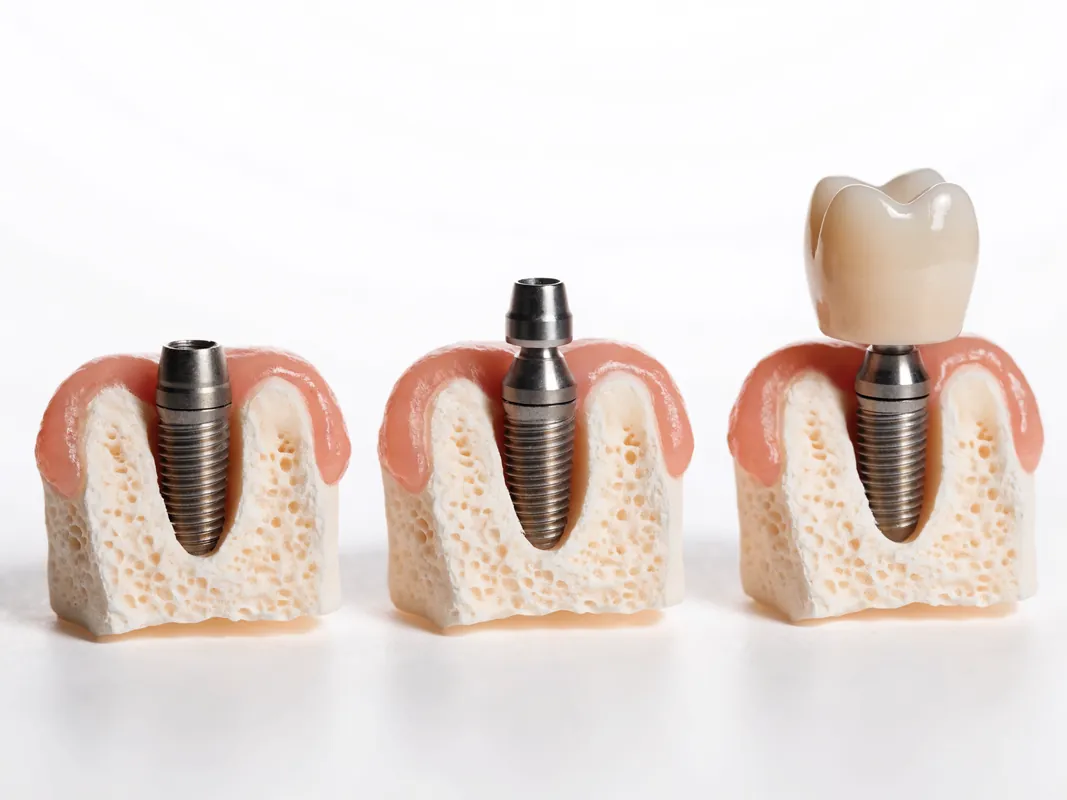
For each implant system and restorative component, request manufacturer, product reference or other clinically usable identifier, site, dimensions where relevant, batch or lot information where supplied, placement record and restorative component information. A logo on a website is not component traceability.
Make the quotation auditable
An itemised quotation should separate the upper and lower arches and identify what is included, excluded, conditional or not yet known.
| Quote section | Detail to request |
|---|---|
| Assessment | Provider, clinicians, records reviewed and unknowns |
| Existing teeth | Tooth-specific treatment, retention or extraction decisions |
| Imaging | Type, provider, interpretation and copy of records |
| Surgery | Sites, proposed procedures and conditional changes |
| Implant components | System information and supplied traceability records |
| Provisional prostheses | Design, purpose, limits, adjustments and fallback |
| Definitive prostheses | Material, laboratory, trials, fitting and serviceability |
| External services | Separate provider and contract for sedation or other care, if relevant |
| Maintenance | Instructions, reviews, hygiene and future servicing |
| Aftercare | Routine and urgent assessment route and responsibility |
| Travel | Separate non-clinical supplier, inclusions and exclusions |
| Payment | Currency, recipient, stages, refunds and changed-plan approval |
Conditional items should name the trigger, evidence, decision-maker, alternatives, price effect and consent process. Avoid an open clause that permits unspecified treatment or charges after arrival. If findings change, request a revised dated plan before agreeing to the changed stage.
Compare totals only after confirming that the plans describe equivalent diagnoses, tooth decisions, support designs, provisionals, definitive prostheses, maintenance and remedies. A lower headline can reflect a different scope rather than better value.
Keep clinical treatment separate from travel services
Flights, accommodation and local transport can support logistics, but they do not establish clinical quality. Identify the legal supplier and terms for each non-clinical service. Confirm dates that can change, companion arrangements, accessibility needs, cancellation rules, additional nights and who pays if clinical findings alter the itinerary.
The [NHS guidance on planned treatment abroad](https://www.nhs.uk/using-the-nhs/healthcare-abroad/going-abroad-for-treatment/going-abroad-for-medical-treatment/) advises people to research treatment, costs, aftercare and insurance. The [GDC patient guidance on dental treatment abroad](https://www.gdc-uk.org/standards-guidance/information-for-patients-public/going-abroad-for-dental-treatment) provides questions about regulation, qualifications, communication, complaints and remedial care. These UK resources are planning references, not statements of Turkish law and not endorsements of any provider.
A return flight is not a healing test. Ask who assesses fitness to travel, what symptoms require postponement or local care, and how a changed schedule affects accommodation and payment. Do not choose an immediate-loading or definitive-fitting pathway merely to fit a short trip.
Consent and records must survive a changed plan
Consent is an ongoing process. The [GDC communication and consent standard](https://standards.gdc-uk.org/pages/principle3/principle3) and [GDC complaints standard](https://standards.gdc-uk.org/pages/principle4/principle4) are useful UK comparison frameworks for understandable information, documented changes and complaint handling. They do not automatically govern a Turkish provider. Ask which Turkish rules, contract terms and complaint routes apply to the legal provider treating the person.
Before an irreversible step, the patient should know the findings, proposed care, reasonable alternatives, material risks, responsibilities, costs and what may change. If the tooth map, implant design, loading plan, material, timetable or price changes, consent should be revisited and documented.
At each handover, request usable records such as:
- dated clinical findings and updated treatment plan;
- tooth and implant site maps;
- relevant images and interpretations;
- procedure and medicine records;
- implant and restorative component traceability;
- laboratory prescriptions and material descriptions;
- provisional and definitive prosthesis records;
- bite or design records relevant to service;
- hygiene, loading and maintenance instructions;
- discharge summary and urgent warning signs;
- named clinical contact and complaint route.
Records should be transferable securely to an appropriate local professional. A patient should not have to identify an implant system from a photograph during an urgent problem.
Build aftercare and urgent assessment before booking
Aftercare should distinguish routine questions, clinical review, maintenance, technical service and urgent assessment. Messaging can support triage but cannot examine tissues, take diagnostic images, test mobility or repair a prosthesis.
Ask the overseas provider and intended local professional:
- who performs planned reviews and where;
- what baseline records will be available;
- which findings require direct assessment;
- what symptoms require urgent local care;
- how the overseas provider communicates with the local clinician;
- who authorises a repair or component order;
- what costs and travel are included or excluded;
- how a complaint or remedial request is documented;
- what happens if the original team or laboratory is unavailable.
Do not accept “contact us anytime” as the entire plan. Availability is useful; responsibility, clinical limits and a practical route are essential.
Use a two-arch comparison worksheet
Create one column per provider and enter only documented answers.
| Comparison field | Plan A | Plan B | Plan C |
|---|---|---|---|
| Legal treatment provider identified | |||
| Responsible surgical and restorative clinicians named | |||
| Upper and lower diagnoses stated separately | |||
| Tooth-by-tooth prognosis supplied | |||
| Fixed, removable, staged and no-treatment options discussed | |||
| Implant sites, count and distribution explained per jaw | |||
| Loading conditions and fallback written | |||
| Provisional purpose and limits stated | |||
| Bite, vertical dimension, speech and appearance review described | |||
| Cleaning access demonstrated | |||
| Material and laboratory prescription documented | |||
| Component traceability promised | |||
| Biological and technical complications discussed | |||
| Maintenance and local aftercare arranged | |||
| Quote itemised by arch and stage | |||
| Change, cancellation and complaint terms supplied | |||
| Travel supplier and clinical provider separated |
Do not award points for hospitality, adjectives or the shortest schedule. Compare evidence, responsibilities, reversibility, serviceability and the complete pathway.
Red flags that require clarification
Pause and investigate when:
- a fixed number of implants is sold before adequate assessment;
- all remaining teeth are labelled hopeless without a tooth map;
- one image is presented as a complete diagnosis;
- immediate fixed teeth are unconditional;
- a travel date decides loading or definitive fitting;
- provisional and definitive prostheses are described as interchangeable;
- fixed is explained as permanent or maintenance-free;
- cleaning access is not demonstrated;
- material branding replaces a full prescription and service plan;
- responsible clinicians or laboratory roles are unnamed;
- the quotation has one total but no upper/lower or stage breakdown;
- changed-plan consent is hidden inside broad terms;
- records or component identifiers will not be supplied;
- reviews are the only evidence offered for clinical quality;
- the aftercare answer is limited to remote messaging.
A red flag is a reason to ask for evidence, not an automatic verdict. If a critical answer remains absent, postponing payment, obtaining an independent opinion or choosing another pathway is reasonable.
Questions to send before paying
- Which legal entity provides the clinical treatment?
- Who owns the diagnosis, implant plan and restorative prescription?
- Which records have been reviewed and what remains unknown?
- Can the tooth-by-tooth prognosis and reasons for proposed extraction be supplied?
- Which fixed, removable, staged and no-treatment alternatives were considered?
- Why is the proposed implant count and distribution appropriate in each jaw?
- What intraoperative or clinical conditions determine the loading pathway?
- What is the fallback if an immediate fixed provisional is not appropriate?
- What are the provisional's purpose, limits and repair arrangements?
- How will bite, vertical dimension, speech and cleaning access be tested?
- Which material, retention design and laboratory are proposed for each arch?
- Which implant and restorative component records will be supplied?
- What routine maintenance and local professional care are expected?
- How are biological and technical concerns triaged and assessed?
- Can the quotation be separated by arch, stage and conditional item?
- What happens to consent, price and travel if the plan changes?
- Which records are supplied at discharge and definitive fitting?
- Which law, contract, complaint and remedial process applies?
Sources and evidence limits
The sources below were checked on 29 August 2026. They support questions and evidence boundaries; they do not endorse a provider, prescribe an individual plan or guarantee an outcome.
- [Polido and colleagues: number of implants for complete-arch fixed prostheses](https://pubmed.ncbi.nlm.nih.gov/30328199/) — systematic review and meta-analysis showing why implant number must be interpreted within the design and evidence rather than used as a stand-alone quality score.
- [ITI Consensus Report, prosthodontics and implant dentistry](https://pubmed.ncbi.nlm.nih.gov/30328196/) — consensus statements connecting full-arch implant number, distribution, loading and prosthetic decisions.
- [Gallardo and colleagues: complete-arch loading protocols](https://pubmed.ncbi.nlm.nih.gov/31433096/) — systematic review describing heterogeneous evidence and the need for cautious, case-selected interpretation.
- [Lanzetti and colleagues: supportive care for full-arch prostheses](https://pubmed.ncbi.nlm.nih.gov/38501398/) — systematic review that found limited evidence for one universal removal schedule and supports risk-tailored maintenance.
- [EFP prevention guidance for peri-implant diseases](https://www.efp.org/fileadmin/uploads/efp/Documents/Other_publications/Clinical_guidelines/peri-implantitis-guideline-01-prevention.pdf) — professional guidance on risk assessment, hygiene, prosthesis contours and supportive care.
- [GDC Principle 3: communication and consent](https://standards.gdc-uk.org/pages/principle3/principle3) — UK professional comparison framework for understandable information and documented changes, not Turkish law.
- [GDC Principle 4: complaints](https://standards.gdc-uk.org/pages/principle4/principle4) — UK professional comparison framework for complaint information and handling, not Turkish law.
- [GDC: going abroad for dental treatment](https://www.gdc-uk.org/standards-guidance/information-for-patients-public/going-abroad-for-dental-treatment) — patient questions about qualifications, communication, aftercare, insurance, complaints and remedial care.
- [NHS: going abroad for medical treatment](https://www.nhs.uk/using-the-nhs/healthcare-abroad/going-abroad-for-treatment/going-abroad-for-medical-treatment/) — planning prompts about provider research, costs, aftercare and insurance.
Evidence does not make an individual decision remotely. A personal plan still needs direct assessment, current records, named clinical responsibility and valid consent. If the evidence does not support two fixed arches, the appropriate choice may be a different design, staged care, another provider, another time or the no-treatment option.
Final decision rule
Do not buy “eight implants and two bridges” as an assumed product. Buy only a documented, patient-specific pathway if the evidence supports it. The decisive plan explains what happens to each tooth, why each implant site and support design is proposed, how loading remains conditional, how the two arches will be tested together, how cleaning and maintenance work, what the complete quotation contains, and who provides aftercare when travel is over.
That standard does not promise a result. It makes the decisions visible enough to question, compare and consent to responsibly.