“Can everything be finished in one dental trip?” sounds like a scheduling question. It is usually a clinical planning question first. The answer depends on the diagnosis, condition of each tooth and supporting tissue, treatment objective, biological response, provisional needs, laboratory stages, medical context, ability to maintain care and findings that may only become clear during an in-person examination.
A single visit is not automatically efficient, conservative or safer. A multi-visit plan is not automatically more thorough. Either structure may be appropriate for a particular case, and either can be misused as a sales device. The useful comparison is between two clinician-owned, versioned plans that explain why each stage exists and what evidence allows the next stage to begin.
This guide does not publish a fixed timetable, visit count, package price, outcome rate or destination recommendation. It does not promise that veneers, crowns, root-canal treatment, implants, grafting or full-arch work can always follow one itinerary. It also does not state that a longer plan is inherently better. The purpose is to show how biological, diagnostic, restorative, laboratory and travel gates determine sequencing.
Remote information can support triage but cannot remove the need for an appropriate examination. Travel rules, entry requirements and transport services change, so verify them live for every journey. Clinical decisions belong to the named responsible provider and clinicians, not a coordinator, flight schedule or hotel booking.
For wider preparation, use the UK-to-Turkey dental planning guide, the dental treatment abroad safety checklist and the Turkey versus UK private dental comparison. Those pages address provider identity, jurisdiction and aftercare; this guide stays focused on sequencing and travel burden.
The decision in one table
Do not fill this table from a treatment label. Complete it only after a named clinician has reviewed the available information and stated the limits of remote planning.
| Decision layer | Single-visit proposal | Multi-visit proposal | Evidence needed |
|---|---|---|---|
| Diagnostic certainty | What can be confirmed before irreversible work? | What is deliberately reassessed between stages? | Findings, tests, unknowns and named diagnostic owner |
| Disease control | Is active disease stabilised before definitive care? | Which disease-control stage comes first? | Periodontal, endodontic, caries and medical assessment |
| Tooth preservation | Are conservative options still open? | Does staging protect reversible choices? | Tooth-by-tooth alternatives and rationale |
| Biological gate | Is healing unnecessary, already adequate or assessed during the visit? | What tissue response or stability must be demonstrated later? | Case-specific readiness criteria |
| Provisional care | Is a provisional required within the visit? | What protects function and tissue between trips? | Provisional purpose, limitations and review |
| Laboratory gate | Can design, fabrication, try-in and revision be responsibly completed? | What requires another laboratory or clinical stage? | Laboratory identity, prescription and acceptance criteria |
| Definitive care | What makes final placement appropriate now? | What evidence permits definitive work later? | Named clinician's readiness decision |
| Travel fitness | Can the patient safely complete the planned journey? | What travel is expected at each stage? | Clinician advice, airline rules and contingency |
| Aftercare | Who reviews after departure? | Who monitors between stages and after completion? | Local and overseas handover |
| Change control | What if findings invalidate the one-visit plan? | What if stages reduce, expand or pause? | Versioned plan, revised consent and cost rules |
| Total burden | Complete clinical and trip commitment | All expected and possible journeys | Same-category total-trip worksheet |
The strongest proposal is the one that makes uncertainty visible and permits a safe pause. It is not necessarily the one with fewer calendar entries.
Define what “single visit” means
The phrase can describe different things:
- one appointment in one day;
- several appointments during one journey;
- one treatment phase with later remote review;
- surgery and a provisional restoration during one journey;
- delivery of a definitive restoration during one journey;
- emergency stabilisation only;
- completion of one tooth while other treatment remains;
- a plan that assumes no unexpected findings.
Ask the provider to define the term in writing. “Single visit” should identify the exact procedures, appointments, provisional or definitive status, responsible clinicians, laboratory stages and aftercare. If later maintenance, adjustment or definitive work is expected, the plan is not clinically complete merely because the patient returns home.
A treatment can be physically performed during one journey but still require later local assessment. Conversely, a multi-stage treatment may involve only one overseas journey if another appropriately equipped provider accepts a planned handover. Visit count and destination count are different.
Define what “multi-visit” means
A multi-visit plan should not be a vague promise to “come back later.” It should identify each expected stage, its clinical purpose and the evidence required to proceed.
Possible stages include:
- diagnostic examination;
- urgent stabilisation;
- periodontal disease control;
- caries management;
- endodontic treatment;
- extraction and site management;
- surgical placement;
- graft or tissue procedure;
- healing review;
- provisional restoration;
- functional evaluation;
- definitive impression or scan;
- laboratory try-in;
- definitive delivery;
- adjustment;
- maintenance.
Not every patient needs every stage, and several compatible steps may occur during one journey. The responsible clinicians should explain which steps can be combined and which should remain separate. A plan that adds journeys without a clinical or laboratory reason is not automatically better.
Begin with diagnosis, not a treatment menu
Visit count follows diagnosis. A website cannot determine whether pain comes from pulp disease, periodontal disease, fracture, occlusion, a failing restoration or another cause. A missing tooth does not establish implant suitability. An aesthetic concern does not establish that preparation is indicated.
The diagnostic record should identify:
- the patient's concern and priority;
- symptoms and duration;
- medical conditions;
- medication and allergies;
- periodontal health;
- caries or structural damage;
- pulpal and periapical status;
- restorability;
- existing restorations;
- bite and function;
- missing sites;
- soft-tissue condition;
- imaging or tests indicated;
- uncertainty;
- alternatives;
- urgent needs.
If the plan is built from photographs alone, ask which questions remain unanswered. A single-journey itinerary should include a decision point after the in-person examination and before irreversible care.
Treat remote review as provisional
Remote photographs, scans, radiographs and messages can support triage, but their quality, date and field may limit interpretation. The clinician should state what was reviewed and what cannot be decided remotely.
A responsible remote proposal includes:
- named reviewer;
- record list and dates;
- technical limitations;
- provisional findings;
- missing examination;
- tests that may be indicated;
- assumptions affecting scope;
- conditions that could change visit count;
- alternatives still open;
- pause or cancellation route;
- revised-consent process.
Do not accept a guarantee that the itinerary cannot change. Equally, do not accept unlimited change authority. A revised plan should be specific, itemised and voluntary.
Separate diagnostic gates from travel logistics
A diagnostic gate asks whether enough evidence exists to make a clinical decision. A logistics gate asks whether the clinician, laboratory, equipment, records and travel arrangement are available. They can interact but should not be confused.
Examples:
- A further radiograph may be clinically indicated; a delayed scan transfer is logistical.
- Tissue healing may need reassessment; a laboratory delivery delay is logistical.
- A provisional restoration may need functional evaluation; an unavailable technician is logistical.
- A clinician may advise against flying; a non-changeable ticket is logistical.
Travel convenience should not be presented as clinical evidence. If a procedure is delayed for logistics, record that honestly. If a biological gate is not met, do not label the delay a scheduling problem.
Disease control can determine the sequence
Definitive restorative or implant treatment may be inappropriate while active disease is uncontrolled. Periodontal inflammation, untreated caries, pulpal or apical disease and hygiene challenges can alter both treatment choice and visit structure.
The European Federation of Periodontology's [clinical guideline for stages of periodontitis](https://www.efp.org/education/continuing-education/clinical-guidelines/guideline-on-treatment-of-stage-i-iii-periodontitis/) describes a stepwise, diagnosis-led approach with evaluation between therapy steps. It does not set an overseas travel package. It illustrates why a plan may need disease-control gates before definitive rehabilitation.
Ask:
- What disease has been diagnosed?
- What must be stabilised first?
- How will response be measured?
- Who evaluates the response?
- Can evaluation occur locally?
- Which restorative decision depends on that result?
- What happens if the response is incomplete?
- How does maintenance continue?
A cosmetic or restorative timetable should not conceal active disease.
Periodontal sequencing and reassessment
Periodontal care is not merely a cleaning added to a package. Diagnosis, risk-factor control, professional therapy, self-care and reassessment may affect whether teeth are retained, whether margins can be placed and whether implant or restorative care should proceed.
The EFP guideline emphasises stepwise therapy and clinical evaluation. That means the next step depends on measured response, not a pre-booked date alone.
A periodontal stage map can include:
- diagnosis and risk profile;
- patient information and self-care;
- non-surgical disease control;
- response assessment;
- additional therapy where indicated;
- restorative or surgical readiness;
- supportive periodontal care.
A patient may complete some steps locally and travel only after documented stability. Alternatively, an overseas provider may own part of the process while coordinating with a local clinician. Either model needs records and named responsibility.
Conservative and direct restorative work
Some direct restorative procedures may be clinically possible during one journey when diagnosis is clear, disease control is adequate, materials and isolation are appropriate, and the clinician can assess function. That possibility is not a promise for every tooth.
Ask whether the tooth is restorable, whether pulp or periodontal findings alter the plan, whether the restoration is direct or laboratory-made, and what review is needed. A seemingly simple filling can become a different treatment if decay depth, fracture or pulpal status differs from the remote impression.
For each tooth, record:
- diagnosis;
- restoration objective;
- alternatives;
- tissue preservation;
- isolation plan;
- pulpal risk;
- material;
- contact and bite assessment;
- finishing;
- postoperative guidance;
- review;
- change trigger.
“Simple” should describe the confirmed case, not the sales category.
Crowns and veneers need more than laboratory speed
A laboratory can fabricate quickly, but speed does not establish indication, conservative preparation, healthy tissue, accurate margins, stable bite, acceptable provisional care or patient consent.
A crown or veneer sequence may involve:
- diagnostic assessment;
- disease control;
- discussion of non-restorative or additive alternatives;
- design or mock-up;
- consent to irreversible preparation;
- tooth preparation;
- records or impression;
- provisional protection;
- laboratory fabrication;
- try-in;
- evaluation of fit, contact, shade and function;
- patient feedback;
- adjustment or remake;
- definitive bonding or cementation;
- review.
Some stages may fit within one journey when the conditions are appropriate. Others may require more observation or revision. The provider should define what happens if the patient or clinician rejects a try-in. A flight should not force acceptance of a definitive restoration.

Use a mock-up as a decision aid, not an outcome guarantee
For aesthetic or extensive restorative care, a diagnostic design or mock-up can support discussion of shape, length, speech, function and expected preparation. It can help identify disagreement before irreversible work.
Ask:
- Is the preview digital, physical or both?
- Does it show additive possibilities?
- Who designed it?
- What clinical assumptions does it use?
- Can the patient evaluate speech and function?
- What changes are still possible?
- Does approval mean only design direction or consent to preparation?
- How is the approved version recorded?
A same-journey process should leave enough time for meaningful consent and revision. A preview is not proof that tissue health and function are suitable.
Endodontic visit count is diagnosis dependent
Root-canal and vital-pulp treatment decisions depend on diagnosis, restorability, symptoms, anatomy, infection, isolation, procedural findings and the need for definitive coronal restoration. A blanket statement that endodontic treatment must be single visit or must be multiple visits is not an adequate personal plan.
The European Society of Endodontology publishes [resources for clinicians](https://www.e-s-e.eu/for-professionals/resources-for-clinicians/) and an open S3-level [clinical practice guideline for pulpal and apical disease](https://onlinelibrary.wiley.com/doi/10.1111/iej.13974). The guideline stresses history, case evaluation, aseptic technique, appropriate training and reassessment. Its treatment-specific recommendations should be applied by a responsible clinician, not converted into a tourism timetable.
Ask:
- What is the pulpal and apical diagnosis?
- Is the tooth restorable?
- What alternatives include tooth preservation, extraction or no immediate treatment?
- Can adequate isolation be achieved?
- Is anatomy or previous treatment complex?
- Is an inter-appointment procedure clinically indicated?
- What postoperative care is needed?
- When and how is definitive coronal protection provided?
- Who reviews symptoms and healing?
- What happens if the diagnosis changes during access?
Completing a root canal without a plan for the final restoration may leave the sequencing incomplete.
Endodontic and restorative ownership must connect
When one clinician performs endodontic care and another provides the core or crown, identify who decides restorability before treatment and who accepts the handover afterward.
Record:
- pre-treatment restorability assessment;
- cracks, periodontal support and ferrule considerations;
- isolation feasibility;
- endodontic procedure record;
- interim seal or provisional restoration;
- core and post decision;
- definitive restoration owner;
- timeline determined by clinical condition;
- warning signs;
- follow-up imaging or examination;
- local handover.
If the crown is fabricated before the endodontic outcome or tooth condition is adequately reviewed, ask what contingency exists. Laboratory efficiency should not override restorability.
Extraction changes the plan, not just the appointment
An extraction decision should be supported by diagnosis and alternatives. After extraction, the plan may involve no replacement, a removable option, a tooth-supported option, an implant option or later review. The site and tissue condition influence sequencing.
Ask:
- Why is extraction recommended?
- Can the tooth be retained?
- What happens if extraction is delayed?
- Is immediate replacement proposed?
- What provisional solution is needed?
- Is site preservation or grafting considered?
- What findings determine later steps?
- Who monitors healing?
- What urgent support exists?
- When can travel be reconsidered?
Do not accept extraction because it simplifies an itinerary.
Implant placement and loading are separate decisions
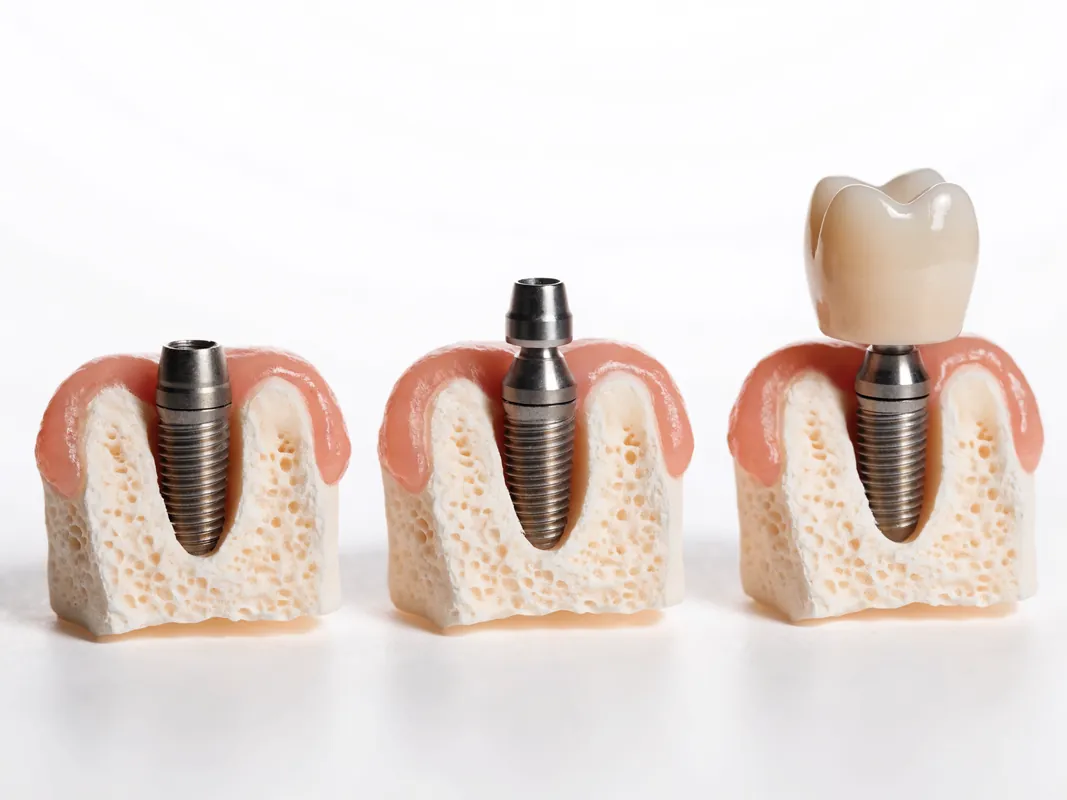
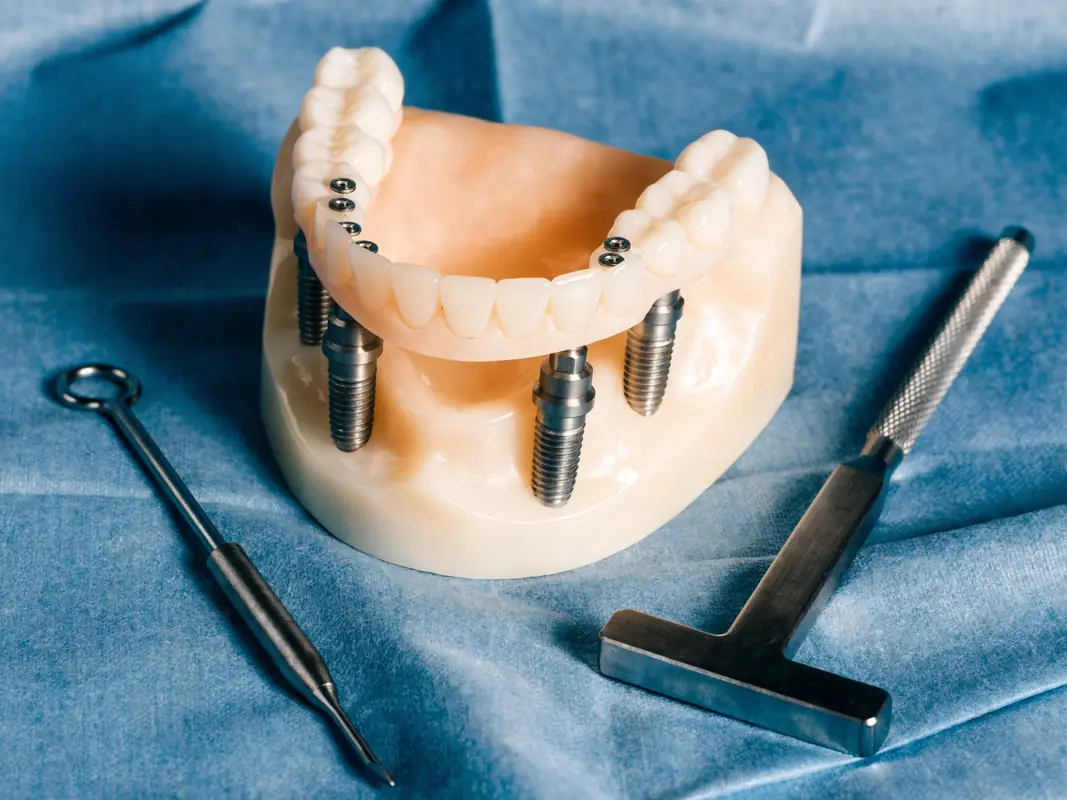
Placing an implant and attaching a provisional or definitive restoration are distinct decisions. “Same-day implant” may refer to extraction, placement, provisional restoration, loading or simply the surgical appointment. Require precise terminology.
The ITI consensus resource on [implant placement and loading protocols](https://network.iti.org/tr/academy/consensus-database/consensus-statement/-/consensus/implant-placement-and-loading-protocols/1802) explains that protocols depend on selection criteria and clinical conditions. It identifies factors such as site characteristics, stability, augmentation and patient-related considerations. It is not a promise that a particular patient qualifies.
Ask the responsible surgical and restorative clinicians:
- Is extraction involved?
- What site type is expected?
- Is augmentation possible?
- What stability and tissue findings matter?
- Is a provisional restoration planned?
- Will it be in function or protected?
- What changes if criteria are not met?
- Who decides loading?
- What records document the implant and components?
- What evaluation precedes definitive restoration?
- What local care is needed between stages?
A fallback plan should exist before surgery. The patient should know what they may leave with if immediate restoration is not appropriate.
Grafting introduces its own biological gate
Bone or soft-tissue grafting can be minor, simultaneous or separately staged depending on the defect, treatment objective, material, site and clinician's judgement. Do not infer visit count from the word “graft.”
The plan should state:
- diagnosis and defect;
- reason for grafting;
- alternatives;
- whether it is confirmed or conditional;
- material source and traceability;
- clinician;
- relation to extraction or implant placement;
- healing and review criteria;
- provisional needs;
- complication pathway;
- effect on later stages;
- effect on travel.
If grafting is only a possibility, the quote and itinerary should show both pathways. A single fixed schedule hides uncertainty.
Provisional restorations are a clinical stage
A provisional can protect a prepared tooth, maintain appearance, shape tissue, support function, test a design or bridge a healing period. Its purpose and limits should be written.
Ask:
- What is the provisional made for?
- How is it retained?
- Is it intended to bear normal function?
- What hygiene is required?
- What symptoms require review?
- Who can repair it locally?
- How long is use expected to depend on clinical progress?
- What evidence permits replacement with definitive work?
- What if the patient cannot return as planned?
- Is a spare or repair record available?
Do not describe provisional work as “final teeth” unless it is actually intended and documented as definitive.
Definitive restoration needs a readiness decision
A definitive restoration should be delivered when the responsible clinician considers the clinical conditions, design, fit, function and consent appropriate. A laboratory completion date is not the same as readiness.
Readiness questions can include:
- Is disease controlled?
- Are tissues suitable?
- Are symptoms resolved or understood?
- Is an implant sufficiently stable for the planned protocol?
- Has provisional function been evaluated?
- Are margins, contacts and bite acceptable?
- Has the patient reviewed the design?
- Are material and component records correct?
- Is maintenance feasible?
- Is aftercare arranged?
If a criterion is not met, the plan should allow delay or revision without coercion.
Biological gates and laboratory gates are different
A biological gate depends on the patient's tissue, disease response, symptoms, stability or healing. A laboratory gate depends on information, design, fabrication, verification and revision.
Examples of biological gates:
- control of inflammation;
- response to periodontal therapy;
- pulpal or apical condition;
- extraction-site condition;
- graft integration;
- implant stability;
- soft-tissue maturation;
- symptom review.
Examples of laboratory gates:
- complete prescription;
- accurate records;
- approved design;
- fabrication;
- try-in;
- shade or form review;
- remake;
- final material traceability.
A multi-visit plan may exist because of either type. The provider should say which. Do not allow a laboratory deadline to be presented as proof of healing.
Laboratory logistics need named ownership
Ask who owns the laboratory prescription, who fabricates the work, where communication occurs and who accepts it clinically. If work is outsourced, that is not inherently a problem, but responsibility must remain clear.
Request:
- laboratory identity;
- prescription;
- material;
- design owner;
- source records;
- provisional or try-in stage;
- approval criteria;
- remake process;
- final traceability;
- future repair information.
If the laboratory cannot complete or revise the work during the journey, the plan must explain whether the patient waits, returns later or receives a provisional. No flight should force an unsuitable fit.
Multiple clinicians create handover gates
Complex treatment may involve a general dentist, periodontist, endodontist, surgeon, restorative clinician, anaesthesia professional and laboratory team. The visit plan should show how their decisions connect.
For each stage, record:
| Stage | Named owner | Input required | Output record | Next decision owner |
|---|---|---|---|---|
| Diagnosis | ||||
| Disease control | ||||
| Endodontic care | ||||
| Surgical care | ||||
| Provisional care | ||||
| Laboratory design | ||||
| Definitive care | ||||
| Maintenance |
A coordinator can schedule these people but does not replace clinical handover. If one clinician changes the plan, every affected owner should receive the current version.

Version the plan after every material change
A plan should have a date or version. When findings change the diagnosis, tooth map, material, stage, visit count, cost or risk, create a revised version.
The revision should show:
- new finding;
- previous proposal;
- new proposal;
- reason;
- alternatives;
- changed risk;
- changed provisional or definitive status;
- changed journey;
- changed quote;
- responsible clinician;
- consent.
Do not overwrite the original without an audit trail. Keep both versions and record which one was accepted. This matters for continuity, payment and complaints.
Keep clinical consent separate from travel pressure
Consent should be based on understandable case-specific information, not fear of losing a flight, hotel or promotional rate. The patient should have time to ask questions and should know that declining a revision is possible.
If interpretation is needed, identify the interpreter and protect confidentiality. A companion or salesperson should not substitute for appropriate clinical communication.
Ask what happens if the patient pauses after examination. Travel cancellation terms should not be used to force clinical acceptance. The provider and travel supplier may be separate legal parties, and their terms should be separately visible.
Plan records before the first journey
Agree which records will be supplied after each stage:
- findings;
- diagnostic images;
- treatment-plan versions;
- consent;
- procedure notes;
- prescriptions;
- provisional details;
- implant or device identifiers;
- material traceability;
- laboratory information;
- discharge instructions;
- warning signs;
- review plan;
- current contacts;
- invoice.
Records should be in a usable format and transferred securely. They enable local aftercare, urgent decisions, later stages and complaints.
The General Dental Council's [guidance for people considering dental treatment abroad](https://www.gdc-uk.org/standards-guidance/information-for-patients-public/going-abroad-for-dental-treatment) prompts patients to ask about qualifications, treatment, aftercare, complaints and records. It is a preparation resource, not an endorsement of any destination or visit model.
Build the local handover before travel
Ask a local dentist whether they can support the plan. Do not assume that a practice will adjust an unfamiliar restoration, maintain an unknown component or accept another provider's clinical responsibility.
The handover should define:
- records received;
- routine monitoring;
- hygiene and maintenance;
- provisional care;
- urgent assessment;
- component availability;
- communication with the overseas provider;
- cost responsibility;
- criteria for return;
- no-travel pathway;
- effect of local care on contractual remedy.
In a multi-visit plan, the local clinician may monitor between stages. In a single-journey plan, local review may still be needed. The destination provider should not treat “home dentist follow-up” as confirmed until that dentist agrees.
Define warning signs and emergency escalation
The provider should distinguish expected postoperative effects from symptoms requiring advice, urgent assessment or emergency services. A coordinator can route communication but should not make a clinical diagnosis.
Record:
- clinical contact;
- physical assessment location;
- coverage boundary;
- backup clinician;
- access to records;
- prescription route;
- emergency-service threshold;
- language support;
- transport;
- payment responsibility;
- local clinician link;
- no-travel decision;
- extra accommodation.
Test the plan during the overseas stay and after return. “Contact us” is not a complete emergency pathway.
Create a no-travel pathway
A patient may be advised not to fly or may decide that travel is unsafe because of symptoms, medical change or an unrelated event. The plan should not depend on travel always occurring.
Ask:
- Who assesses fitness to continue or fly?
- Can the return journey change?
- Can accommodation extend?
- What clinical care is available locally?
- What records can be sent immediately?
- Can a provisional be maintained?
- Can the next stage move to another provider?
- Who bears non-clinical costs?
- What insurance applies?
- What happens to deposits?
A multi-visit plan should also address inability to return for a later stage. Shipping a restoration or asking an unfamiliar dentist to complete treatment is not automatically appropriate; the receiving clinician must assess and accept responsibility.
Travel insurance and public cover boundaries
Standard travel insurance may exclude planned treatment, treatment complications, changed travel linked to elective care or travel against advice. Disclose the purpose and request written confirmation.
The NHS [guidance on going abroad for medical treatment](https://www.nhs.uk/using-the-nhs/healthcare-abroad/going-abroad-for-treatment/going-abroad-for-medical-treatment/) explains that GHIC or EHIC does not cover travel for planned treatment and that specialist insurance may be needed. It also explains that public-funding routes have eligibility and authorisation requirements.
Do not let a provider promise insurance coverage. The insurer or competent authority decides. Check cancellation, extra accommodation, companion expense, complications, later visits, repatriation, local care and pre-existing conditions.
Check entry and travel information live
Entry rules, travel advice, airport services and airline conditions can change. Use the [UK government's current foreign travel advice](https://www.gov.uk/foreign-travel-advice) for UK travellers and the appropriate official source for other nationalities. Then use the destination authority, airline and airport operator for the exact journey.
Verify:
- passport and entry conditions;
- transit requirements;
- medication documents;
- airport code and terminal;
- baggage and mobility equipment;
- assistance service;
- ground transport;
- change rights;
- airline fitness requirements;
- local disruption.
Do not publish fixed flight counts or assume a route will operate for the next stage. Re-check every journey.
Accessibility changes the practical visit model
A single longer journey may reduce repeated airport transitions but increase fatigue or accommodation needs. Several shorter journeys may spread the burden but repeat assistance and transport. There is no blanket answer.
Map:
- home-to-airport access;
- airport assistance;
- seating and waiting;
- mobility equipment;
- transfer vehicle;
- clinic steps or lifts;
- treatment-chair access;
- accommodation bathroom and lift;
- companion;
- medication storage;
- return support;
- backup.
Confirm the actual route and room. An accessibility badge does not describe the complete journey.
Define the companion's role
A companion may provide transport, mobility support, communication assistance, medication reminders or reassurance. The clinician should explain whether support is advised for the proposed stage.
Protect autonomy and privacy. Record what information the patient permits the companion to receive. Use appropriate interpretation for complex consent rather than assuming a companion can translate.
Include:
- companion travel;
- accommodation;
- work or caring commitments;
- ability to extend;
- emergency role;
- food and medication support;
- backup if unavailable;
- boundary between practical and clinical help.
A visit structure that works for one traveller may be impractical for another because of companion needs.
Single-journey proposal checklist
A single-journey proposal should answer:
- What diagnosis supports the scope?
- What remains provisional until examination?
- Which disease is already controlled?
- Which procedures are direct and which laboratory-made?
- What provisional is needed?
- What makes definitive work appropriate during the same journey?
- What revision time exists?
- What happens if a remake is needed?
- Which biological gates do not apply, and why?
- What if a gate is not met?
- Can the patient pause?
- What records are supplied?
- Who provides local review?
- What is the emergency and no-travel plan?
- What travel costs change if completion is delayed?
If the answer to uncertainty is “that never happens,” the plan is not robust.

Multi-journey proposal checklist
A multi-journey proposal should answer:
- Why is each stage separate?
- Is the gate biological, diagnostic, laboratory or logistical?
- What occurs at each journey?
- What is provisional between stages?
- Who monitors progress?
- Can monitoring happen locally?
- What evidence permits the next stage?
- What happens if readiness is delayed?
- Can the scope reduce?
- Can another provider accept the handover?
- What records are supplied after each stage?
- What costs and travel are expected?
- What later journey is possible but not yet confirmed?
- What if the patient cannot return?
A future visit should never be represented as an empty date to be filled after payment.
Total-trip worksheet
Compare the intended plan and a changed-plan scenario.
| Category | Single-journey evidence and amount | Multi-journey evidence and amount | Question |
|---|---|---|---|
| Diagnostic assessment | What is confirmed in person? | ||
| Disease control | Is reassessment required? | ||
| Direct restorative care | Which teeth and materials? | ||
| Endodontic care | Diagnosis, isolation and restoration? | ||
| Surgical care | Site, clinician and contingency? | ||
| Grafting | Confirmed, conditional or separate? | ||
| Provisional work | Purpose and maintenance? | ||
| Definitive work | Readiness criteria? | ||
| Laboratory | Fabrication, try-in and remake? | ||
| Reviews | Overseas or local? | ||
| Records | What after each stage? | ||
| Local aftercare | Has a clinician agreed? | ||
| Urgent care | Who assesses and pays? | ||
| Initial travel | Airport and change rights? | ||
| Later travel | Expected or contingent? | ||
| Ground transport | All clinical legs? | ||
| Accommodation | Flexible and accessible? | ||
| Companion | Practical burden? | ||
| Insurance | Written cover? | ||
| Lost work or care | Every expected journey? | ||
| Currency and payment | Staged exposure? | ||
| Changed-plan reserve | Delay, remake or no-travel? |
A single-journey quotation may have a larger contingency for extension. A multi-journey quotation may have more travel exposure. Compare actual documents, not assumptions.
Itemise payment by stage
The quotation should identify the legal provider, patient, version, currency, payee, clinical lines, laboratory lines, travel services, exclusions and change rules.
Ask:
- What is paid before examination?
- What becomes due after diagnosis?
- What is paid for provisional work?
- What is paid for definitive work?
- What happens if a stage is cancelled?
- What happens if less treatment is recommended?
- What happens if an additional stage is advised?
- Is travel sold by a separate supplier?
- Which deposits are refundable?
- Which currency controls?
- Who receives each payment?
A combined package can hide stage responsibility. Keep clinical and travel lines visible.
Test the plan against common changes
Run scenarios before booking:
A tooth can be preserved
Does the plan allow a less invasive option and reduce the quote?
Disease needs control first
Can definitive work pause without pressure?
Endodontic complexity increases
Is an appropriately trained clinician available, or is referral possible?
Immediate implant restoration is unsuitable
What provisional alternative exists?
Grafting is advised
Is consent new, and can the patient decline?
A laboratory remake is needed
Can accommodation or travel change?
The patient cannot fly
Who provides care and what happens to the next stage?
A companion cannot attend
Is the journey still safe and accessible?
A plan that survives these scenarios is more useful than a fixed itinerary.
When a single journey may fit
A single journey may remain appropriate when the diagnosis is sufficiently established, the in-person gate confirms it, active disease is addressed, no unresolved biological stage requires later evaluation, laboratory and revision capacity are realistic, definitive readiness can be assessed, and aftercare is arranged.
That is conditional, not a treatment-category promise. A direct restoration on one tooth and a complex rehabilitation do not share the same uncertainty. Even when the intended work can be completed during one journey, the patient should plan for adjustment, local review and the possibility of delay.
The provider should not use “one trip” to pressure irreversible treatment or conceal provisional work.
When multiple journeys may fit
Multiple journeys may remain appropriate when diagnosis needs staged reassessment, disease control precedes definitive care, tissues need evaluation, implant or graft conditions need a later decision, provisional function should be tested, laboratory stages require a later visit, or aftercare is intentionally shared.
The reason for each journey should be explicit. Some reviews may occur locally or remotely if clinically appropriate and accepted by the responsible professionals. More trips do not automatically improve care; unnecessary separation adds cost and burden.
When neither itinerary is ready
Pause when:
- provider or clinician identity is unclear;
- remote review is treated as final diagnosis;
- visit count is guaranteed before examination;
- active disease is ignored;
- alternatives are missing;
- irreversible work is rushed;
- provisional and definitive work are confused;
- biological and laboratory gates are not named;
- same-day language lacks a fallback;
- endodontic and restorative owners are disconnected;
- implant loading is promised without criteria;
- grafting is hidden as a possible extra;
- laboratory responsibility is unclear;
- records will not be supplied;
- local aftercare is assumed;
- emergency care has no physical route;
- travel cannot change;
- payment is not staged transparently;
- the patient cannot afford a changed-plan scenario.
The correct choice may be a local assessment or a different provider before travel.
Red flags
Watch for:
- “everything completed” without defining definitive status;
- guaranteed same-day treatment;
- a fixed healing calendar for every patient;
- one package for different diagnoses;
- no named clinical owner;
- no tooth-by-tooth or site-by-site plan;
- extraction to simplify scheduling;
- final restorations planned before disease control;
- laboratory speed used as clinical evidence;
- no try-in or remake pathway;
- immediate loading without case-selection criteria;
- “home dentist will finish” without acceptance;
- a coordinator giving clinical advice;
- a non-changeable ticket used to rush consent;
- no warning signs or urgent assessment route;
- refusal to provide records;
- a remedy requiring travel regardless of clinical advice;
- payment to an unexplained party;
- a warranty presented instead of aftercare.
A staged decision workflow
Stage A: identify the provider and clinicians
Record legal entity, facility, assessors, operators, laboratory, payee, data controller and complaint contact.
Stage B: gather records
Collect symptoms, history, medication, examinations, images and prior treatment.
Stage C: obtain a provisional diagnosis and limits
Ask what is known, unknown and dependent on in-person assessment.
Stage D: map disease control
Identify periodontal, caries, pulpal, apical and medical gates.
Stage E: preserve options
Record conservative alternatives and reasons for irreversible care.
Stage F: map every clinical and laboratory stage
Separate provisional and definitive work, biological and laboratory gates, and stage owners.
Stage G: version the plan
Define change triggers, revised consent, quotation and right to pause.
Stage H: build local handover and emergency care
Confirm records, local dentist, warning signs, no-travel and cost responsibility.
Stage I: build the complete journey
Use current entry and operator information, accessibility, companion, accommodation and changes.
Stage J: compare total burden
Complete the worksheet for intended and changed plans.
Stage K: decide or defer
Choose the visit model only when the diagnosis and gates support it.
Final checklist
Before accepting a single- or multi-visit dental travel plan, confirm:
- exact legal provider;
- exact facility;
- named diagnostic owner;
- named stage owners;
- complete record list;
- remote-review limitations;
- in-person examination gate;
- disease-control plan;
- tooth-preserving alternatives;
- tooth, site and arch map;
- endodontic-restorative connection;
- extraction rationale;
- implant placement criteria;
- loading criteria;
- graft contingency;
- provisional purpose;
- definitive readiness;
- laboratory identity;
- design and remake process;
- material and component traceability;
- versioned plan;
- revised-consent process;
- stage-itemised quote;
- cancellation and refund rules;
- records after every stage;
- local dentist acceptance;
- urgent-care route;
- no-travel route;
- current travel checks;
- accessibility route;
- companion plan;
- insurance decision;
- total-trip worksheet;
- changed-plan reserve;
- freedom to pause.
If essential answers remain missing, the visit count is not yet a responsible conclusion.
Frequently asked questions
Can all dental treatment be finished in one overseas journey?
Not as a blanket promise. It depends on diagnosis, disease control, biological and laboratory gates, provisional needs, definitive readiness, complications and aftercare. The in-person assessment may change the intended structure.
Are veneers or crowns always single-visit treatments?
No. Some cases may fit one journey, but diagnosis, tissue health, conservative alternatives, preparation, provisional protection, laboratory revision, function and consent determine suitability.
Does an implant always require multiple journeys?
Not every review must involve overseas travel, but implant placement, loading and definitive restoration are separate decisions. Site conditions, stability, augmentation, patient factors and local handover determine staging.
Does “same-day teeth” mean definitive teeth?
Not necessarily. Ask whether the restoration is provisional or definitive, whether it is in function, what limitations apply, and what later work is expected.
Can root-canal treatment be completed in one appointment?
Some diagnosed cases may be managed with a single-visit approach under appropriate conditions, while others need different staging. The responsible clinician should apply current guidance to the tooth, anatomy, infection, isolation and restorative plan.
Why might periodontal treatment add stages?
A stepwise plan may require disease control and reassessment before definitive restorative or implant decisions. The next stage should depend on measured response.
What is a biological gate?
It is a patient-specific finding such as disease control, tissue response, symptom status, graft condition or implant stability that must be assessed before advancing.
What is a laboratory gate?
It is a design, fabrication, try-in, revision or traceability step. It is distinct from biological readiness even when both affect the timetable.
Can my home dentist complete the later stage?
Only if that dentist receives adequate records, is equipped for the work, assesses the patient and accepts responsibility. Do not assume acceptance before asking.
What if a provisional breaks after I return home?
The plan should define warning signs, local repair options, records, component information, overseas contact and cost responsibility before travel.
What if the plan changes after I arrive?
The responsible clinician should document the finding, explain alternatives, revise the plan and quote, and obtain consent to the current version. The patient should be able to pause.
How should I compare the total cost?
Use the same itemised clinical categories and include all likely travel, accommodation, companion, insurance, local care, lost work and changed-plan contingencies. Do not compare package headlines.
What if I cannot return for a later visit?
Ask before treatment. The plan should identify local handover, provisional maintenance, records, alternative providers, deposits and clinical conditions under which transfer is possible.
Is a longer plan safer?
Not automatically. Staging should follow diagnosis, biological response, laboratory needs and aftercare. Extra visits without a reason add burden; compressed care without meeting gates adds risk.
When should I seek another opinion?
Seek another opinion when extensive irreversible work is proposed, plans differ materially, visit count is guaranteed before examination, alternatives are missing or travel pressure interferes with consent.
Responsible conclusion
Single visit versus multiple visits is not a contest between convenience and caution. It is a sequencing decision built from diagnosis, tooth preservation, disease control, biological response, provisional and definitive distinctions, laboratory ownership, records, aftercare and travel resilience.
Ask the provider to name every gate and stage owner. Require a fallback when the intended gate is not met. Compare the complete trip under both expected and changed conditions. If the plan cannot tolerate a pause, it is not ready for travel.