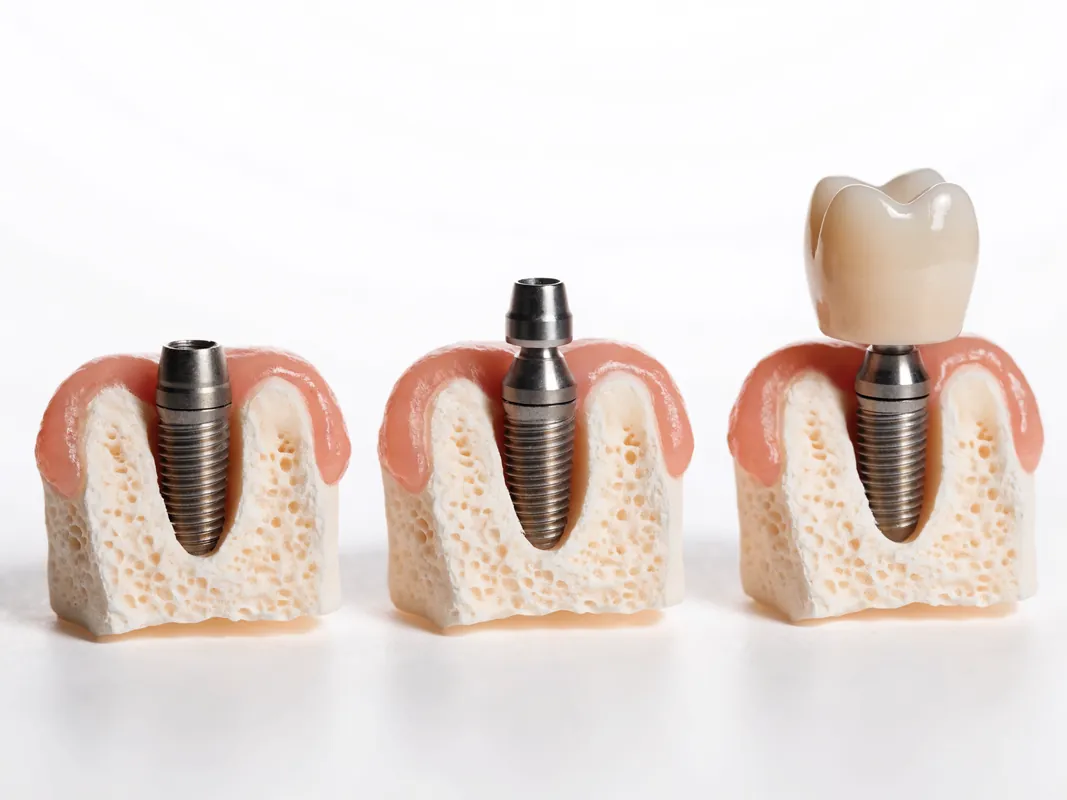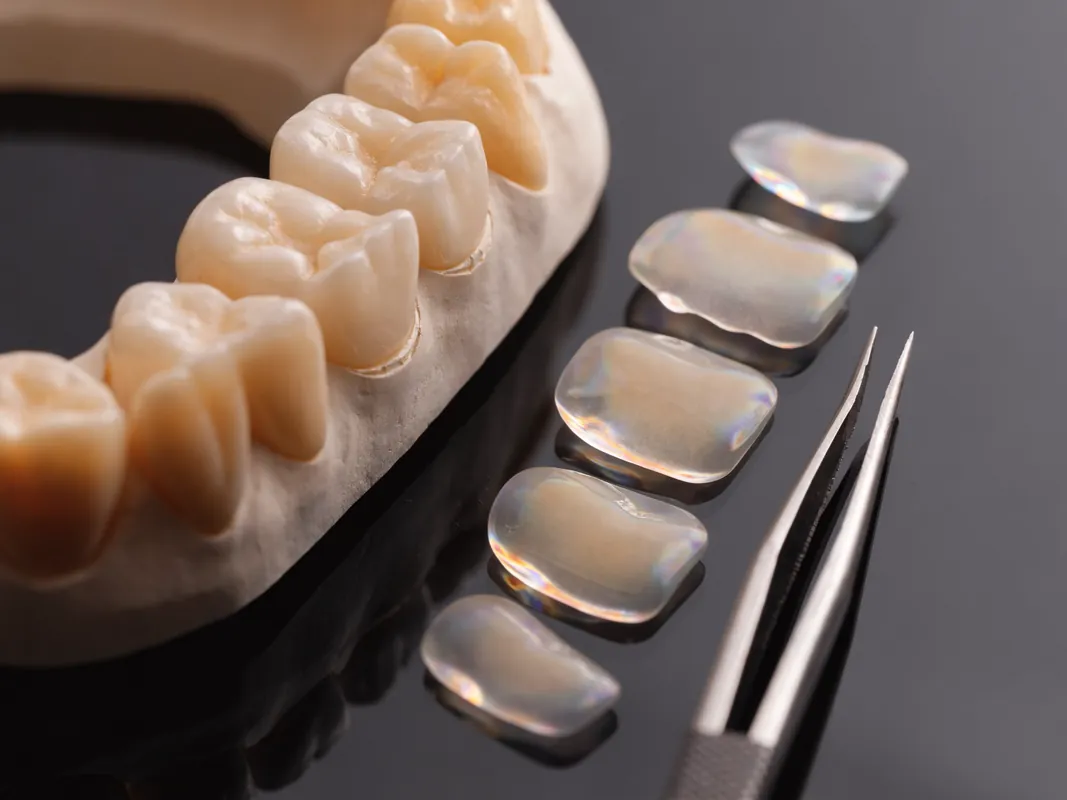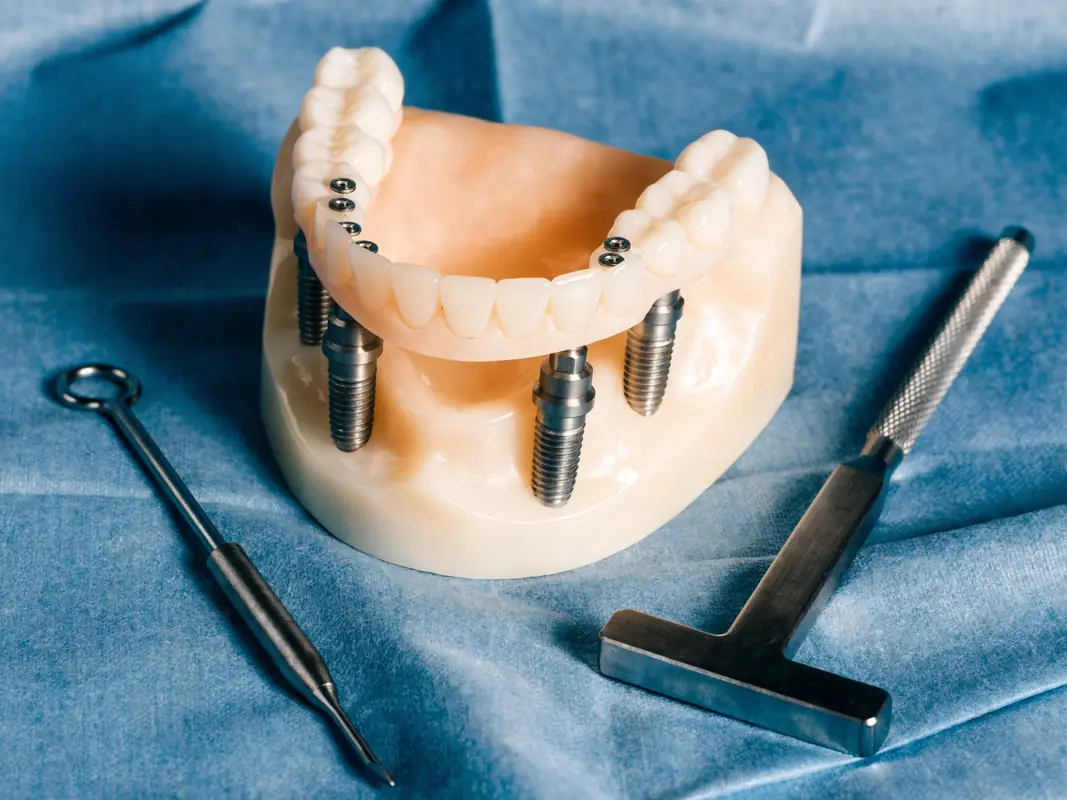
A dental trip from the UK to Antalya is a two-visit project with a healing gap in the middle, not a holiday with a filling attached. For a single implant you fly out for three or four nights, come home for roughly three months while the bone integrates, then fly back for three or four nights to have the final crown fitted. For veneers or crowns it is usually one trip of six to eight days. Summer direct flights from most UK airports run 4h 15m to 4h 45m; out of season you connect through Istanbul and lose most of a day. Budget £420–£900 per person for the travel across both trips. The part almost nobody plans for is the twelve months after you land back at Gatwick — and that is where most of this page is spent.
From a UK enquiry to Antalya aftercare: the full sequence
Here is the whole thing on one screen. Timings assume a straightforward implant case; veneer and crown cases collapse stages four to seven into a single trip.
| Stage | Where you are | Typical duration | What actually happens |
|---|---|---|---|
| Remote assessment | Home | 1–3 days | You send an OPG (panoramic X-ray) or clear photos; the clinic replies with findings, options and a provisional plan. |
| Written quote and plan | Home | Same week | Line-item quote, named materials, number of trips, number of clinic days. |
| Booking and dates | Home | 2–8 weeks ahead | Deposit paid, surgery dates fixed, flights booked around the clinic diary, not the other way round. |
| Arrival day | Antalya | Half a day | Transfer, hotel check-in, rest. No treatment on arrival day for surgical cases. |
| Consultation and CBCT | Antalya | Day 1 | 3D scan, clinical exam, plan confirmed or revised in front of you before anything starts. |
| Treatment days | Antalya | Days 2–5 | Surgery or preparation. Review appointments in between, not one marathon session. |
| Discharge and fly home | Antalya | Day 5–8 | Written record, radiographs, medication, review appointment date agreed. |
| Healing gap | Home, UK | 3–4 months (implants) | You are chewing on the other side and sending photos if anything worries you. |
| Second trip | Antalya | 3–5 nights | Final crown, bridge or prosthesis fitted and adjusted. |
| Year one at home | UK | 12 months | Hygiene visits, a review radiograph, and the occasional small adjustment. |
The single most useful thing to understand is that the clinic diary comes first. Patients who book cheap flights and then ask the clinic to fit around them end up with rushed appointments, a crown seated on a Sunday, or a second trip at the worst possible time of year.
Stage one: the remote assessment, and what it honestly can and cannot tell you
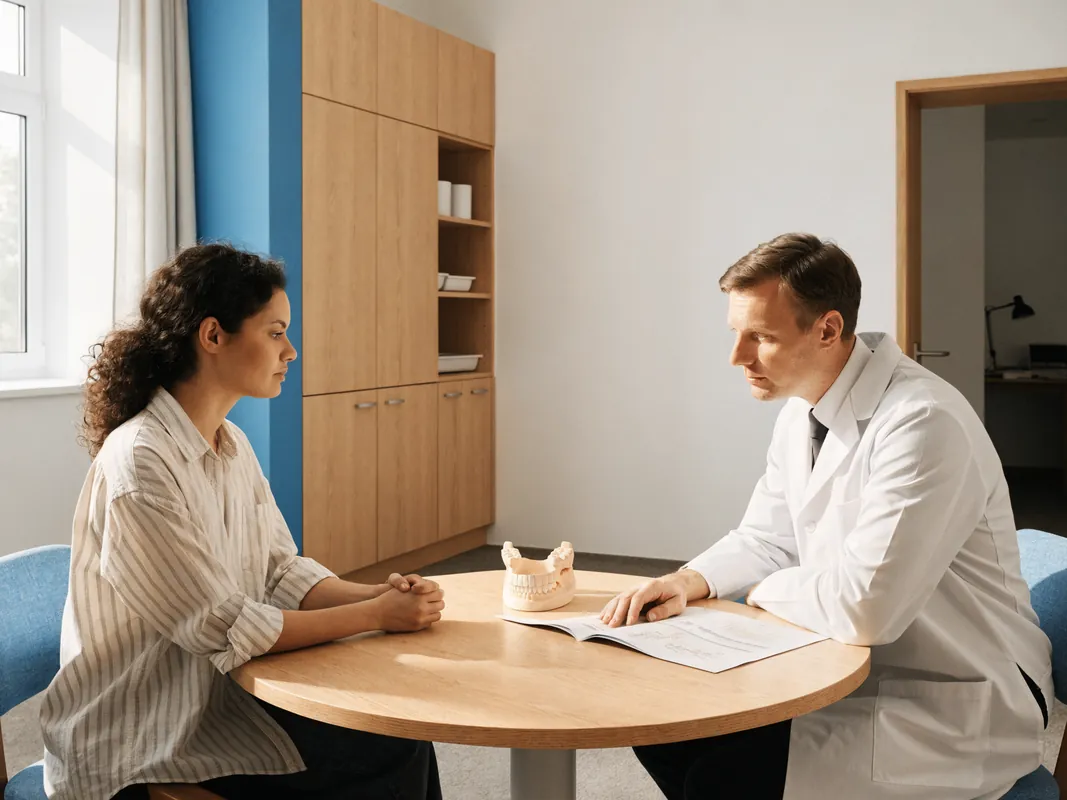
Every serious clinic starts with imaging. In practice a UK patient has three options: ask their own dentist for a copy of a recent OPG (you are entitled to a copy of your records, and most practices will email a JPEG or DICOM file for a small admin fee), pay £25–£60 at a private practice or an imaging centre for a fresh panoramic, or — least useful but better than nothing — send clear photographs of the upper and lower arches taken in daylight with the cheeks retracted.
What a remote assessment can establish: how many teeth are missing or failing, whether the case is broadly implant, bridge or veneer territory, roughly how many trips and clinic days it needs, and a price band. What it cannot establish: bone volume in three dimensions, sinus proximity, nerve position, gum health under the margins, and the actual condition of teeth that look fine on a two-dimensional film. That is why any provisional plan should say provisional, and why the CBCT on day one exists. A quote that arrives as a fixed final number off a phone photograph is a sales document, not a treatment plan.
Ask for the plan in writing, with the number of clinic days spelled out. "Seven days in Antalya" tells you nothing. "Day one CBCT and consultation, day two extractions and implant placement, day four suture check, day six temporary fit" tells you whether you can also see Side and Perge or whether you will be in a chair the whole week.

Flying from the UK to Antalya
Antalya (AYT) is the practical airport for the Turkish Mediterranean coast. It is heavily served by leisure carriers in summer and thins out badly in winter, which is the single biggest planning constraint on a two-trip case.
| From | Direct season | Direct flight time | Winter alternative |
|---|---|---|---|
| London Gatwick / Stansted / Luton | Late April – late October | 4h 10m – 4h 30m | Istanbul (IST or SAW) then 1h 20m domestic |
| Manchester | May – October | 4h 20m – 4h 40m | Istanbul connection, 7–9h total |
| Birmingham | May – October | 4h 20m – 4h 40m | Istanbul connection, 7–9h total |
| Glasgow / Edinburgh | June – September (thin) | 4h 40m – 5h | Istanbul connection, 8–10h total |
| Bristol / Newcastle / Leeds | June – September (thin) | 4h 30m – 4h 50m | Istanbul or via London |
| Belfast / Dublin | Seasonal charter only | 4h 30m – 5h | Istanbul connection |
Three practical notes. First, if your first trip is in August and your second falls in January, the second journey is a different animal — an Istanbul connection with a bag drop, a domestic transfer and a 7-to-9-hour door-to-door day. Plan the return leg's cost and difficulty at the time you book the first. Second, Turkish Airlines and Pegasus both run frequent Istanbul–Antalya domestics, and a same-ticket connection protects you if the inbound is late; two separate bookings do not. Third, the seasonal carriers publish schedules roughly six to nine months ahead, so a March booking for a September second trip is usually possible; a September booking for a February second trip usually is not.
When to fly relative to surgery — and why not on the same day
Do not fly on the day of surgery. This is not clinic policy padding, it is basic post-operative sense. In the first twelve to twenty-four hours after implant placement or extractions you may still be oozing, the local anaesthetic is wearing off, swelling is climbing towards its peak, and you are on medication that does not mix well with dehydration and a cramped cabin. If a clot dislodges at 35,000 feet, there is nobody to pack the socket.
Sensible spacing looks like this. Arrive at least one full night before day one. After routine implant placement or simple extractions, allow at least one clear night — most patients fly comfortably 24 to 48 hours later. After a sinus lift, allow considerably longer: pressure changes across a recently lifted sinus floor are a genuine risk and most surgeons ask for one to two weeks before flying, which usually means the sinus work is scheduled at the very start of the trip. After a straightforward crown or veneer fit, you can fly the next morning.
Swelling peaks around 48 to 72 hours after surgery, not on the day. Patients who book a two-night trip for a multi-implant case fly home at the exact moment they feel worst, which is why they remember the trip as brutal. Add the extra night.
Choosing your dates: heat, crowds and closures
Antalya in July and August routinely sits between 34 and 40°C with high humidity. That matters more than people expect after oral surgery: you cannot use ice water freely on a healing site, you cannot swim for the first week, sun on a swollen face is miserable, and dehydration makes post-operative pain worse. It is also the most expensive and busiest time to fly.
| Period | Weather | Flights | Verdict for treatment |
|---|---|---|---|
| March – early May | 18–27°C, mild | Direct routes returning, moderate fares | Best overall window |
| Late May – June | 27–33°C | Plentiful, prices rising | Good, book early |
| July – August | 34–40°C, humid | Peak fares, full flights | Workable but uncomfortable after surgery |
| September – October | 26–32°C, sea still warm | Direct routes still running, fares falling | Best overall window |
| November – early December | 15–20°C, some rain | Direct routes ending | Quiet clinics, connection likely |
| January – February | 10–16°C, wettest | Istanbul connection only | Cheapest treatment period, hardest travel |
Two closure dates to check every year, because both move with the lunar calendar: Ramazan Bayramı (Eid al-Fitr) and Kurban Bayramı (Eid al-Adha). Turkish public holidays around these run three to four days and up to nine when the government extends them, and domestic travel is chaotic in that week. Also check 29 October (Republic Day) and 1 January. Clinics stay contactable, but lab work, imaging centres and pharmacies run reduced hours, and a crown that needs a lab remake in a bayram week can cost you a day.

Documents, insurance and paying safely
Passport. British citizens currently need a passport issued within the previous ten years and valid for at least 150 days from the date of arrival in Türkiye. Check the current rule before booking, as it has changed twice in recent years. Visa-free entry for short tourist stays has applied to British citizens since 2024, but verify it rather than assuming — this is a five-minute check that occasionally saves a trip.
GHIC and EHIC are irrelevant here, twice over. Türkiye is not part of the GHIC reciprocal scheme, and even where GHIC applies it only ever covers state-provided medically necessary care. Planned, elective, privately paid dental treatment is outside it in every country. Do not travel believing a GHIC card is a safety net.
Travel insurance. Read the policy wording, not the summary. Standard UK annual and single-trip policies almost universally exclude treatment you travelled in order to receive, and many go further and exclude any complication arising from it — which can mean an unrelated ankle injury is covered but the infection in your jaw is not, and in the harshest wordings the whole trip is voided. What you actually want is either a specialist medical-tourism policy (typically £45–£140 for a two-week trip depending on age and the procedure) or, at minimum, a standard policy plus a clear-eyed acceptance that the dental complication side is uninsured and self-funded. Declare the trip's purpose honestly; a policy bought by concealing it is not a policy.
Paying. Stage the payment. A reasonable structure is a modest deposit to hold the surgical dates, a further instalment on arrival once the CBCT has confirmed the plan, and the balance at completion. Never pay in full before the 3D scan, because the scan is precisely the point at which an honest plan may change. Pay the deposit by UK credit card where possible: Section 75 of the Consumer Credit Act can apply to card purchases over £100 and up to £30,000, and even where the chain of contract makes it arguable for overseas services, a chargeback route through Visa or Mastercard is far better than a bank transfer with no recourse at all. Be wary of any clinic that only accepts cash or crypto, or that wants the full amount before you have been examined.
What the trip really costs on top of the quote
The treatment quote is not the trip cost. Here is a realistic 2026 build-up for one adult travelling from the UK for a single-implant case, both trips combined.
| Item | Trip 1 | Trip 2 | Notes |
|---|---|---|---|
| Return flights | £110–£280 | £110–£320 | Higher figure for winter Istanbul connections |
| Hold luggage and seats | £30–£70 | £30–£70 | Skippable if you travel light |
| Nights in Antalya | 4 nights | 3 nights | Often included in a clinic package |
| Hotel if paying separately | £160–£320 | £120–£240 | 4-star, city or Lara |
| Airport transfers | £0–£60 | £0–£60 | Usually included by the clinic |
| Food and incidentals | £90–£160 | £70–£120 | Soft food the first days |
| Travel insurance | £45–£140 | £45–£140 | Specialist medical-tourism cover |
| Time off work | 4–5 days | 3–4 days | The real cost for many patients |
| Travel subtotal | £435–£1,030 | £375–£950 | Before any treatment |
Set that against the orientation picture. These are indicative typical totals for the same work, subject to a CBCT and to the specifics of your mouth, and they exist here only so the true comparison is visible — the detailed price anatomy belongs on our implant and veneer cost pages, not this one.
| Treatment | Typical UK private total | Typical Turkey total | Travel to add |
|---|---|---|---|
| Single implant with crown | £2,400–£3,800 | £550–£1,400 | £800–£1,900 for two trips |
| Three implants with crowns | £6,500–£10,500 | £1,600–£3,900 | £800–£1,900 for two trips |
| Eight to ten veneers | £6,000–£12,000 | £1,900–£4,200 | £450–£1,000, one trip |
| All-on-4, single arch | £11,000–£17,000 | £6,200–£9,400 | £800–£2,000 for two trips |
The saving on a single tooth is real but it is not life-changing once travel and two days of annual leave are counted. The saving on multi-unit and full-arch work is what makes the journey rational. If your case is one small crown, do it at home.
What to bring home in your hand luggage
This is the section patients skip and later regret. A UK dentist reviewing overseas work is being asked to take clinical responsibility for something they did not plan, place or fit. What they can do depends almost entirely on the paperwork you hand them.
- The written treatment record — teeth treated by FDI notation, procedures performed, dates, and the name of the treating clinician.
- Pre-operative and post-operative radiographs — the OPG and, ideally, the CBCT, on a USB stick or emailed as DICOM files, not photographed off a screen.
- Implant passport or batch documentation — manufacturer, system, exact model line, diameter, length and lot number for every fixture placed. Without this, a UK dentist cannot order the matching driver or abutment when something needs unscrewing, and will not attempt it blind.
- Prosthesis specification — crown or bridge material (monolithic zirconia, layered zirconia, lithium disilicate), whether it is cemented or screw-retained, screw torque values, and the shade.
- Warranty paperwork — what is covered, for how long, what triggers it, and who pays for what. A verbal promise is worth nothing at a UK reception desk.
- Medication and post-op instructions — including the generic names of antibiotics prescribed, because brand names differ.
- Receipts and the signed consent — needed for any insurance or dispute route, and for your own records.
Ask for all of it as a single PDF pack emailed to you before you leave the clinic, and keep a copy somewhere that is not just your phone.
Aftercare in the UK — the honest part
Here is the reality, stated plainly. Getting the treatment done in Turkey is the easy half. Being looked after in Britain for the following decade is the half that decides whether you are glad you went.
NHS dentistry will not adopt your case. NHS dental care is provided on the basis of clinical necessity, and a practice is not obliged to take on the maintenance, review or remedial work associated with private treatment obtained elsewhere — in the UK or abroad. In practice, an NHS practice will see you for genuine urgent care (pain, swelling, infection, trauma), typically at the urgent band charge of roughly £28. What they will generally not do is re-cement your veneer, retighten an implant screw, remake an overseas crown, or take on ongoing implant maintenance under NHS terms. Some will decline to touch implant work altogether unless they have the system documentation. This is not hostility; it is scope of practice and indemnity.
So you need a private, GDC-registered dentist who will review overseas work. Find them before you fly, not after. Phone two or three local practices and ask a direct question: "I am having implant treatment abroad. Will you take me on for hygiene and review afterwards, and do you place implants yourself?" A practice with an implant dentist on the team is far more likely to say yes, because they already stock components, have the torque drivers, and can read a CBCT. Expect some practices to say no. That is information, not a verdict on your plan.
| UK aftercare item | Typical private cost | How often |
|---|---|---|
| New patient exam with a private dentist | £60–£120 | Once, ideally before you travel |
| Routine review appointment | £45–£90 | Every 6 months |
| Hygienist visit (implant maintenance) | £70–£130 | Every 3–6 months in year one |
| Small periapical radiograph | £15–£35 | As clinically indicated |
| Review OPG | £75–£140 | Usually at 12 months |
| Re-cementing a debonded crown or veneer | £90–£220 | If it happens |
| Retightening or replacing an implant screw | £120–£320 | If it happens, and only with documentation |
| NHS urgent appointment (pain or swelling) | ~£28 | Emergency only |
Budget £250–£450 a year for proper private maintenance of implant work. That is not a hidden cost of going to Turkey — it is the cost of owning implants anywhere — but it must sit in the arithmetic alongside the saving.
When something breaks at 2am in Manchester
It happens. A temporary crown comes off eating toast. A screw loosens at eight months and the tooth feels slightly mobile. A veneer debonds cleanly. Here is the order of operations, and it is worth keeping on your phone.
If there is facial swelling, a fever, difficulty swallowing, or swelling spreading towards the eye or under the jaw: this is not a dental-tourism question, it is a medical emergency. Go to A&E or call NHS 111 immediately. Spreading dental infection is time-critical and nothing about where the work was done changes that.
If a crown or veneer has come off but there is no pain: keep the piece, do not superglue it, do not attempt to reseat it yourself, and avoid chewing on that side. Photograph the site and the piece and send both to the clinic the same night — the clinic has your prosthesis specification and can tell your UK dentist exactly what cement and what protocol to use. Then get to a private dentist within a few days for a re-cement.
If a screw-retained tooth feels loose: stop chewing on it and get it seen quickly, but do not let anyone open the access hole without the implant system documentation. Wrong driver, wrong torque, stripped screw head — that is how a manageable half-hour appointment becomes an implant that has to be surgically removed. This is precisely what the implant passport is for.
If you are in pain with no swelling: NHS 111 or an emergency dental helpline for out-of-hours pain relief, private dentist in the morning, clinic informed with photographs.
What a Turkish clinic can genuinely do from 2,000 miles away: look at your photographs and radiographs within hours, tell you and your UK dentist exactly what was placed and how, supply the correct components by courier, advise the UK dentist clinician-to-clinician, and cover the remake or replacement under written warranty when you next travel. What it cannot do: examine you, drain an abscess, take a radiograph, or fix anything physically. Anyone implying otherwise is selling.
Who should not fly to Turkey for dental work
It is better to confront this before booking than discover it in month four.
If you cannot realistically take a second trip. Implant cases need two journeys. If your job, caring responsibilities, finances or health make a second five-day absence unlikely, do not begin a treatment plan that depends on one. Ask specifically whether your case can be completed in a single trip; for many multi-implant cases, honestly, it cannot.
If you are mid-course in complex periodontal treatment. Active, unstable periodontal disease needs a stabilisation phase with repeated reviews over months before anything is placed or crowned. Compressing that into a week abroad is how a technically perfect implant ends up in a mouth that cannot keep it. Finish the perio treatment at home first, then travel.
If your case genuinely needs unhurried staged review. Full-mouth rehabilitations that change your bite, cases with jaw-joint symptoms, heavy grinders needing progressive adjustment, and cases where aesthetics are being redesigned from scratch all benefit from being seen repeatedly over months. Some of that can be compressed responsibly; some of it cannot. A clinic that never says "this part is better done slowly" is not being straight with you.
If you could not self-fund remedial work. Warranties cover clinical remakes; they do not cover your flights, your hotel, your annual leave or the private UK dentist who stabilises things in between. If a £1,200 unplanned cost eighteen months from now would be a crisis, either build a contingency into the budget from the start or treat at home where remedial work is a bus ride away.
If you cannot get a UK dentist to agree to review you. Ring around before you book. If every practice within reach declines, that changes the calculation, and it is better to know in March than in November.
What a clinic 2,000 miles away can and cannot do for you
Do not infer remote planning, aftercare, records, component supply, warranty support, hotel or transfer from a landing page. Before paying, require the named provider to identify the responsible clinician and confirm in a dated written plan and itemised quotation what is provisional before the CBCT, which clinic days are reserved, which records and component details will be supplied, how communication with a UK dentist works, and the exact warranty, accommodation and transfer terms. Anything absent from that document should be treated as not included.
Distance still costs two flights, a week or so of leave, the effort of finding a British dentist who will review the work, and a real annual maintenance budget once you are home. For a single small crown that maths may not work. Multi-unit and full-arch cases should be compared only after treatment, travel, maintenance and possible remedial travel are placed beside a dated UK quotation.
Send your OPG or a clear photo over WhatsApp and ask for the plan in writing, including how many clinic days and how many trips. Then, before you book anything, ring two local practices and ask whether they will review the work afterwards. Do those two things in that order and you will have made the decision properly.