People searching for the cost of dental implants in Turkey usually want a number they can compare with a quote at home. The difficulty is that the phrase "dental implant" is used for several different things. One advertisement may refer only to the fixture placed in bone. Another may include an abutment and a later crown. A third may combine several clinical stages, travel coordination and accommodation under one total. Those offers are not comparable until every component, stage and exclusion is written down.
This page therefore does not publish a live price band. An unsupported figure would become stale, could describe the wrong unit and could encourage someone to budget for treatment before a clinician has assessed suitability. The useful answer is a method: define the proposed care, obtain a dated and itemised quotation from the named legal provider, and compare like with like. A quotation is still provisional if it was prepared before an appropriate clinical review. The final plan must explain what information could change it.
Start by defining what the quoted item means
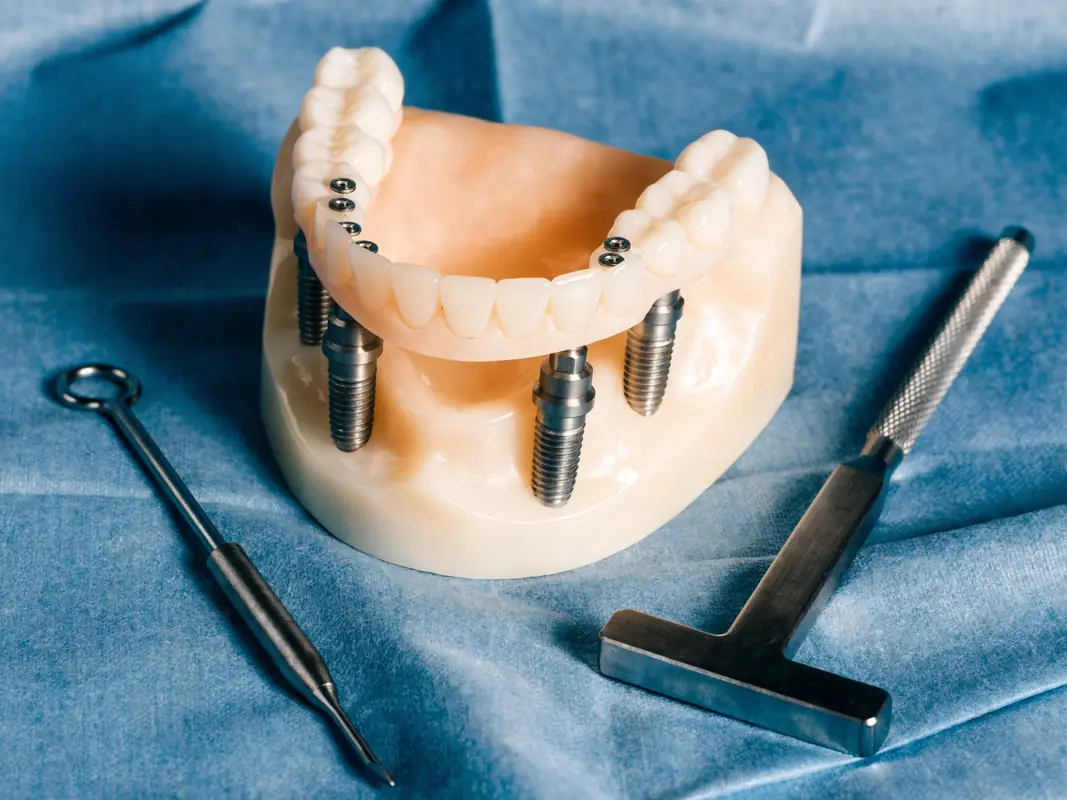
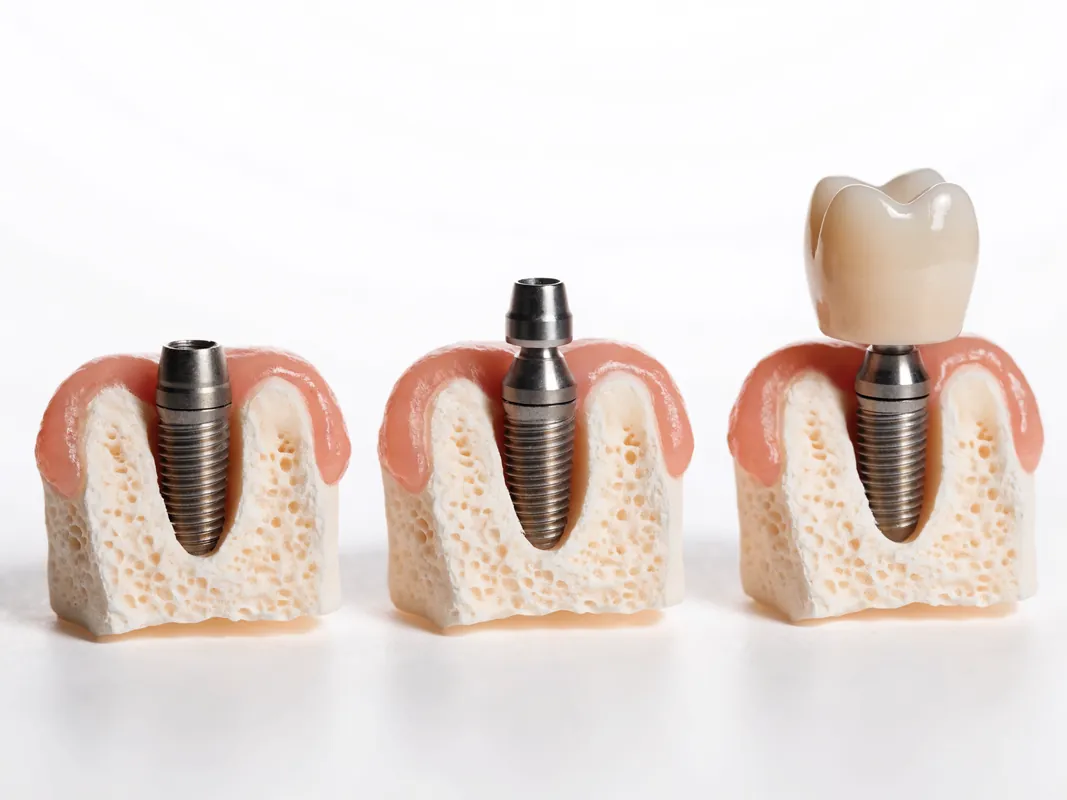
A dental implant restoration commonly involves a fixture placed in the jaw, a connecting component and a visible restoration. That simple description does not establish which parts are required in a particular case, when they will be provided or whether additional care is appropriate. A single missing tooth, several missing teeth and a full-arch reconstruction are different treatment problems. Their plans should not be reduced to one generic per-implant headline.
Before comparing totals, ask each provider to state the unit being priced in one sentence. Useful wording might identify one treatment site, the proposed fixture system, the connecting component, the final restoration, the number of visits and the stage at which each part is supplied. If the quotation uses terms such as implant package, complete implant or all inclusive, those labels should be followed by an itemised schedule. The label itself is not an inclusion list.
The tooth or site number also matters. A quotation should identify the proposed treatment location rather than list only a quantity. Front and back teeth can involve different functional and aesthetic decisions. A bridge supported by implants is not the same product as separate crowns on separate fixtures. If a tooth may be retained, the plan should compare that option with extraction rather than treating extraction as an automatic part of a sale.
The anatomy of an itemised implant quotation
Use the following checklist as a structure, not as a promise that every row is required. The responsible clinician decides which investigations and procedures are appropriate. The quotation should mark each row as included, excluded, not applicable or to be confirmed after assessment.
| Quote section | What the written document should identify | Question to ask |
|---|---|---|
| Assessment | The named legal provider, responsible clinician and records reviewed | Is this a preliminary estimate or a plan issued after clinical assessment? |
| Imaging and records | The type of image or record, why it is proposed, where it is taken and who is responsible | Is imaging included, and will I receive a copy in a usable format? |
| Existing-tooth decision | Which tooth may be retained or removed and the reason for either option | What reasonable alternatives were considered? |
| Fixture placement | The treatment site, proposed implant system, planned stage and professional fee | Does this line include only placement, or also the fixture itself? |
| Connecting component | The component between fixture and restoration, if required | Is this included now or charged at the restorative stage? |
| Provisional restoration | Any temporary tooth, bridge or removable option and its limits | Is a temporary planned, conditional or not included? |
| Final restoration | Crown or bridge type, material description, laboratory responsibility and fitting stage | Does the total include the final restoration and adjustments? |
| Additional procedures | Any grafting, tissue management, extraction or other proposed care | What finding makes this necessary, and what happens if the need is discovered later? |
| Medicines or sedation | Only where clinically proposed, with the responsible provider and separate terms | Is this included, optional, separately billed or unavailable? |
| Review and aftercare | Planned reviews, responsible contact, records and urgent-care route | Which provider handles a problem after I return home? |
| Travel services | Hotel, airport transfer or local transport only when expressly listed | Who supplies the non-clinical service, and what are its cancellation terms? |
| Taxes and laboratory charges | Any tax, laboratory, shipping or external-provider fee | Is the stated total inclusive of every known charge? |
A complete quotation should also show the patient name, issue date, validity period, currency and payment schedule. It should distinguish an estimate from a confirmed total. It should not hide a material clinical component inside a tourism package or describe a travel benefit as evidence of treatment quality.
Why two implant quotations can differ without either total being automatically wrong
Price differences may reflect different clinical assumptions. The number of sites, condition of the remaining teeth, available bone, gum health, bite, medical history, restoration design and proposed staging can all change the plan. The point is not to accept every difference as clinically necessary. The point is to make each difference visible so the responsible clinician can explain it.
The proposed restoration can be a major driver. A quotation for a fixture alone cannot be compared with one that includes the later restorative stage. A single crown is not equivalent to a multi-unit bridge. Laboratory design, material choice, provisional work and the number of adjustment stages should be described without promising a cosmetic result or a service life.
The implant system may affect component cost and future availability, but a brand name is not a substitute for suitability, technique, traceability or aftercare. Ask for the exact system and component references in the final documents. Confirm that compatible restorative parts can be identified later. Do not assume that a logo in marketing material is the system intended for your case.
Additional procedures are another common source of difference. A provider may propose extraction, grafting, tissue treatment or another intervention after reviewing records. The written plan should explain the reason, alternatives, timing and price effect. A low estimate that simply omits every uncertain item may appear attractive while transferring all cost risk to the patient after travel.
Staging changes cash flow as well as total cost. Placement and restoration may occur at different times. Ask which payment is due at each stage, what clinical milestone precedes it and what happens if the next stage is delayed, changed or transferred to another provider. A large upfront payment should not be treated as proof that every later service is secured.
What may be excluded from an implant headline
An advertisement can be accurate about one component and still create a misleading expectation about the whole case. Check specifically for the following possible exclusions:
- clinical examination and review of medical history;
- diagnostic images, scans, photographs or models;
- extraction of an existing tooth and management of the site;
- treatment of active gum disease or decay before implant care;
- grafting or other site-development procedures if clinically indicated;
- the implant fixture, placement fee or both;
- connecting components required for the restoration;
- a provisional tooth or removable temporary option;
- the final crown or bridge and laboratory work;
- adjustments, review appointments and copies of clinical records;
- medicines, sedation or services from another provider where proposed;
- management of complications or urgent care after travel;
- hotel, airport transfer, local transport, flights or companion costs;
- taxes, currency conversion, card charges or finance costs.
Not every patient needs every item. The quotation should say which items apply, not silently add a generic bundle. If an item remains uncertain, request a written scenario: what finding could trigger it, how the need will be confirmed, the maximum decision point before proceeding and how the additional cost will be approved.
Build a comparison worksheet before choosing a provider
Put each quotation into a table with one column per provider. Do not compare the headline totals until the rows have been aligned.
| Comparison field | Quote A | Quote B | Quote C |
|---|---|---|---|
| Legal treatment provider named | |||
| Responsible clinician named | |||
| Assessment status and records reviewed | |||
| Teeth or sites identified | |||
| Alternatives discussed | |||
| Fixture system and traceability | |||
| Connecting component included | |||
| Provisional restoration described | |||
| Final restoration and laboratory stage | |||
| Additional procedures and triggers | |||
| Number and purpose of visits | |||
| Review, records and aftercare route | |||
| Travel services separately itemised | |||
| Currency, payment and refund terms | |||
| Written change-control process |
Blank cells are not minor paperwork problems. They identify risk that has not been assigned. Ask the provider to complete the document rather than filling the gap with an assumption from a phone call or social-media message. Keep the final version and any later amendments.

Currency, payment and cancellation risk
An international quotation should state its currency clearly. Ask whether payment is accepted in that currency or converted at the point of payment, which exchange rate is used, and whether the bank, card processor or provider adds a charge. A total written in one currency and collected in another can move even when the treatment plan does not.
The payment schedule should follow defined stages. Each instalment should say what it secures, when it becomes non-refundable and what happens if the provider changes the plan or the patient is found unsuitable. If a deposit also reserves hotel or transport, the clinical and travel cancellation terms should be separated because different suppliers may be responsible.
Ask for a receipt that names the entity receiving each payment. The coordinator, travel business and treatment provider may have different roles. Money paid to one should not be assumed to create an obligation for another unless the written contract says so. Avoid transferring funds to a personal account when the legal recipient and purpose cannot be matched to the quotation.
Finance, instalment or credit arrangements add a separate contract. Compare the total repayable amount, currency exposure, cancellation effect and responsibility if treatment is changed. A monthly figure alone is not the treatment price.
What should happen when the plan changes
Implant estimates can change when new clinical information becomes available. That possibility should be managed in advance rather than used as an open-ended permission to add treatment. The written documents should define who may recommend a change, what evidence supports it, which alternatives exist, how the price changes and how the patient gives informed agreement.
If the change is discovered after travel, there should still be time to understand it. Ask for the revised plan and quotation before an irreversible step. A patient should be able to decline an additional procedure and ask what that means for the original plan. Urgency created by a flight date is not a substitute for consent.
The provider should also explain what happens if planned placement cannot proceed, a tooth can be retained, a provisional restoration cannot be used, or the restorative design needs to change. These are scenario questions, not predictions. The answers allocate practical and financial responsibility without promising an outcome.

Verify the provider, clinician and materials
The final plan should name the legal facility providing treatment and the clinician responsible for the proposed care. Check the current registrations in the appropriate official sources. Confirm that the name on the quotation, consent documents, invoice and clinical records is consistent. A coordinator or website can help organise information but should not replace the provider identity.
Ask the clinician to explain suitability, alternatives, material choices, important risks, expected stages and aftercare. A title in promotional copy is not enough; the relevant professional status and role should be independently checkable. Accreditation claims should be verified at the issuing organisation and should not be treated as an outcome guarantee.
For the implant system and restorative components, request the exact names and traceability records supplied for the case. Ask which records you will receive and what information another clinician would need for future maintenance. Do not accept a verbal promise that a premium or European component will be used. The written plan and supplied record control.
Travel, timing and aftercare belong in the cost comparison
Travel can change the real cost even when it is not clinical treatment. Compare the number of trips, flexible accommodation needs, local transport, time away from work, companion costs and the possibility of an additional visit. Do not book non-refundable travel around an unconfirmed clinical timetable.
Hotel and transfer services are separate from clinical responsibility unless the written contract expressly assigns them. Confirm the supplier, route, dates, luggage or accessibility requirements, amendment terms and price. A photograph of a vehicle or hotel does not prove an allocation. Flights and transport at home should be treated as excluded unless the quotation says otherwise.
Aftercare is not a vague promise to stay in touch. The plan should state which provider reviews healing, how records are shared, what symptoms require urgent local care, who pays for an assessment at home, and how a problem is evaluated before any remedy is offered. Ask what is covered, what is excluded and which evidence is required. Keep the treatment plan, consent, invoices, implant records, imaging and discharge information.
Red flags in an implant price conversation
- The headline is described as complete but the fixture, connecting component or final restoration is not itemised.
- A salesperson gives a definitive plan before an appropriate clinical assessment.
- The provider or responsible clinician is not named in the treatment documents.
- Extraction is presented as automatic without discussing whether a tooth can reasonably be retained.
- A particular brand appears in advertising but not in the personal quotation or traceability commitment.
- The estimate contains no scenario for additional procedures or plan changes.
- Marketing promises a fixed result, painless experience, lifetime service or universal suitability without case-specific assessment or evidence.
- Payment is requested before the legal recipient, currency, refund terms and treatment stages are clear.
- Hotel or transfer language is used to distract from missing clinical details.
- Aftercare is reduced to an informal messaging promise with no responsible provider or written process.
A practical way to request a usable quotation
Send only the records requested through a secure route identified by the responsible provider. Ask whether the reply is an estimate or a clinician-approved provisional plan. Request the tooth or site list, alternatives, components, stages, inclusions, exclusions, currency, payment schedule, change process, travel boundary, records and aftercare in one dated document.
Then wait for the clinical assessment to confirm or change it. The goal is not to find the lowest isolated number. It is to understand the complete proposed care, who is responsible for it and which costs remain outside the document.