Periodontitis is a diagnosis, not a reason to extract every tooth. It is also not a label that can answer whether an implant is appropriate. A responsible plan begins with the current condition of the whole mouth: which teeth can be treated and maintained, whether inflammation is controlled, what function needs restoration, what risks can be modified and whether the patient can access long-term periodontal and peri-implant care.
This guide is general information, not personalised dental or medical advice. It does not publish a pocket-depth cut-off, a blood-test target, a waiting period, a cleaning interval or a guarantee of implant eligibility. Those decisions depend on a complete periodontal examination, diagnosis, response to treatment, medical context, proposed rehabilitation and the judgement of the named treating professionals.
WeCare is not the treating dental provider. Its role is limited to enquiry and referral coordination and, if separately agreed, non-clinical travel logistics only to the extent confirmed in writing. The named clinic and named clinician must own examination, periodontal diagnosis, prognosis, consent, treatment, prescribing, implant and prosthesis decisions, records, complaints and clinical aftercare. A coordinator cannot declare periodontal stability or approve implant surgery.
The key decision is not simply implant or no implant. It is how to preserve health, function and maintainability with the least unjustified treatment. That may involve retaining and treating teeth, replacing only a missing tooth, using a tooth-supported or removable option, postponing rehabilitation, choosing an implant after defined clinical gates, or deciding on no replacement. Every option should remain open until diagnosis and re-evaluation support the plan.
Start with a periodontal diagnosis
Gum bleeding or a history of deep cleaning does not by itself define the current diagnosis. The clinician should take a detailed history and examine the whole dentition and oral tissues. Record symptoms, previous periodontal treatment, tooth loss, mobility, changes in bite, abscesses, smoking or nicotine exposure, diabetes and other health conditions, medicines, self-care, professional maintenance and barriers to attendance.
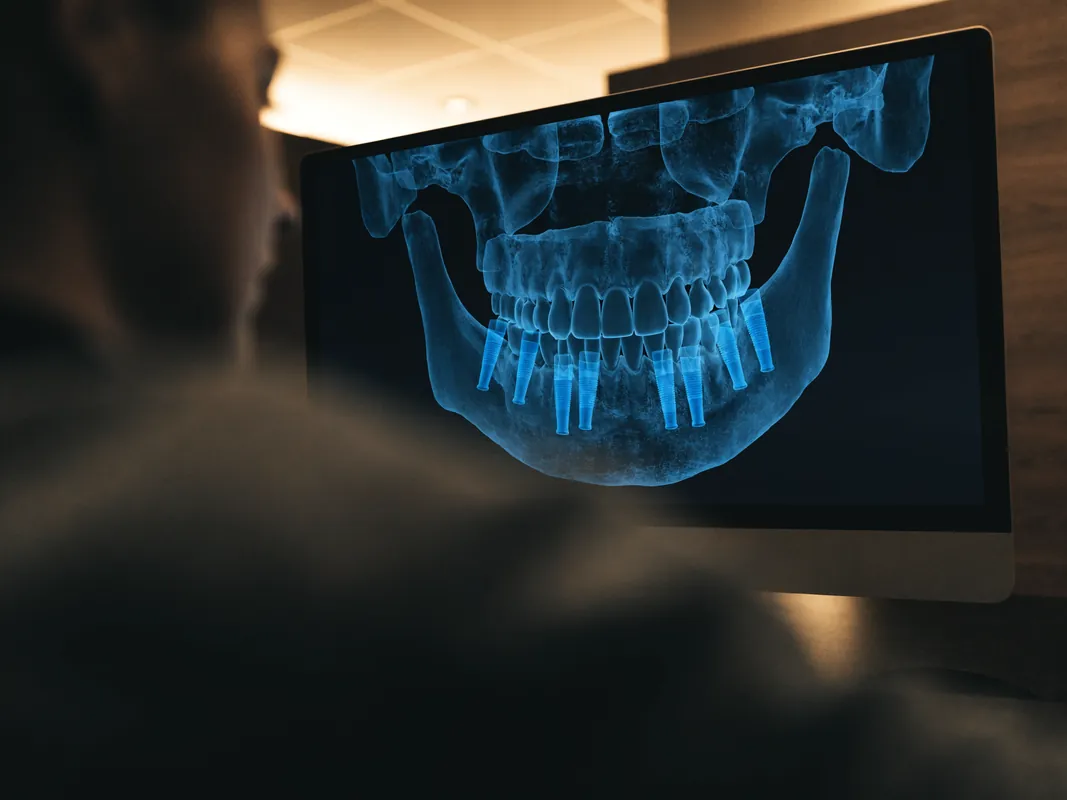
A periodontal assessment may include plaque and inflammation, bleeding, probing, recession, clinical attachment, mobility, furcation involvement, suppuration, occlusal and functional findings, tooth restorability and appropriate radiographs. The exact examination belongs to a qualified clinician. A panoramic image or close-up photograph cannot replace site-level clinical findings.
Diagnosis should distinguish gingivitis, periodontitis, periodontal health on a reduced periodontium, peri-implant tissue health and peri-implant disease. A patient who has completed periodontal treatment can still have reduced support and a history that matters for future risk and maintenance. Calling the mouth cured without current records can create false reassurance.
The clinician should explain which findings establish periodontitis, which teeth are affected, whether the condition appears stable or active, and which urgent issues need priority. The patient should receive a written summary in understandable language. A remote discussion can help organise records but must remain provisional until an in-person examination is complete.
The diagnosis should also identify conditions that can mimic or coexist with periodontitis. Endodontic disease, tooth fracture, caries, trauma, medication-related changes, mucosal disease and other problems can influence tooth prognosis. A mobile tooth should not be assigned to extraction without a complete diagnosis.
When old records exist, compare them with current findings. Previous charts and images can show progression and response to treatment. When they do not exist, the clinician should record the limitation rather than reconstruct a progression history from memory or one image.
Stage, grade, extent and complexity
The 2018 World Workshop framework uses stage, grade, extent and complexity to describe periodontitis more meaningfully than a loose term such as severe gum disease. Staging reflects severity and management complexity. Grading estimates progression and incorporates risk information. Extent describes how broadly the dentition is affected. These dimensions support planning; they do not function as a website eligibility calculator.
Stage may consider periodontal breakdown, periodontitis-related tooth loss, defect patterns, furcation involvement, mobility, bite collapse, remaining dentition and rehabilitation complexity. The clinician must interpret those findings. A number copied from a chart should not be separated from tooth restorability, function and the patient's goals.
Grade uses direct or indirect evidence of progression and relevant modifiers. It should be updated when better evidence becomes available. Smoking exposure and diabetes may influence risk assessment, but they should not be reduced to a sales cut-off. The medical and dental teams should use current records and individual context.
Stage IV periodontitis involves complex rehabilitation questions as well as inflammation and attachment loss. The 2022 EFP stage IV guideline emphasises a multidisciplinary approach, periodontal therapy, tooth prognosis, function and maintainable rehabilitation. It specifically discourages early extraction of questionable teeth when they may be treatable.
The written diagnosis should therefore list more than a stage label. It should identify affected teeth, current disease activity, restorability, functional problems, immediate priorities, modifiable risk factors, proposed periodontal pathway and uncertainties. The patient should know which part of the plan may change after re-evaluation.
Tooth preservation before replacement
Tooth retention is a first-line consideration when a tooth is rational to treat and maintain. The EFP stage IV guideline recommends attempting to preserve periodontally compromised teeth that are considered treatable and discourages early removal of teeth with a questionable rather than hopeless prognosis. This matters because replacing a tooth with an implant does not remove susceptibility to inflammatory disease.
Prognosis is not a single score. It may depend on periodontal support, tooth structure, endodontic condition, mobility, furcation, position, strategic value, the proposed restoration, patient dexterity, maintenance access and response to treatment. A specialist may alter the prognosis after disease control or another dental intervention.
Ask what periodontal, restorative, endodontic, orthodontic, splinting or prosthetic options might retain the tooth. Ask what each option requires from the patient and clinicians. The goal is not to keep every tooth at any cost; it is to avoid irreversible extraction before reasonable alternatives are assessed.
The patient should see a tooth-by-tooth plan: retain and monitor, retain and treat, uncertain pending re-evaluation, or removal with a documented reason. If extraction is proposed, the clinician should explain whether the reason is periodontal, structural, endodontic, functional or a combination. A full-arch proposal should not turn all remaining teeth into one undifferentiated category.
No-treatment and limited-treatment choices also belong in the discussion. A patient may prioritise disease control, comfort and a removable prosthesis over extensive reconstruction. The clinician should describe the likely consequences honestly without using fear to force extraction.
A stepwise disease-control pathway
The 2020 EFP S3 guideline for stages I–III periodontitis uses a stepwise approach. The details are tailored to diagnosis and response, but the sequence starts with patient engagement, self-performed biofilm control and risk-factor work, then professional subgingival instrumentation where indicated, re-evaluation and further treatment for sites that have not reached the agreed clinical objectives. Supportive periodontal care follows active treatment.
This is not a rigid package. Self-care advice should be demonstrated, adapted to dexterity and anatomy, and checked in practice. Professional treatment should be based on diagnosis rather than sold as a generic full-mouth procedure. Adjuncts and medicines should not replace effective mechanical care or individual prescribing judgement.
Smoking or nicotine use should be recorded and discussed non-judgementally. NICE NG30 recommends asking about tobacco, offering brief advice and referral to local stop-smoking support where needed. The dental team should not invent a universal cessation rule or prescribe outside competence. The patient's usual healthcare pathway can support change.
If diabetes is present, ask for current medical context and who manages it. NICE NG28 recognises the relationship between type 2 diabetes and periodontitis and recommends oral-health review and periodontitis care based on oral-health needs. A dental website should not set a personal blood target or alter diabetes medicine.
Re-evaluation is a clinical checkpoint. It reviews tissue response, self-care, remaining inflammation, tooth prognosis, function and the feasibility of maintenance. Sites or teeth that remain problematic may need further treatment, specialist input, a revised prognosis or a different rehabilitation. Implant planning should not bypass this checkpoint because travel has been booked.
Re-evaluation without a website threshold
There is no fixed website threshold or time interval that establishes periodontal stability for every patient. Guidelines contain clinical objectives and evidence-based pathways, but the treating clinician must interpret the complete examination, response and risks. A number should never be copied into marketing as a universal clearance rule.
At re-evaluation, compare the current periodontal chart with the pre-treatment baseline. Review bleeding, suppuration, plaque, probing and attachment findings, mobility, furcations, symptoms, patient-performed cleaning, smoking or nicotine exposure, relevant medical context and professional maintenance. Ask whether previously uncertain teeth now have a clearer prognosis.
The clinician should state which objectives were achieved, which were not, and what that means for the next step. Stability is not the same as perfection, and a history of periodontitis remains relevant even when current inflammation is controlled. The decision should focus on whether the mouth and proposed restoration are maintainable over time.
If disease control is incomplete, options may include reinforcing self-care, addressing local factors, further non-surgical or surgical periodontal care, specialist referral, changing the prosthetic design, postponing implants or choosing another replacement route. The patient should know how each option changes cost, visits and uncertainty.
Re-evaluation also checks motivation and practical access. Can the patient use the required hygiene aids? Can they attend local supportive care? Can a restoration be designed for cleaning? If not, a technically possible implant plan may be a poor real-world plan.
Document the decision and evidence. A sentence stating gums are fine is not enough for a complex rehabilitation. The handover should include the diagnosis, treatment provided, current chart, relevant images, unresolved sites, maintenance plan and responsible clinician.
Periodontal maintainability before implant planning
The current periodontal status and maintainability of teeth, tissues and any proposed prosthesis should be assessed together. Implant surgery should not be planned in isolation from plaque control, remaining teeth and long-term professional access.
Maintainability means the patient can clean around teeth and future restorations with methods they can actually use. It also means the local dental team can examine, probe where appropriate, remove deposits and compare images. A design that hides tissue or blocks professional access creates a foreseeable problem.
Ask the patient to demonstrate their current cleaning rather than simply confirming that they brush. Select interdental aids according to anatomy and clinician advice. Consider dexterity, vision, mouth opening, gag reflex, disability, caregiving and cost. Instructions should be updated when the dentition or prosthesis changes.
Professional maintenance should be arranged before surgery. The frequency must be individual and reviewed according to disease history, current inflammation, self-care, smoking or nicotine exposure, diabetes and other context, prosthesis design and clinical findings. This guide deliberately does not publish a universal appointment interval.
The prospective implant clinician should communicate with the local periodontal provider. They should agree what baseline records will be created, who will monitor natural teeth and implants, who can remove or service the prosthesis, and where urgent care occurs. A patient should not discover after surgery that no local clinician can maintain the design.
If reliable maintenance is not available, discuss less complex alternatives. A removable restoration or a tooth-supported option may be easier to service. The best theoretical reconstruction is not helpful if the patient cannot maintain or access it.
Smoking, nicotine and diabetes context
Smoking is a recognised periodontal risk factor and is relevant to implant planning, but patients need support rather than blame. Record current and past tobacco and nicotine use accurately. Ask about the form, frequency, recent changes and previous quit attempts. Explain that the information helps risk assessment and prevention.
Offer evidence-based cessation support through the patient's usual healthcare or local stop-smoking service. Do not create a universal eligibility date or imply that one period of abstinence erases the history. The periodontal and implant decisions remain based on the full clinical context.
Vaping and other nicotine products should be recorded rather than assumed harmless or identical to smoking. Evidence and exposure differ. Avoid making a product-specific medical promise. The treating professionals should use current evidence and individual findings.
Diabetes is also heterogeneous. Record type, management, complications, recent changes and responsible clinician. The dentist may need relevant medical information, but a website must not interpret laboratory results or advise medicine changes. NICE recommends dental management of diagnosed periodontitis at a frequency based on oral-health needs.
Other systemic conditions and medicines may affect bleeding, immune function, bone, healing, oral dryness or the ability to perform self-care. The dental clinician should take a complete history and seek medical input for a specific question when needed. A generic medical clearance request is less useful than describing the proposed procedure and the decision needed.
Risk-factor work continues during maintenance. It should not be treated as a box ticked before implant surgery. Changes in smoking, diabetes, medicines or health should trigger reassessment of the care plan.
Implant risk compared with retaining teeth
An implant replaces a missing tooth root; it is not a cure for susceptibility to periodontal inflammation. The EFP patient information and clinical guideline evidence recognise that a history of periodontitis increases the risk of peri-implant complications. That information belongs in consent, without converting population evidence into an individual outcome promise.
Natural teeth and implants have different tissues, complications and repair pathways. A compromised but maintainable tooth may remain the better option. An implant may be reasonable when a tooth is absent or cannot responsibly be retained and the mouth, site and maintenance system support it. The decision is site-specific.
Compare options across the same dimensions: biological risk, invasiveness, ability to clean, effect on adjacent teeth, repairability, need for surgery, maintenance, time, cost and patient preference. Do not compare an idealised implant with an untreated diseased tooth. Compare realistic, treated options.
For a bounded gap, options may include no replacement, removable replacement, tooth-supported restoration or implant-supported restoration. In stage IV cases with larger functional problems, options can include tooth-retained, implant-retained or removable designs. The EFP stage IV guideline allows several routes depending on tooth retention, function and maintainability.
Avoid extracting teeth merely to simplify a package. The guideline's tooth-preservation principle requires a justified prognosis. If the operating clinician recommends removal, ask which evidence changed the prognosis and whether another qualified clinician should review it.
Peri-implant prevention begins before surgery
Prevention starts with periodontal diagnosis and risk-factor control before an implant is placed. It also requires a restorative design that allows daily plaque removal and professional monitoring. Surgery cannot compensate for an inaccessible prosthesis or absent maintenance.
Create baseline records at the appropriate stage. The 2018 World Workshop on peri-implant conditions recommends baseline radiographic and probing measurements after completion of the implant-supported prosthesis. These provide a reference for later changes rather than forcing a clinician to guess from one future image.
The 2023 EFP S3 guideline for peri-implant diseases describes prevention, diagnosis, treatment and supportive peri-implant care. It emphasises risk assessment, monitoring, plaque control and a needs-based pathway. A history of treated periodontitis should shape that pathway.
Teach cleaning around the actual restoration. The patient should demonstrate the technique. If the design makes the recommended method impossible, the design needs reconsideration. Professional cleaning access should be considered before finalising the prosthesis.
At review, assess tissue inflammation, plaque, probing changes where appropriate, suppuration, recession, bone levels when indicated, prosthesis integrity and patient-reported function. The maintenance plan should include natural teeth as well as implants.
Peri-implant mucositis and peri-implantitis are different diagnoses. Bleeding around an implant requires assessment; it does not automatically mean removal. Progressive supporting-bone loss with inflammation needs a defined clinical pathway. Early attention matters, but online content cannot diagnose the condition.
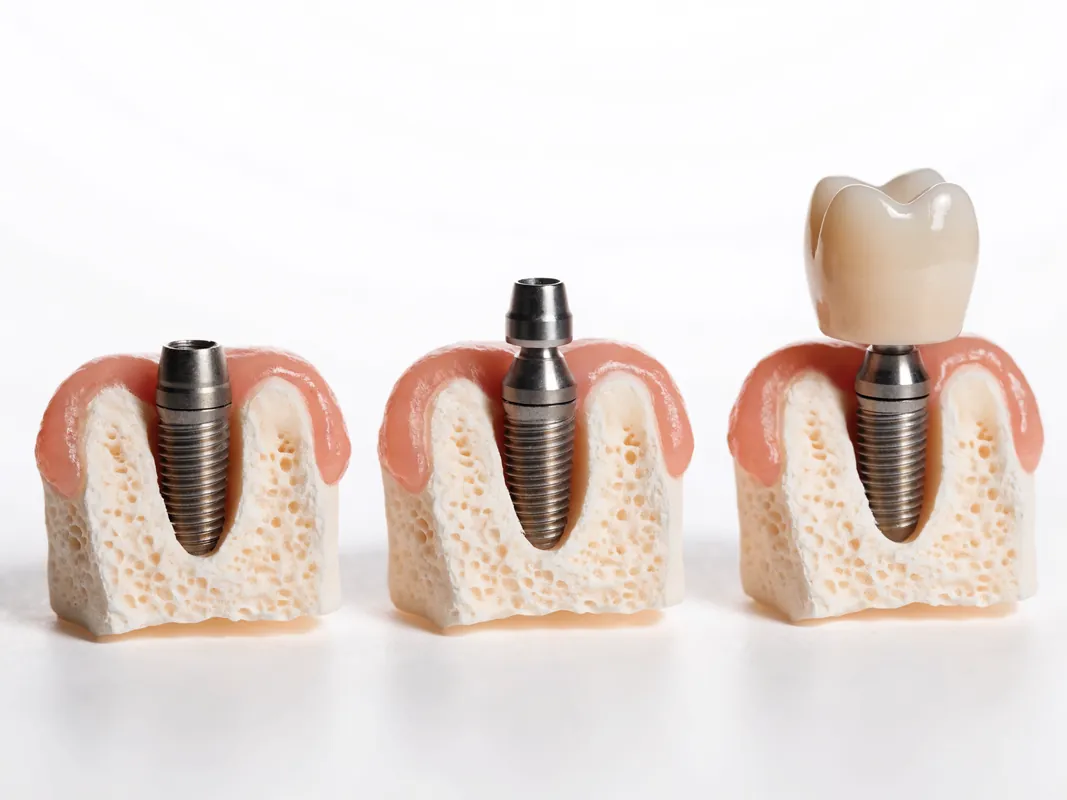
Prosthesis design and cleaning access
Rehabilitation design is part of periodontal prevention. The EFP stage IV guideline recommends prostheses that permit effective self-performed hygiene and professional mechanical plaque removal. That principle applies whether the restoration is supported by teeth, implants or both.
Ask for a design review before irreversible treatment. Consider contours, emergence, spaces for cleaning, contact points, pontic areas, connector access, retrievability, speech, food trapping and the patient's dexterity. A visually smooth bridge can still be difficult to maintain.
Provisional restorations may help test function and cleaning access before a definitive design. The patient should practise with the aids intended for long-term use. If they cannot clean the provisional design, simply copying it into the final prosthesis is not responsible.
For a larger reconstruction, ask whether the prosthesis can be removed for professional maintenance, which clinician has the required instruments, and what happens if a component fails. Component and implant identifiers should be recorded. Unknown systems can complicate repair and local aftercare.
Design should also preserve the ability to monitor the remaining dentition. Do not hide compromised teeth behind a plan that cannot be examined. The periodontal and restorative clinicians should agree on maintainability before final delivery.
For the wider decision about when periodontal care, reassessment and definitive crowns, veneers or bridges should occur, use the gum treatment and restoration sequencing guide. This condition page remains focused on implant candidacy after gum disease.
Alternatives and the no-treatment option
Implants are one rehabilitation option, not the endpoint of every periodontal plan. Alternatives may include retaining and treating the tooth, leaving a space, reshaping the occlusion, a removable partial denture, a tooth-supported bridge, an overdenture, modifying an existing prosthesis, postponement or no replacement.
Each alternative has trade-offs. A tooth-supported bridge may involve adjacent teeth. A removable option requires adaptation and maintenance but may be easier to repair. No replacement may be reasonable when function and stability are adequate. An extensive implant route may add surgery and long-term component needs.
For teeth with uncertain prognosis, a staged plan may preserve options. Disease can be treated, function stabilised and prognosis reassessed before committing to extraction or a definitive prosthesis. A provisional restoration can support function while maintaining flexibility.
No treatment does not mean no care. It may mean periodontal disease control and maintenance without replacing a particular tooth. The clinician should explain likely functional, aesthetic and oral-health implications in a balanced way.
The patient should be able to decline surgery without losing access to disease care. A consent discussion that presents implants as the only responsible choice is incomplete.
Consent and named clinical ownership
Consent follows diagnosis. GDC Principle 3 requires relevant options, risks, benefits and costs to be explained and treats consent as an ongoing process. A signature does not replace the discussion, and consent must be revisited when periodontal response or the restorative plan changes.
The patient should meet or identify the clinician responsible for periodontal diagnosis and the clinician responsible for implant surgery. If different clinicians provide periodontal, surgical and prosthetic care, responsibilities must be mapped. The named clinic and named clinician retain their respective clinical duties; a coordinator cannot assume them.
Discuss the uncertainty of tooth prognosis and implant risk. Explain the possibility that periodontal treatment changes the proposed extractions, that implant timing is postponed, that grafting or another procedure is considered, that a simpler prosthesis becomes preferable, or that the patient chooses no implant.
Procedure-specific risks should be explained by the treating clinician using the actual site and plan. The patient should understand alternative care, maintenance burden, possible complications, future repair, local urgent access and what happens if the desired restoration cannot be delivered.
Language support should allow private questions and accurate understanding. Do not rely automatically on a family member for complex consent. Give the patient a written plan they can compare with another opinion.
Consent can be withdrawn. A deposit, appointment or travel booking does not make treatment compulsory. If new findings change the plan or cost, obtain fresh consent and update the written documents.
Records and periodontal handover
Ask for the complete periodontal and restorative record: medical history, diagnosis, stage and grade, tooth-by-tooth prognosis, periodontal charts, radiographs, clinical photographs, treatment provided, re-evaluation, unresolved sites, referrals, consent discussions, treatment plans, maintenance history and invoices.
For extraction or implant planning, record why each tooth is removed or retained. The rationale should be clinical, not hidden inside a package description. If a prognosis remains uncertain, say so and define what evidence will clarify it.
GDC Principle 4 describes complete, accurate and contemporaneous records, including radiographs, photographs, models, consent forms, laboratory prescriptions, statements of conformity and referrals where available. These records allow another clinician to understand the pathway and continue care.
After implant treatment, provide implant and component identifiers, procedure and medicine records, relevant images, laboratory information, prosthesis design, cleaning instructions, maintenance plan, urgent signs, direct clinical contacts and complaint route. A screenshot in a chat is not a substitute for an original diagnostic file.
Share records securely with patient consent. Identify the author of clinical advice. A coordinator may transmit documents but must not rewrite a clinician's diagnosis as a guarantee.
Local supportive periodontal care
Local supportive periodontal care should be arranged before any overseas implant treatment. Ask a local dentist, hygienist or periodontist whether they can monitor the remaining teeth, peri-implant tissues and proposed prosthesis. Another practice is not automatically responsible for work performed elsewhere.
The maintenance plan should be individual. It may change with inflammation, self-care, smoking or nicotine exposure, diabetes, medical changes, prosthesis design and previous disease pattern. The responsible clinician should set and review the interval; this guide does not.
At supportive visits, review the patient's cleaning, remove deposits as indicated, monitor periodontal and peri-implant findings, compare with baselines, assess prosthesis access and address new risk factors. Reinforce techniques rather than assume instructions given once remain effective.
If maintenance reveals recurrent or progressive disease, the local clinician should document findings and communicate with the treating clinic. Remote advice may support coordination but cannot replace in-person assessment when signs persist or worsen.
Long-term access should influence the original design. If the patient cannot reach specialist maintenance, a complex reconstruction may create avoidable dependency. Discuss maintainable local alternatives before surgery.

Urgent signs and emergency boundary
Bleeding gums usually need dental assessment, but certain changes require urgent care. NHS gum disease guidance advises urgent dental review for very sore swollen gums, loose or falling teeth, ulcers or red patches, or a lump in the mouth or lip. Worsening swelling, discharge, severe pain or feeling unwell also need prompt local assessment.
Use emergency services for heavy mouth bleeding that will not stop, serious facial or jaw injury, or severe swelling involving the mouth, lips, throat or neck with breathing difficulty. A travel coordinator and remote photograph are not emergency services.
Urgent care may address infection, pain, bleeding, trauma or another diagnosis. It does not automatically mean extracting all mobile teeth or starting an implant plan. The urgent clinician should stabilise the immediate problem, document findings and refer for definitive periodontal care.
Do not self-start leftover antibiotics or change prescribed medicine because of online content. Systemic medicine cannot substitute for periodontal diagnosis and effective mechanical care. Prescribing belongs to an authorised clinician who has assessed the patient.
If urgent symptoms occur before travel, notify the responsible clinicians and seek local care. A commercial schedule should never override clinical triage.
Travel and the no-travel option
Periodontal rehabilitation often involves assessment, response to treatment, maintenance and later restorative decisions. Travel can fragment those stages. It may separate the periodontist from the implant clinician and the treating clinic from urgent or long-term care.
Before booking, obtain the current diagnosis, proposed disease-control pathway, evidence required at re-evaluation and a provisional restorative plan. Confirm which clinician has reviewed the periodontal records and what cannot be decided remotely.
Travel logistics must be confirmed in writing and kept separate from clinical consent. Ask what happens if periodontal objectives are not achieved, a tooth is retained, surgery is postponed or the patient chooses another option. Clarify change costs and extra local care without assuming a travel service from a treatment headline.
Insurance may exclude planned dental care, existing periodontal disease, complications or changed travel. Ask the insurer directly and keep the response. A clinic or coordinator cannot promise coverage for an insurer.
The no-travel option should remain visible. Local periodontal treatment, a local second opinion, a tooth-preservation pathway, local implant care, a removable prosthesis or no replacement may improve continuity. A hybrid route can use local disease control and maintenance with an external clinician providing only a defined procedure.
Choosing not to travel is a legitimate result. The goal is a maintainable health plan, not completion of a booking.
Itemised quote and commercial terms
The written quote should follow the diagnosis and list proposed periodontal, extraction, imaging, surgical, grafting, implant, component, laboratory, prosthetic, medicine and follow-up elements separately where relevant. Mark provisional items and state what clinical finding would activate them.
Do not accept one price that assumes every uncertain tooth will be extracted. Ask how the estimate changes if teeth are retained, additional periodontal treatment is needed, the implant route is postponed or a removable alternative is chosen.
Keep commercial terms separate from clinical consent. Read cancellation, complaint and any remedial terms. Clarify who decides that further care is indicated, whether independent evidence is accepted, what records are required, which professional costs are covered and which travel costs are excluded.
GDC Principle 2 requires a written treatment plan with a realistic indication of cost and written updates when the plan changes. Verify the treating clinic's legal identity, regulator where applicable and complaint route before payment.
No commercial statement can promise disease control or remove the need for maintenance. Keep copies of quotations, invoices, clinical records and correspondence.
Questions to ask before implant treatment
Diagnosis and tooth prognosis
- What is my current periodontal diagnosis, stage, grade and extent?
- Which findings show active disease or current stability?
- Which teeth are treatable, uncertain or not maintainable, and why?
- Have endodontic, restorative and functional alternatives been assessed?
- What previous records were compared?
- Which specialist input is needed?
Disease control and re-evaluation
- What is the stepwise periodontal plan?
- How will I demonstrate effective daily cleaning?
- Which clinical objectives will be reviewed?
- What happens if an objective is not achieved?
- Who decides when implant planning can proceed?
- Is the conclusion provisional until further review?
Implant and prosthesis planning
- Why is an implant preferred to retaining the tooth or another replacement?
- How will the restoration permit daily cleaning?
- Can the local team examine and maintain it?
- What baseline records will be created?
- What components and records will I receive?
- What alternatives remain if surgery is postponed or declined?
Risk context and ownership
- How do smoking or nicotine use, diabetes, medicines and health affect my individual plan?
- Which questions require my usual healthcare professional?
- Who is the named periodontal clinician?
- Who performs surgery and restoration?
- Who handles local maintenance and urgent care?
- What can remote review not determine?
Cost and travel
- Which quote items are confirmed and which are provisional?
- How does the quote change if teeth are retained?
- What are the cancellation, complaint and commercial terms?
- Which travel arrangements, if any, are separately confirmed?
- What is the local or no-travel alternative?
Periodontitis-to-implant planning checklist
Before the first decision
- Gather previous periodontal charts and original radiographs.
- Write a history of treatment, tooth loss and maintenance.
- List current health conditions, allergies and medicines.
- Record smoking and nicotine exposure honestly.
- Identify the local dentist, hygienist or periodontist.
- Define functional and aesthetic priorities.
- Seek urgent care for severe or worsening symptoms.
- Verify the named clinic and clinician.
Before accepting extraction
- Obtain a tooth-by-tooth prognosis.
- Ask which evidence supports each extraction.
- Review periodontal, restorative and endodontic alternatives.
- Consider a specialist or independent second opinion.
- Understand what can change after disease control.
- Keep no treatment and limited treatment visible.
Before accepting implants
- Obtain the written diagnosis and re-evaluation.
- Confirm periodontal objectives and maintainability.
- Confirm the patient can clean the proposed design.
- Arrange local supportive periodontal care.
- Review implant, tooth-supported, removable and no-replacement alternatives.
- Map named clinical responsibilities.
- Obtain an itemised plan and contingency plan.
- Review consent, privacy, complaint and commercial terms.
Before travel
- Confirm the clinical plan is not based only on remote images.
- Ask what remains provisional until examination.
- Keep travel logistics separate from clinical consent.
- Check insurance directly.
- Plan for postponed or changed care.
- Carry records and medicine information securely.
- Identify local urgent and emergency services.
- Keep the no-travel option open.
Before discharge and during maintenance
- Receive the diagnosis, procedure and medicine record.
- Receive implant, component and laboratory information.
- Obtain relevant images in a usable format.
- Receive individual cleaning and maintenance instructions.
- Confirm local handover and direct clinical contacts.
- Know urgent signs and escalation routes.
- Attend the individually agreed periodontal and peri-implant reviews.
- Update the plan when health, medicine or access changes.
Sources and review dates
Guidance develops. The named dental and medical professionals should consult current versions and apply them to the individual patient. This guide used:
- World Workshop staging and grading framework for periodontitis, published June 2018 and accessed 29 August 2026: stage, grade, extent, complexity and risk-informed diagnosis. https://pubmed.ncbi.nlm.nih.gov/29926495/
- EFP S3 clinical practice guideline for treatment of periodontitis stages I–III, published July 2020 and accessed 29 August 2026: stepwise periodontal therapy, re-evaluation, risk-factor work and supportive care. https://pubmed.ncbi.nlm.nih.gov/32383274/
- EFP S3 clinical practice guideline for stage IV periodontitis, published 2022 and accessed 29 August 2026: tooth retention, complex rehabilitation, maintainability and multidisciplinary planning. https://onlinelibrary.wiley.com/doi/10.1111/jcpe.13639
- EFP S3 clinical practice guideline for prevention and treatment of peri-implant diseases, published 2023 and accessed 29 August 2026: prevention, monitoring, prosthesis access and supportive peri-implant care. https://onlinelibrary.wiley.com/doi/full/10.1111/jcpe.13823
- World Workshop consensus report on peri-implant diseases and conditions, published June 2018 and accessed 29 August 2026: peri-implant health, mucositis, peri-implantitis and baseline records. https://pubmed.ncbi.nlm.nih.gov/29926955/
- NICE NG30, Oral health promotion: general dental practice, published 15 December 2015 and updated March 2026: tailored oral-health advice, tobacco recording, brief advice and referral support. https://www.nice.org.uk/guidance/ng30/chapter/Recommendations
- NICE NG28, Type 2 diabetes in adults: management, updated 18 February 2026 and accessed 29 August 2026: oral-health review and needs-based periodontitis care. https://www.nice.org.uk/guidance/ng28/chapter/Complications
- NHS gum disease guidance, accessed 29 August 2026: symptoms, prevention, dental assessment and urgent signs. https://www.nhs.uk/conditions/gum-disease/
- GDC Principle 2, Communicate effectively with patients, accessed 29 August 2026: written treatment plans, realistic costs and updates. https://standards.gdc-uk.org/pages/principle2/principle2
- GDC Principle 3, Obtain valid consent, accessed 29 August 2026: options, risks, benefits, costs and ongoing consent. https://standards.gdc-uk.org/pages/principle3/principle3
- GDC Principle 4, Maintain and protect patients' information, accessed 29 August 2026: complete records, imaging, laboratory documents and referrals. https://standards.gdc-uk.org/pages/principle4/principle4
- GDC, Going abroad for dental treatment, accessed 29 August 2026: qualified assessment, provider checks, aftercare and complaint planning. https://www.gdc-uk.org/standards-guidance/information-for-patients-public/going-abroad-for-dental-treatment
The evidence supports periodontal diagnosis, tooth preservation where reasonable, stepwise disease control and maintainable long-term care before implant decisions. It does not support blanket eligibility or extraction-led shortcuts.