This guide owns the fitness-to-fly decision after oral surgery. It is not a countdown promising that a person can board after a standard number of hours or days. An extraction, implant placement, bone graft, sinus-related procedure or larger maxillofacial operation can create very different recovery questions. The same procedure name can also conceal different findings, anaesthetic techniques, complications and medical backgrounds. There is therefore no universal waiting interval that can replace an examination and the rules of the operating airline.
The practical decision has two parts. The treating oral surgeon or dentist decides whether the recent procedure and current recovery findings make travel clinically reasonable. The airline makes the final decision about carriage and may request medical information or its own clearance form. Diagnosis and travel clearance are different decisions: an airline form does not diagnose a dental complication, and a dental discharge note does not bind the airline. General information on a website cannot perform either task.
Use this page before booking a rigid return ticket, again after the procedure is complete, and once more on departure day. It helps organise questions and records. It does not assess a socket, implant, sinus, airway, infection, blood-clot risk, medicine interaction or anaesthetic recovery. Those require case-specific professional review.
Why a single flight timetable is unsafe
Search results often group fillings, uncomplicated extractions, multi-site implant surgery, grafting and sinus procedures under “dental work”. That label is too broad for a travel decision. Even within one procedure category, suitability may change because of:
- the exact site, number and extent of surgical wounds;
- whether a procedure involved the maxillary sinus or created a suspected mouth-to-sinus opening;
- whether bleeding is controlled and the clot or wound is stable;
- the amount and direction of swelling, mouth opening and airway symptoms;
- pain, nausea, hydration and ability to take required nutrition or medicines;
- whether infection was present before treatment or is suspected afterwards;
- whether local anaesthetic, sedation or general anaesthetic was used;
- the person’s heart, lung, clotting, metabolic, neurological and mobility history;
- the length and complexity of the total journey, including connections and ground travel;
- access to review before departure and competent care after arrival; and
- the carrier’s current written airline rules and any requested medical clearance.
A paper that proposes timing ranges after dental interventions explicitly describes a limited evidence base, much of it drawn from military aircrew rather than ordinary commercial passengers. It says its suggestions are a starting point for clinician decision-making and should be tailored to the patient, procedure, complications and flight characteristics. That evidence limitation is a reason to reject a universal online countdown, not to turn the paper’s ranges into a promise.
Start with a diagnostic and travel fact sheet
Before discussing a flight, write down what actually happened. A marketing label such as “implant package” is not enough. Ask the legal treatment provider for a clear procedure and discharge record containing:
- the diagnosis and reason for surgery;
- the exact procedure, sites and date;
- whether any sinus exposure, communication, perforation or repair was identified;
- whether a graft, membrane, implant, drain, packing, sutures or provisional restoration was placed;
- the anaesthetic method and any sedation or recovery instructions;
- medicines administered, prescribed or specifically avoided;
- bleeding, swelling, infection, airway, nausea or other recovery findings;
- restrictions and the clinical reasons for them;
- the named clinician responsible for review before departure;
- the route for urgent assessment locally and after returning home; and
- whether the clinician is prepared to give a dated, case-specific fitness opinion if the airline asks.
Remote photographs can support communication, but cannot reliably check every surgical site, palpate swelling, measure observations, assess hydration, test sensation, diagnose a sinus communication or rule out infection. A video call cannot replace a required clinical examination. If the decision depends on a physical finding, arrange the examination rather than converting uncertainty into an optimistic travel answer.
Procedure factors that change the question
Extractions and surgical extractions
The useful questions are not only whether a tooth was removed. Ask whether removal was straightforward or surgical, whether bone was removed, whether the tooth was close to the sinus, whether the socket was packed or sutured, and whether bleeding is controlled. Upper posterior extractions may create a separate sinus question. Lower wisdom-tooth surgery can involve swelling, limited mouth opening, altered sensation and more demanding pain control. Neither category produces one automatic flight time.
Implant placement
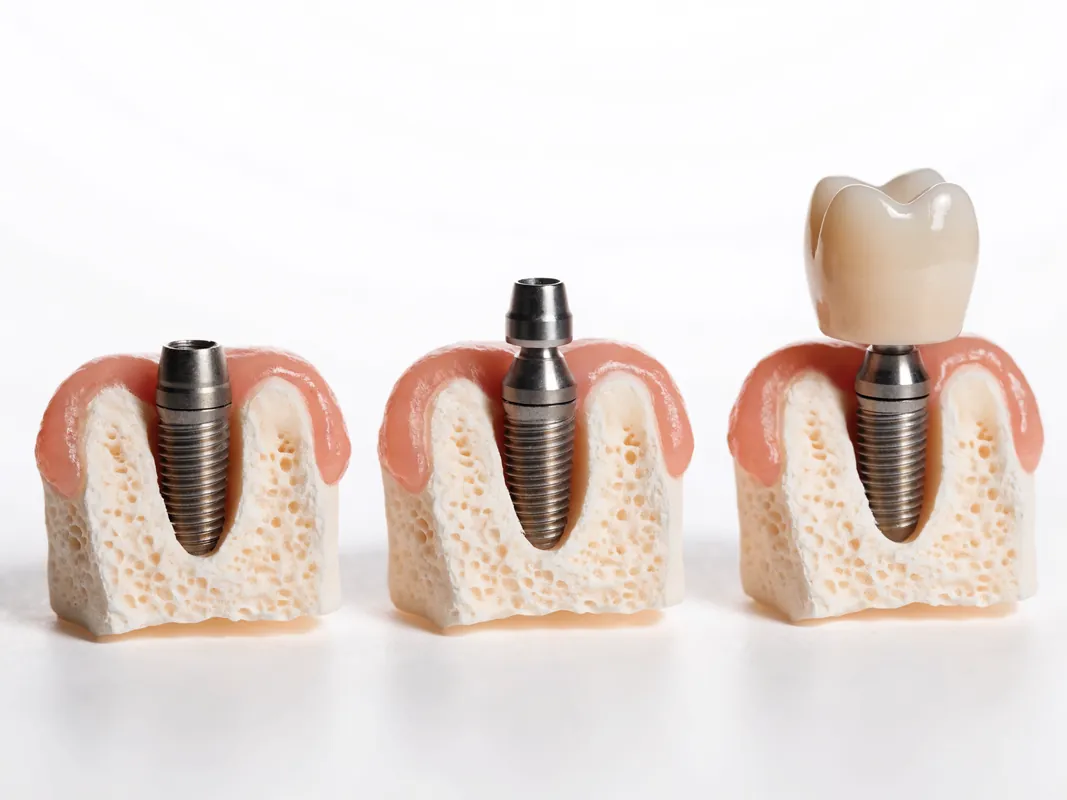
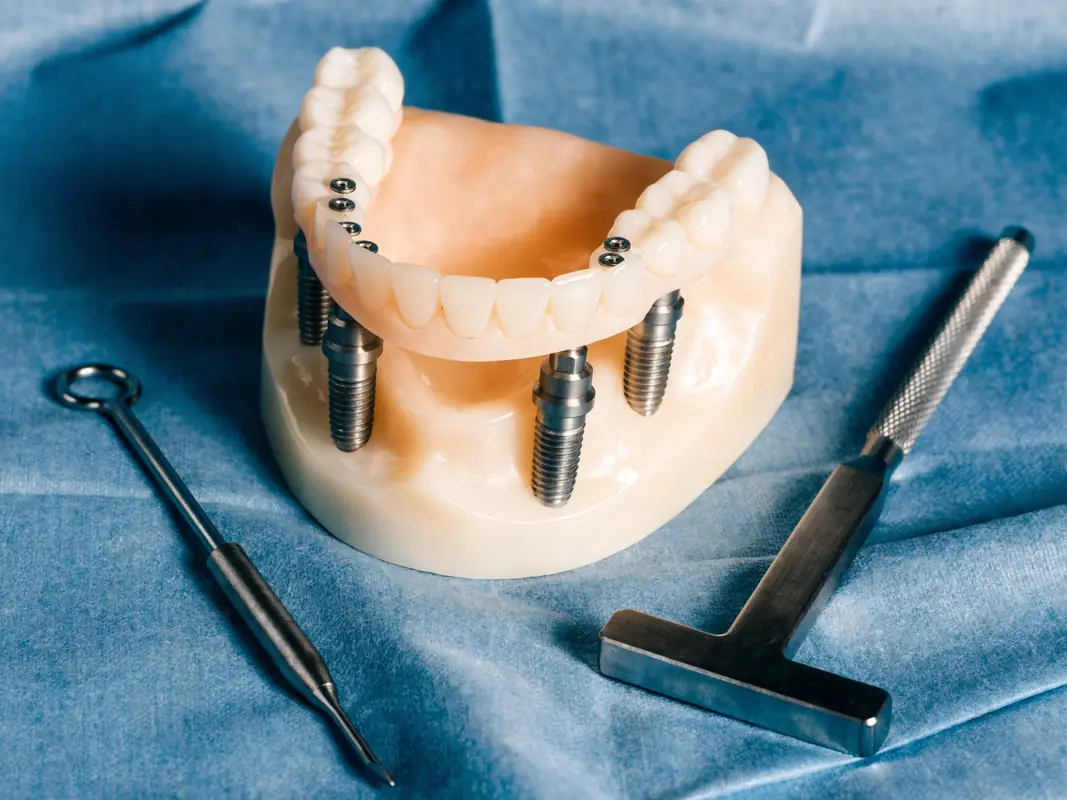
Implant placement ranges from one relatively limited site to multiple surgical areas with extractions, grafts or full-arch provisional work. Record the sites, grafting, stability and provisional-restoration instructions. The existence of an implant does not itself answer the aviation question. Current symptoms, surgical extent, ability to protect the wound and access to review matter.
Bone grafting and sinus-related surgery
Graft sites differ in volume, donor site, membrane use and proximity to anatomical spaces. A sinus lift, repair of an oro-antral communication or other sinus-involving procedure requires specific instructions from the clinician who knows the operative findings. Do not infer clearance from another patient’s experience or from a generic implant page. If there is uncertainty about a sinus opening, nasal symptoms, fluid passage, unusual air movement or pressure-related pain, the correct next step is clinical review rather than boarding on an assumed timetable.
Larger oral and maxillofacial procedures
Operations involving the jaws, face, neck, airway or reconstruction do not belong in a routine dental countdown. They may involve inpatient care, drains, nutrition support, significant swelling, anaemia, mobility limitations or other medical issues. The operating surgical and anaesthetic teams should lead the fitness assessment and communicate with the airline when required.
For treatment-sequence questions that are not about aviation, use the treatment-by-treatment itinerary guide. Keeping these intents separate prevents a treatment calendar from being mistaken for a flight clearance.
Complication factors override the ticket
A return booking is a logistical preference, not a clinical deadline. Complication factors can change a previously reasonable plan. The review should actively consider ongoing bleeding, rapidly increasing swelling, breathing or swallowing difficulty, uncontrolled vomiting, inability to drink, worsening pain, new discharge, fever or systemic illness, allergic reaction, chest symptoms, fainting, new leg swelling or other deterioration.
The question is not “Can the passenger tolerate discomfort?” It is whether the person is stable, whether a serious cause has been assessed, whether required care is available during the journey and whether delay could make harm harder to treat. Analgesics can reduce pain without resolving the underlying cause. Antibiotics can be indicated in some cases but do not themselves prove that infection is controlled or that travel is suitable. A boarding pass should never become a reason to conceal symptoms.
Local anaesthetic, sedation and general anaesthetic
Local anaesthetic, sedation and general anaesthetic create different discharge requirements.
Local anaesthetic numbs a region but does not make every procedure minor. Surgical extent, bleeding, pain, infection and medical history still determine the travel decision.
Sedation can affect judgement, coordination and memory after the person appears awake. Discharge instructions may require an escort and restrict travel-related tasks. The sedating medicine, dose, recovery, other medicines and total journey must be reviewed by the responsible team.
General anaesthetic has its own recovery and supervision requirements. NHS guidance explains that a person can remain drowsy and need collection and support after discharge. That guidance is not a flight-clearance timetable. A person who still needs supervision, cannot manage medicines, is vomiting, is unusually sleepy or cannot respond appropriately to safety instructions is not made ready by the scheduled departure time.
Ask for the anaesthetic discharge instructions in writing. Confirm whether a responsible adult must remain with the patient, whether independent ground travel is appropriate, and which symptoms require urgent assessment. If sedation or general anaesthetic was used, the dental operator, anaesthetic provider and airline may each need different information.

Airline medical clearance and MEDIF
The UK Civil Aviation Authority explains that most airlines have medical advisers and that the carrier has the final decision on whether to carry a passenger. A carrier may accept basic information, ask for a clinician’s letter, or require a Medical Information Form, commonly called MEDIF. Rules can differ between airlines and may also differ between sectors operated by different carriers.
Contact the airline’s medical-clearance or special-assistance team rather than relying on a travel agent’s informal answer. Give accurate information about the condition, stability, medicines, mobility and assistance needs. If the airline requests a MEDIF, allow the treating clinician to describe the real findings. Do not ask for a letter that simply repeats a desired conclusion. A useful document identifies the procedure, current clinical status, restrictions, assistance needs and contact information. It should be dated because recovery can change.
Medical clearance should not be confused with ordinary check-in. Online check-in completion does not mean the airline has accepted a recent medical condition. Likewise, an airline’s willingness to carry does not certify that a wound is healing normally. Keep written airline rules, the clearance decision and the clinical discharge record as separate documents.
The bleeding gate
Some blood-stained saliva can occur after oral surgery, but active or recurrent bleeding needs the procedure-specific instructions and, when indicated, clinical assessment. Before travel, confirm:
- whether bleeding is controlled at rest;
- whether the person knows the exact first-aid instructions provided by the treating clinician;
- whether anticoagulant or antiplatelet medicines were managed by the relevant prescriber and dental clinician;
- whether the passenger can access clean gauze or another prescribed item without improvising treatment;
- which pattern requires urgent review; and
- where help is available before airport security, airside and after arrival.
Do not stop prescribed anticoagulants or antiplatelets to make a flight appear easier. Do not add aspirin as travel prophylaxis without case-specific medical advice. Both bleeding and clotting risks need responsible assessment. Persistent bleeding that does not respond to the instructed measures is a reason to seek care, not a reason to hurry through the airport.
The swelling and airway gate
Swelling can evolve after departure from the clinic. Location and direction matter more than a generic photograph. Swelling that makes breathing, swallowing or speaking difficult is an emergency sign. Rapid progression, floor-of-mouth or neck involvement, inability to handle saliva, severe drowsiness or other airway concerns require urgent local care.
Less severe swelling can still make the journey unrealistic when it prevents drinking, opening the mouth enough for nutrition, taking medicines, communicating or managing personal care. Cabin crew provide first aid but are not a substitute for nursing or dental treatment. The CAA notes that onboard staff are not expected to administer a passenger’s medication or provide personal care. A person who needs that help may need a capable companion or postponement.
For symptom management as a separate topic, read the pain and swelling after dental surgery guide. It does not replace a new examination or grant flight clearance.
The infection gate
Infection cannot be ruled out by a reassuring timetable. Ask about worsening rather than improving pain, increasing swelling, redness or heat, pus or other discharge, unpleasant taste with deterioration, fever, feeling systemically unwell and reduced ability to drink. The pattern and the person’s health matter. Immunosuppression, poorly controlled diabetes and other conditions can change risk and presentation.
An antibiotic prescription is not a clearance certificate. Confirm why it was prescribed, what improvement is expected, what adverse reactions require action and when physical review is needed. If symptoms worsen, or if an allergic reaction, breathing difficulty or collapse occurs, use the stated urgent or emergency route. Do not wait for a remote message when immediate local assessment is required.
The sinus and oro-antral communication gate
Upper posterior teeth can be close to the maxillary sinus. Extraction or surgery may occasionally create an oro-antral communication, an opening between the mouth and sinus. A known or suspected communication needs the operating clinician’s instructions and may need review or repair. Relevant symptoms can include unusual movement of air or liquid between mouth and nose, nasal symptoms after the procedure, or new pressure-related pain, but symptoms alone cannot establish the diagnosis.
This is where broad statements about cabin pressure are especially unhelpful. The operative findings, the state of any repair, sinus symptoms and airline context need individual evaluation. Do not blow the nose or test the site unless the responsible clinician has specifically instructed that action; self-testing may disturb healing. If the clinician gives sinus precautions, keep them in the handover and tell the airline medical team if clearance is requested.

Cabin pressure, barodontalgia and common misconceptions
Commercial aircraft cabins are pressurised, but cabin pressure changes during ascent and descent. Barodontalgia means dental or orofacial pain associated with pressure change. Research in aircrew reports that pain can occur and that underlying dental disease, recent treatment or sinus problems may be relevant. The evidence is heterogeneous and heavily based on occupational populations. It does not show that every recent filling, extraction or implant will hurt, and it does not create a universal passenger waiting time.
Two opposite myths should be avoided. “Cabin pressure will pull out every clot or implant” is not an evidence-based general rule. “Cabin pressure can never affect a dental or sinus problem” is also too absolute. Pressure-related symptoms can reveal underlying pathology, and sinus involvement can change the assessment. Cabin pressure does not create one rule for all procedures. A stable implant and an unassessed sinus communication are not the same clinical situation.
If a person had significant tooth or facial pain on a previous flight, disclose that history before treatment and before the next flight. If pain begins during ascent or descent, cabin crew can assist with immediate safety and first-aid arrangements, but diagnosis still requires appropriate dental or medical assessment.
General health and venous thromboembolism
Fitness to travel includes more than the mouth. Long periods of restricted movement can contribute to venous thromboembolism, which includes deep-vein thrombosis and pulmonary embolism. The CDC explains that overall travel-related risk is generally small for many people, but increases with journey duration and individual factors. Recent surgery is one factor among others, including previous clots, known clotting disorders, active cancer, pregnancy or the postpartum period, oestrogen use, obesity, limited mobility and some chronic illnesses.
Do not assume that every dental procedure creates the same clot risk as major abdominal, pelvic or orthopaedic surgery. Equally, do not ignore a person’s wider risk because the wound is in the mouth. The correct approach is individual assessment of the operation, total travel time, mobility and health history. Not every oral-surgery passenger needs clot-prevention medication, compression stockings or a special seat.
For a person with relevant risk factors, ask the appropriate doctor what prevention is suitable. Do not start aspirin, anticoagulants or compression garments solely from a travel blog. Advice may involve movement or other measures, but medicine decisions must account for bleeding risk and existing prescriptions. Unexplained one-sided limb swelling or pain, chest pain, sudden breathlessness, coughing blood, fainting or an abnormal rapid heartbeat requires urgent medical assessment.
Medicines and airport security
Build a medicine plan before reaching the airport. Carry essential prescribed medicine in hand luggage so it remains available if checked baggage is delayed. Keep it in labelled packaging where possible, carry the prescription or a clinician’s letter when appropriate, and check the departure, transit and destination rules. GOV.UK publishes separate requirements for taking medicines containing controlled drugs into or out of the UK. The legal status of a medicine can differ between countries.
Ask the airline and airport about liquid limits, cooling, needles, syringes, sharps or medical equipment. The CAA notes that airlines may ask for a certificate for larger quantities and that extra requirements can apply to liquid or gel medicine. Do not assume that a screenshot of a prescription will satisfy every authority.
Create a written schedule showing the medicine name, purpose, dose and local time. Ask a pharmacist or prescriber how to handle time-zone changes. Do not double a dose because a flight crossed midnight. Check whether pain medicines, anti-anxiety medicines, sedatives or anti-nausea medicines can impair judgement, breathing, balance or alertness. Cabin crew are not responsible for administering medicines. If the passenger cannot self-administer safely, the support plan must address that fact.
The Antalya dental-trip packing guide covers documents and luggage as a separate intent. The case-specific prescription and security rules remain authoritative.
Food, hydration and self-care during the journey
Travel plans should fit the written post-operative instructions. Ask what the passenger can drink and eat, whether temperature or texture restrictions apply, and how oral hygiene should be managed. Carry suitable options only after checking security and import rules. Hydration can support comfort, but it is not a treatment for bleeding, infection, anaesthetic complications or blood clots.
Avoid improvising with alcohol, unapproved medicines or vigorous rinsing. Do not use a straw if the procedure-specific instructions prohibit suction. Do not remove packing, manipulate sutures or repeatedly inspect a wound in an airport washroom. Keep hands clean and make the required supplies accessible without carrying unlabelled medication.
Think about the whole door-to-door journey: hotel checkout, vehicle transfer, luggage, queues, security, walking to the gate, boarding steps, connections, baggage collection and travel home. A person may feel well while seated yet be unable to complete those tasks safely. Build rest, assistance and a flexible rebooking option into the plan rather than expecting willpower to close a medical gap.
Companion and assisted travel
A companion may be needed because of sedation instructions, general anaesthetic recovery, mobility, communication, cognition, anxiety, medicine management or personal-care needs. The companion should know the written escalation route and have copies of essential records. A companion is not a substitute for a clinician and should not change medicines, diagnose swelling or decide that bleeding is acceptable.
Airport and airline assistance can help with distances, queues, security, boarding and seating. The CAA advises requesting help through the airline, travel agent or tour operator as early as possible and describes support for visible and hidden disabilities. Ask about wheelchair assistance, stairs or air bridges, toilet access, seating, carrying medical equipment and help during connections. The airline may require a carer where a passenger cannot perform essential safety functions independently.
Assisted travel does not include every form of care. Staff generally do not feed a passenger, administer medicine or provide toileting and nursing care. Describe actual needs rather than using a vague request for “VIP assistance”. If the required support is unavailable, postponement or a capable companion may be safer and more realistic.
Insurer, airline and treatment provider have different responsibilities
The treatment provider is responsible for the clinical treatment it delivered, accurate records, procedure-specific discharge information and the agreed aftercare route under the applicable legal and professional framework.
The airline decides carriage and aviation assistance under its rules. It may request medical clearance. It does not take over dental aftercare simply because it accepts the passenger.
The insurer applies the wording, declarations, exclusions and claims rules of the purchased policy. Ordinary travel insurance may exclude planned treatment or related complications. NHS guidance says most policies will not cover planned treatment abroad and that specialist cover may be needed.
The passenger should disclose relevant facts truthfully, follow clinical and aviation instructions, carry documents and avoid travelling against urgent advice.
Obtain written answers before treatment. Ask the insurer specifically about planned dental treatment, complications, delay, rebooking, extended accommodation, local private care, medical evacuation and a companion. Ask who pays first and what authorisation is required. A provider’s aftercare statement is not an insurance contract; an airline waiver is not a treatment warranty; and an insurance policy does not certify clinical fitness.
The GDC and NHS advise patients considering treatment abroad to investigate provider identity, qualifications, regulation, complaints, complications, aftercare and communication with local professionals. The returning-home after dental tourism guide turns that principle into a records and local-care checklist.

Build an itinerary from gates, not a promised date
Gate 1: before booking travel
Keep the return fare changeable. Identify the likely procedure but recognise that remote review is provisional. Confirm which findings could extend the stay, which airline requires clearance, what insurance applies and where local review is available. Do not make consent dependent on a non-refundable departure.
Gate 2: after the actual procedure
Replace the provisional label with the operative facts. Record the procedure, anaesthetic, complications, medicines and restrictions. Ask whether any unexpected finding changes the travel plan. This is the first point at which a clinician can assess what actually occurred.
Gate 3: clinical review before departure
If a review is indicated, it should assess the relevant wound, bleeding, swelling, infection, sinus symptoms, pain control, hydration, alertness, mobility and medical concerns. “Looks fine in a selfie” is not a clinical gate. Obtain a dated written fitness-to-fly handover if the airline or clinical circumstances require it.
Gate 4: airline decision
Submit requested information to the airline medical team. Confirm all operating carriers on a connecting itinerary. Record the response, assistance arrangements and document requirements. Do not assume one carrier’s decision applies automatically to another.
Gate 5: day-of-travel review
Recheck symptoms and function. A previous clearance is not permission to ignore deterioration. If a red flag appears, use local care and notify the airline and insurer. The safest outcome may be to postpone or do not travel until reassessed.
Gate 6: local emergency and dental handover after arrival
Know who will provide examination, imaging, medicine review, suture care or emergency treatment after arrival. Provide the local dentist or doctor with the operative and medicine records through a secure channel. Remote support can help exchange information but cannot replace urgent local care.
Written fitness-to-fly handover
When a letter or MEDIF is requested, a useful handover may include:
- patient identifiers necessary for the airline process;
- diagnosis, procedure and date;
- anaesthetic or sedation information relevant to travel;
- current clinical status and date of examination;
- whether bleeding is controlled and whether airway or sinus issues exist;
- medicines and ability to self-administer;
- mobility, oxygen, equipment, seating or companion needs;
- restrictions and escalation instructions;
- the clinician’s name, role, registration context and contact route; and
- a statement limited to the facts the clinician is qualified to assess.
The airline may ask different questions. Provide only necessary medical data through the channel it specifies, and ask how information is handled. Do not post medical forms into public messaging groups. Keep a copy accessible to the passenger and companion.
Urgent red flags before or during travel
Seek emergency help for breathing or swallowing difficulty, rapidly spreading swelling, collapse, severe allergic reaction, uncontrolled heavy bleeding, chest pain, sudden breathlessness, coughing blood, fainting or other life-threatening symptoms. Use local emergency services rather than waiting for a reply from another country.
Prompt dental or medical assessment is also important for persistent bleeding, worsening pain or swelling, fever or systemic illness, pus or concerning discharge, repeated vomiting or inability to drink, new sinus symptoms after an upper-jaw procedure, medicine reactions, new neurological symptoms or a wound or restoration problem that prevents safe self-care.
Emergency thresholds depend on severity and context. A page cannot triage an individual in real time. Before treatment, write down the local emergency number, nearest appropriate facility, provider’s urgent route, airline contacts, insurer assistance number and care route after arrival.
Postpone or choose the no-travel option
Postponement is an ordinary safety option, not a treatment failure. Delay the journey when the required clinical review has not occurred, findings are uncertain, symptoms are worsening, the airline has not completed requested clearance, essential medicine cannot be carried legally, a required companion is unavailable, aftercare is not arranged or insurance consequences are unresolved.
A no-travel option may mean receiving assessment and treatment closer to home, delaying elective care, splitting treatment into clinically appropriate stages or choosing another treatment after informed discussion. A lower fare or expiring booking should not decide a medical question. Consent remains valid only when the patient can consider alternatives without pressure from travel logistics.
Day-of-travel go/no-go checklist
Use this list with the case-specific instructions. A tick is not a medical certificate.
- The actual procedure and anaesthetic are documented.
- The required clinical examination has been completed.
- Bleeding is controlled according to the treating clinician’s assessment.
- Swelling is not creating breathing, swallowing or communication difficulty.
- No worsening infection or systemic illness is being ignored.
- Any sinus-related finding has a specific plan.
- Pain, nausea, drinking and nutrition are manageable within instructions.
- Essential medicines, labels and supporting documents are in hand luggage.
- The passenger can self-administer or has approved support.
- Relevant general-health and clot-risk questions were assessed case by case.
- Written airline rules were checked, and MEDIF or other clearance is complete if requested.
- Assistance and companion arrangements match actual needs.
- Insurance declarations and delay options are understood in writing.
- Operative, discharge and emergency records are accessible.
- Local care after arrival is identified.
- The traveller knows that deterioration means stop, seek care and rebook.
If any answer is uncertain, identify who owns that decision. The treating clinician owns clinical assessment; the airline owns carriage; the insurer owns policy interpretation; airport services own the assistance they confirm. No coordinator or website can merge those roles into a single promise.
Sources and evidence limits
Sources checked 29 August 2026. Airline rules, official travel advice and medicine law can change; verify the current version for the actual journey. The barodontalgia literature is limited and largely based on aircrew, so it supports caution and individual assessment rather than a universal passenger timetable.
- [UK Civil Aviation Authority — Assessing fitness to fly](https://www.caa.co.uk/air-passengers/about-your-trip/health-and-medical/guidance-for-health-professionals/assessing-fitness-to-fly/) — airline medical advisers, relevant clinical information, MEDIF and the carrier’s final decision; accessed 29 August 2026.
- [UK Civil Aviation Authority — Getting medical clearance to fly](https://www.caa.co.uk/air-passengers/about-your-trip/health-and-medical/getting-medical-clearance-to-fly/) — clearance steps and travelling with a carer; accessed 29 August 2026.
- [UK Civil Aviation Authority — Medicines, mobility and medical equipment](https://www.caa.co.uk/air-passengers/about-your-trip/health-and-medical/travelling-with-medicines-mobility-and-medical-equipment/) — airline contact, certificates and equipment rules; accessed 29 August 2026.
- [UK Civil Aviation Authority — Accessing assisted travel](https://www.caa.co.uk/air-passengers/assisted-travel/how-to-access-help-and-support/) — airport assistance scope and limits; accessed 29 August 2026.
- [NHS — General anaesthesia](https://www.nhs.uk/tests-and-treatments/general-anaesthesia/) — recovery, supervision and discharge context; accessed 29 August 2026.
- [NHS — Going abroad for medical treatment](https://www.nhs.uk/using-the-nhs/healthcare-abroad/going-abroad-for-treatment/going-abroad-for-medical-treatment/) — records, aftercare and insurance boundaries; accessed 29 August 2026.
- [General Dental Council — Going abroad for dental treatment](https://www.gdc-uk.org/standards-guidance/information-for-patients-public/going-abroad-for-dental-treatment) — assessment, provider checks and aftercare questions; accessed 29 August 2026.
- [GOV.UK — Taking medicine in or out of the UK](https://www.gov.uk/take-medicine-in-or-out-uk) — controlled-drug and documentation requirements; accessed 29 August 2026.
- [CDC — Understanding blood-clot risk with travel](https://www.cdc.gov/blood-clots/risk-factors/travel.html) — individual risk factors, symptoms and prevention discussions; accessed 29 August 2026.
- [University College London Hospitals NHS Foundation Trust — Dental extraction post-operative instructions](https://www.uclh.nhs.uk/patients-and-visitors/patient-information-pages/dental-extractions-post-operative-instructions) — bleeding, cleaning, medicines and escalation context; accessed 29 August 2026.
- [PubMed — Dental tourism and the risk of barotrauma and barodontalgia](https://pubmed.ncbi.nlm.nih.gov/36707585/) — proposed clinician starting points and explicit evidence limitations; accessed 29 August 2026.
- [PubMed — Prevalence and symptoms of barodontalgia in aircrew: a systematic review](https://pubmed.ncbi.nlm.nih.gov/42286301/) — heterogeneous occupational evidence and research limits; accessed 29 August 2026.
This is general information, not diagnosis, treatment, airline clearance or insurance advice. The decision must remain case-specific, based on the completed procedure, clinical examination, current symptoms, medical history, written airline rules and an actionable local-care plan.