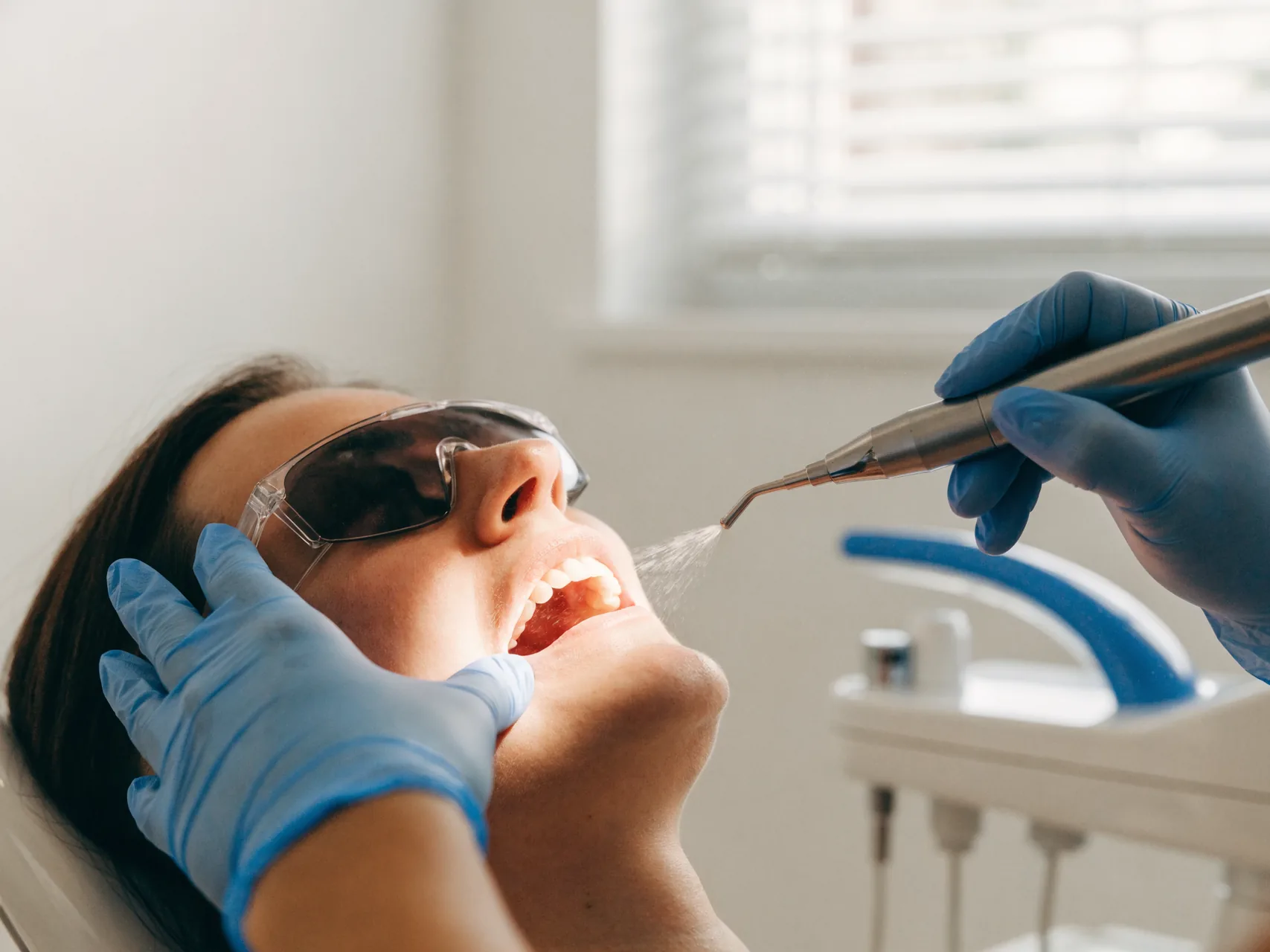
A person may arrive with bleeding gums, an old crown that traps food, a missing tooth and a wish for veneers. “Treat the gums first” sounds sensible, yet it is too crude to be a treatment plan. An abscess, deep decay, a fractured tooth or an unstable provisional restoration may need attention while periodontal assessment is still under way. A rough restoration may itself retain plaque and need adjustment during early periodontal care. Conversely, irreversible elective preparation should not be rushed while inflammation, prognosis and the likely gum position remain uncertain.
The safe answer is a case-specific sequence, not a blanket “gum treatment always first” rule. The sequence begins with diagnosis across the whole mouth, separates urgent from elective needs, records why each tooth is being restored, defines the periodontal endpoint needed for that restoration and includes reassessment before definitive work. Some people need only oral-hygiene support and correction of a plaque-retentive edge. Some need non-surgical periodontal therapy and supportive care. Some may be considered for specialist or surgical options. Others have an aesthetic recession or tissue-shape concern without periodontitis. Those are different pathways.
This guide is for adults researching gum treatment with crowns, veneers, bridges or implants, including people comparing local care with treatment in Turkey. It is not a diagnosis, prescription or promise of suitability. A photograph cannot measure periodontal attachment, identify all decay, test the pulp, assess mobility or cracks, determine restorability, justify radiographs, design a margin or establish a periodontal endpoint. An individual clinical assessment by the named responsible clinicians remains essential.
No provider, clinician, material, price, duration or outcome is endorsed here. No fixed restorative lifetime or periodontal result can be promised. The purpose is to help a patient obtain a coherent, tooth-specific plan, understand where evidence is strong or limited, and avoid an irreversible restorative timetable that has no documented periodontal logic.
If the narrower question is implant candidacy after previous or active gum disease, use the dental implants after gum disease guide. For crown suitability and material choices, use the zirconia crowns decision guide. This page owns only the sequencing boundary between periodontal care and restorative work.
Name the legal provider and clinical owners
Periodontal and restorative work may involve a dentist, dental hygienist or therapist within their scope, a periodontist, a restorative clinician, an implant clinician, a radiology service, a dental laboratory and a non-clinical coordinator. A website name does not establish who diagnoses, prescribes, treats or accepts responsibility. Before records, consent or payment, identify the named legal treatment provider and the individuals accountable for each clinical decision.
The responsibility map should state:
| Decision or task | Accountable identity to request |
|---|---|
| Whole-mouth diagnosis and integrated plan | Named treating dentist and legal healthcare provider |
| Periodontal diagnosis, prognosis and endpoint | Named periodontal clinician and their professional role |
| Crown, veneer or bridge prescription | Named restorative clinician |
| Implant assessment and placement, if proposed | Named implant clinician |
| Radiographic exposure and report | Responsible referrer, practitioner or reporting professional as applicable |
| Laboratory design and manufacture | Named laboratory or identifiable fabricating party |
| Provisional and definitive approval | Clinician accountable for fit, biology, function and consent |
| Routine maintenance | Named provider and documented recall pathway |
| Urgent review | Direct clinical contact and escalation route |
| Care after travel | Agreed overseas and local responsibilities |
A coordinator can collect records and organise appointments but cannot replace clinical assessment or consent. A laboratory can advise on manufacturability but does not decide whether a tooth should be prepared. A periodontal clinician may define periodontal needs, while the restorative clinician must explain how the proposed design respects them. If several people share a stage, the patient should know who makes the final decision.
Professional registration, regulatory scope, indemnity and the complaint route should be checked in the jurisdiction where care occurs. GDC standards cited later govern UK dental professionals; they do not automatically govern a Turkish provider. The plan should identify the Turkish legal provider and the applicable local registration and complaint mechanisms separately.
Separate urgent care from elective sequencing
Urgency changes order. Severe pain, spreading swelling, difficulty swallowing or breathing, uncontrolled bleeding, facial trauma, rapidly increasing mobility, fever with dental symptoms, a lost provisional that leaves a vulnerable tooth, or another acute concern should not wait for an aesthetic programme. The person should seek prompt assessment through an appropriate local dental or emergency service. The NHS gum-disease page lists very sore or swollen gums, loose teeth, ulcers, red patches and oral lumps among reasons for urgent dental advice; it is a public triage reference, not a remote diagnosis.
Elective sequencing begins only after immediate risk has been addressed. That does not mean every urgent intervention becomes the definitive restoration. A clinician may use drainage, caries control, a temporary restoration, protective adjustment, endodontic assessment, extraction where a tooth cannot be maintained, or another case-specific measure. The record should say whether the intervention is emergency stabilisation, provisional care or definitive treatment.
Useful questions are:
- What finding makes this urgent?
- Which intervention is needed now, and which can be decided after fuller records?
- Does the urgent step preserve future options?
- Does it change periodontal measurements or prognosis?
- Is a temporary restoration needed to control plaque retention or protect tooth structure?
- What would require escalation before travel?
- Who will reassess the tooth after the immediate problem settles?
Urgency should not be used as a sales device to expand an elective plan. Equally, a planned cosmetic appointment should never discourage a person from obtaining local urgent care.
Build one diagnosis map before choosing the sequence
A combined plan needs a single map that shows periodontal, tooth, restorative and patient-level findings together. Treating each speciality in isolation can produce contradictions: a crown margin placed where plaque control is difficult; periodontal surgery planned around a tooth that is not restorable; a bridge designed on an abutment with uncertain prognosis; or implant placement proposed before retained periodontal disease and maintenance capacity are considered.
The diagnosis map should record, where clinically relevant:
- the patient’s concerns, priorities and tolerance for uncertainty;
- medical history, medicines, allergies and previous reactions;
- smoking or other tobacco exposure;
- diabetes history and the information needed for individual risk discussion;
- pregnancy, possible pregnancy or breastfeeding when relevant to medicines or imaging;
- oral-hygiene practices and access around existing restorations;
- periodontal screening and, where indicated, detailed charting;
- bleeding, plaque, probing findings, recession, attachment and mobility;
- furcation involvement and tooth-by-tooth periodontal prognosis;
- caries, failing restorations and plaque-retentive contours;
- pulpal, periapical and endodontic findings;
- cracks, wear, erosion and remaining sound structure;
- occlusion, parafunction, tooth position and available restorative space;
- mucogingival features and aesthetic tissue concerns;
- missing teeth, implant sites and peri-implant tissue status;
- previous images and whether any new image has a justified purpose;
- photographs, scans, models and laboratory information needed for design;
- unknowns that can only be resolved during treatment.
This map should distinguish observations from diagnoses, provisional conclusions from confirmed findings and clinical needs from preferences. A patient should be able to trace every proposed procedure back to a named finding and stated objective.
Gingivitis, periodontitis, mucogingival and aesthetic concerns are different
“Gum problem” is not one diagnosis. Gingivitis is plaque-associated inflammation without the attachment loss that defines periodontitis. Periodontitis involves loss of supporting tissues and requires a more detailed diagnosis, prognosis and long-term supportive strategy. Recession may occur with or without active periodontitis and can relate to phenotype, tooth position, trauma, previous disease or other local factors. A gummy-smile concern, uneven gingival margins, insufficient keratinised tissue, a frenum issue or an altered passive-eruption question is not interchangeable with plaque-induced disease.
The SDCEP periodontal guidance states that formal diagnosis enables individualised care. For periodontitis, its diagnostic statement includes disease type, extent, stage, grade, current status and a risk-factor profile. Those terms carry meaning; they should not be copied from a marketing template or inferred from a panoramic image alone.
Each category changes restorative planning differently:
- Gingivitis may improve when plaque control and local retentive factors are addressed, but the response must be reviewed rather than assumed.
- Periodontitis requires tooth prognosis, stepwise therapy where indicated and supportive periodontal care.
- Recession may change the exposed root, sensitivity, aesthetic reference and available restorative margin.
- Mucogingival or phenotype concerns may prompt monitoring, restorative modification, orthodontic discussion, periodontal referral or a surgical conversation, depending on the individual case.
- Aesthetic gingival reshaping is elective and needs a diagnosis of tissue levels, tooth proportions, bone relationship and alternatives before removal of tissue.
- Peri-implant inflammation is not simply “gum disease around a crown” and needs implant-specific assessment.
One label should never authorise all these interventions. The written plan should name the diagnosis and the exact site.
Assess caries, pulp, roots, cracks, structure and restorability
Periodontal status is only one gate. A tooth with deep decay, pulpal disease, a root fracture, severe structural loss or an unfavourable restorative boundary may not be a sensible definitive abutment even if inflammation improves. Conversely, a tooth with periodontal attachment loss is not automatically beyond restoration. The decision requires a joined view of periodontal support, endodontic status, remaining tooth tissue, fracture risk, margin feasibility, function, patient priorities and maintainability.
For each tooth proposed for a crown, veneer or bridge role, ask:
- What is the diagnosis that justifies intervention?
- Is there active decay or an uncertain old restoration?
- Is the pulp healthy, reversibly inflamed, irreversibly affected or already treated?
- Are the roots and periapical tissues adequately assessed?
- Is there a crack, fracture or pattern of wear?
- How much sound structure remains?
- Can a margin be placed and finished without an unjustified biological compromise?
- Can the patient clean the proposed contour?
- What is the periodontal and restorative prognosis, and what uncertainty remains?
- What less invasive alternatives were considered?
- What happens if the tooth is monitored or left untreated?
“Restorability” should not become a hidden yes-or-no label. The clinician should explain the factors, the planned design and the point at which new findings would change the recommendation. If removal of an old crown may reveal decay or fracture, the quotation and consent should describe the contingency before treatment begins.
Tooth preservation matters because preparation for an indirect restoration is irreversible. A wish for symmetrical crowns does not itself justify preparing healthy teeth. A periodontal plan should support appropriate restorative care, not serve as a gateway to more units.
Define the periodontal endpoint before definitive restoration
“Healthy gums” is too vague to operate as a gate. The integrated plan should define the periodontal endpoint relevant to the planned restoration. That endpoint may include improved plaque control, a reduction in inflammation, a recorded response at treated sites, acceptable access for cleaning, a reviewed prognosis and a tissue position sufficiently understood for the proposed margin or emergence profile. It must be individual, measurable by the responsible clinician and connected to the restoration.
The endpoint is not a promise that every site will become identical or that previous periodontal damage will reverse. SDCEP notes that periodontitis-related tissue damage is irreversible even though disease can be stabilised. EFP guidance uses a stepwise pathway and reassessment to decide whether the person moves to supportive care, repeats an earlier step or is considered for further management. The precise clinical goals and residual-site decisions belong to the treating clinician.
For a definitive crown, the endpoint may focus on control at that tooth, margin access and whether the expected tissue position is sufficiently understood. For a veneer, it may focus on inflammation, recession risk, gingival symmetry and a finish line that preserves enamel where possible. For a bridge, every proposed abutment and the cleansability of the pontic region matter. For an implant, retained periodontal disease and modifiable risks require explicit attention before placement, and peri-implant maintenance must be feasible.
The endpoint should be dated, recorded and reassessed. “Proceed when ready” is not enough; “ready” needs a clinical definition.

Reassessment is a decision gate, not a calendar promise
There is no universal interval between periodontal care and definitive restoration. Tissue response, disease severity, the intervention performed, restorative urgency, provisional condition, patient self-care and the information needed for the next decision all vary. A travel date or laboratory slot cannot replace reassessment.
At reassessment, the named clinician should compare current findings with the baseline, review the patient’s experience and decide among several possibilities:
- the stated endpoint has been met and definitive planning can continue;
- plaque control or local inflammation needs further attention;
- non-responding sites need additional non-surgical management;
- specialist assessment or a surgical option should be considered;
- the restorative design or margin should change;
- a provisional should be modified to improve cleansability or tissue support;
- a tooth’s prognosis or restorability needs renewed discussion;
- the person prefers to pause, choose a less invasive option or stop;
- maintenance rather than further elective intervention is appropriate.
The reassessment record should identify who examined the patient, what was measured, what changed, what remains uncertain and why the next stage is proposed. Photographs can help document tissue form, but they do not replace periodontal measurements. A scan can record contours, but it does not establish disease activity.
No universal interval should appear as a guaranteed booking promise. If a provider gives an estimated window, it should be explicitly provisional and subject to the documented clinical gate.
Follow the EFP stepwise framework without turning it into a package
The European Federation of Periodontology’s S3-level guideline for stage I–III periodontitis organises care into a stepwise approach. Its evidence-based recommendations were developed from systematic reviews and expert consensus. The framework helps structure periodontal treatment; it does not dictate the same procedure, timing or restorative sequence for every patient.
In broad terms, the early step supports behaviour change, control of relevant risk factors, effective self-performed plaque control and professional management of supragingival plaque-retentive deposits or factors. A later step addresses subgingival instrumentation for patients diagnosed with periodontitis. Response is then assessed. Sites that do not respond as intended may lead to repeat instrumentation, referral or clinician-selected further treatment. Supportive periodontal care continues after active therapy.
The restorative plan should interact with those steps rather than sit outside them. Examples include:
- correcting an overhang or rough provisional that prevents cleaning during early therapy;
- postponing an elective subgingival margin while inflammation and prognosis are assessed;
- using a provisional contour to test cleansability before definitive manufacture;
- revising an abutment choice after periodontal reassessment;
- planning laboratory records once tissue and restorative reference points are adequately understood;
- preserving access for supportive care after definitive fitting.
The EFP pathway is not evidence that “deep cleaning” is the answer to every bleeding site, nor that surgery automatically follows non-surgical therapy. Diagnosis, response and patient preferences determine the next decision.
Plaque control and modifiable risks
Plaque control is not a lecture delivered once before restorative work. It is a practical design requirement shared by the patient and clinical team. The patient needs an achievable method for cleaning tooth surfaces, interdental spaces, bridge pontics, implant components and restoration margins. The clinician and laboratory need to avoid unnecessary plaque-retentive contours and provide access that matches the person’s dexterity, anatomy and chosen aids.
The plan should record what the person currently does, what is difficult and which sites repeatedly accumulate plaque. Instruction should be personalised and checked in practice. If an interdental aid cannot pass under a proposed pontic or around an emergence profile, the design needs review rather than blame.
Smoking and sub-optimally controlled diabetes are recognised risk factors in periodontal guidance. The conversation should be supportive and specific: explain relevance, offer appropriate cessation or medical-coordination routes and avoid using a risk factor as a moral judgement. Risk does not determine a treatment decision by itself; it changes consent, prognosis, maintenance and the threshold for elective complexity.
Local factors can include overhanging restorations, open contacts, rough margins, poorly contoured provisionals, inaccessible embrasures or caries. Correcting a local factor may be part of periodontal stabilisation, but replacement should be justified tooth by tooth. An acceptable restoration should not be removed merely because it is old.
Progress depends on behaviour, biology and design. None can be guaranteed. The record should show the support offered, the patient’s informed choices and the adjustments made to keep the plan maintainable.
Non-surgical and surgical periodontal care are clinician-selected options
Periodontal care ranges from prevention and personalised oral-hygiene support to professional mechanical plaque removal, subgingival instrumentation, management of local factors, supportive care, referral and, in selected cases, surgical approaches. The correct term and purpose should be used. “Deep clean” is not a sufficient prescription, and “gum surgery” is not one operation.
SDCEP advises that instrument choice for subgingival professional mechanical plaque removal should reflect the clinical situation, goal, clinician skill and patient preference. It also advises against routine local antimicrobials and routine systemic antibiotics for periodontitis in primary care. That does not make a remote rule for every person; it shows why routine add-ons should not be marketed without diagnosis and indication.
After response assessment, a clinician may consider repeating non-surgical care, specialist referral or a site-specific surgical discussion. Possible surgical categories include access procedures, regenerative approaches for selected defects, resective approaches, mucogingival surgery or crown-lengthening-related procedures. Naming a category does not establish suitability. Each carries different objectives, evidence, risks and restorative consequences.
The written proposal should state:
- the diagnosis and site;
- the objective of the proposed procedure;
- reasonable alternatives, including continued non-surgical or supportive care where relevant;
- expected uncertainties and material risks;
- how the procedure could alter tissue position or the restorative plan;
- what clinical finding permits or prevents definitive work;
- who performs and reviews it;
- what maintenance remains necessary.
Laser, graft material or another technique should not be presented as proof of superiority. The evidence and indication are more important than the equipment name.
Provisional and definitive restoration have different jobs
A provisional restoration is not merely a cheap version of the final one. It can protect prepared tissue, maintain space, test shape and function, support or avoid pressure on soft tissues, reveal cleaning problems and provide information before irreversible definitive fitting. The word provisional also signals that the plan may change.
During periodontal-restorative sequencing, a provisional may be appropriate when:
- an urgent defect needs protection while diagnosis continues;
- an old contour is preventing plaque control;
- the tissue response to a new emergence profile needs observation;
- occlusion and function need evaluation;
- abutment prognosis remains under review;
- laboratory design depends on later tissue records;
- the patient needs time to assess appearance and cleaning access.
A provisional can also cause harm if it is rough, overcontoured, poorly fitted, unstable or impossible to clean. It requires clinical review. A temporary label does not excuse inadequate care.
A definitive restoration should proceed only after the agreed gates are met: diagnosis, consent, periodontal endpoint, restorative design, tooth or implant readiness, laboratory prescription, try-in where applicable and a credible maintenance plan. Fitting should not be automatic because the laboratory has delivered the work or a return flight is booked.
If a definitive restoration is fitted while a relevant finding is unresolved, the record should explain the reason, alternatives and accepted uncertainty. The patient retains the right to pause or decline.
Supracrestal tissue attachment and margin position
The older phrase “biologic width” is now more accurately described as supracrestal tissue attachment. It refers to the junctional epithelium and supracrestal connective-tissue attachment above the alveolar crest. It is not a universal measurement that can be copied into every plan.
The EFP-hosted consensus report from the World Workshop states that infringement of restorative margins within the supracrestal tissue attachment is associated with inflammation and loss of periodontal supporting tissue. It also says the available evidence cannot determine whether the negative effects arise from plaque biofilm, trauma, material toxicity or a combination. This is an important boundary: the association supports careful design and assessment, but it does not justify a simplistic promise that one margin position guarantees health.
Margin planning considers the lesion or defect, remaining structure, caries control, retention needs, aesthetic objective, tissue phenotype, attachment, bone relationship, isolation, impression or scanning access, finishing, cleansability and future review. If sound structure is inaccessible without extending a margin deeply, the clinician should discuss alternatives and whether periodontal or orthodontic strategies are appropriate. Those strategies are not automatic.
Research is limited and cannot select a margin or surgical procedure for an individual patient. The decision belongs to the examining clinicians and should be recorded with the restorative rationale.
Supragingival and subgingival margins involve trade-offs
A supragingival margin is generally easier to see, finish, record and clean. It may support conservative care where the defect and design allow it. It can, however, be visible or fail to cover a lesion that extends below the gum. A subgingival margin may be considered for a case-specific restorative or aesthetic reason, but it can make isolation, recording, finishing, cement removal, monitoring and self-care more difficult.
The choice is not “visible versus beautiful”. It is a balance among tissue health, tooth preservation, defect extent, material requirements, aesthetic priorities and maintainability. The plan should identify why a subgingival finish line is proposed and which alternatives were considered.
Questions for the clinician include:
- Is there sound tooth structure at the intended margin?
- Does decay or an existing fracture extend below the gum?
- Can the area be isolated and recorded accurately?
- How will excess cement or bonding material be detected and removed?
- Can the person clean the final contour?
- Does the design approach the supracrestal tissue attachment?
- Could repair, orthodontic movement, a different restoration or no elective change preserve more tissue?
- Would periodontal surgery alter the tissue level or aesthetic reference?
- Who reviews the site after fitting?
Subgingival does not automatically mean wrong, and supragingival does not automatically mean problem-free. The clinical rationale and execution matter.
Crown-specific sequencing
A crown covers prepared tooth tissue and therefore requires an explicit justification. The tooth may have extensive structural loss, a large existing restoration, fracture, wear, endodontic history or another indication. Colour alone does not prove that full coverage is the least invasive option.
Periodontal-restorative crown planning should examine:
- the tooth’s periodontal support and prognosis;
- active caries and the quality of any core;
- pulpal and periapical status;
- remaining sound structure and ferrule-related design considerations;
- the intended finish line and access for cleaning;
- tissue phenotype, recession and anticipated aesthetic exposure;
- occlusal contacts and parafunction;
- the proposed material and minimum design requirements;
- whether a provisional is needed to test contours;
- how the laboratory will receive margin, shade and tissue information.
If periodontal therapy may change inflammation or tissue position around an aesthetic crown, definitive shade and margin records may need to follow reassessment. That is a clinical decision, not a universal waiting period. If the tooth urgently needs protection, a well-designed provisional may preserve options.
Replacing an existing crown should be based on fit, disease, structure, function, surface, contour or a clearly understood aesthetic objective. Removal has risks and may reveal a different condition beneath. A sound crown should not be sacrificed simply to create a uniform package.
The crown plan should name the exact tooth, reason, alternatives and contingency if the tooth proves less restorable than expected.
Veneer-specific sequencing
A veneer is an elective or restorative option for selected surfaces and should not be treated as a universal answer to colour or form. The amount and quality of enamel, existing restorations, tooth position, wear, bite, sensitivity, caries risk, periodontal status and aesthetic objective all influence suitability.
Gingival inflammation can distort the visual reference and make isolation or bonding more difficult. Recession may expose the root or change the desired finish line. Thin tissue, tooth prominence, traumatic brushing or orthodontic factors may matter. Aesthetic gingival surgery may alter proportions, but it requires its own diagnosis and consent.
Before veneer preparation, ask:
- Can whitening, orthodontics, direct bonding, repair or no treatment meet the objective with less tissue removal?
- Is the proposed margin in enamel where feasible?
- Is the tissue free from inflammation at the intended bonding site?
- Could recession make the edge visible?
- Will the contour allow interdental and marginal cleaning?
- Has a reversible design preview or additive mock-up been considered?
- Who approves the final form and gum relationship before bonding?
The restorative clinician and periodontal clinician should agree where their decisions overlap. That does not require every veneer patient to undergo periodontal treatment. It requires a documented assessment and a reasoned sequence.
No aesthetic simulation guarantees the biological or visual result. Consent should distinguish the intended design from an assured outcome.
Bridge-specific sequencing
A tooth-supported bridge links the prognosis and preparation of more than one unit. The abutment teeth, periodontal support, caries and endodontic status, span, occlusion, connector design, pontic contour and cleaning access must be considered together. One uncertain abutment can change the entire proposal.
The periodontal plan should identify:
- the support and prognosis of each abutment;
- whether mobility is stable, progressive or related to another finding;
- crown-root and structural considerations without reducing them to a single ratio;
- the condition of existing restorations;
- the shape of the edentulous ridge and mucosa;
- whether the proposed pontic can be cleaned;
- how the person will use floss threaders, interdental aids or another suitable method;
- whether a provisional bridge is needed to test contour and function;
- how a failure or change at one abutment would affect the design.
An implant, removable prosthesis, resin-bonded bridge, shorter-span design, orthodontic space management or no replacement may be among alternatives, depending on the case. Each has different biological, structural and maintenance implications.
A bridge should not be used to conceal untreated periodontal instability, nor should attachment loss alone make it impossible. A tooth-by-tooth prognosis and patient preference drive the comparison. The quotation should separate any provisional, core, endodontic, periodontal and laboratory contingencies rather than hiding them inside one bridge price.
Implant-specific sequencing
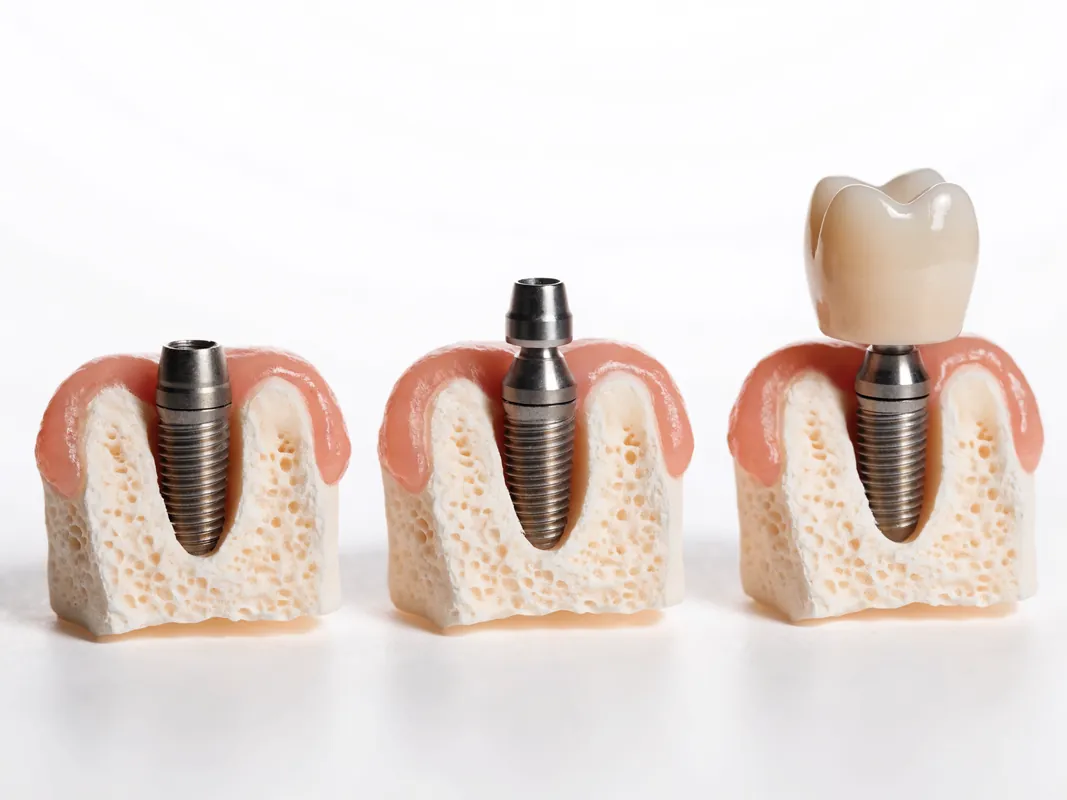
Implants are not immune to plaque-associated disease, and an implant crown is not planned solely from the missing space. The retained dentition, history of periodontitis, current periodontal status, smoking, diabetes, plaque control, bone and soft tissue, anatomy, restorative space, occlusion, implant position and maintenance capacity all affect the discussion.
SDCEP recommends stabilising periodontal disease around teeth to be retained and addressing modifiable risks before implant placement in a person with periodontitis. It also emphasises ongoing periodontal and implant maintenance. That supports a clear gate, but it does not supply a universal procedure or timetable.
The integrated plan should separate:
- whether an implant is an appropriate replacement option;
- whether the site is ready for placement;
- whether grafting or another site-development procedure is considered and why;
- whether immediate, early or delayed placement is being discussed;
- whether and how a provisional restoration is used;
- when a definitive implant restoration is clinically ready;
- which component and material records must be retained;
- how the emergence profile supports tissue care and cleansability;
- who monitors both periodontal and peri-implant tissues.
An implant crown margin and emergence profile require restorative-led planning before placement. If the implant is positioned mainly for surgical convenience, the final contour may be difficult to clean or restore. A named restorative owner should therefore be involved in the plan.
The possibility of a non-implant option, postponement or no replacement should remain visible.
Occlusion, materials and laboratory communication
Periodontal and restorative decisions meet at function as well as the gum line. Mobility, tooth migration, fremitus, wear, fracture, parafunction and available restorative space may affect design. Occlusal trauma is a diagnosis requiring differential assessment; it should not be inferred from a scan or solved by indiscriminate adjustment.
The laboratory prescription should communicate more than a shade. Depending on the restoration, it may include:
- the tooth or implant and restoration type;
- legal provider, prescribing clinician and laboratory identifiers;
- preparation or component records;
- margin location and tissue information;
- scan or impression quality and date;
- photographs with calibrated reference where relevant;
- provisional contours and requested changes;
- contact, emergence and pontic design;
- material family and exact specification;
- occlusal scheme and functional records;
- cleansability requirements;
- statement of conformity and traceability documents;
- try-in findings and authorised revisions.
Material selection should follow clinical and design needs. “Zirconia”, “ceramic” or “composite” describes a broad category, not a guaranteed behaviour. Strength, thickness, translucency, bonding or cementation, polishability, repairability and opposing materials matter. No material name compensates for poor margin design or inadequate plaque access.
A clinical try-in is a decision gate. The responsible clinician assesses fit, contacts, occlusion, tissue relationship and appearance, explains changes and confirms continuing consent. Laboratory deadlines should not force acceptance.
Smoking, diabetes, medicines and pregnancy need individual review
Medical and social information can alter periodontal risk, healing, bleeding, medicine selection, imaging questions and the practicality of travel. It should be obtained and updated by the clinical team, not reduced to a website tick box.
For smoking or other tobacco exposure, the discussion should cover periodontal relevance, cessation support and how continued exposure influences uncertainty, consent and maintenance. A person who smokes should not be shamed or given a fabricated success figure.
For diabetes, the clinician should ask about diagnosis, current care and information relevant to glycaemic control, then coordinate with the medical team where appropriate. Periodontal guidance recognises the two-way clinical relevance of diabetes and periodontal inflammation, but it does not permit a remote judgement from a single laboratory value.
Medicines may affect bleeding, immune response, dry mouth, gingival enlargement, bone-related risk or interactions with proposed prescriptions. Anticoagulants, antiplatelets, antiresorptive medicines, immunosuppressants and many other categories need medicine-specific assessment. No one should stop or alter a prescribed medicine because of a web page; the prescriber and dental clinician should coordinate.
Pregnancy can be associated with increased gingival inflammation, and proposed medicines or radiographic exposures require appropriate individual consideration. Urgent dental disease should not be ignored simply because a person is pregnant. The UKTIS BUMPS service provides evidence-based medicine-in-pregnancy information for patient and professional discussions. It does not replace the person’s dentist, GP, midwife, obstetric team or pharmacist.
Breastfeeding, allergies, previous adverse events and capacity or communication needs also belong in the record. Consent and planning should be tailored rather than assumed.
Imaging must answer a justified clinical question
Radiographs and other imaging can inform periodontal bone levels, caries, periapical status, roots, impacted structures, implant anatomy or another specific question. They are not a routine package component and should not be ordered solely because a patient is new or travelling.
In Great Britain, the current GOV.UK guidance to the Ionising Radiation (Medical Exposure) Regulations explains that every individual exposure must be justified before it occurs. The practitioner weighs the intended diagnostic or therapeutic benefit, individual characteristics, radiation detriment, previous information and alternatives that use less or no ionising radiation. That legal framework applies in Great Britain; a provider in Turkey must follow the relevant Turkish rules and professional standards.
The written record should identify:
- the clinical question;
- the referrer and person responsible for justification;
- relevant examination findings and previous images;
- why the selected view or modality is appropriate;
- who interprets and reports it;
- how the result changes the plan;
- how the image and report can be shared securely;
- whether pregnancy or another relevant factor was considered.
A panoramic image cannot provide every periodontal or restorative answer. Cone-beam imaging should never be portrayed as automatically necessary for crowns, veneers or periodontal care. Clinical examination comes first, and the selected image must be proportionate to the question.
Consent must remain valid as findings change
Consent is a continuing conversation, not a signature collected before travel. The patient needs understandable information about diagnosis, options, material risks, likely benefits, uncertainties, alternatives, costs and the consequence of doing nothing. Separate consent is needed for each stage and for material changes.
The GDC’s UK Principle Three states that consent must remain valid at each stage and that changes to agreed treatment or estimated cost require renewed consent and documentation. This UK guidance is a useful verification reference, not a statement of Turkish law. A Turkish provider should identify its applicable legal and professional duties.
For combined periodontal-restorative care, consent should be renewed when:
- detailed examination changes the remote proposal;
- periodontal response changes the restorative sequence;
- an old restoration is removed and new disease or fracture is found;
- a tooth is no longer considered restorable;
- surgery, extraction or implant care is newly proposed;
- the finish line or amount of preparation changes;
- a provisional reveals a design problem;
- the material or laboratory prescription changes;
- the number of units or cost changes;
- the patient’s health, medicines or preferences change.
The patient should have time to ask questions, seek a second opinion, pause or decline. Payment, travel booking or tooth preparation should never be described as removing that right.
Records and local handover
Good records make coordination and later care possible. They should be contemporaneous, attributable and understandable to another clinician. The GDC’s UK Principle Four identifies radiographs, consent documents, photographs, models, laboratory prescriptions, conformity statements and referral letters as parts of the record where available.
A periodontal-restorative handover may include:
- medical and dental history;
- presenting concerns and agreed objectives;
- periodontal screening and detailed charts where indicated;
- diagnosis, stage, grade, status, risk profile and prognosis where periodontitis is present;
- tooth-by-tooth restorative findings and restorability decisions;
- baseline and review photographs;
- radiographs with date, justification and report;
- procedures, materials and component identifiers;
- provisional design and review notes;
- laboratory prescription, revisions and statement of conformity;
- consent discussions and declined alternatives;
- fitting, occlusal and margin records;
- maintenance instructions;
- unresolved risks and review criteria;
- urgent contact and complaint routes.
The local dentist is not automatically responsible for overseas work. Before travel, ask whether a local clinician has agreed to provide routine review, emergency assessment or supportive periodontal care, what information they require and what fees apply. A discharge PDF sent after treatment is not a handover unless a receiving professional can understand and use it.
Records should be transmitted securely with the patient’s permission. Marketing messaging apps may be convenient, but confidentiality, data ownership and access need explicit explanation.
Maintenance and risk-based recall
Definitive fitting is not the end of periodontal-restorative care. Maintenance includes self-care, professional monitoring, risk-factor review, periodontal assessment, restoration and implant checks, and management of sites that deteriorate. The content and frequency should be based on current risk and findings rather than a universal calendar.
A maintenance plan should identify:
- what the patient should clean and how access has been tested;
- which periodontal and peri-implant measures are reviewed;
- how caries, margins, contacts, pontics, mobility and occlusion are monitored;
- which symptoms should prompt earlier assessment;
- who provides supportive periodontal care;
- how responsibility is divided between overseas and local providers;
- how records are shared;
- what happens if disease recurs or a restoration needs repair;
- which costs are included and which are separate.
Supportive periodontal care does not guarantee stability. It provides a structured opportunity to monitor risk, reinforce effective self-care and identify changes. A clinician may alter recall based on disease history, current status, risk factors, restoration complexity and patient needs.
Maintenance must influence design before fabrication. A bridge or implant restoration that cannot be cleaned by the intended patient has failed an important planning test, even if it looks satisfactory on a model.
Travel and the no-travel option
Travel adds dependencies: remote information may be incomplete, several stages may need reassessment, a provisional may require review, and an urgent problem may arise after the person returns home. The no-travel option should be compared openly with any overseas proposal.
The NHS guidance on treatment abroad advises patients to research the people and facilities, consider language, medical-record exchange, aftercare, complaints and insurance. The GDC’s patient guidance similarly recommends checking who will treat the patient, regulation, aftercare, complications and complaint pathways. These sources do not say that overseas care is always inappropriate. They show the questions a patient should settle before committing.
A travel plan should state:
- which findings are based only on remote material;
- what can change after in-person examination;
- which periodontal and restorative gates must occur;
- whether more than one clinical visit or journey might be required, without promising a number;
- what happens if the tissue is not ready for definitive work;
- whether a provisional can remain safely in place;
- what signs make flying or elective treatment inappropriate;
- who provides urgent assessment during and after the trip;
- what insurance does and does not cover;
- how the local dentist receives records;
- who pays for review, repair, additional travel or changed treatment.
Travel convenience should never determine whether an irreversible stage proceeds. A person may choose local care, split care between locations, postpone elective treatment or decline it entirely.
Itemised quotation and changed-plan terms
A responsible quotation mirrors the clinical sequence. It should not bundle an uncertain periodontal diagnosis, multiple restorations and travel services into one number that cannot be audited.
Clinical lines may include, where applicable:
- examination and diagnostic records;
- periodontal charting and risk assessment;
- radiographs or scans that become justified;
- preventive and non-surgical periodontal care;
- specialist opinion or a proposed surgical stage;
- caries, endodontic or structural stabilisation;
- provisional restoration and its review;
- crown, veneer, bridge or implant components by tooth or site;
- laboratory manufacture and remake terms;
- try-in and definitive fitting;
- supportive periodontal and restorative review;
- records and local handover.
The quotation should mark estimates and contingencies. It should explain what happens if an old crown reveals decay, a tooth is not restorable, periodontal response is insufficient, the patient declines a revised plan, a laboratory item needs modification or definitive care is postponed. Any non-clinical travel service should have a separate supplier, scope and cancellation terms rather than being used as evidence of clinical quality.
Changed-plan terms should preserve renewed consent. A deposit or package condition should not compel acceptance of additional preparation or surgery. Request receipts, legal entity details, currency, tax treatment where relevant and the complaint route. Independent advice may be sensible before accepting broad irreversible work.
Red flags in a periodontal-restorative proposal
Pause and ask for clarification if a proposal:
- says every case follows “gums first, crowns next” without a diagnosis map;
- relies on a photograph or panoramic image as a complete periodontal assessment;
- calls bleeding gums periodontitis without appropriate examination;
- proposes the same periodontal procedure for every patient;
- promises a fixed tissue response, timetable or restorative lifetime;
- cannot name the legal provider or responsible clinicians;
- uses a coordinator as the source of clinical advice;
- expands the number of crowns or veneers without tooth-specific reasons;
- treats recession, gingivitis and periodontitis as the same problem;
- proposes surgery, laser or antibiotics as a routine package element;
- provides no periodontal endpoint or reassessment gate;
- cannot explain the intended margin and cleaning access;
- uses an implant brand or material name as proof of suitability;
- has no provisional or fallback plan if findings change;
- says travel dates require definitive fitting;
- does not identify the laboratory or provide traceability;
- offers no maintenance or local handover plan;
- hides contingencies inside one package price;
- guarantees appearance, stability or service life;
- discourages a second opinion or urgent local assessment.
A red flag is a prompt to verify, not proof of misconduct. The provider may supply a satisfactory explanation and documentation. If answers remain vague, the patient can pause and compare another plan.
Questions to ask the named clinicians
Take these questions to the consultation:
Diagnosis and responsibility
- What is my periodontal diagnosis at each relevant site?
- Is this gingivitis, periodontitis, recession, a mucogingival concern, peri-implant disease or another finding?
- What are the extent, stage, grade, current status and risk profile if periodontitis is diagnosed?
- Who is the named legal treatment provider?
- Who is the named periodontal clinician?
- Who is the named restorative clinician?
- Which decisions does each clinician own?
Teeth and restorability
- Why does each tooth need a crown, veneer or bridge role?
- What caries, pulpal, root, crack or structural findings affect the plan?
- Which teeth can be monitored, repaired or treated more conservatively?
- What would make a tooth unsuitable as an abutment?
- What could be discovered when an old restoration is removed?
Sequence and endpoint
- Which needs are urgent and which are elective?
- What periodontal endpoint is required for each definitive restoration?
- How will response be measured?
- What happens if the endpoint is not met?
- Which work remains provisional until reassessment?
- Is a specialist opinion needed?
- Is no treatment or postponement reasonable?
Design and maintenance
- Where will each margin be, and why?
- How does the design respect the supracrestal tissue attachment?
- Can I clean every margin, pontic and implant contour?
- How will provisional contours be tested?
- What occlusal and functional records are needed?
- Which material is proposed, and what exact laboratory specification is recorded?
- Who reviews maintenance and at what risk-based frequency?
Travel, cost and remedy
- What information is missing until I am examined?
- What makes travel or definitive treatment inappropriate?
- Who manages an urgent problem after I return?
- Has a local dentist agreed to any role?
- Which records will I receive?
- Is every stage and contingency itemised?
- What are the changed-plan, cancellation, complaint and remedy terms?
Written answers make comparison easier than verbal reassurance.
Decision checklist
Do not treat the checklist as consent. Use it to identify missing information.
Before committing
- [ ] Legal treatment provider identified
- [ ] Periodontal and restorative clinical owners named
- [ ] Registration and applicable regulator checked
- [ ] Whole-mouth and tooth-specific diagnosis documented
- [ ] Urgent needs separated from elective aims
- [ ] Periodontitis classification and prognosis recorded where relevant
- [ ] Caries, pulp, roots, cracks and restorability assessed
- [ ] Reasonable alternatives, including no treatment, compared
- [ ] Imaging tied to a justified clinical question
- [ ] Periodontal endpoint defined for each definitive restoration
- [ ] Reassessment gate written without a guaranteed calendar
- [ ] Provisional and fallback pathway explained
- [ ] Margin, tissue and cleansability plan discussed
- [ ] Material and laboratory responsibilities identified
- [ ] Medical history, medicines, smoking, diabetes and pregnancy factors reviewed
- [ ] Maintenance and local handover planned
- [ ] Travel and no-travel options compared
- [ ] Quotation itemised with contingencies
- [ ] Complaint and remedy pathway supplied
Before definitive fitting
- [ ] Baseline and reassessment findings compared
- [ ] Periodontal endpoint reviewed by the responsible clinician
- [ ] Tooth or implant remains suitable for the agreed restoration
- [ ] Preparation, margin and tissue records are complete
- [ ] Provisional findings have been incorporated
- [ ] Laboratory prescription and traceability are available
- [ ] Fit, contacts, occlusion, contour, cleansability and appearance assessed
- [ ] Any change in treatment or cost has renewed consent
- [ ] Patient has had an opportunity to pause or decline
- [ ] Maintenance and urgent-contact instructions are usable
Before returning home
- [ ] Clinical summary received
- [ ] Periodontal charts and relevant images received
- [ ] Material, component and laboratory records received
- [ ] Fitting and occlusal notes received
- [ ] Unresolved findings clearly listed
- [ ] Local handover accepted rather than assumed
- [ ] Urgent symptoms and contact routes understood
- [ ] Review and maintenance responsibilities agreed
Sources, limits and review dates
All sources below were live-reviewed on 29 August 2026. They support the decision framework; none can diagnose a reader or select an individual procedure. Guidance is updated, so patients and clinicians should re-open the current source rather than rely only on this summary.
- European Federation of Periodontology, Guideline on treatment of stage I–III periodontitis: https://www.efp.org/education/continuing-education/clinical-guidelines/guideline-on-treatment-of-stage-i-iii-periodontitis/ — reviewed 29 August 2026. This is the EFP’s official guideline hub and explains the evidence-based, stepwise framework.
- Sanz M and colleagues, Treatment of stage I–III periodontitis: the EFP S3-level clinical practice guideline, Journal of Clinical Periodontology: https://onlinelibrary.wiley.com/doi/10.1111/jcpe.13290 — reviewed 29 August 2026. This is the primary guideline paper. Recommendations vary in strength and certainty and do not create a patient-specific restorative sequence.
- British Society of Periodontology and Implant Dentistry, UK Clinical Practice Guidelines for the Treatment of Periodontitis: https://www.bsperio.org.uk/professionals/bsp-uk-clinical-practice-guidelines-for-the-treatment-of-periodontitis — reviewed 29 August 2026. This is the BSP’s official UK implementation hub.
- British Society of Periodontology and Implant Dentistry, Gum Diseases patient resource: https://www.bsperio.org.uk/assets/downloads/Gum_Diseases.pdf — reviewed 29 August 2026. It is a brief public-awareness resource, not a diagnostic tool.
- NHS, Gum disease: https://www.nhs.uk/conditions/gum-disease/ — reviewed 29 August 2026. It supports public information about symptoms, urgent advice and the fact that treatment depends on severity.
- Scottish Dental Clinical Effectiveness Programme, Prevention and Treatment of Periodontal Diseases in Primary Care, guidance summary: https://www.periodontalcare.sdcep.org.uk/guidance/summary/ — reviewed 29 August 2026. It supports structured diagnosis, risk assessment, professional mechanical plaque removal where indicated, response assessment, supportive care and implant-related periodontal planning.
- Scottish Dental Clinical Effectiveness Programme, Stepwise approach: https://www.periodontalcare.sdcep.org.uk/guidance/planning-treatment/stepwise-approach/ — reviewed 29 August 2026. It explains reassessment after active steps, management of non-responding sites and risk-based supportive care.
- Jepsen S and colleagues, World Workshop consensus report on systemic, developmental and acquired periodontal conditions: https://www.efp.org/fileadmin/uploads/efp/Documents/Campaigns/New_Classification/Reports/Consensus_report__Workgroup_3__Jepsen_et_al-2018-Journal_of_Clinical_Periodontology.pdf — reviewed 29 August 2026. It supports the terminology supracrestal tissue attachment and summarises evidence concerning restorative margins and periodontal tissues. The research does not define a universal emergence profile or individual margin.
- General Dental Council, Principle Three — Obtain valid consent: https://standards.gdc-uk.org/pages/principle3/principle3 — reviewed 29 August 2026. It is a UK professional standard concerning options, costs, understanding and continuing consent.
- General Dental Council, Principle Four — Maintain and protect patients’ information: https://standards.gdc-uk.org/pages/principle4/principle4 — reviewed 29 August 2026. It identifies record types and confidentiality duties for UK dental professionals.
- Department of Health and Social Care, Guidance to the Ionising Radiation (Medical Exposure) Regulations 2017: https://www.gov.uk/government/publications/ionising-radiation-medical-exposure-regulations-2017-guidance/guidance-to-the-ionising-radiation-medical-exposure-regulations-2017 — reviewed 29 August 2026. It supports individual justification and optimisation of exposures in Great Britain.
- NHS, Going abroad for medical treatment: https://www.nhs.uk/using-the-nhs/healthcare-abroad/going-abroad-for-treatment/going-abroad-for-medical-treatment/ — reviewed 29 August 2026. It supports checking provider identity, record exchange, aftercare, complaints and insurance.
- General Dental Council, Going abroad for dental treatment: https://www.gdc-uk.org/standards-guidance/information-for-patients-public/going-abroad-for-dental-treatment — reviewed 29 August 2026. It is UK patient guidance about assessment, regulation, questions, aftercare and complaints. It does not regulate a Turkish provider.
- UK Teratology Information Service, BUMPS medicines-in-pregnancy information: https://www.medicinesinpregnancy.org/ — reviewed 29 August 2026. It supports medicine-specific discussion with appropriate healthcare professionals; it is not a substitute for prescribing advice.
Evidence boundaries matter. The EFP and SDCEP sources strongly support diagnosis, stepwise periodontal care, response assessment and maintenance. The World Workshop source supports careful attention to supracrestal tissue attachment and restorative design, while acknowledging uncertainty about mechanisms and emergence-profile evidence. None supplies a universal “gums first” timetable, a mandatory restorative material, an assured tissue result or a fixed service life. Those decisions require individual examination, patient preference and accountable clinical judgement.