A Turkey versus Mexico dental tourism search can sound like a contest between flags. That framing hides the decisions that matter. A country does not examine a tooth, decide whether it can be preserved, accept responsibility for implant placement, design a bridge, control a laboratory prescription, hand over records or resolve a complaint. Those duties belong to named legal providers, named clinicians, laboratories, device suppliers and other parties whose roles must be documented.
This page is a provider and proposal verification worksheet. It does not choose a destination. The separate Turkey versus Mexico dental tourism decision guide explains broad destination-level planning questions. Use this comparison page when two real proposals are already on the table and you need to test whether they describe equivalent clinical work, verifiable professional responsibility and a manageable travel-and-aftercare pathway.
The method is deliberately neutral. It publishes no country winner, fixed treatment price, saving, flight time, route, fare, package, provider endorsement, accreditation claim, outcome rate, language-availability claim or climate-healing claim. Remote information cannot diagnose suitability. Travel schedules, border processes, entry rules, official registers, complaint routes and insurance terms can change. Verify them through current official sources for the exact provider, clinician, location, origin, dates and policy before treatment or payment.
How to Use This Provider Verification Worksheet
Create one evidence folder for the Turkish proposal and another for the Mexican proposal. Do not score a statement because it appears in a brochure, message or video. Mark it only when the named party supplies evidence that applies to the current patient and current plan. Use five labels:
- Verified: the fact is supported by a current official register, signed clinical document, original record or written contract tied to the correct legal name.
- Provisional: the point is based on remote information and must be confirmed after an appropriate in-person assessment.
- Conditional: the item applies only if a defined clinical or commercial event occurs.
- Excluded: the provider has stated that the item is outside the quotation or responsibility.
- Unanswered: the question has not received a usable written answer.
Keep the distinction between clinical evidence and commercial evidence. A scan report can support a clinical question but cannot identify the contracting company. An invoice can identify the payee but cannot establish why a tooth should be extracted. A register result can support identity checking but cannot prove that the listed clinician reviewed the case or will perform a procedure. A device label can support traceability but cannot make a treatment suitable.
Do not average unanswered items into a reassuring overall score. A missing legal provider, missing responsible clinician, unexplained extraction, undefined definitive restoration or absent urgent-care route is a decision gate. The proposal remains incomplete until the gap is resolved or the patient chooses another pathway.
The Comparison in One Evidence Table
Copy this table into a document and replace each blank with evidence rather than an assumption.
| Verification layer | Turkish proposal | Mexican proposal | Evidence required |
|---|---|---|---|
| Contracting legal provider | Legal name, physical treatment address, invoice identity and complaint contact | ||
| Facility status | Current official route and facility-specific evidence | ||
| Treating clinicians | Full names, professional identifiers, assigned roles and who reviewed the plan | ||
| Diagnosis | Tooth-by-tooth findings, symptoms, periodontal and restorative status, relevant imaging | ||
| Tooth preservation | Prognosis, alternatives and reasons before any extraction | ||
| Implant scope | Sites, placement timing, loading plan, graft contingency and restoration stages | ||
| Restorative scope | Teeth, preparation type, provisional work, definitive material and design responsibility | ||
| Components and laboratory | Prescribed system, component record, laboratory identity, design and substitution control | ||
| Consent and language | Understandable plan, risks, alternatives, interpreter identity and time to decide | ||
| Records and privacy | Record list, delivery format, controller identity, recipients and secure transfer route | ||
| Itemised quotation | Equivalent clinical lines, conditions, exclusions, revision process and payment stages | ||
| Travel burden | Live door-to-door itinerary from the real origin plus change and accessibility scenarios | ||
| Aftercare | Named destination and home responsibilities, maintenance and escalation contacts | ||
| Complaints and remedy | Provider procedure, competent official route, applicable law and practical enforcement |
The table does not create a clinical score. Its purpose is to reveal whether the two documents can be compared at all. If one proposal is a sales estimate and the other is a clinician-reviewed provisional plan, they are not at the same evidence stage. If one includes only surgical placement and the other includes the definitive prosthesis, their totals are not comparable. If one assumes extraction and the other assesses preservation, they do not answer the same clinical question.
Begin With the Exact Legal Provider, Not the Website Brand
Write down the exact legal name that will provide treatment, issue the clinical records, take payment and receive a complaint. A website name, coordinator name, social-media account, overseas booking company or travel facilitator may differ from the healthcare provider. Ask each party to state its role and legal identity in writing.
For each proposal, record:
- the legal provider name and registered or licensed treatment address;
- the name shown on the quotation, consent form, invoice and payment account;
- whether any booking or coordination company is legally separate;
- who is responsible for the clinical record;
- who employs or contracts each treating clinician;
- who commissions the laboratory work;
- who supplies any device or component;
- where complaints must first be submitted;
- which law and court or dispute route the contract identifies;
- whether the patient is contracting with one entity or several.
Names must match. If the advertisement, treatment plan, invoice and bank beneficiary show different entities, obtain a written relationship map before paying. A coordinator can facilitate communication but should not be treated as the clinical decision-maker unless that person is an appropriately authorised dental professional acting within a defined role. A travel service can organise logistics but cannot take ownership of diagnosis by implication.
Search the exact legal name, not a similar brand. Save a dated copy or screenshot of the relevant official result and the URL used. Absence from one search result does not itself prove unlawful practice; names, entity types and registers can differ. It does mean the proposed provider should explain the correct official verification route and supply evidence that can be checked independently.
Verify a Turkish Proposal Through Current Official Routes
For a treatment facility in Türkiye, start with the Republic of Türkiye Ministry of Health's [authorised healthcare-provider page](https://saglikturizmi.saglik.gov.tr/EN%2C69063/healthcare-providers-authorized-by-the-ministry.html) and the Ministry-linked [HealthTürkiye oral and dental facility list](https://www.healthturkiye.com/hospitals-list?filters=branch%3A18%3Bcity%3A&pageIndex=0). Search for the exact health-facility name and location shown in the treatment documents. The name used by an overseas coordinator may not be the legal facility name.
The [Turkish Dental Association dentist search](https://tdb.org.tr/dishekimi_arama.php) is a separate identity check for a named dentist. Ask for the full name as it appears professionally and confirm the role in the case. A facility result does not prove that a particular person is assigned. A dentist result does not prove that the person reviewed the remote records, will attend the procedure, has the claimed case experience or accepts responsibility for another clinician's work.
Record the retrieval date, exact search term and result. If a provider relies on another document or authority, request the document and verify the issuing body through an official channel. Treat authorisation as a legal-status check, not a quality grade, outcome promise or substitute for case-specific consent.
Türkiye's Ministry of Health [patient-rights portal](https://hastahaklari.saglik.gov.tr/) describes patient-rights applications, information, privacy, consent and complaint handling. Access requirements and jurisdiction may matter for an overseas patient, so ask the facility for its internal written complaint procedure and the current competent external route. Keep the provider's legal name, records, invoices and correspondence because a complaint body may need to identify the actual healthcare relationship.
Verify a Mexican Proposal Through Current Official Routes
For a Mexican proposal, separate professional identity, establishment requirements, clinical complaints and consumer disputes. They are not the same check.
The Secretaría de Educación Pública's [Cédula Profesional portal](https://www.gob.mx/cedulaprofesional) provides the official starting point for the Registro Nacional de Profesionistas. Search the treating dentist's exact name and review the professional credential information available. If a specialist title is material to the proposal, ask which credential supports that title and how it can be checked. A cédula result supports identity and qualification checking; it does not establish assignment to the case, current clinical judgement, experience with a specific procedure or responsibility for laboratory work.
Mexico's federal health-risk authority, COFEPRIS, publishes information on the [Aviso de Funcionamiento and Responsable Sanitario for health-service establishments](https://www.gob.mx/cofepris/acciones-y-programas/aviso-de-funcionamiento-responsable-sanitario-y-otros-para-establecimientos-que-ofrecen-servicios-de-salud). Ask the provider which establishment notice, licence or other requirement applies to the exact facility and procedures, then request facility-specific evidence. The official page explains categories and obligations; a generic link is not proof that a particular clinic has made the required filing.
Mexico's official clinical-record standard, [NOM-004-SSA3-2012 in the Diario Oficial de la Federación](https://dof.gob.mx/normasOficiales/4909/SALUD/SALUD.html), is a primary reference for the clinical record and related documentation. Use it to ask what record will exist, who controls it, how copies are requested and how consent documentation is handled. Do not assume an English marketing summary is the complete clinical record.
For a medical-care dispute, the Comisión Nacional de Arbitraje Médico publishes current [requirements for presenting a complaint](https://www.gob.mx/conamed/acciones-y-programas/requisitos-para-presentar-una-queja). CONAMED identifies records, receipts and documents that may support a complaint. For a commercial issue, the Procuraduría Federal del Consumidor publishes [consumer complaint routes](https://www.gob.mx/profeco/documentos/tuviste-algun-problema-de-consumo?state=published) and the [Buró Comercial](https://burocomercial.profeco.gob.mx/). Confirm which route can address the exact provider, conduct and remedy; no portal guarantees jurisdiction or compensation.
Verify Every Clinician and Assign Every Stage
An implant or complex restorative case can involve more than one clinician. Ask for a role table rather than a team photograph. Include the person who examines and diagnoses, the person who approves extraction, the person who places implants, the restorative clinician, the person responsible for occlusion and definitive fit, and any clinician providing sedation or another separately regulated service where relevant.
For every person, request:
- full professional name and current identifier;
- the exact procedure or decision owned;
- whether the person has personally reviewed the current records;
- whether the assignment is confirmed or merely anticipated;
- who covers the role if the named person changes;
- how a substitution is disclosed and consented to;
- who signs the operative and restorative records;
- who remains responsible after the patient leaves.
Do not convert a credential into a result claim. Training, registration and experience evidence can inform verification, but they do not guarantee suitability, execution or outcome. Ask for evidence that is relevant to the proposed procedure and verify it with the issuing body where possible. A coordinator's description of a clinician is not the same as the clinician's own dated assessment.
The proposal should also connect clinical ownership across stages. If one dentist places implants and another restores them, the plan should identify who approved implant positions for the final prosthesis, who accepts the handover and who manages disagreement. If an external laboratory changes a design, a named clinician should approve the clinical prescription. Distributed work can be legitimate; invisible responsibility is the problem.
Establish the Same Diagnostic Question Before Comparing Treatment
Two proposals cannot be equivalent if they begin with different diagnoses. Ask each provider for a tooth-by-tooth and site-by-site provisional diagnostic map. It should separate observed findings, reported symptoms, missing information and patient-specific conclusions that await examination.
The map may need to address:
- teeth present, missing, restored or already treated;
- caries, cracks, failing restorations or suspected infection;
- periodontal condition and support;
- endodontic status where relevant;
- bite, wear, parafunction and functional concerns;
- soft-tissue condition and hygiene access;
- bone and anatomical considerations for proposed implants;
- aesthetic concerns and the patient's priorities;
- medical history, medicines, smoking or other relevant factors;
- the uncertainty created by unavailable or outdated records.
Do not let a treatment menu replace diagnosis. A quote for a number of crowns, implants or veneers can look precise while the clinical question remains unresolved. Ask which finding justifies each item and which alternatives were considered. If the proposal changes the number of teeth or sites without explaining the diagnostic difference, stop the price comparison and resolve the clinical discrepancy first.
A second opinion is most useful when it reviews the same records and answers the same question. Send both clinicians the same history and available records, but allow each to request what is clinically necessary. Do not demand identical treatment. The goal is to understand why plans differ and whether the reasoning is documented, not to force consensus.

Treat Remote Assessment as Provisional
Photographs, messages, a panoramic image and a video call can help organise questions. They do not reproduce an in-person examination, palpation, periodontal measurements, mobility testing, vitality testing, bite assessment or every view needed for diagnosis. Image quality, date, positioning and missing clinical context also matter.
The American Dental Association's official [evidence and clinical-practice-guideline page](https://www.ada.org/resources/research/science/evidence-based-dental-research) links to current patient-selection recommendations for dental imaging. The ADA's official [summary of the current radiography recommendations](https://adanews.ada.org/ada-news/2026/january/new-ada-recommendations-confirm-dental-imaging-most-effectively-used-in-moderation/) emphasises selecting imaging for the clinical question, including the roles of panoramic imaging and cone-beam computed tomography in implant assessment and planning. This is a decision principle, not an instruction for an individual patient.
Ask each provider to label the remote proposal clearly:
- which records were actually reviewed;
- who reviewed them and when;
- what can reasonably be inferred;
- what cannot be concluded remotely;
- which examination and imaging gates remain;
- what findings could change extraction, grafting, implant, material or timing decisions;
- when a revised plan and quotation will be issued;
- whether the patient can pause or decline after the in-person findings.
Do not book irreversible treatment around a remote certainty that the treating clinician has not adopted. A responsible provisional plan makes uncertainty visible and includes a change pathway.
Make Tooth Preservation an Explicit Gate
The comparison must show how every tooth proposed for extraction was assessed. An implant is an option for replacing a missing tooth; it is not evidence that a present tooth lacks a reasonable preservation pathway. For each tooth, request the diagnosis, prognosis, symptoms, supporting tests, relevant restorative, periodontal or endodontic alternatives, and the reason extraction is recommended.
Ask the patient-specific questions:
- Is the tooth restorable, and what evidence supports that view?
- Is disease control needed before a definitive decision?
- Would periodontal or endodontic assessment change the options?
- What are the consequences of preservation, extraction and no treatment?
- Is the proposed extraction driven by the final prosthetic design?
- Could a removable, tooth-supported, implant-supported or staged alternative preserve more tissue?
- What happens if the patient declines extraction?
For complete-arch proposals, the ITI [consensus on implant number and tooth preservation](https://academy.iti.org/academy/consensus-database/consensus-statement/-/consensus/number-of-implants-placed-for-complete-arch-fixed-prostheses/1701) places preservation options within informed-consent planning and links implant distribution to the final prosthetic plan. It does not prescribe an individual design. The named clinician owns the decision after assessment.
Compare the Turkish and Mexican proposals only after both state the preservation reasoning. A plan that preserves selected teeth and a plan that removes them may each require consideration, but they are different clinical scopes. The difference cannot be reduced to an implant count or country label.
Normalise Single, Multiple and Full-Arch Implant Scope
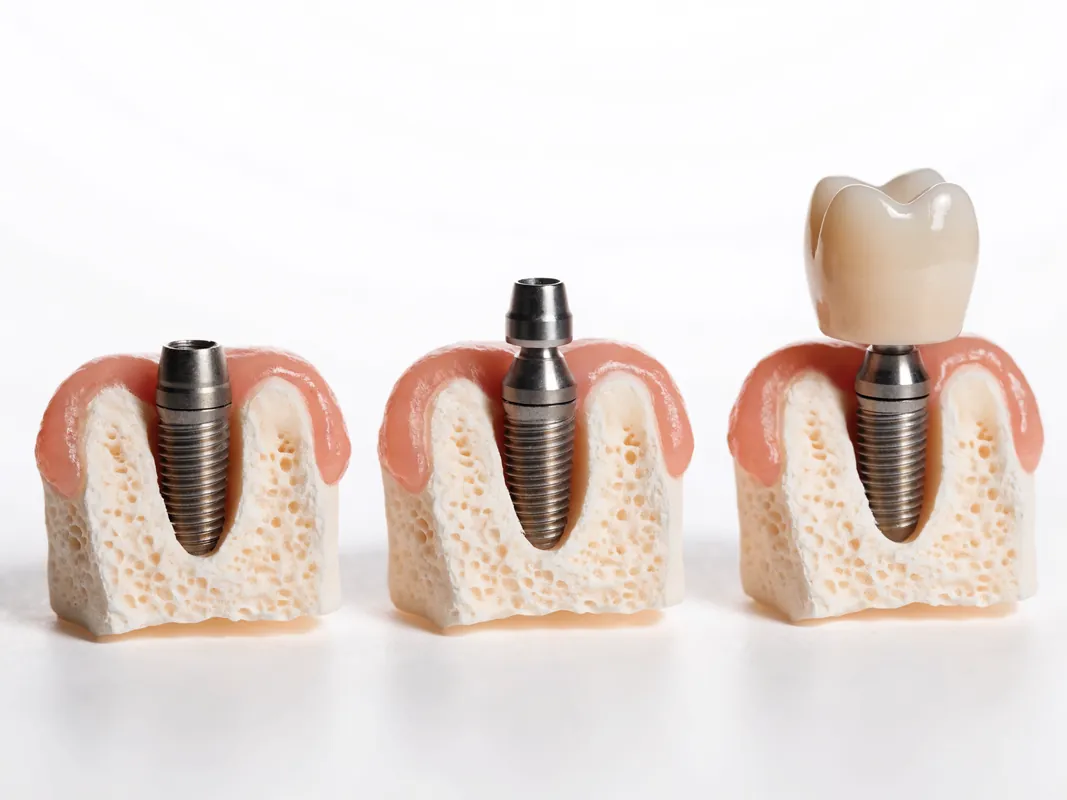
The word implant may refer only to the fixture, or to a pathway that also includes an abutment, provisional restoration, definitive crown or bridge, laboratory stages and reviews. Rewrite both quotations into the same anatomy-based structure.
For a single missing tooth, identify the tooth or site, whether extraction is involved, placement timing, graft contingency, provisional option, definitive abutment and crown, laboratory responsibility, bite adjustment, records and maintenance. Compare a dental implant treatment guide for vocabulary, but rely on the named clinician for the personal plan.
For several adjacent missing teeth, identify every missing site, proposed implant position, whether crowns are separate or connected, which spaces are pontics, the span and cantilever design if any, hygiene access, repairability and what happens if an implant cannot be used. A quotation for each fixture is not the same as a quotation for the completed restorative system.
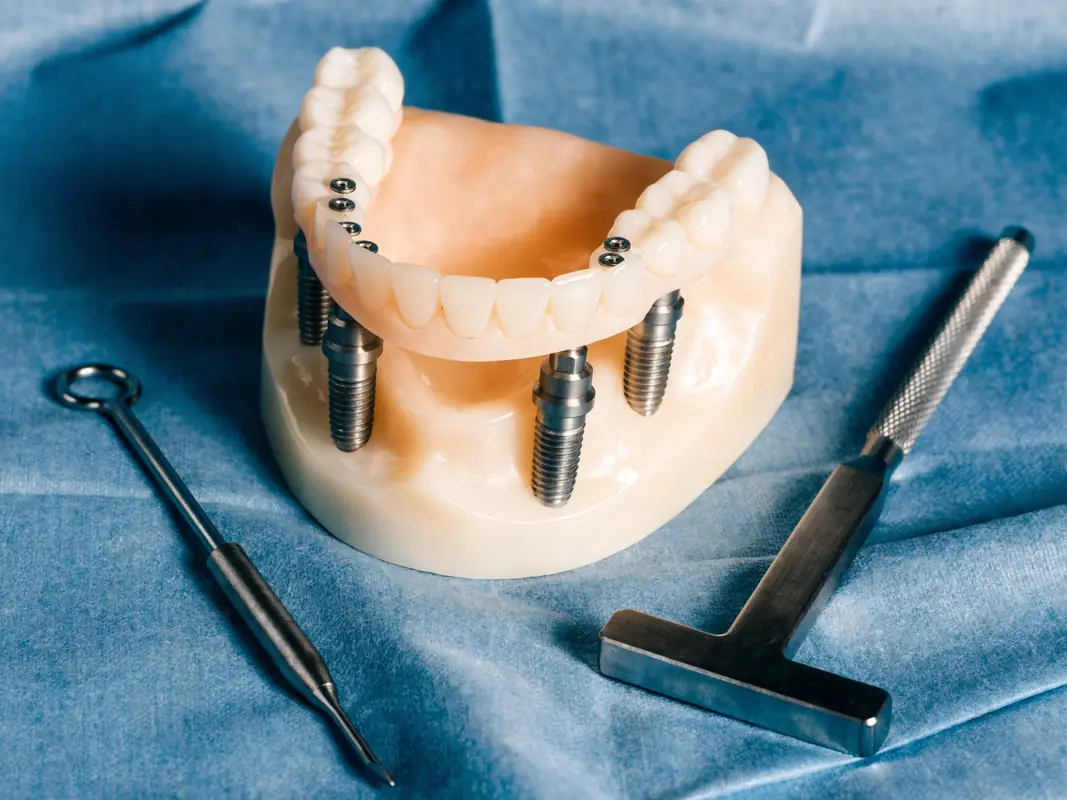
For one or both arches, identify the tooth-preservation decision, fixed and removable alternatives, number and distribution rationale, prosthetic space, opposing dentition, provisional design, definitive design, hygiene method, component record, maintenance and contingency if support changes. A commercial full-arch label does not establish the design or number appropriate to one patient.
Never compare a fixture-only line with a finished-tooth line. Never compare one arch with both arches. Never compare a removable restoration with a fixed one without making the functional and maintenance differences explicit.
Separate Extraction, Placement and Loading Decisions
Three events are often compressed into phrases such as immediate implant or immediate teeth:
- removal of a tooth;
- placement of an implant relative to extraction and healing;
- connection of a restoration and whether it carries functional contact.
The ITI [implant placement and loading consensus](https://academy.iti.org/academy/consensus-database/consensus-statement/-/consensus/implant-placement-and-loading-protocols/1802) defines placement and loading as separate classifications and recommends alternative pathways when required clinical criteria are not met. Use that distinction to question both proposals without predicting personal suitability.
Ask each clinician to state:
- the intended placement protocol for each site;
- the intended loading or restoration protocol;
- the pre-operative criteria;
- the intra-operative criteria that must be satisfied;
- what evidence will be recorded;
- the fallback if stability, anatomy, infection control, grafting or another factor changes;
- whether a provisional restoration is in or out of functional contact;
- who decides progression to the next stage.
A promotional phrase is not a contingency plan. The quotation should show the alternative deliverable and its financial effect if immediate progression is not appropriate. Consent should cover both the intended pathway and the fallback before irreversible treatment begins.
Keep Provisional and Definitive Restorations Separate
A provisional restoration can support appearance, function, tissue management, bite evaluation or healing-period needs. It is not automatically the definitive crown, bridge or full-arch prosthesis. The two stages may involve different materials, laboratory work, design approvals, maintenance and replacement expectations.
For each proposal, identify:
- whether a provisional is planned and why;
- whether it is removable or fixed;
- what functional restrictions or care instructions apply;
- which design features are being tested;
- what changes can be made before the definitive version;
- the clinical criteria for definitive progression;
- the laboratory and clinician responsible for the final prescription;
- whether the definitive restoration is included as a distinct quotation line;
- what happens if readiness is not reached during the planned travel window.
Do not interpret fast laboratory production as biological readiness. Do not interpret a longer interval as proof of greater quality. The named clinician must explain the reason for the sequence. The related dental treatment timeline and visits guide helps organise stage questions without prescribing a timetable.
Compare like with like: provisional with provisional, definitive with definitive, and the total stage pathway with the same total stage pathway. If one offer ends at the provisional stage, the unresolved definitive responsibility belongs in the decision file.
Compare Restorative Work Tooth by Tooth
For crowns, veneers, bridges or a wider restoration, request a tooth chart showing why each tooth is included and what preparation or replacement is proposed. Separate disease treatment from aesthetic preference. Ask which teeth can remain untreated, which could receive a more conservative option and which findings make a full-coverage restoration reasonable.
The quotation should state:
- tooth number and proposed restoration;
- condition and existing restoration;
- diagnostic reason;
- preparation or tissue-removal implications;
- alternative options and no-treatment consequences;
- provisional protection where needed;
- material category and case-specific rationale;
- margin, contact, bite and hygiene considerations;
- laboratory prescription and approving clinician;
- trial, adjustment and acceptance stage;
- record supplied at handover.
Avoid comparing a veneer proposal with a crown proposal as if the labels describe the same tissue decision. Avoid counting units without asking whether a bridge pontic, implant crown and prepared natural tooth are clinically different. The zirconia crown guide can provide general terminology, but no general material page can choose a restoration for a specific tooth.
The worksheet should preserve disagreement. If the providers propose different preparation types or tooth counts, ask each clinician to explain the finding, alternative and trade-off. A lower or higher unit count is not automatically more conservative unless the tooth-level reasoning supports it.
Require Material, Component and Laboratory Traceability
Terms such as ceramic, zirconia, titanium, premium or European do not identify a patient-specific device or restoration. Ask what will be prescribed, how it will be documented and how substitution is controlled. Do not choose by a country-wide material claim.
For implant work, the handover may need to identify the implant system and connection, fixture site, dimensions, lot or other traceability information where available, abutment and restorative components, dates, clinician and relevant manufacturer documentation. For a prosthesis, request the laboratory identity, prescription, material specification, design record where supplied, shade information, component list and repair information.
The ITI [consensus covering component tracking and maintenance](https://academy.iti.org/academy/consensus-database/consensus-statement/-/consensus/survival-and-complication-rates-of-implant-supported-fixed-prostheses-over-the-last-decades/1210) highlights tracking implants and restorative components and knowing component origin. Use it as a documentation principle, not a promise about a brand or outcome.
Ask who may approve a substitution and how the patient will be told. A consent form signed for one plan should not be treated as blanket approval for an undefined material or component. If a component becomes unavailable, the clinical and commercial effects should be explained before use where circumstances allow.
Traceability also affects home care. A local clinician may need the exact system, connection, component and laboratory information before offering maintenance or repair. Confirm willingness locally before travel; do not assume any dentist will service every system.
Build a Complete Records and Handover Schedule
Request a records schedule before paying, not only after treatment. It should state what is created, who controls it, what the patient receives, in which language and format, and how later copies can be requested.
The schedule can include:
- initial history and examination findings;
- imaging files in their original usable format plus reports where produced;
- diagnosis and tooth or site chart;
- dated treatment-plan versions and quotations;
- consent documents and interpretation record;
- prescriptions and medicine instructions;
- operative notes, implant sites and component identifiers;
- graft or biomaterial documentation where used;
- laboratory prescription and restoration information;
- discharge and self-care instructions;
- review findings and unresolved issues;
- maintenance schedule and escalation contacts;
- invoices, receipts and payment records;
- complaint procedure and contract copy.
Mexico's official NOM-004 record standard and Türkiye's patient-rights routes provide jurisdiction-specific starting points. A UK patient can also use the General Dental Council's [Principle Four on maintaining and protecting patient information](https://standards.gdc-uk.org/pages/principle4/principle4) as a question framework, without assuming UK professional rules govern an overseas provider.
The records must be clinically usable, not just reassuring. A compressed screenshot of a scan, an undated component photograph or a summary without tooth numbers may be insufficient for continuity. Ask the intended home clinician what format is needed.
Compare Equivalent-Scope Quotations Line by Line
Do not compare only the totals. Create a normalised quotation in which each line has the same meaning. Mark every line included, excluded, conditional, pending examination or supplied by another party.
| Quotation layer | Turkish proposal | Mexican proposal | Change trigger |
|---|---|---|---|
| Assessment and diagnostic records | New examination or imaging finding | ||
| Disease-control treatment | Caries, periodontal, endodontic or other finding | ||
| Extraction and site management | Tooth prognosis or intra-operative finding | ||
| Implant placement | Site suitability and stability | ||
| Grafting or biomaterial | Clinician-documented indication | ||
| Provisional restoration | Loading and functional criteria | ||
| Definitive restoration | Biological, functional and laboratory readiness | ||
| Abutments and components | Design and system selection | ||
| Laboratory stages | Design, trial, remanufacture or adjustment | ||
| Reviews and maintenance | Clinical need and location | ||
| Records and handover | Format or later-copy request | ||
| Potential additional care | Complication, changed plan or new diagnosis |
For every conditional item, request the clinical trigger, who decides, how the decision is documented and how a revised quotation is accepted. For every exclusion, identify who will provide it and whether it is essential for completion. Separate clinical fees from travel, accommodation and coordination costs rather than allowing a bundled total to hide scope.
An itemised quote is not a promise that every item will proceed. It is a transparent version of the current plan. The provider should explain what happens when the plan changes and preserve the patient's ability to ask questions or decline further elective work.

Treat Grafting as a Defined Contingency
Grafting can be planned, considered possible or found unnecessary after assessment. Those states are different. A quotation that includes grafting automatically and one that excludes it automatically are not equivalent evidence.
Ask:
- what finding may indicate augmentation;
- which imaging or clinical information is still needed;
- whether grafting is proposed before, with or after implant placement;
- which site and objective are involved;
- what material category and source documentation would be provided;
- who performs and records the procedure;
- how grafting changes the implant, provisional and definitive pathway;
- what alternative exists if the patient declines;
- how the quotation changes;
- what follow-up and records are required.
Do not request a universal answer from this worksheet. The clinical decision belongs to the responsible clinician. The comparison task is to make the decision rule and contingency visible in both proposals.
If the providers disagree, ask each to explain the anatomy, prosthetic objective and alternative. A disagreement may reflect different designs, evidence or risk judgements. It is not resolved by country reputation. An independent review of the same records can help, especially before irreversible extraction or a major change in scope.
Version the Plan and Consent After Material Changes
Give each plan a date and version. The document should identify the author, records reviewed, provisional elements and outstanding gates. When an in-person examination changes the diagnosis, tooth count, implant sites, grafting, materials, clinician, sequence or total, request a revised version before proceeding unless urgent circumstances require immediate care.
The General Dental Council's [Principle Three on valid consent](https://standards.gdc-uk.org/pages/principle3/principle3) is a useful patient-question framework: discuss options, risks, benefits, costs and changes, and allow the patient to decide. It does not make the GDC the regulator of an overseas provider. Türkiye and Mexico have their own applicable rules, which should be checked with current official sources and independent advice where needed.
Consent should cover:
- current diagnosis and uncertainty;
- proposed treatment and responsible clinician;
- reasonable alternatives, including preserving teeth and no treatment where relevant;
- material risks and limitations;
- provisional and definitive stages;
- contingency if intended criteria are not met;
- financial changes and additional travel exposure;
- records, photographs and data use;
- the right to ask questions and withdraw from elective treatment before it occurs.
A signed page is evidence of a document, not proof that a person understood a changing plan. Do not allow travel pressure, a prepaid schedule or a departing flight to replace meaningful decision time.
Verify Language and Interpretation Without Country Assumptions
Do not assume a language is available because a destination serves international visitors. Ask who will communicate during diagnosis, consent, treatment, discharge and urgent follow-up. Marketing fluency and clinical interpretation are different functions.
Record:
- the language the patient uses for complex health decisions;
- the language used by each treating clinician;
- whether a named interpreter is needed;
- the interpreter's independence and confidentiality role;
- how technical terms and changes will be explained;
- which written plan, consent, medicine and aftercare documents are translated;
- how discrepancies between versions are resolved;
- how urgent contact works outside the original conversation.
Avoid relying only on a family member for complex clinical interpretation when an appropriately qualified independent service is needed. Ask the provider how it records interpretation and who is accountable for accuracy. Machine translation can support simple logistics but should not be assumed sufficient for nuanced consent.
Test communication before booking. Ask the assigned clinician to explain the central diagnosis, alternatives, major uncertainty and fallback in a way the patient can repeat back. The purpose is not a language examination; it is to determine whether informed participation is practical. If the patient cannot understand who is treating, what may change or when to seek help, the pathway is not ready.
Map Privacy, Photography and Cross-Border Data Flow
Dental tourism often moves health information among a website, messaging platform, coordinator, clinic, clinician, imaging provider, laboratory, insurer and home dentist. Ask for the identity of the data controller or responsible organisation, its privacy notice and the purpose of each transfer.
The privacy worksheet should identify:
- what data is requested before booking;
- whether a public messaging channel is necessary or optional;
- who receives photographs, scans and medical history;
- where the information is stored;
- which provider, laboratory or facilitator can access it;
- the lawful or contractual basis claimed under applicable rules;
- retention and deletion information;
- the route for access or correction requests;
- whether images may be used for teaching or marketing;
- how separate consent for promotional use is recorded and withdrawn.
Do not send more health information than necessary to an unidentified sales account. Verify the recipient and ask for a secure route. Clinical consent and marketing-image consent should not be merged by convenience. A refusal of promotional use should not be presented as a refusal of necessary clinical documentation.
If information will cross borders or pass to another company, request a clear explanation. Applicable data-protection law can depend on the parties and processing, so obtain independent advice for a legal conclusion. The comparison goal is transparency, minimisation and a usable record of who received what.
Compare Contract, Payment and Change Control
The clinical plan and commercial contract should refer to the same legal provider, scope and version. Read all terms before transferring a deposit. Request a copy that remains accessible after payment.
Check:
- contracting entity and physical address;
- treatment scope and exclusions;
- currency and payment recipient;
- deposit purpose and cancellation terms;
- refund conditions and process;
- stage-based payment schedule;
- procedure for a revised diagnosis or quotation;
- terms for delayed, declined or incomplete elective care;
- responsibility for laboratory remakes or adjustments;
- what any warranty wording actually covers and excludes;
- travel and accommodation responsibility as separate lines;
- dispute law, venue and complaint sequence;
- whether verbal promises are incorporated in writing.
Do not assume a card, bank transfer, finance product or intermediary creates the same consumer remedy in every transaction. Ask the payment provider and an independent adviser about applicable protections before paying. Keep advertising, messages, plan versions, invoices, receipts and bank records.
For Mexico, PROFECO's current consumer resources and Buró Comercial can support commercial-provider research, but medical-care issues may involve CONAMED or another competent route. For Türkiye, the healthcare provider's internal process, Ministry patient-rights route and applicable consumer or court mechanisms may differ by issue. A contract should not blur clinical complaint, consumer complaint and legal claim into one promise.
Verify Insurance and Public-Cover Boundaries
Ordinary travel insurance may exclude planned treatment, complications arising from it, additional travel, pre-existing conditions or elective procedures. Some policies may cover only unrelated emergencies. Never infer cover from a policy title. Give the insurer the exact treatment, destinations, dates and possible changes, then obtain a written answer based on the current wording.
Ask about:
- planned dental treatment;
- complications and urgent care;
- cancellation or rearrangement caused by treatment;
- additional accommodation or return travel;
- medical evacuation where relevant;
- pre-existing conditions and medicines;
- destinations or regions affected by official travel advice;
- requirements to contact an assistance service before care;
- evidence needed for a claim.
For UK residents, the NHS [going abroad for medical treatment guidance](https://www.nhs.uk/using-the-nhs/healthcare-abroad/going-abroad-for-treatment/going-abroad-for-medical-treatment/) states that a GHIC or EHIC does not cover travel for planned treatment. The NHS [treatment abroad checklist](https://www.nhs.uk/using-the-nhs/healthcare-abroad/going-abroad-for-treatment/treatment-abroad-checklist/) also addresses research, aftercare, insurance and funding boundaries. Do not present a health card as private dental-treatment insurance.
The current GOV.UK [health advice for Türkiye](https://www.gov.uk/foreign-travel-advice/turkey/health) states the GHIC and EHIC are not valid there. Mexico is outside the geographic schemes described by NHS GHIC guidance. Rules and personal eligibility can change, so use current official guidance and obtain a written insurer or funding decision rather than relying on this page.
Compare Travel From the Patient's Actual Origin With Live Information
A country-level flight table is not a travel plan. Start at the patient's real home, workplace or accessible departure point and end at the exact treatment facility. Compare the entire route for the intended treatment stages using live information on the day of decision and again before travel.
Record:
- ground journey to the departure airport or border;
- check-in, security, connection and baggage requirements;
- current airline or rail itinerary for the actual dates;
- transit-country entry requirements;
- border-crossing requirements and live wait information where relevant;
- arrival point to treatment address;
- mobility, sensory, communication and companion needs;
- medicine transport and storage requirements;
- ability to change a booking after a clinical change;
- alternative route if a leg is cancelled;
- return route if the patient cannot travel as planned;
- total door-to-door burden rather than advertised airborne time.
Use official sources. For a British traveller, check current [GOV.UK Mexico travel advice](https://www.gov.uk/foreign-travel-advice/mexico) and [GOV.UK Türkiye travel advice](https://www.gov.uk/foreign-travel-advice/turkey), including regional warnings, entry, health and insurance sections. Travellers of other nationalities should use their own government's advice plus destination-authority and carrier information. A border region, resort, capital and coastal city can have different live considerations; do not generalise one location to a country.
Do not publish a fixed flight duration, fare or route as a clinical advantage. Schedules, connections, passport rules, security conditions and personal accessibility needs change. A route is favourable only if it works for the actual person and remains workable when treatment changes.
Test the Travel Plan Against Clinical Change
Run both proposals through realistic change scenarios before booking:
- the in-person examination finds a tooth worth preserving;
- disease control is needed before elective restoration;
- an implant site does not meet the intended loading criteria;
- grafting is proposed after updated imaging;
- a provisional restoration needs adjustment;
- the definitive restoration is not clinically ready;
- a named clinician becomes unavailable;
- a laboratory remake is needed;
- swelling, pain or another symptom requires local review;
- the patient cannot take the planned return journey;
- a travel route or official advisory changes.
For each scenario, identify the clinical decision-maker, alternative, revised consent, cost control, record, accommodation responsibility, travel change route and local support. Do not ask a provider to guarantee that change will never occur. Ask for a transparent process when it does.
Travel flexibility is part of scope equivalence. One quotation may appear complete but leave every extra journey with the patient; another may define certain review responsibilities but exclude transport. Neither should be treated as included or superior without reading the written terms. Compare the actual exposure line by line.

Design Local Aftercare Before Choosing a Proposal
Contact a local dentist before travel if continuing care may be needed. Explain the proposed treatment and ask what the practice can assess, maintain or repair, which records it requires, whether it services the proposed components and what it cannot commit to in advance. Do not assume a home dentist must accept responsibility for work completed elsewhere.
The aftercare map should identify:
- routine review at the overseas provider;
- local examination after return where appropriate;
- hygiene and maintenance responsibilities;
- who assesses pain, swelling, bite or tissue concerns;
- who can remove, tighten or replace a component;
- who interprets imaging and records;
- how the overseas clinician communicates with local care;
- who pays each category under the written terms;
- how urgent problems are separated from elective remedial disputes;
- what happens if the patient cannot return overseas.
The returning home after dental tourism guide provides a detailed handover checklist. Use it before departure, not after a problem. Remote messages can support coordination but cannot replace a necessary clinical examination.
Ask the overseas provider for named aftercare contacts and response channels, but do not accept an undefined availability promise. Clarify operating hours, escalation, record access and who is clinically qualified to answer. A sales coordinator's quick reply is not necessarily clinical assessment.
Create an Urgent-Care and No-Travel Pathway
Before treatment, identify where urgent dental and medical assessment is available at the destination, during transit and at home. Verify the information shortly before travel. Emergency numbers, services and travel advice can change, and availability should not be inferred from a brochure.
Ask the treating clinician to provide patient-specific discharge instructions and warning signs. General concerns that commonly justify urgent professional advice can include difficulty breathing or swallowing, uncontrolled bleeding, rapidly increasing swelling, systemic illness, severe or worsening symptoms, trauma, or a loose component that creates an immediate safety risk. This is not a diagnostic list. Follow the treating clinician's instructions and use local emergency services when urgent care is needed.
The no-travel pathway should answer:
- who performs the first assessment if the patient cannot fly or cross a border;
- how the overseas provider sends records promptly;
- whether a local clinician is willing and equipped to help;
- who authorises any remote guidance;
- how medicines are prescribed lawfully in the current location;
- how a delayed stage affects provisional and definitive work;
- how the contract treats additional clinical and travel costs.
Do not delay urgent local assessment while negotiating a warranty or complaint. Clinical safety and commercial remedy are separate tracks.
Compare Complaint Routes in Türkiye
Obtain the Turkish provider's internal complaint procedure before treatment. It should identify the legal provider, contact, submission method, expected process, records needed and escalation route. Save the version supplied with the contract.
The Ministry of Health [patient-rights portal](https://hastahaklari.saglik.gov.tr/) is an official starting point for patient-rights concerns and complaints. The portal describes review by the healthcare organisation and, where applicable, a provincial patient-rights board. Access and competence can depend on the case, so ask the provider and current official source how an overseas patient should proceed.
Separate questions:
- Is the issue an urgent clinical need?
- Is it a complaint about professional conduct or care?
- Is it a facility or patient-rights issue?
- Is it a consumer or contract dispute?
- Is independent expert evidence needed?
- Which law and forum apply?
Authorisation or registration does not promise a financial remedy. An internal warranty does not replace professional accountability or legal rights. For a significant dispute, obtain independent legal advice in the relevant jurisdiction. Preserve records, imaging, plan versions, invoices, messages and a chronology.
Compare Complaint Routes in Mexico
Obtain the Mexican provider's internal procedure and exact legal identity. For an alleged medical-care issue, consult CONAMED's current [medical complaint requirements](https://www.gob.mx/conamed/acciones-y-programas/requisitos-para-presentar-una-queja). Its official guidance identifies information and supporting documents such as medical notes, prescriptions, discharge records, test results, invoices and receipts. Confirm competence for the provider and requested remedy.
For an alleged commercial failure, consult PROFECO's current [consumer complaint information](https://www.gob.mx/profeco/documentos/tuviste-algun-problema-de-consumo?state=published). The [Buró Comercial](https://burocomercial.profeco.gob.mx/) can support provider-name research, but its results have scope and data limitations and should not be converted into a quality score. Search using the legal name found on the invoice or contract.
Clinical conciliation, professional regulation, consumer enforcement and court proceedings can involve different bodies. Ask which route addresses the actual issue and whether a foreign resident can use it. Do not assume that a coordinator can submit a complaint on the patient's behalf or that a platform result guarantees recovery.
Keep a complete evidence file. The ability to identify the provider, clinician, treatment, payment and requested remedy can matter more than a marketing promise that problems will be handled.
Measure Practical Remedy, Not Warranty Language
A warranty can be a commercial set of terms. It does not diagnose a complication, guarantee a result, pay every consequence or require a local clinician to treat. Read the exact coverage, exclusions, claim process, evidence, time conditions, maintenance conditions, provider identity and jurisdiction.
Separate possible consequences:
- urgent assessment;
- professional time;
- imaging or tests;
- medicines;
- components or materials;
- laboratory work;
- removal or replacement;
- travel and accommodation;
- companion costs;
- lost work;
- local care;
- legal or expert fees.
Ask which items the written term addresses and which remain the patient's responsibility. Ask what happens if travel is medically or practically impossible. Ask whether the remedy is treatment by the original provider only and whether another clinician's intervention affects the terms.
Do not choose a proposal because a warranty sounds long or simple. Compare the feasibility of obtaining an assessment, records and a remedy in the real circumstances. Independent legal advice may be needed to interpret enforceability. A transparent provider should not object to the patient reading the terms before payment.
Red Flags in Either Proposal
Pause when a proposal:
- ranks countries instead of naming the legal provider;
- promises clinical quality from geography, a badge or a facility photograph;
- gives a final diagnosis from incomplete remote information;
- recommends extraction without tooth-specific reasoning and alternatives;
- uses one phrase for implant placement, loading and definitive restoration;
- omits a fallback when immediate progression is not appropriate;
- quotes fixtures but does not define abutments or definitive teeth;
- uses broad material language without traceability or substitution control;
- hides laboratory identity and clinical design approval;
- omits records or charges for essential handover without prior disclosure;
- changes the clinician, scope or total without renewed explanation and consent;
- asserts language support without identifying who interprets clinical decisions;
- asks for sensitive records through an unidentified account;
- requests payment to an entity unrelated to the treatment documents;
- pressures payment or treatment because of travel timing;
- claims insurance or a public health card will cover planned private treatment;
- has no local aftercare or urgent-care pathway;
- offers a vague remedy without complaint jurisdiction;
- guarantees a clinical result or freedom from complications;
- discourages an independent opinion or refuses itemisation.
A red flag is a reason to investigate or pause, not a verdict on a country. If a central fact cannot be verified, record it as unresolved rather than replacing it with confidence.
Final Provider and Proposal Verification Checklist
The comparison is ready only when both folders answer the same questions:
- Is the legal healthcare provider identified and independently checked through the current official route?
- Are the named clinicians verified and assigned to defined stages?
- Did a responsible clinician review the actual records?
- Is the remote plan labelled provisional with clear in-person gates?
- Does the tooth-by-tooth diagnosis support the proposed scope?
- Is preservation considered before extraction?
- Are single, multiple and full-arch implant scopes normalised correctly?
- Are placement, loading, provisional and definitive stages separate?
- Is grafting a documented clinical decision or transparent contingency?
- Are restorative preparation and alternatives explained?
- Are implants, components, materials and laboratory work traceable?
- Is the records and handover schedule complete?
- Does the quote compare equivalent items and expose conditions?
- Is there a versioned change-control process?
- Can the patient understand consent in the needed language?
- Is health-data use and cross-border sharing transparent?
- Do the contract and payment recipient match the provider?
- Are insurance and public-cover assumptions confirmed in writing?
- Is travel measured live from the actual origin for every likely stage?
- Does the plan survive a delay, extra stage or inability to travel?
- Is local aftercare arranged rather than assumed?
- Are urgent-care contacts and warning instructions available?
- Are internal and external complaint routes identified?
- Is the practical remedy understandable without a guaranteed-outcome claim?
The answer may be the Turkish proposal, the Mexican proposal, a revised proposal, a local assessment or neither yet. This worksheet does not turn uncertainty into a winner. It makes the evidence and consequences visible so the patient and treating clinicians can make an informed, case-specific decision.
Official and Primary Sources Reviewed
Official and professional-consensus sources reviewed on 29 August 2026:
- Republic of Türkiye Ministry of Health, authorised healthcare providers: https://saglikturizmi.saglik.gov.tr/EN%2C69063/healthcare-providers-authorized-by-the-ministry.html
- HealthTürkiye oral and dental facility list: https://www.healthturkiye.com/hospitals-list?filters=branch%3A18%3Bcity%3A&pageIndex=0
- Turkish Dental Association dentist search: https://tdb.org.tr/dishekimi_arama.php
- Türkiye Ministry of Health patient-rights portal: https://hastahaklari.saglik.gov.tr/
- Mexico Secretaría de Educación Pública, Cédula Profesional: https://www.gob.mx/cedulaprofesional
- Mexico COFEPRIS, health-establishment operating and responsible-person notices: https://www.gob.mx/cofepris/acciones-y-programas/aviso-de-funcionamiento-responsable-sanitario-y-otros-para-establecimientos-que-ofrecen-servicios-de-salud
- Diario Oficial de la Federación, NOM-004-SSA3-2012 clinical-record standard: https://dof.gob.mx/normasOficiales/4909/SALUD/SALUD.html
- Mexico CONAMED medical complaint requirements: https://www.gob.mx/conamed/acciones-y-programas/requisitos-para-presentar-una-queja
- Mexico PROFECO consumer complaint route: https://www.gob.mx/profeco/documentos/tuviste-algun-problema-de-consumo?state=published
- Mexico PROFECO Buró Comercial: https://burocomercial.profeco.gob.mx/
- ADA evidence and clinical-practice guidelines: https://www.ada.org/resources/research/science/evidence-based-dental-research
- ADA current dental-imaging recommendations summary: https://adanews.ada.org/ada-news/2026/january/new-ada-recommendations-confirm-dental-imaging-most-effectively-used-in-moderation/
- ITI implant placement and loading consensus: https://academy.iti.org/academy/consensus-database/consensus-statement/-/consensus/implant-placement-and-loading-protocols/1802
- ITI complete-arch implant number and tooth-preservation consensus: https://academy.iti.org/academy/consensus-database/consensus-statement/-/consensus/number-of-implants-placed-for-complete-arch-fixed-prostheses/1701
- ITI component tracking and maintenance consensus: https://academy.iti.org/academy/consensus-database/consensus-statement/-/consensus/survival-and-complication-rates-of-implant-supported-fixed-prostheses-over-the-last-decades/1210
- General Dental Council, going abroad for dental treatment: https://www.gdc-uk.org/standards-guidance/information-for-patients-public/going-abroad-for-dental-treatment
- General Dental Council Principle Three, consent: https://standards.gdc-uk.org/pages/principle3/principle3
- General Dental Council Principle Four, records: https://standards.gdc-uk.org/pages/principle4/principle4
- NHS, going abroad for planned medical treatment and GHIC boundary: https://www.nhs.uk/using-the-nhs/healthcare-abroad/going-abroad-for-treatment/going-abroad-for-medical-treatment/
- NHS treatment abroad checklist: https://www.nhs.uk/using-the-nhs/healthcare-abroad/going-abroad-for-treatment/treatment-abroad-checklist/
- GOV.UK Mexico travel advice: https://www.gov.uk/foreign-travel-advice/mexico
- GOV.UK Türkiye travel advice: https://www.gov.uk/foreign-travel-advice/turkey
Official registers, complaint routes, travel advice, insurance rules and access methods can change. Recheck the current source using the exact legal provider, clinician, location, origin, travel dates and personal circumstances. This worksheet is not clinical, insurance, funding or legal advice.
Final Decision Rule
Do not select Turkey or Mexico as a proxy for clinical quality. Select only after the named provider and clinicians are verified; both proposals answer the same diagnostic question; tooth preservation is considered; assessment limits are explicit; implant and restorative stages are separable; materials, components, laboratory work and records are traceable; the quotes describe equivalent scope; consent, language and privacy are workable; contract, payment and insurance boundaries are understood; live travel from the actual origin remains manageable; and local aftercare, urgent care and complaint routes still function if the optimistic plan changes.