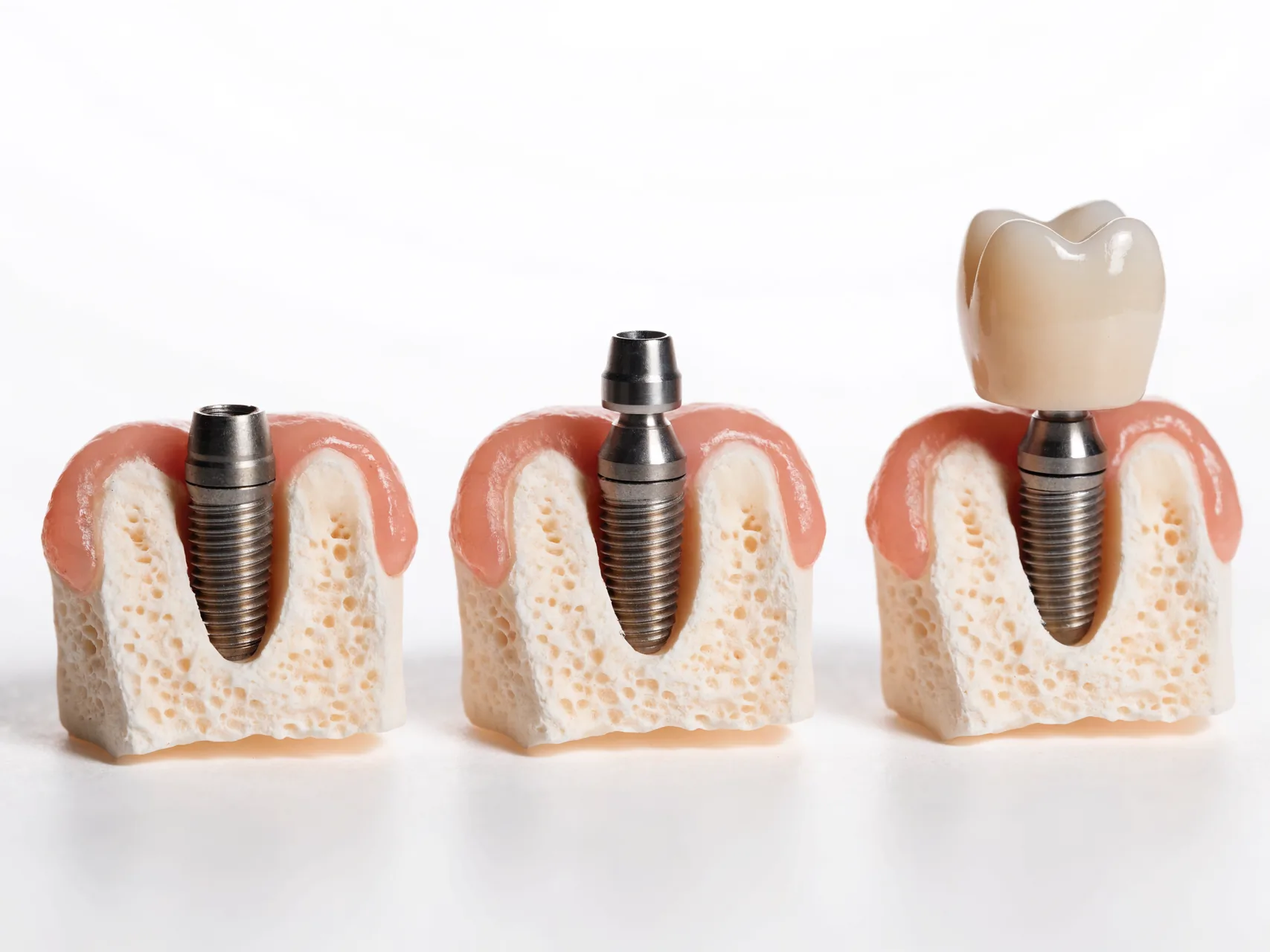
Smoking or vaping does not produce a simple online yes-or-no answer about dental implants. Tobacco smoking is associated with poorer implant and peri-implant outcomes in observational research, but the size of risk for one person depends on much more than a label. The named treating clinician must assess the mouth, periodontal health, current nicotine and tobacco exposure, medical history, proposed procedure, restoration design and realistic aftercare before advising whether an implant is a reasonable option.
This page supports preparation and informed discussion. It does not diagnose disease, calculate personal risk, prescribe a stop-smoking product or promise an outcome. It also does not set a universal period during which every patient must be abstinent. The evidence for smoking is stronger than the implant-specific evidence for vaping, heated tobacco, waterpipe or other nicotine products, and important uncertainty remains.
WeCare is not the treating dental provider. WeCare's role is limited to enquiry and referral coordination and, if separately agreed, travel logistics only to the extent confirmed in writing. The named clinic and named clinician must own clinical assessment, diagnosis, consent, treatment, prescribing, records, complaints and aftercare. Verify those identities, current registration, clinic legal entity and direct clinical contact route before sending health information or paying.
Smoking, nicotine and vaping: what evidence can and cannot say
Cigarette smoke is a complex exposure. Nicotine is one component, while combustion produces many other substances. A study that compares cigarette smokers with people who do not smoke cannot automatically tell us which component produced an observed difference, whether every smoker has the same risk, or whether a non-combustible product creates the same peri-implant effects.
A 2024 systematic review and meta-analysis by Fan and colleagues found an association between smoking and early dental implant failure across observational studies. Other reviews report associations with peri-implant disease and marginal bone changes. These are clinically relevant signals, but they are not personal forecasts. Definitions of smoking, exposure intensity, follow-up, implant sites, periodontal status and maintenance differed across studies. Observational data can also be affected by confounding. The right conclusion is that smoking deserves explicit risk assessment and consent, not that a website can predict an individual's result.
The 2023 European Federation of Periodontology S3 guideline recommends assessment and management of modifiable risk factors before implant placement and supports validated smoking-cessation interventions. Crucially, the guideline says direct evidence that cessation reduces incident peri-implant disease is insufficient and rates the supporting evidence as very low. It also says evidence is insufficient to assume e-cigarettes or waterpipe smoking reduce peri-implant risk compared with cigarettes. That combination supports cessation for overall health while ruling out a fabricated implant countdown.
Vaping is not the same exposure as smoking, but implant-specific evidence remains uncertain. A 2024 systematic review of e-cigarettes and peri-implant measures included a small evidence base and called for better controlled research. An umbrella review also described uncertainty about long-term periodontal and peri-implant effects. These publications should not be turned into a claim that vaping is harmless, equivalent to smoking, or a clinically proven substitute for a particular implant patient.
The NHS states that vaping is likely to be far less harmful than smoking cigarettes overall and can help some adults stop smoking, while also stating that vaping is not risk-free and long-term risks are not yet clear. That population-level harm-reduction information is important, but it does not prove implant safety or determine what one surgical clinician should advise. Someone who does not smoke should not begin vaping for dental treatment.
Disclose cigarettes, cigars, pipes, waterpipe or shisha, heated tobacco, smokeless tobacco, nicotine pouches, vaping, nicotine replacement and cannabis smoke or vapour where relevant. Do not assume the clinic means cigarettes only when it asks whether you smoke. The clinician needs an accurate description to decide what questions, examinations or coordination are appropriate.
Record exposure without collapsing it into smoker or non-smoker
Record exposure without collapsing it into smoker or non-smoker. A binary checkbox can hide the information that matters: the product, route, frequency, duration, recent changes, dual use, dependence, previous quit attempts and whether use is current or historical. The purpose is not to produce a score from a website. It is to give the treating and cessation professionals an accurate starting point.
Ask about manufactured and hand-rolled cigarettes, cigars, pipes, waterpipe, heated tobacco, smokeless tobacco, pouches, vaping liquids, nicotine replacement and smoked or vaped cannabis where relevant. Record which products contain nicotine, which are used together and whether exposure changed after the first consultation. Do not convert one product into an assumed cigarette equivalent unless a qualified professional uses a validated method for a defined purpose.
Former use also needs context. Record when use changed, whether support continues and whether there have been relapses, without pretending that a date erases previous periodontal or medical history. Someone who stopped recently is not dishonest for still needing support. Someone who continues to smoke should not conceal it to protect a deposit or satisfy a form.
Carbon-monoxide readings, cotinine tests and self-report can answer different questions and have different limitations. None alone diagnoses periodontal stability, predicts integration or authorises surgery. If a clinic proposes testing as part of a policy, ask what it measures, who interprets it, how it changes the clinical plan and whether the requirement is clinical, contractual or both.
Update the record before every irreversible stage. A change from cigarettes to exclusive vaping, dual use, return to smoking, altered nicotine replacement or cessation is relevant information, not a reason for punishment. Accurate documentation supports shared decisions and appropriate help.
Individual oral and periodontal assessment
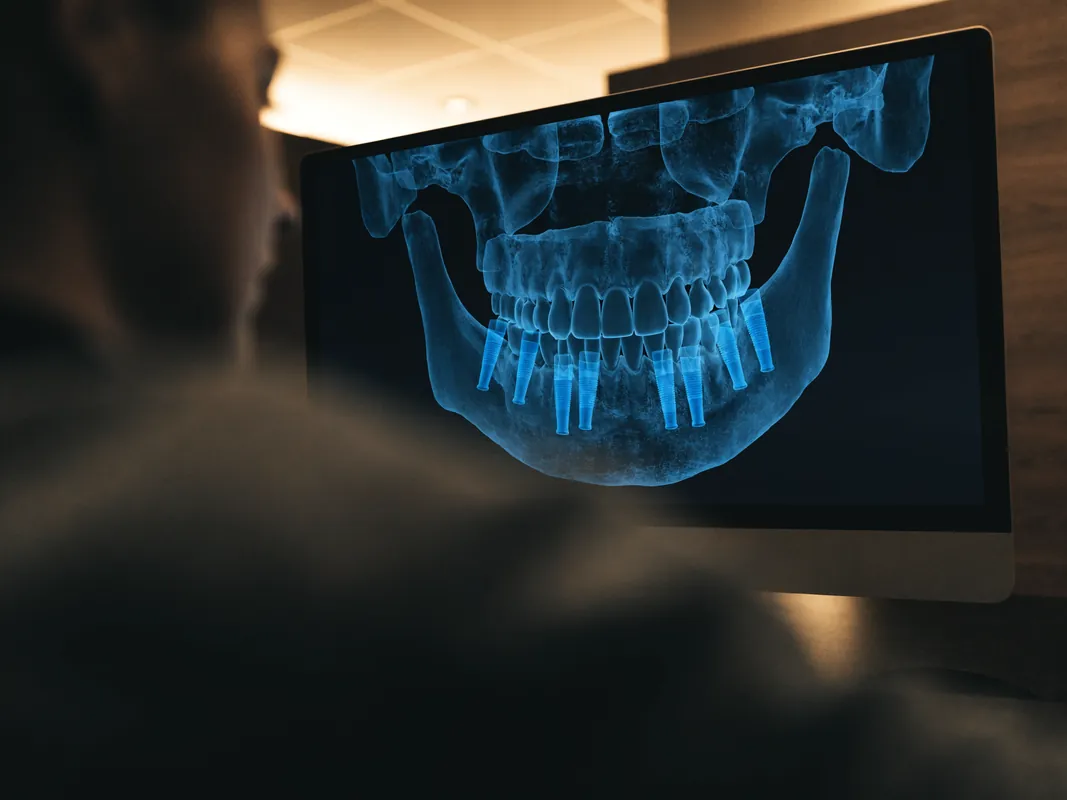
The implant site cannot be assessed in isolation. A clinical examination should review the gums, remaining teeth, plaque control, periodontal history, current inflammation, decay, infection, bite, available bone and soft tissue, and whether the proposed restoration can be cleaned. Ask whether there is active periodontitis or peri-implant disease around any existing implants and what must be stabilised before a new implant is considered.
The EFP guideline recommends treatment of gingivitis and periodontitis to a stable endpoint before implant placement and an individual supportive-care programme afterward. Its recommendations do not make a coordinator the clinical decision-maker. The named clinician should explain the findings, the evidence used, what treatment is proposed and how stability will be assessed.
Smoking can complicate interpretation of periodontal signs, and no single visual feature should be treated as proof that tissues are healthy. Ask for a documented periodontal assessment rather than reassurance based only on the absence of pain. A person can have important periodontal disease without dramatic symptoms. Imaging may add information, but it does not replace probing, examination and review of the whole mouth.
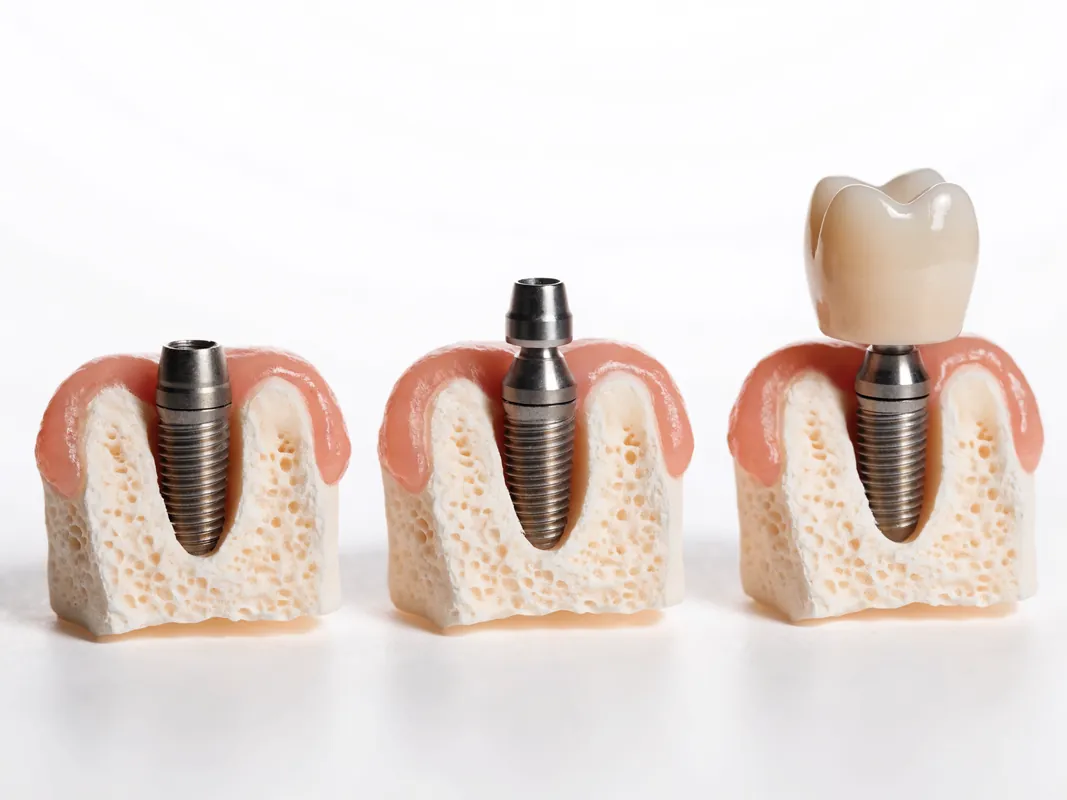
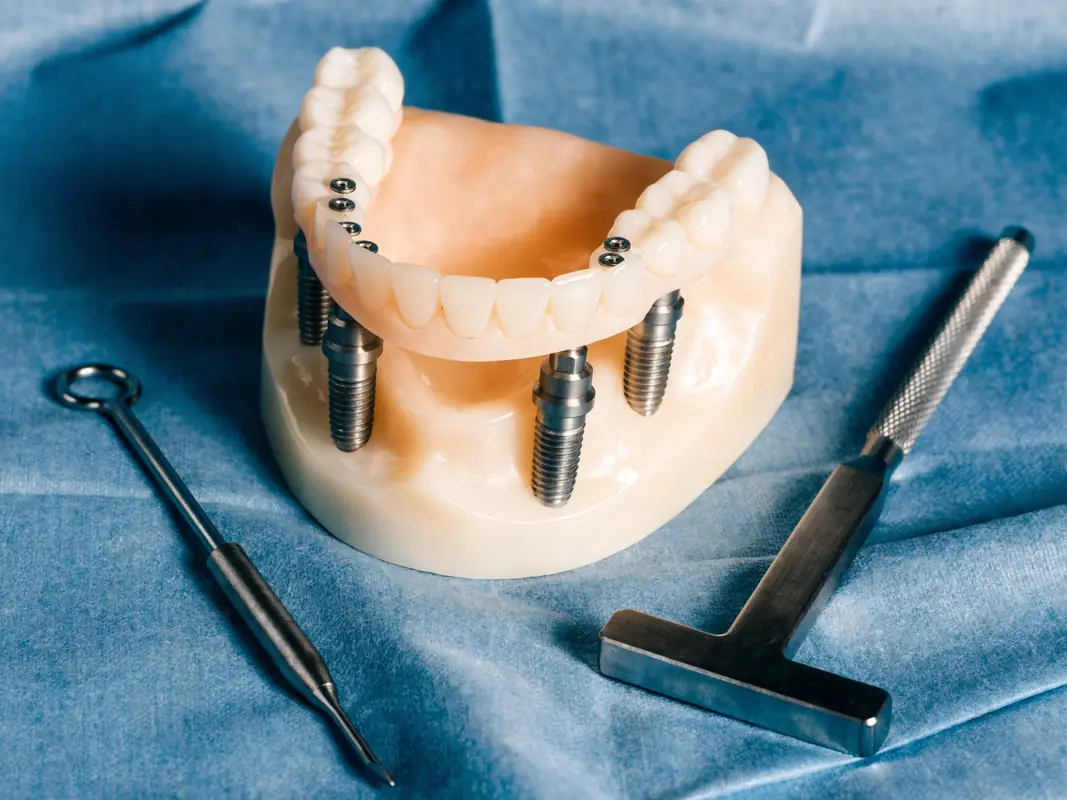
A maintainable design matters. Ask whether the restoration allows access for daily cleaning and professional examination. Clarify whether it will be screw-retained or cemented where relevant, how residual cement risk is managed, and how the prosthesis can be removed or repaired if needed. These are case-specific questions, not reasons to demand one design from a webpage.
Assess the local plan as well as the destination plan. If routine maintenance will occur in the UK, ask a local dentist whether they are willing and able to provide it. Do not assume that every dentist will maintain unfamiliar components or accept responsibility for treatment planned elsewhere. Supply the implant system, component and laboratory records that the local professional requests.
Smoking status is not an implant diagnosis
Smoking status is not an implant diagnosis. It is one relevant exposure within a broader assessment. The clinician still has to determine why a tooth is missing or proposed for extraction, whether disease is active, whether a natural tooth can be preserved, whether the site and restoration are feasible, and whether the result can be maintained.
An automatic refusal based only on a website checkbox can be as unhelpful as automatic approval. A clinician may reasonably advise against a procedure after assessing the combined risk, treatment burden and alternatives, or may apply a transparent practice policy. The patient should receive the reasoning and understand whether it reflects individual findings, facility limitations, professional judgement or commercial terms.
No arbitrary universal exclusion is created here. A person who smokes is not promised treatment, and a person who has stopped is not promised healing. Periodontal disease, plaque control, diabetes, medicines, bone and soft tissue, bite, parafunction, procedure extent and maintenance access can all change the decision. The same person may have different answers for a single-tooth restoration and an extensive full-arch proposal.
The assessment should remain proportionate. An urgent infection or fractured tooth still needs timely local care even when elective implant placement is postponed. Conversely, absence of pain does not prove readiness. Record the actual diagnosis and options before discussing implant brands or travel dates.
If a provider uses the phrase high risk, ask which finding it describes and what practical consequence follows. The answer should identify modifiable issues, non-modifiable context, alternative designs or treatments and what would trigger reassessment. A label without a plan does not support consent.
Periodontal stability is a gate, not a one-off cleaning
Periodontal stability is a gate, not a one-off cleaning. The EFP guideline places control of gingival inflammation, treatment of periodontitis and supportive care within prevention of peri-implant disease. A polishing appointment immediately before surgery does not establish that active periodontitis has been diagnosed, treated and reviewed.
Ask for tooth-by-tooth and whole-mouth findings where relevant: plaque and bleeding, probing depths, attachment and bone support, mobility, furcation involvement, recession, suppuration and the prognosis of remaining teeth. The exact records depend on the case. The clinician should explain what stable means for this patient and how that conclusion was reached.
Smoking can influence inflammatory presentation, so lack of dramatic bleeding should not be used as the only reassurance. Imaging also cannot substitute for clinical periodontal examination. If the proposed restoration would make plaque control difficult, treating inflammation first does not solve the long-term design problem.
Supportive periodontal and peri-implant care needs an owner, not just a recommendation. Identify who will review the gums and implants after travel, what access the restoration provides, what professional instruments or component knowledge may be needed and how findings are sent to the treating clinician. Recall should follow need and findings rather than one universal calendar.
If stability is not achieved, compare postponement, additional periodontal care, a different restorative design, a removable option or no implant. The flight date should not become a periodontal endpoint.

Preserve restorable teeth and keep non-implant options open
Preserve restorable teeth and keep non-implant options open. Smoking does not justify extracting a tooth simply because an implant package appears simpler. Each tooth proposed for removal needs a diagnosis, prognosis, preservation options and an explanation of what happens without immediate replacement.
Depending on the findings, options may include repair, endodontic or periodontal treatment, a crown, orthodontic input, an adhesive or conventional bridge, a removable prosthesis, accepting the space, staged care or no treatment. These options have different effects on adjacent teeth, hygiene, function, maintenance, material exposure and future choices.
The comparison should account for the person's goals and ability to maintain the result. A complex fixed bridge can be harder to clean and repair than a removable design. A removable option has its own adaptation and maintenance demands. No category is universally preferable for someone who smokes.
Ask the clinician to document which teeth are considered restorable, uncertain or hopeless and why. If opinions differ, an independent restorative, endodontic or periodontal assessment may be useful before irreversible extraction. A scan sent to a coordinator is not a complete tooth-prognosis assessment.
Choosing no implant now does not always close future choices, although disease, drifting, bone change and other consequences may occur. The clinician should explain those consequences without using fear or a deadline. Valid consent includes the option not to proceed.
Cessation support belongs with usual healthcare
Stopping smoking has broad health benefits independent of implant treatment. NICE NG209 recommends that people who smoke be told about available interventions, receive clear information and be offered behavioural support. It lists several cessation options and says selection should take account of preferences, health, social circumstances, current medicines, contraindications, adverse effects and previous experience.
Those decisions belong with an appropriate healthcare professional or stop-smoking service, not a booking agent or generic content page. A dentist can ask, advise and refer within professional competence, but an individual should receive personalised support from a service able to review the whole health history. NHS stop-smoking services, GPs and pharmacists can help people in the UK understand available options.
A request for support should not delay an urgent dental problem. Cessation planning and urgent infection management are separate issues. If a tooth or gum problem needs prompt assessment, seek that assessment while also discussing tobacco dependence with the usual healthcare team.
Avoid shame-based language. Tobacco dependence is a health issue, and relapse can occur. Accurate disclosure is safer than telling a clinic what you think it wants to hear. A clinician should ask in a respectful way, document the answer, discuss uncertainty and explain how the information affects the proposed plan.
If an implant provider has a smoking policy, ask for it in writing. Clarify whether it is an eligibility rule, a recommendation, a contractual warranty condition or an evidence-based clinical judgement. Those are different things. A commercial condition should not be disguised as universal medical science.
No universal pre-surgery abstinence countdown
This guide gives no fixed cessation period before or after implant placement. The EFP guideline supports validated cessation interventions but explicitly acknowledges insufficient direct evidence about cessation and incident peri-implant disease. Research does not establish one countdown that guarantees healing for every person, procedure and exposure.
A named clinician may advise postponement or set case-specific conditions after assessment. Ask for the reasons, the evidence, what is being monitored and what alternatives exist. The advice may reflect the extent of surgery, periodontal stability, a previous complication, concurrent conditions, anaesthesia considerations or the clinician's risk policy. It should not be presented as a universal rule merely because it appears in marketing copy.
Do not use a carbon-monoxide reading, self-report, photograph or single appointment as proof that all tobacco-related risk has disappeared. Equally, do not assume a history of smoking makes treatment impossible forever. Exposure history, current behaviour, oral findings and long-term maintenance all need context.
If you are unable or do not wish to stop, say so. The clinician should discuss material risks, reasonable alternatives and the consequences of proceeding, postponing or choosing another option. In some cases the appropriate decision may be a non-implant restoration or no elective procedure. In others, the clinician may consider an implant after individual assessment. This page cannot choose between those outcomes.
A relapse should trigger honest communication, not an improvised medication change or concealment. Ask the cessation service how it supports relapse, and tell the treating clinician if exposure changes before or after a procedure. The clinical plan and consent may need review.
Nicotine-product changes need coordinated ownership
Nicotine-product changes need coordinated ownership. The stop-smoking service, GP, pharmacist or other appropriate healthcare professional manages dependence treatment within their competence. The dental clinician explains how the reported exposure and oral findings affect the proposed dental care. A coordinator should not choose a medicine, device or switching plan.
The NHS distinction between overall harm reduction and implant-specific evidence must remain clear. Completely moving away from combustible cigarettes may reduce general exposure to combustion toxins, but that does not certify a surgical site or prove that any nicotine-containing product is neutral for peri-implant tissues. Dual use should be recorded rather than described as cessation.
If a healthcare professional recommends nicotine replacement, a medicine or a nicotine-containing e-cigarette, tell the dental clinician what is actually being used. Do not stop an evidence-based cessation aid because of an unsupported online rule. Equally, do not begin or combine products solely to satisfy a dental booking. Relevant contraindications, interactions and adverse effects belong with the responsible professional.
Write the ownership map: who supports cessation, who updates the medicine and exposure list, who decides whether dental stages proceed and who responds if exposure changes. If advice conflicts, the professionals should communicate with the patient's consent. The patient should not be forced to choose between a sales message and usual healthcare.
Any clinical or contractual condition related to nicotine should be provided before payment. It should distinguish a treatment recommendation, anaesthetic concern, wound-care instruction and warranty term rather than combining them into a vague smoke-free rule.
Relapse does not cancel the need for care
Relapse does not cancel the need for care. Tobacco dependence can involve repeated attempts and changes. Shame and concealment make assessment less reliable, while accurate disclosure allows the dental and cessation teams to revisit the plan.
If smoking resumes before an elective stage, contact the clinician rather than assuming the procedure automatically proceeds or is permanently cancelled. The clinician should reassess the current exposure, oral condition, planned procedure, alternatives and any written policy. If a stage is postponed, obtain the reason, what happens to provisional treatment and costs, and what evidence will support reconsideration.
If relapse occurs after surgery, continue procedure-specific aftercare and seek cessation support. Do not compensate by taking extra antibiotics, antiseptics, supplements or pain medicine. Tell the clinician promptly if symptoms change. A relapse does not explain every swelling, pain, loose component or tissue change; those findings still need diagnosis.
Maintenance should remain available even when someone continues smoking. Risk discussion is not permission to abandon monitoring or blame every complication on exposure. The local clinician should assess plaque, tissues, bone and restoration components and document the actual finding.
Commercial warranty exclusions are separate from clinical duty and emergency care. A disputed smoking clause should not delay assessment of infection, bleeding, fracture or neurological symptoms. Complaint and payment questions can follow the urgent clinical pathway.
Medicines and self-prescribing boundary
Do not self-prescribe antibiotics, antiseptic rinses, vitamins, nicotine products or prescription cessation medicines because a dental website mentioned them. Do not alter an existing medicine to fit a flight or appointment without advice from the professional responsible for it. Products can have contraindications, interactions, adverse effects and different licensing or prescribing rules.
NICE NG209 describes behavioural support, medicinally licensed products and nicotine-containing e-cigarettes among options for adults who smoke. It also says choices should be discussed in light of individual health, medicines and preferences. At the guideline's February 2025 update, no nicotine-containing e-cigarette was licensed and commercially available in the UK as a medicine for stopping smoking. This regulatory context may change, so check current guidance.
The implant clinician should know what products are being used and why, but should not imply control over treatment prescribed by another professional. With your permission, clinicians can exchange focused information. Ask who is responsible for each prescription, how advice will be documented and whom to contact if side effects or circumstances change.
A product that avoids tobacco combustion may have a different general-health risk profile from cigarettes, but that does not settle an implant-specific question. Nicotine exposure, product composition, frequency, dual use and oral-health behaviours may vary. The responsible clinician should record the actual pattern rather than reduce it to a checkbox.
Antibiotic choice, anaesthesia, pain relief and antiseptic care are clinical decisions tied to the real procedure and history. They are not automatic parts of a smoker protocol. Ask for benefits, risks, alternatives, allergy considerations and instructions only after the responsible clinician has assessed you.
Consent, alternatives and a staged plan
Valid consent requires more than acknowledging that smoking is risky. GDC Principle 3 says UK dental professionals must explain relevant options, possible costs, risks and potential benefits, check understanding and keep consent valid throughout care. GDC duties apply to GDC registrants; citing them here does not claim an overseas provider is GDC regulated. They offer a practical benchmark for questions.
The consent discussion should distinguish established evidence, observational association, uncertainty and clinic policy. Ask how your tobacco or nicotine history changes the clinician's view of the specific procedure. Ask what may change after examination and what findings would lead to postponement, an alternative or no implant.
Reasonable alternatives depend on the clinical situation. They may include retaining and treating a tooth, a conventional bridge, an adhesive bridge, a removable prosthesis, orthodontic space management, staged treatment or accepting a gap. Each has its own benefits, limitations, maintenance and effects on adjacent structures. Do not let a package price eliminate this comparison.
A staged plan can separate commercial enthusiasm from clinical responsibility:
- Identity and role check. Establish whether each contact is a coordinator, clinic employee, dentist, surgeon, laboratory or travel supplier.
- Secure information exchange. Share only what is relevant after understanding who receives it and why.
- Clinical examination. The named clinician records oral and periodontal findings, medical history and exposure pattern.
- Options discussion. Compare implant and non-implant choices, including postponement and no treatment.
- Written proposal. Record the diagnosis, proposed stages, responsible clinicians, materials, costs, exclusions and aftercare.
- Risk and uncertainty discussion. Explain smoking, vaping and nicotine evidence without fabricated personal numbers.
- Time to decide. Allow questions and avoid pressure based on flights, hotel inventory or deposit deadlines.
- Ongoing consent. Revisit the plan if findings, exposure, health or logistics change.
Ask whether a temporary restoration is planned, what purpose it serves and what limitations apply. Immediate placement or loading should never be assumed from a remote image or advertised timetable. The clinician should explain the biological and restorative conditions required.
Confirm the legal entity taking payment for clinical care and the entity responsible for complaints. Ask about professional registration, indemnity, records access and jurisdiction. A warranty document is not evidence that an implant will integrate or remain healthy.

Extraction and implant surgery are separate gates
Extraction and implant surgery are separate gates. Consent to remove a tooth does not automatically authorise immediate implant placement, and a plan for an implant does not prove that extraction is justified. The clinician should first document restorability and alternatives, then explain the site-specific conditions required for placement.
After direct assessment, infection, socket anatomy, bone and soft tissue, restorative position, ability to obtain stability, proximity to anatomical structures and the extent of any graft may change the plan. Smoking status is relevant but does not replace those findings. A pre-made provisional restoration or travel schedule cannot make placement appropriate.
The written plan should include a contingency if immediate placement is not suitable: how the site is managed, what temporary option exists, whether another assessment is needed, which costs change and who provides local review. A patient should be able to decline a broader graft or different procedure without losing the right to records and appropriate care.
If sedation or general anaesthesia is proposed, that decision has its own medical, medicine, facility, monitoring and discharge assessment. It should not be presented as an automatic smoker protocol. Local anaesthesia also does not remove the need for a complete health and procedure review.
The person should understand that surgery can be postponed even after travel when the clinical gate is not met. That possibility belongs in consent, cancellation terms and flexible logistics before payment.
Placement, healing and loading are separate gates
Placement, healing and loading are separate gates. An implant can be inserted without being ready to support the intended functional restoration. The loading decision may depend on stability, implant position, bone and graft findings, soft tissue, procedure extent, restoration design, opposing teeth, bite, parafunction, hygiene and the clinician's assessment at that stage.
Smoking research does not create a universal loading timetable. Nor does stopping for a self-selected period guarantee that loading criteria are met. A same-visit provisional plan should state the clinical conditions required and the alternative if those conditions are absent.
The provisional restoration may serve appearance, limited function, tissue shaping or evaluation of speech and cleaning. It is not proof of integration and may have restrictions. Ask how it is retained, cleaned and repaired, what contact or loading is intended and who handles loosening or fracture after returning home.
Before progressing, the clinician should review current exposure, symptoms, tissue findings, hygiene and any change in health or medicines. Consent should be renewed when the plan changes. A deposit for a final bridge should not turn a conditional loading decision into a promise.
If the implant is not ready or another problem appears, the patient needs a safe provisional and aftercare route. The quote should explain additional visits, laboratory work and local assessment without presenting the contingency as patient failure.
The definitive restoration must be cleanable and repairable
The definitive restoration must be cleanable and repairable. Material strength and appearance do not compensate for inaccessible plaque-retentive contours. Before insertion, assess tissue health, fit, contacts, bite, speech, appearance, cleaning access and whether the patient can realistically use the recommended tools.
Clarify whether the restoration is screw-retained, cemented or uses another design, how excess cement is prevented or detected, which components may be removed and what equipment a future clinician needs. Ask for the implant system, abutment, screw, framework, material and laboratory records. Brand recognition alone does not ensure local serviceability.
The design should account for remaining teeth and periodontal condition, not only the implant site. A full-arch restoration can conceal tissue changes if access is poor. A single crown can still create maintenance difficulty when contours or position are unsuitable.
Discuss expected wear and possible biological or mechanical complications without promising permanence. Smoking status does not prove that a fracture, loosening or inflammation has one cause. Future findings require examination and a differential diagnosis.
If the proposed definitive work differs from the consented design, pause for explanation, alternatives and revised cost. The patient should not accept a less maintainable restoration because a flight is approaching.
Itemised quotation and change control
Itemised quotation and change control should follow clinical stages. Separate examination, periodontal care, tooth preservation, extraction, imaging, grafting if proposed, implant placement, provisional restoration, definitive abutment and restoration, laboratory work, sedation or anaesthesia where relevant, reviews, maintenance and records. List non-clinical services separately with their own supplier and terms.
The quote should mark conditional items, exclusions and costs that may change after examination. It should explain what happens if periodontal stability is not achieved, immediate placement or loading is not appropriate, a graft changes, a provisional requires repair or the patient chooses a non-implant alternative.
Smoking or nicotine conditions must be explicit. Distinguish clinical advice, eligibility policy, cancellation term and commercial warranty exclusion. A phrase such as smoker surcharge or warranty void is not a clinical explanation. Ask how exposure is determined, how disputes are reviewed and whether urgent or routine care remains available.
No quote can guarantee integration, absence of peri-implant disease, a fixed lifespan or symptom-free healing. Remedy terms should identify the legal supplier, evidence required, exclusions, maintenance conditions, local assessment and who pays travel or laboratory costs. They must not delay urgent care.
Changes require renewed consent before the procedure, not a revised invoice afterward. Keep copies of the original and amended plans so another clinician can reconstruct what was proposed and delivered.
Healing, infection and uncertainty
Implant placement involves a wound and biological healing. Smoking is associated with adverse implant observations, but an association does not let a website state exactly what will happen to one person. Procedure complexity, infection, periodontal status, bone, soft tissue, plaque control, restoration design, medical conditions and maintenance also matter.
Ask for written, procedure-specific recovery information from the named clinician. It should distinguish expected symptoms from signs needing review, explain contact routes and account for relevant health conditions. A generic smoker schedule cannot replace this advice.
If smoking, vaping or another exposure changes during healing, tell the treating clinician. Do not assume that changing products removes risk, and do not return to cigarettes because implant-specific vaping evidence is uncertain. A cessation professional can help balance overall harm reduction and dependence treatment; the dental clinician can explain the clinical implications for the mouth.
Remote messages and photographs can support communication but cannot reliably rule out infection, mobility, bite problems or bone changes. Persistent or worsening symptoms need an examination. Know where you can obtain urgent dental care near home before travelling.
No provider can guarantee biological healing. Ask what contingency options exist if treatment cannot proceed, integration is uncertain, a restoration fractures or peri-implant disease develops. Check who pays for assessment, travel, laboratory work and local care. A vague promise to fix everything later is not an aftercare plan.
Aftercare and maintenance
Peri-implant health requires long-term attention. The EFP guideline supports an individually tailored supportive peri-implant care programme that updates medical, social and oral history, assesses tissues and prosthetic components, reinforces risk-factor control, provides professional care and sets recall according to patient, implant and restoration factors.
That means there is no single recall schedule for every smoker or former smoker. The responsible clinician should set a need-based plan and explain how it may change. Periodontal history, plaque control, exposure, restoration access, previous findings and general health may all matter.
Before treatment, obtain clear answers to these questions:
- Who conducts the first clinical review and later maintenance?
- What examination or imaging is expected, and why?
- Which parts can be reviewed remotely and which require attendance?
- How should the restoration be cleaned, and can the patient realistically do so?
- Will the clinic provide implant, abutment and laboratory identifiers?
- Can a local dentist obtain compatible components if repair is needed?
- Who assesses periodontal and peri-implant tissues over time?
- What symptoms require routine contact, urgent review or emergency help?
- Who pays for local examinations, maintenance and remedial care?
- What happens if the original clinician or clinic is unavailable?
Continue ordinary care for remaining teeth. Implant maintenance does not replace checks for decay, gum disease, soft-tissue changes or oral cancer. Smoking history may be relevant to the wider oral examination, not only the implant.
A former smoker should still disclose the history because it may affect assessment and support. Current status can change over time, so the medical and social history should be updated rather than copied indefinitely from an old form.

Local handover must survive distance
Local handover must survive distance. A WhatsApp exchange is not a clinical record. Before leaving the treatment location, obtain the diagnosis, periodontal and implant findings, dated imaging and reports, procedure and anaesthetic notes, medicines and instructions, implant and component identifiers, laboratory and material records, bite or provisional information, review purpose and urgent contact route.
The summary should state which stages are complete, which remain conditional and what a local clinician is being asked to do. If maintenance requires removal of a prosthesis or a particular tool, identify the system and responsible supplier. If a local dentist has not agreed to provide care, do not describe aftercare as arranged.
Routine maintenance, urgent dental assessment, cessation support and commercial complaints are separate pathways. Name an owner for each. The treating provider should accept direct clinical communication and send original-quality records securely with the patient's consent.
Remote review can exchange information and support triage, but it cannot probe tissues, assess mobility, test sensation, examine the bite, drain infection or manage an airway. A local examination should not be postponed merely to obtain a remote response.
The handover should also state financial responsibility for local imaging, maintenance, component repair, urgent care and return visits. A contractual remedy does not force a local clinician to accept unfamiliar work. Usable records and an itemised plan reduce that uncertainty but cannot eliminate it.
Travel risk and provider responsibilities
Cross-border treatment adds distance between the patient and treating clinician. Travel should be arranged around a clinically credible plan, not used to force a clinical timetable. An online review cannot guarantee that surgery will occur after arrival. Examination findings, infection, periodontal disease, health changes or missing records may alter the proposal.
WeCare's non-clinical role may help an enquirer reach a named provider and may coordinate specified travel logistics when a separate written quotation confirms them. Do not infer accommodation category, vehicle, route, nights, companion arrangements or price from this page. Travel suppliers do not diagnose, consent, prescribe or provide clinical aftercare.
Before paying, ask what happens if the named clinician recommends postponement, a different procedure or no implant. Separate clinical fees from travel fees and understand cancellation terms for each supplier. Avoid non-refundable commitments until responsibilities and contingencies are clear.
Plan for care after returning home. Identify a local dentist willing to examine the work and provide maintenance. Supply records in a usable format and make sure the overseas clinic will communicate directly when needed. Do not assume a UK dentist must repair treatment planned elsewhere.
Travel can also interrupt cessation support. If you are working with a usual healthcare professional or stop-smoking service, discuss the trip with them. Do not ask a coordinator to replace that support or transport medicines across borders without checking current professional and carrier advice.
Urgent and emergency boundaries
Do not postpone urgent dental or medical assessment for a future implant trip. NHS guidance says a dental abscess needs urgent treatment by a dentist and advises an urgent dental appointment or NHS 111 in England. Serious swelling, difficulty breathing, speaking or swallowing, eye symptoms or major difficulty opening the mouth may require 999 or A&E under NHS criteria. Outside the UK, use local urgent and emergency services.
Seek prompt assessment for worsening facial or oral swelling, fever with dental symptoms, pus, spreading redness, uncontrolled bleeding, severe pain, new numbness, a loose implant, a changing bite or inability to manage fluids or usual medicines. A coordinator's inbox is not an emergency service.
Smoking is also a risk factor for mouth cancer, although common oral symptoms have many non-cancer causes. NHS guidance advises assessment by a dentist or GP for a mouth ulcer that persists beyond the period specified on its current symptoms page, a red or white patch, an unexplained lump, persistent pain, difficulty swallowing or speaking, or a lasting hoarse voice. Do not let a cosmetic or implant enquiry delay that review.
Call emergency services when breathing, swallowing, consciousness, severe bleeding or rapidly progressing swelling is affected. Once urgent care is underway, inform the original provider and request record transfer. Emergency treatment, routine aftercare and commercial complaints are separate pathways.
Records and questions
GDC Principle 4 says UK dental records should be contemporaneous, complete and accurate, including an up-to-date medical history and relevant radiographs, consent records, photographs, laboratory prescriptions and referrals. It also addresses confidentiality and secure information transfer. Providers outside the UK follow their own jurisdiction, but patients can still ask for comparable clarity.
Prepare and keep:
- a current medical history, medicine list and allergy record;
- an honest description of cigarettes, vaping and other nicotine or tobacco products;
- relevant dental radiographs and periodontal records;
- previous implant, graft and restoration information;
- contact details for the usual dentist and healthcare team;
- the named provider's written diagnosis, options and treatment plan;
- consent discussions and any revised plan;
- prescriptions and procedure-specific aftercare instructions;
- implant, abutment and laboratory identifiers;
- invoices, complaint information and any contractual warranty terms;
- the local urgent-care and maintenance plan.
Ask the named clinician:
- How does my actual exposure history affect this specific proposal?
- What oral and periodontal findings matter most?
- What evidence is strong, what is observational and what remains uncertain?
- Is any cessation condition clinical, contractual or both?
- Which usual healthcare professional should support cessation?
- What alternatives exist if I continue smoking or cannot proceed now?
- What would cause the plan to change after examination?
- Who owns prescribing, treatment, records, complaints and aftercare?
- How will long-term maintenance be delivered after I return home?
- What urgent symptoms require local examination rather than remote messaging?
- Which costs and travel arrangements remain possible if treatment changes?
- How can my local dentist obtain compatible records and components?
Patient checklist
Before accepting a plan, confirm:
- Identity: I know the named clinic and named clinician and have checked current registration where possible.
- Role boundary: I understand that WeCare handles enquiry and referral coordination, not clinical care.
- Honest exposure history: I have disclosed smoking, vaping and other nicotine or tobacco products without minimising or guessing.
- Oral assessment: My gums, remaining teeth, infection risk, hygiene and restoration maintainability have been evaluated.
- Evidence: I understand association and uncertainty; I have not accepted a fabricated personal outcome number.
- Cessation support: Advice comes from an appropriate usual healthcare professional or stop-smoking service.
- No countdown guarantee: I understand there is no universal abstinence period that guarantees implant healing.
- No self-prescribing: I will not alter medicines or choose clinical products from this page.
- Alternatives: I have compared implant, non-implant, postponement and no-treatment options where relevant.
- Consent: Risks, possible benefits, costs and plan changes are documented and I have time to decide.
- Aftercare: A realistic local maintenance and urgent-review route exists.
- Records: I will receive the information another dentist needs.
- Travel boundary: Travel logistics are separate and only what is confirmed in writing applies.
- Emergency route: I know when to use a dentist, NHS 111, 999 or local services abroad.
If several items remain unresolved, pause before irreversible treatment or non-refundable travel. Good planning may lead to an implant, another restoration, staged care, postponement or no procedure. The goal is an informed decision, not a predetermined sale.
Frequently asked planning questions
Can a person who smokes ever be considered for an implant?
Possibly, after individual assessment. Smoking is associated with adverse implant observations, but diagnosis, oral health, procedure, exposure, alternatives and aftercare all matter. The named clinician must advise; this page cannot approve treatment.
How long must someone stop smoking before surgery?
This guide sets no fixed period. The EFP guideline recommends validated cessation support but says direct evidence about cessation and incident peri-implant disease is insufficient. A clinician may give case-specific advice or apply a written policy after assessment.
Is vaping safe for dental implants?
No such conclusion is justified. Vaping differs from cigarette smoking and may reduce overall exposure to combustion toxins for an adult who switches completely, but implant-specific studies are limited and uncertain. Tell the clinician and cessation service what products are actually being used.
Should a person start vaping to qualify for treatment?
This page does not advise beginning a nicotine product. The NHS says vaping can help some adults stop smoking and is less harmful than cigarettes overall, while not risk-free. A non-smoker should not start vaping. Discuss cessation options with an appropriate service.
Are nicotine replacement products automatically acceptable around surgery?
There is no universal answer on this page. NICE includes NRT among cessation options, but individual selection must consider health, medicines, contraindications, adverse effects and preferences. The responsible healthcare professional and dental clinician should coordinate relevant advice.
Does cutting down remove implant risk?
Reduced exposure is not the same as a proven risk-free state, and self-reported quantity does not create a personal outcome forecast. Be accurate about current use and ask the clinician how it changes the plan and alternatives.
Will a special implant brand solve smoking-related risk?
No brand removes biological uncertainty or replaces periodontal stability and maintenance. Ask for the clinical reason, evidence, regulatory information, component availability and cost of any proposed system without accepting a guarantee.
Are antibiotics routinely extended for smokers?
This page does not prescribe or set a smoker schedule. Antibiotic decisions depend on the actual procedure, history, allergies, interactions, benefits and harms. The named clinician must assess and document the decision.
Who is responsible when Confirm in writing who coordinates an enquiry?
WeCare is not the treating dental provider. Its role is enquiry and referral coordination and any separate travel logistics confirmed in writing. The named clinic and named clinician own assessment, consent, treatment, records, complaints and clinical aftercare.
What aftercare should be arranged before travel?
Confirm a direct clinical contact, need-based reviews, professional maintenance, local urgent care, record transfer, compatible component information and responsibility for costs. Do not assume photographs or general messaging replace examination.
What if smoking resumes after treatment?
Tell the treating clinician and the cessation service honestly. Do not improvise a product or conceal the change. The clinician can reassess clinical implications, and the cessation professional can provide appropriate support.
Which symptoms should not wait for an overseas appointment?
Worsening swelling, fever with dental symptoms, severe or persistent pain, spreading infection, uncontrolled bleeding and concerning mouth changes need local assessment. In England, NHS 111 can direct urgent care; use 999 or A&E when current NHS emergency criteria apply.
Sources and review dates
- [NICE NG209: Tobacco — preventing uptake, promoting quitting and treating dependence](https://www.nice.org.uk/guidance/ng209), published 30 November 2021 and last updated 4 February 2025. It recommends access to behavioural support and evidence-based cessation options selected with individual health, medicines, preferences and circumstances in mind.
- [European Federation of Periodontology S3 clinical practice guideline](https://onlinelibrary.wiley.com/doi/full/10.1111/jcpe.13823), Herrera and colleagues, Journal of Clinical Periodontology, 2023. It recommends risk assessment, periodontal stability, supportive peri-implant care and validated cessation interventions, while explicitly describing the direct cessation evidence as insufficient and very low certainty.
- [Smoking in relation to early dental implant failure](https://pubmed.ncbi.nlm.nih.gov/39393606/), Fan and colleagues, Journal of Dentistry, 2024. This systematic review and meta-analysis reports an association in observational studies; it does not establish a personal outcome or universal cessation period.
- [The impact of electronic cigarettes on peri-implant health](https://pubmed.ncbi.nlm.nih.gov/38360396/), Guney and colleagues, Journal of Dentistry, 2024, and [the effect of nicotine-containing products on peri-implant tissues](https://pubmed.ncbi.nlm.nih.gov/38618685/), Vámos and colleagues, Nicotine & Tobacco Research, 2024. These reviews identify possible peri-implant concerns but also show the limited, heterogeneous nature of direct evidence.
- [NHS stop-smoking services](https://www.nhs.uk/live-well/quit-smoking/nhs-stop-smoking-services-help-you-quit/) and [NHS information on e-cigarettes for stopping smoking](https://www.nhs.uk/live-well/quit-smoking/using-e-cigarettes-to-stop-smoking/), accessed 29 August 2026. NHS information distinguishes overall harm reduction from harmlessness and recommends expert cessation support.
- [GDC Principle 3: Obtain valid consent](https://standards.gdc-uk.org/pages/principle3/principle3) and [GDC Principle 4: Maintain and protect patients' information](https://standards.gdc-uk.org/pages/principle4/principle4), accessed 29 August 2026. These apply to GDC registrants and are used here as a UK patient-facing benchmark, not as a claim about an overseas provider's regulation.
- [NHS dental abscess guidance](https://www.nhs.uk/conditions/dental-abscess/), [NHS 111 guidance](https://www.nhs.uk/nhs-services/urgent-and-emergency-care-services/when-to-use-111/) and [NHS mouth-cancer symptoms](https://www.nhs.uk/conditions/mouth-cancer/symptoms/), accessed 29 August 2026. These support the urgent, emergency and persistent-symptom boundaries above for people in England.
Evidence, licensing and public guidance change. Review the current sources and ask the named clinician and usual healthcare professional to explain how current evidence applies before making a decision.