Pain and swelling after dental surgery are symptoms, not a diagnosis and not a countdown. Their meaning depends on what was done, where it was done, how difficult the procedure was, which anaesthetic or sedation was used, the person's health, the medicines involved and what the treating clinician found at discharge. A pattern that was anticipated for one extraction may be unexpected after a different operation. A photograph or pain score sent from a hotel cannot settle that clinical question.
This guide owns symptom monitoring after dental or oral surgery. It does not replace procedure-specific implant aftercare, decide fitness to fly or promise that a symptom is harmless. The practical task is to compare the current state with the named treating clinician's written plan, record change clearly and use the agreed escalation route. The expected-versus-concerning pattern is case-specific. There is no universal pain or swelling timeline that can safely clear every patient.
General information can help a person organise observations. Only a case-specific clinical assessment can examine the wound, test sensation and function, review radiographs when indicated, reconcile medicines and decide whether treatment or travel plans should change. If the situation appears urgent, seek urgent local assessment rather than waiting for an overseas reply.
Emergency signs come before routine monitoring
Use local emergency services immediately for breathing or swallowing difficulty, rapidly spreading mouth or facial swelling, collapse, severe allergic-reaction features, uncontrolled heavy bleeding, chest pain, sudden breathlessness, new confusion or another life-threatening change. Do not wait for a scheduled appointment, a travel coordinator, a hotel employee or a remote message. Breathing or swallowing difficulty is an emergency because the airway can be at risk even when the dental wound itself is not visible.
NHS England's unscheduled dental-care guidance separates life-threatening, emergency and urgent presentations. It identifies spreading orofacial swelling with possible airway compromise, severe systemic illness and bleeding that cannot be controlled with local measures as situations needing rapid clinical triage. The exact destination varies by country and location, so record the local emergency number and the nearest appropriate emergency department before a procedure or journey.
The written discharge plan is the starting point
Written discharge instructions are the primary self-care plan because they can reflect the actual operation and findings. Keep the version given after the procedure, not only a generic leaflet downloaded before treatment. It should name the procedure, side and sites treated; the clinician responsible; the anaesthetic or sedation used; medicines supplied or advised; wound-care instructions; restrictions; expected review; and routine, urgent and emergency contacts.
Check for conflicts before leaving the treatment setting. A printed sheet, medicine label and spoken instruction should not give different directions. Ask which instruction takes priority and request the correction in writing. If a planned graft, implant or extraction changed during treatment, the postoperative plan should describe what actually happened. The GDC treats consent as an ongoing process and expects changes to care to be discussed and documented. That principle is useful even when treatment occurs outside the United Kingdom: current symptoms should be judged against an accurate record, not the original marketing description.
Do not copy another patient's instructions. Advice can differ because of wound closure, grafting, sinus involvement, bleeding risk, infection findings, anaesthetic technique or medical history. A social-media recovery diary cannot establish what is appropriate for your site.
Why two recoveries can look different
Procedure and anaesthetic factors
Procedure and anaesthetic factors shape the baseline. A straightforward extraction, removal of an impacted tooth, bone graft, multiple implant placement, soft-tissue surgery and a longer maxillofacial operation do not create interchangeable wounds. Location matters: upper and lower jaw sites, proximity to a sinus or sensory nerve, number of areas treated, tissue handling, sutures and the presence of a temporary appliance can all change what needs attention.
Local anaesthetic can temporarily alter sensation and make eating or drinking harder to judge. Sedation and general anaesthetic add separate discharge, supervision, alertness and nausea considerations. A person who looks awake may still need the supervision specified by the anaesthetic provider. Do not infer that pain or swelling is safe because anaesthetic was used, or dangerous merely because numbness has not resolved at the same pace as another person's.
Medical and medicine factors
Medical and medicine factors can change both symptoms and risk. Relevant information may include bleeding disorders, anticoagulant or antiplatelet treatment, diabetes, immune suppression, kidney or liver disease, pregnancy, allergies, prior reactions, sleep apnoea, dehydration risk and medicines that affect alertness. Smoking, vaping, alcohol and non-prescribed products can also matter, but this page cannot decide causation for one case.
Never stop a regular medicine merely to reduce bleeding or swelling unless the appropriate prescriber and dental clinician have made a coordinated plan. Conversely, do not start a leftover antibiotic, steroid, pain medicine, herbal product or another person's prescription because a symptom resembles a past experience. Medicine interactions and duplicated active ingredients are not reliably detected by brand name alone.
Build a useful baseline before leaving
A baseline is a short, dated description of the person's state at discharge. It helps a later clinician understand what changed. Record the procedure and site, the ability to speak, swallow fluids, breathe comfortably and open the mouth, the location and rough extent of swelling, the presence of bleeding, current sensation, pain at rest and during function, and any nausea, dizziness, rash or feverish feeling. Note who made the observations and whether the treating clinician examined the same features.
If photographs are permitted, use them as a record rather than a diagnostic tool. Keep lighting, distance and head position reasonably consistent and include both sides when facial asymmetry matters. Do not delay care to create an ideal photograph. Secure health images appropriately and ask before sending them to a companion, coordinator or provider. GDC record standards emphasise complete, accurate and confidential records, including images where they form part of care.
Keep a pain record that describes change
A pain record is more useful than repeating that pain is bad. Record when it was noticed, where it is felt, whether it is constant or triggered, whether it radiates, and what function it prevents. Note whether it changes with swallowing, biting, opening the mouth, lying down or touching the face. Record sleep disruption and whether the prescribed or advised plan changes the symptom, without taking extra medicine as an experiment.
A number on a scale can help track the same person's trend, but it does not diagnose infection, dry socket, nerve injury or treatment failure. Different people use scales differently. A modest score with new swallowing difficulty can be more urgent than a higher score without airway or systemic features. Function, associated signs and rate of change matter alongside intensity.
When contacting a clinician, describe the latest change: the symptom became more localised, spread to a new region, returned after improvement, or stopped responding in the way the written plan anticipated. State what was taken, at what recorded time and what the label says. Do not hide non-prescribed products; they may be relevant to interactions or bleeding.
Observe swelling and asymmetry without diagnosing it
Swelling and asymmetry may be visible outside the mouth, confined to a surgical site or accompanied by bruising and jaw stiffness. Compare like with like: the same head position and lighting are more informative than different selfies. Marking the skin, pressing repeatedly or measuring with improvised tight bands can cause harm or misleading results. A clinician may choose a formal examination or measurement method.
Record direction as well as size. Is a previously local area extending toward the eye, under the jaw, into the neck or across the midline? Is the mouth opening becoming more restricted? Is speech, swallowing, vision or breathing changing? Is the swelling soft, firm, tense or associated with discharge? A patient cannot reliably classify the cause, but these observations help triage.
Do not treat symmetry as proof of safety. Bilateral swelling can still need assessment, and natural facial asymmetry can make photographs difficult to compare. The decision depends on the actual procedure, baseline and associated function.
Monitor function, not appearance alone
Useful functional questions include:
- Can the person breathe comfortably at rest and while speaking?
- Can they swallow their own saliva and the fluids allowed by the discharge plan?
- Can they open the mouth enough for the planned hygiene and nutrition?
- Can they speak clearly enough to report a change?
- Can they stand and walk safely after the stated anaesthetic or sedation?
- Can they manage their medicines and contact help without confusion?
- Is vision affected, or is swelling closing an eye?
- Can they pass urine normally and maintain hydration?
Loss of function can change urgency even when a photograph looks similar. A hotel room should not become a substitute ward when a person cannot drink, mobilise, communicate or manage the plan safely.
The bleeding boundary
Some blood-stained saliva can be described in procedure-specific discharge material, but active bleeding must be distinguished from a stain. Use the exact local measures written by the treating clinician. Do not improvise with tissue that fragments, caustic substances, heat or repeated rinsing. Do not change an anticoagulant or antiplatelet medicine without the responsible prescriber and dental clinician.
The bleeding boundary is crossed when bleeding is heavy, continuous, compromises breathing or cannot be controlled using the written local measures. Seek emergency or urgent local care at the level stated in the escalation plan. Dizziness, collapse, weakness or concern about significant blood loss increases urgency. A remote photograph cannot measure blood loss or stabilise a person.
If bleeding settles, document what happened and inform the responsible clinician as directed. The next decision may concern wound review, medicines, food, hygiene or travel. Do not assume that one period without visible bleeding establishes fitness for a flight or long road journey.
Fever and systemic illness
Fever and systemic illness require context and, when concerning, clinical assessment. Feeling hot is not a temperature measurement, and a single measurement does not establish the cause. Record the device, reading, time, repeated observations if advised, and associated symptoms such as chills, marked fatigue, confusion, dizziness, rapid deterioration or inability to drink.
Infection cannot be diagnosed from pain alone. Pain, swelling, bad taste, discharge, feverishness and loss of function can contribute to a clinician's assessment, but none is a stand-alone home test. Antibiotics are not automatic after every operation and do not replace drainage, wound care or examination when those are indicated. A person already taking an antibiotic can still deteriorate or have an adverse reaction.
Use the urgent route if symptoms are severe, spreading, worsening, associated with systemic illness or outside the case-specific pattern given at discharge. Use emergency services for airway compromise, collapse, severe allergic reaction or another life-threatening feature.
Dry socket needs an examination
Dry socket is associated with extraction sites, not every dental operation. Official NHS resources describe a pattern that can include increasing pain and unpleasant taste or breath after an extraction, but those features also need clinical interpretation. Dry socket needs an examination; it cannot be confirmed from a chat message, a photograph or a person's pain score.
Do not probe the socket, remove material, place household substances or use someone else's rinse. Contact a dentist or oral-surgery service for assessment. Treatment decisions may involve cleaning or dressing by a professional, but this page cannot determine whether that is required. The distinction matters because pain after an implant, graft or other surgery may have a different cause and pathway.
Numbness, tingling and altered sensation
Numbness, tingling and altered sensation should be recorded by location, side, onset and change. Note the lip, chin, tongue, teeth, gum or skin involved and whether taste, speech, biting or swallowing are affected. Do not repeatedly bite, pinch, burn or test a numb area with sharp objects. Protect it from accidental injury while following the discharge plan.
Local anaesthetic can cause temporary numbness, while some operations take place close to sensory nerves. An online article cannot distinguish expected anaesthetic recovery from nerve irritation or injury. Contact the named treating clinician promptly when altered sensation is new, unexpected, spreading, worsening or outside the written explanation. Seek urgent local assessment if it occurs with facial weakness, severe headache, confusion, vision change or another acute neurological feature.
Breathing, swallowing and airway risk
Breathing or swallowing difficulty is an emergency. Call local emergency services rather than driving an unstable person, waiting for a routine dental line or asking whether a photograph looks acceptable. Rapidly spreading floor-of-mouth, tongue, jaw or neck swelling can threaten the airway. A low pain score or lack of fever does not make that safe to monitor alone.
If the person has a known allergy plan or prescribed emergency medicine, follow that plan while emergency help is being arranged. Do not delay the call to search for a dental provider abroad. Tell responders about the procedure, anaesthetic, medicines, allergies and time course. Bring the written clinical handover when it is immediately available, but do not delay departure to collect paperwork.
Dehydration and inability to drink
Dehydration and inability to drink can follow pain, nausea, swallowing difficulty, sedation effects or restricted intake. Warning observations can include very low intake, repeated vomiting, dizziness, increasing weakness, confusion or reduced urination. These are not specific to a dental complication, but they can make recovery and medicine use unsafe.
Do not force food or fluid into someone who cannot swallow safely, is very drowsy or has breathing difficulty. Use emergency care when the airway or consciousness is affected. Otherwise contact an appropriate local clinician for case-specific assessment. A hotel delivery of drinks is not a clinical solution when the person cannot maintain hydration.
Medication safety without prescribing
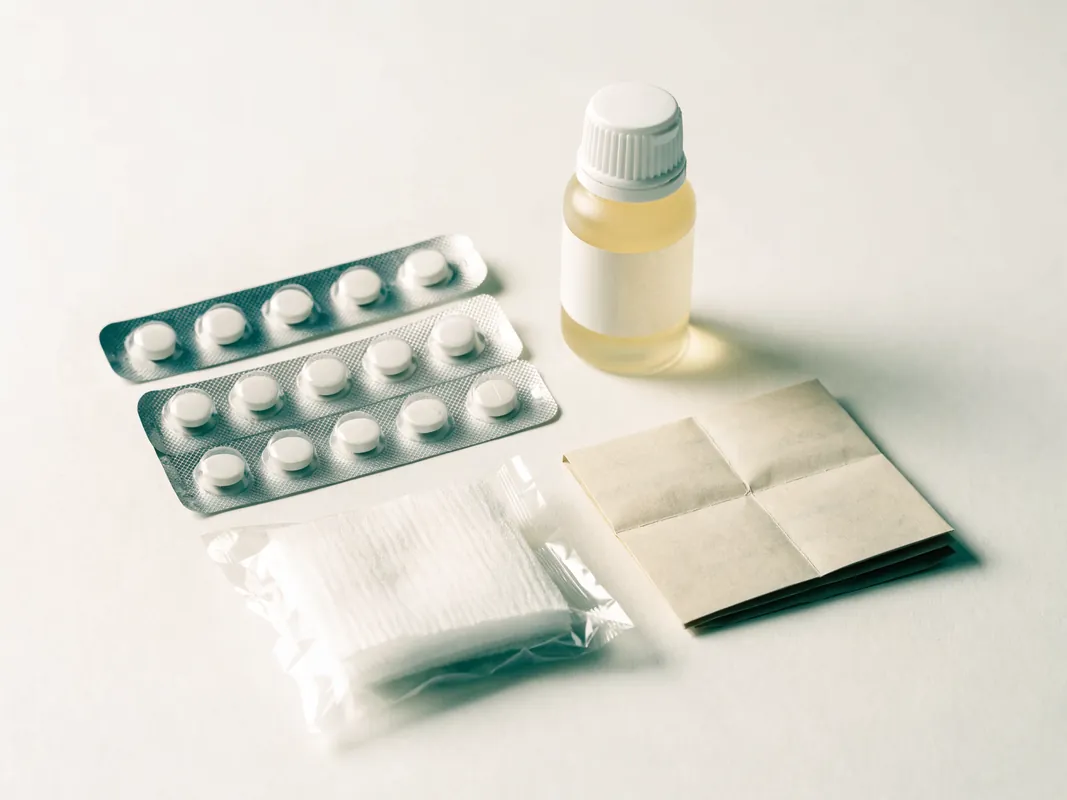
This guide does not select a pain medicine, antibiotic, steroid or dose. Use only the current written instructions, prescription label and patient information leaflet, and check uncertainties with the named prescriber or a pharmacist who can see the complete medicine list. Do not self-start, stop, share or combine medicines.
Create one medicine record containing generic and brand names, strength as printed, prescribed directions, actual administration times, allergies, regular medicines, over-the-counter products and supplements. This helps identify duplicated ingredients and interactions. Do not rely on tablet colour or a translated brand name.
Seek prompt professional advice for an adverse medicine reaction. Emergency signs such as breathing difficulty, facial or tongue swelling, collapse or a severe rapidly developing reaction require emergency services. The MHRA advises reading the supplied leaflet and provides the Yellow Card route for suspected adverse reactions in the UK; reporting is not a substitute for treatment. A clinician or pharmacist should advise whether a medicine is stopped or replaced, except where an existing emergency plan gives explicit instructions.
Pain relief can mask a worsening problem. A lower score after medicine does not prove that infection, bleeding or another complication is absent. Conversely, pain does not prove that the medicine has failed; diagnosis requires the clinical picture.
Self-care only as written-provider instruction
Internet lists often prescribe cold packs, warmth, rinsing, head elevation, soft food, exercise restriction or socket care as if every procedure were identical. Evidence and official hospital instructions are procedure-specific and sometimes differ. Self-care only as written-provider instruction means checking the exact method, timing, frequency, temperature, duration, wound site and contraindications in the discharge plan.
If a cold compress was specifically advised, protect the skin and follow the supplied method; do not apply extreme cold directly or sleep with a device in place. If warmth was advised later, the instruction should define safe use. Evidence mapping of reviews on third-molar surgery found that cryotherapy may help some early symptoms, while also identifying low methodological quality across much of the review evidence. That cannot justify a universal protocol for implants, grafts or medically complex patients.
Follow the named clinician's hygiene directions. Extraction socket, sutured graft, exposed healing component and other sites may have different instructions about brushing and rinsing. Do not probe a site to see whether it is healing. Food texture, chewing side and temperature should match the written plan and the person's ability to swallow safely.
Remote support has a firm boundary
A remote message is not an examination. Video, photographs and a symptom history can support triage, but they cannot palpate swelling, inspect every surface, measure vital signs reliably, test nerves, assess dehydration, take radiographs or provide treatment. An overseas clinician can explain the procedure and records; a local dentist, oral surgeon, doctor or emergency team may need to examine the person.
When sending a remote update, include the procedure, site, current location, new symptoms, functional changes, medicine list, allergies and a call-back number. Ask for an explicit response: routine review, urgent local assessment or emergency services. If the answer is delayed or vague and symptoms are concerning, escalate locally. A coordinator should not overrule a clinician or emergency dispatcher.
Build an escalation plan before symptoms change
An escalation plan should identify:
- the named treating clinician and ordinary contact route;
- the out-of-hours dental or oral-surgery route;
- a local urgent dental service near the hotel and near home;
- the nearest appropriate emergency department and local emergency number;
- who can access the operative record and imaging;
- the medicine and allergy record;
- a companion or interpreter where needed;
- the travel insurer's assistance route and stated exclusions;
- how accommodation or transport could be changed if travel is postponed.
Test the plan before leaving the clinic. A telephone number that only works locally, an inbox that is not monitored out of hours or an address far from the hotel may not be a usable pathway. Ask what to do if the first contact does not answer. Accessibility needs, language support and transport should be practical, not assumed.

Hotel, companion and accessibility planning
Hotel, companion and accessibility details can influence whether a recovery plan is workable. Confirm step-free access, lift reliability, bathroom layout, refrigeration if a medicine requires it, safe drinking water, suitable food access, lighting and a way to reach local care. Do not promise that a hotel employee will provide nursing, medicine administration or clinical observation.
A companion can record information, help contact services and notice changes, but should not diagnose, alter medicines or physically test a wound. If sedation or general anaesthetic instructions require a responsible adult, a driver or hotel receptionist is not automatically equivalent. The person should understand the emergency signs and know where the records are kept.
Accessibility planning includes mobility, hearing, vision, cognitive, sensory, language and communication needs. Ask providers to offer instructions in an understandable format. Keep essential contacts readable offline. A person who cannot use a voice call should know the local text, relay or supported emergency route where available.
Travel is a separate decision
Feeling somewhat better does not establish fitness to fly. Airports, queues, baggage, long transfers, cabin conditions and distance from care add demands. The treating clinician assesses clinical facts, while the airline makes its own carriage decision and may request information. The insurer decides cover under the policy. These roles are separate.
Do not travel or postpone when emergency or urgent assessment is needed, symptoms are worsening, bleeding is unresolved, hydration or medicines cannot be managed, required supervision is unavailable, the clinical record is incomplete, the airline's requested clearance is unresolved or suitable aftercare is not available at the destination. A ticket condition should not decide a clinical question.
For the distinct aviation decision, use the fitness-to-fly guide after oral surgery. For the post-trip record and local-care pathway, use the returning home after dental tourism guide. Neither page grants clearance.
Records for urgent review and continuity
A written clinical handover should include diagnosis, procedure and sites, date, operative findings, anaesthetic or sedation, medicines administered and prescribed, allergies, relevant medical history, materials or devices placed where applicable, imaging, complications or uncertainties, current restrictions, review plan and responsible contacts. It should state what actually happened rather than only what was originally planned.
The GDC's record standard describes contemporaneous, complete and accurate records and includes radiographs, consent forms, photographs, models, prescriptions and referral letters where available. Request records through an appropriate secure route. Do not post identifiable wound images in a public group or ask a hotel employee to translate sensitive information without consent.
Give the local clinician enough information to act, while keeping a copy for continuity. If an overseas provider later changes advice, record who advised what and when. Conflicting advice should be reconciled by clinicians with access to the case, not averaged by the patient.
A symptom update template
Use a concise structure when contacting a professional:
- Identity and location: patient name, date of birth or record number as securely requested, current city and safe call-back route.
- Procedure: what was done, sites, anaesthetic or sedation, and any change from plan.
- Main concern: pain, swelling, bleeding, sensation, feverishness, discharge, nausea or another symptom.
- Change: onset, direction, distribution and effect on breathing, swallowing, drinking, speech, mouth opening, vision, sleep or mobility.
- Medicines: full list, allergies, label directions, actual times and any suspected reaction.
- Evidence: photographs or readings only if safe, consented and requested.
- Question: whether to use emergency services, obtain urgent local assessment or attend the planned review.
Do not compress an emergency into a long message. Call emergency services first when airway, severe bleeding, collapse or another life-threatening sign is present.
Questions to ask before discharge
- What pain, swelling, bleeding and altered sensation were found at discharge?
- Which changes are anticipated for this exact procedure, and which need contact?
- Which signs require routine, urgent or emergency care?
- Who is the named treating clinician, and who covers out of hours?
- What self-care is written for this specific site?
- Which medicines are active, what conflicts should be avoided and who answers medicine questions?
- Was there sinus, nerve, graft, implant or other case-specific involvement?
- When and where is the planned examination?
- What records will be supplied if a local clinician must take over?
- What would require a travel delay or airline medical-clearance discussion?
- What assistance, companion or interpreter is required?
The dental implant aftercare guide covers implant-specific maintenance questions. The dental treatment visit-planning guide addresses staged appointments and written responsibility. Those pages complement rather than replace this symptom-monitoring intent.
Recovery monitoring checklist
At discharge
- obtain the actual procedure and anaesthetic record;
- reconcile written and spoken instructions;
- record baseline pain, swelling, bleeding, sensation and function;
- confirm the medicine list, allergies and pharmacist route;
- save routine, urgent and emergency contacts offline;
- confirm local care, companion and accessibility arrangements;
- identify which findings would postpone travel.
During monitoring
- record meaningful changes rather than repeatedly testing the wound;
- compare photographs only under similar conditions and keep them private;
- track breathing, swallowing, hydration, mouth opening, speech, vision and mobility;
- follow only the case-specific written self-care plan;
- do not alter medicines without the appropriate professional;
- escalate locally when the planned threshold is crossed.
Before travel or leaving local care
- confirm that required review has occurred;
- obtain the complete clinical handover;
- ensure symptoms are assessed rather than merely masked;
- confirm supervision, medicine and accessibility needs;
- check airline and insurer requirements independently;
- keep a no-travel and extended-stay option available.
Sources and evidence limits
Sources were checked on 29 August 2026. They support the monitoring and escalation framework, but none can diagnose an individual reader or create one recovery timetable for every procedure.
- [Guy's and St Thomas' NHS Foundation Trust — Dental surgery and recovery](https://www.guysandstthomas.nhs.uk/health-information/dental-surgery-and-recovery): official patient information on pain, bleeding, swelling, infection signs and dry socket. Its examples belong to that service context and are not universal clearance rules.
- [University College London Hospitals — Dental extractions: post-operative instructions](https://www.uclh.nhs.uk/patients-and-visitors/patient-information-pages/dental-extractions-post-operative-instructions): extraction-specific wound care, bleeding and escalation advice. Follow the instructions issued for the actual operation rather than mixing protocols.
- [NHS — Wisdom tooth removal](https://www.nhs.uk/tests-and-treatments/wisdom-tooth-removal/): recovery, possible complications and urgent-care indicators for wisdom-tooth removal; it does not cover every implant, graft or oral operation.
- [NHS England — Unscheduled urgent and non-urgent dental care](https://www.england.nhs.uk/long-read/clinical-guidance-unscheduled-urgent-and-non-urgent-dental-care/): professional guidance distinguishing life-threatening, emergency and urgent dental needs, including airway, spreading infection, bleeding and systemic assessment.
- [General Dental Council — Obtain valid consent](https://standards.gdc-uk.org/pages/principle3/principle3): ongoing consent, understandable information and documentation when care changes.
- [General Dental Council — Maintain and protect patient information](https://standards.gdc-uk.org/pages/principle4/principle4): complete, accurate, confidential records and referrals.
- [MHRA — Yellow Card](https://yellowcard.mhra.gov.uk/): official UK reporting route for suspected medicine and device problems, with advice to read supplied instructions and seek professional help when worried. Reporting does not replace urgent care.
- [UK Civil Aviation Authority — Assessing fitness to fly](https://www.caa.co.uk/air-passengers/about-your-trip/health-and-medical/guidance-for-health-professionals/assessing-fitness-to-fly/): clinical factors inform travel advice while airlines retain carriage processes; it does not clear a dental patient from a webpage.
- [NHS — Going abroad for medical treatment](https://www.nhs.uk/using-the-nhs/healthcare-abroad/going-abroad-for-treatment/going-abroad-for-medical-treatment/): planning, risks and continuity considerations for treatment abroad.
- [Evidence map of cryotherapy and other third-molar interventions](https://pubmed.ncbi.nlm.nih.gov/39954279/): review-level evidence suggested possible symptom benefit for some interventions but identified predominantly low methodological quality. It cannot establish a protocol for a different procedure or patient.
- [Scoping review of flap design and postoperative symptoms](https://pubmed.ncbi.nlm.nih.gov/34105693/): findings varied and the authors reported no clear consensus, reinforcing that surgical approach, difficulty and other factors matter.
This is general information. Use a case-specific clinical assessment by an appropriately qualified local professional when symptoms change. The named treating clinician's instructions, current findings and local emergency services take priority over this guide.