A neutral UK-versus-Turkey framework for comparing full-arch implant proposals, including diagnosis, legal provider, staged care, records, travel, aftercare and complaints.
# All-on-4 Turkey vs UK: A Neutral Full-Arch Decision Guide
Comparing an All-on-4 proposal in Turkey with a private full-arch proposal in the UK is not a simple country or price comparison. The same label can describe materially different diagnoses, clinicians, implant positions, components, temporary restorations, final restorations, review arrangements and legal relationships. A lower headline quotation may exclude important stages. A higher quotation does not prove better planning or execution. Neither geography nor luxury presentation predicts an individual result.
This guide is for UK patients who have been told that most or all teeth in an arch may need to be replaced. It explains how to compare two pathways on equivalent scope: who is legally providing treatment, which clinician is responsible, what evidence supports removing teeth, which stages are provisional, what the quotation includes, how travel changes the burden of care and who will help after you return home.
All-on-4 is often used as commercial shorthand for a fixed full-arch restoration supported by implants. It should not be treated as a diagnosis or a promise that a particular number, position or loading approach is suitable. A named dentist must assess the mouth, health history, imaging, remaining teeth, gum condition, bite, anatomy and patient priorities before accepting responsibility for a final plan.
This page does not rank the UK or Turkey, quote a market price, predict savings or promise an outcome. It also does not replace clinical, legal, financial, immigration or insurance advice. Rules and service availability change. Verify current information with the relevant official source and obtain advice for your circumstances.
Begin With the Decision, Not the Destination
The first question is not where to buy All-on-4 treatment. It is whether a fixed implant-supported full-arch restoration is an appropriate option at all. Ask an independent dentist to explain the current condition of every remaining tooth, the urgency of disease control, alternatives that preserve teeth and the consequences of each irreversible step.
Full-arch reconstruction can involve extraction of teeth, surgery, a provisional phase, laboratory work, bite changes, hygiene adaptation and long-term maintenance. Those decisions should not be compressed into a sales call. If different providers recommend different extractions, implant numbers or materials, ask each named clinician to explain the evidence behind the difference.
Reasonable alternatives may include treating and retaining some teeth, a removable denture, an implant-retained removable prosthesis, a fixed restoration with a different support design, staged treatment or no immediate treatment beyond disease control. The alternatives depend on examination findings. A responsible comparison records why an option was accepted or rejected rather than presenting one package as inevitable.
If you want a separate description of possible package inclusions, read the All-on-4 package and inclusions page. Keep that commercial-inclusions question separate from this clinical and jurisdiction comparison. A hotel, driver or travel coordinator cannot establish diagnosis, clinician competence or restoration quality.
Understand What the Label Does Not Tell You
The phrase All-on-4 does not identify the legal provider, treating clinicians, exact implant system, component compatibility, restorative material, laboratory, provisional design, loading decision or maintenance plan. It does not tell you whether remaining teeth were assessed for preservation or whether active gum disease has been controlled.
Ask the provider to translate the label into a patient-specific written plan. The plan should state the arch involved, tooth-level findings, proposed extractions, intended support design, important alternatives, material choices, provisional strategy, conditions that could change the plan and the clinicians responsible for each stage.
Immediate loading, where a provisional restoration is connected soon after implant placement, is not an entitlement attached to a package name. The treating clinician must decide whether it is appropriate after assessing relevant findings. Ask what happens if the planned provisional restoration cannot be fitted or loaded as initially hoped. The answer should cover function, appearance, diet, accommodation, additional appointments and cost without pressuring you to accept a new procedure.
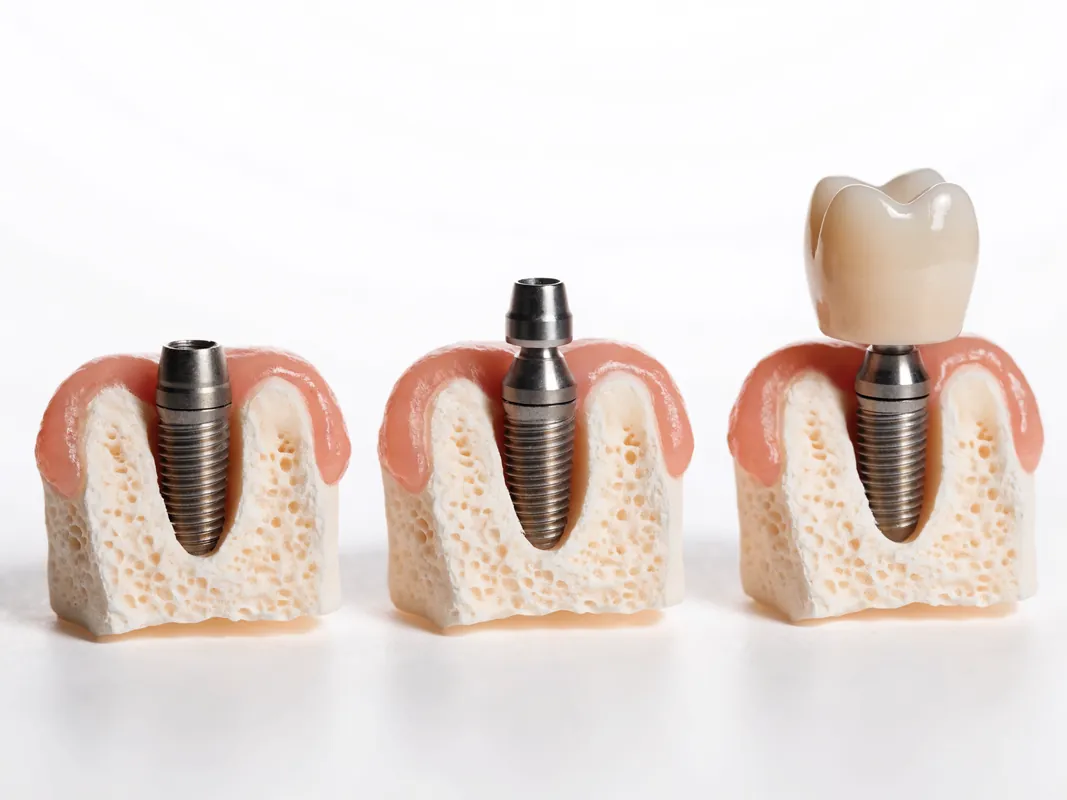
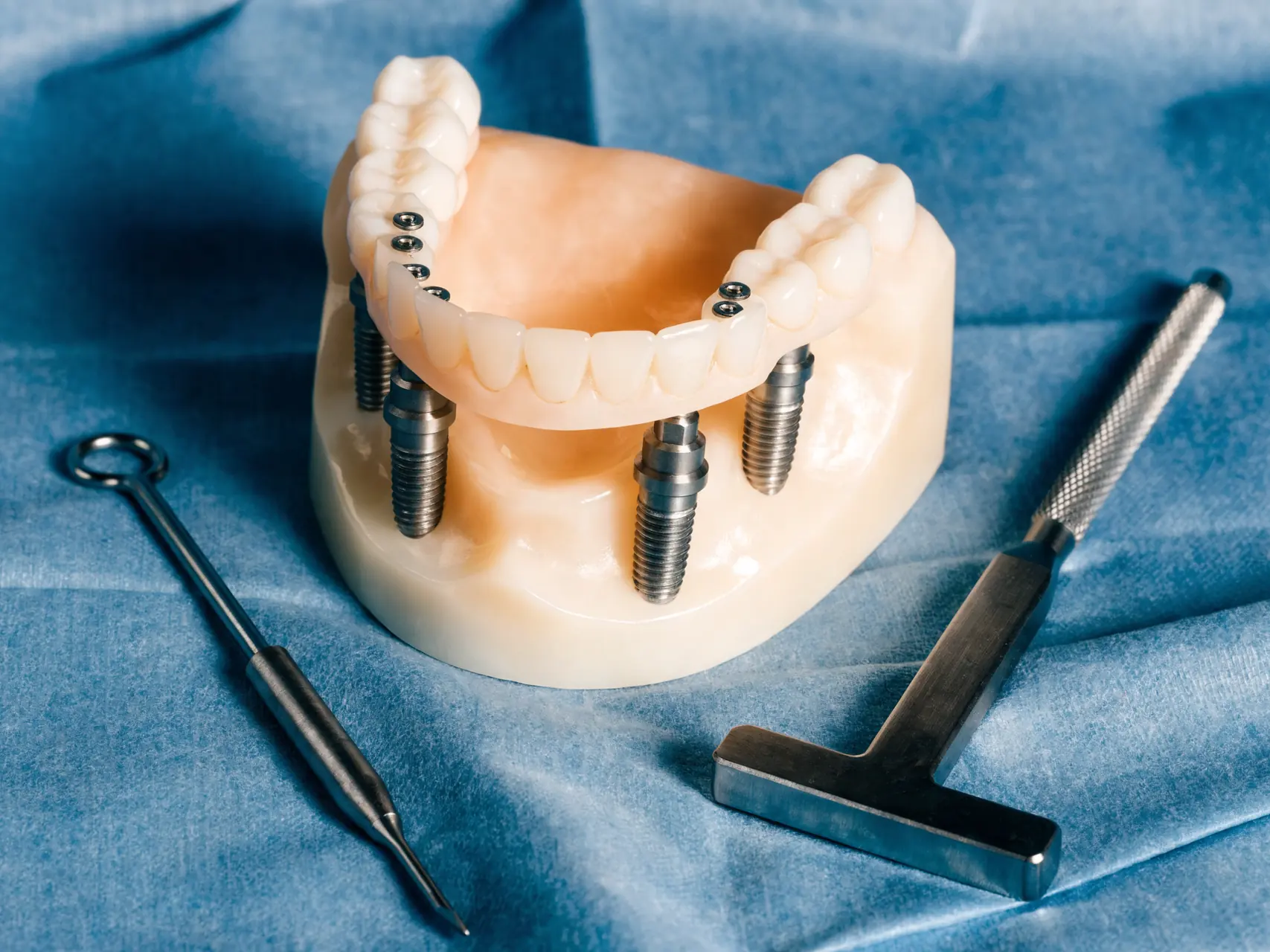
Do not let a diagram substitute for your records. A generic illustration can explain a concept, but it cannot show why your teeth should be removed, where implants can be placed or how your bite will be managed.
Verify the Legal Provider in Each Jurisdiction
In a UK pathway, identify the legal practice or company providing care, the treatment address and every clinician involved. The General Dental Council maintains the register for dental professionals practising in the UK. Check each UK clinician by full name and registration details rather than assuming that a clinic logo, title or training badge proves current registration.
The UK register does not verify a dentist practising only in Turkey. For a Turkish pathway, request the clinician's full legal name, professional role, registration details and treatment location, then use the relevant current Turkish official or professional source. If you cannot locate the correct verification source, ask the provider to identify it and confirm independently rather than accepting a screenshot supplied by sales staff.
Map every organisation in the pathway. The website owner, marketing agency, UK consultation organiser, Turkish treatment facility, imaging centre, laboratory, accommodation supplier and transport company may be different legal entities. Write down which entity provides clinical care, receives payment, holds records, arranges travel and receives complaints.
If a consultation or clinical activity happens in the UK, verify that the professional is legally entitled to provide that activity in the UK. The [General Dental Council's current guidance on going abroad for dental treatment](https://www.gdc-uk.org/standards-guidance/information-for-patients-public/going-abroad-for-dental-treatment) explains why patients should identify and check the person providing assessment or advice. Do not assume that an overseas provider's general credentials automatically cover a separate UK event or representative.
Name the Clinician Responsible for Each Stage
A team page is not a case allocation. Before paying a deposit, ask who is expected to examine you, make the final diagnosis, approve extractions, plan surgery, place implants, design the provisional restoration, approve the final restoration and manage complications. Request each person's professional role and the location where they will work.
Complex plans can involve different clinicians. That is not inherently a problem, but responsibility must be clear. Ask how information moves between clinicians and who has authority to change the plan. If a substitute may be used, ask how you will be told, how you can verify them and whether you can pause without losing money if the change is material.
Do not infer competence from nationality, a broad membership badge, a conference photograph or a claim that someone is internationally trained. Request procedure-relevant education, current registration and evidence of how the clinician audits work of similar complexity. Raw case volume is not enough; the denominator, case definition, follow-up period and reporting method matter.
Ask who will be available during discharge and later review. A coordinator can schedule calls and transfer documents, but clinical questions should reach a named qualified professional. The plan should distinguish administrative availability from clinical responsibility.
Treat Every Remote Proposal as Provisional
Photographs, messages and an existing panoramic image may support initial triage, but they cannot capture every finding needed for a final full-arch decision. The age and quality of records matter. Gum measurements, mobility, symptoms, bite relationships, soft tissue, previous components and three-dimensional anatomy may require direct assessment or justified further imaging.
A useful remote review states which records were examined, who examined them, which conclusions are tentative and what must be checked in person. It should identify the findings that could alter extractions, implant placement, grafting, provisional design, restorative material, sequence or price.
Ask what happens when the in-person findings differ. You should receive the clinical reason for any change, revised alternatives, material risks, updated scope and itemised quotation before consenting. Travel fatigue, a booked room or a departing flight should not become leverage to accept a more invasive plan.
The GDC's patient guidance says a patient should be assessed by a qualified dentist before receiving a treatment plan and cost estimate. Apply that principle critically to any pathway: identify the assessing dentist and distinguish an early estimate from the final plan accepted after adequate examination.
Build an Independent Evidence Pack
Collect your records before comparing quotations. If practical, ask a UK dentist who is not selling either pathway for an examination and copies of relevant records. The purpose is not to ask that dentist to approve an overseas provider. It is to understand current disease, urgent needs, reasonable alternatives and the evidence already available.
Your comparison folder may include original radiographs with dates, clinical photographs, gum records, previous implant identifiers, root-canal reports, surgical letters, restoration details, medicine and allergy lists, relevant medical history, symptoms and priorities. Keep the original files rather than relying on compressed screenshots.
Ask each provider to list what additional evidence is required and what decision it will inform. New imaging should have a clinical purpose. Repeated imaging should not be obtained merely because several sales teams want their own copy.
Use the same evidence pack for each provider so the comparison begins from similar information. Record the date and version of every proposal. If a plan changes, preserve both versions and the written reason.

Require a Tooth-by-Tooth Diagnosis Before Extraction
Full-arch marketing often starts from the final prosthesis, but the irreversible decision is frequently the removal of remaining teeth. Require a tooth map that describes each tooth as healthy, maintainable with treatment, uncertain or not reasonably maintainable, together with the evidence behind that assessment.
Ask whether active decay, gum disease, infection or bite problems can be treated before deciding on complete extraction. If prognosis is uncertain, ask whether a staged or specialist opinion could preserve options. If teeth are being removed partly to simplify a package or timetable, that should be explicit and independently reviewed.
For each proposed extraction, ask what happens if the tooth is retained, treated or monitored. For each retained tooth, ask how it interacts with the full-arch design. Clinical decisions can reasonably differ, but unexplained differences are not suitable for price comparison.
Consent should address the permanence of extraction and the limitations of future alternatives. A signature after arrival is not enough if material information was withheld until travel made refusal difficult.
Compare Equivalent Scope, Not Package Names
Create a side-by-side worksheet in which each quotation answers the same questions. Do not compare a UK restorative plan that includes diagnostics and maintenance with a Turkey headline package that omits them, or the reverse. Mark every item as included, conditional, excluded or not stated.
Compare at least these clinical elements:
- Named legal provider and treatment address
- Named responsible clinicians and roles
- Examination and diagnostic records
- Tooth-level diagnosis and alternatives
- Extractions and other preparatory treatment
- Implant system, components and traceability
- Provisional restoration and its limitations
- Final restoration design and material
- Laboratory stages and trial process
- Anaesthesia or sedation arrangements if relevant
- Medicines and review appointments
- Hygiene instruction and maintenance plan
- Final imaging and handover records
- Urgent and non-urgent aftercare process
- Conditions that can change treatment or cost
Then compare non-clinical elements separately: travel, accommodation, ground transport, companion arrangements and scheduling support. Those may affect total burden, but they should never be presented as evidence that the clinical work is equivalent.
An unanswered line is not included. A verbal promise is not a contractual term. Request a dated written version from the legal provider or named clinician, depending on whether the issue is clinical or commercial.
Calculate Total Burden Without Inventing a Market Price
A meaningful cost comparison uses your actual itemised quotations and personal circumstances. It does not begin with a generic national average. Add the clinical fees, diagnostic work, temporary and final stages, medicines, maintenance, time away from work, travel, accommodation, companion costs, exchange charges and contingency.
Include scenarios, not just the best case. What would an extended stay cost? What happens if a laboratory stage needs revision? What if you require local assessment after returning? What if another journey becomes clinically necessary but is not included? What if a refundable booking becomes non-refundable after a date?
Do not count an advertised hotel or transfer as a saving until the exact supplier, dates, room basis, accessibility, cancellation terms and payer are written. Likewise, do not assume UK convenience is cost-free; local travel, appointment disruption and private aftercare can matter. Use evidence from the actual proposals rather than stereotypes about national overhead.
Price can be important, but it cannot establish diagnosis, quality, safety or durability. A high total does not prove a better outcome. A low total does not prove poor care. The useful question is whether each quote covers an evidence-based plan, qualified responsible people, traceable components, realistic contingencies and continuing support.
Separate Implant, Provisional and Final-Restoration Decisions
A full-arch plan combines several decisions that should be evaluated separately. Implant placement is one stage. The provisional restoration has its own design, functional limits and maintenance needs. The final restoration has material, fit, bite, hygiene, repairability and laboratory considerations.
Ask which implant system and component references are proposed and how they will be recorded for future maintenance. Do not accept a logo on a website as proof of what will be used in your case. At handover, request identifiers that another qualified clinician can understand.
For the provisional restoration, ask how fit and bite will be checked, what foods or activities may be restricted for your case, what symptoms need review and what happens if it fractures or cannot be fitted. Do not assume a provisional is identical to the final restoration.
For the final restoration, ask about design responsibility, laboratory identity, material options, trial stages, hygiene access, repair process and how the bite is approved. Brand names alone do not answer those questions. The written plan should explain why the chosen design fits your anatomy and maintenance capacity.
Understand Staged Choices Without Accepting a Fixed Itinerary
Providers may organise assessment, disease control, surgery, provisional work, healing review and final restorative stages in different ways. The appropriate sequence depends on clinical findings, recovery and laboratory requirements. A generic itinerary should be treated as an example, not a promise that every patient follows the same path.
Ask which appointments are confirmed and which depend on examination, stability, healing or laboratory review. Ask what clinical criteria must be met before the next stage. If those criteria are not met, the plan should state reasonable alternatives and who bears additional non-clinical costs.
Do not choose a pathway solely because it advertises fewer visits. Fewer journeys may reduce convenience costs, but a compressed sequence may also leave less flexibility for assessment, trial, adjustment or recovery. More local appointments are not automatically evidence of better care either. Compare what happens during each stage and why it is needed.
Your consent should be renewed when material findings change. The ability to pause is especially important when travel arrangements create pressure to finish before departure.
Plan Travel as a Clinical Burden
Travelling for invasive dental care adds responsibilities that do not exist in the same form for local treatment. Flights can change, baggage can be lost, illness can delay attendance and clinical findings can extend or interrupt the plan. Build flexibility into transport, accommodation, work leave and companion arrangements.
Close to travel, consult the current [UK government travel advice for Turkey](https://www.gov.uk/foreign-travel-advice/turkey), the relevant Turkish official sources and your carrier. Record the date checked. Do not rely on an undated clinic page for entry, passport, regional safety or health rules.
Ask the treating clinician for case-specific advice about travel after each stage. A generic website cannot decide when one patient is fit to fly, carry luggage, resume work or eat normally. If sedation is proposed, clarify assessment, monitoring, recovery, escort needs and travel restrictions with the responsible professionals.
Keep a contingency budget for changed travel, extra accommodation, local assessment and delayed return. Know the treatment facility's official address and contact details, not only a coordinator's messaging account. Share the itinerary and essential contacts with someone you trust.

Arrange Independent Local Support Before Leaving the UK
Do not assume that your usual dentist, another private practice or an NHS service will provide every form of maintenance or corrective work after overseas treatment. Contact a local practice before travel. Explain the proposed treatment and ask what review, hygiene, maintenance or urgent assessment it is willing and equipped to provide.
Ask what records and component information the practice would need. A local dentist may be willing to examine symptoms without accepting responsibility for redesigning the restoration. A hygienist may need specific access and maintenance instructions. If specialised components are involved, availability may affect what can be done locally.
The current [NHS treatment-abroad checklist](https://www.nhs.uk/using-the-nhs/healthcare-abroad/going-abroad-for-treatment/treatment-abroad-checklist/) encourages patients to discuss overseas treatment, transfer of notes, complications and aftercare with an appropriate clinician. Use current official guidance for your UK nation and local situation rather than assuming that one pathway will automatically absorb later care.
If you cannot identify realistic local support, include that absence in the decision. Remote advice from abroad can help transfer information but cannot replace examination when pain, swelling, bleeding, mobility, bite change or altered sensation requires direct assessment.
Define Aftercare Before Treatment
Aftercare is not a contact button. Request a written process that names the clinical person reviewing concerns, expected response channel, published availability, evidence required and threshold for local examination. Separate administrative coordination from clinical advice.
Ask who manages early healing concerns, provisional adjustments, hygiene review, final-restoration review and long-term maintenance. Clarify which activities can happen locally and which require return to the original provider. If a return may be requested, identify who decides it and which travel, accommodation, clinical, laboratory and component costs remain with the patient.
Commercial remedial terms should be read separately from clinical responsibility. Request definitions, exclusions, maintenance duties, evidence requirements and the dispute route. Do not assume that a promise to assess or repair covers additional journeys, lost work or every future problem.
If symptoms are urgent or worsening, seek appropriate local clinical care. Do not wait for a commercial disagreement or remote photo review to be resolved before obtaining examination.
Require a Complete Handover Record
Before leaving the treating location, check that the record is complete. A future clinician should not have to reconstruct the case from invoices or social-media messages.
Request:
- Legal provider name and treatment address
- Names and roles of clinicians involved
- Dates and tooth-level procedures
- Pre-treatment and final diagnostic records in usable format
- Implant and component identifiers
- Provisional and final restoration details
- Laboratory identity and relevant design information
- Medicines administered or prescribed
- Relevant clinical measurements and unresolved findings
- Maintenance and hygiene instructions
- Review schedule based on your case
- Clinical and complaints contact routes
Keep the accepted plan, later revisions, consent documents, invoices and payment records with the clinical handover. Back up the files outside any temporary booking portal. Ask your local dentist whether further information would be necessary for maintenance.
Examine the Contract and Payment Chain
Identify the legal treatment provider, contracting party, invoice issuer and payee. They may not be the same entity. If money goes to a coordinator or another business, obtain a written explanation of its role and relationship to the provider.
Read deposit, cancellation, refund, currency and plan-change terms before paying. Ask what happens if the responsible clinician changes, travel is disrupted, in-person findings alter the treatment, you decline a revised plan or the provider cannot complete a stage. Do not rely on a salesperson's assurance that the contract will be adjusted later.
Payment protections depend on the method, amount, contractual structure, evidence and current law. Do not assume that a card, finance agreement or transfer creates a specific remedy without checking the actual terms. Seek independent legal or financial advice when the exposure is material.
Avoid pressure tied to expiring discounts, limited appointment claims or immediate deposits. Time to obtain records, verify providers and read the contract is part of informed decision-making.
Compare Complaints and Jurisdiction
A UK provider and a Turkish provider may be subject to different professional, regulatory, contractual and court processes. Do not assume that a familiar UK complaint route applies to an overseas company, or that a marketing office in the UK becomes responsible for treatment performed elsewhere.
Before treatment, request the provider's complaints policy and ask which legal entity receives a complaint, how clinical records are reviewed, what language is accepted, which escalation routes are available and which law or jurisdiction the contract claims to use. Verify named regulators or dispute bodies through their official sources.
Ask how an independent UK examination would be considered. Keep contemporaneous records of symptoms, correspondence, appointments and costs. If you need legal advice, obtain current advice relevant to the actual provider, contract and countries involved rather than relying on a generic webpage.
A complaints mechanism does not replace urgent care. Clinical safety and documentation should continue even while responsibility or payment is disputed.
Verify Insurance Wording, Not Assumptions
Travel, private medical, dental and payment-related policies differ. Planned treatment, complications, emergency care, additional accommodation and return travel may be treated differently. Never rely on a clinic or coordinator to interpret your policy.
Describe the proposed treatment accurately to the insurer and request written answers. Ask about exclusions for planned care, complications, pre-existing conditions, destination, provider approval, notification, evidence and additional travel. Save the policy version, endorsement, answer and reference.
Insurance products and public healthcare arrangements can change. Check current official and insurer sources close to booking and travel. If cover is important to affordability, consider independent advice from a suitably qualified insurance professional.
Build the decision so that a rejected claim would not leave you unable to obtain clinically necessary assessment.
Protect Consent and Health Data Across Organisations
Consent must be a clinical discussion in a language you understand. Ask who will interpret during examination, risk discussion, plan changes, treatment and discharge. A salesperson or companion may not be suitable for translating complex risks and alternatives.
Request consent information before travel so you can read it without time pressure. The final discussion must still respond to the actual in-person findings. You should be able to speak with the responsible clinician, correct misunderstandings and decline a material change.
Dental records are health information. Ask which entity controls them, why they are collected, where they are stored, who receives them and how you obtain a copy. If information moves among a UK adviser, coordinator, Turkish clinic, imaging centre, laboratory or insurer, each transfer should have a clear purpose.
Use a secure method you understand and send only relevant records. Avoid public groups or accounts whose business identity is unclear. Request current privacy information from every organisation handling the file.
When Local UK Care May Be the Better Pathway
Local care may be more practical when you need urgent assessment, cannot safely tolerate travel, have complex medical coordination needs, depend on frequent in-person review or cannot create a realistic contingency for delay. It may also be preferable when an established local team already understands a complicated history or when you would struggle to return to an overseas provider.
Choose proximity deliberately when access is central to risk management, not because every local plan is automatically better. Verify UK clinicians, scope, laboratory, materials, aftercare and contract with the same discipline used for an overseas plan.
Pause any travel decision when the legal provider or responsible clinician is unclear, extractions lack tooth-level reasoning, remote assessment is presented as final, the quotation is not itemised, consent is rushed, local support is absent, records will not be supplied or unexpected travel costs would make follow-up impossible.
If urgent disease needs stabilisation, obtain local clinical advice before making a destination comparison. A sales appointment should never delay necessary examination.
When a Turkey Pathway May Remain Worth Evaluating
An overseas pathway may remain an option when you have adequate independent assessment, can verify the provider and clinicians, understand the provisional nature of the plan, receive an equivalent-scope quotation and can manage travel and aftercare contingencies.
The reason should be personal and evidence-based. It might involve access to a particular verified team, a documented treatment approach, scheduling circumstances or a complete quotation that fits your situation. Do not convert those individual reasons into claims that one country is generally cheaper, safer, faster or better.
Judge the actual provider and plan. Verify that you can decline changes, obtain full records, reach qualified clinical support and fund local assessment if needed. Convenience services may make travel easier, but they remain separate from clinical quality.
Revisit the decision if new examination findings change the expected stages or burden. The destination chosen before diagnosis should not dictate irreversible treatment afterward.
Equivalent-Scope Comparison Worksheet
For each UK and Turkey proposal, record the answer and supporting document for every row:
| Decision field | UK proposal | Turkey proposal | Evidence required |
|---|---|---|---|
| Legal treatment provider | Record exact entity | Record exact entity | Contract and official verification |
| Responsible clinicians | Names and roles | Names and roles | Current registration checks |
| Diagnosis | Tooth-level findings | Tooth-level findings | Signed clinical plan and records |
| Teeth to preserve or remove | Clinical reasons | Clinical reasons | Alternatives and prognosis |
| Implant and components | Exact references | Exact references | Written plan and handover identifiers |
| Provisional restoration | Design and conditions | Design and conditions | Limitations and contingency |
| Final restoration | Material and design | Material and design | Laboratory and trial process |
| Stages | Case-specific criteria | Case-specific criteria | Confirmed versus conditional appointments |
| Clinical quotation | Included and excluded | Included and excluded | Dated itemised scope |
| Travel burden | Local journey and leave | International journey and leave | Personal contingency calculation |
| Local aftercare | Named pathway | Named pathway | Practice agreement and records needed |
| Remedial process | Written terms | Written terms | Costs, exclusions and jurisdiction |
| Complaints | Verified route | Verified route | Provider policy and official source |
Do not score a blank row as equal. Ask follow-up questions until the difference is understood or mark the uncertainty as part of the decision.
Evidence Checklist Before Any Deposit
Do not pay until you can assemble and read the following:
- Independent assessment or second opinion where practical
- Original records used for the remote review
- Legal provider identity and treatment address
- Named clinicians, roles and independent registration checks
- Tooth-by-tooth findings and extraction reasons
- Reasonable alternatives, including less invasive choices
- Provisional assumptions and missing diagnostics
- Written criteria for each treatment stage
- Exact component and restoration specification proposed
- Laboratory identity and quality-control process
- Itemised clinical quotation
- Separate non-clinical travel and accommodation terms
- Deposit, cancellation, refund and change terms
- Language and interpretation arrangements
- Case-specific travel and disruption contingency
- Independent UK maintenance and urgent-care plan
- Complete handover-record commitment
- Insurance answers based on the current policy wording
- Complaints, remedial and jurisdiction information
- Privacy and health-record handling details
If a key item is missing, record it as missing. Confidence, popularity and polished communication do not convert missing evidence into evidence.
Questions to Send Both Providers
Use the same written questions so the answers can be compared:
- What is the legal name and address of the clinical provider?
- Who will examine me, approve the final plan and perform each stage?
- Where can I independently verify each clinician?
- Which records have been reviewed and what remains uncertain?
- Why is each remaining tooth being preserved or removed?
- What alternatives could avoid or reduce irreversible treatment?
- What could change after in-person examination or imaging?
- What conditions must be met before a provisional restoration is fitted?
- Which implant system, components and restoration are proposed?
- Which laboratory is responsible and what trial stages are planned?
- What is included, conditional and excluded from the quotation?
- Which appointments are confirmed and which are provisional?
- What happens if a stage is delayed or cannot proceed?
- Who provides clinical aftercare and when is local examination required?
- What records will I receive for independent maintenance?
- Who receives complaints and which jurisdiction applies?
Request clinical answers from the named clinician or legal provider, not only a sales representative. Save the replies with the plan and contract.
Frequently Asked Questions
Is All-on-4 treatment in Turkey the same as in the UK?
The label alone cannot establish equivalence. Compare the diagnosis, clinician roles, implant and restorative components, laboratory process, staged criteria, records, aftercare and contract. Two plans in the same country may differ as much as plans across countries.
Can I compare providers using price per arch?
Only after confirming equivalent scope. One figure may omit imaging, temporary work, laboratory stages, medicines, reviews, maintenance or travel. Use itemised written quotations and add your personal contingency costs.
Does the GDC register verify my dentist in Turkey?
No. The GDC register applies to professionals practising in the UK. Request the Turkish clinician's full identity and registration details, then use the relevant current Turkish official or professional source.
Is a remote scan review enough for a final plan?
It may support a provisional proposal, but the responsible clinician should state what is missing and what must be confirmed in person. Ask which findings could alter extractions, support design, restoration, stages or cost.
Does All-on-4 always use exactly four implants?
Do not infer an individual support design from a commercial label. The clinician must assess anatomy, remaining teeth, restorative space, bite, health and other case factors, then explain the proposed design and alternatives.
Will I always receive fixed temporary teeth immediately?
No individual loading decision should be promised solely from marketing. Ask which clinical criteria apply and what functional and aesthetic alternative is available if those criteria are not met.
Will a UK dentist maintain treatment completed in Turkey?
Do not assume so. Ask a local practice before travelling what it can provide and which records or components it requires. Remote overseas support does not replace local examination when one is clinically needed.
Is travel or dental insurance enough for complications?
Policy wording differs. Tell the insurer about the planned treatment and ask in writing about exclusions, complications, emergency care, additional travel, provider requirements and evidence. Keep the current policy version and answer.
What if the plan changes after I arrive?
Request the clinical reason, alternatives, revised risks, scope, stages and itemised quotation. You should have time to ask questions and decline. Avoid arrangements that make refusal practically impossible.
How do I compare the final bridges?
Compare design responsibility, material specification, laboratory, trial stages, bite approval, hygiene access, repairability and the records supplied. A broad material or product label is not enough.
Who pays if I need to return?
Read the written remedial and travel terms. Separate clinical assessment, professional time, components, laboratory work, flights, accommodation and lost work. Do not assume one promised remedy covers every cost.
When should I prefer local UK care?
Local care may be more practical when urgent assessment, complex medical coordination, frequent review, limited travel capacity or reliable proximity is central to safe continuity. Verify the local plan with the same evidence checklist.
Final Decision Rule
Do not choose an All-on-4 pathway by country, package appearance, testimonial or headline total. First establish whether full-arch fixed treatment is appropriate and whether remaining teeth have been assessed fairly. Then verify the legal provider and clinicians, compare equivalent written scope, preserve the right to pause after in-person findings, calculate travel and aftercare burden, and understand the contract, records and complaint route.
A decision is ready only when the evidence supports the clinical plan and the practical pathway remains manageable if treatment, recovery or travel does not follow the optimistic scenario.