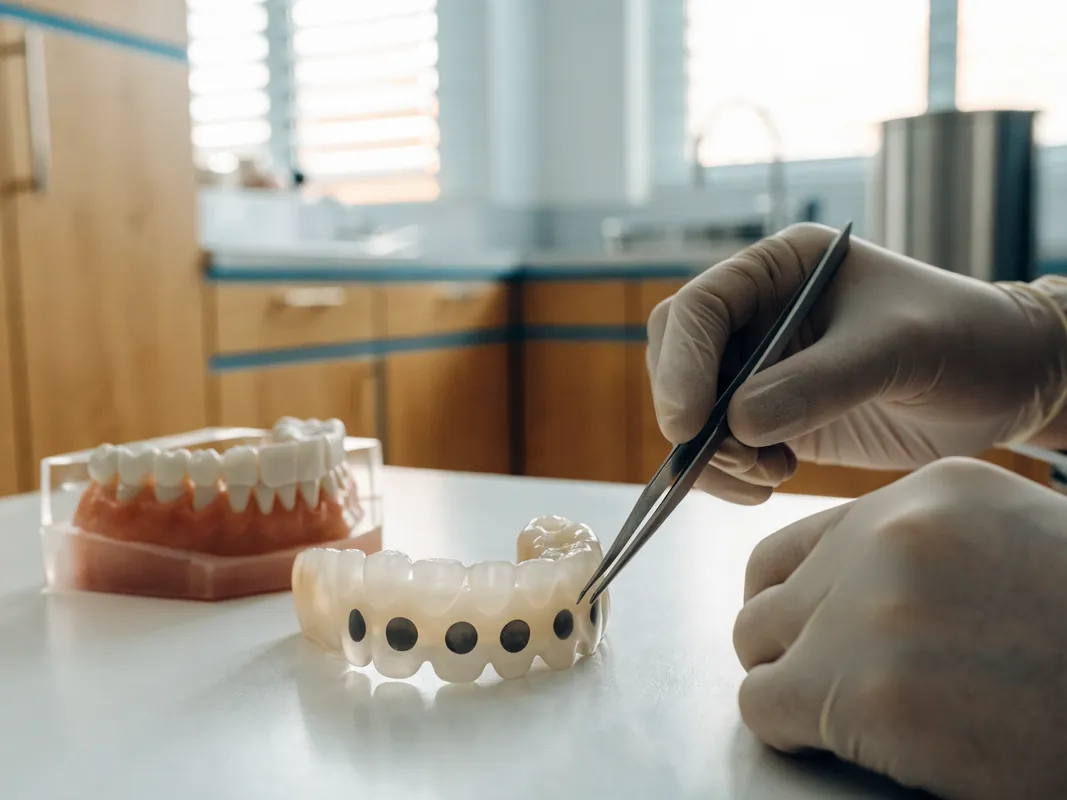
A claim-to-evidence guide for comparing cross-border dental proposals without treating praise, fear, credentials, prices or package labels as proof.
“Dental tourism myths” is a difficult search because confident marketing and confident warnings often use the same shortcut: they turn a complex, individual healthcare decision into a verdict about a country. One side may say that treatment in Türkiye is automatically modern, affordable and safe. Another may say that any treatment abroad is automatically poor or reckless. Neither statement identifies the patient, diagnosis, legal provider, responsible clinician, device, laboratory, contract, aftercare route or evidence.
A useful myth check does not replace one slogan with another. It converts each claim into a question that can be answered by the right record. “The clinic is good” becomes: what is the exact legal healthcare provider, where is it authorised, and which named clinician accepts responsibility for this case? “The implant is genuine” becomes: what exact system and components are proposed, what label or identifier will be retained, and what applicable instructions support compatibility? “Everything is covered” becomes: which clinical and non-clinical line items, currencies, exclusions, change rules and payees appear in the signed quotation?
This guide is an evidence-verification framework, not a diagnosis, provider recommendation, treatment recommendation, price list, itinerary, legal opinion or prediction. It verifies no clinic, clinician, credential, device, laboratory, medicine, material, availability, quotation, insurance policy, travel service, comfort, healing date, result, warranty or complaint outcome. Suitability and timing require examination and responsibility from an appropriately qualified clinician. Contract, insurance, privacy and regulatory questions require the current documents and rules that apply to the actual parties.
Sources reviewed on 29 August 2026 come from Turkish public authorities, UK public and professional bodies, United States public-health and device authorities, European Commission material and NHS clinical guidance. Each source has a limited jurisdiction and purpose. A Turkish directory may answer a Turkish status question on the date checked; a UK professional standard does not become Turkish law; an FDA database does not establish Turkish market status; and general travel guidance cannot decide one patient’s clinical readiness.
Use the clinic verification guide for a deeper provider check, the implant-system guide for component traceability, the treatment-stage guide for clinical gates, the flying-after-oral-surgery guide for travel questions, the returning-home guide for handover and the review-evidence guide for reading testimonials. This page owns a different intent: turning common dental-tourism myths into checkable evidence requests before money or irreversible treatment changes hands.
Define a Myth as a Testable Claim
A myth is not merely a sentence that sounds wrong. It is a broad claim whose scope, evidence or conditions have been hidden. The practical response is to identify the subject, verb and boundary. Who supposedly provides the service? What exactly is being promised? For which patient, procedure, device, date and contract? Which document would show that the statement is true, false or still uncertain?
Build four columns: claim, evidence needed, source owner and decision if missing. A provider-status claim needs a current official listing matched to the legal entity and address. A clinician claim needs a name, professional role, registration route and case responsibility. A clinical claim needs an examination-based rationale, alternatives and limitations. A commercial claim needs the signed itemised terms. A device claim needs exact identity and applicable product records. A travel claim needs the actual carrier, insurer or travel contract.
The answer may remain unknown. “Not yet verified” is different from “false,” just as a directory match is different from “best.” Good due diligence preserves those distinctions.
Use a Claim-to-Evidence Ladder
Start with the least reversible evidence gate and move forward only when it closes. First verify identity: patient, provider, clinician, facilitator, laboratory and payee. Then verify diagnosis: findings, records, alternatives and uncertainties. Then verify intervention scope: tooth-by-tooth work, materials, devices, stages and stop criteria. Then verify commercial scope: currency, line items, exclusions, changes, cancellation and refunds. Finally verify continuity: records, maintenance, urgent routes and responsibility after travel.
Marketing content belongs at the beginning of the ladder as a lead, not at the end as proof. A photograph can suggest a question. A review can identify a recurring concern. A badge can point to a registry. A brand logo can point to a product portal. None should skip the underlying record.
Record the date and source for every status check. Websites, registers, personnel, product portfolios, travel rules and insurance terms can change. A saved PDF or screenshot can show what informed the decision, but only the current official source can answer a current status question.
Separate Five Identities Before Comparing Proposals
The brand displayed in an advert may not be the entity delivering care. Ask for the exact legal name and address of the healthcare provider. Ask for the treating dentist’s full name and role. Identify any facilitator or marketing company separately. Identify the laboratory responsible for the restoration. Identify the party receiving each payment.
Those identities can overlap, but overlap must be documented rather than assumed. A coordinator may manage messages without being authorised to diagnose. A facilitator may arrange support services without being the clinical provider. A laboratory may manufacture a restoration without selecting the treatment. A payment processor may collect funds without accepting clinical liability.
The written trail should show who examines, diagnoses, obtains consent, operates, restores, reviews, stores records, handles complaints and receives money. If one name is used for all roles, request the underlying legal documents and contracts rather than relying on a trading name.
Keep Country, Provider and Case Evidence Separate
Country-level information can identify regulation, travel warnings and public pathways. Provider-level evidence can identify legal status, personnel, policies and contracts. Case-level evidence connects the patient’s findings to a proposed intervention. These levels answer different questions.
A national authorisation framework does not predict one patient’s outcome. A provider’s lawful status does not prove that a particular clinician is suitable for a particular procedure. A clinician’s experience does not prove that a remote quotation matches the eventual diagnosis. Conversely, one negative story cannot establish that every provider in a country behaves the same way.
When two claims conflict, ask whether they operate at the same level. “The country has a regulatory framework” and “this particular proposal is incomplete” can both be true. Myth checking becomes clearer when the level is stated.
Read Official Sources Within Their Jurisdiction
The Turkish Ministry of Health’s current health-tourism pages and lists are relevant to provider and facilitator status in Türkiye. The Turkish Dental Association route may help with dentist identity. Turkish product-rule and ÜTS routes concern medical-device regulation and traceability. Patient-rights and consumer information routes address different parts of the relationship.
The GDC regulates dental professionals in the UK, not dentists practising only in Türkiye. Its overseas-treatment page and standards are useful question frameworks for UK readers, but they do not certify or discipline a Turkish provider. NHS, CAA and GOV.UK pages likewise provide UK-facing public guidance, not an assessment of a named overseas clinic.
FDA and European Commission device pages explain their own regulatory systems. Their databases and identifiers can support product questions within those systems. They are not universal authenticity certificates and do not decide clinical suitability.
Myth: The Country Label Predicts Safety
A destination name is not a risk assessment. It is too broad to describe the legal provider, individual clinician, infection-control process, patient’s medical history, procedure, materials, records, aftercare or travel conditions. “Safe country” and “dangerous country” are both inadequate clinical categories.
Replace the country verdict with case questions. Is the provider currently authorised for the relevant activity? Is the clinician identifiable and appropriately registered in the applicable system? Has a clinician assessed the patient rather than a sales script? Are active oral disease and relevant health factors addressed? Are consent, complications, alternatives and aftercare documented? Can the patient obtain complete records?
Official travel advice can identify regional risks and general health considerations. It does not endorse or reject a named dental proposal. The correct output is a documented case decision, not a national ranking.
Myth: Every Clinic in Türkiye Is Equivalent
Providers can differ in legal identity, scope, clinical governance, personnel, equipment, laboratory arrangements, record quality, communication, complaint handling and continuity. A shared city or destination does not make their proposals interchangeable.
Compare like with like. Use the same worksheet for each proposal. Match the tooth-level diagnosis, alternatives, clinician, restoration design, device system, component chain, laboratory, provisional stage, review gates, quote lines and aftercare duties. If Proposal A names a complete implant system and Proposal B names only a logo, their prices are not comparable. If one quote includes disease control and another begins with irreversible preparation, their scopes differ before cost is considered.
Do not infer “premium” or “budget” from décor, social media or a headline price. The useful distinction is documented scope versus missing scope.
Myth: A Ministry Listing Proves Clinical Superiority
A current official listing can be important evidence that a named entity appears in a specific authorisation route on the date checked. That is a narrow and valuable status finding. It does not establish that the entity is the correct legal party on the quote, that every site or trading name is covered, or that a particular clinician is responsible for the proposed work.
It also does not rank providers, validate a product box, confirm laboratory quality, approve a treatment plan or predict an outcome. Match the exact legal name and address rather than accepting a cropped logo or certificate image. Save the source and date. If the listing changes or the names do not align, seek clarification from the authority or an appropriately qualified adviser.
Status verification is one gate. Diagnosis, consent, clinical responsibility and contract verification remain separate.
Myth: An International Badge Proves the Whole Treatment
A badge may relate to an organisation, process, course, membership, conference, product or historical status. Without the scheme owner, exact scope, holder, identifier and current verification route, it is only an image.
Even a genuine current credential cannot answer every decision question. It may not identify the treating clinician, establish competence for the proposed procedure, validate the laboratory, authenticate a device, make a remote plan final or guarantee a result. Ask what the credential legally or professionally means, who owns it, when it expires and where it can be checked independently.
Do not transfer a credential from one person to an entire team or from one address to another. Treat any badge as a prompt for a registry check, not as a substitute for the patient’s evidence chain.
Myth: The Facilitator Is the Treating Provider
A facilitator, coordinator or marketing business may help with enquiries or logistics, but those functions do not automatically make it the healthcare provider. The distinction matters for diagnosis, consent, record ownership, payments, complaints and liability.
Ask which legal entity holds the clinical record and which named clinician will examine and treat. Ask whether a separate entity contracts for non-clinical support. The patient should know which party receives each payment and which terms govern it. If a message uses “we” without identifying the responsible entity, request a written role map.
No non-clinical representative should be treated as the source of a final diagnosis merely because they reply quickly or present a polished plan. Clinical decisions need clinician responsibility and an examination appropriate to the decision.
Myth: A Website Profile Names the Clinician for Your Case
A staff page can show that a person is associated with a business at the time the page is viewed. It does not prove that the person will examine, operate, restore or review this patient. Personnel and schedules can change.
The proposal should name the clinician expected at each irreversible stage, their professional role, the legal provider and the substitution process. Ask when the patient will speak directly with the responsible clinician. Ask what happens if the named person is unavailable and whether the patient can pause without losing rights under the written terms.
Verify current registration through the relevant professional route using the exact name. Registration is a legal-status check, not a performance ranking. Case responsibility must still appear in the clinical record.
Myth: A Remote Image Creates a Final Diagnosis
A photograph, panoramic image or scan can help a named clinician triage, identify questions and describe conditional possibilities. It may be incomplete, outdated, distorted or insufficient for the proposed decision. It cannot reveal every clinical finding, medical interaction, bite relationship, pulp status, periodontal condition or three-dimensional anatomical issue.
Label any remote response as provisional. Record which materials were reviewed, their dates and quality, who reviewed them, what remains unknown and what could change after examination. The final plan should follow the assessment the responsible clinician considers necessary.
A sales estimate that appears before clinical review is not automatically fraudulent, but it must not be presented as a final diagnosis. The commitment and cancellation terms should account for clinical change.

Myth: A Treatment Name Has One Universal Meaning
“Smile makeover,” “full mouth,” “same-day teeth,” “implant package” and similar labels can hide very different procedures. A name may refer to whitening, composite, veneers, crowns, implants, bridges, provisionals or a mixture. Tooth preservation and risk differ substantially between them.
Request a tooth-by-tooth plan. For each tooth, record the diagnosis, proposed intervention, material, preparation expectation, alternative, responsible clinician and reason. For implants, record site, planned restoration, exact system and component pathway. For whitening, separate natural teeth from restorations. For orthodontics, document who diagnoses, monitors and retains.
A treatment label is useful only after its components are defined. Never compare two headline names as though they were equivalent scopes.
Myth: More Treatment Means More Comprehensive Care
A longer list of procedures can reflect complexity, but it can also reflect overtreatment or unresolved diagnosis. Comprehensiveness means that disease, alternatives, risks, patient priorities, sequencing, maintenance and uncertainty have been considered—not that more teeth are altered.
Ask why each irreversible intervention is necessary. What problem does it solve? What happens if it is delayed or not done? Can the tooth be preserved with a less invasive approach? Does active disease need control first? How will the result be maintained? What findings would cause the plan to stop or change?
A valid plan may become smaller after examination. The ability to reduce scope is a quality signal in the decision process, not evidence that the first estimate was wrong.
Myth: A Higher or Lower Price Proves Quality
Price is a commercial fact about a defined scope. It is not a clinical grade. A lower figure does not prove inferior care, and a higher figure does not prove better diagnosis, materials, skill or continuity.
First make proposals equivalent. Itemise consultation, imaging, disease control, each tooth or site, surgery, grafting if actually indicated, provisional work, definitive restoration, laboratory, components, medicines if prescribed, reviews, records and local maintenance. State currency, taxes if relevant, payee, payment stages, refund rules and what happens if the plan changes.
Do not use an invented price floor or destination saving. Market prices and exchange rates change, and a headline omits scope. Compare the evidence attached to the number, not the emotional meaning of the number.
Myth: A Bundle Label Defines What You Are Buying
“All-inclusive” and similar terms are not itemised contracts. They can blur clinical care, facilitation, accommodation, transport, companion needs and optional extras. The patient cannot compare or enforce an undefined bundle.
Split the proposal into clinical and non-clinical schedules. Name the supplier, service, dates or conditions, cancellation rule, accessibility details, exclusions and price for each line where applicable. The clinical provider and travel supplier may be different entities. A travel service does not validate treatment, and treatment consent does not accept unrelated travel terms.
If scope depends on clinical findings, label it conditional. If an item is unknown, write “not confirmed” rather than assuming it. The myth is not that bundled buying is always wrong; it is that the label itself proves scope.
Myth: Paying a Deposit Locks the Clinical Plan
A payment can reserve a service under a contract. It cannot make an unexamined diagnosis final or remove the patient’s right to valid consent. Clinical findings may justify a different plan, smaller scope, referral, delay or no treatment.
Before payment, ask which entity receives the money, what it reserves, whether it is applied to treatment, which currency and conversion method apply, and what happens if clinical examination changes suitability. Separate patient cancellation, provider cancellation, travel disruption and clinical unsuitability. Request the refund method and evidence required.
The commercial contract should anticipate uncertainty instead of pretending it does not exist. A large irreversible payment before provider, diagnosis and scope are clear transfers risk to the patient.
Myth: A Fixed Calendar Proves Efficiency
A short itinerary can be convenient, but speed is not evidence that tissues, laboratory work, consent or restorative fit are ready. Different procedures have different biological and technical gates, and individual findings can change the sequence.
Replace day-number promises with readiness criteria. Before preparation or surgery: diagnosis, disease control, medical review where relevant, consent and material decisions. Before a definitive restoration: tissue condition, fit, contacts, bite, shade and patient acceptance. Before departure: clinical review, written instructions, records, urgent route and travel assessment.
A plan should include buffer and stop criteria. The ability to pause, remake or stage care is not failure. It is how uncertainty is managed.
Myth: Flights Should Determine Clinical Timing
A flight reservation is a travel contract, not a clinical clearance. The treating clinician should assess procedure-specific readiness, while the airline controls carriage requirements. A generic web timetable cannot combine the patient’s health, extent of surgery, symptoms, medication, complications and carrier rules.
Do not buy a non-changeable itinerary based only on a marketing schedule. Ask what findings would delay treatment or travel, who can assess readiness, how an extension would be handled and what the insurer says about planned care. If assistance or medical clearance may be needed, ask the carrier through its current route.
The flying-after-oral-surgery guide expands this gate without promising a universal interval.
Myth: Accommodation or Transport Validates Dentistry
A convenient room or vehicle can affect access, fatigue and logistics. It says nothing about diagnosis, clinician registration, device identity, sterilisation, consent, restoration fit or aftercare. Clinical quality cannot be inferred from travel presentation.
Verify non-clinical services on their own terms. Ask for the supplier, exact address, room basis, accessibility, companion arrangements, transfer legs, luggage or mobility needs, cancellation and payee. Keep those terms outside clinical consent. If a coordinator handles both, the contracts and responsible entities should still be clear.
Do not choose irreversible treatment because a travel arrangement feels seamless. Convenience is a preference to weigh after the clinical evidence chain is coherent.
Myth: “Same-Day Teeth” Always Means Definitive Teeth
A phrase about immediate teeth can describe different realities: a provisional restoration, a definitive restoration in a selected case, or a removable interim solution. It does not identify the implant protocol, loading criteria, material, occlusion, maintenance or conditions for change.
Ask what is placed at each stage, whether it is temporary or definitive, what clinical criteria must be met, which activities or foods may be restricted, who reviews it and what happens if the criteria are not met. Ask how the final design is approved and what records identify the components.
Do not infer a universal sequence from a headline. Individual anatomy, disease, stability, healing and restorative requirements belong to the responsible clinician’s assessment.
Myth: Dental Implants Are Permanent and Maintenance-Free
An implant system includes the implant body, abutment, screw and restoration. Components can need monitoring, maintenance or intervention. Tissues around implants can develop disease, and restorations can wear, loosen or fracture. Patient factors and cleansability matter.
Before choosing an implant, discuss no treatment, tooth preservation, a bridge and removable options where relevant. Ask how active periodontal disease and risk factors are addressed. Require the exact implant and restorative identity, baseline records, hygiene design, review plan and local service route.
“Long-term” should describe a maintenance responsibility, not an outcome promise. The FDA, NHS and SDCEP sources in this guide provide broad device and clinical context; none selects a brand or predicts one person’s result.
Myth: All Implant Brands Are Interchangeable
A corporate name can contain multiple implant families, connections, platforms and restorative components. Similar appearance or dimensions do not establish compatibility. The laboratory and local dentist may need specific drivers, scan bodies, screws, libraries and instructions.
Ask for the exact fixture family, reference, dimensions, platform, connection, abutment, screw and restoration route. Request the applicable instructions for use and a patient-held identity record. Check the relevant regulatory and manufacturer routes for the market, while recognising that a database match has limits.
The implant-system verification guide provides a component worksheet. Brand familiarity is not a substitute for exact identity.
Myth: A Logo or Box Photograph Proves the Device Used
A logo identifies marketing. A box image may support a product question. Neither alone proves that the item was genuine, stored correctly, opened for this patient, used as planned or documented in the operative record.
Reconcile multiple records: quotation, label or identifier, clinical notes, site, date, invoice, radiographs, abutment and restoration components. For applicable devices, UDI and regulatory databases can support identity questions in their jurisdictions. They do not provide a universal authenticity or suitability verdict.
Request the patient-held record before leaving. If a code, label and clinical record conflict, pause and ask the provider and relevant official or manufacturer route to clarify. Do not declare a device counterfeit from one mismatch; document and investigate.
Myth: Veneers and Crowns Are the Same Treatment
A veneer generally covers a surface of a tooth; a crown covers more of the tooth. The amount and location of preparation depend on the diagnosis, existing tooth structure, material and plan. A marketing label cannot show what will happen to each tooth.
Ask for a tooth-by-tooth map identifying existing restorations, decay, cracks, wear, pulp concerns, periodontal findings, proposed preparation and alternatives. Ask whether whitening, orthodontics, composite, repair, monitoring or no treatment could meet the goal with less irreversible change.
Consent should describe the actual intervention, not merely the cosmetic result. A preview can support design discussion but cannot replace biological assessment or consent.

Myth: Veneers Have No Biological Cost
Any irreversible removal of tooth structure matters. Preparation can vary, and suitability depends on enamel, existing restorations, alignment, bite, disease and desired change. A universal minimal-preparation claim should not be applied to an unexamined person.
Ask the clinician to explain expected preparation for each tooth and what might make it greater. Ask about sensitivity, repair, replacement, margins, hygiene and alternatives. If a tooth already needs a crown for structural reasons, that is a different diagnosis from preparing a healthy tooth solely for appearance.
“Conservative” must be demonstrated by the individual plan and records. It is not proved by a product name, photograph or destination.
Myth: Crowns Are Always a Stronger Cosmetic Choice
A crown may be appropriate when a tooth needs circumferential coverage, but strength is not a reason to remove sound tissue without diagnosis. Restorative choices balance remaining tooth structure, disease, cracks, previous treatment, bite, material, maintenance and patient goals.
Ask why each crown is proposed and what lower-intervention alternatives were considered. Ask whether endodontic or periodontal findings need management first. Ask how margins, contacts and bite will be assessed before final acceptance.
The correct comparison is not “crown versus veneer” in the abstract. It is the clinical options for this tooth, including repair, composite, orthodontics, whitening, monitoring and no intervention.
Myth: Whitening Changes Crowns, Veneers and Implants the Same Way
The NHS explains that whitening lightens natural teeth, not crowns, dentures or implants. Existing restorations may therefore no longer match after natural teeth change shade. That makes sequencing important.
Before whitening, a dentist should assess oral health and whether the method is appropriate. If new restorations are planned, ask when shade will be selected and how existing materials affect the design. Do not assume an advertised shade can be achieved or will look identical under every light.
Whitening is not a harmless add-on for every person. Sensitivity, gum effects, product legality and existing dental work require individual assessment.
Myth: Extraction Is Automatically Easier Than Tooth Preservation
Extraction can remove a problematic tooth, but it also creates a new condition: a missing tooth and decisions about the space. Replacement may involve no treatment, a denture, bridge or implant. Each has different biological, technical and maintenance consequences.
Ask whether the tooth is restorable, what evidence supports the prognosis and whether endodontic, periodontal or restorative care is relevant. Seek an independent opinion when an extensive extraction plan is proposed without tooth-specific reasoning. Ask how delay or no treatment changes the risks.
“Easier” can refer to scheduling or initial cost rather than the patient’s long-term clinical interest. Preserve the distinction.
Myth: No Treatment Is Never a Legitimate Option
Valid consent includes alternatives and, where relevant, delaying or doing nothing. No treatment may carry risks, but it is still a comparison option that should be explained rather than hidden.
For each proposed intervention, ask what happens if it is not done now. Is the condition active, stable, symptomatic, structural or cosmetic? Can it be monitored? What signs would trigger review? How does no treatment affect function, disease, appearance and later options?
The existence of a flight, deposit or treatment slot does not create clinical necessity. If the consequences of no treatment are not explained, the decision is incomplete.
Myth: Absence of Pain Proves Absence of Risk
Dental disease, healing problems and restoration defects do not always produce immediate pain. Conversely, some discomfort can occur without proving a serious complication. Symptoms must be interpreted with examination and context.
Ask which warning signs require routine contact, prompt dental assessment or emergency care. Obtain written instructions and a route that works after returning home. Do not rely only on a messaging channel or on reassurance from someone who cannot examine the patient.
Severe swelling affecting breathing or swallowing, uncontrolled bleeding, collapse, major trauma or rapidly worsening systemic illness can require urgent emergency assessment. This guide cannot triage an individual; use the appropriate local emergency service.
Myth: Infection Risk Belongs to a Nationality
Infection prevention is a provider process and patient-specific clinical issue, not a nationality. A country stereotype cannot show hand hygiene, instrument reprocessing, water quality, surgical technique, antibiotic stewardship, patient disease or postoperative monitoring.
Ask the provider to explain its infection-control governance and how concerns are documented and escalated. The responsible clinician should review relevant health factors and prescribe only when clinically indicated. Do not self-prescribe or assume antibiotics eliminate risk.
Public-health guidance can identify general medical-tourism concerns, but it cannot rank every provider. Evidence should stay connected to the actual facility and procedure.
Myth: Before-and-After Images Prove Your Outcome
Images can illustrate a design or raise questions. They rarely show full diagnosis, consent, preparation, bite, symptoms, complications, maintenance, time, editing, lighting or whether the same clinician and laboratory were involved.
Ask whether images are genuine, current, consented and representative, but do not treat them as outcome evidence for the viewer. A similar starting appearance does not make two patients clinically equivalent. Request examination-based options and limitations.
The review-evidence guide explains why testimonials and images are leads rather than proof. A patient should never be pressured to consent because a mock-up or photograph creates an emotional expectation.
Myth: Reviews Establish Clinical Quality
A review describes an experience selected for publication. It may help identify communication, billing or aftercare questions, but it cannot verify diagnosis, registration, device identity or comparative clinical outcomes.
Read the distribution and detail rather than only an average. Look for whether the review identifies treatment, stage and follow-up. Check incentives and platform rules. Treat provider replies as evidence of communication style, not as proof that either party’s clinical account is complete.
Triangulate reviews with official status, written plans, records, contracts and an independent opinion. A positive story cannot guarantee another result, and a negative story cannot diagnose an entire provider.
Myth: Multilingual Staff Automatically Creates Valid Consent
Language access is important, but the existence of multilingual staff does not prove that the patient understood the responsible clinician, options, risks, costs and change conditions. A coordinator may translate messages without being able to answer clinical questions.
Ask who will interpret, whether the clinician can communicate directly, how questions and decisions are recorded, and whether translated versions of consent and aftercare are available. The patient should have time to consider information and should be able to stop when meaning is unclear.
A signature is evidence that a form was signed. It is not proof of the conversation or understanding. Consent is an ongoing process linked to the actual plan.
Myth: Fast Messaging Is the Same as Aftercare
A quick reply can be useful customer service. Aftercare requires a named clinical route, access to records, clear triage boundaries and the ability to arrange examination when needed. A remote photograph cannot replace hands-on assessment for every concern.
Ask who reviews postoperative messages, their professional role, operating hours, response contingencies and escalation route. Ask what happens if the original clinician is unavailable. Arrange a willing local dentist before travel and clarify what that dentist can and cannot provide.
Do not describe any communication channel as continuous clinical cover unless the written service and responsible provider establish it. Emergency services remain separate.
Myth: A Warranty Guarantees Biology or Appearance
A warranty is a contract with definitions, conditions and exclusions. It cannot control healing, disease, trauma, maintenance, patient behaviour, travel, product availability or another clinician’s findings. It should not be used as clinical evidence.
Read who issues it, what component or service it covers, how a defect is assessed, who decides eligibility, what records and maintenance are required, and which costs are excluded. Separate a manufacturer’s product terms from a clinic’s labour or remedial terms. Clarify whether travel, accommodation, diagnostics or replacement restoration are outside scope.
A long label is not necessarily broad protection. Enforceability and jurisdiction need independent review where material.
Myth: A Home Dentist Must Accept Overseas Work
A local dentist has their own duties, scope, competence, records and capacity. They may provide assessment or maintenance, but they are not automatically obliged to repair a system they cannot identify or service. They may need to refer.
Before travel, ask a local dentist whether they can review the proposed plan and provide future care. Supply the exact implant and restoration identity, operative notes, radiographs, materials, photographs, laboratory information and contact route. Ask the overseas provider to state what local maintenance is expected.
“Aftercare at home” is not a complete plan until a willing provider and usable records exist. Budget for independent care without assuming responsibility will transfer.

Myth: Travel Insurance Automatically Covers Planned Dentistry
Travel insurance, health insurance, dental insurance and a provider warranty are different contracts. Planned treatment, complications, cancellation, extended stays, medical evacuation and pre-existing conditions may be treated differently.
Give the insurer accurate information before purchase and travel. Ask written questions about planned dental care and obtain the policy wording. Check exclusions, notification duties, destinations, medical screening and claim procedure. Do not infer cover from a generic “medical” label or from someone selling treatment.
GOV.UK and NHS sources advise checking appropriate cover, but only the insurer can interpret its current contract for the policyholder. This article makes no coverage claim.
Myth: A UK Health Card Is a General Turkey Treatment Policy
Public healthcare entitlement depends on country, purpose and current rules. GOV.UK’s Turkey health advice states that UK European and Global Health Insurance Cards are not valid in Türkiye. That is not the same question as private insurance, emergency access or a bilateral arrangement for a different person.
Check the official rule for nationality, residence, destination and trip purpose. Planned private dentistry should not be booked on an assumption that a card will fund complications or aftercare. Carry insurer and emergency information.
Rules can change, so check again near travel. Do not turn this UK-facing point into advice for residents of every country.
Myth: Complaints Work the Same Way as at Home
Professional regulation, consumer rights, civil claims, mediation, records access and provider complaint systems vary by jurisdiction and party. A UK regulator generally cannot investigate a dentist practising only in Türkiye merely because the patient lives in the UK.
Before payment, obtain the provider’s complaint policy, legal entity, contact details, response path and relevant Turkish authority routes. Separate complaints about clinical care, a facilitator, payment, travel and data. Preserve the signed plan, invoices, messages, records and photographs without altering them.
An official provider listing is not itself a dispute-resolution promise. Seek jurisdiction-specific advice when the stakes are significant.
Myth: Every Post-Treatment Concern Can Wait for a Remote Reply
Some questions can be reviewed remotely; others require prompt examination or emergency care. The patient should not have to discover that boundary while symptoms worsen.
Before departure, obtain written normal-expectation guidance, warning signs, medicines and allergies record, local emergency information and a named clinical contact. Arrange a local assessment route. Ask what records can be sent quickly and who can speak clinician to clinician.
If breathing, swallowing, consciousness, severe bleeding, rapidly increasing swelling or another serious sign is affected, use urgent local services rather than waiting for marketing support. A remote reply is not an emergency department.
Myth: Health Records Can Be Sent Through Any Convenient Channel
Dental images, medical history, identity documents and treatment photographs are sensitive personal data. Convenience does not remove duties around lawful purpose, minimisation, access, retention, security and cross-border transfer.
Ask which legal entity is the data controller, why each item is needed, where it is stored, who can access it, how long it is retained and how rights are exercised. Use the provider’s secure route where available. Remove unrelated identifiers when appropriate, but do not alter clinical information needed for safe care.
A privacy notice is not proof of secure practice, yet its absence leaves essential questions unanswered. KVKK sources describe Turkish data-protection principles; other laws may also apply depending on the parties.
Myth: A Digital Smile Preview Is a Treatment Guarantee
A preview can support discussion of shape, proportion and patient preferences. It may not represent tooth preparation, tissue response, material optics, bite, speech, laboratory limits or changes discovered clinically.
Ask what input created the preview, whether it is a simulation or approved design, who can change it and how trial evaluation will occur. Consent should state that the image is a communication tool, not a biological prediction. The patient should be able to decline a design or pause before definitive work if clinical conditions allow.
Never let a polished image replace tooth-level diagnosis and alternatives.
Myth: A Famous Material Name Defines the Restoration
A material family or manufacturer logo does not specify indication, product, shade, thickness, preparation, bonding, framework, laboratory process or traceability. The same name can appear across different products and workflows.
Request the exact material and laboratory prescription where relevant. Ask why it suits the site and bite, how the restoration will be tried in, what would require a remake and what record will be handed over. Product documentation can inform professional use, but it does not choose the treatment for a patient.
Avoid rankings based on country of manufacture or marketing labels. The clinical design and documented execution matter alongside the product.
Myth: The Final Plan Cannot Change After Examination
A remote proposal should identify uncertainty. Examination may reveal disease, structural damage, anatomy, bite or medical factors that change the plan. Ethical change is possible when new evidence is explained and consent is renewed.
The important question is how change is governed. Require a pause before extra irreversible work, an updated tooth-level plan, revised risks and alternatives, an itemised price change and the option to decline. Ask how deposits and travel are handled when the clinically appropriate plan becomes smaller, larger or unsuitable.
A provider that never changes a remote plan may not be responding to findings. A provider that changes scope without evidence or consent creates a different red flag.
Myth: A Patient Must Decide Immediately to Keep a Deal
Time pressure undermines comparison and reflection. Clinical urgency should be explained by a clinician with findings, not created by a marketing countdown. Commercial availability and clinical necessity are separate.
Ask for written documents and time to review them. Seek a second opinion when the proposal is extensive, irreversible, unclear or materially changed. Do not send more personal data or money merely to preserve an advertised opportunity.
If a genuine clinical condition needs timely care, ask what harm delay may cause and what local option is available. The answer should not depend on a travel promotion.
Build an Itemised Proposal Worksheet
Use one row per tooth, implant site, diagnostic step, provisional, definitive restoration and review. Columns should include diagnosis, alternative, reason, clinician, material or exact device, laboratory, stage gate, price, currency, payee, conditional change, record and local maintenance.
Create separate rows for non-clinical services. Record supplier, service, accessibility, companion details, cancellation and exclusions. Do not allow a single total to hide responsibility. Add a status column: confirmed by official source, confirmed in signed document, clinician-dependent, patient-dependent, not applicable or unresolved.
Compare proposals only after their rows are equivalent. An empty field is not automatically wrongdoing, but it is not evidence. Keep the irreversible gate closed until material uncertainties are resolved.
Use a Three-Level Red-Flag Test
A yellow flag means ask for clarification: unclear wording, missing revision, an old webpage, or a role not yet named. An amber flag means pause commitment: provider identity mismatch, clinician unavailable for direct questions, incomplete diagnosis, undefined substitution, unitemised payment or no local aftercare. A red flag means do not proceed without resolution and possibly urgent independent advice: pressure to start irreversible work without consent, use of another identity, refusal to provide records, material change without agreement or instruction to ignore serious symptoms.
Flags are decision controls, not public accusations. Document the fact, request the appropriate evidence and give the provider a fair opportunity to clarify. Escalate through the relevant official, professional, consumer, insurer or legal route when necessary.
Frequently Asked Questions
1. Is dental treatment in Türkiye safe?
A country-level yes or no is not a reliable answer. Safety depends on the patient, diagnosis, procedure, provider, clinician, facility, devices, consent, records, aftercare and travel conditions. Verify the exact legal provider and clinician, obtain an examination-based plan and alternatives, and arrange continuity. Official travel and provider sources can answer narrow questions; none predicts an individual outcome.
2. Is dental treatment in Türkiye unsafe?
The opposite country-level claim is equally broad. A negative story or warning cannot assess every provider, while a destination’s popularity cannot establish quality. Use the same evidence gates regardless of country: identity, diagnosis, consent, device, quote, records, aftercare and complaint route.
3. How do I check whether a Turkish dental provider is authorised?
Obtain the exact legal entity and treatment address, then use the current Turkish Ministry of Health health-tourism route relevant to the provider. Match spelling and address, record the date and clarify mismatches. A listing supports a status question only; it does not rank clinical quality or approve the individual plan.
4. How do I verify the treating dentist?
Ask for the full name, professional role, registration details, legal provider and responsibility at each stage. Check the current relevant professional route, such as the Turkish Dental Association search where applicable. Registration does not prove that the person is assigned to the case, so require the name in the plan and record.
5. Does an international credential prove a clinic is best?
No. First verify the scheme, holder, scope, identifier and current status. Even a genuine credential cannot replace individual clinician verification, diagnosis, consent, device traceability, laboratory details or aftercare. No badge establishes a best-provider ranking or guarantees an outcome.
6. Can a coordinator diagnose from my photographs?
A coordinator can collect records and organise communication but should not be treated as the source of a final clinical diagnosis. Ask which named clinician reviewed the material, what it can and cannot show, what remains conditional, and what examination will occur before irreversible care.
7. Is a panoramic image enough for a final plan?
It may support triage or provisional discussion, but the responsible clinician decides what examination and imaging are necessary. Image quality, date, symptoms, medical history, periodontal condition, tooth tests, bite and anatomy can change the plan. Label remote estimates conditional.
8. Are all dental implants the same?
No. Systems can differ in fixture families, connections, platforms, surfaces, dimensions and restorative components. The relevant question is not a logo ranking but exact identity, compatibility, applicable instructions, traceable records and local serviceability. Diagnosis and alternatives come before product selection.
9. Does a device database result prove authenticity?
A database match can support identity questions within that database’s jurisdiction. It does not prove that the physical item is genuine, stored correctly, used for the patient or suitable. Reconcile label, identifier, clinical record, invoice, site, date and components.
10. Does a photograph of a branded box prove what was placed?
Not by itself. It should be connected to the patient’s operative note, label or identifier, site, date, invoice, radiographs and restorative chain. A mismatch needs investigation rather than an instant conclusion. Ask for a patient-held identity record.
11. Does the cheapest quote mean poor care?
Price alone cannot show quality. First compare equivalent tooth-level diagnosis, intervention, materials, devices, stages, laboratory, reviews, records and aftercare. A low total may omit items; a high total may also lack evidence. Itemisation is the useful commercial test.
12. Does the highest quote mean the best care?
No. A higher number does not prove a better diagnosis, clinician, material, laboratory or result. Compare scope and evidence, then consider price, currency, payment risk and contract terms. Avoid destination-level price promises.
13. What should an itemised dental quote contain?
It should identify legal provider, patient, tooth or site, procedure, material or device where relevant, provisional and definitive stages, laboratory, reviews, records, currency, payee, payment gates, taxes if applicable, exclusions and change rules. Conditional items should be labelled rather than silently assumed.
14. Is an “all-inclusive” label enough?
No. Ask for separate clinical and non-clinical schedules, named suppliers, exact services, conditions, exclusions, cancellation and payees. Travel convenience cannot validate dentistry. If clinical findings can change scope, the contract should explain how price and cancellation respond.
15. Can a deposit make a remote plan binding?
A deposit may create contractual rights and duties, but it cannot make an unexamined diagnosis clinically final or replace ongoing consent. Ask what the payment reserves, who receives it and what happens if examination changes suitability or scope. Obtain jurisdiction-specific advice for material disputes.
16. Is a short treatment timetable a quality signal?
Not necessarily. A safe sequence depends on clinical and laboratory readiness, not only speed. Ask for diagnosis, disease-control, preparation or surgery, provisional, try-in, definitive and review gates as relevant. Require stop and remake criteria and flexible travel terms.
17. Are immediate teeth always final teeth?
No. The phrase can describe provisional or definitive restorations under different protocols. Ask exactly what is fitted, the material, loading criteria, restrictions, review, replacement or final stage, and what happens if clinical criteria are not met.
18. Do implants last forever?
No individual lifespan can be promised. Implant tissues and restorative components need maintenance, and complications can occur. Ask about risk factors, cleansability, local review, component records and alternatives. Treat any warranty separately from biological outcomes.
19. Do veneers always require only minimal preparation?
Preparation varies with the tooth, alignment, existing restorations, material, bite and intended change. Ask for a tooth-specific explanation and alternatives such as whitening, orthodontics, composite, repair, monitoring or no intervention. Do not accept a universal preparation claim.
20. Are crowns and veneers interchangeable?
No. They cover different amounts of tooth structure and may address different diagnoses. Require a tooth-by-tooth rationale, expected preparation, risks and alternatives. The cosmetic preview does not decide which biological intervention is appropriate.
21. Can whitening change the colour of crowns or implants?
NHS guidance states that whitening lightens natural teeth, not crowns, dentures or implants. Existing restorations may therefore need separate design consideration. A dentist should assess suitability and sequencing; no shade outcome should be promised.
22. Is extraction always simpler than saving a tooth?
“Simple” may refer only to the first appointment. Extraction creates a missing-tooth decision and can change future options. Ask about prognosis, tooth-preserving treatment, no treatment, bridge, denture and implant alternatives. Seek a second opinion for extensive irreversible plans.
23. Is doing nothing an acceptable alternative?
It can be an option that must be discussed, although it may carry risks. Ask what happens if care is delayed or declined, what monitoring is needed and which signs change the decision. Consent is incomplete when no-treatment consequences are hidden.
24. Do reviews prove treatment quality?
No. Reviews are selected experiences. They can generate questions about communication, billing and aftercare, but do not verify diagnosis, registration, devices or outcomes. Triangulate them with official sources, written records, an itemised plan and independent advice.
25. Do before-and-after photos predict my result?
No. Images omit much clinical and technical context and may be selected or edited. Use them to discuss preferences, not as a promise. Your diagnosis, tissue, bite, material, consent and maintenance are individual.
26. Does speaking my language guarantee valid consent?
Language access helps, but valid consent also requires direct, understandable information about the actual options, risks, costs and changes, plus time and freedom to decide. Ask who interprets, how clinician questions are answered and how understanding is recorded.
27. Is fast online messaging a complete aftercare plan?
No. A plan needs a named clinical route, record access, triage boundaries, local examination and emergency escalation. Ask who reads messages, their role and what happens when remote review is insufficient. Do not wait for routine messaging when serious symptoms require urgent help.
28. Does a warranty guarantee treatment success?
No. A warranty is a contract with scope and exclusions; it cannot control biology or every future event. Separate manufacturer product terms from clinical labour and travel costs. Ask who assesses claims, what records are required and which costs remain with the patient.
29. Will my home dentist have to repair overseas work?
No automatic duty should be assumed. A local dentist may lack capacity, records, components or the relevant scope. Arrange a willing local route before travel and provide complete clinical and device records. Referral may be necessary.
30. Does travel insurance cover planned dental treatment?
Only the current policy and insurer can answer. Planned treatment, complications, cancellation, extended stay and evacuation may have different exclusions. Disclose the trip accurately and obtain written clarification. This guide makes no insurance promise.
31. Can I rely on a UK health card in Türkiye?
GOV.UK’s current Turkey health page states that UK European and Global Health Insurance Cards are not valid there. Check official rules again for your circumstances and do not assume planned private care or complications are funded. Other nationalities need their own official route.
32. Can a UK dental regulator resolve a complaint about treatment in Türkiye?
The GDC regulates UK dental professionals and explains that overseas systems differ. A dentist practising only in Türkiye generally falls under Turkish routes, not UK regulation. Identify the provider, clinician, contract and correct authority before treatment.
33. What records should I receive before returning home?
Request diagnosis and treatment notes, consent and changes, prescriptions, allergies, radiographs and scans in usable form, tooth or site chart, implant and component identity, material and laboratory details, photographs where relevant, invoices, aftercare instructions and clinician contact. Local providers may need these to assess concerns.
34. How should I send X-rays and medical history?
Ask for the provider’s secure route, legal entity, purpose, access, retention and privacy notice. Send only relevant records and verify the recipient. Do not assume an ordinary chat channel is suitable for sensitive health and identity data.
35. Which symptoms require urgent help?
The treating clinician must give procedure-specific instructions. Breathing or swallowing difficulty, uncontrolled bleeding, collapse, severe trauma, rapidly increasing swelling or serious systemic deterioration can require urgent emergency assessment. Use local emergency services rather than waiting for remote marketing support.
36. What is the final dental-tourism myth test?
Turn the statement into a record request. Match provider claims to official status, clinician claims to registration and case responsibility, clinical claims to diagnosis and evidence, device claims to exact identity, commercial claims to signed itemisation, and aftercare claims to named local and urgent routes. If material evidence remains missing, pause.
Primary and Official Sources
Sources reviewed on 29 August 2026. Links can change. Each source answers only the question within its jurisdiction, audience and scope.
- [NHS treatment abroad checklist](https://www.nhs.uk/using-the-nhs/healthcare-abroad/going-abroad-for-treatment/treatment-abroad-checklist/) — UK-facing planning questions about hard sell, second opinions, complications, aftercare, costs and insurance. It does not assess a Turkish provider or individual suitability.
- [GDC going abroad for dental treatment](https://www.gdc-uk.org/standards-guidance/information-for-patients-public/going-abroad-for-dental-treatment) — questions for UK patients and the limits of UK regulation overseas. It is not a Turkish provider register.
- [CDC medical tourism](https://wwwnc.cdc.gov/travel/page/medical-tourism) — United States public-health context on communication, infection, continuity and travel. It is broad guidance, not a destination or clinic ranking.
- [GOV.UK Turkey health advice](https://www.gov.uk/foreign-travel-advice/turkey/health) — current UK-facing travel, insurance, health-card and medical-tourism information. It does not endorse a practitioner.
- [Turkish Ministry announcement on updated authorisation lists](https://shgmturizmdb.saglik.gov.tr/TR-119821/yetki-belgesi-listeleri-guncellenmistir.html) — dated status update for the Ministry’s lists; check the live lists again.
- [Turkish Ministry authorised healthcare providers](https://saglikturizmi.saglik.gov.tr/EN%2C69063/healthcare-providers-authorized-by-the-ministry.html) — official provider-status route, not a quality league table.
- [Turkish Ministry provider and facilitator portal](https://shgmturizmdb.saglik.gov.tr/EN%2C69061/authorized-healthcare-providers-and-facilitators.html) — separates provider and facilitator routes; it does not assign a clinician to a case.
- [HealthTürkiye hospitals list](https://www.healthturkiye.com/hospitals-list) — public listing route whose current entity and address must be matched.
- [Turkish Dental Association dentist finder](https://tdb.org.tr/dishekimi-bul) — professional identity route; registration is not a prediction.
- [Turkish patient-rights portal](https://hastahaklari.saglik.gov.tr/) — official patient-rights information and routes; individual jurisdiction and procedure still need checking.
- [FDA dental implants: what you should know](https://www.fda.gov/medical-devices/dental-devices/dental-implants-what-you-should-know) — United States device and patient context, including system components and problem reporting; no brand ranking.
- [FDA UDI basics](https://www.fda.gov/medical-devices/unique-device-identification-system-udi-system/udi-basics) — United States identifier framework, not a universal authenticity certificate.
- [FDA AccessGUDID public access](https://www.fda.gov/medical-devices/global-unique-device-identification-database-gudid/accessgudid-public) — public US device-data route; a match does not establish Turkish market status or use in a patient.
- [European Commission UDI](https://health.ec.europa.eu/medical-devices-topics-interest/unique-device-identifier-udi_en) — European Union identifier context; it does not decide treatment or product superiority.
- [Türkiye medical-device product rules](https://urunkurallari.ticaret.gov.tr/en/sectoral-guide/medical-devices) — national regulatory overview; current product-specific interpretation may require the competent authority.
- [Türkiye medical-device legislation index](https://urunkurallari.ticaret.gov.tr/tr/sektorel-rehber/tibbi-cihazlar/mevzuat) — current official links to Turkish legislation; the Turkish legal text controls.
- [ÜTS public service](https://www.turkiye.gov.tr/saglik-bakanligi-uts) — Turkish product-tracking route with its own access and interpretation limits.
- [Guy’s and St Thomas’ NHS dental implants](https://www.guysandstthomas.nhs.uk/health-information/dental-implants) — clinical overview of alternatives, risks and maintenance in that NHS context; not an individual plan.
- [Cambridge University Hospitals dental implants](https://www.cuh.nhs.uk/patient-information/dental-implants-in-restorative-dentistry/) — restorative-implant patient information and alternatives; local service details do not transfer automatically.
- [SDCEP dental implants guidance](https://www.periodontalcare.sdcep.org.uk/guidance/dental-implants/) — Scottish professional guidance within stated scope and evidence limits.
- [SDCEP peri-implant disease risk factors](https://www.periodontalcare.sdcep.org.uk/guidance/dental-implants/risk-factors-for-peri-implant-disease/) — risk-based planning and maintenance, not a manufacturer comparison.
- [NHS teeth whitening](https://www.nhs.uk/tests-and-treatments/teeth-whitening/) — UK public guidance including the distinction between natural teeth and restorations.
- [NHS dentures](https://www.nhs.uk/tests-and-treatments/dentures/) — public overview of missing-tooth options; suitability remains individual.
- [GDC Principle Two](https://standards.gdc-uk.org/pages/principle2/principle2) — UK communication standards used here as a question framework, not Turkish law.
- [GDC Principle Three](https://standards.gdc-uk.org/pages/principle3/principle3) — UK consent standards and ongoing discussion; it does not govern every overseas provider.
- [GDC Principle Four](https://standards.gdc-uk.org/pages/principle4/principle4) — UK confidentiality and information standards with limited jurisdiction.
- [GDC Principle Five](https://standards.gdc-uk.org/pages/principle5/principle5) — UK complaint-handling standards used for comparison, not an overseas remedy.
- [KVKK Personal Data Protection Law English translation](https://www.kvkk.gov.tr/Icerik/6649/Personal-Data-Protection-Law) — official English translation with the stated warning that the Turkish original controls.
- [KVKK basic data-protection principles](https://www.kvkk.gov.tr/Icerik/7457/Basic-Principles-Related-To-Personal-Data-Protection) — Turkish privacy principles; application depends on the actual controller and processing.
- [UK CAA air travel and health](https://www.caa.co.uk/air-passengers/about-your-trip/health-and-medical/air-travel-and-your-health/) — general aviation-health guidance; procedure-specific readiness remains individual.
- [UK CAA medical clearance to fly](https://www.caa.co.uk/air-passengers/about-your-trip/health-and-medical/getting-medical-clearance-to-fly/) — carrier-clearance process, not dental discharge.
- [NHS urgent dental care](https://www.nhs.uk/nhs-services/dentists/how-to-find-an-nhs-dentist-in-an-emergency/) — England-facing route for urgent dental help; use the relevant local service elsewhere.
- [Turkish Ministry of Trade distance-contract information](https://tuketici.ticaret.gov.tr/yayinlar/tuketici-bilgi-rehberi/mesafeli-sozlesmeler-hakkinda-bilgilendirme) — official consumer information; whether a specific contract qualifies needs legal interpretation.
- [NHS going abroad for medical treatment](https://www.nhs.uk/using-the-nhs/healthcare-abroad/going-abroad-for-treatment/going-abroad-for-medical-treatment/) — UK-facing planning context and funding boundaries, not a treatment recommendation.
Final Decision Rule
Do not ask whether dental tourism is good or bad in the abstract. Ask whether this exact proposal is sufficiently identified, clinically justified, commercially itemised and locally supportable for this patient.
Accept no country stereotype as provider evidence, no badge as clinician evidence, no image as diagnosis, no logo as device identity, no bundle label as a contract, no flight as a healing gate, no review as an outcome prediction and no message channel as emergency care. Match each material claim to the correct current record. If the record is missing, conflicting or outside its jurisdiction, keep the irreversible decision paused.