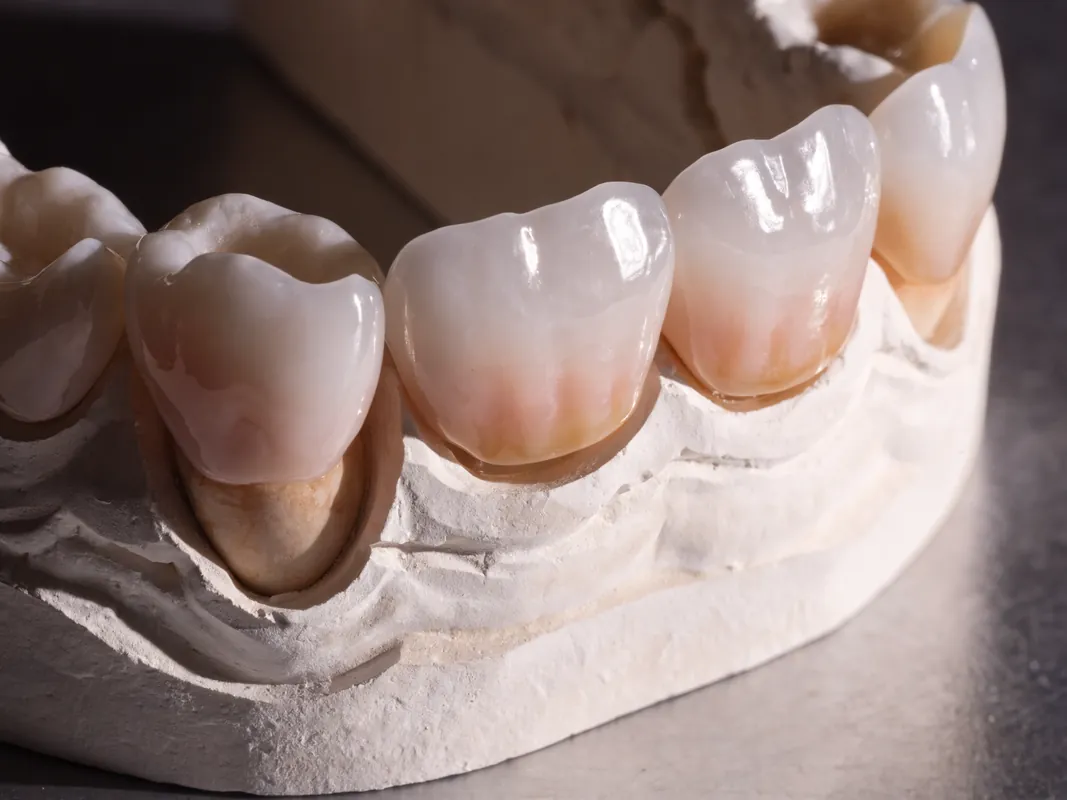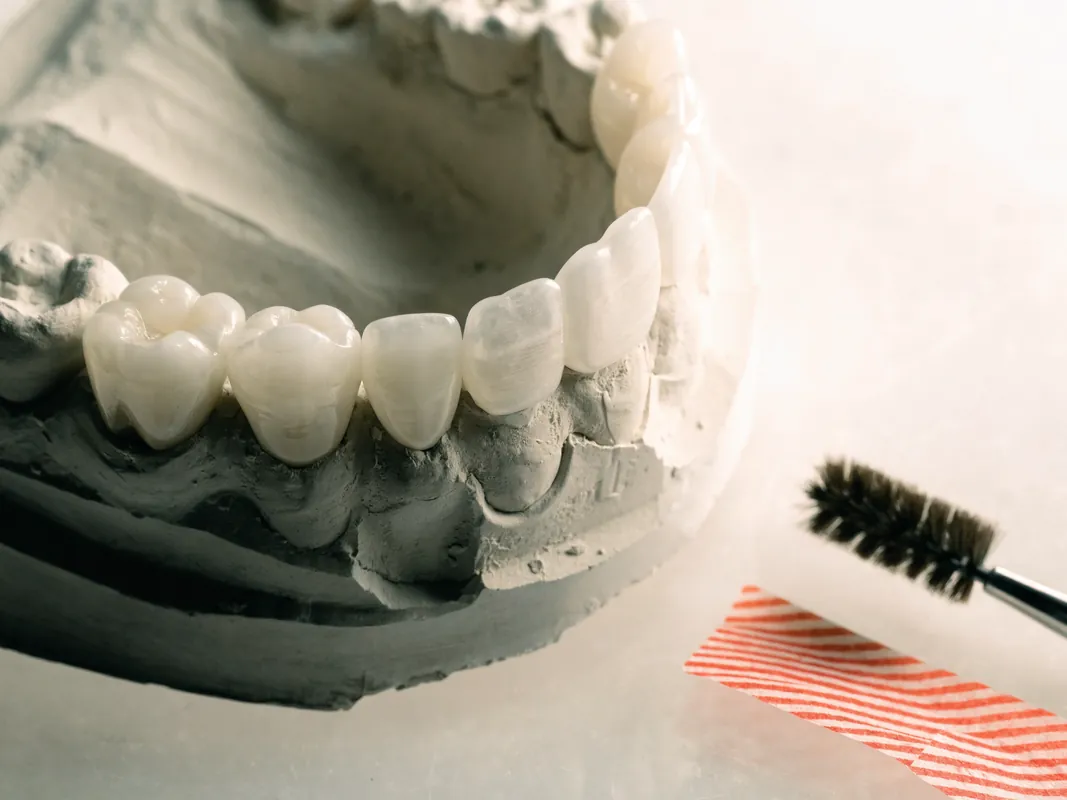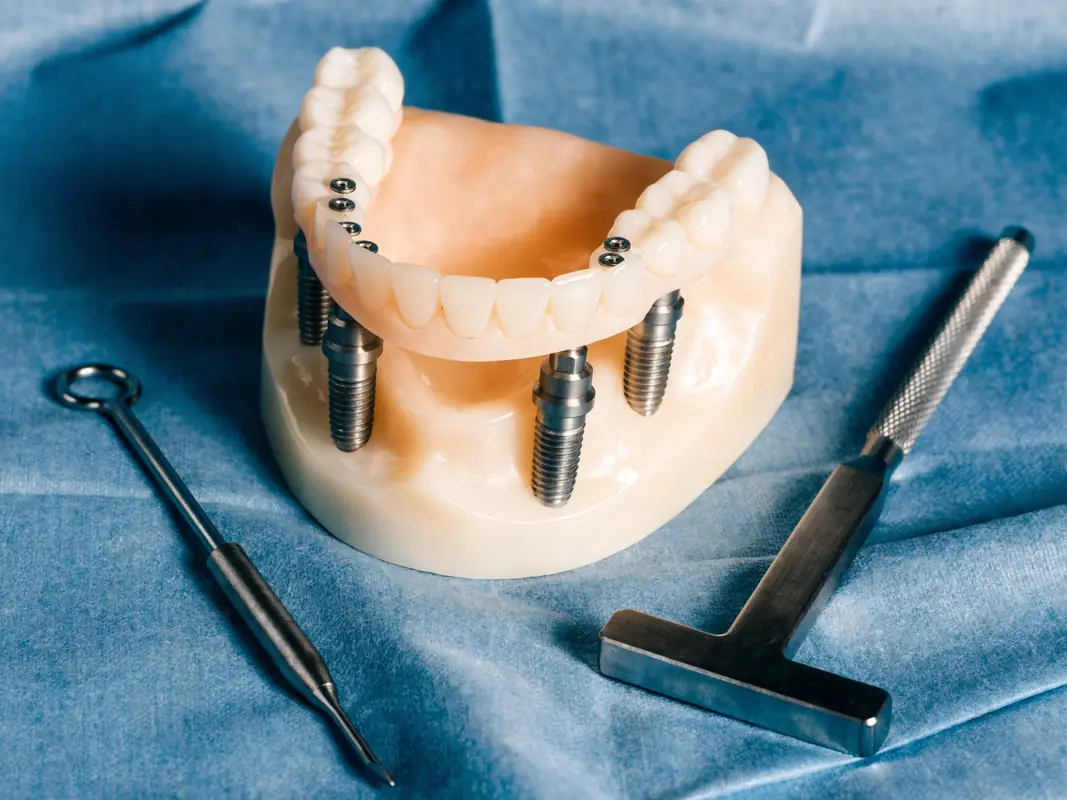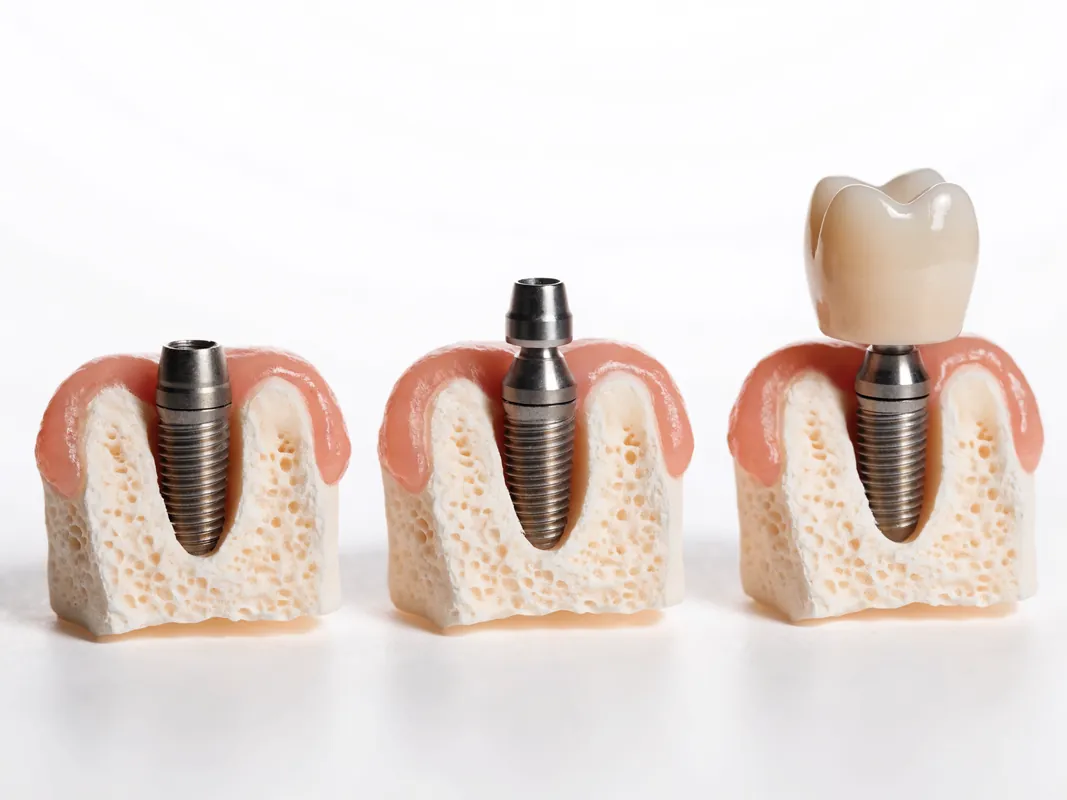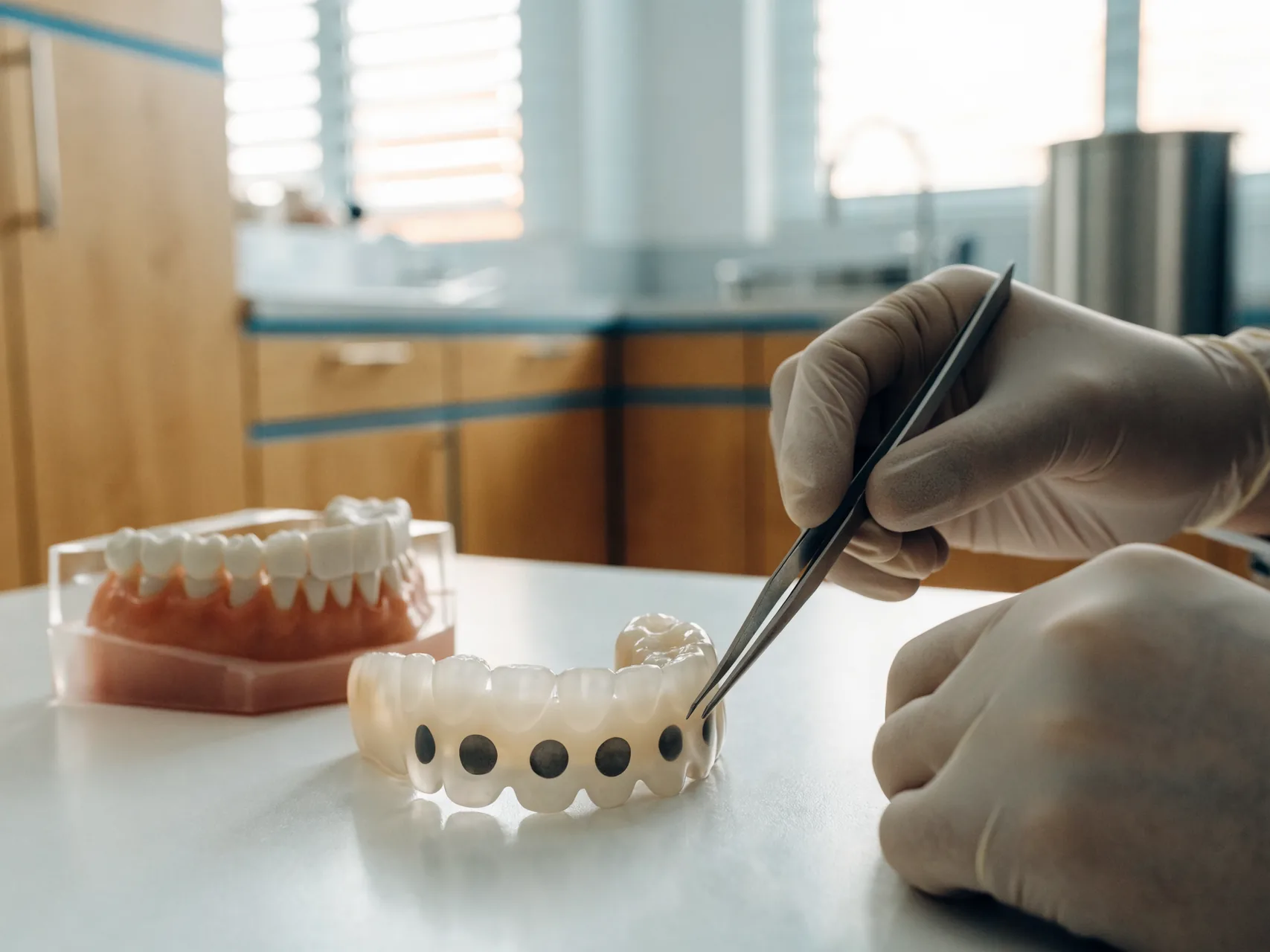
People searching for All-on-6 zirconia in Turkey are often comparing a fixed full-arch reconstruction after extensive tooth loss or a proposal to remove many remaining teeth. The phrase sounds precise: six implants and one zirconia bridge. In practice, it is a commercial and descriptive label, not a diagnosis. It does not prove that every remaining tooth should be extracted, that exactly six implants are appropriate, that all six can be placed or loaded as planned, or that one form of zirconia is the right final restoration.
This page is a decision guide, not a treatment recommendation, provider advertisement or personal forecast. It publishes no fixed implant count, material, price, timetable, package, warranty or outcome. The named legal treatment provider and named treating clinicians must connect each irreversible step to an examination, suitable diagnostic records and a written restorative plan. The key question is not “Is six better than four?” It is “What patient-specific evidence supports a full-arch replacement, its support design, implant positions, loading conditions, provisional pathway, final material and maintenance plan?”
The [American Dental Association implant guide](https://www.mouthhealthy.org/all-topics-a-z/implants) describes implants as supports for replacement teeth and identifies assessment and healing as individual matters. Cambridge University Hospitals' [dental implants in restorative dentistry](https://www.cuh.nhs.uk/patient-information/dental-implants-in-restorative-dentistry/) discusses health, oral hygiene, stable disease control and alternative implant-supported restorations. Those sources frame patient questions; neither authorises removal of teeth or selects an implant number from a remote image.
Use this guide before paying a non-recoverable amount or arranging travel around a proposed surgical date. Save the tooth prognosis, arch diagnosis, images and reports, implant and prosthetic design, contingency branches, consent documents, itemised quotation, component records, laboratory prescription and aftercare plan. If the findings change, the treatment and price must be re-explained and re-consented before the revised work proceeds.
Start with the label-versus-design distinction
“All-on-6” identifies a proposed support count, not the biological or restorative design. Two plans using six implants can differ in implant positions, distribution, angulation, connection, abutments, cantilever, arch form, prosthesis dimensions, tissue replacement, cleaning access, opposing dentition, loading protocol and material construction. A patient should not compare them as identical products.
“Full zirconia” is also incomplete. The prescription may involve monolithic zirconia, minimally layered areas, veneered regions, separate gingival material, a titanium interface or substructure, multi-unit abutments, screws and other components. The exact construction, manufacturer information, laboratory process and repair route should be written. A material name alone does not establish suitability or traceability.
A useful proposal translates both labels into a case map:
- which arch is being treated and why;
- which teeth are retained, treated, monitored or removed;
- which fixed, removable and no-treatment alternatives were considered;
- how many implants are intended and where;
- which anatomy and restorative space control those positions;
- how placement, loading, provisional and final stages differ;
- what final prosthesis construction is prescribed;
- how speech, appearance, function and cleaning will be tested;
- what happens when an intended implant or loading condition is not achieved;
- who owns maintenance and urgent assessment after travel.
Without that translation, the label can hide major clinical uncertainty.
Preserve restorable teeth before planning a full arch
Full-arch treatment can be appropriate for a completely edentulous arch or an arch in which the remaining teeth have an unfavourable collective prognosis. It should not begin with a unit-count target. Each remaining tooth needs a prognosis and a reason for retention, treatment, monitoring or removal. The assessment may include decay, cracks, remaining structure, pulp and root condition, periodontal support, mobility, infection, previous restorations, position, function and maintainability.
Ask for a tooth-by-tooth table:
| Tooth or site | Current finding | Preservation options | Prognosis uncertainty | Proposed decision and owner |
|---|---|---|---|---|
| Remaining tooth | Recorded diagnosis | Repair, periodontal, endodontic, restorative or orthodontic care where relevant | What cannot yet be known | Retain, treat, monitor or remove |
| Existing gap | Ridge and space findings | Fixed, removable or no replacement | Imaging or examination still required | Include or manage separately |
| Strategic tooth | Support and functional role | Preserve within an alternative design | Future maintenance burden | Retain or remove with reason |
A broad statement such as “the teeth are bad” is not enough for irreversible extraction. A second opinion may be valuable when several teeth could be preserved, the records are limited, or extraction is linked to an expiring commercial offer. Treatment burden and prognosis must be discussed honestly, but an implant plan should not erase reasonable tooth-preserving options.
Establish the full-arch diagnosis
The diagnosis should describe more than missing teeth. Record pain, infection, periodontal disease, decay, failing restorations, tooth wear, functional limitation, speech concerns, current denture experience, dry mouth, hygiene ability and patient priorities. Medical history, medicines, smoking or vaping, previous surgery, bleeding and healing considerations, allergies and capacity to attend maintenance can affect planning.
The arch must also be assessed within the whole mouth. The opposing arch may contain natural teeth, a removable denture, an implant prosthesis or a mixture. Jaw relationship, available restorative space, smile and lip display, ridge relationship, facial support, opening, joint or muscle symptoms, parafunction and existing vertical dimension may all influence design.
The [systematic review of outcomes used in full-arch implant research](https://pubmed.ncbi.nlm.nih.gov/35815423/) found wide variation in how implant, prosthetic, technical, biological and patient-reported outcomes are defined. That matters for consent: a marketing claim that a bridge “works” may omit repair, hygiene, speech, comfort or maintenance. The written goals should identify which outcomes matter to this patient and how they will be assessed.
Compare fixed, removable and staged alternatives
A fixed full-arch prosthesis is not the only response to an edentulous or failing arch. Reasonable options can include preserving selected teeth, a conventional complete denture, an implant-retained removable overdenture, a fixed prosthesis supported by a different implant design, staged treatment, an interim prosthesis or no active treatment for the moment.
The comparison should cover:
- surgery and anatomical requirements;
- ability to remove the prosthesis for cleaning;
- lip and facial support;
- speech and adaptation;
- repairability and component access;
- professional maintenance;
- future tissue change;
- medical and dexterity considerations;
- travel and local aftercare;
- itemised initial and continuing costs.
Removable does not mean inferior, and fixed does not mean maintenance-free. A removable overdenture may provide hygiene or support advantages for some people, while a fixed design may align better with another person's priorities and anatomy. The implant-supported overdenture decision guide examines that pathway separately. A clinician should explain why a fixed zirconia proposal fits the individual better than realistic alternatives, not simply why it carries a premium label.
Do not let six become an automatic prescription
The number of implants is part of a support system. It interacts with arch, bone availability, implant dimensions and positions, distribution, restorative span, cantilever, loading, opposing dentition, hygiene access, surgical feasibility and the consequences of losing one support. More implants do not automatically correct poor distribution or an unmaintainable prosthesis.
A [systematic review and meta-analysis of implant numbers for complete-arch fixed prostheses](https://pubmed.ncbi.nlm.nih.gov/30328199/) did not show a universal primary-outcome advantage for five or more supports over fewer supports across the included evidence. A newer [review comparing four and six supports in maxillary fixed complete prostheses](https://pubmed.ncbi.nlm.nih.gov/38317918/) examined survival, biological and technical complications, bone change and design factors, with results that should be interpreted in the context of heterogeneous studies. Neither source means four and six are interchangeable in an individual jaw.
Ask the clinician to state:
- why the proposed count fits this arch;
- why each intended position contributes to the design;
- how anterior-posterior spread and cantilever are managed;
- which anatomy limits placement;
- whether all implants are intended to support one prosthesis immediately or later;
- what happens if fewer implants can be placed or loaded;
- whether an additional implant changes the prosthesis design or merely the count;
- how cleaning and future component access remain possible.
“Extra security” is not a complete biomechanical analysis.
Map implant positions before counting them
Support depends on where implants can be placed responsibly and where the restoration needs support. The plan should integrate clinical examination, surface records, diagnostic imaging appropriate to defined questions, the proposed tooth position and relevant anatomy. A scan should not be used as a substitute for soft-tissue, bite, hygiene or restorative assessment.
Request an arch map that shows:
- intended implant sites and angulations;
- relationship to relevant anatomical structures;
- available bone and any defects;
- extraction sites and pathology;
- proposed grafting or non-grafting alternatives;
- restorative emergence and screw-access implications;
- cantilever and distal extension where proposed;
- the effect of one site becoming unavailable;
- whether a guide is planned and who approves it.
A digital plan is a transfer and communication tool, not proof that the clinical site will match the model. The named surgical clinician must verify the situation at treatment and document deviations. The named restorative clinician should own the prosthetic envelope rather than receive an unexplained implant arrangement after surgery.
Assess hard and soft tissue as separate design gates
Hard-tissue planning includes ridge width and height, contour, defects, socket condition, pathology and anatomical boundaries. If grafting, sinus-related surgery, ridge reduction or another tissue procedure is proposed, record its purpose, alternatives, staging, risks, separate quotation and effect on loading and restoration. “Bone included” does not explain the intervention.
Soft tissue influences wound management, prosthesis contour, hygiene access, tissue display, facial support and later monitoring. Record keratinised or attached tissue where clinically relevant, mucosal thickness, mobile tissue, scars, inflammation, ridge form and the transition between natural tissue and prosthetic gingiva. A long convex tissue surface may look full but be difficult to clean.
The design should explain whether tissue is being replaced by the prosthesis and where the transition line is expected in speech and smiling. If surgical reduction is proposed to create restorative space or hide a junction, the biological and aesthetic consequences need explicit consent. Tissue should not be removed merely to fit a preselected product.

Assign clinical and laboratory ownership
Full-arch treatment can involve an assessment provider, imaging provider, surgical clinician, restorative clinician, anaesthesia or sedation provider where relevant, hygienist, dental laboratory, coordinator and travel suppliers. Their roles should not collapse into one trading name.
Ask for a responsibility map:
| Stage | Named owner and record |
|---|---|
| Diagnosis and tooth prognosis | Clinician who examined and interpreted relevant records |
| Implant and tissue plan | Clinician responsible for surgery and deviations |
| Restorative prescription | Clinician responsible for tooth position, support, space and design |
| Loading decision | Clinician who assesses whether and how a provisional is connected |
| Laboratory manufacture | Named laboratory or fabricating party and prescription owner |
| Final acceptance | Clinician checking fit, components, bite, speech, aesthetics and cleanability |
| Maintenance | Provider responsible for baseline and recall plan |
| Urgent concern | Clinical triage and local-assessment route |
| Travel services | Separate supplier and commercial terms |
A coordinator can organise records and dates but should not diagnose, prescribe an implant count, select a material or authorise loading.
Separate extraction, placement, loading, provisional and final stages
The phrase “teeth in a day” can hide at least five decisions:
- Which teeth, if any, are extracted?
- Are implants placed immediately in extraction sites, in healed sites or in a mixture?
- Which implants meet the case-specific conditions for loading?
- Is a provisional prosthesis connected, and is its function restricted?
- When does a final prosthesis become appropriate?
These stages may occur together in selected cases, but none should be promised solely from a remote image. Placement conditions, achieved stability, tissue procedures, distribution, prosthesis rigidity, bite, medical factors and ability to follow instructions can affect loading. The fallback should exist before surgery.
A [systematic review of immediate versus early or conventional loading with fixed prostheses](https://pubmed.ncbi.nlm.nih.gov/31421892/) found differences across comparisons and subgroups. A [full-arch loading review](https://pubmed.ncbi.nlm.nih.gov/31433096/) described substantial heterogeneity in protocols and evidence quality. These reviews support conditional, clinician-owned decisions rather than a universal same-day promise.
Make immediate loading a conditional gate
The written loading plan should specify:
- intended support and distribution;
- clinical measurements or findings the clinician will use;
- whether the provisional is fixed or removable;
- whether it is intended to contact the opposing arch and under what conditions;
- food and activity advice tailored after treatment;
- how the patient reports looseness, fracture or bite change;
- what happens if one or more implants do not meet the loading gate;
- who can remove, repair or adjust the provisional;
- what evidence is needed before progression.
An immediately connected provisional is not proof of integration. It is part of a controlled healing and restorative strategy. If the intended loading conditions are not met, alternatives can include a different support design, a removable interim prosthesis, unloaded healing, staged surgery or a revised plan. The patient should know the practical and financial consequence of each branch.
Treat the provisional as a diagnostic prosthesis
The provisional can help assess tooth position, lip support, smile, speech, bite, hygiene access, comfort and the relationship between the prosthesis and healing tissues. It may also splint loaded implants within a prescribed design. It is not automatically a low-cost version of the final zirconia bridge.
Record what the provisional is intended to test and how feedback is captured. Relevant questions include:
- Can the patient clean every accessible tissue surface?
- Are tooth length, midline, incisal display and facial support acceptable within clinical limits?
- Are speech sounds altered, and do they improve or require design change?
- Are the bite and jaw position stable enough to proceed?
- Has a screw, component, tooth or base loosened, worn or fractured?
- Have tissues healed in a way that changes the final contour?
- Does the patient understand differences between the provisional and final material?
A final prescription should not be released merely because a return journey is booked. Unresolved provisional findings belong in a documented revision loop.
Define what “full zirconia” actually means
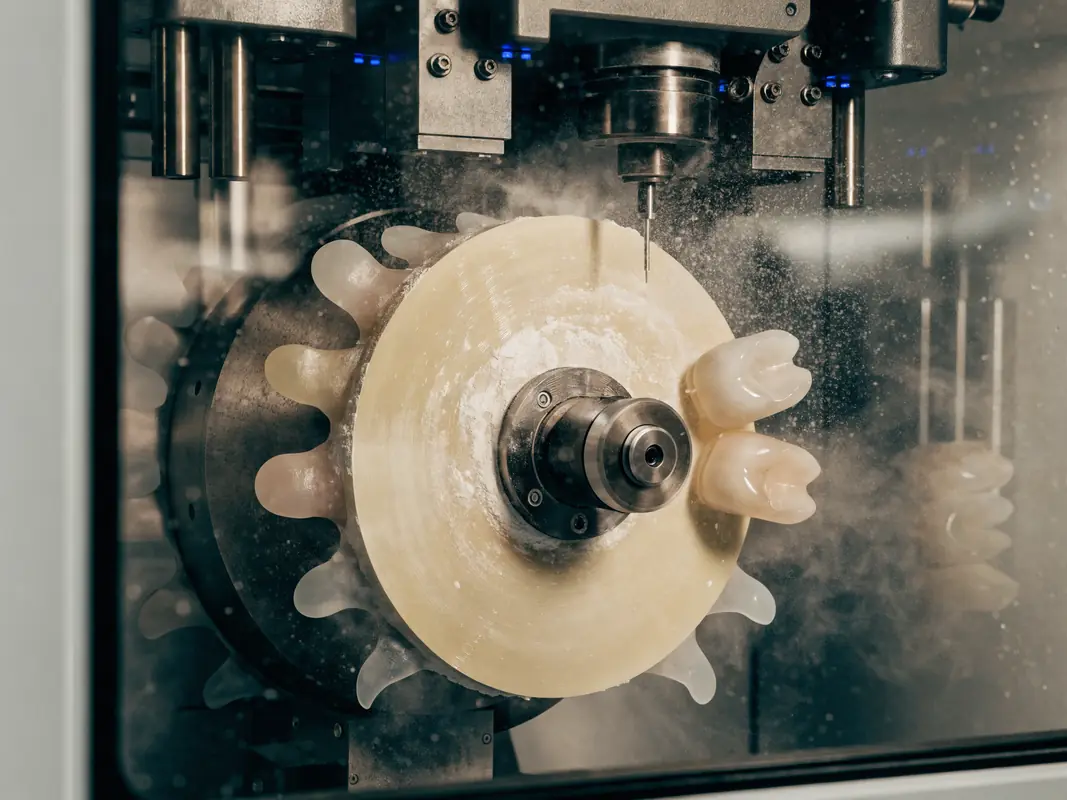
Zirconia is a family of ceramic materials and constructions, not one universal product. The prosthesis may be predominantly monolithic, layered in selected areas, combined with pink ceramic or composite, bonded or screwed to titanium interfaces, or supported by another substructure. Material generation, translucency, strength, thickness, connector dimensions, surface finish and laboratory processing can differ.
Ask the restorative clinician and laboratory to identify:
- the zirconia product and documented composition or class;
- monolithic and veneered regions;
- any titanium framework, bar or individual interfaces;
- bonding and screw-retention design;
- minimum dimensions and cantilever assumptions in the prescription;
- shade and gingival-colour strategy;
- polishing, staining and glazing workflow;
- repair strategy for ceramic, gingival material, interface or screw issues;
- component and custom-device documentation supplied to the patient.
The [updated systematic review of full-arch monolithic zirconia prostheses](https://pubmed.ncbi.nlm.nih.gov/34006068/) reported encouraging short-term findings but highlighted the lack of strong long-term evidence. A recent [systematic review and meta-analysis](https://pubmed.ncbi.nlm.nih.gov/41813561/) also described heterogeneous studies and low certainty. These limits make traceability and maintenance more important, not less.
Compare monolithic and veneered designs without slogans
Layering can be used for appearance in selected areas, while monolithic construction can reduce some veneering-related complications. Neither description alone defines the complete prosthesis or eliminates technical events. The design must account for site, space, opposing material, aesthetic objectives, framework or interface, surface treatment and repair route.
A [systematic review comparing veneered and monolithic zirconia complete-arch prostheses](https://pubmed.ncbi.nlm.nih.gov/37696747/) reported different complication patterns but also uncertainty around loading, cantilever, location and opposing arch. An earlier [review of full-arch zirconia outcomes](https://pubmed.ncbi.nlm.nih.gov/28944367/) highlighted short follow-up and veneering complications in the available observational evidence. Do not turn group data into a personal promise.
Ask which regions are monolithic, which are layered, what can be polished or repaired chairside, what requires laboratory work, and whether repair changes appearance or function. “Unbreakable” is not a responsible material description.
Compare zirconia with other final prosthesis concepts
Alternatives can include metal-acrylic or titanium-composite designs, other ceramic constructions, segmented designs or a removable prosthesis, depending on the case. Compare weight, thickness, sound, wear, repairability, opposing dentition, cleaning, component access, laboratory availability and maintenance—not merely initial appearance.
A material that resists one complication may introduce a different repair or force-distribution question. Acrylic or composite teeth may be more readily repaired in some settings but can wear or fracture. Zirconia can offer a different surface and construction but may require specialised laboratory support if damaged. A metal or titanium structure can be part of several designs; the exact connection and manufacturing record matter.
The patient should receive the argument for the selected material and the best argument for a reasonable alternative. Material selection remains clinician-owned and case-specific.
Design cleanability before aesthetics are approved
A fixed full-arch prosthesis is not cleaned like a row of separate natural teeth. The tissue-facing contour, prosthetic gingiva, embrasures, implant positions and access around components determine whether the patient can clean it. Dexterity, vision, caregiver help and willingness to use prescribed aids should be assessed before design approval.
The European Federation of Periodontology's [S3 clinical guideline on preventing and treating peri-implant diseases](https://www.efp.org/fileadmin/uploads/efp/Documents/Other_publications/Clinical_guidelines/peri-implantitis-guideline-03-peri-implant-diseases.pdf) highlights patient-performed hygiene, professional care and prosthesis cleanability. Related [prevention guidance](https://www.efp.org/fileadmin/uploads/efp/Documents/Other_publications/Clinical_guidelines/peri-implantitis-guideline-01-prevention.pdf) supports risk assessment and baseline monitoring. These documents do not make zirconia self-cleaning or prescribe one recall schedule for everyone.
Before accepting the final design, ask the patient to demonstrate access with the actual aids. If access is poor, modify the prosthesis or reconsider the design rather than handing over an impossible instruction. Record the baseline tissue and prosthesis findings so later change can be recognised.
Plan screw access, retrievability and component service
Many fixed full-arch prostheses are screw retained through restorative components, but the exact design varies. Ask where access channels emerge, how they are sealed, which screws and interfaces are used, what torque record is kept, and how the prosthesis is removed without damaging components or tissues.
Retrievability is valuable only if compatible tools, parts, records and a willing clinician are available. A home dentist may not stock the system or accept responsibility for removing a complex prosthesis. Identify a service pathway before treatment.
The record set should include implant positions and identifiers, platform or connection, multi-unit or other abutments, screw references where available, torque and delivery records, prosthesis construction, laboratory details and access-channel map. Do not rely on memory or a single brand card.
Test occlusion as a changing system
Full-arch occlusion involves the reconstructed arch, opposing teeth or prosthesis, jaw relationship, guidance, contact distribution, parafunction and the resilience of components and materials. It should be assessed at provisional and final stages and monitored over time. Natural teeth, dentures and implant restorations can behave differently under load.
A [systematic review of occlusal contact change in implant-supported fixed prostheses](https://pubmed.ncbi.nlm.nih.gov/40707411/) found that contacts can change after delivery. It does not supply a universal occlusal scheme. The named restorative clinician should document the chosen approach and how it is reviewed.
Ask how clenching or grinding history, wear, muscle symptoms, opposing material, cantilever and crown form affect the plan. If an appliance is proposed, clarify its purpose, fit, maintenance and limitations. It is not an automatic guarantee against fracture or biological complications.
Test speech, lip support and appearance with records
Tooth position, incisal edge, palatal or lingual contour, prosthesis thickness, arch form, vertical dimension and the transition between tissue and prosthesis can affect speech. Lip and facial support may depend on the ridge and flange or contour design; a fixed prosthesis cannot always replace the support supplied by a removable flange in the same way.
Use photographs, video, speech tasks, facial reference records, provisional feedback and patient priorities as communication tools. Record what the patient considers acceptable rather than relying only on a clinician score. A digital preview cannot predict tissue healing, adaptation or every speech sound.
The final review should ask whether the patient can speak comfortably, whether air escapes around the prosthesis, whether tooth display and facial support are acceptable, and whether changes needed for speech conflict with cleaning or material dimensions. Those trade-offs should be resolved before final manufacture where possible.
Build a laboratory verification pathway
The laboratory prescription should connect the approved provisional and clinical records to the final prosthesis. It should identify tooth setup, arch relationship, material construction, shade, gingival character, interfaces, screw channels, dimensions, surface finish, opposing dentition and any clinician-approved revisions.
Verification may involve physical or digital records, try-ins, prototype review, fit assessment and component checks as clinically appropriate. Digital does not mean error-free. Ask who verifies scan or impression accuracy, jaw records, framework or prosthesis fit and the final relation to implants.
If manufacture is outsourced, identify the legal or responsible laboratory party where required and how statements of conformity or custom-device information are supplied. A marketing phrase such as “in-house lab” does not describe material traceability, quality controls or responsibility.
Write contingency branches before irreversible treatment
A credible full-arch plan includes branches rather than one perfect itinerary. At minimum, address:
Branch A: a tooth is more restorable than expected
Pause extraction and reconsider the arch design. Explain whether preservation changes the fixed, removable or staged options and revise consent and quotation.
Branch B: a planned implant site is unavailable
Document whether another site, another count, grafting, staged placement, a removable interim option or stopping is clinically reasonable. Do not improvise a count without restorative review.
Branch C: loading conditions are not met
Use the agreed unloaded or removable fallback. Explain how this changes function, appearance, travel, follow-up and cost.
Branch D: the provisional reveals speech, bite or hygiene problems
Revise the design and repeat a decision gate. Do not copy an unresolved provisional into zirconia.
Branch E: tissue healing changes the restorative space
Reassess the contour, transition line, impression or scan, material dimensions and need for further treatment before final manufacture.
Branch F: an implant or component develops a concern
Arrange clinical assessment, identify the component and decide whether the prosthesis can remain, be modified, be removed or needs another support strategy. A remaining implant count alone does not decide.
Branch G: the patient cannot maintain the fixed design
Modify access, provide tailored support or reconsider a removable design. Hygiene inability should not be hidden after delivery.
Each branch needs an owner, record, consent step, cost consequence and aftercare path.
Use consent as an ongoing full-arch process
The [GDC standard on valid consent](https://standards.gdc-uk.org/pages/principle3/principle3) requires GDC registrants to explain relevant options, risks, potential benefits and costs, check understanding, and renew consent when treatment or estimates change. Those duties apply to GDC registrants; citing them does not claim that an overseas clinician is GDC regulated. They provide a useful UK patient-facing benchmark.
Full-arch consent should distinguish:
- retaining or extracting each tooth;
- any grafting, ridge modification or tissue procedure;
- implant placement and possible deviations;
- sedation or anaesthesia where relevant;
- immediate, early or later loading;
- provisional design and limitations;
- final material and construction;
- biological, technical, aesthetic and functional concerns;
- maintenance and future repair;
- travel and local aftercare boundaries;
- changed-plan and cost approval.
A signature on a package form before examination cannot replace these staged conversations. Provide information in a language the patient understands and allow time for questions to the responsible clinician.
Demand an itemised written quotation
The quotation should separate assessment and records, extractions, disease control, grafting or tissue procedures, each implant and component category, surgical guide where used, provisional prosthesis, adjustments and repairs, final prosthesis, material and laboratory stages, sedation or anaesthesia where relevant, medicines, reviews, maintenance and record release.
It should state:
- what is confirmed and what remains conditional;
- whether the quote applies to one arch or both;
- what changes if fewer or more implants are placed;
- whether the provisional and final prostheses are distinct charges;
- which repairs, adjustments or relines are excluded;
- how laboratory remakes or design changes are handled;
- who pays for local assessment or additional travel;
- deposit, cancellation and refund terms;
- separate suppliers and terms for travel services.
Do not compare two “All-on-6” totals without aligning their clinical scope, components, materials, stages, records and maintenance. The written quotation controls what is included; this guide makes no package promise.
Collect complete component and clinical records
The [GDC standard on patient information and records](https://standards.gdc-uk.org/pages/principle4/principle4) includes accurate clinical records, radiographs, photographs, models, consent documents, laboratory prescriptions and statements of conformity where available. This is a direct duty for GDC registrants and a useful handover benchmark, not a claim about another jurisdiction.
Request, as relevant:
- medical and dental history and examination;
- tooth-by-tooth prognosis and arch diagnosis;
- diagnostic images and reports in usable formats;
- implant and prosthetic planning records;
- extraction, graft and surgical records;
- implant, abutment, screw and other component identifiers;
- provisional design and adjustments;
- final material and laboratory prescription;
- fit, torque, bite, speech and hygiene delivery records;
- medicines and discharge instructions;
- baseline peri-implant and prosthesis findings;
- maintenance, urgent care and complaint routes;
- named clinical, laboratory and legal-provider contacts.
Check that documents describe the devices actually used, not only products that were discussed before surgery.
Plan travel around decision gates, not a completion promise
The [GDC guide to dental care abroad](https://www.gdc-uk.org/docs/default-source/information-standards-and-guidance/going-abroad-for-dental-treatment/going-abroad-for-your-dental-cared3d463b7cee0446882bf877483299dd4.pdf?sfvrsn=c67e2b57_7) advises patients to consider providers, qualifications, regulation, assessment, risks, costs, records, aftercare and complaint arrangements. Discussing a major plan with a home dentist before travel can expose record and maintenance gaps.
Use flexible travel around examination, surgery, provisional review and final restorative gates. Ask which stages can change after direct assessment, how much observation is clinically required, and what happens if swelling, healing, laboratory verification or a component issue delays progression. Obtain procedure-specific advice about flying, food, activity, medicines and assistance after the actual treatment.
Travel services are non-clinical and should be separately identified. A booked hotel or flight does not make a final zirconia prosthesis clinically ready. Use the returning home after dental tourism guide to prepare a record and aftercare handover.
Arrange local maintenance before treatment
A fixed full-arch prosthesis needs continuing professional review and patient-performed hygiene. Ask a home dentist or suitable local provider before travel whether they are willing to monitor the case and what records, tools or component information they require. Do not assume every practice removes or repairs unfamiliar full-arch work.
The maintenance plan should identify:
- patient hygiene method and demonstrated access;
- professional tissue and prosthesis review;
- baseline findings for comparison;
- bite and contact review;
- screw, access-channel and component assessment where indicated;
- imaging only when justified by a clinical question;
- removal policy and responsibility;
- repair and laboratory route;
- urgent triage and local escalation;
- communication between home and treating clinicians.
Recall timing should be personalised. A warranty label does not diagnose inflammation, fracture, looseness or pain and does not create local clinical access.
Distinguish biological and technical concerns
Biological concerns can include pain, swelling, bleeding, infection, delayed healing, altered sensation, tissue inflammation, peri-implant disease, bone change and loss of an implant. Relevance depends on site, procedure, health and other factors. Technical concerns can include provisional fracture, tooth or material wear, ceramic chipping or fracture, screw loosening or damage, interface problems, loss of access-channel seal, prosthesis misfit, contact or bite change and the need for repair or replacement.
Functional and patient-reported concerns can include difficulty cleaning, speech change, food trapping, cheek or tongue biting, altered facial support, dissatisfaction with tooth position or colour, sound during function and adaptation burden. A prosthesis can remain physically present while still requiring assessment for one of these problems.
Consent and aftercare should state who evaluates each category, which concerns require local examination, and how responsibility and cost are determined. Research outcomes should not be substituted for a personal triage plan.
Know urgent and emergency red flags
Seek prompt professional assessment for severe or worsening pain, increasing swelling, fever or marked illness, persistent discharge, uncontrolled bleeding, new or changing altered sensation, an opening wound, a loose or fractured prosthesis, sudden bite change, exposed or mobile components, or inability to maintain food and fluid intake. The clinician should personalise discharge thresholds.
Difficulty breathing or swallowing, rapidly spreading swelling, collapse, major facial trauma or another life-threatening concern requires the current local emergency route. Do not wait for a remote coordinator or return flight.
Do not glue, drill, repeatedly tighten or adjust a full-arch prosthesis without identifying the system and clinical cause. Keep any detached component and bring the implant and restorative records to the assessing clinician.
Red flags in an All-on-6 zirconia proposal
Pause when a proposal:
- recommends removing an arch of teeth without tooth-specific prognoses;
- treats six implants as mandatory or universally better than four or another design;
- provides no fixed-versus-removable comparison;
- selects implant positions without a restorative plan;
- promises immediate placement, immediate loading and a final bridge as one event;
- provides no fallback if a site or loading gate fails;
- calls zirconia unbreakable, maintenance-free or universally superior;
- does not identify monolithic, veneered, interface or substructure details;
- ignores cleanability, speech, facial support, opposing dentition or parafunction;
- cannot name the legal provider, clinicians and laboratory responsibilities;
- hides provisionals, components, laboratory stages or maintenance inside one total;
- will not supply implant, component and custom-device records;
- makes flights or package dates control clinical progression;
- offers no local aftercare or urgent assessment route.
A missing document can be resolved. Repeated pressure, hidden responsibility and unsupported certainty require a second opinion.
A decision worksheet for the patient
| Decision gate | Evidence required | Named owner | Contingency |
|---|---|---|---|
| Retain or remove teeth | Tooth-specific prognosis and alternatives | Examining clinician | Preservation, referral or revised arch plan |
| Fixed or removable | Anatomy, support, hygiene, function and patient priorities | Restorative clinician | Alternative prosthesis or staged care |
| Implant number | Arch design, distribution, anatomy and loading plan | Surgical and restorative clinicians | Different count, sites or design |
| Implant positions | Restorative envelope plus relevant imaging | Surgical clinician | Staging, augmentation or alternative |
| Loading | Placement findings, stability, distribution and provisional plan | Loading decision owner | Unloaded healing or removable interim |
| Provisional | Fit, rigidity, bite, speech, appearance and hygiene | Restorative clinician | Repair, redesign or delay |
| Zirconia prescription | Construction, dimensions, interfaces and opposing arch | Restorative clinician and laboratory | Different material or design |
| Final release | Tissue, records, fit, function, speech and consent | Named final-acceptance clinician | Revision and repeat verification |
| Maintenance | Baseline, hygiene, component access and local provider | Treating and home clinicians | Referral or return assessment |
The plan is not ready while a critical gate has no evidence, owner or fallback.
Questions to ask the named clinician
- Which findings show that remaining teeth cannot reasonably be preserved?
- What fixed, removable, staged and no-treatment alternatives apply?
- Why is this implant count proposed for this arch?
- Where is each implant intended and what does it contribute?
- How do anatomy, bone and soft tissue constrain the design?
- Which tissue procedures are proposed, and why?
- Who owns surgical, restorative, loading and laboratory decisions?
- Are implants placed in extraction sites, healed sites or both?
- Which conditions must be met before immediate loading?
- What is the fallback if a site or loading condition fails?
- What is the provisional designed to test?
- Which provisional findings must be resolved before zirconia manufacture?
- What does “full zirconia” mean in this written prescription?
- Which regions are monolithic, layered or combined with other materials?
- How can the prosthesis be cleaned and removed for service?
- How are bite, speech, facial support and appearance verified?
- Which implant and prosthetic component records will be supplied?
- What is itemised, excluded and conditional in the quotation?
- Who provides routine maintenance after the patient returns home?
- Which symptoms require local urgent or emergency assessment?
Sources and evidence limits
This guide uses official patient information, professional standards, clinical guidelines and peer-reviewed systematic reviews. It does not convert group-level findings into an individual prognosis. Full-arch studies vary in arch, implant number and system, distribution, loading, prosthesis construction, opposing dentition, follow-up and outcome definitions. Many zirconia studies are observational and relatively short. Those limits should appear in consent rather than disappear behind a product label.
Key sources include:
- [ADA: Implants](https://www.mouthhealthy.org/all-topics-a-z/implants) and [Cambridge University Hospitals: Dental implants in restorative dentistry](https://www.cuh.nhs.uk/patient-information/dental-implants-in-restorative-dentistry/).
- [GDC Principle 3: Obtain valid consent](https://standards.gdc-uk.org/pages/principle3/principle3), [GDC Principle 4: Maintain and protect patient information](https://standards.gdc-uk.org/pages/principle4/principle4), and [GDC: Going abroad for dental care](https://www.gdc-uk.org/docs/default-source/information-standards-and-guidance/going-abroad-for-dental-treatment/going-abroad-for-your-dental-cared3d463b7cee0446882bf877483299dd4.pdf?sfvrsn=c67e2b57_7).
- [EFP S3 guideline for peri-implant diseases](https://www.efp.org/fileadmin/uploads/efp/Documents/Other_publications/Clinical_guidelines/peri-implantitis-guideline-03-peri-implant-diseases.pdf) and [prevention guidance](https://www.efp.org/fileadmin/uploads/efp/Documents/Other_publications/Clinical_guidelines/peri-implantitis-guideline-01-prevention.pdf).
- Systematic reviews of [implant number for complete-arch fixed prostheses](https://pubmed.ncbi.nlm.nih.gov/30328199/), [four versus six maxillary supports](https://pubmed.ncbi.nlm.nih.gov/38317918/), [full-arch outcome reporting](https://pubmed.ncbi.nlm.nih.gov/35815423/), [fixed-prosthesis loading](https://pubmed.ncbi.nlm.nih.gov/31421892/) and [complete-arch loading times](https://pubmed.ncbi.nlm.nih.gov/31433096/).
- Systematic reviews of [full-arch monolithic zirconia](https://pubmed.ncbi.nlm.nih.gov/34006068/), [recent zirconia evidence and certainty](https://pubmed.ncbi.nlm.nih.gov/41813561/), [veneered versus monolithic construction](https://pubmed.ncbi.nlm.nih.gov/37696747/), [full-arch zirconia clinical outcomes](https://pubmed.ncbi.nlm.nih.gov/28944367/) and [occlusal contact change](https://pubmed.ncbi.nlm.nih.gov/40707411/).
The proposal is ready only when the named clinicians can explain why a full arch is indicated, why the support design fits the actual jaw, how every stage and material is verified, what happens when a condition changes, and how the prosthesis remains cleanable and serviceable after the patient returns home.