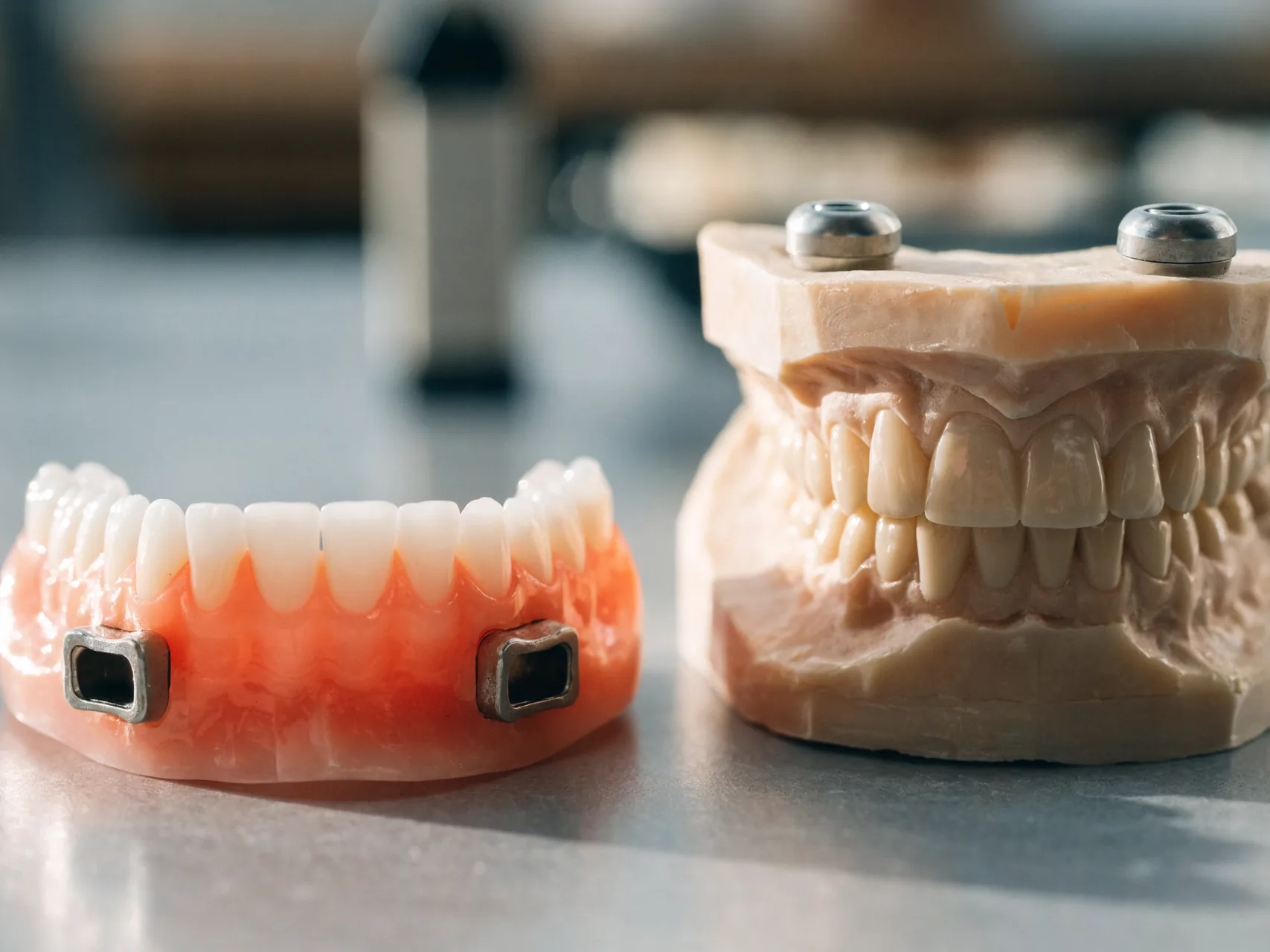
This page owns the removable implant overdenture decision. It compares a conventional complete denture, a patient-removable implant overdenture and a fixed full-arch restoration without declaring a universal winner. It does not diagnose eligibility, prescribe an implant configuration, promise retention or set a treatment timetable. Those decisions require a responsible clinician’s examination, justified records and a dated, itemised written plan from the legal treatment provider.
The phrase “implant-supported overdenture” is widely searched, but it can hide an important design distinction. Some removable prostheses obtain much of their support from the oral tissues while implants mainly add retention. Other designs transfer more support to implants through a different attachment arrangement. A quotation should say what the proposed prosthesis is intended to do, not rely on the search phrase alone.
General information cannot determine whether remaining teeth should be kept, whether implants are appropriate, which jaw anatomy is present, which attachment fits the available space or whether a patient can clean and remove the prosthesis safely. This guide shows which questions and records make that decision auditable.
Define the Three Option Families First
Before comparing products, define the categories in plain language.
A conventional complete denture is patient-removable and obtains its support and retention from the denture-bearing tissues, border form, saliva and other anatomical and functional factors. It does not use implants. It may remain a reasonable option when it meets the person’s needs, when surgery is not chosen, or when health, anatomy, access, maintenance capacity or preference points away from implants.
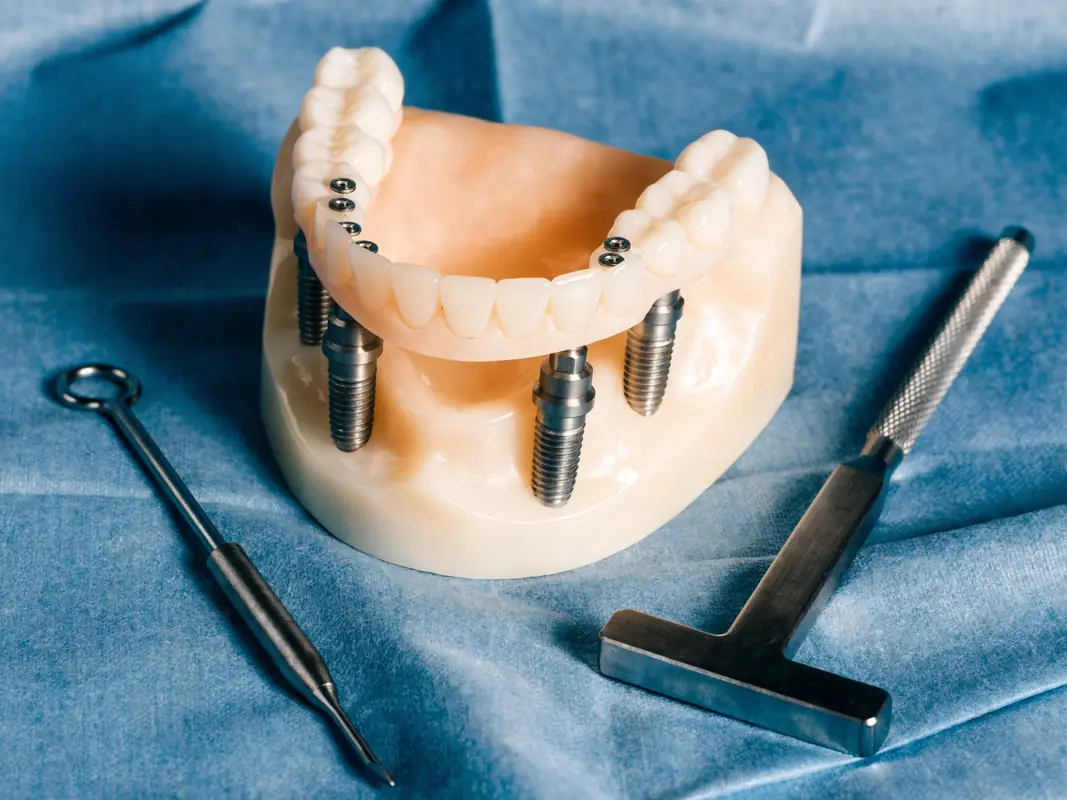
A patient-removable implant overdenture connects to implant components through an attachment system but is removed by the patient or caregiver for cleaning. The design may remain partly tissue-supported or may receive more support from implants. Its base, borders, tooth arrangement, bite and relationship with the soft tissues still matter. “Clips in” is not a complete design description.
A fixed full-arch restoration is not routinely removed by the patient. It is connected to implant components and normally requires professional access when removal is needed. Its space, framework, hygiene access, repair pathway, loading plan and biological and technical maintenance differ from those of a removable prosthesis.
The dental implant service overview explains the wider implant category. The fixed full-arch service page describes that separate treatment concept. Neither page substitutes for an arch-specific comparison.
Retention, Support and Stability Are Different
These terms are often merged in advertising, but they describe different behaviour.
Retention concerns resistance to movement away from the tissues along the path by which the denture is removed. An attachment may add retention, but the amount initially felt can change with component wear, seating, alignment and maintenance.
Support concerns resistance to movement toward the tissues under function. Support may come from the denture-bearing tissues, the implants or a combination, depending on the design. A strongly retentive prosthesis can still place substantial load on tissues if that is how it was designed.
Stability concerns resistance to rocking, rotation or sideways movement. Ridge form, base extension, bite, opposing teeth, attachment distribution, space and neuromuscular control can influence stability.
Ask the proposal to describe all three. “Secure” or “stable” without a support design, attachment description and maintenance plan is not enough. The clinician should explain where load is intended to travel and how that affects the mouth, prosthesis and review plan.
Diagnose Each Arch Separately
The upper and lower jaws are not interchangeable. Anatomy, bone pattern, denture-bearing area, lip and cheek support, tongue space, opposing dentition, available restorative space and evidence for particular designs can differ. A plan for one arch should not be copied automatically to the other.
For each arch, record:
- whether it is completely or partially edentulous;
- which teeth or roots remain and their prognosis;
- ridge form and soft-tissue condition;
- areas of pain, ulceration, flabby tissue or altered sensation;
- saliva and dry-mouth concerns;
- mouth opening and access;
- restorative space from the ridge to the opposing arch;
- smile line, lip support, tooth display and facial support goals;
- speech concerns and tongue space;
- opposing teeth, restorations or prostheses;
- bite relationship and parafunctional habits;
- previous denture experience and specific failures;
- ability to clean, remove, align and reseat a prosthesis.
The American College of Prosthodontists’ diagnostic materials for complete edentulism illustrate that edentulous cases vary in anatomical and patient-related complexity. A category label cannot replace the diagnosis.
The Existing Denture Is Diagnostic Evidence
Do not discard a current denture before its problems have been mapped. Existing denture is diagnostic evidence. It can reveal whether the complaint concerns retention, support, stability, border extension, bite, tooth position, aesthetics, speech, gagging, soreness, hygiene, fracture, wear or inability to insert and remove it.
Ask the clinician to assess the current denture in and out of the mouth. Record:
- where movement occurs and during which activity;
- whether the base fits the current tissues;
- whether the bite is even and repeatable;
- whether vertical dimension and tooth position are acceptable;
- whether borders are overextended or underextended;
- where pressure marks or ulcers appear;
- whether repairs, relines or adhesives have been used;
- whether the person can remove, clean and reseat it independently;
- which features the person wants preserved or changed.
Sometimes a well-made replacement conventional denture, an adjustment, tissue treatment or another non-implant option may address the actual problem. In other cases, the diagnostic trial confirms that an implant-retained design should be discussed. Do not let an old denture’s poor construction become proof that every conventional denture must fail.
Name Clinical and Commercial Responsibility
A full-arch removable plan can involve an implant clinician, restorative clinician, dental technician or laboratory, imaging provider, hygienist, coordinator and local aftercare professional. A brand name does not show who owns each decision.
The responsibility map should identify:
| Decision or service | Record required |
|---|---|
| Diagnosis for each arch | Responsible clinician and evidence reviewed |
| Prognosis of remaining teeth | Tooth-by-tooth decision owner |
| Implant and loading plan | Responsible clinician and review gates |
| Prosthesis and attachment design | Restorative prescription owner |
| Laboratory manufacture | Named laboratory or fabricating party |
| Imaging interpretation | Responsible qualified professional |
| Hygiene instruction | Person who demonstrates and verifies technique |
| Routine maintenance | Provider, location and expected categories of work |
| Urgent problem | Triage route and local examination boundary |
| Travel services | Separate supplier and commercial terms, if any |
The legal treatment provider should appear on the written plan and invoice. A coordinator may help communication, but does not become the clinical decision-maker by arranging messages.
Medical, Dental and Functional Assessment
Assessment begins with current medical and dental history, medicines, allergies, previous surgery and anaesthesia, smoking or nicotine exposure, diabetes, bleeding considerations, bone-active medicines, immune status and other factors relevant to surgery and maintenance. No single list determines eligibility. The responsible clinician decides what information is needed and when another health professional should contribute.
Oral assessment may include remaining teeth or roots, periodontal condition, mucosa, ridge anatomy, pathology, infection, jaw relation, smile and facial support, phonetics, mouth opening, saliva, opposing dentition and hygiene. The plan should address whether disease control or tissue healing is needed before elective implant or prosthetic stages.
Functional assessment includes eating, speaking, swallowing, gag response, ability to tolerate a removable base, jaw movement, clenching or grinding, and whether the person can follow insertion and cleaning instructions. Patient goals should be stated in observable terms. “I want it fixed” may mean “I do not want movement while speaking,” “I do not want a palate covered,” or “I do not want to remove teeth in public.” Those are different problems with different design implications.
Clinical Examination Before Imaging
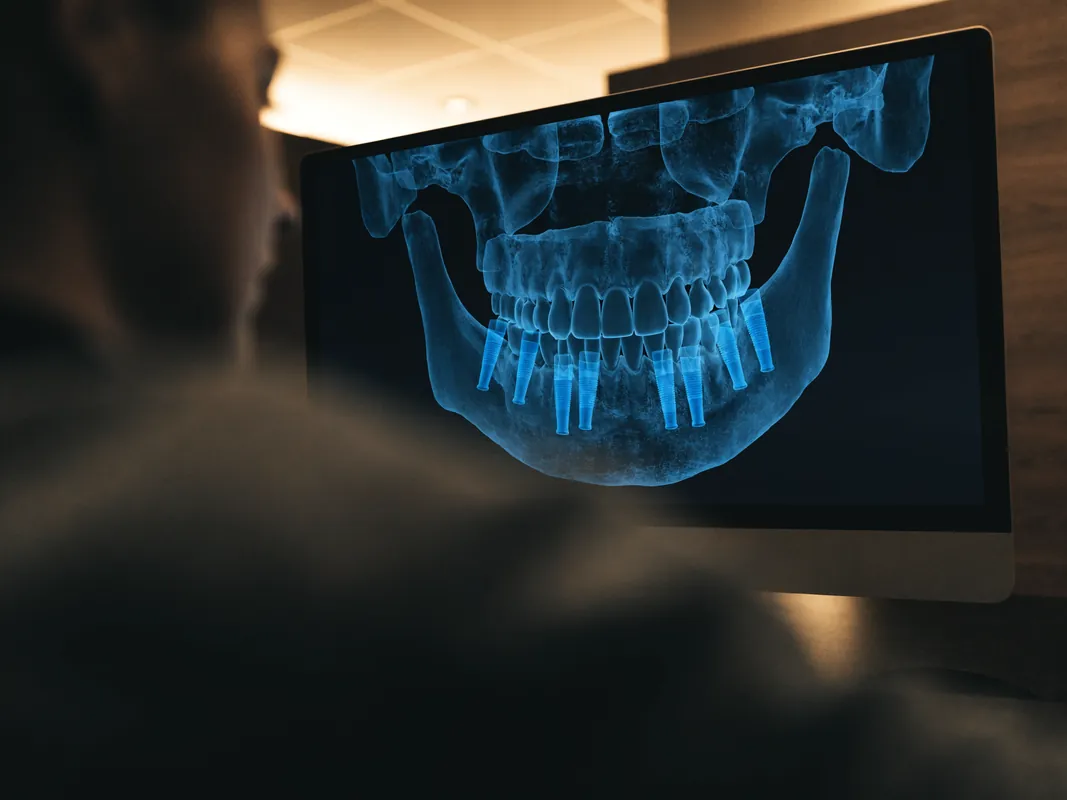
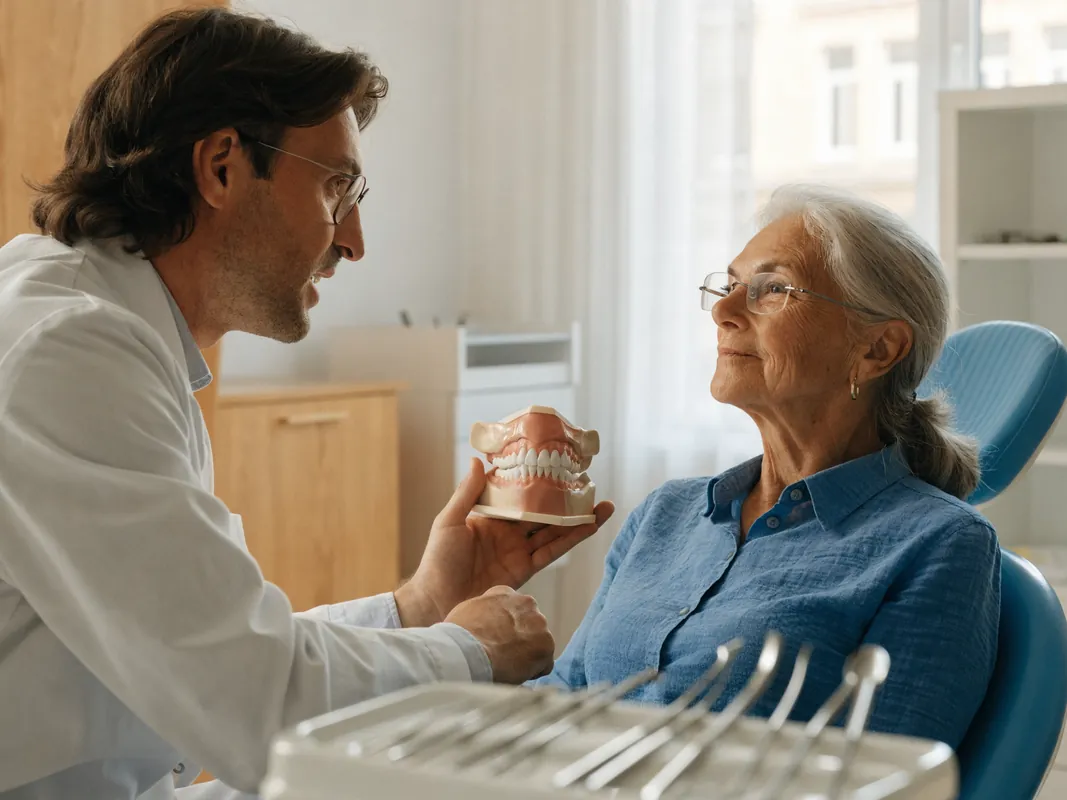
Imaging is selected to answer a clinical question. The American Dental Association’s current radiography resource says a thorough clinical examination should precede imaging and that benefits and risks should be weighed for the individual. CBCT is not automatic, and a scan alone cannot diagnose prosthesis tolerance, dexterity, hygiene capacity, speech, lip support or patient preference.
The record should state:
- which diagnostic question each image is expected to answer;
- whether existing images are current and adequate;
- who justifies the exposure;
- who interprets the whole image volume within their competence;
- how findings change the options;
- what uncertainty remains after imaging.
A remote panoramic image or photograph can support provisional discussion, but final diagnosis and consent require the responsible clinician’s appropriate assessment. Do not market a scan as automatic proof that an overdenture, graft, implant position or loading approach is indicated.
Plan the Prosthesis Before Implant Positions
The implant plan should follow the restorative problem. Proposed tooth position, base design, support, hygiene access, attachment space, path of insertion, opposing bite and repairability affect where components may need to be. Surgical feasibility and restorative feasibility must be reconciled.
There is no universal implant count for every overdenture. Published consensus and clinical studies often investigate particular configurations in selected populations, but that does not turn a study protocol into an eligibility rule. Jaw, bone distribution, implant dimensions, attachment design, splinting, loading, opposing arch, medical factors and patient priorities can change the plan.
Ask for a diagram showing:
- proposed implant positions and restorative purpose;
- planned attachment category;
- whether implants act independently or are connected;
- intended support distribution;
- expected path of insertion;
- available vertical and horizontal restorative space;
- base and framework design;
- cleaning access;
- fallback if an implant cannot be placed, loaded or maintained as proposed.
The diagram should be updated if the clinical findings change. Consent to “implants for a denture” is too broad when the actual support and attachment strategy changes.
Attachment Categories, Not Brand Promises
Attachment choice is a system decision. Categories include independent stud attachments, bar attachment designs, telescopic attachment designs and magnetic attachment designs. Each category has variants, materials and component-specific instructions. No category is categorically superior for every patient.
Independent stud attachments
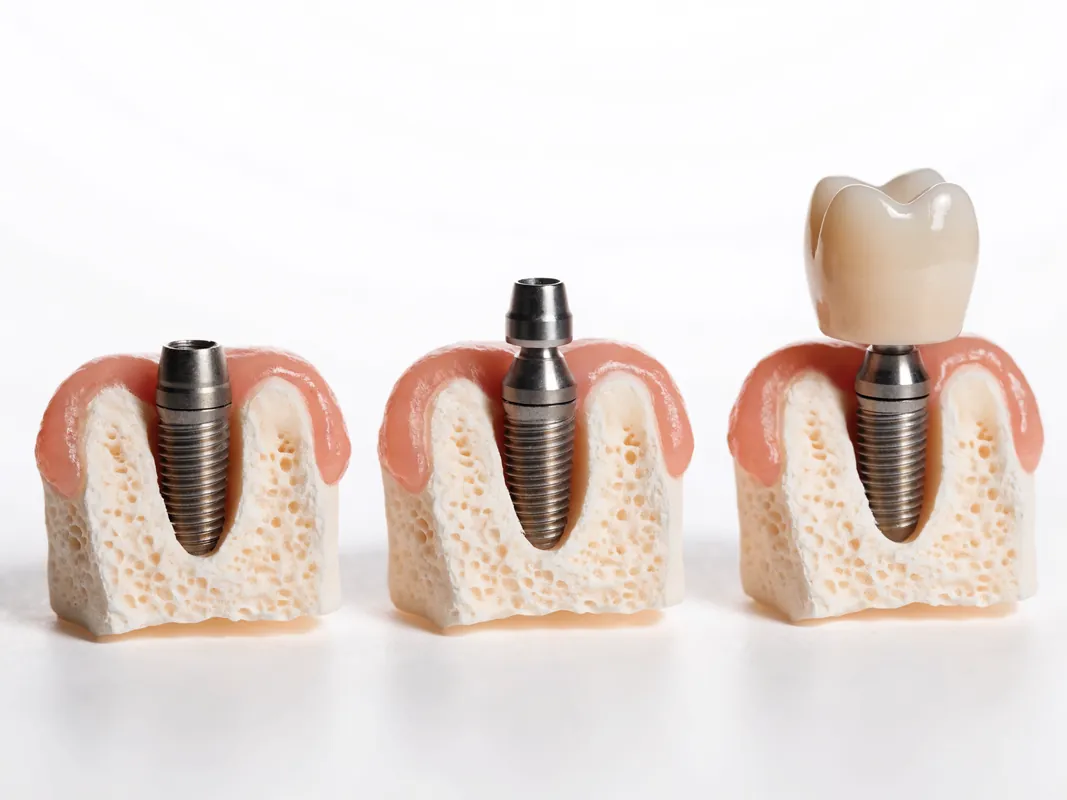
Independent stud attachments connect the prosthesis to separate implant abutments. A replaceable retentive element may sit within a housing in the denture base. Planning considers implant angulation, path of insertion, restorative space, material thickness, retention level, ease of seating, replacement access and whether the patient can align the denture without damaging components.
The retentive element can wear or deform. A housing can loosen or dislodge. Changing retention is a maintenance action, not proof that the implant has failed. The written plan should identify the exact compatible component and who can obtain it locally.
Bar attachment designs
A bar attachment connects implants through a fabricated structure, and the removable prosthesis engages the bar through its designed retentive elements. Planning considers space, tissue clearance, cleaning access, framework design, implant relationship, path of insertion, prosthesis strength, laboratory accuracy and repair route.
A bar can change how implants share load, but “splinted” does not itself establish suitability. The bar and prosthesis must be designed as a system. Ask how the patient will clean around and under it and whether hand function allows the prescribed method.
Telescopic attachment designs
Telescopic attachment designs use matched components and controlled friction or geometry to guide seating and retention. They require an accurate path of insertion, adequate restorative space, compatible materials, laboratory precision and a clear maintenance pathway. The patient must be able to seat the prosthesis fully without forcing it.
Magnetic attachment designs
Magnetic attachment designs use magnetic components within a defined prosthetic system. Their retention behaviour, space needs, maintenance, corrosion protection and compatibility must be assessed for the actual device. A generic statement about magnets cannot replace the manufacturer’s current instructions and clinician’s design.
The Cochrane review of attachment systems found the comparative evidence too uncertain to identify a preferred attachment for mandibular overdentures and found no eligible trials for maxillary comparisons at the time of that review. A later maintenance review also found no clear evidence of superiority for a particular implant or attachment design. This uncertainty supports transparent trade-offs rather than brand-led claims.
Space, Alignment and Prosthesis Strength
Every attachment consumes restorative space. The prosthesis also needs sufficient material around housings or framework elements, room for teeth in the planned position and a contour that the patient can clean and tolerate. Limited space can create thin acrylic, bulky contours, displaced teeth or inadequate hygiene access if the design is forced.
Implant angulation affects the path by which the overdenture seats and removes. Attachment systems have component-specific limits and corrective options, but the exact instructions must be verified for the selected system. Do not assume an attachment will compensate for any angulation.
The laboratory prescription should document space analysis, tooth arrangement, base or framework material, attachment housing positions, path of insertion, relief, support areas and repair strategy. A digital design image can aid communication but does not prove fit, passive seating or patient handling.
Hand Function, Vision and Dexterity
Hand function, vision and dexterity are core design factors, not afterthoughts. The patient must be able to align the prosthesis, apply controlled seating pressure, remove it without harmful leverage, clean the fitting surface and attachment areas, and recognise when it is not fully seated.
Assess:
- grip and pinch strength;
- hand pain, tremor or limited joint movement;
- visual ability to locate attachments;
- cognition, memory and sequence-following;
- ability to stand at a sink safely;
- tolerance of cleaning tools;
- whether the prosthesis can be removed during illness or an emergency;
- whether capacity is likely to change;
- availability and consent for caregiver support.
Demonstration should use the proposed insertion path and a realistic training prosthesis when possible. The patient should perform the task, not merely watch it. If independent care is not feasible, caregiver-assisted hygiene needs a named person, training, consent and a contingency if that support becomes unavailable.
Hygiene Is a Design Requirement
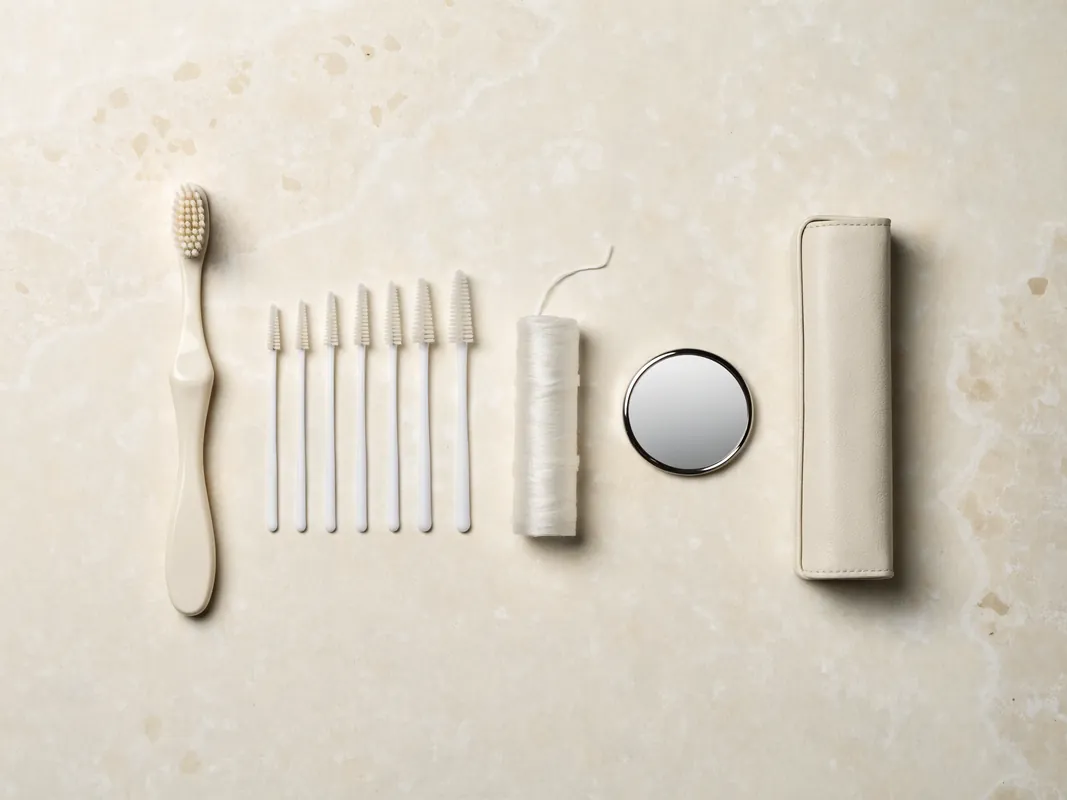
The NHS denture page advises removal and cleaning of dentures and continued care of oral tissues and remaining teeth. Implant overdenture care also requires access around implant components and any bar or abutment surfaces. Exact products and techniques depend on the prosthesis, oral tissues, components, dexterity and clinician’s instructions.
The European Federation of Periodontology’s peri-implant guideline supports individually tailored oral-hygiene instruction and patient-centred supportive care. A generic brush list is not enough. The patient should demonstrate that the selected tools reach the required surfaces without damaging tissues or components.
For broader wound, cleaning and review questions, use the implant aftercare guide alongside the case-specific instructions from the treating team. That guide does not replace the overdenture-specific demonstration needed for removal, seating and attachment care.
The written hygiene plan should cover:
- safe removal and seating;
- cleaning the prosthesis outside the mouth;
- cleaning attachment housings and fitting surfaces;
- cleaning around implant abutments or under a bar;
- care of remaining teeth, mucosa and tongue;
- overnight wear or removal instructions for the specific case;
- storage when removed;
- response to sore areas, bleeding, odour or deposits;
- professional maintenance and reassessment criteria;
- caregiver tasks, where relevant.
Do not use abrasive products, household chemicals or soaking agents without checking compatibility with the actual materials and attachment components. Product labels and manufacturer instructions can change.
Compare Fixed and Removable Without Lifestyle Slogans
The ITI consensus on patient-reported outcomes says the fixed-versus-removable decision cannot be based solely on patient-reported measures; anatomy, clinical parameters, needs and wishes matter. It also reports that patients in the reviewed studies perceived hygiene as easier with removable overdentures, but this is not a promise that every person can clean one well.
A systematic review and meta-analysis of patient-reported outcomes found improvement with both implant-supported fixed complete dentures and implant overdentures in the included studies, with no significant difference in the overall effect estimate. The studies and measures were heterogeneous, so the result should support shared decision-making rather than a sales ranking.
Compare the options across the person’s actual priorities:
| Question | Conventional complete denture | Implant overdenture | Fixed full-arch restoration |
|---|---|---|---|
| Patient removes it? | Yes | Yes | Not routinely |
| Implant surgery involved? | No | Proposed, if suitable and chosen | Proposed, if suitable and chosen |
| Main support | Oral tissues | Design-specific mix | Implant-restoration system |
| Hygiene access | Base removed | Base removed; attachments also cleaned | Access under and around fixed structure |
| Attachment maintenance | Not applicable | Expected category of care | Different component and prosthesis maintenance |
| Tissue fit changes | May require adjustment or reline | May still require adjustment or reline | Tissue changes affect hygiene and design differently |
| Dexterity demand | Remove, clean, reseat | Align, engage, remove, clean, reseat | Use prescribed tools around fixed structure |
| Local repair | Denture skills and materials | Denture plus compatible attachment skills and parts | Fixed implant-prosthetic skills and parts |
The table describes workstreams, not outcomes. The responsible clinician must explain the case-specific version.
Bite, Speech, Appearance and Facial Support
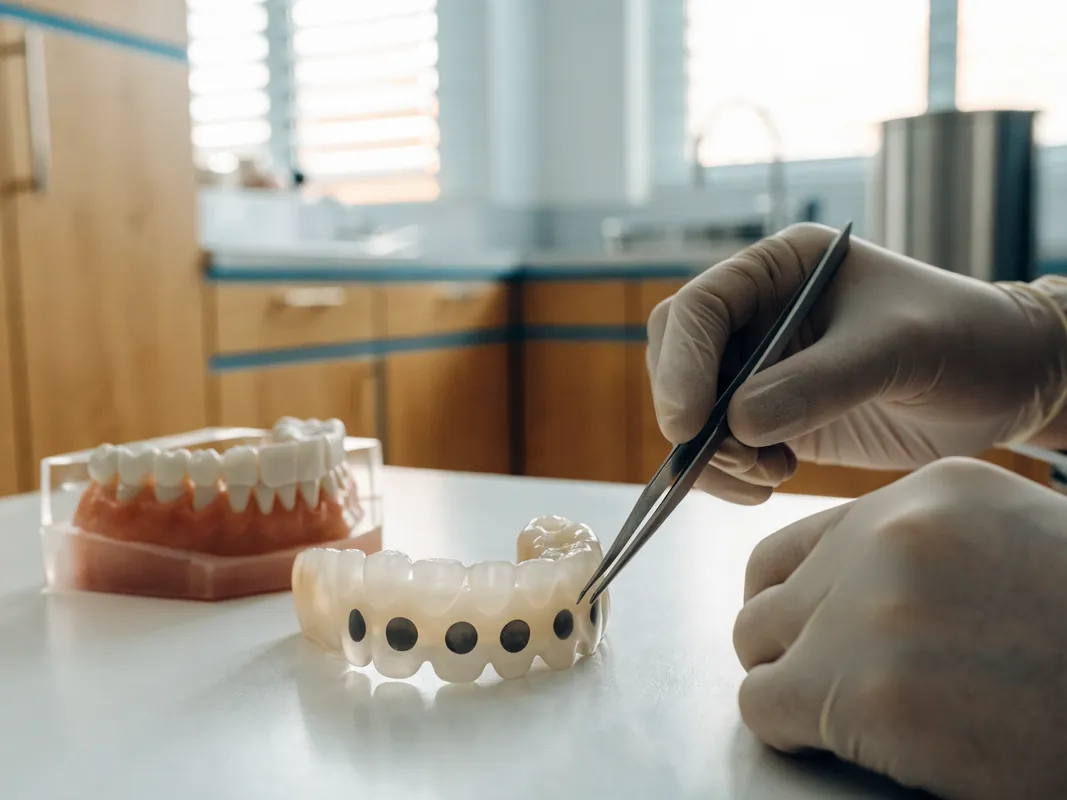
Implants do not decide tooth position automatically. Full-arch treatment must consider lip support, smile line, tooth display, midline, phonetics, tongue space, occlusal plane and the relationship with the opposing arch. A removable flange may provide facial support that a different design does not reproduce in the same way. Conversely, bulk or palatal coverage may be unacceptable to some patients.
Use try-in and provisional stages to test what can be tested before definitive manufacture. Record patient feedback and clinical findings separately. A patient approving appearance does not establish functional accuracy; a clinician approving the bite does not prove the patient can remove and clean the prosthesis.
The opposing arch matters. Natural teeth, a conventional denture, an implant overdenture and a fixed restoration apply different functional demands and maintenance considerations. The plan should cover both arches even when treatment is proposed for only one.
Provisional and Loading Decisions Are Separate
Implant placement, attachment connection, prosthesis delivery and functional loading are separate events. A provisional denture may be modified during healing, left unconnected to implants, connected under a defined protocol or withheld when it cannot be used safely. The clinician should document what applies.
The ITI loading consensus for implant-supported overdentures says loading selection should consider implant-prosthodontic factors, functional and psychosocial factors, finances and patient preference. It also describes evidence limitations for some settings and states that there is no reliable pretreatment predictor that conclusively determines whether immediate loading can be performed.
Therefore, do not sell “immediate attachment” before clinical stability and restorative conditions are known. The written plan needs:
- intended loading category;
- criteria assessed during treatment;
- who makes the loading decision;
- what prosthesis is available if those criteria are not met;
- how an existing denture may be adjusted without harmful pressure;
- eating and cleaning instructions for the actual provisional stage;
- the review finding needed before the next stage.
Travel does not create clinical readiness. A flight date or hotel booking should not force attachment activation, loading or definitive delivery.
Reline, Rebase and Attachment Maintenance
Removability makes maintenance visible; it does not eliminate it. Tissue-supported areas can change, denture teeth can wear, the base can fracture, attachment elements can lose retention, housings can loosen, abutments or screws can need assessment, and the bite can change. A reline alters the fitting surface. A rebase replaces more of the denture base while retaining other elements. Repair, reline, rebase and replacement are different services.
Systematic reviews of overdenture maintenance report varied prosthetic events and do not provide a simple universal frequency. One review concluded that a mean complication rate could not be determined because many factors contribute, and it found no clear evidence that a particular implant or attachment design was superior. Another review documented recurring maintenance categories across attachment types.
The maintenance plan should define:
- how fit, support and bite will be assessed;
- which attachment parts are expected to wear;
- whether retention can be adjusted and by whom;
- compatible replacement components and tools;
- when a reline may be considered;
- how a housing, base, tooth or framework problem is triaged;
- whether the prosthesis must return to the original laboratory;
- what temporary option exists while it is repaired;
- how costs are authorised before work begins.
Do not increase attachment retention simply because the denture feels loose. Looseness may reflect worn inserts, incomplete seating, tissue change, fracture, an attachment problem or another cause. Diagnosis comes first.
Component and Laboratory Traceability
Component and laboratory traceability makes future maintenance possible. Obtain a record that identifies, where applicable:
- implant manufacturer, system, connection and dimensions;
- implant position linked to the record;
- attachment category and exact compatible component reference;
- abutment dimensions and angulation;
- housing and retentive-element references;
- bar or telescopic design records;
- screws and manufacturer tightening instructions;
- materials used in the base, framework and teeth;
- lot, batch or UDI where assigned and available;
- named laboratory and dated prescription;
- design files or scans where lawfully transferable;
- statement of conformity or custom-device documentation where applicable.
The MHRA’s current guidance explains requirements for custom-made medical devices in Great Britain. The exact regulatory route depends on jurisdiction and device status, so this page does not declare that every document has the same legal form everywhere. Ask what applies to the supplied prosthesis and keep the final, as-fitted record.
GDC record standards for UK professionals include medical history, radiographs, consent forms, models, laboratory prescriptions, statements of conformity and referrals where available. Overseas regulation may differ, but a patient can still require a clear record package for local handover.
Consent and Change Control
Consent and change control continue throughout treatment. GDC Principle Three states that consent is a process and that changes to agreed treatment or estimated cost must be explained, consented to and documented for UK registrants. The same transparency questions are useful when assessing overseas care.
Consent should distinguish:
- conventional, removable implant and fixed alternatives;
- keeping or removing remaining teeth;
- surgery and prosthetic stages;
- attachment category and support design;
- provisional and loading uncertainty;
- hygiene and dexterity requirements;
- biological and technical risks;
- maintenance, repair, reline and replacement;
- local aftercare and travel limitations;
- no treatment or delaying treatment where relevant.
If implant position, loading, attachment, support design, material, laboratory, prosthesis type or cost changes, issue an updated plan. The patient should have time to understand the new trade-offs. A broad signature obtained before the details were known does not make every later design equivalent.
Build an Itemised Quotation
The itemised quotation should connect money to clinical and laboratory stages without promising a fixed outcome. GDC Principle Two expects UK treatment plans to identify proposed treatment and a realistic cost indication, and requires written updates when the plan changes.
Ask the quotation to separate:
- examination and diagnostic records;
- treatment of existing disease;
- extraction or tissue procedures if proposed;
- implant surgery and components;
- provisional denture work;
- attachment abutments, housings and retentive elements;
- bar, telescopic or other laboratory stages if selected;
- framework, base and teeth;
- try-ins and adjustments;
- imaging and interpretation;
- hygiene instruction and review;
- maintenance parts and labour;
- reline, rebase, repair and replacement boundaries;
- local handover records;
- travel supplied by a separate business, if any;
- taxes, currency, cancellation and payment-stage terms.
Request inclusions, exclusions and change-authorisation rules. “Overdenture package” does not show which attachments, maintenance parts, laboratory records or contingency prosthesis are supplied.
Travel Planning and Clinical Gates
Dental travel adds handover and repair risk. The GDC’s patient guidance on treatment abroad recommends asking who provides treatment, how professionals are regulated, what aftercare exists, what happens if complications occur and who pays for further travel or remedial work.
Before booking, obtain a provisional itinerary that identifies clinical gates rather than guaranteed completion dates. It should show what information is needed before travel, what must be confirmed in person, which stages can change, what happens if loading or attachment connection is deferred, and whether a usable provisional prosthesis remains available.
Keep treatment logistics separate from hotel and transport terms. A travel service cannot confirm implant stability or prosthesis readiness. Changes in healing, fit, laboratory work or clinical findings may alter the itinerary.
Local Repair and Handover
Local repair and handover should be designed before treatment, not after a component wears. Ask a local dentist or prosthodontic service whether it is willing and able to assess the proposed system. Do not assume that every clinic stocks compatible parts, tools or laboratory materials.
The handover pack should include:
- legal provider and responsible clinician identities;
- diagnosis and final procedures by site;
- implant and attachment component record;
- loading history;
- current prosthesis design and materials;
- laboratory prescription and named laboratory;
- current images and reports;
- hygiene and removal instructions;
- maintenance already performed;
- known complications or repairs;
- review criteria and urgent contacts;
- consented route for secure record transfer.
A photograph can help triage a fracture or sore area but cannot assess fit, tissue pressure, mobility, occlusion or peri-implant health fully. Remote advice should identify when local examination is required.
Red Flags
Pause before payment or treatment when:
- implant number or attachment is prescribed from a sales message alone;
- the same plan is offered for upper and lower arches without separate assessment;
- CBCT is described as automatic or as the only diagnostic step;
- remaining teeth are not given a documented prognosis;
- support, retention and stability are treated as interchangeable slogans;
- no one checks whether the patient can remove and clean the prosthesis;
- a fixed restoration is portrayed as maintenance-free;
- an overdenture is portrayed as never needing parts, relines or repair;
- attachment brand or retention is promised before restorative space and alignment are assessed;
- there is no named laboratory or component record;
- immediate loading is promised before clinical criteria are assessed;
- the quotation hides provisional, attachment or maintenance components;
- travel dates are used to force clinical progression;
- local repair is assumed without compatible parts or a willing professional;
- plan changes do not trigger renewed consent and a written quotation.
These signs do not diagnose clinical misconduct by themselves. They identify unanswered questions that matter to consent, serviceability and aftercare.
Problems That Need Professional Review
The NHS advises contacting a dentist when a denture slips, clicks, causes pain, becomes worn or damaged, or when gums are very red or bleeding. For an implant overdenture, also seek assessment when retention changes suddenly, the prosthesis will not seat fully, an attachment appears damaged, a component feels mobile, the bite changes, repeated sores develop, cleaning becomes impossible, or the base or tooth fractures.
Prompt assessment is important for unexpected worsening pain or swelling, discharge, fever or feeling unwell, persistent bleeding, new or changing numbness, wound opening or suspected implant or attachment mobility. Severe swelling affecting breathing or swallowing, uncontrolled heavy bleeding, collapse, serious facial injury or another life-threatening concern requires the current local emergency route.
Do not glue a fracture, force a denture over an attachment, alter a housing with household tools or continue wearing a prosthesis that is causing injury. Keep broken parts and the component record for professional assessment.
Final Decision Worksheet
Use this final decision worksheet before consent or payment.
Problem definition
- Main complaint in the patient’s own words:
- Activities affected:
- Existing denture findings:
- Features to preserve:
- Features to change:
Arch diagnosis
- Upper-arch findings:
- Lower-arch findings:
- Remaining-tooth prognosis:
- Tissue and ridge findings:
- Opposing dentition:
- Restorative space:
- Imaging question and justification:
- Medical or functional modifiers:
Option comparison
- Conventional denture alternative:
- Patient-removable implant overdenture proposal:
- Fixed full-arch alternative:
- No-treatment or delayed-treatment option:
- Patient priority that changes the choice:
Overdenture design
- Intended support distribution:
- Retention strategy:
- Stability strategy:
- Attachment category:
- Splinted or independent design:
- Path of insertion:
- Base, framework and tooth materials:
- Hygiene access:
- Insertion and removal demonstrated:
Staging
- Procedure owner:
- Provisional prosthesis:
- Loading decision owner:
- Clinical review gates:
- Written fallback if a gate is not met:
Maintenance and records
- Expected attachment maintenance categories:
- Fit and bite review criteria:
- Reline, rebase and repair route:
- Compatible parts available locally:
- Named laboratory:
- Component and custom-device records:
- Local aftercare professional:
- Urgent and emergency contacts:
Commercial terms
- Dated, itemised written plan:
- Inclusions and exclusions:
- Change-authorisation method:
- Payment stages:
- Travel terms kept separate:
- Complaint and remedy process:
Questions to Send Before Travelling
- What diagnosis explains the current denture problem?
- What did examination find in each arch?
- Which remaining teeth or roots can reasonably be preserved?
- What alternatives were compared, including a new conventional denture?
- Is the proposal primarily tissue-supported, implant-supported or combined?
- How will retention, support and stability each be managed?
- Which attachment category is proposed and why?
- What restorative space and insertion-path findings support that design?
- Can the patient remove, clean and reseat the proposed prosthesis?
- What caregiver plan exists if independent hygiene is not possible?
- Which imaging is justified and who interprets it?
- What provisional and loading decisions remain unknown before treatment?
- What is the written fallback if loading or attachment connection is deferred?
- Which parts are expected to wear or require replacement?
- Who can perform a reline, rebase or attachment repair locally?
- What exact component and laboratory records will be provided?
- What changes require renewed consent and an updated quotation?
- Which symptoms require routine, urgent or emergency care?
Evidence Limits
Research on overdentures includes different jaws, populations, implant configurations, attachments, loading protocols, opposing arches and outcome measures. Results cannot be converted into one universal eligibility rule or implant count. Systematic reviews of attachments repeatedly note heterogeneity, maintenance events and limited ability to identify a preferred design.
Patient-reported outcomes matter, but preference and satisfaction do not replace clinical assessment. Likewise, implant survival does not mean that the prosthesis required no adjustment, attachment replacement, reline, hygiene intervention or repair. Ask which outcome a claim measures and what maintenance was excluded from it.
Official and Primary Sources
These official and primary sources were checked on 29 August 2026. Recheck current versions because guidance, device regulation and web content can change.
- NHS, dentures: https://www.nhs.uk/tests-and-treatments/dentures/
- ITI, loading protocols for implant-supported overdentures in edentulous jaws: https://academy.iti.org/academy/consensus-database/consensus-statement/-/consensus/loading-protocols-for-implant-supported-overdentures-in-edentulous-jaws/1314
- ITI, patient-reported outcomes for removable and fixed implant prostheses: https://academy.iti.org/academy/consensus-database/consensus-statement/-/consensus/patient-reported-outcome-measures-of-edentulous-patients-restored-with-implant-supported-removable-and-fixed-prostheses/1811
- Cochrane review, attachment systems for implant overdentures: https://pubmed.ncbi.nlm.nih.gov/30308116/
- Systematic review, mandibular overdenture maintenance: https://pubmed.ncbi.nlm.nih.gov/28385441/
- Systematic review, overdenture maintenance requirements: https://pubmed.ncbi.nlm.nih.gov/20209199/
- Systematic review and meta-analysis, fixed and removable patient-reported outcomes: https://pubmed.ncbi.nlm.nih.gov/37750530/
- American Dental Association, dental radiograph selection and safety: https://www.ada.org/resources/ada-library/oral-health-topics/x-rays-radiographs
- European Federation of Periodontology, peri-implant disease guideline: https://www.efp.org/education/continuing-education/clinical-guidelines/guideline-on-treatment-of-peri-implant-diseases/
- General Dental Council Principle Two, communication and written plans: https://standards.gdc-uk.org/pages/principle2/principle2
- General Dental Council Principle Three, consent and changes: https://standards.gdc-uk.org/pages/principle3/principle3
- General Dental Council Principle Four, records: https://standards.gdc-uk.org/pages/principle4/principle4
- General Dental Council, going abroad for dental treatment: https://www.gdc-uk.org/standards-guidance/information-for-patients-public/going-abroad-for-dental-treatment
- MHRA, custom-made devices in Great Britain: https://www.gov.uk/government/publications/custom-made-medical-devices/custom-made-devices-in-great-britain
Final Decision Rule
Proceed only when each arch has a diagnosis, alternatives have been compared, the support and attachment design is explicit, hygiene and dexterity are workable, loading has a clinical gate, maintenance and compatible parts are planned, records can travel, and the quotation changes with the clinical plan. Removable, fixed and conventional options are service systems—not slogans—and each requires long-term care.