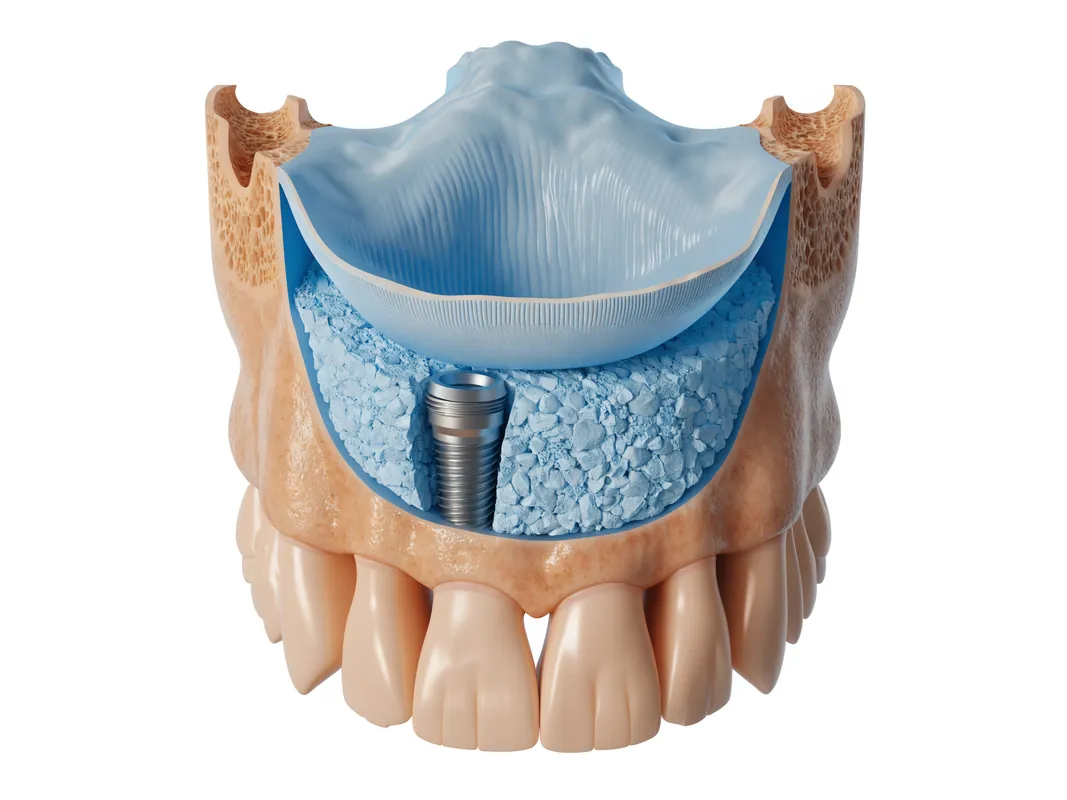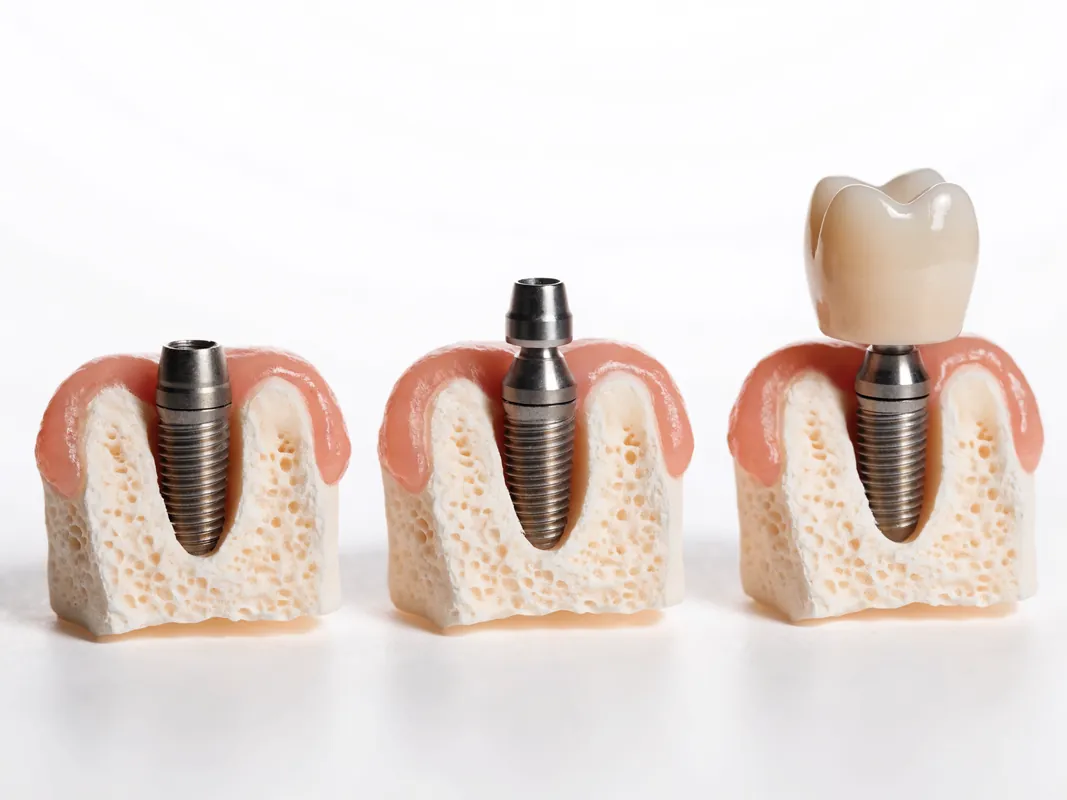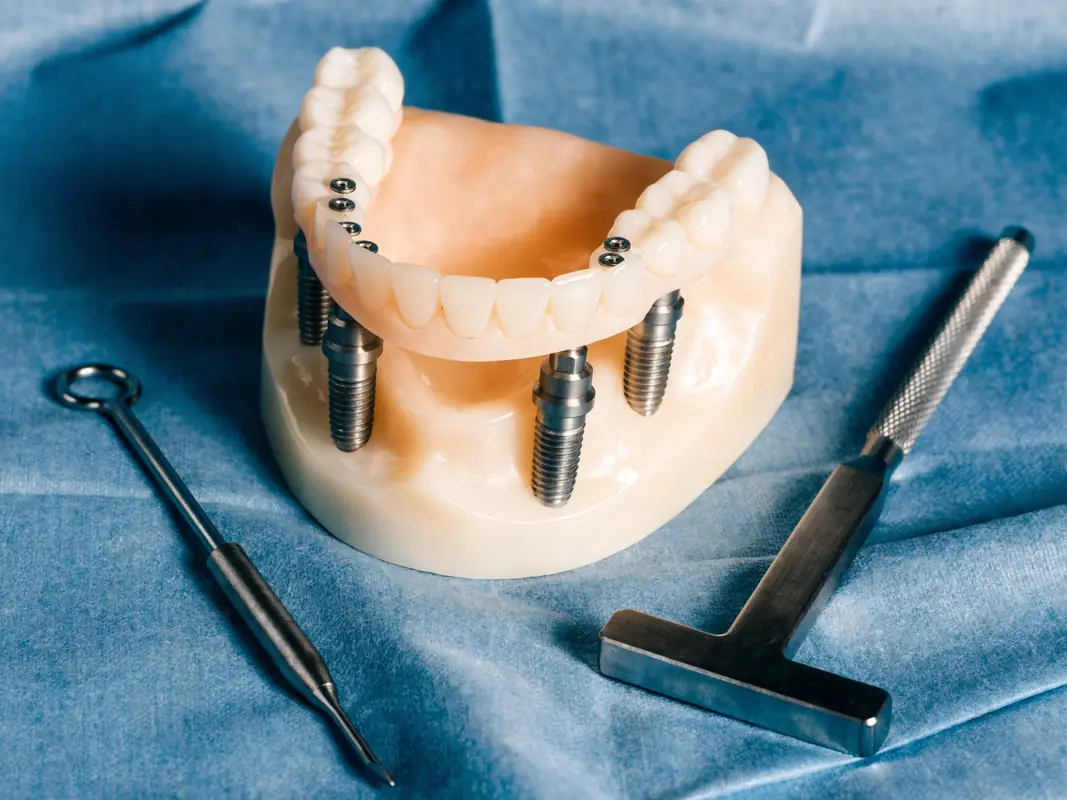
Bone augmentation is an umbrella term for different procedures intended to create or preserve tissue for a proposed implant or restoration. The need, extent, technique, material, staging and recovery plan depend on direct clinical assessment. A remote image, a general measurement, a product label or a calendar cannot decide the plan.
This Is Not Personalised Medical Advice
This guide cannot determine whether a graft is needed, which material should be used, or whether a symptom is normal for one person. It does not interpret scans, diagnose infection, select medicine or clear anyone for surgery, implant placement or travel. The responsible clinician must examine the patient, review relevant records, explain alternatives and accept responsibility for the procedure.
Do not stop, start or alter a prescribed medicine because of this guide or a seller’s message. Medicine decisions belong to the prescriber and treating dental team using current patient information and applicable guidance. Remote photographs cannot exclude infection, wound breakdown or another complication.
Why a Graft May Be Proposed
An implant has to be planned in relation to the intended restoration, surrounding anatomy and available tissue. After tooth loss, disease, trauma, previous treatment or anatomical variation, the assessed ridge may not support the proposed implant position or restorative design. A clinician may then discuss preserving a socket, augmenting a local defect, rebuilding a wider area or changing the restorative plan.
“Not enough bone” is an incomplete explanation. Ask what record shows the issue, which site is involved, which restorative objective creates the requirement, what uncertainty remains, and whether the concern is about width, height, contour, a wall defect, sinus anatomy or another feature. The answer should be tied to the named patient and procedure rather than a universal threshold.
Diagnosis Before Augmentation
The decision should follow a full medical and dental history, examination, periodontal and oral assessment, restorative planning and appropriate imaging. The clinician should explain why each record is necessary and how radiation exposure is justified. A scan should not be ordered merely to support a decision already sold.
Assessment should identify the legal provider, responsible clinician, intended implant and restoration, current oral disease, relevant health and medicine factors, smoking or nicotine exposure, ability to maintain the area, local anatomy, previous procedures and the patient’s priorities. Findings can change between remote review and direct examination, so early proposals should be labelled provisional.
Alternatives and Staging
Consent requires a real alternatives discussion. Depending on the assessed case, alternatives may include no immediate treatment, accepting a space, a removable restoration, a tooth-supported option, preserving or treating an existing tooth, changing the restorative design, using a different implant position or design, delaying the decision, or seeking specialist assessment. These are discussion categories, not recommendations for an individual.
If augmentation remains reasonable, timing can differ. It may be proposed around an extraction, as a separate procedure before implant placement, or alongside implant placement when conditions allow. The plan should state what is intended, which findings control the next stage, and what happens if the findings are different. A calendar date is not evidence that a graft is ready for implant placement.
Define the Procedure and Review Gates
The words “bone graft” do not identify a procedure. Ask whether the plan concerns socket management, contour augmentation, guided regeneration, a block procedure, sinus-related augmentation or another named technique. Ask which site receives material, whether there is a donor site, whether a membrane or fixation device is planned, and who reviews each area.
A review gate is a clinical decision point. It can assess wound condition, symptoms, soft-tissue closure, donor-site recovery, material exposure, infection concerns, imaging when justified, and whether the intended next stage remains appropriate. Gates should be documented before treatment, but the outcome cannot be promised in advance.
Material Categories Are Not Rankings
Material origin is a consent and traceability issue, not a quality ranking. Categories include material obtained from the patient, processed human donor material, animal-derived material and synthetic substitutes. Some procedures use combinations or add a membrane, fixation device or biologically active product. A category name alone says nothing about the exact product, lawful source, processing, indication or suitability.
The responsible clinician should identify the exact proposed material, explain why it fits the assessed defect and technique, discuss material-specific uncertainties and alternatives, and record the patient’s ethical, cultural, religious or personal preferences. Marketing terms should not replace product identity or evidence.
Autogenous Material
Autogenous material comes from the same patient. The proposed donor site, harvesting method, added wound, expected functional effects, nerve or sensory considerations, scarring where relevant, and donor-site aftercare require separate consent. Material from one intraoral site is not equivalent to a larger extraoral harvest, and this guide does not compare them.
The record should state the donor site, recipient site, collection date, technique, any fixation, and the clinicians responsible for both areas. The absence of an external product label does not remove the need for traceability. The patient needs discharge instructions and escalation routes for every wound.
Allograft
Allograft refers to processed human donor material. The consent discussion should name the exact product and legal manufacturer or tissue establishment as applicable, explain the source category and processing in terms the patient can understand, and provide access to current official product information. Do not infer screening, processing or lawful supply from the word “donor.”
Record the product reference, lot or batch, expiry where shown, supplier route, storage controls, instructions and any applicable device or tissue identifiers. Questions about donor selection, processing and residual risk should be answered from current official documentation, not a salesperson’s summary.
Xenograft
Xenograft refers to material derived from another species. The exact species, tissue source, legal manufacturer, processing, intended purpose and product reference must be disclosed. Patients may have ethical, dietary or religious concerns that deserve time and a genuine alternative discussion.
Do not describe an animal-derived material as automatically free of biological risk or as certain to become the patient’s own bone. The clinician should explain what the manufacturer says the product is intended to do, how it is expected to behave in the proposed procedure, what evidence applies, and what uncertainty remains.
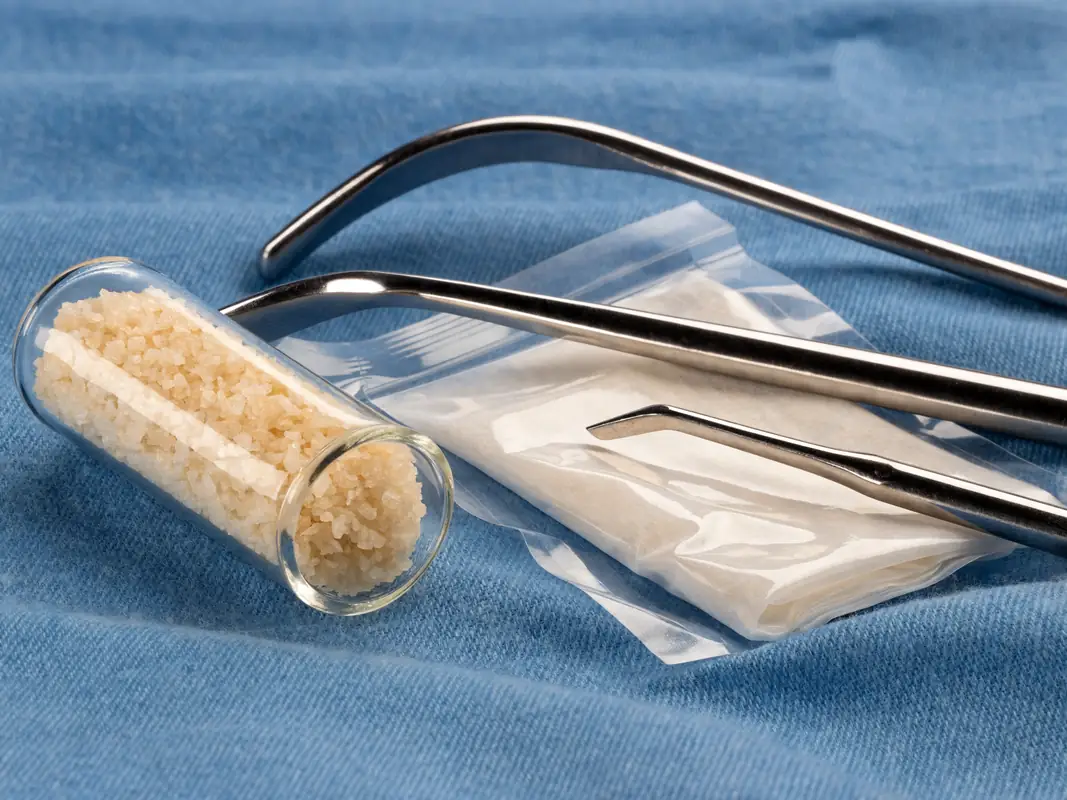
Synthetic Substitute
Synthetic is a source category, not a single material. Products can differ in composition, structure, resorption behaviour, handling, indication and regulatory status. “Man-made” does not establish suitability, absence of risk or clinical performance.
Ask for the legal manufacturer, exact product, composition, reference, lot, instructions, indication and traceability record. The clinician should explain why that exact product is proposed and how the procedure would change if another material or no graft were chosen.
Membranes, Fixation and Additional Components
A graft plan may include a barrier membrane, pins, screws, mesh, tacks, sutures or another component. Each item has its own identity, intended use, handling requirements and possible removal or review plan. Record whether a component is intended to remain, resorb or be removed, without assuming that the plan will unfold on a fixed date.
The record should identify each legal manufacturer, product reference, lot or serial information where applicable, and UDI when assigned. If the plan changes during surgery, the actual components must replace the provisional list in the final record and consent changes must be documented.
Material Traceability Record
The final record should map material and components to the patient, procedure, site and date. Include legal manufacturer, exact product name, catalogue or reference number, lot or batch, UDI where assigned, expiry shown on the label, supplier, storage or preparation notes where clinically relevant, donor and recipient sites for autogenous material, and label images.
Also include the provider, clinician, procedure note, membrane and fixation details, diagnostic records, consent version, discharge instructions and planned review gates. A brand-level certificate or box photograph without a site map is not a complete record.
Consent Is a Continuing Process
The GDC states that consent is a process rather than a one-off event and that a change to agreed treatment or estimated cost requires renewed consent and documentation. A patient should receive understandable information about the diagnosis, options, material origin, procedure, donor site, risks, uncertainties, costs, review plan and consequences of declining or delaying treatment.
Consent should be revisited if direct assessment differs from remote information, the defect differs from the plan, a material or technique changes, a donor site becomes necessary, implant placement is delayed or combined, or an additional component is proposed. A signed form cannot replace the discussion.
Recovery Is Variable
Recovery depends on the procedure, recipient and donor sites, closure, individual health, oral condition, medicines, nicotine exposure, complications and the clinician’s instructions. Swelling, bruising, bleeding, altered sensation and pain can occur after surgery, but a general guide cannot define a normal amount or sequence for one patient.
Use the written discharge instructions and the patient’s own symptom direction. Stable or improving symptoms may still need scheduled review. New, worsening or unexpected symptoms need professional assessment. Do not wait for an internet timeline when the treating team has asked for contact.
Medicines and Prescribing Boundaries
The treating team needs a current list of prescribed, non-prescribed and complementary products, allergies and relevant medical contacts. SDCEP directs UK dental professionals to its current online Dental Prescribing resource because medicine guidance and interaction information change. A copied old leaflet should not control prescribing.
Do not assume that antibiotics, mouthwash or a particular pain medicine are automatically required. Do not borrow medicine, reuse leftovers, exceed label directions or combine products without professional advice. The prescriber should consider the individual, procedure, interactions, contraindications and current guidance.
Anticoagulants and Antiplatelet Medicines
Bleeding risk requires procedure-specific and patient-specific planning. SDCEP’s current companion explains that its anticoagulant and antiplatelet guidance applies to outpatient dental treatment and should be read in full by the clinical team. The patient should never change these medicines independently.
Ask who assessed bleeding risk, which procedure category was considered, whether the prescriber or specialist input is needed, what local haemostatic plan is documented, and how post-operative bleeding will be escalated. The answer cannot be copied from another patient or simplified to “stop” or “continue” by a website.
Smoking and Nicotine
Current NHS patient information notes that smoking can delay wound healing and advises patients to seek support to stop. The treating clinician should discuss smoking and nicotine exposure honestly, without inventing a universal abstinence threshold or promising that stopping removes all risk.
Record current exposure, support requested, the procedure-specific risk discussion and the plan if the patient cannot stop. Do not hide smoking from the team or substitute one nicotine product for another without appropriate advice. The decision to proceed belongs to the responsible clinician and patient after informed discussion.
Systemic and Oral Factors
Medical conditions, medicines, prior radiotherapy or cancer treatment, antiresorptive or antiangiogenic therapy, immune status, bleeding factors, metabolic control, allergies and previous surgical problems may change assessment or referral needs. This list is not a screening tool and does not set eligibility thresholds.
Oral disease, plaque control, periodontal condition, active infection, bite, prosthetic design and ability to maintain the site also matter. SDCEP’s current periodontal guidance supports assessment, diagnosis, planning and long-term care. A graft should not be separated from the health of the whole mouth and the final restoration.
Warning Signs and Escalation
Follow the provider’s procedure-specific instructions. Seek urgent dental assessment for symptoms that are worsening, severe, unexpected or not responding as the team described, including increasing swelling or pain, fever or feeling unwell, persistent discharge or bad taste, wound opening, visible or mobile material, altered sensation that is new or changing, donor-site problems, difficulty eating or drinking, or bleeding that does not settle with the instructed local measure.
Heavy bleeding that will not stop, severe swelling affecting breathing or vision, serious facial or jaw injury, collapse or another life-threatening concern requires emergency care. In the UK, current NHS guidance directs patients to emergency services for those features and to NHS urgent dental routes for other urgent problems. Use the equivalent current local service elsewhere.

Review Gates, Not Promised Dates
A review may check the wound, symptoms, soft-tissue closure, donor site, hygiene, material exposure, infection concern and whether imaging is justified. A later gate may assess whether the site supports the intended implant or restoration. Passing one gate does not predetermine the next.
A calendar date is not evidence that a graft is ready for implant placement. The clinician must interpret current findings and explain whether to proceed, wait, modify the plan, obtain more records or choose another option. Record the decision and the evidence used.
Local Handover and Records
Before leaving the treating area, obtain the legal provider and clinician details, procedure note, sites, material and component labels, donor-site information, consent record, relevant images, discharge instructions, medicine list, adverse events, review gates, emergency contact and complaint route. GDC standards emphasise complete, accurate records and patient access.
Identify a local dentist willing to assess recovery and receive records securely. A remote check can support communication but cannot replace examination. The local clinician decides what care they can accept and remains responsible for care they provide.
Travel and When Not to Travel
Travel planning depends on procedure extent, anaesthesia or sedation, symptoms, donor site, medicine needs, clinician review, journey demands and access to care. Ask the treating clinician for written, case-specific advice and check current carrier and insurance terms. Do not use a general online schedule as clearance.
Do not begin or continue a journey while there is unresolved bleeding, spreading swelling, breathing or swallowing difficulty, fever or systemic illness, uncontrolled symptoms, inability to eat or drink, an unreviewed wound concern, impaired mobility after a donor procedure, or no practical route to urgent care. Seek professional assessment first.
Quote Comparison Worksheet
Compare legal provider and clinician identities; diagnosis and records; alternatives; exact procedure and sites; material origin and identifiers; membrane and fixation; donor-site care; anaesthesia or sedation; provisional and final implant stages; assessment-dependent additions; medicines; review gates; records; local handover; urgent-care route; itemised costs; payment stages; cancellation terms; and complaint procedure.
Mark each line as included, excluded, provisional, dependent on direct assessment or unanswered. A total without scope is not comparable. A material trade name without reference and lot information is not traceability.
Red Flags
Pause if the provider or clinician is unnamed, a remote scan is treated as final diagnosis, a universal bone measurement decides everyone’s need, alternatives are omitted, material origin is hidden, a trade name replaces consent, exact references are withheld, donor-site risks are ignored, medicine changes are suggested by a coordinator, recovery is promised on fixed dates, warning signs have no escalation route, or records will not be released.
Resolve gaps in writing before treatment. Seek an independent assessment when clinical necessity, material source, responsibility or aftercare remains unclear. Travel bookings and time pressure should not override informed consent.
Frequently Asked Questions
The questions below help patients ask for evidence and organise handover. They do not answer whether a specific graft is needed or whether a current symptom requires treatment.
Ask What Defect Is Actually Being Treated
A proposal should describe the assessed defect in a way that connects anatomy to the intended restoration. The clinician may use clinical examination, photographs, conventional radiographs, three-dimensional imaging, study models or digital planning where justified. Each record answers a different question. More imaging is not automatically better, and a large file does not compensate for an unclear diagnosis.
Ask whether the concern existed before extraction, developed after tooth loss, follows periodontal destruction, trauma or previous surgery, or relates to the position required for the final restoration. Ask which boundaries are intact, where soft-tissue management fits, and whether the problem is local or extends across a wider area. The patient does not need to interpret anatomy; the clinician must explain it clearly enough to support consent.
The intended restoration should be defined before the augmentation target. A graft planned around a poorly positioned implant concept may reproduce the wrong objective. Ask who is responsible for restorative planning, whether a diagnostic set-up has informed the position, and how the surgical and restorative clinicians agreed the target. If one clinician performs both roles, the record should still show both parts of the reasoning.
Do not let a dimensional target become a universal rule. Measurements need clinical context, imaging accuracy, anatomical interpretation, proposed implant design, safety margins, restorative position and technique. A number copied from another case cannot decide the current one. The written plan should state why the observed anatomy matters and what alternative choices were considered.
Distinguish Preservation, Augmentation and Reconstruction
Socket or ridge preservation is discussed around tooth removal with the aim of influencing later ridge change. Local augmentation may address a defined contour or wall deficiency. Wider horizontal or vertical procedures may attempt to rebuild a larger deficient ridge. Sinus-related procedures address a different anatomical setting. A major reconstruction with an extraoral donor site creates a different care burden from a small intraoral procedure.
These labels can overlap in ordinary conversation, so request a procedure-specific description. It should identify the recipient site, access, material, membrane or fixation, donor site, closure plan, imaging plan, possible staged implant placement and named clinician. Ask what the procedure is intended to achieve and what would count as insufficient response at a later review.
The European Workshop in Periodontology consensus on extraction sockets and implant timing was based on several systematic reviews and used an evidence-grading approach. Its value for a patient guide is not a single formula; it shows that extraction, preservation, augmentation and implant timing require linked decisions. The clinician should explain which evidence question matches the proposed procedure rather than citing “bone graft studies” as one category.
If a provider uses a broad phrase such as “simple graft,” ask what makes it simple in this case. Simplicity is not a material identity or risk description. The wound, donor site, anatomical structures, closure, medicine plan, review and possible change of staging still need discussion.
Understand What the Material Is Intended to Do
Different graft materials may be used as a source of living cells, as a scaffold, as a space-maintaining material, as a mixture with material from the patient, or for another manufacturer-defined purpose. Patients should not have to master biological terminology, but they should understand the function the clinician expects from the exact material in the exact technique.
Ask whether the clinician expects the material to remain, remodel, resorb or contribute to a mixture over time, and how that expectation is supported. Avoid absolute language such as “turns into your bone” or “cannot be rejected.” The biological response varies, product behaviour differs, and the clinician must explain uncertainty.
If several materials are mixed, record each one separately. A patient-derived component does not erase the identity of a donor or synthetic component. Record proportions only if the clinical note ordinarily documents them and they can be stated accurately. Record any carrier, biologic or preparation product as its own item.
Ask whether the material’s current instructions cover the proposed use. If the clinician proposes use outside the manufacturer’s stated purpose, that requires a particularly clear explanation of rationale, evidence, alternatives and responsibility under the applicable professional and legal framework. This guide cannot decide whether such use is appropriate.
Verify Every Product Through Its Own Documents
Start with the legal manufacturer rather than a reseller’s page. Obtain the exact product name, model or presentation, catalogue reference, lot or batch, expiry shown on the label, UDI where assigned, current instructions and local supplier. Match those fields across the quote, sealed label, procedure note and patient-held record.
Read the source and composition sections of the current official documentation. Marketing summaries can omit carriers, additives, membrane origin or processing distinctions. Ask the clinician to explain any element relevant to allergy, ethical preference, religious practice, prior reaction or informed consent. If the answer is unknown, resolve it with the manufacturer before use.
Check storage and preparation instructions at a professional level. The patient is not responsible for inventory control, but the provider should be able to show that the item was within its labelled conditions and that product traceability is maintained. A photograph of a box after the event cannot prove how it was stored or which site received it.
If a supplier certificate is offered, check what it certifies. Does it identify the exact product and lot? Does it name the supplier and recipient? Is it current? Can it be verified through an official contact? A decorative certificate that names only a product family adds little to the clinical record.

Human Donor Material Verification Questions
For processed human donor material, ask which regulatory pathway applies in the treatment jurisdiction and whether the item is regulated as a tissue, device, combination or another category. The answer can affect the organisations and records involved. Do not assume that rules from the patient’s home country govern supply elsewhere.
Ask for the tissue establishment or legal manufacturer, product reference, donor-source category expressed respectfully, processing summary, lot or batch, storage conditions, expiry and traceability route. Ask where official information describes donor selection and testing and how a safety notice or recall would reach the provider and patient.
The clinician should explain residual uncertainty without using frightening or dismissive language. “Screened” is not the same as zero risk. Equally, the existence of a human donor source is not evidence that the material is unsuitable. The patient needs balanced information, alternatives and time to decide.
Privacy applies to both patient and donor information. The patient needs the product traceability data required for care and safety follow-up, not private donor identity. Ask how the provider preserves the lawful traceability chain while protecting confidential information.
Animal-Derived Material Verification Questions
Identify the species and source tissue. Ask for the legal manufacturer, exact reference, processing summary, intended purpose, lot, storage and official instructions. If a membrane or carrier has a different animal source, disclose it separately. “Natural” and “mineral” are not adequate descriptions.
Ask the clinician to distinguish what is removed during processing, what remains in the final product and what the manufacturer claims about resorption or persistence. Do not accept an unsupported statement that all organic material is absent or that disease transmission is impossible. Refer questions to current official documents and qualified professionals.
Religious and ethical preferences are individual. Do not assume a person will accept or reject a species-derived product based on nationality or faith. Ask directly, offer understandable alternatives where clinically reasonable, and document the decision without judgment.
If the proposed alternative changes technique, evidence, cost or staging, explain those consequences. A meaningful choice is not created by naming another category while withholding how the plan would differ.
Synthetic Material Verification Questions
Identify the exact composition rather than treating all synthetic substitutes as equivalent. Products may use different chemical forms, particle structures, porosity, binders or resorption profiles. This guide does not compare them. The clinician must explain which characteristics matter for the intended technique and cite current product information and relevant evidence.
Ask whether the material is used alone or in a mixture. Identify any carrier, setting agent or additive. Check allergy and sensitivity information in the current instructions. Confirm product reference, lot, expiry, storage, preparation and UDI where assigned.
Do not infer that synthetic origin meets every ethical preference. Some processing aids or added components may have another source. Ask the manufacturer if the official documentation is unclear. Conversely, do not assume a synthetic material has weaker or stronger performance merely because it is not donor-derived.
The choice should remain linked to the defect, procedure, clinician experience, evidence, alternatives and follow-up route. Source category is only one part of the decision.
Autogenous Donor-Site Planning
When material is harvested from the patient, ask why a donor site is proposed, what alternatives exist, who performs the harvest, and whether the recipient and donor procedures occur under the same provider and consent. The plan should name the site precisely and explain the expected wound, function and review needs.
Discuss site-specific risks without reducing them to a checklist. These may include pain, swelling, bleeding, infection, altered sensation, damage to nearby structures, scarring, gait or movement effects for an extraoral site, and the possibility that the obtained material differs from the plan. The responsible clinician should tailor this discussion.
The discharge plan must cover both wounds. Which symptoms go to the dental surgeon, which to another surgical team, and which need emergency care? Who checks dressings or sutures? Who assesses mobility or donor-site function? Which local clinician can examine the site after the patient leaves?
Record the donor and recipient sites, harvest and fixation technique, procedure date, clinicians, relevant images and complications. Because there is no commercial graft label, the surgical record carries even more of the traceability burden.
Membrane and Fixation Decision Boundaries
A membrane may be proposed to separate tissues, maintain a space or support a defined regenerative technique. Ask whether it is resorbable or intended for later removal, what it is made from, how it is fixed, and what happens if it becomes exposed. Avoid general promises about exposure or healing.
Pins, screws, mesh and tacks must be recorded individually. Ask whether they are temporary or intended to remain, which instruments are needed for removal, and who will hold those records. If a later clinician may need to locate a component, preserve relevant imaging and site mapping.
If fixation changes during surgery, the provider should update the patient before the next stage and provide actual identifiers. The final record should not continue to show a provisional component that was never used.
Ask how membrane or fixation complications would be assessed locally. Remote photographs may assist discussion but cannot determine depth, mobility, infection or tissue condition. A visible edge or opening should follow the treating team’s escalation instructions rather than self-treatment.
Pre-Procedure Readiness Gate
Before surgery, the provider should confirm that the diagnosis, restorative plan, procedure, material, consent, medical history, medicine list, allergies, smoking or nicotine information, oral condition and local aftercare route are current. Any change since assessment needs review. The patient should know which clinician makes the go-or-defer decision.
The plan should state whether active oral or periodontal disease requires management first. SDCEP’s current periodontal guidance emphasises assessment, diagnosis, treatment planning and long-term care. Augmentation should not be treated as an isolated construction task when the wider mouth cannot be maintained.
Confirm how sedation or anaesthesia, fasting instructions where applicable, escort needs, transport restrictions, consent capacity and discharge arrangements are handled. These instructions must come from the treating service because they differ by procedure and setting.
Ensure the local handover provider and emergency routes are known before treatment, not after a problem appears. If the patient will leave the region, share the planned procedure and record requirements with the local dentist in advance where possible.
Procedure-Day Change Control
Surgical findings may differ from pre-operative expectations. The consent discussion should anticipate which changes can reasonably arise and which would require stopping, staging or a new decision. A blanket clause allowing any material or procedure is not a substitute for specific consent.
Ask how the clinician will respond if the defect is larger, smaller or different; primary closure cannot be achieved as planned; the intended material is unavailable; an implant cannot be placed at the same stage; another donor site or component is proposed; or the clinician identifies active disease. The answer should prioritise patient understanding and clinical responsibility over schedule pressure.
If the patient is sedated or lacks capacity to consider a material change at that moment, the team must operate within the agreed consent and applicable law. Elective additions should not be justified merely because travel has already occurred. The pre-operative plan should state boundaries clearly.
After the procedure, provide an accurate account of what happened, including deviations, actual materials and components, complications, instructions and revised gates. The patient-held record should be updated promptly.
Medicine Reconciliation Before and After Surgery
Create one current list containing medicine name, dose, timing, reason where known, prescriber, non-prescribed products and allergies. The clinician should ask about changes at each relevant visit. Do not rely on an old health questionnaire or a photograph of selected boxes.
Some products affect bleeding, immune response, bone-related risk, sedation, interactions or prescribing. The list alone does not tell a patient what to do. The dental team should use current professional resources, consult the prescriber or specialist when indicated, and document the plan.
Discharge instructions should distinguish regular medicines from newly prescribed items. They should state who to contact for an adverse reaction, missed dose, vomiting, inability to swallow or interaction concern. A local pharmacist may help with medicine questions within their role, but surgical symptoms still require dental or medical assessment.
If an instruction conflicts with the prescriber’s plan or current label, do not improvise. Contact the responsible clinicians and resolve the conflict. Keep the written resolution in the record.
Antibiotic Stewardship and Infection Assessment
Antibiotic decisions belong to an authorised prescriber using current guidance and clinical findings. They should not be sold as proof that infection cannot occur. Nor should every post-operative symptom be assumed to require an antibiotic. Examination and source control may be necessary depending on the cause.
SDCEP advises using its current online prescribing resource because it is updated with current formulary and interaction information. The guide should be applied by professionals within its scope. Patients should not select an agent or duration from an online table.
Ask what symptoms require contact, who will assess them, whether a local clinician can examine the site, and how culture or other investigation is considered when appropriate. If a medicine is prescribed, disclose allergies, pregnancy where relevant, other medicines and prior reactions accurately.
Complete only the course as instructed and seek advice about missed doses or adverse effects rather than guessing. This is general safety framing, not a medicine instruction for an individual.
Official Sources and Currency
These official and primary sources were reviewed on 29 August 2026. Recheck them when making a decision because guidance, service routes and product information can change.
- Guy’s and St Thomas’ NHS Foundation Trust, bone grafting overview: https://www.guysandstthomas.nhs.uk/health-information/bone-grafting-dental-implants
- Guy’s and St Thomas’ NHS Foundation Trust, minor bone grafting: https://www.guysandstthomas.nhs.uk/health-information/bone-grafting-dental-implants/minor-bone-grafting
- Guy’s and St Thomas’ NHS Foundation Trust, major bone grafting: https://www.guysandstthomas.nhs.uk/health-information/bone-grafting-dental-implants/major-bone-grafting
- Cambridge University Hospitals NHS Foundation Trust, bone grafting for dental implants: https://www.cuh.nhs.uk/patient-information/bone-grafting-for-dental-implants/
- NHS, emergency or urgent dental care: https://www.nhs.uk/nhs-services/dentists/how-to-find-an-nhs-dentist-in-an-emergency/
- SDCEP, current Dental Prescribing resource: https://www.sdcep.org.uk/published-guidance/drug-prescribing/
- SDCEP, anticoagulant and antiplatelet guidance scope: https://companion.sdcep.org.uk/management-of-dental-patients-taking-anticoagulants-or-antiplatelet-drugs/introduction/about-this-guidance/
- SDCEP, current periodontal guidance: https://www.sdcep.org.uk/published-guidance/periodontal-care/
- GDC Principle Three, valid consent: https://standards.gdc-uk.org/pages/principle3/principle3
- GDC Principle Four, records and information: https://standards.gdc-uk.org/pages/principle4/principle4
- GDC Principle Five, complaints: https://standards.gdc-uk.org/pages/principle5/principle5
- European Workshop in Periodontology consensus on extraction sockets and implant timing: https://onlinelibrary.wiley.com/doi/abs/10.1111/jcpe.13131
Final Decision Rule
Proceed only when the clinical need, alternative options, exact procedure, material origin, responsible clinicians, review gates, records and local care route are clear. Recovery should be managed by findings and professional review, not by a sales schedule.