Veneers, crowns, and implants are often confused as alternatives — but they treat different problems. This guide explains exactly when each is right and how they are commonly combined for full-mouth restoration.
Veneers, crowns, and implants are often discussed as if they were alternatives. They are not — they treat fundamentally different problems. Choosing the wrong one means either over-treatment (unnecessary tooth modification) or under-treatment (the result fails). This guide explains exactly when each is right.
The One-Sentence Differences
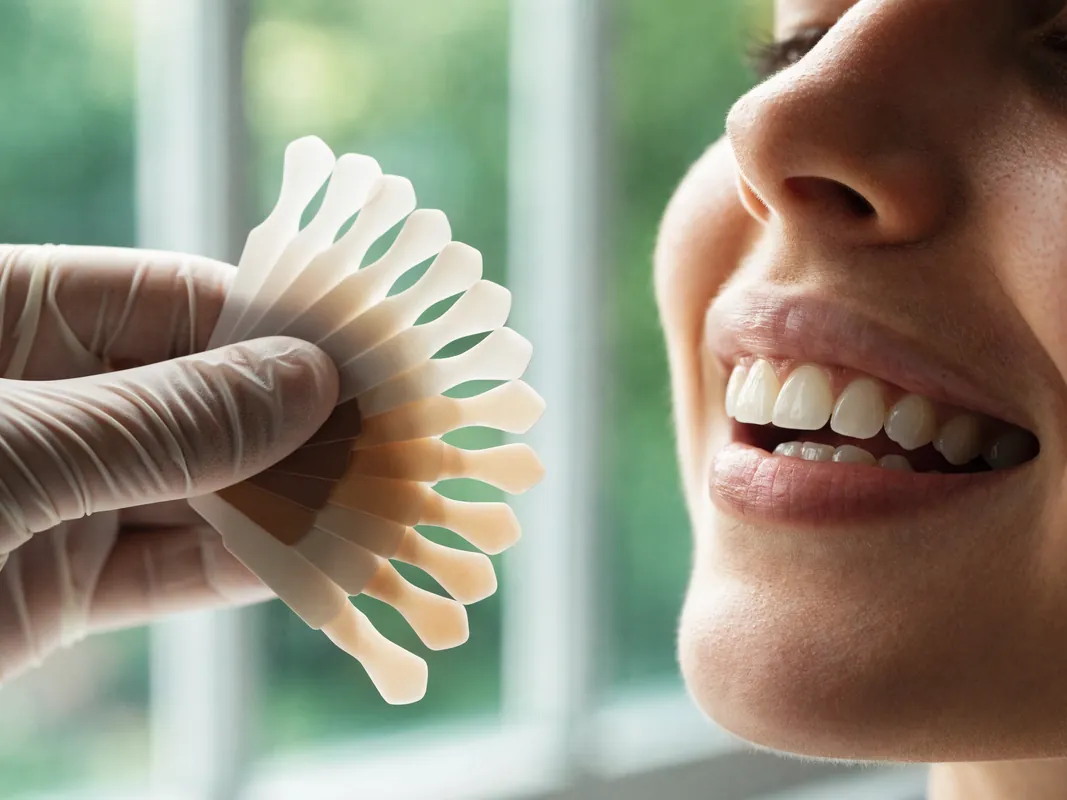
- Veneer = Thin porcelain shell bonded to the front of a tooth to change colour, shape, or alignment. Tooth is alive and intact.
- Crown = Thicker porcelain or zirconia cap that completely covers a damaged tooth. Tooth is usually heavily decayed or post-root-canal.
- Implant = Titanium screw replacing the entire missing tooth root. The tooth is gone; the implant + crown together replace it.
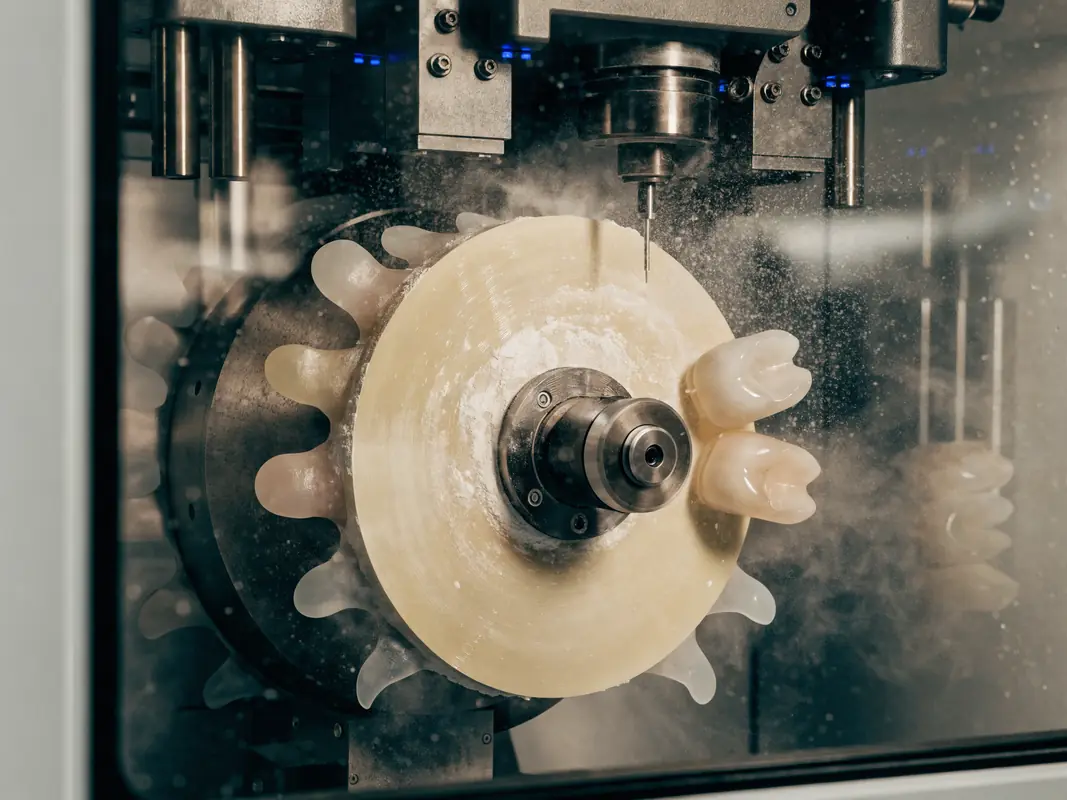
Decision Tree
Tooth is healthy but you don't like the colour/shape
→ Veneer. Conservative, reversible-ish, preserves enamel.
Tooth has a large filling, has had root canal, is cracked, or is heavily decayed
→ Crown. Veneer is too thin to protect a damaged tooth. Crown covers the entire tooth.
Tooth is missing entirely
→ Implant. Crown alone has nothing to attach to; veneer is irrelevant.
Tooth has multiple cosmetic concerns AND is structurally weak
→ Crown (because the structural problem dominates). Done in tooth-coloured material for aesthetic result.
Front teeth all need redesign for Hollywood smile
→ Veneers across the whole smile zone (16-20 veneers).
Multiple back teeth missing
→ Multiple implants OR an implant-supported bridge OR All-on-4® for whole-arch cases.
Detailed Comparison
| Aspect | Veneer | Crown | Implant + Crown |
|---|---|---|---|
| When | Healthy tooth, cosmetic only | Damaged tooth, structural | Missing tooth |
| Tooth preparation | 0.3-0.5 mm enamel | 60-70% of tooth | Implant placed in jaw |
| Preserves natural tooth | Mostly | Partially | N/A (tooth is gone) |
| Longevity | Depends on material, fit, maintenance and patient factors | Depends on material, fit, maintenance and patient factors | Fixture and crown have separate evidence and written terms |
| Reversible | No (but minimal) | No | No |
| Aesthetic potential | Excellent (translucent) | Good to excellent | Excellent |
| Strength for back teeth | Limited | Excellent (zirconia) | Excellent |
| Treatment time | 5 days | 4-5 days | 4-7 days first visit + 3 months + 2-3 days |
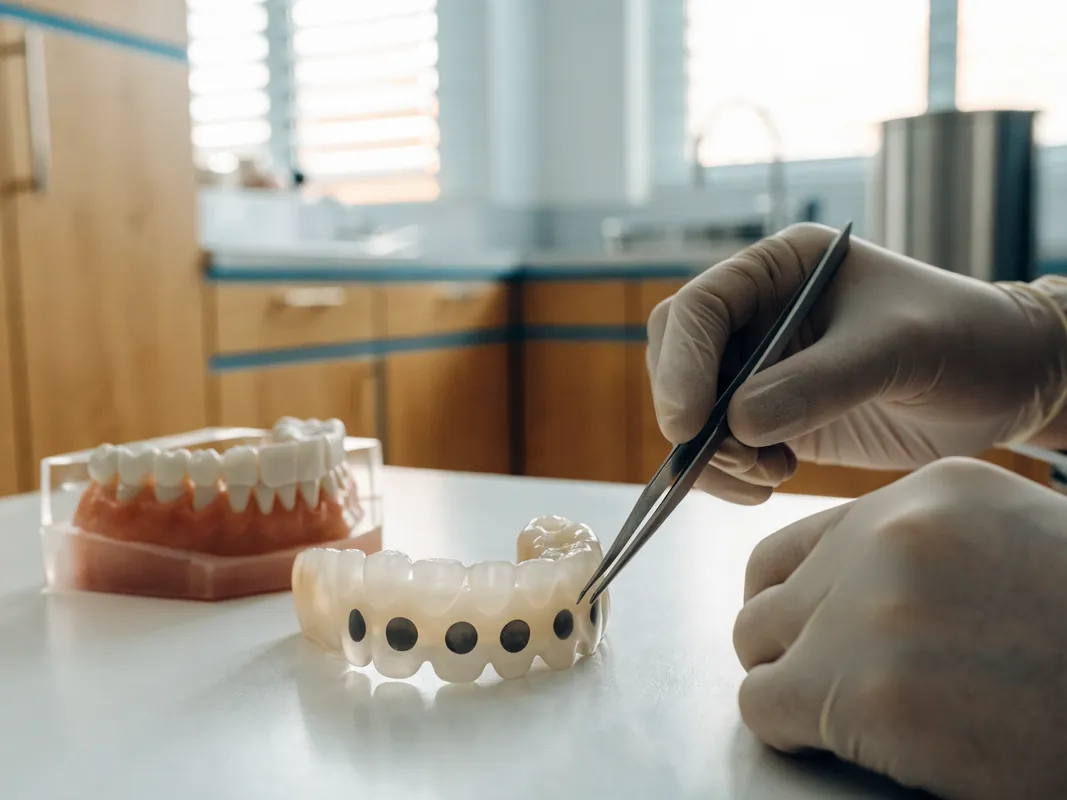
When People Mix Up the Options
Mistake #1 — Wanting "veneers" on damaged teeth
A heavily decayed tooth cannot support a veneer. Veneer porcelain is 0.3-0.5 mm thick — it cannot rebuild structure that is missing. Patients who think they want veneers sometimes need crowns. The aesthetic outcome can be similar but the preparation is more extensive.
Mistake #2 — Wanting "implants" when natural tooth can be saved
Some patients see implants as a "fresh start" and want to extract problematic teeth to get implants. Don't. Even a heavily damaged tooth that can be saved with crown + root canal is better than extraction + implant for most cases. Natural teeth have proprioception (sensitivity to bite force) that implants lack. Save what can be saved.
Mistake #3 — Treating each missing tooth as needing an individual implant
For multiple adjacent missing teeth, an implant-supported bridge may be considered instead of one implant per tooth. The named clinician must assess anatomy, hygiene, load and alternatives rather than maximising implant count.
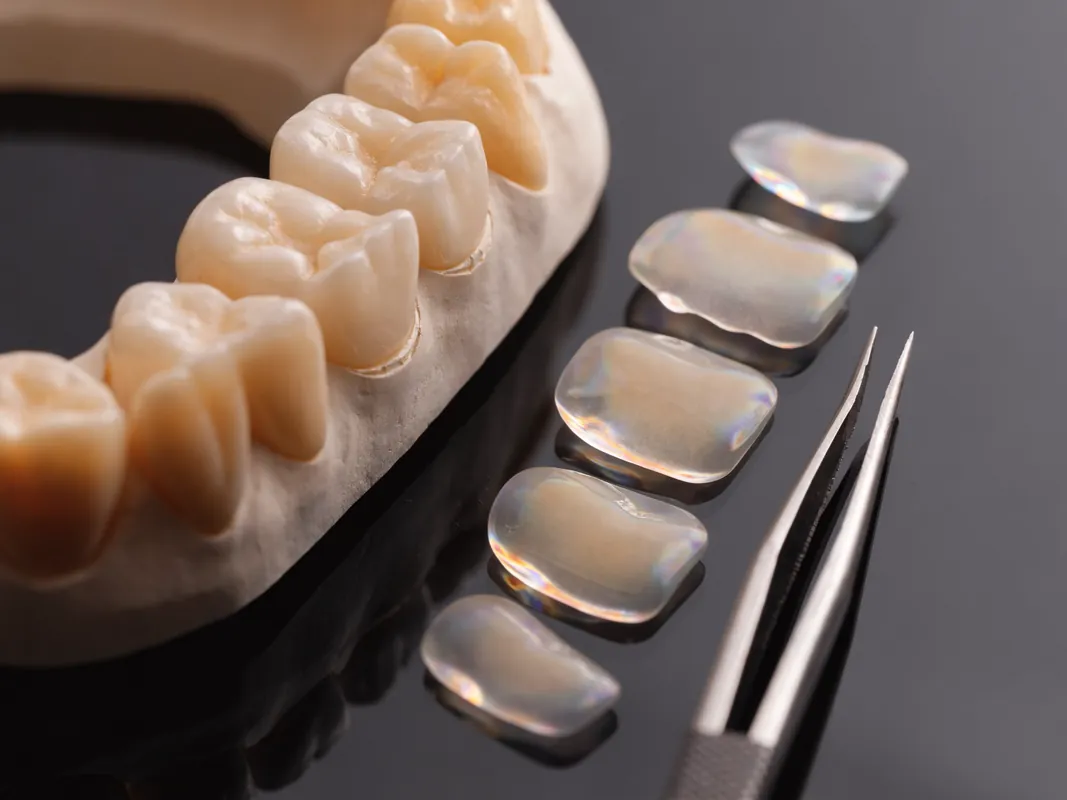
Common Combinations
Most full-mouth makeovers combine multiple treatment types:
The Hollywood Smile + Implant Combination
Front-zone veneers (8-16) for aesthetic transformation + 1-2 implants for missing back teeth. Both completed in a single coordinated trip.
The All-on-4® + Veneer Lower Combination
Upper arch with All-on-4® (replacing all upper teeth with implant bridge) + lower arch with selective veneers on natural teeth. Common for patients with severe upper damage but reasonable lower teeth.
The Crown + Veneer Combination
Damaged back teeth get crowns; healthy front teeth get veneers. Both designed to match in shade for full-mouth harmony.
The Implant + Bone Graft Combination
Insufficient bone for implant → bone graft visit 1, implant visit 2 (3-6 months later), final crown visit 3. Spread across 8-10 months. We arrange all three trips.
Material Choice Within Each Treatment
Once you have decided veneer vs crown vs implant, the next decision is material:
For veneers:
- IPS e.max® lithium disilicate — premium, translucent, hand-layered. Default for visible teeth.
- Composite resin — a different indication and maintenance profile; ask whether it is an appropriate alternative for your case.
- Zirconia — too opaque for visible front teeth, occasionally used for bruxers.
For crowns:
- Monolithic zirconia (Prettau, Katana) — strongest, ideal for back teeth.
- IPS e.max® — best aesthetic, used for visible crowns.
- PFM (porcelain-fused-to-metal) — older technology, occasional use for specific cases.
For implants:
- Straumann (Switzerland) — premium, written manufacturer warranty terms, best in compromised bone.
- Nobel Biocare (Sweden/USA) — All-on-4® inventor, deepest full-arch data.
- Osstem (Korea) — premium-tier at more accessible total package.
- Astra Tech (USA) — best for aesthetic-zone single-tooth.
Questions to Resolve Before Choosing
Ask for a written treatment plan that explains:
- Which treatment type is right for each tooth
- Why (specific clinical reasoning, not generic marketing)
- What materials the responsible clinician recommends and why
- Timing across one trip or multiple
- Total package quotation
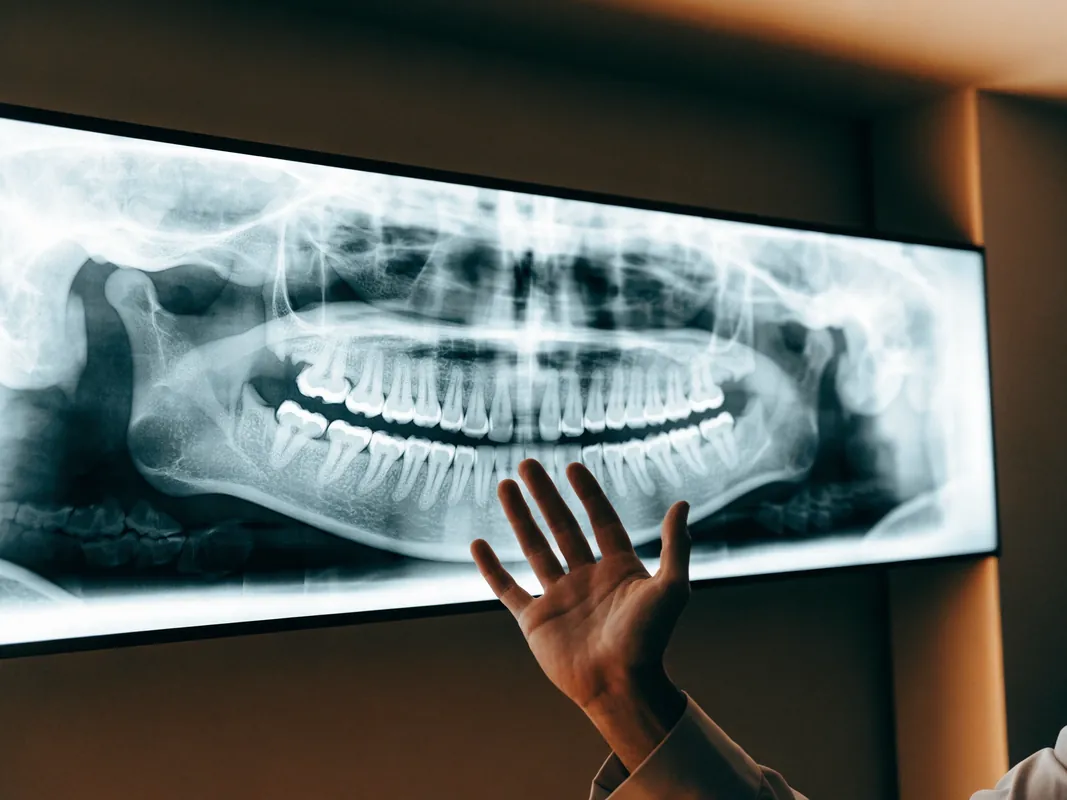
If you send an X-ray and photographs by WhatsApp, ask who reviews them, how health data is handled and which parts of any response remain provisional until examination.