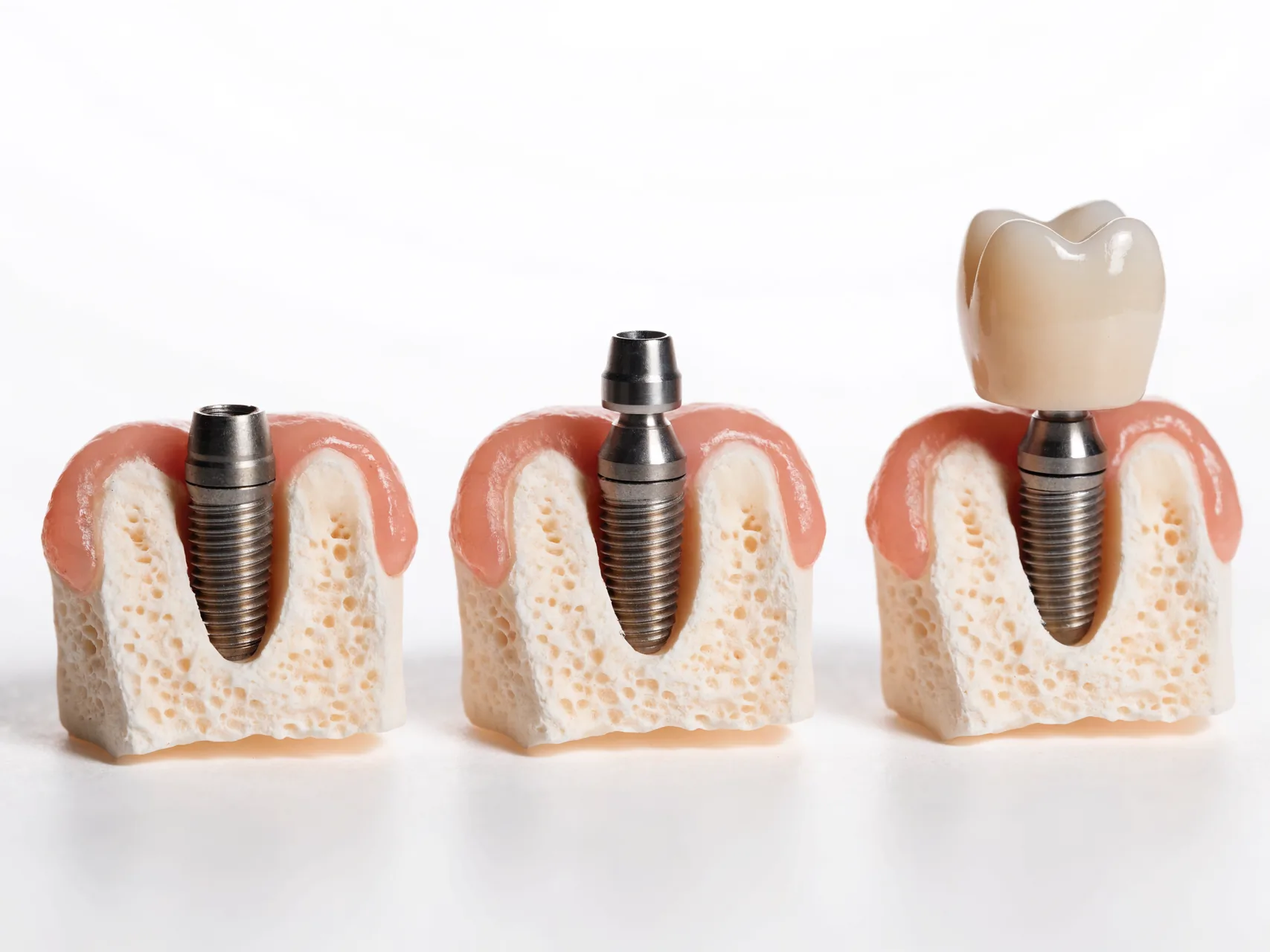
Dental implants are artificial tooth-root replacements placed in the jaw to support a crown, bridge or implant-retained denture. They can be considered when one or more teeth are missing, but they are not the only option and they do not come with a guaranteed result. A qualified dentist must assess the mouth, general health, medicines, smoking history, gum condition, bite and available bone before recommending treatment.
This guide explains how to compare dental implant treatment in Antalya without assuming a particular clinic, clinician, product, package, price or outcome. Remote information can help a provider understand the enquiry, but it is not a final diagnosis. The definitive plan should follow a clinical examination and appropriate imaging by the dentist responsible for the treatment.
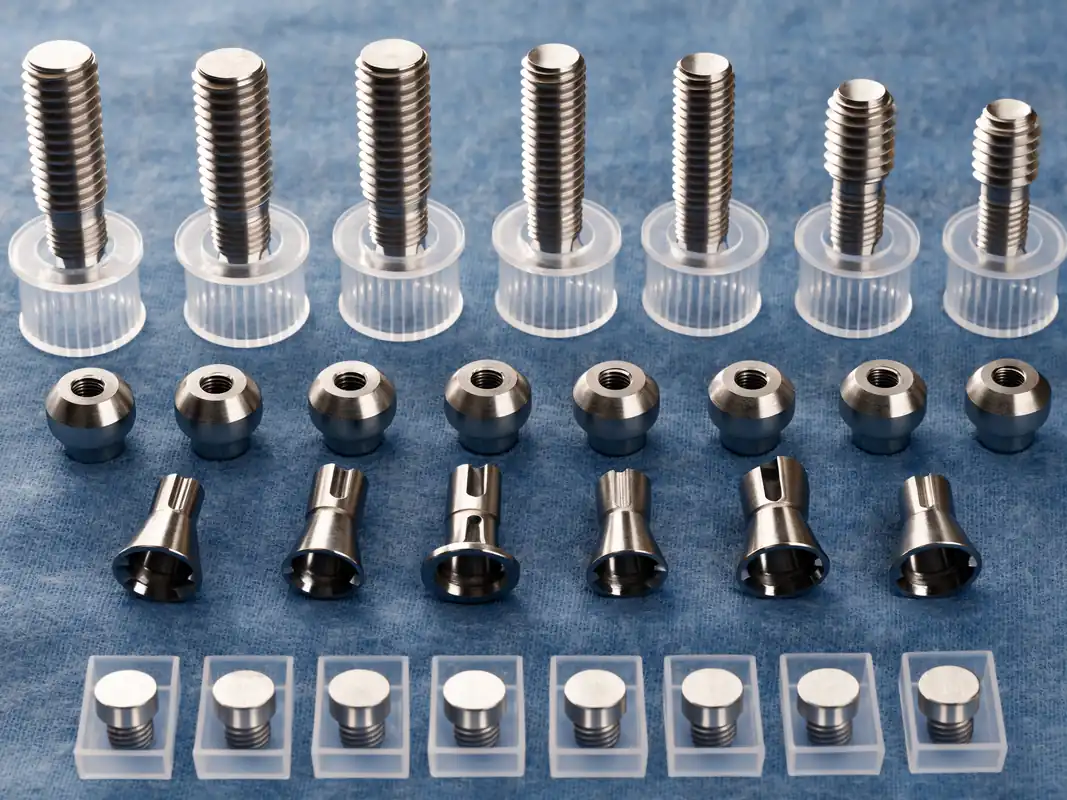
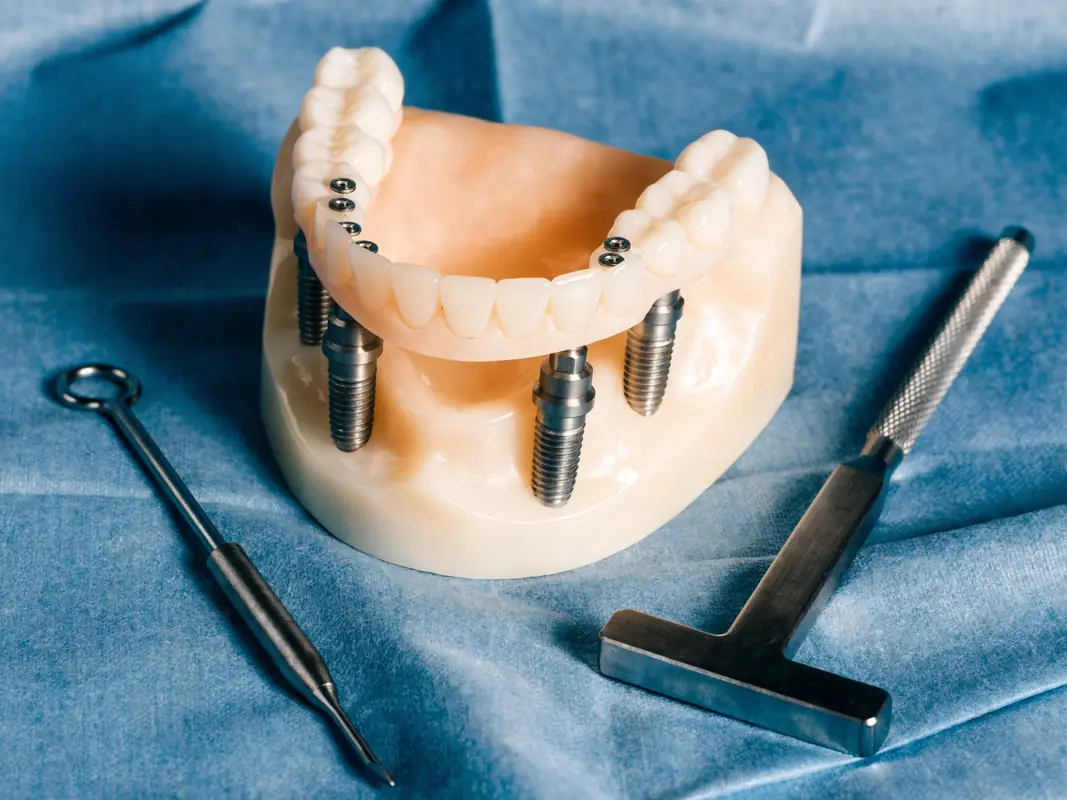
The [FDA dental implant patient overview](https://www.fda.gov/medical-devices/dental-devices/dental-implants-what-you-should-know) identifies an implant system as the implant body, abutment and, where used, an abutment fixation screw, with a crown, bridge or denture supported above. It also advises patients to keep the implant brand and model. The [GDC consent standard](https://standards.gdc-uk.org/pages/principle3/principle3) and [patient-record standard](https://standards.gdc-uk.org/pages/principle4/principle4) provide useful questions about options, risks, costs and records for UK patients; they do not certify a Turkish provider.
This page does not prescribe a device, component, graft, membrane, medicine, surgical technique, loading protocol, restoration, number of visits, healing interval, price or travel schedule. It separates the decisions that should be documented before placement from the commercial promise of dental implants in Turkey.
Begin with the missing-tooth decision
An implant is one way to support a replacement tooth; it is not the diagnosis. Start with why the tooth is missing or being considered for extraction, the condition of the remaining teeth and gums, the patient's priorities, and whether replacement is necessary. A space in a visible area, a back-tooth space and a failing tooth under a bridge can lead to different decisions.
Ask what problem the proposed implant is intended to solve: appearance, chewing, denture stability, preservation of an existing design or replacement of a tooth that cannot be restored. Then ask what evidence shows the objective is achievable without creating a larger maintenance burden.
The plan should mark each tooth or space and distinguish confirmed findings from assumptions based on remote images. If extraction is still only a proposal, obtain the diagnosis and tooth-preservation alternatives before treating removal and implantation as one inevitable package.
The strategic value of the tooth comes first
A tooth with decay, a failed restoration, fracture, gum disease or previous root canal treatment may or may not be restorable. Compare repair, endodontic care, periodontal treatment, a new restoration, monitoring and extraction where relevant. An implant should not be presented as an upgrade that automatically outranks retaining a serviceable natural tooth.
Restorability depends on remaining tooth structure, crack extent, root and gum support, decay position, bite, symptoms and the feasibility of a durable seal. Ask who made the extraction decision and whether a second opinion is appropriate before irreversible removal.
If the tooth is urgent or infected, local stabilisation may be safer than waiting for travel. The extraction, infection-control and implant decisions can be separated when anatomy, soft tissue, diagnosis or timing is uncertain.
Compare every reasonable replacement option
Reasonable alternatives may include no replacement, a removable denture, a resin-retained or conventional tooth-supported bridge, repair or redesign of an existing prosthesis, orthodontic space management or an implant-supported restoration. Each affects surgery, adjacent teeth, cleaning, appearance, function, repair, time and cost differently.
No treatment is not always harmless, but neither is it automatically wrong. Ask what may happen to chewing, neighbouring teeth, the opposing tooth, bone, appearance and future options if the space is monitored. The answer varies by location, bite and the rest of the mouth.
A bridge can avoid implant surgery but may involve neighbouring teeth and its own maintenance. A removable option may be easier to modify but requires adaptation and cleaning. An implant avoids preparing adjacent teeth in some cases but adds surgery, components and long-term peri-implant maintenance. Consent should compare these trade-offs, not just display an implant animation.
Define the clinical endpoint before choosing components
An implant body is not a finished tooth. State whether the intended endpoint is a single crown, short-span bridge, full-arch prosthesis or improved denture retention. Define fixed or removable, screw-retained or cemented where relevant, provisional or definitive, and how the patient will clean and obtain repairs.
The restoration design influences implant position, number, distribution, component selection, emergence, speech, bite and laboratory work. Surgery planned without a restorative endpoint can place an implant where the final tooth is difficult to clean, weak, unaesthetic or impossible to retrieve.
Ask for shared surgical and restorative planning with named owners. A digital guide, wax-up or simulation is a planning aid; it does not authorise placement or prove the final design will function.
Verify the provider before you book
Ask for the full legal name and address of the treatment facility, the name of the dentist who will diagnose and consent the case, and the name of each clinician expected to perform surgery or restorative work. Confirm current registration with the relevant Turkish authority and check the qualifications actually held. A marketing title is not proof of specialist status.
Useful questions include:
- Who is clinically responsible if the surgeon and restoring dentist are different people?
- Which regulator or professional body can confirm each clinician's registration?
- Who will provide consent, prescriptions, anaesthesia and emergency care?
- Does the facility have the imaging, surgical and decontamination arrangements required for the proposed case?
- What professional indemnity applies, and what complaints process is available?
- Which records will be supplied after treatment, in what language and in what format?
- Who can be contacted after departure, and what happens outside normal opening hours?
Do not rely on a logo, badge, testimonial or broad website statement as proof. Request current documentary evidence and verify it with the issuer where possible. If a coordinator answers commercial questions, make sure clinical advice still comes from a named, appropriately registered dentist.
Name every owner in the pathway
Implant care may involve an examining dentist, surgeon, restorative dentist, radiology provider, anaesthesia or sedation provider, laboratory and maintenance clinician. One person may hold several roles, but responsibility should not be blurred. Record who diagnoses, plans, consents, places the implant, chooses components, designs and fits the restoration, and reviews complications.
The laboratory manufactures from a prescription; it does not replace the treating clinician's diagnosis or consent. A coordinator can arrange appointments and quotes but should not decide bone grafting, implant dimensions, loading or fitness to fly. Ask to speak directly with the relevant clinician when the answer changes clinical risk.
If the named surgeon, facility, laboratory or system changes after payment, request an updated written plan and renewed consent. A substitution that appears commercially minor may change component compatibility, maintenance access and legal responsibility.
Verify registration and claims precisely
Ask for full legal names rather than social-media handles. Check professional registration with the relevant official authority and verify the facility address and legal operator. Confirm whether a person described as a specialist holds recognised specialist status in that jurisdiction rather than a general interest or training certificate.
Accreditation, membership, manufacturer training and device registration are different claims. A logo does not prove current status, scope or case competence. Verify the exact statement with the issuing body and ensure it applies to the named legal entity and date.
Do not treat FDA registered, CE marked, UKCA marked or similar phrases as provider approval. Device-market status, manufacturer compliance and clinician competence are separate questions. The [FDA explanation of misleading registered or certified language](https://www.fda.gov/medical-devices/consumers-medical-devices/are-there-fda-registered-or-fda-certified-medical-devices-how-do-i-know-what-fda-approved) illustrates why the exact regulatory claim matters.
Clinical communication must stay clinical
Request information in a language and format you can understand. Translation can support communication, but the named clinician remains responsible for checking that the patient understands diagnosis, alternatives, risks, uncertainty, costs and the right to stop. A sales interpreter should not simplify a complication or alter consent.
Tell the provider about hearing, vision, mobility, sensory, cognitive, anxiety or communication needs. Ask about physical access, support persons, privacy and a non-digital route if a portal or scan viewer is not usable.
Keep clinical and marketing consent separate. Permission to take diagnostic photographs or scans does not automatically allow publication, advertising or facial recognition processing.
Assessment comes before a treatment plan
A responsible assessment considers more than a panoramic image. Depending on the case, the dentist may need a full history, medication list, periodontal assessment, bite analysis, photographs, radiographs and three-dimensional imaging. Previous implant records, allergies, diabetes control, smoking, gum disease, tooth grinding and medicines that affect bone healing can change the options or timing.
Ask for a secure method to share health records and images, together with an explanation of who receives them, why they are needed, how long they are kept and how they can be corrected or deleted. Avoid sending sensitive information through an informal channel before the provider explains its privacy and record-handling process.
The written clinical plan should identify:
- the teeth or spaces being treated and the diagnosis for each;
- reasonable alternatives, including no treatment, a conventional bridge or a removable denture;
- whether existing teeth can be preserved;
- whether extractions, periodontal care, bone grafting or a sinus procedure may be required;
- the proposed implant position, restoration type and loading approach;
- material choices and relevant limitations;
- the expected review points, healing checks and criteria for moving to the next stage;
- material risks, uncertainties and factors specific to the patient.
A remote estimate should be labelled provisional. If the examination changes the diagnosis or scope, the provider should explain the change and obtain fresh consent before proceeding.
Medical history is part of implant eligibility
Provide a current list of medical conditions, medicines, supplements, allergies, previous surgery and relevant reactions. Diabetes control, immune status, bleeding risk, smoking or nicotine exposure, bone-related medicines, previous radiotherapy, healing disorders and other factors can change whether, when and how treatment is considered.
Do not stop anticoagulants, bone medicines or any prescribed therapy solely for dental travel without advice from the responsible prescriber and treating clinician. The dental team should document any requested medical coordination and the question being asked.
Age alone does not decide eligibility, and a diagnosis alone does not automatically exclude treatment. The useful decision connects current health, oral findings, procedure extent, healing capacity, maintenance and alternatives. If a medical clearance letter is requested, it should not replace the dentist's own clinical responsibility.
Smoking and nicotine require an honest plan
Smoking can affect healing and long-term implant outcomes, as the FDA patient overview notes. Vaping, smokeless nicotine and replacement products should be disclosed rather than assumed equivalent or harmless. Ask how current exposure changes suitability, timing, consent and maintenance.
Avoid a fixed abstinence promise copied from a website. A clinician should give individual advice and, where appropriate, support cessation through an evidence-based local route. Do not hide use to preserve a package quote; it changes risk information the surgical team needs.
If the provider proceeds despite higher risk, ask what evidence will be reviewed before the next stage and how failure or delayed healing is managed. The answer should not be a universal success percentage.
Periodontal health is a treatment gate
Implants do not cure gum disease. Assess plaque control, bleeding, pocketing, recession, bone support and active periodontal disease around remaining teeth. Stabilisation and an achievable maintenance plan may be needed before placement.
Ask how the team defines periodontal readiness, which clinician provides treatment and how progress is recorded. A clean-looking photograph cannot establish stability. The plan should also explain how future implant contours allow brushing, interdental cleaning or professional access.
History of periodontal disease can remain relevant after treatment. Arrange ongoing monitoring of both teeth and implants rather than treating implant placement as the end of disease prevention.
Bite, grinding and functional load matter
The number and position of teeth, opposing contacts, jaw relationship, parafunction, wear, fractured restorations and muscle or jaw symptoms can influence design and maintenance. A night guard may be considered in selected cases but should not be assumed to solve an unstable design or eliminate risk.
Ask how the provisional and definitive restoration will be evaluated for contact, movement, speech and function. Full-arch and multi-unit work needs a clear maintenance and repair plan if a tooth, screw, framework or surface fails.
If bite records are taken at different stages, label the date and clinical condition. A scan before extractions, healing or provisional changes may no longer represent the current relationship.
Imaging must be justified and usable
Implant planning commonly needs clinical examination and radiographic assessment. Three-dimensional imaging may be justified to evaluate anatomy and plan selected cases, but it is not a substitute for examination and should not be added merely because a package is described as digital.
Ask who prescribed the image, what question it answers, when it was taken, who reports it and how it changes the plan. The assessment may need to consider bone dimensions, neighbouring roots, nerve pathways, sinus anatomy, disease and other findings within the clinician's scope.
Request original files and the report where available, not only a cropped screenshot. A surgical guide derived from a scan also depends on current anatomy, scan quality, registration, design and correct seating. It remains a tool under clinical control.
Bone quantity is not the only bone question
Available dimensions, shape, density, defects, cortical support, healing environment and the planned restoration all affect placement. A remote phrase such as enough bone cannot replace site-specific measurements and clinical assessment.
Ask what anatomy is confirmed, what remains uncertain until surgery, and which finding would change implant position, dimensions, grafting, loading or the decision to stop. Avoid a plan in which the implant brand is chosen before the site and restoration are understood.
Bone changes after extraction and during healing. If imaging is old or the site has changed, the clinician should explain whether updated records are needed rather than copying an earlier virtual plan.
Implant systems and materials to confirm in writing
Implant treatment involves more than the fixture in the bone. The connection, abutment, screw, crown or bridge, laboratory work and maintenance components all matter. Ask whether replacement parts and compatible expertise are likely to be available where you live.
Straumann, Nobel Biocare, Osstem and Astra Tech are examples to verify in your written quote, not a statement that any named provider uses them. The quote should state the exact manufacturer, product family, component sizes where known, restoration material and whether each item is original, compatible or third-party. Ask for traceability labels, batch details and an implant passport or equivalent record after placement.
A brand name alone does not establish clinical suitability, authenticity, provider competence, a warranty or an outcome. If a manufacturer warranty is mentioned, obtain its actual terms and distinguish it from any separate promise made by the treating provider. Check who can make a claim, what is excluded, what maintenance evidence is required and whether travel, labour and the restoration are covered.
Identify the exact implant system, not only the brand
A manufacturer may supply several implant families, connections, platforms, diameters, lengths, surfaces and restorative components. Parts sharing a brand name are not automatically interchangeable. The final record should identify the exact implant body and clinically relevant components placed in the patient.
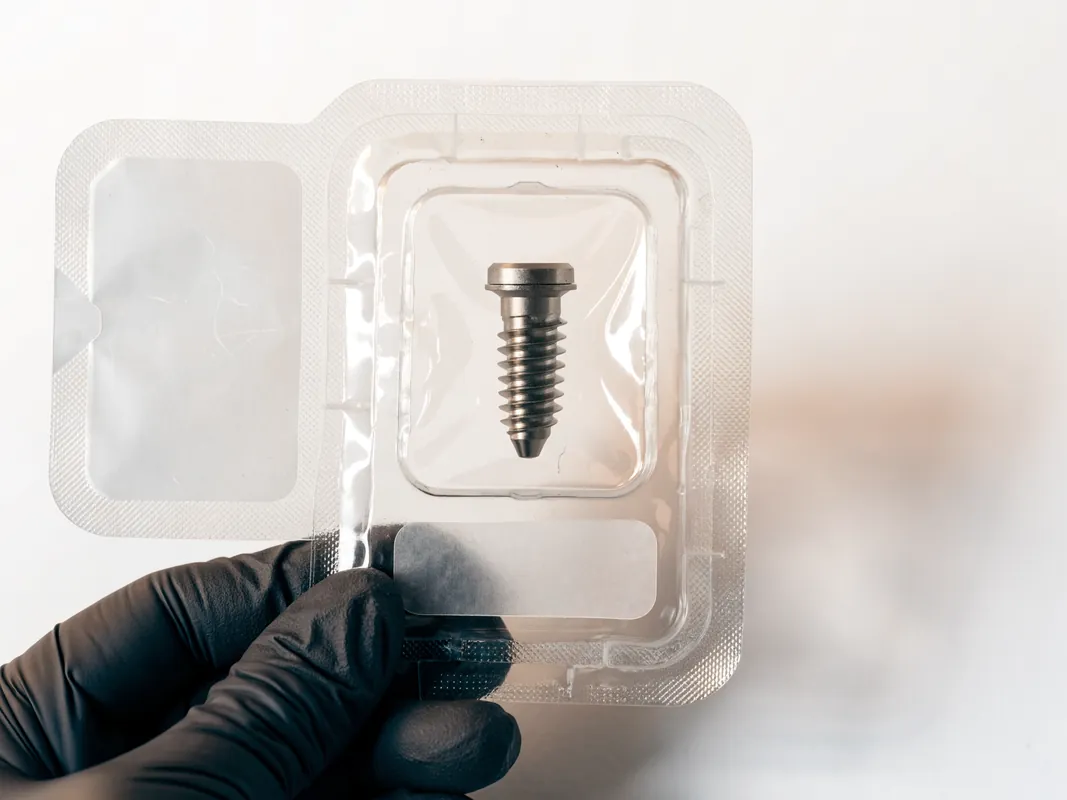
Before surgery, request the intended manufacturer and product family in the proposal while recognising that dimensions may change with direct findings. After placement, obtain the reference or catalogue identifier, lot or batch, dimensions, site and date from the actual sterile label or traceability source. Keep the abutment, screw and restoration information as the case develops.
The FDA advises patients to ask which brand and model are used and retain the information. That record supports future maintenance, recall checks and replacement-part searches; it does not predict healing or make one system universally superior.
Device authenticity needs traceable evidence
Ask where the device was lawfully sourced and how the sterile package, seal, label, expiry, reference, lot and applicable market identifiers are checked before use. A loose sticker, catalogue screenshot or logo on an invoice is weaker evidence than case-linked packaging and records.
Regulatory routes differ by market. A device's status in the United States, European Union, Great Britain or Turkey cannot be inferred from another market's database. Verify the actual manufacturer, intended device and applicable authority rather than accepting a phrase such as internationally approved.
If packaging appears damaged, relabelled, expired or inconsistent with the quote, pause and ask the clinician to resolve it before opening or placement. Record any substitution and renew consent.
Original, compatible and third-party components must be disclosed
Restorative components can be original to the implant manufacturer, authorised within a documented workflow, or supplied by another manufacturer. Compatibility is not established by physical fit alone. Connection geometry, material, tolerances, screw design, torque instructions, laboratory workflow and regulatory status matter.
The quote and final record should state who manufactured the abutment and screw, whether a component is original or third-party, and which instructions control assembly. Ask how the choice affects serviceability, warranty terms, replacement availability and who accepts responsibility for the combined system.
Do not allow silent component substitution between planning and delivery. A custom abutment or laboratory-made part needs its own prescription and traceability; custom does not mean undocumented.
Torque values belong to the exact current instructions
Screw tightening and component handling depend on the exact manufacturer, connection, component and current instructions for use. A torque number copied from another system, an old catalogue or memory can be unsafe. The clinician and laboratory should work from the applicable source.
The patient does not need to prescribe torque, but the record should allow a future qualified professional to identify the system and obtain the right instructions. Ask whether the clinical record includes the component, instrument or driver information and tightening record where relevant.
If a screw loosens, avoid repeated blind tightening without diagnosing fit, bite, component damage and cause. A local dentist may need the exact driver and parts, which is why handover begins at placement.
An implant passport is a record, not a guarantee
A useful implant passport or equivalent record lists the patient, site, placement date, manufacturer, exact system or model, dimensions, reference, lot or UDI where applicable, clinician and facility. Later restorative components and laboratory records may need separate entries.
The record should be derived from the actual case, not prefilled marketing material. Compare it with labels, invoice and clinical notes before departure. Store a secure digital copy and a portable version that can be shown to another clinician.
An implant card does not replace consent, operative notes, images, restoration records or maintenance. It improves identification; it cannot promise compatibility, manufacturer support or future availability.
Material questions need device-specific answers
Dental implant systems may use titanium, titanium alloys, zirconia and other materials across the body, abutment, screw and restoration. A broad category does not reveal the exact composition or every surface treatment. Ask the manufacturer and product reference first, then consult the current label and instructions.
Report a history of metal reactions, allergies, unexplained dermatitis or concerns about materials. Testing and interpretation have limitations, and no web page can establish individual compatibility. A clinician may need to coordinate with an appropriate medical professional where the history justifies it.
Do not accept metal-free or biocompatible as complete evidence. Every proposed implant and restorative component needs an identity, indication, material record and clinically justified choice.
A staged treatment plan
Implant care is commonly staged, but the number of appointments and the interval between them vary. A plan may include stabilising gum disease, removing a tooth, rebuilding bone, placing the implant, allowing biological healing, exposing the implant if needed, fitting an abutment and providing the final restoration. Some steps can be combined only when the clinical conditions support that choice.
Ask the dentist to explain:
- what must be completed before surgery;
- which findings could change or stop the planned procedure;
- whether a provisional tooth is possible and what it may be used for;
- how implant stability and healing will be checked;
- what happens if integration is delayed or unsuccessful;
- when the final restoration can be considered;
- how the bite and cleaning access will be reviewed.
Do not book non-changeable travel around a generic website schedule. The written plan should separate clinical estimates from travel logistics and include contingency time. It should also state who decides whether the patient is fit to travel after a procedure.
Extraction timing changes the implant question
Placement may be considered at the time of extraction or after a healing period, depending on infection, socket anatomy, soft tissue, bone, stability, restoration and patient factors. Immediate placement describes timing, not instant biological integration or a finished tooth.
Ask whether the failing tooth has been assessed for retention, who performs the extraction, how the socket will be inspected, what anatomy must remain, and what finding would defer placement. The consent should include the possibility of extraction without implant placement if the site is unsuitable.
If graft material is placed in the socket, record the product, lot, purpose, membrane or other material and follow-up. Socket management, implant placement and immediate restoration are separate decisions even when they occur during one visit.
Grafting is not one standard add-on
Bone grafting can describe socket preservation, contour augmentation, staged ridge reconstruction, particulate grafting, block grafting or another procedure. Autogenous, human-derived, animal-derived and synthetic materials carry different sourcing, handling, evidence, ethical and traceability questions.
Ask for the exact defect, objective, material, manufacturer, reference, lot, instructions, membrane or fixation where relevant, alternatives and what happens if grafting is not performed. The quantity of material or marketing label does not establish necessity.
Consent should cover infection, exposure, loss of material, altered contour, donor-site effects where applicable, additional surgery and the chance that the final implant plan changes. Patients with dietary, religious, cultural or ethical concerns need exact source information before use, not a generic bone substitute phrase.
Sinus procedures require separate anatomy and consent
Posterior upper-jaw implants may be near the maxillary sinus. A sinus-floor procedure may be considered in selected cases, but the need and approach depend on anatomy, bone, sinus health, implant plan and clinician assessment.
Ask what image and finding support the proposal, whether sinus symptoms or disease need another opinion, which technique and materials are considered, and what complications or stopping conditions apply. The implant decision should not be used to dismiss active sinus concerns.
Record perforation or other events and obtain aftercare and local urgent-care instructions. A generic package cannot promise that grafting or a sinus procedure will be unnecessary until the responsible clinician assesses the site.
Surgical planning links anatomy to restoration
The planned implant position should support the intended tooth while respecting neighbouring roots, nerves, sinus, bone, soft tissue, cleaning access and restorative space. A convenient patch of bone is not necessarily the correct prosthetic position.
Guided, partially guided and freehand approaches each rely on planning, operator control and current anatomy. A guide can mis-seat, a scan can be misregistered and surgery can reveal different conditions. Ask how seating and accuracy are verified and what permits deviation or abandonment.
The operative record should state actual position, implant identity, stability observations, grafts or membranes, closure, complications and any change from the plan. A postoperative image may be clinically justified, but it does not replace the narrative record.
Immediate loading is a conditional protocol
Immediate loading, immediate restoration and immediate placement are different terms. A temporary tooth may be fitted early while the implant-bone interface is still healing. Its appearance does not prove readiness for unrestricted chewing or a definitive restoration.
Suitability can depend on primary stability, implant distribution, bone, bite, restoration design, patient factors and the ability to control load. Ask for the criteria used and what happens if they are not met. A provisional removable option or a period without a fixed tooth may be part of the contingency plan.
Written instructions should define permitted use, cleaning, review and symptoms. Do not convert marketing about immediately fitted teeth into a claim that biological healing has finished.
Primary stability and integration are different
Primary stability is a mechanical observation at placement. Osseointegration is a biological process assessed over time. A high placement measurement does not guarantee healing, and a website timeline does not determine readiness for loading.
Ask what evidence the clinician uses at each gate: symptoms, soft tissue, clinical stability, imaging where justified, provisional performance and risk factors. Record the decision to progress or wait.
If integration is delayed or fails, the plan should cover monitoring, removal, site care, re-placement possibilities, alternative restoration, fees and local support without assuming one outcome.
The provisional restoration has a defined job
A provisional can protect appearance, shape soft tissue, test speech and bite or provide temporary function. It may be fixed, removable or absent depending on the case. It is not automatically suitable for normal load and it is not the definitive material or design.
Ask who makes it, how it is retained, what may be eaten, how it is cleaned, what signs require review and whether repair is available near home. Record the component and screw information where relevant.
The provisional phase should generate evidence for the final restoration: tissue response, contour, cleaning, phonetics, appearance, bite and patient feedback. Changes should be documented rather than silently transferred to the definitive work.
Soft-tissue design affects appearance and cleaning
Gum thickness, keratinised tissue, papillae, recession, inflammation, implant depth, abutment contour and restoration emergence can affect appearance and access for hygiene. A front-view simulation cannot predict tissue response.
Ask how the design balances contour with cleaning and how tissue health will be reviewed before the final restoration. Overcontoured profiles can look full while trapping plaque or limiting access. Very thin tissue may show recession or material colour differently.
If soft-tissue grafting is proposed, treat it as a separate procedure with diagnosis, donor or product source, risks, alternatives, healing assessment, material traceability and cost.
Definitive restoration is another treatment gate
Progression to the final crown, bridge or denture should depend on current clinical findings, not a prepaid itinerary. Confirm implant stability, tissue health, restorative space, bite, provisional learning and whether the original design remains appropriate.
The prescription should identify implant system and platform, abutment or interface, retention method, material category, shade where relevant, contacts, bite, contour and cleanability. The laboratory identity and case-specific traceability record belong in the handover.
At try-in or delivery, assess fit, passive seating where relevant, screw or cement management, bite, speech, appearance and cleaning access. Consent should be renewed if material, design, component or expected maintenance changes.
Cemented and screw-retained designs have different trade-offs
Screw retention may support retrievability but requires suitable access position and component design. Cement retention can help in other situations but introduces cement-removal and margin considerations. Neither is universally superior.
Ask why the proposed retention fits the implant position, restoration, tissue depth, repair plan and local maintenance access. For a cemented restoration, clarify how excess cement is controlled and documented. For screw retention, record the exact screw and current tightening instructions.
Future removal should be considered before delivery. A restoration that cannot be accessed without destruction may create a larger repair burden even if it looks satisfactory at first.
Your itemised quote checklist
A useful quote lets different providers be compared on the same basis. It should show the currency, payment stages and the price of each clinical item rather than one unexplained total. Ask it to identify:
- consultation, examination and imaging;
- implant fixture, abutment and restoration;
- laboratory work and provisional restoration, if proposed;
- extractions, gum treatment, grafting or sinus procedures, if indicated;
- anaesthesia, prescribed medicines and review appointments;
- records, traceability documents and aftercare;
- accommodation or transfers only if they are genuinely contracted;
- items expressly excluded from the price;
- what happens if the plan changes after examination;
- cancellation, refund and finance terms;
- the scope and exclusions of any written guarantee;
- who pays for emergency care, remedial work, replacement components and additional travel.
Travel and clinical services should be listed separately. Do not assume flights, hotels, transfers, medicines, grafting or future maintenance are included unless the signed quote says so. Check whether travel insurance covers planned dental treatment and complications; ordinary policies may exclude both.
Normalise quotes before comparing totals
Two implant quotes are not comparable when one includes only the implant body and another includes surgery, abutment, provisional, definitive restoration and reviews. Build a tooth- or site-level table with the same stages, components, materials, owners, exclusions and contingencies.
Separate confirmed treatment from allowances that depend on examination, extraction findings or healing. Grafting, membranes, sinus procedures, sedation, custom abutments, provisional repairs and additional imaging should not appear as invisible surprises.
Record currency, payment milestones, taxes where applicable, cancellation and refund terms, plan-expiry date and what happens if the patient declines after new findings. A deposit must not convert a provisional remote estimate into consent for surgery.
Warranty language needs a remedy map
A manufacturer may offer defined product terms, while a provider may offer a separate remedial policy. Neither automatically covers biological failure, laboratory work, screws, abutments, crowns, clinician time, travel or local emergency care.
Request the issuer, covered item, start date, duration, exclusions, maintenance conditions, reporting deadline, required records and actual remedy. Ask who diagnoses the problem, who pays removal or replacement, and whether the patient must return to the same facility.
Avoid lifetime implant language without full terms. A written policy is a contract question, not a clinical forecast, and it does not replace statutory rights or professional responsibility that may apply.
Finance must not distort consent
Credit, staged payment or third-party finance can change the total cost and cancellation consequences. Obtain the lender or provider identity, currency, interest, fees, repayment schedule, security, refund route and what happens if the clinical plan changes.
Do not let a limited-time discount, expiring deposit or bundled trip rush the extraction of a restorable tooth or acceptance of an unknown system. Clinical consent must remain voluntary after diagnosis.
Keep finance agreements separate from clinical records and travel contracts so each responsibility and complaint route can be identified.
Clinical and travel contracts are separate
A clinic, facilitator, hotel and transport provider may be different legal entities. Identify who supplies each service, who receives payment, what insurance or terms apply and who handles cancellation. Convenience does not make a travel company clinically responsible or a dentist responsible for a flight.
Clinical decisions must not depend on accepting accommodation or transport. If travel arrangements change, access to records, aftercare and the right to continue or stop treatment should remain clear.
Use the dental treatment timeline guide to separate assessment, surgery, healing, provisional and definitive gates from itinerary promises. Use the returning home guide to build a handover before travel.
Travel and aftercare boundaries
Dental treatment abroad requires a plan for care on both sides of the journey. Before travelling, discuss the proposal with a dentist who knows your dental history when possible. Ask the treating dentist how long to remain nearby, what symptoms require review, what activity or diet restrictions apply, and when travel is clinically reasonable. These answers depend on the procedure and the individual; a web page cannot clear someone to fly.
Before leaving Antalya, obtain the signed treatment plan, consent documents, invoices, radiographs and scans, prescriptions, implant traceability details, laboratory information and a concise clinical summary. Keep the responsible clinician's direct aftercare route and the facility's emergency route.
Arrange local maintenance rather than assuming every dentist can repair an unfamiliar system. Routine reviews should assess gum health, cleaning access, bite, restoration condition and any signs of bone loss. Ask in advance whether a local dentist is willing to provide hygiene and monitoring, and how the overseas provider will share records with them.
Seek prompt professional advice for worsening swelling, persistent bleeding, fever, discharge, increasing pain, a change in sensation, a loose restoration or difficulty breathing or swallowing. The written plan should explain where urgent care can be obtained and who bears its cost. Remote messages cannot replace an examination when complications are suspected.
The [Guy's and St Thomas' NHS implant aftercare page](https://www.guysandstthomas.nhs.uk/health-information/dental-implants/after-having-dental-implant) describes personalised postoperative advice and common early effects such as soreness, swelling, bleeding or bruising. It does not define what is safe for an individual patient or replace the treating team's instructions.
Early aftercare must identify the procedure actually performed
Instructions differ after straightforward placement, extraction, grafting, sinus surgery, soft-tissue grafting, sedation or immediate restoration. The discharge document should list each procedure, medicines, wound care, cleaning, eating, activity, smoking or nicotine advice, provisional limits and review point.
Ask what is expected, what is not, and whom to contact outside normal hours. Do not rely on a generic implant leaflet when the operation changed during surgery. If stitches or a temporary prosthesis need attention, identify the clinician and date.
Follow the prescriber's instructions rather than copying another patient's pain or antibiotic regimen. A medicine allergy, uncontrolled bleeding, rapidly increasing swelling, fever, difficulty breathing or swallowing, or new significant altered sensation needs prompt clinical advice.
Altered sensation needs timely documentation
Implant surgery near nerves can involve temporary or persistent altered sensation, tingling, numbness or pain. The risk depends on anatomy and procedure. Preoperative consent should explain the relevant structures and what action is taken if symptoms occur.
If altered sensation appears, record onset, area, severity and change, then contact the treating clinician and obtain accessible local assessment. Waiting for a routine return trip can lose valuable diagnostic time.
Keep the preoperative imaging, planning, operative note, implant identity and follow-up findings. Remote reassurance is not an adequate neurological examination.
Sinus and nasal symptoms need the correct route
Upper-jaw implant or sinus procedures can be associated with sinus or nasal symptoms in selected cases. Report unexpected fluid passage, persistent nasal symptoms, pain, fever or other concerning change according to the written instructions.
The dental and ear, nose and throat perspectives may both be relevant. Ask who coordinates investigation and obtains the original imaging and operative record. Antibiotics alone should not conceal an unresolved anatomical or foreign-body issue.
Do not fly based on a generic clearance statement after a sinus complication. Fitness and timing require the responsible clinician's current assessment.
Biological and mechanical problems are different
Biological concerns can involve soft-tissue inflammation, infection, bone changes, healing failure or recession. Mechanical concerns can involve screw loosening, fracture, wear, chipping, loss of retention, framework or denture damage. Symptoms can overlap, so a loose or painful implant restoration needs diagnosis.
Ask whether the implant body, abutment, screw or prosthesis is moving. Do not repeatedly tighten an unidentified component without checking fit, bite, damage and the applicable instructions. Component identity and retrievability determine whether local repair is possible.
A repair should update the material, component, torque-source and laboratory record. Repeated failure calls for a cause analysis rather than endless replacement of the same part.
Peri-implant maintenance is lifelong work
Implants and their restorations require home cleaning and professional monitoring. Review can consider plaque, bleeding, probing where appropriate, soft tissue, recession, suppuration, bite, mobility, restoration integrity and imaging when clinically justified.
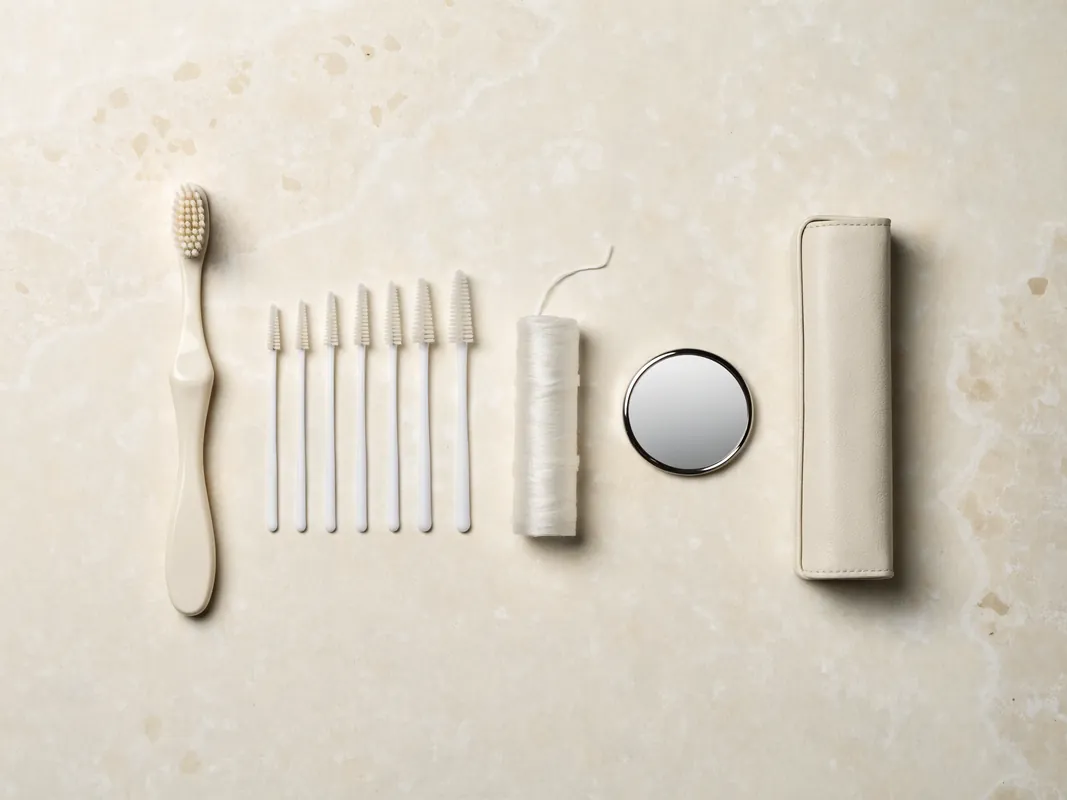
The cleaning method must fit the actual contour, bridge or denture. Ask the team to demonstrate access before final delivery and supply the sizes or tool categories recommended for the individual design. A restoration that the patient cannot clean needs redesign or a documented support plan.
Maintenance intervals should reflect disease history, smoking, diabetes, hygiene, restoration and clinician findings rather than a universal website calendar. A local dentist or hygienist must first agree to provide care; responsibility cannot be assigned without consent and records.
Peri-implant disease needs diagnosis, not a cleaning package
Bleeding, swelling, discharge, discomfort, recession or bone change around an implant can have several causes. Assessment may require history, probing, bite and restoration review, imaging and comparison with baseline records. A single radiograph or photograph does not define the diagnosis.
Management can involve hygiene measures, risk-factor control, restoration modification, non-surgical or surgical care, component work or removal in selected cases. The appropriate path depends on disease extent, implant position, system, restoration, patient factors and access.
Ask what baseline exists and how change is measured. Without placement and restoration records, future clinicians must reconstruct information that should have travelled with the patient.
Repairability and retrievability should be designed in
Before final restoration, ask how a screw, abutment, crown, bridge, framework, attachment or denture tooth would be accessed, repaired or replaced. The answer depends on retention, material, component availability, laboratory records and whether the prosthesis can be removed without destruction.
For a system uncommon near home, obtain spare-part pathways and the exact driver information. Do not assume a local clinician owns every tool or will accept responsibility for unfamiliar overseas work.
A beautiful one-piece design can create a difficult service problem. Compare appearance with hygiene, segmentation, access, repair cost and the consequences of one local failure.
Risks and alternatives to discuss
Implant surgery can involve pain, swelling, bruising and bleeding. Other risks include infection, injury to nearby teeth or structures, sinus complications, altered sensation or numbness, failure of the implant to integrate, gum recession, an appearance that does not meet expectations, loosening or breakage of components, and later inflammation or bone loss around the implant. Smoking, uncontrolled disease, poor plaque control and some medicines may increase risk.
The restoration also needs maintenance and may require repair or replacement even when the implant remains integrated. Ask for the provider's own audited outcome and complication data for comparable cases, including the period measured and how patients lost to follow-up were handled. Do not treat a headline percentage as a personal forecast.
Alternatives can include leaving the space, using a removable denture, fitting a tooth-supported bridge or changing the design of an existing restoration. Each option has different effects on cost, tooth preparation, cleaning, surgery and future maintenance. The appropriate choice comes from shared decision-making with a qualified dentist after assessment, not from a sales promise.
Consent must be renewed at every material change
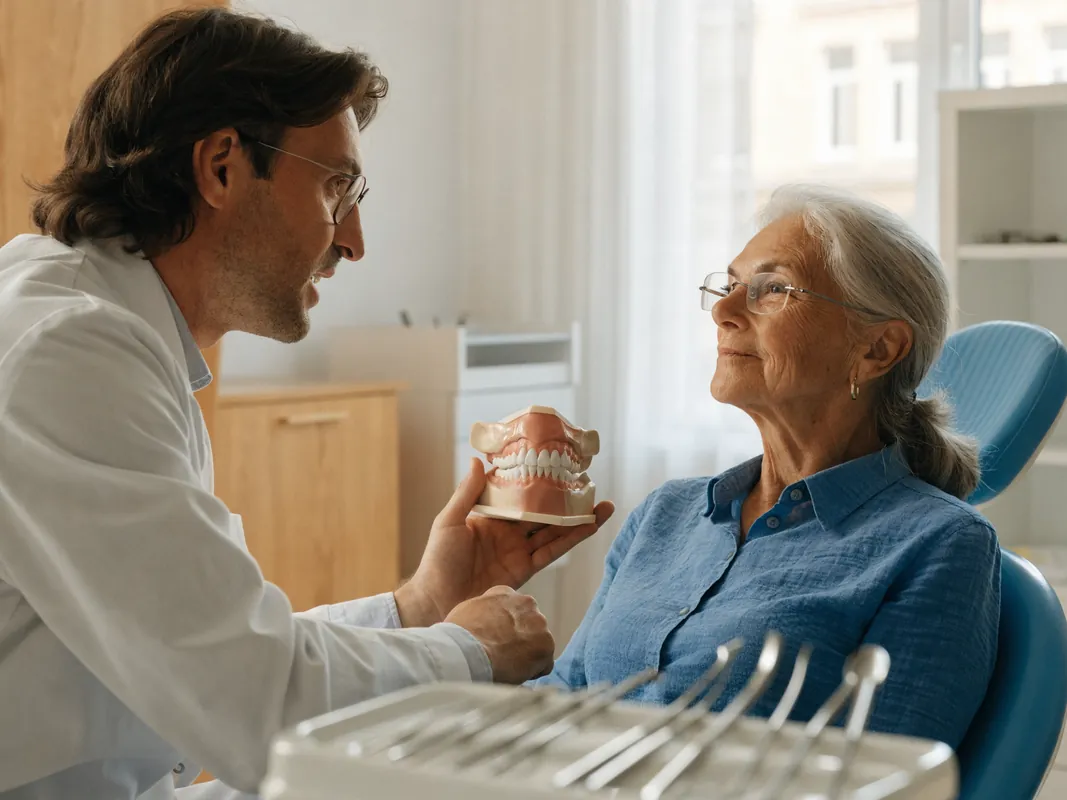
Remote screening consent is not surgical consent. The in-person discussion should cover current diagnosis, no-treatment and replacement alternatives, proposed sites and components, grafting or other procedures, anaesthesia or sedation, material risks, uncertainty, maintenance, cost and the right to stop.
Renew the discussion when examination changes the number or position of implants, extraction plan, graft, system, component, loading, provisional, definitive material, operator or facility. A consent form signed before those details were known cannot silently authorise substitution.
Agree stopping rules before surgery: insufficient anatomy, inability to obtain stability, unexpected infection, a damaged package, nerve or sinus concern, equipment limitation or another finding. State what temporary care, records and charges apply if placement does not proceed.
A second opinion can prevent an irreversible cascade
Consider an independent opinion before extraction of restorable teeth, extensive grafting, a full-arch conversion, removal of an integrated implant, a complex re-treatment or a plan that cannot explain alternatives. Supply complete images and records rather than only a sales proposal.
Ask each clinician to state which findings are direct, which are inferred and which require examination. Different plans may reflect different objectives or risk thresholds; compare evidence and maintenance consequences rather than selecting the most confident promise.
If the opinion changes the plan, update quote, consent, travel, records and the local-care arrangement before paying another stage.
Records to take home after each stage
After assessment, keep history, diagnosis, periodontal and restorability findings, images and report where available, proposed sites, alternatives, consent and itemised quote. After surgery, add the operative note, implant reference and lot labels, dimensions, site, graft and membrane records, stability observations, complications, medicines and review plan.
After restorative stages, add abutment, screw and third-party component identity, laboratory prescription and legal identity, material and shade where relevant, retention design, current tightening source, delivery record, bite and hygiene instructions. Store the implant passport with these documents rather than using it as a substitute.
The [FDA patient page](https://www.fda.gov/medical-devices/dental-devices/dental-implants-what-you-should-know) specifically recommends keeping implant brand and model information. These records make recall response, local maintenance, repair and adverse-event reporting more reliable.
Privacy and record transfer need a named controller
Medical history, radiographs, scans, facial images and treatment plans are health information. Ask which legal entity controls it, the purpose and legal basis, recipients, international transfers, security, retention and how to request access or correction.
Use the provider's appropriate secure pathway. A convenient public messaging account should not become the only copy of clinical images or operative records. Ensure files can be exported in a form a receiving dentist can use.
Clinical photographs, marketing publication and identity-processing permissions are separate. Refusal of advertising use should not remove access to necessary care or records.
Complaint and remedial routes must be concrete
Request the legal provider's complaint process, professional regulator, indemnity or insurance information where applicable, response times and escalation route. A facilitator may help communicate but cannot replace the clinician or legal facility responsible for treatment.
If a concern arises, preserve symptoms, dates, photographs, examination findings, communications, invoices and records. Obtain local urgent care when needed. A remote decision about repair or refund should not delay diagnosis.
Distinguish clinical remedy, device complaint, manufacturer reporting, contract dispute and travel-service complaint. They may involve different organisations and evidence.
Red flags in an implant offer
Pause when an offer relies on:
- extraction and implant advice from photographs alone;
- no tooth-preservation or no-treatment alternative;
- no named diagnosing, surgical or restorative clinician;
- unverifiable specialist or accreditation claims;
- one brand name without exact system and component records;
- FDA registered or globally approved used as a quality promise;
- no disclosure of original and third-party parts;
- a fixed implant count before restorative planning;
- routine grafting without defect, material and source information;
- immediate teeth language without loading criteria and contingency;
- no definitive restoration owner, design or price;
- a guarantee without issuer, covered item, exclusions and remedy;
- no local urgent-care and maintenance pathway;
- clinical and travel costs hidden in one total;
- no implant passport, operative note or laboratory handover.
Resolve gaps before payment or irreversible treatment. Several unresolved gaps justify an independent opinion or a different provider.
Dental implant decision worksheet
| Decision | Evidence to request |
|---|---|
| Missing-tooth objective | Diagnosis, patient priority and no-treatment option |
| Tooth preservation | Restorability and reasons for extraction |
| Alternatives | Bridge, removable option, implant and monitoring trade-offs |
| Medical suitability | Current history, medicines and needed coordination |
| Oral readiness | Periodontal, hygiene, decay and bite assessment |
| Anatomy | Justified imaging, report and site-specific findings |
| Clinical owners | Named diagnostic, surgical, restorative and aftercare roles |
| Device | Manufacturer, family, reference, lot, dimensions and site |
| Components | Abutment, screw, original or third-party status and instructions |
| Additional procedures | Defect, graft or sinus objective, material and traceability |
| Loading | Criteria, provisional limits and alternative if not ready |
| Restoration | Design, retention, material, laboratory and cleanability |
| Consent | Alternatives, material risks, stopping rules and substitutions |
| Quote | Itemised stages, contingencies, exclusions and plan changes |
| Handover | Passport, operative record, laboratory record and images |
| Maintenance | Local owner, cleaning access, reviews and repair pathway |
Sources and evidence limits
This guide uses the [FDA dental implant patient overview](https://www.fda.gov/medical-devices/dental-devices/dental-implants-what-you-should-know), [FDA explanation of device approval language](https://www.fda.gov/medical-devices/consumers-medical-devices/are-there-fda-registered-or-fda-certified-medical-devices-how-do-i-know-what-fda-approved), [GDC consent standard](https://standards.gdc-uk.org/pages/principle3/principle3), [GDC patient-record standard](https://standards.gdc-uk.org/pages/principle4/principle4) and [Guy's and St Thomas' implant aftercare page](https://www.guysandstthomas.nhs.uk/health-information/dental-implants/after-having-dental-implant).
These sources describe general device, consent, record or aftercare questions in their own jurisdictions. They do not diagnose a patient, approve a Turkish provider, establish the market status of a device in Turkey, choose a component or predict an outcome. Manufacturer instructions, regulatory status and professional registration change; verify the current exact system, clinician, facility and applicable jurisdiction.
Final comparison rule
Choose the proposal that proves the missing-tooth diagnosis, reasonable alternatives, oral and medical suitability, exact clinical owners, site-specific anatomy, component traceability, staged consent, itemised cost, maintainable restoration, local aftercare and complete records. A lower headline price or faster itinerary is not a substitute for a serviceable lifetime pathway.