Professional teeth whitening is an elective cosmetic treatment that may lighten some discolouration in natural teeth. Results vary. It does not move teeth, repair decay or restore a fracture. Crowns, veneers and fillings do not whiten. A responsible plan begins with the cause of the colour concern, oral health and the patient's priorities, not a lamp, gel brand, package name or promised shade.
This is a decision guide for people comparing professional teeth whitening in Turkey, dentist-supervised home whitening and care near home. It explains important limitations but does not prescribe a peroxide product, concentration, application schedule, appointment count, final shade, price, maintenance interval or travel timetable. Those details depend on examination, local law, the exact product and current manufacturer instructions. A remote photograph cannot diagnose the cause of colour or predict an individual result.
The [NHS teeth-whitening guide](https://www.nhs.uk/tests-and-treatments/teeth-whitening/) explains that teeth and gums should be checked first and that whitening changes natural teeth rather than crowns, dentures or implants. The [American Dental Association whitening review](https://www.ada.org/resources/ada-library/oral-health-topics/whitening) distinguishes external and internal discolouration, professional and consumer routes, restorations and recognised adverse effects. UK residents should also understand the current [General Dental Council tooth-whitening position](https://www.gdc-uk.org/docs/default-source/what-is-the-legal-position/tooth-whitening-position-statement.pdf). These sources guide questions; they do not approve a Turkish provider or decide an individual treatment.
Start with the reason for whitening
Ask what you want to change and why. The concern may be a general warmer shade, surface stain, one dark tooth, white or brown marks, a mismatch between natural teeth and restorations, colour for an event, or dissatisfaction created by an edited photograph. These are not one diagnosis.
Define success without a shade promise. A useful goal may be a modest, natural-looking change; less visible external stain; better harmony with teeth that will remain untreated; or simply learning that no treatment is the preferred option. Record which teeth matter in relaxed speech and an ordinary smile. Avoid a proposal that assumes every visible tooth should become identical.
If the concern began suddenly, affects one tooth, follows trauma, comes with pain or is linked to a new medicine or illness, diagnosis takes priority over cosmetic treatment. Whitening should never be used to hide a symptom.
External stain and internal colour are different
External stain sits on or attaches to the tooth surface. Tobacco, strongly coloured food and drinks, plaque-retentive surfaces and some oral-care products can contribute. Examination and professional cleaning may reveal that the underlying tooth colour is acceptable without peroxide. Whitening toothpastes may remove some surface stain through abrasive or chemical action, but they are not the same as bleaching colour within tooth tissue.
Internal or intrinsic discolouration is within enamel or dentine. Age-related change, developmental conditions, fluorosis, tetracycline exposure, trauma, pulpal changes and restorative materials can create different patterns. Some may respond to peroxide; some respond unevenly; some require a separate diagnostic or restorative route. The label intrinsic does not mean veneers are automatically required.
Mixed colour is common. Ask the clinician to identify the likely sources rather than quote one universal protocol.
A single dark tooth needs its own diagnosis
One tooth that has changed colour is not a smaller version of general staining. History of trauma, decay, cracks, previous root-canal treatment, pulp status, old restorations and symptoms may matter. Examination can include sensibility or vitality-related tests and imaging when clinically justified. A panoramic image or selfie cannot answer every question.
Internal bleaching may be discussed for a suitable root-filled tooth, but that is a separate procedure with its own diagnosis, sealing, material and risk considerations. External whitening of all teeth may increase the contrast if the principal tooth is not addressed. Covering the tooth with a veneer or crown without first explaining the cause can remove healthy tissue and leave the underlying problem unresolved.
Seek prompt assessment for spontaneous or worsening pain, swelling, trauma, a loose restoration, fever or colour change accompanied by other symptoms.
Natural teeth and restorations must be mapped
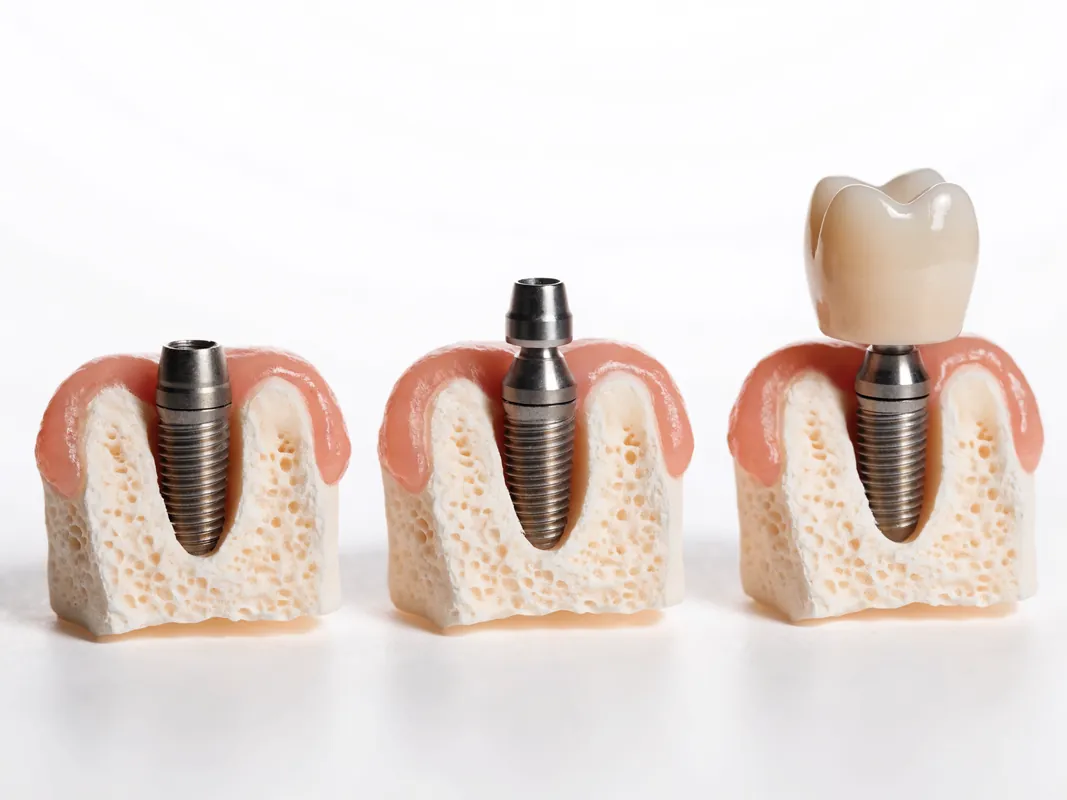
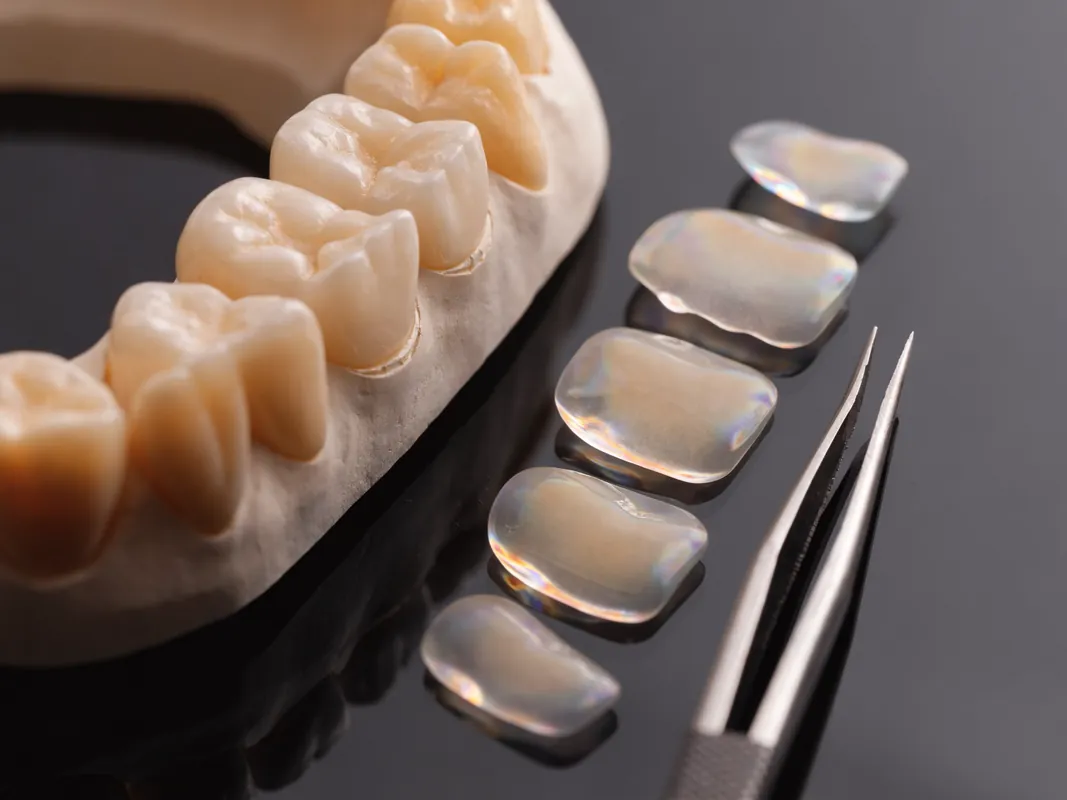
Peroxide can alter natural tooth colour. Ceramic, composite and other restorative materials do not bleach in the same way. Before treatment, create a tooth-by-tooth map of natural enamel, fillings, bonding, veneers, crowns, bridges, implant crowns, dentures and temporary work. Mark what is visible at rest, in speech and in a broad smile.
A restoration that matches today may look darker after surrounding natural teeth lighten. That does not automatically make the restoration defective. Keeping it, accepting a modest mismatch, repolishing or repairing when appropriate, and elective replacement should be separate options. Replacement removes material, adds cost and creates new maintenance.
If future veneers, crowns or bonding are planned, colour sequence matters. Read the veneers and whitening sequence guide before accepting one bundled smile proposal.
Oral health is the first treatment gate
The examination should check teeth, gums, existing restorations, exposed roots, enamel wear, erosion, cracks, decay, plaque-retentive areas and the patient's reported symptoms. Active disease and unexplained pain can change or postpone elective whitening. Cleaning may be needed before baseline colour is judged.
Tell the clinician about previous sensitivity, whitening products already used, allergies, reflux, vomiting disorders, dry mouth, tobacco or nicotine, grinding, dental anxiety, pregnancy or breastfeeding, current medicines and relevant medical conditions. Do not stop or change prescribed medicine for a cosmetic appointment.
Radiographs are not a routine sales add-on for whitening. They may be justified for a defined diagnostic question, such as symptoms, trauma, decay or a dark single tooth. The responsible clinician should explain why an image is needed and how it changes the decision.
Confirm the legal provider and clinical owner
Identify the legal treatment facility and the named dental professional who examines, diagnoses, consents and remains responsible for the whitening plan. Verify current professional registration with the relevant authority rather than relying on a coordinator title, testimonial, logo or social-media profile. Ask who supplies the product, who performs or supervises first use, and who handles complications.
Rules differ by jurisdiction. The UK position on peroxide supply, first use and treatment of younger people cannot simply be copied to Turkey, and a Turkish commercial offer does not establish what is lawful after the patient returns home. Ask the provider to identify the law, product status and professional responsibilities that apply where each stage occurs.
A beauty-salon or temporary-room service should not be accepted as professional dental care merely because dental words appear in the advertisement. Provider identity, registration, product and clinical records must be independently checkable.
Compare three delivery categories accurately
Professional whitening is often discussed in three broad categories:
- dentist-led in-clinic application;
- dentist-prescribed or supplied home use with fitted trays and supervision;
- products bought directly by consumers under the rules of the country where they are sold and used.
The categories are not interchangeable. Product composition, concentration, fit, soft-tissue protection, application instructions, supervision, review and stop rules can differ. An in-clinic visit is not automatically better for every patient. A supervised home route is not simply a weaker copy. A retail product is not validated for a person merely because it is available online.
Compare the exact product and care pathway, not labels such as laser, power, premium, natural or medical grade. The in-clinic versus take-home whitening comparison provides a detailed pathway worksheet.
In-clinic whitening questions
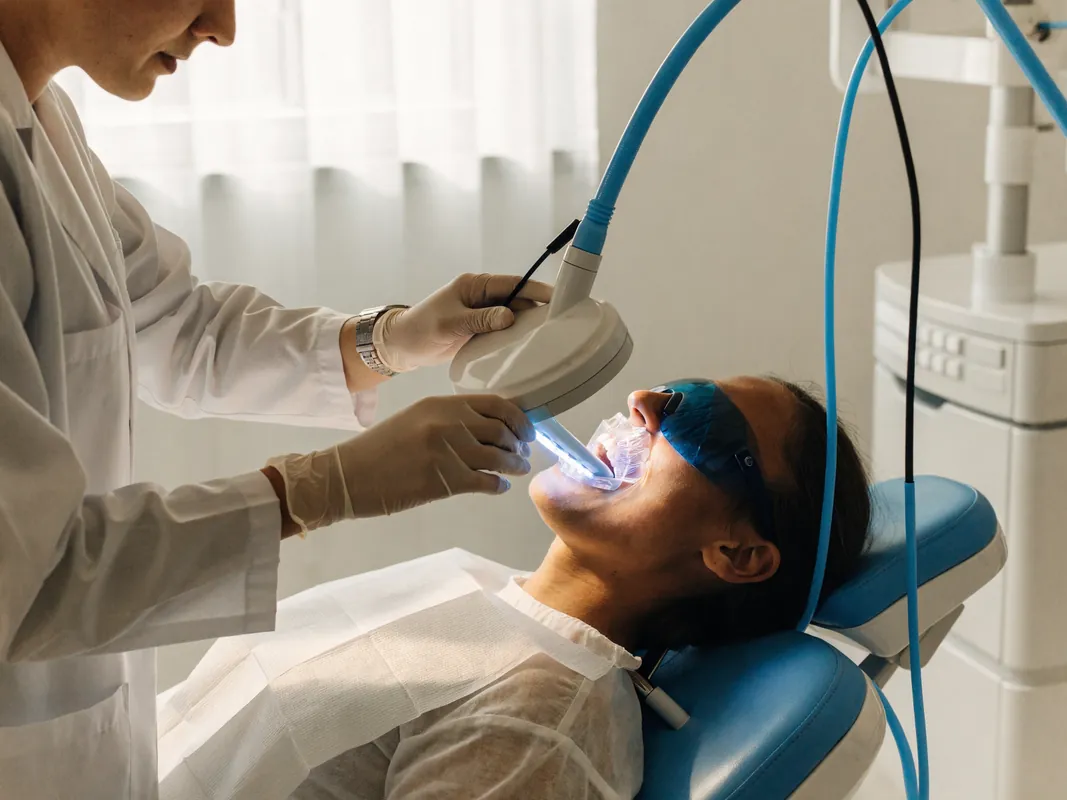
For an in-clinic proposal, ask who applies the product, how oral health was assessed, what protects lips and gums, how the product is prepared, what eye or soft-tissue precautions apply, how symptoms are monitored and what stops an application. Request the exact manufacturer, product name, active ingredient, batch or lot where supplied, expiry and current instructions.
A lamp or light may be part of a system, but the device name alone does not prove better efficacy, safety or durability. Ask what the light is intended to do, which gel it is validated with and what evidence supports the complete protocol. Do not accept a promised shade change or event-date result.
The written plan should state what happens if sensitivity, gum irritation, pain or uneven colour appears before the planned application is complete.
Dentist-supervised home whitening questions
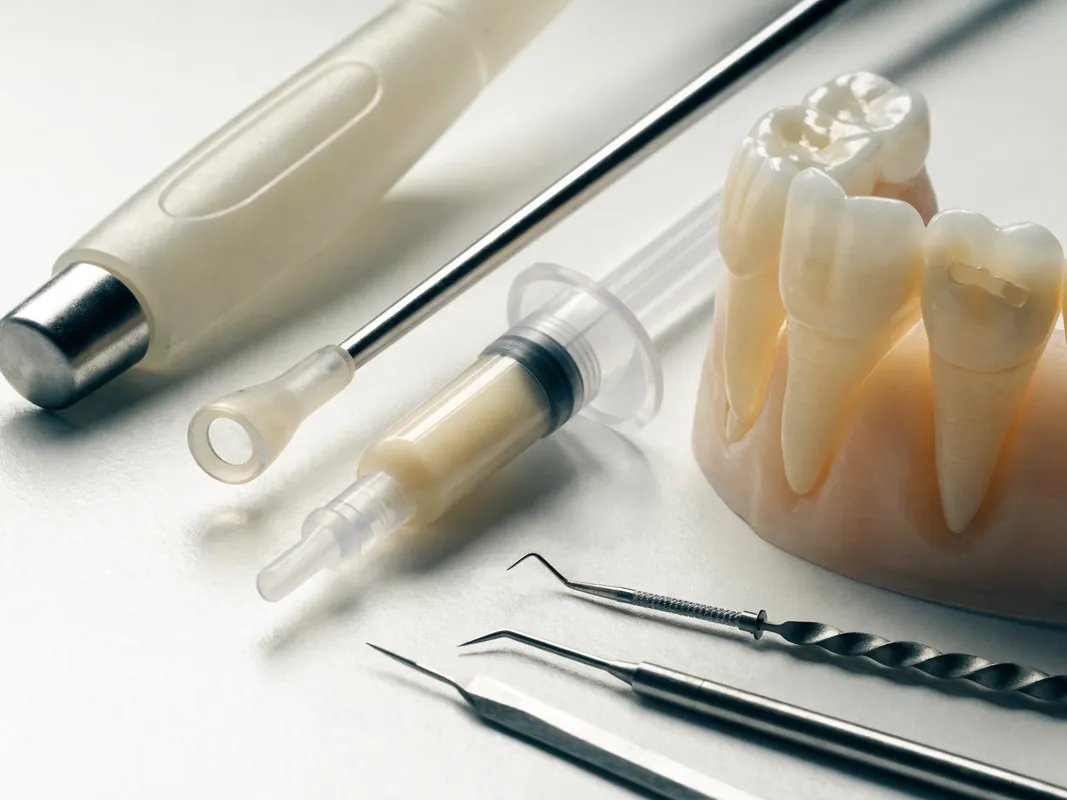
A supervised home pathway can involve custom trays and a prescribed product, but neither the tray nor the syringe is the complete plan. Check tray fit, insertion and removal, gel placement, storage, cleaning, exposure instructions, missed-use advice, stop rules, contact route and review. Confirm whether old trays remain suitable after new fillings, crowns, orthodontics or tooth movement.
The product should remain in its labelled container with instructions and traceable identifiers where provided. Never decant gel into an unlabelled syringe for travel. Keep it away from children and follow storage directions. Do not share trays or product.
If the patient develops significant localised pain, gum injury or a response that differs from the written advice, stop and seek the prescribed review rather than increasing or improvising the regimen.
Consumer products and DIY methods are separate
Online strips, generic trays, paint-on gels, toothpastes, charcoal products and household recipes are not equivalent to an examined, dentist-supervised plan. Availability does not establish suitability, authenticity or lawful supply in every country. A tray that overlaps gums, an unverified concentration or a product used across a cracked or painful tooth can create avoidable harm.
The ADA review notes limited evidence for many promoted DIY approaches and distinguishes surface-stain removal from bleaching. Acidic fruit, vinegar, abrasive powders and charcoal can create wear or irritation without producing the claimed biological change. Oil pulling is not peroxide whitening.
Tell the clinician about every product already used. Do not combine products, extend contact time or increase frequency because an influencer suggests faster results.
Product and batch verification
A defensible record identifies the manufacturer, exact product, active ingredient, concentration as labelled, lot or batch, expiry, storage, instructions and legal supply route. A brand family is not enough because product versions and markets can differ. Packaging photographs can support traceability but should be matched to the clinical or invoice record.
Ask whether the proposed product is intended for professional application, supervised home use or direct consumer use in the relevant jurisdiction. Check that the instructions correspond to the actual product and have not been copied from another formulation. If the product changes after consent or payment, request an updated explanation and the right to reconsider.
Product traceability cannot establish a future shade or eliminate sensitivity. It proves what was proposed and supplied, which improves consent, adverse-event review and handover.
Sensitivity needs a personalised plan
Temporary tooth sensitivity is a recognised adverse effect of vital-tooth whitening. Existing sensitivity, exposed dentine, recession, cracks, wear, erosion and product factors can affect the experience. The useful question is not whether a treatment is free from discomfort; it is how baseline symptoms are recorded, what prevention or management is appropriate, which symptoms trigger a pause and when examination is required.
Record whether sensitivity is general or isolated to one tooth, what provokes it and whether it resolves. Severe, spontaneous, persistent, worsening or strongly localised pain should not be dismissed as normal whitening. It can indicate a separate problem.
Do not self-prescribe high-dose pain relief, desensitising material or repeated peroxide. Medicine and dental advice should account for the individual's health, allergies and existing products.
Gum and soft-tissue protection
Peroxide contact can irritate gums and other soft tissues. Tray margins, gel quantity, isolation and technique matter. In-clinic barriers and home instructions should be product-specific. White patches, burning, ulceration or significant soreness need the response described by the treating clinician and may require review.
More gel does not mean a better result. Excess can escape from a tray, be swallowed or remain against tissue. A poorly fitting tray should be reassessed rather than trimmed or reshaped without instruction.
Ask how lips, eyes and clothing are protected in clinic, what accidental-exposure steps apply, and how adverse events are documented. Marketing language that dismisses the possibility of irritation is not informed consent.
Erosion, recession, cracks and dry mouth
Worn enamel, erosion, exposed roots and cracked teeth can influence symptoms and the treatment decision. Reflux, repeated vomiting, acidic habits, dry mouth and abrasive cleaning may contribute to tooth-surface loss or sensitivity. Whitening does not treat those causes.
The clinician should distinguish aesthetic colour from structural loss. Preventive care, disease management, restoration, monitoring or no whitening may come first. Root surfaces and restorations may respond differently from enamel, so a uniform colour promise is inappropriate.
Dry mouth also affects comfort and caries risk. Review medicines and health conditions with the appropriate clinician, but do not alter prescribed treatment for cosmetic whitening. A written plan should state which findings need management and which are stable enough for elective care.
Tetracycline, fluorosis and white spots
Developmental and intrinsic patterns require nuanced advice. Tetracycline-associated discolouration can vary in colour, banding, depth and distribution. Some cases may respond partly to a longer supervised pathway; others may remain difficult to change. That uncertainty is not proof that veneers are necessary. See the tetracycline-stained teeth decision guide.
Fluorosis and other white or brown marks may change in contrast as surrounding enamel lightens. Microabrasion, resin infiltration, bonding or observation can be considered for selected findings after diagnosis. Whitening can sometimes make a mark temporarily more conspicuous.
Request baseline records, a conservative option ladder and a stop point before irreversible masking treatment is considered.
Pregnancy, breastfeeding and younger patients
Elective whitening during pregnancy or breastfeeding should be discussed with the responsible dental and medical professionals using current guidance, product information and the patient's circumstances. Postponement may be the proportionate option. A sales deadline is not a clinical reason to proceed.
Age restrictions and professional duties depend on jurisdiction and product. UK rules include specific boundaries for peroxide products and people under eighteen, but a patient should verify the current law where treatment or supply occurs. A parent request or social-media trend does not replace an age-appropriate dental assessment.
For children and adolescents, colour can relate to development, trauma, fluorosis, enamel defects, decay or mixed dentition. Diagnosis and prevention come before full-arch cosmetic bleaching.
Whitening before veneers, crowns or bonding
If natural teeth will be whitened and new restorations shade-matched, the sequence must be written before irreversible work. Natural-tooth colour may continue to change or appear different as dehydration resolves. There is no universal online waiting interval that fits every product and restorative system. The responsible clinician should follow current product and bonding instructions and verify when colour and symptoms are suitable for the next gate.
After whitening, decide again whether each proposed veneer, crown or composite restoration remains wanted and justified. Whitening alone may satisfy the patient. Consent to whitening is not advance consent to tooth preparation.
Existing restorations may need no action, optional replacement or treatment for a separate defect. Each choice needs its own quote and consent.
Shade records are evidence, not promises
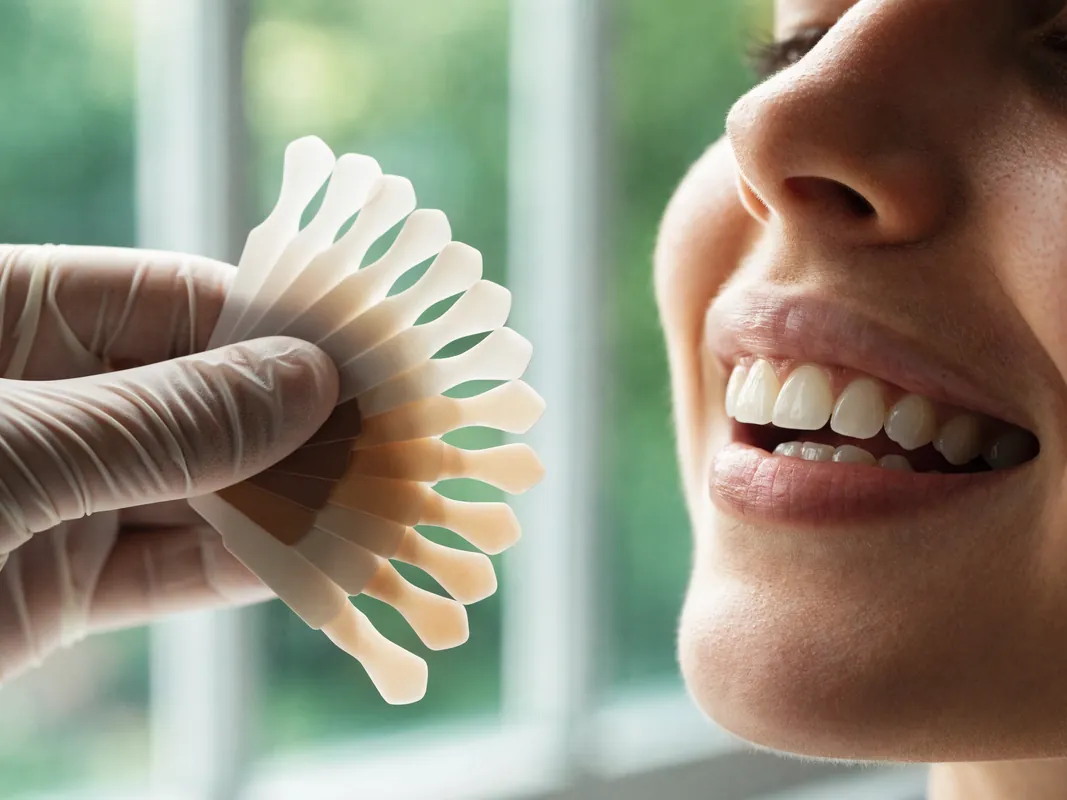
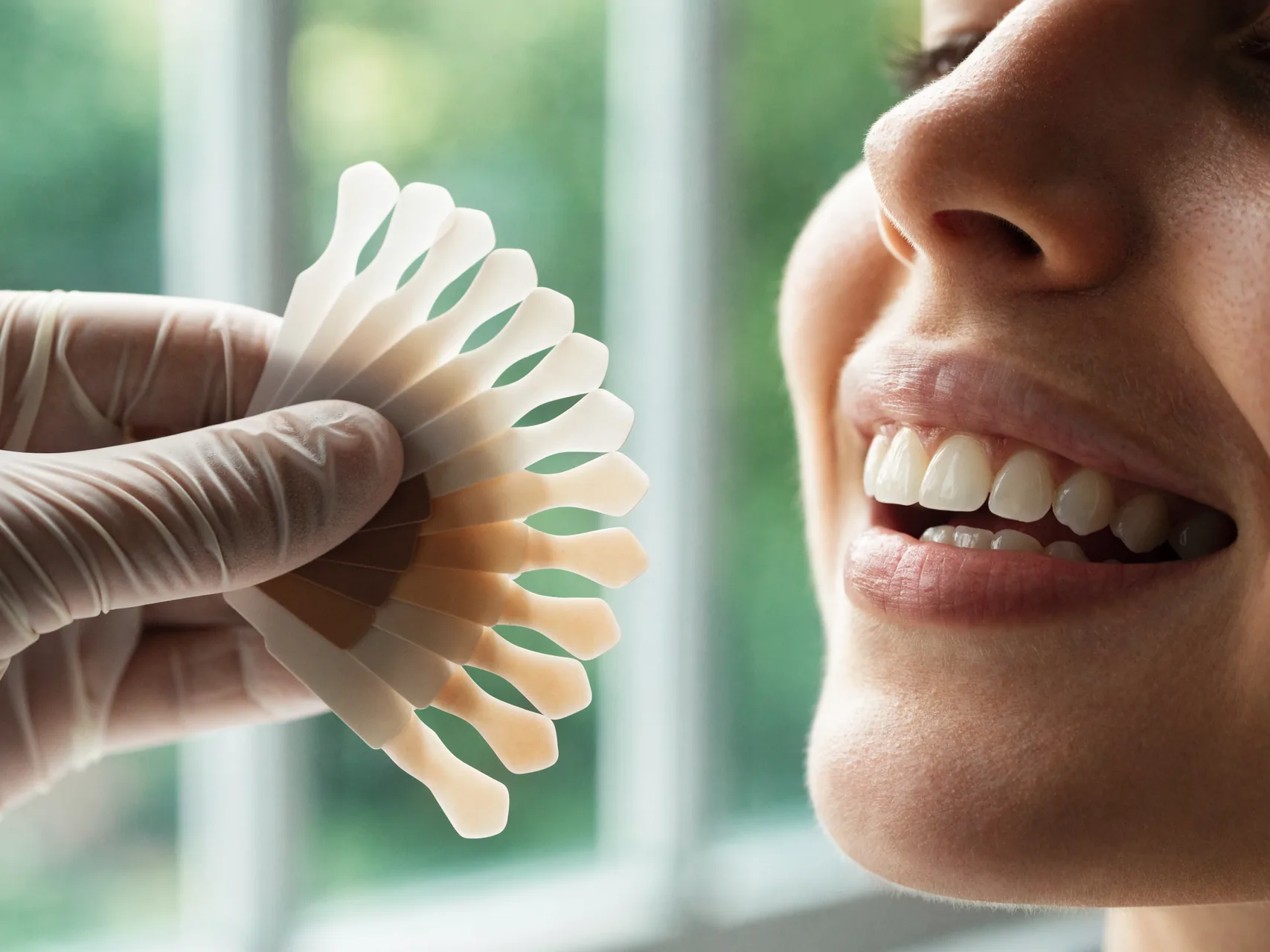
Useful baseline and review records can include a physical shade guide under controlled conditions, standardised photographs, lighting notes, tooth hydration state and a tooth-by-tooth map. Camera exposure, white balance, screen settings, lipstick, skin tone and surrounding colours can alter perception. Dehydrated teeth can appear temporarily different.
Ask the provider to preserve unedited clinical records as well as any marketing image. Before-and-after photographs should use consistent conditions and valid patient consent. Another patient's result cannot predict yours.
Define an acceptable decision range rather than an exact shade promise. If colour is uneven, the plan should explain review, stopping, acceptance and alternatives without forcing restorative treatment.
Consent must include the option to stop
Valid consent covers the diagnosed concern, proposed product and route, expected benefits, common and material risks, uncertainty, alternatives, cost, records, aftercare and the right to withdraw before treatment. The [GDC consent standard](https://standards.gdc-uk.org/pages/principle3/principle3) is a useful UK-facing framework for questions, although it does not regulate a Turkish provider.
Consent should be renewed if the examination, product, route, symptoms, shade goal or restorative plan changes. A signature collected during an online enquiry does not authorise every later stage. Translation or interpretation should be adequate for the patient to understand clinical and commercial terms.
The patient should be free to stop because the result is sufficient, sensitivity changes the balance, or no treatment is preferred. A package discount must not convert optional later work into an obligation.
Use a conservative alternative ladder
Whitening is not the answer to every colour or smile concern. The clinician should identify the problem and compare proportionate options before recommending peroxide or irreversible restoration. Depending on the findings, the ladder may include:
- no treatment and observation;
- oral-hygiene support and management of a staining cause;
- professional removal of plaque, calculus or external stain;
- dentist-supervised whitening of suitable natural teeth;
- local diagnosis and internal bleaching for a selected non-vital tooth;
- lesion-specific approaches such as selected microabrasion or resin infiltration;
- additive composite repair or reshaping;
- orthodontic movement when position creates the perceived shade problem;
- replacement of a defective restoration;
- a veneer or crown only when its separate diagnosis, tissue cost and alternatives justify it.
This is not a universal treatment order. A painful, fractured or heavily restored tooth may need a different pathway. The principle is to avoid removing sound tissue merely because whitening did not create an advertised shade. Ask why each less invasive option is unsuitable for each tooth.
No treatment is especially important when the colour is healthy natural variation, the patient is uncertain, the expected change is small, symptoms make elective treatment unwise, or a restoration mismatch would create more intervention than benefit. A provider should not portray acceptance of natural colour as treatment failure.
Alignment and shape can look like colour problems
A rotated, crowded or protruding tooth can reflect light differently and appear darker. A narrow tooth beside a space can look brighter because more background shows around it. Uneven incisal edges, surface texture and gum levels can also change how colour is perceived. Whitening does not correct position or shape.
Before a broad whitening plan, review the smile in ordinary lighting, relaxed speech and movement. If alignment is the principal issue, compare orthodontics, no treatment, additive composite and restorative camouflage. Orthodontics brings its own assessment, retention and follow-up obligations; it is not automatically the right answer. Restorative camouflage may require healthy tissue removal and should not be sold merely as the faster route.
Digital previews can help communicate preferences but can artificially brighten teeth, smooth texture and change proportions. They are planning aids, not biological predictions. The digital smile planning service explains how to separate a preview from consent to treatment.
Dental anxiety, gag reflex and accessibility
Tell the provider about dental anxiety, sensory needs, mobility, vision or hearing needs, communication preferences and a strong gag reflex before booking. These factors do not automatically prevent whitening, but they can affect examination, tray impressions or scanning, isolation, appointment pacing and the ability to follow home instructions.
Ask for practical adjustments in writing: step-by-step explanation, pauses, an accessible treatment room, suitable transfer arrangements, an interpreter, a support person where appropriate, written instructions in a usable format, and a direct clinical contact. Confirm whether any support person may hear health information and how privacy is protected.
Sedation or medicine should never be implied as a routine whitening add-on. If anxiety is severe, the named clinician must assess options, risks, consent and whether elective treatment should be postponed or provided nearer home. A cosmetic appointment is not worth creating avoidable travel or medicine risk.
For a home pathway, check that the patient can identify the correct product, place and remove trays, measure or position gel as instructed, recognise stop signs, store materials and obtain help. An inaccessible instruction sheet is a patient-safety problem, not a compliance failure by the patient.
Event and wedding planning without deadline promises
Searches for whitening often begin with a wedding, holiday, interview or photograph date. A fixed event does not make biology or symptoms predictable. Build the plan backwards from decision gates, not from a promised shade on the day.
Allow for examination, disease care if needed, professional cleaning, product-specific use, review of sensitivity and colour, and a no-treatment or stop option. If future bonding, veneers or crowns are also being considered, shade stability and restorative planning create additional uncertainty. Keep optional photography, travel and restorative stages changeable until each clinical gate is met.
Ask what happens if whitening is unsuitable, the response is uneven, a tooth becomes painful, the patient is already satisfied, a tray needs adjustment, or the event arrives before the planned review. The answer should not be automatic escalation to a stronger product or irreversible restoration.
Do not repeat applications, mix products or ignore symptoms to meet a deadline. For an event close to the enquiry date, professional cleaning, acceptance of the current shade or postponement may be safer and more proportionate. A clear uncertainty statement should appear in the written plan, not only in website small print.
Communication across languages and borders
Clinical consent and product instructions must be understood, not merely signed. Ask who translates the history, risks, alternatives, product use, stop rules and aftercare. Automated translation can support simple logistics but may miss medical meaning. The named clinician remains responsible for checking understanding and answering questions.
Request the treatment plan, product information, invoice, consent and aftercare in a language you can use. If an interpreter is involved, establish their role, confidentiality and independence. A sales coordinator should not alter clinical advice while translating it.
Cross-border treatment can involve different rules for product supply, carriage, professional supervision, complaints and data. Verify what can legally be supplied and used in each country and whether airline or border rules affect transport or storage. Do not assume that a product handed over abroad can automatically be used or replenished at home under the same arrangement.
The contract should identify which legal entity provides clinical care, which sells or supplies the product, which handles travel, and where complaints are directed. Clear ownership is part of safe SEO content and, more importantly, a usable patient pathway.
Compare a complete written quotation
A complete written quote should be itemised and separate:
- examination and any clinically justified imaging;
- professional cleaning or disease treatment;
- exact whitening product and delivery route;
- custom trays, adjustments and replacement terms;
- in-clinic application and review;
- optional management of existing restorations;
- authorised photographs and records;
- aftercare and unplanned review;
- taxes, currency, deposit, cancellation and refund terms;
- travel services under a separate provider and agreement.
It should state what is provisional until examination, what happens if whitening is unsuitable, how unused stages are handled, whether product can be taken across borders, and who pays if a tray no longer fits. Compare equivalent clinical scope, not headline package labels.
Clinical care and travel are separate services
Whitening can often be assessed and provided near home, so travel should have a clear reason beyond a promotional bundle. Accommodation, ground transport or a holiday experience does not prove clinical quality. If travel is chosen, name the travel supplier, route, accessibility, luggage arrangements, cancellation terms and liability separately from the dental contract.
Keep flights and accommodation changeable until the in-person clinical plan is confirmed. Do not let a departure time override symptom review, consent or the right to stop. Arrange a local dentist willing to assess unexpected symptoms; they are not obliged to maintain another provider's work.
For broader logistics, use the dental treatment timeline guide and returning home after dental tourism guide.
Privacy, photographs and marketing consent
Dental photographs and health information are personal data. Ask which legal entity controls the data, why it is collected, who receives it, whether a laboratory or coordinator can access it, where it is stored, how long it is retained, and how to request access or correction. Use the provider's secure clinical route rather than a public social-media message.
Consent to clinical photography is not automatically consent to advertising. Ask whether images are identifiable, whether refusal affects care, how withdrawal works and whether copies are edited. A whitening discount should not be conditional on public before-and-after use unless the patient freely accepts clearly separated terms.
Keep a copy of every version you approve. Marketing images should never replace the unedited clinical record.
Aftercare and future top-ups
Follow the exact product and clinician instructions rather than a universal white diet or social-media schedule. Continue routine oral hygiene appropriate to your health. Food, drink, tobacco, surface stain, ageing and restorations can affect future appearance, but moralising rules and fixed colour-duration promises are not useful care.
Do not place future whitening on an automatic calendar. Reassessment should consider oral health, new restorations, sensitivity, tray fit, medicines, pregnancy or breastfeeding, patient preference and the product then available. A top-up is elective, not maintenance required to preserve a commercial promise.
Tell future clinicians which product and route were used. If bonding or restorative care is planned, share the whitening record so they can make case-specific decisions.
Records to take home
Request copies of:
- the history, examination findings and colour diagnosis;
- the natural-tooth and restoration map;
- product, active ingredient, lot or batch and expiry where supplied;
- tray or in-clinic application record;
- baseline and review shade records and authorised photographs;
- consent, instructions, stop rules and adverse-event notes;
- itemised invoice and refund or cancellation terms;
- direct clinical contact, complaint route and local handover advice.
Records should be understandable to the patient and a home dentist. A glossy certificate without product and clinical details is not an adequate handover.
Symptoms that need review
Follow the personalised instructions for expected short-lived effects. Significant, worsening, persistent or strongly localised pain; swelling; fever; gum burns; ulceration; a damaged tooth or restoration; trauma; allergic-type symptoms; or a response outside the written advice needs contact and may require local examination.
Facial swelling with breathing or swallowing difficulty, collapse or another medical emergency requires local emergency services. A coordinator chat is not an emergency service. Do not travel solely to preserve an elective appointment when urgent local care is needed.
Red flags in a whitening offer
Pause if an offer relies on:
- a promised number of shades or the same result for every tooth;
- treatment approval from selfies alone;
- no named dentist or legal facility;
- no examination of teeth and gums;
- a lamp or brand presented as proof of superiority;
- a product with no exact label, instructions or traceability;
- no sensitivity, gum or stop-rule discussion;
- claims that crowns, veneers or fillings will whiten;
- a fixed top-up schedule tied to commercial cover;
- pressure to buy veneers if whitening is insufficient;
- unitemised travel and treatment bundles;
- before-and-after images presented as a personal prediction;
- refusal to supply records, invoice or complaint route.
Resolve the gap in writing or choose another provider. Several unresolved gaps justify pausing completely.
Professional whitening decision worksheet
| Decision | Evidence to obtain |
|---|---|
| Why the colour changed | History, examination and defined tests |
| Oral-health readiness | Dated tooth, gum and restoration findings |
| Natural teeth versus restorations | Tooth-by-tooth visible map |
| Delivery route | In-clinic, supervised home, consumer or no whitening |
| Exact product | Manufacturer, active ingredient, label, lot and instructions |
| Sensitivity plan | Baseline, prevention, stop rules and review route |
| Shade goal | Controlled baseline and uncertainty statement |
| Restorative sequence | Whitening gate before optional irreversible work |
| Consent | Alternatives, risks, right to stop and translation |
| Quote | Itemised clinical scope, exclusions and change terms |
| Travel | Separate supplier, flexible booking and local care |
| Handover | Complete records, contact and complaint path |
Active ingredient, concentration and dose are separate details
Whitening products can use different peroxide-releasing ingredients, labelled concentrations, carriers and instructions. A percentage alone does not describe how much product is applied, how long it contacts tissue, how often it is used or whether a light or tray is part of the validated method. Comparing only the largest number can therefore be misleading.
Ask the responsible dentist to record the active ingredient, labelled concentration, delivery route and case-specific instructions. Do not convert one product's concentration into another regimen without professional direction. More gel or longer contact is not automatically more effective and can increase sensitivity or soft-tissue exposure. The final record should match the product actually applied or supplied.
A whitening light must be evaluated with its complete system
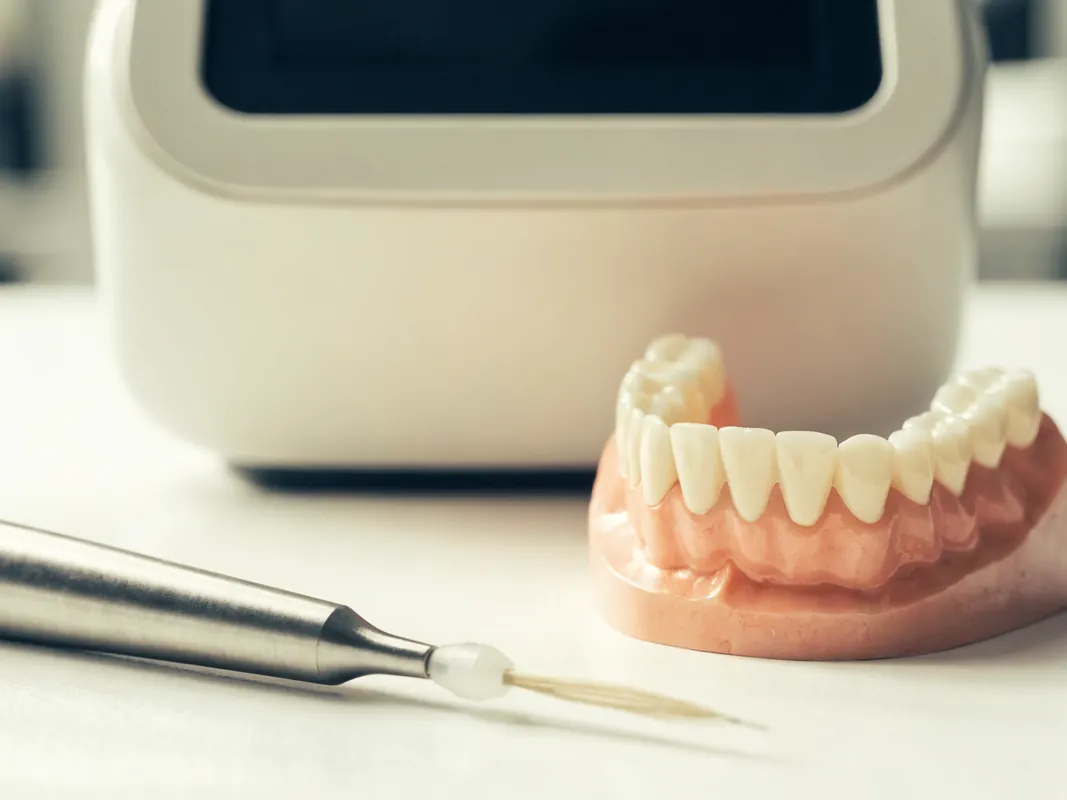
A lamp, laser or LED is a device used with a whitening protocol; it is not the whitening diagnosis and does not identify the gel. Ask for the device and product combination, current instructions, protective measures and evidence relevant to that complete system. Avoid comparisons based on light colour, heat, power language or a machine photograph alone.
The clinician should explain whether the light is required by the product instructions, optional within an evidence-based protocol or not part of the chosen route. If the device or gel changes, the treatment and consent should be reviewed. A light cannot make crowns, veneers or fillings change colour and cannot remove the need to diagnose a single dark tooth.
Tray fit controls where home gel can travel
Dentist-supervised home whitening often relies on a tray that fits the teeth and helps control placement. Tooth movement, new restorations, damaged edges, distortion or an unsuitable design can alter fit. An old tray should not be assumed safe merely because it still seats somewhere in the mouth.
Ask the dentist to inspect the tray, show the amount and location of gel and explain how to clean and store it. Product escaping onto gums, repeated swallowing, strong pressure or a tray that rocks deserves review. Do not cut, heat or reshape a clinical tray without advice. Keep the tray's manufacture and supply details with the whitening record.
A use diary makes sensitivity and adherence visible
For a supervised home route, recording each application, duration, symptoms and any missed or stopped use can help the dentist distinguish actual exposure from the intended schedule. It also prevents accidental duplication when instructions change or when more than one product is present at home.
The diary is not a competition to complete every application. Stop rules take priority. Record sensitivity by tooth where possible, gum irritation, unusual taste, tray damage and medicines used for symptoms, then contact the responsible professional as instructed. A clinician can only adjust the plan responsibly when the actual exposure is known.
Dehydration can temporarily change visible shade
Teeth can look lighter when temporarily dehydrated during a clinical procedure. Immediate photographs may therefore differ from later appearance after normal hydration. Lighting, camera exposure, screen settings and surrounding colours create additional variation. A dramatic chairside image is not a dependable promise of stable shade.
Ask when the baseline and review shade are recorded and under what conditions. If a restoration is planned, the restorative clinician should decide when colour is suitable for shade matching. Do not authorise irreversible replacement of sound crowns or fillings from an immediate post-whitening photograph alone.
Food rules should not become a promised colour result
Some protocols provide short-term advice about food, drink, tobacco and surface stain. Follow the exact clinician and product instructions, but avoid claims that a restrictive “white diet” locks in a result. Natural colour, hydration, oral hygiene, ageing and later exposure can all affect appearance.
Advice should remain nutritionally and medically sensible. A person with diabetes, an eating disorder, pregnancy-related needs or another dietary concern may require individual coordination. Routine cleaning and professional management of surface stain are different from repeated bleaching. Shame or moral language about coffee, tea or food does not improve informed consent.
Top-up whitening requires a new readiness check
A previous successful course does not automatically authorise an indefinite top-up calendar. Teeth, gums, sensitivity, restorations, medicines, tray fit and product availability can change. The old product may be expired, stored incorrectly or no longer the appropriate route.
Before reusing gel or trays, ask for review by the responsible dental professional and current written instructions. The goal should be defined again, including the option to accept the current colour. A commercial subscription or remedial policy should not override oral-health findings or a decision to stop.
Distinguish expected sensitivity from an adverse event
Transient general sensitivity can occur, but strongly localised, persistent, worsening or spontaneous pain can indicate a different dental problem. Soft-tissue blanching, burning, ulceration, swelling or an unexpected systemic reaction also needs appropriate advice. Continuing to reach a shade target is not a reason to ignore symptoms.
The written plan should identify what can be managed according to instructions, what requires pausing and contacting the clinician, and what needs prompt local examination. Record the product, lot, exposure and symptom timing. A remote photograph can assist communication but cannot rule out decay, a crack, pulpal disease or tissue injury.
Restorative work after whitening is a new consent decision
Whitening may reveal a mismatch with crowns, veneers, fillings or bonding, but mismatch does not automatically make a sound restoration defective. Visibility, oral health, remaining tooth structure, repairability and patient preference should guide whether any replacement is justified.
Ask for each proposed replacement to have its own diagnosis, alternatives, preparation implications, material, quote and consent. Additive repair or accepting a modest difference may preserve more tissue. A whitening sale should not function as automatic approval for a broader smile-restoration package.
Dry mouth and medicine history affect comfort and risk
Dry mouth can arise from medicines, health conditions, dehydration or other causes and can alter comfort, caries risk and tray tolerance. Acid exposure, reflux, eating patterns and brushing habits can also influence sensitivity and erosion. These factors need history and examination rather than assumptions from age.
Provide a current medicine list and explain relevant symptoms. Do not stop prescribed treatment to pursue whitening. The dentist may recommend disease control, prevention, a modified route, coordination with another clinician or postponement. A cosmetic goal should not displace management of pain, decay or dry-mouth risk.
Local handover should exist before dental travel
Identify a dentist near home who can examine significant sensitivity, gum injury, a dark single tooth or a restoration problem after return. Do not assume that a remote coordinator can triage every symptom or that a local clinician will provide unpaid remedial care. Ask what records the local dentist needs.
The handover should include examination findings, natural-tooth and restoration map, exact product and traceability, tray information, exposure record, baseline and review shades, symptoms, instructions and clinical contact. The returning-home guide helps organise continuity without claiming that remote review replaces examination.
Legal supply rules depend on where treatment and supply occur
Professional roles, peroxide limits, age restrictions, product placement and record duties can differ by jurisdiction. UK sources are useful for a UK resident checking the legality of UK supply, but they do not automatically state the rules for a Turkish facility. Ask the provider to identify the legal entity, treatment location and lawful supply route that actually apply.
Registration, product documentation and professional responsibility should be verified independently. A product sold lawfully in one market is not automatically authorised for every use elsewhere. The clinical record should show who prescribed or supplied it, where treatment occurred and which current instructions were followed.
Sources and evidence limits
This guide uses the [NHS overview](https://www.nhs.uk/tests-and-treatments/teeth-whitening/), [ADA evidence review](https://www.ada.org/resources/ada-library/oral-health-topics/whitening), [GDC legal position](https://www.gdc-uk.org/docs/default-source/what-is-the-legal-position/tooth-whitening-position-statement.pdf), [UK peroxide regulation text](https://www.legislation.gov.uk/uksi/2012/2263/pdfs/uksi_20122263_en.pdf) and [GDC consent standard](https://standards.gdc-uk.org/pages/principle3/principle3). UK sources explain UK-facing duties and questions; they do not certify a provider in Turkey or replace Turkish law.
Evidence, products and rules can change. Verify the current product instructions, legal supply route, professional registration and treatment facility before payment. This page is education, not a diagnosis, prescription, quotation, provider endorsement or promise that whitening is appropriate.
Final decision rule
Diagnose the colour before buying the method. Stabilise oral disease. Map natural teeth and restorations. Identify the legal provider and exact product. Compare in-clinic, supervised home, consumer and no-treatment routes. Agree stop rules, records and a realistic range rather than a promised shade. Keep future veneers or crown replacement as separate decisions. If travel adds pressure or removes review time, choose a safer local or staged route.
Professional teeth whitening should remain an elective, reversible decision for as long as possible. The strongest proposal is the one that makes diagnosis, uncertainty, product traceability, consent, cost and aftercare clear before any gel is applied.