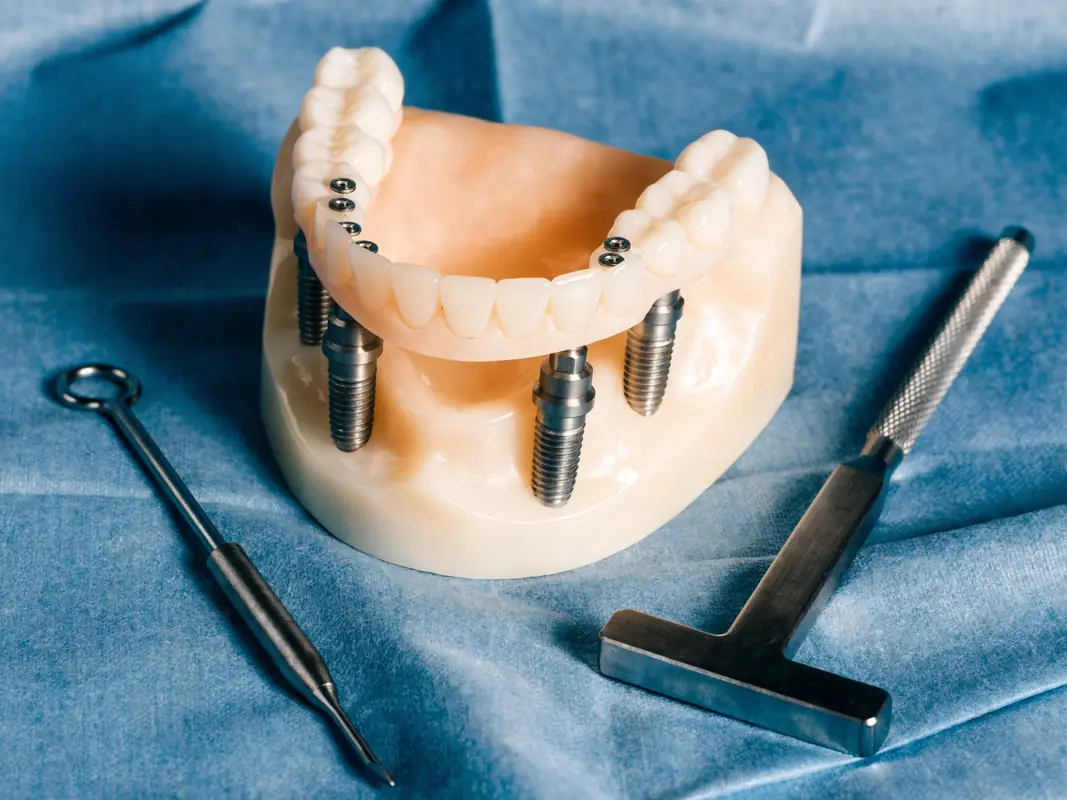
A search for full mouth dental implants in Turkey often begins with cost, but the phrase full mouth does not define a billable product. One person may be asking about an upper arch while keeping a stable lower arch. Another may have useful teeth in both arches and need a mixed restorative plan. Someone else may already wear removable dentures and be comparing an implant-assisted removable option with a fixed full-arch restoration. Those plans can share a marketing label while differing in almost every clinical and financial detail.
The first job is therefore to define the scope. Which arch or arches are being assessed? Which teeth are present? Which may be maintained, which have an uncertain prognosis and which are proposed for removal? Is the quotation an early estimate, a clinician-reviewed provisional plan or a definitive schedule issued after the required assessment? Which restoration is temporary, which is intended as definitive and which decisions remain conditional?
This guide deliberately publishes no live price band. A figure without a named provider, responsible clinician, individual assessment, arch-by-arch plan and itemised quotation would invite a false comparison. It would also age quickly and could refer to only one stage. The useful answer to the cost query is a method for comparing complete written plans and locating every cost that remains outside them.
Define what full mouth means in your documents
Ask the provider to write the treatment scope in plain language before presenting a total. The document should identify the upper arch, lower arch or both. It should list the existing teeth by position and separate the decisions to retain, monitor, restore or remove them. A quantity alone is not enough because the biological and restorative problem is site-specific.
The expression full mouth can also hide a mixed plan. A person may receive a fixed implant-supported restoration in one arch and a tooth-supported or removable solution in the other. Some teeth may need individual care outside the full-arch stage. If the quotation combines everything into one package line, ask for separate schedules for each arch and each type of care.
The scope should state what is not being treated. A visible upper restoration does not automatically include the lower bite, gum care, old crowns elsewhere, hygiene, jaw-joint concerns or future maintenance. Exclusions should be explicit rather than inferred from silence.
Use this opening scope statement:
| Scope question | What the written answer should show |
|---|---|
| Which arch or arches are included? | Upper, lower or both, itemised separately |
| Which teeth remain? | Tooth-by-tooth status and proposed decision |
| Which option is proposed? | Fixed, removable, tooth-supported, implant-supported or mixed |
| What is provisional? | Estimate, clinical decision, restoration or timetable that may change |
| What is definitive? | The final agreed stage, material description and responsibility |
| What is excluded? | Clinical, laboratory, travel, maintenance and contingency items outside the total |
| Who is responsible? | Named legal treatment provider and responsible clinician for each clinical stage |
If the scope cannot be summarised clearly, the total cannot be compared responsibly.
Count arches, not slogans, and assess teeth individually
A whole-arch proposal can be appropriate only after remaining teeth have been considered individually. The plan should explain the reason for retaining or removing each tooth. Mobility, support, fracture, infection, restorability and strategic value may all be relevant, but the responsible clinician must connect the finding to the decision. A general claim that the teeth will cause problems later is not a tooth-specific explanation.
Ask whether a smaller plan could meet the same goal. Maintaining suitable teeth, using a removable restoration, combining tooth-supported and implant-supported work, staging care, or treating only one arch may be reasonable alternatives in some cases. The plan should explain the advantages, limits, risks and maintenance demands of the alternatives without presenting one option as universally superior.
The relationship between the arches also matters. Changes to one arch can affect space, bite, tooth position, speech, cleaning and the design of the opposing restoration. A quotation for both arches should not be a doubled copy of one arch. Each arch needs its own findings and restoration description, followed by an explanation of how they work together.
Do not let a commercial treatment name decide the number of implants, the number of teeth restored or the restoration design. Those are clinical and technical decisions. This page owns the whole-arch scope and comparison problem. Detailed single-implant price anatomy and the inclusion list for a named full-arch package belong to their dedicated guides rather than being repeated here.
Diagnostics should answer a question, not decorate a package
The responsible clinician determines which examination, images, scans, photographs, models and medical information are appropriate. The written plan should identify what was reviewed, what each record was used to assess and which important information remains unavailable.
A useful diagnostic record may address the condition of remaining teeth and gums, available support, infection, the relationship between the arches, existing restorations, the proposed restorative space and other case-specific concerns. It should not be presented as an automated verdict. A scan or image supports professional assessment; it does not itself prove suitability or determine a package.
Ask these questions:
- Was the plan prepared from submitted records only, or after a clinical examination?
- Which findings support the proposal for each arch?
- Which teeth need further investigation before an irreversible decision?
- What information could change the proposed design or sequence?
- Are any records being repeated, and why?
- Who interprets the records and accepts clinical responsibility?
- Will the patient receive copies in a usable format?
- How are health records transferred securely between providers?
If the provider cannot yet complete the assessment, the document should be labelled provisional. That is not a weakness. It is a truthful boundary that helps the patient understand which decisions and costs remain open.
Compare alternatives before comparing totals
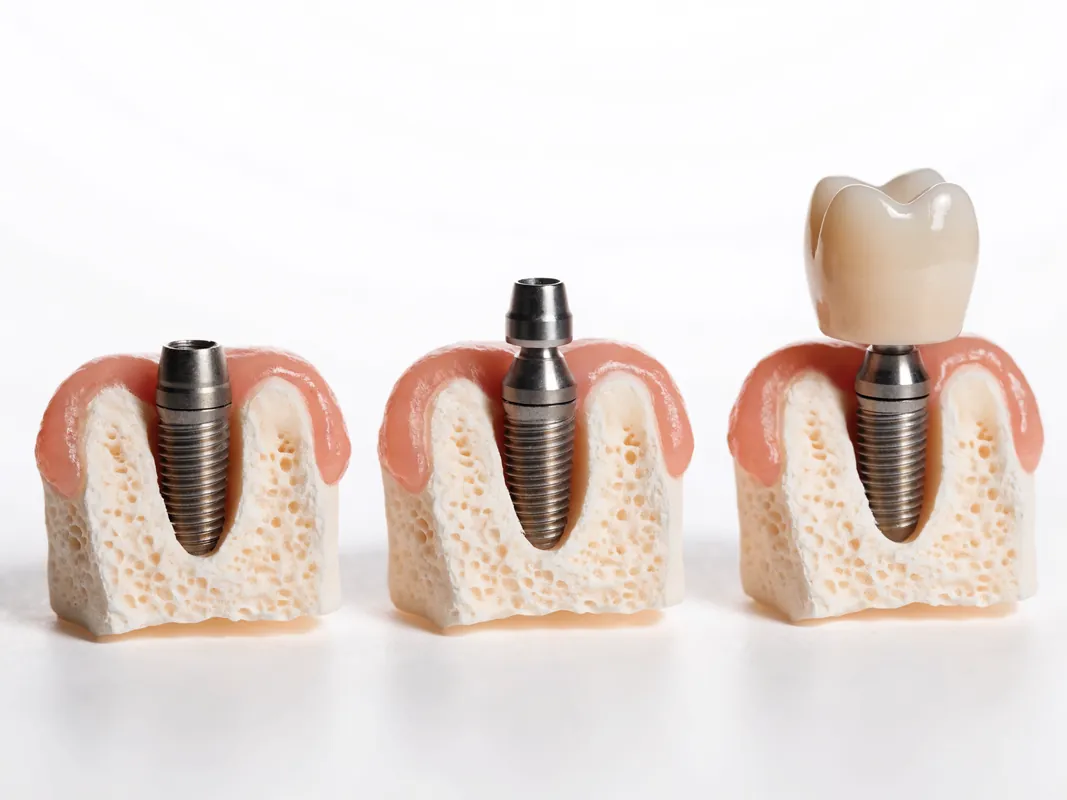
The relevant alternatives depend on the individual case. A responsible plan may compare retaining and restoring teeth, a conventional removable denture, an implant-assisted removable restoration, a fixed full-arch implant-supported restoration, a mixed plan or staged care. The purpose of comparison is not to rank them generally. It is to explain how each option meets the person's priorities and what responsibilities it creates.
Ask each provider to discuss:
- whether suitable teeth can be retained and what maintenance they require;
- whether a removable option could meet functional, cleaning or financial priorities;
- whether a fixed option changes hygiene access or repair complexity;
- whether one arch can be treated while the other is monitored or restored differently;
- whether a staged plan reduces uncertainty or creates extra travel and provisional needs;
- what happens if the patient chooses no treatment or delays a stage;
- how medical history, habits and ability to maintain the restoration influence suitability;
- which option is easiest to service after returning home.
An alternative is not meaningful if it is mentioned only by name. The plan should describe the important trade-offs, what it includes, what it does not solve and why it was accepted or rejected for this patient.
Provisional and definitive quote anatomy
Full-mouth treatment commonly contains decisions made at different stages. The quotation should mirror that sequence. An early estimate can help with planning, but it should not be presented as the final price. A clinician-reviewed provisional plan should show what evidence supports it and which variables remain. A definitive quotation should incorporate the findings available before irreversible treatment and record any agreed changes.
| Document layer | Purpose | What must be visible |
|---|---|---|
| Initial scope estimate | Establishes the possible arch and treatment categories | Assumptions, missing records and excluded stages |
| Clinician-reviewed provisional plan | Explains the proposed route after available records are reviewed | Named provider and clinician, alternatives, arch-by-arch stages and change triggers |
| Pre-treatment confirmation | Records the decision before an irreversible step | Updated findings, consent, tooth decisions, components and payment stage |
| Restorative confirmation | Defines the restoration after relevant clinical information is available | Provisional versus definitive design, material description, laboratory responsibility and approval process |
| Final account and record set | Shows what was actually supplied | Approved variations, invoices, component records, imaging, discharge and aftercare information |
Each layer should have a date and version. Verbal amendments should be reflected in writing. If the scope changes, the patient should receive the clinical reason, reasonable alternatives, price effect and updated sequence before agreeing.
Build the itemised stage schedule
The following schedule is a comparison template, not a universal treatment protocol. Mark every row included, excluded, conditional or not applicable.
| Stage | Questions for the quotation |
|---|---|
| Assessment | Who assessed the case, which records were reviewed and what remains provisional? |
| Pre-treatment | Is gum, hygiene, restorative, medical or other coordination required first? |
| Retention or removal | Which teeth are retained or removed, why, and what alternatives were considered? |
| Surgical care | Which arch and sites are proposed, and which provider and clinician are responsible? |
| Conditional procedures | What finding could trigger additional care and how is it authorised? |
| Interim function | Is a removable or fixed provisional proposed, and under what clinical conditions? |
| Review between stages | Who reviews healing or function and which records guide the next decision? |
| Definitive restoration | What restoration type and material description are proposed, and who approves the design? |
| Adjustments | Which fitting, bite, speech, cleaning or appearance reviews are included? |
| Maintenance | Which cleaning, professional review and service responsibilities continue after fitting? |
| Records | Which clinical, component, laboratory and payment documents are supplied? |
| Aftercare | Who handles routine questions, urgent concerns and cross-border review? |
| Travel | Which non-clinical services are separately contracted, if any? |
The itemised schedule prevents a common comparison error: one quotation may cover surgery only while another includes a later restoration. A provisional restoration may appear in one but not the other. Laboratory work, adjustments, records or maintenance may sit outside both. The totals say nothing until those differences are aligned.
Provisional and definitive restorations are different stages
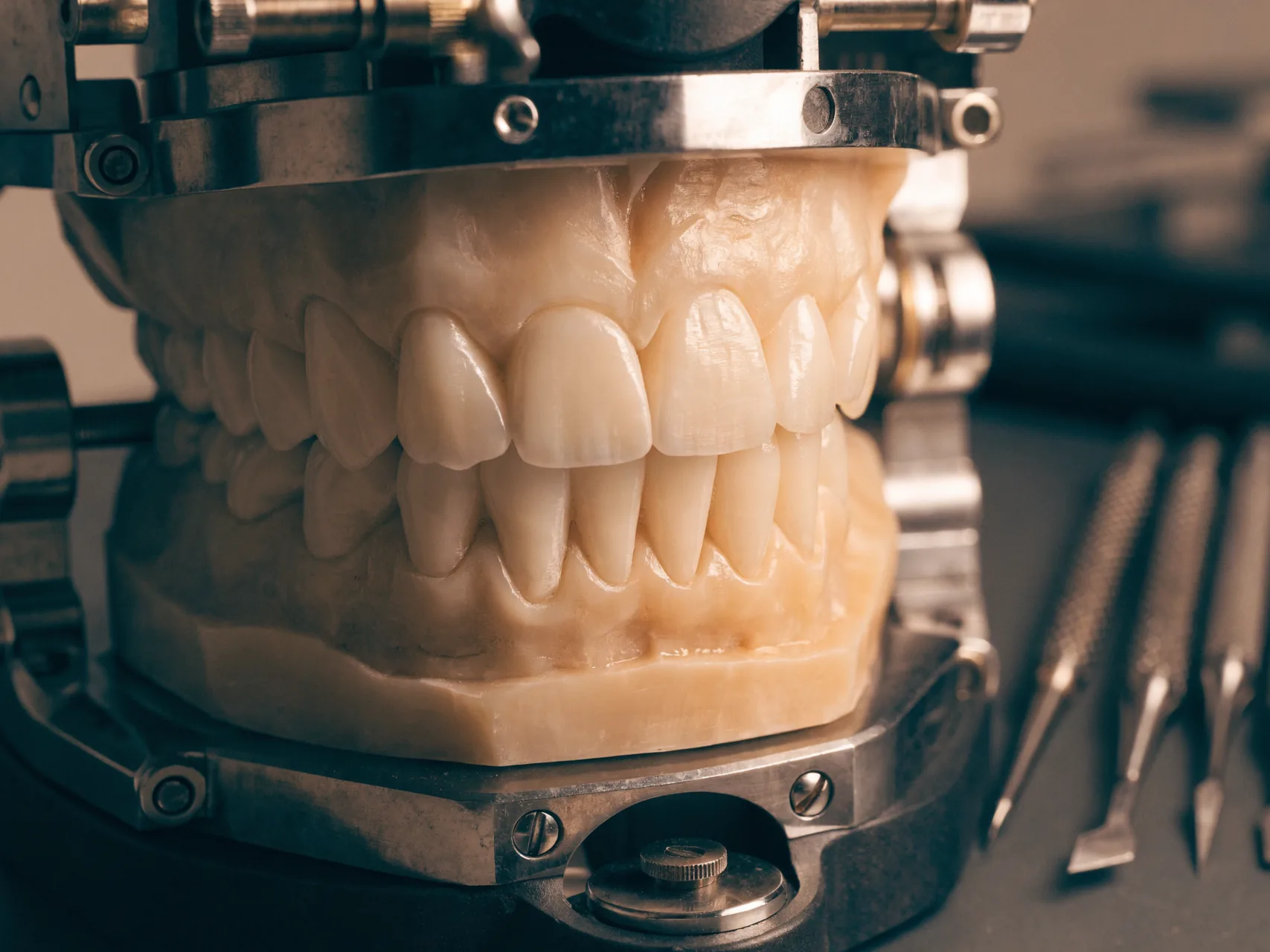
A provisional restoration may support appearance, speech or function during an interim period, but its availability and design can depend on clinical findings. It should never be assumed from a headline. The written plan should explain whether the provisional is fixed or removable, what material description applies, which functional limits matter, how it is cleaned and what happens if the planned provisional cannot be used.
The definitive restoration needs a separate line and approval process. Ask for the proposed design, material description, laboratory responsibility, try-in or review stages, cleaning access, repair route and component records. A material label is not a promise of appearance, comfort, durability or outcome.
The interim stage can reveal issues with speech, cleaning, bite, appearance or access. The plan should explain how observations are recorded and translated into the definitive design. Approval should not be rushed by travel arrangements. Any change that alters treatment, material, scope or price should be documented before the final stage proceeds.
If a provider discusses immediate loading or a same-day provisional, ask what clinical conditions must be met, who decides, and what alternative is planned if those conditions are not met. The phrase should remain conditional; it is not a timetable promise.

Exclusions and conditional costs
Not every patient needs every item below. The risk is failing to label it.
- examination, diagnostic records or repeat imaging;
- treatment of active gum disease, infection or decay;
- restoration of teeth retained outside the full-arch plan;
- removal of existing teeth and management of those sites;
- site-development or tissue procedures if clinically proposed;
- surgical components, connecting components or laboratory parts;
- a provisional restoration and repairs during the interim stage;
- the definitive restoration, design review, try-in and adjustments;
- medicines, sedation or external-provider services where proposed;
- hygiene devices, professional maintenance and routine reviews;
- copies of imaging, component traceability and clinical notes;
- urgent assessment or additional care after returning home;
- extra attendance if clinical or laboratory decisions require it;
- flights, accommodation, local transport, companion costs and time away;
- conversion, card, finance, tax or third-party charges.
For every conditional item, the written plan should identify the trigger, evidence, decision-maker, alternatives, price effect and approval process. A package label should not operate as unlimited consent for additions.
Use a whole-arch quote comparison worksheet
Create one column for each provider. Enter only what appears in the dated documents.
| Comparison field | Provider A | Provider B | Provider C |
|---|---|---|---|
| Legal treatment provider named | |||
| Responsible clinician named | |||
| Upper, lower or both arches identified | |||
| Remaining teeth assessed individually | |||
| Retain-versus-remove reasons | |||
| Alternatives and no-treatment option | |||
| Diagnostic basis and missing information | |||
| Surgical scope by arch and site | |||
| Conditional-procedure triggers | |||
| Provisional restoration and limits | |||
| Definitive restoration and laboratory role | |||
| Stage-specific payment schedule | |||
| Version and change-control process | |||
| Maintenance and component records | |||
| Aftercare and urgent-care responsibility | |||
| Travel services itemised separately | |||
| Cancellation and refund terms |
Do not award points merely for a longer package list. First compare diagnosis boundaries, tooth decisions, alternatives, stages, records and aftercare. Then compare totals for plans with equivalent scope. A blank cell is a question to resolve, not permission to assume an inclusion.
Currency, payment and change control
The quotation should state one clear billing currency without relying on a converted headline. Ask whether payment is collected in that currency, how conversion is handled and which bank, card, finance or third-party charges sit outside the total. Keep a receipt naming the legal entity receiving each payment.
Payments should correspond to defined stages. Ask what each deposit or instalment secures, when it becomes non-refundable and what happens if suitability, arch scope, tooth retention, the provisional plan or the definitive restoration changes. A large early payment should not be treated as proof that every later stage is included.
When the plan changes, request a new version showing the clinical reason, alternatives, added or removed items, price effect and revised responsibility. Review it before an irreversible step. A flight date or appointment schedule should not compress informed consent.
If treatment and travel services are collected together, identify the amount and contractual party for each service. Clinical cancellation terms and travel cancellation terms may be different. Payment to a coordinator does not automatically create an obligation for a treatment provider unless the written agreement connects them.
One arch, both arches and the opposing bite
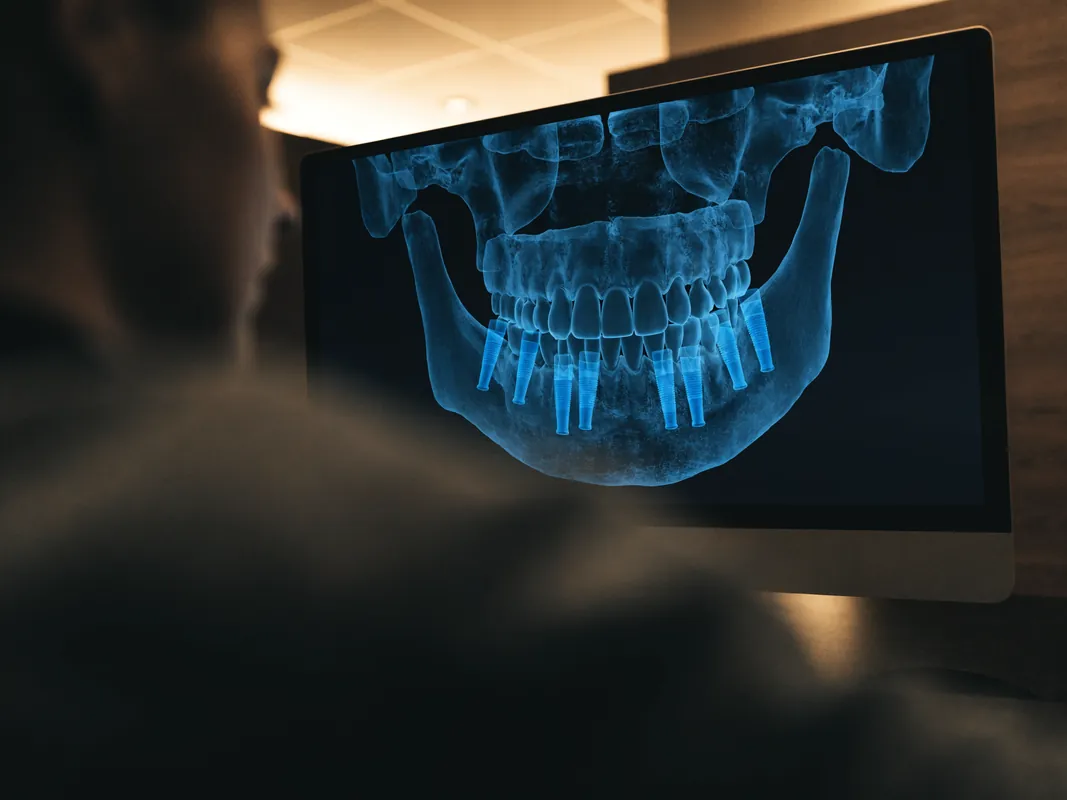
A quotation for one arch should explain how the opposing teeth or restoration were considered. Treating one arch can affect available space, bite contacts, appearance, speech and future options. The plan should state whether the opposing arch is stable, needs separate care or is deliberately outside scope.
A plan for both arches should still be itemised by arch. The upper and lower findings may differ. The provisional strategy, restorative design, maintenance access and conditional care may also differ. A single combined total can remain useful, but it should be supported by separate arch schedules.
Ask how the provider will record and approve the relationship between the arches before the definitive restorations are completed. This is a design and clinical responsibility question, not a promise of a particular result.
Travel contingency and aftercare
International treatment adds costs and risks that do not appear in the clinical total. The plan should identify which stages require attendance and which dates remain dependent on clinical or laboratory decisions. Avoid non-refundable bookings around a schedule that the responsible provider has not confirmed.
Budget privately for changes even when no amount is stated online. Consider flexible travel, additional accommodation, local transport, companion needs, time away and access to urgent care. If a travel service is offered, request the named supplier, route, service details, amendment rules and separate cancellation terms. A photograph or category does not prove an allocation.
Aftercare should be a written process, not a general communication promise. Ask:
- which provider is responsible after each stage;
- how routine reviews are arranged;
- which symptoms require urgent local assessment;
- how records from a clinician at home are reviewed;
- who authorises a repair, adjustment or further treatment;
- which clinical and travel costs remain the patient's responsibility;
- how a complaint is submitted and answered;
- what happens if returning to the original provider is not practical.
Keep the plan, consent, invoices, component traceability, imaging, laboratory information, prescriptions, discharge instructions and all approved changes. Those records help another clinician understand what was done and support routine maintenance as well as problem investigation.
Maintenance belongs in the original comparison
Full-arch implant-supported restorations require daily cleaning and professional review. The provider should explain the cleaning access, recommended devices, review expectations, serviceable parts and process for removing or repairing the restoration if needed. These duties vary by design and patient; a generic maintenance schedule should not replace case-specific instructions.
Ask which maintenance services are included in the initial quotation and which are paid later. Confirm whether maintenance can be carried out by another qualified provider and what component information that provider will need. The cheapest initial total may create a difficult service route if records, components or responsibilities are unclear.
Warranty language should be treated as a separate written document. Check the issuing entity, covered event, exclusions, maintenance conditions, evidence required, available remedy and responsibility for travel. Written terms do not guarantee clinical success, a fixed service life or reimbursement of every related cost.
Red flags in a full-mouth quotation
- Full mouth is quoted without identifying the arch or arches.
- Teeth are proposed for removal without a tooth-specific reason or discussion of retention.
- A salesperson presents a definitive plan before appropriate clinical assessment.
- The legal provider or responsible clinician is absent from the documents.
- One total hides whether the provisional and definitive restorations are included.
- A same-day or immediate option is presented as guaranteed rather than conditional.
- The plan gives no alternative if a provisional restoration cannot be used.
- Components or materials appear in advertising but not in the personal plan or traceability records.
- Conditional procedures have no written trigger, price effect or approval process.
- A result, comfort level, success rate, service life or suitability is promised universally.
- Travel hospitality is used as evidence of clinical quality.
- The payment recipient, currency, refund terms or treatment stage is unclear.
- Aftercare is only an informal messaging promise with no named provider or records process.
A responsible route to a comparable quotation
Begin with a secure record-sharing route identified by the responsible provider. Ask whether the response is an estimate or a clinician-reviewed provisional plan. Request the arch scope, tooth-by-tooth decisions, reasonable alternatives, diagnostic basis, surgical and restorative stages, provisional and definitive distinction, exclusions, change triggers, payment schedule, records, maintenance and aftercare in one dated document.
Repeat that request with other providers and transfer the answers into the worksheet. Do not compare totals until the plans describe equivalent scope. Ask for a second clinical opinion before agreeing to removal of teeth that might be maintainable.
The final cost is the total attached to the plan that survives assessment, consent and documented change control. The safest comparison is not the one with the lowest headline. It is the one where the patient can see what is being treated, which decisions remain open, who is responsible, what is excluded and how care continues after travel.