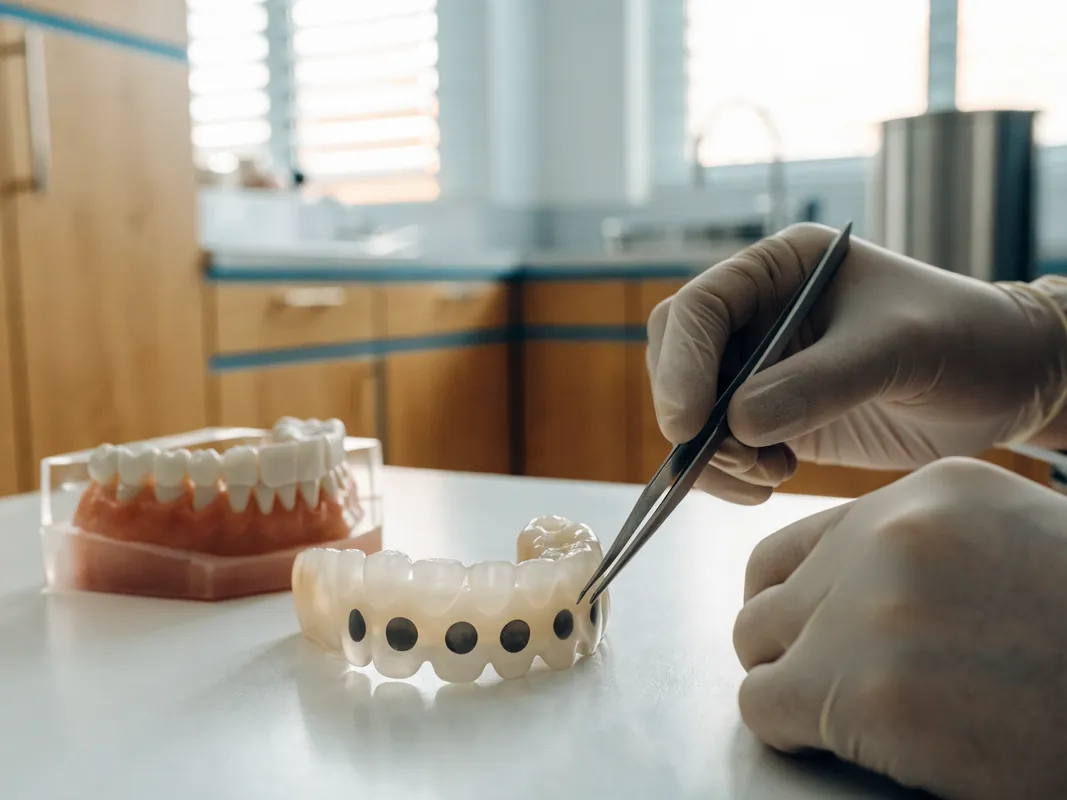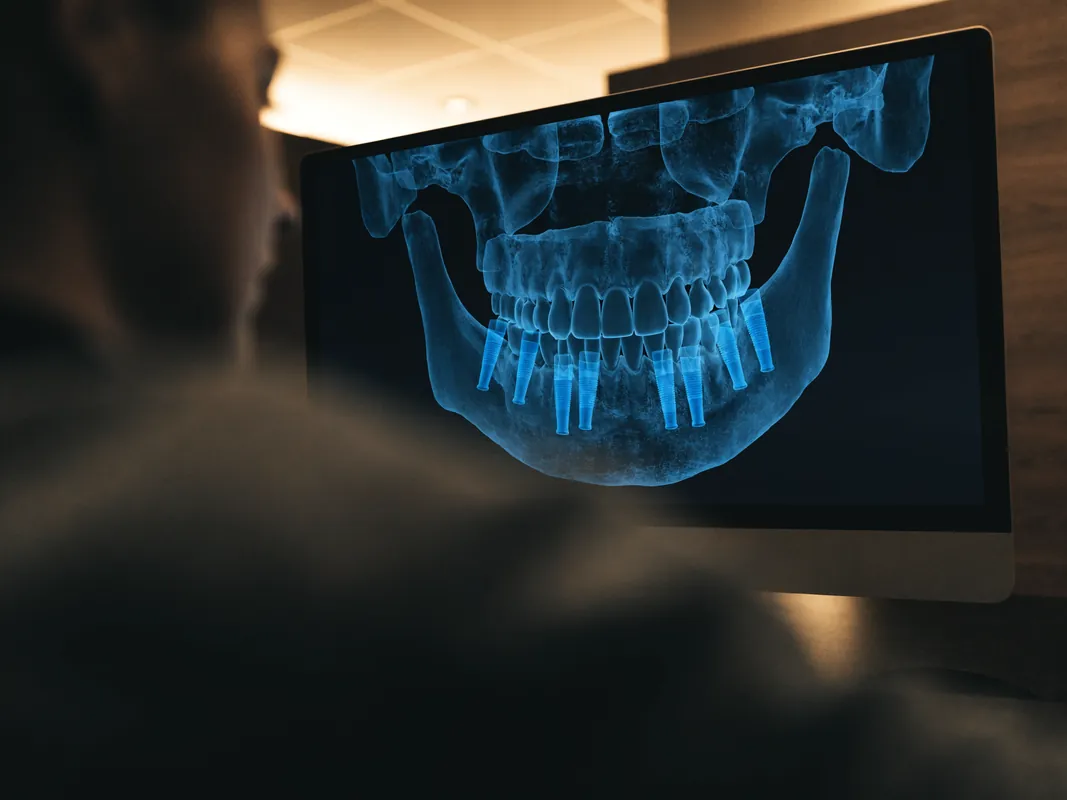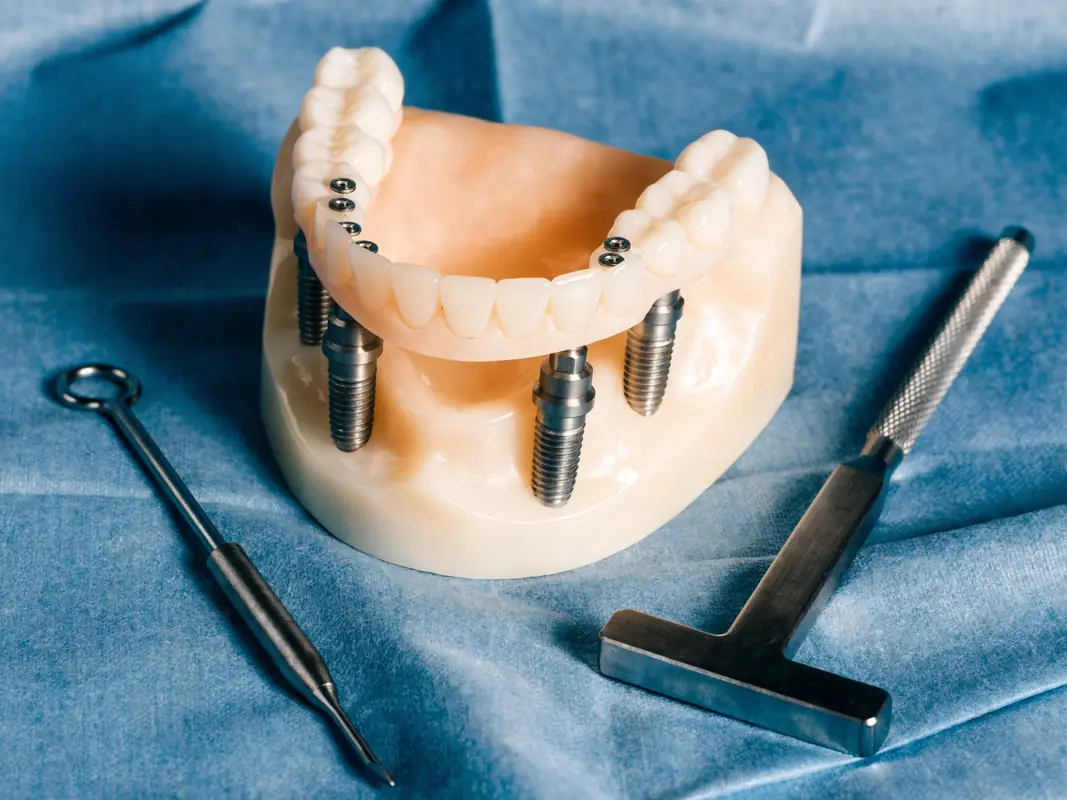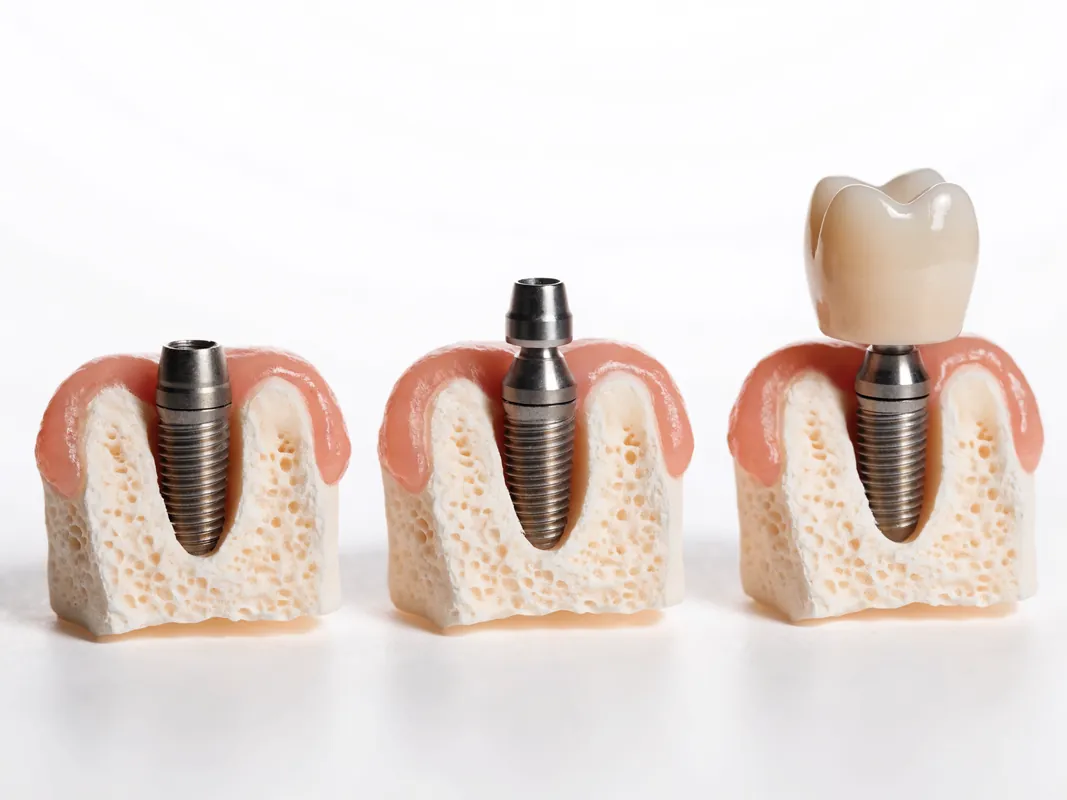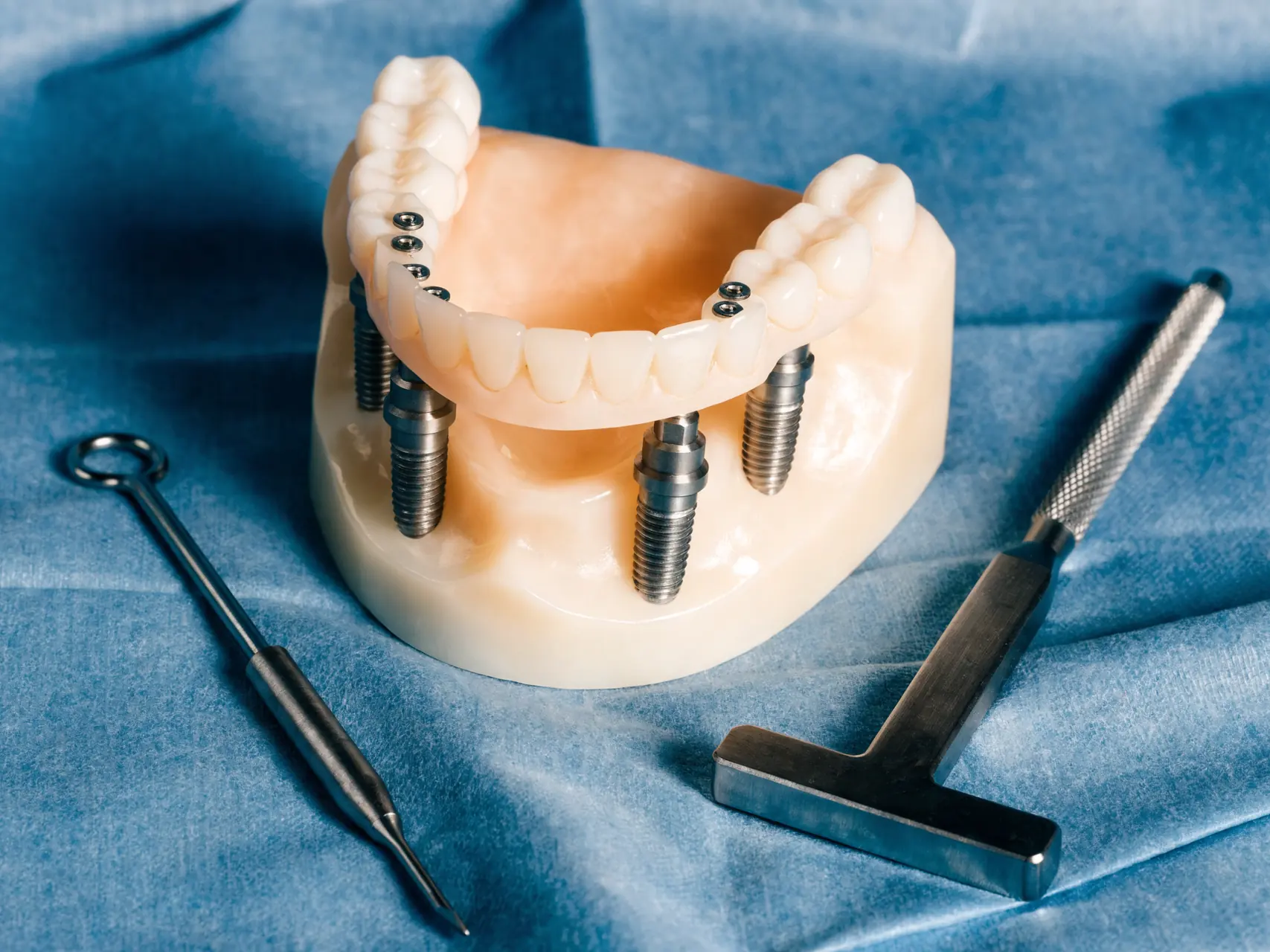
An All-on-4 package advertisement can make a complex full-arch treatment look like one product. In reality, the words describe a treatment concept in which a full-arch restoration is supported by a planned set of implants. They do not identify the patient, jaw, provider, clinician, implant system, restoration design, loading decision, number of visits, final price or travel services. Every one of those details must come from an individual assessment and a dated written plan.
This page does not publish a fixed package price or promise a same-day result. A responsible comparison begins by asking what the quotation covers for each arch and each stage. It should identify what is provisional, what is final, which decisions remain conditional, who is responsible and what happens if the clinical plan changes. Without that structure, two package totals may describe very different care.
What the term All-on-4 does and does not prove
The label can be useful when discussing a full-arch implant-supported option, but it does not diagnose the condition of the teeth, gums, bone or bite. It does not establish that remaining teeth should be removed. It does not show that a particular number or position of implants is appropriate. It does not confirm that a fixed provisional restoration can be attached immediately. It does not name the final restorative material or show who will maintain the result.
The label also does not prove a brand, component specification or laboratory workflow. A logo on an advertisement may describe one possible system while the patient quotation remains silent. The final plan should identify the proposed system and the records supplied for the actual case. Material and component choices should be explained by the responsible clinician and documented rather than inferred from a package name.
All-on-4 should not be treated as automatically better than retaining teeth, a removable option, another implant-supported design or a staged alternative. The appropriate comparison depends on the clinical findings and the patient's priorities. A provider should explain why the proposed option is suitable, what reasonable alternatives exist and what the consequences of doing nothing may be.
Define the scope before comparing package totals
Ask whether the quotation is for the upper arch, lower arch or both. Confirm which teeth are included in the decision and whether any teeth may be retained. Identify whether the package covers an assessment only, a surgical stage, a provisional restoration, a final restoration or the complete sequence. The word complete should never replace those answers.
The quotation should state whether it is an early estimate based on submitted records or a plan approved after a clinical assessment. It should list the information still required and the findings that could change the proposal. If a provider cannot confirm suitability until an in-person examination, that limit should be visible before travel and payment.
Use separate rows for each arch. A combined full-mouth total can hide different procedures or materials in the upper and lower jaw. If a quotation describes both arches, request an itemised cost and stage schedule for each one. That makes it possible to understand what happens if only one arch proceeds or one stage changes.

Assessment and suitability checklist
An appropriate assessment is determined by the responsible clinician. The following questions help a patient understand the basis of the recommendation without pretending that every case uses the same tests:
- Which legal treatment provider and responsible clinician reviewed the case?
- Which history, examination, images, photographs, scans or models were reviewed?
- Which remaining teeth are considered maintainable, uncertain or unsuitable, and why?
- What is known about gum health, infection, available bone, bite and jaw relationship?
- Which medical factors, medicines, habits or previous treatments need further review?
- What alternatives were discussed, including retaining teeth or using a removable option?
- Why is the proposed implant-supported design preferred for this individual case?
- Which findings could change the number, position or timing of implants?
- Is any provisional restoration conditional on findings during treatment?
- Who makes the final loading decision, and when is that decision made?
No marketing page can answer those questions for a patient. The written plan should summarise the clinician's reasoning in understandable language and identify material risks, limitations and alternatives. Consent is a process connected to that plan, not a signature added to a package invoice.
Stage-by-stage package checklist
A useful All-on-4 quotation separates the sequence into stages. The exact sequence varies, so each row should be marked included, excluded, conditional or not applicable.
| Stage | What should be written down | Why it matters |
|---|---|---|
| Clinical review | Named provider, clinician, records reviewed and provisional decisions | Shows who is responsible and what remains unconfirmed |
| Diagnostic planning | Proposed imaging, scans, photographs, models and their purpose | Prevents a generic package from replacing case planning |
| Pre-treatment care | Any gum, hygiene, restorative or medical coordination required first | Identifies work that may sit outside the headline |
| Tooth decision | Teeth proposed for retention or extraction and the reason | Makes irreversible decisions visible |
| Surgical stage | Arch, proposed implant positions, system, components and professional responsibility | Defines what the package calls implant treatment |
| Additional procedures | Any site development or other conditional care with approval process | Allocates cost and consent risk before travel |
| Provisional restoration | Type, timing, material, limitations and conditions for use | Separates temporary function from a promised final result |
| Healing and review | Review schedule, hygiene instructions and responsible contact | Connects the stages rather than leaving a gap |
| Final restoration | Design, material description, laboratory role, try-in and fitting process | Confirms whether a final bridge is actually in the total |
| Maintenance | Cleaning method, professional review expectations and replaceable components | Shows the long-term responsibilities beyond fitting |
| Records and aftercare | Documents supplied, urgent-care process and cross-border responsibilities | Makes follow-up usable after the patient returns home |
| Travel services | Supplier, dates, route, accommodation and cancellation terms if offered | Keeps tourism separate from clinical responsibility |
If a quotation contains one line called All-on-4 treatment, ask for this schedule before comparing it with another offer. A lower total may omit the final restoration, a provisional, laboratory work, maintenance items or an additional visit. A higher total may include services that are irrelevant or available elsewhere. Visibility matters more than the package label.
Provisional teeth and final teeth are not the same promise
Marketing often uses the phrase teeth in a day without explaining what kind of restoration is being discussed or whether immediate loading is appropriate. A provisional restoration may be planned for selected cases, but it can remain conditional on clinical findings and the responsible clinician's decision. The written plan should state the alternative if it cannot be fitted as proposed.
A provisional restoration is used during an interim stage. Its material, design, care instructions, repair process and functional limits should be explained. It should not be marketed as though it is automatically the final bridge. Ask how long it is expected to remain in use, what reviews occur before the final stage and whether adjustments or repairs are included. These are planning questions, not promises of a fixed timetable.
The final restoration requires its own specification. The quotation should describe the restoration type and material in terms a patient can retain, identify the laboratory responsibility, explain the try-in or approval process and state whether removal and refitting for maintenance are possible. A material name alone does not guarantee appearance, comfort, function or durability.
Ask what happens if the provisional design reveals a bite, speech, cleaning or appearance issue. A good plan uses the interim stage to gather information and records agreed changes before the final restoration is made. It should not pressure a patient to approve a final design simply because return travel is approaching.
Common exclusions and conditional costs
Not every item below is necessary for every patient. The risk arises when the quotation does not say whether it is included, excluded or conditional:
- assessment, diagnostic images, scans, photographs or models;
- treatment of active gum disease, infection or decay before surgery;
- extraction of remaining teeth and management of extraction sites;
- any site-development or tissue procedure considered necessary;
- fixture placement, the fixtures themselves or connecting components;
- a fixed or removable provisional restoration;
- repair or replacement of a provisional during the interim stage;
- the final bridge, laboratory work, try-in or later adjustments;
- medicines, sedation or external-provider services where proposed;
- hygiene devices, professional maintenance and review appointments;
- copies of imaging, component records and clinical notes;
- urgent assessment or remedial treatment after returning home;
- an additional visit if healing or design requires it;
- flights, home-country transport, hotel, local transfers or companion costs;
- card charges, exchange-rate differences, taxes or finance costs.
For every conditional item, request the decision rule. Who decides it is needed? What evidence will be shown? Which alternatives exist? When will the patient receive the revised plan and total? Can the patient pause or decline before an irreversible step? A package should not turn clinical uncertainty into unlimited financial consent.

Compare quotations with one worksheet
Create one column for each provider and copy only written answers into the table. A blank is more useful than an assumption because it shows what must be clarified.
| Comparison question | Provider A | Provider B | Provider C |
|---|---|---|---|
| Legal provider and responsible clinician named | |||
| Arch or arches clearly identified | |||
| Assessment basis and unresolved findings | |||
| Retain-versus-extract reasoning | |||
| Alternatives discussed | |||
| Proposed implant system and traceability | |||
| Connecting components itemised | |||
| Immediate loading described as conditional where appropriate | |||
| Provisional type and limits | |||
| Final restoration specification | |||
| Additional-procedure decision rule | |||
| Stage and payment schedule | |||
| Maintenance and hygiene responsibilities | |||
| Records and aftercare route | |||
| Travel services separately itemised | |||
| Change, cancellation and refund terms |
Do not score providers by the number of inclusions alone. A long list may contain generic extras while omitting the clinical decision points. First compare responsibility, assessment, alternatives, treatment stages and aftercare. Then compare the price of equivalent plans.
Price, currency and payment without a misleading headline
There is no reliable universal package price because the scope can differ by arch, stage, restoration, additional procedure, provider and travel arrangement. A current figure should come from a dated quotation issued for the case. It should use one clear currency and remain valid for a stated period.
Ask whether payment is collected in the quoted currency or converted on the day. Confirm card, bank, finance and conversion charges. If a deposit covers both treatment and travel, identify which legal entity receives it and how each portion is treated if plans change. A payment to a coordinator should not be assumed to pay a clinic unless the documents expressly connect those obligations.
The payment schedule should name the stage associated with each instalment. Ask what happens if the patient is found unsuitable, only one arch proceeds, immediate loading is not appropriate, the final design changes or an additional visit becomes necessary. The revised treatment plan and quotation should be accepted before further payment or irreversible treatment.
Avoid comparing monthly finance figures as though they are package totals. Any credit arrangement has separate repayment, currency and cancellation consequences. Compare the total treatment quotation first and the finance contract second.
Provider, clinician and component verification
The treatment plan should name the legal facility and responsible clinician. Check current registrations in the appropriate official sources and match the names across the plan, consent, invoice and clinical records. A website, agent or travel coordinator can provide information but is not the treatment provider unless the legal documents say so.
Ask who is responsible for assessment, surgery, restorative planning, fitting and aftercare. Different professionals may perform different stages; each role should be clear. Promotional titles, case-volume statements and accreditation logos should not be treated as proof. Verify any credential at its issuing source and ask why it is relevant to the proposed care.
The final documents should identify the implant system and case-specific component records. Ask what information another clinician would need for maintenance or repair. Do not assume that a photographed box, website logo or verbal promise describes the components placed in the patient.

Maintenance and aftercare are part of the package decision
A fixed full-arch restoration still requires daily cleaning and professional review. The provider should supply case-specific hygiene instructions, explain which areas need access for cleaning, identify appropriate devices and state when reviews are expected. The plan should explain who can remove or service the restoration if required and which component information will be available.
Aftercare should identify a responsible provider and a usable process. Ask which symptoms require urgent local assessment, how records are shared, who reviews images or findings from another clinician and which costs are outside any written remedy. An informal promise to answer messages does not assign clinical or financial responsibility.
Warranty language requires the same scrutiny as the treatment quotation. Check the issuing entity, covered event, exclusions, maintenance conditions, evidence required, remedy and travel costs. Written terms do not guarantee clinical success or lifetime service. A remedy that requires repeated international travel may carry substantial costs even when the clinical component is covered.
Keep copies of the assessment, plan, consent, invoices, component records, imaging, prescriptions, discharge information, provisional and final restoration details, and every approved change. Those documents support routine maintenance as well as problem resolution.
Travel and accommodation boundaries
Do not book non-refundable travel until the provider confirms the clinical schedule and the quotation states which stages require attendance. Healing and restorative decisions can create uncertainty, so allow for changes rather than treating an advertised itinerary as a guarantee.
If accommodation, airport transfer or local transport is offered, request the named supplier, dates, route, room or accessibility details, luggage terms, waiting policy, amendment rules and cancellation terms. A hotel category, vehicle photograph or general website list is not an allocation. Flights and transport at home remain excluded unless expressly included in the written quotation.
Clinical and travel complaints may go to different legal entities. Keep separate confirmations and receipts. Ask which organisation handles a missed transfer, an accommodation change, a clinical delay and an urgent health concern. Hospitality quality does not establish treatment quality.
Red flags in an All-on-4 package
- Remaining teeth are scheduled for extraction without a written retain-versus-extract explanation.
- Suitability is guaranteed before an appropriate assessment.
- Same-day fixed teeth are promised without a conditional loading decision or alternative plan.
- The package does not distinguish provisional and final restorations.
- The final bridge is absent, vaguely described or added only after the first stage.
- Provider, clinician, implant system or component traceability is missing from personal documents.
- An accreditation logo, case count or outcome percentage replaces case-specific reasoning.
- The total has no arch-by-arch, stage-by-stage or conditional-cost breakdown.
- Marketing promises a lifetime result, fixed service life, painless experience or universal suitability without case-specific assessment or evidence.
- Hotel, vehicle or translation language distracts from missing clinical inclusions.
- Payment is requested before currency, recipient, cancellation and plan-change terms are clear.
- Aftercare is only a messaging claim, with no named provider, records or written process.
The decision to make before paying
The useful question is not whether an advertisement says All-on-4 is included. It is whether the named provider's written plan explains why a full-arch implant-supported option is suitable, which alternatives were considered, what happens at each stage, what is provisional or conditional, which services are excluded and who remains responsible after travel.
Compare complete written plans, not package labels. Accept changes only after receiving the clinical reason, alternatives and revised quotation. That approach does not promise an outcome, but it makes the responsibilities, decisions and financial exposure visible before an irreversible step.