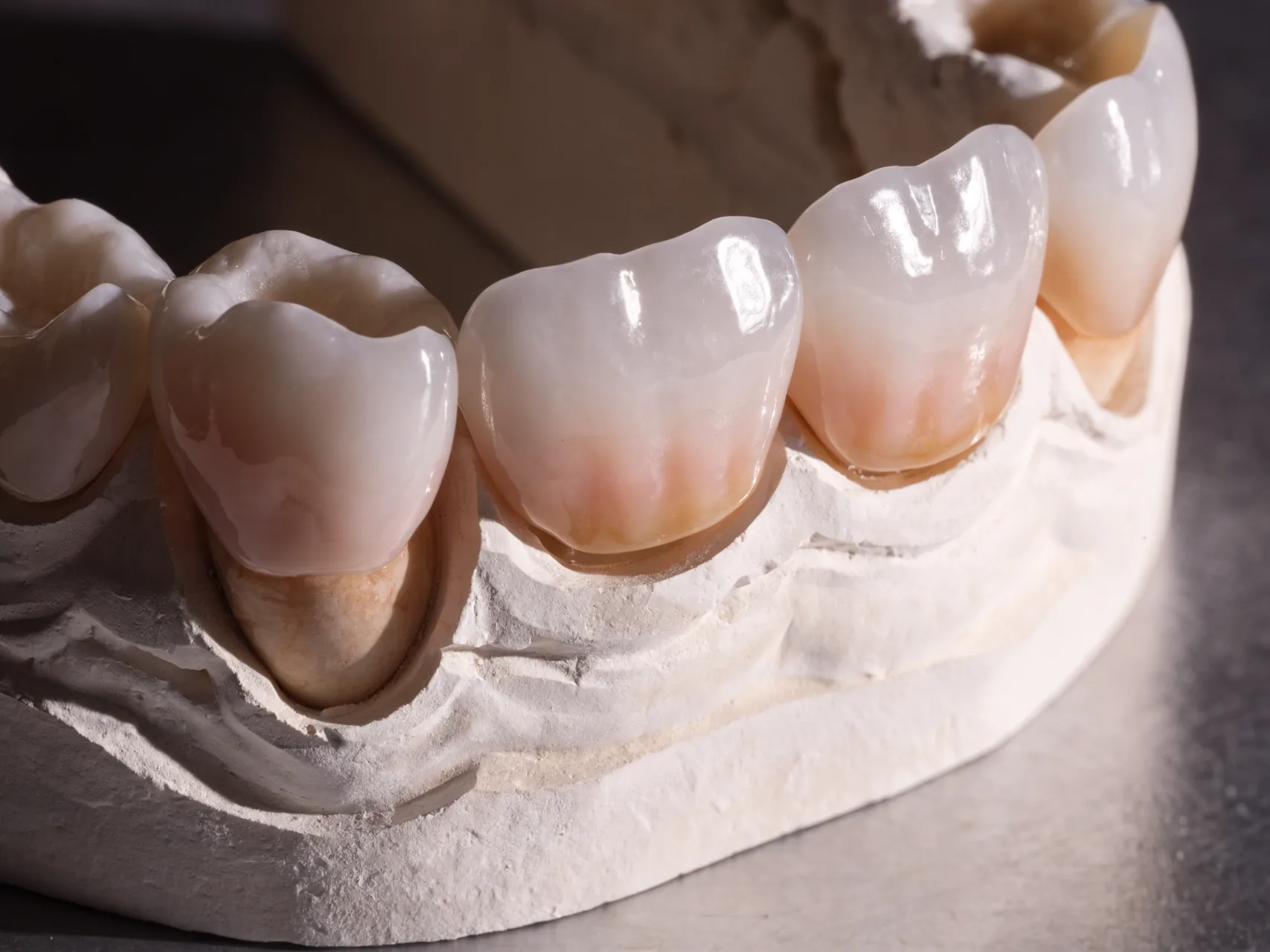
People searching for an implant-supported bridge in Turkey often have several neighbouring teeth missing and want to know whether every space needs a separate implant. That is a reasonable question, but it cannot be answered from the number of gaps alone. The condition of the remaining teeth, position of each missing site, dimensions and shape of the arch, bite, cleaning ability, tissue findings, restorative space and patient priorities all affect the design. Implant number is one result of planning; it is not the starting package.
This guide publishes no fixed implant count, material, price, timetable or outcome. It does not diagnose a reader or state that a named provider uses a particular implant, scanner, laboratory or bridge system. A named legal treatment provider and named treating clinician must convert any initial discussion into an individual examination, site map, options appraisal, consent record and itemised written quotation.
The purpose is practical: to help an adult compare an implant-supported bridge, separate implant crowns, a tooth-supported bridge, a removable partial denture and the no-treatment or monitoring option. It also explains how restorative planning should guide implant positions, why cleaning access belongs in the design, what records should follow the patient and how a travel plan must remain subordinate to clinical decision gates.
This page owns the multiple-adjacent-tooth decision
The broader dental implants guide explains implant treatment generally. The front-tooth implant guide focuses on individual anterior sites and visible tissue relationships. The back-tooth implant guide addresses posterior function and anatomical questions. The fixed versus removable full-arch guide concerns an entire arch rather than a bounded row of adjacent spaces.
This page answers a narrower search intent: when several adjacent teeth are absent but the whole arch is not being replaced, how should the patient compare a multi-unit implant-supported bridge with the other legitimate choices? That distinction matters. A single-tooth crown, a short implant bridge and a complete-arch prosthesis have different support, cleaning, record and maintenance questions. One should not be marketed as a simple extension of another.
The phrase “multiple implants and bridge” also hides two separate decisions. The first is whether implants are appropriate at all. The second is how a restoration should replace the missing units if implants are selected. The patient needs both decisions in writing and needs to know who owns each one.
Name the parties and separate their responsibilities
A cross-border plan may involve a treatment facility, assessing dentist, implant clinician, restorative clinician, dental laboratory, imaging provider, coordinator and travel supplier. A shared logo does not prove that one entity accepts responsibility for every stage. Ask for the legal identity of the treatment provider, the name and professional role of the clinician responsible for diagnosis, the clinician responsible for surgery if different, and the clinician who approves the definitive restoration.
A useful responsibility map identifies:
| Decision or task | Named responsibility to request |
|---|---|
| Diagnosis and options | Clinician who examined the patient and accepts the diagnostic responsibility |
| Tooth prognosis | Clinician recording whether each neighbouring tooth is maintained, treated, monitored or removed |
| Implant site planning | Clinician responsible for anatomy, position and surgical decision-making |
| Restorative design | Clinician responsible for bridge support, contour, contacts, bite and cleanability |
| Laboratory work | Named laboratory or fabricating party when known, acting from a written prescription |
| Imaging | Qualified person who justifies, obtains and interprets the required record |
| Consent and quotation | Legal treatment provider and treating clinician, with documented changes |
| Routine maintenance | Named provider and practical interval or review triggers based on the case |
| Urgent concern | Triage contact plus a boundary for when local direct assessment is needed |
| Travel services | Separate supplier, inclusions, exclusions, amendment and cancellation terms |
A coordinator may organise files and appointments. Coordination is not diagnosis and does not replace direct clinical responsibility. A sales quotation, chat message or generic diagram is not a clinical prescription.
Map the gap site by site and arch by arch
“Three missing teeth” is incomplete information. The plan should identify the arch, side and position of every absent or compromised tooth, the reason for loss if known, the condition of the ridge and soft tissues, and the status of the teeth on both sides. A short anterior gap has different visual and tissue demands from a posterior span exposed to greater chewing forces. A bounded space with healthy neighbours differs from a space beside heavily restored, cracked or periodontally compromised teeth.
Ask for a written site-and-tooth map with four categories:
- teeth definitely present and intended to be maintained;
- teeth with uncertain prognosis that require further investigation or review;
- teeth proposed for treatment or extraction, with the reason and alternatives;
- missing positions and the proposed replacement, if any.
Map the opposing arch too. The replacement does not function in isolation: it meets opposing teeth or restorations, shares space with the tongue and cheeks and must fit the existing bite. The record should note whether the opposing units are natural teeth, crowns, implants, removable teeth or an incomplete dentition. It should also identify wear, grinding indicators, limited opening, jaw symptoms or loss of restorative space where relevant.
The map prevents scope drift. If a later finding changes a tooth prognosis, proposed implant site or bridge span, the change becomes visible instead of being absorbed into a vague package description.
Compare all reasonable options before consent
An informed comparison should put the implant-supported bridge, separate implant crowns, tooth-supported bridge, removable option and no treatment on the same decision sheet. Not every option will be suitable for every person, but excluding one should have a documented clinical or preference-based reason rather than a sales slogan.
Implant-supported fixed bridge
An implant-supported fixed dental prosthesis uses implants as supports and includes one or more replacement units between or beside those supports. Potential advantages may include avoiding preparation of suitable neighbouring teeth and offering a fixed replacement. Important trade-offs include surgery, anatomical and tissue constraints, the relationship between implant positions and the prosthesis, cleaning under connected units, biological and technical maintenance and the possibility that one component problem can affect the connected restoration.
The words “fewer implants” are not automatically a benefit. A reduced number may avoid unnecessary surgery in one design, yet provide unsuitable distribution, span or serviceability in another. The prescription must explain why the proposed support arrangement fits this site.
Separate implant-supported crowns
Individual implant crowns may separate maintenance or contact relationships, but they require a suitable implant position and tissue environment at each selected site. Closely adjacent implants can create restorative and tissue challenges, especially in visible areas. Separate crowns also do not mean that every absent tooth should automatically receive an implant. The plan must compare the actual configurations rather than equate a larger implant count with higher quality.
Tooth-supported fixed bridge
A conventional tooth-supported bridge uses natural teeth as supports. It may avoid implant surgery and can be a relevant option when neighbouring teeth already need suitable restorations. It may also require irreversible preparation of tooth tissue and makes the prognosis, periodontal support, root status and restorability of each abutment important. A resin-bonded design may be a more conservative possibility in selected situations. The clinician should state which tooth-supported designs were considered and why they are or are not appropriate.
Removable partial denture
A removable partial denture can replace one or more teeth without creating a fixed span. It may be useful as a definitive option, an interim option or a fallback when surgery or fixed treatment is unsuitable. It has its own questions about support, retention, speech, bulk, cleaning, remaining-tooth protection, adaptation and future adjustment. “Removable” should not be treated as a synonym for inferior; it is a different compromise.
No immediate replacement or monitoring
Some people may reasonably defer replacement, particularly while disease, healing, finances, priorities or diagnoses are unresolved. Leaving a space can have functional, positional or aesthetic consequences in some cases, but those consequences are individual rather than automatic. The plan should explain what will be monitored, the possible effects of delay and what would trigger reconsideration.
Orthodontic or mixed approaches
Space closure, space redistribution, targeted restoration of neighbouring teeth or a combination of methods may sometimes be relevant. These require the appropriate assessment and should not be added merely to create an idealised diagram. The patient should understand whether an alternative reduces irreversible treatment, adds stages or changes future options.
Preserve neighbouring teeth when the evidence supports it
Tooth preservation is a decision principle, not a promise that every natural tooth can or should remain. An implant bridge may avoid preparing healthy neighbours, but that general advantage does not establish implant suitability. A tooth-supported bridge may be reasonable where proposed abutment teeth already require extensive restoration. A compromised tooth should not be retained or removed solely to fit a package.
Request a tooth-by-tooth prognosis for every tooth beside the gap. It should consider disease, remaining structure, cracks, existing restorations, pulp and root status, periodontal support, mobility, position, function and realistic maintenance. Where removal is proposed, ask for the finding, alternatives and consequences of retaining or removing the tooth. Where preparation is proposed, ask how much healthy structure is expected to be changed and whether a less invasive option is realistic.
A second opinion is particularly valuable before removal of a maintainable tooth, preparation of intact neighbours, grafting, a long connected span or a proposal that changes several teeth beyond the original gap. Preserving a tooth today should also be considered alongside whether it can be monitored, repaired and incorporated into future care.
Plan the restoration before implant positions
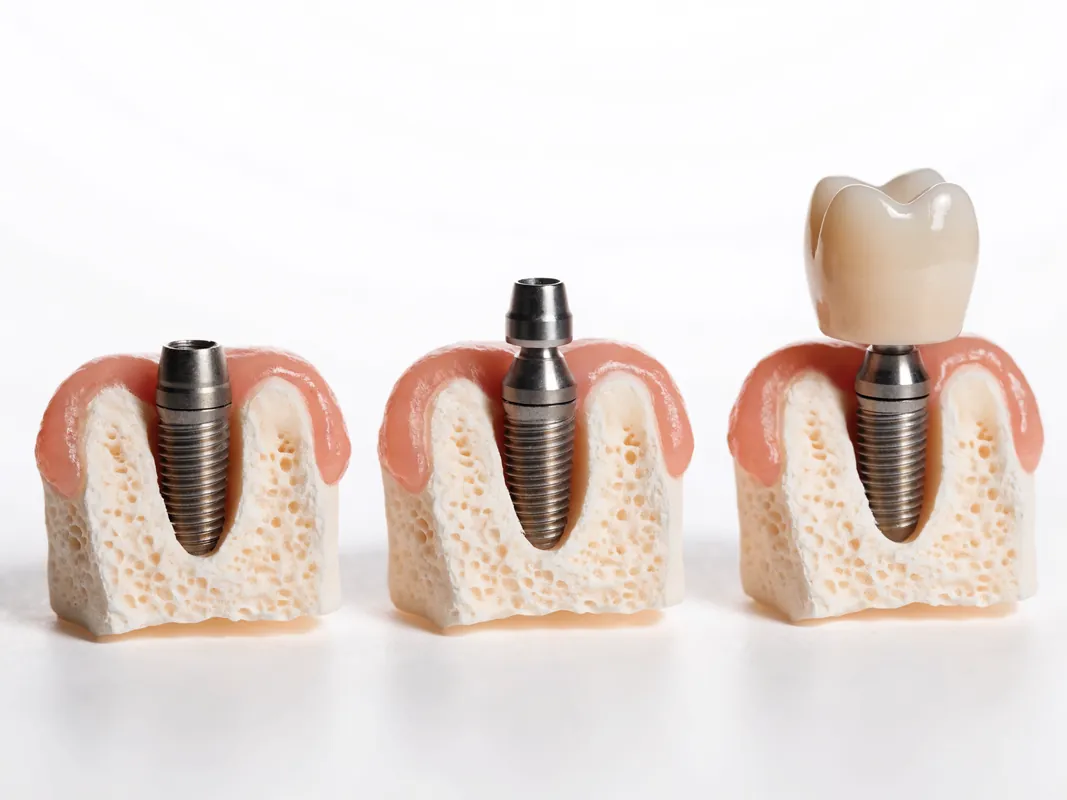
Implants support the restoration; the restoration should therefore be planned before final implant positions are selected. “Put implants at the ends of the gap” is not a sufficient prescription. The restorative proposal needs to show where replacement teeth should emerge, how wide they can be, how the bridge connects, where access channels or cement margins may sit, how the patient can clean and how the units contact the opposing arch.
A restorative-led plan may use clinical examination, photographs, diagnostic casts or scans and other justified records. A virtual plan can help combine those records, but software does not accept clinical responsibility and a digital overlay does not prove that the planned surgery or restoration will be delivered exactly. The responsible clinicians must review the plan against the patient's anatomy and update it when findings differ.
For each proposed implant position, ask:
- which restorative unit it supports;
- what alternative position or design was considered;
- how the position relates to adjacent teeth, roots and important anatomy;
- how the position affects contours and cleaning access;
- whether the restoration is screw-retained, cement-retained or another design and why;
- what happens if the intended site is unsuitable during direct care;
- how a change alters the bridge, provisional, quotation and consent.
The plan should avoid false precision. A computer image may document intent; it cannot eliminate surgical deviation, healing uncertainty or restorative adjustment.
Bridge span, support and cantilever are design decisions
A bridge span includes the supported units, pontics that replace missing teeth and any extension beyond a support. Its behaviour depends on more than the material name. Implant distribution, number and dimensions selected for the person, connector design, prosthetic space, opposing forces, parafunction, retention, framework support and access for repair can all matter.
A cantilever is a replacement unit extending beyond the last support. It is not automatically wrong, and in selected situations it may avoid a poorly positioned extra implant. It changes the mechanical question, however, and should be identified explicitly rather than hidden in an illustration. Systematic reviews report heterogeneous evidence and technical complications, so population results should not become an individual promise. Ask why an extension is proposed, how long and where it is, what forces are expected and how repair would be handled.
The number of missing teeth does not prescribe the number of implants. Nor does “one implant per tooth” prove a better plan. Compare support arrangements using the same outcome questions: tissue preservation, surgical burden, restorative space, cleanability, expected maintenance, serviceability, alternatives and the consequence if one implant or component cannot be used.
Cleanability must be designed, not added later
Connected replacement teeth create surfaces and spaces that a standard toothbrush may not reach. The bridge contour, relationship to the tissue, connector areas and space beneath pontics must allow a cleaning method that the patient can actually perform. A beautiful model that cannot be cleaned is an incomplete design.
Before definitive fabrication, ask the team to demonstrate the proposed access on a model, provisional or equivalent record. Discuss dexterity, vision, gag reflex, hand conditions and whether the patient can use appropriate aids around the planned contours. The prescription should not assume that “clean like natural teeth” is enough; the technique may differ around implants, pontics and connected units.
The European Federation of Periodontology guideline addresses biofilm control, correction of plaque-retentive prosthetic factors and supportive care in prevention and management of peri-implant disease. It does not prescribe one tool or interval for every person. The patient needs an individual demonstration, monitoring plan and a route for professional assessment if bleeding, swelling, discharge, discomfort, mobility, altered bite or cleaning difficulty occurs.
Cleanability is also a consent issue. If the only acceptable contour creates access the patient cannot manage, the team should reconsider the design or option before definitive work rather than blame the patient later.
Function, bite and speech belong in the plan
The bridge must coexist with the whole mouth. Assessment may include available vertical and horizontal space, contacts in closure and movement, wear, parafunctional signs, opposing materials, tooth position, chewing pattern and relevant jaw symptoms. A posterior span may carry different force and access concerns from an anterior span. An anterior bridge may influence appearance, lip support, airflow and speech as well as biting.
The plan should record whether the existing bite is being maintained or changed. If it changes, state how the change will be tested and what happens if comfort, speech or function is not acceptable. A provisional stage may provide useful information, but tolerance of a provisional does not guarantee the biological or technical behaviour of the definitive restoration.
Grinding or clenching should not be diagnosed from a questionnaire alone. If the clinician identifies relevant findings, ask how they affect support, material, connector, provisional, maintenance and any protective appliance recommendation. Also ask which later signs require review: chipping, loosening, a changed contact, food trapping, pain on biting or an altered sensation around the bridge.
Bone, soft tissue and imaging boundaries
An implant site assessment is more than a statement that “there is enough bone.” It may need to consider ridge dimensions and shape, tissue condition, infection, adjacent roots, anatomical structures, restorative position and the proposed emergence of the replacement. In visible sites, the relationship between bone, soft tissue, tooth form and neighbouring papillae may be especially important. In posterior sites, access and nearby anatomy may change the options.
The responsible clinician decides which imaging is justified after history and examination. The American Academy of Oral and Maxillofacial Radiology position statement supports cross-sectional imaging for implant-site assessment and identifies cone-beam computed tomography as the method of choice in that context. That guidance does not mean every marketing enquiry needs a scan, that one scan answers every restorative question or that radiation has no justification boundary. Imaging must be appropriate, interpreted by a qualified person and linked to the actual plan.
Ask for the date and type of image, the patient identity, who interpreted it, whether the full field was reviewed and what limitations remain. A screenshot in a chat is not a complete diagnostic record. A scan shows mineralised structures well but does not replace direct soft-tissue examination, periodontal measurements, vitality testing, bite analysis or medical history.
Bone augmentation, extraction-site management or soft-tissue procedures should appear as separate proposed decisions with purpose, alternatives, uncertainties, costs and effects on staging. They should not be described as automatic add-ons to make the advertised bridge fit.
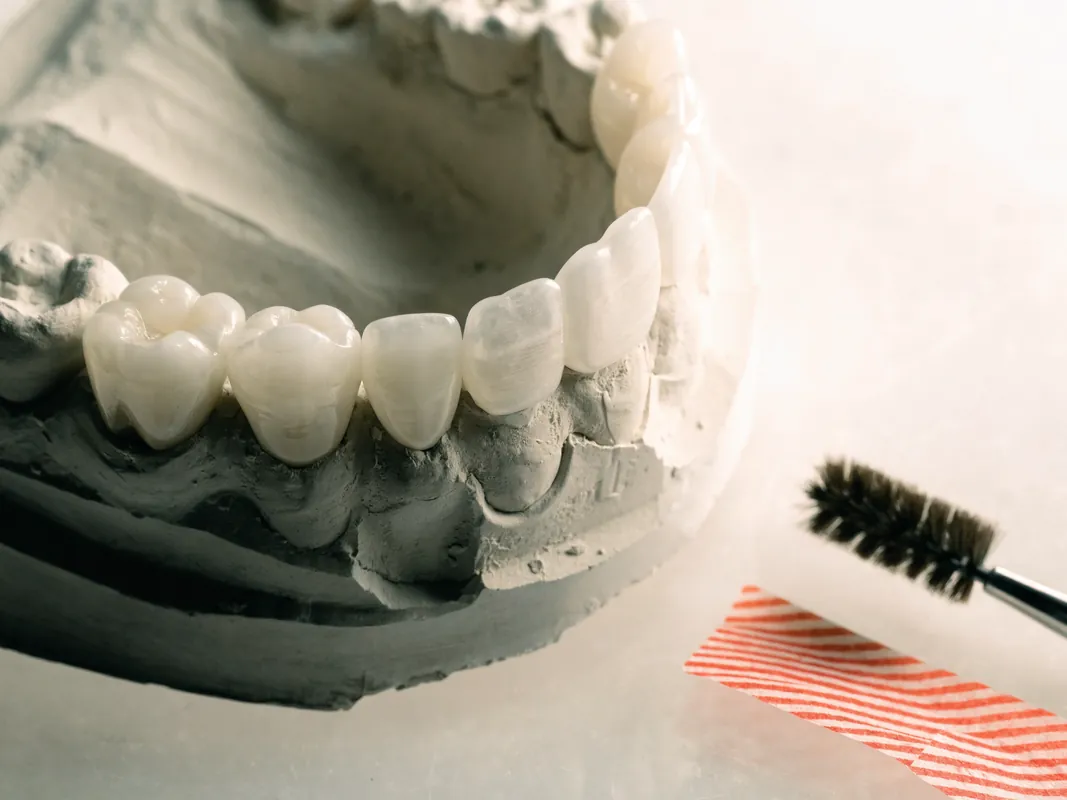
General health and disease-control gate
Implant surgery and long-term maintenance require an up-to-date medical and dental history. The named clinician may need to consider medicines, allergies, smoking or vaping, diabetes control, bleeding or immune concerns, previous radiotherapy, antiresorptive medicines, past implant or periodontal disease and other individual factors. This list is not a remote eligibility test. The treating team must decide what information, consultation or modification is needed.
Active decay, periodontal inflammation, unresolved infection or unstable oral hygiene may alter sequencing. The systematic review on implant-supported fixed partial dentures in people with a history of periodontitis found poorer implant survival and a higher peri-implantitis risk in the studied population than in those without such history. That evidence should support risk discussion and supportive care, not exclusion by label or a numerical forecast for one patient.
Ask what disease-control findings must be satisfied before surgery or definitive restoration, how they will be measured and who reviews them. If a remote proposal ignores the cause of tooth loss and condition of the remaining dentition, it is not yet a complete plan.
Staging and provisional care are decision gates
There is no universal travel calendar for an implant-supported bridge. Stages may include diagnosis and disease control, extraction where indicated, site management, implant placement, healing, exposure or component changes, provisional care, restorative records, try-in, definitive fitting and maintenance. Some steps may be combined in an appropriate case; others require new information before proceeding.
A provisional may be removable or fixed and may be supported in different ways. It should have a stated purpose: appearance, space maintenance, tissue guidance, protection, function testing or another case-specific aim. Ask who provides it, what it is expected to tolerate, how to clean it, what symptoms require contact and what happens if the planned provisional cannot be used.
Loading an implant with a provisional or definitive restoration is a clinical decision based on individual findings. Marketing terms such as same-day teeth should not be treated as unconditional. The written plan should identify the intended route, the criteria that must be met and the fallback if those criteria are not met.
Each gate needs a stop/change rule. If an implant site, tissue response, fit, bite or patient preference differs from the initial proposal, the next irreversible step should wait for explanation, updated options, quotation and consent. Flights and laboratory bookings should not override that rule.
Laboratory prescription, material choice and traceability
“Zirconia bridge” does not describe a complete prosthesis. The definitive prescription may include framework or monolithic design, veneering, connectors, pontic contours, retention, interfaces, shade and optical objectives, surface finish, contacts and bite. Other material systems may be considered. No material is universally best, and the evidence should not be reduced to a claim that one named material is stronger or more natural for everyone.
A systematic review of posterior multi-unit implant-supported fixed prostheses found broadly similar short-term survival estimates among several material/design groups while reporting more ceramic chipping in veneered restorations than monolithic groups. The studies and follow-up were heterogeneous. This supports a case-specific discussion of design, repairability and evidence limits; it does not select a material for an individual.
Request a written laboratory prescription and clinically usable traceability records. Depending on the work, useful records may include the named laboratory or fabricator, prescribed materials, implant and restorative component system identifiers, relevant lot or batch information when supplied, shade communication, design approval, laboratory statement of conformity where applicable and instructions for future service. The GDC record standard lists laboratory prescriptions, statements of conformity, radiographs, photographs, models and consent forms among patient records when available; it is used here as a transparent comparison framework, not as a claim that UK regulation governs treatment abroad.
Ask how the restoration can be removed, repaired or remade, which components a later clinician would need and whether the necessary tools and identifiers will be supplied in the patient record.
Try-in, acceptance and definitive fitting
A try-in is an opportunity to evaluate the aspects that can be assessed at that stage. Depending on the design, the team may check fit, contacts, tissue relationship, accessible contours, tooth position, shade, speech and bite. The patient should know which features can still be changed and which changes would require new records or fabrication.
Visual approval alone is not sufficient. The clinician must decide whether the restoration is clinically acceptable, and the patient needs a realistic opportunity to raise concerns. A photograph taken from one angle cannot prove passive fit, cleanability, bite or material integrity. If the bridge feels high, traps food, impairs cleaning or causes pain, that concern should be assessed rather than normalised through a generic reassurance.
At definitive fitting, request a record of the restoration, implant and component identifiers, retention method, relevant tightening or cementation record, clinical checks, baseline images when justified, hygiene demonstration and review plan. Ask which symptoms require urgent contact and which require direct local examination.
Consent and documented change control
Consent is a continuing process, not a signature collected at the start. The patient needs understandable information about findings, reasonable options, relevant risks and benefits, uncertainties, costs, consequences of no treatment, responsible parties and the ability to pause or decline. The GDC consent standard is a useful comparison framework: it emphasises discussing options and costs, documenting understanding and obtaining new consent when agreed treatment or estimated cost changes. Local law and the actual contract still need to be identified for treatment abroad.
Create a change log for any difference between the first proposal and the care actually offered. It should record:
- the date and new finding;
- the old and proposed new tooth/site map;
- the effect on implant number or position, bridge span and provisional;
- alternatives, including stopping or deferring;
- additional risks, records or maintenance;
- price and travel consequences;
- the named clinician explaining the change;
- the patient's decision and updated consent.
Do not rely on a disappearing chat thread for irreversible changes. Ask for a dated document that can be shared with a local dentist and used for later service.
Require an itemised written quotation
The quotation should describe a pathway rather than one total next to “implants and bridge.” It should identify the legal treatment provider, currency, validity period, taxes where relevant, payment stages, refund or cancellation terms and the clinical assumptions on which the estimate depends.
Useful line items may include:
- examination and diagnostic records;
- disease-control treatment, if proposed;
- extractions or site procedures, each identified rather than bundled;
- each implant and associated component category;
- provisional restoration or removable interim option;
- definitive bridge, number of units and prescribed material/design;
- laboratory stages and remake terms;
- conditional items and how approval is obtained;
- medicines or sedation only where individually prescribed;
- review, hygiene and maintenance visits;
- urgent assessment and remedial-care boundaries;
- copies of records and component information;
- non-clinical travel services under separate terms.
Ask what is excluded: extra imaging, grafting, changes after direct examination, a different provisional, additional accommodation, return travel, local emergency care, repair, remake or treatment of another tooth. A low headline becomes difficult to compare when essential stages are unpriced.
No website guide can state the reader's final cost. An individual estimate should follow assessment by the qualified professional responsible for the plan.
Travel, aftercare and local handover
Travel should fit the clinical plan, not determine it. Before booking, ask which appointments are essential, which dates are estimates, what observation or review is required before flying and what happens if a decision gate is not met. Separate treatment terms from flights, accommodation and transfers so that a clinical change does not silently rewrite the travel contract.
The GDC patient guidance for overseas dental treatment recommends asking who will treat, what aftercare is provided, who pays for extra travel or remedial work, whether complications are included, how complaints work and whom to contact afterwards. NHS guidance also highlights exchange of records, arrangements for aftercare at home, complaints and insurance. Those questions do not endorse or reject treatment in a country; they identify responsibilities that should be resolved before travel.
A practical local handover pack may include:
- diagnosis and tooth/site chart;
- dated treatment record and operative notes;
- relevant images and reports in usable format;
- implant system, site and component identifiers;
- bridge design and laboratory information;
- material and conformity records where available;
- maintenance and cleaning instructions;
- current medicines prescribed in connection with care;
- review findings and unresolved issues;
- named clinical contacts and urgent-triage boundary;
- consented route for secure record sharing.
A local dentist is not automatically obliged to repair another provider's work. Ask in advance what assessment can be arranged at home, how records will be transferred and who pays when direct examination, components or return travel are needed. Messaging can support triage but cannot replace clinical examination, imaging or technical repair.
Maintenance is part of the restoration
An implant-supported bridge remains a maintained medical device and restoration, not a fit-and-forget object. Biological tissues can develop inflammation or disease; screws, cements, connectors, veneering and contacts can require service. The scoping review of prosthetic complications found variation in materials and study definitions and reported screw loosening, loss of retention and wear among technical complications. Earlier systematic evidence also shows why “survival” must not be translated into “complication-free.”
The maintenance plan should be risk-based. It may consider home cleaning, periodontal history, smoking, diabetes, prosthesis contours, previous complications, bite, dexterity and findings at review. Ask what baseline measurements or images are recorded, who will monitor tissues and components, and what changes trigger intervention.
Seek prompt professional advice for swelling, discharge, persistent bleeding, increasing pain, fever or feeling unwell, unexpected mobility, fracture, a loose component, sudden bite change, altered sensation or inability to clean. Urgent symptoms may require local emergency assessment rather than waiting for remote messages or travel.
Red flags in a multiple-tooth proposal
Pause and ask for clarification if the proposal:
- decides implant number from a photograph or the number of spaces alone;
- says every missing tooth always needs an implant, or that a reduced count is always better;
- offers no tooth-by-tooth prognosis for neighbouring teeth;
- removes or prepares teeth without written alternatives;
- places implants before showing the intended restorative positions;
- hides a cantilever, unsupported span or connected design in a generic picture;
- promises that a scan guarantees support, fit or outcome;
- names a material as universally strongest, safest or most natural;
- gives no cleaning-access demonstration;
- treats pain, movement, bleeding or food trapping as automatically normal;
- has no named clinician responsible for the definitive prescription;
- cannot provide implant, component and laboratory records;
- turns a changed finding into a higher invoice without updated consent;
- allows flights or package dates to force the next clinical stage;
- describes remote messaging as complete aftercare;
- gives no local handover, complaint process or remedial-care terms.
One red flag does not establish misconduct or prove that treatment is unsuitable. It means the information is incomplete enough to pause an irreversible decision.
Questions to ask the named clinician
Take the same written questions to each provider so proposals can be compared fairly:
- What is the diagnosis and prognosis for every tooth beside the gap?
- What is missing at each site, and what findings remain provisional?
- Which options were considered: no treatment, removable, tooth-supported, separate implant crowns and implant bridge?
- Why is the recommended option suitable for this person rather than merely available?
- How are suitable neighbouring teeth preserved?
- What restoration was planned before implant positions were selected?
- Which unit does each proposed implant support?
- Does the bridge include a cantilever, and what are its design and service implications?
- How can the patient clean every tissue-facing and interproximal area?
- How were bite, opposing teeth, speech and available space assessed?
- Which imaging is justified, who interprets it and what can it not show?
- What health or disease-control findings could delay or change care?
- What is the intended provisional, its purpose and fallback?
- Which criteria permit progression to loading and definitive fabrication?
- What is the exact laboratory prescription and material rationale?
- Which implant, component, material and laboratory records will be supplied?
- What changes require a new quotation and consent?
- What does the itemised quotation exclude?
- Who provides routine maintenance, urgent assessment and technical repair?
- How are records handed to a local dentist after travel?
- Which law, contract, insurance, complaint and remedial process applies?
Sources and evidence limits
The sources below were checked on 29 August 2026. They support the option map, planning questions and evidence boundaries. They do not endorse a provider, prescribe an individual design or predict an outcome.
- [American Dental Association: missing teeth](https://www.mouthhealthy.org/all-topics-a-z/missing-teeth) — patient overview identifying bridges, dentures and implants as possible replacement categories.
- [American Dental Association: bridges](https://www.mouthhealthy.org/all-topics-a-z/bridges) — patient explanation of fixed bridges and the importance of their supporting foundation.
- [American Dental Association: implants](https://www.mouthhealthy.org/all-topics-a-z/implants) — patient overview of implant-supported crowns, bridges and dentures, health assessment and staged care.
- [NHS: dentures](https://www.nhs.uk/tests-and-treatments/dentures/) — patient information on partial dentures and fixed bridge or implant alternatives.
- [Cambridge University Hospitals: dental implants in restorative dentistry](https://www.cuh.nhs.uk/patient-information/dental-implants-in-restorative-dentistry/) — NHS patient information on suitability, alternatives and use of implants to support crowns, bridges or dentures.
- [Pjetursson and colleagues: material and design in posterior multi-unit implant prostheses](https://pubmed.ncbi.nlm.nih.gov/37750526/) — systematic review with short-term, heterogeneous evidence on pontic and splinted designs and material-related technical complications.
- [Bezerra and colleagues: complications of implant-supported fixed partial dentures](https://pubmed.ncbi.nlm.nih.gov/38036319/) — scoping review showing inconsistent definitions and reporting of biological and technical failures.
- [Carra and colleagues: history of periodontitis and implant-supported partial prostheses](https://pubmed.ncbi.nlm.nih.gov/34775625/) — systematic review and meta-analysis supporting individual periodontal risk discussion and maintenance rather than a blanket forecast.
- [AAOMR position statement on implant imaging](https://pubmed.ncbi.nlm.nih.gov/22668710/) — research-based consensus guidance on selection of cross-sectional imaging for implant-site assessment.
- [EFP clinical guideline on peri-implant diseases](https://www.efp.org/fileadmin/uploads/efp/Documents/Other_publications/Clinical_guidelines/peri-implantitis-guideline-03-peri-implant-diseases.pdf) — professional guidance on prevention, biofilm-retentive factors, prosthesis modification and supportive care.
- [GDC Principle 3: consent](https://standards.gdc-uk.org/pages/principle3/principle3) — UK professional comparison framework for options, costs, ongoing consent and documented changes; it is not Turkish law.
- [GDC Principle 4: records and information](https://standards.gdc-uk.org/pages/principle4/principle4) — UK professional comparison framework for complete records, laboratory prescriptions, conformity statements and secure information handling; it is not Turkish law.
- [GDC: going abroad for dental treatment](https://www.gdc-uk.org/standards-guidance/information-for-patients-public/going-abroad-for-dental-treatment) — patient questions about qualifications, aftercare, complications, costs, complaints and contact after travel.
- [NHS: going abroad for medical treatment](https://www.nhs.uk/using-the-nhs/healthcare-abroad/going-abroad-for-treatment/going-abroad-for-medical-treatment/) — planning prompts about provider research, records, aftercare, complaints and insurance.
Evidence from groups cannot select a design for one person. Published “survival” can include a restoration that needed repair or treatment, and study populations, definitions, materials, operators and follow-up differ. A responsible plan therefore combines current evidence with direct examination, individual priorities and clearly named accountability.
Final decision rule
Do not buy “multiple implants and a bridge” as a pre-counted product. Buy only a documented, patient-specific pathway if the evidence supports it. The decisive plan maps every tooth and site, compares fixed, removable and no-treatment options, explains why the restoration drives implant positions, makes the span and any cantilever visible, proves realistic cleaning access, separates provisional from definitive stages, records material and component traceability, prices the pathway item by item and establishes local aftercare before travel.
That standard cannot remove uncertainty. It makes the uncertainty, responsibilities and change points visible enough to question, compare and consent to responsibly.