A neutral, evidence-led method for checking a low headline implant quote without assuming low quality: normalise clinical scope, trace components and price contingencies.
A low headline price for dental implants in Turkey is a reason to ask precise questions, not proof of poor care. A high price is not proof of strong care either. Prices can differ because the proposals include different diagnoses, numbers of teeth, implant-supported designs, stages, clinicians, laboratories, records, reviews, commercial terms and travel assumptions. Until those variables are normalised, “cheap” describes only an advertisement—not a clinically equivalent comparison.
This guide replaces fear-based price-tier marketing with an evidence-led quote audit. It does not rank providers, implant systems, countries or price tiers. It publishes no fixed price, saving, timetable, success rate, failure rate or service-life estimate. It does not claim that one provider’s outcome is predictable from price. Its purpose is to help a patient identify what the headline covers, what remains provisional, what could change after examination and which evidence should exist before payment.
Use the dental implant service guide for treatment-category fundamentals. Use the implant cost guide for the separate question of how a per-unit quote is structured. The clinic due-diligence worksheet owns the broader provider-selection process. This article owns a narrower intent: testing a low headline implant quote against an equivalent clinical and commercial scope.
This is educational planning information, not a diagnosis, treatment recommendation, provider endorsement, quotation, legal opinion, financial advice, insurance interpretation or promise of an outcome. A suitably qualified clinician who examines the patient and has adequate records owns clinical decisions. Regulatory lists, contracts, exchange rates, payment protections, insurance and travel advice can change; verify them for the exact transaction and travel date.
A Headline Implant Price Is Not Yet a Treatment Price
An advertisement might use “implant” to mean only the fixture placed in bone. Another might include an abutment and crown. Another might describe a full-arch provisional restoration supported by several implants. Another may exclude assessment, imaging, extraction, grafting, provisional care, laboratory work, definitive restoration, medicines, review or maintenance. Those figures cannot be compared merely because they share a word.
Before discussing money, ask the seller to define the priced unit:
- Is it an implant body only?
- Does it include the cover screw, healing component or temporary abutment where relevant?
- Does it include a definitive abutment?
- Is the abutment standard or patient-specific?
- Does it include a screw-retained or cement-retained crown, bridge or denture component?
- Is the restoration provisional or definitive?
- Which tooth or site does the line refer to?
- Is extraction a separate decision and line?
- Are assessment and clinically justified imaging separate?
- Is graft material, membrane, sinus-related care or soft-tissue treatment excluded or conditional?
- Are laboratory stages, try-in and review included as clinical lines or not?
- Does the price apply only if a remote assumption is confirmed in person?
Do not use “all in” as a substitute for these answers. A round total without a site map can hide genuine uncertainty or simply be incomplete. A responsible preliminary quote can contain conditional lines, but it should state their triggers and who decides whether they apply.
Preserve Restorable Teeth Before Pricing Replacement
The first implant question is not the fixture price. It is whether a tooth is missing or whether an existing tooth should be removed. Extraction is irreversible and should not be justified by the availability of an implant offer. Ask for a tooth-specific diagnosis and the strongest reasonable preservation alternative.
For a tooth proposed for extraction, record:
- decay and remaining tooth structure;
- crack location and extent where known;
- pulpal and root condition;
- previous root-canal treatment or retreatment questions;
- periodontal support, mobility and cleansability;
- infection and symptoms;
- existing restorations;
- functional importance and position;
- restorative, endodontic, periodontal or orthodontic options;
- uncertainty requiring specialist review;
- consequences of monitoring or delaying extraction.
A preservation pathway may involve repair, a direct or indirect restoration, endodontic treatment or retreatment, periodontal care, orthodontic movement, monitoring or no immediate intervention. These are examples for discussion, not advice that a particular tooth can be saved. Restorability belongs to the responsible clinician, with referral or second opinion where the decision is uncertain or high consequence.
If the tooth is already missing, implant treatment is still not automatic. Depending on the site and patient, alternatives may include no immediate replacement, a removable prosthesis, a tooth-supported or adhesive bridge, orthodontic space management or another restorative design. Compare effects on adjacent teeth, function, hygiene, appearance, future options, maintenance and cost. The lowest fixture price does not resolve that choice.
For multiple failing teeth or a full arch, require a tooth-by-tooth prognosis before accepting an extraction-led plan. A label such as “full-mouth implants” should not collapse maintainable teeth and hopeless teeth into one sales unit. Ask which teeth can reasonably be retained, which require treatment, which remain uncertain and which are proposed for removal—with reasons.
Diagnosis and Case Scope Come Before Device Selection
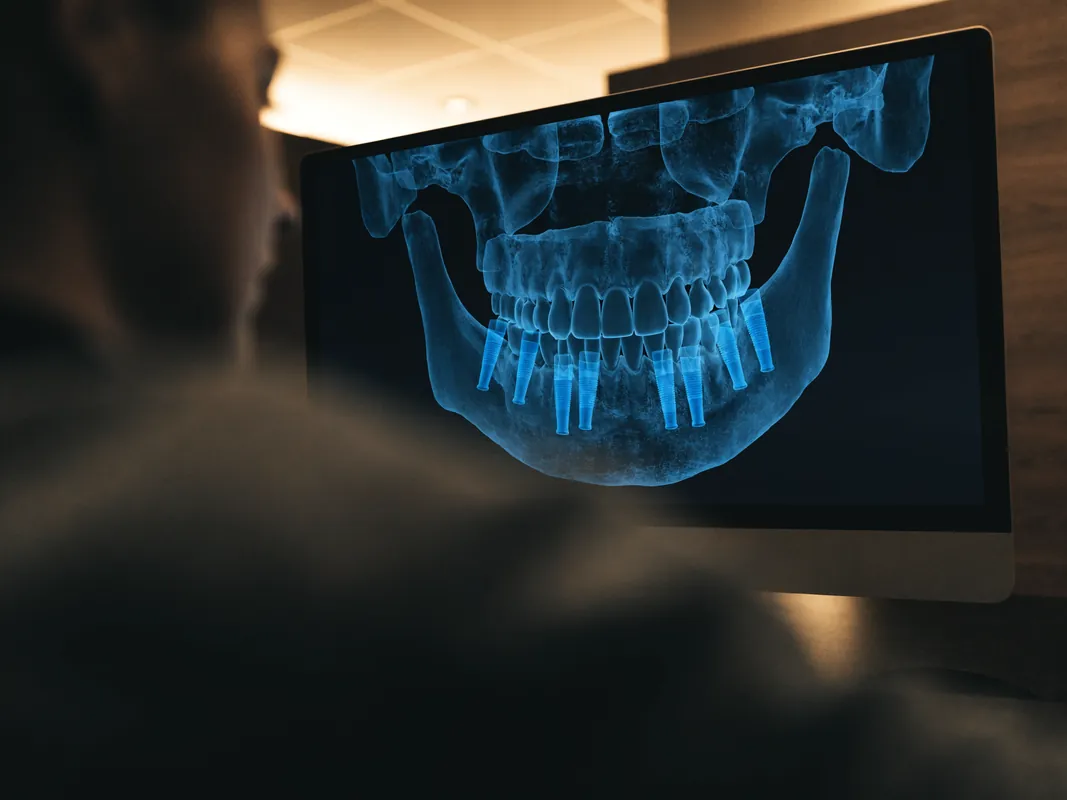
Implant planning involves the patient, the site and the intended restoration. A remote panoramic image may support preliminary questions, but it cannot always determine medical suitability, periodontal stability, three-dimensional anatomy, soft-tissue needs, occlusion, parafunction, restorability or the definitive prosthetic design. The remote quote should say which assumptions require in-person confirmation.
The assessment may consider, as clinically relevant:
- medical history, medicines, allergies and previous surgery;
- smoking or nicotine exposure;
- diabetes or other conditions affecting decision-making;
- periodontal disease and hygiene;
- active infection or pain;
- anatomy and neighbouring structures;
- bone and soft-tissue conditions at each site;
- adjacent tooth and restoration condition;
- available restorative space;
- bite, movement and parafunction;
- smile line, phonetics and aesthetic objectives;
- ability to clean and maintain the proposed design;
- local aftercare and likely return burden.
Imaging should be justified by the clinical question. The ADA and American Academy of Oral and Maxillofacial Radiology published updated patient-selection recommendations for dental radiography in 2026; the ADA’s summary is at https://adanews.ada.org/ada-news/2026/january/new-ada-recommendations-confirm-dental-imaging-most-effectively-used-in-moderation/. The useful principle is that imaging follows history, examination and need rather than a universal package. This US guidance does not set Turkish legal requirements, but it counters the claim that more imaging automatically means more careful care.
Ask who reports or interprets the imaging, how it changes the plan and what copy you receive. A scan alone cannot establish every soft-tissue, functional or restorative fact. Conversely, do not assume a particular image is unnecessary because it was omitted from the headline price. The responsible clinician should explain why each record is or is not indicated.
Separate Implant Placement, Loading and Restoration
“Implant in one trip” can blur several different decisions. Separate extraction timing, implant placement timing, healing, loading, provisional restoration and definitive restoration. The International Team for Implantology consensus on placement and loading protocols at https://academy.iti.org/academy/consensus-database/consensus-statement/-/consensus/implant-placement-and-loading-protocols/1802 distinguishes these concepts and emphasises patient- and site-specific criteria plus alternatives when intended conditions are not met.
For each site, ask:
- Is extraction planned, and is placement at the same surgical episode conditional?
- What clinical findings permit or prevent placement at that stage?
- Is any restoration attached soon after placement, and is it in functional contact?
- Is the immediate restoration provisional?
- What criteria must be satisfied before loading?
- What changes if stability, anatomy or grafting needs differ from the preliminary plan?
- What protects function and appearance if the planned immediate pathway is not appropriate?
- When and on what criteria is the definitive restoration considered?
- Who owns the restorative design before surgery?
Do not turn a consensus classification into an individual timetable or outcome promise. Its value for quote verification is the distinction between stages and the requirement for contingency. A low quote may price the surgical fixture but omit the provisional restoration, definitive abutment, definitive crown or a return stage. Another quote may include more lines but remain clinically unsuitable. Only equivalent scope resolves the comparison.
Grafting Is a Site-Specific Branch, Not a Universal Add-On
Bone or soft-tissue augmentation may be considered at some sites and not others. A generic warning that every low quote will “discover grafting on arrival” is fear-based and inaccurate. The correct question is whether the preliminary information supports a conditional branch, who confirms it, what alternatives exist and how the additional scope is priced.
Ask the provider to state:
- which site may need augmentation and why;
- what can and cannot be determined remotely;
- what examination or imaging finding triggers the decision;
- whether augmentation would be simultaneous or staged and who decides;
- material category and traceability commitments;
- donor-site implications if autogenous tissue is considered;
- membrane or fixation components where relevant;
- alternatives that avoid or change grafting;
- effect on provisional and definitive plans;
- records and follow-up required;
- quote change and cancellation choices if the branch is activated.
Possible alternatives may include retaining a tooth, changing the prosthetic design, choosing a bridge or removable option, orthodontic space management, using a different site, staging care or not proceeding. Suitability is clinician-owned. A salesperson should not present a graft as certain from incomplete records or as harmless because it is commercially bundled.
Single-Tooth, Multiple-Tooth and Full-Arch Scope Are Different
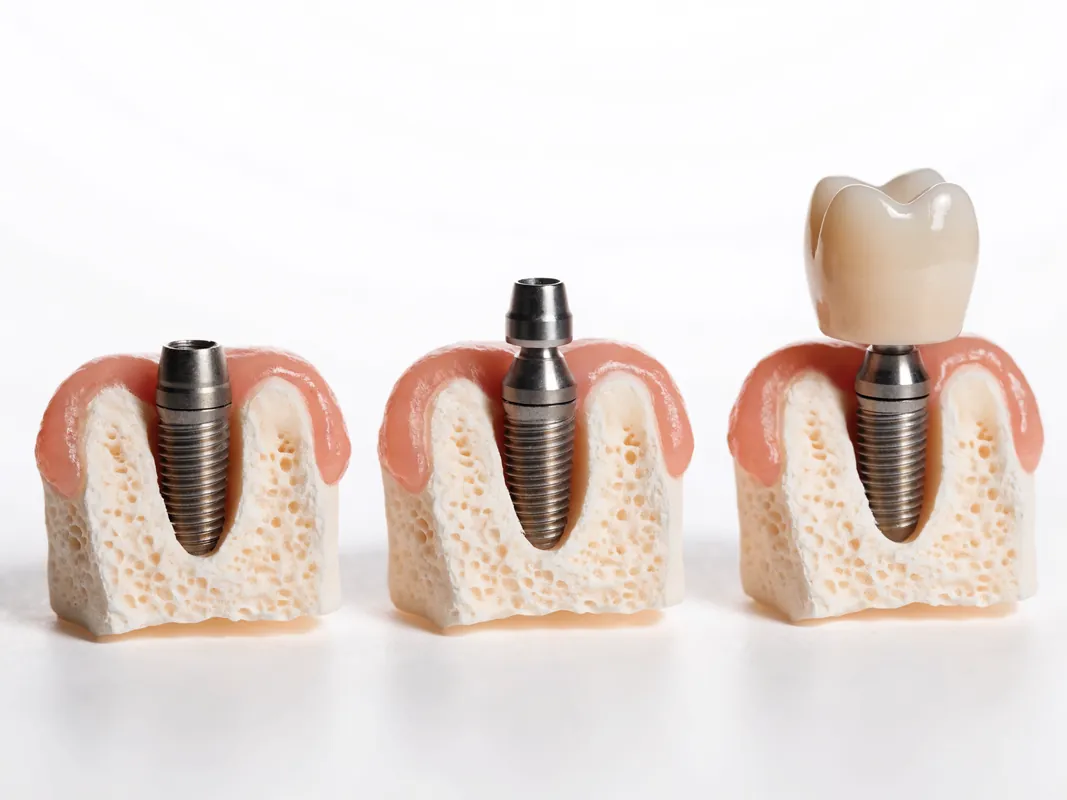
A per-implant figure cannot describe every prosthetic situation. One missing tooth may involve an implant body, abutment and crown. Several missing teeth may be restored individually or with an implant-supported bridge. An edentulous arch may involve a removable or fixed design, a provisional phase and a definitive prosthesis. Implant number alone does not define quality or suitability.
For single-tooth care, compare space, adjacent teeth, tissue contours, occlusion, provisional appearance, abutment, crown, fixation and serviceability. For multiple sites, compare whether implants support separate crowns or a bridge, how cleaning works, what happens if one component needs service and how load is distributed.
For full-arch care, require a prosthetic plan before surgery. Ask about maintainable tooth preservation, lip and tooth display, restorative space, implant distribution, provisional design, definitive design, phonetics, hygiene access, material, repair strategy and local maintenance. The phrase “teeth fixed on implants” is not enough.
The ITI consensus on fixed prostheses in edentulous jaws at https://academy.iti.org/academy/consensus-database/consensus-statement/-/consensus/loading-protocols-for-fixed-prostheses-in-edentulous-jaws/1313 describes full-arch treatment as complex and links implant number and distribution to the implant-prosthodontic plan. Do not copy its study criteria or rates into an individual quote. Use it to ask why the proposed count and distribution fit the restoration.
Device and Component Traceability Is Not Brand Ranking
The US Food and Drug Administration’s patient information at https://www.fda.gov/medical-devices/dental-devices/dental-implants-what-you-should-know explains that a dental implant system can include an implant body, abutment and fixation screw and recommends keeping the brand and model information in the patient record. This is a useful traceability principle. It does not certify a product for use in Türkiye or rank systems globally.
Ask for a record that identifies, as applicable:
- implant system manufacturer and product family;
- implant body reference, dimensions, lot or batch;
- placement site and date;
- cover screw, healing component or temporary component;
- definitive abutment type, material and reference;
- fixation screw or other connecting component;
- restorative connection or interface information;
- graft and membrane identifiers where used;
- crown, bridge or prosthesis material and laboratory;
- instructions or records needed for future service.
Do not accept “European,” “Korean,” “Swiss,” “German,” “original,” “medical grade” or “top brand” as a traceability record. Country of manufacture and marketing tier do not establish suitability. The clinician should select a system and component configuration for the case and be able to document what was placed.
Compatibility matters. An implant body, abutment, screw and restorative component form a system. Ask whether components are made by, authorised for or otherwise documented as compatible with the identified system, and who accepts responsibility for that decision. Do not infer compatibility from appearance.
Traceability also supports recall, repair and local maintenance. It does not guarantee that a local dentist stocks tools or components. Ask a UK professional in advance whether they can identify or service the proposed system and what records they require. They remain free to decline care outside their competence or resources.
Laboratory and Definitive Restoration Lines Must Be Visible
The surgical implant is only part of treatment. The restoration determines how the patient chews, speaks, cleans and presents the teeth. A low fixture price may be genuine while the restorative phase is quoted later. That is acceptable only if the boundary is explicit and the patient can understand the likely decision branches before committing.
For a crown, bridge or full-arch prosthesis, ask:
- Which legal laboratory manufactures the provisional and definitive work?
- Who writes the clinical prescription?
- What restoration type and material category is proposed?
- Is the restoration screw-retained, cement-retained or another design, and why?
- Which abutment is part of the line?
- How are shade, contour, contacts, occlusion and hygiene access recorded?
- Is a provisional restoration distinct from the definitive restoration?
- What try-in or verification stages are contemplated?
- What findings could require redesign or remake?
- What laboratory and material records will be supplied?
- How can the restoration be serviced locally?
An in-house laboratory is not automatic evidence of quality, and an external laboratory is not automatic evidence of weak control. Verify the actual prescription, responsibilities, records and change process. A technician cannot diagnose or consent a surgical plan; the named clinician remains accountable for clinical suitability.
The definitive material name does not make two quotes equivalent. Thickness, framework, connector design, support, opposing dentition, bonding or screw connection, finish, repairability and cleaning all matter. Ask how the design fits the patient rather than asking which material “wins.”
Identify Every Clinical and Commercial Role
Before comparing prices, identify the exact legal treatment provider, facility, responsible clinicians, intermediary, laboratory, imaging provider, payee and travel suppliers. A website or coordinator may facilitate communication without being the clinic. A payment recipient may not be the entity legally responsible for treatment. Role separation prevents a low price from obscuring accountability.
For Türkiye, check current Ministry of Health information for authorised international-health-tourism providers at https://saglikturizmi.saglik.gov.tr/EN%2C69063/healthcare-providers-authorized-by-the-ministry.html and the HealthTürkiye facility list at https://www.healthturkiye.com/hospitals-list. Check the named dentist through the Turkish Dental Association search at https://tdb.org.tr/dishekimi_arama.php. Save dated evidence and ask the provider to resolve any mismatch.
For each proposed clinician, record:
- full professional name;
- current registration evidence;
- role in diagnosis and treatment planning;
- role in extraction, grafting or implant placement;
- role in provisional and definitive restoration;
- who owns overall coordination;
- substitution process;
- who signs records and discharge information.
Do not infer experience, specialist status or competence from job titles, social media, a team page or price. Ask for the credential actually claimed, verify it through its issuer and understand its relevance. This article makes no provider or clinician credential claim.
Consent and Records Must Follow the Final Scope
Consent is not a booking form or a signature captured before examination. The responsible clinician should explain the patient-specific diagnosis, proposed stages, material risks, uncertainty, alternatives and consequences of no treatment. GDC Principle Three at https://standards.gdc-uk.org/pages/principle3/principle3 provides a useful framework for valid consent questions, although it governs UK registrants rather than automatically applying UK regulation to a Turkish provider.
Implant consent may need to distinguish:
- tooth preservation and extraction;
- implant and non-implant alternatives;
- site and number of implants;
- placement timing and loading;
- grafting or soft-tissue branches;
- provisional and definitive restorations;
- anatomical, biological and mechanical risks;
- aesthetic, phonetic and functional uncertainty;
- maintenance and future intervention;
- consequences of delaying, declining or changing the plan;
- travel and local aftercare limitations.
If examination changes the scope, consent must be revisited. Ask for the revised diagnosis, alternatives, itemised quote and time to decide. A flight, deposit or laboratory booking should not pressure the patient into broader treatment.
GDC Principle Four at https://standards.gdc-uk.org/pages/principle4/principle4 addresses patient information and records for UK registrants and provides a useful continuity checklist. Request examination findings, diagnosis, imaging and reports, consent, operative notes, device identifiers, graft records, laboratory prescription, provisional and definitive restoration records, medicines, post-treatment findings, maintenance instructions and named contacts.
Build an Equivalent-Scope Quote Before Comparing Totals
Copy both quotes into the same structure. Use “included as a defined clinical line,” “excluded,” “conditional,” “not applicable” and “not supplied.” Do not use a tick beside “implant package.”
| Scope line | Quote A | Quote B | Evidence needed |
|---|---|---|---|
| Legal provider and payee | Record | Record | Register, contract, invoice |
| Responsible clinician by stage | Record | Record | Name, status, role |
| Diagnosis and tooth prognosis | Record | Record | Examination-based plan |
| Extraction and alternatives | Record | Record | Tooth-specific reasoning |
| Clinically justified imaging | Record | Record | Indication and record delivery |
| Implant body | Record | Record | Site, reference, dimensions, lot |
| Surgical components | Record | Record | Defined component lines |
| Graft or membrane branch | Record | Record | Trigger, material, alternative |
| Provisional restoration | Record | Record | Type, stage, limits |
| Definitive abutment | Record | Record | Type, material, compatibility |
| Definitive crown, bridge or arch | Record | Record | Design, material, laboratory |
| Try-in and clinical verification | Record | Record | Stage and decision owner |
| Review and maintenance | Record | Record | Defined visits and boundaries |
| Records and traceability | Record | Record | Format, language, delivery |
| Local aftercare | Record | Record | Named route and likely fee |
| Exclusions and change triggers | Record | Record | Written branch conditions |
If Quote A contains only the implant body and Quote B contains assessment, surgery, abutment and crown, their totals are not comparable. If both use the same headline wording but different full-arch designs, they are not comparable. Equivalent scope means the same clinical problem, sites, stages and responsibilities are visible—not that two providers will produce identical outcomes.
The comparison should also show what is not yet known. A preliminary quote can remain useful if uncertainty is explicit and the patient has acceptable choices when new information appears.
Exclusions and Change Triggers Are Part of the Price
Hidden-charge claims should be replaced with a change-control test. Ask the provider to list foreseeable conditional items and the clinical finding that activates each. Examples may include extraction, grafting, membrane, sinus-related care, soft-tissue work, sedation or anaesthetic arrangements, provisional restoration, definitive restoration change, extra laboratory work, extended review or referral. Not every item applies to every case.
For each conditional line, require:
- clinical trigger;
- named decision-maker;
- supporting record;
- alternatives;
- additional fee or pricing method;
- consent process;
- effect on travel and stages;
- right to decline;
- deposit or cancellation consequence;
- record supplied.
Avoid two extremes. A provider should not pretend remote information removes all uncertainty. It also should not use uncertainty as permission to add unexplained items on arrival. A structured provisional quote sits between those extremes.
Ask what happens if the definitive plan is smaller than the preliminary plan. Are removed lines deducted? Ask what happens if treatment is deemed unsuitable. The commercial terms should address both upward and downward scope changes.

Payee, Deposit, Refund and Foreign Exchange Need Their Own Audit
A clinically coherent quote can still create financial risk if the payee and contract are unclear. Before sending money, match the legal name on the treatment contract, invoice, bank account or payment request, receipt and provider identity. If an intermediary collects funds, ask which service the payment buys and how the treatment provider becomes contractually responsible.
Record:
- payment recipient legal name;
- relationship to provider;
- invoice issuer;
- currency of account and quotation;
- exchange-rate source and conversion time;
- bank, card or payment-service fees;
- deposit purpose;
- balance trigger;
- cancellation conditions;
- refund method and currency;
- refund recipient and processing evidence;
- chargeback or dispute route, without assuming eligibility;
- what happens when scope changes or treatment is unsuitable.
Foreign-exchange movement can change the amount charged or refunded. Ask whether the quote fixes a currency amount or only displays an estimate converted from another currency. Keep screenshots and receipts, but remember that payment-provider conversion and bank fees may differ.
For UK consumers, the Financial Conduct Authority register at https://register.fca.org.uk/s/ can help check whether a payment or foreign-exchange firm is authorised for a relevant activity. Authorisation of a payment firm does not verify the dental provider or guarantee recovery. Ask the payment provider directly about protections and dispute evidence; obtain independent advice where necessary.
Do not let a time-limited deposit create clinical urgency. A patient should have sufficient information and a real opportunity for an independent opinion before irreversible care.
Travel, Accommodation and Treatment Are Separate Ledgers
Flights, accommodation, airport transport, local transport, meals, companion costs and missed work are not implant components. Keep them separate even when coordinated by the same seller. Identify the legal supplier, exact service, cancellation terms and payment for each.
A low clinical headline may exclude travel, while another commercial total includes some travel services. That does not make either clinic clinically stronger. Compare the clinical quote first, then add non-clinical costs and contingencies:
- current travel booking;
- changeable or refundable terms;
- exact accommodation and room needs;
- accessible transport;
- companion arrangements;
- extended stay if clinical progression changes;
- a return trip if stages are separate;
- local UK assessment;
- urgent care contingency;
- travel-insurance terms.
Do not publish a universal number of visits or nights. Implant pathways differ by diagnosis, placement, loading, grafting, restoration and healing criteria. Ask the clinician which stage requires presence, what must be confirmed before the next booking and what happens if the expected milestone is not reached.
The NHS treatment-abroad checklist at https://www.nhs.uk/using-the-nhs/healthcare-abroad/going-abroad-for-treatment/treatment-abroad-checklist/ advises patients to consider complications, aftercare, insurance and possible additional travel. GOV.UK Türkiye travel advice at https://www.gov.uk/foreign-travel-advice/turkey provides live entry, safety and health information. Neither source verifies a dental quote.
Local Aftercare Must Be Priced and Agreed Before Travel
Aftercare is not simply a remote chat. It includes examination, hygiene, prevention, radiographic review where indicated, mechanical assessment, occlusal review, component access and escalation. A UK dentist may decline to maintain an unfamiliar system or accept responsibility for work performed elsewhere. Ask before paying.
Use the returning-home aftercare guide to build a handover. Identify:
- a UK dentist willing to provide baseline or follow-up assessment;
- the implant and component records they require;
- what routine maintenance they may offer;
- what they will not offer;
- likely local fees;
- access to compatible tools or components;
- urgent-care route;
- how the overseas clinician transfers records with consent;
- who decides whether repair, replacement, monitoring or referral is appropriate.
The original provider should state routine review expectations and warning signs. Remote contact can support information exchange but cannot examine mobility, tissue, occlusion, pain or radiographs. Seek appropriate local care for symptoms rather than waiting for a commercial approval.
Severe or worsening swelling, difficulty breathing or swallowing, uncontrolled bleeding, collapse, major trauma, rapidly worsening illness or another emergency sign requires urgent local assessment. This list is not diagnostic or exhaustive.
Remedial Terms Do Not Replace Clinical and Local-Care Planning
A quote may mention assessment, repair, replacement, refund or return travel after a problem. Do not treat that language as a clinical outcome promise. Read the full commercial terms: legal obligor, covered event, exclusions, maintenance duties, evidence, decision-maker, remedy, location, travel responsibility, time limits and complaint route.
Ask how urgent care is handled before the original provider has reviewed the case. Ask whether a UK dentist’s examination or treatment affects the overseas commercial terms. Ask who pays for diagnostic assessment, temporary stabilisation, permanent repair and travel. Do not expect local care to be free or automatically reimbursed.
This article verifies no remedial service, refund, replacement or travel promise. The existence of a written remedy also does not show that initial treatment is indicated or that the provider is accountable. Verify clinical suitability and contract enforceability separately.
Complaint Routes Must Match the Responsible Entity
Obtain the treatment provider’s internal clinical complaint procedure before payment. Also obtain separate procedures for the intermediary, laboratory where relevant, hotel, transport supplier, payment provider and insurer. One complaint address may not cover all disputes.
The Türkiye Ministry of Health patient-rights portal is at https://hastahaklari.saglik.gov.tr/. The current international-health-tourism regulation is published in the Official Gazette at https://www.resmigazete.gov.tr/eskiler/2025/04/20250426-2.htm. These sources provide current context but do not decide an individual complaint or interpret a contract.
GDC guidance for patients considering treatment abroad at https://www.gdc-uk.org/standards-guidance/information-for-patients-public/going-abroad-for-dental-treatment encourages questions about qualifications, regulation, complications, aftercare and complaints. It does not make a Turkish provider subject to GDC jurisdiction.
Keep the evidence file: advertisements, dated quote versions, identity checks, contracts, consent, invoices, receipts, clinical records, device identifiers, correspondence, photographs and independent findings. Obtain legal or professional advice when appropriate.
An Independent Second Opinion Tests Scope, Not Price Tier
An independent dentist should not be asked only whether a quote is “too cheap.” Ask them to examine the clinical logic. Provide available records and ask:
- Can the proposed teeth reasonably be preserved?
- Is the diagnosis sufficient?
- Are the implant sites and prosthetic design coherent?
- Are the imaging limits explicit?
- Are placement, loading, provisional and definitive stages separated?
- Are grafting conditions and alternatives understandable?
- Does the component record support future service?
- Are the quote’s exclusions and change triggers plausible?
- Is the aftercare plan workable?
The second opinion may disagree because clinicians interpret uncertain findings differently. Ask each to explain evidence, assumptions and consequences rather than voting. A disagreement is not resolved by choosing the higher quote.
Seek a second opinion especially when maintainable teeth are proposed for extraction, a large full-arch change is proposed remotely, the plan expands substantially on arrival, device information is withheld, or the patient feels pressured. Preserve the right to pause.

A Neutral Low-Headline Quote Matrix
Use “verified,” “partly verified,” “not supplied,” “conditional” and “not applicable.”
| Decision gate | Status | Evidence |
|---|---|---|
| Legal provider and facility | Record | Official source and contract |
| Named clinicians and roles | Record | Registration and written allocation |
| Tooth preservation | Record | Tooth-specific diagnosis and alternatives |
| Site and case scope | Record | Examination-based plan |
| Imaging limits | Record | Indication, interpretation, copy |
| Placement and loading | Record | Distinct protocol and contingency |
| Graft branch | Record | Trigger, material, alternatives |
| Device and components | Record | References, dimensions, lot records |
| Laboratory restoration | Record | Legal lab, prescription, material |
| Provisional and definitive stages | Record | Separate lines and decision criteria |
| Quote equivalent scope | Record | Normalised table |
| Exclusions and changes | Record | Triggers and rights |
| Payee and refund terms | Record | Invoice, account, contract |
| Foreign exchange | Record | Currency and conversion terms |
| Travel ledger | Record | Separate suppliers and contingencies |
| UK aftercare | Record | Named local route and records |
| Remedial boundaries | Record | Full terms, no assumed promise |
| Complaint routes | Record | Provider and external channels |
Do not total the matrix while a clinically decisive field is missing. A low headline may remain acceptable when every scope line and uncertainty is transparent. It may be unacceptable when the provider, clinical reasoning or continuity cannot be verified. The decision follows evidence, not price stigma.
When a Low Headline Quote May Be Ready to Compare
A quote may be ready for comparison when the legal provider and clinicians are identified, teeth have been considered for preservation, scope is patient-specific, device and laboratory records are promised, stages are distinct, exclusions and change triggers are written, payment terms match the contract, local aftercare is arranged and travel remains workable if the plan changes.
“Ready to compare” does not mean “clinically approved” or “guaranteed.” Final suitability remains with the clinician after adequate assessment and the patient’s informed choice.
When the Quote Is Not Ready
Pause when the implant unit is undefined, extraction lacks a preservation review, the full plan is fixed from limited remote records, the treating clinician is unnamed, the legal provider or payee is unclear, component information is withheld, provisional and definitive restorations are blurred, grafting has no trigger, exclusions are open-ended, records are unavailable, local care is assumed or deposit pressure replaces consent.
The appropriate response is to request missing evidence or obtain an independent opinion—not to move automatically to the most expensive seller.
Red Flags in a Low Implant Quote
- “Implant” is not defined as body, components and restoration.
- The quote has no tooth or site map.
- Extraction is recommended without preservation alternatives.
- A full arch is sold without a tooth-by-tooth prognosis.
- Remote images are treated as a final diagnosis.
- Imaging is universal rather than clinically justified.
- Placement, loading, provisional and definitive stages are merged.
- Immediate treatment is promised without contingency criteria.
- Grafting is either guaranteed unnecessary or added without a clinical trigger.
- Implant count is used as a quality score.
- Device descriptions are country adjectives rather than traceable references.
- Components and restorative connection are omitted.
- The laboratory and prosthetic design are unidentified.
- The advertised clinician is not the allocated clinician.
- The legal provider differs from the payee without explanation.
- Conditional fees have no trigger or right to decline.
- Removed treatment lines are not deducted.
- Deposit, cancellation and refund terms are unavailable.
- Foreign-exchange conversion is unexplained.
- Travel services are used as clinical quality evidence.
- UK aftercare is assumed rather than arranged.
- A remote message is presented as sufficient urgent care.
- Remedial language omits legal responsibility and travel burden.
- Independent clinical review is discouraged.
Frequently Asked Questions
1. Does a low implant price mean low-quality treatment?
No conclusion follows from price alone. The figure may cover only an implant body, or it may reflect a different clinical and commercial structure. Ask who provides care, which stages and components are included, what remains conditional, which records are supplied and how aftercare works. A higher quote also needs the same audit. Compare equivalent scope, not price tier.
2. What does “implant price” usually include?
There is no universal definition. It may refer to the implant body only, surgery, an abutment, a crown or a broader restoration. Ask the provider to define each line and site, distinguish provisional from definitive work and list exclusions. Never assume that a crown, graft, imaging or review is part of the figure because it appears in a promotional image.
3. Should a damaged tooth be extracted because an implant is inexpensive?
No. Extraction requires a tooth-specific clinical reason. Ask about repair, endodontic, periodontal, restorative, orthodontic and monitoring pathways that may preserve the tooth. Some teeth cannot reasonably be retained, but that decision belongs to a clinician after adequate assessment. Obtain an independent opinion when uncertainty or consequence is high.
4. What alternatives exist when a tooth is already missing?
Depending on the site and patient, possibilities may include no immediate replacement, a removable option, a tooth-supported or adhesive bridge, orthodontic space management or implant-supported restoration. Each affects adjacent teeth, function, hygiene, appearance, maintenance and future options differently. A quote should not hide that choice.
5. Can a panoramic image finalise my implant plan?
It may support preliminary discussion but cannot answer every medical, periodontal, three-dimensional, soft-tissue, restorative or functional question. Ask what remains provisional, which examination and imaging are clinically indicated, who interprets records and how findings change the quote. More imaging is not automatically stronger planning; it must answer a justified question.
6. Is three-dimensional imaging always necessary?
The responsible clinician should decide based on history, examination, site and the clinical question, following current standards and law. Do not accept universal “always” or “never” claims from a price page. Ask for the indication, interpretation and a copy where relevant. Imaging does not replace clinical examination or prosthetic planning.
7. Are extraction and immediate implant placement one procedure?
They are distinct decisions even if considered during one surgical episode. Extraction must first be justified. Placement at that stage depends on patient- and site-specific findings. Ask what criteria permit it, what would prevent it and what alternative protects the site and patient if the intended pathway cannot proceed.
8. Does immediate loading mean the final tooth?
Not necessarily. Loading, immediate restoration, provisional restoration and definitive restoration are separate concepts. Ask whether the restoration is provisional, whether it contacts the opposing teeth, what criteria apply and when a definitive restoration is considered. Do not book travel around a sales label without this distinction.
9. Is a bone graft always an unexpected extra?
No. It may be a foreseeable conditional branch at a particular site, unnecessary at another site or part of a staged plan. The quote should state what can be assessed remotely, which finding triggers grafting, alternatives, material records, additional scope and the patient’s choices. Uncertainty should be structured rather than hidden or exaggerated.
10. Should I choose the implant system by brand ranking?
No. Ask the clinician why the system and component configuration fit the case, how they are documented and whether future service is practical. Manufacturer, product family, dimensions, lot and connection records matter. A country adjective or market tier is not traceability, and this guide ranks no system.
11. What component information should I receive?
Request the implant body, site, reference, dimensions and lot or batch, plus the relevant healing, abutment, screw and restorative connection information. Ask for graft and laboratory records when used. The exact file depends on treatment. A local dentist can tell you what they would need for maintenance or repair.
12. Is an in-house laboratory evidence of stronger care?
Not by itself. Verify the legal laboratory, clinical prescription, material, provisional and definitive designs, communication, quality checks and records. An external laboratory may have strong case control; an on-site laboratory may not. The treating clinician remains responsible for clinical suitability and fitting.
13. Why are provisional and definitive restorations priced separately?
They serve different stages and may use different designs or materials. A provisional can support appearance or function while clinical progression is assessed; it is not automatically the definitive restoration. Ask what each line includes, what criteria lead to the final stage and what happens if the provisional needs change.
14. How do I compare two implant quotations fairly?
Normalise provider, clinician, diagnosis, sites, extraction, imaging, implant bodies, components, graft branches, provisional care, abutments, definitive restorations, laboratory work, reviews, records, exclusions and aftercare. Keep travel separate. If the scopes differ, totals are not a fair comparison. Record uncertainty rather than forcing false equivalence.
15. What are legitimate conditional charges?
Any additional clinical line must have a finding, named decision-maker, supporting record, alternatives, price or method, consent process and right to decline. A preliminary quote cannot eliminate all uncertainty, but it should identify foreseeable branches. Open-ended additions without clinical explanation are a red flag.
16. What if the final treatment is smaller than the preliminary quote?
Ask in advance how removed lines are deducted, how the revised scope is documented and when the balance changes. The change-control process should work downward as well as upward. Keep the original and revised quotes. Do not rely on verbal assurances.
17. Why must the payee match the contract?
The patient needs to know which legal entity receives money and owes each service. If an intermediary collects payment, its role and the treatment provider’s obligation should be documented. An unexplained mismatch can complicate receipts, refunds and complaints. Verify identities before transfer.
18. How does foreign exchange affect the quote?
The billed currency, conversion time, exchange-rate source and bank or payment-service fees can change the amount charged or returned. Ask whether the quote fixes a currency amount or displays an estimate. Keep receipts and conversion records. This guide does not forecast exchange rates or financial outcomes.
19. Does paying by card guarantee a refund?
No universal statement is safe. Protection depends on payment route, parties, jurisdiction, card or payment-provider terms, evidence and the dispute. Ask the provider and payment firm in writing and obtain independent advice. FCA authorisation of a payment firm does not verify dental treatment or promise recovery.
20. Should travel and accommodation be part of the implant quote?
They should be identified separately from clinical care even when coordinated together. Record suppliers, exact services, prices, cancellation and change terms. A hotel or transport service does not establish clinical quality. Add travel to the personal total only after the clinical scope is normalised.
21. How many trips will implant treatment require?
There is no universal answer. It depends on diagnosis, extraction, placement, loading, grafting, provisional and definitive stages, clinical progression and review. Ask what requires attendance, which decision criteria control the next stage and what happens if the expected milestone is not reached. Avoid non-changeable travel based on a generic schedule.
22. Will a UK dentist maintain implants fitted in Turkey?
Do not assume so. Ask before travel whether a UK dentist is willing to review you, what device records and imaging they require, which care they may consider and what fees apply. They may lack compatible components or decline responsibility. Agree record transfer with the overseas provider.
23. Do written remedial terms remove cross-border risk?
No. Read the legal obligor, covered event, exclusions, maintenance duties, evidence, decision-maker, remedy, time limits, location and travel responsibility. Ask how urgent local care is handled. This guide verifies no repair, refund, replacement or travel promise, and commercial terms do not prove treatment suitability.
24. Where do I complain about treatment or payment?
Use the route for the responsible entity and issue. Clinical provider, intermediary, laboratory, travel supplier, insurer and payment firm may have separate processes. Obtain them before payment. Keep contracts, invoices, records and independent findings. The official sources below are starting points, not an individual legal determination.
25. When should I seek an independent second opinion?
Consider one when restorable teeth are proposed for extraction, a broad plan is fixed from limited records, the scope expands materially, full-arch care is proposed, device information is withheld, the responsible clinician is unclear or pressure limits reflection. Ask the second clinician to test diagnosis and scope, not simply vote on price.
26. What is the final decision rule?
Do not choose an implant quote until provider and clinicians are verified; teeth have been considered for preservation; diagnosis, sites, stages and contingencies are clear; devices, components and laboratory work are traceable; the quote has equivalent scope; changes, payee, deposits, refunds and currency are documented; travel is separate; and UK aftercare, remedial boundaries and complaints are workable.
Primary and Authoritative Sources
Sources reviewed on 29 August 2026:
- FDA, dental implants: what patients should know: https://www.fda.gov/medical-devices/dental-devices/dental-implants-what-you-should-know
- FDA, implants and prosthetics: https://www.fda.gov/medical-devices/products-and-medical-procedures/implants-and-prosthetics
- ADA and AAOMR, current dental imaging recommendations summary: https://adanews.ada.org/ada-news/2026/january/new-ada-recommendations-confirm-dental-imaging-most-effectively-used-in-moderation/
- ITI consensus, implant placement and loading protocols: https://academy.iti.org/academy/consensus-database/consensus-statement/-/consensus/implant-placement-and-loading-protocols/1802
- ITI consensus, loading fixed prostheses in edentulous jaws: https://academy.iti.org/academy/consensus-database/consensus-statement/-/consensus/loading-protocols-for-fixed-prostheses-in-edentulous-jaws/1313
- Türkiye Ministry of Health, authorised international-health-tourism providers: https://saglikturizmi.saglik.gov.tr/EN%2C69063/healthcare-providers-authorized-by-the-ministry.html
- HealthTürkiye, facility list: https://www.healthturkiye.com/hospitals-list
- Turkish Dental Association, dentist search: https://tdb.org.tr/dishekimi_arama.php
- Türkiye Ministry of Health, patient-rights portal: https://hastahaklari.saglik.gov.tr/
- Official Gazette, international-health-tourism regulation: https://www.resmigazete.gov.tr/eskiler/2025/04/20250426-2.htm
- General Dental Council, going abroad for dental treatment: https://www.gdc-uk.org/standards-guidance/information-for-patients-public/going-abroad-for-dental-treatment
- GDC Principle Three, valid consent: https://standards.gdc-uk.org/pages/principle3/principle3
- GDC Principle Four, patient information and records: https://standards.gdc-uk.org/pages/principle4/principle4
- NHS, treatment-abroad checklist: https://www.nhs.uk/using-the-nhs/healthcare-abroad/going-abroad-for-treatment/treatment-abroad-checklist/
- GOV.UK, Türkiye travel advice: https://www.gov.uk/foreign-travel-advice/turkey
- Financial Conduct Authority, register: https://register.fca.org.uk/s/
Regulation, registers, clinical evidence, payment terms, exchange rates, complaint routes, insurance and travel advice can change. Recheck current official sources with the exact provider, clinician, device, payment firm, policy and travel date. Population evidence and device regulation do not guarantee an individual outcome.
Final Decision Rule
Treat a low headline implant price as an invitation to define scope, not as evidence of danger or value. Proceed only after an accountable clinician has assessed preservation and alternatives; the patient-specific diagnosis and prosthetic plan are explicit; placement, loading, provisional and definitive stages are separate; device, component, graft and laboratory records are traceable; exclusions and change triggers are written; the itemised quotes share equivalent scope; payee, deposit, refund and foreign-exchange terms match the contract; travel and accommodation are separate; and local aftercare, remedial boundaries, records and complaint routes remain workable if the expected pathway changes.