This guide owns case-specific eating and hydration planning after implant-related care. It is not a universal menu or clearance timetable. The useful question is not simply “Which foods are soft?” It is “What can this person eat and drink without conflicting with the written instructions for this procedure, this treated site, this restoration and this medical situation?”
General information cannot diagnose a wound, assess implant stability, prescribe a diet or clear a person to chew. The responsible clinician’s written procedure-specific instructions take priority. A registered dietitian, pharmacist, diabetes team, allergy service or other treating professional may need to contribute when nutrition or medicines make the plan complex. If the instructions are missing, contradictory or too vague to use, resolve that before relying on an internet list.
Why There Is No Universal Implant Diet
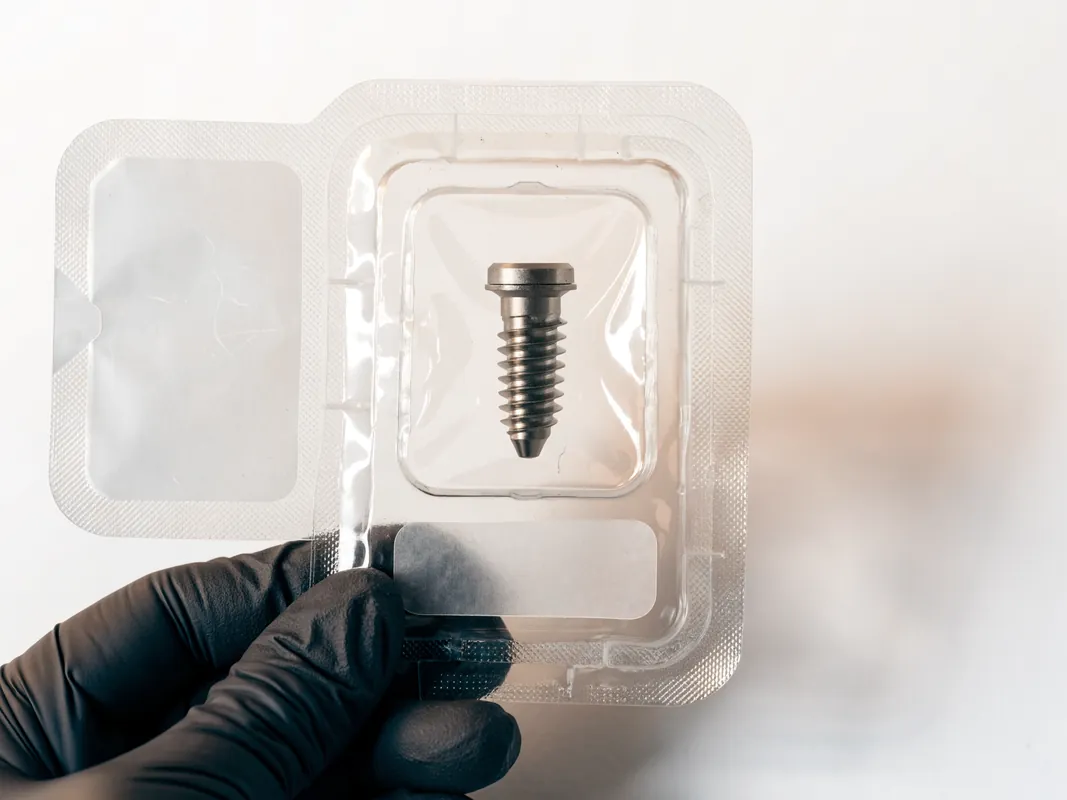
“Dental implant treatment” can describe very different events. A person may have had one implant placed under local anaesthetic, several surgical sites, an extraction at the same appointment, a soft-tissue procedure, bone augmentation, exposure of a previously placed implant, fitting of an abutment, repair of a provisional restoration or delivery of a definitive prosthesis. Some people leave with no tooth connected to the implant. Others have a provisional restoration that is deliberately kept out of contact. Others have a restoration intended to carry selected function under a defined loading protocol.
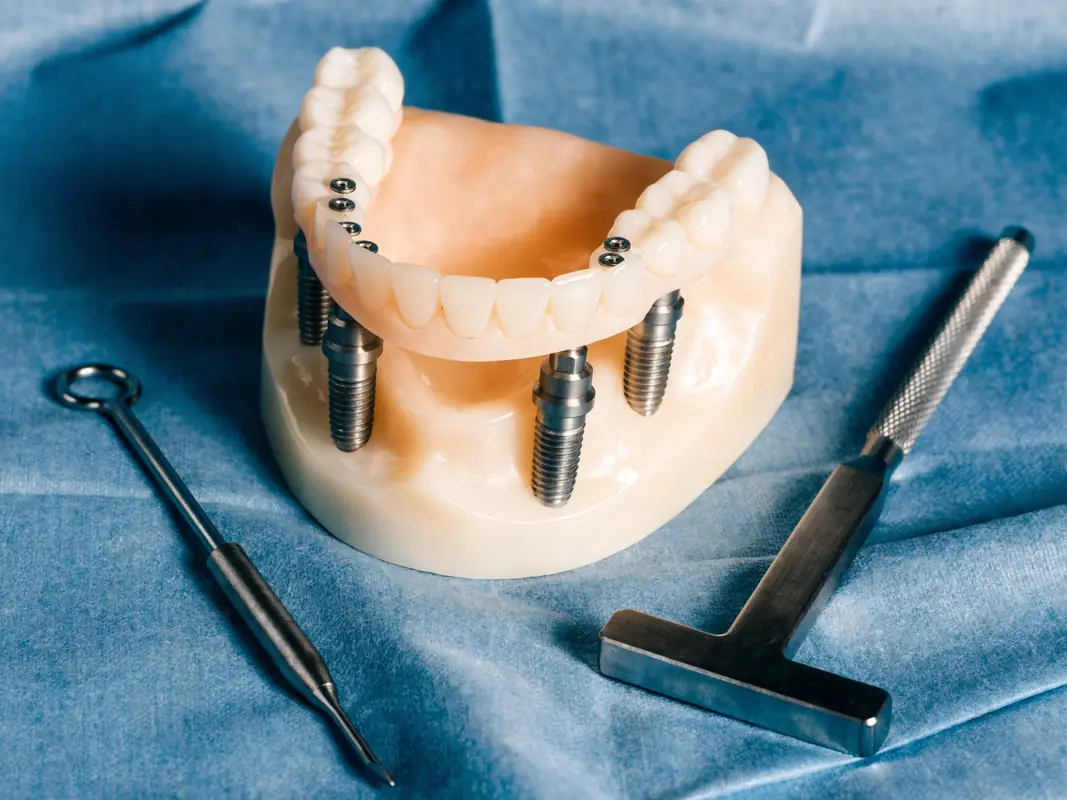
Those differences matter more than a generic calendar. The International Team for Implantology distinguishes implant placement timing from restoration and loading timing. A restoration can be present without being intended to take normal chewing contact. “There is a tooth there” therefore does not mean “it can carry any food.” The restoration’s material, span, opposing bite, contact scheme, parafunction, number and distribution of implants, grafting, tissue condition and clinician’s assessment all affect what mechanical load is acceptable.
Official patient instructions also differ because their procedures and local protocols differ. Guy’s and St Thomas’ NHS Foundation Trust describes normal eating as possible in its implant setting while noting that a dentist might recommend soft foods and that personalised advice is provided. Kingston and Richmond’s extraction instructions emphasise protection while local anaesthetic remains active and give temperature advice for that extraction setting. Cambridge University Hospitals publishes another oral-surgery protocol with its own mouth-care details. These pages are useful examples, but none can replace the discharge instructions for a different person or procedure.
That variation is not a reason to guess. It is the reason to obtain a usable written plan.
Start With the Actual Procedure Record
Before choosing food, identify what happened. The discharge note or clinical record should answer:
- which tooth positions or regions were treated;
- whether teeth were extracted at the same appointment;
- whether grafting, a membrane, soft-tissue surgery or a donor site was involved;
- whether sutures, healing abutments or covered implants are present;
- whether a removable, bonded or implant-supported provisional restoration was fitted;
- whether that restoration is intended to be out of contact, lightly loaded or functionally loaded;
- which side or region, if any, may be used for chewing;
- what cleaning method applies around each site;
- which medicines were prescribed or continued and how food affects their use;
- which symptoms require contact, review or emergency care;
- who is responsible for remote advice and who can examine the patient locally.
Do not infer these answers from a marketing term such as “same-day teeth,” “immediate smile” or “fixed teeth.” Ask for the clinical description. If the plan changed during treatment, ask for an updated record showing what was actually done, which restoration was fitted and what loading restrictions now apply.
The broader dental implant treatment page explains the treatment category. The implant aftercare guide covers wider cleaning and review questions. This page stays focused on turning the individual procedure record into an eating and hydration plan.
Separate Three Decisions: Wound, Restoration and Whole Person
An effective plan has three linked layers.
The wound layer concerns numb tissues, bleeding, swelling, sutures, extraction sockets, incisions, grafted areas, donor sites and soft-tissue healing. Temperature, sharp edges, suction, food particles and direct contact may matter. Only the treating clinician can say which restrictions apply to the specific wound.
The restoration layer concerns mechanical force. A provisional bridge can look complete but still need protection. A removable prosthesis can press on a surgical area. A restoration held out of occlusion is not equivalent to one designed for loading. The patient needs a plain-language statement about where contact is permitted, which movements are restricted and what event will trigger reassessment.
The whole-person layer concerns hydration, energy and nutrient intake, swallowing, nausea, diabetes, kidney or heart-related fluid limits, allergies, coeliac disease, vegan or vegetarian eating, sensory needs, medication timing and access to suitable food. Protecting a wound by barely eating can create a different problem. Conversely, meeting a nutrition target with a texture that overloads a provisional restoration is not a safe compromise. The layers must be reconciled.
The Immediate Instruction Comes First
Right after a procedure, establish whether local anaesthetic, sedation or general anaesthetic was used and which recovery instructions apply. Mouth numbness can make it difficult to judge temperature and can allow accidental biting of the lip, cheek or tongue. The person should follow the discharge instruction about when eating can restart and wait until the local anaesthetic has worn off when that is what the treating team directs.
Do not transfer fasting or recovery rules from one form of anaesthesia to another. Inhalation sedation, intravenous sedation and general anaesthesia have different preparation and discharge pathways. Nausea, drowsiness, balance, swallowing safety and supervision can also change what is practical. If the person feels too drowsy to eat safely, repeatedly vomits, cannot keep fluid down or has difficulty swallowing, contact the responsible service rather than forcing intake.
Temperature instructions should be read literally. “Avoid very hot” is not permission to use an extreme cold temperature, and “lukewarm” is not a universal rule for every case. Numb tissue cannot reliably warn about a burn. A simple practical check is to confirm the clinician’s wording, allow another person to check temperature when needed and avoid improvising from sensation alone while the mouth is numb.
Build a Texture Plan, Not a Food List
A menu names foods. A texture plan describes what the mouth must do to manage them. That distinction makes the advice adaptable to culture, allergy, religion, budget, hotel access and individual nutrition needs.
Describe each proposed meal across these features:
- cohesion: does it stay together or scatter into small particles;
- hardness: how much force is needed to break it down;
- chew count: does it require repeated chewing before it can be swallowed comfortably;
- stickiness: can it adhere to a wound, suture, appliance or provisional surface;
- edge profile: does it form sharp fragments;
- temperature: is it within the range permitted by the instructions;
- particle size: could pieces collect around a site that is difficult to clean;
- required bite region: can it be managed without using the protected area;
- swallowing demand: is the consistency safe for the person’s known swallowing ability;
- nutritional role: does it contribute useful fluid, energy, protein or micronutrients within the person’s established diet.
The responsible clinician can then define an acceptable texture boundary rather than handing out a universal shopping list. A registered dietitian can help translate that boundary into nutritionally adequate choices for the individual. People with dysphagia need a swallowing assessment and their prescribed texture or fluid consistency; “soft” in everyday language is not the same as a clinically assessed dysphagia texture.
Do not assume that blending automatically makes a choice appropriate. Blended material can still be too hot, highly acidic, incompatible with an allergy, unsuitable for diabetes management, difficult to clean from an appliance, or inconsistent with a medicine instruction. Likewise, a food that feels soft between fingers may demand substantial chewing or become sticky in the mouth.
Add Temperature and Chewing Load to the Same Plan
Texture alone does not determine mechanical load. The same consistency can be swallowed with minimal chewing or repeatedly compressed against a restoration. Record where the patient is allowed to chew and whether the instruction is to avoid the treated region, use a particular side, avoid contact on a provisional restoration or limit function across an entire arch.
“Chew on the other side” is only useful if there is a healthy, functional other side and if the procedure did not involve both sides. People with full-arch treatment, bilateral sites, unstable dentures, temporomandibular symptoms, reduced hand control or sensory impairment may not be able to follow that phrase safely. Their plan needs an alternative developed by the responsible clinician and, where needed, a dietitian or speech and language therapist.
Do not test an implant by biting something progressively firmer. Comfort is not a measure of osseointegration, and absence of pain is not permission to increase load. Progression should be linked to the written clinical review gate, not to curiosity, a travel date or a restaurant booking.
Provisional Restorations and Loading Status
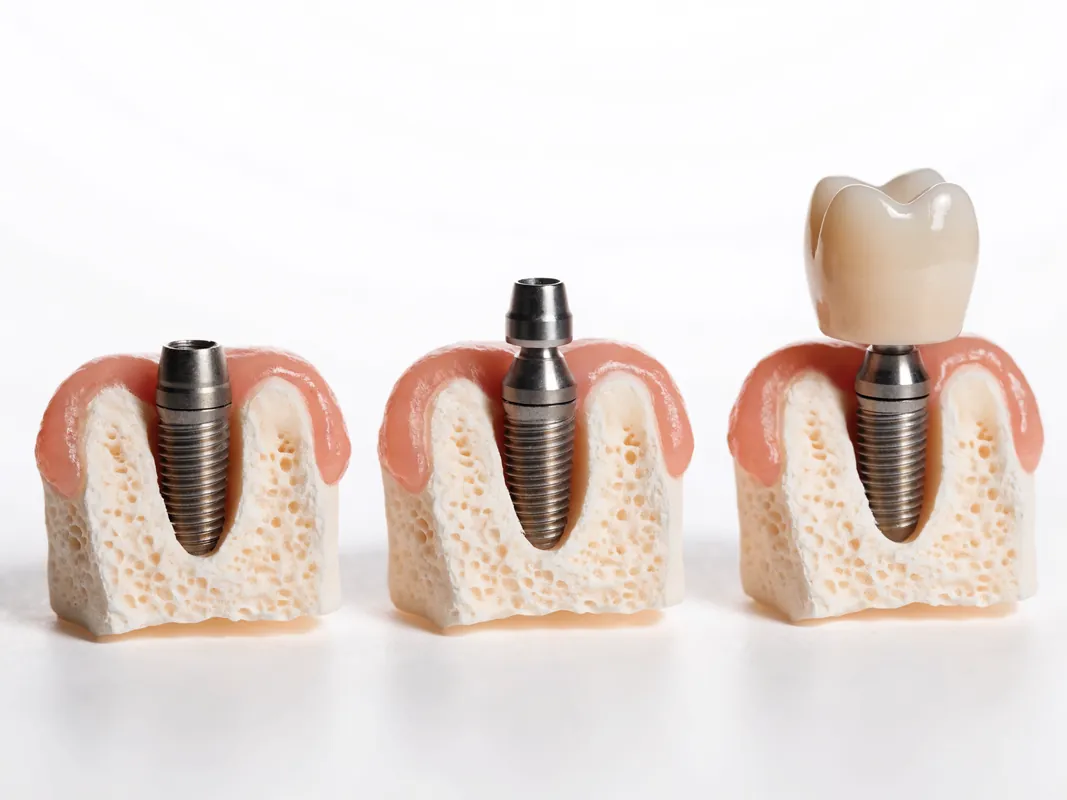
A provisional restoration can serve appearance, space maintenance, tissue shaping, speech or limited function. Its presence does not establish its loading status. Ask the clinician to write one of the following in ordinary language:
- the restoration is not connected to the implant;
- it is connected but designed to avoid contact;
- it is intended for restricted contact under a defined plan;
- it is intended to function, with specified limits and review criteria.
The plan should also state what to do if the bite feels different, the restoration moves, a screw or component feels loose, a removable appliance presses on the wound, speech changes unexpectedly or food repeatedly traps under the restoration. Do not keep chewing to “see whether it settles.” Stop using the affected area and seek advice.
The ITI consensus material describes immediate restoration and immediate or early loading as distinct protocols and stresses case selection, provisional protection and patient-related factors. It does not support a single menu for everyone receiving an implant. It supports asking which protocol was selected and how that choice changes functional instructions.
Hydration Is a Separate Workstream
A person may reduce drinking because swallowing is uncomfortable, because they are sleeping more, because they fear disturbing a wound or because nausea makes fluid unappealing. Travel, warm weather, vomiting, diarrhoea, diabetes and some medicines can increase the practical importance of monitoring hydration. NHS guidance lists thirst, dark strong-smelling urine, urinating less often, dizziness, tiredness and dry mouth among possible dehydration symptoms.
Build a hydration plan that records:
- the permitted drinking method;
- any temperature restriction;
- whether the person has a medically prescribed fluid restriction;
- who to contact if nausea or vomiting prevents intake;
- how diabetes or medicines change the response to reduced intake;
- how suitable drinks will be available during transfers, at the hotel and on the return journey;
- which symptoms trigger urgent medical advice.
Do not prescribe a universal fluid volume. Requirements differ, and people with heart, kidney, endocrine or other conditions may have individual limits. If a clinician has advised a fluid restriction, an internet recovery guide must not override it. If dehydration is suspected or fluids cannot be retained, use the current local medical advice route.
Nutrition Needs Do Not Disappear During Recovery
A wound-protection plan still has to support the person’s established medical and nutritional needs. A short period of reduced appetite may be manageable for one person and clinically important for another. Risk can be higher when there is pre-existing malnutrition, unintended weight loss, frailty, cancer treatment, gastrointestinal disease, renal disease, diabetes, pregnancy, an eating disorder, a highly restricted diet or difficulty swallowing.
The aim is not to sell a supplement or announce that one nutrient “heals implants.” It is to maintain an individually appropriate pattern of fluid, energy, protein and micronutrients while respecting the mechanical and medical boundaries. A registered dietitian can adapt usual meals, culturally familiar foods and prescribed nutrition support to the required texture. Supplements can interact with medicines or provide unsuitable amounts of sugar, sodium, potassium or other components, so they should not be added automatically.
If intake was already poor before treatment, address that before elective surgery where possible. A treatment itinerary is not a nutrition assessment. Ask who reviewed weight history, appetite, swallowing, dietary restrictions and access to food, and what happens if the patient cannot meet the agreed plan.
Food and Oral Hygiene Must Fit Together
Food particles, plaque control and wound protection have to be considered together. The cleaning plan may differ by site and by procedure. One area may be brushed normally while another must be avoided or cleaned with a specified technique. A removable appliance may need its own cleaning and handling instructions. Mouth rinsing can be restricted immediately after some surgery and introduced later under the procedure protocol.
Do not copy a rinse recipe, mouthwash product or brushing timetable from another hospital leaflet. The NHS pages reviewed for this guide use different instructions in different surgical contexts. The safe action is to obtain written directions for:
- when normal cleaning restarts in unaffected areas;
- how the surgical site is handled;
- whether and when a rinse is used;
- whether an antiseptic product was prescribed or recommended;
- how to clean under or around a provisional restoration;
- what to do after eating when particles collect;
- how a denture or removable provisional should be stored and cleaned;
- what change in bleeding, pain, taste, odour or discharge needs review.
The European Federation of Periodontology’s peri-implant guideline supports individually tailored oral-hygiene instruction and patient-centred supportive care. It does not turn a general cleaning method into a post-surgical prescription. Ask for demonstration, practise it before leaving and record the exact products and technique.
Medicines, Meals and Swallowing
Do not use food to improvise medicine administration. Some medicines are taken with food, some on an empty stomach, and some interact with particular drinks or supplements. NHS antibiotics guidance says to read the patient information leaflet because food instructions vary. A pharmacist can reconcile the discharge prescription with regular medicines, allergies, supplements and the eating plan.
Do not crush tablets or open capsules because the mouth is sore unless a pharmacist or prescriber confirms that the specific product can be altered. NHS pill-swallowing guidance warns that changing a medicine without advice can stop it working properly. Ask whether a suitable licensed formulation exists if swallowing has become difficult.
For nausea, vomiting or difficulty swallowing, record when the problem started, which medicines were taken, whether fluids stay down and whether there are other symptoms. Do not stop antibiotics, diabetes medicines, anticoagulants, steroids or other prescribed treatment based on a generic article. Contact the prescriber, pharmacist, diabetes team or urgent-care service as appropriate. Severe allergy symptoms, breathing difficulty, collapse or rapidly worsening swelling require emergency care.
Diabetes Requires Its Own Eating-and-Medicine Plan
Reduced intake can affect glucose management, and vomiting or dehydration can change medicine risk. A usable diabetes plan must cover eating, monitoring, medicines and escalation. The correct response depends on diabetes type, medicines, monitoring equipment, glucose readings, ketone advice, renal function and the person’s existing sick-day plan. The implant planning guide for people with diabetes explains the broader assessment questions.
Before the procedure, the patient should have written answers to these practical questions:
- how should glucose be monitored if usual meals change;
- what counts as reduced intake for this person;
- which professional gives medicine advice;
- what is the individual hypo treatment plan if chewing is restricted;
- when are ketones checked, if relevant;
- what symptoms or readings require urgent help;
- how will glucose supplies, prescribed rescue treatment and suitable intake remain accessible during travel;
- what happens if vomiting or dehydration develops.
An implant-diet page should not tell a person to adjust insulin or stop a medicine. Those decisions belong to the diabetes or prescribing team using the current case details. The goal here is to make sure the plan exists before access to normal meals becomes difficult.
Coeliac Disease: Texture Does Not Prove Gluten Safety
Coeliac disease requires a gluten-free diet, and cross-contamination can occur during preparation or service. A dish can meet the dental texture requirement and still be unsafe. NHS coeliac guidance advises checking labels and recognises cross-contamination; the Food Standards Agency explains allergen information duties and provides advice for eating out.
For travel, identify suitable packaged options before arrival, confirm how the hotel or restaurant handles cross-contamination, ask about sauces, garnishes and ingredient substitutions, and do not assume that a blended or “plain” dish is gluten-free. Keep the dental texture request separate from the coeliac request so neither is lost in translation. If dietary adequacy is difficult because both texture and gluten are restricted, ask a registered dietitian for an individual plan.
Food Allergy and Intolerance: Ask Before Ordering
A food allergy is not a preference and “vegan,” “healthy,” “soft” or “gluten-free” does not prove freedom from another allergen. The FSA recommends checking in advance, communicating clearly with staff and considering cross-contamination and recipe changes. If staff do not understand the requirement, do not rely on reassurance without usable allergen information.
Carry the person’s usual emergency medication as prescribed and keep it accessible. Confirm the current emergency action plan with the allergy service. This guide does not diagnose allergy, distinguish allergy from intolerance or change that plan.
Vegan or Vegetarian Eating: Preserve Adequacy
A vegan or vegetarian patient should not be pushed toward animal-derived foods because a generic leaflet lists them as “soft.” NHS vegan-diet guidance describes the importance of a varied balanced pattern and notes nutrients that may need attention, including vitamin B12, vitamin D, iodine, selenium, calcium and iron. That is long-term nutrition guidance, not a reason to start multiple supplements around surgery.
Map the person’s usual protein, energy and fortified-food sources onto the clinician-approved texture boundary. Check labels for allergens and medicine interactions. If options become too narrow, involve a registered dietitian. Also distinguish dietary preference from material preference: concerns about animal-derived graft or medicine ingredients belong in consent and product verification, not only in the meal plan.
Other Medical and Nutritional Constraints
Kidney disease can affect fluid, protein, potassium, phosphate and medicine planning. Heart failure may involve a fluid or sodium plan. Liver disease, gastrointestinal conditions, cancer treatment, anticoagulation, pregnancy and frailty can change priorities. Dysphagia can require a formally assessed texture and fluid consistency. An eating disorder may make visible dietary restriction or weight-focused advice harmful.
The safe framework is the same: list existing professional instructions, identify any conflict with the dental restriction, and ask the responsible professionals to resolve it in writing. Do not ask the patient to choose which instruction to ignore.
Hotel and Restaurant Planning for Dental Travel
Eating after dental treatment abroad requires logistics, not just nutrition knowledge. Before travel, ask the accommodation and nearby food businesses factual questions rather than assuming facilities:
- Is a refrigerator available for food or prescribed medicine, and can its temperature be relied upon?
- Is there a kettle, microwave or other preparation equipment, and is its use permitted?
- Can sealed food be stored safely?
- Can written ingredient and allergen information be supplied?
- Can a meal be prepared to a described texture without hidden hard pieces, seeds, crusts or garnishes?
- Can temperature be controlled at service?
- Can the kitchen address cross-contamination for a medically required diet?
- Is food available when the patient returns from the appointment or arrives late?
- Can a companion collect food if the patient should not travel alone after sedation?
- Are suitable options available during the airport transfer and return journey?
Do not advertise a hotel buffet as proof of suitable recovery food. Menus change, kitchens differ, and a buffet can complicate temperature, texture and allergen control. Confirm the actual arrangement close to travel and have a fallback that respects the same requirements.
A Restaurant Request That Separates the Risks
A concise request is easier to verify than “I need soft food.” State each requirement separately:
- the medically required allergy or coeliac restriction;
- the texture requirement in observable terms;
- the temperature requirement;
- ingredients or particles that must not be added as garnish;
- the need to avoid cross-contact, where relevant;
- a request for staff to say when they cannot meet it safely.
Use a professionally translated allergy card when language is a barrier, but still speak with staff. The FSA notes that written allergen information supported by a conversation works best. A translation app may assist ordinary texture description, but it is not a substitute for accurate emergency or allergy communication.
Do Not Use Pain as a Clearance Test
Pain can influence eating, but it is not a reliable loading meter. Local anaesthetic can hide injury. Analgesia can reduce symptoms without changing the wound or restoration’s mechanical limit. Some complications can begin subtly, while normal postoperative sensations can also worry patients. Do not increase chewing force merely because the area feels comfortable, and do not diagnose implant failure merely because eating is uncomfortable.
Record what action causes symptoms, where they occur, whether a restoration moves, whether the bite changed and whether swelling, bleeding, discharge, fever, altered sensation or feeling unwell is present. Send information through the agreed contact route, but understand that a photograph or message cannot perform palpation, assess mobility reliably, evaluate occlusion or replace an examination.
Warning Signs and Escalation
Follow the discharge instructions and named contact route. Prompt professional assessment is important for bleeding that does not settle as instructed, pain or swelling that is worsening unexpectedly, fever or feeling systemically unwell, discharge, a bad taste with other concerning symptoms, wound opening, a moving restoration, a bite that suddenly changes, persistent vomiting, inability to keep fluid down, dehydration symptoms, new or changing numbness, or concern that an appliance is pressing on the wound.
Severe swelling affecting breathing or swallowing, uncontrolled heavy bleeding, collapse, serious allergic symptoms, severe facial injury or another life-threatening concern requires the current local emergency route. Do not wait for an overseas coordinator to answer before seeking emergency help.
Local Handover Before Travelling Home
The GDC’s information for people considering dental treatment abroad recommends asking about aftercare, complications, qualifications, regulation and who can provide advice. A useful local handover makes eating-related problems easier to assess without repeating the entire history.
Take home:
- provider and responsible clinician identities;
- procedure date, treated sites and exact procedures;
- implant and component records where provided;
- details and loading status of any provisional restoration;
- graft, membrane or soft-tissue procedure details where relevant;
- current images and reports that can lawfully be shared;
- medicines, allergies and adverse reactions;
- written eating, drinking, cleaning and appliance instructions;
- review gates and restrictions;
- urgent and routine contact routes;
- the plan for local examination and record transfer;
- an itemised written plan showing what is included if reassessment or repair is needed.
GDC record standards for UK professionals describe contemporaneous, complete and accurate records, including medical history, radiographs, consent forms, models, laboratory prescriptions and referrals where available. Regulation differs between countries, but the patient can still ask the overseas provider what records will be created, who controls them and how copies can be obtained securely.
Eating and Hydration Worksheet
Complete this eating and hydration worksheet with the responsible clinician and, where necessary, a registered dietitian or pharmacist.
Procedure facts
- Treated site or sites:
- Extraction, graft or soft-tissue procedure:
- Suture or donor-site details:
- Anaesthesia or sedation type:
- Current wound-specific instruction:
Restoration facts
- No restoration, removable restoration or fixed provisional:
- Connected to implant or supported elsewhere:
- Loading status in plain language:
- Permitted chewing region:
- Movement or bite-change action:
- Clinical event needed before the restriction changes:
Texture, temperature and chewing load
- Maximum hardness or chew demand permitted:
- Particle, sharp-edge or stickiness restrictions:
- Temperature wording from discharge instructions:
- Suction or drinking-method instruction:
- Swallowing requirement:
- Cleaning action after eating:
Whole-person requirements
- Usual dietary pattern:
- Allergy, intolerance or coeliac controls:
- Diabetes monitoring and sick-day contact:
- Fluid restriction or hydration concern:
- Kidney, heart, gastrointestinal or other nutrition plan:
- Medicine-food instructions confirmed by:
- Dietitian or swallowing plan:
Travel access
- Suitable food available after the appointment:
- Accommodation storage and preparation confirmed:
- Restaurant allergen and texture communication:
- Suitable intake during transfer and flight:
- Companion role:
- Local clinical contact after returning home:
Escalation
- Routine question contact:
- Urgent dental contact:
- Local urgent-care route:
- Emergency route:
- Records to share:
Questions Before Leaving the Clinic
Ask these questions while the clinician can examine the mouth and show the answer:
- What exactly was done at each site?
- Is a provisional restoration present, and what is its loading status?
- Which region may be used for chewing?
- What observable texture boundary should be used?
- Which temperature and drinking-method instructions apply?
- How should the mouth be cleaned after food at each site?
- What should happen if food traps under the restoration?
- What bite change, movement or discomfort needs review?
- How do current medicines interact with meals or reduced intake?
- What is the plan if nausea, vomiting or swallowing difficulty develops?
- How are diabetes, coeliac disease, allergy or another medical diet accommodated?
- What clinical finding or review changes the restriction?
- Who can examine the patient after returning home?
- Which records will be supplied for that professional?
- Which symptoms are urgent, and which are emergencies?
If the answer is simply “eat soft food,” ask for a definition that can be applied to real meals. If the answer is “until it feels fine,” ask for an objective review gate. The patient should not have to translate a vague instruction into a high-stakes decision alone.
Evidence Boundaries
The sources below support principles such as personalised implant aftercare, protection while the mouth is numb, procedure-specific oral-surgery instructions, hydration warning signs, medicine-label compliance, allergy communication, long-term dietary requirements and distinctions between loading protocols. They do not validate one universal implant menu, a fixed progression schedule or a claim that a particular food changes implant outcomes.
Published hospital instructions may be written for different procedures, anaesthesia methods and populations. A patient should use the instructions issued for their own treatment. Research and consensus about implant loading inform clinical planning, not self-clearance to chew.
Official and Primary Sources
These official and primary sources were checked on 29 August 2026. Guidance and web pages can change, so recheck the current version when making a decision.
- Guy’s and St Thomas’ NHS Foundation Trust, after having a dental implant: https://www.guysandstthomas.nhs.uk/health-information/dental-implants/after-having-dental-implant
- Kingston and Richmond NHS Foundation Trust, dental extraction after-care: https://www.kingstonandrichmond.nhs.uk/patients-and-families/patient-leaflets/dental-extraction-after-care-day-surgery-unit
- Cambridge University Hospitals NHS Foundation Trust, surgery to the mouth and jaws postoperative advice: https://www.cuh.nhs.uk/patient-information/surgery-to-the-mouth-and-jaws-post-operative-advice/
- NHS, dehydration symptoms and routes for help: https://www.nhs.uk/conditions/dehydration/
- NHS, coeliac disease treatment and cross-contamination: https://www.nhs.uk/conditions/coeliac-disease/treatment/
- NHS, the vegan diet: https://www.nhs.uk/live-well/eat-well/how-to-eat-a-balanced-diet/the-vegan-diet/
- Food Standards Agency, allergies, intolerances and coeliac disease: https://www.food.gov.uk/food-safety-and-hygiene/food-allergies-intolerances-and-coeliac-disease
- NHS, antibiotic interactions and food instructions: https://www.nhs.uk/medicines/antibiotics/interactions/
- NHS, problems swallowing pills: https://www.nhs.uk/conditions/problems-swallowing-pills/
- NHS, general anaesthetic recovery: https://www.nhs.uk/tests-and-treatments/general-anaesthesia/
- International Team for Implantology, implant placement and loading protocols: https://network.iti.org/ja/academy/consensus-database/consensus-statement/-/consensus/implant-placement-and-loading-protocols/1802
- European Federation of Periodontology, peri-implant disease guideline: https://www.efp.org/education/continuing-education/clinical-guidelines/guideline-on-treatment-of-peri-implant-diseases/
- General Dental Council, going abroad for dental treatment: https://www.gdc-uk.org/standards-guidance/information-for-patients-public/going-abroad-for-dental-treatment
- General Dental Council, records and patient information: https://standards.gdc-uk.org/pages/principle4/principle4
Final Decision Rule
Choose food and drink only after the wound instruction, restoration loading status, medical and nutritional needs, medicine rules, cleaning method, travel access and escalation route agree. If two instructions conflict, stop and ask the responsible professionals to resolve the conflict in writing. Time passed, comfort returned or a provisional tooth looking solid is not clinical clearance.