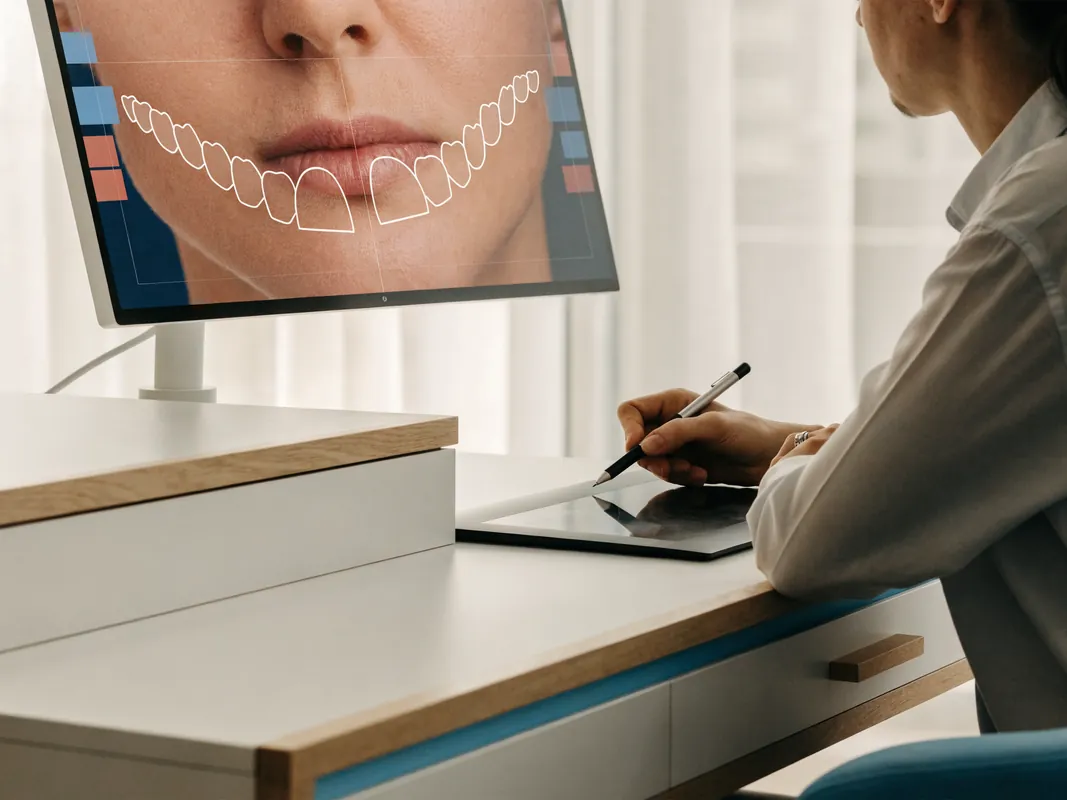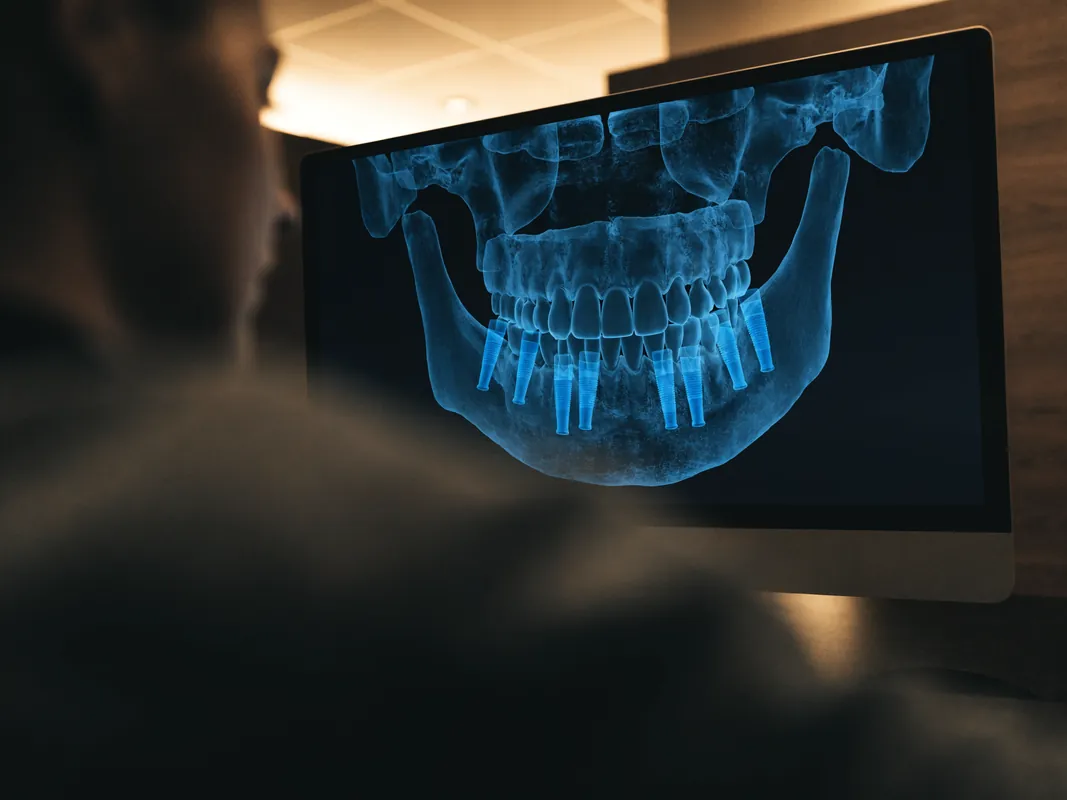
A dental implant total is meaningful only when diagnosis, alternatives, every system component, conditional stages, records and aftercare are visible. This guide shows how to compare that evidence without accepting a brand or recovery promise.
A search for dental implants in Turkey often begins with three apparently simple questions: what will it cost, which brand will be used and how long will recovery take? None has a responsible one-line answer. A total cannot be compared until the clinical scope is itemised. A brand name does not identify the fixture, connection, abutment, screw or restoration. A recovery date cannot be promised before diagnosis, surgery, healing review and a workable local aftercare plan.
This guide is a proposal-verification and decision tool. It is not a diagnosis, price list, recommendation, treatment timetable or offer. It verifies no clinic, clinician, qualification, implant system, component, regulatory status, stock, authenticity, cost, availability, result, comfort, healing date, remedial term, travel service or insurance cover. The named treating professionals must assess the individual, and each legal provider remains responsible for its own contract and care.
The source links at the end have deliberately narrow jobs. United States device information does not authorise a product in Türkiye or Europe. European device rules do not prove that a labelled item was placed in a patient. United Kingdom professional standards are useful comparison questions, not Turkish law. Turkish registry entries establish only the status shown by the current registry. Manufacturer instructions describe a specified device and professional use; they do not select treatment for a patient. Recheck every source, identifier and rule for the actual market and date.
The purpose is to replace three marketing shortcuts with three evidence trails:
- cost: a diagnosis-linked, tooth-by-tooth and stage-by-stage quotation with inclusions, exclusions, currency, payee and change rules;
- system: the exact manufacturer, family, model, platform and components, connected to label, reference, lot, UDI and current instructions where applicable;
- recovery: conditional clinical checkpoints, urgent boundaries, records and named local follow-up rather than a flight-led countdown.
The detailed dental implant service overview explains the general service category. The guide to choosing a dental clinic in Turkey supports provider questions, and the returning home after dental tourism guide supports handover planning. These links do not confirm that an implant is indicated or that travel is sensible.
Start With the Missing-Tooth Decision
An empty space, failing tooth or loose restoration does not automatically create an implant indication. First define the problem. Is a tooth actually missing? Is a present tooth restorable? Is there pain, infection, mobility, fracture, decay, periodontal disease, failed root treatment or a prosthesis problem? Is the concern chewing, appearance, speech, cleaning, stability or fear of future change? Different problems can produce similar requests while requiring different evidence.
Ask for a diagnosis for each tooth or site in plain language. The record should distinguish confirmed findings from suspicions and missing information. It should explain why an implant is being discussed, what it would support and what happens if the patient waits or declines. If removal of a tooth is proposed, the case for extraction must stand independently from the plan to sell a replacement.
A remote photograph or panoramic image can support an initial conversation but cannot complete the assessment. It may not show soft-tissue condition, pocket depths, mobility, vitality, crack extent, three-dimensional anatomy, occlusion, parafunction or the cause of symptoms. A remote total is therefore conditional. The proposal should say which findings could change the number of sites, need for disease control, surgical approach, components, restorative design, stages or cost.
The strongest first question is not “Which implant brand?” It is “What diagnosis makes an implant one reasonable option here, and which evidence is still missing?”
Urgent Problems Override Price Shopping
Severe or increasing pain, spreading swelling, suspected abscess, uncontrolled bleeding, significant trauma, a loose implant or restoration, or a sudden change in sensation should not wait for an overseas quote comparison. Difficulty breathing or swallowing, major mouth or facial swelling, eye involvement, serious facial injury or bleeding that will not stop can require emergency assessment through the appropriate local service.
A website cannot triage an individual. Contact the treating or local urgent professional and describe the symptoms, onset, medical history, medicines and recent procedures. If the person has already travelled, know the local emergency route rather than assuming the overseas clinic can solve the problem remotely.
Urgent care does not commit the patient to an implant plan. Infection control, pain assessment, stabilisation or removal of an immediate hazard can be separated from a later replacement decision. Preserve the urgent records and images so the longer plan can be reconsidered when the patient is no longer deciding under pain or time pressure.
Do not copy an antibiotic, pain-relief or mouth-rinse instruction from this article. Medicines require an individual assessment of allergies, pregnancy or breastfeeding where relevant, other medicines, medical conditions and the exact procedure. Do not start, stop, double, substitute or extend a medicine without advice from the responsible prescriber, dentist or pharmacist.
Build a Diagnostic Record Before a Quote
A decision-grade implant proposal should identify the evidence used. Depending on the individual, the treating clinician may need a current medical and dental history, clinical examination, periodontal assessment, caries and endodontic findings, photographs, existing radiographs, three-dimensional imaging when justified, study models or scans, bite assessment and information from previous providers. More data is not automatically better; every record should answer a clinical question.
The medical history should be current at every stage. It may include diagnosed conditions, previous surgery, allergies, prescribed and non-prescribed products, smoking or nicotine exposure, alcohol where relevant, bleeding concerns, diabetes or other metabolic conditions, bone-related medicines, immune-modifying treatment, previous radiotherapy and any issue affecting surgery, healing or maintenance. The patient reports facts; the named professionals interpret them within scope.
Oral assessment should not isolate the empty space. Active periodontal disease, untreated caries, infection, poor plaque control, unstable bite, parafunction, dry mouth, failing restorations and inaccessible hygiene can affect the plan. The Scottish Dental Clinical Effectiveness Programme advises stabilising periodontal health, addressing modifiable risk and planning maintenance around implants. Its implant recommendations also acknowledge low-certainty or indirect evidence in parts of this field, so a recommendation is not an individual outcome promise.
Ask for the original diagnostic files, not screenshots alone. A local clinician may need DICOM imaging, calibrated radiographs, periodontal measurements, photographs, laboratory records and a written report. The patient should know who took each record, when it was created, whether it is complete and how it can be securely transferred.
Compare Alternatives Before Comparing Brands
An implant is one way to manage a missing tooth or support a restoration. The relevant alternatives depend on the site and diagnosis, but the consent discussion may include preserving and restoring a tooth, monitoring, leaving a space, orthodontic space management, a removable prosthesis, an adhesive bridge, a conventional bridge or another patient-specific design. No treatment is a real option when its likely consequences are explained.
Each alternative transfers burdens rather than simply removing them. A bridge can involve neighbouring teeth, materials, hygiene and future maintenance. A removable option has its own support, stability, adaptation and review issues. Orthodontic space change requires longitudinal care and retention. Leaving a space may or may not be acceptable depending on function, stability, appearance and disease. Tooth preservation may require uncertain treatment and follow-up. None should be described as universally better.
Use a comparison table for the actual patient:
| Option | What problem it addresses | Tissue or teeth affected | Reversibility | Maintenance | Main uncertainty | Local follow-up |
|---|---|---|---|---|---|---|
| No active replacement | Record the expected consequence | Usually no new surgical site | Often preserves future choice | Monitoring | Future change | Named review route |
| Preserve existing tooth | State treatment and prognosis question | Existing tooth | Varies | Tooth-specific | Biological and structural | Treating or local dentist |
| Removable option | Define support and function | Teeth and soft tissues may contribute | Often modifiable | Cleaning and adjustment | Adaptation and wear | Accessible local service |
| Bridge option | Define span and support | Adjacent teeth or implants | Preparation may be irreversible | Cleaning and review | Support and material | Restorative follow-up |
| Implant option | Define fixture and prosthesis | Surgical site and restoration | Surgical and prosthetic commitments | Long-term professional and home care | Healing and component pathway | Implant-capable follow-up |
The table is not a clinical recommendation. It forces the proposal to show why the preferred option fits the diagnosis and patient priorities. Brand comparison begins only after an implant remains a reasonable choice.
Define One Site Before Pricing a Whole Case
Marketing totals often conceal whether “an implant” means a fixture only, a fixture with a temporary component, or a completed tooth with an abutment and restoration. Start with one site and trace it through the entire pathway.
For every proposed site, record:
- tooth or anatomical site;
- current diagnosis and symptom status;
- whether a tooth is present and whether preservation was considered;
- planned extraction, if any, and its separate rationale;
- periodontal and caries status;
- imaging used and unresolved anatomy;
- whether augmentation is possible, expected or still unknown;
- fixture manufacturer, system, model, connection, platform and dimensions when selected;
- healing or cover component;
- proposed loading approach and its conditions;
- temporary restoration, if any;
- definitive abutment or base;
- fixation screw or cement approach where relevant;
- definitive crown, bridge or removable prosthesis design;
- laboratory and material records;
- surgical, restorative and maintenance decision-makers;
- local review and urgent pathway;
- records delivered at each stage.
Repeat this for every site. A single full-arch line cannot show whether all positions use the same system, which components support the prosthesis, what happens if one position changes or how the patient will obtain compatible parts later.
Turn the Quote Into a Scope Ledger
An itemised quote is not merely a longer invoice. Every line should link a diagnosis or objective to a service, responsible provider, condition and price. It should distinguish confirmed scope, optional scope and currently unknowable scope.
A comparison ledger can include:
- consultation and examination;
- radiographs, three-dimensional imaging or scan where clinically justified;
- periodontal or other disease control;
- extraction and management of the socket;
- surgical guide planning and guide manufacture if proposed;
- anaesthesia or sedation assessment and provision if proposed;
- graft material, membrane, fixation items or sinus-related procedure if proposed;
- implant fixture for each site;
- cover screw, healing abutment or other transmucosal component;
- temporary tooth or prosthesis, including whether fixed or removable;
- impression component, scan body or other restorative records;
- definitive abutment, titanium base, multi-unit component or other connection;
- prosthetic screw and any replacement policy;
- crown, bridge or removable prosthesis with material and laboratory identified;
- fitting, bite verification, access closure and baseline records;
- surgical and restorative reviews;
- hygiene instruction and maintenance;
- complication assessment and any treatment expressly included;
- patient record and device-traceability package;
- local handover or communication;
- taxes, payment fees or other contract charges;
- exclusions and patient-paid contingencies.
Not every case requires every line, and this list is not a statutory price schedule. Its purpose is normalization. A lower total may omit the abutment, prosthesis, graft, temporary, laboratory, review or records. A higher total may include services another quote lists separately. Compare equivalent scope before comparing totals.
Separate Confirmed, Conditional and Excluded Cost
Use three columns. “Confirmed” means supported by the current diagnosis and included in the written plan. “Conditional” means it becomes relevant only if a stated finding or event occurs. “Excluded” means the patient must fund it elsewhere or it is not offered.
A conditional line needs a trigger, decision-maker, consent step and price rule. “Bone graft if needed” is too vague. Ask what evidence would show need, whether the decision can be made before travel, which types of augmentation are in scope, who decides, what alternatives exist and whether declining changes the rest of the plan. Do the same for extraction, sedation, temporary prostheses, component upgrades, additional visits and complication care.
Do not accept “everything included” as a scope. Ask which clinical services, components, records and reviews the words cover, and list travel separately. Unknown clinical work must remain unknown until adequate assessment; hiding it inside a slogan does not remove uncertainty.
If the plan changes after examination, request the new finding, original and revised scope, alternatives, clinical consequence of waiting, price change and time to decide. Preserve both versions. Travel bookings and deposits must not turn a material change into forced consent.
Audit Currency, Payee and Payment Terms
A quoted number is incomplete without currency, legal payee, payment stage, invoice and refund or cancellation terms. Ask whether exchange is fixed or determined at payment, which party charges card or bank fees, what taxes are included, whether a deposit is credited to treatment and what occurs when clinical scope changes.
Identify who receives each payment. The clinical facility, laboratory, intermediary, hotel, transport company and insurer may be different legal entities. A single payment request can obscure which contract applies. Do not send money until the payee name, service, invoice issuer and dispute route match the written documents.
Create scenario questions:
- What happens if the clinician decides no implant is indicated?
- What happens if the number of sites changes?
- What happens if augmentation is advised and declined?
- What happens if a proposed component is unavailable?
- What happens if medical review postpones elective care?
- What happens if the patient stops after one stage?
- What happens if travel disruption prevents attendance?
- What happens if the provider cancels?
- Which supplied services are non-refundable, and why?
- Who pays local assessment, extended stay or a return journey after a complication?
This article provides no price expectation. A responsible cost comparison is local to the written, current, like-for-like scope.
A Brand Name Is Not a System Identifier
“Brand” is too broad. One manufacturer can offer several implant families, body designs, surfaces, connections, platforms, diameters, lengths and restorative workflows. Components sharing a logo may not be compatible. A parent company name or country label does not identify what will enter the body.
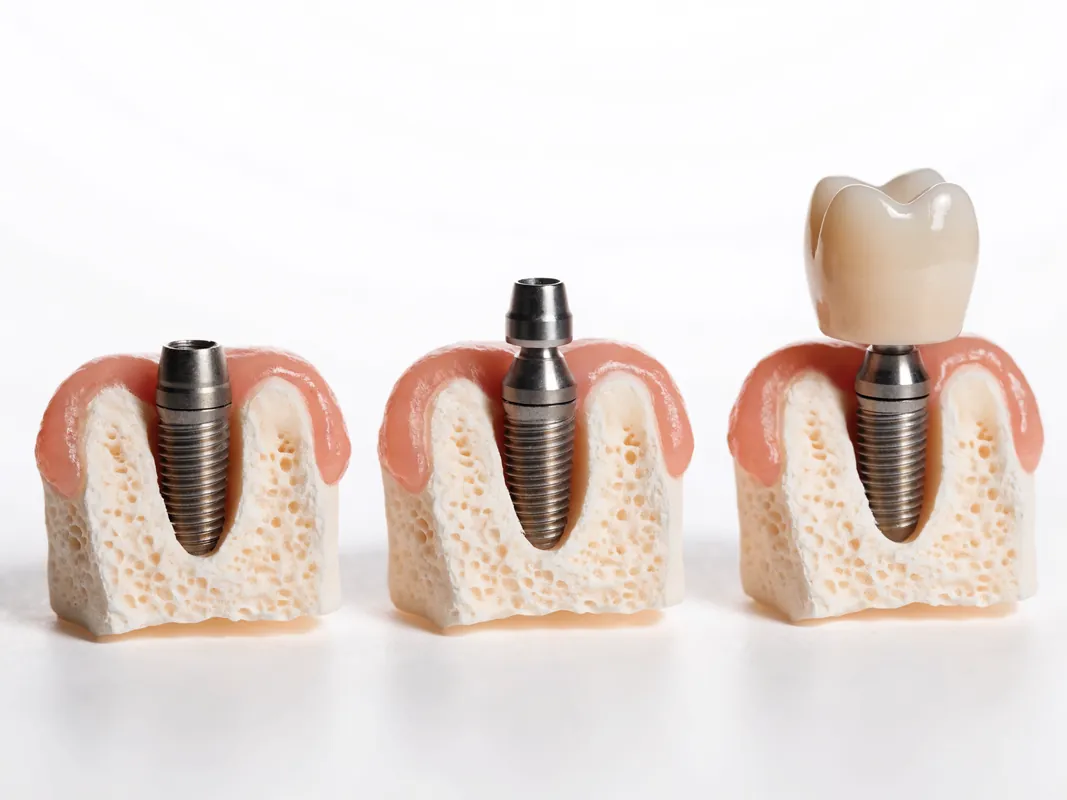
The United States Food and Drug Administration describes a dental implant system as an implant body, an abutment and sometimes an abutment fixation screw. Clinical workflows can add cover screws, healing components, impression copings, scan bodies, laboratory analogues, temporary components, titanium bases, multi-unit abutments, prosthetic screws and the final prosthesis. Each has a different function.
Ask for this identity before comparing brand claims:
| Field | Why it matters |
|---|---|
| Legal manufacturer | Identifies the responsible device maker shown on the label |
| Commercial system or family | Narrows the component ecosystem |
| Fixture model | Distinguishes body design and intended workflow |
| Connection and platform | Controls restorative compatibility |
| Dimensions | Identifies the selected device for the site |
| Surface or material claim | Must match the exact labelled model and evidence |
| Reference or catalogue number | Links the physical item to product information |
| Lot or serial data | Supports production traceability where supplied |
| UDI fields | Support regulated device identification in applicable markets |
| IFU reference and revision | Links the component to current professional instructions |
| Abutment or base | Identifies the restorative connection |
| Prosthetic screw | Identifies the fixation component |
| Prosthesis and laboratory | Identifies what the system ultimately supports |
Do not assume the system is complete because the fixture brand was named. Future maintenance often depends on the restorative connection and exact components, not the logo remembered by the patient.

Map Every Component in the Chain
The fixture is placed in bone. A cover screw may close it during one surgical approach, while a healing abutment or another transmucosal component may shape access through the soft tissue. Later, a definitive abutment, titanium base or multi-unit component can connect the fixture to a crown, bridge or removable prosthesis. A screw may secure the abutment or restoration. Some restorations use cement in part of the design. The actual architecture must be documented.
Ask which components are original to the named system, which are compatible third-party components and which are custom-made. “Compatible” is a technical claim, not a synonym for “it fits.” The clinician and laboratory should identify the manufacturer, reference and intended combination and use current instructions. A patient should not be asked to judge engineering compatibility.
Record changes. A temporary component may differ from the definitive one. A restorative clinician may choose a different height or platform after soft-tissue review. A laboratory may change a base or screw. Each material change should be clinically explained, recorded and included in ongoing consent.
The component map also helps local care. A dentist facing a loose screw needs more than the fixture brand. They may need connection, platform, screw specification, restoration design, torque record, tool information, radiographs and previous procedure notes. Missing records can make an ordinary repair harder.
Read the Label Without Overclaiming Authenticity
A label can show the manufacturer, device name, reference, dimensions, lot or serial information, expiry where applicable, symbols and UDI. It is valuable evidence, but a photo of a label is not proof that the physical item was genuine, sterile, stored correctly or placed in the named site.
Build a traceability chain:
- the pre-treatment plan names the intended system and any allowed substitution;
- the treating team confirms the selected reference for the actual site;
- the original packaging is checked within the clinical inventory process;
- label identifiers are entered into the operative record;
- the patient receives a copy or implant-record entry;
- the post-operative site map links each identifier to a location;
- the restorative components are recorded separately;
- any later substitution or replacement is added to the record.
The patient should not interrupt the sterile field, handle packaging or demand that a device be opened outside the clinical process. Ask how the provider documents packaging and lot data while preserving infection control.
A so-called “brand certificate” may be a clinic-created card, a manufacturer label, an implant card or something else. Ask who issued it, which identifiers it contains and whether it maps to the operative record. Decorative paper without reference and lot data is weak evidence. Equally, absence of a particular certificate format does not by itself prove a device is false; record duties vary by product and jurisdiction.
Understand UDI, Reference and Lot Fields
A Unique Device Identifier helps identify a device within an applicable regulatory system. The European Commission explains that UDI includes a device identifier and a production identifier, while the FDA explains its own United States UDI framework and public device data. The fields and legal obligations depend on market, device classification, transition rules and exceptions.
Keep the concepts separate:
- manufacturer: the legal device maker;
- trade name: the name used for the product;
- model or family: a defined system or design;
- reference or catalogue number: the ordered configuration;
- UDI-DI: the device identifier within the applicable UDI framework;
- UDI-PI: production information such as lot, serial or expiry where applicable;
- lot or batch: a production group identifier;
- serial: an individual identifier where used;
- site map: the clinical record linking an item to the patient location.
A public database match can confirm that submitted identifying data exist. It does not prove authorisation in another market, possession by a clinic, authenticity of a particular package, storage, sterility, clinical suitability, compatibility or actual implantation. An absent result can also have several explanations, including jurisdiction, transition or search error. Treat databases as one layer, not a verdict.
Where applicable law requires implant information or a card, confirm what the provider must supply. European rules contain device-information fields and exceptions; they should not be converted into a universal entitlement statement for treatment in Türkiye. Even when a formal card is not required, ask for a clinically useful traceability record.
Match the Exact IFU and Revision
Instructions for use are product-specific professional documents. They may define indications, contraindications, warnings, preparation, compatible components, instruments, procedure constraints, storage and other device information. A brochure, sales slide or generic brand page is not a substitute.
Before treatment, ask the clinician to confirm that the plan uses the current instructions for the exact reference and market. The treating professional, not the patient, interprets those instructions against the diagnosis and local law. If a manufacturer operates an electronic IFU portal, search using the exact reference, UDI or other identifier rather than the brand alone.
Record the IFU document number, revision or issue date used when that information is relevant. If the physical label, quote and IFU identify different families or platforms, pause. If a portal cannot find the item, ask the provider and manufacturer through an official channel; do not infer counterfeit status from one failed search.
An IFU match does not prove that the device is the best choice, that the clinician followed it, that every connected component is compatible or that an outcome will occur. It answers a narrower question: whether the claimed document corresponds to the identified device.
Use an Authenticity Evidence Ladder
No single artifact settles authenticity. Use converging evidence, with each layer answering only its own question.
- Written plan: what the provider intends to use.
- Current provider inventory record: what item was selected.
- Original label and package identifiers: what the package claims to contain.
- Applicable regulatory or UDI record: whether corresponding submitted device information can be found.
- Official manufacturer confirmation: whether identifiers and distribution questions can be checked through an authentic channel when doubt exists.
- Operative record: what the clinician recorded as used.
- Site-specific patient record: where each fixture and component belongs.
- Invoice and stock traceability: which legal entities supplied and billed the item.
- Restorative record: what later components connect to it.
Counterfeit suspicion, altered packaging, mismatched identifiers or a refused record deserves a pause and appropriate professional or regulatory advice. Do not accuse a provider from a logo difference or online image alone; packaging and corporate details can change. Preserve the evidence, contact the manufacturer or relevant authority through independently found details and avoid relying on contact information supplied only by the disputed seller.
Authenticity also does not equal suitability. A genuine device can be the wrong model, dimension or component combination for a person. Clinical planning and traceability are separate tests.
Compare Systems Without a Premium Ranking
A useful system comparison does not place brands into “cheap” and “premium” tiers. It asks whether evidence and future support fit the actual plan.
Compare:
- exact model and connection, not parent brand;
- regulatory status for the market in which the device is supplied;
- current IFU and component compatibility;
- availability of restorative parts through legitimate channels;
- ability of likely local clinicians and laboratories to identify or source components;
- manufacturer technical support route;
- quality and relevance of clinical evidence for the specific device and indication;
- clinician training and documented experience with that workflow;
- laboratory familiarity with the restorative design;
- traceability and recall route;
- maintenance and complication pathway;
- consequences if the model changes or parts become unavailable.
A study about another surface, dimension, connection, population or prosthesis may not transfer. A long corporate history does not prove performance of every current product. A high price does not prove superiority, and a low price does not prove falsification. Country of origin is not a clinical outcome.
Ask the clinician to explain why the selected system fits the anatomy, restoration, maintenance capacity and local follow-up. If the explanation is only “best brand,” the comparison is incomplete.
Treat Substitution as a New Decision
The exact fixture or component proposed may be unavailable on the treatment date. Substitution is not merely a stockroom detail when it changes manufacturer, system, connection, platform, surface, dimensions, restorative parts, evidence or future service.
The written plan should state:
- whether substitution is permitted;
- which fields must remain identical;
- which alternatives might be considered;
- who makes the clinical decision;
- how the patient is informed;
- what new risks, benefits, cost or aftercare issues arise;
- whether the patient can pause or decline;
- how the new identifiers enter the record.
Consent should remain valid at each stage. A signature collected before travel cannot authorise every unseen product change. If urgent safety makes an immediate change necessary, the clinician should act within law and professional duties and document the reason. Elective inventory pressure is not the same as clinical urgency.
Verify the Legal Clinical Provider and Clinicians
A coordinator, travel seller, website brand and treating facility may be different entities. Identify the legal organisation responsible for examination, surgery, restoration, prescribing, records, complaints and any later care. Record its exact name, address and applicable authorisation. Then identify each dentist or other professional and their role.
Türkiye’s Ministry of Health provides official resources for authorised international-health-tourism providers, HealthTürkiye publishes a facility list and the Turkish Dental Association offers a dentist search. A current match can support identity or status. It does not establish implant competence, facility quality, product authenticity, suitability, availability or outcome.
Ask the clinical provider:
- who examines and diagnoses;
- who performs any extraction or graft;
- who places each implant;
- who chooses the system and dimensions;
- who completes restorative planning;
- which laboratory and clinician make the prosthesis;
- who prescribes or provides anaesthesia or sedation;
- who reviews healing;
- who handles records and data;
- who responds to complications;
- who owns the complaint and indemnity route.
Verify identifiers independently. A logo, award, membership or testimonial is not a substitute for the applicable official record and a patient-specific consent discussion.
Keep Remote Review Conditional
Remote records can help decide whether an in-person assessment might be worthwhile, but they cannot make a final implant plan reliable in every case. The reviewing clinician should be named and should explain which records were reviewed, their quality, provisional findings, alternatives, missing information and possible branches after examination.
A conditional proposal might state that site count, extraction, augmentation, loading, component dimensions, prosthetic design and timing remain subject to clinical findings. It should not turn an image into a fixed promise. Ask what findings could make the treatment smaller, larger, staged, local or unsuitable.
Protect health data. Confirm the legal recipient, purpose, privacy notice, secure transfer method, retention and access. Send the minimum necessary record. A travel organiser usually does not need full medical files, and a hotel does not need dental images. Marketing consent for photographs must be separate from care and data transfer.
Separate Disease Control From Implant Surgery
An implant should not be planned as an isolated screw in otherwise unstable oral disease. Periodontal inflammation, caries, infection, failing restorations and cleaning barriers need assessment and an appropriate control plan. The patient should know which targets must be reached before surgery and how they will be reviewed.
SDCEP’s periodontal guidance stresses prevention and maintenance around implants and recommends managing peri-implant disease risk. Its stated evidence limits matter: some recommendations rely on indirect or low-certainty evidence, and the guidance does not cover every surgical or prosthetic design. It supports a structured risk conversation, not a promise that following a checklist prevents failure.
Write the pre-surgical stage as decisions:
- which disease is active;
- what treatment or behaviour support is proposed;
- what the patient can realistically maintain;
- how improvement is assessed;
- which clinician decides readiness;
- what happens if stability is not achieved;
- whether implant treatment remains optional.
A deposit deadline should never replace disease control criteria.
Make Imaging Answer a Clinical Question
Three-dimensional imaging can be important in implant planning, but “a scan is included” is not enough. The clinician should decide whether imaging is justified, interpret it with the examination and document the relevant findings. A scan cannot replace medical history, periodontal assessment, soft-tissue evaluation, occlusion or consent.
Ask which questions the imaging addresses: site anatomy, available bone, relationship to nearby structures, pathology, proposed angulation, restorative position or augmentation planning. Ask who reports the image and whether the complete file will be provided.
Imaging can reveal a branch that changes the plan. It can also contain incidental findings requiring another opinion. The quote should explain how new information affects scope and consent. Do not assume that remote viewing fixes final dimensions before the treating clinician has completed assessment.
A surgical guide, if proposed, is another item to identify. Ask who planned it, which records were merged, who approved it, which system and instruments it matches and what intra-operative judgement remains necessary. “Guided” is not a guarantee of position or outcome.
Separate Extraction, Augmentation and Implant Placement
Extraction, socket management, ridge augmentation, sinus-related procedures and implant placement are distinct interventions. One may occur without another, and the sequence depends on diagnosis, anatomy, infection, tissue, stability, restorative plan and clinician judgement.
For each possible intervention ask:
- what finding supports it;
- what alternatives exist;
- whether it is expected or conditional;
- whether it occurs at the same stage or separately;
- what material and device identifiers are recorded;
- what donor, biologic or animal origin information is relevant;
- what changes if the patient declines;
- what additional risks and follow-up apply;
- how the cost changes;
- who manages a complication locally.
“Graft included” is not an adequate description. Record material name, legal manufacturer, reference, lot and amount where supplied, plus membrane or fixation items when used. This traceability does not prove biological success.
A plan should also say when an extraction site may be left without an implant and whether a temporary replacement is available. The need to fill a travel itinerary is not a clinical indication for combining stages.
Distinguish Placement From Loading
Implant placement means inserting the fixture. Loading means connecting a restoration that transmits force. A temporary appearance solution may be removable, tooth-supported, implant-supported or absent. “Teeth in a day” can describe different realities and does not identify the definitive restoration.
Ask:
- what is placed at the surgical stage;
- whether the implant is covered or has a healing component;
- whether any temporary is fixed or removable;
- which implants, teeth or tissues support it;
- what functional restrictions apply;
- which clinical criteria permit loading;
- what happens if those criteria are not met;
- whether the definitive prosthesis is included;
- who reviews the temporary;
- how breakage, loosening or tissue pressure is managed.
Insertion torque or a stability reading can be one clinical input but should not be turned into a patient guarantee. The treating team must interpret all findings and the restorative plan. If immediate loading is not suitable, the patient needs an agreed alternative rather than pressure to proceed.
Separate the Surgical and Restorative Providers
A technically placed fixture is not yet a finished tooth. Restorative planning should influence implant position, connection choice, tissue management, component access, hygiene and prosthesis design. Identify who carries restorative responsibility before surgery.
The restorative stage may involve new examination, tissue review, imaging when indicated, impression or digital scanning, component selection, laboratory prescription, provisional review, shade and form discussion, passive fit or contact checks, screw or cement decisions, bite adjustment and baseline records. The sequence varies.
Ask the laboratory name and jurisdiction, what it receives, who approves the design and which statement of conformity or material record will be supplied where applicable. A same-location laboratory does not itself prove quality; an external laboratory does not itself prove delay or inferiority.
If a different clinician restores the implant at home, obtain their agreement before surgery. Do not assume a local dentist will accept responsibility, possess the tools or source the parts.
Define Healing as Several Processes
“Healed” can refer to different things: soft-tissue closure, reduction of post-operative symptoms, integration at the bone–implant interface, maturation of an augmented site, readiness for restorative loading, adaptation to a temporary prosthesis or stable hygiene. These milestones do not share one universal date.
FDA patient information notes that overall health affects candidacy and healing and that complications can occur early or later. Institutional NHS pages describe multi-stage pathways and variable healing, but their local schedules are not promises for another provider or patient. The plan must use individual criteria.
Ask what will be assessed before each transition:
- symptoms and wound condition;
- infection or inflammation concerns;
- implant or component stability;
- soft-tissue health and access for cleaning;
- graft or site findings;
- radiographic findings when clinically justified;
- medical changes;
- smoking or other modifiable factors;
- temporary restoration condition;
- patient comfort and function;
- readiness of the restorative design;
- ability to maintain and attend review.
A date can be booked provisionally, but the clinical checkpoint decides whether to proceed, revise or wait. Travel tickets must remain subordinate to that decision.
Make Recovery Instructions Individual
Before leaving the treating facility, obtain written instructions for wound care, oral hygiene, eating, activity, temporary prosthesis use, medicines, review and contact. They should identify which advice applies to the actual procedure. Extraction alone, augmentation, sinus-related surgery, multiple implants, a temporary prosthesis and sedation may require different plans.
Do not rely on a generic promise of minimal swelling, painless recovery or immediate sightseeing. Symptoms vary. The treating clinician should explain what is expected in this case, what is outside the expected course and which service to contact.
Medication instructions must name the medicine, dose, route, schedule, reason, duration, allergies considered and prescriber. The patient should know what to do after a missed dose or adverse effect by contacting an appropriate professional, not by improvising from a blog. A prescription does not prove that infection control, technique or review is adequate.
Record temporary prosthesis instructions in functional terms. Ask what can be cleaned, removed or loaded, what change should prompt review and what happens if it breaks. “Soft diet” needs patient-specific explanation from the treating team rather than a universal menu or duration.
Build an Urgent and Emergency Escalation Map
A foreign phone number and remote photograph channel are not a complete urgent plan. Before treatment, write down:
- the treating provider’s routine contact;
- its urgent contact and hours;
- the named local dental service willing to assess;
- the local out-of-hours route;
- the medical emergency route;
- the insurer or assistance contact;
- who can access records;
- who authorises or pays urgent care under each contract.
FDA patient information tells patients to contact their provider if an implant feels loose or painful. NHS urgent guidance identifies severe pain, abscess and swelling among urgent dental concerns and serious swelling, breathing or swallowing difficulty, major trauma and uncontrolled bleeding among emergency boundaries. Individual services and countries use different access routes.
Remote advice may help communication but cannot test mobility, occlusion, sensation, wound condition or radiographic change. If a local clinician says an in-person assessment is needed, the overseas provider should not pressure the patient to wait for a future flight.
Agree Local Aftercare Before Travel
“Aftercare available” is not evidence. Name the person or service, location, scope, availability, price and record requirements. Obtain agreement before treatment, especially when the selected system or prosthesis needs uncommon components or tools.
Ask a potential local clinician:
- will you review this proposed system and restorative design;
- which records and images do you need;
- can you provide routine hygiene and peri-implant assessment;
- can you assess pain, swelling, mobility, screw loosening or fracture;
- which components or tools can you access;
- what care is outside your scope;
- how are urgent and routine appointments obtained;
- what fees apply;
- will you communicate with the overseas provider;
- what happens if you disagree with the plan?
A local dentist remains independent and cannot be committed by an overseas seller. An email saying “your dentist can maintain it” is not an arrangement. If no suitable local pathway exists, treat that as a material disadvantage when comparing systems and travel.
Keep Travel Outside the Clinical Evidence
A destination, hotel or transfer says nothing about implant indication, product authenticity or surgical quality. This article verifies no accommodation, flight, transfer, itinerary or companion service. Obtain separate supplier contracts and do not let holiday appeal determine irreversible care.
The NHS treatment-abroad checklist advises considering a second opinion, provider and facility research, records, aftercare, complications, insurance, exchange rates, extended stays and return journeys. It does not specify a safe universal travel date. The treating clinician and relevant travel or medical professionals must consider the actual procedure, symptoms, medical history and transport demands.
Plan for uncertainty:
- a clinical stage may be postponed;
- observation may be needed longer than booked;
- a temporary may need adjustment;
- a complication may require local care;
- a companion may not be able to provide clinical supervision;
- accessibility and food needs may differ after treatment;
- an insurer may exclude planned treatment or related complications;
- a return visit may not be medically or practically suitable.
Keep clinical, travel and personal costs in separate ledgers. A cheaper treatment total can become a more expensive decision when local care, lost work, flexible travel and component access are missing.
Request a Complete Handover Record
The patient record should allow another clinician to understand what was diagnosed, decided and done. Ask for it in usable digital formats before departure and again after restoration.
A complete pack may include:
- legal provider and treating clinician identities;
- current medical history and allergies used;
- examination and periodontal findings;
- diagnosis and alternatives discussed;
- consent discussions and signed documents;
- original and revised plans and quotes;
- radiographs, scans and reports in usable format;
- photographs and models or scan files where relevant;
- extraction, graft and surgical notes;
- implant site map;
- manufacturer, system, model, dimensions, reference, lot, serial and UDI data where applicable;
- label copies and implant-card information where applicable;
- graft, membrane and fixation identifiers;
- anaesthesia, sedation and medicine records;
- insertion or stability observations used clinically;
- healing and complication notes;
- restorative component and prosthetic screw records;
- laboratory prescription, material information and statement of conformity where applicable;
- bite, fit and baseline restoration records;
- aftercare, maintenance and urgent instructions;
- invoices, receipts, complaint route and responsible contacts.
GDC record standards support complete and accurate records as a useful benchmark, but they govern registered UK professionals rather than proving compliance abroad. Ask what Turkish law and the provider’s current policy require, then request what a future clinician practically needs.
Separate Records From Marketing Consent
Clinical photographs, scans and identity data are health information. Confirm why each item is collected, which legal entity controls it, who can access it, where it is stored, how long it is retained and how the patient requests a copy or correction.
Consent for treatment is separate from consent to use images in advertising, testimonials, training or social media. A discount should not blur that boundary. The patient should be able to decline marketing use without losing clinically necessary records or care, subject to applicable law.
Send records through a verified secure route. Confirm the recipient independently. Avoid placing a full medical history into a general sales conversation when a clinical system is available. A coordinator can transmit information but should not interpret it, alter a diagnosis or authorise a procedure.
Treat Remedial Terms as Contracts, Not Outcomes
A manufacturer device policy, provider remedial policy, laboratory term and travel contract are different. None is a guarantee that bone will integrate, disease will not occur, a prosthesis will never fracture or a patient will be comfortable.
Ask written scenario questions:
- which event is covered;
- who decides its cause;
- what evidence is required;
- which component, clinical service or laboratory work is included;
- which exclusions apply;
- whether local assessment is accepted;
- whether removal, grafting or a different system is covered;
- who pays diagnostics, medicines and independent care;
- who pays flights, accommodation, companion travel or lost work;
- whether a return journey is required;
- what happens if return is unsafe or impractical;
- how long a claim decision takes;
- which law, venue and complaint route apply.
A replacement component can be inexpensive while surgery and travel are not. “Manufacturer warranty” may cover only a specified device under stated conditions. “Free correction” can exclude diagnostics, external clinicians and travel. Read exact terms before payment and preserve the version agreed.
Do not use remedial language as a substitute for prevention, traceability, clinician responsibility or local aftercare.
Read Outcome Evidence With a Transferability Checklist
An implant percentage is incomplete without the outcome definition, population, indication, system, component, prosthesis, clinician setting, follow-up, maintenance, missing participants and funding. “Survival” may mean the fixture remained in place, not absence of pain, disease, repair, bone change or prosthetic complication.
Ask:
- Is the evidence about the exact model or an older family?
- Does it match single-tooth, bridge, full-arch or removable use?
- Does it match the loading approach and augmentation context?
- Were smoking, periodontal history and systemic conditions represented?
- Who provided maintenance and how often?
- Were prosthetic complications counted separately?
- How were losses to follow-up handled?
- Is the endpoint relevant to the patient’s priority?
- Does the manufacturer fund or author the work?
- Can the result transfer to this provider and follow-up system?
This guide states no outcome rate. The FDA, NHS institutions, SDCEP and manufacturer documents answer different questions and do not create a combined promise.
Protect Consent at Every Stage
Implant treatment can cross diagnosis, surgery, healing and restoration. Consent is therefore a continuing process. The patient should receive understandable information, alternatives, material risks, uncertainty, likely burdens, possible costs and time to decide. A signature at the beginning is not consent to every later change.
Use a decision gate before each irreversible step:
- Is the current diagnosis documented?
- Are no treatment and non-implant alternatives still visible?
- Is the legal provider and clinician identified?
- Is the exact proposed system and component pathway recorded?
- Are conditional branches and costs clear?
- Have material health or medicine changes been reviewed?
- Is the next stage clinically ready rather than merely booked?
- Is local aftercare workable?
- Does the patient understand and freely choose?
- Can the patient pause without a sales deadline deciding clinical care?
Language support must enable understanding, not merely translation of a sales summary. The patient should be able to speak to the treating clinician, ask questions privately and receive the plan and records in a usable language.
Use a Proposal Comparison Worksheet
Create one worksheet per proposal.
Identity
| Question | Proposal evidence | Independent check | Status |
|---|---|---|---|
| Legal clinical provider | Exact entity and facility | Current official source | Confirm / unresolved |
| Treating clinicians | Names and roles | Relevant professional source | Confirm / unresolved |
| Laboratory | Legal name and location | Provider documentation | Confirm / unresolved |
| Record controller | Privacy notice and contact | Direct source | Confirm / unresolved |
Diagnosis and alternatives
| Site | Diagnosis | Evidence | Alternatives | Why implant | Unknowns |
|---|---|---|---|---|---|
| Record each site | Clinician finding | Exam and records | Include no treatment | Patient-specific rationale | State openly |
System and components
| Site | Manufacturer | System/model | Connection/platform | REF/lot/UDI | Abutment/base | Prosthesis |
|---|---|---|---|---|---|---|
| Record each site | Legal label name | Exact family and model | Exact restorative interface | Copy from records | Exact component | Design and laboratory |
Cost
| Line | Confirmed or conditional | Provider/payee | Currency | Included | Excluded | Change trigger |
|---|---|---|---|---|---|---|
| One service or component | Do not combine states | Legal entity | Written | Specific scope | Specific scope | Finding and consent |
Recovery and aftercare
| Checkpoint | Clinical criteria | Who reviews | Records | Local route | If not ready |
|---|---|---|---|---|---|
| Surgical, healing or restorative gate | Patient-specific | Named clinician | Required evidence | Named service | Revise, wait or stop |
Score no proposal with a single star rating. Resolve material unknowns. If two quotes cannot be normalised, they are not comparable yet.
Red Flags That Require a Pause
Pause when:
- an implant is proposed without diagnosis or alternatives;
- a tooth is condemned only from a sales photograph;
- the quote says “implant” but omits abutment and prosthesis;
- a brand name replaces the exact system and connection;
- label, lot or operative records are refused;
- a database listing is presented as proof of outcome;
- a certificate has no site-specific identifiers;
- an IFU cannot be matched and no explanation is provided;
- original and compatible components are mixed without disclosure;
- a different system may be substituted without new consent;
- disease control and maintenance are absent;
- grafting is “included” without material or decision detail;
- a fixed recovery date is promised before examination;
- travel bookings control clinical transitions;
- certainty about symptoms or permanence replaces a risk discussion;
- a remedial slogan hides travel and local-care exclusions;
- the provider or clinician cannot be verified;
- a local dentist is promised without that dentist’s agreement;
- records will be provided only after a dispute;
- payment goes to an unexplained entity;
- a deposit deadline prevents a second opinion;
- the patient is told not to seek local urgent care;
- marketing-image consent is bundled with treatment consent.
One red flag does not prove fraud or negligence. It identifies missing evidence or unsafe pressure. Ask for correction, independent advice or a smaller decision.
Worked Example: Two Unequal Quotes
Proposal A lists “implant and crown” as one line. Proposal B lists examination, disease control, fixture, healing component, definitive abutment, screw-retained crown, laboratory, reviews and records. Proposal A appears cheaper, but the totals cannot be compared because its scope, system and conditional work are unknown.
Normalisation starts with the same site and diagnosis. Ask both providers to state extraction, augmentation, temporary, imaging, anaesthesia, fixture reference, restorative connection, abutment, prosthesis, laboratory, reviews, records and aftercare. Keep travel separate. Only then compare confirmed and conditional totals.
Suppose Proposal A reveals that the crown and abutment are payable later and no local aftercare is arranged. Suppose Proposal B reveals that augmentation is conditional and travel changes are excluded. Neither is automatically better. The patient compares equivalent scope, the probability and burden of conditional branches, component access, consent, local care and personal circumstances.
The worked example contains no actual provider, product, price or recommendation. Its lesson is that a total without scope is not a cheaper equivalent.
Worked Example: A Brand Substitution
A plan names one fixture family, but the provider later proposes another because the first is not in stock. The patient should receive the new manufacturer, system, model, connection, dimensions, evidence basis, component availability, cost effect and aftercare implications. The clinician should explain whether the change affects surgical or restorative planning.
The patient can ask for time and may decline an elective change. If proceeding, the revised consent and quote should precede placement, and the operative record should capture the actual label and lot. The original plan remains in the record so the decision trail is visible.
This process does not imply that either system is better. It protects against the false idea that all fixtures with a similar size or logo are interchangeable.
Worked Example: Recovery Does Not Match Travel
A provisional itinerary assumes that a clinical review will permit departure or progression. Symptoms or findings then require additional observation, local treatment or a revised stage. The correct response is clinical reassessment, not forcing the original schedule.
Before treatment, the patient should know who assesses readiness, which findings change the plan, how accommodation or flight changes are handled, what insurance excludes, where local urgent care is available and who pays. A companion should know their practical role without being treated as a clinical professional.
If safe local follow-up cannot be arranged, delaying or choosing care nearer home may be reasonable. The travel booking is a logistics fact, not evidence that healing has occurred.
Frequently Asked Questions
1. What does a Turkey dental implant price actually need to include?
It needs a diagnosis-linked scope. Ask whether the number includes examination, imaging, disease control, extraction, augmentation, surgical guide, anaesthesia or sedation, fixture, healing component, temporary, definitive abutment, screw, crown or prosthesis, laboratory, reviews, records and aftercare. Mark each item confirmed, conditional or excluded. Add currency, payee, taxes, payment fees and change terms. A total without these fields is not comparable.
2. Why can two implant quotes differ so much?
They may cover different diagnoses, numbers of sites, systems, components, grafting assumptions, temporary restorations, laboratories, reviews, records or aftercare. One may quote only the fixture while another quotes a completed restoration. Provider cost structures may also differ, but a patient cannot infer quality from the total. Normalise the clinical and component scope before interpreting the difference.
3. Is the cheapest quote necessarily unsafe?
No. Price alone cannot prove device authenticity, clinical quality or safety. It can signal a need to examine scope, but a high price also does not prove superiority. Compare diagnosis, alternatives, named provider and clinicians, exact system, traceability, component access, consent, maintenance and local aftercare. Resolve omissions rather than applying a price threshold invented by marketing.
4. Is the most expensive implant brand the best?
There is no universal “best” brand for every anatomy, prosthesis, clinician and maintenance system. Ask about the exact model, connection, applicable regulatory status, IFU, evidence relevance, component availability, laboratory pathway, clinician familiarity, traceability and local service. Price and corporate reputation are inputs, not patient-specific outcomes.
5. What exact implant-system name should be written?
Request the legal manufacturer, commercial family, fixture model, connection, platform, dimensions, material or surface description if relevant and reference number. Later records should link the label, lot or serial and UDI fields where applicable to the exact site. “European,” “Korean,” “premium titanium” or a parent brand alone is insufficient identification.
6. What components sit between the implant and the tooth?
Depending on the design, the chain can include the fixture, cover screw or healing abutment, impression coping or scan body, definitive abutment or titanium base, fixation or prosthetic screw and the crown, bridge or removable prosthesis. Multi-unit components may be used in some designs. The provider must document the actual chain and compatibility; a patient should not choose components from a generic list.
7. Does a brand certificate prove authenticity?
Not by itself. Ask who issued it and whether it contains manufacturer, system, reference, lot or serial, UDI and site information. Compare it with label copies and the operative record. Regulatory data and official manufacturer confirmation can add evidence where applicable. No document alone proves storage, sterility, clinical suitability or that the item was actually placed.
8. Should I see the implant package before surgery?
Ask how the clinical team verifies and records original packaging without disrupting sterility. A patient should not handle or open sterile items. The useful outcome is a traceability record containing the label identifiers and a site map. If there is a mismatch, raise it before an elective placement and request an explanation through the treating clinician.
9. What is a reference or catalogue number?
It identifies a specific commercial configuration within a manufacturer’s range. It is narrower than the brand or family and can help match dimensions, connection and instructions. It is not the same as a lot number, which relates to production, or a UDI-DI, which identifies a device within an applicable regulatory framework.
10. What is a lot number?
A lot or batch number identifies a production group. Where supplied, it helps trace recalls or manufacturing questions. It should be recorded from the actual label and linked to the site. A valid-looking lot is not independent proof of authenticity, and not every component uses the same production-identifier format.
11. What is a UDI and can I search it?
UDI is a regulated device-identification framework. The European and United States systems distinguish device and production information, with market-specific rules. Public databases can help check submitted identity data. A result does not prove Turkish authorisation, genuine possession, correct storage, suitability or implantation; absence does not automatically prove falsification. Use the applicable system and confirm uncertainty officially.
12. What is an implant card?
In some jurisdictions and for some implantable devices, law requires specified patient information or an implant card, subject to scope and exceptions. Ask the provider what applies to the actual treatment and market. Whether or not a formal card is required, request a useful site-specific record with manufacturer, model, reference, lot or serial and UDI information where applicable.
13. Why does the IFU revision matter?
Manufacturers can update professional instructions. The exact reference and current revision help the clinician identify intended combinations, warnings and procedure information. A generic brochure or old document may describe another model. The IFU guides professional device use; it does not diagnose the patient, guarantee an outcome or replace clinical judgement and local law.
14. How do I verify an electronic IFU?
Use the official manufacturer portal independently located, then search the exact reference, UDI or document identifier. Check market, language and revision. If it does not match, ask the provider and manufacturer through an official route. A portal match supports document identity only; it does not prove the physical item was used or that the plan is suitable.
15. Can compatible third-party components be used?
They may be proposed in some workflows, but compatibility is a technical and clinical claim. Ask the treating and restorative professionals to identify the manufacturer, reference, intended combination, evidence, effect on remedial terms and future access. The patient should receive informed consent and accurate records. A component should not be described merely as “the same.”
16. What if the clinic changes the brand on treatment day?
Treat a material system change as a new decision. Ask why, obtain the exact replacement identifiers, clinical rationale, evidence, compatibility, cost and aftercare effect, and take time to consent or decline when care is elective. The final operative record must show what was actually used. Stock pressure does not erase the consent process.
17. Does a missing tooth always need an implant?
No. The decision depends on symptoms, function, appearance, site stability, neighbouring teeth, oral health, anatomy, patient priorities and likely consequences of no replacement. Alternatives may include monitoring, preserving a tooth, orthodontic space management, removable replacement or a bridge. A clinician should explain the individual options and uncertainty.
18. Should a questionable tooth be extracted before I travel?
No website can make that decision. Ask for the diagnosis, restorability assessment, symptoms, imaging and alternatives, including preservation or monitoring where reasonable. Extraction is irreversible and needs its own consent. The plan to place an implant should not be used as proof that the tooth cannot be kept.
19. Does a CBCT confirm the final implant plan?
Not alone. Three-dimensional imaging may answer anatomy and planning questions when clinically justified, but it does not replace examination, periodontal assessment, medical history, soft-tissue evaluation, bite, consent or intra-operative judgement. Ask for the report, full file and a list of findings that may still change the plan.
20. How do I know whether a bone graft is needed?
The treating clinician must assess the site, planned restoration and relevant imaging. Ask what finding supports augmentation, what procedure and material are proposed, what alternatives exist and whether the decision is confirmed or conditional. Record material identifiers and cost. “Included if needed” is not enough for consent or comparison.
21. Are extraction and implant placement one procedure?
They are distinct decisions even when a clinician considers combining them. Infection, anatomy, tissue, stability, restoration and patient factors can affect staging. Ask what happens if placement is not suitable after extraction, what temporary option exists and how the quote changes. A booked trip should not force the stages together.
22. What does “same-day teeth” mean?
It can describe different temporary or definitive, fixed or removable arrangements. Ask what is actually placed, what supports it, which clinical criteria permit loading, what restrictions apply and what happens if criteria are not met. The phrase does not identify the fixture system, final prosthesis or healing outcome.
23. How long does an implant take to heal?
There is no universal date. Soft tissue, bone integration, augmentation, symptoms and restorative readiness are different processes. Overall health, site findings, surgery, smoking or other factors, maintenance and complications may matter. Ask what clinical evidence will be reviewed at each transition and keep travel dates provisional.
24. Can I book my final restoration date before surgery?
A tentative appointment may be practical, but the decision to restore should follow clinical review. Ask which findings permit progression, who decides and what happens if the site is not ready. Flexible travel and cancellation terms are important because a reservation cannot prove integration or tissue health.
25. How much pain or swelling is normal?
The treating clinician should explain the expected course for the actual procedure and give written escalation instructions. Generic promises are unsafe because procedures and people differ. Increasing pain, swelling, bleeding, fever or another concerning change can need professional review. Breathing or swallowing difficulty, major swelling or uncontrolled bleeding can require emergency help.
26. Should I take antibiotics for every implant?
This article does not prescribe. The responsible professional must decide whether any medicine is indicated, considering the procedure, evidence, medical history, allergies, other medicines and local guidance. Do not demand, start, stop, extend or share antibiotics based on a bundle or another patient’s plan. Record the prescriber and exact instruction.
27. What should I do if an implant feels loose or painful?
Contact the treating or local dental provider promptly and follow the agreed urgent route. FDA patient information specifically tells patients to notify their provider when an implant feels loose or painful. Remote messages may help transfer information but cannot replace an examination when mobility, bite, infection, nerve or component issues need assessment.
28. Can remote check-ins replace a local dentist?
No universal remote-aftercare promise is responsible. Video or photographs cannot test mobility, probing, occlusion, sensation or every radiographic concern. Arrange an independent local service before travel, confirm its scope and fees, and give it complete records. The overseas provider cannot commit that dentist without agreement.
29. What records does my local dentist need?
Provide diagnoses, medical history, consent, images and reports, surgical notes, site map, fixture and component identifiers, label and lot data, graft records, medicine record, healing notes, restorative design, laboratory documents, baseline radiographs, bite information and aftercare plan. Ask the local dentist which file formats and additional details are usable.
30. Is the crown included in an implant quote?
Never assume. “Implant” may mean the fixture only. Ask whether the temporary, healing component, definitive abutment or base, screw, crown or bridge, laboratory, fitting, adjustments and records are included. Identify material and restorative provider. Put exclusions and conditional replacements in writing.
31. What should happen when the quote changes after examination?
Request the new finding, revised alternatives, tooth-level scope, system or component effect, cost and recovery implications. Receive an updated written plan and time to decide. Preserve the original. The patient may decline a material elective change; genuine urgent care and work already supplied should be handled under the applicable consent and contract terms.
32. Does a manufacturer warranty protect the whole treatment?
Do not assume so. Device terms may address a specified component under conditions, while surgery, restoration, diagnostics, local care and travel belong to other providers or contracts. Ask what event is covered, who decides, which exclusions apply and who pays every related cost. Remedial terms do not guarantee biological or prosthetic outcomes.
33. Who pays if I need a return trip?
Only the written contracts and applicable law can answer. Ask separately about clinical assessment, replacement components, provider work, independent local care, flights, accommodation, companion needs and lost work. Check insurance exclusions. A general promise to “look after you” is not an itemised responsibility.
34. How do I verify a Turkish clinical provider?
Use the current Türkiye Ministry of Health international-health-tourism resources and HealthTürkiye facility list, then match the exact legal name and address. Identify clinicians through the relevant professional source, including the Turkish Dental Association search. Registry status is narrow evidence; it does not prove implant skill, product authenticity, availability or suitability.
35. How do I verify the treating dentist?
Request the full name, professional registration details, role and who carries responsibility at each stage. Check the relevant official professional source independently. Then ask about training and experience specific to the proposed system and procedure, supported by appropriate evidence. Membership badges, titles or testimonials are not substitutes for registration and patient-specific consent.
36. Should I choose Turkey mainly because it looks cheaper?
Compare the complete decision, not an advertised total. Include equivalent clinical scope, conditional care, component access, records, local aftercare, flexible travel, insurance, possible extended stay and return journeys. Quality and continuity may matter more than destination appeal. Local or no implant treatment can remain valid options.
37. What is the strongest implant-proposal red flag?
Pause when irreversible treatment is proposed without diagnosis and alternatives, the exact system or components are hidden, records are refused, a fixed result or healing date is promised, travel controls clinical decisions, or no local aftercare exists. Missing evidence is not proof of wrongdoing, but it is not a basis for consent.
38. What is the final decision rule?
Proceed only when the implant is justified against preservation, no treatment and non-implant alternatives; the legal providers and clinicians are identified; the quote is itemised; every system component is traceable; substitutions require consent; stages depend on clinical findings; and local records, maintenance, urgent care and travel contingencies are workable.
Primary and Official Sources
Sources reviewed on 29 August 2026:
- United States Food and Drug Administration, dental implant system, patient questions and risks: https://www.fda.gov/medical-devices/dental-devices/dental-implants-what-you-should-know
- United States Food and Drug Administration, UDI basics: https://www.fda.gov/medical-devices/unique-device-identification-system-udi-system/udi-basics
- United States Food and Drug Administration, public AccessGUDID route: https://www.fda.gov/medical-devices/global-unique-device-identification-database-gudid/accessgudid-public
- United States National Library of Medicine, AccessGUDID: https://accessgudid.nlm.nih.gov/
- European Commission, Unique Device Identifier overview: https://health.ec.europa.eu/medical-devices-topics-interest/unique-device-identifier-udi_en
- European Commission, UDI and device registration in EUDAMED: https://health.ec.europa.eu/medical-devices-eudamed/udidevice-registration_en
- European Commission, MDCG guidance including implant-card and UDI documents: https://health.ec.europa.eu/medical-devices-sector/new-regulations/guidance-mdcg-endorsed-documents-and-other-guidance_en
- EUR-Lex, current consolidated Regulation (EU) 2017/745 on medical devices: https://eur-lex.europa.eu/eli/reg/2017/745/2026-07-19/eng
- European Commission, implant-card information fields and scope factsheet: https://health.ec.europa.eu/system/files/2021-11/md_implany-cards_factsheet_en_0.pdf
- UK Competition and Markets Authority, choosing and paying for dental care: https://www.gov.uk/guidance/choosing-and-paying-for-dental-care
- General Dental Council, communication, written plans and cost information: https://standards.gdc-uk.org/pages/principle2/principle2
- General Dental Council, valid and ongoing consent: https://standards.gdc-uk.org/pages/principle3/principle3
- General Dental Council, records, access and confidentiality: https://standards.gdc-uk.org/pages/principle4/principle4
- General Dental Council, complaints procedures: https://standards.gdc-uk.org/pages/principle5/principle5
- General Dental Council, going abroad for dental treatment: https://www.gdc-uk.org/standards-guidance/information-for-patients-public/going-abroad-for-dental-treatment
- NHS, treatment-abroad checklist: https://www.nhs.uk/using-the-nhs/healthcare-abroad/going-abroad-for-treatment/treatment-abroad-checklist/
- NHS, urgent and emergency dental access: https://www.nhs.uk/nhs-services/dentists/how-to-find-an-nhs-dentist-in-an-emergency/
- NHS, dental abscess information: https://www.nhs.uk/conditions/dental-abscess/
- Guy’s and St Thomas’ NHS Foundation Trust, dental implant stages, alternatives and risks: https://www.guysandstthomas.nhs.uk/health-information/dental-implants
- Cambridge University Hospitals NHS Foundation Trust, restorative implant pathways and evidence limits: https://www.cuh.nhs.uk/patient-information/dental-implants-in-restorative-dentistry/
- Scottish Dental Clinical Effectiveness Programme, periodontal guidance summary: https://www.periodontalcare.sdcep.org.uk/guidance/summary/
- Scottish Dental Clinical Effectiveness Programme, managing peri-implant disease risk: https://www.periodontalcare.sdcep.org.uk/guidance/dental-implants/managing-peri-implant-disease-risk/
- Scottish Dental Clinical Effectiveness Programme, current dental prescribing route: https://www.sdcep.org.uk/published-guidance/drug-prescribing/
- NHS Specialist Pharmacy Service, medicines in dentistry resources: https://sps.nhs.uk/articles/medicines-in-dentistry-resources-to-support-clinical-decisions/
- Türkiye Ministry of Health, authorised healthcare providers and facilitators hub: https://shgmturizmdb.saglik.gov.tr/EN%2C69061/authorized-healthcare-providers-and-facilitators.html
- Türkiye Ministry of Health, healthcare providers authorised for international health tourism: https://shgmturizmdb.saglik.gov.tr/EN%2C69063/healthcare-providers-authorized-by-the-ministry.html
- HealthTürkiye, facility list: https://www.healthturkiye.com/hospitals-list
- Turkish Dental Association, dentist search: https://tdb.org.tr/dishekimi-bul
- Türkiye Ministry of Health, patient-rights complaint portal: https://hastahaklari.saglik.gov.tr/
- Republic of Türkiye emergency service: https://www.112.gov.tr/
- Republic of Türkiye Ministry of Trade, medical-device sector guide and regulatory framework: https://urunkurallari.ticaret.gov.tr/en/sectoral-guide/medical-devices
- Republic of Türkiye e-Government, Product Tracking System route: https://www.turkiye.gov.tr/saglik-bakanligi-uts
- Straumann official electronic instructions for use portal, example only: https://ifu.straumann.com/en/straumann-ifu-home/instructions-for-use--ifu-.html
- Nobel Biocare official electronic instructions for use portal, example only: https://ifu.nobelbiocare.com/en/eifu
- Osstem official electronic instructions for use portal, example only: https://ifu.osstem.com/ifu/?lang=en
- Dentsply Sirona official electronic instructions for use portal, example only: https://ifu.dentsplysirona.com/
These sources have different jurisdictions, audiences and evidence strength. The FDA pages and AccessGUDID describe United States systems. EU material applies within its legal scope and includes transition rules and exceptions. NHS institutional pages describe their own pathways and must not be converted into a universal schedule. SDCEP explicitly marks evidence certainty and scope. GDC standards regulate UK dental professionals, not Turkish providers. Türkiye sources must be checked for the exact current entity and device route. Manufacturer portals identify documents, not patient suitability or actual use.
Final Decision Rule
Do not buy “an implant” as one line. Require a diagnosis and alternatives, normalise every cost, identify the exact fixture and connected components, preserve label–lot–UDI–IFU traceability, make substitutions a new consent decision, separate surgery from restoration, let clinical checkpoints control recovery, and secure usable records plus local aftercare before travel. If a material link remains unknown, the proposal is not ready for irreversible treatment.