A brand logo is not an implant plan. Compare exact fixtures, connections, restorative components, records, evidence limits and local support before accepting a proposal.
Searching for the “best dental implant brand” is understandable. An implant remains in the body, the restoration may need maintenance years later, and a patient wants confidence that compatible components and records will still be available. The problem is that a corporate brand name is not a complete device identity, diagnosis, treatment plan or prediction. One manufacturer can sell several implant families, connections, diameters, surfaces, restorative platforms and market-specific versions.
A useful comparison therefore starts below the logo. It identifies the exact fixture reference, connection and platform; maps every surgical and restorative component; matches the current country-specific instructions for use; checks label, production and database information within its limits; examines evidence for the exact system and patient question; and tests whether local clinicians can service the restoration. Only then can two quotations be compared as equivalent or different.
This guide is a proposal-verification and commercial comparison tool. It is not a diagnosis, device recommendation, brand ranking, clinical protocol, quotation, price list or offer. It verifies no clinic, clinician, qualification, manufacturer, distributor, device, component, compatibility claim, regulatory status, stock, authenticity, price, result, comfort, healing date, warranty, local support or travel service. An appropriately qualified professional must examine the patient and take responsibility for the individual plan.
Sources reviewed here span United States, European Union, United Kingdom and Turkish jurisdictions. FDA, European Commission and Turkish device pages describe their own regulatory systems. Manufacturer portals are primary product documents but can differ by country and revision. NHS, SDCEP and GDC material provides public or professional guidance in the UK. None automatically proves compliance in another market, suitability for a patient or superiority of one implant system.
Use the dental implant assessment guide for diagnosis and treatment-category basics. The implant cost, system and recovery guide owns the broader cost and staged-recovery intent. The clinic verification guide covers legal-provider due diligence, and the returning-home guide covers continuity. This page owns the narrower commercial decision: how to compare exact implant systems without turning a brand into an outcome promise.
A Brand Name Is Not a Treatment Plan
A brand can identify a corporate source or portfolio. It does not tell you which implant family, connection, platform, dimensions, surface, material, abutment, screw, temporary component, impression or scan component, definitive restoration, maintenance tool or country-specific labelling is proposed. A quotation that says only “Brand A implant” is incomplete.
Ask the seller to replace the logo with a system identity sheet. Every item should have a description, manufacturer, product family, reference or catalogue number where available, size or platform, role, regulatory market and current instruction document. Mark each item confirmed, conditional, substituted, optional or excluded.
Do not infer that a familiar brand means every component is familiar to a local dentist. Large portfolios can contain legacy and current connections that look similar but are not interchangeable. A clinician may routinely restore one family and have no instruments for another.
The commercial value of a brand is therefore conditional on the exact system, clinical suitability, component chain, evidence, record quality and future service route. Reputation alone cannot complete any of those fields.
Define the Decision Before Comparing Products
Write the clinical and functional decision in plain language. Examples include whether to replace a missing tooth, retain a compromised tooth, support a removable prosthesis, restore a single space or rehabilitate a larger span. The diagnosis comes before the device catalogue.
Then write the patient’s commercial priorities: local component access, record portability, repair pathway, staged payment, named restorative provider, material preference, or avoidance of a system with uncertain regional support. These are legitimate preferences, but none overrides clinical suitability.
Separate must-have evidence from preferences. An exact fixture identity and compatible restorative chain are core. A country-of-origin preference may be personal but should not be presented as a biological advantage. A logo or marketing tier is not a clinical criterion.
The output should be a decision brief that any provider can quote against. Without one, providers may price different diagnoses, quantities, stages and systems while the patient assumes the only difference is brand.
Start With the Missing-Tooth Alternatives
An empty space, failing tooth or loose implant restoration does not automatically create a new implant indication. Ask what was diagnosed and whether no treatment, monitoring, tooth preservation, endodontic or periodontal care, a bridge, a removable prosthesis or another option is relevant.
For a failing natural tooth, request the restorability reasoning before accepting extraction. For an existing implant problem, identify whether the issue involves the crown, screw, abutment, fixture, surrounding tissues or another cause. A new fixture is not the default answer to every restorative complication.
Compare the burdens as well as benefits: tissue intervention, maintenance, future repair, adjacent teeth, removable versus fixed design, local expertise and patient preference. This guide cannot choose among them.
A brand comparison becomes meaningful only after the intervention itself is justified. Otherwise the patient is choosing a device before deciding whether the device is needed.
Control Active Disease Before the Brand Debate
Pain, swelling, uncontrolled bleeding, infection, active caries, unstable periodontal disease and unresolved pulpal or structural questions can change the plan. Cosmetic or brand discussions should not displace urgent assessment or disease control.
SDCEP guidance explains that active periodontal disease and a history of periodontitis are relevant when implants are considered, while noting evidence limitations. That supports individual risk assessment and maintenance planning. It does not identify a “safer brand” for a particular person.
Ask the clinician to label findings as urgent, active, stable, uncertain or absent. Record what must be addressed before surgery and how readiness will be reassessed. Do not accept a surface or material claim as a substitute for disease control.
If new findings change quantity, site, staging or alternatives, the quotation and device comparison must be reissued. A deposit should not lock the patient into the remote brand proposal.
Build the Diagnostic Brief Before Requesting a System
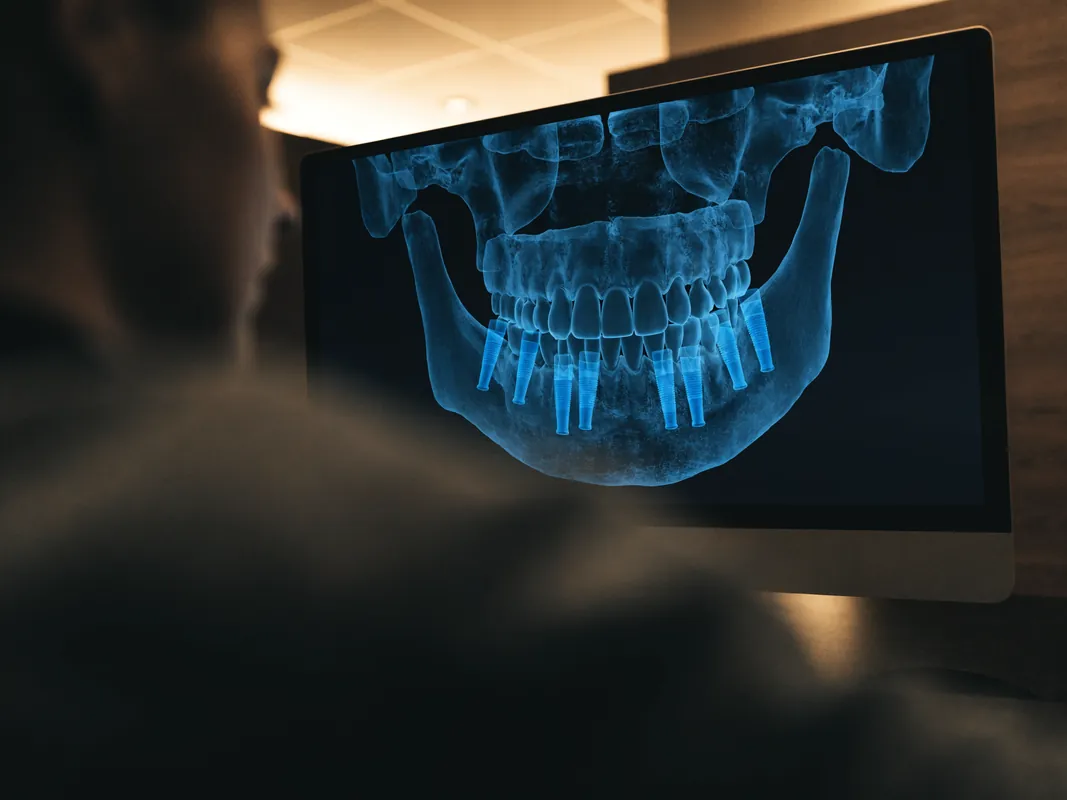
A diagnostic brief may include the patient’s concerns, medical and dental history, medicines and allergies as reported, smoking or nicotine exposure, periodontal condition, caries, remaining teeth, occlusion, parafunction, hygiene capacity, anatomy, bone and soft-tissue findings, imaging selected for a clinical reason, and maintenance access. The exact assessment is case-specific.
For each proposed site, record tooth or region, current condition, diagnosis or uncertainty, alternatives, restorative objective and factors that could change the surgical or prosthetic design. A whole-mouth label such as “full arch” is not enough.
Ask who interpreted the records and who owns the diagnosis. A sales coordinator can organise files but should not choose the implant family. A device manufacturer’s educational material cannot examine the patient.
Only after the brief is complete should the clinician explain which system characteristics matter. If the explanation begins and ends with “top brand,” it has not connected the device to the case.
Compare Proposals, Not Corporate Reputations
Create one row per proposal. Include diagnosis, alternatives, sites, extraction and augmentation scope, provisional and definitive restoration, exact fixture family, components, clinicians, laboratory, review, maintenance, records and commercial terms. Then highlight true differences.
A higher corporate profile does not prove the quoted product is current, authorised in the relevant market, sourced through an appropriate chain or supported locally. A less familiar name does not prove poor performance. Both require exact evidence.
Do not compare a single-tooth plan with a full-arch plan, or an implant-only line with a restored-tooth line. Do not compare a fixture price with a total pathway. Equivalent comparison requires the same clinical and component boundary.
A responsible seller should tolerate this structure. If the brand is used to prevent itemisation, the label is functioning as a distraction.
Use the Identity Hierarchy
Record identity in layers:
- Legal manufacturer — the entity named on the applicable label and documents.
- Commercial brand — the public name used in marketing.
- Implant system or family — the connection and product architecture relevant to compatibility.
- Exact model or reference — the specific fixture and component catalogue identity.
- Production identity — lot, batch, serial or other production fields where applicable.
- Patient-use record — site, date, clinician and component chain actually used.
Do not collapse those layers. A parent company can own several brands. One brand can have several incompatible families. A model can have multiple sizes and platform options. The production identifier answers a different question from the device identifier.
The same hierarchy should appear on the treatment plan, invoice, surgical record and handover. Any mismatch needs resolution before placement or restoration.
Name the Exact Fixture, Not Just the Portfolio
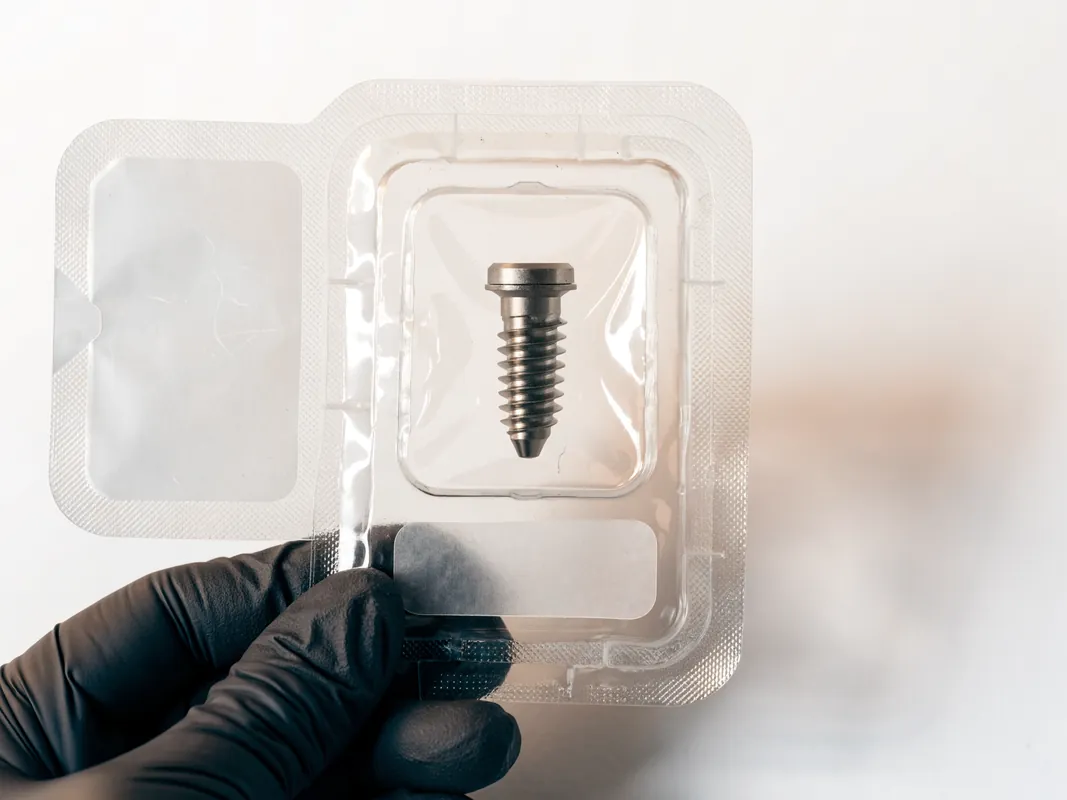
Ask for the proposed fixture’s product family, reference, diameter, length, platform or connection, material and surface description exactly as stated in the applicable official document. These fields are not a patient prescription; the treating clinician selects them after assessment.
Mark remote fixture dimensions conditional. Anatomy, imaging, surgical access and restorative planning can change them. The final placed identity belongs in the operative record, not only in a pre-treatment quote.
A product code should map consistently across label, instruction document and regulatory database where applicable. A catalogue screenshot may help locate a code, but it does not prove that a particular sterile item was used.
Avoid shorthand such as “Swiss implant,” “Korean implant” or “European implant.” Country language can obscure the legal manufacturer and exact device, and it does not establish suitability.
Map the Connection and Platform
The implant–abutment connection is central to restorative compatibility. Ask for the connection family, platform and any indexing or interface information needed by the restorative clinician. Do not assume all implants under one logo share a connection.
Record whether the proposed impression coping, scan body, temporary abutment, definitive abutment, screw, driver and analogue correspond to the exact platform. A component may physically resemble another yet differ in geometry, material, screw design or intended use.
Connection information matters later when a crown loosens, a screw fractures, a scan is needed or a restoration is remade. Without it, a local dentist may have to identify the implant from radiographs or trial components, adding uncertainty.
The patient does not need to choose the connection. They need a traceable record and a professional who has verified the compatible chain.
Build the Full Component Chain
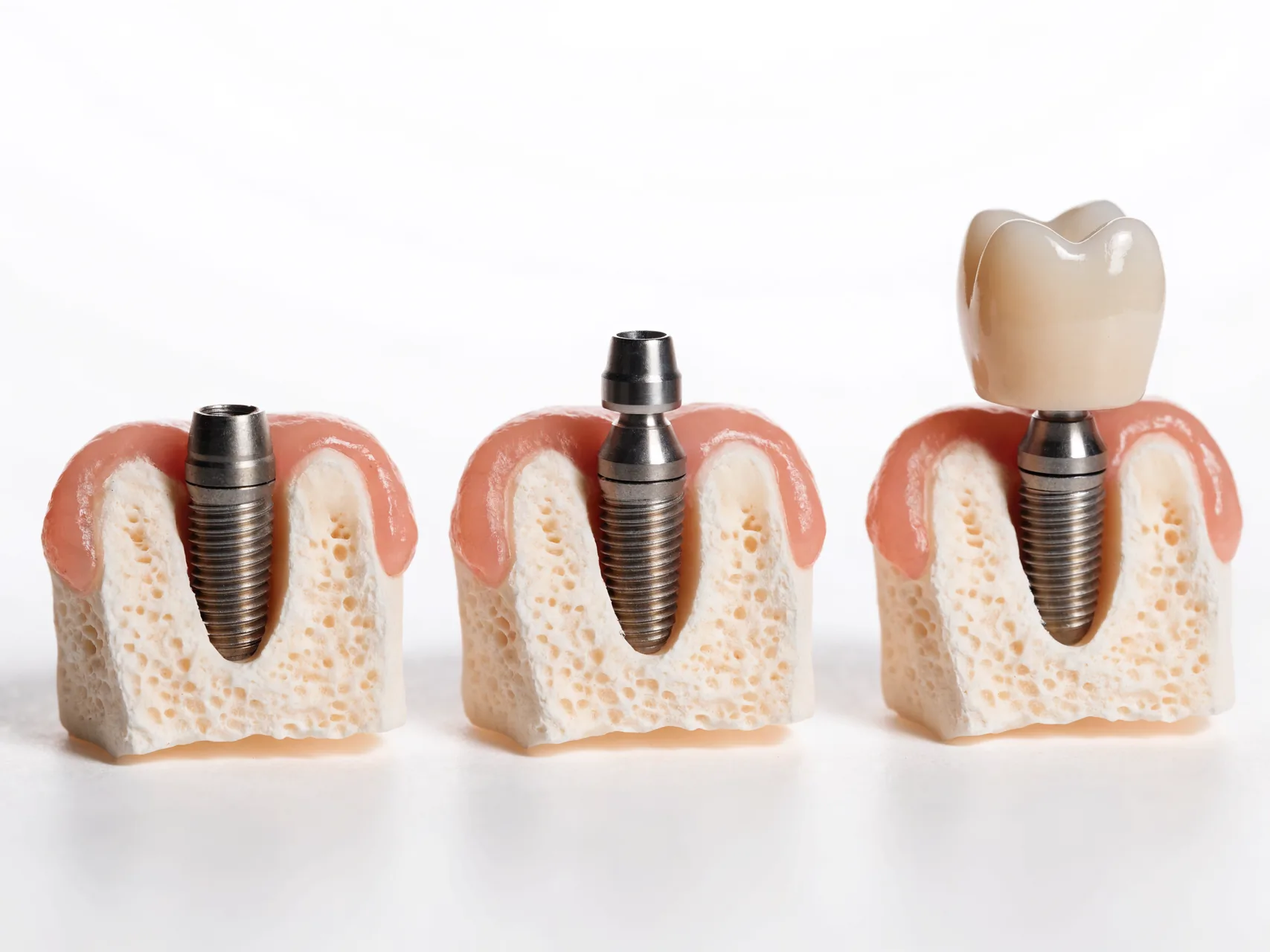
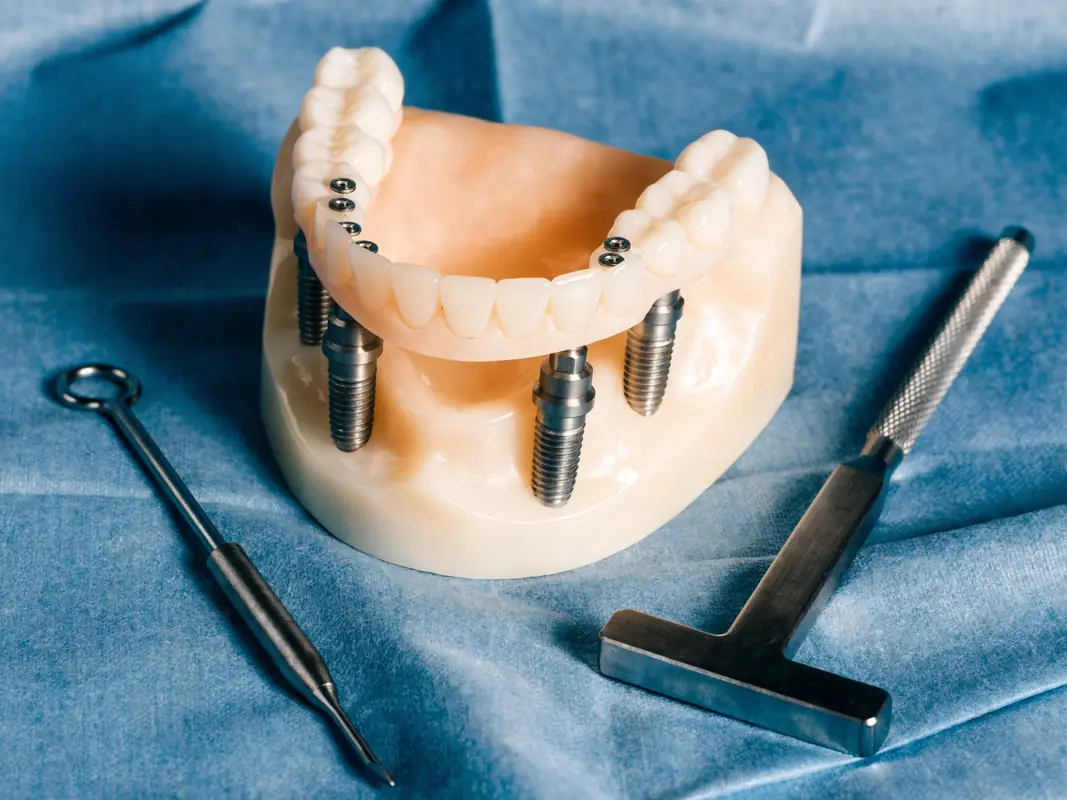
An implant restoration is a system, not only a fixture. Depending on the case, the chain can include cover screw, healing component, temporary abutment, impression coping or scan body, analogue, definitive abutment, fixation screw, restorative material and maintenance instruments. Not every case uses every item.
For each component, record manufacturer, system, reference, platform and role. Mark whether it is original-system, third-party, patient-specific or laboratory-made. Do not use “original” as a quality prediction; use it as an identity description that can be checked.
The quote should state which components are provisional and which remain in the patient. A temporary item should not be presented as the definitive restoration. A generic “abutment included” line cannot be compared across proposals.
Ask which component information is supplied to the patient and local clinician. Future serviceability depends on the chain, not the fixture logo alone.
Separate Surgical and Restorative Compatibility
A surgical kit can place a fixture, but that does not prove the restorative clinic has the correct scan body, driver, screw, analogue or laboratory library. Conversely, a laboratory library does not prove the surgical components were used according to the current instructions.
Identify the surgical provider, restorative provider and laboratory. Ask each to confirm their role and system access. If different organisations are involved, require a written handoff.
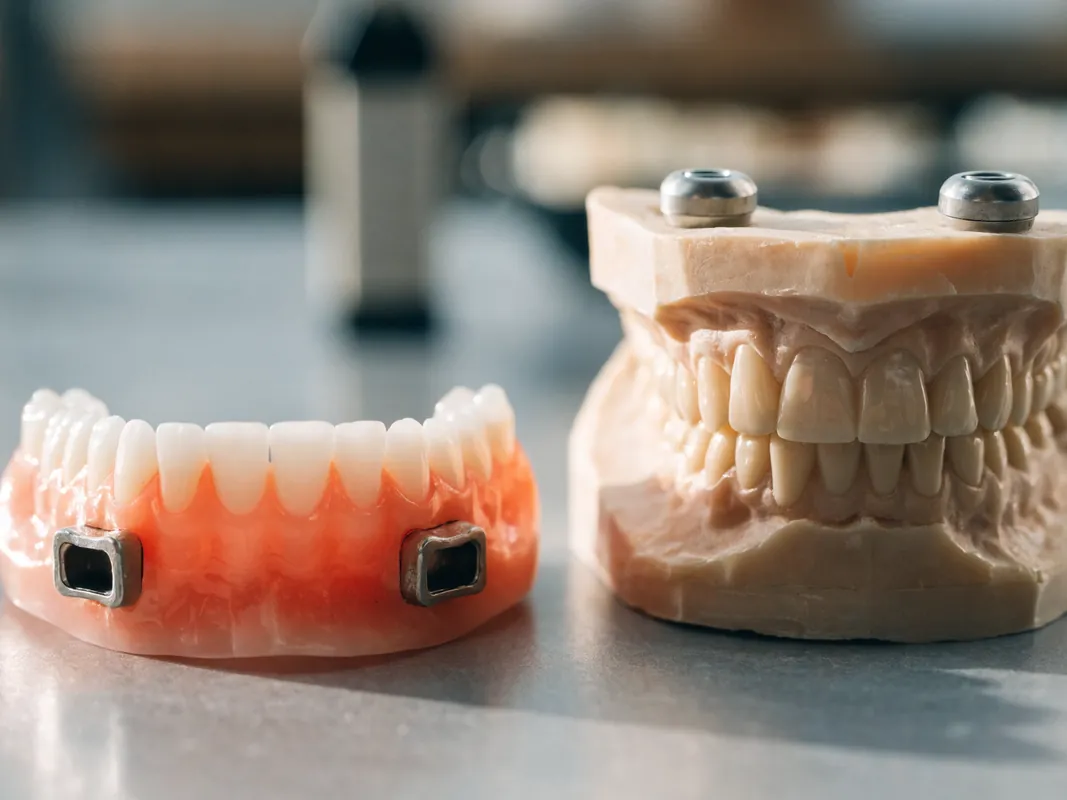
For full-arch or multi-unit work, map the prosthetic interface above the fixtures as carefully as the fixture itself. Angled or multi-unit components, cylinders, screws and framework interfaces can create another compatibility layer.
A brand comparison that stops at surgery ignores the parts most likely to be serviced after return.
Define the Restorative Route Before Surgery
Start with the intended restoration: single crown, bridge, removable overdenture or another design. Record screw-retained or cement-retained intent where relevant, provisional pathway, laboratory, materials and hygiene access. The final plan depends on clinical findings.
The restorative objective influences implant position and component selection. Choosing a fixture first and “finding a crown later” can create avoidable constraints. Require prosthetically driven planning rather than a catalogue-first sequence.
Ask who approves the design, who checks fit and occlusion, and who maintains it. Do not accept a surgery-only promise that an unnamed laboratory will complete the work.
The commercial quote should identify where surgical responsibility ends and restorative responsibility begins. Hidden gaps often appear only when the patient returns home.
Treat Compatibility as a Documented Claim
Compatibility should be supported by the exact current instructions, manufacturer compatibility document or other applicable primary evidence for the product references involved. A seller saying “it fits” is not enough.
Manufacturer portals can distinguish current and archived instructions. Nobel Biocare’s portal explicitly warns that content can differ by country. Osstem’s portal offers current and archived material. Straumann and Dentsply Sirona provide their own instruction libraries. These portals support document retrieval, not patient suitability or authenticity by themselves.
Record the document number, language, market, revision and retrieval date. If a third-party component is proposed, identify both devices and the evidence supporting the interface. Do not infer compatibility from a shared driver shape or laboratory software library.
The responsible clinicians must interpret the documents. A patient worksheet identifies missing evidence; it does not perform the compatibility decision.
Separate Same-Brand From Third-Party Components
Same-brand components may simplify documentation, but the label alone does not guarantee correct platform selection or handling. Third-party components may be available in some markets, but their intended use, compatibility evidence and regulatory status must be checked exactly.
Ask why a third-party component is proposed, who manufactured it, which references it claims to interface with, what instructions apply, and how responsibility is divided if a problem occurs. Include the information in consent and records.
Do not describe third-party as automatically inferior or equivalent. Those are conclusions requiring device-specific and case-specific evidence.
Local serviceability can sometimes favour a well-documented alternative, while a particular restoration may require the manufacturer’s own component. Only the responsible professionals can make that decision.
Control Every Substitution
A substitution is any change in fixture family, platform, dimensions, material, surface, abutment, screw, restorative interface or other material component after the patient accepts the plan. Define which changes require new clinical review, consent and quote.
Stock pressure is not consent. A claim that two products are “the same” must be supported by exact intended use, compatibility, regulatory and clinical reasoning. Similar corporate ownership does not make systems interchangeable.
Require the final product identity before opening or placement where practical. If an in-procedure finding requires a different item, the clinician should document the reason and the patient-consent process appropriate to the circumstances.
After treatment, reconcile the invoice and record with what was actually used. The pre-treatment brand name must not survive unchanged when the placed system differs.
Read the Label and Packaging Without Overclaiming
A device label can contain manufacturer, reference, UDI, lot, expiry, material, size, sterile status and symbols depending on the product and market. Ask for the removable patient label or a clear record of relevant fields where lawful and available.
Check whether packaging is intact and within the applicable use period as part of professional controls. The patient should not be told that a photograph alone proves sterile handling, authorised distribution or authenticity.
Compare label fields with the official instruction and database record. A mismatch is a pause signal. A match supports identity but does not prove that the item was stored correctly, used on the patient or clinically suitable.
Avoid posting labels publicly. Production identifiers can be sensitive operational information and may be needed for future reporting.
Understand UDI, DI and Production Fields
FDA and European Commission resources explain that a unique device identifier can contain a device identifier and production information. The device identifier relates to a specific version or model; production fields can include lot, batch, serial, manufacturing or expiry data when present under the relevant system.
Do not assume every jurisdiction, device or packaging level displays identical fields. Exceptions and implementation rules exist. Ask which regulatory market applies to the item used in Türkiye and which identification record should be retained.
A UDI is an identity and traceability tool. It is not a clinical score, authenticity certificate or quality ranking. A valid-looking number should be parsed and checked rather than trusted by appearance.
Record the full text or scan accurately, but keep a human-readable system name and component map too. A future dentist may need both.
Use Regulatory Databases Within Their Limits
AccessGUDID provides device information submitted to the FDA for devices with UDI records in the United States. EUDAMED’s device module follows European rules and became mandatory for specified uses under its current transition. Türkiye has its own device rules and ÜTS route. These systems are not interchangeable.
A database match can support legal manufacturer, model and identifier questions in the database’s jurisdiction. It does not prove current authorisation elsewhere, possession by a clinic, correct storage, implantation in this patient, clinical suitability or genuine packaging.
An absent result also needs interpretation. The code may be wrong, the market may differ, a transition or exception may apply, or the item may require further investigation. Do not declare counterfeit status from one failed search.
Save the query, exact identifier, date and result. Ask the manufacturer or competent authority route when evidence conflicts.
Match the Current IFU and Revision
The instructions for use are product and market specific. Record the reference, country or region, language, revision, publication date and retrieval date. An archived document can explain a legacy implant; a current procedure should use the applicable current version.
Search by exact reference or UDI rather than by brand alone. One family can have different instructions for fixtures, healing parts, abutments, instruments and restorative components.
The IFU may contain intended purpose, indications, contraindications, warnings, compatibility, handling, cleaning, sterilisation, MRI and other information depending on the device. The responsible professional applies it to the patient and local rules.
An IFU match does not prove the device is the best choice, that every step was followed, or that a result will occur. It is one mandatory evidence layer in the comparison.
Respect Market-Specific Instructions
A document in English is not automatically the correct document for Türkiye. Manufacturer portals may offer multiple English versions for different markets. Regulatory statements, intended uses, symbols and availability can differ.
Ask the provider to identify the market version supplied with the product. If a foreign-market instruction is used as support, explain why it is relevant and what the Turkish label says. Do not mix a US database record, EU instruction and Turkish package as if they are one approval.
Country-specific differences also affect warranty, distributor, complaint and field-safety routes. A global homepage is not the governing document.
This market check protects against a polished comparison built from unrelated documents.
Build an Evidence Hierarchy
Use an evidence hierarchy for each claim:
- Applicable law, regulator record or official device database for regulatory identity.
- Current product label and IFU for intended use, warnings and compatibility.
- Public assessment documents such as an applicable summary of safety and clinical performance.
- Peer-reviewed primary clinical research on the exact system and question.
- Independent systematic review or guideline that evaluates the body of evidence.
- Manufacturer technical or educational material, clearly labelled as such.
- Provider experience, explained as local experience rather than universal evidence.
- Marketing, testimonials and social posts as leads only.
No single level answers every question. A regulator record does not compare clinical outcomes. A clinical paper does not prove the item in the box. A clinician’s experience does not replace product identity.
Make the provider cite the level supporting each material claim. “Clinically proven” without a citation, system and endpoint is not decision-grade.
Read Primary Studies by Exact System
When a provider cites research, extract the exact implant family, connection, surface, component, restoration, patient population, indication, setting, operators, sample size, comparator, endpoint, follow-up and losses. Record funding and author conflicts when reported.
Do not transfer evidence from an older discontinued family to a new system merely because the brand is the same. Do not transfer single-tooth evidence to a full-arch restoration, or controlled study maintenance to a patient without comparable access.
A study can be well conducted and still not answer the patient’s question. A laboratory study may explain a mechanical property but cannot establish a clinical outcome. A case series can generate hypotheses but has limited comparison power.
The worksheet should state “direct,” “partially transferable,” “indirect” or “not applicable” with a reason. It should not turn a paper into a personal forecast.
Read Systematic Reviews Without Creating a League Table
A systematic review depends on included studies, definitions, heterogeneity, risk of bias and follow-up. Brand-level pooling can hide different generations and components. An apparent difference may not apply to the exact current product.
Read the question the review asked. Was it implant surface, connection, diameter, loading, site, restoration, maintenance or another variable? Check whether the proposed system appears and whether data are separable.
Do not rank brands by the number of publications. Publication volume can reflect history, portfolio size and research strategy. Quality, relevance and transparency matter more.
If evidence is uncertain, say so. Uncertainty is not permission for the seller to substitute marketing confidence.
Separate Device Endpoints From Patient Outcomes
Fixture survival, implant loss, marginal bone measurements, soft-tissue indices, mechanical complications, patient-reported function and restoration maintenance are different endpoints. A proposal should not use one as shorthand for all.
Define how the study counted events and whether withdrawn participants were included. Avoid percentages in a patient proposal unless the source, denominator, uncertainty and transferability are explicit. This guide provides no outcome rate.
A fixture can remain present while a crown, screw, tissue or hygiene problem requires care. Conversely, a component repair does not automatically mean the fixture failed. Brand comparison should include the whole restoration pathway.
The patient’s objective, tolerance for maintenance and access to repair must be considered alongside published endpoints.
Treat Follow-Up as Part of the Intervention
Clinical evidence often includes structured review and maintenance. Ask how often participants were assessed, what hygiene support they received, who managed complications and how missing visits were handled. Those conditions may differ from cross-border care.
Do not quote a long follow-up label without checking how many participants and devices remained under observation. Calendar length is not the same as complete data.
The patient’s plan should specify local review, periodontal maintenance, restorative inspection and an escalation route. A brand cannot compensate for absent follow-up.
If the provider cannot explain continuity after travel, the evidence may not transfer to the proposed care pathway.
Read Adverse-Event and Recall Data Carefully
The FDA MAUDE database contains device reports and publishes explicit limitations: reports cannot establish incidence, prevalence, event rates or causality on their own. Use it to identify signals and questions, not to rank brands by report counts.
Recall and field-safety information should be matched by exact product, reference, lot or date. A recall involving one component does not prove every product under the brand is affected. An absence from one database does not prove no issue exists globally.
Ask which competent authority and manufacturer route applies to the product’s market. Keep the implant identity so a future safety notice can be matched.
Do not use a dramatic report as a personal prediction. Clinical symptoms need professional assessment independent of database research.
Separate Device Choice From Clinician Choice
A correctly identified system can still be poorly selected, positioned, restored or maintained. A highly experienced clinician can still need complete product documentation. Device and operator evidence are complementary.
Ask who diagnoses, plans, performs surgery, selects components, restores the implant and reviews the patient. Verify current professional identity and relevant scope through official routes. Do not rely on membership logos or invented credentials.
Ask about case-specific experience without turning a volume claim into guaranteed competence. Request how complications, referrals and second opinions are handled.
The best device record cannot cure an unjustified extraction or compensate for missing consent.
Verify the Legal Clinical Provider
Match the exact provider name, address and responsible clinicians against Turkish official healthcare and professional resources where applicable. Record when the check was made and the scope of the result.
A Ministry or directory listing is a narrow status check. It does not prove suitability for the procedure, product authenticity, stock, laboratory quality, individual skill or outcome.
Clarify whether a facilitator, distributor or brand representative is speaking. Only the clinical provider should take responsibility for diagnosis, consent and treatment. The invoice and records should identify that entity.
Use the clinic verification guide for the broader worksheet. A brand comparison should never bypass provider due diligence.
Verify Market Status and Distribution
Ask which regulatory market the product was supplied for, who the legal manufacturer and authorised representative are where applicable, and which distributor supplied the clinic. Request invoice or traceability evidence appropriate to the transaction without exposing confidential commercial data unnecessarily.
A familiar global name does not prove that every system is available or authorised in Türkiye. Availability can change by product reference and time. Do not publish a stock promise.
Turkish product-rule information explains the national medical-device framework and ÜTS offers an official route. Use current official information and professional interpretation. A database field alone does not establish lawful use in a particular case.
If the label market, IFU market and distributor story conflict, pause before placement.
Test Local Serviceability Before Treatment
Contact a local restorative dentist or implant service before travel. Provide the proposed system and component map, then ask what they can assess, which drivers and scan bodies they hold, whether parts are obtainable, and what records they require. They remain independent and may decline.
Do not ask “Do you service Brand X?” Ask “Can you service this exact connection, platform and restoration with these components?” A yes at brand level can hide a system mismatch.
Record likely diagnostic, temporary and definitive options if a screw loosens, crown fractures, tissue inflames or a component is unavailable. This is contingency planning, not a prediction.
Local serviceability can be a legitimate commercial differentiator even when clinical evidence does not favour one system. State it as an access finding, not a biological advantage.
Plan for Legacy and Discontinued Systems
Implants can remain after product lines evolve. Ask whether the proposed system is current in the market, which components are legacy, how archived IFUs are accessed and what the manufacturer’s continuity route is. Do not accept a verbal promise of indefinite supply.
Record cross-generation compatibility only from exact official documents. Newer components may not fit earlier connections even under the same brand. Third-party legacy parts require their own evidence and consent.
Keep analogue or digital records that can help identification later, but do not rely only on a proprietary clinic account. Patient-held labels, radiographs and component records improve portability.
A discontinued line is not automatically defective. It creates a serviceability question that should be priced and planned.
Itemise the Quote by Stage and Component
A total cannot be compared until the scope is itemised. Separate assessment and records, disease control, extraction if independently justified, augmentation if conditional, each fixture, cover or healing components, provisional abutment and restoration, definitive abutment and screw, definitive restoration, laboratory, review, maintenance and handover.
Each line should identify quantity, site, exact system or conditional status, legal payee, currency, tax treatment and exclusions. Avoid “implant unit” when it is unclear whether the crown, abutment or records are part of the line.
Mark what changes after in-person assessment. Define the commercial result if fewer implants are needed, a site is deferred, the patient chooses an alternative, or the system becomes unavailable.
No price examples appear here. A number without equivalent clinical and component scope would mislead.
Audit Currency, Payment and Substitution Terms
State quotation currency, settlement currency, conversion method, payment stages, deposit status, refund route and card or bank fees. Match the payee to the legal provider or documented agent.
Tie payments to evidence gates where possible: confirmed diagnosis, accepted itemised plan, placed-device record and restored-system handover. This does not determine a contract; it keeps the commercial sequence visible.
Write what happens if the proposed system cannot be supplied. The patient should be able to decline a substitution, seek another opinion or renegotiate under the agreed terms. A sunk deposit should not become clinical consent.
Keep clinical refusal and commercial dispute separate. A patient can withhold consent even when payment consequences need later resolution.
Treat Warranty Terms as Contracts, Not Evidence
Manufacturer and provider warranty language can cover different items and events. Request the current country-specific document, eligible product references, registration steps, claimant, decision-maker, exclusions, maintenance conditions, remedy and costs not covered.
Do not interpret a warranty as a prediction that the device, tissues or restoration will remain problem-free. It cannot replace diagnosis, consent, correct placement, maintenance or urgent care.
Separate fixture replacement, component replacement, laboratory remake, clinician time, local care, travel and accommodation. Do not infer that any unstated cost is covered.
This guide makes no warranty promise. Compare written terms only after confirming that the exact product and market are eligible.
Separate Surgical and Restorative Responsibility
One clinician may place the fixture while another designs or fits the restoration. A laboratory may manufacture custom components. Record each legal entity, person, stage and handoff.
Ask who owns implant position planning, component selection, temporary restoration, definitive fit, screw or cement protocol, occlusion, hygiene design and review. The answer can involve several professionals, but responsibility must not disappear between them.
If the surgical and restorative providers use different component assumptions, resolve the conflict before surgery. A fixture position planned without the final restorative route can create later compromises.
Commercially, identify which provider corrects a surgical, component or laboratory issue and under what terms. This is accountability, not an outcome promise.
Require an Implant Identity Card or Equivalent Record
The FDA advises patients to ask for brand and model information. European implant-card materials describe information requirements within the EU framework, subject to scope and exemptions. Türkiye has its own rules. Ask the actual provider which patient record applies.
A useful patient-held record can include legal manufacturer, brand, system, fixture reference, dimensions, platform, UDI or label fields, lot, site, date, clinician, abutment, screw, restoration and applicable IFU. Not every field is available or required in every jurisdiction.
Call it an “implant identity record” if the legal implant-card term does not apply. Do not manufacture a certificate or imply regulatory status.
Compare the patient record with the operative note and invoice before departure. Correct discrepancies while the source documents are available.

Request the Complete Clinical Handover
The handover should include presenting problem, diagnosis, alternatives, consent, relevant history, images and reports, site chart, extraction and augmentation notes, fixture labels, components, operative record, complications, provisional and definitive restoration, laboratory prescription, placement materials, occlusion, instructions, review and urgent contacts.
Identify the exact surgical and restorative systems. Include rejected, replaced or substituted components when relevant. A photograph of a branded box is not a handover.
GDC record standards are binding on GDC registrants, not Turkish providers, but they offer useful comparator questions about complete, accurate and contemporaneous records. Verify Turkish duties separately.
Provide transferable files to the patient and agreed local clinician. A portal that expires after travel is not enough.
Protect Device and Health Data
Implant records combine health data with device identifiers, provider identity and sometimes supply information. Ask who collects, stores and shares them; the purpose; retention; access; correction; cross-border transfer and security.
Share enough information for local care while avoiding public disclosure. Do not post labels, radiographs or invoices to social media for crowdsourced brand identification unless privacy and clinical risks have been considered.
A manufacturer safety report may need exact identifiers and clinical facts. Follow the applicable professional and regulatory route rather than sending data to an unverified representative.
Separate marketing permission from clinical records. Refusing a testimonial or case photo should not remove access to the implant identity.
Build Maintenance Around the Exact Restoration
Maintenance depends on tissues, restoration design, hygiene access, patient risk and component system. Ask what the local clinician needs to inspect or remove the restoration and what instruments are required.
SDCEP guidance supports risk-based maintenance and attention to peri-implant disease within its primary-care scope. It does not rank manufacturers. Use it to test whether the proposal includes cleansable design, baseline records and continuity.
Record screw and component information for future service. Do not give patients technical torque or procedural instructions; the responsible clinician uses the applicable IFU and judgement.
A brand is only serviceable when the restoration can be identified, assessed, cleaned, repaired and referred appropriately.
Keep Travel Outside the Device Evidence
Hotel proximity, airport pickup or a short itinerary does not validate an implant system. Clinical diagnosis, staged healing, restorative readiness and review must control travel, not the other way around.
Build flexible travel around assessment, surgery, provisional and definitive stages as applicable. The exact sequence is patient-specific. Do not promise a loading or departure date from the brand selected.
Arrange local aftercare before travel and carry the system record home. An overseas provider may support communication, but remote messages cannot examine mobility, pain, tissue changes or mechanical problems.
Use the returning-home guide to create a continuity plan. No travel service is verified or offered by this article.
Compare Four Proposals With One Matrix
Use a matrix with one column per proposal:
| Field | Proposal A | Proposal B | Proposal C | Proposal D |
|---|---|---|---|---|
| Diagnosis and alternatives | ||||
| Site and restorative objective | ||||
| Exact fixture family and reference | ||||
| Connection and platform | ||||
| Surgical components | ||||
| Restorative components | ||||
| Third-party interfaces | ||||
| Applicable label and IFU | ||||
| UDI and database route | ||||
| Evidence transferability | ||||
| Provider and clinician owners | ||||
| Laboratory and restoration | ||||
| Local serviceability | ||||
| Maintenance and handover | ||||
| Itemised commercial scope | ||||
| Substitution and remedial terms |
Mark each cell confirmed, conditional, missing, conflicting or not applicable. Do not award points for brand fame. A proposal with fewer claims and better documentation may be more comparable than a glossy “top-tier” offer.
Red Flags That Require a Pause
Pause when the quotation names only a brand; the proposed system changes between messages; the fixture, abutment and restoration platforms are not mapped; or a third-party component is hidden.
Pause when a sales person selects the system without an examining clinician; active disease or alternatives are ignored; the recommendation rests on country of origin, prestige or a membership logo; or a remote scan is treated as final diagnosis.
Pause when an old or foreign-market IFU is used without explanation; the label, invoice and database do not match; a UDI is presented as proof of outcome; a study concerns another system; or surveillance reports are used as brand league tables.
Pause when the quote hides components, currency, payee, substitution, records or local aftercare. Pause when warranty wording is presented as a biological promise. Missing evidence does not diagnose wrongdoing, but the irreversible gate should remain closed.
Worked Scenario: Same Brand, Different Connection
Two proposals name the same manufacturer. One specifies a current connection and complete restorative chain. The other names only the logo. The prices cannot be compared as equivalent.
The patient asks for fixture reference, platform, abutment, screw, scan component, IFU and local service route. The second provider reveals a different legacy connection. That is not automatically unacceptable, but it creates different evidence and component-access questions.
The decision returns to diagnosis, suitability, serviceability and complete commercial scope. Shared branding did not make the proposals the same.
Worked Scenario: A System Is Substituted on Surgery Day
The accepted plan identifies one fixture family. The clinic says another family is available on the day. The patient does not treat corporate ownership or similar dimensions as automatic equivalence.
The clinician explains why the change is proposed, what the new label and IFU state, how components and restoration change, whether local support remains, and what happens commercially. Consent is renewed before an irreversible step when circumstances allow.
The final record reflects what was placed. If the evidence or consent is insufficient, the planned elective placement should not proceed merely to preserve travel.
Worked Scenario: A Local Dentist Cannot Service the Interface
A patient sends the proposed system sheet to a local dentist before travel. The dentist can review tissues but does not hold the driver or scan component for that connection and cannot promise parts.
The patient asks other appropriate services and the manufacturer’s regional route. One proposal has a clear service pathway; another does not. This is a real commercial distinction, not proof that one device has better biology.
The patient may choose a different system, arrange a specialist route or accept the access burden after informed discussion. The local dentist remains independent.
Worked Scenario: A Database Search Does Not Match
The product code on a quotation returns no result in a US database. The patient does not declare the device fake. They check transcription, regulatory market, label, current Turkish and European routes, manufacturer portal and distributor evidence.
The provider explains that the code belongs to a different market and supplies the applicable documents. If the story remains inconsistent, the patient pauses and seeks competent authority or manufacturer clarification.
One failed query is a question generator. A resolved, coherent chain is evidence; neither is a personal outcome forecast.
Frequently Asked Questions
1. Which dental implant brand is best?
There is no universal best brand. The relevant decision is whether an exact system, connection and component chain is clinically suitable, correctly documented, supported by applicable evidence and serviceable where the patient will receive maintenance. A logo cannot answer diagnosis, operator, restoration or aftercare questions.
2. Are Straumann, Nobel Biocare, Osstem and Astra Tech interchangeable?
No brand-wide interchangeability should be assumed. Each portfolio contains specific families, platforms and components, and instructions can differ by market. Ask the clinicians to document the exact interfaces and official compatibility evidence. Similar appearance or common ownership is not enough.
3. Does country of manufacture show implant quality?
Country language does not establish suitability, regulatory status, authenticity, evidence quality, clinician performance or outcome. Record the legal manufacturer and exact device instead. A geographic preference can be personal, but it should not replace diagnosis or traceability.
4. What exact implant information should appear on my quote?
Request manufacturer, system family, fixture reference, proposed dimensions or conditional status, connection, platform, material and surface description, abutment and screw, restorative route, IFU market and commercial inclusions. Final placed identity belongs in the operative record.
5. Why is a brand name not enough for future care?
A local clinician may need the connection, platform, screw, driver, scan body and abutment identity to assess or repair the restoration. One brand can contain incompatible generations. A logo cannot identify the component chain.
6. What is the difference between an implant fixture and an abutment?
The fixture is the part placed in bone. The abutment or another restorative component connects the fixture to the restoration. A fixation screw and additional components may also be involved. The FDA’s patient page illustrates this general system, but the exact design varies.
7. What does implant platform mean?
It refers to the restorative interface or size family relevant to compatible components. Terminology varies by manufacturer. The treating and restorative professionals should record the exact platform from applicable documents rather than relying on a patient to interpret colour codes or shapes.
8. Can components from another manufacturer be used?
Only after exact intended use, compatibility, regulatory status, clinical reasoning and responsibility are verified for both devices. Third-party does not automatically mean inferior or equivalent. The patient should know what is proposed and receive a traceable record.
9. What is a UDI?
A unique device identifier is a regulatory identification tool that can include a device identifier and production information under the relevant jurisdiction. It helps trace devices. It does not prove authenticity by itself, clinical suitability, proper storage, correct use or outcome.
10. Is a UDI the same as a serial or lot number?
No. The device identifier identifies a version or model, while production fields can include lot, batch, serial, manufacture or expiry information when applicable. Exact structure depends on the issuing system and rules. Record the complete label accurately.
11. Does an AccessGUDID result prove an implant is approved in Türkiye?
No. AccessGUDID publishes data submitted to the FDA for the US system. A match supports US device-identity questions. It does not prove Turkish market status, possession by a clinic, authenticity of an item or suitability for a patient.
12. What if the database shows no result?
Check the exact code, market, database scope, transition and exceptions. Ask the provider, manufacturer or appropriate authority. An absent search result is not enough to label a product counterfeit, but unresolved identity is a reason to pause.
13. What is an IFU?
The instructions for use are the manufacturer’s applicable product document containing intended purpose, warnings, compatibility and handling information among other fields. The responsible professional interprets it. An IFU is not a patient-specific plan or performance guarantee.
14. Why must the IFU match the market?
Manufacturers can publish different documents for different jurisdictions, even in the same language. Regulatory statements, intended uses and availability may differ. Record the country or region, revision and exact reference relevant to the supplied item.
15. Can an old IFU be used for a legacy implant?
An archived IFU can help identify and service a legacy system. For current treatment, the applicable current document should be used. Ask the professional to explain why an archived version is relevant and how cross-generation compatibility was verified.
16. Does a regulatory database rank implant brands?
No. Device databases support identification, registration or surveillance functions within their scope. They do not provide a patient-specific brand league table. Compare exact records and evidence, not result counts.
17. Can I compare brands using MAUDE report numbers?
Not as event rates. The FDA states that MAUDE reports cannot establish incidence, prevalence, trends across devices or causality on their own. Use reports to generate product-specific questions and investigate exact identifiers, not to rank logos.
18. Does more published research make a brand better?
Publication volume alone is not enough. Check exact system, study design, comparator, patients, restoration, endpoints, follow-up, missing data, funding and transferability. Older studies may concern another generation. Quality and relevance matter more than count.
19. What evidence should support a surface claim?
Request the exact product and surface, applicable IFU, regulatory documents, primary clinical studies on the relevant question and independent reviews. Laboratory findings may explain properties but cannot establish clinical outcomes. Avoid generic “faster” or “better” claims.
20. Can a survival percentage predict my result?
No population percentage is a personal forecast. Definitions, follow-up, maintenance, patient risk, site, restoration and study conditions differ. This guide provides no rate. Ask the clinician how evidence and uncertainty apply to the actual plan.
21. Why does the crown or bridge matter in a brand comparison?
The restoration determines function, hygiene access and many future service needs. Its abutment, screw, framework, material and laboratory pathway must match the fixture system. Comparing fixtures while ignoring the restoration is incomplete.
22. Should implant position be planned around the restoration?
Restorative objectives should inform surgical planning, while anatomy and clinical constraints also matter. The surgical and restorative professionals should agree the design before placement. A device catalogue should not dictate position without that plan.
23. How do I verify clinician experience without unsafe credential claims?
Verify legal professional identity through official sources, then ask about case-specific training, roles, complication management, referrals and records. Do not rely on invented titles, membership logos or procedure counts as outcome guarantees.
24. Does an authorised-clinic listing prove the implant is authentic?
No. Provider status and device identity are separate checks. A listing does not prove stock, distributor chain, label, storage, component compatibility or outcome. Verify both evidence chains independently.
25. What should I ask about the distributor?
Ask which entity supplied the exact product, which regulatory market it serves and how invoice or traceability records are retained. The clinic should provide appropriate evidence without exposing irrelevant confidential data. A distributor name alone is not authenticity proof.
26. What makes an implant locally serviceable?
A local professional willing and able to assess it, obtainable compatible components, appropriate drivers and scan parts, accessible technical documents, and a clear referral route. Confirm the exact connection, not just the brand.
27. What if my local dentist does not use the proposed brand?
Ask what they can still assess and which specialist route they recommend. Contact other appropriate services before travel. A local dentist is independent and cannot be assigned responsibility by an overseas seller.
28. Are legacy implant systems unsafe?
Not automatically. Legacy means older or no longer current, not defective. The key questions are identification, available components, archived instructions, maintenance and contingency. A current safety notice requires exact product matching.
29. What should an implant identity record contain?
Useful fields include legal manufacturer, brand, system, fixture reference, dimensions, platform, UDI or label data, lot, site, date, clinician, abutment, screw, restoration and relevant IFU. Applicable legal requirements vary by jurisdiction.
30. Is a photograph of the implant box enough?
No. It can support label identity but does not prove correct storage, opening, placement in the patient or clinical suitability. Reconcile label, operative record, invoice, radiographs and component chain.
31. Can the clinic change brands if stock changes?
A material system change requires clinician review, explanation, compatibility planning, commercial revision and patient consent appropriate to the circumstances. Stock pressure is not consent. Write substitution rules before treatment.
32. How should implant costs be itemised?
Separate diagnosis, disease control, surgery, fixture, healing parts, provisional and definitive abutments, screws, restorations, laboratory, augmentation if conditional, reviews, maintenance and records. State site, quantity, currency, payee and exclusions.
33. Does a manufacturer warranty mean the implant will succeed?
No. A warranty is a contract defining eligible products, events, claimant, exclusions and remedies. It cannot promise biological integration, absence of disease, comfort or restoration survival. Read country-specific terms and uncovered costs.
34. Who is responsible if a third-party component causes a problem?
Responsibility depends on facts, contracts, devices, clinicians and applicable law. Ask before treatment how clinical, manufacturer, laboratory and provider roles are divided. Keep exact component and consent records, and seek appropriate advice if a dispute arises.
35. Why should surgical and restorative providers be named separately?
They may make different decisions and hold different records. Naming them shows who selects the fixture, plans position, chooses components, fits the restoration and maintains it. It prevents accountability from disappearing at handoff.
36. What records should I carry home?
Carry the diagnostic summary, images and reports, site chart, fixture labels, operative notes, augmentation record, component chain, laboratory prescription, restoration details, instructions, review plan, invoices and urgent contacts in transferable formats.
37. What symptoms need prompt assessment after an implant?
Pain that is severe or increasing, swelling, bleeding, feverish illness, altered sensation, mobility, a loose restoration, bite change or another concerning symptom needs professional advice. Breathing or swallowing difficulty or major facial swelling may require emergency care. Follow local routes.
38. Can remote follow-up maintain an implant system?
Remote communication can exchange records and observations but cannot examine tissues, mobility, occlusion or component fit. Arrange local assessment and maintenance before travel. The local clinician makes an independent decision.
39. What is the strongest brand-comparison red flag?
A proposal that names a famous logo but refuses the exact system, components, label, IFU, clinician owners, itemised quote and patient record. Other warnings include unsupported superiority, hidden substitutions and no local service path.
40. What is the final comparison rule?
Choose no brand from a logo alone. Proceed only when diagnosis, alternatives, exact device identity, compatible component chain, applicable documents, transferable evidence, responsible clinicians, local serviceability, complete records and commercial terms agree.
Primary and Official Sources
Sources reviewed on 29 August 2026. These are official regulator, government, professional, public-health and manufacturer-primary sources. Their jurisdictions, audiences and evidence strength differ. They verify no individual proposal.
Device identity, UDI and surveillance
- FDA, Dental implants: what you should know: https://www.fda.gov/medical-devices/dental-devices/dental-implants-what-you-should-know
- FDA, UDI basics: https://www.fda.gov/medical-devices/unique-device-identification-system-udi-system/udi-basics
- FDA, AccessGUDID for the public: https://www.fda.gov/medical-devices/global-unique-device-identification-database-gudid/accessgudid-public
- FDA and NLM, AccessGUDID: https://accessgudid.nlm.nih.gov/
- FDA, About the MAUDE database: https://www.fda.gov/medical-devices/mandatory-reporting-requirements-manufacturers-importers-and-device-user-facilities/about-manufacturer-and-user-facility-device-experience-maude-database
- FDA, MAUDE search: https://www.accessdata.fda.gov/scripts/cdrh/cfdocs/cfMAUDE/Search.cfm
- European Commission, Unique Device Identifier: https://health.ec.europa.eu/medical-devices-topics-interest/unique-device-identifier-udi_en
- European Commission, UDI and device registration: https://health.ec.europa.eu/medical-devices/eudamed/udidevice-registration_en
- European Union, Medical Device Regulation consolidated text: https://eur-lex.europa.eu/eli/reg/2017/745/2026-07-19/eng
- European Commission, Medical devices requiring an implant card: https://health.ec.europa.eu/system/files/2021-11/md_implany-cards_factsheet_en_0.pdf
- European Commission, Market surveillance and vigilance: https://health.ec.europa.eu/medical-devices-sector/directives/market-surveillance-and-vigilance_en
These sources support device-system structure, identifier fields, database scope, implant records and surveillance limitations. US and EU rules do not automatically establish Turkish status or clinical suitability.
Turkish device and provider routes
- Turkish Ministry of Trade, Medical devices product rules: https://urunkurallari.ticaret.gov.tr/en/sectoral-guide/medical-devices
- Turkish Ministry of Trade, Medical-device legislation index: https://urunkurallari.ticaret.gov.tr/tr/sektorel-rehber/tibbi-cihazlar/mevzuat
- e-Devlet, Ministry of Health Product Tracking System: https://www.turkiye.gov.tr/saglik-bakanligi-uts
- Turkish Ministry of Health, Authorised healthcare providers and facilitators: https://shgmturizmdb.saglik.gov.tr/EN%2C69061/authorized-healthcare-providers-and-facilitators.html
- Turkish Ministry of Health, Healthcare providers authorised by the Ministry: https://shgmturizmdb.saglik.gov.tr/EN%2C69063/healthcare-providers-authorized-by-the-ministry.html
- HealthTürkiye, Hospitals list: https://www.healthturkiye.com/hospitals-list
- Turkish Dental Association, Find a dentist: https://tdb.org.tr/dishekimi-bul
- Turkish Ministry of Health, Patient rights: https://hastahaklari.saglik.gov.tr/
These pages support narrow regulatory, identity, professional or complaint checks in Türkiye. They do not prove authenticity, suitability, current stock, clinician performance or outcome.
Primary manufacturer document portals
- Straumann, Instructions for Use portal: https://ifu.straumann.com/en/straumann-ifu-home/instructions-for-use--ifu-.html
- Nobel Biocare, electronic Instructions for Use: https://ifu.nobelbiocare.com/en/eifu
- Osstem, electronic Instructions for Use: https://ifu.osstem.com/ifu/?lang=en
- Dentsply Sirona, Instructions for Use library: https://ifu.dentsplysirona.com/
Manufacturer portals are primary sources for the documents they publish. Search by exact reference and market. They are not independent comparisons, proof of possession, authenticity certificates or patient-specific recommendations.
Clinical assessment and maintenance
- Guy’s and St Thomas’ NHS Foundation Trust, Dental implants: https://www.guysandstthomas.nhs.uk/health-information/dental-implants
- Cambridge University Hospitals, Dental implants in restorative dentistry: https://www.cuh.nhs.uk/patient-information/dental-implants-in-restorative-dentistry/
- SDCEP, Dental implants: https://www.periodontalcare.sdcep.org.uk/guidance/dental-implants/
- SDCEP, Risk factors for peri-implant disease: https://www.periodontalcare.sdcep.org.uk/guidance/dental-implants/risk-factors-for-peri-implant-disease/
- SDCEP, Prevention and Treatment of Periodontal Diseases in Primary Care: https://www.periodontalcare.sdcep.org.uk/media/vjgfn5ak/sdcep-prevention-and-treatment-of-periodontal-diseases-in-primary-care-2nd-edition-nov-2025.pdf
These UK sources support general assessment, risks, disease control and maintenance questions. SDCEP states the certainty of relevant evidence. None ranks the named manufacturers or determines an individual plan.
Consent, costs, records and treatment abroad
- General Dental Council, Principle Two: https://standards.gdc-uk.org/pages/principle2/principle2
- General Dental Council, Principle Three: https://standards.gdc-uk.org/pages/principle3/principle3
- General Dental Council, Principle Four: https://standards.gdc-uk.org/pages/principle4/principle4
- General Dental Council, Principle Five: https://standards.gdc-uk.org/pages/principle5/principle5
- General Dental Council, Going abroad for dental treatment: https://www.gdc-uk.org/standards-guidance/information-for-patients-public/going-abroad-for-dental-treatment
- NHS, Treatment abroad checklist: https://www.nhs.uk/using-the-nhs/healthcare-abroad/going-abroad-for-treatment/treatment-abroad-checklist/
GDC standards apply to GDC registrants; NHS material is UK patient guidance. Use them as question frameworks for costs, consent, records, complaints and aftercare, not as Turkish law.
Final Decision Rule
Do not choose an implant brand. Choose whether to accept a fully identified, clinically justified and locally serviceable system proposal. The diagnosis and alternatives must come first. The exact fixture, connection, components, applicable IFU, UDI and regulatory route, evidence limits, responsible clinicians, laboratory, maintenance, patient-held records and itemised commercial terms must agree.
If a logo is certain but any material field remains missing, conflicting or conditional, the proposal is not ready. Keep the irreversible gate closed until the evidence chain is coherent.