Osstem is a manufacturer name, not a complete implant prescription
An Osstem proposal is incomplete when it identifies only the manufacturer. Osstem Implant publishes several fixture families, surface designations, dimensions, connections, healing components, impression or scan components, abutments and restorative screws. The parts presented in one country or catalogue may differ from those shown in another market or an older document. A patient therefore needs the exact system and case record, not an assurance that the implant is simply Korean, well known or genuine.
The current [Osstem electronic instruction portal](https://ifu.osstem.com/ifu/?lang=en) supports searches by product code or category and separates present from archived instructions. That structure is important: the reference printed on the actual label should lead to the applicable instruction, while an archived document may be needed to identify an implant placed years ago. A generic catalogue screenshot cannot resolve those two tasks by itself.
The manufacturer’s [European implant-system catalogue labelled 2025–26](https://dev.osstem.eu/wp-content/uploads/2025/08/2025-08-01_Product-Catalog_Europe-2025-26_v1.1_Web.pdf) lists more than one TS fixture presentation and extensive prosthetic flows. It distinguishes, among other entries, TSII SA, TSIII SA, TSIII SOI and TSIV SA rather than describing one universal Osstem fixture. The same catalogue shows cover screws, healing abutments, impression and digital components, temporary components, stock or customisable abutments, multi-unit solutions and attachment options. A list is not a personal recommendation and does not prove that every item is registered, supplied or appropriate in another jurisdiction.
This page is a neutral verification guide. It does not state that WeCare, a particular clinic, surgeon, restorative dentist, laboratory or intermediary uses, supplies or is authorised for any Osstem product. It does not recommend a fixture, prescribe an operative technique, set a loading date, predict a biological or mechanical result, publish an outcome percentage, promise symptom levels or establish commercial repair terms. Those questions require a named legal provider, current records and individual assessment.
The verification sequence is simple in principle:
- establish the diagnosis and reasonable non-implant options;
- define the intended restoration and maintenance access;
- identify each proposed fixture by system, surface, connection, dimensions and reference;
- identify every component that must connect to it;
- match labels to current market and instruction records;
- record who owns surgical, restorative and laboratory decisions;
- preserve the final site-by-site labels and handover documents;
- plan maintenance, repair and urgent local care before travel.
Skipping the first two steps and beginning with a brand comparison reverses responsible planning. An implant is a component within treatment, not the diagnosis and not the finished tooth.
Build an exact product identity before comparing prices
The written plan should name the complete fixture, not merely Osstem or TS. Copy the trade name and product code from the proposed sterile label. Record fixture family, surface designation, body or platform category, diameter, length, connection and any other variant field used in the applicable catalogue. Keep the legal manufacturer and the market-specific responsible economic operator where shown. Once the fixture is placed, map that identity to the exact tooth or site.
Use a table rather than a paragraph so omissions are visible:
| Identity field | What the case record should show |
|---|---|
| Manufacturer | Legal manufacturer printed on the label |
| Fixture | Complete system and fixture name |
| Surface | Exact labelled surface designation, not an inferred description |
| Dimensions | Labelled diameter and length for that site |
| Connection | Interface or platform identity needed for later components |
| REF | Product or catalogue code copied exactly |
| Production data | Lot or batch and other applicable production identifier |
| Market document | Current REF-matched instruction and revision |
| Placement | Site, date and clinician who placed it |
| Restoration | Abutment, screw, retention and prosthesis identity |
Do not reconstruct missing identity from implant colour, an X-ray silhouette, a loose healing component or a sales invoice saying Osstem implant. Radiographs can contribute clinical information, but similar designs may be difficult to distinguish and a radiographic guess is not equivalent to a source label. If the original label is absent, record the uncertainty explicitly and seek corroborating operative, supplier and laboratory records before ordering a mating part.
Distinguish current systems, legacy systems and market-specific ranges
The current European catalogue is one dated market document, not a worldwide master list. The official [Osstem Germany download library](https://osstem.de/downloads.php) illustrates why document date matters: it presents current and older catalogues, manuals, order forms and digital libraries with publication dates. A UK catalogue or a German order form may help identify a component but cannot prove Turkish market status. Similarly, a current European line does not prove that a legacy implant used the same interface.
Write the source beside each conclusion. If the fixture is TSIII SA, record the label and the REF-matched instruction that support that identification. If the record says only TSIII, do not silently infer SA, SOI or another surface. If a prosthetic part was ordered through a local catalogue, retain that part’s own reference and catalogue edition. If the implant predates the current portal entry, use the archived instruction and record its revision rather than forcing it into today’s product list.
Names can repeat across documents while dimensions, interfaces, component codes or market status change. Product transitions can also leave patients with a clinically serviceable implant whose original restorative items require special sourcing. That is why the first quotation should address future component identification and why the final handover should keep source documents, not only a brand card.
Use official pages, catalogues and IFUs for different questions
An official product page is useful for orientation. The [Osstem Germany TS implant overview](https://www.osstem.de/dental_implants/bone_level_implants/ts_implant) distinguishes body categories and TS product groupings. A current catalogue maps fixtures to components and reference codes. The eIFU portal supplies product-level instructions and can also expose archived instructions. None of those documents replaces clinical diagnosis or proves what was placed in one patient.
Apply this document hierarchy:
- actual label: case-specific product identity and production traceability;
- current exact-REF IFU: intended purpose, warnings, precautions, handling and compatibility within its scope;
- dated regional catalogue: component maps, dimensions and references for that market edition;
- manufacturer product page: orientation and links, subject to revision;
- operative and restorative notes: what happened at each site;
- laboratory prescription and invoice: what was designed and fabricated;
- independent clinical evidence: questions about broader techniques and risks, not proof that a named device suits one patient.
When sources conflict, stop and resolve the conflict before surgery or before connecting an unverified part. Save the document title, URL, revision or publication date and retrieval date. A search result snippet, reseller listing, social video or cropped catalogue image should not control a permanent implant reconstruction.
Region and regulatory jurisdiction must stay attached to the product
Medical-device evidence is jurisdiction-specific. The Turkish ÜTS record, an EU EUDAMED entry and a Great Britain registration query answer different market questions. None is a clinic credential and none approves a personal treatment plan. A CE marking claim also needs the correct device, certificate scope, manufacturer, applicable legal framework and market context; a logo printed in advertising is not case-specific evidence.
The European Commission explains that its [UDI and device-registration framework](https://health.ec.europa.eu/medical-devices/eudamed/udidevice-registration_en) is intended to support device identification and traceability. A database match can help confirm that an identifier corresponds to a device record, but it does not prove that the labelled unit travelled through a legitimate local supply chain or was implanted in a particular site. Pair registry information with the original label, supplier record and clinical note.
Ask these jurisdiction questions in writing:
- In which country will the fixture and each restorative component be used?
- What exact REF and production identifier appear on the physical item?
- Which instruction language and revision apply in that market?
- Which authorised representative or importer is printed where relevant?
- Which local database or certificate scope supports lawful placement on that market?
- Who will retain supplier invoices and field-safety communications?
- How will the patient be contacted if a notice affects the recorded REF or lot?
Do not use one country’s website to fill a gap in another country’s record without explaining the limitation. Cross-border treatment makes jurisdiction more important, not less.
Diagnosis and alternatives come before the fixture brand
The first clinical question is why a tooth or space needs intervention. For an existing tooth, record restorability, periodontal support, endodontic status, cracks, caries, mobility, strategic value and the patient’s priorities. For an empty site, record ridge anatomy, soft tissue, neighbouring teeth, opposing dentition, bite, restorative space and how long the site has been missing. Imaging should answer a defined diagnostic question and be interpreted by an appropriately responsible clinician.
Reasonable alternatives may include preserving and restoring a tooth, endodontic or periodontal treatment, a tooth-supported bridge, an adhesive bridge in selected situations, a removable prosthesis, orthodontic space management, monitoring or no intervention. Some alternatives involve treatment of neighbouring teeth; others involve different maintenance, function, appearance or reversibility. The implant brand does not decide among them.
Consent should compare relevant options, material risks, benefits, uncertainties, likely maintenance and costs in language the patient understands. The [General Dental Council consent standard](https://standards.gdc-uk.org/pages/principle3/principle3) is a useful UK reference for discussions about options and costs and for recording ongoing consent. It governs GDC registrants rather than Turkish practice, but its distinction between a signed form and a continuing discussion is valuable for a cross-border handover.
If a tooth is being removed, the record should show who made that decision and why preservation was not selected. If an implant is optional, saying so is not a weakness. It is part of a traceable plan.
Make the plan site by site, not mouth wide
Each implant site needs its own diagnosis and contingency. A full-arch plan can still contain different bone, soft-tissue and restorative conditions at each position. A single crown site may be affected by an adjacent root, a narrow ridge, a sinus, a nerve canal, a concavity or limited vertical space. Copying one fixture specification across all sites because it simplifies ordering is not a patient-level rationale.
A useful site table includes:
| Site question | Information to record before selection |
|---|---|
| Anatomy | Ridge dimensions, contour and relevant neighbouring structures |
| Disease | Periodontal, endodontic or other infection findings and control status |
| Soft tissue | Tissue volume, keratinised tissue, recession and closure considerations |
| Prosthesis | Single crown, bridge, removable attachment or full-arch role |
| Loading | Functional status planned after placement and fallback conditions |
| Access | Hygiene, screw-channel, cement-removal and future instrument access |
| Risk | Smoking or nicotine, diabetes control, medicines, bruxism and adherence |
| Alternative | Preservation, bridge, removable option, monitoring or changed site |
| Fixture | Exact proposed Osstem system, dimensions, connection and REF |
| Contingency | What may change after flap access, extraction or updated imaging |
The table should distinguish findings from assumptions. For example, proposed grafting is not proof that adequate anatomy will be achieved; immediate placement is not proof that primary stability will support the planned restoration; and a digital plan is not proof of the final position. Record who confirms each gate and when the patient will be told about a material change.
Control disease and patient-level risk factors first
Implant planning should document medical history, current medicines, allergies, previous surgery, periodontal history, oral hygiene, tobacco or nicotine use, diabetes status where relevant, bruxism, parafunction and the ability to attend supportive care. These factors do not operate as a simple yes-or-no brand filter. They influence diagnosis, consent, timing, site design, maintenance intensity and sometimes whether an implant is sensible at all.
Active periodontal disease should be assessed and managed before it is treated as a background detail. Record probing, bleeding, plaque control, tooth prognosis and disease stability. An Osstem surface designation does not neutralise uncontrolled inflammation. Likewise, an implant placed after tooth loss remains susceptible to peri-implant disease and requires access for daily cleaning and professional monitoring.
The [European Federation of Periodontology S3 guideline on prevention and treatment of peri-implant diseases](https://www.efp.org/fileadmin/uploads/efp/Documents/Other_publications/Clinical_guidelines/Peri-implantitis_GUIDELINE01_PREVENTION.pdf) emphasises diagnosis, risk factors, treatment alternatives, personalised care and supportive peri-implant care. It is not an Osstem product instruction and should not be used to prescribe one recall interval to every person. It supports the broader point that prevention and maintenance are part of treatment rather than optional services added after a complication.
If risk information is incomplete, label it as incomplete. Do not translate uncertainty into a stronger implant marketing story. A responsible plan can be deferred, modified or declined.
Design the restoration before choosing the fixture
The intended tooth or prosthesis determines many component questions. A single posterior crown, an anterior crown, a short-span bridge, a removable overdenture and a fixed full-arch reconstruction do not impose the same restorative space, connection, angulation, hygiene, load or repair requirements. The plan should show the final restorative envelope before the fixture is selected.
For a single crown, record emergence space, neighbouring contacts, opposing bite, expected screw-channel location, restorative material and whether retention is screw based or cement based. For a bridge, record the number and distribution of supports, pontic and connector design, path of insertion and retrievability. For a removable prosthesis, record the attachment system, wear parts, hygiene access and how replacement components will be obtained. For a full arch, record implant positions, intermediary abutments, passive-fit verification, provisional and definitive prosthesis identities, material, hygiene contours and the repair route.
The phrase crown included does not answer any of those questions. Neither does Osstem abutment. The fixture and the restoration may involve different legal manufacturers, laboratories and responsible clinicians. Those roles should be visible before payment.
Separate fixture body, surface, platform and connection
Four product features are often blurred in sales descriptions:
- fixture body: overall macrogeometry and labelled dimensions;
- surface designation: the named surface on the exact fixture label;
- platform: the restorative size category used to organise mating parts;
- connection: the internal or external interface geometry that controls fit.
One field cannot safely stand in for another. A TS family name does not by itself identify the surface. A diameter does not always identify a prosthetic platform. A surface designation does not prove a connection. A photograph of the fixture body does not identify the correct restorative screw.
The current regional catalogue and exact eIFU should be read together. The catalogue can show which component references are mapped to a fixture family; the instruction sets boundaries for the product within its scope. The physical label then connects those documents to the unit proposed or placed. If the catalogue uses icons or colour coding, preserve the written reference as well because colour alone can be misread, altered by lighting or lost in a copied image.
Do not order a component from diameter and brand alone. The servicing clinician or laboratory should confirm the interface through original records and current manufacturer documentation. A part that seems to seat can still be wrong.
Treat surface designations as exact product fields
Osstem literature uses surface designations such as SA and SOI on particular products. Those labels should be copied only when present on the exact fixture record. Do not infer one designation from a country of origin, body shape, catalogue position or surface colour. Do not treat a surface name as a substitute for indication, surgical execution, disease control or maintenance.
Manufacturer technical material can explain how a surface is described or processed and may present bench, animal or clinical evidence. Check population, comparator, study design, follow-up, outcome definitions, funding and whether the tested device matches the proposed REF. Evidence about one fixture generation, dimension or loading protocol should not be silently extended to another. A surface claim is not an individual prediction.
Independent reviews of implant systems have repeatedly noted heterogeneity and limitations in direct comparisons. An older [systematic review of implant-selection evidence](https://pubmed.ncbi.nlm.nih.gov/21141209/) concluded that clinicians should assess the strength of evidence before selecting a system. It did not evaluate current Osstem lines and should not be used to rank them. Its continuing value is methodological: count the quality and applicability of evidence, not the number of promotional citations.
Connection compatibility needs an auditable component map
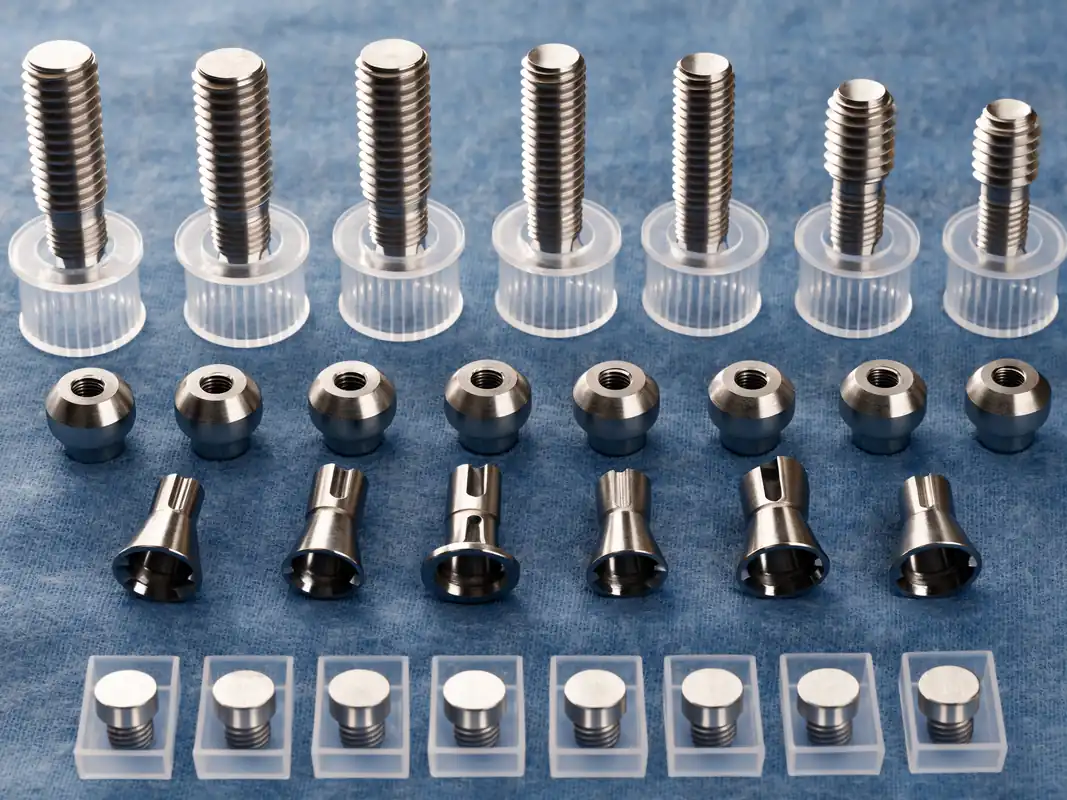
The implant connection determines which cover screw, healing abutment, impression coping, scan body, laboratory analogue, temporary abutment, definitive abutment and prosthetic screw can be considered. Fit also depends on platform, restorative workflow and exact reference. The final restoration may add a titanium base, multi-unit abutment, attachment housing or other intermediary interface, creating more than one compatibility junction.
Before surgery, prepare a component map for every site or group:
- fixture REF and connection;
- cover screw or healing component and its REF;
- impression coping or scan body and its REF;
- analogue or digital library identity;
- definitive abutment or intermediary component and its REF;
- abutment or prosthetic screw and its REF;
- restoration retention method and material;
- driver and manufacturer tightening reference used by the clinician;
- replaceable wear items and local service source;
- documents supplied to the patient and local maintainer.
A component flow diagram is useful only if it corresponds to the actual market edition and product. Print or export the relevant page and record the catalogue date. A generic compatible with Osstem listing is not a manufacturer compatibility statement.
Original and third-party components require explicit disclosure
A reconstruction may use an original Osstem fixture with a component made by another manufacturer. That is not automatically evidence of a defect, but it creates additional identity, compatibility, regulatory, responsibility and service questions. The patient should not be told that the whole reconstruction is Osstem when material parts come from another source.
For every third-party part, record its legal manufacturer, trade name, REF, lot where applicable, intended compatible interface, instruction, market status and the clinician or laboratory rationale. Ask whether the component manufacturer explicitly covers the proposed combination. Ask who assumes responsibility for design, machining, fit, surface treatment and tightening. Keep the invoice and device statement where relevant.
Do not describe a part as original when the record shows only that it fits an Osstem connection. Do not describe a part as equivalent without defining the compared property and source. The independent [systematic review of internal and external implant connections](https://pubmed.ncbi.nlm.nih.gov/23062143/) reported sparse literature for several technical questions and identified screw loosening as an important complication across the reviewed reconstruction types. It does not validate a mixed Osstem combination. It supports careful preload, fit and maintenance planning rather than interface improvisation.
Separate surgical ownership from restorative ownership
The clinician placing the fixture and the clinician designing or fitting the prosthesis may be different people. A laboratory can fabricate the restoration but does not replace clinical responsibility. An intermediary or coordinator may organise appointments but should not be presented as the treating provider. The written plan should name legal entities and people by role.
Use a responsibility matrix:
| Decision or record | Named owner |
|---|---|
| Diagnosis and alternatives | Examining clinician |
| Extraction or site preparation | Responsible surgical clinician |
| Fixture system and dimensions | Surgical clinician, with restorative input |
| Prosthetic position and connection needs | Restorative clinician |
| Grafting or soft-tissue procedure | Clinician performing that procedure |
| Digital plan and guide approval | Clinician who approves and uses it |
| Laboratory design and fabrication | Named laboratory plus prescribing clinician |
| Component compatibility | Prescribing clinician and laboratory as applicable |
| Prosthesis fit and acceptance | Restorative clinician |
| Maintenance and urgent pathway | Named local and overseas contacts |
| Complaint and record release | Legal provider |
If responsibility is shared, record how disagreements and substitutions are resolved. Nobody should be allowed to hide a clinical decision behind the brand or behind software.
Digital planning and guided surgery still require verification
A digital implant workflow can combine scan data, radiographic data, segmentation, virtual restoration design, an implant library and a surgical guide. Each input can introduce error. Confirm patient identity, imaging date, field of view, scan alignment, restorative proposal, implant-library version and the exact fixture selected in software. The library entry must match the physical product; a similar name or diameter is not enough.
Record who segmented anatomy, who selected safety margins, who approved the virtual position, who designed the guide and who checked guide fit. Record whether the workflow is fully guided, pilot guided or freehand after an initial step. A guide is a transfer device, not an autonomous decision maker. Intraoperative findings may require the clinician to stop or change the plan.
A recent [systematic review of placement accuracy](https://pubmed.ncbi.nlm.nih.gov/41307329/) reports that planned and placed positions can differ in computer-assisted and freehand contexts. It is not Osstem-specific and does not dictate a technique. It supports keeping anatomy, safety margins, verification and contingency planning visible rather than advertising digital planning as exact replication.
Do not assume that TS, KS, SS, US and MS share one connection
Current official European manuals show why Osstem must be identified at system level. The [TS surgical manual](https://osstem.eu/wp-content/uploads/2026/04/Surgical-Manual-EU_Implants_TS-System_en.pdf), [KS surgical manual](https://osstem.eu/wp-content/uploads/2026/04/Surgical-Manual-EU_Implants_KS-System_en.pdf), [SS surgical manual](https://osstem.eu/wp-content/uploads/2026/04/Surgical-Manual-EU_Implants_SS-System_en.pdf), [US surgical manual](https://osstem.eu/wp-content/uploads/2026/04/Surgical-Manual-EU_Implants_US-System_en.pdf) and [MS surgical manual](https://osstem.eu/wp-content/uploads/2026/04/Surgical-Manual-EU_Implants_MS-System_en.pdf) describe different architectures. TS and KS are not the same merely because both use internal features. SS is described as a tissue-level system with its own interface. US includes an external-connection system. MS includes one-piece designs whose restorative logic differs fundamentally from a two-piece fixture and abutment.
The manufacturer’s current [implant selection manual](https://osstem.eu/wp-content/uploads/2026/04/Surgical-Manual-EU_Implants_Implant-Selection_en.pdf) separates system categories and selection considerations. Use that document to frame questions, then use the exact product label and REF-specific instruction to determine what applies. Do not generalise a TS component chart to KS, SS, US or MS. Do not generalise a mini platform to a regular or wide platform. Do not use a one-piece product as though it accepts the same healing and definitive abutments as a two-piece product.
This matters during emergency repair. A local clinician who receives only Osstem implant may not know which driver, impression component, scan body, abutment or screw to source. The implant passport must include the system and interface, not merely the logo.
Surgical planning must preserve the IFU boundary
The surgeon should work from the current exact-product instruction, the applicable surgical manual and patient-specific findings. A public guide cannot select osteotomy instruments, speeds, irrigation, insertion protocol, depth or tightening values. These parameters depend on the system, fixture, bone, equipment, sterile technique and clinician’s judgement. Copying a number from a catalogue into patient instructions would be unsafe because the number may apply to another component or stage.
The pre-operative record should include the intended fixture REF for each site, suitable backup options, the compatible kit or instruments, sterilisation status, imaging and restorative plan. The team should confirm that the physical fixture matches the digital plan and that the expiry and sterile barrier are acceptable before opening it. A second person check can reduce transcription error, but it does not transfer responsibility away from the operator.
If the planned fixture changes intraoperatively, record the finding, new product identity, new restorative implications and consent discussion as the clinical situation permits. Update the laboratory and local handover. Never leave the pre-operative label in the passport when a different fixture was actually placed.
Record sterile handling and the final placement event
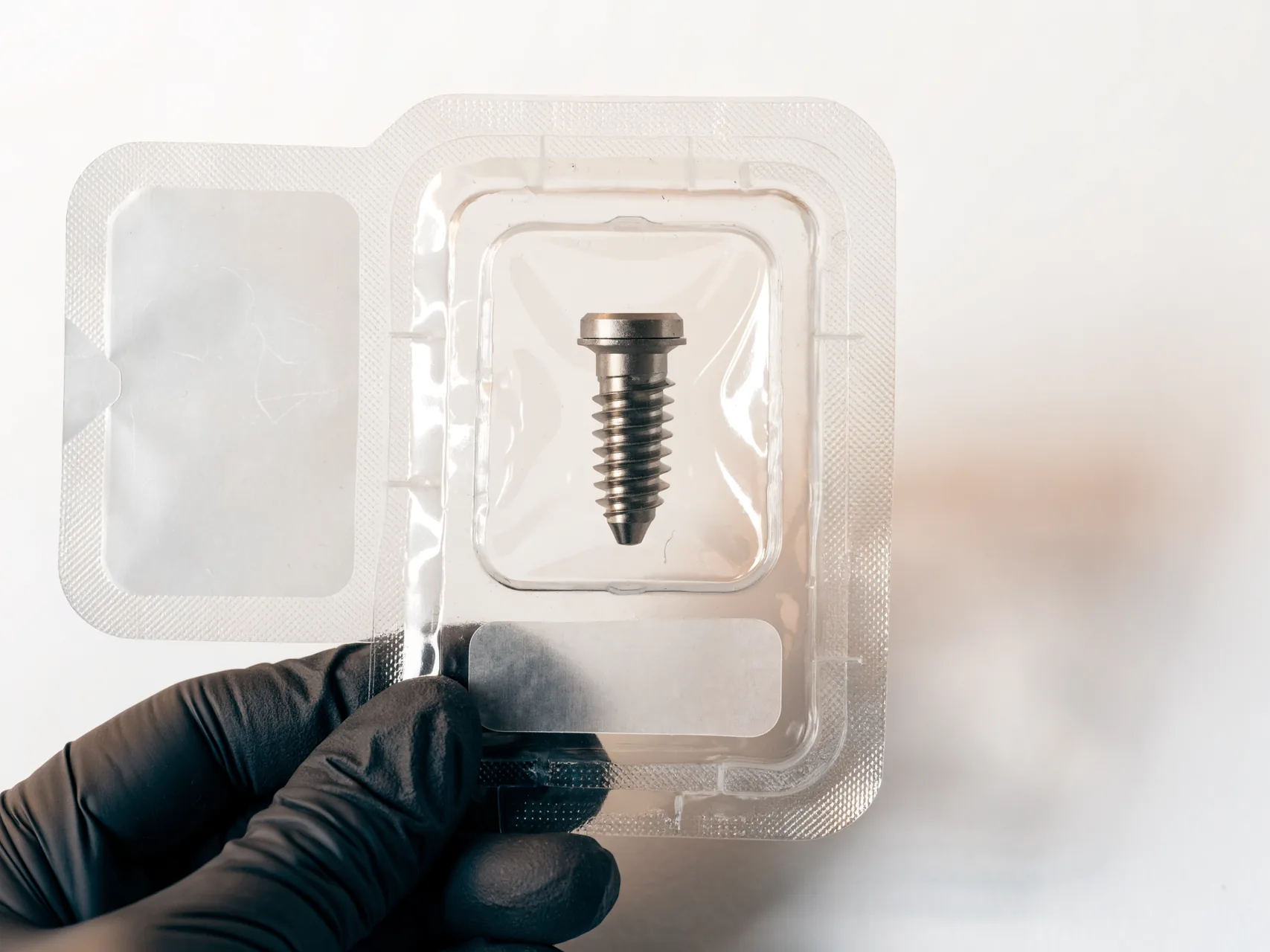
The [official TS product page](https://osstem.eu/dental-implants/subcrestal/ts-implant-system/) shows that product labelling can carry information such as article number, lot, dimensions and sterility or expiry fields. The actual product used in the case is the source. Before opening, capture a readable label without compromising the sterile field. Check the box and inner sterile presentation for agreement. Do not use a damaged, expired or mismatched item and explain it away after placement.
The operative note should map every fixture to:
- patient and site;
- placement date;
- legal manufacturer and exact system;
- full fixture name and surface designation;
- diameter, length, platform and connection;
- REF and lot or other production identifier;
- expiry and sterile-barrier check;
- insertion and final-position observations relevant to the plan;
- graft, membrane or other implanted materials with their own labels;
- cover screw, healing component or immediate restorative component;
- deviations from the approved plan and their reason;
- postoperative instructions, review owner and urgent route.
The record should distinguish proposed, opened, implanted, discarded and replacement items. If a fixture was opened but not placed, do not map its sticker to the site. If two identical fixtures are placed, retain both production labels and identify their site assignment rather than assuming one shared entry is enough.
Keep manufacturer tightening references component specific
Restorative screws, abutments and attachments can have different manufacturer instructions. The required driver, instrument condition, tightening sequence and reference value must come from the exact current component documentation and be applied by the responsible professional. This page deliberately provides no numeric setting.
The clinical record should name the component, screw, instrument and source document used. If a third-party component is present, do not apply an Osstem value by habit. Ask the third-party manufacturer for the exact interface and instruction. Record whether the component was tightened, rechecked or replaced according to the applicable clinical protocol, without presenting that protocol as universal.
Torque is not a synonym for fit. A component can be tightened yet have an identification, seating, contamination, wear, misfit or design problem. Before tightening, verify the connection, radiographic or clinical seating where indicated, contact surfaces and absence of interposed tissue or debris. Repeated unexplained loosening requires diagnosis rather than repeated tightening alone.
Loading and timing decisions need explicit gates
Immediate, early or delayed restorative pathways are clinical strategies, not automatic properties of an Osstem fixture. The decision can depend on site conditions, implant stability, number and distribution of implants, opposing dentition, bruxism, grafting, soft tissue, prosthesis design and the patient’s ability to follow restrictions and reviews. Manufacturer material may describe intended workflows, but a proposal should state its own eligibility gates and fallback.
Before treatment, ask:
- Will the implant be submerged, use a healing component or support a provisional restoration?
- What clinical findings must be present before any functional loading?
- What happens if those findings are absent?
- Who decides when the definitive restoration can proceed?
- Which temporary component and material will be used?
- What restrictions and review findings will be recorded?
- How will a changed timetable affect travel, cost and consent?
Avoid booking a non-refundable trip around a promised biological milestone. The review date can be planned, but readiness is a clinical finding. A fixture brand cannot make that finding in advance.
Distinguish provisional and definitive restorations
A temporary tooth or bridge is not the same device as the definitive prosthesis. The written plan should identify what will be worn after surgery, its support, material, retention and intended role. It should also identify the definitive design, laboratory, material, component chain and acceptance process. If the provisional is converted or repaired, record each intervention.
For a full arch, clarify whether an intermediary multi-unit component is planned, whether it is original or third party, how implant angulation will be managed, where screw access is expected, how passive fit will be evaluated and how the patient will clean under the prosthesis. Record which parts remain in the mouth when the bridge is removed. A fixed bridge may still require professional removal for maintenance or repair.
For a single crown, clarify cemented versus screw-retained design, abutment material, margin location, excess-cement control, screw access, occlusion and retrievability. Neither retention method is universally correct. The plan should explain the case-specific choice and the service consequences.
The laboratory needs a traceable prescription and component chain
The laboratory prescription should name the patient, sites, exact Osstem system and connection, fixture positions, scan or impression components, planned abutments, restorative material, retention, shade, contacts, occlusal instructions and the prescribing clinician. Digital files should include the library name and version. The laboratory should not silently substitute a library, analogue, titanium base, screw or abutment.
Retain:
- signed prescription and revisions;
- impression or scan records and component references;
- implant-library and design-file identifiers;
- abutment and screw manufacturer, REF and lot where relevant;
- restoration material and batch evidence appropriate to that material;
- design approvals and change requests;
- laboratory invoice and conformity or device statement where applicable;
- fit-verification and clinical acceptance notes;
- final photographs or radiographs used clinically;
- repair files and updated component history.
The [GDC records standard](https://standards.gdc-uk.org/pages/principle4/principle4) lists radiographs, consent, photographs, models, laboratory prescriptions, statements of conformity and referrals among records where present. That standard applies to UK registrants, but it provides a practical checklist for any UK clinician asked to inherit care. A patient travelling from Turkey should not have to reconstruct the laboratory chain from memory.
Authenticity requires converging evidence
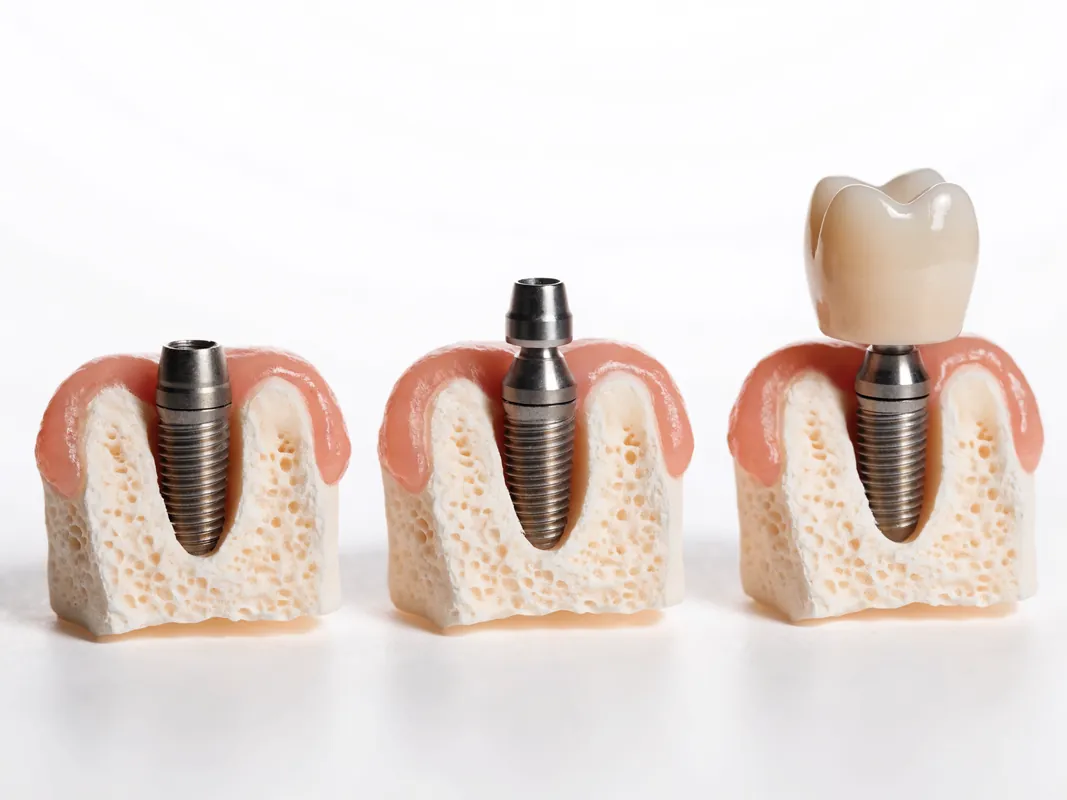
No single marketing object proves authenticity. A logo can be copied. A patient passport can be filled incorrectly. A registry search can match a real reference while the physical item comes from another source. An unopened labelled product can be photographed but then not placed. Build confidence by making independent records converge.
Useful evidence includes:
- the intact physical label photographed before opening;
- matching REF and lot on the operative record;
- exact REF search in the current Osstem eIFU;
- jurisdiction-appropriate device or supplier record;
- invoice from a traceable professional supply chain;
- site-mapped radiograph and placement note;
- restorative component schedule and laboratory prescription;
- patient passport matching the primary labels.
Ask the legal provider to retain supplier identity and invoices so a field-safety notice can be traced. If a suspicious label, spelling discrepancy, altered code or unexplained mismatch appears, pause and contact the manufacturer or the competent market authority through official channels. Do not rely on a sales representative’s messaging account as the only authentication route.
Understand REF, lot, UDI-DI and UDI-PI
A REF or catalogue code identifies a product configuration. A lot or batch identifies production grouping. A UDI-DI identifies a device model under the applicable UDI framework, while UDI-PI carries production information such as lot, serial or expiry where applicable. These fields serve related but different purposes and should be copied exactly rather than compressed into one serial number box.
The European Commission’s [UDI explanation](https://health.ec.europa.eu/medical-devices-topics-interest/unique-device-identifier-udi_en) describes the UDI-DI and UDI-PI structure. The Commission’s [implant-card factsheet](https://health.ec.europa.eu/system/files/2021-11/md_implany-cards_factsheet_en_0.pdf) explains device identity and production information expected on cards within the relevant MDR scope. A Turkish case still requires Turkish-market verification; the European document should not be represented as Turkish approval.
For Turkey, the government route to the [Product Tracking System, ÜTS](https://www.turkiye.gov.tr/saglik-bakanligi-uts) is the relevant starting point for a Turkish-market query. Search results must match the exact manufacturer and identifiers and should be retained with a date. A ÜTS result cannot prove that a specific unit was supplied to the provider, remained sterile or entered the patient. That still depends on chain-of-custody and clinical evidence.
For Great Britain, current [MHRA market guidance](https://www.gov.uk/guidance/regulating-medical-devices-in-the-uk) applies to devices placed on that market. A GB record does not establish Turkish status, and a Turkish record does not establish access to components in Britain. Cross-border service planning should ask both questions separately.
An implant passport is a summary, not the entire file
The [Osstem UK patient passport](https://www.osstemuk.com/PDF/PatientPassport.pdf) demonstrates a manufacturer-branded way to record treatment information. A passport can help a patient carry key details, but it should match rather than replace the source sticker, operative note, radiographs, restorative schedule and laboratory records. A blank or generic passport is not proof of placement.
The portable record should include:
- patient identity or secure record identifier;
- legal provider and clinical contacts;
- site-by-site fixture system, variant, dimensions and connection;
- REF, lot and UDI fields where present;
- placement date and responsible clinician;
- bone or soft-tissue materials placed at the site;
- healing, abutment, attachment and screw identities;
- provisional and definitive restoration details;
- relevant driver or service information for a professional;
- review history, imaging baseline and maintenance plan;
- complaint, field-safety and urgent-contact routes.
Keep both a readable human summary and original digital copies. Do not publish sensitive medical records through an open link or encode private details in a public QR code. The patient should be able to share the file securely with a chosen clinician.
Maintenance is part of the implant design
The finished prosthesis should allow the patient and clinician to inspect and clean relevant surfaces. If the patient cannot reach an area or the clinician cannot monitor it, a recognisable fixture logo does not solve the design problem. Demonstrate cleaning with the actual restoration in place and record the devices that can be used without damaging tissues or components.
At a maintenance visit, the clinician may assess plaque, bleeding, probing findings, suppuration, tissue change, prosthesis condition, occlusion, component stability and radiographic change where indicated. Baseline measurements and an appropriate post-restoration image help later comparison. The interval should reflect individual history and findings rather than a universal calendar.
The EFP guideline cited above recommends supportive peri-implant care and individually tailored prosthesis care. The [ITI consensus statement on continuing care](https://academy.iti.org/academy/consensus-database/consensus-statement/-/consensus/survival-and-complication-rates-of-implant-supported-fixed-prostheses-over-the-last-decades/1317) also recommends tracking implants and restorative components and includes occlusal review within regular maintenance. These are professional consensus sources, not Osstem instructions and not individual guarantees. They support designing a maintainable reconstruction and keeping its origin visible.
The maintenance plan should name who will provide routine reviews after travel, what records they receive, which costs are separate and how findings are communicated to the original team. A patient should not discover after treatment that no local clinician has agreed to inspect the work.
Plan for biological and technical complications separately
Biological problems can include mucosal inflammation, peri-implant bone loss, infection, recession or loss of integration. Technical problems can involve loosening, screw or component fracture, restoration fracture, wear, loss of retention, attachment wear or fit problems. Symptoms can overlap, and remote photographs cannot reliably distinguish them.
The service pathway should answer:
- Who performs the first diagnosis?
- Which records and radiographs are needed?
- Can the prosthesis be removed without destroying it?
- Which driver and replacement components are required?
- Is the relevant component still identifiable and obtainable locally?
- Who contacts the laboratory and shares design files?
- Which services are chargeable and by whom?
- What happens if travel is not clinically appropriate?
Repeated screw loosening, repeated fracture or recurring inflammation should trigger diagnosis of fit, load, design, tissue, hygiene and component identity. Replacing one screw without understanding the cause can delay necessary care. Conversely, a biological problem should not be attributed to the brand without examination and records.
Repairability and retrievability should be designed in
A screw-retained restoration may support retrieval, but screw-channel position, access material, component condition and prosthesis design still matter. A cement-retained restoration may be serviceable, but margin location, cement management and removal risk must be considered. A full-arch prosthesis can be fixed for the patient yet professionally removable. A removable overdenture relies on replaceable attachment parts and may require relining or base repair.
Before fabrication, document likely service actions: replacing an access seal, retightening or replacing a screw after diagnosis, changing an attachment insert, repairing a veneer or acrylic tooth, removing a bridge for hygiene, remaking an abutment or remaking the prosthesis. State which actions require original files, original components or destructive removal.
Repair does not always mean replacement, and replacement does not always mean fixture removal. Keep the implant, intermediary abutment and prosthesis as separate layers in the record so a local clinician can identify the affected layer. If a restoration is bonded to a titanium base, record both materials, the base manufacturer and the bonding workflow. If a customised abutment is used, retain its design and device statement.
Check local component and professional access before treatment
Future service depends on more than whether a brand has an international website. A specific connection can become legacy, a regional catalogue can omit a component, a distributor can change, and a local clinician may decide not to work on an unfamiliar or poorly documented reconstruction. Ask a named local dentist or implant service before treatment whether they are willing to assess the proposed system and what records they would need. That conversation is not a promise that future treatment will be possible.
Check separately:
- exact fixture and connection recognition;
- driver access;
- healing and impression or scan components;
- definitive abutments and screws;
- multi-unit or attachment wear parts;
- digital libraries and laboratory competence;
- radiographic and clinical baseline records;
- willingness to accept ongoing care;
- fees and referral pathways;
- urgent arrangements when the original team is abroad.
Do not write international brand as the answer. Record the named professional, date of inquiry and limits of what they agreed to consider. If local access is uncertain, that uncertainty belongs in consent and may affect the restoration design or system choice.
Brand-specific studies cannot predict an individual result
Evidence may be manufacturer technical testing, preclinical research, retrospective case series, prospective cohorts, randomised trials, systematic reviews or consensus guidance. These designs answer different questions. A study of one Osstem fixture, surface, indication or centre cannot establish the performance of every Osstem implant or a mixed restorative chain. A catalogue performance statement is not an independent comparison.
Examples illustrate the boundary. Published studies exist for named Osstem variants, including a [TSIII HA randomised study](https://pubmed.ncbi.nlm.nih.gov/24278929/) and other system-specific cohorts. Their devices, patient selection, procedures, comparators and follow-up must match the question before they are cited. They do not establish the result of a current TSIII SA, TSIII SOI, KS, SS, US or MS proposal by association.
The [Cochrane review of different implant types](https://pubmed.ncbi.nlm.nih.gov/25048469/) found limited evidence for many comparisons of implant features. It is not a current Osstem product review. The independent [review of original and non-original abutments](https://pubmed.ncbi.nlm.nih.gov/30719437/) reported laboratory differences in several measures while noting the limited clinical evidence base. It does not declare every original component clinically preferable or every third-party component unsuitable. It supports explicit identification, compatibility and evidence review.
Ask for an evidence table with device, REF or variant, population, indication, comparator, study design, sample, follow-up, outcomes, limitations and funding. If a row says Osstem generally, it is not precise enough.
Make the quotation itemised and clinically conditional
A useful quotation separates diagnosis from hardware and separates each treatment stage from travel. It should state currency, taxes where relevant, exclusions, change-control terms and the legal recipient of each payment. It should not hide uncertain grafting, provisional work or future maintenance inside one headline amount.
Request separate lines for:
- examination, imaging and diagnostic records;
- tooth preservation or extraction where applicable;
- periodontal or infection control;
- each fixture by system, variant and site;
- surgical guide or specialist imaging where used;
- graft, membrane and soft-tissue procedures;
- sedation or anaesthesia services where relevant;
- cover, healing or immediate restorative components;
- provisional restoration;
- definitive abutments, intermediary components and screws;
- definitive restoration and material;
- laboratory design and fabrication;
- reviews, hygiene instruction and maintenance;
- complication assessment and technical repair;
- record release, local handover and translation;
- hotel, flights and ground transport as non-clinical lines.
The quote should distinguish clinical fees from manufacturer or laboratory commercial terms. It should state what happens financially if an implant is not placed, a different diameter is required, grafting becomes necessary, loading criteria are not met or the restoration design changes. A lower total may omit critical components; a higher total does not prove suitability.
Use staged uncertainty rather than hidden substitutions
Some decisions genuinely cannot be final until extraction, flap access, healing or laboratory verification. The ethical response is to define the decision gate, alternatives and price consequences in advance. It is not to obtain blanket permission for any equivalent implant or any necessary additional work.
For each uncertain item, write:
| Uncertainty | Decision evidence | Permitted alternatives | Consent point | Cost effect |
|---|---|---|---|---|
| Fixture dimensions | Final site findings and applicable imaging | Named compatible options | Before opening the item where practicable | Written range or revision |
| Immediate restoration | Recorded clinical criteria | Healing component or non-functional provisional | Before restoration | Separate line |
| Graft need | Defect finding and restorative objective | No graft, modified site or staged approach | Before procedure | Itemised change |
| Abutment design | Soft tissue, position and prosthesis design | Named original or disclosed third-party choices | Before manufacture | Revised laboratory line |
| Final material | Support, space, bite and maintenance | Named materials with reasons | Before irreversible fabrication | Revised quote |
After a change, update the product schedule, consent, invoice, passport and laboratory prescription. The final record must describe what was actually done, not preserve the original sales plan as if nothing changed.
Cross-border travel must follow the clinical pathway
Travel planning should identify which stages require in-person diagnosis, surgery, review, impression or scan, try-in, definitive fitting and later maintenance. The treating clinicians should decide readiness at each gate. Flight dates, accommodation and transport must remain adaptable to clinical findings. A short visit should not compress disease control, healing or consent.
Before leaving Turkey, obtain:
- final diagnosis and treatment summary;
- site-mapped fixture labels and passport;
- operative and restorative notes;
- relevant imaging and reports in portable formats;
- graft and other implanted-device records;
- component and screw schedule;
- laboratory prescription, material and design records;
- medicines and aftercare instructions;
- expected review needs without a universal calendar;
- named urgent and routine contacts;
- complaint and record-request route;
- secure permission for information sharing with the chosen local clinician.
Before treatment, identify a local clinician willing to consider review. Send records securely and ask what further information is needed. The overseas team can provide context, but remote messages do not replace local examination for swelling, bleeding, altered sensation, wound problems, bite change, mobility or suspected infection.
Know which signs need prompt or emergency assessment
Increasing swelling, fever or systemic illness, pus, bad taste, worsening pain, uncontrolled bleeding, wound opening, persistent altered sensation, a mobile prosthesis, a loose component or sudden bite change needs prompt professional assessment. Do not tighten, cut, glue or remove an implant component at home. Do not start leftover medicines based on online advice.
The [NHS dental abscess page](https://www.nhs.uk/conditions/dental-abscess/) advises urgent dental care for suspected abscess and emergency action for difficulty breathing, speaking or swallowing, major mouth swelling, serious eye symptoms or marked difficulty opening the mouth. Use local emergency services where you are physically present. Do not wait for a scheduled return flight or a reply from an overseas coordinator when airway, spreading infection or serious bleeding is possible.
A fracture or loose screw may not be life threatening, but continued loading can damage additional parts. Stop chewing on the affected restoration and seek clinical assessment. Bring the implant passport and component records.
Field-safety notices need exact identifiers
If a manufacturer or regulator publishes a safety notice, compare legal manufacturer, device name, REF, lot or serial, UDI and market. A notice about another Osstem system or production range should not be applied by logo alone. Conversely, an apparently normal restoration does not rule out inclusion in a notice.
The legal provider should have a process to search records, contact affected patients, document advice and coordinate any clinical review. The patient should keep contact details current and retain original labels. If the notice is unclear, use official manufacturer and regulator contacts rather than a reseller summary.
Any corrective action should be based on the notice and individual clinical assessment. Do not remove or alter a device solely because of an unverified social post. Document the decision, alternatives, consent and updated component history.
Red flags that justify a pause
Pause a proposal when:
- the quote says only Osstem without system, fixture or REF;
- one product page is used to describe every Osstem family;
- TS, KS, SS, US or MS components are treated as interchangeable;
- dimensions or surface are inferred rather than copied from a label;
- no current exact-REF instruction can be produced;
- an EU, GB or US record is presented as Turkish authorisation;
- an implant sticker is refused or a generic passport replaces it;
- third-party abutments or screws are hidden under the fixture brand;
- compatibility rests only on the statement that a part fits;
- surgical, restorative and laboratory responsibility is unnamed;
- a digital plan is advertised as eliminating placement deviation;
- an immediate restoration is promised without clinical fallback;
- final restoration, material and maintenance access are undefined;
- the quote cannot show how changes affect cost;
- local component access and professional handover are ignored;
- urgent symptoms are routed only to remote messaging;
- advertising promises a biological result from the implant label.
A pause allows correction. It is not a diagnosis that the product or team is wrong. Ask for missing evidence and reassess the complete pathway.
Osstem proposal verification worksheet
Use this worksheet before payment and update it after each stage:
Diagnosis and alternatives
- What is the diagnosis at each site?
- Can any tooth be preserved?
- Which bridge, removable, orthodontic, monitoring or no-treatment options are relevant?
- Which medical, periodontal, smoking, hygiene or bite risks were assessed?
- Who owns the diagnosis and consent discussion?
Exact fixture
- What is the system: TS, KS, SS, US, MS or another named family?
- What is the exact fixture and surface designation?
- What are dimensions, platform and connection?
- What are REF, lot and UDI fields?
- Which current or archived exact-REF IFU applies?
- Which market record applies in the country of placement?
Components and restoration
- Which cover or healing component is planned?
- Which impression coping or scan body is used?
- Which library and analogue match the connection?
- Which abutment, intermediary part and screw are selected?
- Are any parts third party, and where is compatibility documented?
- Is the prosthesis provisional or definitive?
- What material, retention, hygiene and repair design is planned?
Records and responsibility
- Who places the fixture?
- Who designs and fits the restoration?
- Which laboratory fabricates it?
- Who approves substitutions?
- Will labels, operative notes, radiographs, laboratory files and passport be supplied?
- Who handles complaints, safety notices and record release?
Maintenance and travel
- Who provides routine care locally?
- Can exact components and drivers be sourced?
- How is the prosthesis retrieved or repaired?
- What baseline measurements and images will be supplied?
- Which urgent signs require local care?
- Which travel services are separate from clinical fees?
Primary and independent sources used for this guide
The principal manufacturer sources are the [Osstem eIFU portal](https://ifu.osstem.com/ifu/?lang=en), the [current European catalogue](https://dev.osstem.eu/wp-content/uploads/2025/08/2025-08-01_Product-Catalog_Europe-2025-26_v1.1_Web.pdf), the official [European manual download library](https://osstem.eu/downloads/), the TS, KS, SS, US and MS system manuals linked above and the current implant-selection manual. Exact REF, revision and jurisdiction should always be checked at the time of treatment because web pages and catalogues can change.
Regulatory and record sources include the European Commission UDI and implant-card material, the Turkish ÜTS route, MHRA market guidance and GDC consent and records standards. Clinical context comes from EFP and ITI guidance plus independent systematic reviews linked in the relevant sections. These sources have different legal and evidential roles. None proves provider competence, product use in one case or future clinical performance.
Final rule: verify the whole reconstructive chain
The strongest Osstem record is not the longest brand description. It is a coherent chain from diagnosis and alternatives to site-specific fixture identity, connection, compatible components, operative evidence, restorative and laboratory ownership, maintenance access and portable handover. Every link should be dated, attributable and consistent with the physical labels.
If the chain is incomplete, ask for the missing evidence before an irreversible step. If a component changes, update consent, quotation and records. If symptoms arise after travel, seek appropriate local assessment. The manufacturer name can support identification; it cannot replace judgement, execution, maintenance or honest uncertainty.
What the product name does — and does not — tell you
Osstem is a dental implant fixture and restorative-component family manufactured by Osstem Implant. The name can help a patient identify a product family, but it does not establish the diagnosis, the exact model selected, the competence of a treating professional or the quality of the finished treatment. Product ranges, indications and local availability can change. A current manufacturer instruction for use and the legal market status in the country of treatment take priority over a marketing page.
This page is a research guide. It is not a statement that WeCare, a particular clinic or an event clinician stocks or uses Osstem. Availability must come from the named treating provider. If a quotation uses only a broad phrase such as “premium material”, ask for the manufacturer, product family and reference before accepting the plan.
Manufacturer information worth checking
- The official eIFU portal searches present and archived instructions by product code or category; the physical label should control which document is selected.
- The current European catalogue lists several TS fixture presentations and separate prosthetic flows rather than one universal Osstem implant.
- Fixture identity, connection and restorative-component references must remain linked from placement through maintenance and repair.
- A regional catalogue or registry result answers a limited market question and cannot prove individual suitability, lawful supply or case use by itself.
These points describe the product family at a general level. They are not a recommendation for a particular mouth and they should not be extended to a different line carrying a similar brand name. Select an implant system only after site diagnosis and restoration-led planning. The written rationale should connect anatomy, support, prosthetic design, maintenance access and exact component compatibility without using nationality, sales rank or price tier as evidence of patient-specific benefit.
Questions for the named provider
Ask the professional responsible for treatment to answer these points in writing:
- What is the exact manufacturer, product family, model or material grade proposed?
- What clinical finding makes that selection appropriate for this case, and what alternatives were considered?
- Who is the legal treating provider and who will perform each clinical or laboratory stage?
- Which current instruction for use, contraindications and local regulatory status apply?
- What reference, lot, batch or other traceability record will be retained and shared where the device permits it?
- Which components, cements, abutments, membranes, gels or accessories are included, and are they compatible?
- What follow-up is required, who is responsible after travel, and which costs are excluded from the quotation?
Product verification, evidence and traceability boundaries
A brand name, catalogue, database result or manufacturer study cannot identify the item placed in one patient or establish a future clinical result. Case proof requires the original label, site-mapped operative record, restorative component schedule, laboratory documents and current jurisdiction-specific instructions.
Useful evidence may include a photograph of unopened labelled packaging before use, the product label, an implant or device record, a laboratory prescription, an invoice identifying the exact material, and the treating provider's signed notes. The appropriate record depends on the product. A logo on a website, a stock photograph, an unlabelled box or a verbal statement is not equivalent to case-specific traceability.
How to compare alternatives fairly
Compare plans by diagnosis, alternatives, exact fixture and connection, component chain, surgical and restorative ownership, laboratory design, maintenance, repair access, records, staged uncertainty and written exclusions. Compare complete pathways rather than brand labels.
Compare like with like: indication, exact product, compatible components, laboratory design, operator responsibility, maintenance, staged visits and written exclusions. Do not compare a named product in one quotation with an unspecified category in another. Brand recognition cannot remove biological uncertainty, and no material choice can promise a clinical outcome.
Assessment comes before the brand
A responsible plan starts with medical and dental history, examination and appropriate imaging. Implant decisions can depend on bone, soft tissue, bite, hygiene, smoking, medication and restorative space. Ceramic decisions can depend on remaining tooth tissue, preparation design, opposing teeth and laboratory workflow. Whitening decisions require screening for decay, gum disease, sensitivity and existing restorations. Endodontic and imaging tools are parts of a broader diagnostic or treatment process, not substitutes for professional judgement.
Before paying, request a dated, itemised written plan naming the treating provider, the proposed product, alternatives, material records, visit stages, aftercare responsibilities and financial terms. If the final assessment changes the product or procedure, ask for the reason and revised quotation before treatment proceeds.