A young adult with a missing tooth may hear two oversimplified answers: an implant is impossible until a particular birthday, or adulthood automatically means growth has finished. Neither statement is a sufficient clinical plan. Chronological age alone cannot confirm whether the relationship among jaws, teeth, gums and a future implant crown will remain stable. The reason for the missing tooth, location, growth pattern, tooth eruption, orthodontic plan, available space, bone and soft tissue, health, priorities and ability to maintain the restoration all matter.
This guide is for a young adult researching a single or limited number of missing teeth, including treatment abroad. It does not diagnose growth status, prescribe imaging or approve implant placement. It publishes no universal age, test or waiting interval and no fixed price, timetable or outcome. The named legal treatment provider and named treating clinician must examine the person, explain relevant options and take responsibility for any procedure.
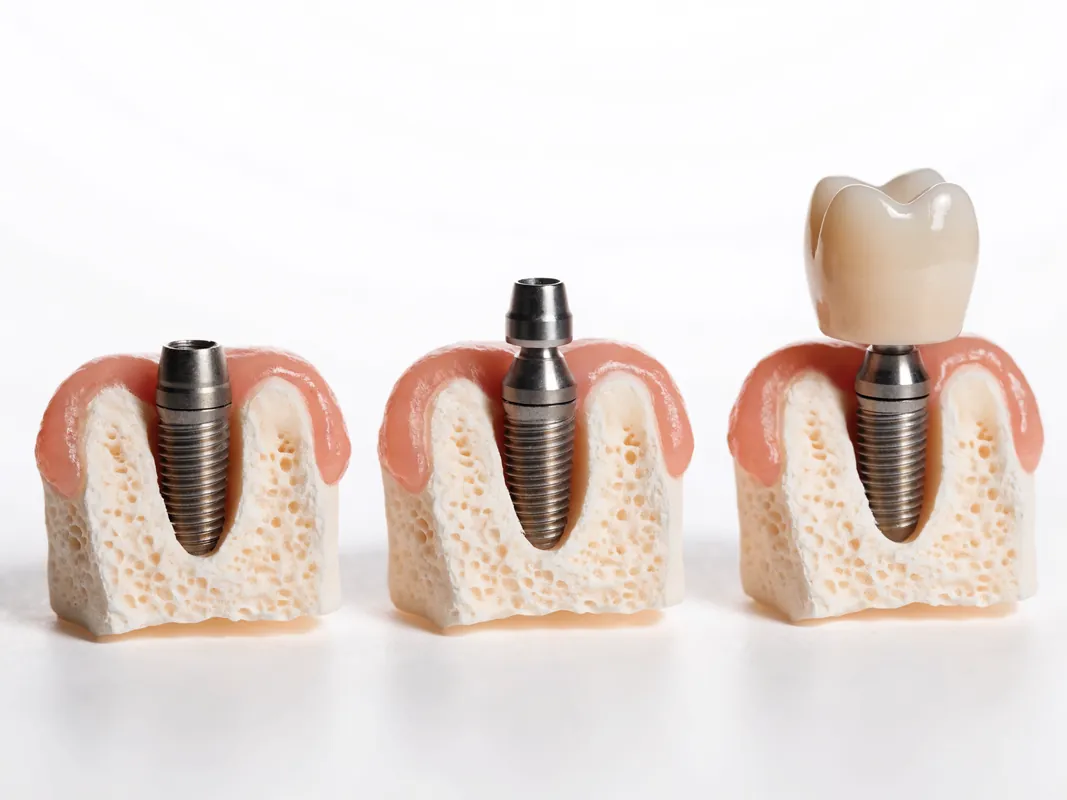
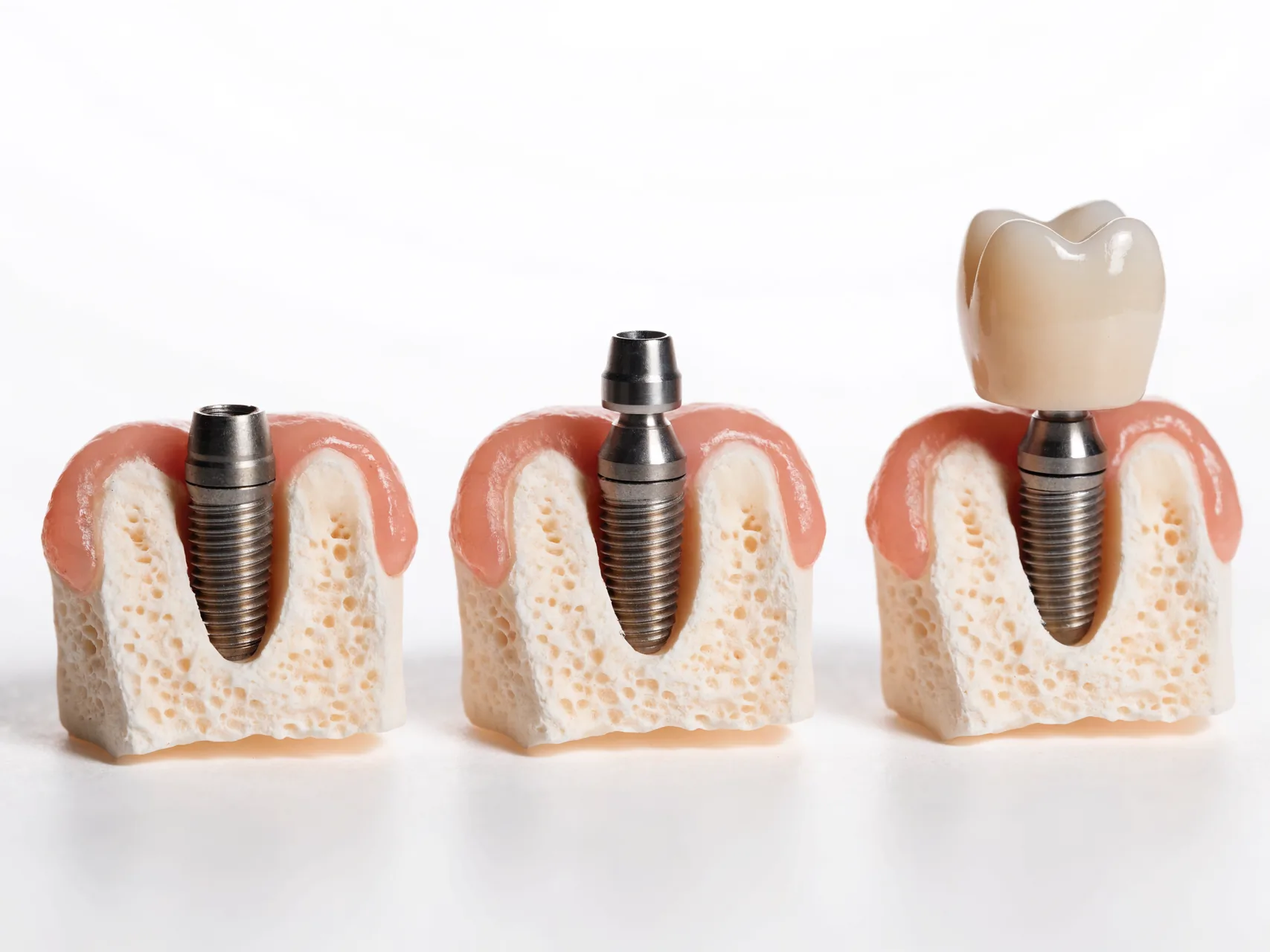
An implant is not simply another natural tooth that will erupt and move with its neighbours. Once integrated, an implant behaves more like an ankylosed unit in the bone. Natural teeth and surrounding dentoalveolar structures can continue to change. That difference is why a young person's missing-tooth plan must be broader than checking whether an implant can physically fit today.
Under 25 is a search label, not a clinical cut-off
Under 25 is a search label, not a clinical cut-off. It captures a group likely to ask about growth, orthodontics, trauma, congenitally missing teeth and the transition from paediatric or family care to adult restorative care. It does not create a single biological category.
Growth can continue after a legal-adulthood birthday, and clinically relevant dentoalveolar change can occur after obvious body growth has slowed. People of the same age do not share the same craniofacial growth pattern or missing-tooth history. A date of birth, sex label, height, wisdom-tooth status or family anecdote cannot independently establish implant timing.
The opposite error is also important. A younger age does not prove that every form of definitive planning is inappropriate or that a person should be left without support. Examination, disease prevention, space management, temporary replacement, orthodontic coordination and long-term records can begin before an implant decision. Rare complex conditions may require specialist pathways that do not follow general expectations.
The useful question is therefore not, What is the implant age? It is: what evidence does the responsible team need for this person, what alternatives preserve health and future choices, and what decision must be revisited as development and treatment progress?
Identify why the tooth is missing
Identify why the tooth is missing before selecting a replacement. A tooth may be absent because it never developed, was lost after trauma, was extracted after decay or infection, failed to erupt, has an uncertain prognosis, or is being considered for removal during a larger orthodontic or restorative plan. Each route creates different biological and space questions.
For a congenitally missing tooth, the remaining primary tooth may still be present; neighbouring teeth may have drifted; other teeth may be small, malformed, impacted or absent; and the ridge may have developed differently. A complete hypodontia assessment looks beyond the most visible gap. Guy's and St Thomas' NHS guidance describes hypodontia diagnosis using examination and X-ray and lists braces, dentures, bridges and implants among possible elements of care. It also states that an implant is not suitable while a person is still growing.
After trauma, the priority may involve emergency management, the prognosis of injured teeth, pulp or root treatment, ankylosis, root resorption, ridge preservation and psychological impact. An implant should not be proposed merely because the crown is broken or a tooth looks dark in a photograph. A trauma clinician may need to assess whether the tooth can be maintained and how the site will change.
After decay, infection or failed previous treatment, the decision must include restorability and disease control. Removing a maintainable tooth to make an implant schedule simpler is not neutral. The tooth-specific finding, alternatives and consequences of extraction should be documented before travel or payment.
An unerupted or displaced tooth may need orthodontic and surgical assessment rather than automatic replacement. The possibility of guiding or moving the person's own tooth can be important. A panoramic image alone may not answer every position, root or pathology question.
Build a cause record:
| Question | Why it changes planning |
|---|---|
| Was the tooth never formed? | May indicate a whole-dentition and multidisciplinary hypodontia pathway |
| Was it lost through trauma? | Requires injury history, prognosis and site-development review |
| Is the tooth present but unerupted? | May create orthodontic or surgical alternatives to replacement |
| Is extraction only proposed? | Requires restorability and tooth-preservation reasoning first |
| Is active disease present? | Disease assessment and control come before elective replacement |
| Is orthodontic space changing? | Replacement design cannot be final until the space objective is coordinated |
Growth assessment is not one birthday or one test
Growth assessment is not one birthday or one test. The responsible clinical team decides what history, serial examination, photographs, models or imaging is justified. A website cannot prescribe a hand-wrist radiograph, cephalometric image or any other radiation for every person.
Assessment may consider changes in height and facial growth history, dental eruption, bite, serial records, orthodontic growth observations, jaw relationships and the location of the missing site. The value and limitations of any skeletal-maturity method should be explained. A single image can be difficult to interpret without a previous record and does not predict every future dentoalveolar change.
Wisdom-tooth eruption does not prove that facial growth has ended. Completion of braces does not automatically prove that an implant space is stable. A clinician's statement that someone looks fully grown is not a documented assessment. Conversely, demanding several radiographs without clinical justification does not make a plan safer.
The written record should answer:
- who assessed growth and in what professional role;
- which clinical question each record addresses;
- whether serial information exists;
- what uncertainty remains;
- why the missing site is more or less sensitive to future change;
- how the plan will be reviewed if treatment is deferred;
- what finding would change the recommendation.
Research is not a simple age table. A systematic review of implants in growing patients found that evidence came from small, varied groups with special conditions and trauma, and that positional complications were reported. A later quality assessment of systematic reviews concluded that much of the review evidence had low or critically low confidence and that consensus remained limited. The evidence supports caution and individual planning, not a universal online calculator.
Why continued eruption can change an implant relationship
Why continued eruption can change an implant relationship is easier to understand by comparing a natural tooth with an integrated implant. Natural teeth have a periodontal ligament and remain part of an erupting, adapting dentoalveolar system. An osseointegrated implant does not erupt like a natural neighbour.
If surrounding teeth and supporting structures continue to change, the implant crown can appear lower or otherwise out of relationship with adjacent teeth over time. This is often discussed as infraocclusion or infraposition. The contact points, gum levels, visible crown height and bite relationship may also change. In an anterior smile, a small vertical discrepancy may matter visually; elsewhere, function and cleansability may be the dominant concern.
A systematic review on infraposition in the anterior maxilla concluded that long-term risk can be observed in some cases, while predisposing factors remain incompletely understood because evidence is limited. That uncertainty matters: the absence of obvious growth today does not allow a lifetime guarantee, and a historical average cannot predict one face.
The risk conversation should distinguish:
- residual craniofacial growth;
- continuous eruption or movement of neighbouring natural teeth;
- orthodontic relapse or planned movement;
- gum and ridge changes;
- crown wear, fracture or replacement needs;
- changes unrelated to youth, such as disease or trauma.
The patient should understand which future changes might be managed by monitoring, crown modification or replacement, orthodontics, soft-tissue treatment or another intervention, and which cannot be corrected simply. No future remedy should be promised before the event exists and is assessed.
Build a missing-tooth and space map
Build a missing-tooth and space map across the whole dentition rather than measuring only the visible gap. The map should identify present, absent, retained primary, unerupted, malformed, restored and questionable teeth. It should also record spaces, midlines, bite, ridge contour and the relationship between upper and lower arches.
For each missing site, ask:
- Is replacement clinically or personally necessary now?
- Is the space intended to close, remain, or be opened or redistributed?
- Are adjacent teeth sound, restored, small or unfavourably positioned?
- Does the opposing arch leave appropriate restorative space?
- Is the ridge contour adequate for the options under discussion?
- Could a retained primary tooth be maintained or restored?
- How would one decision affect symmetry and other spaces?
- What is the maintenance burden of each option?
The UCLH hypodontia clinic explains that missing teeth can leave uneven spaces and that orthodontics may either close spaces or create suitable room for a replacement. It also describes adhesive bridges as a common way to replace teeth in young patients where possible, often with little or no adjacent-tooth preparation. This is an example of a multidisciplinary pathway, not a recommendation for every reader.
Record the target space numerically in the clinical file where appropriate, but do not turn one photograph into an implant-size promise. Implant dimensions and restorative contours require individual assessment of anatomy and the final tooth design.
Use multidisciplinary planning before committing
Use multidisciplinary planning before committing when the case crosses orthodontics, paediatric or family dentistry, restorative dentistry, oral surgery, periodontics, trauma care or genetics. The need for coordination depends on complexity; not every single gap requires a hospital team, but no clinician should silently assume another stage is complete.
A coordination record may identify:
| Workstream | Decision it owns |
|---|---|
| General or family dental care | Disease prevention, routine care and continuity |
| Orthodontics | Space closure or opening, tooth movement, retention and growth records |
| Restorative care | Replacement options, tooth preservation, provisional and definitive design |
| Surgical care | Site anatomy, surgical options and procedure-specific risk |
| Periodontal care | Gum and supporting-tissue health where relevant |
| Laboratory | Fabrication to the clinician's traceable prescription |
| Local aftercare | Maintenance and timely assessment after travel |
One named clinician should explain how the parts form one plan. Separate opinions are not coordination if their assumptions conflict. A restorative space should not be created without a plausible restorative option. An implant should not be placed in a position chosen only for available bone if the future crown would be unmanageable. Orthodontic retainers and temporary replacements must be designed around the agreed long-term direction.
The Royal College of Surgeons guidance for NHS-funded implant care describes hypodontia as a pathway that often includes orthodontic alignment before implant replacement and recognises the importance of age and development. It is a UK service standard, not a universal eligibility rule or a statement of Turkish law. Its value here is the principle of planned sequencing and accountable multidisciplinary care.

Trauma needs a preservation pathway
Trauma needs a preservation pathway because a missing or threatened front tooth in a young person can involve more than replacement. The history should record when and how the injury happened, emergency treatment, symptoms, previous splinting or root treatment, changes in colour or position, radiographs and the condition of adjacent teeth and soft tissue.
If a tooth remains, the responsible clinician should assess its prognosis and relevant preservation options. Ankylosis, resorption, root fracture, infection or a poor restorative prognosis can alter the pathway, but those findings cannot be diagnosed from a social-media image. Extraction timing may influence the ridge and future options. A rushed extraction abroad may remove the opportunity for a coordinated trauma or orthodontic strategy at home.
If the tooth is already absent, record how the space has been maintained, whether the ridge has changed and how the temporary replacement affects cleaning, bite and confidence. A replacement that looks acceptable in one photograph may still need adjustment or redesign as the dentition changes.
Young adults may feel significant pressure to restore a front tooth quickly for study, work, relationships or social events. That priority deserves respect, but it should not be used to collapse consent. A well-designed temporary or adhesive option may meet an immediate appearance need while preserving time for diagnosis and growth review.
Recent trauma and active disease can make the implant question premature
A recent injury, active infection or unresolved diagnosis should be managed for what it is before it becomes an implant sale. The [IADT traumatic dental injury guidelines](https://www.aapd.org/research/oral-health-policies--recommendations/international-association-of-dental-traumatology-guidelines-for-the-management-of-traumatic-dental-injuries-general-introduction/) emphasise diagnosis, treatment planning and follow-up for injuries affecting young people. They are trauma guidance, not an automatic implant sequence and not a promise that a damaged tooth can or cannot be retained.
Record the accident date and mechanism, emergency treatment, symptoms, sensibility and imaging findings where relevant, root development, position, periodontal injury, pulp or endodontic care, adjacent teeth and planned review. A tooth can change after trauma, so a one-time photograph or opinion may not establish its final prognosis. The clinician responsible for trauma care should identify what remains under observation and what would trigger another decision.
If pain, swelling or mobility is attributed to one tooth, confirm the source and restorability before extraction. Removing a tooth ends some preservation options and may change the ridge. Consent to urgent infection control does not automatically authorise grafting or implant placement. Those later procedures need separate findings and choices.
An active disease route also includes untreated decay, periodontal inflammation, a mucosal lesion or another problem that changes priorities. The young adult still deserves a temporary appearance plan where feasible, but urgency about confidence should not obscure urgent pathology or create a fixed travel deadline. Once the immediate condition is managed, the team can return to growth, space and replacement planning with better records.
Hypodontia needs a whole-dentition pathway
Hypodontia needs a whole-dentition pathway because the absence of one visible tooth may be part of a broader developmental pattern. Other permanent teeth may also be missing, small or altered in shape. Retained primary teeth, eruption, jaw development, bite and family history may affect the plan.
Guy's and St Thomas' describes hypodontia care as potentially involving a specialist team, braces and replacement with dentures, bridges or implants. Queen Victoria Hospital likewise describes multidisciplinary timing before treatment plans are confirmed. Those services illustrate why a single implant quote is not a substitute for a diagnostic pathway.
Options may include maintaining a sound primary tooth, reshaping small teeth, closing space orthodontically, opening or redistributing space, using an adhesive bridge, using a removable replacement, considering an implant later, or accepting no replacement. The relevant choice depends on the whole dentition and the person's priorities.
Ask whether a genetic or medical assessment has already occurred and whether it matters to current care. Do not assume that every missing tooth is hereditary or part of a syndrome. Do not send broad genetic or health information to a sales contact without understanding the recipient and purpose.
Coordinate orthodontics and replacement space
Coordinate orthodontics and replacement space before an implant becomes an immovable boundary. Natural teeth can be moved orthodontically; an integrated implant generally cannot be moved in the same way. Its position can restrict later orthodontic choices.
The orthodontic-restorative plan should state whether space is closing, opening, being redistributed or maintained; the intended midline and root positions; the retention plan; the provisional replacement; and who confirms readiness for the restorative stage. The crown width visible in a digital setup is not enough. Root relationships, ridge shape, bite and cleansability also matter.
Active orthodontic treatment does not create one universal ban or waiting interval. The relevant issue is whether the responsible clinicians have finished the necessary movement, confirmed the restorative target and planned retention. Some cases may coordinate stages differently. The patient needs the specific logic, not a copied delay.
If a temporary tooth is attached to a retainer, ask who adjusts it as tooth positions change. If an adhesive bridge is planned, ask how it interacts with retention. If the final replacement decision is deferred, preserve a record of intended space and review responsibility so that drift does not become a surprise.
Assess bone and soft tissue without promising a graft
Assess bone and soft tissue without promising a graft. The quantity and contour of the ridge can differ after congenital absence, trauma, infection, extraction or long-term space. Gum shape and the relationship to adjacent teeth may be particularly important in the visible smile.
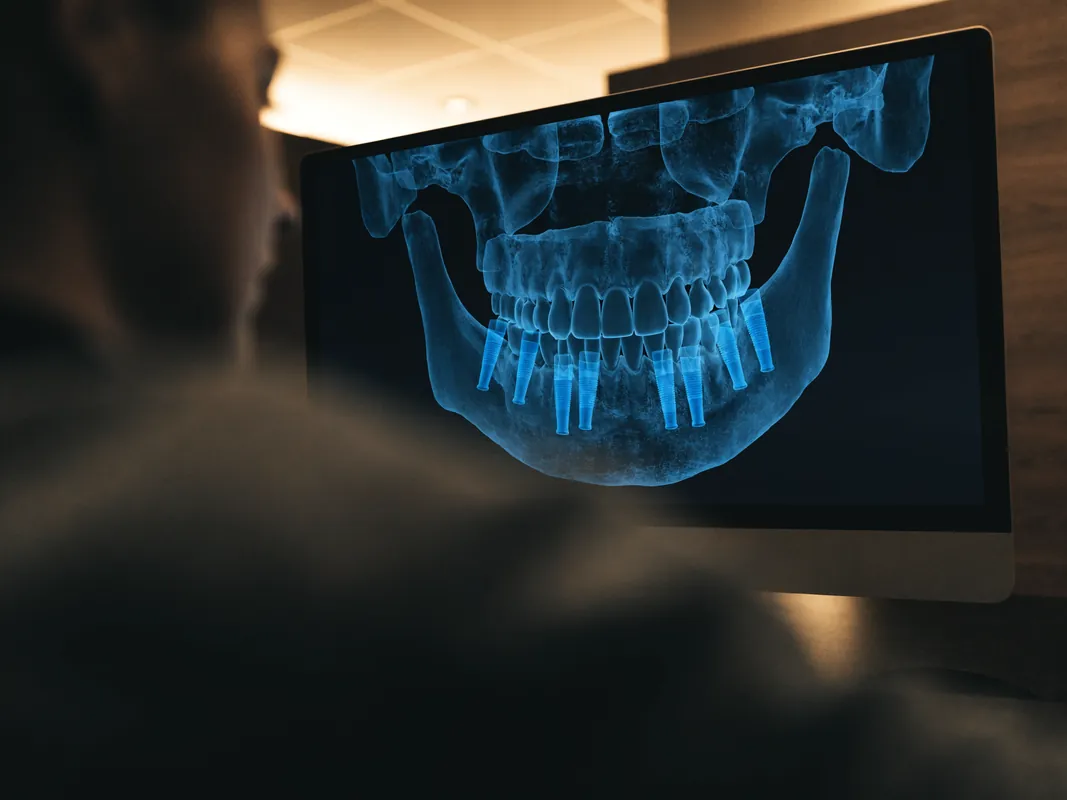
Clinical examination comes first. Imaging must be justified for the decision and selected by the responsible clinician. A panoramic image may support an overview but cannot answer every three-dimensional question. CBCT should not be taken merely because a package includes it, and a remote image cannot authorise surgery.
The written site assessment should separate:
- current ridge and gum findings;
- restorative space and intended crown position;
- anatomy that may affect a surgical option;
- information still needed;
- whether a non-implant option avoids surgery;
- whether augmentation is only a possibility or a supported proposal;
- who decides after examination.
Avoid promises that a graft will create a certain contour or that one material is always required. If augmentation is proposed, it is another procedure with its own purpose, material traceability, alternatives, risks, consent, cost, healing assessment and aftercare. A patient should be able to decline or seek another opinion without losing access to the underlying records.
Compare tooth-preserving and reversible alternatives
Compare tooth-preserving and reversible alternatives before treating an implant as the default. The right comparison is not implant versus nothing; it is a case-specific set of health, function, appearance, maintenance and future-option trade-offs.
Possible paths include:
- no replacement with monitoring where acceptable;
- orthodontic space closure and reshaping of neighbouring teeth;
- maintenance of a suitable retained primary tooth;
- additive reshaping or repair;
- a resin-bonded or other appropriately designed bridge;
- a removable partial replacement;
- a provisional tooth carried by an orthodontic retainer;
- an implant-supported restoration after individual assessment;
- staged combinations of these approaches.
An adhesive bridge may preserve tooth tissue but has its own design, debonding and maintenance considerations. A removable option avoids fixed preparation but requires wearing, cleaning and periodic review. Orthodontic space closure avoids a replacement at that site but changes tooth positions and may require reshaping and retention. Maintaining a primary tooth can preserve function for a period, but its root, wear, ankylosis and prognosis need assessment.
No treatment may be reasonable for a non-visible space that does not create a health or functional problem, but only after relevant consequences are discussed. The patient should not be told that replacing every missing tooth is mandatory for a complete smile.
Use the dental implant treatment guide to compare general implant assessment and maintenance questions, while keeping this page focused on growth and space.
Temporary replacement is an active plan
Temporary replacement is an active plan, not an instruction to wait without care. It should have a purpose, maintenance routine, review owner and exit criteria.
A temporary option may preserve appearance, maintain space, support social confidence or provide time for orthodontic and growth decisions. It can also create problems if it traps plaque, interferes with eruption or tooth movement, becomes loose, damages supporting teeth or no longer fits.
The written temporary plan should identify:
- the appliance or restoration and its materials;
- whether it is fixed or removable;
- how to insert, remove and clean it where relevant;
- what it must not interfere with;
- who adjusts or repairs it;
- warning signs;
- review triggers based on clinical change rather than a generic calendar;
- how the future replacement decision will be reopened.
A temporary label does not mean the option is disposable or risk-free. Some young adults use an interim restoration for a substantial part of education or early employment. Records should transfer if the person moves, changes dentist or later seeks care abroad.
Implant assessment after growth review
Implant assessment after growth review still needs the same clinical discipline as any implant decision. Growth is one factor, not the only eligibility gate.
The named treating clinician may need to assess health history, medicines, smoking or vaping, oral hygiene, decay and periodontal status, restorative space, bone and soft tissue, bite, parafunction, adjacent teeth, anatomy, expectations and maintenance access. The proposed crown should guide the implant position rather than being improvised afterwards.
Ask for a site-specific written proposal that states:
- the diagnosis and reason replacement is being considered;
- evidence and uncertainty concerning growth;
- tooth-preserving and non-implant alternatives;
- intended implant and restoration concept without unsupported brand claims;
- whether any augmentation is proposed and why;
- provisional care;
- material and laboratory traceability;
- foreseeable risks and limitations;
- review and maintenance responsibility;
- what would cause the clinician to pause or change the plan.
No brand makes an implant immune to continued dentoalveolar change. Premium language cannot substitute for position, tissue, restoration, maintenance and accountable care.
Extraction and site preservation are a separate gate
A plan to replace a tooth does not itself justify removing it. Before extraction, record the tooth diagnosis, restorability, endodontic or periodontal alternatives, eruption or orthodontic possibilities and the effect of timing on bone, gums and space. This is especially important after trauma, with a retained primary tooth or when a permanent tooth is unerupted. A sales deadline is not a prognosis.
When extraction is justified, decide separately whether the site needs no additional procedure, socket management, a temporary replacement or later reassessment. Ridge preservation is not mandatory for every gap and does not guarantee an implant later. If graft material or a barrier may be used, consent should cover its purpose, source category, traceability, alternatives, risks, cost and who assesses the result.
Immediate implant placement is another independent choice. Infection, socket anatomy, remaining bone, tissue, restorative position and achievable stability can differ from remote expectations. The written plan should include a safe fallback if placement is not appropriate, including how space and appearance will be managed and how unused fees are handled.
The procedure record should separate what was diagnosed, authorised and completed. A young adult who travels should receive extraction notes, material identifiers, images and instructions that a local clinician can interpret. Stopping after extraction or deferring an implant can represent sound judgement rather than failure to deliver a package.
Implant placement and loading are separate gates
Growth review may support consideration of an implant, but placement still depends on restoration-led position, anatomy, tissues, disease control, hygiene, health history and a maintainable design. Placement-day findings can change the route. Consent should state which variations are authorised, which require a new discussion and when the clinician will stop rather than compromise the future crown.
Placement does not automatically authorise same-day loading. The decision to attach a provisional crown or bridge depends on actual stability, implant position, grafting, bite, parafunction, tissue findings and the planned provisional. A young age, premium implant label or digital workflow does not make immediate loading certain.
The provisional has a defined purpose: appearance, limited function, tissue shaping, speech assessment or evaluation of cleaning. It is not proof of integration or the final aesthetic result. Ask about retention, intended contacts, cleaning, restrictions, repair and the alternative if it cannot be fitted. Temporary replacement should also preserve orthodontic space and not defeat retention.
Later loading needs fresh clinical review; elapsed time alone is not a pass. The clinician should record what findings support progression and what uncertainty remains. If the gate is not met, continued observation, another provisional, redesign or a non-implant alternative should be available without a guaranteed reopening date.
The definitive crown has its own acceptance gate
The final restoration should follow review of implant and tissue findings, fit, contact with neighbouring teeth, bite, cleansability, gum contour, speech and appearance. In a visible young-adult site, comparison with baseline photographs and the agreed restorative target is useful, but it cannot guarantee that neighbouring teeth and tissues will never change.
The patient should be able to assess the proposed crown and ask questions before irreversible acceptance. A high bite, painful contact, tissue compression, food trapping or inability to clean needs examination. A social event or return flight should not convert a concern into silent consent. If design changes materially from the written proposal, explain the reason, alternatives and revised cost.
Records should identify the implant connection, abutment and screw where relevant, crown or framework material, retention method, laboratory and instructions for removal or repair. “Premium ceramic” is not enough for a future dentist. Ask whether compatible instruments and components can be obtained near home.
Continued eruption or dentoalveolar change can alter the crown's relative position later. Maintenance should record contacts, gum levels, photographs where justified and symptoms over time without promising free replacement or a fixed revision. A commercial warranty cannot make an implant erupt with natural teeth.
Consent and autonomy for a young adult
Consent and autonomy for a young adult include more than a parent, partner or coordinator agreeing with the plan. The patient should receive information in an understandable form, have time to ask questions and be able to decline without sales pressure.
For a person who is legally a child in the relevant jurisdiction, capacity, parental responsibility and safeguarding requirements need local professional handling. A website cannot resolve those legal questions across countries. The clinical team must establish who can consent and how the young person's views are included.
For an adult, family support may be helpful but does not replace personal consent. Appearance concerns, bullying or social anxiety should be heard without presenting an irreversible procedure as the only path to confidence. Edited images and influencer cases should not define an acceptable smile.
Consent should cover the actual proposed procedure, alternatives, no-treatment option, irreversible steps, known risks, uncertainties around future change, maintenance, costs, provider identities and what happens if the plan changes. Consent to clinical photography is separate from permission to use images in marketing.
Itemised quote and change control
Itemised quote and change control make a developing plan commercially understandable. A single package total can conceal whether orthodontics, temporary replacement, imaging, augmentation, implant components, laboratory work, reviews or future crown changes are included.
The quote should name the legal supplier and currency, then itemise examination, justified records, each clinical stage, provisional care, laboratory work, restoration, reviews and other agreed services. It should state exclusions, cancellation and refund terms, what is provisional until examination, and how a scope change is priced and consented to.
Travel services should be separate or clearly identified with their own supplier and terms. A hotel or transfer offer is not evidence of implant readiness. A non-refundable journey should not force a patient to accept a changed procedure.
If the assessment shows continuing growth, a different space requirement, inadequate tissue, active disease or a better conservative option, the patient needs an updated plan rather than a substituted procedure at the same package price. Ask for the changed version in writing before payment or treatment.
The dental treatment timeline and visits guide explains how to treat every schedule as conditional on clinical gates rather than advertising.
Travel and the no-travel option
Travel and the no-travel option should be compared before records or deposits commit the patient. A young person may already have local orthodontic, trauma or family-dental care. Moving one stage abroad can fragment a long pathway unless responsibilities are explicit.
Before travel, obtain:
- the named legal treatment provider and named treating clinician;
- provisional diagnosis and scope;
- the missing information that requires in-person assessment;
- copies of orthodontic, trauma and restorative records;
- explanation of local professional registration and complaints routes;
- itemised quote and travel cancellation terms;
- a plan for deferral or no treatment if findings change;
- a local dentist or appropriate team willing to continue routine care.
The GDC's public guide to going abroad for dental treatment advises UK patients to be assessed by a qualified dentist before receiving a treatment plan and cost estimate, to discuss medical history, ask who will provide care and understand aftercare and complaints. It does not regulate Turkish dentistry, but it supplies useful questions for a UK resident.
Treatment near home, a second opinion, a temporary replacement or continuing observation can be rational. No-travel is not a failure to act. It may preserve continuity during orthodontics or growth review.
Aftercare, maintenance and local handover
Aftercare, maintenance and local handover start before any procedure. Implant-supported restorations require cleaning and professional review, and adjacent natural teeth remain vulnerable to disease, wear and movement. A young adult may move city, start university, change work or lose access to the original provider.
The handover record should include the diagnosis, growth and orthodontic reasoning, site and tooth map, relevant images, implant component information if treatment occurs, laboratory prescription, restoration material, consent, treatment notes, aftercare instructions, review findings and the responsible provider's contact route.
Ask what symptoms require urgent local assessment and what can wait for routine review. Pain, swelling, bleeding, trauma, a loose component, altered bite or numbness should not be managed only by sending photographs. An overseas provider can advise within its scope, but cannot examine a patient who is at home.
The returning home after dental tourism guide helps organise records and escalation without promising that a local dentist will assume responsibility for another provider's work.
Future crown appearance can change relative to natural teeth. The maintenance discussion should include this possibility without promising a specific revision or free replacement. Commercial warranty wording cannot remove biological uncertainty or local urgent-care needs.
Records must remain portable through education and relocation
Young adults often change address, university, work, insurer or dentist. A long treatment pathway should not depend on one phone account or coordinator remembering the case. Give the patient portable records at each gate, not only after the final crown. Use original digital files where possible and identify the author and date.
Before treatment, the record set may include the missing-tooth diagnosis, trauma or hypodontia history, tooth prognosis, growth reasoning, orthodontic setup and retention plan, models or scans, justified imaging and reports, photographs, periodontal findings, medical history and consent discussion. After a procedure, add operative and anaesthetic notes, prescribed medicines, graft identifiers, implant and component data, provisional and final restoration details, laboratory prescription, bite records, maintenance instructions and direct clinical contacts.
The [AAPD adolescent oral-health guidance](https://www.aapd.org/research/oral-health-policies--recommendations/adolescent-oral-health-care) highlights transition to adult dental care as a process to discuss and agree among the young person, family where appropriate and practitioner. It is a US professional reference, not a rule for treatment abroad. Its useful principle is deliberate continuity rather than an abrupt loss of history at a birthday.
Health and facial records should be shared only with a clear purpose, valid permission and an appropriate channel. Consent for clinical use does not equal consent for advertising. If the patient later requests another opinion, access to their records should not depend on accepting further treatment or signing away a complaint.
Urgent and emergency boundaries for young adults
A missing-tooth consultation is not the right route for new facial swelling, fever with dental symptoms, uncontrolled bleeding, major trauma, severe pain, a newly displaced tooth, new or worsening altered sensation, a loose implant or restoration, or inability to eat or drink adequately. Seek prompt local dental assessment. A photograph can help communication but cannot test mobility, sensation, infection spread or airway risk.
Breathing or swallowing difficulty, rapidly progressive swelling, major facial injury, loss of consciousness, severe systemic illness or other emergency features require the local emergency system. In England, follow NHS urgent and emergency routes; elsewhere use the local equivalent. Do not wait for an overseas coordinator to answer when immediate safety is involved.
After recent trauma, timely assessment may preserve options. The IADT material cited above addresses injury-specific diagnosis, planning and follow-up, but the correct action depends on the actual injury and local service. Do not place or replant a tooth, alter a splint or self-medicate from a general implant page.
The handover plan should separate routine maintenance, orthodontic or growth review, mechanical restoration problems, trauma follow-up and urgent care. Commercial warranty discussion can continue after necessary clinical treatment starts; it should never be a condition for seeking local emergency help.
Red flags in an under-25 implant proposal
Pause when a proposal uses any of these patterns:
- a birthday alone is treated as proof of growth completion;
- sex-based age ranges are presented as a personal diagnosis;
- one radiograph is described as definitive for every future change;
- wisdom-tooth eruption is treated as a maturity certificate;
- the cause of the missing tooth and restorability are not assessed;
- orthodontic space and retention are absent from the plan;
- every temporary option is dismissed as pointless;
- an implant brand is presented as protection against infraocclusion;
- bone grafting is promised from a panoramic screenshot;
- the legal provider, clinician or laboratory is unnamed;
- a fixed schedule overrides new clinical findings;
- consent is collected by sales staff before diagnosis;
- hotel or transport benefits are used to pressure acceptance;
- no local maintenance or urgent-care route exists;
- edited before-and-after images replace explanation of uncertainty.
These signs do not diagnose wrongdoing. They justify clarification, records, another clinical opinion or stopping the transaction.
Questions for the named clinical team
Send these questions before deciding:
- Why is the tooth absent, and is any natural tooth still maintainable or movable into the space?
- What is the whole-dentition diagnosis rather than only the gap measurement?
- How was growth assessed, by whom, and what uncertainty remains?
- Which records are clinically justified, and what question does each answer?
- How could continued eruption or facial change affect this site?
- Is orthodontic space closing, opening, redistributing or being retained?
- Who owns the final restorative position and retention plan?
- What no-treatment, space-closure, primary-tooth, bridge, removable or provisional options are reasonable?
- What tooth tissue would each alternative change?
- What are the current bone and soft-tissue findings, and what remains unknown?
- Is augmentation only a possibility or a supported proposal?
- What clinical finding would cause implant treatment to be deferred or cancelled?
- Who is the legal provider, named treating clinician and laboratory?
- How are materials and components recorded for future care?
- How will the quote change if the in-person plan differs?
- What temporary replacement will protect space and confidence meanwhile?
- Who handles routine maintenance and urgent concerns after returning home?
- Can the patient obtain all records and seek another opinion without losing access to care?
Young-adult planning checklist
Before an irreversible step, confirm that:
- the reason for the missing tooth is documented;
- natural-tooth preservation and unerupted-tooth options were considered;
- the whole dentition and both arches were mapped;
- growth assessment uses case-specific evidence and admits uncertainty;
- orthodontic space and retention have an accountable owner;
- a restorative target guides any surgical proposal;
- temporary and conservative options were genuinely compared;
- bone and soft-tissue findings are separate from speculative grafting;
- the patient understands possible future relative movement;
- provider, clinician and laboratory identities are available;
- consent belongs to the real procedure and can be paused;
- the quote is itemised and travel terms do not coerce treatment;
- records, maintenance, urgent care and local handover are arranged;
- no-treatment, deferral and no-travel remain available.
Sources and evidence limits
Sources were checked on 29 August 2026. They support cautious planning principles and do not diagnose an individual, create a universal implant age or endorse a provider.
- [Guy's and St Thomas' NHS Foundation Trust: Hypodontia overview](https://www.guysandstthomas.nhs.uk/health-information/hypodontia) — diagnosis, multidisciplinary care, replacement options and the statement that implants are unsuitable while growth continues.
- [UCLH: Hypodontia Clinic](https://www.uclh.nhs.uk/our-services/find-service/dental-services/hypodontia-clinic) — whole-dentition planning, orthodontic space decisions, adhesive bridges, retained primary teeth and shared care.
- [Royal College of Surgeons: standards of care for NHS-funded implant treatment](https://www.rcseng.ac.uk/-/media/Files/RCS/FDS/Publications/Implant-guidelines.pdf) — UK pathway and multidisciplinary principles; not a universal eligibility rule or Turkish legal standard.
- [Bohner and colleagues: dental implants in growing patients, systematic review](https://pubmed.ncbi.nlm.nih.gov/31076220/) — limited and heterogeneous evidence with reported positional complications, supporting individual caution rather than a fixed age table.
- [Quality assessment of systematic reviews on implants in growing patients](https://pubmed.ncbi.nlm.nih.gov/37565026/) — reports low confidence and lack of consensus in much of the review evidence.
- [Systematic review of implant infraposition and craniofacial growth](https://pubmed.ncbi.nlm.nih.gov/32835562/) — describes observable long-term infraposition risk in some cases and limited understanding of predisposing factors.
- [IADT traumatic dental injury guidelines, general introduction](https://www.aapd.org/research/oral-health-policies--recommendations/international-association-of-dental-traumatology-guidelines-for-the-management-of-traumatic-dental-injuries-general-introduction/) — consensus guidance supporting diagnosis, planning and follow-up after trauma; it does not guarantee retention or prescribe an implant sequence.
- [AAPD adolescent oral-health care guidance](https://www.aapd.org/research/oral-health-policies--recommendations/adolescent-oral-health-care) — current professional guidance on adolescent oral-health assessment and planned transition to adult care; it is not a cross-border legal rule.
- [GDC: Going abroad for dental treatment](https://www.gdc-uk.org/standards-guidance/information-for-patients-public/going-abroad-for-dental-treatment) — UK public guidance on assessment, provider questions, aftercare and complaints; it does not regulate treatment in Turkey.
Evidence on implants during growth relies heavily on small observational reports, case series and heterogeneous reviews. Definitions of growth completion and outcome measures vary. Later change can also occur after obvious growth has slowed. For those reasons, this guide rejects both automatic refusal by age and automatic approval by age. The defensible product is a documented, revisable missing-tooth plan with responsible clinicians and preserved alternatives.