Price, décor and technology labels cannot establish clinical quality. This guide shows the evidence to request before choosing dental treatment in Turkey.
# Dental Tourism Quality in Turkey: How to Verify a Provider
Dental websites often sort providers into simple price tiers. One is described as basic, another as premium, and a third as a luxury experience. Those labels are commercial positioning, not clinical evidence. A high quotation does not prove careful diagnosis, competent treatment or reliable aftercare. A low quotation does not prove unsafe care. Décor, airport photographs, equipment logos and confident sales language cannot answer the questions that matter: Who is legally responsible? Who will examine and treat you? What evidence supports the plan? How are instruments reprocessed? Which materials will be used? What records and follow-up will you receive?
This guide is a verification framework for people considering dental treatment in Turkey. It does not rank clinics or recommend a provider. It shows how to replace price-tier assumptions with evidence that can be checked before payment and again before irreversible treatment. The same questions are useful whether a website looks modest or elaborate.
Quality Is a Chain, Not a Label
Clinical quality is produced by connected decisions. The provider must identify the problem correctly, select a reasonable option, obtain informed consent, deliver treatment within the clinician's scope, control infection risk, use appropriate and traceable materials, check the result, preserve records and arrange continuing care. A weakness at any link can affect the complete treatment.
No single badge, machine or brand proves that chain. A registration establishes legal standing, not the result of a particular case. An imaging device can support diagnosis, but only when imaging is justified, acquired correctly and interpreted by someone qualified. A material can have appropriate evidence, yet still be unsuitable for a particular tooth or poorly handled. A carefully designed restoration can still create problems if the patient cannot clean it.
The practical goal is not to find a provider that uses the most impressive adjectives. It is to find a provider whose identity, reasoning, people, processes and records remain clear when you ask detailed questions.
Verify the Legal Treatment Provider First
The business answering your enquiry may be a coordinator, advertiser or travel organiser rather than the facility that provides dental care. Ask for the full legal name of the treatment provider, the treatment address and the official contact channel used for clinical records and complaints. Check those details through the relevant independent register or authority where possible.
The written agreement should distinguish every organisation involved. If a coordinator collects photographs, ask who receives them and who is allowed to interpret them. If imaging, laboratory work, sedation or another service occurs elsewhere, request the legal provider and location for that stage. If payment goes to a different company, ask why and obtain the relationship in writing.
Do not transfer a claim from one entity to another. A registration belonging to a facility does not describe a booking website. A credential belonging to one clinician does not cover a whole team. A laboratory's documentation does not establish what will be used in your mouth unless it is connected to your case.
Name the Clinician Responsible for Every Clinical Stage
Ask who will perform the assessment, approve the final plan, obtain consent, carry out each procedure and review the work before discharge. Different people may be responsible for surgery, restorative dentistry, root-canal treatment, gum care, sedation or laboratory communication. The plan should identify those roles rather than hiding them behind a team photograph.
Verify each clinician's current registration and declared scope through an independent source. Confirm that the name in the written plan matches the person expected to treat you. If the provider may substitute another clinician, ask how you will be informed, whether you can decline and what happens to the booking.
Training claims need precise evidence. A course certificate, membership or academic title should be matched to the exact person, issuing organisation, current status and relevance to the proposed procedure. Case-volume statements require a definition, date range and auditable source. Do not treat popularity or social-media visibility as clinical competence.
Remote Review Is Provisional, Not a Final Diagnosis
Photographs and existing radiographs may help organise an initial discussion, but they do not show every clinical finding. Gum measurements, mobility, bite, symptoms, decay beneath existing work, pulp status, soft-tissue condition and the quality of older restorations may require in-person examination. Imaging also has limits and must be interpreted in context.
A remote proposal should state its assumptions and missing information. Ask which findings could change the procedure, number of teeth, material, sequence or price. The provider should explain when the final decision is made and who makes it.
If the in-person assessment changes the plan, request a revised explanation, alternatives and itemised quotation before additional work begins. You should have time to ask questions and decline. Travel pressure must not become a substitute for consent.

Diagnostics Should Be Justified, Acquired and Interpreted Properly
More imaging is not automatically better. The responsible clinician should choose imaging according to the clinical question, available records and radiation principles. A panoramic image, intraoral radiograph, cone-beam CT scan, photograph or digital impression serves different purposes. Ask why a particular examination is needed and what decision it will inform.
For any imaging service, identify the provider, device location, operator and person responsible for interpretation. Ask whether the field of view and exposure are selected for your case, how image quality is checked and how you will receive the original record. A screenshot in a chat is not a complete diagnostic record.
Equipment quality claims need evidence beyond a model name. Ask for current quality-control, maintenance and service records relevant to safe operation. The provider should be able to explain who is responsible for checks and what happens if a device does not meet its required standard. Do not accept an invented calibration schedule or a photograph of a certificate as a substitute for current, device-specific documentation.
The most advanced device cannot repair a poor clinical question. Diagnostic value comes from justification, acquisition quality, interpretation and connection to the treatment plan.
Ask for the Clinical Reason Behind Every Tooth Treated
Extensive plans should be explained tooth by tooth. Ask what condition is being treated, what evidence supports it and which alternatives are reasonable. The alternatives may include monitoring, preventive care, hygiene treatment, bonding, orthodontic movement, an onlay, a crown, root-canal treatment, extraction, replacement or no immediate intervention. Suitability depends on the examination.
Irreversible steps deserve particular care. Removing healthy tooth structure, extracting a tooth and placing an implant cannot be undone. Ask which teeth are healthy, which are structurally compromised and which parts of the plan are elective. If a mock-up or provisional stage is proposed, clarify what it can demonstrate before preparation begins.
A quality plan is not the longest plan or the shortest plan. It is the plan that connects each recommendation to a documented clinical reason, explains uncertainty and allows the patient to choose between reasonable options.
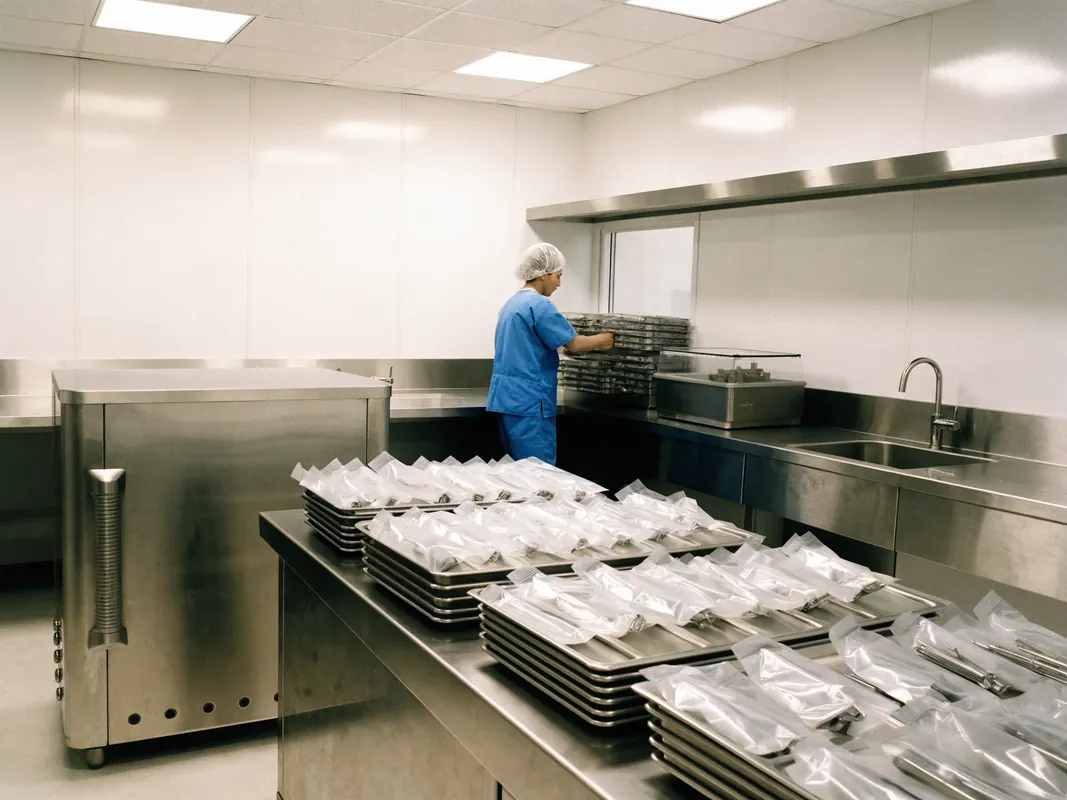
Sterilisation Evidence Is a Process, Not an Autoclave Photograph
Instrument reprocessing begins before sterilisation and continues after it. Ask how used instruments move from the treatment room to a designated decontamination area, how staff protect themselves, how instruments are cleaned, inspected, packaged, processed, stored and released for use. Clean and contaminated workflows should be separated to reduce cross-contamination.
The provider should identify which items are single use and how they are discarded. Reusable instruments should be compatible with the cleaning and sterilisation method. Hinged and hollow instruments may have different processing requirements from simple solid instruments. A machine classification alone does not prove that every load, instrument and workflow is appropriate.
Ask how each sterilisation cycle is monitored and recorded. Useful evidence can include cycle parameters, load identification, chemical indicators, maintenance records, validation appropriate to the equipment and a process for responding to a failed cycle. The provider should be able to trace instruments or packs to a treatment session according to its documented system.
Also ask about hand hygiene, surface disinfection, dental-unit water management, sharps handling, environmental cleaning and storage. Infection prevention is broader than one room or one device. If the provider cannot explain the complete pathway, a photograph of sealed packs is weak evidence.
Patients are not expected to audit a facility like an inspector. The aim is to see whether the provider gives coherent, current and attributable answers rather than slogans.
Material Traceability Must Reach Your Individual Case
Terms such as premium ceramic, European implant or advanced graft are too vague for a treatment plan. Ask for the exact material or component family and the reason it is suitable for your diagnosis. Where traceability is relevant, request the reference, lot or serial information that will appear in your final record.
An implant system includes more than the fixture. Connections, abutments, screws, restorative components and instruments must be compatible. Ask whether original or third-party components are proposed and how future availability will be handled. A future clinician needs component information, not only a brand logo.
For crowns, veneers and bridges, identify the material category, laboratory, design method, shade process, trial stage and person responsible for approving fit and bite. Ask which material substitutions are permitted and whether your written approval is required. If a laboratory technician's experience is used in marketing, request the real name, role, laboratory and verifiable evidence rather than a fictional biography.
Packaging images on a website do not prove that a product was used for you. Traceability is established by case-linked records supplied at handover.
Laboratory Quality Cannot Be Reduced to Handmade Versus Digital
Digital and manual methods are tools. Either can be used well or poorly. A milled restoration is not automatically inferior, and hand layering is not automatically appropriate for every case. The clinical design, preparation, scan or impression, laboratory communication, material handling, fit, contour, contact and bite all matter.
Ask who writes the laboratory prescription and who checks the restoration before it is fitted. Clarify whether there is a trial stage, how shade is evaluated, what happens if fit or appearance is unacceptable and whether enough time is reserved for revision. For complex work, ask how the proposed design supports cleaning and repair.
The laboratory should be named in the treatment record. The provider should state which parts are made in-house and which are outsourced. If work is sent elsewhere, ask how materials, files and responsibility are tracked.
Sedation and Anaesthesia Require Case-Specific Verification
Do not assume that a particular professional, facility or service is available because a website mentions sedation. Ask whether sedation is proposed for your case, why it is needed and what alternatives exist. Request the full name, registration and role of the person who will provide it, along with the exact treatment location.
The provider should explain pre-assessment, fasting or medication instructions, monitoring, recovery criteria, escort requirements and the plan for complications. Ask which emergency equipment, medicines and trained personnel are available at the site and how escalation is arranged. These answers should be case specific and written before travel.
Never change prescribed medication on the advice of a salesperson or generic webpage. Relevant medical questions should be reviewed by an appropriately qualified professional who can communicate with your usual healthcare team when needed.

Consent Is More Than a Signed Form
Valid consent requires understandable information, capacity, time and freedom from pressure. You should know the proposed procedure, material risks, expected limitations, alternatives, irreversible steps and what remains uncertain. A signature collected after travel or immediately before treatment does not fix an incomplete discussion.
Ask which language will be used for clinical explanation and documents. If an interpreter is involved, identify the person, role and availability during the full consent discussion. Conversational help from a coordinator is not necessarily clinical interpretation. You should be able to ask private questions and correct misunderstandings.
Keep a copy of the version you accepted. If the plan changes, consent should be revisited with the new reason, options, risks and cost. A provider should not rely on a broad form to authorise unspecified additional treatment.
Compare Itemised Scope, Not Price-Tier Stories
Price can reflect many things: treatment scope, materials, laboratory work, staffing, facility costs, follow-up and commercial margin. It cannot by itself reveal clinical quality. A higher total is not proof of better care, and a lower total is not proof of poor care.
Compare quotations line by line. Check the teeth and procedures, assessment, imaging, anaesthesia, temporary work, laboratory stages, components, medication, protective appliances, review appointments and record delivery. Mark every item as included, conditional or excluded.
Separate clinical fees from non-clinical services. Accommodation, ground transport and tourism arrangements do not demonstrate dental quality. If they are arranged, request the provider, scope, charges, cancellation terms and responsibility for disruption in a separate written section.
Ask how long the quotation remains valid, what can change after examination and how a revised plan is approved. Avoid relying on percentage comparisons, expected rework calculations or claims that one price tier pays for itself. Without comparable cohorts and audited methods, those numbers are marketing arithmetic.
Treatment Timing Must Follow Clinical Findings
A promotional itinerary cannot determine how long your case requires. Timing depends on diagnosis, healing, laboratory workflow, tissue response and the need for review. Ask for a case-specific sequence showing confirmed appointments, provisional stages and decisions that depend on earlier findings.
Clarify when temporary work is expected, how fit and bite will be reviewed and what could require more time. Avoid non-changeable travel arrangements until clinical dates are confirmed in writing. Ask the responsible clinician for case-specific advice about travel after treatment rather than relying on a generic schedule.
Compressed treatment is not inherently unsafe, and a long stay is not inherently careful. Quality is shown by whether the sequence allows appropriate assessment, consent, delivery and review for that case.
Aftercare Should Exist Before the Procedure
Ask what review is needed after each stage, which appointments require in-person examination and which information can support remote coordination. A message or photograph can help communicate, but it cannot assess every cause of pain, swelling, bite change, mobility or bleeding.
Identify the clinician responsible for reviewing concerns and the provider's published contact hours and escalation pathway. Ask which symptoms require urgent local care and which records should be shared. The plan should not imply that remote communication replaces examination.
Contact a dentist at home before travelling. Ask whether they are willing to provide routine maintenance or emergency assessment for work completed elsewhere. A local clinician is not automatically responsible, and willingness may depend on documentation, restoration design and component availability.
The overseas provider should supply a treatment summary, imaging, component and material identifiers, medication information, laboratory details and maintenance instructions. Aftercare is stronger when the handover allows another clinician to understand what was done.
Complaints and Remedial Terms Must Name Responsibility
Request the complaints procedure before payment. It should name the legal entity that receives a complaint, the contact channel, the information required, the review stages and the person responsible for the response. Ask whether the provider may request an independent examination and how evidence from a local dentist will be considered.
Read the remedial terms carefully. Separate clinical reassessment, professional time, laboratory work, components, medication and additional travel. Identify exclusions and patient maintenance duties. Do not assume that a repair term covers every cost or promises a particular clinical outcome.
If urgent symptoms arise, seek appropriate local care rather than waiting for a commercial dispute. Clinical safety and complaint resolution are separate processes. Keep records of symptoms, advice, invoices and correspondence so that later review is based on evidence.

Reviews, Photography and Décor Are Weak Clinical Proxies
Reviews can reveal patterns in communication and administration, but they cannot prove your diagnosis or predict your result. Read a broad range of dated reviews across independent sources. Examine how the provider responds to criticism, not only how it displays praise. Repeated wording, unexplained bursts and accounts with little history deserve caution.
Before-and-after photographs require context. Lighting, angle, retraction, dehydration and editing can change appearance. Ask whether the cases belong to the named provider, whether publication consent exists, which procedures were performed and how long the follow-up lasted. Even an authentic image does not show tissue health, bite or maintenance burden.
An expensive interior may improve comfort, but it does not establish diagnosis, infection control or clinician competence. A modest reception does not establish the opposite. Verify clinical systems directly.
Equipment Lists Need Capability and Governance Context
A website may display scanners, microscopes, milling units or guided-surgery software. Ask which proposed stage uses the device and why. Confirm who is trained to operate it, how output is checked, where data are stored and how maintenance or quality-control failures are managed.
Technology can support a workflow but does not replace clinical judgment. Guided planning still depends on image quality, segmentation, design, manufacturing, fit and surgical execution. A microscope does not establish the quality of every root-canal procedure. An in-house mill does not prove the fit or material of every restoration.
The evidence should connect the equipment to the responsible person, protocol and your written plan. A catalogue of brand names is not a quality system.
Independent Verification Questions
Ask the provider for evidence in a form you can check:
- What is the full legal name and address of the treatment provider?
- Who assesses me, approves the plan and performs each procedure?
- Where can I verify each clinician's current registration and role?
- Which findings support treatment on each tooth?
- What remains provisional until examination or imaging?
- Which alternatives include less invasive care or no immediate treatment?
- Which diagnostic record is needed, who acquires it and who interprets it?
- How are imaging quality control and device service documented?
- How do instruments move through cleaning, inspection, packaging, sterilisation and storage?
- How is a processed load traced and released?
- Which materials and components are proposed, and what identifiers will I receive?
- Which laboratory performs the work and who approves fit, shade and bite?
- Who provides any sedation, at which facility and under which emergency plan?
- In which language will consent and aftercare be explained?
- What is included, conditional and excluded from the quotation?
- What reviews are needed before and after travel?
- What is the local urgent-care and maintenance pathway?
- How are complaints reviewed and remedial responsibilities separated?
Answers should be attributable, current and written. A sales representative's assurance is not a substitute for a provider record.
Evidence Checklist Before Payment
Create one folder for each provider and collect the same categories:
- Legal provider identity and treatment location
- Named clinicians and independent registration checks
- Provisional assessment and missing information
- Tooth-by-tooth plan and reasonable alternatives
- Irreversible steps and consent documents
- Imaging justification, interpretation and record access
- Instrument-reprocessing workflow and monitoring evidence
- Material, component and laboratory traceability
- Case-specific sequence and review points
- Itemised clinical and non-clinical charges
- Payment, cancellation and refund terms
- Aftercare, maintenance and urgent local-care route
- Complaints and remedial process
- Complete record handover list
- Privacy and health-data handling information
Mark each item as independently verified, supplied in writing, provisional or missing. Do not convert a missing answer into an assumed inclusion.
Frequently Asked Questions
Does a high price prove higher clinical quality?
No. Price may reflect scope, staffing, materials, overhead, service and margin. Verify the clinical provider, people, diagnosis, processes and records directly. Compare like-for-like written plans rather than price tiers.
Does a low price prove that a clinic is unsafe?
No. A lower quotation may describe a different procedure or narrower scope. The risk appears when essential clinical stages, responsibilities or materials remain vague. Itemise and verify before judging.
Is cone-beam CT always required for dental treatment?
No. Imaging should be justified by the clinical question and selected according to the case. Ask the responsible clinician why a particular record is needed, who interprets it and how the result changes the plan.
Is an autoclave certificate enough to verify sterilisation?
No. Reprocessing includes collection, cleaning, inspection, packaging, cycle monitoring, release, storage and traceability. Ask about the whole workflow and how failed checks are handled.
How do I verify the material used in my treatment?
Request the exact material or component family in the written plan and the case-linked reference, lot or serial record at handover where relevant. A website image is not evidence for your case.
Does digital dentistry always produce better restorations?
No. Digital tools can improve parts of a workflow, but outcome also depends on diagnosis, preparation, data quality, design, material handling, laboratory work, fitting, bite and maintenance.
What should aftercare include?
It should identify required reviews, responsible clinicians, contact hours, urgent local-care triggers, maintenance expectations and the records needed by another dentist. Remote communication should not be presented as a replacement for examination.
How should I assess a clinician's credential claim?
Match the full name to the issuing organisation, current status, scope and relevance to the proposed procedure. Do not extend one person's credential to every clinician or to a coordinator.
What if the plan changes after I arrive?
Request the clinical reason, alternatives, revised risks, sequence and itemised price before consenting. You should be able to pause or decline without a broad consent form being used to authorise unspecified work.
Final Principle
Do not choose dental care by the words cheap, premium or luxury. Choose by evidence that survives detailed questions: a verifiable provider, named clinicians, a case-specific diagnosis, justified diagnostics, a coherent sterilisation pathway, traceable materials, understandable consent, itemised scope, complete records and realistic aftercare. Quality is not inferred from the label on the website; it is demonstrated through accountable people and documented processes.