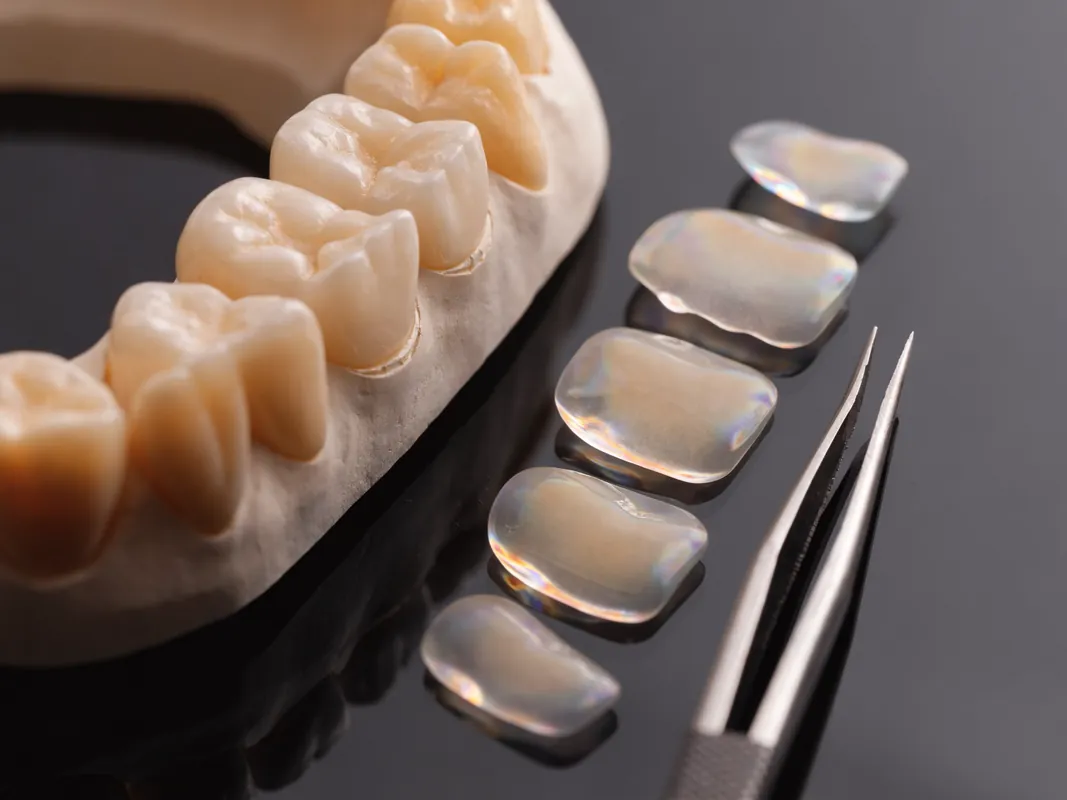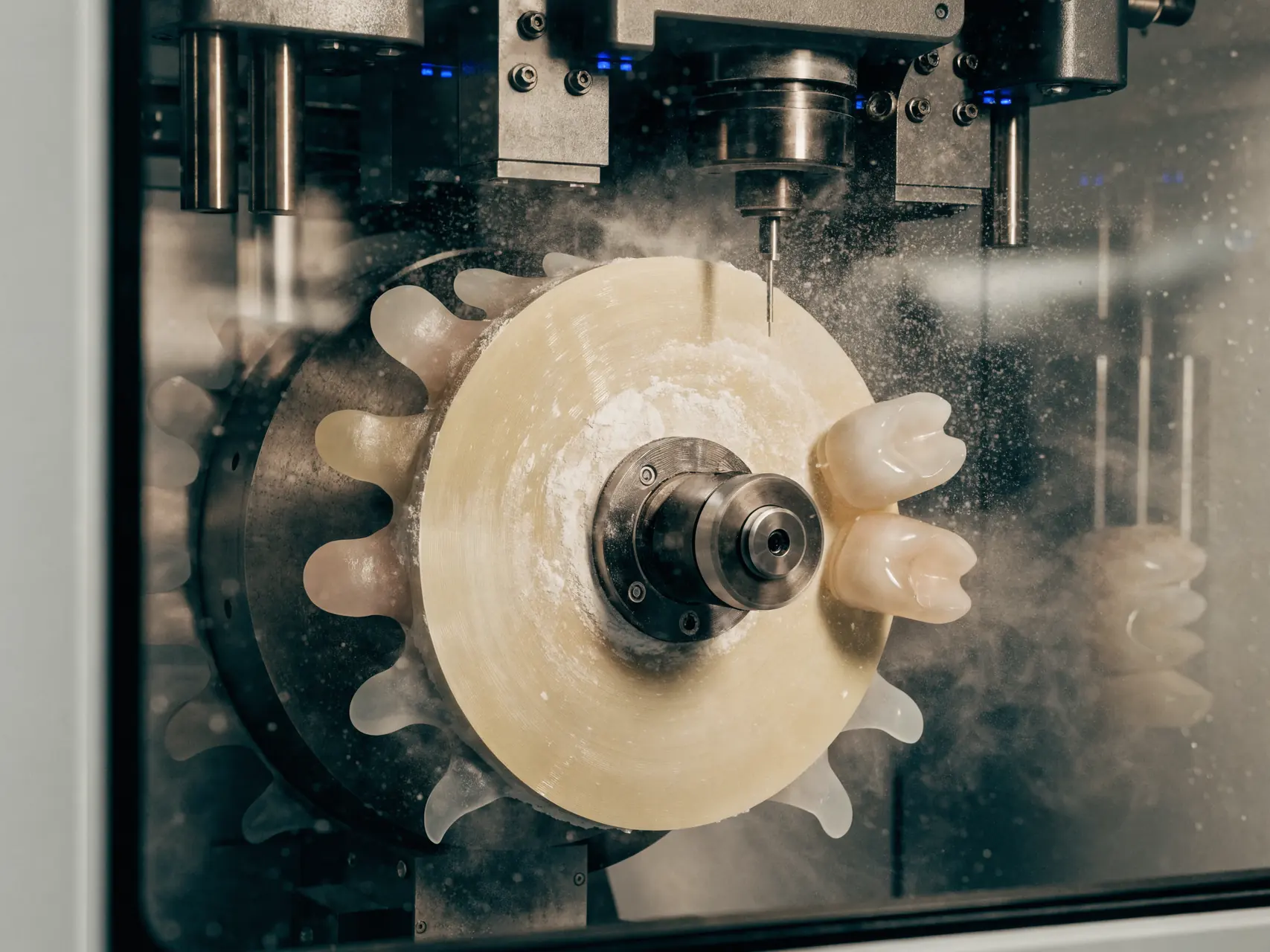
Monolithic zirconia and lithium disilicate are categories of dental ceramic, not automatic answers to a crown decision. Neither category is always stronger in the way that matters, always more aesthetic, always more conservative or always better for a particular part of the mouth. A restoration succeeds or fails as a system: the remaining tooth or implant, diagnosis, preparation, available space, restoration design, material variant, processing, surface treatment, cementation, occlusion, laboratory execution, hygiene access and maintenance all interact.
This guide is a material and design decision worksheet. It cannot diagnose a tooth, select a ceramic, prescribe a preparation or tell a laboratory how to manufacture a patient-specific crown. Those decisions belong to the named clinician and laboratory after examination and after consulting the exact material's current instructions for use. It also does not promise a lifespan, appearance or outcome. Published studies answer defined questions in selected participants and cannot be converted into a guarantee for an individual.
The page uses lithium disilicate as a material-category name. It does not treat one trade name as the category, and it does not rank manufacturers. Likewise, zirconia is not a single uniform material. Products described as monolithic zirconia can differ in composition, microstructure, translucency, colour gradient, indication, minimum design dimensions, sintering route and recommended surface protocol. The clinician and laboratory should identify the exact product rather than selecting from a generic label on a sales page.
The decision in one sentence
Choose neither material from a slogan. First decide whether a crown is justified and how much sound tooth can be preserved. Then map the tooth or implant site, substrate, available restorative space, load, occlusion, optical objective, margin, retention, isolation, cementation route, laboratory design and aftercare to an exact material and current instructions for use. If the evidence is incomplete, the right answer is more assessment, a provisional stage, a different restoration design or no irreversible treatment yet.
Comparison framework without a universal winner
| Decision question | Monolithic zirconia category | Lithium disilicate category | What must be verified for the patient |
|---|---|---|---|
| Material family | Polycrystalline zirconia formulations with product-specific composition and indications | Glass-ceramic formulations with product-specific processing and indications | Exact product, current instructions, regulatory documentation and lot or batch traceability |
| Optical behaviour | Varies substantially across formulations, thickness, shade and background | Varies with ingot or block, opacity, translucency, thickness and surface characterisation | Target value, chroma, translucency, substrate colour, cement contribution and neighbouring teeth |
| Mechanical design | Depends on formulation, connector or wall design, surface state and load | Depends on design, thickness, bonding or cementation, flaws and load | Site, remaining tooth, space, span, contacts, parafunction and manufacturer limits |
| Tooth preparation | Not defined by the word zirconia | Not defined by the word lithium disilicate | Minimum material dimensions, path of insertion, ferrule, margin, enamel preservation and pulpal risk |
| Cementation | Product and preparation dependent | Product and preparation dependent | Retention form, substrate, isolation, surface treatment and compatible cement system |
| Adjustment and finish | Adjustment creates a new surface that must be managed correctly | Adjustment creates a new surface that must be managed correctly | Exact finishing and polishing protocol, occlusal review and opposing dentition |
| Aesthetic control | May use monolithic colour gradients, staining or other product-specific methods | May be monolithic, pressed, milled, cut back or characterised according to system | Laboratory prescription, try-in method, lighting, photographs and patient-approved objective |
| Repair or remake | Repairability and predictability are defect- and protocol-specific | Repairability and predictability are defect- and protocol-specific | Defect location, cause, surface access, remaining design and clinician-owned risk discussion |
This table is a set of questions, not a selection algorithm. An anterior location does not automatically require lithium disilicate. A molar location does not automatically require zirconia. A high-translucency zirconia is not interchangeable with a less-translucent formulation, and a lithium-disilicate veneer study cannot automatically support a full-coverage molar crown or an implant restoration.
Gate one: does the tooth need a crown at all?
A material comparison begins too late if no one has established why full coverage is proposed. Ask for the diagnosis, symptoms, vitality or endodontic status, caries and crack findings, remaining tooth structure, existing restoration, periodontal condition, margin position, crown-to-root considerations and relevant images. The NHS describes a crown as a cap covering a real tooth and notes that the tooth is shaped so it can be fitted. That irreversible shaping is why the first question is whether a crown is justified, not which ceramic is fashionable. See the current NHS [dental treatments overview](https://www.nhs.uk/live-well/healthy-teeth-and-gums/dental-treatments/).
Ask the clinician to discuss reasonable tooth-preserving alternatives where clinically relevant. Depending on the diagnosis, options might include monitoring, prevention, direct restoration, repair, an inlay or onlay, endodontic assessment, periodontal treatment, orthodontic space management, extraction or another prosthetic design. This list is not advice for an individual. It shows why a crown quote should not be accepted without the diagnostic branch that led to it.
Record what problem the restoration is meant to solve: weakened cusps, loss of tooth structure, an existing fracture, a failing restoration, shape or colour, an implant restoration, or another defined need. A cosmetic preference does not erase biological cost. Ask how much enamel and dentine would be removed, whether margins can remain accessible, and whether a more conservative design could meet the same objective.
If several healthy teeth are proposed for crowns to create visual uniformity, obtain an independent clinical opinion. The decision should explain each tooth separately. A smile-zone label is not a diagnosis. The guide to choosing a dental clinic in Türkiye provides a provider, clinician, consent and records checklist before irreversible care abroad.
Gate two: natural tooth or implant-supported crown
A crown on a prepared natural tooth and a crown attached to an implant are different systems. A natural tooth has remaining biological tissue, a periodontal ligament, a preparation shape, a finish line and possible pulpal or endodontic considerations. An implant crown depends on implant position, connection, abutment, screw or cement retention, emergence profile, soft tissue, cleansability and component access. Evidence from one support type should not be transferred automatically to the other.
For a natural tooth, document the amount and distribution of remaining tooth structure, the condition of enamel and dentine, any core or post, ferrule where relevant, preparation height and taper, moisture-control feasibility and margin location. These factors affect retention, resistance, bonding opportunity and whether further reduction is justified.
For an implant crown, ask the clinician and laboratory to identify the implant system, connection, abutment material and design, retention method, screw-access position, emergence contour, contact design, retrievability and maintenance route. Ask how excess cement would be prevented or detected if cement retention is proposed. Ask how the crown will be removed or serviced if a screw, contact or porcelain surface later needs attention.
The material category is only one part of either system. A rigid implant support can change load transfer and occlusal planning. An unfavourable implant position cannot be corrected by simply choosing an allegedly stronger ceramic. Likewise, weak or deeply damaged natural tooth structure is not made healthy by a premium material label.
Gate three: tooth location informs but does not decide
Location affects visibility, load direction, access, moisture control, interocclusal space, contact form and cleaning. It is therefore important, but front versus back is an incomplete decision rule.
For an anterior tooth, assess the amount shown at rest and in function, lip dynamics, neighbouring translucency, surface texture, stump or abutment colour, incisal guidance, edge position, overbite, overjet and parafunctional contacts. A single central incisor may demand a different optical strategy from several adjacent restorations. The possibility of masking a dark substrate may conflict with a desire for high translucency.
For a premolar, consider both visibility and load. The tooth may appear in the smile while also receiving lateral contacts. Preparation height, cusp geometry and available thickness may matter more than its label as anterior or posterior.
For a molar, evaluate space, cusp inclines, contact area, opposing material, missing neighbours, terminal-tooth loading and access for finishing. Do not assume that every molar requires one zirconia class or that lithium disilicate is prohibited. The exact indication follows diagnosis, design, evidence and product instructions.
For any site, ask whether the proposed crown is single-unit or part of a fixed dental prosthesis. A material cleared or documented for a single crown is not automatically suitable for a bridge, cantilever or full-arch design. Connector dimensions, span, support and product indications become different questions. This page concerns crown selection and should not be used to approve a larger prosthesis remotely.
Gate four: map load and occlusion before material
The word strength hides several different failure questions. A ceramic may be tested for flexural strength, fracture toughness, fatigue, wear, chipping, surface damage or other properties under defined laboratory conditions. A clinical crown experiences repeated contacts, moisture, temperature change, support flexure, defects, adjustment and patient-specific force directions. A single material number does not predict the whole restoration.
Ask for an occlusal assessment that records maximum intercuspation, excursions, guidance, interferences, available clearance, opposing tooth or restoration, wear facets, tooth mobility, missing teeth and signs or history relevant to parafunction. A patient report of grinding is useful but not the only evidence. The clinician should own the interpretation and explain how the design responds.
The opposing surface matters. Natural enamel, composite, metal, veneering ceramic, monolithic zirconia and glass ceramic do not create the same contact system. Surface condition also matters. A restoration adjusted in the mouth is no longer in its original finished state. The clinician should specify how the adjusted area will be finished and polished according to the material system and then recheck contacts.
Primary clinical studies have examined opposing-enamel wear with polished monolithic zirconia under defined protocols, including a randomised study indexed at [PubMed PMID 29042241](https://pubmed.ncbi.nlm.nih.gov/29042241/) and later work comparing zirconia formulations at [PubMed PMID 41547826](https://pubmed.ncbi.nlm.nih.gov/41547826/). Their inclusion criteria, products, finishing methods and follow-up should be read before drawing conclusions. They do not prove that every polished zirconia crown is harmless, that another ceramic is inferior, or that a patient's occlusion can be ignored.
If wear, clenching or grinding is suspected, ask how diagnosis, design, material, surface finish and maintenance interact. An appliance may be considered by a clinician in some cases, but it is not a universal shield and should not be promised to prevent failure. The plan should state who checks fit and occlusion and what happens if the patient cannot tolerate it.
Zirconia is a family, not one material
Zirconia dental ceramics are polycrystalline materials whose composition and microstructure can be engineered differently. Commercial descriptions may emphasise translucency, gradient layers or strength, but those labels do not make products equivalent. A formulation chosen to change optical behaviour may also have different mechanical properties and indications from another formulation. The exact blank or disc and the location of a restoration within a multilayer blank can matter.
Ask the laboratory to identify the manufacturer, product name, material class or composition information supplied, shade or translucency designation, lot or batch, blank position where relevant, design software record, milling strategy, sintering cycle, colouring and final surface process. The clinician should verify that the intended crown design lies within the current instructions for that exact product.
Monolithic means that the principal anatomical crown is made from one ceramic body rather than a framework fully covered with a separate veneering ceramic. It does not mean untouched, uncoloured or free of characterisation. Stain, glaze or limited additions may be used according to the laboratory prescription. Ask which surfaces are monolithic and whether any added ceramic exists in a functional contact area, because repair and chipping considerations can differ.
Do not infer translucency from the word zirconia alone. Thickness, shade, background, cement, lighting, surface texture and zirconia formulation all affect appearance. Nor should opacity be described as automatically bad: masking a discoloured tooth, metal post or abutment may require controlled opacity. The question is whether the optical plan meets the documented patient objective without unnecessary reduction.
Lithium disilicate is a family and workflow
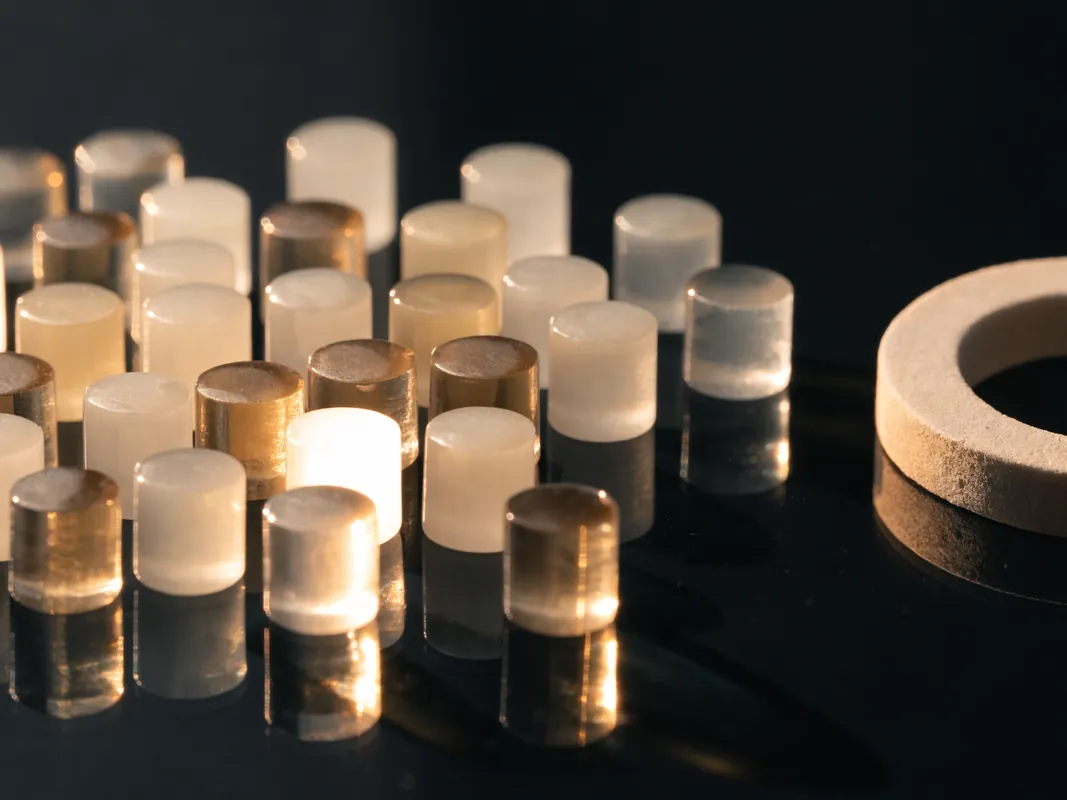
Lithium disilicate is a glass-ceramic category used in different forms and manufacturing workflows. A restoration may be pressed or milled and may be monolithic, characterised, cut back or combined with compatible veneering material according to the system. Each route has its own instructions, design limits and surface-treatment sequence.
Glass content allows surface-treatment and bonding strategies different from zirconia, but that does not mean every lithium-disilicate crown must use the same cement or that bonding can compensate for an inadequate design. The treating clinician should evaluate substrate, retention form, isolation, margin location, material thickness, curing access and the compatibility of ceramic primer, etchant, adhesive and resin cement where used. The exact instructions control sequence and timing; a generic internet protocol should not replace them.
Lithium disilicate can offer optical options, but natural appearance is not inherent in the material label. Shade selection, opacity, thickness, stump colour, cement shade, laboratory morphology, texture and finishing still matter. A poorly prescribed or manufactured glass-ceramic crown can look less natural than a well-planned zirconia crown.
Primary clinical research includes a randomised trial of reduced-thickness monolithic lithium-disilicate crowns in a selected population, indexed at [PubMed PMID 39036328](https://pubmed.ncbi.nlm.nih.gov/39036328/). It should be read as one defined trial, not permission to use its preparation dimensions for another product, tooth, substrate or patient. Minimum dimensions come from the current product instructions and clinician-owned design, not from copying a study abstract.
Standards classify materials; they do not select a crown
[ISO 6872:2024](https://www.iso.org/standard/81718.html) specifies requirements, recommendations and test methods for dental ceramic materials used in all-ceramic and metal-ceramic restorations and prostheses. It provides a materials standard, not a personal treatment recommendation. Ask the supplier or laboratory which current standard and classification are claimed and obtain supporting documentation where appropriate.
The American Dental Association's current [Materials for Indirect Restorations](https://www.ada.org/resources/ada-library/oral-health-topics/materials-for-indirect-restorations) resource describes multiple classes of ceramics and emphasises that many factors influence restoration failure, not only material. It summarises evidence but does not create a universal anterior-lithium-disilicate and posterior-zirconia rule.
Regulatory clearance or conformity also answers a limited question. An authorised device has specified intended uses and documentation. It does not prove that a particular crown design is indicated for a patient or that the provider followed the instructions. The EU [Medical Device Regulation](https://eur-lex.europa.eu/eli/reg/2017/745/2026-01-01/eng) establishes device obligations, including documentation and traceability concepts. Custom-made devices have their own documentation framework. Ask which entity is the manufacturer of the patient-specific restoration and what statement or device information is supplied under the applicable regime.
The United States Food and Drug Administration publishes public device records and clearance summaries through [AccessData](https://www.accessdata.fda.gov/scripts/cdrh/cfdocs/cfpmn/pmn.cfm). A clearance summary can help verify a named product's intended use and comparison basis, but clearance is not an outcome guarantee or a ranking. Use the regulator relevant to the product and treatment jurisdiction.
Preserve tooth structure before optimising ceramic
The biological cost of preparation deserves the same attention as ceramic performance. Ask the clinician to mark existing enamel, dentine, restorations, cracks, caries and unsupported structure. Ask how the proposed finish line and path of insertion affect tooth reduction. Ask whether a partial-coverage restoration can meet the goal, and why full coverage is preferred if it cannot.
Material minimums should be treated as constraints, not targets that always justify further drilling. The design must also account for occlusal anatomy, margin integrity, milling or pressing capability, connector requirements where relevant and space for optical masking. If available space is insufficient, choices may include changing material, changing design, adjusting the opposing restoration when clinically justified, orthodontic or restorative planning, or not proceeding. Removing more tooth should not be the automatic solution to a preselected ceramic.
For a vital tooth, discuss pulpal risk and sensitivity. For an endodontically treated tooth, discuss remaining structure, core and ferrule considerations. A post is not automatically required because a crown is planned, and a crown material does not repair an inadequate foundation. Those decisions require examination and imaging.
Margins should be chosen for biological and restorative reasons. Deep subgingival placement can complicate isolation, impressions or scanning, cement cleanup, periodontal health and later review. A cosmetic desire to hide a margin should be balanced against tissue and maintenance consequences. The crown should be designed around the patient, not the patient prepared to fit a sales category.
Available space and thickness are product-specific gates
No single thickness value can be published for all zirconia or all lithium-disilicate crowns. Minimum wall, occlusal, margin and connector dimensions vary by exact product, restoration type, manufacturing process, site and load. A laboratory may have internal manufacturing rules in addition to the device instructions. The prescription should identify which rule controls each critical dimension.
Measure space in the actual planned occlusion. A digital colour map may help a clinician and technician see thin areas, but it does not replace clinical evaluation. Record whether space was created by preparation, pre-existing tooth loss, altered vertical dimension or changes to the opposing arch. If a digital design automatically creates a thin spot or over-contour to avoid reduction, the team should resolve it before manufacture.
Over-contour is not a harmless way to avoid thickness limits. It can affect emergence, contacts, speech, occlusion and cleanability. Under-contour can also create functional or aesthetic problems. The laboratory prescription should define critical contours and the clinician should assess the provisional or try-in result where appropriate.
When a quote says minimal-prep zirconia or ultra-thin lithium disilicate, ask for the exact product indication, measured design and clinical reason. Marketing adjectives are not dimensions. If the design falls outside instructions, ask whether a different restoration or material is safer than relying on an unsupported exception.
Substrate colour and support change the optical plan
A crown is seen together with what lies beneath it. Natural dentine, enamel, a resin core, metal post, discoloured tooth, titanium abutment and tooth-coloured abutment reflect and absorb light differently. The preparation shade and photographs should reach the laboratory with the agreed shade objective.
The optical plan should describe value, chroma, hue, translucency, fluorescence where relevant, surface texture and neighbouring restorations. It should also describe the lighting and shade system used. Phone photographs can support communication but are affected by automatic processing, white balance, exposure and screen display. They should not be treated as an objective colour measurement by themselves.
More translucency is not universally more natural. A dark substrate may shine through. More opacity is not universally fake. It may be needed to control the background. Increasing ceramic thickness to mask a substrate may require more preparation; selecting a different opacity or foundation may preserve tissue. The clinician and laboratory should explain that trade-off before treatment.
For a single anterior crown, a diagnostic wax-up, provisional, try-in or laboratory communication visit may help define the objective. No stage guarantees an invisible match. Natural adjacent teeth vary across their surface and change under different light. Consent should describe the limits of ceramic and the possibility that remake discussions involve both clinical and laboratory judgement.
Shade, translucency and thickness must be discussed together
Shade selection after tooth dehydration, under coloured operatory lights or from an uncalibrated screen can mislead. Ask when and how shade records are made and whether the underlying tooth and neighbouring teeth are documented. If whitening is planned, sequence it before final shade commitment according to clinician-owned assessment because colour can change and tissues may need review.
Ceramic thickness influences both appearance and material behaviour. A thin high-translucency restoration over a dark substrate can look grey or low in value; an opaque restoration may require surface characterisation to avoid a flat appearance. Cement can influence the optical result in some systems, but it should not be used as a promise that a major mismatch can be corrected at final bonding.
Ask the laboratory to state the material variant, opacity or translucency level, shade, cut-back or layering plan and intended final thickness. Ask how these choices relate to the preparation-shade record. Keep the prescription and final device documentation. If the team changes the material or opacity after try-in, the patient should be told and the change recorded.
Aesthetic approval should occur while the restoration can still be changed without pretending that appearance can be judged independently of fit, occlusion and tissue response. A visual try-in does not authorise an incorrect margin or contact. Final consent covers the whole restoration, not only colour.
Preparation design belongs to the responsible clinician
Preparation geometry is not a generic recipe. The clinician must balance material requirements, retention, resistance, path of insertion, finish-line clarity, tooth preservation, pulpal health, periodontal tissues and laboratory production. The exact product instructions should be available before preparation begins.
Ask the clinician to explain:
- why full or partial coverage is proposed;
- how much sound enamel and dentine is expected to remain;
- whether the restoration relies on conventional retention, adhesive bonding or both;
- how finish-line design matches the material and manufacturing route;
- where critical thickness and occlusal-clearance checks are recorded;
- how sharp internal angles, unsupported ceramic or thin margins are avoided;
- how the scan or impression captures the finish line;
- what happens if caries, a crack or weak foundation is found during preparation;
- whether a provisional protects the tooth and preserves position and tissue;
- when a changed plan requires new consent and a revised quote.
A laboratory may flag design risks, but it does not diagnose or consent the patient. The clinician owns the final prescription and any decision to depart from ordinary instructions. A coordinator cannot approve extra reduction or substitute a material.
Bonding and cementation are clinician-owned protocols
Zirconia and lithium disilicate do not receive the same generic internal-surface treatment. Within each category, the exact product, contamination state, preparation, cement and manufacturer system matter. Incorrectly transferring an etching or priming step from one ceramic family to another can damage the surface or undermine retention.
The clinician should decide whether adhesive bonding, self-adhesive resin cement, conventional cementation or another indicated route fits the exact material and clinical situation. Retentive preparation form, enamel availability, dentine condition, moisture control, margin accessibility, restoration thickness and curing access influence that choice. No webpage can select the cement remotely.
Ask for the written product and cement systems, current instructions and the planned sequence for try-in, cleaning, conditioning, priming, cement application, seating, excess removal, curing and final inspection. Ask how contamination after try-in is managed. Product compatibility should be verified rather than assumed because two components are called universal.
Isolation matters. If the selected protocol requires a dry, controlled field that cannot be achieved at the margin, the team should reconsider the design, margin or cementation plan rather than proceed by hope. Cement cleanup matters around both teeth and implants. The final record should identify the material and cement used.
Bond strength is not the only goal. The crown must seat fully, maintain marginal integrity, preserve contacts and allow removal or repair decisions where relevant. A powerful adhesive cannot correct an inaccurate fit, inadequate design or unrecognised occlusal interference.
Laboratory prescription and digital workflow
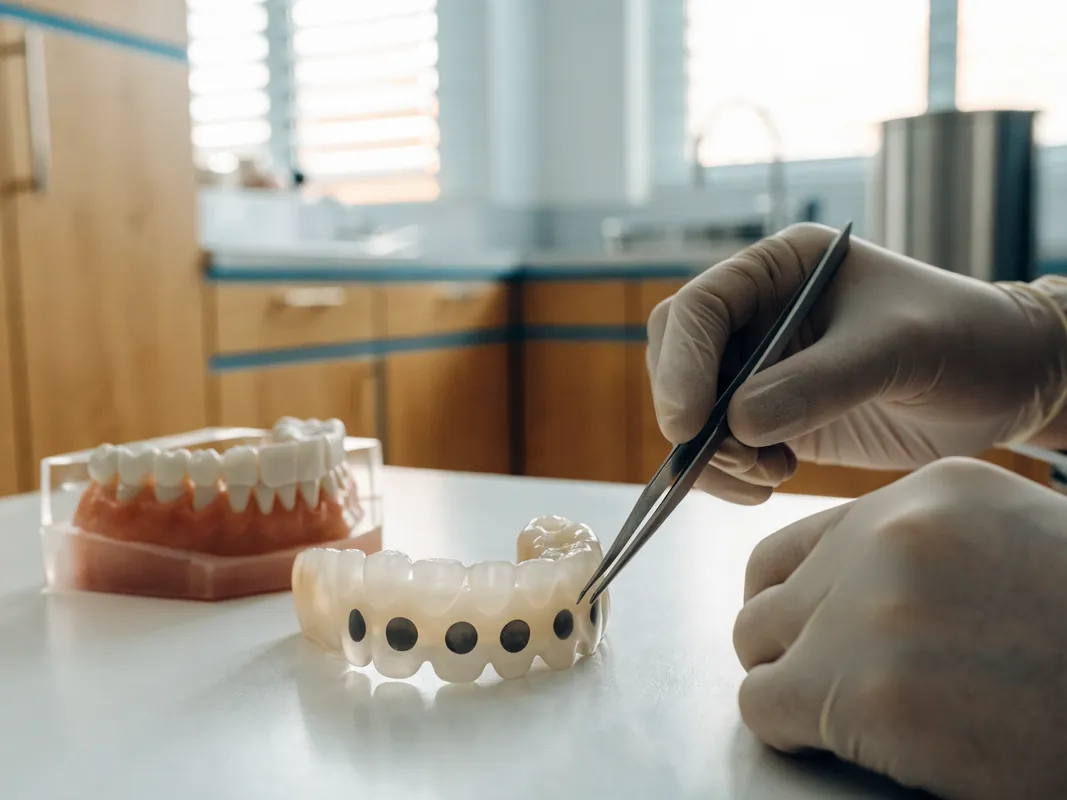
A good laboratory prescription translates clinical objectives into verifiable manufacturing instructions. It should name the patient, clinician, tooth or implant site, restoration type, material product and variant, shade and substrate, design constraints, margin, contacts, occlusion, surface texture, characterisation, retention or access details, and required documentation.
For a digital workflow, retain the scan date, scanner or file provenance where relevant, approved design version and communication about margin or clearance changes. A screenshot of a computer model is not proof that the margin was captured clinically. The clinician should inspect the preparation and approve the prescription.
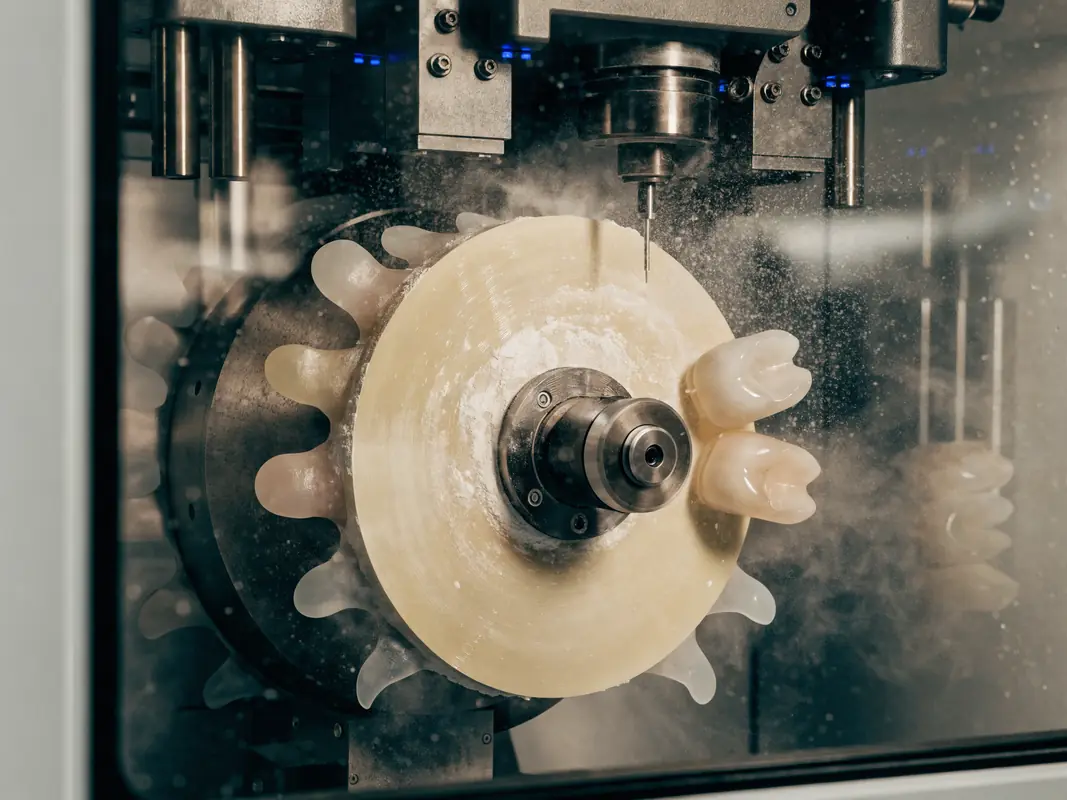
For zirconia, the lab record may include disc or blank identity, lot, position within a multilayer blank, enlargement or compensation settings, milling, colouring, sintering and final finishing according to the system. For lithium disilicate, the record may include block or ingot identity, lot, milling or pressing route, crystallisation or firing, cut-back or characterisation and final surface treatment. The required details depend on the actual product and local device rules.
Ask who performs each stage and who conducts quality control. In-house milling is not automatically better than an external laboratory, and external laboratory work is not automatically less controlled. The meaningful evidence is the named manufacturer, prescription, process record, inspection and ability to trace the finished restoration.
If a design is changed by the laboratory to satisfy manufacturing limits, the clinician should review it. A technician should not silently thicken a contact, alter a margin, switch material or move a screw channel when that changes clinical function or consent.
Material, batch and device traceability
Generic terms such as premium zirconia or original glass ceramic do not identify a device. Ask for the exact material manufacturer and product, lot or batch where available, shade or translucency designation, laboratory legal name, restoration date and device documentation supplied under the applicable jurisdiction.
Traceability helps if a future clinician needs to understand the crown, a product notice arises, a repair protocol is considered or a dispute requires evidence. It does not guarantee performance. A certificate bearing a logo should be checked against the laboratory and product documentation rather than accepted as proof by appearance.
For an implant crown, trace the implant, abutment, screw and restorative ceramic separately. The ceramic certificate does not identify the implant connection. For a natural-tooth crown, retain the core and cement details as well as the ceramic. For any added veneering or stain material, ask whether the lab record identifies the compatible system.
The EU Medical Device Regulation treats custom-made device documentation differently from standard UDI-labelled devices, so absence of a UDI does not by itself prove a custom crown is untraceable or unlawful. Ask for the correct statement and records for the jurisdiction. When treatment occurs in Türkiye, verify the healthcare facility through the current Ministry of Health [authorised-provider resource](https://saglikturizmi.saglik.gov.tr/EN%2C69063/healthcare-providers-authorized-by-the-ministry.html). Facility authorisation does not validate a material choice or individual result.
Provisional and final crowns are different decisions
A provisional restoration can protect a prepared tooth, maintain position, support tissue management, test contours or occlusion and communicate aesthetic changes. It is not necessarily a preview of the final ceramic's optical or mechanical behaviour. Ask what the provisional is meant to test and what cannot be inferred from it.
Record provisional material, cement, contacts, occlusion, tissue response and patient feedback. If the provisional reveals speech, cleaning, contour or bite problems, resolve the cause before copying it into the final design. If the preparation or treatment plan changes, update the scan, prescription, quote and consent.
A final crown should not be called permanent in a way that implies it cannot need maintenance, repair or replacement. Before cementation, the clinician should evaluate identity, fit, margins, contacts, occlusion, shade, contour and cleansability. Radiography may be considered where clinically indicated but is not a substitute for the full assessment.
The patient should understand the difference between try-in approval and final cementation. Aesthetic feedback matters, but consent is not a waiver of clinical responsibility. A signature saying satisfied does not prove fit or erase the right to raise a concern. Conversely, a later preference change is different from a documented defect; complaint and remedial terms should distinguish them fairly.
Opposing dentition and surface finishing
The restoration's antagonist should be documented before material selection. Record whether it is enamel, restored tooth, denture tooth, implant crown or another ceramic, and whether it has existing wear or roughness. Contacts should be evaluated in the patient's actual movements, not only on a static digital model.
Glaze, polish and chairside adjustment are not interchangeable words. A surface can lose its laboratory finish when adjusted. The exact material system should provide a finishing and polishing protocol. Ask what instruments and sequence are used and how the final surface is inspected. A restoration should not be left rough because the chosen material is marketed as wear friendly.
Published research on opposing wear has produced findings tied to specific materials, surfaces and study designs. Different trials should not be collapsed into a universal claim that zirconia wears enamel more or less than lithium disilicate. One trial may exclude bruxism, another may use a specific polish, and another may study artificial loading rather than patients. The correct response is patient-specific occlusal assessment and faithful surface protocol.
After cementation, recheck static and excursive contacts. If symptoms arise, do not assume the ceramic is the cause or adjust it remotely. A clinician should examine fit, occlusion, tooth, tissues, muscles and adjacent structures as appropriate.
Cleanability and tissue access
Cleanability depends more on contour, margin, contacts, emergence and patient access than on a simple zirconia-versus-lithium-disilicate label. A smooth surface is useful, but a bulky crown, deep margin, overclosed embrasure or excess cement can still create maintenance problems.
Ask the clinician to show how floss, interdental aids or other prescribed cleaning methods pass around the crown. For an implant crown, assess emergence contour and access around the implant, and identify whether the restoration is retrievable. For a bridge, cleaning requirements differ again and must be designed before manufacture.
Tissue bleeding, discomfort or food trapping should not be dismissed as adaptation without assessment. Ask who reviews the crown after placement and who can provide local care after travel. Maintenance instructions should fit the patient's dexterity, periodontal condition and restoration design.
The material surface can be polished, stained, glazed or layered according to system. Ask whether any functional or subgingival surface has been adjusted and how it was refinished. Laboratory polish does not eliminate the need for clinical cleanup and inspection.
Repair, adjustment and remake are cause-based
Not every chip, crack, debonding, colour concern or contact problem has the same remedy. First identify whether the issue involves ceramic, cement, tooth, implant component, occlusion, laboratory design, caries, trauma or patient preference. Remote photographs may document appearance but cannot reliably distinguish all causes.
Intraoral repair may be possible for selected defects using a product-specific protocol, but feasibility does not mean it is durable or appropriate. Ask whether the defect is accessible, whether load can be controlled, whether the internal cause remains, and whether repair would obstruct later removal. A polished adjustment may address a limited rough spot; it cannot correct a deep structural crack.
Remake decisions should consider the biological cost of removal. Cutting off a bonded glass-ceramic crown and removing a conventionally cemented zirconia crown can present different practical challenges, but exact difficulty depends on material, thickness, cement, visibility and remaining tooth. The clinician should explain removal risk before choosing the original design, especially on a heavily compromised tooth.
Obtain written remedial terms, but do not treat a warranty as a clinical outcome guarantee. Ask who assesses causation, what evidence is required, what clinical and laboratory work is included, what is excluded, and whether travel, local care or components are separate. The dental work warranty and guarantee guide explains how to test those terms without assuming free travel or automatic replacement.
Consent should compare complete systems
Valid consent is a continuing conversation, not a material checkbox. The patient should understand why a crown is proposed, reasonable alternatives, biological cost, material and design options, important uncertainties, appearance limits, maintenance, possible complications, provisional stages, costs and who provides aftercare.
The General Dental Council's [Principle 3](https://standards.gdc-uk.org/pages/principle3/principle3) requires GDC registrants to obtain valid consent, explain relevant options and possible costs, keep consent valid through treatment and document agreement when treatment or estimated cost changes. These standards apply to GDC registrants; they are a useful question framework for care elsewhere but do not certify an overseas provider.
Ask the clinician to explain why the selected exact zirconia or lithium-disilicate product fits the diagnosis and what evidence remains uncertain. Ask why another ceramic, metal-ceramic, direct or partial restoration, repair or no immediate treatment is not preferred. Ask how much tooth is removed under each option.
If appearance is important, record the objective and its limitations without phrases such as perfect match. If load is important, explain that material selection cannot eliminate biological or mechanical complications. If travel is involved, explain what can be assessed remotely and what requires a local examination.
Any switch of product family, opacity, support, retention method or material after preparation may change consent. Do not substitute a material merely because the laboratory lacks stock or a coordinator offers an upgrade. The clinician should explain and document the change before final manufacture or cementation.

Records and clinical ownership
The record should identify the clinician responsible for diagnosis, preparation, prescription, try-in, cementation and aftercare. If different clinicians perform stages, assign each role. The laboratory is responsible for manufacturing work under the prescription but does not replace the clinician's diagnostic responsibility.
The GDC's [Principle 4](https://standards.gdc-uk.org/pages/principle4/principle4) describes complete, accurate patient information and records for GDC registrants, including treatment and cost information. For a ceramic crown, a practical handover file can include examination and diagnosis, images, preparation and substrate record, scan or impression, laboratory prescription, design changes, material and lot details, shade information, provisional notes, cement, occlusion, final invoice and maintenance instructions.
Ask who holds the original files, how the patient can request them, what format images and scans use, and whether a local dentist can read them. A PDF marketing certificate is not the clinical record. Keep original exports where available rather than compressed screenshots.
The returning home after dental tourism guide lists discharge, component, medicine and escalation records to obtain. Use it before departure, not after a crown problem appears.
Itemised quote and change control
The quotation should separate assessment, imaging, foundation or core work, provisional crown, final crown, laboratory stages, material product, abutment or implant components, cementation, records, reviews and any non-clinical travel service. Contingent work should be labelled and priced separately rather than hidden inside a material upgrade.
Do not compare a zirconia total with a lithium-disilicate total until clinical scope is equivalent. One quote may include a core, provisional, cut-back, custom shade visit or implant abutment that the other excludes. A higher number does not prove superior material, and a lower number does not prove better value.
Agree what happens if the clinician changes the diagnosis, preparation exposes a new problem, the laboratory says the chosen design is outside instructions, shade cannot be achieved without extra reduction, or the patient declines the revised plan. Require a versioned plan, revised quote and renewed consent before non-urgent irreversible work.
The material line should use an exact product, not premium ceramic. Ask for any laboratory and device document included in the fee. Do not accept a fixed lifespan or manufacturer warranty as a substitute for itemisation. Costs of local assessment, maintenance, repair, remake and travel should not be assumed included.
Travel planning must follow clinical gates
Do not choose a ceramic because it is advertised as faster. Assessment, disease control, preparation, laboratory manufacture, provisional review, try-in, tissue response and final cementation may require different sequencing for different patients. A material can be milled or pressed quickly in a technical sense without proving that the tooth or tissues are ready.
The dental treatment timeline and visits guide explains how to plan around clinical gates rather than a guaranteed visit count. Ask which stages are provisional, what finding could delay finalisation, who authorises travel changes and what happens if a crown needs laboratory revision.
Before leaving home, identify a local dentist willing to assess symptoms, maintain the restoration and receive records. Do not assume a home dentist must repair overseas work or accept a foreign warranty. Confirm likely charges and access independently.
Travel insurance should not be assumed to cover planned dentistry, a ceramic remake, extra accommodation or a treatment-related problem. Verify the actual policy. A clinic's remedial terms should state whether travel is excluded. Clinical concerns should be assessed promptly even while payment responsibility is unresolved.
Local aftercare and escalation
After placement, obtain written instructions specific to the tooth or implant, cementation and occlusion. Ask how ordinary cleaning resumes, whether a clinician prescribed an appliance, when the named provider recommends review and what symptoms require local assessment. Do not follow a generic internet timetable in place of the treating clinician's instructions.
Sensitivity, pain on biting, looseness, movement, roughness, food trapping, tissue swelling, bleeding, altered bite, fracture or a visual change can have different causes. A photograph or message cannot rule out caries, pulpal disease, crack, cement failure, occlusal trauma, implant-component issue or tissue problem. Seek local clinical assessment when indicated.
The handover should name the overseas clinician, clinic, laboratory and material; include relevant images and final records; and give a clinical complaint route. Ask whether a local dentist may contact the treating clinician directly. A coordinator can transmit messages but should not diagnose or prescribe.
Emergency symptoms should use local emergency services. Financial or warranty approval should not delay urgent care. Preserve records and invoices for later discussion.
Red flags in a zirconia-versus-lithium-disilicate proposal
Pause when a proposal:
- declares a universal winner from tooth location alone;
- uses one strength number as an individual outcome forecast;
- calls all zirconia or all lithium disilicate identical;
- refuses to name the exact material product and laboratory;
- recommends crowns before documenting diagnosis and alternatives;
- removes healthy tooth to meet a preselected package design without explanation;
- claims a material is unbreakable, permanent or maintenance free;
- guarantees an invisible match or fixed lifespan;
- says bonding is always required or conventional cementation is always sufficient;
- copies a surface-treatment protocol between ceramic families;
- ignores substrate colour, available space, occlusion or opposing restorations;
- treats monolithic as proof that no added ceramic or finishing exists;
- substitutes a material after preparation without renewed consent;
- leaves adjustment rough or cannot describe the finishing protocol;
- combines crowns, travel and warranty into an unexplained total;
- withholds the laboratory prescription, batch information or final records;
- promises remote diagnosis or repair without examination;
- pressures the patient to approve colour while fit or occlusion remains unresolved.
A red flag is a reason to request evidence or an independent opinion, not proof of misconduct. The correct answer may be a revised design, another material, a more conservative restoration, local treatment or no treatment yet.
Questions for the clinician and laboratory
Send these questions before irreversible preparation:
- What diagnosis justifies a crown on this specific tooth or implant?
- Which tooth-preserving alternatives were considered?
- How much sound enamel and dentine is expected to remain?
- Is the support a natural tooth, core, post, abutment or implant component?
- What exact zirconia or lithium-disilicate product is proposed?
- Is that product indicated for this restoration design and site?
- What minimum dimensions and design rules apply under its current instructions?
- Does the available space meet those rules without unnecessary reduction or over-contour?
- What is the substrate colour and how is it recorded?
- What optical objective, opacity and translucency are prescribed?
- How were static and dynamic occlusion assessed?
- What opposes the crown and what is its surface condition?
- Is parafunction suspected and how does it affect the plan?
- What preparation and margin design is proposed, and why?
- Which cementation protocol is proposed and can isolation be achieved?
- How will try-in contamination and internal-surface treatment be managed?
- Who is the laboratory and who approves design changes?
- What lot, batch, blank, ingot or block records will be retained?
- Is any cut-back, veneering, stain or glaze present, especially in contact areas?
- How will chairside adjustments be polished and verified?
- What does the provisional test, and what does it not predict?
- What final records, invoice and device documentation will be supplied?
- Who owns local and cross-border aftercare?
- What are the repair, remake, complaint and travel-cost boundaries?
If the answers come only from a salesperson, ask for the named clinician and laboratory prescription. A treatment coordinator can organise communication but cannot own diagnosis, preparation or cementation.
Final material and design checklist
Before consenting to the crown, confirm:
- a tooth-by-tooth diagnosis and reason for coverage;
- reasonable alternatives and the no-treatment consequence;
- natural-tooth or implant support clearly identified;
- remaining tooth structure, substrate and margin documented;
- site, space, static contacts and excursions assessed;
- opposing dentition and parafunction considered;
- exact material product, variant and current instructions available;
- restoration type within the product indication;
- critical thickness and contour checked in the final design;
- shade, opacity, translucency and substrate plan recorded;
- preparation preserves tissue within clinical constraints;
- cement and internal-surface protocol are compatible and feasible;
- laboratory prescription, version and quality checks retained;
- lot or batch and custom-device documentation available;
- provisional and final stages distinguished;
- adjustment and polishing protocol defined;
- hygiene access and maintenance demonstrated;
- repair, removal and remake consequences explained;
- itemised quote and change-control process agreed;
- consent updated after any material or scope change;
- local aftercare, urgent care, complaints and records route established.
The decision is not zirconia versus lithium disilicate in isolation. It is one complete tooth-restoration-laboratory-maintenance system versus another, with the option of a more conservative plan or no irreversible treatment yet. The named clinician should be able to explain why the chosen system preserves tissue, fits the diagnosis, follows the exact product instructions and remains maintainable after the patient returns home.
Official and primary sources reviewed
These official, professional and primary-research sources were reviewed on 29 August 2026. Standards, device instructions, regulator lists and evidence can change. Recheck the exact material and current documents close to treatment.
- ISO, Dentistry — Ceramic materials, ISO 6872:2024: https://www.iso.org/standard/81718.html
- American Dental Association, Materials for Indirect Restorations: https://www.ada.org/resources/ada-library/oral-health-topics/materials-for-indirect-restorations
- NHS, Dental treatments and crown overview: https://www.nhs.uk/live-well/healthy-teeth-and-gums/dental-treatments/
- General Dental Council, Principle 3 — Obtain valid consent: https://standards.gdc-uk.org/pages/principle3/principle3
- General Dental Council, Principle 4 — Maintain and protect patients' information: https://standards.gdc-uk.org/pages/principle4/principle4
- General Dental Council, Going abroad for dental treatment: https://www.gdc-uk.org/standards-guidance/information-for-patients-public/going-abroad-for-dental-treatment
- EU Medical Device Regulation, consolidated text: https://eur-lex.europa.eu/eli/reg/2017/745/2026-01-01/eng
- US FDA, public premarket notification database: https://www.accessdata.fda.gov/scripts/cdrh/cfdocs/cfpmn/pmn.cfm
- Turkish Ministry of Health, authorised international healthcare providers: https://saglikturizmi.saglik.gov.tr/EN%2C69063/healthcare-providers-authorized-by-the-ministry.html
- Primary randomised study of polished monolithic zirconia and opposing enamel: https://pubmed.ncbi.nlm.nih.gov/29042241/
- Primary clinical study of zirconia formulations and opposing enamel: https://pubmed.ncbi.nlm.nih.gov/41547826/
- Primary randomised study of reduced-thickness monolithic lithium-disilicate crowns: https://pubmed.ncbi.nlm.nih.gov/39036328/
- Primary randomised study comparing ceramic crowns in extensive tooth wear: https://pubmed.ncbi.nlm.nih.gov/33303191/
- Primary split-mouth study of posterior implant-supported ceramic crowns: https://pubmed.ncbi.nlm.nih.gov/42387309/
No source above chooses a crown for an unseen patient. The source hierarchy supports verification: current product instructions for the exact device, clinician-owned diagnosis and consent, laboratory prescription and traceability, then evidence interpreted within its actual population and design.