People searching for veneers cost in Turkey often expect one per-tooth figure. That figure can be a starting unit for comparison, but it does not describe the care by itself. One quotation may refer only to a ceramic unit. Another may include assessment, diagnostic design, provisional care, laboratory work, fitting and review. A third may use the word veneer for a restoration that removes substantially more tooth structure than the patient expected. Those are not equivalent offers even when the same material name appears on each page.
This guide does not publish a live price band. A number without a named legal treatment provider, responsible clinician, identified tooth, assessment status and dated quotation would become stale and could describe the wrong product. The useful answer to the cost question is a way to define the per-tooth unit, identify every clinical and commercial assumption, compare like with like and understand which decisions remain provisional.
The focus here is one proposed veneer at a time. A whole-smile unit count, a total makeover package and the visual boundary of a smile are separate planning questions covered by the related Hollywood Smile guide. Implant replacement is also a different treatment intent and belongs in the implant cost guide. Keeping those questions separate prevents a headline package total from deciding what should happen to an individual tooth.
Begin with the tooth, not the sales unit
A quotation should identify each proposed tooth by an accepted tooth notation or an unambiguous written description. It should record the tooth's current condition, the concern being addressed, the proposed restoration and the reason that option was selected. A quantity with no tooth map cannot show whether the proposal preserves suitable teeth, mixes restoration types appropriately or includes work outside the visible concern.
The same per-tooth label may conceal different starting points. One tooth may be intact but discoloured. Another may contain a large restoration, have a fracture, sit outside the arch, show wear or require disease control before cosmetic care. The responsible clinician should explain whether a veneer remains suitable for that tooth and which alternatives were considered. A commercial category cannot make that decision.
Ask the provider to place a simple tooth schedule at the front of the quotation:
| Tooth-level question | What the written answer should show |
|---|---|
| Which tooth is proposed? | Tooth notation or an unambiguous position |
| What is the current condition? | Relevant examination finding and existing restoration status |
| What concern is being addressed? | Colour, shape, surface, space, wear or another stated concern |
| Why a veneer? | Case-specific reason and reasonable alternatives |
| What preparation is proposed? | Additive, minimal preparation or another documented design |
| Which material category is proposed? | Generic material description, not only a marketing label |
| What remains provisional? | Findings, design, shade, preparation, laboratory or schedule decisions still open |
| Who is responsible? | Named legal treatment provider and responsible clinician |
If a provider cannot connect the price to a specific tooth and written clinical reason, the unit price is not ready for comparison.
What a per-tooth quotation is actually pricing
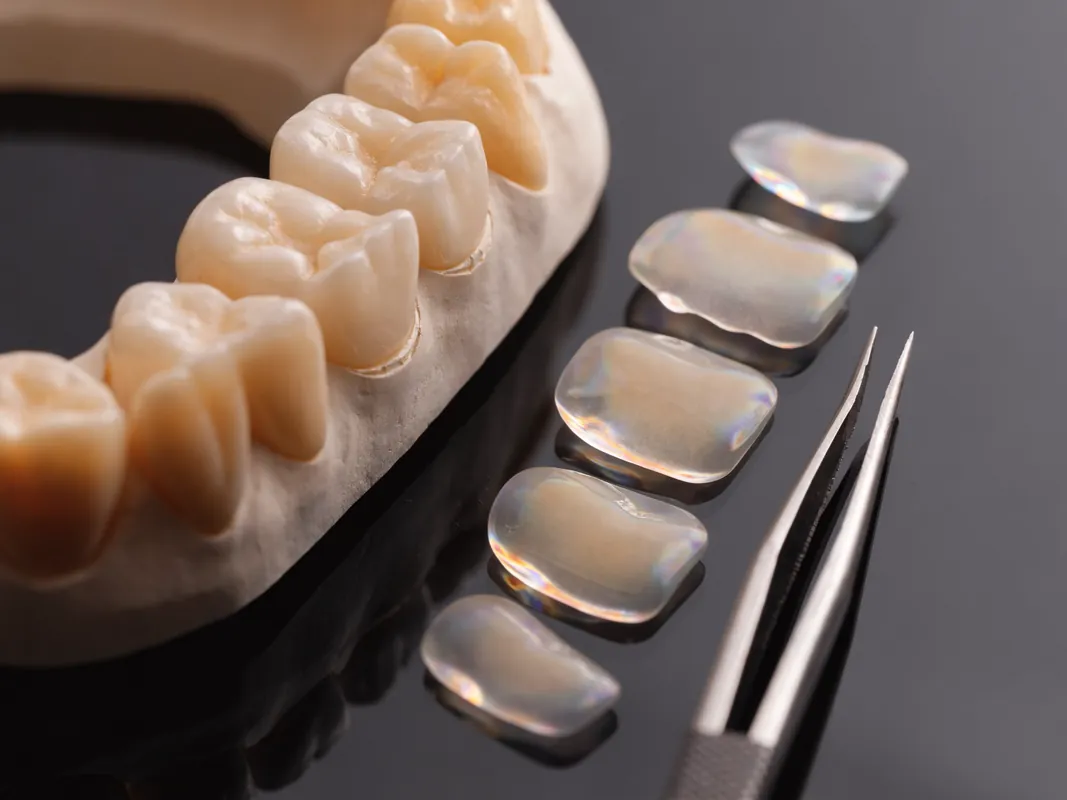
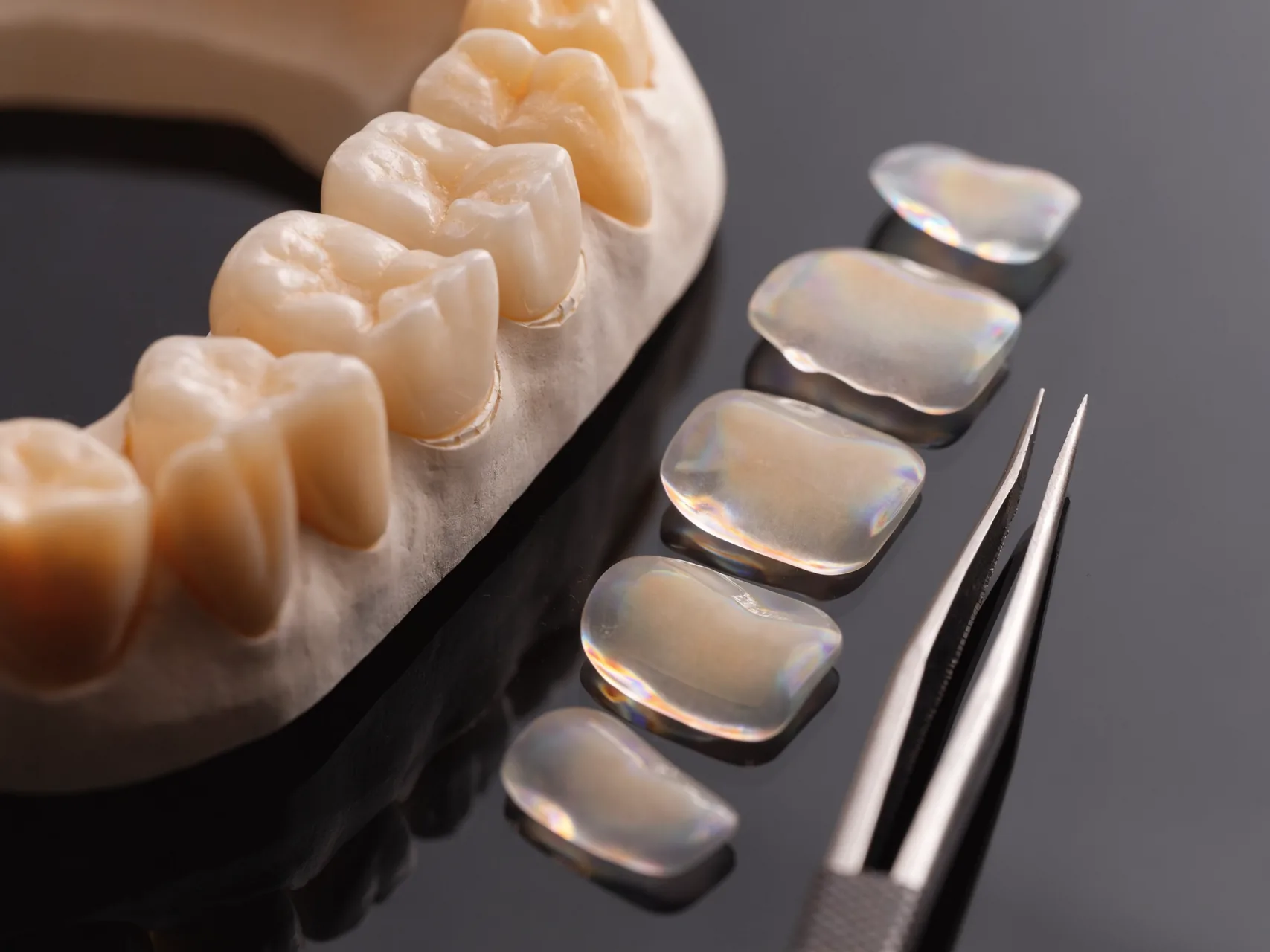
A veneer is a restoration attached primarily to the visible surface of a tooth. That description does not settle the amount of preparation, the material, the margin position, the laboratory method or whether another restoration would preserve more useful tooth structure. The quotation should therefore separate the physical restoration from the professional and laboratory stages that support it.
At minimum, ask whether the per-tooth line includes or excludes the following:
- assessment and review of relevant history;
- photographs, scans, impressions or other records requested for planning;
- diagnostic design, wax-up or equivalent design record where proposed;
- an intraoral preview or mock-up before irreversible preparation where appropriate;
- removal of old restorative material or management of decay, if required;
- the agreed tooth preparation and finishing of the margin;
- a provisional restoration where one is proposed;
- laboratory fabrication and any laboratory remakes authorised before fitting;
- try-in, shade and shape review before final acceptance;
- adhesive fitting, finishing and bite assessment;
- post-fitting review and access to clinical records;
- a case-specific maintenance and aftercare route.
Not every veneer plan needs every stage in the same form. The point is not to turn the list into a universal package. The point is to make the answer visible. Mark each item included, excluded, conditional or not applicable, and record who decides when a conditional item becomes necessary.
Assessment comes before a definitive price
An online message or photograph may support an initial conversation, but it does not replace an appropriate clinical assessment. The responsible clinician determines which examination and records are needed. The quotation should distinguish an early estimate from a clinician-reviewed provisional plan and from a final plan confirmed after the relevant findings are available.
A useful assessment may consider the condition of enamel, existing restorations, decay, cracks, gum health, tooth position, bite, wear, sensitivity, colour, previous treatment and the patient's ability to maintain the result. Medical and dental history can also affect the timing or suitability of elective care. This list is not a remote diagnosis; it is a prompt for what the responsible clinician may need to investigate.
Ask the following before treating a price as final:
- Which records were reviewed, and by whom?
- Has the tooth been examined directly?
- Which findings support a veneer rather than another option?
- Is active disease being managed first?
- Which part of the plan could change after further assessment?
- What evidence would trigger that change?
- Will a revised plan and price be issued before an irreversible step?
- Can the patient obtain copies of the records in a usable format?
A provisional label is honest when important information is missing. The risk is not uncertainty itself. The risk is hiding uncertainty behind a definitive-looking total.

Tooth preservation and the irreversible decision
Ceramic veneers commonly involve an irreversible decision because removed tooth tissue does not grow back. Even a conservative proposal needs a tooth-specific explanation. The provider should state whether the plan is additive, involves limited preparation or requires a different design, and should explain why that approach is suitable for the tooth.
Terms such as no-prep, minimal-prep and ultra-thin do not prove how much tissue will be removed. They are descriptions that need a clinical plan. Ask what is intended at the facial surface, edge, contact areas and margin; whether the design is expected to remain in enamel; and what could make the preparation change. A marketing photograph cannot answer those questions.
An additive design may be considered when space, shape and colour allow material to be added without creating an over-contoured restoration. That possibility must be assessed rather than assumed. A preview can help a patient discuss bulk, length, speech and appearance before preparation, but a preview is still a planning aid, not a guaranteed prediction of the fitted result.
The consent conversation should cover the permanence of preparation, reasonable alternatives, important case-specific risks, maintenance, the possibility of repair or replacement and what may happen if the patient later chooses not to continue. Consent should not be compressed by travel dates, deposits or a production schedule.
For a detailed explanation of preparation controversies and the difference between veneers and more extensive restorations, use the related Turkey Teeth guide. This page keeps its narrower role: connecting a per-tooth price to a documented tooth-preservation decision.
Material names do not make quotations equivalent
Common categories include direct composite, indirect composite, feldspathic ceramic and lithium-disilicate ceramic, sometimes described in searches by a familiar product name such as E.max. A category helps define the quotation but does not establish suitability, appearance, durability, workmanship or outcome.
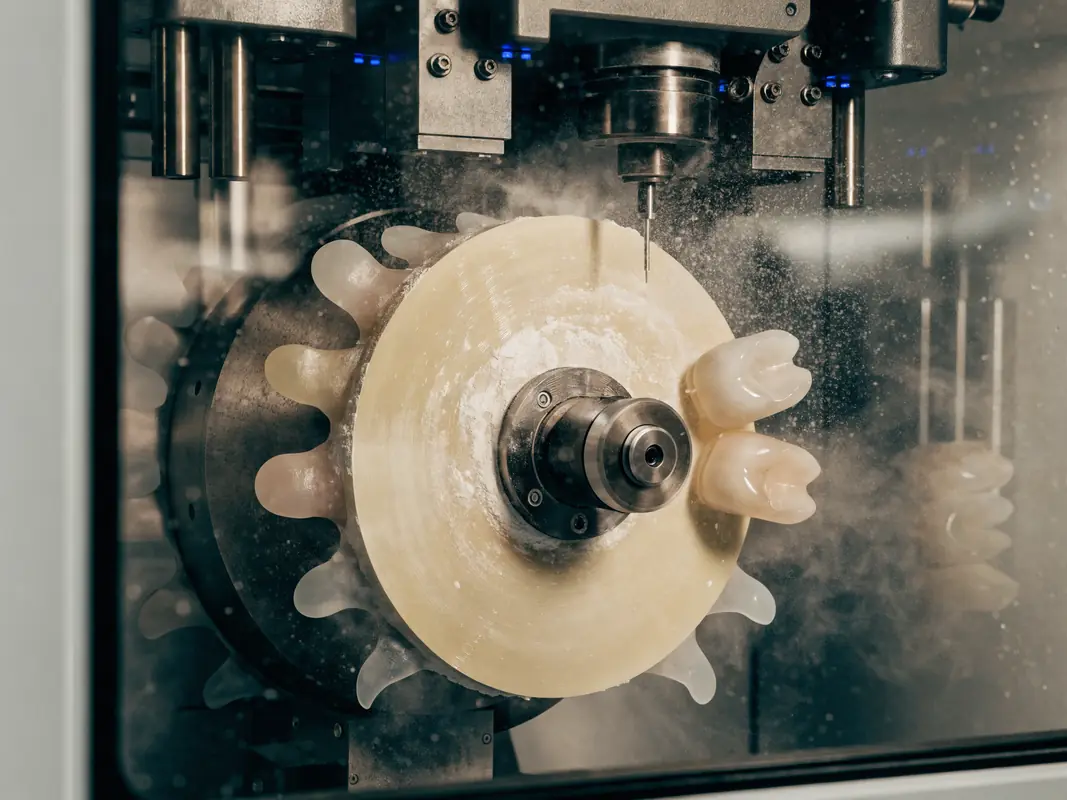
Direct composite is generally shaped on the tooth by the clinician. Indirect composite is fabricated outside the mouth before fitting. Ceramic restorations involve laboratory or manufacturing stages that can vary in design and finishing. The responsible clinician should explain why the proposed material fits the tooth, the preparation design, the bite, the desired maintenance route and other relevant findings.
Do not compare material labels alone. Ask each quotation to record:
- the generic material category and the exact proposed product only when known;
- whether the restoration is direct or laboratory-made;
- the responsible laboratory or fabricating party where relevant;
- the design and surface character requested for the tooth;
- whether the proposal is provisional pending preparation or laboratory review;
- which traceability or laboratory records will be supplied;
- how a repair or remake would be assessed;
- what maintenance information another clinician would need later.
Descriptions such as premium, natural, strongest or best are not specifications. A named material also does not prove that it will be used for the personal case. The dated treatment plan, laboratory prescription and supplied records should agree.
Veneer, bonding, whitening, orthodontic care, crown or no treatment
The best per-tooth comparison begins before the veneer is chosen. Depending on the concern and findings, reasonable alternatives may include no treatment, monitoring, professional cleaning, whitening, direct bonding, orthodontic movement, repair of an existing restoration, a different indirect restoration or a crown when the tooth has a separate structural need. The responsible clinician should explain the benefits, limits, risks and maintenance demands of the relevant options.
Whitening addresses colour rather than shape and does not require a veneer. Bonding may address selected shape, surface or space concerns and may preserve more tooth tissue in an appropriate case. Orthodontic care changes tooth position rather than disguising it with restoration thickness. A crown covers more of the tooth and should not be presented as an interchangeable cosmetic upgrade; it needs its own tooth-specific reason. No treatment is also a valid option when the concern is minor or the trade-off is not acceptable.
Mixed planning is normal. Different teeth can require different decisions. A quotation should not turn every visible tooth into the same restoration merely because identical units are easier to sell or present. Ask for the reason beside each tooth and request a second clinical opinion before removal of substantial healthy tissue.
Provisional design and definitive acceptance are separate
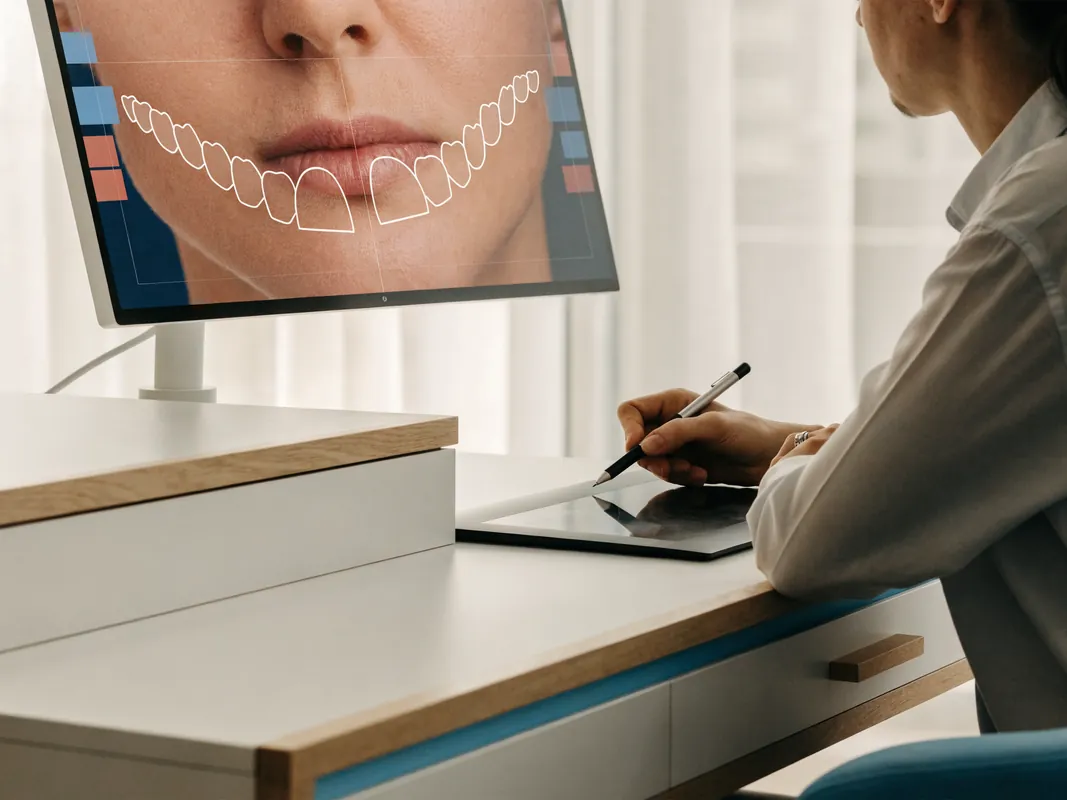
A digital design, wax-up, mock-up, provisional restoration and definitive veneer are different records or stages. A quotation should name the one being supplied and explain its purpose. A digital image can support discussion, but it does not establish fit, shade, tissue response, speech or bite. A mock-up can help evaluate proposed shape before preparation, but it remains a preview subject to clinical and technical limits.
When a provisional restoration is proposed, ask whether it is priced per tooth or as a separate stage, who makes it, what it is intended to protect, what limitations apply and what happens if it needs adjustment or replacement. Do not assume that provisional care is included merely because a definitive unit appears in the quotation.
Before definitive fitting, the patient should understand which aspects can still be reviewed and which changes would require a new laboratory stage or revised charge. Shade, surface, form, contact and bite decisions should be recorded in a way that avoids relying only on memory or informal messages. Acceptance should not be represented as a guarantee of a particular appearance or future service life.

Itemise exclusions and conditional costs
The following items may be relevant in some cases and not in others. Their presence here is not a clinical recommendation. It is a prompt to label them before travel or payment:
- examination, diagnostic records or repeat records;
- hygiene or management of active gum disease;
- treatment of decay, cracks, sensitivity or other disease;
- removal or repair of existing restorations;
- whitening or colour management outside the proposed tooth;
- orthodontic assessment or movement before restorative care;
- additional restorative work on neighbouring or opposing teeth;
- provisional care and authorised provisional repairs;
- laboratory design revisions or a remake before fitting;
- external-provider services where clinically proposed;
- prescribed medicines or other case-specific care;
- review, maintenance, repair or replacement after returning home;
- copies or transfer of clinical and laboratory records;
- taxes, payment-provider, finance or conversion charges;
- flights, accommodation, local transport and companion costs.
For each conditional item, ask for the trigger, evidence, decision-maker, alternative, price effect and approval process. A general package term should not authorise additions automatically. If the plan changes, the patient should receive an updated version before agreeing to the new stage.
Use a per-tooth quotation comparison worksheet
Create one column for each provider and copy only what appears in the dated documents. Do not fill gaps from advertisements or telephone conversations.
| Comparison field | Provider A | Provider B | Provider C |
|---|---|---|---|
| Legal treatment provider named | |||
| Responsible clinician named | |||
| Tooth identified | |||
| Current condition recorded | |||
| Veneer rationale documented | |||
| Alternatives discussed | |||
| Assessment status stated | |||
| Material category specified | |||
| Preparation design explained | |||
| Diagnostic design or preview identified | |||
| Provisional care identified | |||
| Laboratory responsibility identified | |||
| Definitive fitting and review described | |||
| Exclusions and change triggers listed | |||
| Payment and cancellation terms stated | |||
| Records and traceability supplied | |||
| Maintenance and aftercare route stated | |||
| Travel services contracted separately |
Only compare the per-tooth totals after the rows describe equivalent care. A lower figure may be a valid choice when the scope is deliberately smaller, but it should not be mistaken for the same restoration process at a discount. A blank row is a question to resolve.
Currency, payment and written change control
A quotation should state its billing currency, the entity receiving payment and the stage associated with each payment. If a conversion is shown, ask which figure controls the contract, when conversion occurs and which card, bank, finance or third-party charges remain outside the total. Keep receipts that identify the legal recipient and purpose.
Ask what a deposit reserves, when cancellation terms apply and what happens if the tooth is found unsuitable for the proposed veneer. The treatment provider, laboratory, coordinator and travel supplier may have different roles and terms. Payment to one entity should not be assumed to create a clinical obligation for another unless the written agreement makes that relationship clear.
Every material change should produce a revised treatment plan or quotation. The record should show the new finding, clinical reason, alternatives, removed or added items, price effect and patient decision. An appointment schedule is not permission to change the scope without informed agreement.
Records protect the patient and the future clinician
Ask what records will be supplied after each relevant stage. Useful records may include the named provider and clinician, treatment plan versions, consent, invoices, photographs or scans requested for care, the tooth schedule, preparation and material description, laboratory prescription, traceability information, fitting record, aftercare instructions and approved variations.
Those documents help another qualified provider understand what was proposed and what was actually supplied. They can support routine review, maintenance, a second opinion, a repair assessment or a complaint. A social-media chat should not be the only record of a material, tooth or payment decision.
Privacy also belongs in the comparison. Ask how photographs, scans and health information are collected, shared with a laboratory or another provider, retained and returned. Use the secure route identified by the responsible provider rather than sending sensitive records to an unverified account.
Aftercare and maintenance are not a warranty slogan
Veneers require case-specific cleaning, gum care, review and attention to changes in the bite or restoration. The responsible clinician should explain the maintenance route based on the material, margin, existing teeth and individual findings. A generic schedule should not be treated as a personal instruction.
Ask who handles routine questions, which signs require prompt local assessment, how an urgent concern is triaged, whether another qualified provider may review the tooth and how records are exchanged. The plan should also state who assesses a repair or remake and which clinical, laboratory, travel or external-provider costs remain the patient's responsibility.
Warranty language needs its own written document. Review the issuing legal entity, covered event, exclusions, maintenance duties, evidence required, remedy and travel responsibility. A written warranty does not guarantee clinical success, an aesthetic result, a fixed lifespan or reimbursement of every related cost. It should not replace a clear aftercare process.
Cross-border travel is separate from clinical quality
Travel can affect the practical cost even when it is not part of the clinical quotation. Ask which clinical stages require attendance and which plans remain subject to assessment or laboratory decisions. Keep flexibility around arrangements that have not been confirmed by the responsible provider.
Flights, accommodation, local transport, companion expenses and time away should be identified separately. If a travel service is offered, request the named supplier, exact service, amendment rules, cancellation terms and payment recipient. A hotel category, vehicle image or hospitality description does not prove clinical quality or a personal allocation.
After returning home, an assessment by a local clinician may be appropriate for an urgent concern. The original plan should explain how information is shared, who reviews it and what happens if return travel is not practical. Avoid relying on a vague promise that someone will always be available.
Red flags in a veneer quotation
- A total is published without a named legal provider, responsible clinician or assessment boundary.
- The quotation lists a quantity but does not identify the proposed teeth.
- Every visible tooth receives the same restoration without a tooth-specific reason.
- Preparation is described only with a marketing term and not documented for the individual tooth.
- Removal of healthy tooth tissue is presented as reversible.
- A definitive plan is issued before the relevant clinical assessment.
- A material logo substitutes for a personal material specification or traceability record.
- A digital image is presented as a guaranteed final appearance.
- Alternatives such as no treatment, whitening, bonding or orthodontic care are dismissed without explanation.
- A veneer and a crown are treated as interchangeable sales units.
- Provisional care, laboratory stages, fitting or review are assumed but not written.
- Conditional care has no trigger, price effect or approval process.
- A fixed timetable, outcome, service life or universal suitability is promised.
- Warranty wording hides exclusions or makes the patient pay every route to a remedy.
- Travel hospitality is used as evidence of treatment quality.
- Aftercare is only an informal messaging promise with no responsible provider or records process.
Decision checklist before paying
Use this final check for each proposed tooth:
- The tooth and current condition are identified.
- The named legal treatment provider and responsible clinician are written.
- The assessment status and missing information are clear.
- The reason for a veneer is connected to a case-specific finding.
- Reasonable alternatives and no treatment have been discussed.
- The preparation design and irreversible boundary are understood.
- The material category and laboratory responsibility are recorded.
- Diagnostic design, mock-up and provisional stages are labelled accurately.
- The definitive fitting and approval process are described.
- Inclusions, exclusions and conditional items are itemised.
- Currency, payment, cancellation and change-control terms are written.
- Clinical, laboratory and traceability records will be supplied.
- Maintenance, urgent assessment and aftercare responsibilities are clear.
- Travel arrangements are separate from clinical claims.
- No decision depends on an unsupported result, timing or longevity promise.
If any answer is missing, request a revised document rather than guessing. A careful provider may need more information before completing it. That is preferable to a fast total built on unspoken assumptions.
The responsible answer to a per-tooth cost search
There is no honest universal per-tooth veneer price detached from the tooth, provider and plan. The comparable number is the total for one identified tooth after the quotation describes the assessment, rationale, material category, preparation design, clinical and laboratory stages, exclusions, records and aftercare.
Use the Hollywood Smile cost guide for whole-smile unit counts and total makeover package questions. Use the implant cost guide when a tooth may not be restorable and replacement is being discussed. Use the Turkey Teeth guide for a deeper preparation-versus-crown decision. This division keeps each page useful and stops a package headline from overriding tooth-specific care.
The final choice should rest on a named provider's dated written plan after appropriate assessment. Compare documents, preserve suitable tooth structure, keep alternatives visible and resolve every blank before payment. The safest per-tooth quotation is not the one making the largest promise. It is the one that shows exactly which tooth is being treated, why, by whom, with what boundaries and how responsibility continues afterwards.