Vegan and vegetarian patients do not form one clinical category. Some avoid all animal-derived ingredients as far as practicable; some eat dairy or eggs; some follow a plant-based diet for health without a broader ethical commitment; and some have religious, cultural, environmental, allergy or personal requirements that overlap but are not identical. A respectful implant consultation asks the individual what matters rather than assigning a standard “vegan protocol.”
Material origin, animal testing, medicine excipients and diet during recovery can all matter. None can be answered safely by a logo or a statement that an entire product class is vegan. Formulations, suppliers, processing aids, packaging and regulatory requirements may change. The responsible clinicians should identify clinically necessary products, verify current information from the manufacturer or authorised product documents where possible, explain uncertainty and compare workable alternatives.
This guide is educational. It does not prescribe a diet or supplement, certify a product, diagnose deficiency, decide that grafting is needed or choose a fixture. For cross-border care, identify the legal treatment provider, named clinicians, pharmacy or prescriber, laboratory and product manufacturer responsible for each answer. A coordinator may transfer documents but cannot provide clinical clearance, verify an ingredient from memory or approve a substitution.
Ask the person what vegan or vegetarian means to them
Start with an open question: which ingredients, sources, processes or practices do you want to avoid, and which compromises would you consider if a clinically necessary alternative is unavailable? Do not assume that every vegetarian accepts eggs, dairy, fish, collagen, human-donor tissue or animal testing. Do not assume that every vegan makes the same decision about prescribed medicine.
The [Vegan Society's medicine guidance](https://www.vegansociety.com/resources/nutrition-and-health/medications) explains veganism as avoiding animal use as far as possible and practicable, while recognising that a necessary medicine may have no fully vegan alternative. This is a values framework, not a prescribing rule. The decision belongs to the patient in discussion with the prescriber and pharmacist, informed by clinical need and exact product information.
Record priorities separately. Ingredient origin, animal testing, donor source, allergy, religious permissibility, environmental preference and nutritional health are different questions. A synthetic product may still have been tested using animals; an animal-free final formulation may involve manufacturing information the clinic does not possess; an allergy question requires medical assessment rather than an ethical label. Combining them into “vegan safe” can mislead.
Ethical, religious and cultural preferences must remain distinct
Vegan, vegetarian, halal, kosher, donor-tissue, blood-product and environmental concerns can overlap, but one label cannot answer another. A patient may accept a prescribed medicine under a practicability principle but decline an elective animal-derived graft. Another may accept their own blood product while declining human-donor tissue. Someone else may need advice from a faith authority as well as product information from the manufacturer. The clinician should record the person's decision, not invent a universal rule for a community.
Ask which issues are absolute, which are preferences, which depend on clinical necessity and which require more information. Keep allergy and intolerance fields medically accurate. An ethical objection should not be entered as an allergy merely to make software display a warning; that can mislead future prescribers. Conversely, a documented allergy cannot be treated as only a lifestyle preference.
Uncertainty needs its own category. A manufacturer may confirm the listed composition of a finished product without certifying every processing aid, upstream supplier or historical test. The patient may decide that this evidence is sufficient, request another product, seek a second opinion, defer or decline. The clinician should explain clinical consequences without ridicule or pressure.
Consent should also address emergencies. Urgent control of bleeding, infection or another serious problem may limit the time or products available for verification. Discuss foreseeable contingencies in advance where possible, while making clear that emergency care should not be delayed for a supply-chain investigation. Respect for values and proportionate clinical safety belong in the same plan.
Diet identity is not a diagnosis or risk score
A well-planned vegan diet can supply nutritional needs. The NHS [vegan diet guidance](https://www.nhs.uk/live-well/eat-well/how-to-eat-a-balanced-diet/the-vegan-diet/) states that a varied and balanced diet using fortified foods and supplements where appropriate can provide required nutrients. It also identifies nutrients that need attention in planning, including vitamin B12, vitamin D, calcium, iron, iodine and selenium. That guidance does not say every vegan is deficient.
Do not order tests or supplements solely from the diet label. Ask about actual food intake, recent unplanned weight change, appetite, restrictive eating, gastrointestinal disease, diagnosed deficiency, anaemia, bone disease, previous healing, medicines and other conditions. When history or symptoms raise a concern, the appropriate medical clinician or registered dietitian should decide whether assessment is needed and interpret results.
Vegetarian and omnivorous patients can also have nutritional deficiencies. Conversely, a vegan patient may have well-documented adequate intake and no clinical concern. Avoid stereotyping or using food choices to blame the patient for a complication. The dental clinician should focus on information relevant to the proposed procedure and involve usual healthcare professionals for medical or nutritional questions outside dental scope.
Oral health and restorability come before nutrition assumptions
The main implant questions are dental. Record caries, cracks, pulpal and apical disease, periodontal probing and support, plaque control, mucosal health, occlusion, parafunction, smoking or nicotine exposure, diabetes, dry mouth, tooth prognosis and the ability to clean the proposed restoration. A dietary identity cannot compensate for active periodontitis, an uncleanable bridge or an implant placed outside a restorable position.
If a tooth remains, obtain a tooth-specific restorability assessment before extraction. The record should explain remaining sound structure, fracture or decay, periodontal support, endodontic options, strategic value and the likely maintenance of preserving it. Comparing a natural tooth described by “success” with an implant described only by “survival” is misleading. Both pathways can need further treatment, and extraction is irreversible.
For a missing tooth, ask whether replacement is necessary now. Depending on function, adjacent and opposing teeth, anatomy and preference, reasonable choices may include observation, orthodontic space management, an adhesive or conventional bridge, a removable partial denture, an implant-supported option or another staged plan. Several missing teeth do not automatically require one implant for every space, and extensive tooth loss does not automatically justify clearing an arch.
Oral-health findings may also change material priorities. A synthetic graft does not solve poor plaque control, and a ceramic fixture does not make peri-implant maintenance optional. The restoration should permit demonstrated daily cleaning and professional assessment. If the patient cannot maintain the proposed design, compare a simpler or removable option rather than blaming dietary identity later.
Healing evidence does not justify a blanket vegan rule
Healing depends on the procedure, tissue, infection control, periodontal health, blood supply, smoking or nicotine, medical conditions, medicines, oral hygiene, nutrition and aftercare. Research isolating “vegan diet” from these factors is limited and often concerns procedures other than dental implants.
A 2025 [scoping review of vegan and vegetarian diets and wound healing](https://pubmed.ncbi.nlm.nih.gov/39900723/) included only a small number of heterogeneous studies, mostly in dermatological procedures. Its findings should not be converted into an implant forecast or a claim that diet identity causes poor healing. A 2013 [evidence review of diet and periodontal or implant surgery](https://pubmed.ncbi.nlm.nih.gov/23802022/) discusses potential roles of nutrients but does not establish a universal supplement protocol.
The responsible approach is individual assessment. If a patient has a diagnosed deficiency, unintended weight loss, malabsorption, eating difficulty or another medical concern, coordinate with the appropriate professional. Do not delay or approve implant surgery based on a menu label alone, and do not sell supplement packages as a guarantee of integration.
Preserve natural teeth before comparing implant materials
An ethical material preference should not obscure the first clinical question: does the tooth need removal, and can it be restored? The AAE [position statement on implants](https://www.aae.org/specialty/wp-content/uploads/sites/2/2019/04/Implants_PositionStatement_v2.pdf) supports preserving restorable natural teeth where reasonable rather than treating extraction and implantation as inherently preferable.
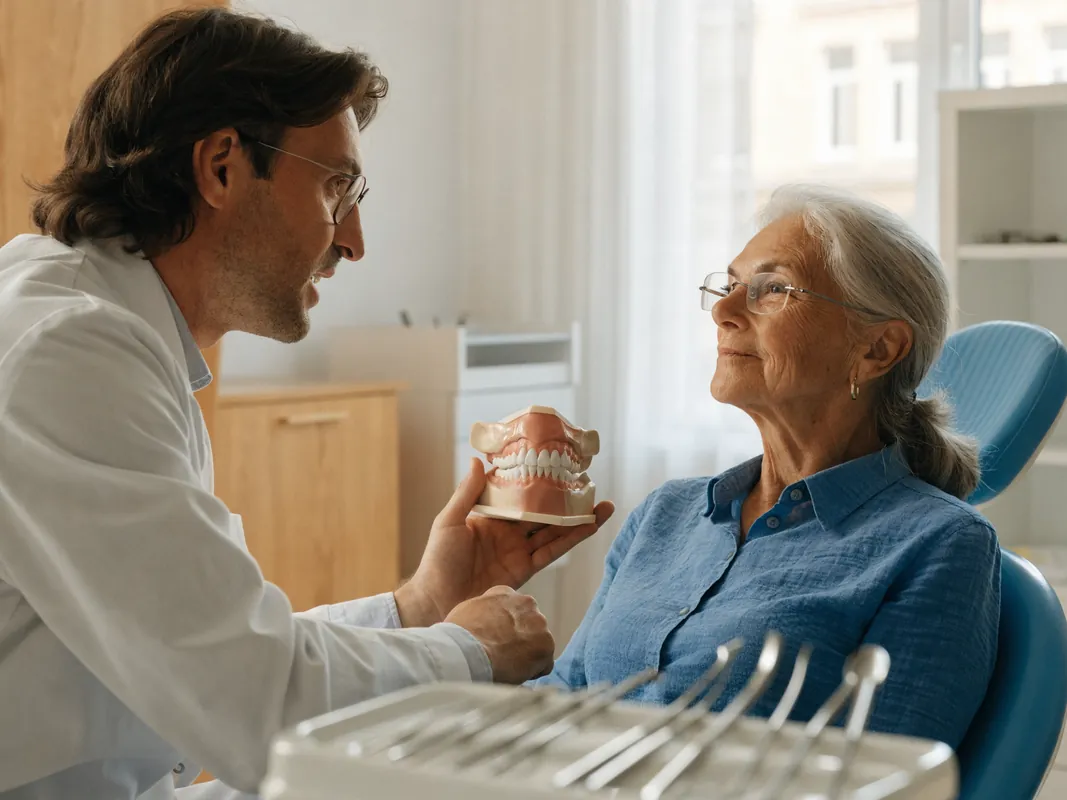
Ask for the diagnosis, prognosis and relevant specialist opinion. Alternatives may include restorative or root-canal treatment, periodontal care, leaving a space, an adhesive bridge, a conventional bridge, a removable prosthesis, orthodontic management, deferral or no treatment. Each option may involve different materials, medicines and maintenance. Values-informed consent applies to all options, not only implants.
If the proposed tooth is hopeless after proper assessment, ask whether immediate replacement, delayed replacement or no implant is appropriate and why. The desire to avoid an animal-derived graft should not be used to pressure the patient into a fixture position that compromises restoration or cleaning.
Bone grafting is not automatically part of implant treatment
Some implant sites do not require augmentation. Others may have insufficient bone for the intended fixture and restoration, but the defect, objective and alternatives must be defined. Ask whether changing implant position, using a different prosthetic option, retaining a tooth, accepting a removable solution or deferring treatment could avoid grafting. “Every implant needs bone graft” is not a responsible rule.
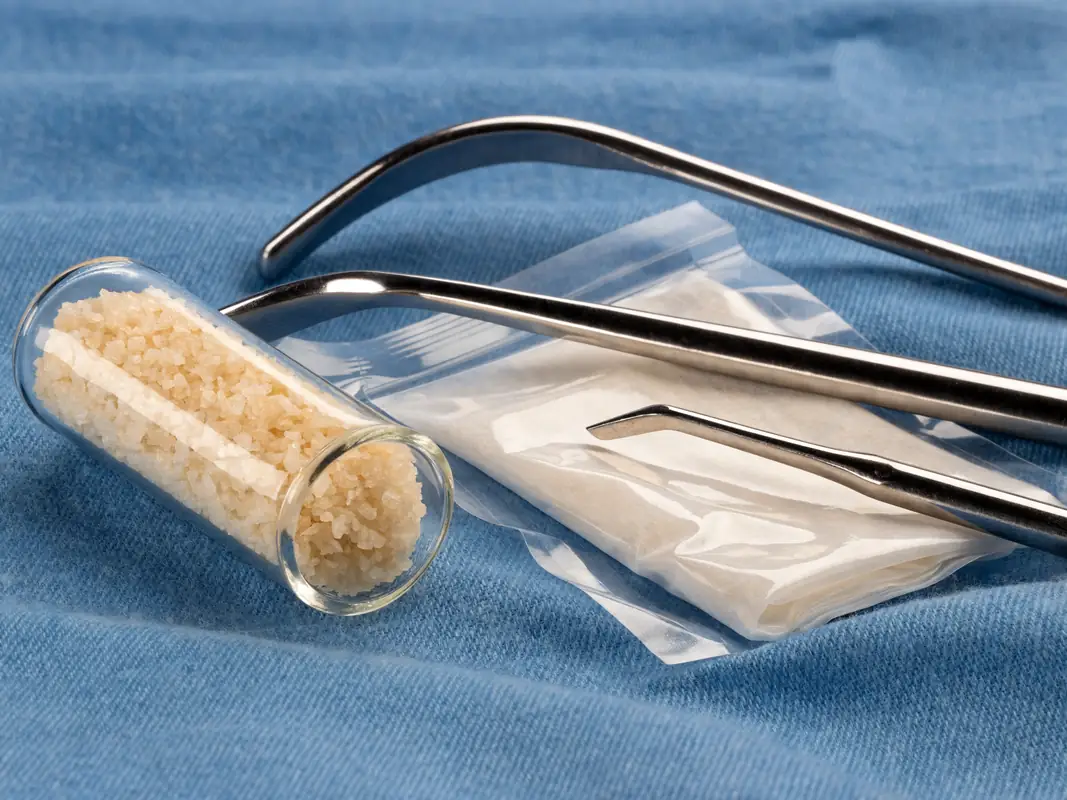
When grafting is proposed, ask what problem it addresses, the expected role of the material, the source, exact product, membrane or barrier, fixation, contingency and what happens if the site differs from the scan. Product classes include autogenous tissue from the patient, human-donor allografts, animal-derived xenografts and synthetic or alloplastic materials. These categories describe origin broadly; they do not establish suitability or the full composition of a commercial product.
The review of [bone grafts and substitutes in dentistry](https://pubmed.ncbi.nlm.nih.gov/34070157/) describes natural and synthetic categories, differing properties and unresolved development needs. A [systematic review of biomaterial selection for bone augmentation](https://pmc.ncbi.nlm.nih.gov/articles/PMC6474167/) demonstrates the diversity of clinical studies and materials. Neither supports a website rule that one category is equivalent or superior for every defect.
Verify graft origin at product level
Terms such as collagen, mineral, hydroxyapatite, tricalcium phosphate, bioactive glass or membrane do not fully identify source or manufacture. Hydroxyapatite can be synthetic or derived from biological sources. Collagen is commonly animal-derived, but the exact species and processing need confirmation. A product called synthetic may contain carriers, binders, coatings or packaging components that are not evident from the category name.
Request the manufacturer, commercial name, catalogue reference and current instructions or composition statement. Ask explicitly whether the product contains animal-derived, human-donor or patient-derived material and whether processing aids are disclosed. If the manufacturer does not provide an answer, record the uncertainty rather than converting silence into certification.
Autogenous bone comes from the patient and does not introduce a donor species, but harvesting adds another surgical site and morbidity. Some vegans may accept their own tissue while others may have concerns about the broader process. Human-donor material raises distinct ethical, consent, screening and traceability questions. No one should tell the patient what their values require.
Synthetic does not mean universally interchangeable
Alloplastic materials vary in chemistry, porosity, particle size, resorption, handling and clinical indication. A material appropriate for one contained defect may not fulfil the same role in another augmentation. The clinician should explain why the proposed product fits the actual defect and what evidence applies, rather than saying “synthetic works the same.”
The evidence base often compares techniques, mixtures and defect types that are difficult to generalise. A newer 2026 review of [bone graft categories](https://pubmed.ncbi.nlm.nih.gov/41711003/) describes selected indications in which modern alloplasts can be useful while also stating that ideal material choice remains controversial. It does not support a universal hierarchy.
If the patient's preferred material is not clinically reasonable in the proposed plan, the discussion should not end with pressure to accept an animal-derived product. Alternatives can include a different technique, another experienced opinion, a non-implant restoration, deferral or no treatment. The clinician should explain trade-offs and uncertainty without claiming that a values-based choice necessarily worsens outcome.
Membranes, sutures and haemostatic products need separate checks
A synthetic graft does not make the rest of a procedure animal-free. Barrier membranes may be collagen-based, synthetic resorbable polymers, non-resorbable materials or other products. Sutures, haemostatic agents, wound dressings and regenerative additives may have different sources. Some are planned; others are contingencies used to manage an intraoperative finding.
Ask the clinic to create a material schedule before consent: expected product, purpose, source, evidence, alternative, and whether an unplanned substitution may occur. If an emergency or safety need could require a product that conflicts with the patient's preference, discuss that possibility and the consent approach in advance. The patient should know what can be declined and what consequences follow.
Avoid category-wide promises. “Resorbable” does not mean animal-derived, and “non-resorbable” does not mean animal-free. “PRF” or platelet concentrate is derived from the patient's own blood, which may be acceptable to some people and not relevant to others; it also does not replace every graft or membrane. The individual decides the ethical significance while the clinician explains the clinical role.
Implant fixtures and restorative components require traceability
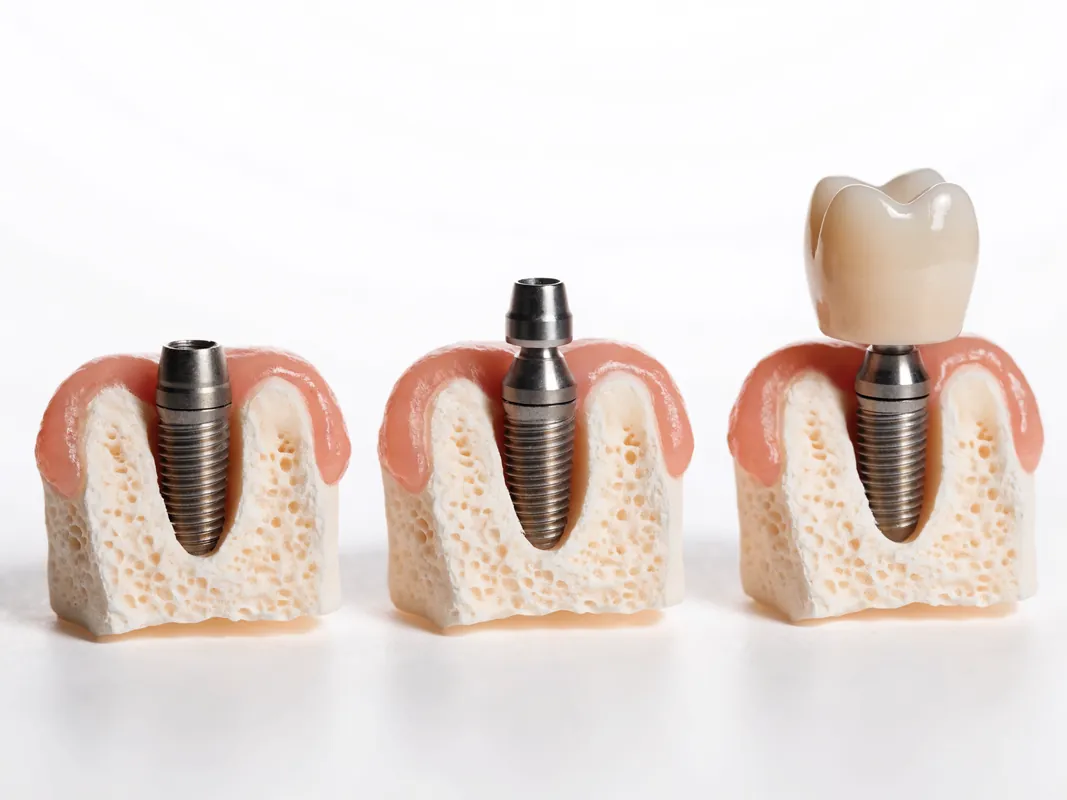
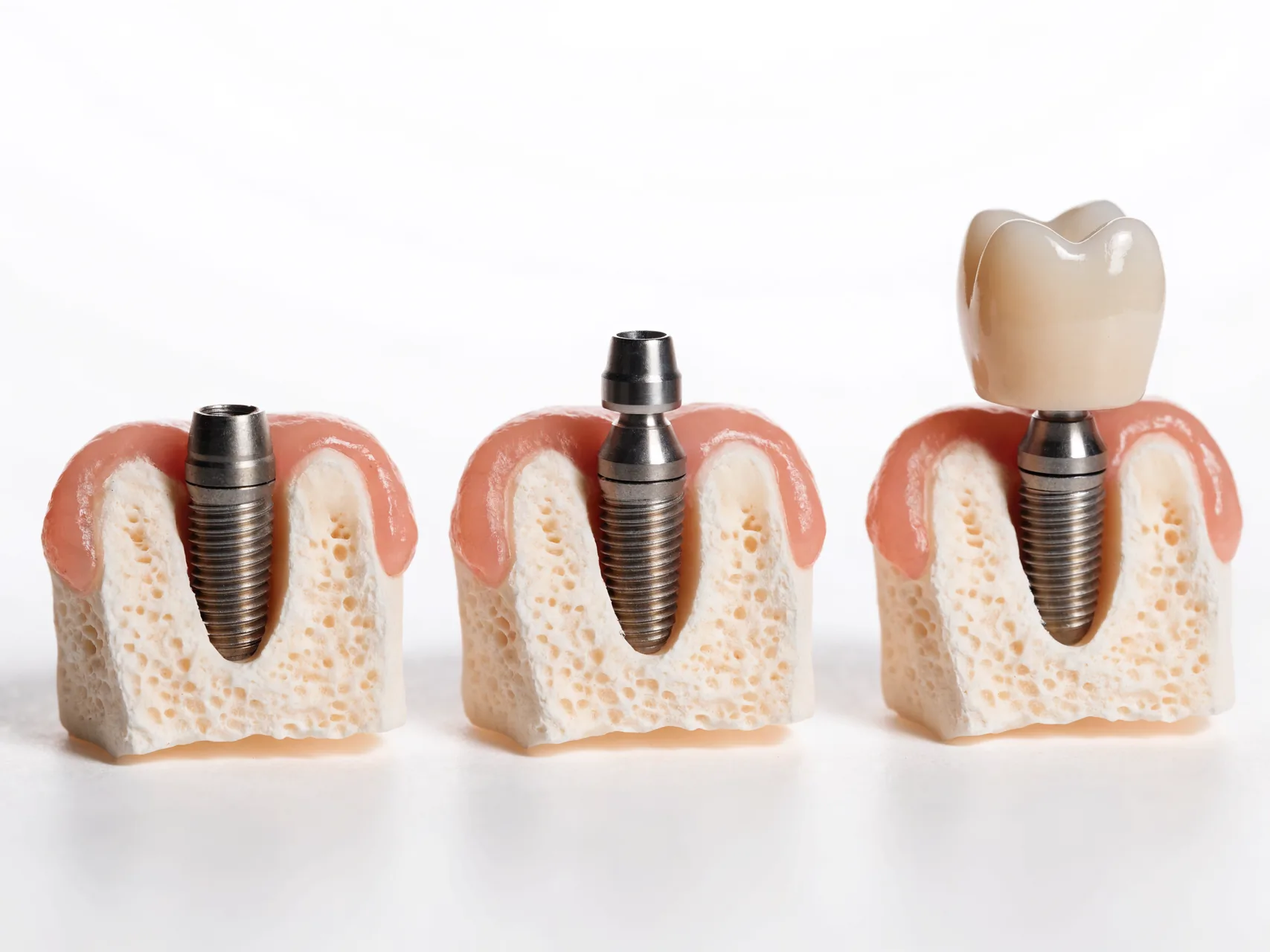
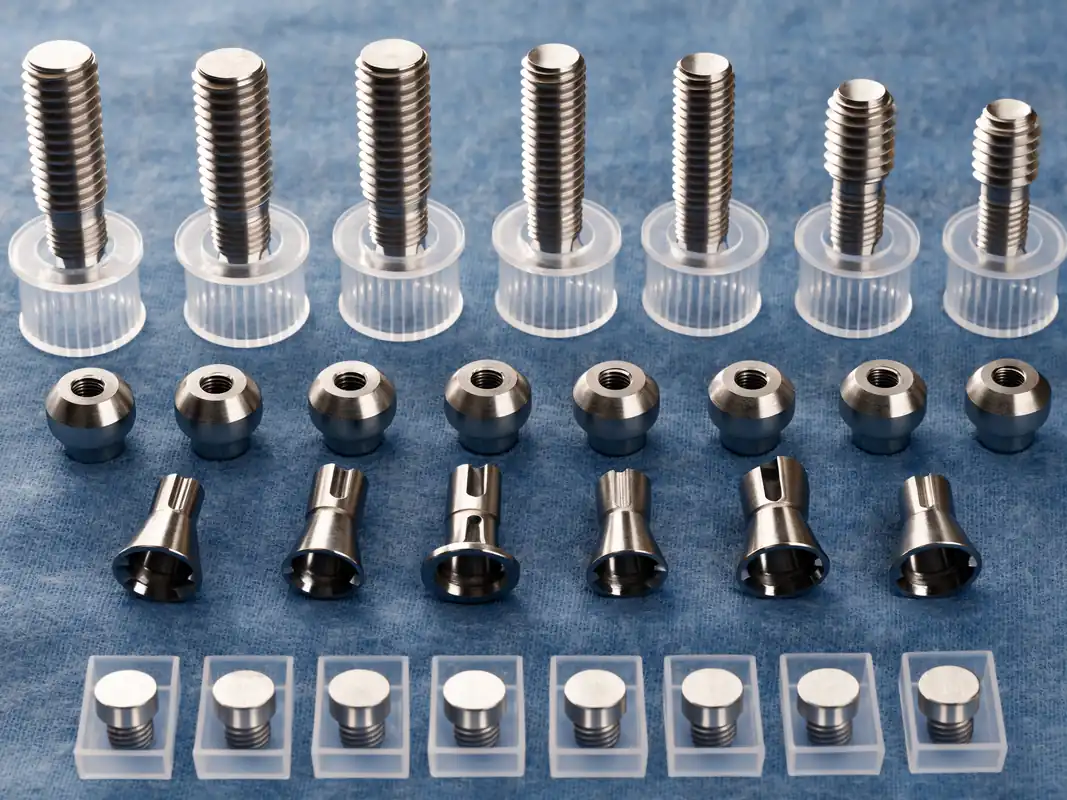
Implant fixtures are commonly made from titanium or ceramic materials, but that broad statement cannot certify a product's entire supply chain or testing history. Surface treatments, packaging, cleaning, abutments, screws, frameworks, temporary resins, crowns, bonding agents and cements are separate. A ceramic crown over a titanium implant is not a fully ceramic system.
Ask for current manufacturer documentation for the exact fixture and all permanent components. If animal testing is a concern, ask the manufacturer a specific question and recognise that medical devices may have historical or regulatory testing that cannot be reduced to final-product ingredients. Do not infer a policy from a reseller's badge or an outdated web page.
Traceability records after placement should include manufacturer, product and lot identifiers, abutment and screw, graft and membrane where used, and laboratory materials. This helps later clinical care as well as values verification. A brand name alone does not show what was placed.
Titanium, zirconia and restoration materials have evidence limits
Titanium and zirconia are material families, not complete ethical or clinical descriptions. Titanium fixtures can differ in grade, alloy, surface, connection and packaging. Zirconia fixtures can differ in composition, manufacturing, one- or two-piece design, available dimensions and restorative connection. The abutment, screw, framework, veneering, cement, temporary restoration and laboratory products may use other materials regardless of the fixture category.
A request for a ceramic implant should be treated as a preference requiring anatomical and restorative assessment, not as an instruction that evidence proves superiority. Comparative systematic reviews are limited by the number and type of studied systems, follow-up and patient selection. They do not establish that zirconia is universally more biocompatible, more ethical, maintenance-free or appropriate for every site. Likewise, long use of titanium does not certify an animal-free supply chain or make it the only acceptable option.
Ask the clinician to explain the actual implant-restoration system: intended tooth position, bone and soft tissue, connection, restorative space, load, hygiene access, retrievability, component availability, repair route and the evidence relevant to that product. If the preferred fixture cannot support a safe, maintainable restoration, choices include a different implant system, a bridge, removable prosthesis, tooth preservation, deferral or no treatment. Pressure to accept another material is not the only alternative.
The laboratory record matters as much as the fixture passport. Request the framework and crown material, manufacturer or product identity where available, cement or screw retention, temporary materials and statement or prescription documentation. “Metal-free smile” and “vegan ceramic” are marketing phrases unless the exact components and the limits of verification are stated.
Medicines should be checked by exact formulation
Medicine active ingredients and excipients can vary by manufacturer, strength, dosage form and country. Capsules may use gelatin or non-gelatin shells; tablets and liquids may contain lactose, stearates, colourings, flavourings or other excipients with sources that are not obvious. An ingredient name does not always disclose its manufacturing origin.
The MHRA service for [medicine product information](https://www.gov.uk/guidance/find-product-information-about-medicines) allows patients and professionals to find summaries of product characteristics and patient information leaflets for authorised UK medicines. These documents identify ingredients but may not answer every supply-chain question. A pharmacist can contact the manufacturer where necessary and can explain whether a clinically suitable alternative formulation exists.
Do not stop, skip, reduce or replace prescribed medicine because an ingredient conflicts with a preference. The Vegan Society also advises discussing necessary medicine with the prescriber or pharmacist. A different product may have different effectiveness, dose, interactions, availability or safety. The patient's health decision should remain informed and voluntary.
Dental prescribing must remain clinically owned
Antibiotics, analgesics, antiseptics, anaesthetics and sedation are not automatically necessary for every implant procedure, and no one formulation suits everyone. The named prescriber should decide whether a medicine is indicated after assessing the procedure, infection, medical history, allergies, other medicines and current guidance. Ethical preferences should be recorded before prescribing so options can be checked without delaying urgent care.
Ask for the generic and commercial name, strength, dosage form, manufacturer, patient leaflet and purpose of each proposed product. If an exact animal-free formulation cannot be confirmed or is unavailable, the prescriber should explain the clinical alternatives and consequences. The patient can then make a values-informed choice; a coordinator cannot promise substitution.
An allergy is different from a vegan preference. Suspected allergy requires a clinical history and appropriate medical assessment. Avoiding an animal-derived excipient for ethical reasons does not mean the patient is allergic to it, and the record should not mislabel the concern.
Medicines, supplements and interactions need full disclosure
Give the prescriber and dentist a complete list of prescribed medicines, over-the-counter products, vitamins, minerals, herbal preparations, protein powders and other supplements, including dose or formulation where known. “Natural” or plant-derived does not mean interaction-free. Some products can affect bleeding, sedation, glucose, blood pressure or another aspect of perioperative care, while stopping a prescribed medicine can create harm.
The purpose of disclosure is assessment, not automatic cancellation. The named prescriber decides whether a medicine is needed and whether another formulation is clinically acceptable. A pharmacist can check the current patient leaflet, summary of product characteristics and manufacturer information. If the source of an excipient remains unknown, record that uncertainty; do not substitute a product from an internet list without checking strength, route, interactions and authorisation in the country of treatment.
Supplements should not be sold as an implant-integration package. A diagnosed deficiency may need treatment through the appropriate medical pathway, but a screening result and a bottle do not establish surgical readiness. Excess intake can also be inappropriate, and the required formulation may itself raise source questions. The clinician or dietitian should distinguish routine nutrition guidance, investigation of symptoms and treatment of a confirmed condition.
Before travel, carry medicines in labelled packaging, enough supply for a reasonable contingency and the relevant prescription or documentation. Confirm entry and airline requirements. Do not alter doses to fit fasting, sedation, a flight or a clinic timetable without the professional responsible for the actual medicine and procedure.
Impression materials, cements and temporary products also matter
Implant treatment may involve impression materials, bite-registration products, disinfectants, temporary filling or crown materials, acrylic or composite resins, cements, polishing agents and laboratory processes. Product composition can change, and some proprietary formulations do not disclose every processing aid publicly.
Ask which products remain permanently in the mouth and which have transient contact. Prioritise verification based on the patient's concerns and the clinical relevance. It may be practical to obtain written manufacturer information for permanent components and prescribed medicines while documenting uncertainty for minor processing aids. The patient should decide what level of information is sufficient for consent.
Do not describe all resin cements, ceramics, impression materials or mouthwashes as vegan. Even if the listed ingredients are animal-free, testing history or upstream processing may be unknown. A truthful answer can be “the current manufacturer statement confirms these listed ingredients but does not certify the whole supply chain.”
Nutrition assessment should be individual and non-judgmental
Ask about the patient's usual eating pattern and how they will meet energy, protein and fluid needs during the period when chewing may be limited. The goal is not to require animal products or a branded shake. Plant-based soft foods can be planned around the clinician's texture and hygiene instructions, allergies, diabetes, kidney disease, gastrointestinal conditions and personal preferences.
Examples of textures—not prescriptions—might include blended pulses, tofu, smooth nut or seed products where safe, fortified plant drinks, soups, mashed foods and other familiar meals. Sugary or acidic drinks can affect oral health, while seeds or particles may be unsuitable around some surgical sites until the clinician advises otherwise. Ask for procedure-specific guidance.
If there is recent weight loss, low appetite, a very restricted diet, known deficiency, anaemia, malabsorption, eating disorder, frailty or difficulty obtaining food, involve the appropriate medical clinician or registered dietitian before elective surgery. Do not self-prescribe high-dose vitamins, minerals or herbal products; supplements can have side effects or interactions and may not correct an undiagnosed cause.
Protein, iron, B12, vitamin D and calcium are questions, not a protocol
Protein is relevant to general nutrition, but an implant page cannot calculate a universal recovery target. Requirements and suitable sources depend on overall intake, body size, kidney or liver disease, diabetes, allergies, appetite, procedure and the advice of the responsible health professional. Ask how normal intake will continue when chewing is limited and whether a registered dietitian is needed for recent weight loss, frailty, malabsorption or another focused concern. A branded shake is not proof of adequacy and may contain ingredients, sweeteners or minerals that do not fit the individual.
Iron status cannot be inferred from avoiding meat. Plant foods can provide iron, while absorption and total intake vary; omnivorous people can also be deficient. Fatigue, breathlessness, pallor, bleeding history, gastrointestinal symptoms or a previous diagnosis needs the ordinary medical pathway. The dentist should not diagnose anaemia from appearance or order a fixed “vegan panel” for every patient. A medical clinician interprets symptoms and tests and decides treatment.
Vitamin B12 deserves planned attention in a vegan diet, but the NHS does not turn dietary identity into one implant threshold. NHS guidance explains that diagnosis uses symptoms and blood tests and may involve a dietitian when dietary insufficiency is suspected. The cause matters because malabsorption, pernicious anaemia and low intake are not interchangeable. Do not start a high-dose product simply to meet a surgery date or assume a normal-looking result answers every symptom.
Vitamin D and calcium relate to wider bone and health questions, yet neither a supplement nor one blood value maps an implant site. The clinician still needs dental examination and justified imaging for local bone, roots, sinus or nerve anatomy. A GP or appropriate medical professional decides whether investigation or treatment is indicated. The 2026 scoping review of dietary factors and implant osseointegration found a heterogeneous clinical literature dominated by vitamin D research and limited evidence for many other nutrients; it does not support a universal supplement bundle or outcome forecast.
The safe boundary is simple: ask about actual intake and health, investigate only when clinically justified, treat diagnosed problems through the right professional and keep the implant decision based on oral disease, anatomy, restoration and maintenance as well as general health.
Recovery food planning is part of travel safety
Travelling for treatment can disrupt familiar foods. Confirm that accommodation and nearby shops can provide suitable meals, but do not treat a hotel statement as medical or ethical certification. A kitchen may share utensils; a “vegetarian” soup may use animal stock; a supplement may have an unfamiliar formulation. The individual can decide which level of cross-contact matters to them.
Carry labelled medicines and a list of suitable foods or products. If the planned procedure may affect chewing, ask how long texture modification is expected and what findings change the advice; there is no universal diet timeline. Build flexibility for an extended stay and know how to obtain food if swelling or an unexpected review changes the itinerary.
Hydration and adequate intake matter, but postoperative nausea, persistent vomiting or inability to drink needs clinical assessment. A diet preference should never be used to normalise dehydration or delayed care.
Staged treatment protects both clinical and ethical choice
Examination, extraction, grafting, implant placement, provisional restoration, functional loading and definitive restoration are separate decision gates. The initial material schedule should label products as confirmed, likely or contingency items. A remote quotation cannot know every intraoperative finding, and a consent form should not grant unlimited authority to use “whatever is needed” in elective care.
Before treatment, ask what happens if the site has less bone than expected, a planned no-graft approach is not feasible, primary stability is inadequate for the proposed provisional, or the agreed material is unavailable. Options may include another verified product, altered implant position, a staged graft, removable temporary, bridge or denture, deferral, further assessment or stopping. The clinical and financial consequences of those branches should be explained before flights and deposits remove practical choice.
Loading is a biomechanical decision, not a dietary privilege. An attached provisional is not necessarily in functional contact and is not the definitive restoration. Age, vegan identity, protein intake or a named supplement cannot guarantee an immediate or fixed timeline. The clinician should state the criteria for moving to the next stage and renew consent if anatomy, material, cost or treatment burden changes.
After each stage, records should show the exact products and lots actually used, substitutions, medicines, findings, instructions and review criteria. If an urgent safety need required a product that could not be verified in advance, document why, what was used and what information remains outstanding. Transparency after a necessary change is better than retroactive certification.
Consent should name values and uncertainty
The General Dental Council's [Principle 1](https://standards.gdc-uk.org/pages/principle1/principle1) asks UK professionals to listen and respect patient preferences and values. [Principle 3](https://standards.gdc-uk.org/pages/principle3/principle3) requires discussion of relevant options, risks, benefits and costs and continuing consent. These standards are useful benchmarks for questions, not proof that an overseas provider is regulated by the GDC.
Consent should record what the patient wishes to avoid; exact products checked; sources and manufacturer statements; remaining uncertainty; clinically reasonable alternatives; implications of declining a material or medicine; substitution rules; and the right to pause or refuse. The clinician should not frame acceptance of an animal-derived product as the price of being a “good patient.”
If the plan changes after examination—for example, an unanticipated graft or membrane is proposed—obtain the product details, rationale, alternatives, costs and fresh consent before non-urgent use. A generic signature agreeing to “materials as needed” does not show an informed values discussion.
Keep an itemised product and cost schedule
The written quotation should separate examination, imaging, tooth-preserving treatment, extraction, implant surgery, possible graft and membrane, temporary replacement, fixture, abutment, definitive restoration, laboratory work, medicines, reviews and records. Mark which products are confirmed, provisional or contingent. List non-clinical travel services separately.
Ask what happens if a preferred material or medicine is unavailable, whether an alternative costs more, and who authorises substitution. A price premium does not prove vegan status, clinical superiority or complete supply-chain disclosure. Compare actual product documents and clinician responsibility rather than labels.
Commercial warranty language does not guarantee healing or prove ethical compliance. Check maintenance requirements, exclusions, remedy, complaint route and whether local care is reimbursed. Keep invoices and traceability records.

Records should preserve the informed choice
The GDC's [Principle 4](https://standards.gdc-uk.org/pages/principle4/principle4) describes accurate records and secure information handling. The treatment record should include the patient's stated preferences, allergies kept distinct from ethical choices, relevant nutrition or medical information, materials discussed, manufacturer documents reviewed, alternatives, questions, decisions and consent to any substitutions.
After care, request procedure notes; fixture, abutment and screw identifiers; graft, membrane, suture and haemostatic products where relevant; restoration and laboratory materials; medicines and exact formulations; images; aftercare; maintenance; urgent contacts; invoice and complaint route. If the source of a product could not be verified, that should remain documented rather than retroactively described as certified.
Records allow local clinicians and pharmacists to understand what was used and help the patient make future choices. A photo of packaging can supplement but not replace the formal procedure and lot record.
Travel should not force an ethical compromise
The GDC [going-abroad guidance](https://www.gdc-uk.org/standards-guidance/information-for-patients-public/going-abroad-for-dental-treatment) and NHS [treatment-abroad checklist](https://www.nhs.uk/using-the-nhs/healthcare-abroad/going-abroad-for-treatment/treatment-abroad-checklist/) encourage verification of provider, plan, cost, complications, recovery, records, insurance and aftercare. Complete material discussions before buying inflexible travel where possible.
Ask whether product documents are available in a language you understand, whether the proposed item is stocked, what happens if the clinical findings require another material, and whether postponement is allowed without pressure. Local treatment may offer easier access to manufacturers, pharmacies and long-term review; it should remain a genuine option.
There is no universal flight interval for an implant or graft procedure. The named clinician should give advice after considering the actual intervention, bleeding, swelling, infection, medicines, sinus or nerve issues, review needs and complications. Dietary identity does not shorten or lengthen that decision by itself.
Local aftercare and product serviceability
Identify a local dentist willing to monitor the implant and restoration before travel. If nutrition or medicine issues require usual-care follow-up, keep contact with the GP, dietitian, pharmacist or specialist. The destination provider should be able to share original product and clinical records directly with them.
Aftercare instructions should cover hygiene, food texture, medicines, expected symptoms, review and warning signs for the actual procedure. Review intervals are individual. Ask how a local dentist can obtain compatible components and whether the restoration can be removed or repaired without destroying it.
Do not assume a local clinician will certify ethical status or repair an unfamiliar system. Their role is clinical assessment and care based on available records. Manufacturer questions may need to return to the producer or authorised distributor.
Red flags in “vegan dental implant” marketing
Pause if a provider says every titanium implant, ceramic crown or resin cement is automatically vegan; certifies an entire procedure without exact product documents; claims all synthetic grafts are equivalent; says animal-derived grafts are always superior; assumes every vegan is deficient; prescribes supplements from the diet label; or promises a fully animal-free supply chain it cannot evidence.
Other warnings include hiding human-donor or animal source behind brand names, no substitution consent, no medicine formulation check, no discussion of non-implant alternatives, pressure to accept a product against stated values, an expensive “vegan package” without itemisation, and no local aftercare or traceability.
Be cautious when ethical preference is recorded as allergy to simplify paperwork. That can distort future care. Be equally cautious when staff mock or dismiss a preference. Respectful consent can acknowledge uncertainty and clinical constraints without making false promises.
Urgent and emergency boundaries
Seek prompt local dental assessment for worsening swelling or pain, discharge, fever, uncontrolled bleeding, a loose implant or restoration, new or worsening numbness, persistent vomiting, inability to drink, or difficulty eating enough to follow the recovery plan. A preference should not delay assessment of infection, dehydration or another complication.
Breathing or swallowing difficulty, rapidly spreading swelling, severe bleeding or serious systemic illness requires emergency medical help. For people in England, NHS guidance explains [urgent and emergency dental access](https://www.nhs.uk/nhs-services/dentists/how-to-find-an-nhs-dentist-in-an-emergency/). Necessary urgent treatment may involve products that cannot be fully verified in advance; discuss preferences when possible without delaying lifesaving care.
Questions for a values-aware clinical team
- Which ingredients, sources, tests or processes have I said I want to avoid?
- Is the tooth restorable, and what non-implant options exist?
- Is grafting necessary, what defect is being treated and can it be avoided?
- What is the exact graft, membrane, suture and haemostatic product?
- Is it patient-derived, human-donor, animal-derived, synthetic or uncertain?
- What current manufacturer documentation supports that answer?
- What fixture, abutment, screw, crown, framework and cement are proposed?
- Which medicine formulations may be needed and who verifies them?
- What alternatives exist if a preferred product is unsuitable or unavailable?
- What evidence applies to the actual defect rather than the material category?
- Are nutrition questions based on my history rather than an assumption?
- What product substitutions require new consent?
- Which costs and contingencies are itemised?
- What traceability record and local handover will I receive?
- Who provides urgent and routine care after travel?
Vegan and vegetarian implant-planning checklist
Preferences and clinical need
- Define individual values without assuming one vegan or vegetarian standard.
- Keep ethical preferences, allergies, religion and nutrition as separate questions.
- Preserve restorable teeth and compare non-implant choices.
Materials
- Ask whether augmentation is necessary before choosing a graft.
- Verify exact graft, membrane, implant, abutment, restoration and cement.
- Use current manufacturer documents and record unresolved uncertainty.
- Agree substitution rules before treatment.
Medicines and nutrition
- Give the complete medicine, supplement and allergy list.
- Ask the prescriber or pharmacist to check the exact formulation.
- Never stop necessary medicine or start supplements from generic web advice.
- Assess actual diet, weight and diagnoses without stereotyping.
Consent and continuity
- Identify the legal provider and named clinicians.
- Obtain an itemised quote, product schedule and traceability record.
- Keep travel flexible and retain local dental, pharmacy and nutrition routes.
- Know urgent and emergency warning signs.
Sources and evidence limits
- [NHS, The vegan diet](https://www.nhs.uk/live-well/eat-well/how-to-eat-a-balanced-diet/the-vegan-diet/), reviewed 5 June 2026 and accessed 29 August 2026. It supports balanced, varied vegan nutrition with attention to fortified foods and selected nutrients; it does not diagnose deficiency or determine implant suitability.
- [Vegan Society, Medications](https://www.vegansociety.com/resources/nutrition-and-health/medications), accessed 29 August 2026. It frames veganism as avoiding animal use as far as possible and practicable and advises discussion with prescribers and pharmacists when medicines may contain animal products.
- [MHRA, Find product information about medicines](https://www.gov.uk/guidance/find-product-information-about-medicines), updated 10 July 2026 and accessed 29 August 2026. It supports checking the exact authorised medicine's patient leaflet and professional product information.
- [NHS, Vitamin B12 or folate deficiency anaemia diagnosis](https://www.nhs.uk/conditions/vitamin-b12-or-folate-deficiency-anaemia/diagnosis/), accessed 29 August 2026. It explains symptom-led medical assessment, blood-test interpretation, investigation of cause and dietitian referral where dietary insufficiency is suspected; it is not an implant-clearance protocol.
- Sheikh and colleagues, [Bone Grafts and Substitutes in Dentistry](https://pubmed.ncbi.nlm.nih.gov/34070157/), 2021, and Houshmand and colleagues, [systematic review of biomaterial selection](https://pmc.ncbi.nlm.nih.gov/articles/PMC6474167/), 2019. They describe diverse graft sources, properties and evidence rather than one universal hierarchy.
- Marín-Payá and colleagues, [review of bone graft categories](https://pubmed.ncbi.nlm.nih.gov/41711003/), 2026. It describes potential uses of modern alloplasts while stating that ideal material choice remains controversial; it does not certify a product as vegan.
- Stechmiller and colleagues, [dietary strategies after periodontal and implant surgery](https://pubmed.ncbi.nlm.nih.gov/23802022/), 2013, and Caglayan and colleagues, [scoping review of vegan or vegetarian diet and wound healing](https://pubmed.ncbi.nlm.nih.gov/39900723/), 2025. Heterogeneous evidence supports individual nutrition assessment, not a diet-based outcome prediction.
- Sodnom-Ish and colleagues, [scoping review of dietary factors and nutrients in implant osseointegration](https://pubmed.ncbi.nlm.nih.gov/41936654/), 2026. The clinical literature was heterogeneous and concentrated on selected nutrients; it does not support one supplement panel, dose or outcome forecast.
- [Systematic review comparing zirconia and titanium implants](https://pubmed.ncbi.nlm.nih.gov/37740825/), 2023, and [systematic review of whether zirconia produces better clinical results](https://pubmed.ncbi.nlm.nih.gov/36330865/), 2022. Limited comparative populations and follow-up do not establish universal material superiority or ethical status.
- [AAE implant position statement](https://www.aae.org/specialty/wp-content/uploads/sites/2/2019/04/Implants_PositionStatement_v2.pdf), accessed 29 August 2026. It supports preserving restorable teeth before an implant decision.
- [GDC Principle 1](https://standards.gdc-uk.org/pages/principle1/principle1), [Principle 3](https://standards.gdc-uk.org/pages/principle3/principle3), [Principle 4](https://standards.gdc-uk.org/pages/principle4/principle4) and [going-abroad guidance](https://www.gdc-uk.org/standards-guidance/information-for-patients-public/going-abroad-for-dental-treatment), accessed 29 August 2026. They are UK benchmarks for preferences, consent, records and provider checks, not proof of an overseas provider's regulation.
- [NHS treatment-abroad checklist](https://www.nhs.uk/using-the-nhs/healthcare-abroad/going-abroad-for-treatment/treatment-abroad-checklist/) and [urgent dental guidance](https://www.nhs.uk/nhs-services/dentists/how-to-find-an-nhs-dentist-in-an-emergency/), accessed 29 August 2026. They support travel, continuity and escalation planning.
For related decisions, see the dental implant service guide, insufficient-bone implant guide, pre-operative planning checklist and returning-home guide. These guides do not certify a product or replace individual assessment.