A neutral worksheet for comparing four named dental-implant proposals without treating any country as a proxy for diagnosis, clinician responsibility, quality, price or outcome.
“Turkey, Bulgaria, Croatia or Serbia for dental implants?” sounds like a country comparison, but a country does not examine a mouth, preserve a restorable tooth, place an implant, design a crown, supply a component record or accept responsibility for aftercare. The useful comparison is between named legal providers, named clinicians and equivalent patient-specific proposals.
Four destinations make fixed generalisations especially unsafe. Each contains different providers, facilities, clinicians, laboratories, prices, accessibility conditions and complaint routes. A city label cannot establish who treats the patient. European Union membership, climate, flight availability or tourism infrastructure may affect legal and travel planning, but none proves clinical quality or makes a treatment suitable.
This is a neutral decision worksheet, not a country ranking. It names no winner and makes no provider, accreditation, experience-volume, fixed-price, saving, flight-count, package, outcome or superiority claim. It does not assume that the same implant brand means the same plan. The named treating clinician must connect diagnosis, alternatives and each irreversible step to the individual patient.
The Turkey versus UK private-dental guide explains another jurisdictional comparison. The dental-implant service guide explains the treatment category. The clinic verification guide addresses legal-provider due diligence, and the returning-home guide addresses continuity. This page owns a narrower intent: how to compare four actual implant proposals without using destination reputation as evidence.
This guide is educational, not diagnosis, treatment advice, legal advice, insurance interpretation or a quotation. Official registers, travel information, border rules, professional status, currencies and regulatory arrangements can change. Recheck current primary sources for the exact provider, clinician, contract and travel date.
Replace the Country Table With a Provider File
Country comparison tables often use vague rows such as “quality,” “infrastructure,” “English,” “best clinics” or “value.” Those rows cannot be verified consistently and encourage a false winner. Replace them with a file for each named proposal.
Each file should identify:
- the legal clinical provider and treatment address;
- the trading brand and any intermediary;
- every named clinician and role;
- official registration or status checks and their dates;
- the examination, diagnosis and unresolved findings;
- tooth-preservation decisions and alternatives;
- intended implant sites, stages and contingencies;
- grafting, loading, provisional and final-restoration scope;
- device, component and laboratory traceability;
- itemised clinical and non-clinical costs;
- contract, payee, deposit, cancellation, refund and currency terms;
- records, consent and data-controller information;
- travel, accessibility, accommodation and companion needs;
- local maintenance, urgent assessment and complaint routes.
Only compare rows that describe the same thing. If one proposal omits a row, mark it unknown rather than assuming it is unnecessary or included.
Separate Website Brand, Intermediary and Treating Provider
A website may belong to a clinic, hospital, coordinator, travel agency, referral business or marketing brand. The business that answers messages may not be the legal healthcare provider. The payee may be another company. The treating facility may host independent clinicians or subcontract work. These differences matter in every country.
Create an identity map:
| Role | Evidence to request |
|---|---|
| Website or advertising publisher | Legal name, address, data-controller notice |
| Intermediary or coordinator | Contracted role, authorisation where required, fee and complaint route |
| Treating legal provider | Registered name, treatment address, current official status |
| Named clinician | Full name, profession, current status, role and treatment stage |
| Imaging provider | Requesting clinician, report owner and file access |
| Laboratory | Name, location, prescription owner and device records |
| Payment recipient | Account holder, invoice, service and relationship to provider |
| Travel supplier | Separate service, supplier, terms and accessibility responsibility |
Do not transfer a facility’s status to a coordinator or a clinician’s registration to a brand. Do not assume a review profile or social account represents the entity on the treatment contract.
Use Current Official Starting Points, Not Destination Reputation
Official sources differ by jurisdiction and language. Start with current public authorities and professional bodies, then confirm that the exact name, address and role match the proposal. A directory entry supports only what the directory says. It does not endorse a clinic, approve a plan or predict an outcome.
For Turkey, current starting points include the Ministry of Health [authorised healthcare-provider list](https://shgmturizmdb.saglik.gov.tr/EN%2C69063/healthcare-providers-authorized-by-the-ministry.html), the [HealthTürkiye institution list](https://www.healthturkiye.com/hospitals-list), the [Turkish Dental Association dentist search](https://tdb.org.tr/dishekimi_arama.php), and the [Official Gazette international health-tourism regulation](https://www.resmigazete.gov.tr/eskiler/2025/04/20250426-2.htm).
For Bulgaria, current starting points include the [Bulgarian Ministry of Health](https://www.mh.government.bg/en/), the [Bulgarian Dental Union](https://bzs.bg/en/home-2/) and the European Commission’s [regulated-professions database](https://single-market-economy.ec.europa.eu/single-market/services/free-movement-professionals/database-regulated-professions_en). For Croatia, use the [Croatian Ministry of Health](https://zdravlje.gov.hr/), the [Croatian Dental Chamber](https://www.hkdm.hr/) and relevant European Union sources. For Serbia, use the [Serbian Ministry of Health](https://www.zdravlje.gov.rs/) and [Dental Chamber of Serbia](https://www.stomkoms.org.rs/) as starting points for the applicable current route.
Sites can move, language support can vary and searchable data may be incomplete. Save dated evidence and contact the authority or chamber when identity, status or scope is unclear. Do not infer a specialty, procedure volume or outcome from membership alone.
Legal Context Is Not a Clinical Ranking
Bulgaria and Croatia participate in European Union legal frameworks that can be relevant to professional recognition, planned healthcare and patient information. Turkey and Serbia have different domestic frameworks. This difference matters for checking applicable rights, contacts and enforcement; it does not prove that a provider in one country is clinically better than a provider in another.
The European Commission’s [cross-border healthcare overview](https://health.ec.europa.eu/cross-border-healthcare/overview_en) and Your Europe [planned healthcare information](https://europa.eu/youreurope/citizens/health/planned-healthcare/get-more-info/index_en.htm) explain how patients can obtain country-specific information and contact national contact points within the European Union. Eligibility, prior authorisation, reimbursement and private-treatment coverage depend on facts and current rules. Never assume planned dentistry is reimbursed because treatment takes place in an EU member state.
For Turkey and Serbia, identify the domestic provider, professional and patient-rights routes that apply, plus any home-country rights or insurance terms. A UK resident should not assume the General Dental Council regulates an overseas dentist merely because marketing targets the UK.
The comparison worksheet should therefore contain a “legal route” row, not an “EU equals quality” row.
Verify the Named Clinician, Not a Country’s Reputation
Implant treatment can involve an examining dentist, surgical clinician, restorative clinician, sedation or anaesthesia provider, hygienist and laboratory. Ask for the full name, profession, current official status, treatment location and role of each person. “Our implant team” is not enough.
Ask who owns:
- medical and dental history;
- examination and diagnosis;
- tooth prognosis and extraction decisions;
- imaging request and interpretation;
- implant and graft planning;
- the loading decision;
- provisional-restoration design and adjustment;
- final crown or bridge prescription and acceptance;
- maintenance, urgent triage and complaints.
Do not infer experience from country, city, social-media followers, review volume, a training logo or a claimed title. If experience is relevant, ask the clinician to explain verifiable training, current scope and experience with the procedure and contingency at issue. A number without definition, timeframe and independent source is not useful.
The [GDC guidance on going abroad for dental treatment](https://www.gdc-uk.org/standards-guidance/information-for-patients-public/going-abroad-for-dental-treatment) advises patients to investigate who will treat them, qualifications, regulation, assessment, costs, records, aftercare and complaints. It is UK guidance for patients, not a ranking of these four destinations.
Diagnosis Comes Before Destination
“I need implants” may describe a missing tooth, a failing tooth, several gaps, a loose denture or a proposed full-arch extraction. These are not equivalent cases. Before comparing countries, obtain a problem list and diagnosis for each tooth or site.
The record may need to cover decay, cracks, pulp and root condition, periodontal support, mobility, infection, remaining tooth structure, previous restorations, bite, spacing, opposing teeth, symptoms, tissue condition and the patient’s ability to maintain treatment. Medical history, medicines, allergies, smoking or vaping and relevant health conditions can affect planning.
A remote photograph or panoramic image can start a conversation but cannot show every surface, periodontal pocket, mobility, occlusal contact, soft-tissue feature or site-specific anatomical detail. The proposal should state what remains provisional until examination and which decisions can change.
The same patient data should be sent to each provider. Comparing one proposal based on a full examination with another based on two photographs creates false precision.
Preserve Restorable Teeth Before Pricing Replacement
Extraction is irreversible. Every tooth proposed for removal needs a finding, prognosis, reasonable alternatives and a named clinician who owns the decision. Do not accept an arch-wide package merely because a destination markets implants prominently.
Ask for a tooth-by-tooth table:
| Tooth or site | Finding | Preservation options | Proposed action | Uncertainty |
|---|---|---|---|---|
| Remaining tooth | Recorded diagnosis | Repair, periodontal, endodontic, restorative or monitoring options where relevant | Retain, treat, monitor or remove | Further examination or record needed |
| Existing gap | Space, ridge and opposing findings | Implant, bridge, removable or no replacement where relevant | Proposed option | Anatomy or functional question |
| Strategic tooth | Support and maintainability | Preserve within an alternative plan | Reasoned decision | Longer-term burden |
Preservation does not mean every tooth can or should be saved. It means the decision follows evidence rather than a preselected treatment count. Seek an independent second opinion when several teeth may be restorable, the prognosis is unclear or commercial urgency is linked to extraction.
The bridge versus implant versus denture guide examines replacement categories separately. Use it to frame alternatives, not to self-diagnose.
Compare Equivalent Clinical Problems
Two providers can produce different plans because they received different records, interpreted uncertainty differently, prioritised different alternatives or proposed different clinical scope. A lower total may describe fewer sites, omit disease control, delay the crown, exclude grafting or assume local aftercare. A higher total may still be poorly justified.
Before comparing, standardise:
- medical and dental history;
- examination findings available to each provider;
- images, reports and dates;
- teeth and sites under consideration;
- functional and aesthetic goals;
- treatments the patient wants to preserve or avoid;
- uncertainty and decision gates;
- desired record and aftercare handover.
Then ask each clinician to explain why the proposal differs. The goal is not to force identical plans. It is to understand whether a difference reflects diagnosis, clinical judgement, missing information or commercial packaging.
Imaging Should Answer a Defined Question
Dental imaging is not a destination advantage. It should follow clinical need. The [American Dental Association update on patient-specific imaging](https://adanews.ada.org/ada-news/2026/january/new-ada-recommendations-confirm-dental-imaging-most-effectively-used-in-moderation/) emphasises examination-led selection rather than routine imaging.
Ask who requested each image, what question it addresses, who interpreted it, whether a report exists, and how the original file will be supplied. A panoramic image may provide an overview but not every three-dimensional or site-specific answer. Three-dimensional imaging can add anatomical information where justified, but it does not replace soft-tissue, bite, restorability or hygiene assessment.
If a provider promises final treatment from a remote image, ask which findings remain unknown and where the in-person decision gate is written. Travel bookings should not make provisional findings final.
Separate Implant Placement From Restoration
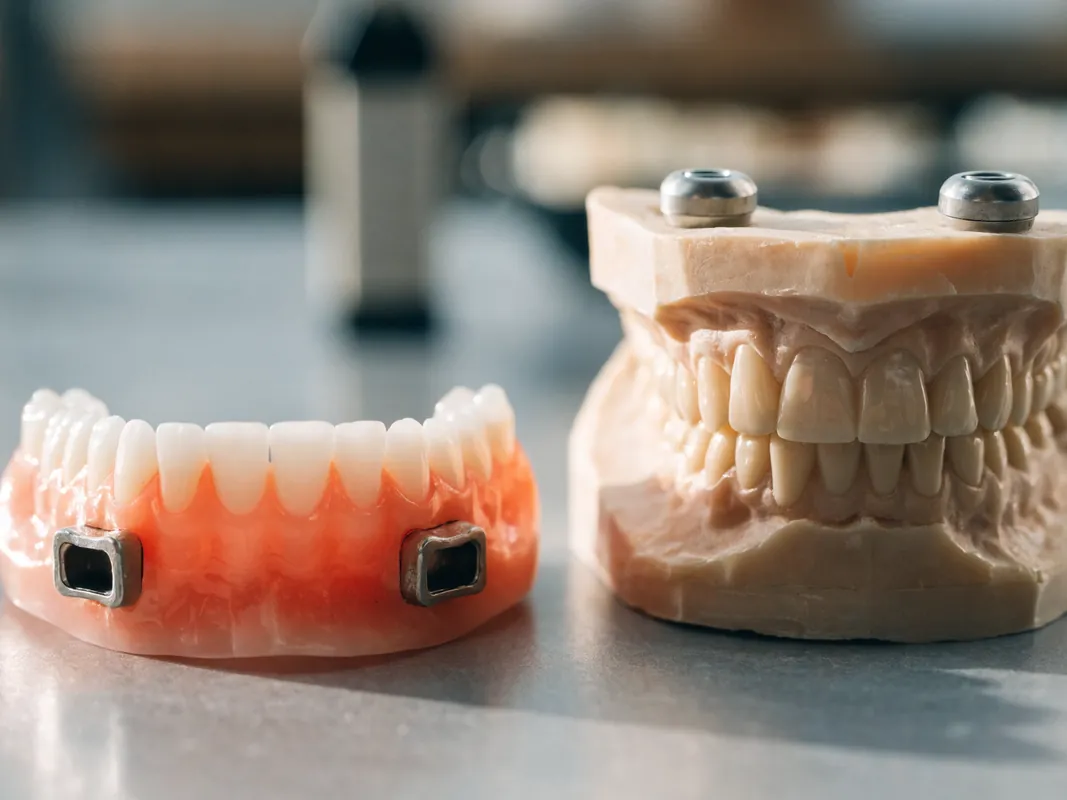
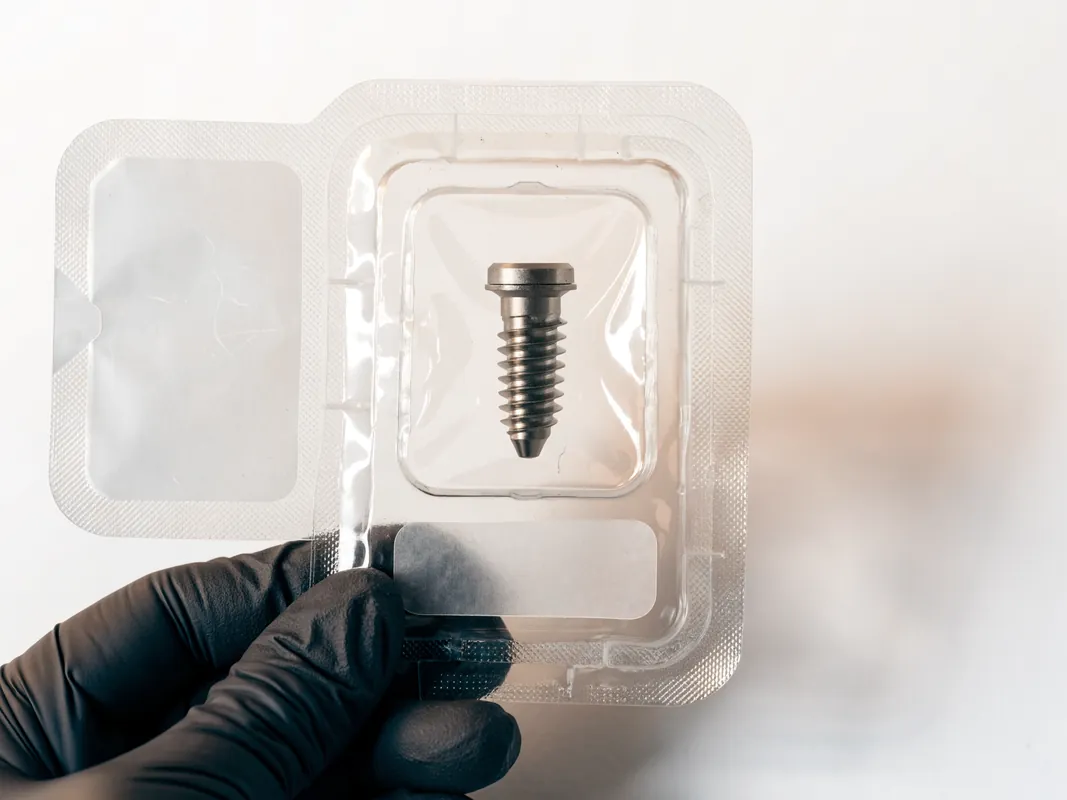
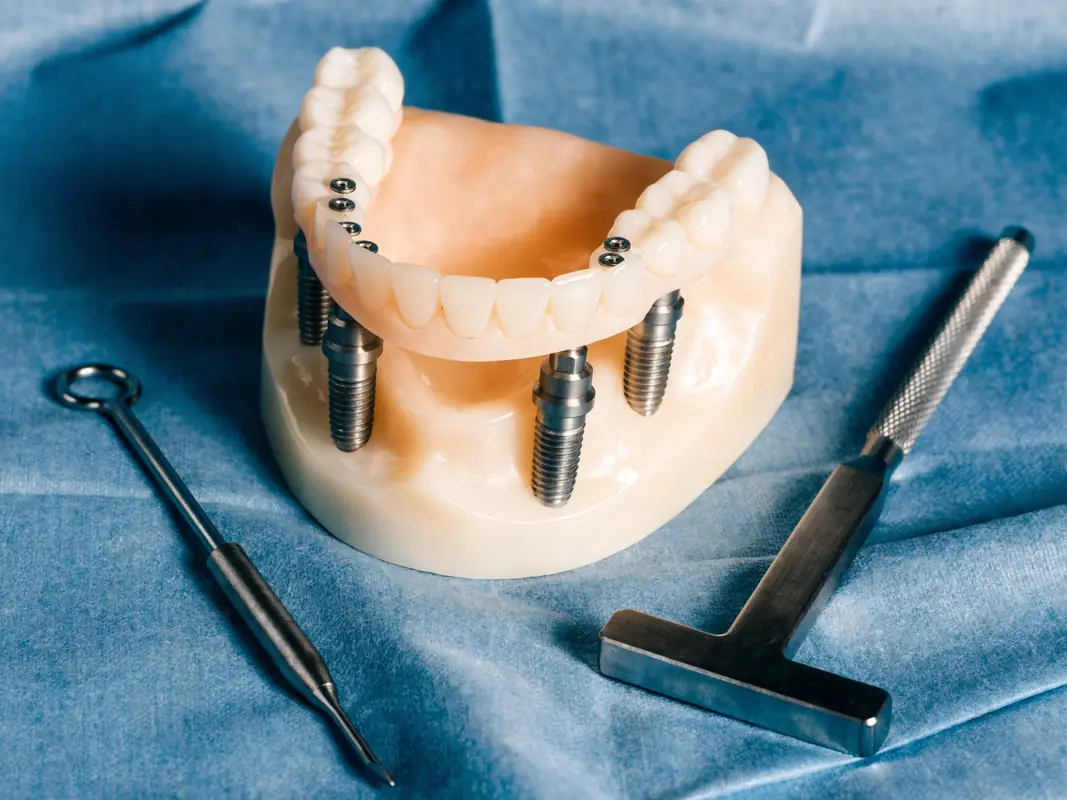
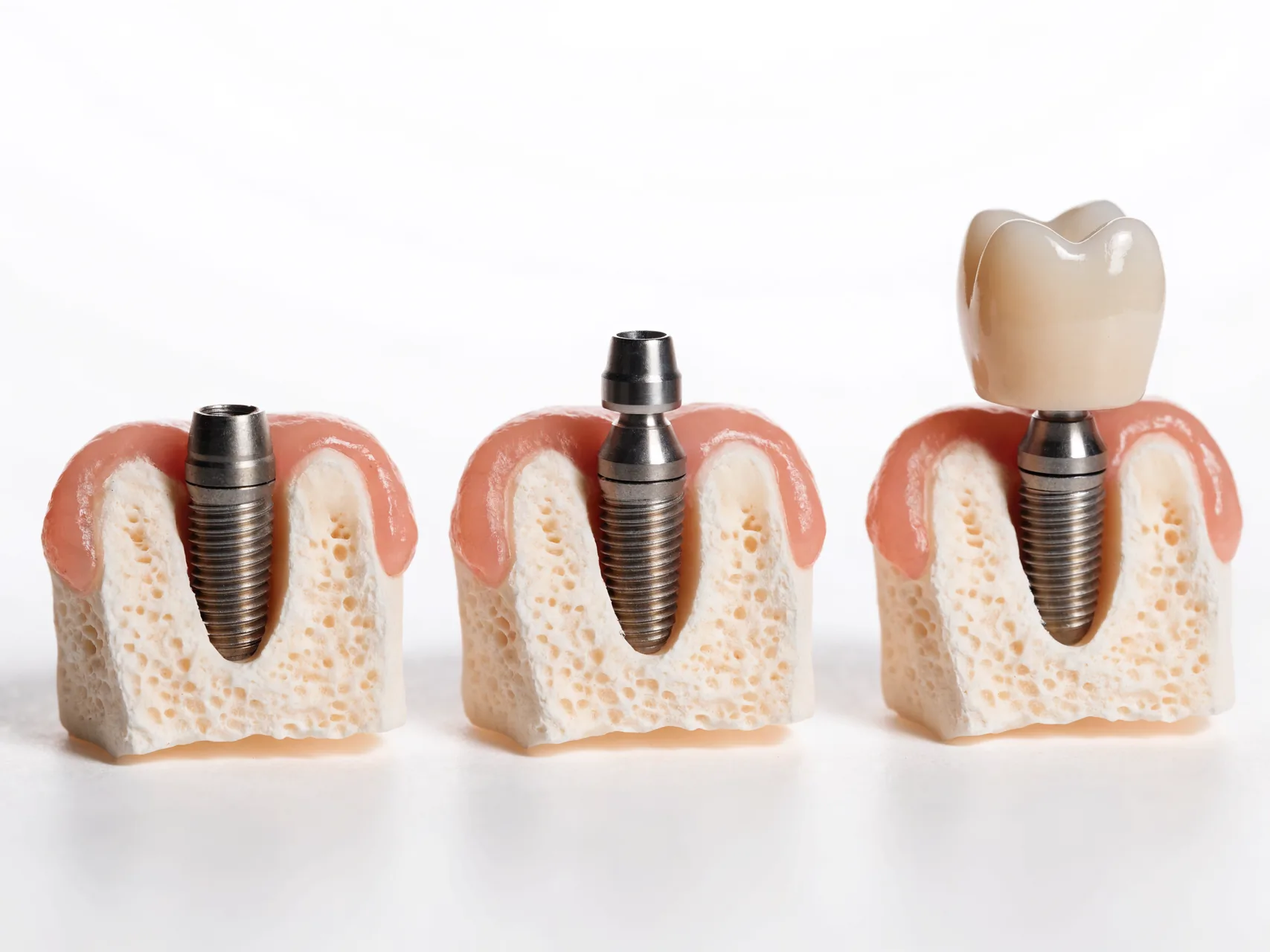
An implant fixture, abutment and crown or bridge are distinct parts of a treatment chain. The surgical act of placing an implant is not the same as loading it, fitting a provisional or delivering the definitive restoration. Country-level price comparisons often hide these distinctions.
Write each stage separately:
- disease control and extraction where relevant;
- site development or tissue procedure where indicated;
- implant placement;
- healing and review;
- loading decision;
- provisional restoration, if planned;
- restorative records and laboratory prescription;
- final abutment and crown or bridge;
- fit, bite, appearance and cleanability verification;
- maintenance and local handover.
Ask whether each quoted implant includes only placement or also the intended restorative components and final prosthesis. Ask which stages occur with the same provider and which require a return or local care. A headline “implant price” is not comparable until its endpoint is defined.
The [FDA dental-implant patient information](https://www.fda.gov/medical-devices/dental-devices/dental-implants-what-you-should-know) explains the implant-system parts, potential benefits, risks and patient questions. It is a United States device resource, not a regulator of care in these destinations, but it helps patients understand why a fixture alone is not a complete tooth replacement.
Keep Placement and Loading Protocols Distinct
Immediate placement describes timing relative to extraction. Immediate loading describes connection of a restoration under a loading protocol. Neither phrase automatically means a definitive crown or bridge is fitted, nor does either prove biological integration.
The [ITI consensus statement on implant placement and loading protocols](https://academy.iti.org/academy/consensus-database/consensus-statement/-/consensus/implant-placement-and-loading-protocols/1802) distinguishes these pathways and supports case selection. The [ITI statement on loading fixed prostheses in edentulous jaws](https://academy.iti.org/academy/consensus-database/consensus-statement/-/consensus/loading-protocols-for-fixed-prostheses-in-edentulous-jaws/1313) provides evidence-led considerations for fixed full-arch loading. Neither source selects a protocol for a reader.
The proposal should identify the intended loading pathway, criteria the named clinician will assess, provisional type and a fallback if conditions are not met. Possible branches may include unloaded healing, a removable interim restoration, staging, revised support or pausing. The practical and financial effect should be agreed before treatment.
Avoid fixed calendar claims. Progression should be based on patient-specific findings and clinician-owned criteria. A return flight should not force loading or final restoration.
Make Grafting a Site-Specific Branch
Bone and soft-tissue deficiencies are site-specific. Grafting is not universal, and avoiding grafting is not automatically superior. The need, technique, material category, timing and alternatives depend on the site, planned implant and restoration, anatomy, disease and clinician assessment.
Ask for:
- the site and defect described;
- the clinical purpose of the procedure;
- relevant imaging and examination findings;
- alternatives, including a different implant or prosthetic strategy where appropriate;
- simultaneous or staged intent and the decision owner;
- material category, source and traceability where relevant;
- effect on loading, provisional care, final restoration and quote;
- the fallback if the site differs from expectation.
“Graft included” and “no graft needed” are both incomplete without this map. Do not compare providers by graft count or destination reputation.
Define the Provisional Restoration
A provisional may be fixed, removable or absent depending on the case and stage. It can support appearance and function, protect or test a restorative design, or contribute to a loading strategy. It is not automatically the final restoration in a cheaper material.
Ask what it is made from, which sites or arch it covers, whether it is supported by teeth, implants or tissue, what restrictions apply, who adjusts it and how a repair is handled after the patient returns home. In full-arch care, a provisional can test tooth position, speech, facial support, bite and cleaning access before definitive manufacture.
The quote should distinguish the provisional, its reviews and its possible replacement from the final crown or bridge. If the provisional is conditional, state the fallback and revised cost. If it fractures or feels loose, clinical assessment is needed; a remote message may coordinate but cannot always diagnose the cause.
Define the Final Restoration
“Implant with crown,” “fixed teeth,” “zirconia bridge” or “hybrid” are incomplete descriptions. The final prescription should identify the restoration type, material construction, abutment or interface, retention method, component system, laboratory, shade or design process, verification stages, cleaning access and repair route.
Material choice is patient- and design-specific. It can interact with available space, support, bite, opposing dentition, parafunction, appearance, sound, weight, tissue contour, laboratory process and repairability. A named material does not prove identical quality across providers or countries. The same brand can be used in different designs and workflows.
Ask who owns the restorative prescription and final acceptance. Record fit, bite, contact, appearance, tissue relationship, component information and maintenance baseline. “Permanent” should not be used to imply that review, repair or future replacement can never be needed.
Trace the Implant and Every Connected Component
The implant system includes more than a fixture. Future maintenance may require the exact connection, abutment, screw, interface and restorative design. A brochure logo or review mention does not identify what was placed in a patient.
Request site-linked information for the actual implant and components, including manufacturer, system, model or reference, dimensions and lot or batch where available; abutments, screws and interfaces; graft or membrane records when used; and the final prosthesis construction. The final record should reflect substitutions made during treatment.
The FDA’s broader [implants and prosthetics information](https://www.fda.gov/medical-devices/products-and-medical-procedures/implants-and-prosthetics) explains that implanted devices have potential benefits and risks and that device information matters. It does not rank brands or approve use in these four jurisdictions.
Traceability is not a luxury label. It supports compatibility, maintenance, repair, adverse-event assessment and handover. Ask a local dentist before travel which records and components would be needed to assess the proposed system.
Name the Laboratory and Preserve Its Records
The laboratory can be onsite, external or in another jurisdiction. None is automatically better. Ask for its legal name and location, the clinician who writes the prescription, the intended material and design, how files are transferred, who verifies manufacture and fit, and what records the patient receives.
Relevant documents may include the prescription, material and custom-device information where applicable, shade and design approvals, framework or interface details, statements of conformity or equivalent records under the applicable regime, and a repair route. Ask what applies rather than assuming one jurisdiction’s document name applies everywhere.
Laboratory shipping and turnaround can change. Do not accept a fixed country-level claim that one destination is faster. Your travel plan should allow clinical and laboratory verification without forcing acceptance because a departure date is near.
Compare the Same Clinical Scope
Build one worksheet and require each proposal to occupy the same rows:
| Clinical row | Turkey proposal | Bulgaria proposal | Croatia proposal | Serbia proposal |
|---|---|---|---|---|
| Named diagnosis | Written or unknown | Written or unknown | Written or unknown | Written or unknown |
| Teeth preserved or removed | Tooth-specific | Tooth-specific | Tooth-specific | Tooth-specific |
| Implant sites and components | Intended and conditional | Intended and conditional | Intended and conditional | Intended and conditional |
| Grafting or tissue procedures | Itemised or conditional | Itemised or conditional | Itemised or conditional | Itemised or conditional |
| Loading and fallback | Criteria and branch | Criteria and branch | Criteria and branch | Criteria and branch |
| Provisional | Type and service | Type and service | Type and service | Type and service |
| Final restoration | Construction and lab | Construction and lab | Construction and lab | Construction and lab |
| Reviews and records | Deliverables | Deliverables | Deliverables | Deliverables |
| Maintenance and urgent care | Named route | Named route | Named route | Named route |
Use “unknown” rather than filling a gap with a country assumption. The cheapest total may omit stages; the highest total may still lack clinical justification. Price only becomes comparable after scope is equivalent.
Demand an Itemised Quote and Change Rules
The quote should separate examination, imaging, disease control, extraction, implant placement, grafting, provisional work, final components and restoration, laboratory, medicines, reviews, records, maintenance and non-clinical services. Not every row applies to every patient; relevance should be explained.
Mark each line as included, excluded, conditional, unknown or supplied elsewhere. Ask which finding can trigger a change, who owns the decision, what evidence is required, whether the patient can pause, and how consent and price are updated. “Subject to examination” is only transparent when its consequences are written.
Ask about taxes, professional fees and follow-up. A quote in one language should not conceal different controlling terms in another. Identify which document prevails and obtain understandable translations where needed.
The [GDC Principle Two](https://standards.gdc-uk.org/pages/principle2/principle2) provides a UK professional benchmark for clear information, written treatment plans, likely costs and written updates when treatment or cost changes. It directly governs GDC registrants, not all overseas providers, but it is a useful standard for the documents to request.
Contract, Payee, Deposit and Refund Are Separate Checks
Confirm the legal entity on the treatment contract, invoice and bank account. If the payee differs from the treating provider, ask what service it supplies and how funds are allocated. Do not send clinical fees to an unexplained personal or company account.
Read deposit, cancellation and refund terms before paying. Ask when a deposit becomes non-refundable, what happens if direct examination changes the plan, how an unsuitable patient is handled, which deductions apply, and which entity decides. Preserve dated copies of the proposal, contract, invoice, payment and correspondence.
Governing law and complaint jurisdiction can differ from the patient’s home. Obtain appropriate legal advice when terms are material or unclear. An online platform, card payment or intermediary does not automatically create the same protection in every country.
A contract cannot guarantee a clinical result. It should describe process, responsibility, exclusions and remedies without replacing urgent clinical care.
Compare Currency Without Predicting Exchange Rates
Record the contractual currency, invoice currency, payment currency, conversion method, rate source, rate date, spread, bank or card fee and refund currency. Do not compare converted totals captured on different days as if exchange rates and fees were fixed.
Ask whether the quote is locked in its contractual currency and what can change. If a deposit and balance use different dates or payment methods, model both. Ask the bank or card provider for its own terms; an indicative central-bank rate is not the amount a consumer will necessarily pay.
Do not make country-level statements such as “EU pricing” or “lower overhead” without provider-specific evidence. Regulation, tax, rent, laboratory, wages, currency and commercial strategy interact, and none proves clinical quality.
If a separate foreign-exchange or payment firm is involved, verify the exact firm and current official status in the relevant jurisdiction. This check is financial, not clinical.
Insurance and Reimbursement Need Written Confirmation
Travel insurance, health insurance, card protection, European healthcare arrangements and provider complication insurance are different products. Do not assume planned private dental treatment, pre-existing conditions, routine aftercare, elective procedures, remedial travel or cancellation are covered.
The [UK government foreign-travel insurance guidance](https://www.gov.uk/guidance/foreign-travel-insurance) recommends checking appropriate cover and policy terms. The [NHS treatment-abroad checklist](https://www.nhs.uk/using-the-nhs/healthcare-abroad/going-abroad-for-treatment/treatment-abroad-checklist/) addresses research, costs, risks, records, aftercare and what happens if care goes wrong.
For planned care within European Union contexts, use current [Your Europe planned-healthcare guidance](https://europa.eu/youreurope/citizens/health/planned-healthcare/right-to-treatment/index_en.htm) and the relevant national contact point. Do not assume reimbursement or authorisation simply because the provider is in Bulgaria or Croatia. Turkey and Serbia require their own current legal, insurance and contractual checks.
Ask the insurer in writing about the exact procedure, destination, provider type, existing condition, planned complications, local treatment, repatriation and follow-up. Keep the answer with the proposal.
Travel Options Must Be Checked Live
Air routes, frequencies, airport operations, entry rules, ground transport and fares change. Do not use a fixed “number of direct flights” as a quality argument. Check the actual origin, dates, mobility needs, baggage, connections, arrival time and contingency through current airline, airport and government sources.
The UK government maintains current travel-advice pages for [Turkey](https://www.gov.uk/foreign-travel-advice/turkey), [Bulgaria](https://www.gov.uk/foreign-travel-advice/bulgaria), [Croatia](https://www.gov.uk/foreign-travel-advice/croatia) and [Serbia](https://www.gov.uk/foreign-travel-advice/serbia). Recheck them near travel. They cover current practical risks and entry information; they do not determine clinical fitness to travel or rank dental providers.
Ask the treating clinician for patient-specific advice on flying, activity, food, medicines and assistance after the actual procedure. Build flexibility around examination, surgery, provisional review and final-restoration gates. A booked return should not force clinical progression.
Consider the burden of repeat visits and unexpected local assessment. A shorter flight does not automatically mean an easier clinical pathway if connections, ground transport, accessibility or aftercare are poor.
Accessibility Is a Route-Specific Requirement
Accessibility cannot be scored by country. It depends on the exact airline, airport, vehicle, pavement, hotel, building, lift, treatment room, toilet, communication method and support person. Ask for recent, specific information and written confirmation.
The European Union’s [reduced-mobility travel guidance](https://europa.eu/youreurope/citizens/travel/transport-disability/reduced-mobility/index_en.htm) explains passenger assistance rights for relevant EU journeys and carriers. Applicability depends on the route and circumstances. Request assistance from the airline and airports using their current process; do not rely on the clinic to arrange it unless its written service says so.
For the clinical premises, ask about step-free entry, lift dimensions, wheelchair transfer, accessible toilet, seating, hearing or visual communication, interpreter support, rest periods and companion access. A marketing statement such as “accessible” is not enough.
Medical accessibility also includes ability to manage medicines, food, hydration, hygiene and urgent care. Write these needs into the travel and clinical plans separately.
Keep Accommodation and Transport Separate From Dentistry
Accommodation and ground transport may be convenient, but they do not establish diagnosis, clinician competence or treatment quality. Identify the supplier, exact service, dates, accessibility, room or vehicle terms, cancellation rule, taxes and payment recipient. Clarify whether the patient books independently or an intermediary arranges it.
Do not assume a travel service is included from a destination label or advertising photograph. Only the written quotation controls scope. Do not assume the treating provider owns or supervises the supplier.
If clinical plans change, ask how unused or rescheduled travel services are handled. A non-refundable room or transfer should not pressure the patient into treatment. Clinical and travel complaints may have different recipients.
Climate, coastlines and city attractions are holiday considerations, not healing evidence. Check live weather for comfort and packing, but follow the clinician’s procedure-specific advice rather than choosing a surgical plan by climate.
Language and Consent Must Work in Practice
“English spoken” is not a country-level fact. Ask who communicates clinical information, their role, the language used for examination and consent, and which documents are translated. A coordinator can interpret logistics but should not diagnose or answer outside competence.
The patient should understand diagnosis, alternatives, material risks, uncertainty, staging, maintenance, costs and the right to decline. Ask whether a qualified interpreter is available when needed and who pays. Avoid relying solely on a family member for complex risk information.
The [GDC Principle Three](https://standards.gdc-uk.org/pages/principle3/principle3) provides a UK professional benchmark for valid, ongoing consent. It does not automatically govern overseas clinicians, but it helps define questions for the actual responsible provider.
If direct examination changes extraction, grafting, loading, components or restoration, request a revised explanation, consent and quote before proceeding. Travel urgency does not replace informed choice.
Records Must Travel With the Patient
Records support local aftercare, repair, independent review and complaints. Ask who owns them, how to request them, which language and format are available, whether a charge applies, and how they are transferred securely.
Request, as relevant:
- medical and dental history;
- examination and diagnosis;
- tooth and site prognosis;
- images and reports in usable formats;
- consent documents and plan revisions;
- extraction, grafting and implant notes;
- implant, component and material identifiers;
- provisional and final laboratory prescriptions;
- medicines and discharge instructions;
- fit, bite, tissue, shade and maintenance baseline;
- adverse-event and complaint records;
- invoices and responsible contacts.
The [GDC Principle Four](https://standards.gdc-uk.org/pages/principle4/principle4) is a UK professional benchmark for accurate records and information protection. Check the actual domestic duties and contract in the destination. A coordinator’s promise to send a summary is not the same as complete clinical records.
Arrange Local Aftercare Before Choosing a Destination
Contact a suitable local dentist before travel. Share the proposed implant system, sites, stages and restorative design. Ask what assessment, maintenance or urgent care the practice is willing and equipped to provide, which records and tools it needs, and which responsibility it will not accept.
Do not assume any local dentist can remove or repair an unfamiliar prosthesis. Component access, laboratory information and willingness matter. Remote review can help coordination but cannot always distinguish infection, tissue inflammation, bite, looseness, fracture or component problems.
The maintenance plan should identify personalised hygiene, professional tissue and prosthesis review, baseline findings, component and bite assessment, imaging only when clinically justified, and the route for repair. Frequency should follow individual risk and findings, not a destination’s package calendar.
Include local assessment and maintenance in the cost worksheet. A commercial remedial term does not create a home clinician or automatically pay that clinician.
Know the Urgent-Care Route in Every Location
Personalised discharge instructions should identify expected effects, concerning changes and contact routes. Seek prompt assessment for severe or worsening pain, increasing swelling, fever or marked illness, persistent discharge, uncontrolled bleeding, new or changing altered sensation, an opening wound, inability to maintain food or fluids, a loose restoration or component, sudden bite change or rapidly worsening symptoms.
Difficulty breathing or swallowing, rapidly spreading swelling, collapse, major facial trauma or another life-threatening concern requires the current local emergency route. Do not wait for a coordinator or return flight.
Record emergency numbers and appropriate local services at the treatment city, accommodation location, transit points and home. A provider’s message channel is not an emergency service unless its written role and clinical staffing say so, and even then local emergency care may be necessary.
Do not glue, drill or repeatedly tighten a restoration. Keep detached parts and provide system and procedure records to the assessing clinician.
Common Questions
1. Which country is best for dental implants?
This guide names no country winner. The defensible comparison is between named legal providers, named clinicians and patient-specific proposals. Diagnosis, responsibility, design, records, aftercare and contract matter more than destination reputation.
2. Is an EU country automatically safer for implants?
No. European Union frameworks can affect professional recognition, planned-care information and legal routes, but membership does not prove that a particular clinician or plan is suitable. Verify the exact provider, professional, contract and patient-specific evidence.
3. Is Turkey automatically cheaper than Bulgaria, Croatia or Serbia?
No fixed country statement is reliable. Scope, provider, laboratory, components, currency, travel and change rules differ. Compare equivalent itemised proposals on the same date and keep clinical and non-clinical costs separate.
4. Can I compare implant prices from websites?
Only as preliminary headlines. Ask whether the figure covers examination, extraction, grafting, implant, abutment, provisional, final restoration, laboratory, reviews, records and conditional changes. Different endpoints are not comparable.
5. Does the same implant brand mean the same treatment?
No. Diagnosis, site selection, component chain, surgical execution, loading, restorative design, laboratory, bite, cleanability, records and maintenance can differ. Request site-linked details for the actual components used.
6. How do I verify a provider in each country?
Start with the relevant current health authority, professional body and official directory, then match the exact legal name and address to the contract and invoice. Save dated evidence and contact the authority when scope is unclear.
7. How do I verify the dentist?
Obtain the full name, profession, current official status, treatment address and role for each stage. Use the relevant official source. Do not infer specialisation, experience or procedure volume from marketing or reviews.
8. Can a coordinator choose my implant plan?
No. A coordinator can organise communication and travel within a declared role. Diagnosis, tooth preservation, implant sites, grafting, loading and restoration are clinical decisions owned by named qualified clinicians.
9. Can a panoramic image confirm the final plan remotely?
It can contribute information but does not replace direct examination, periodontal and soft-tissue assessment, restorability, bite, hygiene or site-specific imaging where justified. Ask what remains provisional until arrival.
10. Should questionable teeth be removed before implants?
Only after tooth-specific assessment, prognosis, alternatives and consent. Some teeth may be non-restorable; others may have preservation options. Seek an independent opinion when extensive extraction is proposed.
11. What alternatives should be discussed?
Depending on the findings, options may include preserving teeth, a conventional bridge, a removable prosthesis, implant-supported removable care, a different implant design, staged treatment or no active replacement for now. The clinician should explain relevant trade-offs.
12. Does immediate placement mean immediate teeth?
No. Implant placement timing and loading are separate. A provisional may be fixed, removable or not provided, depending on clinical conditions and design. The written plan needs criteria and a fallback.
13. Is an immediate provisional the final crown or bridge?
Not automatically. A provisional can support a controlled stage and test function, appearance, speech or cleaning. The definitive restoration follows updated records, verification, laboratory prescription and consent.
14. Is grafting always necessary or always avoidable?
Neither. Tissue deficiency is site-specific. Ask for the defect, purpose, alternatives, material category, timing, decision owner and effect on loading, restoration and cost.
15. What implant records should I receive?
Request site-linked manufacturer, system, model or reference, dimensions and lot or batch where available; connection, abutment, screws and interfaces; graft information when relevant; and the final restoration and laboratory records.
16. Why does the dental laboratory matter?
The laboratory fabricates the provisional or final restoration from a clinician’s prescription. Its material, construction, location, traceability and repair route affect continuity. Ask who owns the prescription and final acceptance.
17. How do I compare quotes in different currencies?
Record contractual, invoice and payment currencies, conversion method, rate date, spread, bank or card fees and refund currency. Compare on a consistent basis and model deposit and balance separately. Do not predict rates.
18. Does travel insurance cover planned implant treatment?
Do not assume so. Ask the insurer in writing about the exact procedure, destination, provider, pre-existing conditions, complications, local care, cancellation, remedial travel and follow-up. Keep the response.
19. Does an EHIC or GHIC cover planned private implants?
Do not assume it. Planned-healthcare and reimbursement rules are fact-specific and may require prior authorisation. Check current official guidance and the relevant national contact point before travel.
20. Which destination has the easiest flights?
That depends on origin, date, airline, connections, baggage, mobility, disruption and ground transport. Check live routes and current government advice. Flight convenience is not clinical evidence.
21. How do I compare accessibility?
Audit the exact airline, airports, vehicle, hotel, building, lift, toilet, treatment room, communication support and companion access. Obtain current written confirmation. Do not score accessibility by country.
22. Is a warm climate better for implant healing?
Climate can affect comfort and packing, but it does not replace patient-specific clinical advice, hygiene, disease control, maintenance or urgent care. Do not choose an implant protocol by holiday weather.
23. Can accommodation and transfer be part of the quote?
They can be displayed alongside treatment, but identify the separate supplier, service, dates, accessibility, terms and payment. Only the written quotation controls scope. Travel convenience does not prove clinical quality.
24. What language arrangements should I confirm?
Ask who explains clinical information, their role, the consent language, document translations and interpreter arrangements. A logistics coordinator should not answer clinical questions outside competence.
25. Can any dentist maintain an implant placed abroad?
Do not assume so. A local provider may need system-specific records, parts, tools and experience and decides what responsibility to accept. Arrange a willing route before treatment.
26. What symptoms need prompt assessment?
Follow personalised instructions and seek prompt care for worsening pain or swelling, fever, discharge, uncontrolled bleeding, altered sensation, wound concerns, a loose component or restoration, sudden bite change or marked illness. Breathing or swallowing difficulty requires the current emergency route.
27. Where do I complain if something goes wrong?
Identify the internal provider route and the applicable professional, health, consumer, payment and travel routes for each entity. These may differ by country and contract. Urgent clinical care should not wait for a complaint decision.
28. Are online reviews enough to choose a provider?
No. Reviews can reveal questions but do not verify diagnosis, clinician status, components or outcome. Combine them with official checks, your own records, itemised documents, aftercare and an independent opinion.
29. When should I seek an independent second opinion?
Before irreversible treatment when diagnosis, tooth preservation, grafting, loading, restorative scope, clinician responsibility or aftercare is unclear, or proposals differ substantially. Give the clinician the same records and quotes.
30. What is the final decision rule?
Choose only after one named proposal has a supported diagnosis, reasonable alternatives, accountable clinicians, complete stage and component scope, itemised commercial terms, live travel plan, transferable records and workable local continuity. Country labels cannot fill a missing row.
Primary and Authoritative Sources
These sources support clinical, provider, legal, travel and continuity questions. They do not endorse a country, provider or plan. Recheck current pages and official status before deciding.
- [FDA: Dental Implants — What You Should Know](https://www.fda.gov/medical-devices/dental-devices/dental-implants-what-you-should-know) and [FDA: Implants and Prosthetics](https://www.fda.gov/medical-devices/products-and-medical-procedures/implants-and-prosthetics): implant-system parts, potential benefits, risks and patient questions.
- [ADA: patient-specific imaging recommendations](https://adanews.ada.org/ada-news/2026/january/new-ada-recommendations-confirm-dental-imaging-most-effectively-used-in-moderation/): examination-led, clinically justified imaging.
- [ITI: Implant Placement and Loading Protocols](https://academy.iti.org/academy/consensus-database/consensus-statement/-/consensus/implant-placement-and-loading-protocols/1802) and [ITI: Loading Fixed Prostheses in Edentulous Jaws](https://academy.iti.org/academy/consensus-database/consensus-statement/-/consensus/loading-protocols-for-fixed-prostheses-in-edentulous-jaws/1313): terminology, case selection and conditional loading.
- [GDC: Going abroad for dental treatment](https://www.gdc-uk.org/standards-guidance/information-for-patients-public/going-abroad-for-dental-treatment), [Principle Two](https://standards.gdc-uk.org/pages/principle2/principle2), [Principle Three](https://standards.gdc-uk.org/pages/principle3/principle3), [Principle Four](https://standards.gdc-uk.org/pages/principle4/principle4) and [Principle Five](https://standards.gdc-uk.org/pages/principle5/principle5): UK patient and professional benchmarks for identity questions, information, consent, records and complaints.
- [NHS: Treatment abroad checklist](https://www.nhs.uk/using-the-nhs/healthcare-abroad/going-abroad-for-treatment/treatment-abroad-checklist/) and [GOV.UK foreign-travel insurance guidance](https://www.gov.uk/guidance/foreign-travel-insurance): research, risk, records, aftercare and insurance planning.
- [European Commission cross-border healthcare overview](https://health.ec.europa.eu/cross-border-healthcare/overview_en), [Your Europe national contact-point information](https://europa.eu/youreurope/citizens/health/planned-healthcare/get-more-info/index_en.htm), [planned-healthcare rights guidance](https://europa.eu/youreurope/citizens/health/planned-healthcare/right-to-treatment/index_en.htm), [regulated-professions database](https://single-market-economy.ec.europa.eu/single-market/services/free-movement-professionals/database-regulated-professions_en) and [reduced-mobility travel guidance](https://europa.eu/youreurope/citizens/travel/transport-disability/reduced-mobility/index_en.htm): current EU legal-information and accessibility starting points where applicable.
- Turkey: [Ministry authorised-provider list](https://shgmturizmdb.saglik.gov.tr/EN%2C69063/healthcare-providers-authorized-by-the-ministry.html), [HealthTürkiye institutions](https://www.healthturkiye.com/hospitals-list), [Turkish Dental Association search](https://tdb.org.tr/dishekimi_arama.php), [patient-rights portal](https://hastahaklari.saglik.gov.tr/) and [Official Gazette regulation](https://www.resmigazete.gov.tr/eskiler/2025/04/20250426-2.htm).
- Bulgaria: [Ministry of Health](https://www.mh.government.bg/en/) and [Bulgarian Dental Union](https://bzs.bg/en/home-2/). Croatia: [Ministry of Health](https://zdravlje.gov.hr/) and [Croatian Dental Chamber](https://www.hkdm.hr/). Serbia: [Ministry of Health](https://www.zdravlje.gov.rs/) and [Dental Chamber of Serbia](https://www.stomkoms.org.rs/). Use each as a current starting point and confirm the exact route and scope.
- Current UK government travel advice for [Turkey](https://www.gov.uk/foreign-travel-advice/turkey), [Bulgaria](https://www.gov.uk/foreign-travel-advice/bulgaria), [Croatia](https://www.gov.uk/foreign-travel-advice/croatia) and [Serbia](https://www.gov.uk/foreign-travel-advice/serbia): live practical and entry information, not clinical rankings.
Sources reviewed on 29 August 2026. Official status, travel information, insurance, currency and provider details can change; save dated evidence and recheck before payment and travel.
Final Multi-Destination Rule
Do not choose a flag. Choose only after a named legal provider and named clinicians have documented your diagnosis, tooth-preservation decisions, alternatives, implant and tissue stages, loading and provisional contingencies, final restoration, components, laboratory and maintenance. Then require the contract and travel file to match: equivalent itemised scope, responsible payee, currency and refund rules, written insurance answers, live accessibility and route checks, transferable records, local urgent care and an applicable complaint process. If any country label is doing the work of a missing document, the comparison is not complete.