A search for a single tooth implant in Turkey often begins with an apparently simple idea: one tooth is absent, so one implant and one crown should fill the space. Clinically, the decision has more layers. A damaged tooth may still be restorable. A confirmed gap may be managed with an implant crown, a resin-bonded bridge, a conventional bridge, a removable tooth, orthodontic space management or no active replacement for the moment. An implant can be placed at different times, restored at different times and fitted with different component and crown designs. These are related decisions, but they are not interchangeable.
This page owns the single-missing-tooth decision. It is a source-led framework rather than a remote recommendation, provider advertisement or personal forecast. It publishes no fixed price, timetable, material, package or outcome. A named legal treatment provider and named treating clinician must connect the general choices to an examination, suitable diagnostic records and the patient's priorities. The most useful output is not a slogan such as “one tooth, one implant.” It is a written explanation of why the tooth cannot reasonably be preserved, why the selected replacement is preferred to its alternatives, how the implant and crown will be staged, and how care will continue after travel.
The [American Dental Association patient guide to implants](https://www.mouthhealthy.org/all-topics-a-z/implants) explains that implants can support replacement teeth without preparing adjacent tooth structure, while also making clear that not every person follows the same restorative timing. Cambridge University Hospitals' [dental implants in restorative dentistry](https://www.cuh.nhs.uk/patient-information/dental-implants-in-restorative-dentistry/) describes implants as supports for crowns, bridges or dentures and identifies health, oral hygiene and stable disease control as assessment issues. Neither source can decide an individual case from a message or image.
Use this guide before consenting to extraction, implant placement or an irreversible change to neighbouring teeth. Keep dated copies of the records on which each decision depends. If the plan changes after direct examination, the reason, alternatives, revised costs and new consent should be documented before treatment continues.
Answer first: can the natural tooth be preserved?
An implant is a replacement for a missing or non-restorable tooth; it is not a diagnostic label for every painful, broken, discoloured or heavily restored tooth. The first gate is a tooth-specific prognosis. Ask the clinician to record the source of symptoms, remaining tooth structure, crack pattern if suspected, periodontal support, mobility, decay, previous treatment, root and surrounding bone findings, restorability and the role of the tooth in the bite. A photograph or panoramic image alone may not answer those questions.
Preservation can involve repair, a new restoration, periodontal care, root canal treatment, endodontic retreatment, surgery, orthodontic assistance or monitoring, depending on the diagnosis. The ADA's [root canal information](https://www.mouthhealthy.org/all-topics-a-z/root-canals) and the [NHS root canal guide](https://www.nhs.uk/tests-and-treatments/root-canal-treatment/) describe root canal treatment as a way of treating infection inside a tooth so the tooth may be retained. These sources do not mean every damaged tooth can or should be saved. They establish why a preservation assessment belongs before extraction.
A responsible written comparison should state:
- what makes the tooth restorable or non-restorable;
- which records support that conclusion and what uncertainty remains;
- whether an endodontic, periodontal, restorative or oral-surgery opinion would materially change the decision;
- the realistic maintenance burden of preserving the tooth;
- the consequences of extraction, including the possibility that implant placement or restoration may need staging;
- what happens if the patient chooses monitoring or an interim option instead.
Extraction is irreversible. Urgency caused by uncontrolled infection, swelling, trauma or another clinical concern may narrow the available time, but commercial travel dates should not manufacture clinical urgency. If the explanation is simply that implants are “better” than teeth, pause and obtain a tooth-preservation opinion.
Confirm the gap and its history
The planning pathway differs when a tooth is already absent, is about to be extracted, or has been missing long enough for neighbouring teeth and tissues to change. Record when and why the tooth was lost, whether infection or trauma was involved, whether a temporary replacement is being worn, and whether the space has narrowed. A recently extracted socket is not the same site as a healed ridge. A front-tooth gap has different appearance and speech demands from a posterior chewing site.
The ADA's [missing teeth overview](https://www.mouthhealthy.org/all-topics-a-z/missing-teeth) lists bridges, dentures and implants as replacement categories and notes that missing teeth can affect chewing, speech, neighbouring tooth position and local bone. It does not rank one answer for every gap. The local condition, adjacent teeth, opposing teeth, hygiene ability, medical history, expectations and willingness to accept surgery all shape the comparison.
If the tooth was lost after trauma, ask whether adjacent teeth were also injured and how their pulp, roots and support were assessed. If the gap has existed for a long period, ask whether drifting, tilting or over-eruption has altered the restorative space or bite. If the “missing” tooth never developed, orthodontic and restorative planning may need to be coordinated before an implant is considered, particularly if growth or space remains a concern.
Separate the implant, abutment and crown
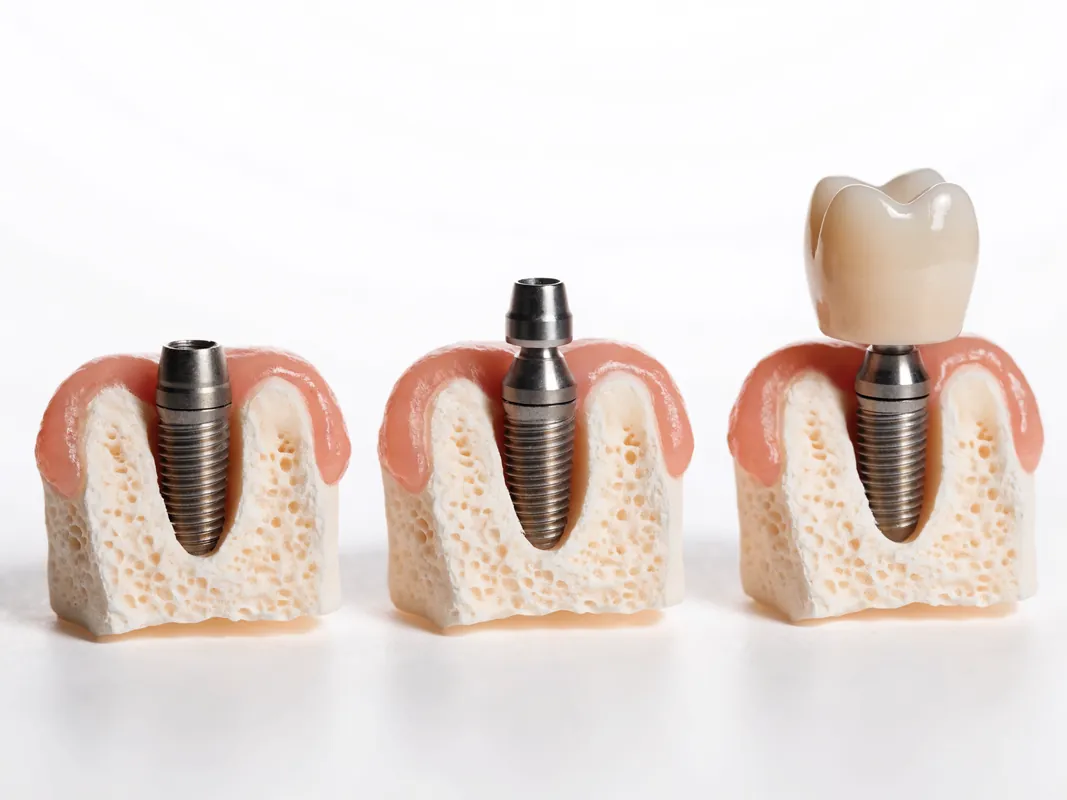
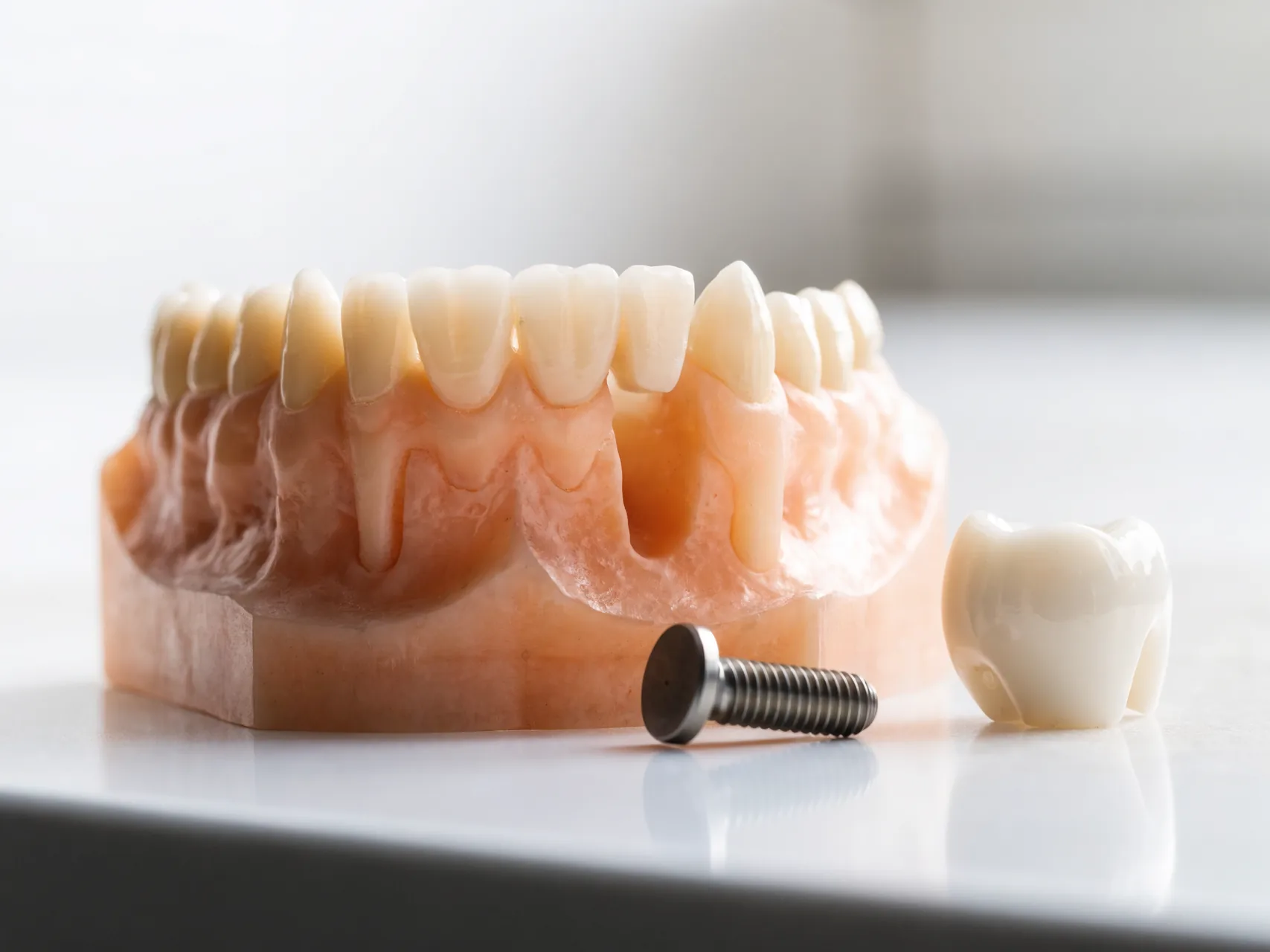
The phrase “implant crown” can hide three distinct elements. The implant fixture is placed in bone. An abutment or restorative interface connects the fixture to the visible restoration. The crown forms the replacement tooth. Some designs integrate the abutment and crown differently, but the patient still needs to know the component system and how the restoration is retained.
These elements have different risks and maintenance questions. Biological concerns include tissue healing, plaque-related inflammation and changes around the implant. Technical concerns can involve a loose or damaged screw, loss of crown retention, chipping, fracture, wear, contact change or access difficulty. A problem with a crown does not automatically mean the implant has failed; equally, a fixture that remains in place does not prove the restoration is comfortable, cleanable or complication-free.
Ask for a component map that identifies the implant system, fixture details, abutment or interface, screw where used, crown material, retention method and laboratory. Component records should connect the products actually used to the patient's record, not merely repeat a brand displayed on a website.
Keep placement, loading and restoration as separate decisions
Three timing questions must not be compressed into “same-day tooth”:
- Placement: when is the implant inserted relative to extraction?
- Loading: when does the implant begin carrying a connected restoration or functional force?
- Restoration: is the connected tooth provisional or final, and what is its purpose?
An implant may be placed immediately after extraction, after some healing or in a healed site. A restoration may be connected immediately, early or after a longer healing phase. An immediate visible tooth may be deliberately kept out of functional contact. A final crown may follow only after biological, positional and restorative gates are satisfied. These combinations should be named rather than implied.
Research does not support turning one protocol into a universal promise. A [systematic review of loading protocols for single-implant crowns](https://pubmed.ncbi.nlm.nih.gov/24660200/) found that the studies supporting immediate approaches used selected conditions, including defined implant stability and generally no simultaneous augmentation in the analysed groups; it also described limits in aesthetic and patient-reported evidence. A later [systematic review of placement and loading protocols by site](https://pubmed.ncbi.nlm.nih.gov/34411212/) reinforces the need to match the protocol to location and case selection. These publications guide questions; they do not provide a personal clearance rule.
The written plan should say what is intended at each stage, which findings can change that intention, and what interim replacement is available if the immediate option is not appropriate on the day.
Compare every reasonable missing-tooth option
The alternatives are not merely an administrative consent list. Each uses different anatomy, tooth structure, hygiene, maintenance and travel assumptions.
| Option | What it may avoid | What still needs assessment |
|---|---|---|
| Preserve and restore the natural tooth | Extraction and implant surgery | Restorability, disease control, structural and periodontal prognosis |
| Single implant with crown | Preparation of adjacent teeth in many designs | Surgery, bone and soft tissue, space, bite, component maintenance |
| Resin-bonded bridge | Implant surgery and extensive preparation in suitable cases | Enamel support, bite, connector design, debonding and appearance |
| Conventional tooth-supported bridge | Implant surgery | Health and preparation of support teeth, span, hygiene, biological cost |
| Removable replacement | Surgery and fixed preparation in some cases | Retention, comfort, appearance, speech, cleaning and adaptation |
| Orthodontic space management | A prosthetic replacement in selected situations | Tooth movement, bite, treatment burden, retention and coordinated finish |
| No active replacement or an interim tooth | Immediate irreversible treatment | Functional, aesthetic, drifting and review consequences |
A conventional bridge may be reasonable when adjacent teeth already need suitable crowns, but that does not make bridge preparation harmless. A resin-bonded bridge may preserve more tooth structure in a suitable site, but retention and bite remain relevant. An implant avoids relying on adjacent teeth as bridge supports, yet adds a surgical site, components and lifelong peri-implant maintenance. A removable option can be interim or definitive; it should not be dismissed without discussing how it will feel, function and be maintained.
Ask the named clinician to explain the best argument for each plausible option and why it was accepted or rejected for this particular gap. “The package includes an implant” is not a clinical reason.
Map the hard-tissue gate
The hard-tissue assessment is not simply a yes-or-no statement that there is “enough bone.” The plan should connect the proposed restoration to a three-dimensional implant position, then assess whether the available bone and surrounding anatomy permit that position. Bone width, height, contour, density as clinically relevant, defects, socket walls, pathology and proximity to anatomical structures may all matter. The diagnostic method should be selected because it answers a defined question, not because every patient is promised the same scan.
Ask for a site map showing:
- the intended tooth position and restorative envelope;
- the proposed implant position and direction;
- relevant anatomical boundaries;
- the hard-tissue deficit, if any, described rather than hidden behind “graft included”;
- grafting or non-grafting alternatives and their trade-offs;
- whether augmentation is before, with or after implant placement;
- how a change in hard-tissue findings changes timing, restoration or quotation.
An implant placed where bone is easiest to find may be difficult to restore, clean or load sensibly. Conversely, an ideal virtual crown cannot create missing anatomy. Surgical and restorative planning need to meet in the same documented proposal.
Map the soft-tissue and appearance gate
The gum and mucosal contours around a single implant crown can be particularly visible at a front tooth. Record the smile line, tissue display, tissue thickness, papillae, ridge contour, scars, recession, neighbouring gum levels and the patient's acceptable range of asymmetry. The implant, abutment, provisional restoration and final crown can interact with this tissue, but none can guarantee that the restoration will be undetectable.
A [systematic review of immediate anterior implant placement and restoration](https://pubmed.ncbi.nlm.nih.gov/26313019/) reported variable soft-tissue outcomes even in selected studies and called for stronger long-term evidence. A newer [systematic review of immediate placement with or without provisionalisation](https://pubmed.ncbi.nlm.nih.gov/35734911/) examined whether provisionalisation may influence tissue change; it should not be converted into a promise that a temporary crown controls every contour.
The plan should distinguish what is measured, what is anticipated and what remains uncertain. Ask whether additional soft-tissue surgery is proposed, its purpose, alternatives and separate consent. Ask how the provisional contour will be reviewed, who can alter it, and whether the final impression or scan waits for a clinician-owned tissue gate rather than a travel deadline.
Check the available restorative space
A crown needs enough mesiodistal space between neighbouring teeth, vertical space to the opposing tooth, and room for a maintainable contact and emergence profile. The roots of adjacent teeth may converge even when the visible gap looks wide. If teeth have drifted or over-erupted, orthodontic or restorative changes may be considered before implant placement.
Space should be assessed in three dimensions:
- Crown width: can the replacement resemble the missing tooth without creating distorted contacts?
- Root and implant corridor: is there a responsible position between adjacent roots and anatomical boundaries?
- Vertical restorative space: can components and crown be accommodated without an over-contoured design?
- Tissue space: can the transition from implant to crown be shaped for hygiene and appearance?
- Bite space: is there enough clearance for the intended material and contact scheme?
Do not accept digital placement based only on a tooth-shaped gap in a surface scan. The clinician should connect surface records, relevant imaging and the planned crown. If orthodontic space correction is proposed, identify who coordinates it and which measurement defines readiness for implant placement.
Make the crown plan before fixing the implant position
Restoration-driven planning begins with the intended crown, contacts, emergence, screw-access or cement-margin implications, tissue form and bite. It then places the implant within a surgically and anatomically responsible zone that can support that restoration. This does not mean software dictates surgery. It means the visible and maintainable endpoint is considered before an irreversible fixture position is chosen.
Ask to see how the implant axis relates to the crown. If the proposed access channel would emerge through a visible or functionally unsuitable area, the clinician may consider another implant position, an angled screw-channel component, a cemented design or a different treatment option. Each choice has limits. A component should not be selected solely to rescue an avoidable planning problem.
A guide or template may help transfer a plan, but it does not replace verification of fit, anatomy or intraoperative findings. Ask who designed it, who approved it, what records it uses, what tolerances are considered and what happens if the clinical site differs from the digital plan.
Treat the bite as a gate, not a final polish
An implant does not have the same periodontal ligament as a natural tooth, so the restorative clinician must assess how the crown contacts opposing and neighbouring teeth within the whole bite. Record the opposing tooth or prosthesis, jaw relationship, excursive contacts, clenching or grinding history, wear, mobility, limited opening, parafunctional habits and any planned change elsewhere in the mouth.
The bite decision includes more than making the crown feel “low.” The contact pattern can differ by site, implant position, crown form, opposing dentition and the stability of the rest of the mouth. A posterior crown carries different forces from a lateral incisor. A single crown placed within an unstable or changing bite may need a broader treatment sequence.
If a night appliance is proposed, ask what diagnosis and design support it, how it fits around the new crown, and who checks it. An appliance is not an automatic warranty against technical or biological complications. If the patient cannot return for bite review, the local handover plan should state what the home dentist needs and who authorises adjustments.
Decide when placement is appropriate
“Immediate implant” describes placement timing relative to extraction; it does not commit the provider to immediate healing or crown delivery. The clinician should assess infection, socket anatomy, soft tissue, achievable restorative position, primary stability, augmentation needs and patient factors before choosing a protocol. A plan made from limited records should remain explicitly provisional until the extraction site is directly assessed.
Delayed placement is also not one uniform pathway. The site may be allowed to heal for clinical reasons, reconstructed first, monitored after infection control or treated after space and disease have been stabilised. The patient needs an interim-tooth plan during any gap in treatment.
A [systematic review comparing immediate and delayed single-tooth placement](https://pubmed.ncbi.nlm.nih.gov/30624808/) examined several clinical and patient-reported outcomes and found substantial variation across studies. It supports structured comparison, not a blanket statement that either timing is always safer, faster or better. Ask which case-selection features from the evidence resemble the individual case and which do not.
Decide loading only after placement evidence exists
Immediate loading or immediate restoration should be conditional. A remote image cannot establish the clinical stability achieved at placement, bone condition, augmentation burden, occlusal control or ability to protect a provisional. The clinician making the loading decision should be named and the fallback should be agreed before surgery.
Clarify these terms in writing:
- Is a restoration connected on the placement day?
- Is it in functional contact or deliberately non-functional?
- Is it removable by the clinician?
- What food and behaviour restrictions are case-specific?
- Which intraoperative finding causes the provisional not to be connected?
- What alternative temporary tooth is available in that event?
- Which later evidence is required before a final crown or normal function?
Older and newer systematic reviews of immediate loading have reached different conclusions because included studies, selection criteria and techniques differ. That disagreement is a reason to avoid a marketing absolute. The evidence should inform a case-specific loading gate owned by the treating clinician.
Distinguish provisional from final
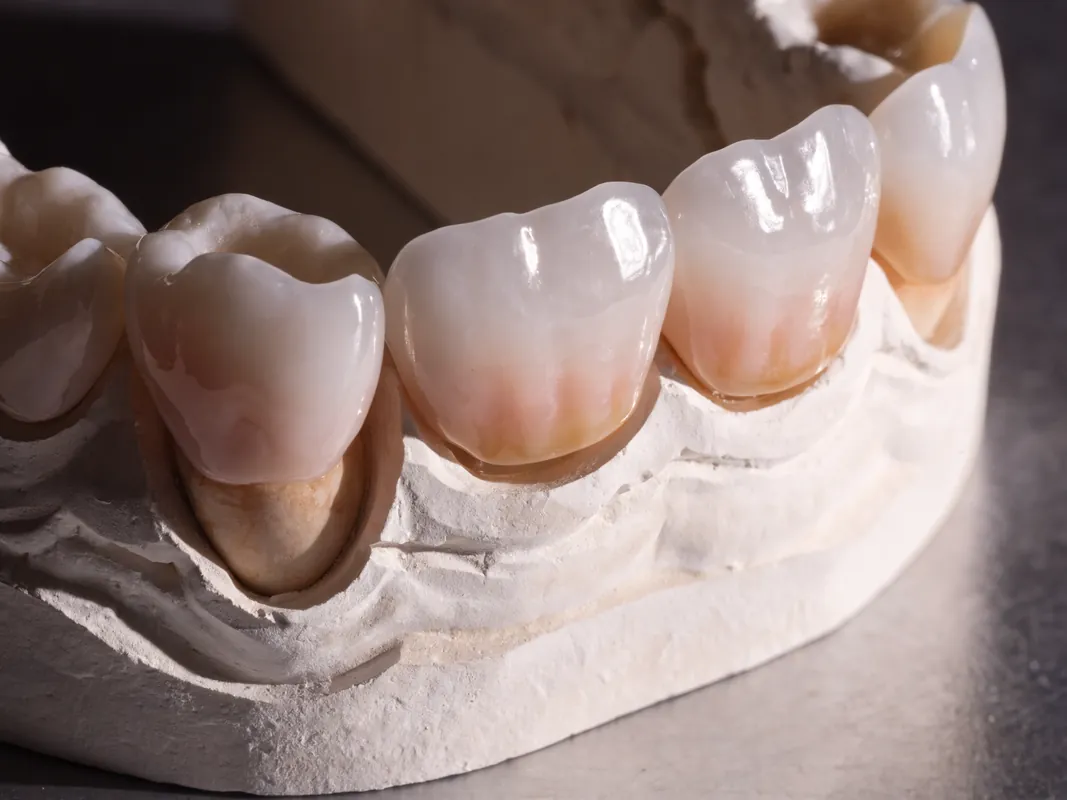
A provisional crown can provide appearance, protect a space, test shape, support a tissue-management strategy or help assess speech and comfort. It is not automatically a miniature final crown. It may use different materials, contours, contacts and intended duration. A same-day visible tooth may be provisional even when the advertising calls it “fixed teeth.”
The provisional stage can be an information-gathering gate. Record patient feedback, tissue response, hygiene access, contact changes, looseness, damage, colour concerns and bite findings. If the contour is deliberately modified, record who made the change and why. The final restoration should not be ordered merely because a return flight approaches.
Before the final crown, ask which clinical and restorative checks must pass. These may include disease control, implant and tissue review, stable records, an acceptable provisional where used, a verified impression or scan, shade and shape instructions, occlusal plan, material choice, component compatibility and patient consent to the final prescription.
Make screw-retained versus cement-retained a clinician-owned design decision
Screw retention and cement retention each have possible advantages, limitations and complications. The right choice depends on implant position, access-channel location, restorative space, tissue depth, retrievability needs, component availability, crown design, appearance and the clinician's ability to control the procedure. It should not be reduced to “screw is premium” or “cement looks better.”
A [systematic review comparing screw- and cement-retained fixed implant restorations](https://pubmed.ncbi.nlm.nih.gov/24382004/) did not establish one method as universally inferior. More recent reviews, including a [single-crown review using zirconia abutments](https://pubmed.ncbi.nlm.nih.gov/34352144/), report different distributions of biological and technical observations and limitations in the available evidence. A [systematic review of excess cement and peri-implant disease](https://pubmed.ncbi.nlm.nih.gov/27647536/) identifies excess cement as a possible risk indicator and emphasises accessible margins and review.
For a screw-retained plan, ask where the access channel exits, what closes it, whether the crown can be retrieved, which screw and torque record are kept, and what happens if the screw loosens or is damaged. For a cement-retained plan, ask where the margin lies, how cement excess is controlled and checked, how the crown could be retrieved, and how the abutment screw remains accessible if needed. The treating clinician owns this choice; a booking coordinator should not select it from a photograph.
Ask about abutment, interface and crown material without brand theatre
Material names do not establish indication, design quality or authenticity. Ask which implant-abutment interface is proposed, whether the abutment is stock or customised, how the tissue and crown shape influence that choice, and whether the selected parts are authorised for the exact system and use. Mixing components can raise compatibility and responsibility questions that need written answers.
For the crown, ask whether the prescription uses a ceramic, metal-ceramic, zirconia-based or other documented material, why it suits the site and bite, what aesthetic and technical trade-offs were discussed, and how repair or replacement would work. “Metal-free” and “premium zirconia” are descriptions, not complete clinical arguments.
Traceability should include the implant system and identifiers, component references where available, restoration material and laboratory documentation. The patient should receive records useful to another clinician, not just a brand card without the restorative details.
Plan the front-tooth site differently from the back-tooth site
A front-tooth implant crown may be visible in speech and a broad smile. Tooth shape, colour, translucency, surface texture, gum level, papillae and ridge contour can all influence the result. The patient and clinician may judge appearance differently; a [systematic review of patient- and clinician-reported aesthetic outcomes](https://pubmed.ncbi.nlm.nih.gov/40833238/) found weak alignment between those perspectives. Define the patient's priorities rather than assuming a score captures them.
At a back tooth, access, functional load, opposing contacts, food packing, crown height, material thickness and cleaning may dominate. Appearance still matters, and front teeth also function; the distinction is about emphasis, not separate biology.
For more site-specific questions, use the front-tooth implant planning guide and back-tooth implant planning guide. Those pages do not replace a direct examination. They help make the site-specific questions visible before travel.
Design contacts and cleanability before delivery
An implant crown must be maintainable by the patient and reviewable by a clinician. Ask how floss, an interdental aid or another prescribed method reaches the relevant surfaces. The crown contour should not create a hidden ledge or inaccessible area merely to look fuller. The patient should be shown the method with the actual restoration and have an opportunity to demonstrate it.
Contact with neighbouring teeth can change as natural teeth move over time. A contact that is too open may trap food; an over-tight or poorly formed contact can make cleaning difficult. Record the baseline and report later food packing rather than accepting it as inevitable.
The European Federation of Periodontology's [clinical guideline on preventing and treating peri-implant diseases](https://www.efp.org/fileadmin/uploads/efp/Documents/Other_publications/Clinical_guidelines/peri-implantitis-guideline-03-peri-implant-diseases.pdf) emphasises professional care, patient-performed hygiene and prosthesis cleanability. It does not prescribe one universal recall interval. Recall and maintenance should reflect disease history, risk assessment, hygiene findings and the responsibility available after returning home.
Build maintenance into the treatment decision
Implant treatment does not end when the final crown is fitted. A maintenance plan should identify who examines the tissues, records probing and bleeding where appropriate, reviews plaque control, checks the crown and contacts, assesses the bite, evaluates radiographs only when clinically justified, and manages technical issues. The plan should distinguish routine review from urgent assessment.
Ask a home dentist before travel whether they are willing and equipped to provide general monitoring. Do not assume every practice services every implant system or accepts responsibility for work completed elsewhere. If specialist input might be needed, identify the referral route without claiming that access is guaranteed.
The dental implant service guide explains the broader assessment categories. The single-tooth plan should add site-specific restoration and component details. Keep both the surgical and restorative records because future maintenance may depend on information from each.
Understand biological and technical complication categories
Consent should describe possible problems without pretending that a generic list predicts an individual event. Biological concerns can include pain, swelling, bleeding, infection, delayed healing, tissue recession, inflammation around the implant, bone change, injury to nearby structures or loss of the implant. The relevance and wording depend on site, procedure and patient factors.
Technical or restorative concerns can include provisional fracture, loss of retention, screw loosening or damage, crown chipping or fracture, wear, contact change, food trapping, colour or contour dissatisfaction, bite discomfort and the need for adjustment, repair or replacement. Aesthetic concerns can involve gum level, papillae, ridge contour, tooth proportion, shade and visible component or margin.
The plan should state which issues require local urgent care, which may be assessed remotely first, who pays for assessment or remedial work, and which exclusions apply. A warranty label cannot replace clinical triage, local access or clear contract terms.
Use consent as a staged process
The [GDC standard on valid consent](https://standards.gdc-uk.org/pages/principle3/principle3) requires GDC registrants to explain relevant options, risks, potential benefits and possible costs, check understanding, and renew consent when a plan or estimate changes. Those duties apply to GDC registrants; citing them does not claim that an overseas clinician is regulated by the GDC. They provide a useful UK patient-facing benchmark.
For a single-tooth pathway, consent may need separate gates for extraction, grafting, implant placement, sedation where relevant, provisional restoration and final crown. A signature obtained before the diagnosis or final plan is known cannot authorise every later change. Ask for time to read documents in a language understood by the patient and to ask questions of the clinician responsible for each stage.
Record what happens if the tooth proves restorable, if the site needs an unplanned graft, if primary stability does not support the intended provisional, if the implant position changes, if the final crown prescription changes, or if the patient chooses to stop. Change control protects both patient and clinician from an improvised package.
Demand an itemised written quotation
A useful quotation separates diagnosis and records, extraction, site preservation or grafting, implant fixture, components, provisional tooth, final abutment or interface, crown, laboratory work, medicines where prescribed, sedation or anaesthesia where relevant, reviews and maintenance. It should state taxes or fees where applicable and distinguish clinical services from travel services.
Ask which elements are estimates until direct examination, what triggers a revised price, how approval is recorded, what happens to deposits if the plan changes, and who receives payment for each service. Do not compare two totals unless their scope, materials, stages, exclusions and aftercare responsibilities are comparable.
Travel, accommodation and transfers should be separately identifiable even if commercially bundled. They do not prove clinical quality and should not pressure a patient to accept a changed procedure. The written quotation controls what is included; this page makes no package promise.
Collect a transferable record set
The [GDC standard on patient information and records](https://standards.gdc-uk.org/pages/principle4/principle4) describes complete, accurate records and includes radiographs, photographs, models, consent documents, laboratory prescriptions and statements of conformity where available. Again, this is a direct duty for GDC registrants and a useful records benchmark, not a claim about another jurisdiction.
Request, as relevant:
- pre-treatment findings and the tooth-preservation decision;
- diagnostic images and reports in usable formats;
- tooth and site charting;
- signed treatment plan, alternatives and consent discussions;
- implant system, fixture and component traceability;
- surgical record and any graft or membrane documentation;
- provisional and final restorative prescriptions;
- crown material and laboratory documentation;
- delivery checks, bite record and maintenance instructions;
- medicines prescribed and relevant discharge information;
- named clinical and administrative contacts;
- aftercare, complaint and record-release routes.
Check that the records describe the products and treatment actually used. A generic implant passport, social-media image or unsigned quotation is not a complete handover.
Plan cross-border travel around clinical gates
The [GDC guide to dental treatment abroad](https://www.gdc-uk.org/docs/default-source/information-standards-and-guidance/going-abroad-for-dental-treatment/going-abroad-for-your-dental-cared3d463b7cee0446882bf877483299dd4.pdf?sfvrsn=c67e2b57_7) advises patients to consider the treating professional, regulation, assessment, risks, costs, records, aftercare and complaint arrangements. It also suggests discussing the plan with a home dentist. A holiday itinerary does not answer these clinical questions.
Do not book non-flexible travel around an unverified promise that extraction, grafting, implant placement and a final crown will fit a fixed visit pattern. Ask which steps require direct assessment, what can change, how much review time is needed after a procedure, and what happens if care must be delayed. The clinician should provide individual advice about flying, lifting, food, activity and medicines based on the actual procedure and recovery.
Use the returning home after dental tourism guide to prepare the handover. Confirm travel rules, insurance terms and local care independently. Treatment and non-clinical travel contracts may involve different entities.
Define local aftercare before leaving
Aftercare should name the first contact for routine questions, the clinical contact for concerns, the response boundary, and the route to local examination. A photograph or video call may support communication but cannot rule out every biological or technical problem. The patient should know when remote contact is inappropriate.
Agree how records will be shared with a home dentist and who authorises adjustment or removal of a provisional or crown. If the overseas provider asks a local clinician to intervene, clarify professional responsibility, payment and the information supplied. A local dentist remains responsible for deciding what they can safely assess or treat.
Routine maintenance should not be confused with remedial care. Record what the original provider considers routine wear or expected maintenance, what it regards as a complication, and what contractual remedy is offered. Verify rather than assume any reimbursement, return-travel or replacement term.
Know the red flags requiring prompt assessment
Seek prompt professional assessment for symptoms that are severe, worsening, unexpected or accompanied by systemic concern. Examples can include uncontrolled bleeding, rapidly increasing swelling, difficulty breathing or swallowing, fever or marked illness, spreading redness, persistent discharge, new altered sensation, significant trauma, a restoration that threatens the airway, or inability to drink. Use local emergency services for an emergency rather than waiting for a commercial coordinator.
Other concerns needing timely dental review can include a loose or fractured provisional or crown, a changed bite, persistent pain, recurrent food packing, bleeding around the implant, unpleasant taste, visible tissue recession or an exposed component. Do not repeatedly tighten, glue or adjust an implant restoration without identifying the system and cause.
Red-flag advice must be personalised at discharge. This list cannot diagnose a complication or set a universal threshold.
Red flags in a single-tooth proposal
Pause when a proposal:
- recommends extraction without a tooth-specific restorability record;
- treats an implant as the only replacement option without comparing bridges, removable care or no treatment;
- promises immediate placement, immediate loading and a final crown as one guaranteed event;
- selects the implant position before planning the crown, contacts and hygiene access;
- ignores adjacent roots, restorative space, tissue condition or the opposing bite;
- advertises a material or brand without component traceability;
- calls screw or cement retention universally superior;
- supplies no provisional fallback if the loading gate is not met;
- offers a final crown before the restorative and tissue checks are documented;
- hides grafting, components, provisionals or aftercare inside one unexplained total;
- cannot name the legal treatment provider and responsible clinicians;
- makes travel dates more important than clinical review;
- provides no transferable records or local aftercare route.
One missing document may have an explanation. A pattern of pressure, vague responsibility and unsupported certainty is more serious.
A practical decision worksheet
Before committing, complete these fields in writing:
| Decision | Evidence recorded | Owner | Fallback if gate fails |
|---|---|---|---|
| Preserve or extract | Tooth-specific prognosis and relevant opinions | Named treating clinician | Repair, review, referral or revised plan |
| Replacement option | Implant, bridge, removable, orthodontic and no-treatment comparison | Restorative clinician | Chosen interim option |
| Implant position | Crown-led plan plus anatomy and imaging | Surgical and restorative clinicians | Revised position, staging or alternative |
| Hard and soft tissue | Site findings and augmentation discussion | Named clinician | Staged treatment or different restoration |
| Loading | Intraoperative and restorative criteria | Named loading decision owner | Non-loaded healing and temporary tooth |
| Provisional | Purpose, contacts, duration and review | Restorative clinician | Alternative temporary replacement |
| Final crown | Tissue, scan, design, material and bite gates | Restorative clinician and laboratory prescription owner | Delay or revised prescription |
| Maintenance | Hygiene, review and component access | Patient plus named providers | Local referral or return assessment |
| Travel | Flexible dates and procedure-specific advice | Patient and separate suppliers | Rebooking and local care plan |
An empty field is not proof that treatment is unsuitable. It is a decision that remains unresolved.
Questions to ask the named clinician
- What evidence shows the natural tooth cannot reasonably be preserved?
- Which replacement alternatives are clinically plausible and why is each accepted or rejected?
- Who is the legal treatment provider and who owns surgical and restorative decisions?
- What records have been reviewed, and what remains unknown until examination?
- How do the planned crown, implant position and available bone align?
- Are hard- or soft-tissue procedures proposed, and what are their alternatives?
- Is placement immediate, delayed or in a healed site, and why?
- Is loading immediate, early or later, and which findings control that choice?
- Is the visible tooth provisional or final, functional or non-functional?
- What is the fallback if the intended provisional cannot be connected?
- Why is screw or cement retention proposed in this specific position?
- Which implant, abutment, screw and crown records will be supplied?
- How will contacts, bite, speech, appearance and cleanability be checked?
- What must pass before the final crown is made or fitted?
- What is itemised in the quotation, and what can change?
- Who manages a concern after the patient returns home?
- Which symptoms require local urgent or emergency assessment?
- How are clinical records transferred to a home dentist?
Sources and evidence limits
This guide uses official patient information, professional standards and peer-reviewed systematic reviews to structure questions. It does not combine research averages into a personal prediction. Study populations, implant systems, sites, loading definitions, clinician experience, augmentation, outcome definitions and follow-up differ. A source that supports one protocol in selected cases does not prove that the protocol suits a person who has not been examined.
Key sources include:
- [ADA: Implants](https://www.mouthhealthy.org/all-topics-a-z/implants), [Missing Teeth](https://www.mouthhealthy.org/all-topics-a-z/missing-teeth), [Root Canals](https://www.mouthhealthy.org/all-topics-a-z/root-canals) and [Crowns](https://www.mouthhealthy.org/all-topics-a-z/crowns).
- [Cambridge University Hospitals: Dental implants in restorative dentistry](https://www.cuh.nhs.uk/patient-information/dental-implants-in-restorative-dentistry/).
- [NHS: Root canal treatment](https://www.nhs.uk/tests-and-treatments/root-canal-treatment/).
- [GDC Principle 3: Obtain valid consent](https://standards.gdc-uk.org/pages/principle3/principle3), [GDC Principle 4: Maintain and protect patient information](https://standards.gdc-uk.org/pages/principle4/principle4), and [GDC: Going abroad for dental care](https://www.gdc-uk.org/docs/default-source/information-standards-and-guidance/going-abroad-for-dental-treatment/going-abroad-for-your-dental-cared3d463b7cee0446882bf877483299dd4.pdf?sfvrsn=c67e2b57_7).
- [EFP S3 patient-facing clinical guideline for peri-implant diseases](https://www.efp.org/fileadmin/uploads/efp/Documents/Other_publications/Clinical_guidelines/peri-implantitis-guideline-03-peri-implant-diseases.pdf).
- Peer-reviewed systematic reviews on [single-crown loading protocols](https://pubmed.ncbi.nlm.nih.gov/24660200/), [placement and loading by site](https://pubmed.ncbi.nlm.nih.gov/34411212/), [immediate versus delayed placement](https://pubmed.ncbi.nlm.nih.gov/30624808/), [soft-tissue change after immediate placement and restoration](https://pubmed.ncbi.nlm.nih.gov/26313019/), [immediate provisionalisation](https://pubmed.ncbi.nlm.nih.gov/35734911/), [screw versus cement retention](https://pubmed.ncbi.nlm.nih.gov/24382004/), [single crowns on zirconia abutments](https://pubmed.ncbi.nlm.nih.gov/34352144/), [excess cement](https://pubmed.ncbi.nlm.nih.gov/27647536/) and [patient versus clinician aesthetic assessment](https://pubmed.ncbi.nlm.nih.gov/40833238/).
The decision is ready only when the named clinician can connect those evidence categories to the actual tooth or gap, explain uncertainty, document alternatives and provide a plan that still works if the first-choice timing changes.