A neutral guide to testing whether an All-on-4 proposal and its package total describe the same patient-specific clinical scope, responsible parties, contingencies and continuity of care.
A low or convenient headline for an “All-on-4 Turkey package” does not yet describe a complete clinical proposal. The phrase can refer to very different situations: an already toothless jaw, a jaw with several potentially restorable teeth, a fixed provisional restoration, a final prosthesis, one arch or both arches, and clinical work sold alongside unrelated travel services. A total cannot be compared responsibly until those meanings are separated and written down.
This guide is for proposal verification, not package sales. It does not endorse a destination, provider, implant system, prosthetic material, implant count, timetable or result. It makes no claim about any clinic, clinician, laboratory, accommodation supplier or transport company. A named, appropriately qualified clinician who has examined the patient must own diagnosis and treatment decisions. Commercial staff can explain administrative scope, but they cannot convert the All-on-4 label into a diagnosis.
The purpose is practical: turn a headline offer into an equivalent-scope worksheet. The worksheet should show which teeth are preserved or removed, which problems are being treated, how the fixed full-arch design is supported, what remains conditional, what is provisional and what is final, which records follow the patient, which legal entity receives each payment, and how care continues after travel. If a proposal cannot answer those questions, it is not ready to compare with another total.
The All-on-4 service overview explains the broad treatment category. The All-on-4 versus individual implants guide examines a different question: how full-arch and tooth-by-tooth replacement strategies differ. The clinic verification guide focuses on provider due diligence, while the returning-home guide focuses on continuity after travel. This article owns the narrower intent of verifying the clinical and non-clinical scope behind an All-on-4 package description.
This is educational information, not diagnosis, treatment advice, a quotation, insurance interpretation or legal advice. Official registers, professional guidance, travel advice and payment-provider status can change. Check the current source, the exact legal entity and the patient-specific documents before relying on them.
All-on-4 Is a Label, Not a Diagnosis
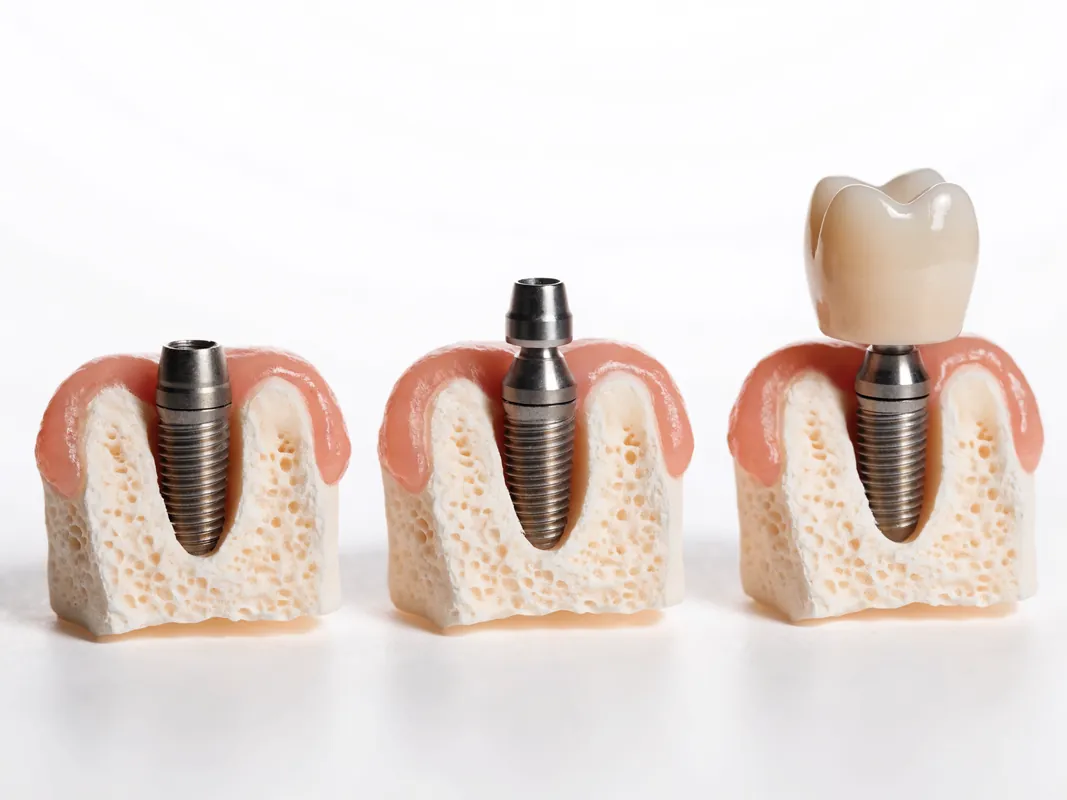
“All-on-4” commonly describes a fixed restoration supported by a proposed arrangement of implants across an arch. It does not, by itself, establish why the arch needs replacement, that every remaining tooth should be removed, that the intended implant positions are available, that all intended supports can be placed, or that a fixed restoration can be connected immediately. It also does not identify the final prosthesis material, tissue design, opposing dentition, cleanability or repair route.
Two offers carrying the same label may therefore be clinically unlike. One may concern a healed toothless lower jaw. Another may involve active periodontal disease, multiple extractions and uncertain posterior anatomy in an upper jaw. One may describe a removable interim restoration if loading conditions are not met. Another may omit that contingency. One may itemise a provisional and a separately designed final bridge. Another may use the word “teeth” without saying which stage is being sold.
A responsible proposal translates the label into a patient-specific design. It should identify:
- the arch or arches under consideration;
- the diagnosis and unresolved findings;
- each remaining tooth and its prognosis;
- fixed, removable, tooth-preserving, staged and no-treatment alternatives;
- intended implant number, positions and restorative purpose;
- relevant hard- and soft-tissue findings;
- placement, loading, provisional and final-restoration gates;
- the intended prosthesis construction and cleaning access;
- clinical and commercial owners of each stage;
- contingency branches and their financial effect;
- records, maintenance, urgent-care and complaint arrangements.
The label becomes useful only after those facts exist. It should never replace them.
Preserve Restorable Teeth Before Pricing an Arch Replacement
Removing a tooth is irreversible. A full-arch offer should not start with a predetermined extraction list merely because a package is easier to sell as one unit. Each remaining tooth needs an individual finding, prognosis and explanation of reasonable options. This assessment may consider decay, cracks, remaining tooth structure, pulp and root condition, periodontal support, mobility, infection, previous treatment, restorability, position, function, symptoms and the patient’s ability to maintain it.
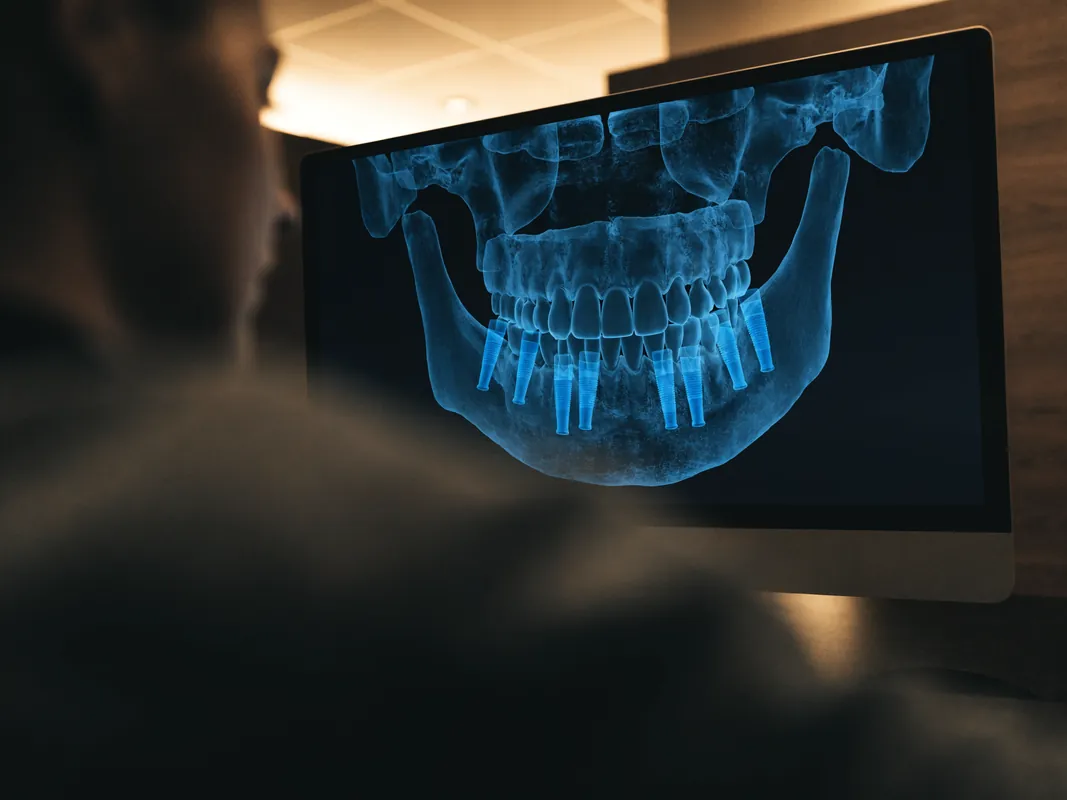
Ask for a tooth-by-tooth table. For every tooth, the table should state whether the proposal is to retain, repair, treat, monitor or remove it; why; what evidence supports that choice; which alternatives were discussed; and what uncertainty remains. A statement such as “all teeth are bad” is not equivalent to this record. Nor is an image of a panoramic radiograph with no written interpretation.
Preservation does not mean keeping every tooth at any cost. Some teeth may have a poor prognosis or may not contribute to a maintainable plan. The point is that the decision belongs to clinical assessment rather than package architecture. Where several teeth appear potentially restorable, an independent second opinion can test whether an arch-wide extraction proposal is proportionate. The second opinion should receive usable records and should not be asked merely to beat a price.
Ask how preserving selected teeth would change the design. Possibilities may include restorative or periodontal treatment, a shortened dental arch, a tooth-supported option, a combination plan, staged reassessment, a removable prosthesis or monitoring. Each alternative has burdens and limitations. Consent should compare those burdens without presenting extraction and implant replacement as an automatic upgrade.
Build the Diagnosis Before Building the Quote
A proposal should identify the problems it is intended to address. Missing teeth are only one part. The record may need to describe active infection, periodontal disease, decay, failing restorations, tooth wear, pain, swelling, current denture problems, chewing limitations, speech concerns, dry mouth, hygiene difficulty and aesthetic priorities. Symptoms and patient goals should not be merged into a product request.
Medical history matters because surgery, healing, medicines, bleeding, infection risk, sedation considerations and maintenance can be affected by health conditions and treatment. The clinician should obtain an appropriate history and update it when circumstances change. Patients should disclose medicines, allergies, smoking or vaping, previous operations, relevant diagnoses and previous reactions. This does not allow a website to declare suitability; it identifies subjects for a clinician to assess.
The whole mouth also matters. The opposing arch may contain natural teeth, crowns, a removable denture, implants or another full-arch prosthesis. Bite relationships, available restorative space, tooth wear, jaw movement, muscle or joint symptoms, parafunction, lip and facial support, smile display, speech, opening and hygiene ability may affect the plan. A proposal that prices one arch without describing its relationship to the other may omit an important design dependency.
Write unresolved questions into the quote rather than hiding them. If an examination, imaging report, periodontal chart, diagnostic model, trial prosthesis or specialist opinion is still required, say so. A remote estimate can be useful for orientation, but it should identify which findings are provisional and which decisions will wait for direct assessment.
Remote Records Have a Boundary
Photographs, a panoramic image, a scan or a medical questionnaire may help a clinician prepare questions. None alone replaces a full clinical examination. Photographs do not show every surface, periodontal pocket, tissue texture, mobility, contact or occlusal relationship. A panoramic image may provide an overview but may not answer every site-specific anatomical or restorative question. Three-dimensional imaging should be justified by a defined clinical need and interpreted with the rest of the assessment.
The [American Dental Association update on dental imaging](https://adanews.ada.org/ada-news/2026/january/new-ada-recommendations-confirm-dental-imaging-most-effectively-used-in-moderation/) emphasises that imaging should follow clinical examination and patient-specific need rather than be routine. This supports a simple verification question: what decision will each image help the clinician make? It does not prescribe an image for every patient or approve a treatment plan remotely.
Ask who requested the image, who interpreted it, whether a report exists, which anatomical and pathological questions were addressed, and how the file will be supplied in a usable format. Surface scans, photographs and diagnostic models may support restorative planning, but they do not make surgical anatomy disappear. Conversely, bone imaging does not determine tooth position, speech, tissue contour, appearance or cleaning access by itself.
Any remote price should therefore contain an in-person decision gate. The gate should explain what can change after examination and how a change affects consent, treatment, travel and payment. The patient should have a genuine option to pause rather than feeling that a flight or deposit has already decided the clinical outcome.
Compare Fixed, Removable, Staged and No-Treatment Options
A fixed full-arch restoration is one possible response to extensive tooth loss or an unfavourable collective tooth prognosis. It is not the only possible response. Depending on the findings and goals, reasonable alternatives may include preserving strategic teeth, a conventional denture, an implant-retained removable overdenture, a different fixed support design, staged treatment, an interim prosthesis, treatment of active disease before reconstruction, or no active replacement for the moment.
Compare options by what the patient will actually experience and maintain. Questions include whether the prosthesis can be removed by the patient, how it supports lips and facial tissues, how it affects speech, what surgery it requires, whether it can be repaired locally, which parts wear, how tissue changes are managed, how cleaning is performed, and what professional maintenance is available. “Fixed” does not mean maintenance-free. “Removable” does not mean clinically inferior.
The patient’s priorities should be explicit. Someone with limited dexterity may value a design that can be cleaned more directly. Another person may prioritise a fixed option but need to understand professional access and component requirements. Existing denture experience, gag reflex, facial support, speech, medical circumstances, travel capacity and local dental access can alter the balance.
Ask the named clinician to explain why the proposed All-on-4 design is preferred over the realistic alternatives for this patient. A valid answer connects findings, goals and trade-offs. A slogan about speed, permanence or destination does not.
Implant Number, Position and Support Are Clinician-Owned Decisions
The number in the label is not a universal prescription. Implant count interacts with implant positions, distribution, bone availability, arch form, prosthetic span, cantilever, loading strategy, opposing dentition, tissue design, component connections, hygiene access and the consequence of losing a support. A larger or smaller count is not automatically better. The design has to work as a system.
The [ITI consensus statement on implant number for complete-arch fixed prostheses](https://academy.iti.org/academy/consensus-database/consensus-statement/-/consensus/number-of-implants-placed-for-complete-arch-fixed-prostheses/1701) links support planning to prosthetic design, distribution, anatomy, restorative space, opposing dentition, hygiene and the consequences of future support loss. Its group-level recommendations do not prove that the All-on-4 label is indicated for a particular jaw. The named clinicians still have to explain the patient-specific count, sites and fallback.
Ask for a simple arch map. It should show intended sites, approximate restorative positions, relevant anatomy, extraction areas, defects, intended support distribution, proposed prosthetic extent and any distal extension or cantilever. It should also show what happens if one intended site is unavailable or does not meet the placement or loading condition.
The surgical and restorative plans should be linked. Implants placed where bone appears convenient may create difficult screw access, bulky contours, poor cleaning access or an unfavourable restorative span. Equally, an attractive virtual tooth arrangement must respect anatomical and surgical limits. The named surgical and restorative clinicians should identify who approves the combined plan and who documents deviations.
The [ITI consensus statement on implant placement and loading protocols](https://academy.iti.org/academy/consensus-database/consensus-statement/-/consensus/implant-placement-and-loading-protocols/1802) distinguishes placement and loading terminology and supports case-selection rather than automatic scheduling. It does not choose a support count or position for an individual patient. That choice remains a clinician-owned, patient-specific decision.
Assess Hard Tissue and Soft Tissue Separately
Hard-tissue assessment may consider ridge form, available bone, extraction sockets, defects, pathology and anatomical boundaries. If augmentation, sinus-related surgery, ridge modification or another procedure might be relevant, the proposal should say why, which site, what alternatives exist, whether it changes staging, and which findings would confirm or reject it. A generic line for “bone” is not an adequate description.
Soft tissue affects wound management, emergence, tissue display, cleaning, comfort, speech, facial support and long-term monitoring. The plan may need to record inflammation, tissue thickness, mobile tissue, scars, ridge contour and the transition between natural and prosthetic tissue. A prosthesis can look full in a photograph while having a tissue surface that the patient cannot clean.
Some designs replace lost gum volume with prosthetic material. The patient should understand where that material meets the tissues, whether the junction may be visible during smiling or speech, and how access will be tested. If tissue or bone reduction is proposed to create restorative space or move the transition, the biological and aesthetic consequences require specific explanation and consent. Tissue should not be removed simply to fit a preselected package design.
Hard- and soft-tissue decisions also affect contingency. The plan should state what happens if an extraction site, defect or tissue condition differs from the remote expectation. Options may include revising implant positions, staging a procedure, changing the interim restoration, choosing a different prosthetic design, pausing or referring. The choice should not be improvised commercially after the patient arrives.
Start With the Intended Restoration
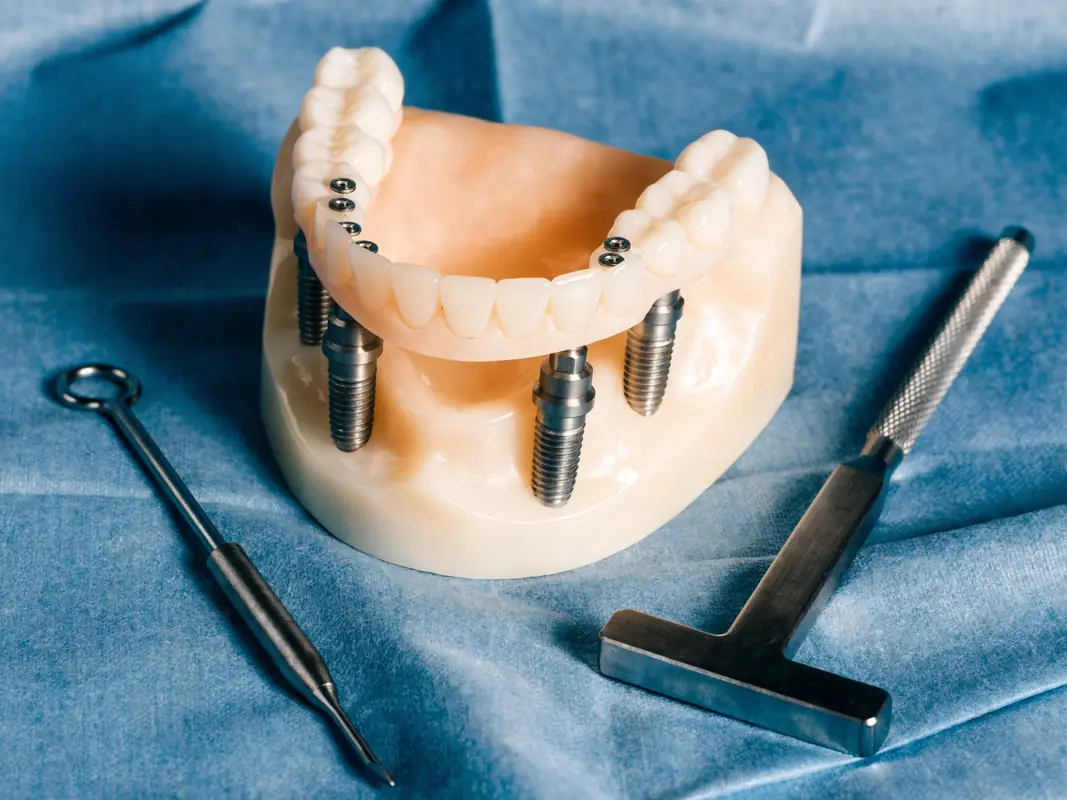
Implant planning is not just placing supports and deciding on teeth later. The intended tooth position, arch form, tissue replacement, facial support, speech, restorative space, opposing arch and cleaning access should guide the support plan. This is sometimes described as restoratively driven planning. The phrase should lead to documented decisions, not another slogan.
Ask for the restorative envelope: where the proposed teeth and prosthetic tissue need to be, how much vertical and horizontal space exists, where screw access may emerge, how contours can remain cleanable, and how the opposing arch contacts the restoration. If a surgical guide or digital workflow is proposed, ask who owns the design inputs and who verifies the clinical fit. A digital plan is a communication and transfer tool; it is not evidence that anatomy and tissues will exactly match the model during treatment.
The prosthetic design should also state whether it is intended to be clinician-removable, how access channels are managed, what interfaces or abutments are used, and what tools and records are needed for service. These details affect local maintenance and repair. They belong in the clinical scope before a total is compared.
Separate Placement, Loading, Provisional and Final Restoration
Package language often compresses several decisions into “fixed teeth.” Unpack that phrase into distinct stages:
- extraction timing, if teeth are removed;
- implant placement timing and site condition;
- the decision whether an implant or group of implants may be loaded;
- connection of a fixed or removable provisional restoration;
- healing and review of tissues, support and function;
- records for the definitive prosthesis;
- try-in, verification, manufacture and final delivery;
- maintenance and future service.
Immediate placement describes the relationship between extraction and implant insertion. It does not automatically mean immediate loading. Immediate loading describes when a restoration is connected under a defined protocol. It does not prove biological integration or mean that the connected restoration is definitive. A provisional restoration can be valuable, but it is not just a cheaper final bridge.
The [ITI consensus statement on loading fixed prostheses in edentulous jaws](https://academy.iti.org/academy/consensus-database/consensus-statement/-/consensus/loading-protocols-for-fixed-prostheses-in-edentulous-jaws/1313) addresses different loading pathways and case-selection considerations. Use it to understand why terminology and conditions matter, not to self-select a protocol. The named clinician must decide what the observed placement, distribution, support, bite and patient factors permit.
Ask the quote to name every stage and price it where appropriate. If “temporary teeth” appears, ask whether they are fixed or removable, which arch they cover, what they are made from, what restrictions apply, who adjusts them, and what happens if the intended fixed provisional cannot be connected.
Make Immediate Loading Conditional
An intention to provide a fixed provisional can be discussed in advance, but the loading decision should remain conditional on clinical findings. The written plan should state which findings the clinician will assess, who owns the decision, and what fallback has been agreed. Suitability can be influenced by achieved placement conditions, support distribution, prosthesis rigidity, bite, opposing dentition, anatomy, tissue procedures, medical circumstances and the patient’s ability to follow personalised instructions.
A fallback may involve unloaded healing, a removable interim restoration, a different support arrangement, staged surgery, revision of the provisional or pausing. None of these branches should be treated as a surprise upsell. The proposal should state the clinical reason, practical consequences, revised documents and financial rule before treatment begins.
The patient should know that a provisional attached shortly after placement is not proof that integration has completed. It is part of a controlled strategy. Reports of looseness, fracture, bite change, pain or tissue problems need clinical assessment. A remote coordinator may pass information, but cannot always determine the cause or replace examination.
Avoid a calendar promise. Progression should follow patient-specific criteria recorded by the responsible clinician. Travel can be planned around decision windows, but a return ticket should not force a final restoration when findings are unresolved.
Treat the Provisional as a Diagnostic Stage
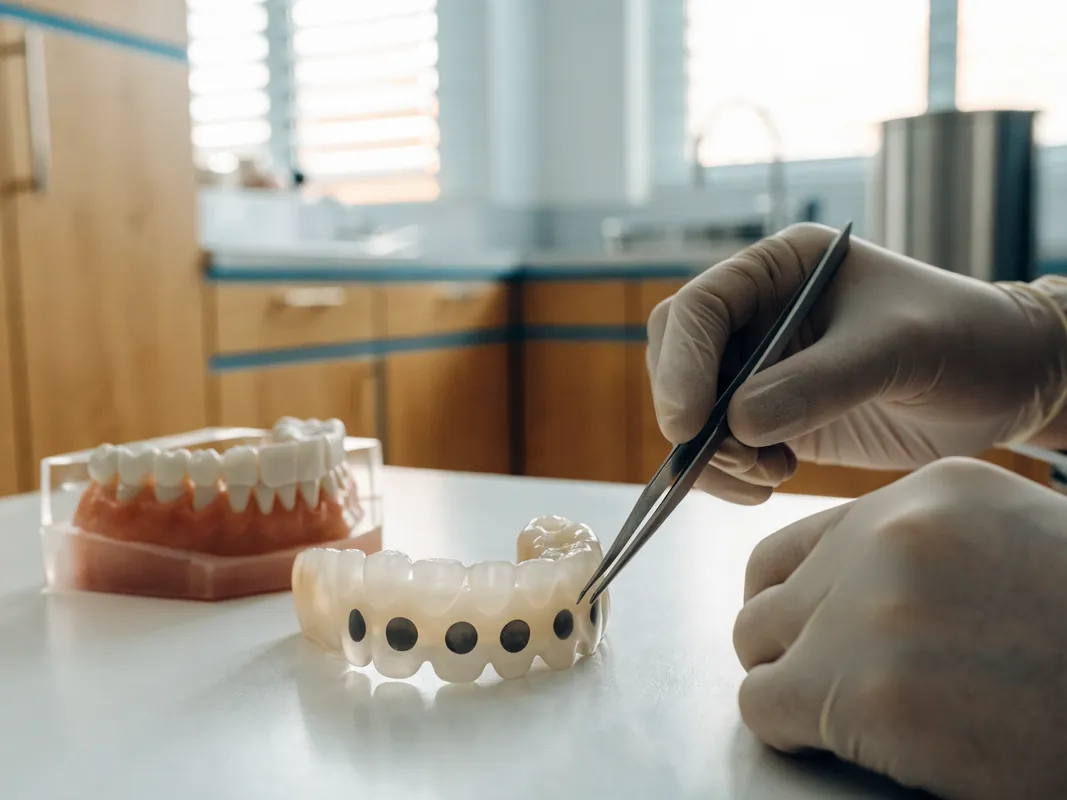
The provisional restoration can serve several purposes. It may contribute to a loading strategy, maintain appearance and limited function, and allow evaluation of tooth position, lip support, smile display, speech, bite, comfort and hygiene. Its design, material and intended period of use should be documented. It should not be described as the final result.
Ask what the provisional is meant to test. The review should capture whether the patient can clean beneath and around it, whether speech sounds have changed, whether tooth length and facial support align with the agreed goals, whether the bite is stable, whether food trapping occurs, and whether any component or material has loosened, worn or fractured. Tissue healing may also change the final contours.
Feedback needs a revision pathway. A patient should know how observations are recorded, which changes can be made, who approves them and whether they affect the definitive laboratory prescription. A photograph alone may not show a bite interference, tissue pressure or inaccessible surface. Final manufacture should wait until clinically relevant provisional findings are addressed.
If the provisional needs repair after the patient travels home, the plan should identify an assessment route, relevant materials and component records, the laboratory or clinician contact, and how costs and responsibility are determined. Do not assume a local dentist will alter an unfamiliar fixed prosthesis without adequate information.
Define the Final Prosthesis Without Material Slogans
“Final bridge,” “zirconia teeth,” “hybrid,” “acrylic” and similar terms can hide substantial design differences. The proposal should identify the actual construction: prosthetic tooth and tissue materials, framework or interfaces, monolithic or layered regions, retention method, abutments, screws, bonding where relevant, access-channel design, expected service route and laboratory prescription.
Material selection belongs to the named restorative clinician and laboratory process, informed by available space, support, opposing dentition, bite, parafunction, appearance, sound, weight, surface finish, cleanability, component access and repairability. A material category does not guarantee strength, comfort, appearance or lifespan. Nor does a brand name prove that the prescribed dimensions and processing were followed.
Ask how shade, tooth form, gingival colour, facial support and speech are verified. Clarify which decisions are made during a trial or prototype and which cannot be changed after manufacture without remaking part or all of the prosthesis. The patient should be able to understand and approve the intended design without being told that a digital preview guarantees the delivered appearance.
The final acceptance record should cover fit, components, access, bite, speech, appearance, tissue relationship, cleanability and any unresolved issue. It should also identify who accepted the prosthesis clinically and which records were supplied. “Permanent” should not be used to imply that maintenance, repair or future replacement can never be needed.
Component and Device Traceability Is Not Brand Ranking
Implant treatment involves more than the fixture placed in bone. The restorative chain may include an implant, connection, abutment or multi-unit component, screw, temporary components, interfaces, prosthetic materials and laboratory-made parts. Future assessment can depend on identifying the exact system, dimensions and site. A brand logo in a brochure is not a patient record.
The [FDA patient information on dental implants](https://www.fda.gov/medical-devices/dental-devices/dental-implants-what-you-should-know) describes implant-system parts, possible benefits and risks, and questions patients can discuss with a provider. The FDA’s broader [implants and prosthetics information](https://www.fda.gov/medical-devices/products-and-medical-procedures/implants-and-prosthetics) explains that medical devices have benefits and risks and that device information matters. These United States resources do not regulate Turkish care; they are useful for understanding why device identity and informed questions matter.
Ask for site-linked identifiers and records available for the actual components used. The record should distinguish what was proposed from what was placed. If a component changed during surgery or restoration, the final patient record should be updated. Request implant position, system and reference information where available, connection and abutment information, prosthetic screw details where relevant, graft or membrane records when used, and the final restoration construction.
Traceability should not become a brand ranking exercise. The clinically relevant questions are compatibility, authorised supply, documented identity, correct use, availability for service and a design appropriate to the case. No manufacturer name makes an unsuitable plan suitable.
Name the Laboratory and Preserve Its Records
The laboratory is part of the restorative chain, not an invisible box. Ask who writes the prescription, which laboratory fabricates the provisional and final prostheses, where fabrication occurs, how records are transferred, and who verifies materials and fit. If work is subcontracted, the responsible clinical provider should be able to explain the chain.
Useful records may include the final laboratory prescription, material and component declarations where applicable, design approvals, shade and form records, interface details, repair information and a statement of conformity or equivalent documentation where relevant to the jurisdiction and device. Not every document has the same legal form everywhere, so ask the responsible provider what applies and what will be handed to the patient.
Laboratory traceability helps when a prosthesis requires adjustment or repair. It does not mean every local laboratory will accept the case. Before travel, ask a local provider what records it would need and whether it is willing to assess or service the proposed design. This can reveal a continuity gap while there is still time to change the plan.
Design for Cleanability, Not Just the Photograph
A fixed full-arch prosthesis needs daily patient cleaning and professional maintenance. The tissue surface, access spaces, contours and transition line should allow the patient to use prescribed hygiene aids. A polished marketing photograph does not show whether the patient can reach the surfaces that matter.
Ask the clinician to demonstrate cleaning on the actual provisional and final design. The patient should be able to show the technique back, not merely receive a generic leaflet. Dexterity, vision, mouth opening, tissue shape, gag response and willingness to maintain the prosthesis affect what is realistic. Where access is poor, the design or option may need reconsideration.
Professional maintenance should have a named route. The plan may include tissue assessment, plaque and bleeding review, prosthesis and component inspection, bite review and imaging only when clinically justified. Whether and when a clinician removes a fixed prosthesis is a clinical decision; package wording should not promise routine removal without explaining indication, tools, component availability and responsibility.
The [European Federation of Periodontology guideline for prevention of peri-implant disease](https://www.efp.org/fileadmin/uploads/efp/Documents/Other_publications/Clinical_guidelines/peri-implantitis-guideline-01-prevention.pdf) emphasises prevention, risk assessment, supportive care and patient-performed plaque control. Use that principle to demand a maintainable design and handover, not to assume one schedule suits every patient.
Plan for Repair and Maintenance
Biological and technical maintenance are different. Biological concerns may involve tissue inflammation, bleeding, pain, infection, healing, bone changes or loss of support. Technical concerns may involve wear, provisional fracture, ceramic or resin damage, screw loosening, component damage, access-channel problems, interface issues, loss of fit or bite change. Speech, food trapping, cheek or tongue biting and difficulty cleaning also deserve assessment.
The proposal should explain which parts may be repaired chairside, which require laboratory work, which require component access, and what could require a replacement prosthesis. It should not promise that a material is unbreakable or that a written commercial term removes the need for clinical evaluation. The cause matters: replacing a fractured part without assessing fit, support, bite or parafunction may not resolve the problem.
Ask who pays for assessment, removal, components, laboratory work, travel and a revised restoration under different scenarios. The answer may depend on cause and contract. A remedial clause should define process and exclusions; it cannot diagnose remotely or require a local clinician to accept responsibility.
Maintenance costs belong in long-term comparison even if they are not in the initial treatment total. Request the anticipated types of review and service without demanding a universal schedule or predicting a fixed lifespan.
Record Bite, Speech, Appearance and Function
Full-arch reconstruction changes more than tooth colour. Tooth position, arch form, vertical relationship, palatal or lingual contour, prosthesis thickness, facial support and contacts can affect speech and function. The opposing arch and parafunctional habits can influence material and maintenance decisions. These factors should be assessed, tested and recorded rather than assumed from a digital smile image.
Ask how the provisional stage will test sounds, chewing comfort, facial support, lip closure, tooth display, midline, incisal position and hygiene. Ask what constitutes acceptance and how requested changes are documented. A patient can approve an appearance while a clinician still identifies a functional or cleanability problem that requires revision.
Bite records may change as painful teeth are removed, tissues heal or the patient adapts. The restorative clinician should explain how the final relationship is established and verified. A booked laboratory slot or departure date should not become the reason to ignore an unstable finding.
Patient-reported outcomes matter, but they are not promises. The plan should identify what matters to this person and what limitations are foreseeable. Marketing photos, testimonials and group-level studies cannot predict individual adaptation, speech or satisfaction.
Identify the Legal Provider, Clinicians and Commercial Roles
A website brand, coordinator, medical-tourism intermediary, treating facility, named clinician, imaging provider, laboratory, payment recipient and travel supplier may be different entities. Put each one in a responsibility map. Do not let a single logo hide who diagnoses, treats, invoices, stores records or handles a complaint.
For the clinical provider, record the full legal name, treatment address and current status in the relevant official system. Turkey’s Ministry of Health publishes an [authorised healthcare-provider list](https://saglikturizmi.saglik.gov.tr/EN%2C69063/healthcare-providers-authorized-by-the-ministry.html), while [HealthTürkiye lists healthcare institutions](https://www.healthturkiye.com/hospitals-list). The [Turkish Dental Association dentist search](https://tdb.org.tr/dishekimi_arama.php) can assist with checking a named dentist. A listing does not diagnose a patient, endorse a package, prove a claimed skill or predict an outcome.
Ask who owns:
- examination, diagnosis and tooth prognosis;
- extraction and implant surgery;
- grafting or other tissue procedures;
- the loading decision;
- provisional design and adjustment;
- final restorative prescription and acceptance;
- sedation or anaesthesia where relevant;
- laboratory manufacture;
- records and data handling;
- maintenance, urgent triage and complaints;
- flights, accommodation or ground transport if purchased.
A coordinator may organise communication and logistics. The coordinator should not be presented as the clinician making irreversible decisions. If clinical responsibility is shared, the patient should know how the clinicians communicate and who has final authority at each gate.
Consent Must Follow the Final Scope
Consent is a process, not a signature collected before examination. The patient should receive understandable information about diagnosis, benefits, material risks, reasonable alternatives, no-treatment options, uncertainties, staging, contingency branches, maintenance and costs. Questions should be answered by someone qualified to answer them. Consent should be updated when the plan changes.
The [GDC Principle Three on valid consent](https://standards.gdc-uk.org/pages/principle3/principle3) applies to GDC registrants and offers a useful benchmark: explain options, risks, benefits and costs; ensure the patient can decide; and keep the discussion under review. It does not establish the law or regulatory status of a provider in Turkey. The point is to ask for a comparably clear documented process from the actual responsible provider.
If direct assessment changes the extraction list, support count, implant positions, tissue procedures, loading approach, provisional or final design, the patient should receive the revised reason and financial consequence before the changed work proceeds. Consent obtained for a marketing label does not cover every possible deviation.
Ask for interpreters or translated documents where needed, and clarify who provides them. A patient should not have to rely on a family member to translate complex clinical risk. The record should show the language used and the key decisions, without claiming that translation alone guarantees understanding.
Records Are Part of the Treatment Scope
Records support continuity, consent, repair, complaints and independent review. The [GDC Principle Four on patient information](https://standards.gdc-uk.org/pages/principle4/principle4) describes accurate and contemporaneous records, including relevant clinical findings, treatment, consent, radiographs, photographs, models and laboratory information. It directly governs GDC registrants; use it as a handover benchmark rather than a claim about another jurisdiction.
Request, as relevant:
- medical and dental history;
- examination and diagnosis;
- tooth-by-tooth prognosis;
- periodontal and restorative findings;
- images, reports, photographs and digital models in usable formats;
- implant and prosthetic planning records;
- extraction, grafting and surgical notes;
- implant, abutment, screw and other component identifiers;
- provisional design and adjustment notes;
- final material and laboratory prescription;
- fit, torque, bite, speech, appearance and hygiene records;
- medicines, discharge instructions and adverse-event notes;
- baseline maintenance findings;
- invoices, consent versions and responsible contacts.
Agree how records are requested, in which language and format they are supplied, and whether a charge applies. Ask which entity is the data controller and how information moves between intermediary, facility, laboratory and home clinician. Privacy wording should match the real data flow rather than a generic website statement.
Build an Equivalent Clinical-Scope Quote
Do not compare two totals until their clinical rows match. Create a worksheet with one row for every assessment, procedure, device, component, provisional, laboratory stage, review, record and contingency. Mark each row as included in the clinical quote, excluded, conditional, unknown or supplied by another provider. “Package” is not a status.
A useful clinical matrix includes:
| Scope row | Proposal A | Proposal B | Evidence still needed |
|---|---|---|---|
| Named arch diagnosis | Written finding | Written finding | Examination or report |
| Tooth preservation decisions | Tooth-by-tooth | Tooth-by-tooth | Second opinion if uncertain |
| Extractions | Sites and owner | Sites and owner | Final in-person decision |
| Implant design | Intended sites and components | Intended sites and components | Restorative map |
| Tissue procedures | Itemised or conditional | Itemised or conditional | Site-specific indication |
| Loading pathway | Criteria and fallback | Criteria and fallback | Placement findings |
| Provisional restoration | Type, material, service | Type, material, service | Repair route |
| Final prosthesis | Construction and laboratory | Construction and laboratory | Prescription and acceptance |
| Reviews and records | Named deliverables | Named deliverables | Handover method |
| Maintenance and urgent care | Responsible route | Responsible route | Local acceptance |
The cheapest visible total may simply contain fewer rows. A higher total may also remain poor value if responsibility, design or records are vague. Equivalent scope does not mean the plans should be identical; it means differences are visible and clinically explained.
Ask for taxes, professional fees, device and laboratory items, medicines, reviews, records and conditional procedures to be clear. Do not assume that an item omitted from the quote will be unnecessary. Mark it as unresolved and ask who decides.
For UK-regulated dentistry, [GDC Principle Two](https://standards.gdc-uk.org/pages/principle2/principle2) requires clear information, a written treatment plan with likely cost, and an updated written plan when treatment or cost changes. It is not automatically binding on a Turkish provider, but it offers a useful comparison standard for the written scope and change-control process a travelling patient should request.
Exclusions and Change Triggers Belong Beside the Total
Every proposal has boundaries. Ask for explicit exclusions rather than relying on verbal reassurance. Potentially relevant exclusions can include additional diagnostic work, management of active disease, extractions, grafting, sinus-related procedures, sedation, medicines, temporary repairs, revised provisionals, additional laboratory stages, component replacement, local care, maintenance or treatment of unrelated findings. Relevance is patient-specific; the list should not be copied as if every item applies.
A change trigger is a finding that can alter scope. Examples include a tooth proving non-restorable, an intended site being unsuitable, unexpected pathology, a support not meeting the loading gate, the provisional revealing a speech or bite problem, tissue healing changing the contour, or the patient choosing a different final design. Each trigger needs a decision owner and a commercial rule.
Ask:
- who can recommend the change;
- which evidence supports it;
- whether the patient can pause;
- what alternative branches exist;
- whether fresh consent is required;
- how the quote and invoice change;
- how travel or laboratory bookings are handled;
- which records document the final decision.
“Subject to clinical assessment” is useful only when the consequences are also described. It should not function as permission for an unlimited total after arrival.
Keep Clinical Scope and Travel Scope in Separate Ledgers
An All-on-4 advertisement may combine clinical work with accommodation, transfers, flights or other services. Keep those items separate even when one coordinator displays one headline. Travel convenience does not establish clinical quality, and a clinical change should not be hidden inside a travel total.
For clinical services, identify the legal provider, responsible clinicians, clinical invoice, consent, cancellation rules and complaint route. For non-clinical services, identify the supplier, exact dates or service window, room or vehicle terms where relevant, accessibility needs, cancellation conditions, taxes, deposits and the party responsible when a booking changes. Do not assume a clinic owns a hotel or transfer service because the names appear together.
The quote should state what is merely suggested, what the patient books independently, what an intermediary arranges, and what is paid to each supplier. A package line should never imply accommodation or transport unless the written quotation names the specific service and its conditions. This guide makes no travel-inclusion promise.
Keep travel flexible around clinical decision gates. If the clinical plan changes after examination, ask how unused or changed non-clinical services are treated. A non-refundable flight should not pressure the patient into an irreversible procedure.
Verify the Payee, Deposit, Refund and Foreign-Exchange Terms
Before sending money, identify who will receive it and why. The account holder should make sense in relation to the contract, invoice and service. If the payment recipient differs from the treating provider or travel supplier, request the legal relationship and allocation of funds. Do not transfer a clinical deposit to an unexplained personal account.
Ask for the deposit amount and purpose, when it becomes non-refundable, which events permit cancellation or refund, how a clinician-led scope change is handled, which deductions may apply, and how long a contractual process may take without accepting a fixed promise. Read the governing terms and complaint route. Keep dated copies of the offer, contract, invoice, payment record and correspondence.
For foreign exchange, record the quoted currency, payment currency, rate source or conversion method, card or bank fees, refund currency and who bears a rate difference. A headline converted on one day may not equal the amount charged or refunded later. The [Central Bank of the Republic of Türkiye publishes indicative exchange rates](https://www.tcmb.gov.tr/wps/wcm/connect/EN/TCMB%20EN/Main%20Menu/Statistics/Exchange%20Rates/Indicative%20Exchange%20Rates), but an indicative rate is not proof of the rate a bank, card issuer or provider will apply. If a separate payment or foreign-exchange firm is involved, verify the exact entity and current status through the [FCA Financial Services Register](https://register.fca.org.uk/s/) when UK regulation is claimed. The register does not validate the clinical provider or protect every transaction.
Ask the card issuer, bank and insurer directly about protections and exclusions. Do not assume that a payment method guarantees recovery for treatment dissatisfaction or that travel insurance covers planned dental care.
Plan Travel Around Clinical Gates
The [NHS treatment-abroad checklist](https://www.nhs.uk/using-the-nhs/healthcare-abroad/going-abroad-for-treatment/treatment-abroad-checklist/) advises patients to research treatment, provider qualifications, costs, risks, aftercare and what happens if something goes wrong. The [GDC guidance on going abroad for dental treatment](https://www.gdc-uk.org/standards-guidance/information-for-patients-public/going-abroad-for-dental-treatment) similarly highlights provider checks, assessment, records, costs, aftercare and complaints. These sources support preparation, not a destination verdict.
Ask the clinician which stages require direct assessment, what uncertainty remains, and what evidence permits progression. Build flexible arrangements around examination, surgery, provisional review and final-restoration verification. Laboratory work, tissue response, symptoms or a design revision can affect the sequence. There is no universal timetable in this guide.
Discuss procedure-specific flying, activity, food, medicines and assistance after the actual intervention. Use current [UK government travel advice for Turkey](https://www.gov.uk/foreign-travel-advice/turkey) for entry, safety and practical planning, and recheck it near travel. Travel advice does not decide clinical fitness to fly; that question belongs to the treating clinician based on the actual procedure and patient.
Do not plan an immediate onward journey that leaves no practical route for an early clinical concern. At the same time, remaining near the provider is not a substitute for a written urgent-care plan. Know which local service to use if symptoms become urgent.

Arrange Local Aftercare Before Paying
Cross-border treatment creates a handover problem unless a local route is established. Contact a suitable dentist before travel, share the proposed system and design, and ask what assessment, maintenance or urgent care the practice is willing and equipped to provide. A local clinician decides what responsibility to accept. Do not assume that any dentist can remove, repair or obtain parts for an unfamiliar full-arch prosthesis.
Ask the overseas provider which records, tools and components a home clinician may need, how clinical questions are exchanged, and whether images or laboratory files can be supplied. Clarify whether remote review is informational, administrative or clinical, and when an in-person examination is required. A photograph or video cannot always distinguish tissue, component, fit and bite problems.
The maintenance plan should identify personalised hygiene, professional reviews, baseline tissue and prosthesis findings, bite and component assessment, imaging only when clinically indicated, and the route for repair or removal. Frequency should be based on the patient, disease history, hygiene, prosthesis and findings rather than a universal calendar.
Budget for local assessment and maintenance separately. A commercial remedial term does not create a local provider or pay that provider unless the written contract clearly says so and the clinician agrees.
Know Which Symptoms Need Prompt Assessment
Personalised discharge instructions should identify expected effects, concerning changes and the contact route. Seek prompt professional assessment for severe or worsening pain, increasing swelling, fever or marked illness, persistent discharge, uncontrolled bleeding, new or changing altered sensation, an opening wound, inability to maintain food or fluids, a loose or fractured provisional or final prosthesis, sudden bite change, exposed or mobile components, or a rapidly worsening hygiene problem.
Difficulty breathing or swallowing, rapidly spreading swelling, collapse, major facial trauma or another life-threatening concern requires the current local emergency route. Do not wait for a coordinator, remote message or return flight.
Do not glue, drill, repeatedly tighten or adjust a fixed full-arch restoration without identifying the system and clinical cause. Keep any detached part. Bring available implant, component, prosthetic, medication and procedure records to the assessing clinician.
Remote contact can support coordination, but it cannot promise a diagnosis or replacement service. The plan should distinguish administrative availability from clinical triage and from emergency care.
Make Complaint and Remedial Boundaries Explicit
Ask for a complaint process before treatment. It should identify the legal recipient, submission method, required information, response pathway, governing terms and any external escalation route. Turkey’s [patient-rights information portal](https://hastahaklari.saglik.gov.tr/) provides official patient-rights information, while the applicable regulation and the exact responsible entity should be checked for the patient’s circumstances. A complaint involving a facility, clinician, intermediary, laboratory and travel supplier may need separate routes.
Remedial terms should define what is assessed, by whom, where, and under which exclusions. They should say whether assessment, components, laboratory work, local care, travel or accommodation are treated separately. Do not interpret “warranty” as a clinical diagnosis, an outcome guarantee or a promise that all related costs will be covered.
Ask what happens when the patient and provider disagree about cause, when a local clinician recommends urgent work, or when travel is not clinically or practically reasonable. Keep the original records and obtain an independent clinical assessment where appropriate. A replacement part may not resolve the cause of pain, inflammation, fracture or looseness.
Commercial rights and clinical needs are related but different. Urgent care should not wait for a complaint decision. Conversely, emergency treatment does not automatically settle contractual responsibility.
Use an Independent Second Opinion to Test Scope
An independent second opinion is especially useful when many teeth are proposed for extraction, one implant layout is presented as inevitable, immediate fixed teeth are promised without a fallback, grafting is unclear, the final prosthesis is undefined, or a large deposit is requested before clinical uncertainties are resolved.
Give the second clinician the same useful records: history, findings, images and reports, tooth prognosis, intended support design, prosthetic plan, materials, contingencies and quote. Ask whether the diagnosis is supported, which teeth might be preserved, what reasonable alternatives exist, what further information is required, and which risks or maintenance needs are missing. Do not ask only whether the price is cheap.
Independence matters. Ask about any referral, ownership or payment relationship. The goal is not a voting contest between sales offers. It is to expose assumptions, clarify uncertainty and protect irreversible decisions.
If opinions differ, ask each clinician to explain the evidence and trade-offs. A more cautious plan is not automatically correct, and a more extensive plan is not automatically comprehensive. The patient needs reasons that can be understood and recorded.
Red Flags in an All-on-4 Package Proposal
Pause when a proposal:
- recommends removal of an arch without tooth-specific findings and alternatives;
- treats the All-on-4 label as proof that exactly one design is suitable;
- provides no named diagnosis or whole-mouth assessment;
- selects implant positions without the intended restoration and cleaning access;
- merges placement, loading, provisional and final stages into one promise;
- has no fallback if a site or loading condition is unsuitable;
- describes grafting as always unnecessary or automatically required;
- names a material or brand without component and laboratory traceability;
- calls the final prosthesis permanent, unbreakable or maintenance-free;
- ignores the opposing arch, bite, speech, facial support or hygiene;
- cannot name the treating legal provider and responsible clinicians;
- hides laboratory, records or conditional procedures inside one total;
- makes travel dates or an expiring offer control clinical decisions;
- sends payment to an unexplained account;
- offers no workable local maintenance or urgent-care route;
- uses a commercial remedial term as if it guaranteed a clinical result;
- refuses usable records, an itemised quote or time for an independent opinion.
One missing document may be correctable. A repeated pattern of pressure, hidden responsibility and unsupported certainty is a reason to stop and reassess.
A Proposal Verification Workflow
Use the following sequence before comparing totals.
Define the patient problem. Record goals, symptoms, medical information, current function, previous treatment and what the patient wants to preserve.
Obtain an examination-led diagnosis. Identify teeth, tissues, disease, anatomy, opposing dentition, bite and unresolved questions. Mark remote conclusions as provisional.
Test preservation. Require a prognosis and alternatives for every proposed extraction. Seek an independent view when the decision is uncertain or extensive.
Compare treatment categories. Consider fixed, removable, staged, tooth-preserving and no-treatment pathways relevant to the findings.
Map the full-arch design. Record intended implant sites, support, tissue needs, prosthetic envelope, cleaning access, opposing arch and contingency.
Separate clinical stages. Write extraction, placement, loading, provisional, healing review, final records, manufacture, delivery and maintenance as distinct rows.
Trace devices and laboratory work. Identify actual components, site-linked records, final construction, prescription, laboratory and repair route.
Name responsibility. Separate legal provider, clinicians, laboratory, intermediary, data controller, payee and travel suppliers.
Build equivalent scope. Mark each clinical and non-clinical row as included, excluded, conditional, unknown or supplied elsewhere. Compare only after gaps are visible.
Read commercial terms. Verify payee, deposit, cancellation, refund, currency, fees, change triggers and complaint route.
Arrange continuity. Establish transferable records, personalised maintenance, local assessment, urgent escalation and remedial boundaries before travel.
Keep the right to pause. New clinical information should trigger explanation, revised consent and a revised quote—not pressure from sunk travel costs.
Frequently Asked Questions
1. Does All-on-4 always mean exactly four implants?
It describes an intended full-arch support concept, not a guarantee that the planned number and positions will be clinically achievable or appropriate. Anatomy, disease, support distribution, restorative design, loading conditions and findings at treatment can require a revised plan. Ask for the intended design and the pre-agreed contingency rather than buying the number alone.
2. Is All-on-4 a diagnosis?
No. A diagnosis describes the patient’s teeth, tissues, disease, symptoms, function and relevant health factors. All-on-4 is a treatment label. The diagnosis and reasonable alternatives should appear before the product name in a defensible proposal.
3. Must all remaining teeth be removed?
No automatic rule follows from the label. Each tooth needs a finding, prognosis and reason to retain, treat, monitor or remove it. When several potentially restorable teeth are proposed for extraction, obtain usable records and consider an independent second opinion before consenting.
4. What alternatives should be discussed?
Relevant options may include preserving teeth, a conventional denture, an implant-retained removable overdenture, another fixed support design, staged treatment, an interim restoration, disease control before reconstruction or no active replacement for now. The useful alternatives depend on examination and patient priorities.
5. Can a remote panoramic image confirm the plan?
It can contribute information but cannot replace direct examination, periodontal and soft-tissue findings, mobility, restorative assessment, bite, hygiene ability or patient-specific consent. Ask which conclusions remain provisional and which records or examinations are still required.
6. Why does the opposing arch matter?
Natural teeth, removable dentures, crowns and implant restorations can create different contacts, wear and maintenance demands. The opposing arch influences bite, material selection, prosthesis design and functional review. A one-arch quote should explain that relationship.
7. Who chooses implant number and position?
Named surgical and restorative clinicians should own the patient-specific decision using examination, appropriate imaging, anatomy and the intended restoration. A coordinator or package description should not prescribe the count or sites.
8. Does immediate placement mean immediate fixed teeth?
No. Placement timing refers to when an implant is inserted relative to extraction or healing. Loading is a separate decision. A fixed provisional may be connected only when the named clinician decides the observed conditions and design permit it.
9. Is an immediately connected bridge the final bridge?
Not automatically. A provisional can support a controlled strategy and test tooth position, speech, bite, facial support and cleaning. The definitive restoration should follow updated clinical records, resolved provisional findings, a final laboratory prescription and renewed consent where necessary.
10. What happens if immediate loading is not suitable?
The written contingency may involve unloaded healing, a removable interim restoration, a different support arrangement, staging, revision or pausing. The clinician should explain the reason, and the provider should issue updated consent, scope and financial documents before a changed pathway proceeds.
11. Is bone grafting always avoided with All-on-4?
No universal claim is appropriate. Tissue deficiency and anatomy are site-specific. The clinician should explain whether a tissue procedure is relevant, its purpose, alternatives, timing relationship, risks and effect on the restorative plan and quote.
12. What should the provisional stage test?
It may test fit, rigidity, tooth position, facial support, speech, bite, comfort, tissue relationship, hygiene access and patient adaptation. Ask how findings are recorded and which issues must be revised before definitive manufacture.
13. What does “final zirconia bridge” actually describe?
The phrase is incomplete. Ask for the exact construction, monolithic or layered areas, prosthetic gingival material, interfaces or framework, retention method, components, laboratory prescription, cleaning design and repair route. A material name alone is not a full specification.
14. Is one prosthetic material always better?
No. Material choice interacts with available space, support, opposing dentition, bite, parafunction, appearance, sound, weight, surface finish, repairability, cleaning and laboratory capability. The responsible clinician should explain the case-specific trade-offs without a superiority slogan.
15. What device records should I receive?
Request site-linked implant system and reference information where available, connections, abutments or multi-unit components, screws where relevant, graft or membrane records when used, the prosthesis construction, laboratory documents and an access map. Final records should describe what was actually used.
16. Why identify the laboratory?
The laboratory turns the restorative prescription into a provisional or definitive device. Its identity, prescription, material and component records can matter for verification, repair and continuity. Ask who is responsible for the prescription, manufacture and final clinical acceptance.
17. How should a fixed full arch be cleaned?
The clinician should prescribe and demonstrate a method suited to the actual tissue surface, access spaces and patient ability. The patient should demonstrate access before leaving. A generic leaflet is not a substitute for a cleanable design and professional maintenance route.
18. Can any dentist repair or maintain it at home?
Do not assume so. A local practice may need compatible tools, parts, records and relevant experience and decides which responsibility it accepts. Contact a provider before travel and share the proposed system and maintenance needs.
19. How do I compare two package totals fairly?
Put both proposals into the same clinical and non-clinical worksheet. Match diagnosis, extractions, implants and components, tissue procedures, provisional, final construction, laboratory, reviews, records, contingencies, travel, aftercare and exclusions. Totals with different rows are not equivalent.
20. Should travel and treatment be on one invoice?
The important point is transparent legal responsibility, not one preferred format. Identify which entity supplies and invoices each service, which terms apply, and how a clinical change affects non-clinical bookings. Keep the ledgers separable even if one coordinator presents them together.
21. What should I check before paying a deposit?
Confirm the legal payee, contract, invoice, service purpose, cancellation and refund terms, clinical change rules, currency, conversion method, fees and complaint route. Question any unexplained personal account or pressure to pay before major clinical uncertainties are documented.
22. Does a provider listing approve my plan?
No. An official listing can help verify an entity’s current status. It does not assign a clinician, diagnose the patient, approve a particular implant design, verify every marketing statement or predict an outcome.
23. What if the clinical plan changes after I arrive?
Ask for the new finding, responsible clinician’s explanation, alternatives, revised risks, updated consent and changed itemised quote before proceeding. The patient should retain a genuine option to pause. Existing travel costs should not become a clinical reason.
24. Does a warranty solve aftercare?
No. Commercial terms do not diagnose a problem, provide local clinical access or automatically cover assessment, components, laboratory work and travel. Read the exact scope and exclusions, and arrange a real local maintenance and urgent-care route independently.
25. When should I seek urgent help rather than message the overseas provider?
Use personalised discharge instructions and seek prompt assessment for worsening pain or swelling, fever, discharge, uncontrolled bleeding, altered sensation, wound concerns, a loose or fractured prosthesis, sudden bite change or exposed or mobile components. Breathing or swallowing difficulty and rapidly spreading swelling require the current local emergency route.
26. When is an independent second opinion most useful?
It is useful when extensive extraction is proposed, records are incomplete, one design is presented as inevitable, loading is promised without a fallback, grafting or final materials are unclear, or the deposit creates pressure. Give the second clinician the same records and ask about diagnosis, preservation, alternatives and missing contingencies rather than price alone.
27. Can a digital preview guarantee my appearance or speech?
No. It is a communication aid. Tissue response, facial movement, prosthesis contour, material, clinical fit, bite, speech and patient perception affect the delivered result. Use the provisional and verification stages to document and revise appropriate goals.
28. Is a fixed full-arch restoration maintenance-free?
No. Patient cleaning, professional tissue and prosthesis review, component access, bite assessment and repair may be relevant. The schedule and methods are personalised. Ask for a maintainable design and a named local route rather than a maintenance-free claim.
Primary and Authoritative Sources
The sources below support the verification framework; they do not diagnose a reader, endorse a provider or select a treatment. Check the live version because official pages and registers can change.
- [FDA: Dental Implants — What You Should Know](https://www.fda.gov/medical-devices/dental-devices/dental-implants-what-you-should-know): implant-system parts, patient questions, potential benefits and risks.
- [FDA: Implants and Prosthetics](https://www.fda.gov/medical-devices/products-and-medical-procedures/implants-and-prosthetics): general medical-device benefit, risk and information context.
- [ADA: patient-specific dental imaging recommendations](https://adanews.ada.org/ada-news/2026/january/new-ada-recommendations-confirm-dental-imaging-most-effectively-used-in-moderation/): examination-led, clinically justified imaging.
- [ITI: Implant Placement and Loading Protocols](https://academy.iti.org/academy/consensus-database/consensus-statement/-/consensus/implant-placement-and-loading-protocols/1802): terminology, case selection and distinctions between placement and loading pathways.
- [ITI: Loading Protocols for Fixed Prostheses in Edentulous Jaws](https://academy.iti.org/academy/consensus-database/consensus-statement/-/consensus/loading-protocols-for-fixed-prostheses-in-edentulous-jaws/1313): evidence-led loading considerations and conditional planning.
- [ITI: Number of Implants for Complete-Arch Fixed Prostheses](https://academy.iti.org/academy/consensus-database/consensus-statement/-/consensus/number-of-implants-placed-for-complete-arch-fixed-prostheses/1701): prosthesis-led support planning, distribution, anatomy, hygiene and contingency considerations.
- [European Federation of Periodontology: prevention of peri-implant diseases](https://www.efp.org/fileadmin/uploads/efp/Documents/Other_publications/Clinical_guidelines/peri-implantitis-guideline-01-prevention.pdf): risk assessment, plaque control and supportive care.
- [GDC: Going abroad for dental treatment](https://www.gdc-uk.org/standards-guidance/information-for-patients-public/going-abroad-for-dental-treatment): provider, assessment, cost, record, aftercare and complaint questions.
- [GDC Principle Three: Obtain valid consent](https://standards.gdc-uk.org/pages/principle3/principle3): a UK professional benchmark for decision information and ongoing consent.
- [GDC Principle Four: Maintain and protect patient information](https://standards.gdc-uk.org/pages/principle4/principle4): a UK professional benchmark for accurate records and handover.
- [GDC Principle Two: Communicate effectively](https://standards.gdc-uk.org/pages/principle2/principle2): a UK professional benchmark for written treatment plans, likely costs and documented changes.
- [NHS: Treatment abroad checklist](https://www.nhs.uk/using-the-nhs/healthcare-abroad/going-abroad-for-treatment/treatment-abroad-checklist/): research, cost, risk, continuity and what-happens-if planning.
- [Republic of Türkiye Ministry of Health: authorised healthcare providers](https://saglikturizmi.saglik.gov.tr/EN%2C69063/healthcare-providers-authorized-by-the-ministry.html), [HealthTürkiye institution list](https://www.healthturkiye.com/hospitals-list), [Turkish Dental Association dentist search](https://tdb.org.tr/dishekimi_arama.php) and [patient-rights portal](https://hastahaklari.saglik.gov.tr/): current identity, status and rights checks within their stated scope.
- [Official Gazette: international health-tourism regulation](https://www.resmigazete.gov.tr/eskiler/2025/04/20250426-2.htm): the current official regulatory text should be checked for the relevant provider and intermediary.
- [GOV.UK: Turkey travel advice](https://www.gov.uk/foreign-travel-advice/turkey): current practical travel information.
- [FCA Financial Services Register](https://register.fca.org.uk/s/): current firm-status checking when UK financial regulation is claimed.
- [Central Bank of the Republic of Türkiye: Indicative Exchange Rates](https://www.tcmb.gov.tr/wps/wcm/connect/EN/TCMB%20EN/Main%20Menu/Statistics/Exchange%20Rates/Indicative%20Exchange%20Rates): an official indicative reference, not a promise of a transactional bank or card rate.
Sources reviewed on 29 August 2026. Recheck the current pages, official registers and patient-specific documents before deciding.
Final Decision Rule
Do not buy the label or the travel wrapper. Proceed only when a named clinician has connected diagnosis, tooth preservation, alternatives, support design, placement and loading gates, provisional learning, final construction, component and laboratory records, cleanability, maintenance and contingency to the individual patient. Then require the commercial documents to match that clinical plan: itemised scope, exclusions, change rules, responsible entities, payee, currency, travel separation, aftercare, urgent escalation and complaints. If those layers do not agree, the package total is not ready to compare.