Bio-Oss is a product family, not a grafting diagnosis
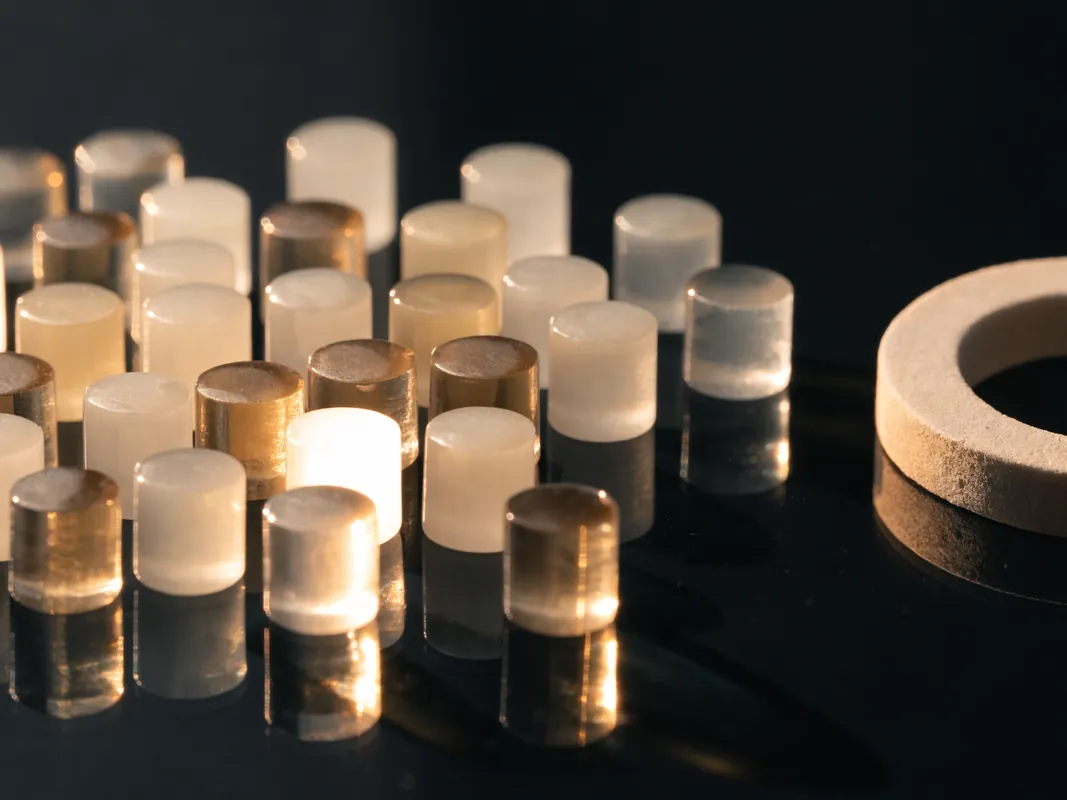
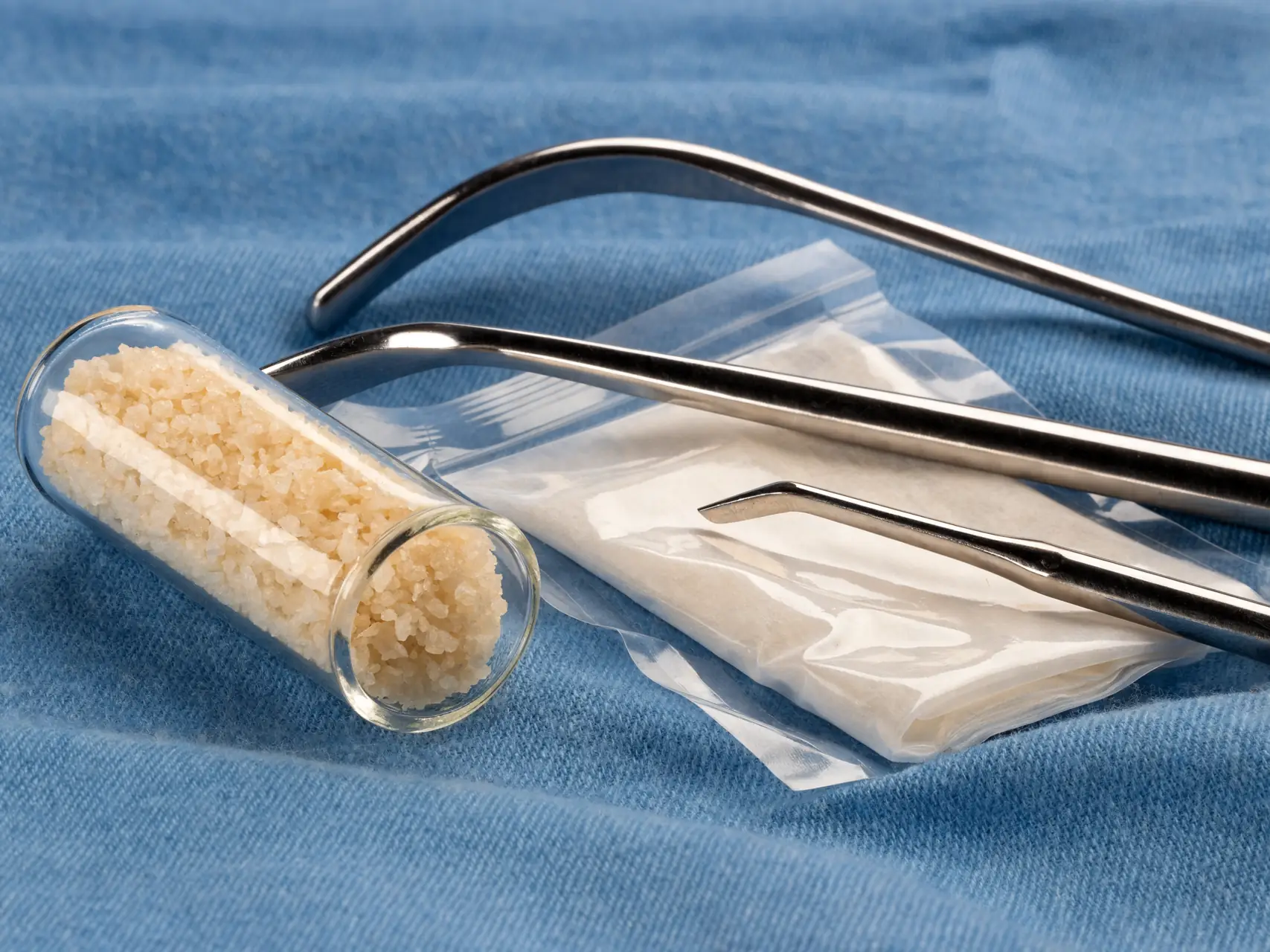
Geistlich Bio-Oss is a family of bone-substitute products made by Geistlich Pharma AG. The name can refer to loose granules, granules supplied in the Bio-Oss Pen applicator, Bio-Oss Collagen containing a separate collagen component, and other market-specific configurations such as block presentations. These forms do not share one label, composition, handling instruction, pack size or regulatory history. A quotation that says only “Bio-Oss” leaves the exact device unresolved.
This page is a neutral product-verification and graft-decision guide. It does not state that WeCare, a clinic, surgeon, periodontist, dentist, hospital, laboratory or intermediary stocks, uses, supplies, recommends or is authorised for Geistlich Bio-Oss. It does not endorse one graft source, promise bone formation, predict implant eligibility, publish an outcome percentage, provide a price, set a healing deadline or create a travel package. Diagnosis, surgical design, consent, execution and follow-up remain the responsibility of appropriately qualified professionals.
The useful patient record must connect a diagnosed defect to an exact product. It should name the procedure and site; defect anatomy; alternatives, including no graft where reasonable; manufacturer; full product form; particle or block size; quantity opened and actually used where recorded; catalogue reference or REF; lot or batch; UDI fields where present; expiry; sterile barrier; animal source; separately used membrane, fixation, autogenous bone or other material; surgical note; postoperative plan; and local handover. A brand label proves none of the clinical steps by itself.
Build an exact product identity before comparing quotations
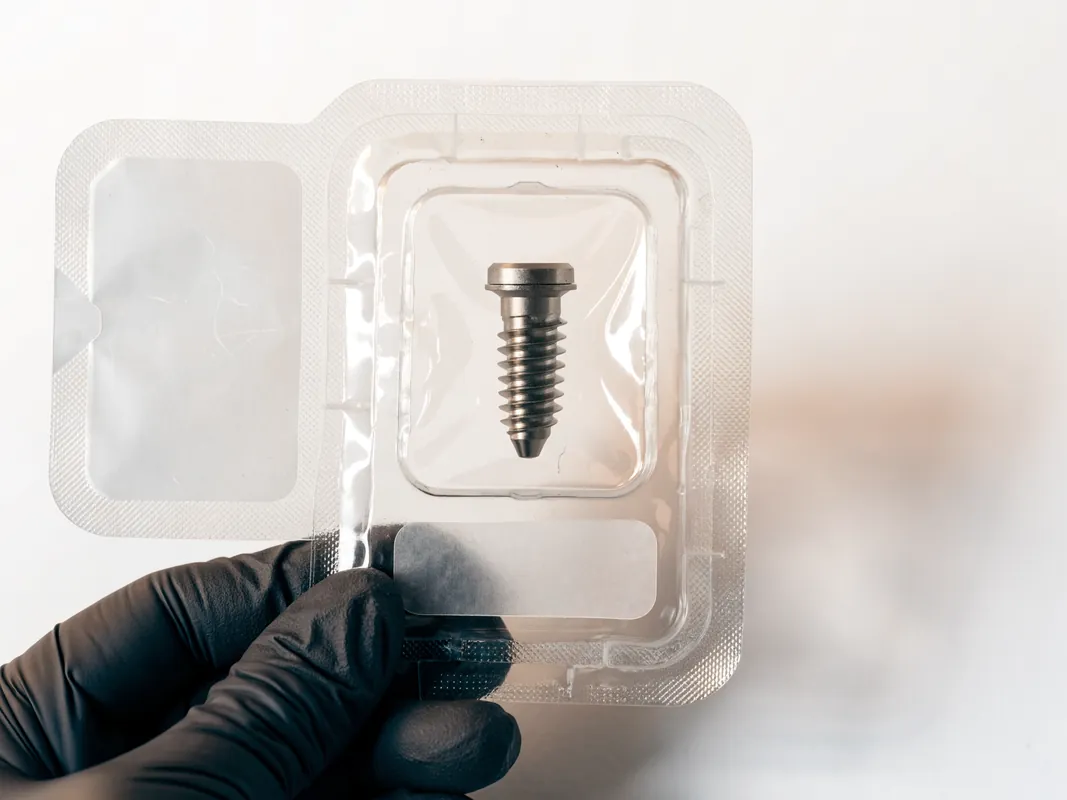
Create one identity line for every grafted site. Record the legal manufacturer shown on the physical label, full product name, presentation, particle range or dimensions, pack weight or volume, REF, lot, UDI-DI and production information where present, sterilisation method stated on that label, expiry, market and current IFU identifier. If multiple packs are opened, retain each lot and state which site received material from it. If material remains unused, record disposal according to the exact single-use instructions rather than implying that the full pack entered the patient.
Then list every separate part of the regenerative procedure. A collagen membrane, non-resorbable barrier, fixation pin, tenting screw, mesh, autogenous bone, allograft, synthetic substitute, biologic, closure material or implant is not included automatically because Bio-Oss appears on the quote. Each has its own manufacturer, origin, IFU, traceability and consent questions. A combination kit must still be unpacked into its constituent identities.
Before examination, some choices may remain conditional. Mark them as unresolved rather than inventing a final pack. After assessment, update the identity sheet and itemised quote. If the product or quantity changes during surgery, record the actual choice and clinical reason.
Verify Geistlich Pharma AG and the current IFU
The legal manufacturer on the applicable Geistlich Bio-Oss documentation should be copied exactly from the case product. Current official material identifies Geistlich Pharma AG, Bahnhofstrasse 40, 6110 Wolhusen, Switzerland. Corporate websites, distributor pages and clinic descriptions are secondary to the actual label and current market-specific instruction.
The official [Geistlich electronic IFU portal](https://ifu.geistlich-pharma.com/) is the starting point for current instructions. Search with the REF or identifier from the physical pack, then check product scope, jurisdiction, language, revision and date. Save the applicable instruction or durable identifier with the record. Do not choose an IFU merely because the product name looks similar. Granules, Pen, Collagen, combination kits and historic devices can have different documents.
An IFU defines intended purpose, indications, contraindications, warnings, precautions, handling, single-use status, storage and reporting boundaries. A product page can help locate current names and pack options, but it is not a substitute. If the exact IFU cannot be matched to the label, pause before use and request written clarification from the manufacturer or responsible supplier.
Distinguish loose Bio-Oss granules by particle range and pack
The current official [Geistlich Bio-Oss product page](https://www.geistlich.com/dental/bone-substitutes/geistlich-bio-oss) separates small granules, stated as 0.25–1 millimetre, from large granules, stated as 1–2 millimetres, and lists several quantities. Those details are a current global-page orientation, not proof of what is supplied in every country. The physical pack and market-specific IFU control the case.
Particle range and pack amount are different fields. “Small Bio-Oss” does not reveal the weight opened, and “one vial” does not reveal particle size. The surgical plan should explain how defect anatomy, containment, handling, space maintenance and any mixture informed the chosen form. Do not turn a manufacturer recommendation for a category of defect into a personal indication without examination.
Record actual use without false precision. The opened weight does not necessarily equal the quantity remaining in the site after hydration, mixing, transfer or disposal. The operative note can state packs opened, lots, approximate amount placed when clinically recorded, other materials mixed and any unused product discarded.
Treat Bio-Oss Pen as a delivery device plus granules
Geistlich Bio-Oss Pen combines Bio-Oss granules with a syringe-like delivery applicator. The official [Bio-Oss Pen page](https://www.geistlich.com/dental/bone-substitutes/bio-oss-pen) currently describes small and large particle configurations. The Pen name therefore identifies more than the mineral: it also identifies a delivery system with its own cap, tip, handling and contamination boundaries.
The FDA [K120601 summary](https://www.accessdata.fda.gov/cdrh_docs/pdf12/K120601.pdf) describes the United States device as granules packaged in a polymer applicator, sterilised and intended for single use. It records historic United States configurations and indications. That document does not establish current pack availability elsewhere, and it should not silently replace the current IFU.
Record the exact Pen REF, particle range, weight, lot and expiry. Confirm sterile-barrier integrity and follow the current wetting and delivery instructions. If the applicator or tip is contaminated or malfunctions, do not improvise reuse or substitution. The mineral identity does not erase the delivery-device risk.
Separate Bio-Oss Collagen from plain granules
Geistlich Bio-Oss Collagen is not a vial of plain Bio-Oss and not a collagen membrane. The official [Bio-Oss Collagen product page](https://www.geistlich.com/dental/bone-substitutes/bio-oss-collagen) describes a block-form mixture of 90 weight percent Bio-Oss small granules and 10 weight percent porcine collagen. The current applicable label and IFU must confirm the exact composition and size supplied.
The official [Bio-Oss Collagen IFU](https://www.geistlich.de/fileadmin/content/Germany/Documents/Gebrauchsanweisungen/Gebrauchsanweisungen_IFU_stand_17.07.23/IFU_Geistlich_Bio-Oss_Collagen.pdf) identifies bovine-origin mineral, porcine collagen, gamma irradiation in that document, product-specific contraindications and precautions, single-patient use, storage symbols and patient implant-card information. A newer market-specific revision takes priority when available through the IFU portal.
Collagen facilitates handling but does not automatically perform the barrier function of a membrane. If space maintenance or cell exclusion requires a membrane, that is a separate product and design decision. Disclose both bovine and porcine sources before consent, including medical, ethical, cultural or religious concerns.
Do not confuse blocks, Collagen blocks and combination kits
The word “block” can describe different things. FDA K240661 describes a Bio-Oss spongiosa block configuration in the United States record. Bio-Oss Collagen is also supplied in a cohesive block-like form but has porcine collagen in addition to bovine mineral. A combination kit can pair Bio-Oss Collagen with a separately identifiable membrane. These are not interchangeable product identities.
Ask the professional to name the complete commercial presentation and show its label. Record whether a product is loose mineral, mineral in a Pen, mineral-plus-collagen, a mineral block or a kit. For a kit, capture the REF and lot of every constituent if the labelling provides them, plus which constituent was actually used. The kit name does not merge separate IFUs or indications.
Legacy brochures may use sizes or kit names that have changed. They can help identify an already implanted material, but a new case should use the current market document. Never infer current stock or authorisation from an old catalogue image.
Preserve animal-source information before consent
Plain Bio-Oss is described by current manufacturer and FDA material as purified bovine bone mineral. Bio-Oss Collagen adds porcine collagen. These origins can matter medically and personally. A patient should receive the exact composition before treatment, not discover it from packaging after surgery.
Ask about known allergies or previous reactions and let the treating professional apply the exact IFU. Bio-Oss Collagen documentation identifies known collagen allergy as a contraindication in that document. A bovine or porcine source can also raise ethical, vegan, cultural or religious questions even when there is no medical contraindication. Respectful consent means discussing alternatives without minimising those concerns.
Do not claim that purification makes an animal-derived product synthetic or origin-free. Do not describe “natural” as automatically safer or more effective. Record species source, product variant and the patient’s decision. If the chosen product changes to one with a different origin, renew the discussion.
Keep manufacturer safety statements within their evidence boundary
Geistlich publishes information about sourcing, purification, pathogen controls, sterilisation and product testing. These statements can be checked against the current IFU, regulatory submission and manufacturer support records. They should not be converted into a promise of zero transmission, zero reaction or universal suitability.
The 2024 FDA [K240661 summary](https://www.accessdata.fda.gov/cdrh_docs/pdf24/K240661.pdf) describes a purified bovine mineral matrix and records validation supporting an additional animal-material source and x-ray irradiation as an alternative terminal sterilisation method for the United States subject device. The physical label must identify the configuration actually supplied. Do not assume every pack uses the same source or sterilisation route.
Risk communication should distinguish theoretical or controlled manufacturing hazards, product-specific contraindications, general surgical complications and individual medical risk. A manufacturer process can reduce defined risks; it cannot replace sterile technique, diagnosis, wound closure, disease control or follow-up.
Read the 2024 FDA record as a United States update
FDA K240661 identifies Geistlich Bio-Oss as a United States Class II animal-source bone-grafting material under product code NPM. The decision concerns substantial equivalence for the stated configurations and indications. It is not global approval, provider accreditation, proof of a specific package or a treatment recommendation.
The summary lists granules in small and large particle ranges and a block, records additional pack configurations, an alternative x-ray terminal sterilisation method, additional raw-material sourcing and other manufacturing or shelf-life changes. This is precisely why product identity must include REF, lot, label and current IFU rather than relying on a decades-old description of Bio-Oss.
Use the database entry [K240661](https://www.accessdata.fda.gov/scripts/cdrh/cfdocs/cfpmn/pmn.cfm?id=K240661) to verify the United States record. Keep country, date and device scope attached to every conclusion. A substantially equivalent decision does not mean that Bio-Oss is equivalent to autogenous bone in every clinical sense or that all family forms are interchangeable.
Keep legacy regulatory records attached to their exact product
The FDA database includes historic records such as [K970321 for Bio-Oss anorganic bovine bone](https://www.accessdata.fda.gov/scripts/cdrh/cfdocs/cfpmn/pmn.cfm?ID=K970321), [K120601 for Bio-Oss Pen](https://www.accessdata.fda.gov/cdrh_docs/pdf12/K120601.pdf) and other predicates cited in later summaries. These help reconstruct product lineage. They do not control a current non-US device unless the exact current documentation makes that link.
Legacy identity is important when a patient needs later investigation of material already placed. Retain the original label, operative note and applicable historic IFU. Do not retrofit a new UDI or modern pack description onto an old graft. Conversely, do not use an old clearance to claim that a new form, size, source or sterilisation route is the same without current evidence.
For a new treatment, current label evidence wins. For an old treatment, preserve the history honestly and mark any unknowns. A broad brand name cannot close a documentary gap.
Verify UDI, REF, lot and expiry as different fields
The European Commission [UDI overview](https://health.ec.europa.eu/medical-devices-topics-interest/unique-device-identifier-udi_en) explains that UDI includes a device identifier, UDI-DI, and production information, UDI-PI, and supplements rather than replaces existing labelling. REF commonly identifies a catalogue configuration; lot identifies a production batch; expiry limits use; and a serial number may not exist for a consumable graft.
Copy fields exactly from the product rather than calling every barcode a serial number. Preserve both machine-readable code and human-readable text. When several packs are opened, map all lots to the site. If a combination kit contains separate labelled constituents, record the relationship without assuming one UDI describes every item.
Identifiers support traceability, field notices and product investigation. They do not prove that grafting was needed, that the material remained in place, that a provider used it correctly or that the device was lawfully supplied in another jurisdiction.
Understand EUDAMED and legacy-device registration boundaries
The Commission [UDI and device-registration page](https://health.ec.europa.eu/medical-devices-eudamed/udidevice-registration_en) explains current EUDAMED requirements and separate handling of legacy devices. Database implementation and transition dates can change, so consult the current official page when checking a new product. A public search result should be matched to the exact legal manufacturer and UDI-DI.
An EUDAMED entry is regulatory data, not a clinic endorsement and not case proof. It cannot show that a particular lot was opened for one patient. A missing public result may reflect scope, timing, data transition or search error and should trigger a documented manufacturer or responsible-operator inquiry rather than an immediate authenticity conclusion.
Keep market evidence with the label, declaration or certificate where applicable and supply-chain record. If the product was supplied under legacy provisions, record the basis rather than replacing it with a modern marketing page.
Handle implant-card information product specifically
The Bio-Oss Collagen IFU cited above includes patient implant-card information. EU MDR Article 18 and Commission [implant-card guidance](https://health.ec.europa.eu/system/files/2020-09/md_mdcg_2019_8_implant_guidance_card_en_0.pdf) set requirements for covered implantable devices and exemptions. Do not assume every granule, Pen, block, kit or market uses the same card obligation.
Where a card or manufacturer stickers are supplied, preserve device name, device type, UDI, lot or serial where applicable, manufacturer, date, site and responsible institution as required. Reconcile the card with the physical label before handing it to the patient. A card is a portable summary, not a substitute for the diagnostic, surgical and material record.
Where no formal card applies, a clear graft-material handover remains clinically useful. Label it as a treatment record rather than inventing regulatory status. Never create a false UDI or copy identifiers from a brochure.
Diagnose the defect before selecting any graft product
The clinician should name the defect and treatment objective before naming Bio-Oss. The assessment may include tooth prognosis, periodontal status, infection, ridge dimensions, socket walls, sinus anatomy, soft tissue, implant-restorative plan, previous grafts, medical risk and appropriate imaging. Different defects need different containment, vascular access, stability and closure strategies.
Ask what finding shows that augmentation is needed and what happens without it. Alternatives may include no treatment, a removable or tooth-supported restoration, accepting a different ridge form, implant positioning or design changes, staged autogenous grafting, another substitute, referral or monitoring. This is not a universal list and does not prescribe care. It prompts case-specific consent.
Remote images may support preliminary discussion but cannot confirm every surgical finding. Mark the plan conditional until in-person assessment. If the defect differs at surgery, update the material, design and consent rather than forcing the pre-paid product choice.
Separate socket preservation from implant-site augmentation
Socket preservation is performed after extraction with an objective related to ridge change; augmentation around an implant addresses a different anatomical and restorative problem. Neither procedure is guaranteed to create enough bone for a later implant. A product name should not blur extraction justification, socket anatomy, closure and future review.
For socket care, record why the tooth is extracted, condition of socket walls, infection management, intended restoration, exact graft and cover or membrane, closure approach and the findings that determine the next stage. Discuss no graft and other materials where relevant. A future implant decision remains separate.
For simultaneous implant-site grafting, record implant position, exposed or deficient area, defect containment, graft mixture, membrane or fixation and loading plan. The same Bio-Oss particle range can be used in different procedures, but the procedures do not become equivalent.
Treat ridge augmentation as a three-dimensional design
Ridge augmentation can involve horizontal, vertical or combined deficiency, local contour support or a larger reconstructive problem. The design depends on defect walls, vascularity, soft-tissue closure, space maintenance, graft stability and planned implant position. Loose granules alone do not create a complete design.
The plan should show the target anatomy without promising it will be achieved. Name every material, ratio or mixture when clinically recorded, barrier, fixation and staged decision. State who is responsible if exposure, infection, displacement or insufficient regeneration occurs. A larger pack does not prove a larger or more appropriate augmentation.
For major defects, compare autogenous bone, allograft, xenograft, alloplast and combinations by indication, donor-site consequences, source, evidence and serviceability. Do not present Bio-Oss as a universal substitute for the structural role of a block or mesh-supported design.
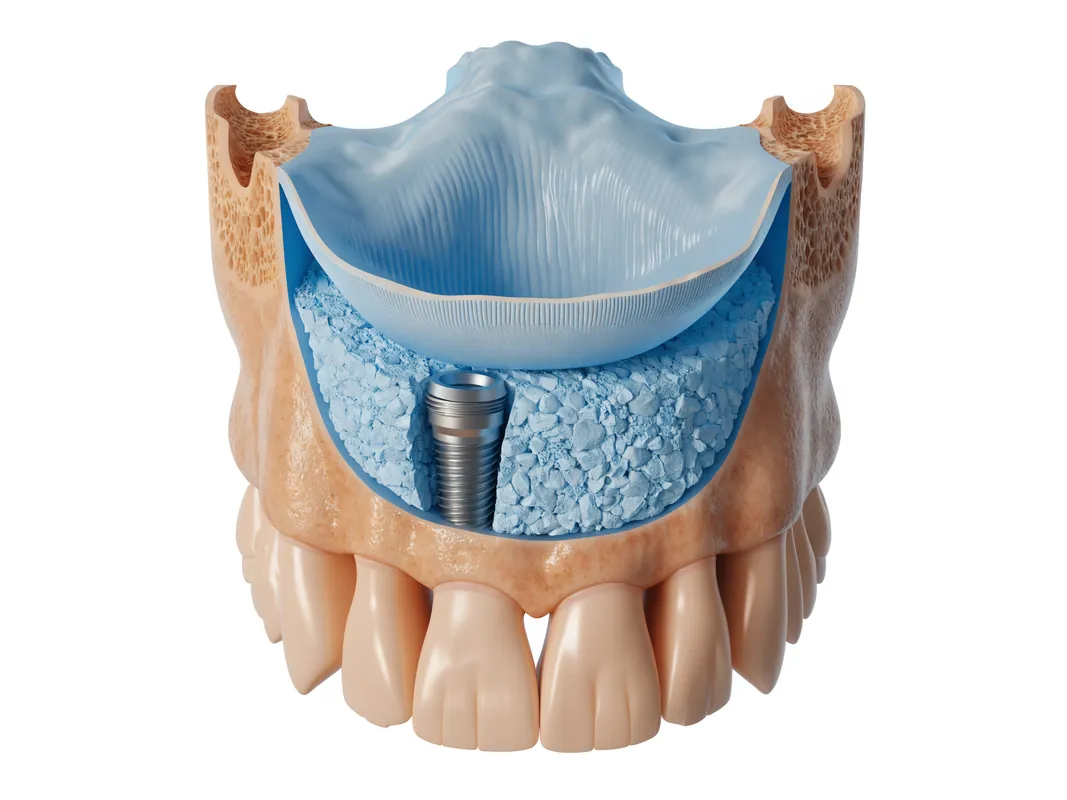
Keep sinus-related grafting as a distinct procedure
Sinus floor elevation involves maxillary sinus anatomy, membrane integrity, dental and sinus health, imaging, access design, graft choice and management of perforation or infection. A Bio-Oss label does not establish that the sinus is suitable or that an ear, nose and throat opinion is unnecessary.
The written plan should identify the approach, anatomical findings, exact graft form and quantity opened, other materials, membrane or closure, implant timing and contingency if the sinus membrane is perforated or disease is found. Avoid fixed travel or implant deadlines. Progress depends on clinical review.
Bio-Oss Pen has a delivery-device history relevant to sinus use. Past FDA recall records for specific Pen products show why exact part and lot matter. They do not mean current Bio-Oss or every Pen is recalled. Search current notices by REF and lot before drawing conclusions.
Manage periodontal defects only after infection control
Bio-Oss and Bio-Oss Collagen documents include periodontal defect uses in specified contexts, but a product does not treat the bacterial cause of periodontitis by itself. Diagnosis, oral-hygiene instruction, non-surgical therapy, risk-factor control, defect morphology and maintenance are prerequisites to a regenerative decision.
The Bio-Oss Collagen IFU states that underlying infection and local periodontal lesions require treatment before placement. Apply the current product-specific wording. Record tooth prognosis, pocket and attachment findings, mobility, occlusion, smoking, diabetes and patient ability to maintain care. Compare regenerative surgery with non-regenerative surgery, continued maintenance, extraction or no surgery as relevant.
Outcome language must remain conditional. A manufacturer indication allows a use category; it does not prove that the defect is regenerative, that the tooth can be saved or that one biomaterial will deliver a specified gain.
Treat peri-implant defects as disease management, not product replacement
A peri-implant bone defect requires diagnosis of tissue inflammation, bone change, implant position, prosthetic cleanability, retained cement, component condition, occlusion and patient-level risks. Filling a defect with Bio-Oss does not remove the cause. The plan should define decontamination, surface-management boundaries, prosthetic changes, regenerative design and long-term supportive care.
The FDA indication wording for Bio-Oss includes filling peri-implant defects in conjunction with products intended for GBR. That United States label statement is not a personal recommendation and does not establish which membrane or technique is suitable. Use the current local IFU.
Discuss non-regenerative treatment, resective approaches, prosthetic modification, explantation or monitoring where clinically relevant. The patient needs realistic uncertainty and a local maintenance pathway rather than a promise that branded particles restore a failing implant.
Keep membrane selection separate from graft identity
A barrier membrane has its own material, source, structure, resorption behaviour, size, orientation, fixation, exposure profile, IFU and traceability. Plain Bio-Oss does not include a membrane. The collagen inside Bio-Oss Collagen is not automatically a barrier membrane. A Combi-Kit may contain a separately named membrane that still requires its own record.
Ask why a membrane is or is not planned, whether it is collagen, synthetic, resorbable, non-resorbable or reinforced, how space will be maintained and what happens if exposure occurs. Record manufacturer, REF, lot, size and fixation. If porcine or other animal-derived collagen is used, disclose the source.
Do not infer that two products from one manufacturer are clinically inseparable or superior as a pair. The defect design and current IFUs determine the combination. A graft label cannot authenticate the membrane placed over it.
Record fixation and space-maintenance components
Pins, tacks, screws, meshes, frames and tenting components can stabilise a barrier or preserve space. They may be permanent, removed later or incorporated into another staged procedure. Each component needs exact identity, material, size, lot or traceability where provided, placement site, planned removal and driver or instrument information.
The quotation should separate these items from the graft. A phrase such as “GBR included” can hide a non-resorbable device and an additional removal procedure. Consent should explain exposure, infection, displacement, injury to adjacent structures and the plan if a component cannot be removed as intended.
For cross-border care, local clinicians need radiographic or diagrammatic location and the product record. A Bio-Oss handover without fixation details is incomplete where metal or non-resorbable components remain.
Explain autogenous bone and mixture records
Bio-Oss may be used alone or in a planned mixture, depending on defect and professional judgement. If autogenous bone is harvested, record donor site, method, approximate amount when clinically recorded, mixture, recipient site and donor-site risks. A patient should know that autogenous harvest creates a separate procedure and possible morbidity.
If another graft, allograft, alloplast or biologic is combined, name it with its own source, REF, lot and IFU. Do not describe the whole mixture as Bio-Oss. Record the rationale and which component performs which intended role without claiming the mixture guarantees regeneration.
Do not add antibiotics, antiseptics, alcohol, growth factors or medicines to the material unless the exact product documents and responsible professional support the combination. Bio-Oss Collagen documentation notes that some local combinations have not been studied. Absence of study should remain visible.
Treat medical history and wound-healing risk independently
Review current conditions, medicines, allergies, previous reactions, immune or metabolic disorders, radiotherapy, smoking or vaping, pregnancy or lactation where relevant and any factors affecting infection, bleeding or healing. The current exact IFU provides product-specific contraindications and precautions; general surgical risk needs broader professional assessment.
Bio-Oss Collagen documentation lists acute infection and known collagen allergy among important boundaries and identifies several conditions requiring caution. It also notes limited data for pregnancy, lactation and children before skeletal maturity in that revision. Do not copy these statements to plain granules without checking their IFU, and do not convert caution into an automatic rule without clinical assessment.
Never advise stopping prescribed medicine to fit travel. Coordinate with the prescriber when needed. Update the medical history on the procedure date and document changes.
Plan infection control before placing material
Bone substitute should not be used to conceal unresolved acute infection or untreated periodontal disease. The surgeon should identify and manage granulation tissue, diseased tooth or implant surfaces and other infection sources according to diagnosis and current instructions. Sterile product cannot compensate for a contaminated site or inadequate closure.
The operative record should state debridement and relevant findings, not merely “graft placed.” If unexpected pus, necrotic tissue, sinus disease or another problem is found, the plan may need to change. Record whether material was withheld, removed or staged and renew consent where appropriate.
Antibiotic decisions belong to patient and procedure assessment, not manufacturer branding. Avoid claiming that Bio-Oss requires, replaces or guarantees benefit from antibiotics. Provide patient-specific postoperative instructions and stewardship-consistent prescribing by the responsible professional.
Preserve sterile handling, storage and expiry boundaries
Check label identity, sterile-barrier integrity, expiry and storage conditions before opening. Bio-Oss family products are supplied sterile in documented configurations, but the exact sterilisation method may vary by product or updated manufacturing route. Record what the physical label states rather than assuming gamma irradiation for every current pack.
Single-use means leftover product from an opened pack should not be stored for another patient or later procedure. Do not resterilise unless an exact current IFU expressly permits it; manufacturer support material says Bio-Oss is not approved for resterilisation. If a package is damaged, wet, opened unintentionally, expired or stored outside requirements, quarantine it and follow the responsible quality process.
The patient record should identify packs opened and lots used. A storage log or supplier invoice can support traceability but does not prove which material reached the site without the operative note.
Document the actual surgical use and unused material
An operative note should identify site, procedure, defect findings, debridement, product variant, particle or block size, REF, lot, expiry, number of packs opened, amount placed where clinically estimated, hydration or mixture, membrane, fixation, implant or other procedure, closure, deviations, complications and instructions. If material is removed during surgery, record it.
Do not claim exact graft volume from the pack alone. Granule weight, nominal volume, hydration, mixture, spillage, discarded material and compression can differ. State the measurement method or use appropriately qualified language. For a Pen, record applicator configuration and any delivery problem. For Collagen, record the size and whether trimmed.
The final patient summary should be reconciled with labels. If a staff member accidentally attaches the wrong lot, correct it promptly with a transparent audit trail rather than silently overwriting the record.
Distinguish radiopacity from new bone
Bio-Oss mineral is radiopaque. Residual material and developing tissue can contribute to radiographic appearance. A dense image is not, by itself, proof of vital new bone, integration, absence of infection or readiness for implant placement. Interpretation depends on procedure, timing, baseline, imaging modality, symptoms and clinical examination.
The professional should state what question each follow-up image answers and avoid unnecessary repeats. Where a report is obtained, preserve it with the original files. Histology or biopsy is not a routine product-authentication requirement and should occur only for a justified clinical reason.
Patients should not compare social-media radiographs as outcome proof. Case selection, projection, exposure and timing differ. Product traceability comes from labels and notes; biological assessment comes from clinical and appropriate diagnostic evidence.
Avoid a universal healing or implant-placement timetable
Healing and progression depend on defect, site, vascularity, material mixture, membrane, fixation, soft tissue, infection, patient health, smoking, surgical events and the intended restoration. Manufacturer or hospital primers may describe typical ranges, but those ranges are not promises for an individual or every procedure.
The plan should use decision gates: wound review, absence or management of complications, clinical tissue assessment, appropriate imaging where justified, stability of any fixation and confirmation that the restorative objective remains feasible. If implant placement or restoration is postponed, explain why and update financial and travel arrangements without pressure.
Do not book irreversible stages solely around flights. Flexible scheduling is part of honest uncertainty. A product brand cannot shorten biological processes on demand.
Compare no graft and other material sources fairly
Depending on the diagnosis, alternatives can include no augmentation, accepting a different ridge form, a removable or tooth-supported restoration, modifying implant position or number, autogenous bone, allograft, another xenograft, an alloplastic substitute, a combined approach or referral. Each has distinct source, evidence, handling, donor-site, regulatory and maintenance implications.
The NHS [Cambridge University Hospitals bone-grafting primer](https://www.cuh.nhs.uk/patient-information/bone-grafting-for-dental-implants/) explains that graft materials can come from the patient, another human, animal or synthetic sources and that a membrane may be used. It is general patient information, not a recommendation for Bio-Oss or a foreign treatment plan.
Compare the full procedure, not only material price or nationality. Ask what objective each option addresses, what remains uncertain, and how complications and local follow-up would be managed.
Read evidence without importing marketing outcomes
Manufacturer pages may cite studies and promotional conclusions. Use them to locate the exact publication, then assess design, population, defect, comparator, co-interventions, product variant, membrane, surgeon, endpoint, follow-up, missing data and funding. Evidence for Bio-Oss with one membrane or autogenous mixture does not automatically establish plain Bio-Oss performance in another procedure.
Group-level findings do not predict an individual result. Surrogate measures such as radiographic fill, ridge dimensions or histomorphometry are not identical to patient-centred outcomes, implant eligibility, absence of complications or long-term serviceability. Do not quote a success percentage as a personal forecast.
Regulatory substantial equivalence, market longevity and publication count answer different questions from comparative clinical effectiveness. Keep each claim at its proper level and disclose uncertainty.
Obtain ongoing material-specific consent
The GDC [valid-consent standard](https://standards.gdc-uk.org/pages/principle3/principle3) is a useful benchmark for UK patients: explain options, risks, benefits and costs, and document changes. Even where the treating professional is outside GDC jurisdiction, consent should be an ongoing conversation rather than a pre-travel signature.
Name the exact Bio-Oss form and animal source, separate porcine collagen and membrane, explain defect and objective, alternatives including no graft where reasonable, other materials, donor-site procedures, uncertainty, staged decisions, risks, follow-up and who is responsible. Allow questions about ethical or religious preferences without coercion.
Renew consent if the material, origin, quantity, membrane, fixation, graft timing, implant timing, responsible professional or cost changes materially. An emergency intraoperative decision should still be recorded and explained as soon as clinically appropriate.
Make the quotation itemised and conditional
Separate consultation, imaging, extraction, debridement, graft procedure, exact Bio-Oss presentation, each additional graft material, autogenous harvest, membrane, fixation, implant, anaesthesia or sedation, temporary restoration, reviews, removal of non-resorbable components and complication management. State what is included, excluded, refundable or conditional and who receives payment.
Before examination, unresolved items should have clear decision gates. After assessment, issue a revised quotation. Do not hide a switch from granules to Collagen, a membrane, a second graft or a donor-site procedure within “bone graft included.” Do not equate a premium price with provenance or clinical necessity.
Commercial warranty terms, if any, should identify the responsible entity, remedy, exclusions and travel burden. They cannot guarantee biology and this page makes no warranty claim.
Maintain a complete graft record
The GDC [patient-information standard](https://standards.gdc-uk.org/pages/principle4/principle4) describes complete, accurate, contemporaneous records including medical history, radiographs, consent, photographs, models, prescriptions, conformity statements and referrals where available. For grafting, add defect diagnosis, exact product labels, amount and site, membrane and fixation, operative note, complications and staged decisions.
The handover should be understandable without access to one clinic’s messaging app. Provide secure copies of relevant images and reports, labels, UDI and lot, material-source disclosures, operative record, postoperative instructions and direct professional contacts. Keep originals according to legal duties.
A product certificate or implant card is useful only when reconciled with the actual case. It cannot replace the clinical reason, procedure description or follow-up plan.
Keep a chain of custody for every opened pack
Chain of custody links supplier receipt, storage, stock record, patient allocation, opening, clinical use, unused disposal and any incident or return. It is especially useful when several lots or similar packs are present. The clinician should be able to show how the lot in the patient record came from the physical pack used.
An invoice from an authorised supply route can support provenance, but it does not prove that a specific pack reached a site. A photograph can support the record, but it may be reused or detached from context. Converging evidence is stronger than a single logo or QR code.
If material is transferred between facilities, record custody and storage conditions. Do not conceal grey-market or cross-jurisdiction supply behind the phrase “Swiss original.” Ask the manufacturer or economic operator to resolve suspicious identifiers before use.
Monitor recalls and field-safety notices by REF and lot
FDA records show historical Class II recalls involving particular Bio-Oss Pen configurations, including [a 2019 Pen record](https://www.accessdata.fda.gov/scripts/cdrh/cfdocs/cfRes/res.cfm?id=172147) and [a 2020 Pen record](https://www.accessdata.fda.gov/scripts/cdrh/cfdocs/cfRes/res.cfm?id=184212). Those events were product- and time-specific and the displayed records identify their status. They do not mean all Bio-Oss, all Pen devices or current lots are under recall.
Search current manufacturer and regulator channels using exact product name, REF, UDI and lot. Record the date, source and result. If a notice applies, follow its instructions and obtain professional assessment; do not improvise from social media.
Accurate patient mapping allows targeted contact. A clinic must not use absence from one database as proof that no notice exists in every jurisdiction.
Plan complication ownership before surgery
Possible problems include bleeding, swelling, pain, infection, wound opening, membrane or graft exposure, displacement, sinus complications, altered sensation, donor-site problems, adverse reaction, inadequate tissue for the next stage and the need to remove material or fixation. This list is not a personal risk estimate and the exact procedure adds other possibilities.
The plan should name who assesses early and late problems, what local service is available, how the treating team shares records, and who pays for assessment or treatment under the written terms. Do not promise that returning to the original provider is always necessary or safe. Urgent care should follow clinical need.
If material removal is considered after healing, the clinician should explain that complete removal may not be straightforward because particles can become incorporated. Product identity, imaging, symptoms and operative records support that decision.
Give postoperative instructions that match the actual procedure
Instructions should cover wound protection, oral hygiene, prescribed medicines, diet or activity advice relevant to the procedure, smoking, prosthesis use, contacts and warning signs. They should be dated, understandable and available in a language the patient can use. Do not substitute a generic implant leaflet when the patient had sinus surgery, donor-site harvest, membrane fixation or another distinct procedure.
Avoid product-branded instructions that imply one universal recovery. The surgeon should tailor advice to closure, site, graft design, membrane and complications. Any medicine instruction must come from the responsible prescriber and account for medical history.
Record the advice given and who can answer questions after travel. If the patient cannot access a timely review, reconsider whether cross-border staging is serviceable.
Know which signs need urgent assessment
Worsening or spreading facial or neck swelling, difficulty breathing or swallowing, uncontrolled bleeding, fever or systemic illness, severe escalating pain, pus, wound breakdown with significant exposure, persistent or heavy nose bleeding after sinus-related surgery, visual symptoms, new or worsening altered sensation, allergic features or trauma requires prompt professional assessment, with emergency services for severe or airway symptoms. This is not a complete triage list.
Persistent bad taste, increasing drainage, graft particles with worsening symptoms, loose fixation, a prosthesis pressing on the wound or a problem that does not improve as instructed also needs timely dental or surgical review. Do not self-remove graft, membrane or fixation and do not delay urgent care for a flight.
Provide the local clinician with exact products, lots, operative notes and imaging. The brand name alone is not enough for diagnosis.
Plan cross-border travel around clinical uncertainty
Travel should follow the treatment pathway rather than force it. Remote screening cannot confirm every defect, infection, membrane, graft quantity or ability to close the wound. The in-person assessment may change or cancel the procedure. Booking and payment terms should allow that outcome without coercion.
Avoid a fixed timetable for graft maturation or implant placement. State decision gates and the review needed before travel home. Identify restrictions based on the actual surgery and who provides urgent advice during and after travel. Insurance, airline and general-medical questions need appropriate sources rather than product marketing.
Accommodation and transfers, if separately purchased, do not verify Bio-Oss, improve graft biology or establish clinical responsibility. Keep ancillary services outside the product and consent evidence.
Create a local handover before leaving
Provide a one-page summary plus the full record. Include site and diagnosis, exact procedure, Bio-Oss variant, particle or block size, REF, lot, UDI fields, expiry and animal source; pack quantity and actual use description; other grafts; membrane; fixation; implant; complications; images and reports; instructions; current symptoms; and direct contacts for surgeon and restorative professional.
For sinus surgery, include relevant sinus findings and contingencies. For non-resorbable membrane or fixation, include location, product and planned management. For a later implant decision, state that graft placement does not guarantee eligibility and identify the reassessment owner.
Confirm that a local clinician is willing to review the patient and can access the records. A handover cannot unilaterally transfer responsibility, but it makes coordinated care possible.
Assess long-term serviceability of a resorbable or integrated material
Bio-Oss is not a replaceable implant component, yet serviceability still matters. A future clinician may need to distinguish residual radiopaque material from pathology, understand a sinus or ridge procedure, locate fixation, assess a failed implant site or plan further surgery. Product labels and operative detail reduce uncertainty.
Keep records for the period required by the responsible jurisdiction and make lawful copies accessible. If the provider closes or staff change, the patient should still have enough information for care. Manufacturer contact routes and UDI can support a product query, but they cannot reconstruct missing clinical findings.
Later surgery may encounter integrated or residual material. The receiving clinician decides management from current findings. A marketing statement about resorption should never replace the actual variant, imaging and procedure history.
Red flags that justify pausing the proposal
Pause when a quote says only “Bio-Oss” without form, REF or source; Bio-Oss Collagen is described as plain granules; porcine collagen is withheld; a membrane is said to be automatically included; a Pen is reused; leftover material will be saved; the pack is opened or expired; lots are not mapped; FDA clearance is called worldwide approval; CE or EUDAMED is called clinic accreditation; or an old brochure is used as a current IFU.
Also pause when there is no defect diagnosis, extraction lacks justification, infection or periodontitis has no control plan, graft quantity is fixed before assessment, a sinus procedure has no contingency, other grafts or fixation are hidden, outcomes or timelines are guaranteed, records depend on final payment, or no local aftercare exists.
A red flag is a request for evidence, not proof of wrongdoing. Resolve it in writing before irreversible care, travel or payment.
Bio-Oss proposal verification worksheet
For each site record: diagnosis; objective; alternatives; defect anatomy; imaging and report; infection and periodontal status; medical risk; procedure; exact Bio-Oss product; loose, Pen, Collagen, block or kit; particle or block size; pack amount; REF; lot; UDI; expiry; sterilisation on label; bovine and porcine source; IFU revision; market; supplier evidence; packs opened; actual use; discarded remainder; hydration or mixture; autogenous donor site; other graft; membrane; fixation; implant; closure; complications; instructions; follow-up owner; local clinician; quote line; and unresolved decisions.
Add an evidence column: physical label, IFU, product page, regulatory record, invoice, stock log, operative note, imaging report, consent, manufacturer response or patient card. Add status: proposed, confirmed, changed, used, discarded or unresolved. Add the responsible professional and date.
Review the worksheet before consent, after in-person assessment, after surgery and at handover. Never invent missing identifiers from a generic product image.
Primary sources and evidence boundaries
Manufacturer sources include the [Geistlich IFU portal](https://ifu.geistlich-pharma.com/), official pages for [Bio-Oss](https://www.geistlich.com/dental/bone-substitutes/geistlich-bio-oss), [Bio-Oss Pen](https://www.geistlich.com/dental/bone-substitutes/bio-oss-pen) and [Bio-Oss Collagen](https://www.geistlich.com/dental/bone-substitutes/bio-oss-collagen), plus the exact product IFU. They identify family, composition, handling and product boundaries but do not diagnose a patient or prove provider inventory.
Regulatory sources include FDA [K240661](https://www.accessdata.fda.gov/cdrh_docs/pdf24/K240661.pdf), [K120601](https://www.accessdata.fda.gov/cdrh_docs/pdf12/K120601.pdf), the EU [MDR](https://eur-lex.europa.eu/eli/reg/2017/745/oj?locale=en), Commission [UDI](https://health.ec.europa.eu/medical-devices-topics-interest/unique-device-identifier-udi_en) and [EUDAMED registration](https://health.ec.europa.eu/medical-devices-eudamed/udidevice-registration_en) pages. They are jurisdiction-specific and do not predict clinical outcomes.
Independent primers and professional standards include the [CUH NHS bone-grafting guide](https://www.cuh.nhs.uk/patient-information/bone-grafting-for-dental-implants/) and GDC [consent](https://standards.gdc-uk.org/pages/principle3/principle3) and [records](https://standards.gdc-uk.org/pages/principle4/principle4) principles. Use current versions and patient-specific professional judgement.
Final rule: verify defect, material and continuity separately
Apply three tests. First, is grafting justified for a diagnosed defect after alternatives, including no graft where reasonable, are discussed? Second, is the exact Bio-Oss form and every accompanying material verified by current IFU, label, REF, lot, UDI and operative record? Third, can complications, reassessment and later implant or restorative decisions be managed where the patient lives?
One test cannot repair another. Genuine Bio-Oss does not make an unnecessary graft appropriate. A good indication does not authenticate an unlabelled product. A technically completed surgery is not serviceable without records and local ownership. Keep diagnosis, device identity and continuity distinct, then connect them in an itemised, consented plan.
If a critical answer remains vague, pause. Ask the named professional to resolve it in writing, revise the quote and allow a genuine choice. The practical value of brand verification is not reassurance from a logo; it is evidence that survives travel and future care.
What the product name does — and does not — tell you
Bio-Oss is a bone-substitute biomaterial made by Geistlich. The name can help a patient identify a product family, but it does not establish the diagnosis, the exact model selected, the competence of a treating professional or the quality of the finished treatment. Product ranges, indications and local availability can change. A current manufacturer instruction for use and the legal market status in the country of treatment take priority over a marketing page.
This page is a research guide. It is not a statement that WeCare, a particular clinic or an event clinician stocks or uses Bio-Oss. Availability must come from the named treating provider. If a quotation uses only a broad phrase such as “premium material”, ask for the manufacturer, product family and reference before accepting the plan.
Manufacturer information worth checking
- Geistlich Bio-Oss is a family rather than one universal presentation; loose granules, Bio-Oss Pen, Bio-Oss Collagen, blocks and combination kits require exact product-specific identification.
- Current manufacturer pages distinguish small granules stated as 0.25–1 millimetre from large granules stated as 1–2 millimetres, but the physical label and current market IFU control each case.
- Plain Bio-Oss is bovine-origin mineral; Bio-Oss Collagen also contains porcine collagen and is not itself a barrier membrane.
- REF, lot, UDI fields, expiry, sterile barrier, source and packs actually used should be mapped to each surgical site and reconciled with the operative note.
- Membranes, fixation, autogenous bone, other substitutes, medicines and implants are separate products or procedures with their own identity, IFU, risks and consent.
- FDA, EU and EUDAMED records are jurisdiction-specific traceability evidence; they do not accredit a provider, establish a case indication or predict a result.
These points describe the product family at a general level. They are not a recommendation for a particular mouth and they should not be extended to a different line carrying a similar brand name. Defect diagnosis, tooth prognosis, infection and periodontal control, medical risk, soft-tissue closure, restoration design and alternatives come before brand choice. Socket preservation, ridge augmentation, sinus surgery, periodontal defects and peri-implant defects are separate procedures whose materials, boundaries and contingencies should be documented individually.
Questions for the named provider
Ask the professional responsible for treatment to answer these points in writing:
- What is the exact manufacturer, product family, model or material grade proposed?
- What clinical finding makes that selection appropriate for this case, and what alternatives were considered?
- Who is the legal treating provider and who will perform each clinical or laboratory stage?
- Which current instruction for use, contraindications and local regulatory status apply?
- What reference, lot, batch or other traceability record will be retained and shared where the device permits it?
- Which components, cements, abutments, membranes, gels or accessories are included, and are they compatible?
- What follow-up is required, who is responsible after travel, and which costs are excluded from the quotation?
Product verification, evidence and traceability boundaries
Request the physical label and applicable IFU for every Bio-Oss pack, exact form and particle or block size, REF, lot, UDI and expiry; record packs opened, amount used or discarded where clinically documented, bovine and porcine source, membrane, fixation, mixtures, operative findings, postoperative instructions and local handover. Packaging authenticates a product identity, not the diagnosis or surgical outcome.
Useful evidence may include a photograph of unopened labelled packaging before use, the product label, an implant or device record, a laboratory prescription, an invoice identifying the exact material, and the treating provider's signed notes. The appropriate record depends on the product. A logo on a website, a stock photograph, an unlabelled box or a verbal statement is not equivalent to case-specific traceability.
How to compare alternatives fairly
Compare graft proposals by defect, objective, no-graft option, autogenous or other material alternatives, source, donor-site consequences, exact product, space maintenance, membrane, fixation, infection control, staged uncertainty, complication ownership, itemised quote, records and local serviceability. Do not treat “Swiss”, “natural”, “bovine”, publication count or regulatory status as universal superiority.
Compare like with like: indication, exact product, compatible components, laboratory design, operator responsibility, maintenance, staged visits and written exclusions. Do not compare a named product in one quotation with an unspecified category in another. Brand recognition cannot remove biological uncertainty, and no material choice can promise a clinical outcome.
Assessment comes before the brand
A responsible plan starts with medical and dental history, examination and appropriate imaging. Implant decisions can depend on bone, soft tissue, bite, hygiene, smoking, medication and restorative space. Ceramic decisions can depend on remaining tooth tissue, preparation design, opposing teeth and laboratory workflow. Whitening decisions require screening for decay, gum disease, sensitivity and existing restorations. Endodontic and imaging tools are parts of a broader diagnostic or treatment process, not substitutes for professional judgement.
Before paying, request a dated, itemised written plan naming the treating provider, the proposed product, alternatives, material records, visit stages, aftercare responsibilities and financial terms. If the final assessment changes the product or procedure, ask for the reason and revised quotation before treatment proceeds.