A search for Turkey versus UK private dental care often produces a simple story: one country is nearby and regulated, while the other is cheaper and packaged for travel. That story is too broad to support a healthcare decision. Quality, responsibility and remedy attach to named providers, clinicians, contracts and personal treatment plans, not to a flag.
This guide does not publish fixed prices, savings or treatment timelines. Those figures can become stale and can compare different scopes. It also does not claim that one country produces better outcomes. The purpose is narrower and more useful: compare a named UK private provider with a named Turkish provider on equivalent diagnosis, scope, professional responsibility, documentation, aftercare and contractual terms.
The regulatory and complaints routes differ between jurisdictions. They also change over time and, within the UK, can differ by nation and by whether care is private or NHS-funded. Verify the current route with the relevant official body before treatment. This page is practical planning information, not legal advice or a substitute for clinical assessment.
Start with two named providers, not two countries
A country comparison becomes meaningful only after each column contains a real provider. Record the named legal treatment provider—the legal entity that will contract for clinical treatment—the facility address, the clinician responsible for assessment, every clinician expected to perform a stage, and the laboratory or fabricating party when known.
Do not assume that a website, coordinator, travel company or brand name is the treatment provider. The quotation, consent, invoice and clinical records should identify the legal clinical provider consistently. If an intermediary organises communication or travel, its separate role and agreement should be visible.
Use this identity table before comparing any treatment detail:
| Identity question | UK private plan | Turkish plan |
|---|---|---|
| Legal treatment provider | Registered business or provider name and address | Licensed health facility name and address |
| Assessing clinician | Name, role and current registration evidence | Name, role and current professional evidence |
| Treating clinicians | Name and responsibility for each stage | Name and responsibility for each stage |
| Service regulator or licensing route | Relevant UK nation and service setting | Turkish health-facility licensing and health-tourism authorisation where applicable |
| Laboratory or fabricating party | Name and responsibility when known | Name and responsibility when known |
| Payment recipient | Legal entity and payment purpose | Legal entity and payment purpose |
| Complaints contact | Provider procedure and external signposting | Facility procedure, official route and contractual jurisdiction |
| Aftercare owner | Named provider and practical route | Named provider and practical route |
If a provider identity cannot be confirmed before payment, stop the comparison. A long list of amenities cannot repair an unknown clinical owner.
Verify the UK route precisely
Dental professionals practising in the UK can be checked on the General Dental Council register. The register confirms current registration and can show specialist-list information where applicable; it does not prove that a proposed treatment is suitable or that a person works in a particular practice. Match the professional to the personal plan rather than relying on a title in advertising.
Service regulation depends on where in the UK the care is delivered. In England, the Care Quality Commission publishes information about registered dental services and inspection history. Scotland, Wales and Northern Ireland have their own service oversight arrangements. Check the relevant national regulator for the facility rather than assuming an England-specific route applies everywhere.
A UK private complaint normally begins with the provider's written complaints procedure. Further signposting depends on the issue and jurisdiction. The General Dental Council deals with professional fitness-to-practise concerns; it is not a general route for obtaining a refund or compensation. Other complaint, mediation, ombudsman, insurer or court routes may be relevant. Ask the provider to identify the current route in writing and obtain independent advice for a legal claim.
Useful official checks include the [GDC register](https://olr.gdc-uk.org/SearchRegister/SearchResults) and, for England, the [CQC dental service finder](https://www.cqc.org.uk/care-services/find-dentist). Official registration is an important baseline, not an outcome guarantee.
Verify the Turkish route precisely
For planned private dental treatment in Turkey, identify the licensed health facility that will provide treatment and the individual clinicians responsible for the personal case. International health-tourism activity is subject to Turkish Ministry of Health requirements. Verify the facility and any intermediary through current official sources rather than accepting a certificate image supplied in a message.
The official [HealthTürkiye facility list](https://www.healthturkiye.com/hospitals-list?filters=branch%3A18%3Bcity%3A&pageIndex=0) can support a facility check. Ask for the exact legal name because a commercial brand and licensed facility may differ. If an intermediary is involved, request its authorisation details, protocol relationship with the facility, separate agreement and responsibility for non-clinical services.
The Turkish provider should explain its complaint procedure, the official escalation route, the governing law and jurisdiction stated in the agreement, available language support, access to records and any time limits or evidence requirements. Do not assume that a UK complaint body can determine a dispute with a Turkish provider. Obtain independent legal advice when the contractual or remedy route matters.
Authorisation does not prove that a specific clinician, material, technique or result is right for a patient. It confirms a regulatory status that should be checked alongside diagnosis, consent, professional responsibility, records and aftercare.
Compare the same clinical question
One quotation may be an online estimate while the other follows a direct examination. One may include definitive restoration while the other covers only a surgical stage. One may assume a tooth will be removed; the other may propose retaining it. Comparing the totals would answer nothing.
Ask each provider to prepare a dated, itemised written plan that states:
- the concern or condition being assessed;
- the examination and records reviewed;
- the teeth, sites or arches in scope;
- diagnosis or provisional diagnostic basis;
- reasonable alternatives, including no treatment where relevant;
- the proposed treatment and reason;
- stages that remain provisional;
- every clinician and facility responsible;
- materials or components confirmed for the personal case;
- inclusions, exclusions and conditional items;
- maintenance and aftercare responsibility;
- payment, cancellation and change-control terms.
The responsible clinician determines which examination, images, scans, photographs, models and health history are required. A remote estimate should say which facts are missing. A price prepared from different evidence should not be treated as equivalent to an examined plan.

Provisional assessment is a truthful boundary
International treatment is often discussed before direct examination. That can help organise questions, but it creates uncertainty. The Turkish quotation should distinguish a preliminary estimate from a clinician-reviewed provisional plan and a final plan confirmed after the appropriate assessment. The UK quotation should make the same distinction when information remains incomplete.
A useful provisional plan identifies assumptions and change triggers. For example, an old restoration may conceal a condition that changes the proposal; a tooth may prove maintainable; a material or component may not yet be selected; or additional records may be required. The plan should state who decides, what evidence is used, which alternatives remain and how the price changes.
Before an irreversible step, request an updated plan. The provider should not use travel dates, laboratory bookings or a deposit as permission to expand treatment. A revised clinical reason, alternatives, itemised price effect and renewed consent belong in writing.
Uncertainty is not a reason to prefer one country. Concealed uncertainty is a reason to reject a quotation.
Identify the clinical owner for every stage
A complex plan can involve assessment, hygiene or disease control, surgery, restorative work, laboratory fabrication and maintenance. Each stage needs a named clinical owner. A coordinator can facilitate communication but cannot replace the clinician responsible for diagnosis and consent.
Use a stage-ownership schedule:
| Stage | Required ownership evidence |
|---|---|
| Initial assessment | Named clinician, records reviewed and provisional boundaries |
| Disease control | Named provider and reason it precedes elective work |
| Surgical stage | Responsible clinician, site, alternatives and conditional procedures |
| Restorative stage | Responsible clinician, tooth map, design and material prescription |
| Laboratory stage | Named or identifiable laboratory, prescription and revision process |
| Provisional care | Purpose, limits, responsible provider and fallback |
| Definitive care | Approval, fitting, records and discharge responsibility |
| Routine aftercare | Provider, review expectations and record-sharing route |
| Urgent concern | Triage boundary and local-assessment plan |
| Complaint | Provider procedure and current external signposting |
A provider that cannot assign responsibility before treatment should not be rescued by a country-level reputation.
Protect suitable teeth and compare alternatives
Country comparisons can distract from the most important question: is the proposed treatment appropriate? Ask each provider to explain why every extraction, preparation, implant, crown, veneer or broader rehabilitation is proposed and which less invasive alternatives were considered.
A second opinion is particularly useful before removal of a maintainable tooth, extensive preparation of healthy tooth structure, a grafting proposal, full-arch treatment or a major change to the bite. The second opinion should review the records rather than merely compete on price.
A lower-cost plan can still be biologically expensive if it removes more tooth tissue or broadens the scope. A higher-cost UK plan is not automatically more conservative. Compare tooth-by-tooth decisions, not assumptions about the country.
Use the Turkey safety and provider-verification guide for a broader clinical due-diligence framework. Use the UK-to-Turkey dental planning guide for the journey and record-sharing questions. Treatment-specific money pages should own price anatomy; this comparison does not repeat live rates.
Build an equivalent-scope quotation worksheet
Create one column for each named provider. Copy only what the dated documents establish.
| Comparison field | UK private provider | Turkish provider |
|---|---|---|
| Legal treatment provider identified | ||
| Facility registration or authorisation checked | ||
| Responsible clinicians identified | ||
| Assessment status stated | ||
| Records reviewed listed | ||
| Diagnosis or provisional basis explained | ||
| Teeth, sites and arches itemised | ||
| Tooth-preservation decisions explained | ||
| Alternatives and no treatment discussed | ||
| Clinical stages aligned | ||
| Provisional and definitive stages separated | ||
| Materials and components identified | ||
| Laboratory responsibility stated | ||
| Conditional work and triggers listed | ||
| Maintenance and aftercare assigned | ||
| Records and traceability supplied | ||
| Complaint and remedy route written | ||
| Currency, payment and refund terms stated | ||
| Insurance position checked | ||
| Travel burden and contingency budgeted | Not applicable or limited |
Only compare totals after the rows describe equivalent scope. A blank cell is not a minor paperwork issue; it is unallocated risk.
Separate provisional and definitive restoration stages
Implant, complex restorative and laboratory-led treatment may contain decisions made at different stages. A surgical quotation may not include the final restoration. A provisional restoration may not be definitive. A material label may be proposed before the final design is confirmed.
Ask each plan to separate:
- diagnostic and planning records;
- disease control or pre-treatment;
- surgical or tooth-preparation stages;
- provisional restorations and their limits;
- review gates before definitive work;
- laboratory design and revisions;
- definitive restorations and fitting;
- adjustments, discharge and records;
- maintenance and later service.
This prevents a UK comprehensive total from being compared with a Turkish first-stage estimate, or the reverse. It also helps the patient understand what happens if a later stage is delayed, changed or transferred.
Materials, components and traceability
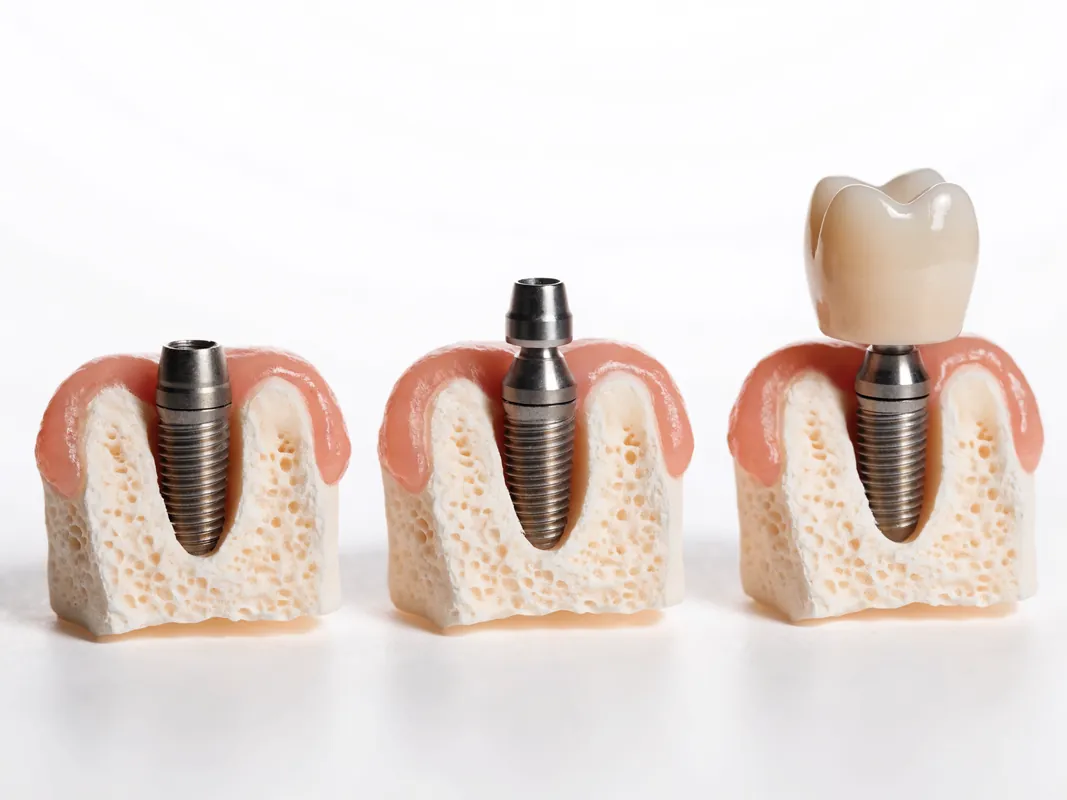
A brand name in advertising does not establish what will be used in a personal case. Ask the provider to identify the generic material category, confirmed product or system where known, component references, laboratory prescription and traceability records that will be supplied.
For implant treatment, future clinicians may need the system and component information. For laboratory restorations, another provider may need the material description, tooth map and fabrication records. The quotation should state when these details become definitive and how a change is approved.
Do not use equipment lists as a proxy for care quality. A scanner, imaging device or milling system supports a process; it does not diagnose, consent or accept responsibility. Compare the qualified people, records and decisions around the equipment.

Aftercare must be arranged before travel
A UK provider is geographically easier to revisit, but proximity alone does not prove a good aftercare process. A Turkish provider may describe remote communication, but messaging alone does not establish local clinical care. Ask both providers to define routine review, urgent assessment, repair evaluation, record sharing and payment responsibility.
Before overseas treatment, speak to a UK dentist or appropriate clinician about the plan and whether they are willing and able to provide routine review. Do not assume an NHS or private dentist will adopt responsibility for treatment performed elsewhere. Availability, scope and fees should be discussed in advance.
The written Turkish aftercare plan should state:
- who owns routine clinical questions;
- which symptoms need prompt in-person assessment;
- how a UK clinician can send records securely;
- who reviews those findings;
- who decides whether repair or further treatment is appropriate;
- what can be handled locally;
- what happens when further travel is not practical;
- which clinical, laboratory and travel costs remain with the patient.
The UK plan should answer the same clinical questions, minus the international logistics. Continuity is a practical advantage only when it is actually offered and documented.
Records should travel with the patient
Request a complete record set in a usable language and format. It may include provider and clinician identities, examination findings, diagnostic reports, images requested for treatment, tooth or site maps, plan versions, consent, treatment notes, prescriptions, material and component traceability, laboratory information, fitting records, invoices, discharge instructions, aftercare communications and approved changes.
Ask how sensitive records are collected, shared, stored and returned. A coordinator or laboratory should receive only what is appropriate through an identified secure route. Marketing permission should not be bundled into the clinical record process.
The official GDC guidance on [going abroad for dental treatment](https://www.gdc-uk.org/standards-guidance/information-for-patients-public/going-abroad-for-dental-treatment) recommends researching the treating team, regulation, insurance, complications, complaints and aftercare. The NHS [treatment abroad checklist](https://www.nhs.uk/using-the-nhs/healthcare-abroad/going-abroad-for-treatment/treatment-abroad-checklist/) also highlights second opinions, record transfer, aftercare, insurance and the financial effect of extended or repeat travel.
Insurance and funding need written confirmation
Do not assume UK private dental insurance covers planned treatment abroad. Policies differ. Ask the insurer in writing about the proposed provider, country, treatment, pre-authorisation, exclusions, claims evidence, complications and aftercare. A coordinator's opinion is not an insurance decision.
UK GHIC or EHIC arrangements are not a general funding route for planned private treatment in Turkey. Planned treatment, emergency care during travel, travel insurance and specialist medical-travel insurance are separate questions. Check current NHS and insurer guidance for the personal situation.
Many standard travel policies exclude planned treatment or related complications. Read the policy wording and disclose the purpose of travel. Consider cancellation, extension, companion, urgent local care and repatriation exposure without assuming any policy covers them.
A UK private finance agreement and a Turkish treatment payment plan are also different contracts. Compare the total repayable amount, currency exposure, cancellation effect, security interest if any and responsibility when treatment changes. Obtain independent financial advice when needed.
Payment, currency and contract structure
The UK quotation should name the provider receiving payment and state whether laboratory or external-provider charges are included. The Turkish quotation should distinguish the clinical provider, intermediary and travel suppliers. If one entity collects money for another, ask for the contractual basis and itemised allocation.
The agreement should identify:
- billing currency and controlling figure;
- payment stages and what each secures;
- deposit and cancellation terms;
- refund process and decision-maker;
- consequences of a changed plan or unsuitable finding;
- charges for records, revisions, repairs or external care;
- governing law and dispute forum;
- responsibility for travel changes;
- data-controller and communication details.
A converted headline is not the contract price. Keep invoices and receipts that identify the legal recipient and purpose.
Complaints and remedies are not the same as regulation
Registration or authorisation can support a complaint, but it does not promise compensation or a particular remedy. Ask both providers for the written complaints procedure before treatment. It should explain who receives the complaint, response process, required records and external signposting.
For UK private care, the route can involve the provider, an independent complaints service, a regulator for professional conduct, an insurer or legal proceedings, depending on the issue. For Turkish care, the facility, Ministry-related route, contractual process, consumer or court route may differ. Jurisdiction and language can affect practical access.
Distinguish four questions:
- Who investigates professional conduct?
- Who reviews service standards or facility authorisation?
- Who can help resolve a private contractual complaint?
- Who can award a refund, compensation or legal remedy?
One organisation may not answer all four. Independent legal advice may be needed. Obtain translations of important terms before signing.

Travel burden belongs in the cost comparison
The international option creates costs and risks outside clinical fees: flights, accommodation, local transport, companion needs, time away, exchange-rate movement, possible extensions, local urgent care and possible further travel. Budget these without relying on a hospitality promise.
The plan should identify which stages require attendance and which remain dependent on assessment, consent, clinical review or laboratory decisions. Avoid non-refundable arrangements around an unconfirmed schedule. Ask what happens if the plan changes after arrival, a stage cannot proceed, a provisional needs review or the patient chooses not to continue.
Travel can also affect consent. The pressure of a return booking should not shorten the time available to understand a changed plan or seek a second opinion. A lower clinical quotation may not remain lower after the full contingency is considered, but no universal saving or loss can be promised.
When UK private care can be the better decision
UK private care can be the stronger practical choice when continuity, repeated review or rapid in-person access matters more than travelling for treatment. Examples include an unresolved diagnosis, active disease requiring monitoring, a plan likely to change over several review stages, significant medical complexity, uncertain ability to travel, limited local aftercare, or a patient who values an established provider relationship.
It may also be preferable when private insurance contributes materially, when the difference between equivalent written quotations is small after travel burden, when the planned care is limited, or when the patient does not accept the overseas complaints and contractual route.
These are decision factors, not rules. A UK provider must still supply a clear diagnosis, alternatives, consent, itemised quotation, records and aftercare. Proximity does not correct a weak plan.
When a Turkish provider may remain under consideration
A Turkish provider may remain a reasonable option when its legal identity and authorisation can be verified, the responsible clinicians and laboratory roles are clear, the assessment is appropriately bounded, the proposed care is conservative and itemised, records are available, aftercare has a workable UK interface, and the patient accepts the contractual and travel risks.
The decision should not be based on a claimed percentage saving, a hotel, a vehicle, a rapid itinerary or an outcome comparison. It should be based on one auditable personal plan compared with another.
If the Turkish plan is still provisional, preserve flexibility. Do not treat a preliminary remote quotation as the final clinical or financial commitment.
Red flags in either country
- The legal treatment provider is hidden behind a brand or coordinator.
- The responsible clinician is not named in the personal plan.
- Registration or authorisation cannot be verified in an official source.
- A definitive treatment plan is issued without appropriate assessment.
- Maintainable teeth are proposed for removal or extensive preparation without reasons and alternatives.
- One quote covers surgery only while being compared with a complete restorative plan.
- Materials or components appear in marketing but not in the personal record.
- Equipment, accreditation or hospitality is used as proof of outcome.
- A fixed success rate, lifespan, comfort level, saving or timeline is promised.
- Conditional treatment has no trigger, itemised effect or consent process.
- Payment goes to an entity that is absent from the treatment contract.
- Warranty language hides exclusions or requires unaffordable travel.
- Aftercare is reduced to informal messaging.
- A UK dentist's future participation is assumed without agreement.
- The complaint route, jurisdiction or governing terms are missing.
- Travel pressure is used to secure consent to a changed plan.
Final comparison checklist
- Both legal treatment providers are named and verified.
- Every responsible clinician is identified.
- The applicable service-regulation or facility-authorisation route is checked.
- The assessment status and missing information are explicit.
- Teeth, sites, arches and diagnoses are aligned.
- Alternatives and tooth-preservation decisions are documented.
- Provisional and definitive stages are separated.
- Materials, components and laboratory roles are written.
- Conditional work has triggers, alternatives and price effects.
- Both quotations use equivalent scope.
- Currency, payment, cancellation and refund terms are understood.
- Insurance and finance positions are confirmed independently.
- Complete records and traceability will be supplied.
- Routine and urgent aftercare are arranged.
- The UK local-care interface is realistic.
- Complaint, remedy, governing-law and jurisdiction terms are clear.
- Travel burden and contingency are budgeted.
- No decision relies on a country stereotype, fixed saving or outcome promise.
If an answer is missing, request a revised document. A careful provider may need more information before completing it. That is preferable to a polished comparison built on different scopes.
The responsible answer to Turkey versus UK private dental care
Neither country is automatically the better provider. UK private care often reduces travel and makes repeated attendance easier, but still requires provider-level scrutiny. Turkish private care may remain under consideration when the licensed provider, clinicians, scope, contract, records and aftercare are all verifiable and the patient accepts the cross-border burden.
Use the UK-to-Turkey dental planning guide for the broader journey and the Turkey safety guide for provider-verification questions. Use treatment-specific cost guides for price anatomy rather than repeating a market rate here.
The final comparison is two dated documents. Align the diagnosis and scope, assign every responsibility, verify the official routes, include travel and remedy exposure, and compare the totals only after everything else matches.