“TMJ” names the temporomandibular joint. “TMD” describes a group of disorders involving jaw joints, chewing muscles and associated headaches. That distinction matters when considering dental implants. A click, facial pain, limited opening, jaw locking, morning muscle fatigue and a painful tooth are not the same problem, and they do not share one test or one implant rule. A marketing phrase such as “stabilise the TMJ first” is not a diagnosis or a treatment plan.
This guide is for adults who have current or previous TMD symptoms and are considering replacement of one tooth, several teeth or an arch with implants. It explains how to build a pain and function baseline, keep TMD care separate from the missing-tooth decision, assess restorative demands and arrange continuity when travelling. It cannot diagnose the cause of pain, prescribe a splint or medicine, decide that an implant is appropriate, or predict whether symptoms will change.
WeCare is not the treating dental provider. Its role is limited to enquiry and referral coordination and, if separately agreed, non-clinical travel logistics only as documented in writing. Identify the named legal treatment provider, named implant clinician and named restorative clinician. If TMD assessment or care is needed, identify the appropriately trained local or destination clinician and make clear who owns that separate diagnosis. A coordinator cannot decide whether jaw pain is muscular, articular, dental, neurological or another medical problem.
TMD is a family of disorders, not one diagnosis
The US National Institute of Dental and Craniofacial Research explains that [TMDs comprise more than 30 conditions](https://www.nidcr.nih.gov/health-info/tmd), broadly involving the joints, muscles used for chewing and TMD-associated headache. A person can have more than one condition. Symptoms may be short-lived or persistent and can coexist with other pain or sleep problems. That breadth makes a single “TMJ patient protocol” unreliable.
The clinician should start by clarifying the main complaint: location, quality, triggers, duration, pattern, functional effect and whether familiar pain can be reproduced during a structured examination. Joint sounds without pain are common and do not automatically need treatment, according to NIDCR. Painful clicking, intermittent or persistent locking, progressive limitation, trauma, swelling, a sudden bite change or neurological symptoms require different assessment from a stable painless click.
The [Diagnostic Criteria for Temporomandibular Disorders](https://pubmed.ncbi.nlm.nih.gov/24482784/) provide validated algorithms for common pain-related TMD and one intra-articular disorder, together with assessment of pain-related disability and psychological function. They are not a self-diagnosis quiz and do not cover every possible disorder. Their value here is the discipline of using a history and reproducible findings instead of assigning every symptom to “the bite.”
Exclude dental and medical mimics before planning surgery
Pain near the ear or jaw can originate from teeth, gums, muscles, joints, salivary tissues, ears, sinuses, nerves or other conditions. A cracked tooth, pulp inflammation, apical infection, periodontal disease, an impacted tooth, mucosal disease or postoperative problem may be confused with TMD. Conversely, referred muscle pain can feel like toothache and lead to unnecessary irreversible dental treatment if the source is not identified.
Before extracting a tooth or placing an implant to address pain, require a tooth-specific diagnosis and prognosis. Tests should be selected to answer the suspected problem and interpreted with the clinical history. If symptoms are atypical, progressive, associated with systemic illness or not reproduced by appropriate examination, the dentist may need to refer to oral medicine, orofacial pain, oral surgery, neurology, ear-nose-throat, rheumatology, primary care or another service. The referral should state the question rather than just “clear for implants.”
Preserve a restorable tooth where reasonable. The AAE [position statement on implants](https://www.aae.org/specialty/wp-content/uploads/sites/2/2019/04/Implants_PositionStatement_v2.pdf) supports assessment of natural-tooth preservation rather than automatic extraction. An implant does not treat an undiagnosed pain source, and removal of a tooth may make later diagnosis more difficult. If the tooth is restorable, compare endodontic, periodontal and restorative options with replacement or no treatment.
Build a pain and function baseline before intervention
A baseline helps distinguish a pre-existing symptom from a new postoperative problem. It should not be created to “prove” that a patient is safe. Record the patient's own description of pain, jaw fatigue, headaches, locking, sounds, chewing limits, opening limits, sleep disruption and effect on work or daily activities. Note side, frequency, aggravating or relieving factors, duration of flares and previous episodes.
Clinical documentation may include comfortable and maximum opening, lateral movement, deviation, joint sounds, familiar pain with palpation or movement, muscle tenderness, tooth and periodontal findings, current bite contacts, missing teeth, wear or fracture patterns and the ability to tolerate a dental appointment. Measurements should be interpreted, not used as universal pass-or-fail cut-offs. A change from the individual's baseline may matter more than comparison with one number.
Also record previous diagnoses and treatment: education, self-management, physiotherapy, medicines, injections, splints, surgery, behavioural care or other approaches. Ask what helped, what worsened symptoms and what remains under review. Bring original reports and imaging where relevant. Repeating tests without a defined question adds cost and may confuse rather than clarify the picture.
Pain intensity alone does not determine implant suitability
High pain intensity may make elective treatment burdensome, but a low score does not prove stable function or a benign cause. A person can have intermittent locking with little pain, or persistent muscle pain with normal opening. Implant candidacy still depends on the missing-tooth diagnosis, oral disease, anatomy, medical history, restoration plan and ability to receive aftercare.
The useful planning question is whether the proposed dental procedure can be delivered, maintained and recovered from without ignoring an unresolved or urgent condition. Active diagnostic uncertainty, sudden deterioration, inability to open sufficiently for safe care, uncontrolled pain or inability to eat may justify deferral and local assessment. Deferral should have a reason and review route; it should not be sold as a standard number of months.
For a stable diagnosed condition, the responsible clinicians may decide that implant treatment can proceed with adaptations. Those adaptations are case-specific. They might concern appointment duration, rest breaks, positioning, mouth support, staged care, anaesthesia, temporary restoration, access for cleaning or monitoring. This guide cannot prescribe them and does not imply that every TMD patient needs special hardware.
Acute, recurrent and persistent symptoms need different routes
Acute, recurrent and persistent symptoms need different routes. A jaw that has newly locked after trauma, a familiar short flare of diagnosed muscle pain and unexplained pain present for a long period are not interchangeable presentations. The first task is to identify urgency, likely source and the professional who owns the next decision, not to fit every complaint into an implant schedule.
For an acute change, record onset, trauma, swelling, fever, dental symptoms, bite change, opening, altered sensation, systemic features and ability to eat or drink. A newly locked jaw, rapidly progressive limitation, spreading infection or neurological feature may need prompt local assessment. An overseas consultation cannot replace immediate care.
For recurrent symptoms, document the pattern: frequency, duration, triggers, recovery, previous diagnosis, familiar pain, prior treatment and whether function returns to baseline. A symptom-free appointment does not erase a history of locking or severe flares. The team should explain how a recurrence would affect procedure tolerance, a provisional restoration and local aftercare.
For persistent pain, look beyond intensity. Pain-related disability, sleep, other pain conditions, medicines, psychological distress and previous interventions may influence treatment burden without proving that symptoms are “all in the mind.” The DC/TMD framework separates physical diagnoses from assessment of function and psychosocial context; both can matter to person-centred planning.
No duration automatically approves or prohibits an implant. The clinical question is whether the missing-tooth decision is sound, urgent causes are addressed, function permits the proposed care and a named route exists if symptoms change. Deferral should identify what will be reassessed rather than impose a generic stability countdown.
Keep the implant decision separate from the TMD decision
The first decision is whether and how a missing or compromised tooth should be managed. The second is what current TMD diagnosis and care, if any, are required. These pathways can inform each other, but one should not be used to sell the other. An implant should not be promised as a cure for jaw pain, and a TMD label should not automatically disqualify someone from tooth replacement.
For the implant pathway, assess whether a natural tooth can be restored; whether a gap can be left or managed with a removable prosthesis, adhesive bridge or conventional bridge; whether active periodontal or endodontic disease needs care; and whether site anatomy and hygiene allow a maintainable restoration. For the TMD pathway, identify the disorder where possible, severity, functional effect, natural course, previous response and suitable conservative or specialist management.
The treatment records should show which pathway each intervention belongs to. If a splint is advised, what TMD or protective objective does it serve? If a crown contour or occlusion is changed, is that part of replacing the tooth, managing a mechanical restoration problem, or an attempt to treat TMD? The patient needs to know because evidence, alternatives and consent differ.
Extraction, implant placement and TMD procedures are separate gates
Extraction, implant placement and TMD procedures are separate gates. Consent to remove a tooth does not automatically authorise placement of an implant, and consent to implant surgery does not authorise joint injection, arthrocentesis, arthroscopy, bite alteration or another TMD intervention. Each procedure needs its own diagnosis, purpose, alternatives, risks and responsible clinician.
Before extraction, establish whether the tooth is the pain source and whether it is restorable. Referred muscle or joint pain can be experienced as toothache, while dental infection or a crack can mimic TMD. If uncertainty remains, a focused second opinion may prevent an irreversible step that removes diagnostic information without treating the pain.
After extraction is justified, implant placement remains conditional on the site. Infection, socket anatomy, bone and soft tissue, restorative position, ability to obtain stability, anatomical structures, hygiene and the proposed restoration can change the plan. Current TMD symptoms may affect opening, appointment tolerance and recovery but do not substitute for those findings.
If a TMD procedure is suggested at the same time, ask why combined care is necessary and whether the interventions can be separated. NIDCR recommends conservative approaches first for many TMDs and cautions against procedures that permanently change the joints, teeth or bite when evidence is limited. Clinically necessary tooth replacement does not make an irreversible pain treatment evidence based.
The written contingency should explain what happens if extraction occurs but implant placement is not appropriate: site management, temporary replacement, another assessment, changed costs and local review. A patient should be able to decline an expanded procedure without losing access to records or urgent care.
Occlusion should not be marketed as a universal cause or cure
TMD is multifactorial. A bite relationship can be clinically relevant in individual restorative planning, but it is unsafe to claim that malocclusion is the sole cause of TMD or that grinding teeth, replacing missing teeth or “balancing the bite” will cure the disorder. The National Academies report [Temporomandibular Disorders: Priorities for Research and Care](https://www.ncbi.nlm.nih.gov/books/NBK555057/) emphasises detailed pain history, function and broader biological and psychosocial context.
NIDCR advises starting with conservative care and avoiding treatments that permanently change the jaw joints, teeth or bite for TMD because evidence for many treatments is limited. That does not prohibit clinically necessary restorative treatment. It means consent should not blur replacement of a missing tooth with a claim to correct TMD through irreversible occlusal change.
An implant crown must still be designed for function, contacts, opposing teeth, jaw movement, material, cleaning and maintenance. The restorative clinician should document the intended occlusion and check it after delivery, but should avoid promising that one contact scheme prevents TMD or implant complications. If extensive occlusal changes are proposed primarily for pain, seek an appropriately trained independent opinion.
Bruxism and TMD overlap but are not synonyms
Bruxism describes repetitive jaw-muscle activity during sleep or wakefulness; it is not automatically a TMD diagnosis. Self-report, tooth wear, muscle symptoms and observed behaviour provide different levels of information, and tooth wear can have causes other than current grinding. A person with TMD may not brux, and a person who bruxes may have no TMD pain.
A 2023 [systematic review and meta-analysis of bruxism and dental implants](https://pubmed.ncbi.nlm.nih.gov/37589382/) found a higher implant-failure association in people classified as probable bruxers, while the included studies and diagnostic approaches impose limits on individual prediction. The finding supports transparent risk discussion and mechanical monitoring; it does not justify saying that every bruxer will fail or that one guard guarantees protection.
Assess restoration fractures, wear facets, muscle activity, habits, sleep history and prior appliance use in context. If a protective appliance is considered, the clinician should explain its purpose, design, compatibility with natural teeth and implant restorations, review and replacement needs. It is not automatically mandatory for every click or TMD label.
Splints are not one product or one promise
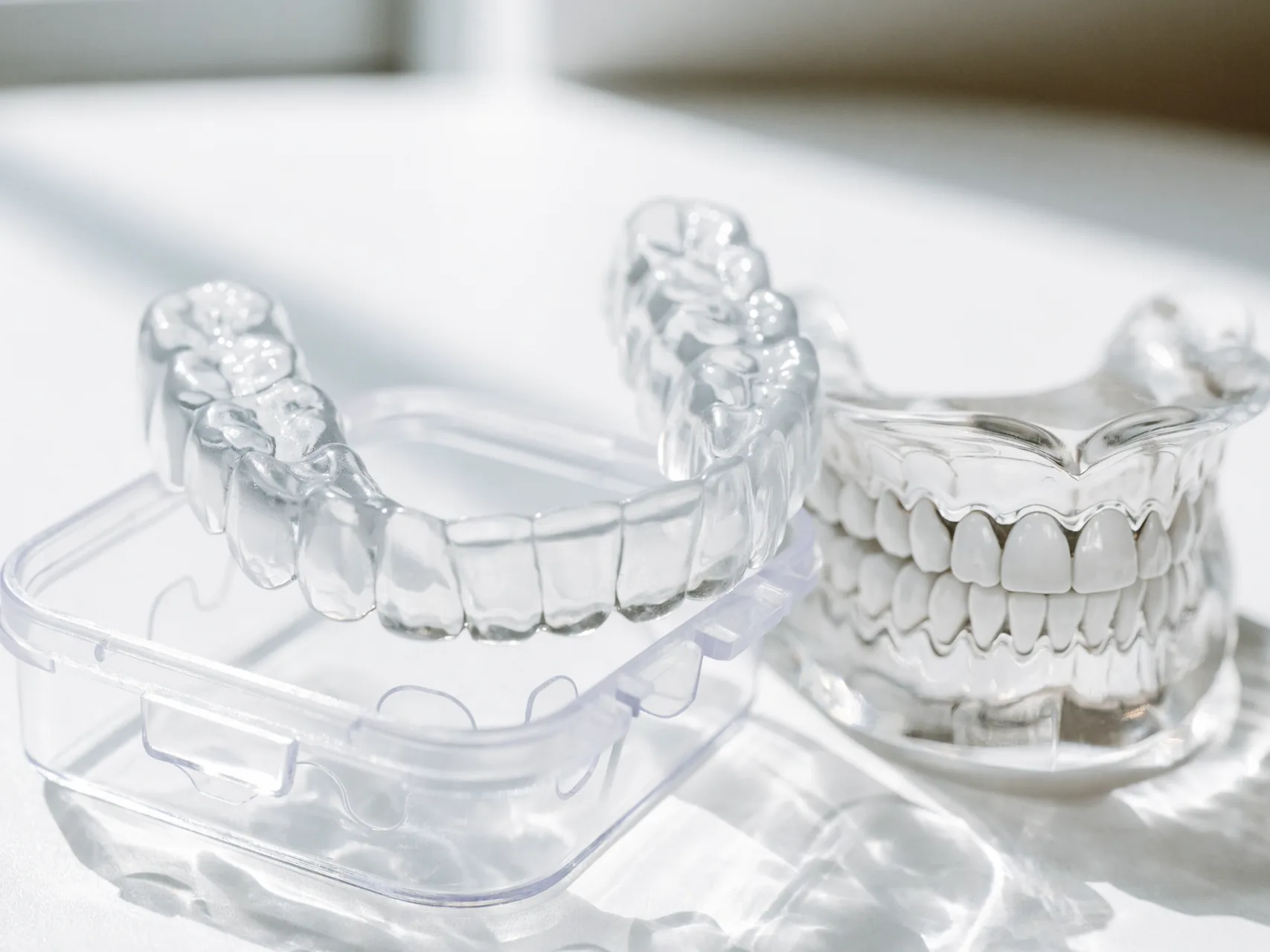
“Night guard,” “bite splint” and “occlusal appliance” can describe different designs and objectives. Some are intended to protect teeth or restorations; some are used within conservative TMD management; poorly fitting or unsupervised appliances can alter comfort or contacts. An appliance should follow diagnosis, examination and a review plan rather than being included as a generic package item.
Ask whether the device is stabilisation, repositioning, soft or another design; whether it is worn on the upper or lower arch; what the intended benefit and foreseeable limitations are; how fit and contacts will be checked; and when it should be stopped or reviewed. If the dentition changes during implant treatment, the old appliance may no longer fit. Do not heat, grind, force or modify it at home.
NIDCR notes that intraoral appliances should not be designed to permanently change the bite and should be stopped and reviewed if they cause pain. The named TMD clinician and restorative dentist need to coordinate any appliance with provisional and final implant restorations. A coordinator or laboratory alone cannot prescribe it.
Conservative care and specialist referral remain separate choices
Many TMD symptoms improve with time or simple measures. NIDCR lists education, soft foods for a limited symptomatic period, heat or cold with exercises, over-the-counter medicines when appropriate and reducing clenching-related habits among initial approaches, but an individual clinician must account for diagnoses, contraindications and medicines. This page does not tell a patient to start or stop a drug, diet or exercise.
Physiotherapy, behavioural approaches and other nonsurgical care may be relevant depending on diagnosis and functional impact. More invasive joint interventions require diagnosis, proportionality and appropriately qualified assessment. Implant surgery and TMJ surgery are entirely different procedures; agreement to one is not consent to the other.
Referral is especially important when there is recurrent locking, marked or progressive limitation, trauma, suspected inflammatory disease, neurological features, persistent unexplained pain, significant disability, or proposed irreversible bite or joint treatment. It is also reasonable when the implant team does not have the competence to diagnose the presenting pain. The referral should not become a vague barrier; it should ask a focused question and produce an accessible report.
Imaging follows the clinical question
No single image diagnoses every TMD. Dental radiographs may help identify tooth disease. Panoramic imaging offers an overview but has limitations. Cross-sectional imaging can show bony structures for defined indications; MRI may be used for selected soft-tissue or disc questions. Imaging findings do not always correlate neatly with symptoms and should not be used in isolation.
The implant site may separately require cross-sectional assessment for anatomy and surgical planning. A scan acquired for an implant does not automatically constitute a complete TMD investigation. Ask what each image is meant to answer, who interprets it, whether existing imaging is adequate and how the result would change care. Routine repeat scans without a question add radiation, cost and incidental findings.
Procedure tolerance is a clinical planning issue
Implant treatment may involve keeping the mouth open, local anaesthesia, pressure, suction, impressions or scanning, provisional work and more than one appointment. For someone with jaw pain or limited opening, procedure tolerance should be discussed before booking. A paper measurement alone cannot show how function changes over a long appointment.
The clinical team may consider shorter stages, breaks, supportive positioning, a bite block or mouth prop used appropriately, gentle opening, alternative recording methods or postponement during an acute flare. These are possibilities, not instructions or guarantees. The clinician must decide what is safe and workable for the actual procedure and monitor the patient during care.
A scoping review asking whether [implant therapies arouse TMD signs or symptoms](https://pubmed.ncbi.nlm.nih.gov/33618629/) found limited literature and identified prolonged surgical procedure as a possible concern. A scoping review cannot establish a universal causal rule. It supports asking about duration, mouth opening and symptom monitoring rather than promising that implant surgery either causes or never affects TMD.
Loading and the provisional restoration require explicit criteria
Loading and the provisional restoration require explicit criteria. An implant may be placed without being ready to support the intended functional restoration. TMD does not create a special universal loading timetable, and a comfortable jaw on the day of surgery does not prove that biological or restorative criteria are met.
The loading decision may consider implant stability, position, grafting, tissue findings, extent of surgery, opposing teeth, restorative design, bite, parafunction, hygiene and the consequences of changing course. The clinician should state which findings are assessed and what provisional route applies if loading is not appropriate. A flight or laboratory reservation cannot supply the missing evidence.
A provisional restoration may serve appearance, limited function, tissue shaping or evaluation of tooth position, speech and cleaning. In extensive work it can also help evaluate how a proposed change in vertical dimension, contacts or tooth arrangement is tolerated. That does not turn a provisional into a diagnostic treatment for TMD or prove that symptoms will improve.
Record the pain-and-function baseline before provisional delivery and review unfamiliar pain, closure, jaw fatigue, opening, chewing and device fit afterward. Adjustment may be appropriate for a restoration that feels high or creates an interference, but indiscriminate equilibration should not be presented as TMD treatment. The clinician must distinguish correction of the delivered restoration from irreversible alteration of other teeth.
Consent and the quote should explain retention, intended loading, cleaning, limitations, repair and the contingency if the provisional loosens, fractures or cannot be fitted. The patient should know who can assess it locally and which records or tools that clinician would need.
Implant position and restoration design require functional context
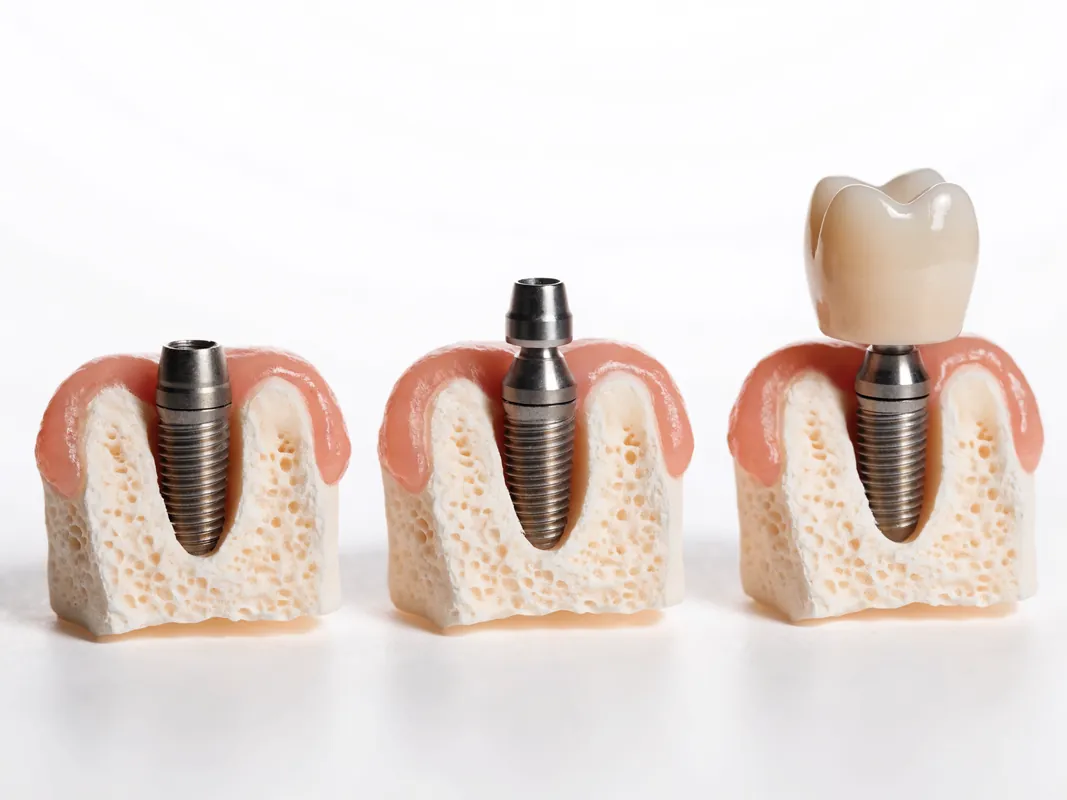
An implant-supported crown or bridge needs a restoration-led position that respects anatomy. The clinician should consider opposing teeth, available space, jaw movement, contacts, cantilever, connector design, material, access for hygiene and repair strategy. TMD does not automatically dictate a wider implant, a particular ceramic or one occlusal scheme. Such choices belong to the site and prosthetic plan.
Baseline contacts and jaw comfort should be recorded before changing a bite substantially. After provisional or final delivery, the clinician should check for premature contact, interference, mobility, screw or material problems and the patient's ability to chew and clean. A new restoration that feels high, triggers unfamiliar pain or changes closure needs timely assessment; the patient should not be told simply to “get used to it” without examination.
Design should anticipate serviceability. Ask whether the restoration is screw- or cement-retained, how it can be removed or repaired, which components are used and what records a local dentist will receive. A high-strength material does not remove the possibility of wear, fracture, loosening or biological disease, particularly when parafunction is suspected.
The definitive restoration should be evaluated before irreversible acceptance
The definitive restoration should be evaluated before irreversible acceptance. Insertion should follow review of implant and tissue findings, fit, contacts, jaw movement, cleaning access, appearance, speech, component identity and the patient's experience of the provisional stage where one was used. A scheduled return journey should not compress that review into silent acceptance.
Compare current pain and function with the recorded baseline. A change does not automatically prove that the prosthesis caused or cured TMD. It prompts examination of the restoration, implant, opposing teeth, muscles, joints and other relevant causes. A familiar chronic fluctuation and a new high contact require different responses.
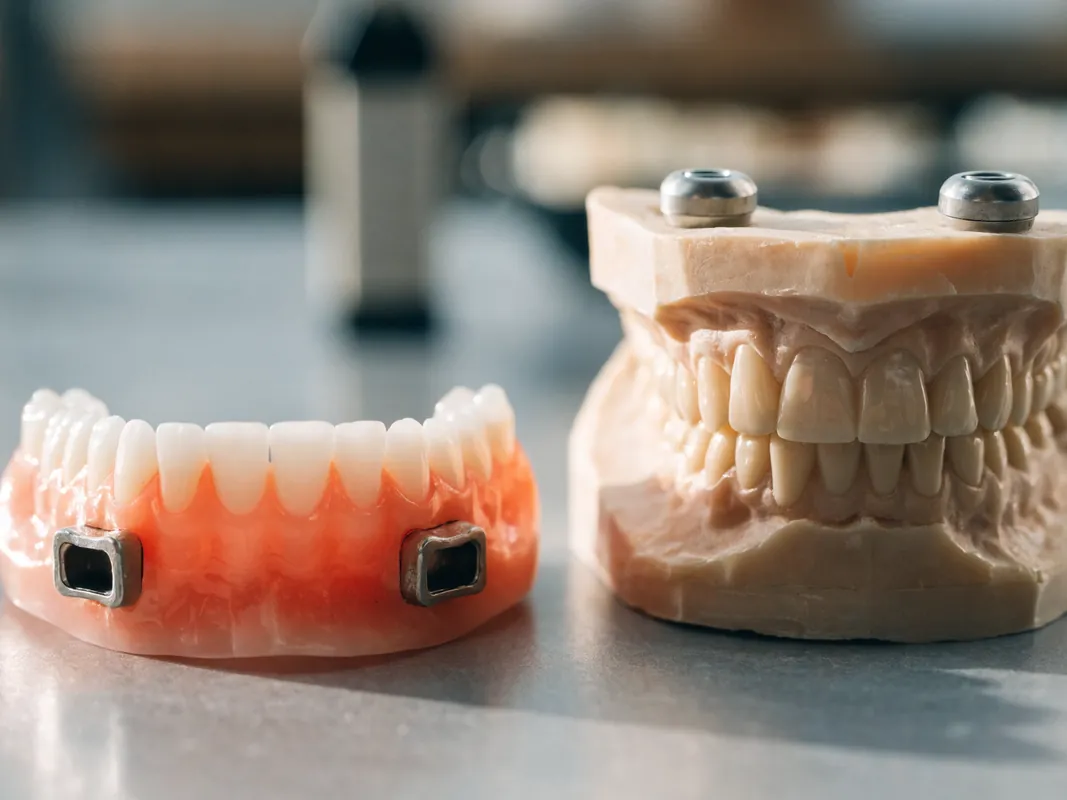
For full-arch work, confirm vertical dimension, tooth position, tongue space, lip support, phonetics, retrievability and hygiene before final manufacture or insertion. Ask which changes from the provisional are intentional and why. If opening limits scanning, records or insertion, the laboratory workflow must adapt to the patient rather than assume that digital technology removes the clinical limitation.
For single and multi-unit restorations, document retention, abutment and screw, framework or crown material, cement where applicable, implant connection, laboratory and repair route. A local clinician needs exact component records; “zirconia teeth” or “premium implant” is not enough.
If the definitive design differs materially from the consented plan, pause for an explanation, alternatives and revised cost. The patient may request adjustment, another opinion, a reversible provisional step or deferral. Irreversible bite changes proposed mainly to treat pain require their own evidence and consent.
Full-arch treatment can change function without treating TMD
Full-arch implant treatment may alter tooth position, vertical dimension, lip support, phonetics, tongue space, chewing pattern and occlusal contacts. Those changes make careful provisional assessment important. They do not prove that full-arch rehabilitation treats a pre-existing TMD. A patient should not be promised headache or jaw-pain relief as a package benefit.
Before removing a dentition, obtain a tooth-by-tooth prognosis and consider whether teeth can be retained or treatment can be less extensive. If extraction is proposed because of pain, confirm that the pain source is dental. The full-arch plan should explain provisional and definitive stages, adaptation, hygiene, repair, maintenance, what changes are reversible and how TMD symptoms will be monitored independently.
Limited opening can affect impressions, scanning, surgery, laboratory records and insertion of a prosthesis. The team must verify technical feasibility rather than assuming a digital workflow removes the limitation. If a long appointment or extensive change may be poorly tolerated, staged or local alternatives should be part of consent.
Medicines and health history need named prescribers
Provide a complete current list of prescription medicines, non-prescription products and supplements, plus allergies and previous adverse reactions. Include medicines used for pain, sleep, anxiety, depression, migraine, neurological conditions, inflammatory disease, clotting, bone health or other relevant conditions. Some symptoms and medicines can affect alertness, dry mouth, bleeding, interactions or the ability to travel and follow instructions.
Do not stop, start, delay or change a medicine because of generic TMD or implant advice. If a dental prescriber considers an analgesic, anti-inflammatory, antimicrobial, muscle-related medicine or sedation, that decision must account for the actual diagnosis, medical history, allergies, interactions and other prescribers. A salesperson should not recommend medication.
Chronic pain may coexist with sleep disturbance, migraine, fibromyalgia, irritable bowel syndrome, back pain or psychological distress. These are not reasons to dismiss symptoms as “stress.” They may change treatment burden, expectations and the need for coordinated care. The named clinician should ask respectfully and refer for a focused purpose when outside their scope.
Consent must separate replacement goals from pain goals
The General Dental Council's [Principle 3 on valid consent](https://standards.gdc-uk.org/pages/principle3/principle3) requires UK dental professionals to discuss relevant options, risks, benefits, possible costs and the effect of not proceeding, and to maintain consent throughout treatment. It is a useful patient benchmark, not evidence that a provider abroad is regulated in the UK.
Consent should state the purpose of the implant—such as replacing a missing tooth or supporting a restoration—and should not imply a TMD cure. It should document the baseline symptoms, diagnostic uncertainty, expected procedural demands, possible symptom fluctuation, alternative tooth-replacement options, TMD management alternatives, maintenance and local escalation. If the proposal involves irreversible occlusal adjustment, extensive preparation or joint intervention, require separate reasons and consent.
The patient may choose local treatment, temporary replacement, deferral or no implant. A symptom flare, revised diagnosis or new medical information may change the balance. Consent is not a one-time signature and remains revocable even after travel or payment.
Records make later pain assessment possible
The GDC's [Principle 4 on records and patient information](https://standards.gdc-uk.org/pages/principle4/principle4) is another useful benchmark. Before treatment, preserve the pain history, function measures, examination findings, tooth diagnoses, photographs, relevant images, occlusal records, existing appliance details, medical history and prior specialist reports. The record should distinguish observed findings from patient-reported symptoms and provisional interpretations.
After treatment, request diagnosis and procedure notes, implant and component identifiers, graft information where applicable, anaesthetic and medicine records, provisional and final restoration details, laboratory prescription, baseline periodontal and occlusal findings, imaging, aftercare, review schedule and direct contacts. If an appliance is supplied, record its design, purpose and instructions.
This documentation helps a local clinician compare new symptoms with baseline rather than guessing whether pain existed before travel. It also supports product serviceability. Keep original digital files where possible, not only compressed screenshots.
Maintenance must compare pain and function with baseline
Maintenance must compare pain and function with baseline. Implant review should assess peri-implant tissues, plaque control, restoration fit, mobility, components, bite and cleansability. TMD review may assess familiar pain, opening, locking, function, joint or muscle findings and the effect on daily activity. One visit can collect information for both pathways, but the diagnoses and responsible clinicians remain distinct.
The maintenance interval should follow clinical need, not a universal TMD calendar. Periodontal history, hygiene, restoration design, parafunction, prior mechanical events, symptom pattern, appliance use and access to local care may influence review. Remote photographs cannot probe tissues, assess mobility or reproduce familiar pain.
If an appliance is used, review its purpose, fit, contacts, wear, cleaning and compatibility with the implant restoration. A device made before treatment may need reassessment after the dentition changes. Do not force or alter it at home, and do not assume that visible wear proves current sleep bruxism.
When symptoms change, record both timelines: dental procedures and component events on one side, jaw-pain and function changes on the other. This helps clinicians consider mechanical, biological, dental and TMD explanations without assuming causation from timing alone.
Maintenance also includes ordinary dental care for remaining teeth and oral tissues. A fixed prosthesis does not remove the need for caries, periodontal, mucosal and oral-cancer assessment. The patient should know which local clinician provides each part and how records reach the original provider.
An itemised quote prevents bundled consent
The written quotation should separate implant assessment, TMD or specialist assessment, imaging, tooth-preserving treatment, extraction, surgery, graft contingencies, provisional restoration, definitive prosthesis, appliance, medicines, reviews and records. Non-clinical travel services should be listed separately. A “TMJ package” can obscure which interventions address pain and which replace teeth.
Ask what is contingent on examination, what happens if the mouth opening is insufficient for the planned procedure, how changes are authorised, and who pays for local review, additional appointments, repairs or remake. If the clinical plan or estimated cost changes, obtain the new reason, alternatives and written price before non-urgent additional work.
A warranty is a commercial contract with exclusions and maintenance conditions; it cannot guarantee symptom relief, implant integration or prosthetic durability. Confirm complaint and redress routes separately from any warranty language.

Travel increases the need for local clinical ownership
The GDC [going-abroad guidance](https://www.gdc-uk.org/standards-guidance/information-for-patients-public/going-abroad-for-dental-treatment) and NHS [treatment-abroad checklist](https://www.nhs.uk/using-the-nhs/healthcare-abroad/going-abroad-for-treatment/treatment-abroad-checklist/) encourage patients to verify providers, understand costs, complications, recovery, records, insurance and aftercare. TMD adds practical questions: can the patient tolerate the planned appointments, manage eating during a flare, carry appliances and medicines, and access familiar care after returning?
Do not schedule non-refundable travel around a promised fixed recovery. Fitness to fly depends on the actual surgical procedure, anaesthesia, medicines, bleeding, swelling, infection, pain control, function and complications, not the TMD label alone. The treating clinician should give case-specific advice after examination, and airline or insurer rules may add separate requirements.
Travel insurance may exclude planned treatment, pre-existing pain, complications or extended stay. Obtain policy answers directly in writing. Build contingency for delayed travel and local assessment. If current function is unstable or specialist evaluation is incomplete, local assessment or postponement may impose less burden.
Local TMD and dental care should be arranged before departure
Destination follow-up cannot replace immediate local care after returning home. Identify a local dentist willing to monitor implant tissues and restoration, and maintain access to the clinician managing TMD or chronic pain. Clarify how the destination team will share records and respond to those professionals. Do not assume that a GP or dentist who did not plan the treatment will accept responsibility for overseas surgery.
The handover should separate routine implant maintenance, mechanical restoration problems, TMD symptom review and emergencies. A jaw-pain flare may need the established TMD route, while swelling or discharge at an implant site needs dental assessment. New chest symptoms, neurological deficits or severe systemic illness should not be attributed to TMD without medical assessment.
Review frequency should be based on oral and functional need. Ask who checks the restoration, occlusion, appliance, periodontal tissues and home-cleaning ability, and what baseline measurements are available. Remote photographs cannot assess every problem.
Local handover must separate four care routes
Local handover must separate four care routes: routine implant maintenance, mechanical restoration problems, TMD or chronic-pain review, and urgent or emergency assessment. Combining them into one coordinator number risks delay and unclear responsibility.
The packet should include the original tooth diagnosis and prognosis, pain and function baseline, relevant TMD assessment or specialist report, dated imaging, periodontal and occlusal findings, procedure and anaesthetic notes, medicines, implant and component identifiers, graft information, laboratory prescription, provisional and definitive restoration details, appliance records and current instructions.
State which stages are complete, which findings remain uncertain and what the local clinician is asked to assess. If the prosthesis requires a particular driver, connection or removal method, identify it. If no local dentist has agreed to maintain the work, the plan should say so rather than describe aftercare as arranged.
Remote follow-up can share documents and support triage, but it cannot manage a locked jaw, drain infection, examine a changing bite, test sensation, assess implant mobility or manage an airway. A new or worsening problem requires the appropriate local route while commercial communication continues separately.
The quote and consent should state responsibility for local imaging, specialist review, component repair, appliance remake, urgent care and return travel. A commercial warranty cannot oblige a local clinician to accept another provider's work or delay care while liability is debated.
Red flags in implant marketing to people with TMD
Pause if a seller treats every click as disease, says TMD always comes from the bite, promises that implants or a full-arch bridge will cure headaches, prescribes a guard without assessment, insists one material or implant diameter prevents overload, or offers a universal period of “stabilisation.” These claims collapse several distinct decisions.
Other warnings include extracting a tooth to treat unexplained pain without a tooth diagnosis; absence of a pain-and-function baseline; no named TMD clinician despite complex symptoms; routine irreversible bite adjustment; no discussion of conservative care; no plan for limited opening; a final full-arch design chosen without a provisional evaluation; no component records; no itemised quote; or no local-care pathway.
Be cautious when every symptom is labelled bruxism or stress. Bruxism, TMD, sleep disorders and psychological distress overlap in some patients but are not interchangeable. Respectful assessment should not blame the patient and should not promise a mechanical cure for a multifactorial problem.
Urgent and emergency boundaries
Seek prompt local assessment for a newly locked jaw, rapidly worsening or severe limitation, new swelling, fever, discharge, trauma, uncontrolled bleeding, a loose implant or restoration, inability to eat or drink adequately, or new or worsening altered sensation. A familiar TMD flare can still coexist with dental infection or another problem.
Urgent medical assessment is appropriate for breathing or swallowing difficulty, major trauma, severe systemic illness, chest pain, stroke-like symptoms or other emergency features. Follow the local emergency route. For people in England, NHS guidance explains [urgent and emergency dental access](https://www.nhs.uk/nhs-services/dentists/how-to-find-an-nhs-dentist-in-an-emergency/). A travel coordinator is not an emergency service.
Questions for the TMD and implant teams
- What specific TMD diagnosis is established, suspected or still uncertain?
- Which dental or medical mimics have been considered?
- Is the tooth restorable, and who gave its prognosis?
- What pain, opening, locking and functional baseline is recorded?
- Which findings would justify deferring elective care or seeking specialist input?
- Is the implant proposed only to replace a tooth, or is symptom improvement being claimed?
- What alternatives exist for the missing tooth and for TMD management separately?
- What evidence supports any proposed bite change or appliance?
- How will appointment length and mouth opening be managed?
- What restoration design, contacts and serviceability are planned?
- What medicines must be disclosed, and which prescriber owns any change?
- What records will be supplied to local clinicians?
- Which costs are clinical, contingent, non-clinical or excluded?
- Who provides local dental review, TMD care and urgent assessment after travel?
TMD-aware implant planning checklist
Diagnosis and baseline
- Use “TMD” only after clarifying the symptoms and likely disorder.
- Record pain, function, opening, locking, sounds and daily impact.
- Exclude dental causes before extraction or implant treatment for pain.
Separate decisions
- Preserve restorable teeth where reasonable.
- Compare implant, bridge, removable, gap, postponement and no-treatment options.
- Keep TMD care distinct from replacement of a missing tooth.
- Do not accept a promise that irreversible bite change cures TMD.
Procedure and restoration
- Plan how the patient will tolerate opening and appointment length.
- Document restoration position, contacts, hygiene and repair route.
- Treat a splint as a prescribed device with a purpose and review, not a giveaway.
Consent and continuity
- Name the legal provider and every responsible clinician.
- Obtain ongoing consent, itemised costs and change-control terms.
- Transfer baseline and component records to local care.
- Keep urgent dental, TMD and emergency routes distinct.
Sources and evidence limits
- [NIDCR, Temporomandibular Disorders](https://www.nidcr.nih.gov/health-info/tmd), accessed 29 August 2026. It defines TMD as a group of more than 30 conditions, notes that asymptomatic joint sounds often need no treatment, and advises conservative approaches while avoiding irreversible changes intended to treat TMD.
- Schiffman and colleagues, [Diagnostic Criteria for Temporomandibular Disorders](https://pubmed.ncbi.nlm.nih.gov/24482784/), 2014. The validated DC/TMD framework supports structured history, examination and assessment of pain-related function for common disorders; it is not a patient self-test or a complete taxonomy.
- National Academies, [Temporomandibular Disorders: Priorities for Research and Care](https://www.ncbi.nlm.nih.gov/books/NBK555057/), 2020. It supports a comprehensive biopsychosocial assessment and highlights major evidence and care gaps.
- Brazão-Silva and colleagues, [scoping review of implant therapy and TMD signs or symptoms](https://pubmed.ncbi.nlm.nih.gov/33618629/), 2023. It identifies limited evidence and possible procedural-duration concerns without establishing universal causation.
- Häggman-Henrikson and colleagues, [systematic review and meta-analysis of bruxism and dental implants](https://pubmed.ncbi.nlm.nih.gov/37589382/), 2023. It supports discussion of an observed association in probable bruxers but cannot predict an individual outcome or justify a guaranteed protective device.
- [AAE position statement on implants](https://www.aae.org/specialty/wp-content/uploads/sites/2/2019/04/Implants_PositionStatement_v2.pdf), accessed 29 August 2026. It supports preserving a restorable natural tooth where reasonable and obtaining a sound diagnosis before replacement.
- [GDC Principle 3](https://standards.gdc-uk.org/pages/principle3/principle3), [GDC Principle 4](https://standards.gdc-uk.org/pages/principle4/principle4) and [GDC guidance on going abroad](https://www.gdc-uk.org/standards-guidance/information-for-patients-public/going-abroad-for-dental-treatment), accessed 29 August 2026. These are UK benchmarks for consent, records and provider checks, not evidence of an overseas provider's regulation.
- [NHS treatment-abroad checklist](https://www.nhs.uk/using-the-nhs/healthcare-abroad/going-abroad-for-treatment/treatment-abroad-checklist/) and [urgent dental guidance](https://www.nhs.uk/nhs-services/dentists/how-to-find-an-nhs-dentist-in-an-emergency/), accessed 29 August 2026. They support travel, aftercare and urgent-access planning.
See the dental implant service guide, pre-operative planning checklist, treatment-stage guide and returning-home guide for related decision tools. They do not replace assessment by the named clinicians.