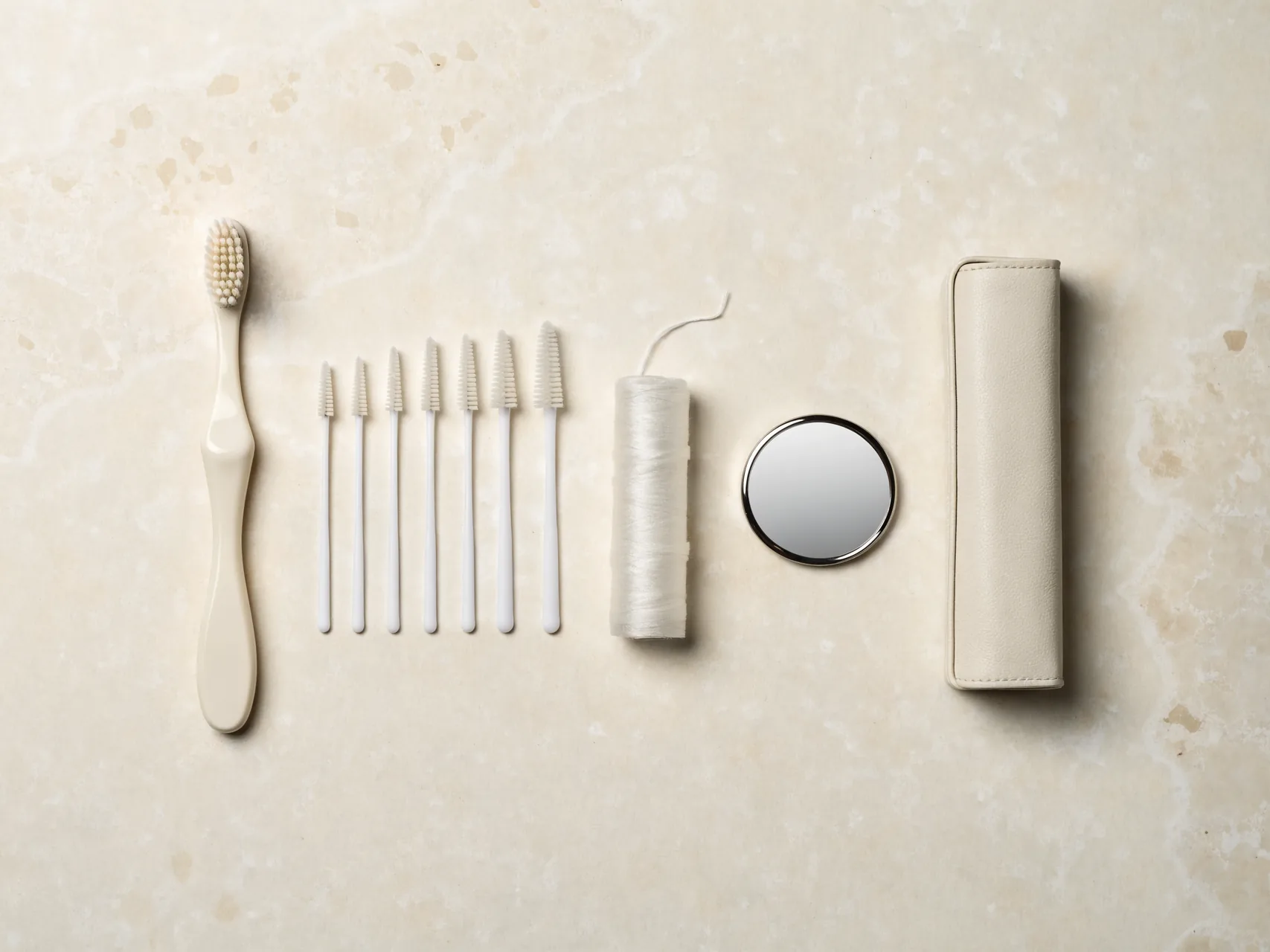
This guide owns long-term maintenance: the repeatable care used after definitive veneers are in function and the immediate fitting period has passed. It focuses on cleaning, protection, review and early recognition of change. It does not diagnose a loose edge, prescribe a toothpaste, decide whether a bite needs adjustment or predict how long an individual restoration will remain serviceable.
The first days after fitting, treatment-abroad handover and short-term sensitivity are separate questions. The immediate veneer-and-crown aftercare guide covers those issues. The dental veneers overview explains the treatment category. Keeping those intents separate makes this page a practical maintenance reference rather than another treatment sales page.
Veneers cover part of a tooth; they do not make the tooth, gum or bite maintenance-free. Natural tooth tissue remains at the margins and behind the restoration. Plaque can collect at the gum line, decay can develop around a veneer, gum disease can occur, and a veneer can chip, crack, wear or loosen. The American Dental Association gives those same boundaries in its patient information. Maintenance reduces avoidable risk and helps changes get assessed earlier, but maintenance cannot guarantee lifespan or a particular cosmetic result.
This is general information for adults with established veneers. The material, preparation, bonding surface, number and position of veneers, condition of the supporting teeth and gums, bite, dry mouth, diet, medical history and ability to clean all affect an individual plan. A licensed dentist or dental hygienist who can examine the mouth should tailor product, appliance and review advice.
Identify what was fitted
Long-term care starts with knowing whether each restoration is porcelain, another ceramic, direct composite or indirect resin composite. Marketing labels such as “smile makeover” or “Hollywood smile” do not answer that question. A mouth may contain several restoration types, and a crown is not a veneer simply because it is on a front tooth.
Keep a tooth-by-tooth treatment summary. Useful details include the treated tooth, restoration type, material or system recorded by the clinician, shade, fitting date, treating dentist, laboratory where relevant, bonding or cementation information in the clinical record, and any existing fillings at a margin. Retain relevant radiographs, scans and photographs that were clinically taken. These records help a future dentist interpret a rough edge, colour change, repair or appliance fit without guessing from appearance.
If the material is unknown, ask the treating practice for the written record rather than assuming that every white surface is porcelain. Porcelain and composite can differ in surface finish, stain behaviour and repair options. A hygienist also needs accurate information before choosing instruments or polishing materials. The patient does not need to specify a professional technique; the useful task is to provide the record and ask the professional to protect the restoration surface and supporting tissues.
What long-term maintenance can and cannot do
A maintenance routine has four realistic purposes: control plaque and decay risk around natural tooth tissue, support gum health, reduce avoidable mechanical loading, and create a route for clinical review when something changes. It can also preserve a useful record of the restoration over time.
It cannot make a veneer indestructible. It cannot reverse every material change, remove decay beneath a restoration, correct an interfering bite, diagnose bruxism or promise that a veneer will never need polishing, repair, rebonding or replacement. A visually intact veneer may still have a margin, gum, tooth or bite issue that needs examination. Conversely, a photographed line or small colour difference is not proof that a restoration has failed.
This distinction matters when reading longevity claims. Clinical research follows selected patients, materials and techniques under particular conditions. Results depend on how researchers define survival, complication and failure. Survival is not the same as maintenance-free service: a veneer can remain present while needing monitoring or intervention. Study averages are evidence for informed discussion, not an expiry date or an outcome promise for one person.
A daily veneer-care routine
The foundation is ordinary prevention performed thoroughly. Current NHS guidance advises adults to brush all tooth surfaces with fluoride toothpaste twice a day, including before sleep, and to clean between teeth. The UK Delivering Better Oral Health toolkit also emphasises cleaning every surface and the junction between gum and tooth, with additional aids chosen for interproximal spaces. The ADA's veneer guidance likewise states that cavities can still develop under or around a veneer.
A practical routine is:
- clean all tooth surfaces and the gum line with fluoride toothpaste, using a manual or powered brush that can reach comfortably;
- clean between veneers and neighbouring teeth with an aid suited to the size, contact and gum condition of each space;
- spit out excess toothpaste and follow current professional advice about rinsing, rather than washing fluoride away immediately;
- look and feel for changes without prodding, scraping or repeatedly testing a restoration;
- clean and inspect any prescribed night guard or sports mouthguard according to its instructions;
- record a persistent change and arrange an examination instead of trying to repair it at home.
This routine protects the whole mouth, not only the visible faces of the veneers. Back teeth, untreated front teeth, exposed root surfaces and the tongue-side surfaces still matter. A cosmetic surface that looks bright does not show whether plaque control at a hidden margin is effective.
Brushing without damaging the routine
Manual and powered toothbrushes can both clean effectively. Brush choice should take account of dexterity, gum condition, sensitivity and the clinician's findings. The NHS describes soft or medium bristles as suitable for most adults, while noting that complete cleaning matters more than brush type. More pressure is not a substitute for better access or technique.
Ask a dentist or hygienist to show where the veneer margins sit and how to reach them. The aim is to remove plaque from teeth and the gum line without aggressive scrubbing. If the gums recede, the contour changes, or a powered brush feels difficult to control, the technique may need review. Do not use a hard household brush, metal tool or fingernail to scrape a line at the margin.
There is no reason to stop using fluoride merely because a restoration is ceramic. Fluoride toothpaste protects remaining natural tooth tissue. A clinician may recommend a particular fluoride concentration or sensitivity product after assessing the person; an internet article should not prescribe one product for every reader.
Clean between veneers and along the gum line
A toothbrush does not reliably reach every interproximal surface. Floss, tape, interdental brushes, single-tufted brushes or another aid may suit different spaces. The best choice can vary within the same mouth. An interdental brush should be appropriately sized; forcing an oversized brush can injure tissue, while an undersized one may not clean the intended surface effectively.
Floss should pass through a contact with controlled movement and follow the side of the tooth rather than being snapped into the gum. If floss repeatedly catches, shreds, cannot pass, or emerges with material attached, stop forcing the same area and arrange an assessment. The cause could involve the contact, margin, surface, technique or trapped material. A person cannot distinguish those possibilities safely by sawing harder.
Bleeding can reflect inflamed tissue, injury or another issue; it is not a reason to abandon cleaning indefinitely or to intensify it blindly. Ask a dental professional to inspect the area and demonstrate an appropriate method. Persistent swelling, recession, discharge, tenderness or bad taste also deserves review. Veneer maintenance includes the supporting gum and natural tooth, not only the restoration surface.

Toothpaste, mouthwash and home polishing
No universal toothpaste is correct for every veneer patient. Caries risk, sensitivity, dry mouth, gum condition, surface material and clinician findings all matter. “Whitening”, “natural”, “charcoal”, “polishing” and “non-abrasive” are marketing descriptions unless supported by meaningful product information. Do not assume that a harsh-looking label proves harm or that a gentle-looking label proves suitability.
Start from official prevention guidance: use fluoride toothpaste suitable for the person's oral-health needs and ask a dentist when a specialist product is being considered. ADA-accepted products provide one independent route for checking the claims reviewed under that programme in the United States. That seal does not make a product mandatory, and availability differs by country.
Mouthwash does not replace brushing or interdental cleaning. The NHS advises not using mouthwash immediately after brushing because it can wash away concentrated fluoride from toothpaste. A prescribed antiseptic rinse should be used only for its stated purpose and duration. Turning a short clinical instruction into an indefinite routine may add side effects without addressing the cause of plaque or bleeding.
Do not polish veneers with baking soda mixtures, abrasive powders, manicure tools, household pastes or online scraping kits. A dull or stained appearance can come from surface deposits, a changed composite surface, a margin, gum recession, dehydration, lighting or the shade of nearby natural teeth. Identification comes before polishing.
Food, drinks and staining
Long-term care does not require a universal list of banned foods. The aim is to avoid unnecessary forces and protect oral health generally. Be alert to hard, unexpected objects such as olive stones, bones, unpopped kernels or ice. Cut food when that makes loading more controlled. Avoid using teeth as tools to open packaging, hold pins, cut thread or bite fingernails.
The ADA advises caution with foods and drinks that may discolour veneers. That does not mean one material behaves identically to another or that a drink creates immediate permanent staining. Porcelain is generally more stain-resistant than composite, while composite can be easier to repair. Surface deposits can affect either material, and natural teeth around veneers can change colour differently. Smoking and tobacco can also affect colour and oral health more broadly.
Do not respond to a colour change by scrubbing harder. Note whether the change is on one restoration, at a margin, across several teeth or mainly on untreated teeth. A dentist or hygienist can assess whether cleaning, professional polishing, repair, replacement, gum treatment or no intervention is appropriate. Cosmetic appearance and oral disease are different questions, although either may justify a review.
Whitening around veneers
Whitening does not change the colour of veneers in the way it can change responsive natural tooth tissue. The ADA states that bleaching does not work on veneers, crowns or fillings. Whitening nearby teeth can therefore alter the relationship between natural teeth and existing restorations, creating or revealing a shade mismatch.
Talk to a dentist before bleaching. The assessment should identify the restorations, the reason for discolouration, gum and tooth health, sensitivity risk and the realistic effect on untreated teeth. A clinician can also decide whether an apparent stain is external deposit, restoration surface change, marginal colour, underlying tooth colour or lighting.
Do not apply concentrated bleach selectively to a veneer margin or exceed product instructions in an attempt to make ceramic respond. If future veneer replacement is being considered for appearance alone, discuss how much additional tooth alteration might be involved and whether a less invasive option is available. Long-term maintenance should not drift into irreversible treatment without a fresh diagnosis and consent process.
Biting habits and avoidable mechanical loads
Veneers function during normal speaking and eating, but no restoration is immune to excessive or poorly directed force. Nail biting, pen chewing, ice crushing and opening objects with teeth add loads that have no nutritional or functional benefit. Removing those habits is sensible harm reduction; it does not guarantee that a veneer will avoid every complication.
Do not “test” a veneer by tapping it with metal, pushing the edge with a nail or repeatedly biting a hard object. If one tooth contacts first, chewing has changed, or a movement triggers discomfort, record the situation and seek an examination. Home filing, sanding or polishing is irreversible and can alter a surface or contact without resolving the underlying issue.
Dietary advice should remain proportionate. A clinician may give temporary restrictions after fitting or repair, but this long-term guide does not impose a permanent soft-food diet. Persistent difficulty eating is a reason to assess the restoration, tooth, bite, muscles and joints rather than continuously narrowing the diet.
Bruxism, clenching and night guards
Bruxism, clenching and night guards need individual assessment. Some people are unaware of sleep-related grinding; others notice jaw tenderness, headaches, tooth wear or chipped restorations. Those signs are not specific enough for self-diagnosis. The ADA notes that a dentist may recommend a night guard after assessment and that night guards differ from sports guards.
Not every person with veneers needs the same appliance. If a guard is recommended, obtain its purpose, design, insertion, removal, cleaning, storage and review instructions. A guard should be checked if it becomes tight, loose, damaged, painful or difficult to seat. Do not soften, trim or adjust it at home. When teeth or restorations change, an older appliance may no longer fit as intended.
A guard manages loading; it is not proof that the underlying behaviour has been cured, and it does not make a restoration invulnerable. Discuss daytime clenching, sleep quality, stress, medicines and jaw symptoms with appropriate clinicians where relevant. Do not infer that one cause explains every case.
One retrospective primary study of porcelain veneers reported an association between recorded bruxism and failure in its cohort. That observation supports asking about loading and follow-up; it does not predict what will happen to an individual veneer, prove causation or establish that one appliance design prevents failure.

Sports mouthguard and trauma protection
A sports mouthguard is designed to cushion impact to teeth and oral tissues. The ADA recommends mouthguards for sports and activities that may injure the mouth, including activities that are not traditionally labelled contact sports. Veneers on front teeth do not remove that need.
Ask a dentist about fit, especially when several front teeth are restored or the bite has changed. Custom-made, boil-and-bite and stock guards differ in fit and comfort. A guard that moves, impairs breathing, damages the gum or no longer seats should be reviewed. Follow manufacturer and clinician instructions for cleaning, drying and storage, and check for damage.
A sports guard and a night guard have different jobs. Do not assume one can be substituted for the other. After a blow to the face, a veneer may look intact while the supporting tooth, root, gum, bone or jaw has been injured. Seek dental assessment after meaningful trauma, particularly with pain, movement, bite change, bleeding or altered sensation.
Porcelain and composite maintenance decisions
Porcelain and composite veneers share the need for plaque control and review, but their surfaces and repair pathways are not identical. ADA patient guidance describes composite as easier to repair but less resistant to stain and wear than porcelain. A clinical trial comparing particular indirect resin composite and ceramic veneers also found material-dependent differences, but its specific products, sample and protocol should not be generalised to every modern veneer.
Do not ask a hygienist to treat all white restorations as one material. Provide the treatment record and let the professional select compatible instruments and polishing systems. A surface that can be repolished in one composite case may require a different decision in a ceramic case. The condition of the supporting tooth and margin may matter more than the visible surface.
Repair is not automatically better or worse than replacement. The clinician should consider the defect, material, bonding surface, remaining tooth tissue, appearance, function and consequences of further preparation. Ask what problem the proposed intervention solves, what observation or repair alternatives exist, and what new risks accompany replacement.
Reviews should be risk-based
There is no evidence-led basis for giving every adult with veneers one permanent recall calendar. NICE guidance says oral-health review intervals should be appropriate to individual need and should be reviewed as risk changes. A risk-based review interval may consider previous decay or gum disease, number and type of restorations, dry mouth, smoking, cleaning ability, symptoms, bite, appliances and findings at the last examination.
“Regularly” therefore means according to the interval set after assessment, not automatically on a universal schedule. A person with active disease or a new concern may need a different plan from someone with stable findings. Moving country, changing dentist, becoming pregnant, starting medicines that affect saliva, developing a medical condition or receiving new restorations can justify reassessing the plan.
Professional cleaning frequency and method should also follow need. Tell the clinician or hygienist what was fitted and report any sensitivity, catching floss, roughness or appliance use. Do not direct them to avoid or use a named instrument based only on an online post; appropriate technique depends on the material, deposits, tissues and professional assessment.
What a dental review can check
A long-term veneer review is more than a shade check. Depending on findings and consent, it may include:
- changes in symptoms, function, appearance and medical or medicine history;
- plaque control at the gum line and between teeth;
- gum inflammation, recession, bleeding and periodontal findings;
- visible and accessible restoration margins and surface condition;
- contact points, food trapping, floss access and adjacent teeth;
- the bite, wear pattern and jaw symptoms where relevant;
- decay risk in natural tooth tissue around or behind a veneer;
- vitality or other tests when symptoms and clinical judgement justify them;
- the fit and condition of a prescribed night guard or sports mouthguard;
- whether professional cleaning, monitoring, repair, referral or another step is appropriate.
Radiographs are not an automatic veneer-maintenance ritual. A dentist decides whether imaging is justified by history, examination, risk and current guidance. Photographs can document appearance but cannot show every margin, contact, pulp, root or bite relationship.
Changes that need a dental appointment
Arrange a dental assessment when a change persists, worsens, recurs or affects function. Examples include new sensitivity or pain, a bite that feels different, a veneer that feels mobile, a sharp or rough edge, visible chipping, repeated floss shredding, persistent gum bleeding or swelling, recession, food trapping, a new dark line, bad taste, discharge or a change after trauma.
These findings do not prove that the veneer itself has failed. Pain may arise from the supporting tooth, another tooth, gums, muscles or jaw joint. Colour can reflect the restoration, natural tooth, deposits, gum position or lighting. Movement could involve a veneer, tooth or another structure. An in-person examination is the step that separates those possibilities.
Do not delay because a phone photograph looks normal. Do not accept a remote suggestion to grind, glue or chemically treat the surface without an appropriate clinical assessment. When the original dentist is distant, a local licensed dentist can examine the mouth and, with consent, share findings and records.
Urgent and emergency signs
Urgency depends on symptoms, not whether the veneer was fitted locally or abroad. Current NHS guidance lists a broken or loose veneer, severe dental pain affecting normal activity, pain that does not go away and enlarging oral swelling among reasons to seek urgent dental advice. Local pathways differ outside England, so know how to contact an urgent dentist where you live.
Emergency features go beyond routine veneer maintenance. NHS guidance directs people to emergency services for serious face or jaw injury, heavy mouth bleeding that will not stop, or severe swelling of the mouth, lips, throat or neck with breathing difficulty or problems opening an eye. Loss of consciousness, vomiting or double vision after head or facial injury also requires emergency assessment.
Do not wait for a warranty discussion, overseas reply or planned review when urgent or emergency care is needed. Clinical safety and payment responsibility are separate questions. Keep records and receipts, but obtain appropriate care first.
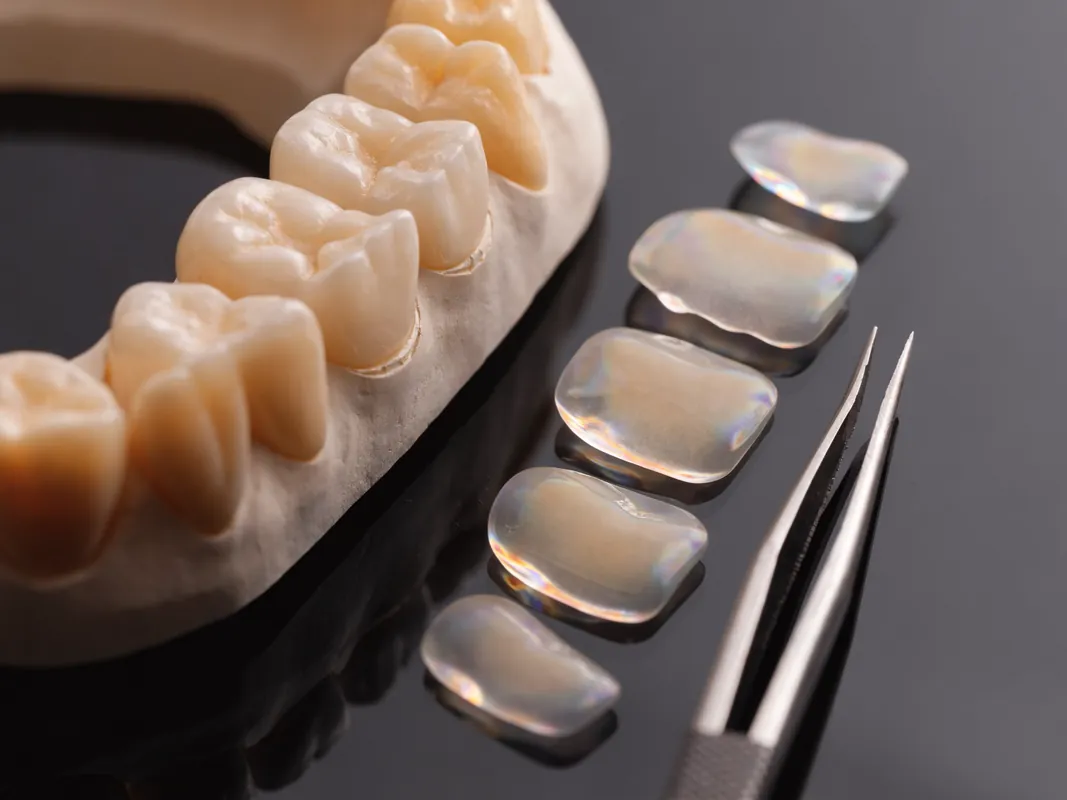
If a veneer chips, cracks, loosens or comes off
Stop using the area to bite and contact a dentist promptly. Keep any detached fragment or restoration in a clean, secure container and take it to the appointment. Do not use household glue, nail adhesive, denture adhesive or an online bonding kit. Do not file a sharp area or repeatedly press a loose veneer back into place.
If a loose piece presents a swallowing or breathing concern, seek prompt advice rather than leaving it mobile. Whether a veneer can be rebonded, repaired, polished, monitored or replaced depends on examination of the restoration, supporting tooth, margin, bite and material. A photograph alone cannot establish those conditions.
Ask the assessing dentist to document the tooth, symptoms, findings, images taken, immediate care and proposed next steps. If another practice performed the original treatment, share relevant records with consent. Avoid allowing a commercial dispute to turn an urgent clinical decision into a remote negotiation.
Repairs, polishing and replacement
Intervention should start with a diagnosis and options. A small surface issue, marginal concern, debonded restoration, fractured veneer and diseased supporting tooth are different problems. The least invasive appropriate option depends on the actual finding, not a promise printed in an old quotation.
Before agreeing to work, ask:
- what finding is being treated;
- whether monitoring, professional cleaning, polishing, repair, rebonding or replacement are realistic options;
- what natural tooth tissue would be altered;
- how appearance, bite and gum access may change;
- whether additional tests or records are needed;
- who will provide follow-up and what costs apply.
A replacement may require further preparation and fresh consent. A repair can also have limitations. Neither should be described as a guaranteed reset of lifespan. If opinions differ, request written findings and consider an independent assessment rather than choosing solely by speed or marketing language.
Keep a maintenance record
A simple maintenance record improves continuity. Store the tooth chart, material details, relevant images, treatment and repair dates, appliance information, review notes and current clinical contact details. Add a short dated note when a symptom starts: location, trigger, duration, change over time, effect on eating or sleep, associated swelling or trauma, and advice received.
The record should be factual. Avoid labelling a problem as “failed bonding”, “infection” or “bad bite” unless a clinician has made and documented that finding. Note what was observed instead: floss catches between two named teeth, one edge feels rough, pain occurs on biting, or a guard no longer seats.
When changing dentist, provide the record securely and explain that veneers are present. Ask what information is missing. Keep consent for clinical information sharing separate from consent for marketing photographs. Good documentation does not prevent complications, but it reduces avoidable guessing when care moves between clinicians.
Long-term veneer maintenance checklist
Use this checklist as a discussion aid, not a substitute for examination:
- I can identify which teeth have porcelain, composite, another veneer type or a crown.
- I keep the treatment summary and relevant material, laboratory and clinician details.
- I clean all tooth surfaces and the gum line with fluoride toothpaste.
- I use an interdental method demonstrated for my spacing and gum condition.
- I do not force floss through a catching contact or scrape a margin at home.
- I avoid using teeth as tools and do not deliberately stress-test a veneer.
- I know that bleaching natural teeth can change shade matching but not the veneer colour in the same way.
- I use a night guard only when assessed and recommended, and I monitor its fit.
- I use an appropriate sports mouthguard for activities with dental-injury risk.
- I follow a risk-based review interval set by a dentist rather than a universal calendar.
- I report persistent pain, bite change, movement, chipping, gum change or repeated food trapping.
- I know the local urgent dental and medical emergency routes.
- I never use household glue, filing tools or unregulated repair kits in my mouth.
- I keep a dated record of examinations, maintenance and any repair.
What the evidence says about lifespan
There is no fixed lifespan that can be promised for an individual veneer. Primary clinical studies are useful because they document what happened to defined restorations in followed groups. The Peumans prospective trial assessed aesthetics, margins, retention, fracture, vitality and caries, showing why “still present” is not the only meaningful maintenance outcome. The Beier retrospective study recorded failures and clinical features over long follow-up, including an association with bruxism in that cohort.
Those studies do not create a countdown for a different patient. Materials, preparation, bonding, operators, definitions and follow-up differ, and dentistry has changed since older restorations were placed. Cohort associations do not prove that one behaviour caused one outcome. The useful conclusion is modest: veneers can remain serviceable for extended periods, complications and maintenance can occur, and individual assessment matters.
Ask a dentist to explain the condition of the actual veneer, tooth and tissues. Treat a quoted study figure as context, never as a warranty, expiry date or reason to ignore new symptoms. Maintenance aims to support health and informed decisions, not to convert population research into certainty.
Official and primary sources reviewed
Sources were checked on 29 August 2026. They support the boundaries and maintenance principles above; they do not endorse a provider or predict an individual outcome.
- [American Dental Association: Veneers](https://www.mouthhealthy.org/all-topics-a-z/veneers) — veneer types, possible chipping or loosening, cavities around veneers, fluoride brushing, interdental cleaning, hard-object caution and sports protection.
- [American Dental Association: Teeth Whitening](https://www.mouthhealthy.org/all-topics-a-z/teeth-whitening) — bleaching does not change veneers, crowns or fillings in the way it changes responsive natural teeth.
- [American Dental Association: Teeth Grinding](https://www.mouthhealthy.org/all-topics-a-z/teeth-grinding) — signs require assessment, a dentist may recommend a night guard, and sleep and sports guards serve different purposes.
- [American Dental Association: Mouthguards](https://www.mouthhealthy.org/all-topics-a-z/mouthguards) — sports protection, guard types, fit, cleaning, storage and replacement when damaged or ill-fitting.
- [NHS: How to keep your teeth clean](https://www.nhs.uk/live-well/healthy-teeth-and-gums/how-to-keep-your-teeth-clean/) — fluoride toothpaste, twice-daily brushing, gum-line and interdental cleaning, brush choice and mouthwash timing.
- [UK Delivering Better Oral Health: oral hygiene](https://www.gov.uk/government/publications/delivering-better-oral-health-an-evidence-based-toolkit-for-prevention/chapter-8-oral-hygiene) — official prevention guidance on fluoride, plaque removal, gum-line care and appropriately selected interdental aids.
- [NICE CG19: dental checks](https://www.nice.org.uk/guidance/cg19) — oral-health review intervals based on individual need and revised when risk changes.
- [NHS: urgent and emergency dental care](https://www.nhs.uk/nhs-services/dentists/how-to-find-an-nhs-dentist-in-an-emergency/) — broken or loose veneers, pain, swelling, trauma, bleeding and emergency escalation boundaries.
- Peumans and colleagues, [prospective clinical trial of porcelain veneers](https://pubmed.ncbi.nlm.nih.gov/15119590/) — primary clinical follow-up covering retention, margins, fracture, vitality, caries and intervention needs.
- Beier and colleagues, [long-term clinical performance of porcelain veneers](https://pubmed.ncbi.nlm.nih.gov/22259802/) — primary retrospective evidence on survival, failure reasons and recorded clinical factors.
- Gresnigt and colleagues, [randomised clinical trial of indirect resin composite and ceramic veneers](https://pubmed.ncbi.nlm.nih.gov/31181242/) — primary comparative evidence showing that findings are material- and protocol-specific.