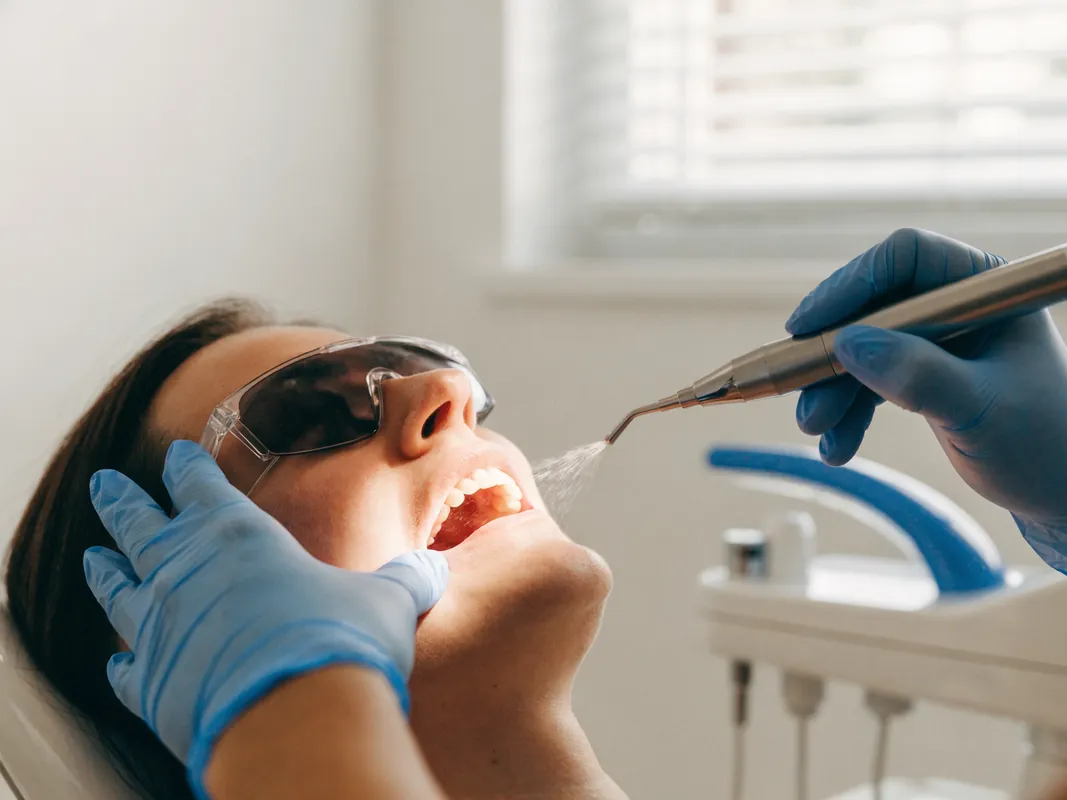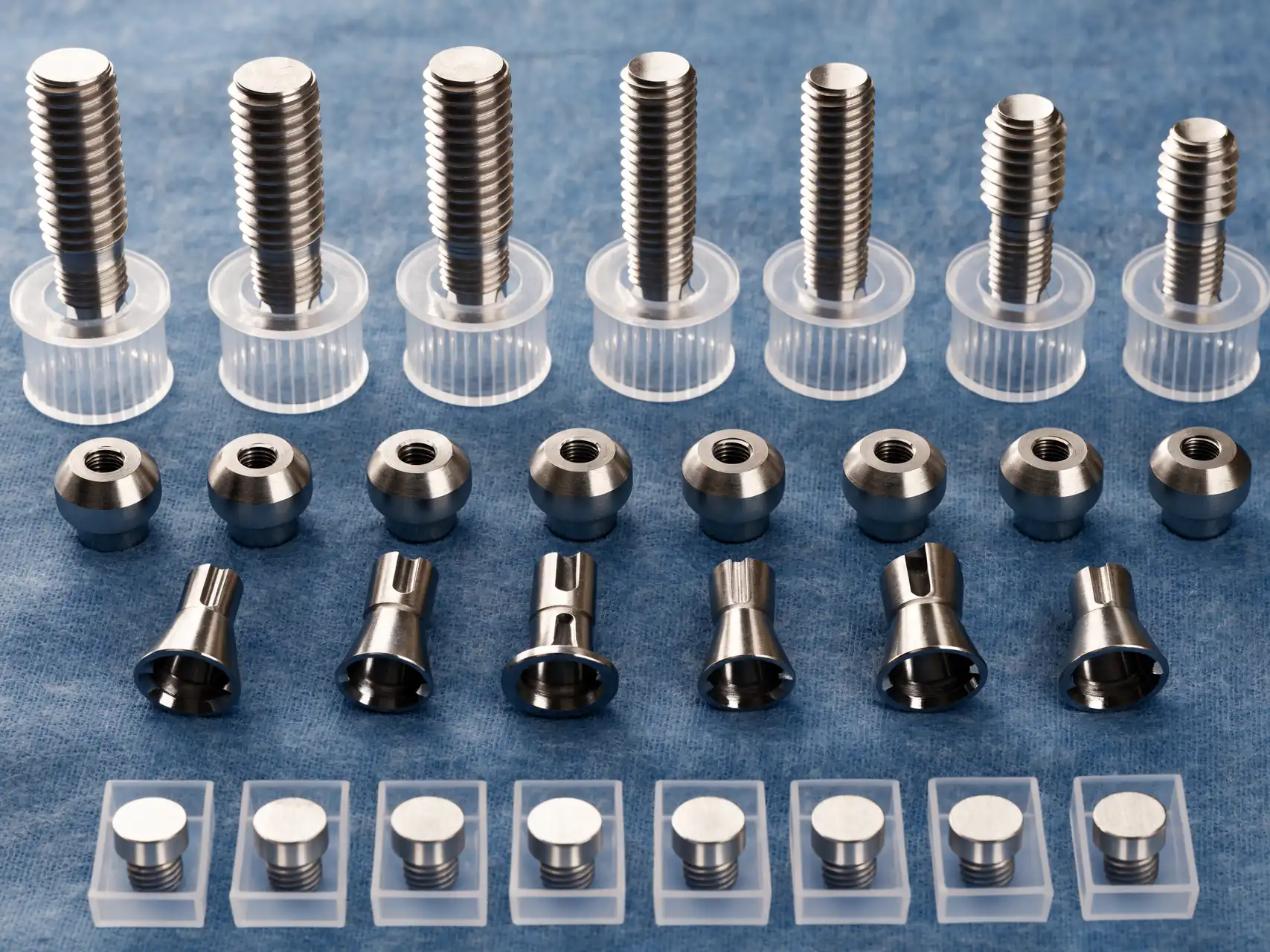
A concern about titanium deserves a careful history and a respectful answer. It does not justify dismissing symptoms, but it also does not prove that an implant-related problem is an allergy. Pain, redness, bleeding, swelling, bone loss, a loose restoration, skin symptoms or general illness can have several causes. No percentage, online checklist, patch test or blood assay can replace a clinical diagnosis and a review of the entire implant-restoration system.
This guide addresses two different situations. One is a person without an implant who reports metal reactions or wants to compare materials before treatment. The other is a person with an existing titanium-containing implant or component who has symptoms. The questions, urgency, tests and treatment options differ. The guide is educational: it cannot diagnose hypersensitivity, select a fixture, interpret a laboratory result, advise implant removal or promise that another material will solve symptoms.
WeCare is not the treating dental provider. Its role is limited to enquiry and referral coordination and, if separately agreed, non-clinical travel logistics only as documented in writing. Before paying or sharing health data, identify the named legal treatment provider, named implant clinician, named restorative clinician and, when needed, the dermatologist, allergist, oral-medicine clinician or other specialist responsible for the material concern. A coordinator cannot certify a diagnosis or a product as “allergy free.”
Start with the exact concern, not the label
“Titanium allergy” may mean a previous positive skin test, dermatitis from jewellery, a reaction to another medical device, persistent inflammation around a dental implant, an unexplained implant failure, a preference to avoid metals, or information read online. These are not equivalent. Record what happened, which material was involved, where and when symptoms appeared, how they changed, which tests were performed and whether removing or avoiding an item changed the course.
Ask for original reports rather than a verbal summary. A result labelled “metal allergy” may have tested nickel, cobalt or chromium without titanium. A device described as titanium may include an alloy, surface modification, screws, abutments, restorative framework, cement or other materials. Even when a titanium-containing product is present, temporal association does not by itself establish causation.
Symptoms should be described specifically. For an oral site, record pain, swelling, redness, bleeding, discharge, taste, mobility, recession, mucosal changes, onset, progression, cleaning, trauma and restoration history. For skin or systemic concerns, use the relevant medical pathway. Avoid broad phrases such as “autoimmune-like reaction” unless a qualified clinician has made and documented a diagnosis.
Allergy, hypersensitivity, intolerance and inflammation are not interchangeable
Allergy usually implies a specific immune mechanism. Hypersensitivity is sometimes used more broadly in the literature, while “intolerance” can describe symptoms without a proven allergic pathway. Peri-implant inflammation can arise from microbial biofilm and other local factors, and titanium particles may participate in nonspecific inflammatory responses without establishing classic adaptive allergy.
A systematic review asking whether [titanium sensitivity is associated with allergic reactions in dental implant patients](https://pubmed.ncbi.nlm.nih.gov/21414135/) concluded that titanium's significance as a cause remained unproven in the limited evidence then available. A later systematic review of [diagnostic tests for titanium hypersensitivity](https://pubmed.ncbi.nlm.nih.gov/35819566/) found inconsistent reliability and validity for epicutaneous testing, lymphocyte transformation testing and MELISA, with high overall bias in the included studies. These findings support caution in both directions: neither “impossible” nor “proven by one test” is responsible.
The 2026 updated [systematic review of clinical evidence and diagnostic strategies](https://pubmed.ncbi.nlm.nih.gov/41581901/) found a small body of clinical evidence dominated by case reports and one prospective study. It described reported cases while emphasising limited evidence and the need for standardised diagnosis. Case reports can signal a possible problem; they cannot determine prevalence, establish a test as definitive or predict one patient's response.
Rule out common biological and mechanical causes first
Persistent symptoms around an implant require an implant assessment whether or not allergy is suspected. The clinician should review plaque control, peri-implant probing and bleeding where appropriate, baseline and current radiographs, restoration contour and access for cleaning, residual cement where relevant, component fit, mobility, occlusal loading, fracture, neighbouring tooth disease, endodontic or periodontal sources, soft-tissue conditions and medical or behavioural factors.
Peri-implant mucositis, peri-implantitis, infection, an uncleanable restoration, excess cement, loose components, fracture, traumatic contact, poor implant position, inadequate tissue, retained material, neighbouring tooth pain and neuropathic pain are examples of possible differentials. This list is not a remote diagnostic tool. It is a reminder not to skip frequent or treatable explanations because a material concern sounds compelling.
The critical review on [titanium particles and biocorrosion](https://pubmed.ncbi.nlm.nih.gov/30306693/) reports that particles can be found in healthy and diseased peri-implant tissues, as well as at low levels in gingiva without implants. Detecting particles therefore does not by itself prove allergy or identify the cause of disease. Findings need clinical context and cautious interpretation.
If the implant is mobile, infection is spreading, altered sensation is new or worsening, or the restoration is fractured, do not wait for allergy testing before seeking local assessment. Treatment priorities follow the urgent clinical problem. Removal should not be promised, delayed or performed solely because of an online label.
Examine every component, not only the fixture
An implant restoration is a system. It may include a fixture, cover screw, healing abutment, definitive abutment, prosthetic screw, framework, crown or bridge material, veneering ceramic or resin, cement, graft and membrane. Tools or temporary components may have contacted the tissues. The material identity and exposure route differ at each stage.
Ask for the implant passport, manufacturer, commercial name, catalogue or lot information where available, alloy or ceramic composition, abutment and screw details, restoration framework and laboratory prescription. “Metal-free crown” does not prove that the fixture or abutment contains no metal. “Titanium implant” does not disclose every restorative component. A product logo in a quotation does not prove what was placed; traceability records should connect the actual product to the patient's procedure.
Prior reactions to nickel, cobalt, chromium, dental resins, acrylates, eugenol, latex, chlorhexidine, medicines or adhesives may be relevant to the broader differential. They do not automatically predict a titanium reaction. The clinician or allergy specialist should decide which materials and exposures warrant investigation.
UDI, model and lot records answer different traceability questions
UDI, model and lot records answer different traceability questions. The words implant passport are useful only when the document identifies what was actually used. A brand name describes a commercial family. A model or catalogue reference narrows the design and dimensions. A unique device identifier identifies a device type and production information within the applicable regulatory system. A lot, batch or serial number links an individual supplied item or production run. None of these fields substitutes for the others.
The European Commission explains that the EU medical-device framework uses UDI to support device identification and traceability. Its [UDI and device-registration page](https://health.ec.europa.eu/medical-devices-eudamed/udidevice-registration_en) also shows that implementation duties and dates belong to a specific jurisdiction and regulatory framework. A dental patient should not assume that every product or component in every country carries the same form of identifier. The legal provider must follow the rules that apply to the device and place of treatment.
Before placement, request the proposed fixture's manufacturer, commercial name, exact reference, dimensions, material designation and current manufacturer information for use. Ask separately about the cover screw or healing component, definitive abutment, prosthetic screw, framework, veneering or monolithic restoration, cement or bonding system, graft, membrane and any temporary material. The phrase zirconia implant does not identify an entire reconstruction, just as titanium fixture does not identify every exposure.
After treatment, records should connect the opened package to the patient and procedure. Useful fields may include the UDI where applicable, catalogue reference, lot or serial information, date and site of placement, clinician and legal provider, and the identity of connected components. Retain package labels or electronic equivalents in a form that another clinician can read. A photograph of a closed branded box before treatment does not prove which item was inserted.
Traceability serves more than allergy investigation. It can support compatibility checks, future restoration repair, manufacturer safety notices and identification of a component when records are transferred. It does not prove that a device caused a symptom, that the product is clinically suitable, or that regulatory registration predicts an individual outcome.
If identifiers are missing, ask the provider and laboratory to reconstruct the record from stock, invoices, labels, operative notes and prescriptions. State any remaining uncertainty rather than inventing a code. A missing card does not automatically prove that a device is counterfeit, and a valid UDI does not establish correct placement, consent or diagnosis. Those are separate questions.
A patient should not use a barcode search to self-diagnose allergy. Manufacturer documentation can describe composition, intended use and warnings, while the clinician and relevant specialist interpret exposure and symptoms. If the exact alloy, surface, abutment or cement remains unknown, that limitation belongs in the material decision and consent.
Patch testing has important limits
Epicutaneous or patch testing is established for many contact allergens, but titanium creates technical challenges. Different salts or preparations may be used, titanium has low solubility and skin exposure is not identical to an implanted oral device. A negative test may not exclude every relevant mechanism, while a positive result requires clinical correlation and may not prove that the dental implant caused the symptoms.
The [German S3 guideline on titanium hypersensitivity](https://pubmed.ncbi.nlm.nih.gov/36329297/) distinguishes particle-related local inflammatory reactions from classic allergy concepts and cautions about diagnostic testing. The 2022 systematic review likewise found inconsistent test performance. Therefore this page does not require patch testing for every implant patient and does not call one preparation a gold standard.
When patch testing is considered, ask who selected the series and preparations, what clinical question is being answered, how readings will be performed, what other relevant materials are included, and how the result will change the treatment decision. The dermatologist or allergy specialist should interpret the result alongside the dental findings; a sales team should not interpret a photo of a test panel.
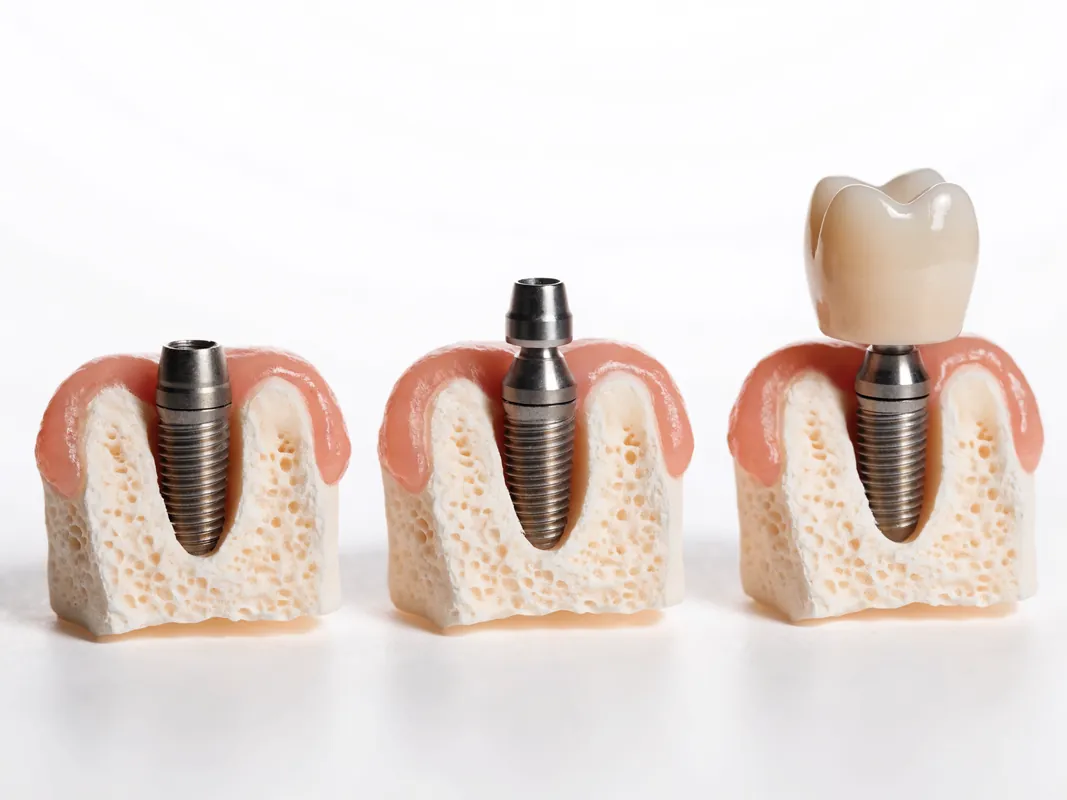
LTT and MELISA are not stand-alone verdicts
Lymphocyte transformation tests assess lymphocyte responses in vitro. MELISA is a proprietary adaptation of lymphocyte proliferation testing. The tests differ in laboratory methods, availability, validation and interpretation. Results can be affected by technical and biological factors, and there is no universally accepted diagnostic pathway in implant dentistry that turns one result into automatic approval, removal or material substitution.
The systematic review on [ECT, LTT and MELISA](https://pubmed.ncbi.nlm.nih.gov/35819566/) concluded that available results were inconsistent and should be regarded cautiously. A literature review of purported [allergy-induced implant failures](https://pubmed.ncbi.nlm.nih.gov/37999027/) similarly stated that no definitive method had been established and that comprehensive clinical diagnosis was necessary.
Do not order a commercial assay solely because an advertisement presents it as decisive. If an appropriately qualified clinician proposes testing, ask about validation, controls, false-positive and false-negative possibilities, pre-test probability, alternative explanations and what decisions could follow each result. Keep the complete laboratory report, not only a colour-coded summary.
Pre-implant concern needs a different pathway
A person without an implant usually has time to define preferences, retrieve prior allergy records and compare tooth-replacement options. The implant clinician should first decide whether the tooth needs replacement and whether a restorable natural tooth can be preserved. The AAE [implant position statement](https://www.aae.org/specialty/wp-content/uploads/sites/2/2019/04/Implants_PositionStatement_v2.pdf) supports preserving teeth where reasonable rather than treating implant placement as automatically preferable.
Alternatives may include retaining and restoring the tooth, leaving the space, a removable prosthesis, an adhesive bridge, a conventional bridge, orthodontic space management, deferral or no treatment. Each option has different material exposures and maintenance needs. A material concern should not be used to rush extraction.
If an implant remains a reasonable option, the clinician should document the history, available evidence, site anatomy, restoration requirements and the patient's values. Specialist allergy or dermatology input may be useful for a focused question, particularly with a convincing previous device reaction or complex material history. Routine testing for everyone is not supported by the evidence reviewed here.
Symptoms after implantation require a structured reassessment
For an existing implant, establish a timeline. When was the fixture placed, when were temporary and final components connected, when did symptoms start, and did they follow a restoration, hygiene change, trauma, medication, illness or another exposure? Compare baseline and current clinical and radiographic records. Identify whether symptoms are local, distant or systemic and whether another clinician has diagnosed them.
Treat urgent infection, mechanical instability or other identified problems through the responsible local pathway. If common causes are found, explain them and monitor the response. If symptoms persist despite appropriate management and a material reaction remains plausible, multidisciplinary review may include oral medicine, periodontology, prosthodontics, allergy or dermatology. Histology or other investigations may be considered for a defined reason, but no single finding is universally decisive.
Implant removal is irreversible and may damage bone or soft tissue. It requires consent about diagnosis uncertainty, alternatives, surgical risks, restoration of the space and the possibility that symptoms may persist. Improvement described in case reports cannot be promised to an individual.
A second opinion should reconstruct the causal timeline
A second opinion should reconstruct the causal timeline rather than simply vote for or against titanium allergy. Start with the condition before implant treatment: the original dental diagnosis, prior skin or device reactions, medical history, medicines, periodontal findings and reason for choosing the material. Then map each later exposure and event in order.
The timeline may include extraction, grafting, fixture placement, uncovering, healing component, impression or scan, provisional restoration, definitive abutment and crown, hygiene treatment, component tightening, repair, medicine use and unrelated illness. Record when each local, skin or general symptom started, whether it was continuous or episodic, what examination showed and what happened after each intervention. A symptom that followed final cementation raises a different set of questions from inflammation that began before restoration.
Original data are more useful than conclusions copied between letters. Obtain baseline and current radiographs, periodontal or peri-implant measurements where recorded, photographs, operative notes, product identifiers, laboratory prescriptions, allergy-clinic correspondence, full patch-test reading sheets and complete laboratory reports. A note saying positive for titanium without the tested preparation, controls, reading method and interpretation is incomplete.
The reviewing clinician should identify which common causes have been reasonably investigated, which remain possible and what new information could change the working diagnosis. The goal is not to prove an exposure innocent before treating active disease. Infection, instability, fracture, nerve symptoms or another urgent problem still needs proportionate care. Nor is the goal to remove an integrated implant merely to create a diagnostic experiment.
Where a targeted conservative intervention is appropriate, define it before starting. State which suspected cause it addresses, what is being retained or changed, what findings will be reviewed and what alternatives follow if the problem persists. Improvement after cleaning, cement removal, component correction or another intervention may inform the assessment but does not automatically identify an immune mechanism. Failure to improve also does not prove titanium allergy.
Avoid self-directed challenge or avoidance experiments. Do not place metal against the skin, stop prescribed medicines, repeatedly remove a restoration or expose the mouth to a product to see what happens. Those actions may cause harm, alter findings or create a new reaction. A specialist should decide whether any testing or controlled comparison is clinically justified.
If two clinicians disagree, ask each to state the diagnosis, evidence, uncertainty, alternatives and consequences of action or delay. A useful second opinion does not have to produce certainty. It should make the reasoning auditable and help the patient choose without pressure.
Titanium and zirconia are material families, not simple labels
Commercial titanium fixtures can use commercially pure titanium or alloys, with different designs and surfaces. Zirconia fixtures can differ in ceramic composition, manufacturing, one-piece or two-piece architecture, abutment connection, restoration options and available dimensions. The clinician must assess the actual system rather than assuming every product in a category behaves identically.
“Metal-free” is often used for zirconia, but it should not be expanded into “allergy free,” “biologically inert” or “natural.” Zirconia is a manufactured ceramic material; products may include other constituents and the full restoration may contain additional materials. A patient who wants to avoid a specific exposure should request current manufacturer documentation for the exact fixture, abutment, screw, cement and prosthesis.
Material choice also interacts with site anatomy, restorative space, implant design, surgical protocol, loading, retrievability, clinician competence, product availability and long-term serviceability. A strong preference matters in shared decision-making, but the clinician must explain when a product does not fit the anatomical or restorative plan.
Zirconia is an option, not a universal upgrade
Comparative evidence does not justify describing zirconia as superior to titanium. A 2023 [systematic review and meta-analysis](https://pubmed.ncbi.nlm.nih.gov/37740825/) identified only two randomised patient populations and reported broadly similar short-term survival, while emphasising the need for long-term trials. A 2022 [systematic review asking whether zirconia produces better results](https://pubmed.ncbi.nlm.nih.gov/36330865/) found no advantage and noted the small evidence base and risk of bias.
More recent comparative reviews differ in methods and included systems, which reinforces the need to examine study design, follow-up, implant generation and patient selection rather than quoting a single rate. Evidence in generally healthy study populations may not answer what happens in someone with suspected hypersensitivity. There is no basis here to promise that zirconia prevents inflammation or lasts a particular time.
The material decision is owned by the named clinician with the patient. It should compare evidence, anatomy, prosthetic design, maintenance, alternatives and preference. If zirconia is not technically suitable, the choice is not automatically titanium; a non-implant option or postponement may be preferable.
Material substitution and component compatibility need written control
Material substitution and component compatibility need written control. A consent form for a ceramic implant should not silently authorise a titanium fixture if the preferred design is unavailable. Equally, agreement to a titanium fixture does not authorise any abutment, framework, cement or temporary resin chosen later. Material identity must follow the plan through surgery, laboratory work and restoration.
The pre-treatment document should separate essential requirements from preferences. A person may wish to avoid a defined alloy because of a documented reaction, avoid all metallic components as a personal value, or simply request more information. Those positions have different implications. The clinician should explain which requirements can be met with the proposed system, which cannot, and whether a bridge, removable prosthesis, space acceptance or tooth-preservation option better respects the person's priorities.
Compatibility is not established by matching a connection shape in a catalogue photograph. Components may differ in material, dimensions, tolerances, surface, screw design, intended indication and manufacturer authorisation. If an original, third-party or custom component is proposed, identify it and explain evidence, serviceability, regulatory status in the relevant jurisdiction and responsibility for future repair. A lower price or immediate availability is not sufficient consent for an undocumented substitution.
For zirconia systems, clarify whether the fixture is one piece or two piece, how angulation and restoration are managed, which connecting components exist, what restorative materials remain in the mouth and how the prosthesis can be serviced. For titanium systems, identify whether the fixture is commercially pure titanium or an alloy according to current manufacturer documentation and which other components use different materials. Category names should never be converted into an exposure guarantee.
Laboratory communication should include the material restriction, approved alternatives and a rule that substitutions require clinician review and patient consent before manufacture or insertion. The final laboratory prescription and material declaration should match the delivered restoration. If a different cement, resin, framework or abutment is used, record why, identify it and revisit relevant risks.
The patient retains the right to decline a substitution. If the preferred system becomes unsuitable after imaging, surgery or restorative assessment, pause and compare the revised implant option with non-implant alternatives. Commercial urgency, opened stock or a travel booking does not remove that choice.
No material is described here as allergy free, inert, superior or suitable for every site. Written substitution control does not eliminate biological or mechanical uncertainty; it ensures that the patient and future clinicians know which uncertainty was accepted and which products were actually used.

Grafts, membranes and medicines are separate material questions
A discussion focused on the fixture can overlook graft materials, barrier membranes, sutures, haemostatic products, impression materials, provisional resins, cements and medicines. If a patient has allergies, ethical preferences or prior reactions, ask the clinician to list materials that are expected and those that are contingencies. Category terms such as synthetic, ceramic, collagen or resin do not disclose an exact product.
Bone augmentation is not automatically necessary. Ask what anatomical deficiency is being treated, whether implant position or another replacement option avoids grafting, which material is proposed, its source and composition, and what alternatives and evidence apply to that specific defect. Consent should distinguish a planned procedure from one that might become necessary after clinical findings.
Provide a complete medicine, supplement and allergy list. Do not stop, start or substitute a medicine based on an implant-material webpage. If an excipient or packaging concern exists, the prescriber or pharmacist should verify the exact formulation and balance it against clinical need. “Titanium concern” does not automatically change antibiotic, analgesic or anaesthetic prescribing.
The restoration can be changed without removing the fixture in selected cases
Where symptoms or tissue reactions appear related to an abutment, cement or restorative component, the clinical team may consider whether component replacement, cement removal, design correction, hygiene improvement or another targeted intervention is appropriate. This depends on diagnosis and compatibility. It is not a generic promise that a ceramic abutment will solve inflammation.
The updated systematic review of titanium hypersensitivity describes reported conservative strategies in selected cases, but the evidence is limited. Ask whether the fixture is stable, whether the biological problem has been diagnosed, which component is suspected and what evidence supports the proposed change. A trial intervention should have documented objectives, review criteria and a plan if symptoms persist.
Removing a healthy or serviceable restoration also has risks and costs. The patient needs an itemised explanation of what will be replaced, what is retained, and whether a new component is authorised for the existing system. Unverified third-party parts can create fit, serviceability and traceability problems.
Do not let material anxiety obscure oral disease
A person worried about hypersensitivity may understandably focus on the material. The clinician should still assess decay, periodontal disease, peri-implant inflammation, oral hygiene, smoking or vaping, diabetes, dry mouth, parafunction, restoration design and maintenance. Addressing these factors is not dismissing the concern; it is part of a complete differential diagnosis.
Communication should avoid two extremes: “titanium can never cause problems” and “every unexplained symptom is metal toxicity.” Explain what is known, what is uncertain and what the examination shows. If the symptoms are outside dental scope, facilitate appropriate medical assessment without making unsupported systemic claims.
Patients should be able to ask for a second opinion and retrieve records without pressure. A sales deadline is particularly inappropriate when the proposed solution is removal of an integrated implant or extraction of a restorable tooth.
Consent must disclose uncertainty and alternatives
The General Dental Council's [Principle 3 on valid consent](https://standards.gdc-uk.org/pages/principle3/principle3) requires UK dental professionals to explain relevant options, risks, benefits, possible costs and the consequences of no treatment, while keeping consent valid throughout the course. It provides a useful patient benchmark, though an overseas provider follows its own jurisdiction.
For a pre-implant concern, consent should record the history, what evidence and tests were considered, limits of diagnosis, proposed material and components, alternatives, product availability, surgical and restorative risks, maintenance and what happens if the preferred material is unsuitable after examination. It should never promise that a product is allergy proof.
For an existing symptomatic implant, consent should distinguish treatment of established disease from investigation of suspected hypersensitivity. If removal is proposed, discuss uncertainty, surgical damage, grafting contingency, temporary replacement, definitive options, costs, local aftercare and the possibility that symptoms may not resolve. No action, monitoring and another opinion may remain reasonable depending on clinical urgency.
Records should make the material pathway auditable
The GDC's [Principle 4 on patient information](https://standards.gdc-uk.org/pages/principle4/principle4) is a practical benchmark for accurate medical and dental records. Before treatment, collect the precise reaction history, allergy or dermatology reports, test method and full result, medical and medicine history, oral examination, periodontal charting where relevant, radiographs, photographs and diagnoses.
After implant or revision treatment, request the procedure note, manufacturer, product and lot identifiers, fixture composition, abutment and screw identity, graft and membrane records, restorative framework and crown materials, cement or bonding materials, laboratory prescription, anaesthetic and medicine record, baseline imaging, aftercare, direct clinical contacts and complaint route. Record substitutions and the consent for them.
These records serve clinical safety, not branding. A local dentist or specialist should be able to understand what is in the mouth and what was changed. If a laboratory or manufacturer cannot confirm composition or a component's source, that uncertainty should be stated before treatment rather than filled with an assumption.
Local handover should let another clinician reconstruct the case
Local handover should let another clinician reconstruct the case without relying on a messaging thread. The packet should distinguish the original diagnosis, suspected material issue, confirmed findings, unresolved differentials, treatment already provided and the question that still needs follow-up. A summary that says titanium allergy and implant removed is not enough.
Include relevant clinical charts, dated images and reports, photographs, procedure and anaesthetic notes, histology if tissue was sampled for a defined reason, complete allergy or laboratory reports, medicines given, component and material identifiers, UDI and lot details where applicable, laboratory prescriptions and correspondence between responsible clinicians. Keep both the pre-change and post-change records so that later reviewers can compare the state of the site and symptoms.
The discharge summary should state what the patient is expected to do, which findings are routine for the actual procedure, which symptoms need prompt dental assessment, which require emergency medical help, and who accepts direct clinical contact. It should identify planned reviews and the purpose of each review rather than use one calendar for every patient. If a provisional restoration is present, include cleaning, loading and repair instructions plus the contingency if it loosens or fractures.
For an unresolved material concern, identify the local dentist, implant clinician, oral-medicine service, dermatologist or allergist who owns the next question. Do not assume that one clinician will accept all roles. Confirm that the chosen local clinician is willing and able to assess the system; component tools, unfamiliar connections and incomplete records may limit what can be done.
Remote follow-up can exchange documents and support triage, but it cannot measure mobility, probe tissues, test sensation, assess occlusion, drain infection or manage an airway. If the destination team requests images, the local examination findings should still be recorded by the clinician who saw the patient. A remote opinion should state its limitations.
The patient should receive copies in a durable, accessible format and know how to request missing material. Health records should be transferred securely with consent and only to the professionals who need them. Marketing permission is separate from clinical data sharing.
Handover also needs a financial boundary. The itemised quote and consent should state who pays for local investigation, imaging, component retrieval, emergency care, revision and return travel if required. A commercial remedy process must not delay urgent care or require the patient to prove allergy before an infection or fracture is assessed.
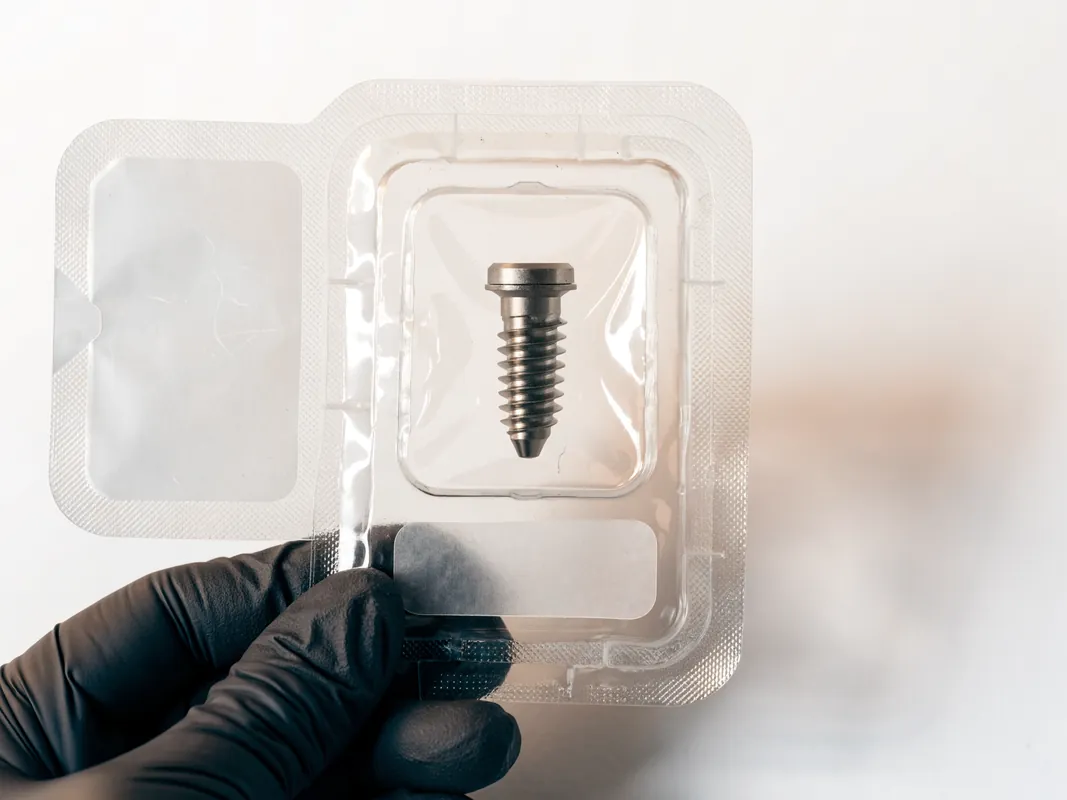
The itemised quote should follow the diagnostic branches
Ask for separate lines for examination, dental and specialist consultations, justified imaging, laboratory tests, treatment of common peri-implant causes, component changes, removal if agreed, graft contingencies, temporary tooth, new fixture, abutment, final restoration, medicines, reviews and record transfer. Non-clinical travel services should be listed separately.
The quotation should state which options are estimates pending examination, how changes are authorised and what happens if the preferred ceramic or titanium system is not suitable or available. A premium price does not prove purity, evidence or better outcome. Compare actual components, clinician responsibility, restoration design and aftercare rather than marketing categories.
Commercial warranty terms must be read for conditions, exclusions, maintenance and remedy. They do not guarantee integration, absence of inflammation, allergy resolution or a particular lifespan. Ask how complaints and independent assessment work even when a warranty claim is rejected.
Travel can interrupt diagnosis and obscure causation
Material-reaction assessment often benefits from serial examination and access to original records. Rapid overseas removal and replacement can erase diagnostic information and make it difficult to separate response to cleaning, component change, surgery, medicines or time. If urgent infection or instability is absent, consider whether completing focused local assessment before travel would improve the decision.
The GDC [going-abroad guidance](https://www.gdc-uk.org/standards-guidance/information-for-patients-public/going-abroad-for-dental-treatment) and NHS [treatment-abroad checklist](https://www.nhs.uk/using-the-nhs/healthcare-abroad/going-abroad-for-treatment/treatment-abroad-checklist/) support checking qualifications, regulation, plan, costs, complications, records, recovery, insurance and aftercare. Verify that the destination clinician will communicate with the allergy or dental specialist and supply complete component records.
There is no universal safe flight interval after implant placement, explantation or grafting. The treating clinician should advise after considering the actual procedure, bleeding, swelling, infection, medicines, sinus or nerve issues, review needs and complications. Keep travel flexible and confirm whether insurance covers planned treatment, suspected pre-existing reactions and extra care.
Local aftercare is essential for symptoms and maintenance
Before travelling, identify a local dentist willing to assess implants and a relevant medical or allergy route if systemic or skin symptoms are under investigation. Do not assume that an uninvolved clinician will remove, repair or accept responsibility for an unfamiliar implant system. Ask the destination team how it will send original images and records and how clinicians can contact each other.
The aftercare plan should separate expected postoperative symptoms from warning signs and distinguish peri-implant maintenance from allergy investigation. It should specify hygiene, diet and medicine instructions for the actual procedure, direct clinical contacts, review findings and who manages complications. Review intervals should be based on need, not a universal calendar.
If symptoms recur, document their timing, site, photographs where useful, associated exposures and clinical findings. Do not self-test by applying metals, stopping medicines or exposing the site to products. Remote messages can support triage but cannot replace examination.
Red flags in titanium-allergy marketing
Pause if a provider publishes a precise prevalence without context, calls MELISA or patch testing definitive, promises zero reactions, labels zirconia universally biocompatible or superior, recommends removal from a remote questionnaire, or says a branded ceramic system is suitable for every site. These claims exceed the evidence.
Other warnings include no differential diagnosis; no periodontal or mechanical assessment; no complete component record; using a positive test as the only reason for surgery; dismissing a negative test as proof of no problem; promising symptom resolution; quoting a fixed material premium without an itemised plan; substituting products without consent; or offering a warranty as a clinical guarantee.
Be cautious with “detox,” “immune reset,” unvalidated systemic tests and broad claims that titanium causes unrelated illness. Equally, be cautious when legitimate symptoms are dismissed without examination. The appropriate response is a transparent diagnostic process and proportionate care.
Urgent and emergency boundaries
Seek prompt local dental assessment for increasing swelling or pain, pus or discharge, fever, bad taste, uncontrolled bleeding, a mobile implant, loose or fractured restoration, tissue ulceration, new or worsening numbness, or inability to eat or clean as instructed. These may represent infection, mechanical problems, nerve injury or another condition requiring examination.
Breathing or swallowing difficulty, rapidly spreading facial or neck swelling, severe systemic illness or signs of anaphylaxis require emergency medical help. Use the emergency route where you are. For people in England, NHS guidance explains [urgent dental access](https://www.nhs.uk/nhs-services/dentists/how-to-find-an-nhs-dentist-in-an-emergency/). Do not wait for an overseas coordinator or laboratory test.
Questions for the clinical and allergy teams
- What exact symptom or prior reaction raises concern about titanium?
- Which device or material was involved, and what documentary evidence exists?
- What common biological, dental and mechanical causes have been assessed?
- What are the fixture, abutment, screw, framework, crown, cement and graft materials?
- Is testing indicated, and what question will it answer?
- What are the limitations of the proposed patch test, LTT or MELISA?
- Who interprets the result with the clinical findings?
- Can the natural tooth be preserved or a non-implant option used?
- Why is the proposed implant system suitable for the anatomy and restoration?
- What evidence and uncertainty apply to titanium and zirconia in this case?
- Could a component or restoration intervention be tried before fixture removal?
- What are the consequences if the implant is removed and symptoms remain?
- What product and lot records will be supplied?
- What is included, contingent, excluded and separately payable?
- Who provides local review and emergency care after travel?
Titanium-concern planning checklist
Define the problem
- Record exact symptoms, timing, site, previous devices and original test reports.
- Separate allergy, nonspecific inflammation, preference and general health concerns.
- Seek urgent care first for infection, mobility, neurological change or systemic illness.
Diagnose before replacing
- Assess plaque, tissues, bone, restoration, components, occlusion and neighbouring teeth.
- Preserve restorable teeth where reasonable.
- Compare local treatment, component correction, monitoring, non-implant replacement and no treatment.
Use tests cautiously
- Do not treat patch testing, LTT or MELISA as a stand-alone verdict.
- Ask who selected, performed and interprets a test and how it changes the plan.
- Keep the full report and acknowledge inconsistent evidence.
Choose and document materials
- Compare exact systems rather than titanium and zirconia slogans.
- Confirm every relevant component, graft, membrane, cement and medicine.
- Obtain traceability, consent, itemised cost and substitution rules.
Plan continuity
- Keep diagnosis and travel schedules separate.
- Arrange local dental and specialist follow-up before treatment.
- Obtain case-specific flight advice, insurance answers and urgent routes.
Sources and evidence limits
- Javed and colleagues, [systematic review of titanium sensitivity and allergic reactions in dental implant patients](https://pubmed.ncbi.nlm.nih.gov/21414135/), 2013. It found very limited evidence and concluded that titanium's causal significance remained unproven.
- Müller-Heupt and colleagues, [systematic review of diagnostic tests for titanium hypersensitivity](https://pubmed.ncbi.nlm.nih.gov/35819566/), 2022. It found inconsistent reliability and validity for epicutaneous testing, LTT and MELISA and high risk of bias.
- Ramírez and colleagues, [updated systematic review of titanium hypersensitivity clinical evidence](https://pubmed.ncbi.nlm.nih.gov/41581901/), 2026. It identifies reported cases but a very small evidence base and the need for standardised diagnostic approaches.
- Henningsen and colleagues, [German S3 guideline on titanium hypersensitivity](https://pubmed.ncbi.nlm.nih.gov/36329297/), 2022. It distinguishes particle-related local inflammation from classic allergy concepts and supports clinician-owned diagnostic and material decisions.
- Hosoki and colleagues, [review of allergy-labelled implant failures](https://pubmed.ncbi.nlm.nih.gov/37999027/), 2023. It states that no definitive diagnostic method has been established and supports a comprehensive clinical assessment.
- Mombelli and colleagues, [critical review of titanium particles and biocorrosion](https://pubmed.ncbi.nlm.nih.gov/30306693/), 2018. It explains that particle detection is not specific to diseased implant tissue and cannot alone establish causation.
- Padhye and colleagues, [systematic review and meta-analysis comparing zirconia and titanium implants](https://pubmed.ncbi.nlm.nih.gov/37740825/), 2023, and de Oliveira and colleagues, [systematic review asking whether zirconia is better](https://pubmed.ncbi.nlm.nih.gov/36330865/), 2022. The small comparative evidence base does not support a universal superiority claim.
- The European Commission's [UDI and device-registration guidance](https://health.ec.europa.eu/medical-devices/eudamed/udidevice-registration_en), checked 29 August 2026, explains the EU device-identification framework and its traceability purpose. Applicability still depends on the device, market and governing jurisdiction.
- [AAE implant position statement](https://www.aae.org/specialty/wp-content/uploads/sites/2/2019/04/Implants_PositionStatement_v2.pdf), accessed 29 August 2026. It supports preservation of restorable natural teeth before replacement decisions.
- [GDC Principle 3](https://standards.gdc-uk.org/pages/principle3/principle3), [GDC Principle 4](https://standards.gdc-uk.org/pages/principle4/principle4) and [GDC going-abroad guidance](https://www.gdc-uk.org/standards-guidance/information-for-patients-public/going-abroad-for-dental-treatment), accessed 29 August 2026, plus the [NHS treatment-abroad checklist](https://www.nhs.uk/using-the-nhs/healthcare-abroad/going-abroad-for-treatment/treatment-abroad-checklist/). These support consent, record, provider and aftercare checks without verifying any overseas provider.
For related planning, see the dental implant service guide, implant-system serviceability guide, pre-operative planning checklist and returning-home guide. They add context and do not replace examination.