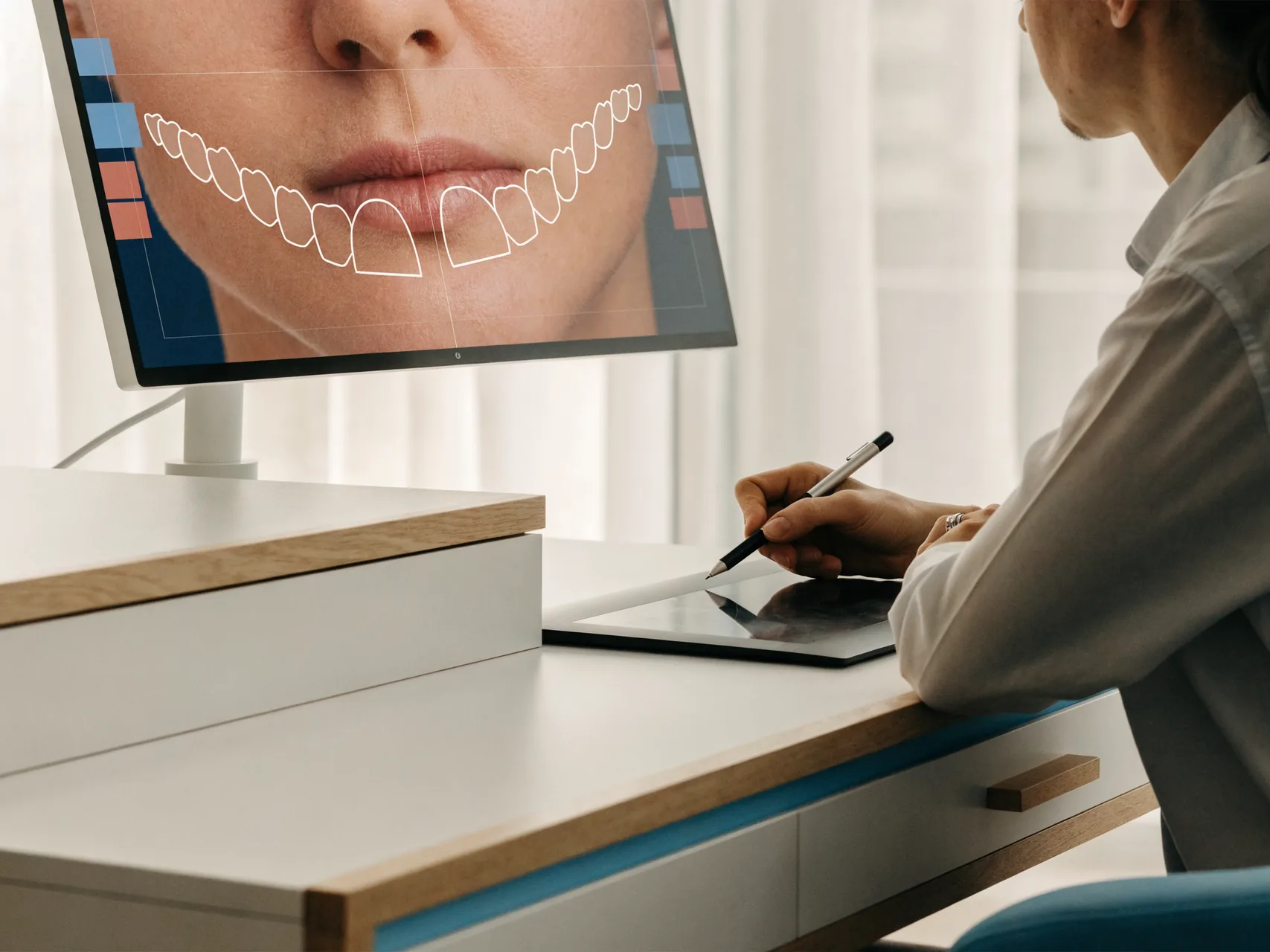
A person researching digital smile design and veneers in Turkey may be shown a polished photograph, a moving facial video, a computer rendering, a scan-based model or a temporary trial smile. Those records can support a useful conversation. They cannot establish that veneers are appropriate, tell how much tooth tissue would be changed or promise how ceramics and living tissues will look after treatment.
Digital smile design is a communication aid, not a treatment guarantee. Veneers are a separate clinical decision. Some veneers require irreversible removal of enamel; all indirect veneers create maintenance responsibilities and can chip, loosen, stain at margins or need repair or replacement. The American Dental Association's patient page states that veneer treatment may be irreversible when enamel is removed and that decay or gum disease should be treated first. A responsible plan therefore begins with health, function, alternatives and accountability rather than with approval of an attractive image.
This page publishes no fixed price, timetable or outcome. It does not diagnose a reader, select a material or state that a particular provider will use a named device. It is a decision guide for adults comparing a digital veneer proposal, including people considering travel to Antalya. The named legal treatment provider and named treating clinician must turn any initial idea into an individual examination, tooth-by-tooth plan, consent record and itemised written quotation.
This page owns the combined planning question
The dedicated digital smile design service guide explains the planning tool in broad cosmetic and restorative care. The dental veneers service guide explains veneers as one possible treatment. This combined page answers a narrower question: how should digital records, previews, mock-ups and change control be used when veneers are actually being considered?
That distinction prevents search pages from becoming interchangeable. A reader who only wants to understand software should begin with the digital planning guide. A reader comparing porcelain and composite facings should begin with the veneer guide. A reader holding a proposal that joins a digital design to several veneers needs the combined decision framework below.
The framework has four owners:
- the patient owns preferences, priorities, questions and the decision to consent or decline;
- the licensed dentist owns diagnosis, suitability, clinical options, preparation and final clinical acceptance;
- the laboratory or fabricating party follows a traceable prescription for any indirect work;
- the legal treatment provider owns the contract, records, complaints route and the care it agrees to provide.
A coordinator, photographer, software operator or sales representative may help organise information. None replaces the professional who examines the mouth and accepts responsibility for treatment. A celebrity-style reference image, animation or promotional smile library is not a clinical instruction.
Separate diagnosis from digital design
Separate diagnosis from digital design before discussing a veneer count. Diagnosis asks what is happening biologically and functionally. Design asks how selected visual and functional objectives might be represented. Reversing that order can turn a preferred image into pressure for treatment that the examination has not justified.
The diagnostic record may need to consider symptoms, medical and dental history, medicines, allergies, smoking or vaping, past trauma, previous orthodontics, grinding, jaw symptoms and expectations. The clinical examination may consider decay, existing restorations, cracks, tooth wear, enamel, exposed dentine, pulp and root history, gum health, mobility, tooth position, bite, available space and oral hygiene. The responsible clinician decides which photographs, models, scans or radiographs have a clinical justification.
A remote photograph can start a conversation, but it cannot reliably reveal decay between teeth, gum-pocket measurements, cracks, pulpal health, root condition, bite forces or the quantity and quality of enamel. A scan records accessible surfaces; it does not replace every diagnostic record. A design should state what information was used, what is missing and which assumptions remain provisional until in-person assessment.
The tooth-by-tooth diagnosis should come before the tooth-by-tooth procedure list. Useful entries include:
| Decision field | What the written record should show |
|---|---|
| Tooth or site | Unambiguous tooth reference |
| Finding | Health, structural, functional or aesthetic issue being addressed |
| Evidence | Examination or record supporting the finding |
| Objective | What the patient wants to change or preserve |
| Options | Relevant treatment and no-treatment alternatives |
| Proposed action | Procedure under consideration, not a package label |
| Irreversible boundary | Tissue or restoration that would be changed |
| Remaining uncertainty | Information still needed or factor that could alter the plan |
| Responsible decision-maker | Named clinician who will decide after assessment |
The digital drawing can then refer to this map. It must not silently expand the scope. If an image shows a broader change than the written plan, that difference needs discussion before consent.
A 2D image, 3D model and physical mock-up are different records
A 2D image, 3D model and physical mock-up are different records. They answer different questions and introduce different limitations. Calling all of them a preview hides important distinctions.
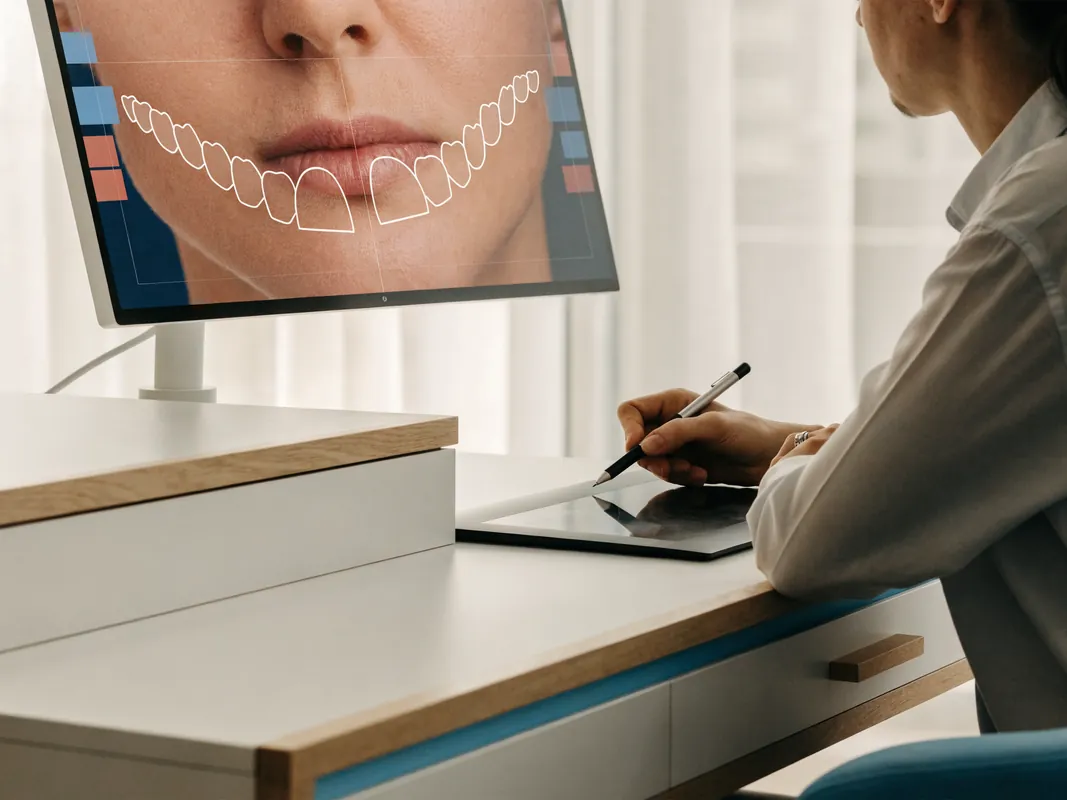
A two-dimensional facial design may place outlines over a photograph or selected video frame. It can help discuss tooth display, broad proportions, smile line, midline and visual preference. The result depends on camera position, lens, head posture, lighting, lip position, calibration and the moment selected. It cannot reproduce depth, every movement, surface texture or how a ceramic will behave under changing light.
A three-dimensional digital model may combine an intraoral surface scan with other records. It can help inspect contours, spaces and relationships from more angles, and it may support a printed model, matrix or laboratory file. Yet scan stitching, accessible surfaces, alignment between datasets and software choices affect the model. A systematic review of clinical evidence on digital impressions found limited eligible evidence and reported that further clinical research was needed; a scanner should not be marketed as infallible.
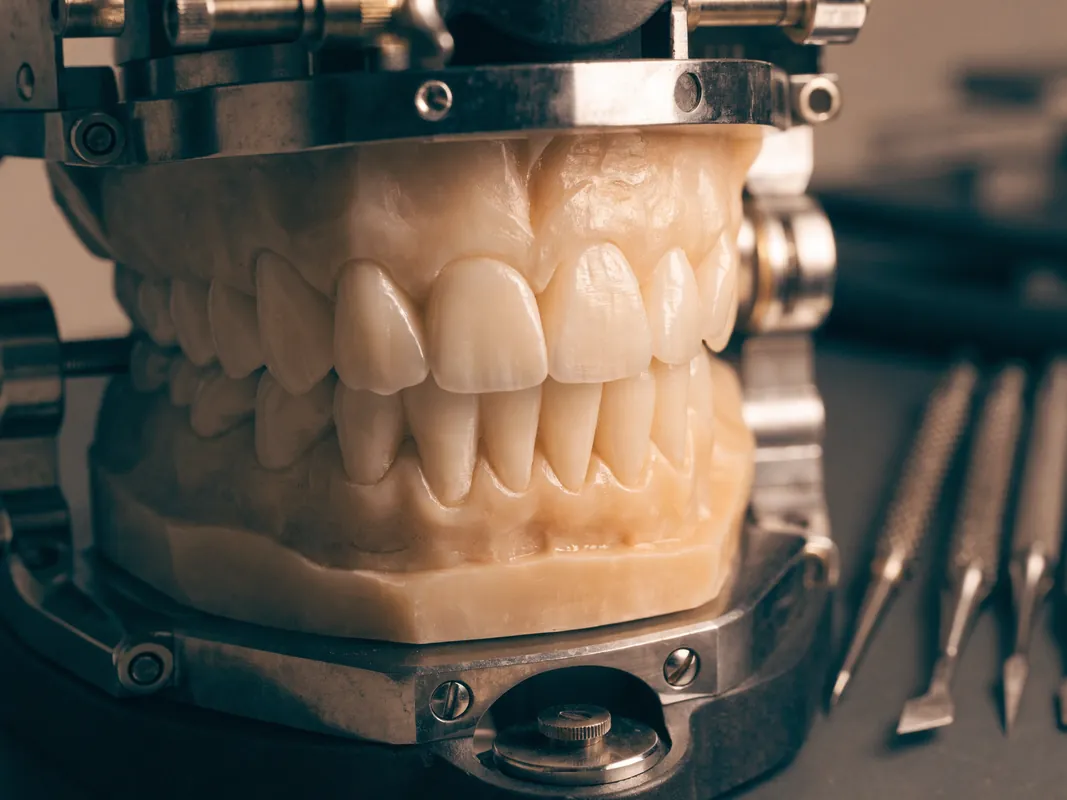
A physical mock-up may transfer a proposed contour into the mouth, often with temporary material. It can give information about appearance, lip support, speech, cleaning access and the feeling of added volume. It can also be thicker than a proposed ceramic, behave differently from it and fail to reproduce final colour or texture. Some trial methods are additive and removable; others may relate to a prepared or provisional stage. The clinician should say which kind is proposed and whether any tooth, restoration or gum tissue would be altered.
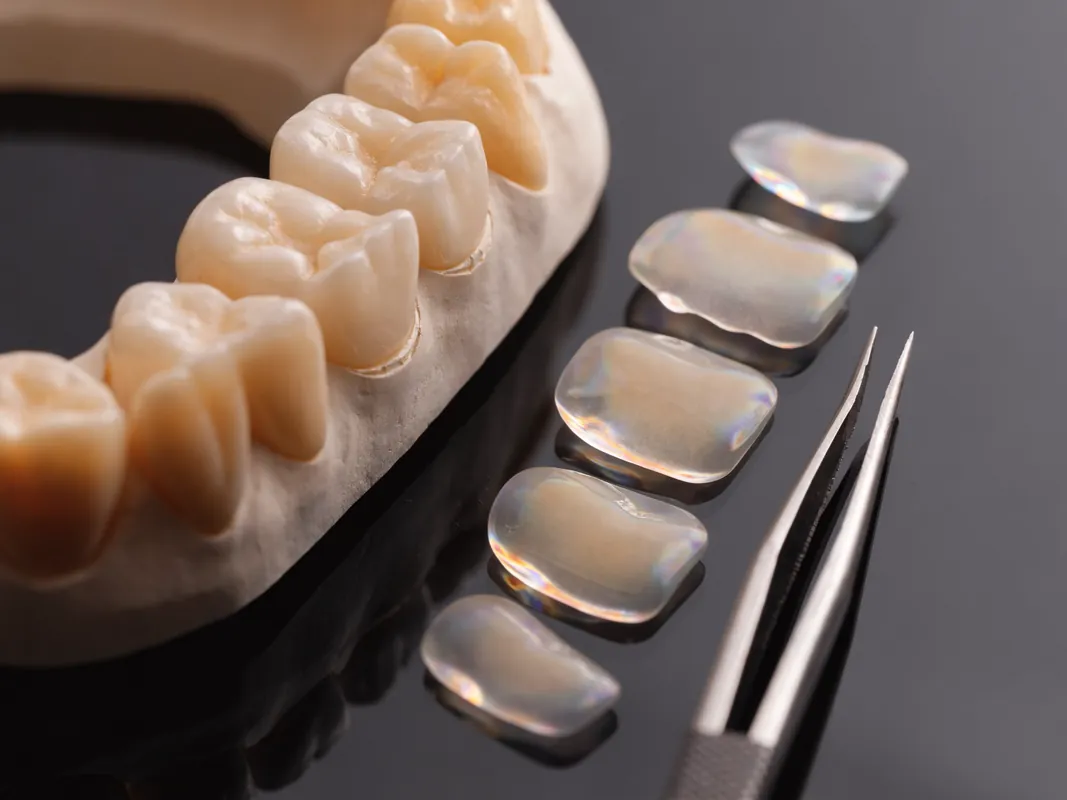
A laboratory wax-up may be physical or digital. It is a design and manufacturing reference, not a diagnosis. A provisional restoration may protect prepared teeth and test aspects of the plan, but it creates a clinical stage with its own risks, instructions and follow-up needs. A definitive veneer is the final bonded restoration only after clinical try-in, patient discussion and the responsible clinician's acceptance.
The useful question is not simply, Can I see the smile first? Ask instead: which record will be produced, by whom, from which inputs, for which decision, with what limitations, and what happens if the patient or clinician does not accept it?
A preview is not a biological blueprint
A preview is not a biological blueprint. Teeth, gums, lips, muscles, saliva, bite and restorative materials do not behave like pixels. A simulation can move an outline without showing whether orthodontics, additive material or tooth reduction would be needed. It can level a virtual gum line without showing periodontal diagnosis, healing or biological width. It can brighten a virtual tooth without showing the optical influence of underlying tooth colour and material thickness.
Research comparing digital stages is a reason for careful communication, not a licence to promise reproduction. One clinical study comparing two-dimensional designs, three-dimensional designs and final veneers found measurable differences among some reference points. Systematic reviews describe potential communication and workflow benefits, while also showing that the evidence base, methods and reporting vary. The correct patient-facing conclusion is modest: previews can structure discussion and records, but each translation from image to model, mock-up, preparation, laboratory work, try-in and bonded restoration can introduce change.
Biology can also change after the design record. Gum inflammation may settle after hygiene or periodontal care. Tooth position may change with orthodontics. A provisional may reveal a speech or bite concern. A prepared tooth may show a substrate colour that affects material selection. The clinician may identify a crack or structural issue. Consent must allow the patient to pause when new information changes the balance of benefits and risks.
Treat any side-by-side marketing picture as an illustration unless the provider clearly identifies the patient's consent, the actual procedure, the treating clinician, the date, the number of units and whether the image is edited. Even a genuine previous case does not predict another person's outcome.

Facial and dental reference records
Facial and dental reference records should be proportionate to the decisions being made. More files are not automatically better. Every record should have a purpose, an owner, a secure storage route and an interpretation boundary.
Possible records include a health history, clinical chart, periodontal findings, bite observations, face and intraoral photographs, short facial videos, conventional impressions, intraoral scans, diagnostic models and clinically justified radiographs. The exact set depends on the case. Radiation should not be taken merely to make a cosmetic presentation look comprehensive.
Standardised photographs can make version comparison more useful. The record should state whether the image is calibrated, whether perspective or colour has been adjusted and whether a design layer has been added. Different screens render brightness and colour differently. A phone image sent through a messaging application may be compressed. Shade selection cannot be outsourced to an uncalibrated display.
Facial references may help discuss tooth display at rest, during a natural smile and during speech; lip movement; broad midline relationships; and how an intended change sits within the face. Dental references may help discuss incisal edges, contact areas, spaces, surface texture, visible asymmetry and the relationship between upper and lower teeth. These are observations for a clinical conversation, not mathematical rules that every face must meet.
Ask for the design version to carry a date or stable identifier. If a later design replaces it, preserve the earlier record and note what changed. Without version control, a patient, clinician and laboratory can each believe a different picture was approved.
Tooth preservation before veneer preparation
Tooth preservation before veneer preparation should be an explicit decision gate. Veneers may be appropriate for some teeth after assessment, but digital software does not decide whether healthy tissue should be removed. The ADA explains that porcelain veneer placement commonly involves removing some enamel and that veneer treatment is not reversible where enamel is removed. The NHS describes veneers as facings and notes that fitting some veneers involves drilling the front of the tooth a little, while not all veneers require the same approach.
The proposal should distinguish additive, minimal-preparation and more extensive preparation concepts without turning those labels into guarantees. Whether an additive path is feasible depends on position, space, contour, colour objective, material, bite and the clinician's assessment. A marketing term such as no-prep does not prove that no enamel will be altered, that margins will be cleansable or that the proposed bulk is suitable.
For each tooth, ask:
- what finding or chosen aesthetic objective supports treatment;
- how much enamel and other tissue is expected to be changed;
- whether the estimate can change after direct assessment or mock-up;
- whether the preparation is intended to remain mainly in enamel;
- whether an existing filling or restoration changes the bonding substrate;
- what happens if dentine, a crack, decay or pulpal risk is found;
- whether repair, whitening, orthodontics, bonding, contouring or no treatment could preserve more tissue;
- how future removal, repair or replacement may affect the tooth.
A systematic review and meta-analysis comparing bonding substrates reported better observed performance for veneers bonded to enamel than for cases with greater dentine exposure, while also noting limitations in the available clinical evidence. This does not predict an individual outcome. It supports asking the clinician to make enamel preservation and substrate condition visible in the plan rather than treating preparation as a hidden manufacturing step.
The patient should also know that choosing a broader number of veneers to obtain symmetry increases the number of teeth entering an irreversible maintenance cycle. A design may demonstrate how untreated teeth could remain part of a natural smile rather than assuming that every visible unit must look identical.
Alternatives before irreversible treatment
Alternatives before irreversible treatment need to be real, case-specific and documented. An option is not meaningful if it is mentioned only to dismiss it or if the patient is pressured to decide from a promotional image.
Depending on the diagnosis and objective, alternatives may include no treatment, monitoring, professional cleaning, management of gum disease, repair of existing restorations, selective contouring, whitening of suitable natural teeth, additive composite bonding, orthodontic movement, replacement of a defective restoration or a smaller number of indirect restorations. A crown is not simply a thicker veneer and generally involves a different coverage and structural decision. An implant, gum procedure or root-canal treatment requires its own diagnosis and consent.
Each relevant option should state:
- which concern it addresses and which it does not;
- whether tooth tissue is added, moved or removed;
- material and maintenance implications;
- foreseeable risks and uncertainties;
- how repairable or reversible the step is;
- what records and appointments it requires;
- the itemised cost and exclusions;
- the consequences of doing nothing for now.
A mixed plan may be more responsible than a uniform package. One tooth may need no treatment, another may suit bonding, another may need replacement of an unhealthy restoration and another may be considered for a veneer. Digital design can show the relationship while preserving those different clinical decisions.
Function, bite and speech belong in the design conversation
Function, bite and speech belong in the design conversation. Veneers are visible restorations, but their edges, contours and contacts exist in a moving system. A still photograph cannot show every functional relationship.
The assessment may consider tooth wear, grinding or clenching, deep or edge-to-edge relationships, guidance during jaw movement, missing posterior support, mobility, jaw symptoms and previous fracture or debonding. It may also consider how planned length and contour affect speech sounds, lip contact and cleaning access. These observations do not produce a universal veneer rule; they help the responsible clinician decide what is relevant to the individual case.
A mock-up can support some functional checks, but a short trial cannot predict long-term adaptation, wear or fracture. A thick removable mock-up may alter speech differently from the definitive design. A digital contact map is not a substitute for clinical checking. The final try-in and post-bonding review should include the clinically relevant checks documented in the plan.
Ask the proposal to explain:
- which functional findings were recorded;
- whether any issue needs stabilisation before elective veneers;
- what design feature responds to each relevant finding;
- what the mock-up or provisional can and cannot test;
- whether a protective appliance is under consideration and why;
- what symptoms or bite changes require review;
- who provides local assessment if a concern develops after travel.
Do not accept claims that a digital workflow eliminates adjustment. Adjustment may or may not be needed, and the clinician remains responsible for clinical fit, margins, contacts and bite. Software supports a process; it does not assume clinical accountability.
Shade and optical planning
Shade and optical planning require more than choosing a square on a screen. Natural teeth and ceramic restorations interact with light through colour, value, translucency, fluorescence, surface texture, thickness and the shade of the underlying tooth and cement. Lips, skin, neighbouring teeth and lighting influence perception. A digital rendering can communicate a direction but cannot reproduce every optical condition.
The design discussion should distinguish natural-tooth whitening from ceramic shade. Whitening does not lighten an existing veneer. If whitening is being considered, its suitability and relationship to shade selection should be assessed before a new restoration is prescribed. No universal sequence or waiting period should be copied from a website into an individual plan.
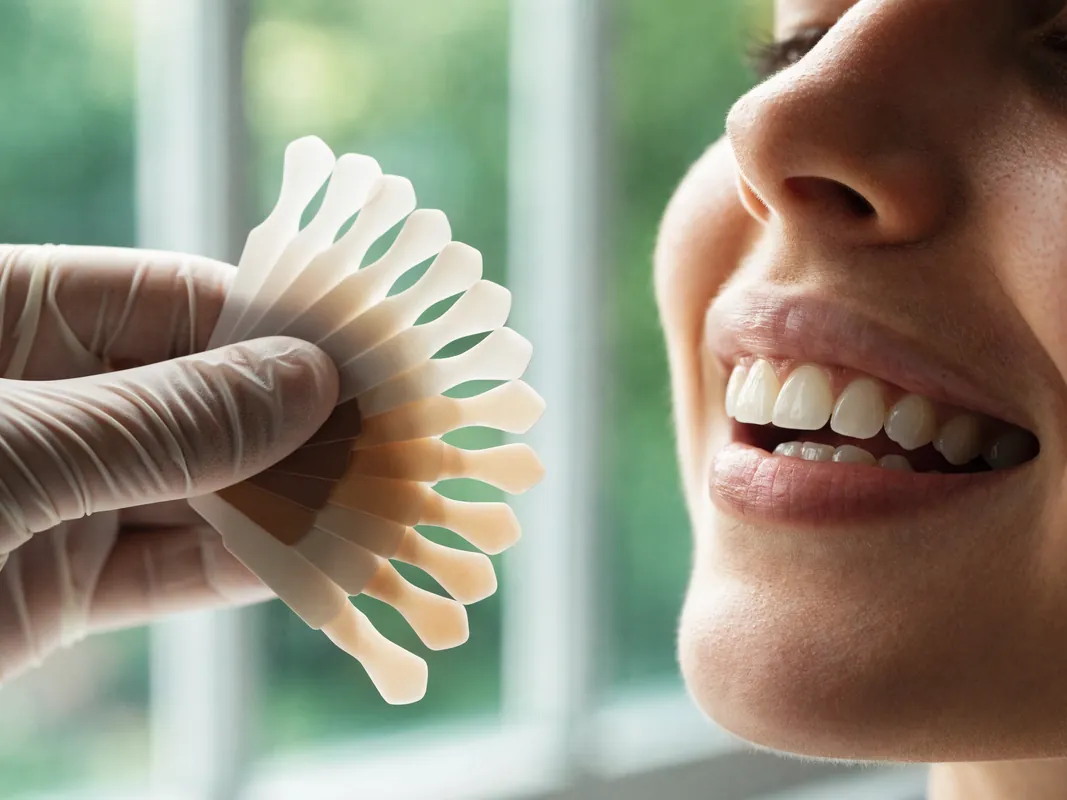
Useful shade records may include standardised photographs, physical shade references and a written laboratory prescription. The responsible clinician and laboratory determine which method is appropriate. A patient may prefer natural variation, translucency and texture rather than a uniform bright appearance. The record should capture that preference without claiming a screen can display the definitive ceramic.
At try-in, appearance may be discussed under more than one relevant lighting condition. Fit, contour and clinical suitability remain separate from colour preference. A request for change should be documented before irreversible bonding. Once bonded, changing shade or shape may require clinical intervention and could affect the tooth or restoration.
Laboratory prescription and traceability
Laboratory prescription and traceability connect the approved clinical plan to fabrication. A design file sent without tooth references, material information, preparation records, margin definition, shade direction or clinician approval is not a complete handover.
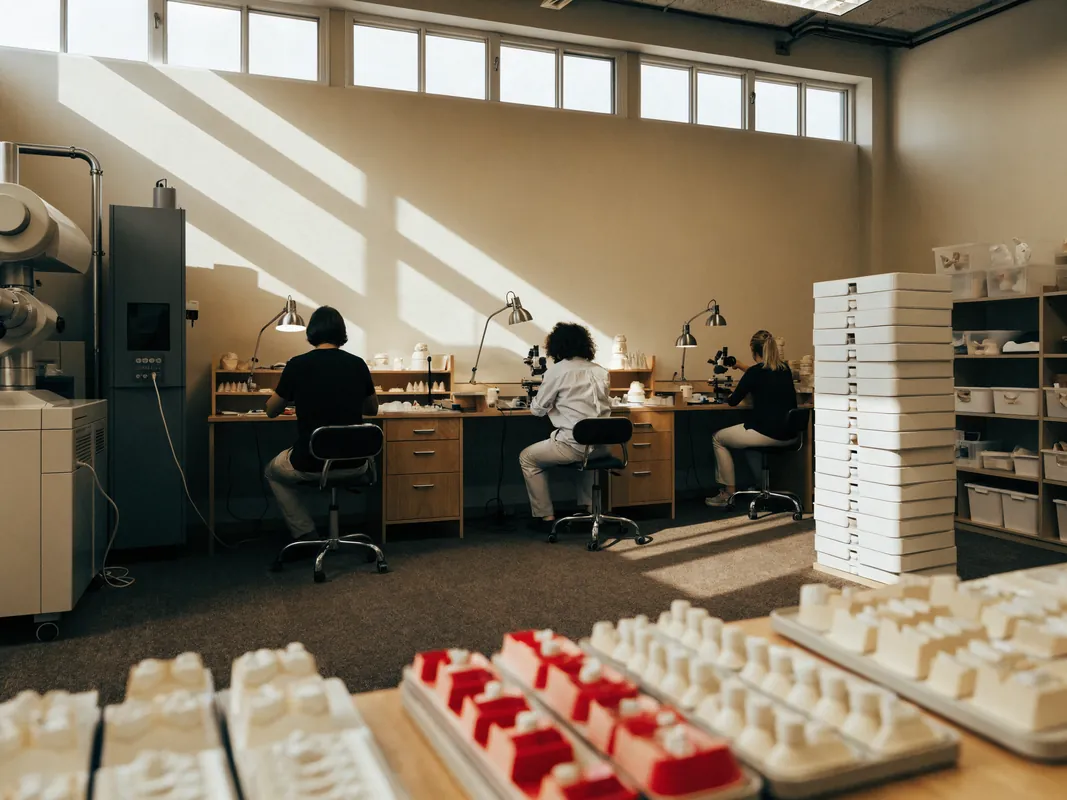
Before treatment, ask whether laboratory work is made on site or by a separate party, and request the responsible name where available. The prescription should identify the patient and case securely, the units involved, restoration type, material category, design version, shade and characterisation direction, relevant scan or impression, requested contacts and contours, and any clinical notes required by the fabricating party. The named treating clinician remains responsible for deciding whether the completed work is clinically acceptable.
Traceability records may include the laboratory prescription, material or device statement where applicable, design version, manufacturing file references and delivery record. They help future clinicians understand what was placed and support complaint or remake discussions. A brand or material name should appear only when it is actually prescribed and documented, not because it was shown in general marketing.
If fabrication changes the approved contour or material direction, the change should return to the responsible clinician and patient where it affects consent. Silent substitutions break the connection between the design discussion and treatment record.
Mock-up and provisional stages are decision gates
Mock-up and provisional stages are decision gates, not theatre added to a sales presentation. Each stage should state what decision it supports, who evaluates it and what happens after acceptance, modification or rejection.
Before a mock-up, ask whether it is placed over untouched teeth, whether it requires any alteration and how it will be removed. During review, the patient may comment on broad appearance, tooth display, perceived length, lip support and speech. The clinician may assess space, contour, cleaning access and clinically relevant function. Limitations should be recorded: temporary material differs from ceramic, added bulk can distort the trial and a brief experience cannot establish long-term comfort.
If teeth have been prepared, provisional restorations serve a different role. They may protect prepared surfaces and provide information while definitive work is fabricated. That stage needs instructions, an urgent contact route and a plan for loss, fracture, sensitivity or bite concern. It should not be described as a harmless preview because the irreversible step may already have occurred.
At every gate, record:
- the design or provisional version being reviewed;
- patient comments in the patient's own terms;
- clinical observations and unresolved concerns;
- agreed modifications;
- whether new records are needed;
- whether the plan, consent or quote changes;
- the decision to proceed, pause, revise or decline.
Approval of a mock-up is not blanket approval for any later shape or material. The definitive try-in and clinical assessment remain separate gates.
Consent and change control
Consent and change control should follow the actual procedure, not the promotional image. The GDC consent standard applies to UK dental professionals rather than defining Turkish law, but it is a useful comparison point for a UK resident: material changes to agreed treatment or estimated cost should be discussed, consented to and recorded. A traveller should demand at least the same practical clarity from the contract and clinical records supplied by the chosen provider.
Valid consent is an ongoing discussion. It should cover diagnosis, objectives, relevant options including no treatment, material risks, limitations, maintenance, costs, who provides care and how the patient can withdraw before a procedure. Consent to photographs or marketing use must be separate from consent to clinical records and treatment.
Change control matters when the in-person examination differs from the remote proposal, the clinician recommends different units, the substrate or gum condition changes the approach, a mock-up is revised, a material changes, a laboratory issue occurs or the schedule no longer allows safe completion and review. The patient needs an updated written plan and quote before accepting the changed scope.
An approval click on a design application should not be treated as consent to drill teeth. Ask what the approval means, what version it relates to and how a correction is recorded. Keep a copy.
Records, images and privacy
Records, images and privacy are part of quality, not an administrative afterthought. Facial photographs, intraoral images, scans, radiographs, health histories, treatment discussions, consent forms, models and laboratory prescriptions may all contain personal or health information.
The GDC records standard again applies to UK dental professionals, not as a statement of Turkish law. It identifies photographs, models, radiographs, consent forms and laboratory prescriptions as records where available. It also expects detailed records of discussions and consent. A patient comparing cross-border care can use that list to ask the selected provider what will be created, how it will be stored and how copies can be obtained.
Before uploading images, confirm the legal recipient, secure transfer route, purpose, access controls, retention approach and whether a laboratory or software supplier receives the files. Ask whether the provider uses images to train software or for marketing, and refuse optional uses if desired. A public social-media message is not an appropriate place for detailed health history.
At handover, request the assessment, tooth map, relevant images, scan or model exports where available, design versions, laboratory prescription, material records, consent, invoice and aftercare instructions. Proprietary software may limit exports, so clarify access before paying for design work.
Build an itemised written quotation
An itemised written quotation should follow the diagnostic map and current design version. A single package total makes it difficult to understand what happens if a tooth does not need a veneer, a different option is chosen or a stage must be repeated.
The quotation should identify the legal supplier and currency, and separately list examination, imaging, digital planning, mock-up, provisional work, each restoration or clinically meaningful group, laboratory fees, reviews and aftercare that are actually included. It should state taxes or payment charges, exclusions, deposit terms, cancellation and refund conditions, the consequence of a changed plan, and who pays for additional local assessment or repair.
Travel, accommodation and ground transport are non-clinical services. If offered, their supplier, dates, room basis, transfer scope, cancellation terms and relationship to the clinical contract should be clear. A bundled travel benefit is not a clinical reason to accept veneers and should not make the patient feel unable to decline after examination.
Compare quotations by scope and responsibility rather than headline price. Check whether the number of units is provisional, whether alternatives are itemised, whether design work is refundable or transferable, whether a laboratory remake has conditions and whether the remedy terms distinguish clinical review from a commercial warranty. No website can pre-authorise an individual remedy.
Travel and aftercare boundary
Travel and aftercare boundary decisions belong in the plan before irreversible treatment. A remote preview is not enough reason to buy a non-refundable journey. First obtain the provider identity, provisional scope, known uncertainties, cancellation terms and explanation of what must be confirmed in person.
The itinerary should preserve time for assessment, discussion, design review, any clinically justified treatment, laboratory work, try-in, adjustment and review without promising that all stages fit a sales calendar. If the clinical plan changes, health and informed consent take priority over a return flight. The no-travel option and treatment near home remain valid alternatives.
Before leaving, obtain written cleaning and maintenance instructions, material and tooth records, review recommendations, warning signs, the responsible provider's contact route and a plan for local care. Pain, swelling, trauma, a loose restoration, a bite that feels wrong or another urgent concern may require local dental assessment rather than remote reassurance.
Long-term maintenance depends on the individual restoration, supporting teeth, gums, bite, habits and home care. Veneers can still develop problems at or around their margins and the underlying teeth can still decay. A home dentist should receive enough information to assess and maintain the work. The overseas provider's complaints and aftercare process should be written, but it does not replace timely local care. The separate long-term veneer care guide turns that handover into practical maintenance questions without prescribing an individual review schedule.
Red flags in a digital veneer proposal
Pause when a proposal relies on any of these patterns:
- a veneer count is fixed from selfies before diagnosis;
- a screen image is described as the promised final result;
- approval of a rendering is treated as consent to tooth preparation;
- the legal treatment provider or treating clinician is unnamed;
- existing decay, gum disease, grinding or bite concerns are ignored;
- every visible tooth is assigned the same procedure without a tooth map;
- the amount of expected tooth reduction is not discussed;
- no-treatment, orthodontic, whitening, bonding or repair alternatives are absent;
- a no-prep label is used without a case-specific tissue plan;
- shade is selected only from an uncalibrated phone screen;
- the laboratory, prescription trail or material documentation is unavailable;
- a changed design has no version or signed record;
- the quotation hides design, provisional, laboratory, review or remake terms;
- travel deadlines are used to rush acceptance;
- health information is requested through an insecure public channel;
- aftercare means only sending another photograph.
One red flag does not diagnose misconduct. It is a reason to ask for clarification, obtain documents, seek another clinical opinion or stop.
Questions to ask the named clinician
Use these questions in writing before deciding:
- What diagnosis or chosen objective supports a veneer on each proposed tooth?
- Which teeth could reasonably have no treatment or a more conservative option?
- What records have been reviewed and what remains unknown until examination?
- Which part is a two-dimensional image, three-dimensional model, wax-up, mock-up, provisional or definitive restoration?
- What can each stage show, and what can it not show?
- Is any mock-up additive and removable, or does it follow preparation?
- How much enamel or other tooth tissue is expected to be changed on each tooth?
- How will existing fillings, tooth colour and available enamel affect the plan?
- What bite, grinding, speech or cleaning factors are relevant?
- How are shade, texture and translucency communicated to the laboratory?
- Who is the named laboratory or fabricating party, and what traceability record will be supplied?
- How are design revisions dated and approved?
- What new information would cause the scope, material, cost or itinerary to change?
- What exactly does patient approval mean at each stage?
- What is included and excluded from the itemised quote?
- What records will be supplied before departure?
- Who is responsible for review, urgent concerns and complaints?
- What is the realistic no-treatment or no-travel alternative?
Save the answers beside the design version and quotation. If the spoken explanation conflicts with the document, ask for the document to be corrected before treatment or payment.
Final decision checklist
Before consenting, confirm that:
- the legal treatment provider and named treating clinician are identified;
- professional status can be checked through the relevant official register;
- diagnosis and design are separate in the record;
- every proposed tooth has its own reason and alternatives;
- tooth-preservation and substrate questions are documented;
- the difference between image, model, mock-up, provisional and definitive work is understood;
- function, bite, speech, shade and maintenance have been discussed where relevant;
- the current design carries a version and date;
- the laboratory prescription and traceability route are clear;
- consent describes the real irreversible procedure and can be paused before it begins;
- the quote is itemised and any travel contract is separate and clear;
- change control explains what happens after new findings;
- records, privacy, aftercare and local urgent care are planned;
- declining or seeking another opinion remains possible without clinical pressure.
The best use of digital smile design is to expose decisions that would otherwise remain vague. It should make uncertainty, alternatives and accountability more visible. It should never turn an image into proof that a person needs veneers.
Sources and evidence limits
Sources were checked on 29 August 2026. They support the boundaries in this guide; they do not diagnose a reader, endorse a provider or predict an individual result.
- [American Dental Association, MouthHealthy: Veneers](https://www.mouthhealthy.org/all-topics-a-z/veneers) — patient information on veneer types, common steps, irreversibility where enamel is removed, pre-treatment dental health and maintenance risks.
- [NHS: Dental treatments](https://www.nhs.uk/live-well/healthy-teeth-and-gums/dental-treatments/) — general description of veneers and the fact that preparation differs between cases.
- [Systematic review: digital workflow of aesthetic veneers](https://pubmed.ncbi.nlm.nih.gov/38392232/) — maps published digital design, preparation and cementation-guide evidence; it does not establish that every workflow is accurate or superior.
- [Systematic review: digital smile design use and patient satisfaction](https://pubmed.ncbi.nlm.nih.gov/39022468/) — reports possible communication and workflow benefits across a limited, heterogeneous study set; it does not support an outcome promise.
- [Clinical comparison of 2D design, 3D design and final veneers](https://pubmed.ncbi.nlm.nih.gov/35362247/) — reports differences among some measured reference points, supporting the warning that one preview stage is not a clinical blueprint.
- [Systematic review: clinical accuracy of digital impressions](https://pubmed.ncbi.nlm.nih.gov/32069344/) — found a small clinical evidence base and called for further research, supporting cautious scanner claims.
- [Systematic review and meta-analysis: veneer bonding substrates](https://pubmed.ncbi.nlm.nih.gov/38604905/) — reports different observed performance by substrate and supports making enamel preservation visible, without predicting an individual case.
- [General Dental Council: obtain valid consent](https://standards.gdc-uk.org/pages/principle3/principle3) — a UK professional standard used as a comparison point for recorded consent and material changes, not a statement of Turkish law.
- [General Dental Council: maintain and protect patient information](https://standards.gdc-uk.org/pages/principle4/principle4) — a UK professional standard describing records and confidentiality, used here as a practical cross-border checklist.
Evidence about digital smile workflows is still developing. Studies use different software, records, restorative methods, outcomes and follow-up. Patient satisfaction with communication is not proof of restoration longevity or biological safety. A responsible page therefore explains the process and its limits instead of ranking devices, providers or destinations.