A first dental consultation in Turkey should help you understand your oral health, the people and facility that may provide care, reasonable options, material uncertainties, likely stages, costs, records and aftercare. It should not function as a race from an airport transfer to a signature. A photograph, message exchange or panoramic image may support an initial conversation, but none of them replaces a patient-specific clinical examination when one is needed.
This guide is written for UK patients considering dental treatment in Antalya. It explains what a careful consultation should establish and what you can ask to receive in writing. It does not state that every patient requires the same tests, that every clinic follows one timetable, or that a remote estimate will survive examination unchanged. Use the legal provider's written confirmation, the treating clinician's findings and your own medical circumstances as the controlling record.
The [General Dental Council guide to dental treatment abroad](https://www.gdc-uk.org/standards-guidance/information-for-patients-public/going-abroad-for-dental-treatment) recommends having a proper assessment, giving a full medical history, checking who will treat you and understanding aftercare. The [NHS treatment-abroad checklist](https://www.nhs.uk/using-the-nhs/healthcare-abroad/going-abroad-for-treatment/treatment-abroad-checklist/) warns about hard selling, pressure, missing complication information and absent aftercare. Those sources regulate or advise within the UK context; they do not certify a Turkish provider. They are useful decision standards to carry into any cross-border consultation.
Start by defining what kind of appointment you have
The words consultation, assessment, planning appointment and treatment appointment are often used loosely. Ask the provider to classify the appointment in writing. A remote enquiry may collect symptoms, photographs and existing records so that a broad possibility can be discussed. A clinical consultation normally involves a responsible dental professional assessing you in person and deciding what further investigation is justified. A planning appointment may occur only after diagnostic information is complete. Treatment requires its own valid consent.
Do not assume that a booking for “consultation and treatment” means every proposed procedure has already been diagnosed or approved. The initial plan may be provisional until teeth, gums, bite, previous dentistry and relevant images have been assessed. If the appointment is an information meeting in the UK rather than a clinical appointment in Turkey, ask who is present, what their professional role is, whether any examination or imaging is offered, who holds the clinical record and whether a separate appointment with the proposed treating clinician will still be required.
Separate the coordinator, facilitator, clinic and clinician
International dental journeys may involve several organisations. A website may introduce a clinic. A facilitator may arrange communications. A transport company may provide an airport journey. A hotel may provide accommodation. A laboratory may manufacture a restoration. Only an appropriately qualified professional acting within their lawful scope can diagnose and provide dental treatment.
Before sharing health data or paying, request the legal name of the healthcare facility, its physical treatment address, the name and professional role of the person who will assess you, the legal entity receiving clinical payment and the entity responsible for your health records. If a facilitator receives money or information, ask whether it acts for you, for the clinic or as a separate contractor. Do not let a brand name blur those responsibilities.
Turkey's Ministry of Health publishes [current lists of healthcare providers authorised for international health tourism](https://shgmturizmdb.saglik.gov.tr/EN%2C69063/healthcare-providers-authorized-by-the-ministry.html). Check the current official list and the provider's exact legal name rather than relying on a logo, screenshot or old certificate. Authorisation is one verification step, not proof that a specific treatment is suitable for you.
Verify the treating professional rather than a marketing profile
Ask for the proposed clinician's full name, professional title, registration or licence route, treatment role and the facility at which they will work. Confirm this through the relevant official Turkish authority or facility record. If different clinicians may perform diagnosis, surgery, restorative care, endodontics, hygiene or review, request a role map. A photo on a team page does not establish that the person will attend your appointment.
The GDC register applies to dental professionals practising in the UK; it does not regulate a dentist merely because UK patients travel to see them abroad. Similarly, membership badges, conference attendance and manufacturer training are not substitutes for the licence required in the place of treatment. Ask which regulator receives a complaint about the clinical work, which language that process uses and how you can obtain the record needed to support it.
Confirm the appointment before arranging travel
A useful written appointment confirmation identifies the date, local time, facility name, address, appointment type, expected clinician or responsible clinical service, accessibility arrangements and a contact route for delays. It should say whether treatment is merely possible after assessment or already scheduled under an agreed plan. If a transfer is offered, the clinical appointment and the transport booking should still be independently identifiable.
Do not book a tight return flight because a message says that a case “normally” fits a set number of days. Examination findings, additional records, healing, laboratory stages and your decisions can change the sequence. Read the dental treatment timeline and visits guide before committing to travel. Leave room for a changed plan, a review or a decision not to proceed.
Build a pre-consultation question file
Create one document with your main concern, symptoms, priorities and questions. Separate what you need from what you merely prefer. Examples include preserving natural tooth tissue, resolving pain, improving chewing, replacing a missing tooth, changing colour, reducing visible gaps, avoiding a removable appliance or limiting the number of trips. State which compromises would be unacceptable to you.
Add a short chronology: when symptoms began, what triggers them, whether they disturb sleep, previous diagnoses, treatment attempts and any change in swelling, mobility, taste, numbness or function. Include the source and date of every image or report. A structured file reduces the risk that a cosmetic goal hides an active disease or that an urgent symptom is treated as a sales enquiry.
Bring a current medical history, not only an X-ray
Dental decisions can be affected by general health, medicines, allergies, previous reactions, pregnancy, bleeding risk, healing risk and the ability to maintain care. Complete the clinical provider's own medical-history process honestly even if you already sent information to a coordinator. State when the history was last updated and identify information that remains uncertain.
Possible relevant areas include cardiovascular or respiratory conditions, diabetes, immune conditions, kidney or liver disease, bone disorders, cancer treatment, radiotherapy, bleeding disorders, sleep apnoea, neurological conditions, mental health, substance use, smoking or vaping, and previous anaesthetic or sedation problems. This list is not a diagnosis checklist. The clinician must decide what matters to the proposed investigation or treatment and whether another professional's advice is needed.
Do not stop prescribed medicine, change a dose or begin antibiotics because a website or salesperson suggested it. Ask the responsible clinician and prescriber to coordinate when necessary.
Prepare an exact medicine and allergy list
Write the generic and brand name, strength, route, schedule and reason for every prescribed medicine, over-the-counter product and relevant supplement. “Blood thinner”, “diabetes tablet” or “bone medicine” is not precise enough. Include medicines used intermittently, injections and products obtained online. State the last dose when timing might matter, but do not change that timing without clinical instruction.
Separate allergy from side effect and uncertainty. Record the product, reaction, severity, timing and whether emergency treatment was needed. A stomach upset after a medicine is different from a documented anaphylactic reaction, but both may be relevant. Include latex, chlorhexidine, adhesive and material concerns where known. Bring supporting letters or allergy records if available. The consultation should result in a reconciled list in the clinical record, not an informal note held only in a messaging app.
Bring dental records that answer the present question
Ask your current dentist which records are relevant and whether sharing them is appropriate. Useful material can include dated radiographs in original diagnostic format, clinical notes, referral letters, periodontal charts, photographs, endodontic reports, implant component records, laboratory prescriptions, statements for custom-made devices and previous treatment plans. A compressed social-media image may lack patient identification, date, orientation and diagnostic detail.
The [GDC standard on patient records](https://standards.gdc-uk.org/pages/principle4/principle4) lists medical history, radiographs, consent forms, photographs, models, laboratory prescriptions, statements of conformity and referrals among record categories where available. That standard governs GDC registrants, but its record categories provide a useful handover checklist. Ask how to transfer files securely, who will access them and how long they will be retained.
Know when symptoms require urgent local care
A planned consultation abroad is not an emergency service. New facial swelling, uncontrolled bleeding, serious trauma, difficulty breathing or swallowing, spreading infection signs, severe illness, or other rapidly worsening symptoms may require urgent assessment where you are. Do not wait for a flight or a messaging reply if local emergency criteria are met.
For people in England, the [NHS urgent dental guidance](https://www.nhs.uk/nhs-services/dentists/dental-emergency-and-out-of-hours-care/) explains routes to urgent dental help and when emergency care may be needed. Use the current guidance for the country where you are physically located. Tell the overseas provider about the outcome later, but do not treat travel coordination as clinical triage.
Plan accessibility and communication before arrival
Tell the facility about mobility, hearing, vision, cognitive, sensory, anxiety, continence, communication or other access needs before the appointment. Ask about step-free entry, lift dimensions, accessible toilets, seating, rest breaks, companion access and any equipment required for transfer or examination. A hotel described as accessible does not prove that the treatment room is accessible.
If you need information in large print, plain language or another format, request it early. If lip reading matters, explain the lighting and mask-related issue. If you use a communication device, confirm charging and connectivity. Record the agreed adjustments in the appointment confirmation. Accessibility is part of an informed consultation, not an optional comfort request.
Arrange language support that protects consent
Conversational language ability is not automatically enough for a complex clinical decision. Ask whether the treating clinician can explain diagnosis, alternatives, material risks, uncertainty and aftercare in a language you understand. If an interpreter is needed, clarify who supplies the interpreter, their competence, confidentiality and independence, and whether the full consent discussion will be interpreted.
A coordinator may help with logistics but should not silently transform clinical information, omit uncertainty or answer outside their role. A partner or relative can support you, yet reliance on a family member can be inappropriate for sensitive information or complex consent. Ask for translated written material and time to read it. The [GDC communication standard](https://standards.gdc-uk.org/pages/principle2/principle2) emphasises understandable information, options including delay or no treatment, and honest answers; use those expectations as questions even where the GDC is not the treating clinician's regulator.
Registration should identify you and protect your data
The facility may need identity and contact details, an emergency contact, medical information and consent to process relevant health records. Ask which organisation is the data controller, why each item is required, which organisations receive it, where it is stored, the retention period, how you can request access and what happens if you do not proceed.
Health information receives heightened protection under data-protection law. The [ICO guidance on special-category data](https://ico.org.uk/for-organisations/uk-gdpr-guidance-and-resources/lawful-basis/special-category-data/) explains that organisations need both an Article 6 lawful basis and a separate condition for special-category processing under UK GDPR where that framework applies. A Turkish provider must also follow the law applicable to its processing. Do not place scans, passport images and full medical histories into an unknown public upload or group chat.
Clinical information permission and marketing permission are different decisions. Refusing promotional email should not be presented as refusing necessary clinical record processing.
The consultation begins with your problem, not a product
A careful history asks what brought you, what has changed, what matters most and what outcome you expect. The clinician should explore pain, sensitivity, swelling, bleeding, mobility, chewing, speech, appearance, dry mouth, jaw symptoms, previous trauma and earlier treatment where relevant. They should also identify expectations that cannot safely or predictably be met.
Avoid starting with a catalogue label such as “twenty veneers” or “All-on-4” as though the procedure were already indicated. Those terms can be part of the discussion, but the diagnostic question comes first. The how to choose a dental clinic in Turkey guide provides a broader verification framework for the facility, people, records and aftercare.

Consent is needed for examination and investigation too
Consent is not reserved for drilling or surgery. The clinician should explain what the proposed examination or investigation involves, why it may be useful, its limitations and material risks, and whether there is an alternative. You can ask for a pause or decline an investigation. A refusal may limit the conclusions that can safely be reached, and that limitation should be explained without coercion.
The [GDC consent standard](https://standards.gdc-uk.org/pages/principle3/principle3) describes consent as an ongoing process, not a signature alone. It calls for options, risks, potential benefits, costs, consequences of no treatment, time to decide and documentation of understanding. These are sound consultation questions even when the proposed provider is outside the GDC's jurisdiction.
Expect an extra-oral and intra-oral assessment where indicated
The scope depends on your concern and the clinician's judgement. A dental examination may include relevant head and neck observations, jaw movement, soft tissues, teeth, existing restorations, gums, bite and function. It is not safe for a website to prescribe an identical sequence for everyone. Ask what was examined, what was not examined and why.
Findings should be recorded clearly enough to support diagnosis and later comparison. If a concern falls outside the clinician's scope or needs another discipline, ask for the referral question and urgency. A statement such as “everything looks fine” is not a substitute for a tooth- and site-specific record when complex irreversible treatment is being considered.
Gum health can change the entire plan
Bleeding, pocketing, recession, mobility, plaque control, bone support and previous periodontal disease may alter whether cosmetic, implant or restorative treatment should proceed and how it is maintained. Ask whether a periodontal assessment was required, what measurements were taken, which findings are active and what stability criteria are expected before irreversible work.
New restorations do not cure untreated gum disease. A visually attractive proposal can fail the patient's priorities if it is hard to clean or masks ongoing inflammation. Ask who will provide periodontal treatment, how response will be reassessed, and which professional will deliver long-term supportive care after you return home.
Each tooth needs a diagnosis and restorability decision
For multi-tooth plans, request a chart that explains the status and proposed role of each tooth. A tooth may be sound, restorable, uncertain, strategically important, non-restorable or in need of further investigation. Ask which evidence supports extraction, root-canal treatment, a crown, a veneer, monitoring or no treatment.
Restorability can depend on remaining tooth tissue, crack extent, decay, previous treatment, ferrule, periodontal support, root condition, position, bite and the proposed restoration. A short remote photograph cannot settle all of those factors. Where prognosis is uncertain, ask what additional test or specialist opinion could change the decision and what happens if the tooth cannot be used as initially planned.
Pulp and root findings must be resolved before cosmetic sequencing
Pain history, vitality testing, percussion, palpation, previous root-canal quality and periapical findings can influence preparation and restoration decisions. Ask whether symptoms suggest pulpal or apical disease, whether a diagnosis is confirmed or provisional and whether endodontic assessment is needed before final restorative work.
Do not assume a root-canal treatment is automatically required because a crown is proposed, or that a symptom-free tooth is necessarily healthy. Equally, a remote image cannot prove that treatment is unnecessary. The root-canal treatment overview explains the treatment category; the responsible clinician must decide what applies to your tooth.
Bite, jaw function and parafunction need context
How teeth meet, how the jaw moves, existing wear, clenching, grinding, missing support, restricted opening and jaw-joint symptoms may affect treatment design. Ask what functional observations were made, whether a record of the bite is needed and how uncertainty will be managed. A digital scan records shape; it does not by itself explain every functional habit or symptom.
If you use a night guard or other appliance, bring it. Ask whether it remains usable after treatment and what will replace it if not. Do not accept a promise that a cosmetic design will resolve a jaw disorder unless the responsible clinician explains the diagnosis, evidence, alternatives and limitations.
Photographs and scans should have a stated purpose
Clinical photographs can document baseline appearance, tissues, tooth position, shade and stages. Intra-oral scans can record surface geometry for analysis or laboratory work. Ask which images are part of the clinical record, which are for manufacture and whether any are requested for marketing. Marketing use needs a separate, specific choice; treatment should not depend on agreeing to publicity.
Ask how files are labelled, stored, shared and exported. A scan or photograph may be valuable for comparison, but it cannot show everything that radiography, testing or clinical examination can reveal. The clinician should explain the limitation rather than allowing sophisticated imagery to create false certainty.
Radiographs and CBCT are not automatic package items
Imaging should be clinically justified for the individual question. Existing images may be useful if they are current enough, diagnostically adequate and relevant, but a clinician may need different views or no new image. Cone-beam computed tomography can provide three-dimensional information for selected questions; it also uses ionising radiation and should not be treated as a routine souvenir or marketing feature.
Ask who refers for the image, who operates the equipment, who reports or clinically evaluates the full volume, what question it is intended to answer and how the result changes the plan. Ask for a copy in a usable format and the associated report or interpretation. Avoid unsupported comparisons between radiation exposure and flights; dose depends on the device, field of view, settings and procedure.
Distinguish observations, diagnoses and unresolved questions
At the end of assessment, ask for three lists. The first contains observed findings. The second contains diagnoses supported by those findings. The third contains unresolved questions requiring monitoring, additional tests, records or referral. This prevents a tentative remote impression from being presented as a completed diagnosis.
For every important diagnosis, ask which tooth or site it concerns, which evidence supports it, what uncertainty remains and who is responsible for the decision. If a provider will not release a written diagnostic summary before irreversible treatment, pause. A treatment label without a diagnostic basis is not an adequate consultation output.
Ask for natural-tooth preservation options
Extraction is irreversible. Where a tooth is proposed for removal, ask whether preserving it is reasonable, what investigations would inform that choice, what prognosis and maintenance each option carries, and whether a second opinion from a clinician with relevant expertise would help. Preservation is not always possible or preferable, but it should not disappear from the discussion because an implant package is easier to describe.
For heavily restored or symptomatic teeth, possible alternatives may include monitoring, preventive care, direct restoration, endodontic treatment, periodontal treatment, a crown, a removable option, a bridge, an implant or no immediate treatment. The actual alternatives depend on the diagnosis. Ask the clinician to explain why an option applies or does not apply to you.
Options must include delay and no treatment
Valid consent requires more than comparing brands within one proposed procedure. Ask what could happen if you postpone, monitor or decline treatment. Sometimes delay carries a meaningful risk; sometimes it creates time for disease control, records, a second opinion or a less invasive choice. The clinician should explain the likely consequences and uncertainty without using fear as a sales method.
Record your priorities beside each option: biological cost, tooth-tissue removal, surgery, reversibility, appearance, function, maintenance, repairability, travel burden, total stages and likely local-care needs. There may be no single option that wins every category.
Implant consultation requires site-specific planning
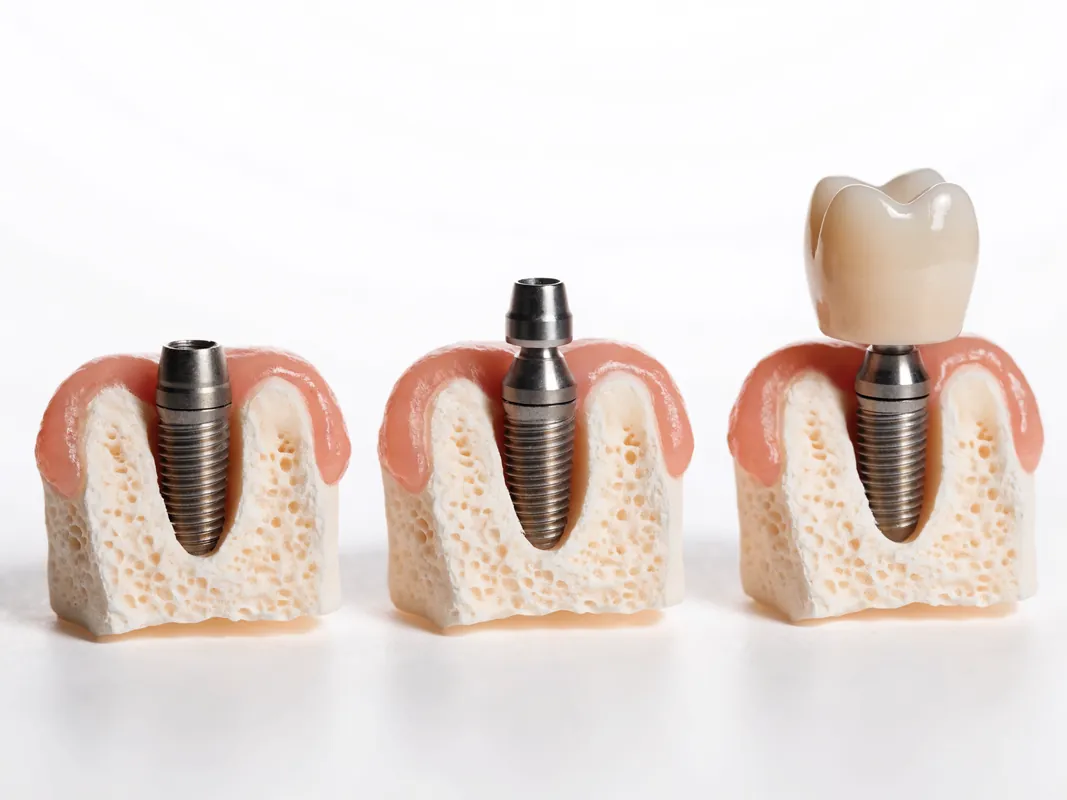
If an implant is considered, ask about the missing-tooth site, bone and soft tissue, neighbouring teeth, anatomical structures, infection control, periodontal risk, smoking, medical factors, prosthetic space, bite, hygiene access and the planned final restoration. “Enough bone” is not a complete plan. The site, proposed implant position and restorative objective must align.
Immediate placement, immediate provisional restoration and immediate functional loading are different decisions. Ask which is proposed, what criteria must be met on the day, and what fallback applies if those criteria are not met. Brand choice should include component availability, traceability and long-term serviceability, not prestige alone. Read the dental implant overview and implant brand comparison guide before the consultation.
Full-arch plans require separate arch and fallback records
For a full-arch implant proposal, request separate findings for the upper and lower arch. Ask which teeth are proposed for extraction and why, how many implants are planned, what positions and alternatives are possible, whether grafting may be needed, what provisional restoration is planned, what loading criteria apply and what happens if an implant cannot be placed or loaded as expected.
Speech, lip support, bite, vertical dimension, cleanability, material choice, repair strategy and local maintenance deserve their own discussion. A same-day provisional bridge is not the same as a definitive restoration. The All-on-4 treatment guide explains these distinctions in depth.

Veneer and crown planning must show tooth-by-tooth reasoning
For each proposed veneer or crown, ask what condition is being treated, how much natural tissue may need alteration, whether a less invasive option is reasonable and how existing fillings, cracks, discolouration, bite and gum health affect the design. “Smile makeover” is not a diagnosis and does not justify treating every visible tooth in the same way.
Ask whether the restoration is additive, requires preparation or cannot be predicted until old work or decay is removed. A veneer, crown and implant crown are different procedures with different biological and maintenance implications. Use the dental veneers guide, zirconia crowns guide and smile design guide to prepare specific questions.
Whitening assessment should identify what can and cannot change
Whitening affects susceptible natural tooth colour; it does not recolour crowns, veneers, fillings or implants. Ask whether the discolouration is external, internal, localised or general, whether disease or a non-vital tooth needs investigation, and how existing restorations would relate to the proposed shade. Sensitivity, gum condition, product, concentration, application method and supervision need individual discussion.
Avoid a consultation that sells a numbered shade without examining the cause of colour or the visible restorative map. The teeth whitening guide explains ingredient, tray, sensitivity and restoration boundaries.
A digital smile preview is a communication tool
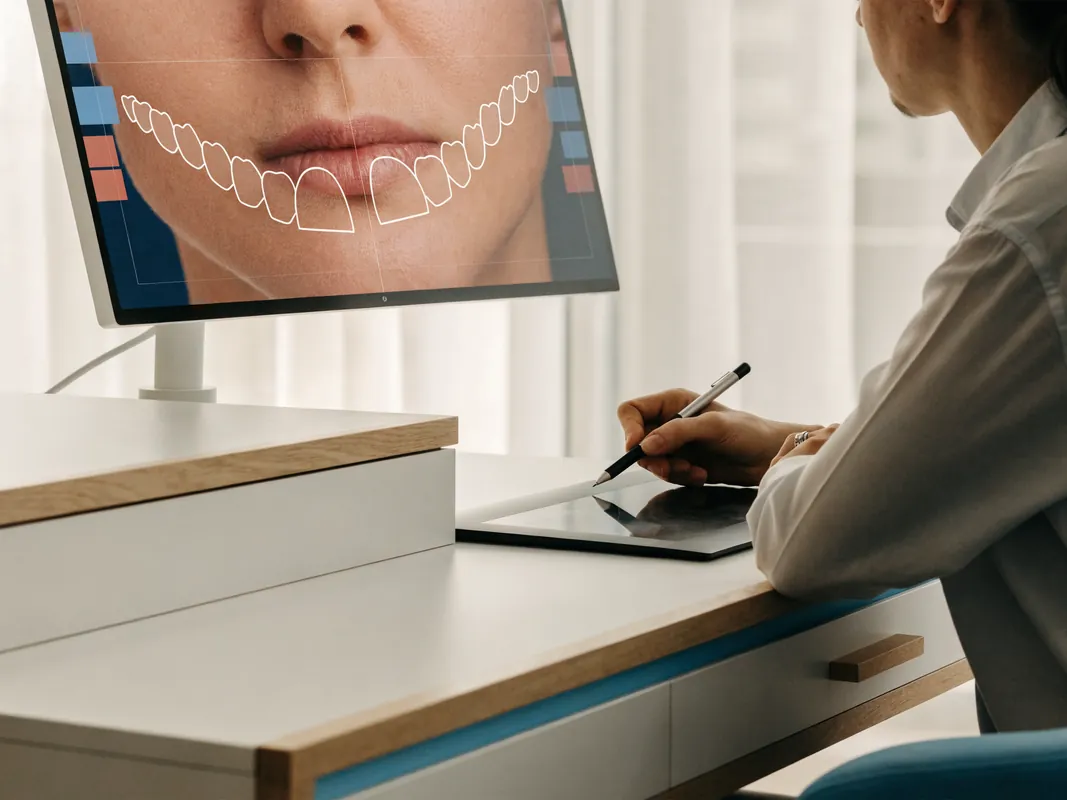
Photographic overlays, simulations, wax-ups and intra-oral mock-ups can help discuss tooth length, proportion, display, midline, shape, texture and shade. They do not by themselves establish health, suitability or the exact final result. Ask which input records were used, what assumptions were made, which elements are editable and which biological limits have not yet been assessed.
If you approve a preview, request a dated copy or documented design choices and ask how those choices move into the laboratory prescription. Approval of an image is not consent to remove tooth tissue. If the clinical plan changes, the design and quotation may need a new version and a renewed discussion.
Risk discussion must be specific enough to change a decision
A generic form saying that all treatment has risks is not enough. Ask about material risks and limitations relevant to your health, diagnosis, procedure, alternatives and priorities. Examples may include pain, sensitivity, swelling, infection, bleeding, nerve or sinus involvement, tissue loss, fracture, loss of vitality, aesthetic mismatch, speech or bite adaptation, failure of components, need for further procedures and maintenance. The applicable list depends on the case.
Ask how likely and serious a risk is understood to be, what reduces or increases it, how it would be recognised, who would manage it in Turkey and what route exists after you return home. Uncertainty should be documented rather than hidden behind a universal percentage.
Consent remains separate from the sale
You should be able to understand the plan, ask questions, receive answers, consider alternatives and decline without being misled about consequences. A deposit, flight, hotel booking or previous message does not remove the need for valid consent. Consent can be withdrawn, and it must remain valid at each treatment stage.
Ask who obtains consent, in which language, at what point and how changes are documented. If a person discussing clinical risks cannot answer clinical questions or identify the responsible clinician, stop. A facilitator may explain logistics, but should not substitute for the clinician's consent discussion.
Decide how much reflection time you need
Complex, irreversible or elective treatment should not be compressed into an artificial countdown. Ask when the written findings, options, risk information and quotation will be available, how long the quotation remains valid, whether a second opinion is possible and what travel cost you bear if you decide not to proceed.
The correct reflection period is individual; this guide does not prescribe a fixed number of hours or days. The important point is that you can understand the decision without pressure from a departing transfer, an expiring message-only discount or materials said to be already ordered before you authorised them.
A written plan needs more than procedure names
Ask for a dated plan that identifies teeth or sites, diagnoses, proposed procedures, sequence, named clinical responsibilities, important alternatives, known uncertainties, investigation needs, provisional and definitive stages, expected review points and aftercare. If treatment spans visits, the plan should say what condition must be met before moving to the next stage.
Avoid interpreting “implant package”, “Hollywood smile” or “full mouth” as a complete clinical prescription. Ask for tooth numbering that you understand, the status of each arch, the planned restorative material and the response if an assumption changes during treatment.
The quotation should expose assumptions and exclusions
A useful quotation matches the current written clinical plan. It identifies the legal payee, currency, tax treatment where applicable, procedure or device, quantity, laboratory or component categories where relevant, payment stages, cancellation terms and what is not part of the price. It should explain how plan changes are authorised and priced before additional work begins.
Ask separately about investigations, temporary restorations, grafting, sedation, medicines, laboratory remakes, repairs, maintenance, extended stays, return visits and complication care. Do not assume that the words “all inclusive” resolve those details. Never publish or rely on a price detached from a current examination and written scope.
Keep clinical, travel and accommodation contracts distinct
Airport transport, local transport, hotel accommodation and tourism support can make a journey easier, but they do not prove clinical quality. Ask which legal entity supplies each service, whether it is optional, what exact route or room basis applies, who handles changes and what happens if treatment is postponed or cancelled. The clinical provider remains responsible for its clinical work; a hotel or transfer operator does not provide dental aftercare.
If Antalya transfer information is useful, consult the separate [AntalyaTransfer.taxi route directory](https://antalyatransfer.taxi/) and verify the current booking terms directly with that service. A contextual link is not a statement that any journey is part of your dental quotation. Request a line-by-line written allocation.
Hotel comfort does not replace recovery planning
A star category does not tell you whether a room suits your individual needs after treatment. Ask about step-free access, lift access, distance from the appointment, quiet-room requests, food preparation, refrigeration for authorised medicines, companion arrangements and the route for clinical review. Confirm the exact hotel and room basis in writing; examples on a website are not allocations.
Discuss whether your treatment or medical history creates specific dietary, positioning, assistance or observation needs. Those instructions must come from the responsible clinician. Hotel staff and drivers should not be expected to make clinical decisions.
Ask what treatment can start that day and what cannot
The answer depends on diagnosis, consent, medical readiness, imaging, records, materials, clinician availability and your preferences. Some people may have only an assessment. Others may proceed to a reversible record or planning stage. Irreversible treatment should not start merely because travel dates were booked.
Ask for explicit go/no-go criteria for each proposed stage. If disease control, a physician report, specialist review, healing or laboratory preparation is required, identify who will confirm readiness. A safe fallback plan may mean delaying or changing treatment rather than forcing the original itinerary.
Record provisional and definitive stages separately
Temporary, provisional, interim and definitive do not mean the same thing. Ask what will be in your mouth when you leave each appointment, what it is made from, how it is retained, what function or diet instructions apply, how long it is intended to serve and what event triggers replacement or review. Do not assume the visible result at one stage is the final device.
For custom-made restorations, request enough information for traceability and future care. The [MHRA guidance on custom-made devices in Great Britain](https://www.gov.uk/government/publications/custom-made-medical-devices/custom-made-devices-in-great-britain) describes statement and documentation expectations for devices placed on the GB market; Turkey and the place of manufacture may use different legal routes. Ask the treating provider which rules and patient documents apply to your device.
Traceability matters for implants and laboratory work
For implanted components, ask for manufacturer, product family, dimensions, connection, lot or other traceability information and the exact component actually placed. For laboratory restorations, request the laboratory prescription, material identification and patient statement or conformity documentation that applies. Marketing brand selection before diagnosis is not the same as a final component record.
Keep these records offline and share relevant copies with a local dentist. If a repair is needed years later, a vague invoice saying “premium implant” may not identify the driver, screw, abutment or restorative part required.
Ask who owns each laboratory decision
A dental technician or laboratory may contribute to shade, form, material processing and manufacture, but the prescription and clinical acceptance remain professional responsibilities. Ask which clinician writes the laboratory prescription, which laboratory manufactures the device, where manufacture occurs, what material and design are specified, how try-in feedback is recorded and who accepts the device before fitting.
Do not infer an “on-site laboratory” from a same-day adjustment or a technician joining a call. If rapid manufacture is proposed, ask which verification and review stages remain. Speed should not erase margin, contact, bite, shade, speech, cleanability or consent checks.

Define success in patient-centred terms
Before choosing treatment, write what improvement matters to you and what trade-offs you accept. Success might involve resolving disease, reducing pain, restoring function, preserving tissue, improving appearance, making hygiene manageable or establishing a repairable long-term design. These goals may conflict. Ask how each option addresses them and how progress will be reviewed.
Avoid accepting universal success percentages without a defined procedure, population, follow-up period, outcome measure and independent source. Your individual outcome cannot be predicted from a website statistic. Ask instead which factors in your case increase uncertainty and how failure or dissatisfaction would be managed.
Build an aftercare plan before treatment consent
The aftercare plan should identify routine review, symptom monitoring, hygiene, maintenance, component or restoration checks, urgent contact, local care and record exchange. Ask what can be managed remotely and what requires examination. A photograph or video call cannot assess every complication.
The returning home after dental tourism guide explains local handover in detail. Contact a home dentist before travel where possible. A UK dentist is not automatically obliged or equipped to maintain unfamiliar work, and the original provider should not assume that another professional will take responsibility without agreement.
Define the complication and complaint routes
Ask for separate routes for urgent clinical symptoms, routine questions, dissatisfaction, records requests, billing disputes and formal complaints. Obtain the facility's written complaint process, response times, responsible contact and the external regulator or authority that can receive an unresolved clinical complaint. Find out which law and jurisdiction the clinical and travel contracts use.
Ask who funds assessment, travel, accommodation, repair or replacement if a problem occurs; do not assume. Read exclusions and evidence requirements. A promise in a chat may be difficult to use if it is absent from the signed terms.
Decide whether to involve your UK dentist
A dentist who has examined you locally can provide a valuable baseline, identify active disease, discuss alternatives and help determine which records to share. They may disagree with an overseas proposal or decline responsibility for future work. That is information to consider, not an obstacle to bypass.
Ask the overseas provider to send a clear post-treatment record to you and, with your permission, to the receiving professional. The record should support care rather than advertise the provider. If no local professional is willing or able to provide the anticipated maintenance, reconsider the treatment and travel plan before starting.
A second opinion is valuable when decisions are irreversible
Consider an independent opinion when several teeth are proposed for extraction, extensive tooth preparation is planned, symptoms and images do not align, multiple disciplines are involved, the prognosis is uncertain, or the treatment would be difficult to maintain at home. Give the second clinician the actual diagnostic records, not only a sales summary.
Ask both clinicians to explain the points of agreement, disagreement and missing evidence. A second opinion may confirm the plan, offer a different approach or identify a question that needs further investigation. It does not need to produce identical wording to be useful.
Recognise pressure and information red flags
Pause if you encounter a deadline that exists only in chat, a refusal to name the facility or clinician, treatment prescribed solely from photographs, a plan that ignores medical history, automatic imaging without justification, extraction without tooth-specific reasoning, no alternatives, no written risks, no aftercare, inaccessible records, payment to an unexplained entity or a contract that allows the clinical provider to change major items without renewed consent.
Also pause when hospitality is used to silence questions. A friendly coordinator, pleasant hotel and smooth transfer can coexist with incomplete clinical information. Judge the clinical proposal by diagnosis, responsibility, consent, records, serviceability and aftercare.
Use a consultation scorecard rather than intuition alone
After the appointment, score whether you can answer the following:
- Who is the legal clinical provider and who is the responsible treating clinician?
- What diagnoses are confirmed, provisional or unresolved?
- What was examined and what investigation was justified?
- What alternatives, including delay and no treatment, were discussed?
- What natural tissue is altered or removed under each option?
- What material risks and limitations matter to you?
- What stages and go/no-go criteria control the sequence?
- What is provisional and what is definitive?
- What exactly is priced, excluded and subject to change?
- What records, component details and aftercare will you receive?
- Who provides urgent and local follow-up?
- Can you decline without clinical information being withheld?
If several answers remain unclear, request clarification in writing before deciding.
Leave with a usable consultation record
Request a dated copy of the medical history you confirmed, diagnostic summary, tooth or site chart, relevant images and report, photographs or scans used for planning, options discussed, risk and consent notes, written plan, quotation version, named clinical responsibilities, planned stages and aftercare route. Ask how amendments will be marked and how you can request further copies.
The record should distinguish patient-reported goals, clinician findings and marketing images. It should not imply that an unperformed procedure or unconfirmed material was delivered. Store it securely and keep a local offline copy before travelling home.
Reconcile the plan after any new finding
If examination reveals decay, gum disease, a crack, infection, inadequate bone, altered anatomy, an uncertain tooth, a medical concern or a different restorative need, the plan and quotation may change. Ask the clinician to explain what changed, why, which alternatives remain and whether more time or another opinion is appropriate. Do not authorise a major change merely because you are already abroad.
The GDC consent standard states that changes to agreed treatment or estimated cost require renewed consent and documentation for clinicians it regulates. Apply the same practical expectation: a new plan version, a clear comparison and a fresh decision.
Remote follow-up cannot replace every examination
Messaging can help exchange documents, clarify instructions and decide whether an in-person review is needed. It cannot palpate swelling, test a tooth, measure a pocket, evaluate every bite interference, assess implant stability or provide urgent treatment. Ask which symptoms require local face-to-face care and which records the original provider needs afterward.
Do not send sensitive images or health details to a personal number without understanding who controls the data and where it goes. Keep a dated log of clinical instructions, but seek local care when urgency or uncertainty makes remote review inadequate.
Prepare for a decision not to proceed
A successful consultation can end with no treatment, a different treatment, more investigation or a decision to return home and consider. Before attending, understand consultation charges, imaging charges, cancellation rules, record-release process and the consequences for separate travel bookings. Ask whether any custom item will be ordered before written authorisation and what happens if you decline.
Do not measure the value of the consultation by whether treatment starts. Good information may prevent unsuitable, premature or unwanted care.
First consultation checklist for UK patients
Before travel:
- verify the legal facility and proposed clinician through current official sources;
- obtain the appointment type, address and accessibility details in writing;
- compile medical history, medicines, allergies and relevant dental records;
- arrange secure transfer of health information and language support;
- check travel insurance exclusions for planned treatment;
- identify a local urgent-care and aftercare route;
- write priorities, unacceptable compromises and questions;
- avoid travel plans that depend on an unconfirmed clinical timetable.
During consultation:
- identify each person's role;
- confirm consent for examination and investigation;
- ask for tooth- or site-specific findings and unresolved questions;
- discuss preservation, alternatives, delay and no treatment;
- request risk, stage, material, serviceability and aftercare information;
- keep travel hospitality separate from clinical judgement;
- take time before authorising irreversible work.
After consultation:
- collect the diagnostic record, plan and itemised quotation;
- compare versions and clarify assumptions;
- seek another opinion where helpful;
- confirm who provides each stage and follow-up;
- decide only when the clinical, financial and travel records agree.
Official sources to recheck before your appointment
Rules and provider status can change. Revisit the current sources close to your appointment:
- [Turkey Ministry of Health authorised international-health-tourism providers](https://shgmturizmdb.saglik.gov.tr/EN%2C69063/healthcare-providers-authorized-by-the-ministry.html);
- [GDC patient guide to dental treatment abroad](https://www.gdc-uk.org/standards-guidance/information-for-patients-public/going-abroad-for-dental-treatment);
- [GDC valid-consent standard](https://standards.gdc-uk.org/pages/principle3/principle3);
- [GDC patient-record standard](https://standards.gdc-uk.org/pages/principle4/principle4);
- [NHS treatment-abroad checklist](https://www.nhs.uk/using-the-nhs/healthcare-abroad/going-abroad-for-treatment/treatment-abroad-checklist/);
- [NHS guidance on going abroad for planned treatment](https://www.nhs.uk/using-the-nhs/healthcare-abroad/going-abroad-for-treatment/going-abroad-for-medical-treatment/);
- [ICO special-category data guidance](https://ico.org.uk/for-organisations/uk-gdpr-guidance-and-resources/lawful-basis/special-category-data/);
- [MHRA custom-made device guidance for Great Britain](https://www.gov.uk/government/publications/custom-made-medical-devices/custom-made-devices-in-great-britain).
These links provide verification and decision frameworks. They do not endorse WeCare, a facilitator, a clinic, a clinician or a treatment. The final decision must rest on current official verification and an individual clinical assessment.
Your next step
Use this guide to prepare a consultation request, not to self-diagnose. Send only the minimum information needed for the initial enquiry through the stated secure route, ask who receives it, and request the legal facility and clinical responsibility details before sharing a full health record. When an appointment is proposed, compare its written scope against the checklist above.
If your priority is a particular procedure, read the relevant service guide before the appointment and bring the unanswered questions. If your priority is the travel sequence, use the Antalya dental travel packing guide and the treatment timeline guide. The purpose of preparation is not to arrive ready to say yes. It is to arrive ready to understand, question and decide.